


Product Monograph - Veozah
RECENT MAJOR LABEL CHANGES
Sections or subsections that are not applicable at the time of authorization are not listed.
TABLE OF CONTENTS
RECENT MAJOR LABEL CHANGES ....................................................................................... 2
TABLE OF CONTENTS ......................................................................................................... 2
PART I: HEALTH PROFESSIONAL INFORMATION ................................................................. 4
1 INDICATIONS .......................................................................................................... 4
1.1 Pediatrics ......................................................................................................... 4
1.2 Geriatrics ......................................................................................................... 4
2 CONTRAINDICATIONS ............................................................................................. 4
4 DOSAGE AND ADMINISTRATION ............................................................................. 4
4.1 Dosing Considerations .................................................................................... 4
4.2 Recommended Dose and Dosage Adjustment ............................................... 5
4.4 Administration ................................................................................................ 5
4.5 Missed Dose .................................................................................................... 5
5 OVERDOSAGE ......................................................................................................... 5
6 DOSAGE FORMS, STRENGTHS, COMPOSITION, AND PACKAGING ............................ 6
7 WARNINGS AND PRECAUTIONS .............................................................................. 6
7.1 Special Populations ......................................................................................... 8
7.1.1 Pregnant Women ............................................................................................ 8
7.1.2 Breast-feeding ................................................................................................. 8
7.1.3 Pediatrics ......................................................................................................... 9
7.1.4 Geriatrics ......................................................................................................... 9
8 ADVERSE REACTIONS.............................................................................................. 9
8.1 Adverse Reaction Overview ............................................................................ 9
8.2 Clinical Trial Adverse Reactions ..................................................................... 10
8.3 Less Common Clinical Trial Adverse Reactions ............................................. 12
8.4 Abnormal Laboratory Findings: Hematologic, Clinical Chemistry, and Other Quantitative Data .......................................................................................... 13
8.5 Post-Market Adverse Reactions .................................................................... 13
9 DRUG INTERACTIONS ........................................................................................... 14
9.2 Drug Interactions Overview .......................................................................... 14
9.4 Drug-Drug Interactions ................................................................................. 14
9.5 Drug-Food Interactions ................................................................................. 15
9.6 Drug-Herb Interactions ................................................................................. 15
9.7 Drug-Laboratory Test Interactions ................................................................ 15
10 CLINICAL PHARMACOLOGY ................................................................................... 15
10.1 Mechanism of Action .................................................................................... 15
10.2 Pharmacodynamics ....................................................................................... 15
10.3 Pharmacokinetics .......................................................................................... 15
11 STORAGE, STABILITY, AND DISPOSAL .................................................................... 17
12 SPECIAL HANDLING INSTRUCTIONS ....................................................................... 17
PART II: SCIENTIFIC INFORMATION .................................................................................. 18
13 PHARMACEUTICAL INFORMATION ....................................................................... 18
14 CLINICAL TRIALS ................................................................................................... 19
14.1 Clinical Trials by Indication ............................................................................ 19
Treatment of moderate to severe vasomotor symptoms (VMS) associated with menopause ................................................................................................................... 19
15 MICROBIOLOGY ................................................................................................... 21
16 NON-CLINICAL TOXICOLOGY ................................................................................. 22
PATIENT MEDICATION INFORMATION ............................................................................. 24
PART I: HEALTH PROFESSIONAL INFORMATION
1 INDICATIONS
VEOZAH (fezolinetant film-coated tablets) is indicated for:
- The treatment of moderate to severe vasomotor symptoms (VMS) associated with menopause.
1.1 Pediatrics
Pediatrics (< 18 years of age): VEOZAH is not indicated for pediatric use. No data are available to Health Canada.
1.2 Geriatrics
Geriatrics (≥ 65 years of age): No data are available to Health Canada; therefore, Health Canada has not recommended an indication for geriatric use.
2 CONTRAINDICATIONS
VEOZAH is contraindicated in patients:
- who are hypersensitive to this drug or to any ingredient in the formulation, including any non-medicinal ingredient, or component of the container. For a complete listing, see 6 DOSAGE FORMS, STRENGTHS, COMPOSITION, AND PACKAGING.
- with known cirrhosis (see 7 WARNINGS AND PRECAUTIONS – Hepatic/Biliary/Pancreatic).
- with severe renal impairment or end-stage renal disease (see 7 WARNINGS AND PRECAUTIONS – Renal).
- using concomitant moderate or strong CYP1A2 inhibitors (see 9 DRUG INTERACTIONS, 9.2 Drug Interactions Overview).
- with known or suspected pregnancy (see 7 WARNINGS AND PRECAUTIONS, 7.1 Special Populations, 7.1.1 Pregnant Women).
4 DOSAGE AND ADMINISTRATION
4.1 Dosing Considerations
Perform baseline bloodwork to evaluate hepatic function and assess for injury [including serum alanine aminotransferase (ALT), serum aspartate aminotransferase (AST), serum alkaline phosphatase (ALP), and serum bilirubin (total and direct)] before initiating treatment with VEOZAH. Do not start VEOZAH if ALT or AST is equal to or exceeds 2 times the upper limit of normal (ULN) or if the total bilirubin is elevated (is equal to or exceeds 2 x ULN). Proceed with caution if ALT or AST is between > 1.5 x ULN and < 2 x ULN (see 7 WARNINGS AND PRECAUTIONS – Hepatic Transaminase Elevation and Hepatotoxicity).
While using VEOZAH, perform follow-up evaluations of hepatic transaminase concentration monthly during the first 3 months, at 6 months, and 9 months after initiation of therapy.
Advise patients to discontinue VEOZAH immediately and seek medical attention including hepatic laboratory tests if they experience signs or symptoms that may suggest liver injury (see 7 WARNINGS AND PRECAUTIONS – Hepatic Transaminase Elevation and Hepatotoxicity).
4.2 Recommended Dose and Dosage Adjustment
The recommended dose of VEOZAH is 45 mg once daily.
Hepatic Impairment: VEOZAH is contraindicated in individuals with cirrhosis.
VEOZAH is not recommended for use in individuals with Child-Pugh Class B (moderate) chronic hepatic impairment. VEOZAH has not been studied in individuals with Child-Pugh Class C (severe) chronic hepatic impairment and is not recommended in this population. No dose modification is recommended for individuals with Child-Pugh Class A (mild) chronic hepatic impairment (see 10 CLINICAL PHARMACOLOGY, 10.3 Pharmacokinetics – Special Populations and Conditions – Hepatic Insufficiency).
Renal Impairment: VEOZAH is contraindicated in individuals with severe (eGFR less than 30 mL/min/1.73 m2) renal impairment. VEOZAH has not been studied in individuals with end-stage renal disease (eGFR less than 15 mL/min/1.73 m2) and is contraindicated in this population. No dose modification is recommended for individuals with mild (eGFR 60 to less than 90 mL/min/1.73 m2) or moderate (eGFR 30 to less than 60 mL/min/1.73 m2) renal impairment (see 10 CLINICAL PHARMACOLOGY, 10.3 Pharmacokinetics – Special Populations and Conditions – Renal Insufficiency).
Pediatrics: VEOZAH is not indicated for pediatric use (see 1 INDICATIONS, 1.1 Pediatrics).
Geriatrics: Use in geriatrics (≥ 65 years of age) is not recommended (see 1 INDICATIONS, 1.2 Geriatrics).
4.4 Administration
VEOZAH should be administered orally once daily at about the same time each day with or without food, taken with liquids, and should be swallowed whole.
Do not cut, crush, or chew tablets.
4.5 Missed Dose
If a dose of VEOZAH is missed or not taken at the usual time, administer the missed dose as soon as possible, unless there is less than 12 hours before the next scheduled dose. Return to the regular schedule the following day.
5 OVERDOSAGE
There is no experience with inadvertent VEOZAH overdose. Oral doses of VEOZAH up to 900 mg as a single-dose and 720 mg as once daily for 7 days have been tested in clinical studies in healthy women. The maximum tolerated dose was determined to be 900 mg. At 900 mg, headache, nausea, and paresthesia were observed.
In the case of overdose, the individual should be closely monitored, and supportive treatment should be considered based on signs and symptoms.
| For management of a suspected drug overdose, contact your regional Poison Control Centre. |
|---|
6 DOSAGE FORMS, STRENGTHS, COMPOSITION, AND PACKAGING
Table 1 – Dosage Forms, Strengths, Composition, and Packaging
VEOZAH 45 mg tablets are round, light red, film-coated tablets debossed with the Astellas logo and ‘645’ on the same side.
The tablets are available in PA/ Aluminum /PVC/ Aluminum unit dose blister of 30 film-coated tablets (10 tablets x 3 blister).
7 WARNINGS AND PRECAUTIONS
Carcinogenesis and Mutagenesis
A numerical imbalance was observed in the incidence of other malignancies between VEOZAH and placebo groups reported in the long-term safety study [2693-CL-0304] (see 8 ADVERSE REACTIONS, 8.2 Clinical Trial Adverse Reactions). A causal relationship between VEOZAH and increased risk of malignancies has not been established.
Known or Previous Breast Cancer or Estrogen-dependent Malignancies
Women with previous or known breast cancer or other estrogen-dependent malignancies have not been included in the clinical studies. As the efficacy and safety in this population are unknown, a decision to treat these women with VEOZAH should be based on a benefit-risk consideration for the individual.
Endometrial Hyperplasia and Endometrial Carcinoma
In the VEOZAH 45 mg dose group across the three phase 3 studies, endometrial biopsy assessments identified one case of endometrial hyperplasia and one case of endometrial malignancy (0.6% with a one-sided upper limit of 95% confidence of 1.8%). The rate of these events in the VEOZAH 45 mg dose group was ≤ 1% with the upper bound of the one-sided 95% confidence limit being ≤ 4%. There was no case of endometrial hyperplasia or carcinoma in the placebo group.
Five cases of disordered proliferative endometrium were reported in women receiving VEOZAH 45 mg and four cases were reported in women receiving placebo across the three clinical trials. The exposure adjusted incidence rate (EAIR) was 1.4 per 100 person-years in VEOZAH 45 mg versus 2.0 per 100 person-years in the placebo group.
| Route of Administration | Dosage Form/ Strength/Composition | Non-medicinal Ingredients |
|---|---|---|
| Oral | Tablets, 45 mg fezolinetant | Ferric oxide (iron oxide red), hydroxypropyl cellulose, hypromellose, low-substituted hydroxypropyl cellulose, magnesium stearate, mannitol, microcrystalline cellulose, polyethylene glycol (macrogol), talc, and titanium dioxide. |
Hepatic/Biliary/Pancreatic
VEOZAH is contraindicated in individuals with cirrhosis.
VEOZAH is not recommended for use in individuals with Child-Pugh Class B (moderate) chronic hepatic impairment. VEOZAH has not been studied in individuals with Child-Pugh Class C (severe) chronic hepatic impairment and is not recommended in this population (see 4 DOSAGE AND ADMINISTRATION, 4.1 Dosing Considerations and 10 CLINICAL PHARMACOLOGY, 10.3 Pharmacokinetics – Special Populations and Conditions – Hepatic Insufficiency).
Hepatic Transaminase Elevation and Hepatotoxicity
Elevations in serum transaminase ALT and/or AST levels greater than 3 times the ULN occurred in 2.3% (EAIR of 2.7 per 100 person-years) of women receiving VEOZAH and 0.9% (EAIR of 1.5 per 100 person-years) of women receiving placebo in three clinical trials. No elevations in serum total bilirubin (greater than 2 times the ULN) occurred. Women with ALT or AST elevations were generally asymptomatic. Transaminase levels returned to pre-treatment levels (or close to these) without sequelae with dose continuation, and upon dose interruption, or discontinuation (see 8 ADVERSE REACTIONS, 8.4 Abnormal Laboratory Findings: Hematologic, Clinical Chemistry, and Other Quantitative Data).
In the post-marketing setting, cases of serious but reversible hepatotoxicity have been reported within the first few weeks of treatment. Patients have experienced transaminase elevations (greater than 10 times the ULN) with concurrent elevations in bilirubin and/or ALP, sometimes associated with signs or symptoms such as fatigue, pruritus, jaundice, dark urine, or abdominal pain (see 8 ADVERSE REACTIONS, 8.5 Post-Market Adverse Reactions).
Perform baseline bloodwork to evaluate hepatic function and assess for injury [including serum ALT, serum AST, serum ALP, and serum bilirubin (total and direct)] prior to VEOZAH initiation. Do not start VEOZAH if ALT or AST is equal to or exceeds 2 times the ULN or if the total bilirubin is elevated. Proceed with caution if ALT or AST is between > 1.5 x ULN and < 2 x ULN.
Perform follow-up hepatic laboratory tests monthly for the first 3 months, at 6 months, and 9 months after initiation of therapy.
Patients who experience signs or symptoms that may suggest liver injury such as new onset fatigue, decreased appetite, nausea, vomiting, pruritus, jaundice, pale feces, dark urine, or abdominal pain should discontinue VEOZAH immediately and seek medical attention including hepatic laboratory tests.
Discontinue VEOZAH if transaminase elevations are greater than 5 times the ULN and/or transaminase elevations are greater than 3 times the ULN and the total bilirubin level is greater than 2 times the ULN. If transaminase elevations greater than 3 times the ULN occur, perform more frequent follow-up hepatic laboratory tests until resolution. Exclude alternative causes of hepatic laboratory test elevations.
Monitoring and Laboratory Test
Monitoring for signs and symptoms of liver injury should be done during treatment with VEOZAH (see 7 WARNINGS AND PRECAUTIONS – Hepatic/Biliary/Pancreatic).
Renal
VEOZAH is contraindicated in individuals with severe (eGFR less than 30 mL/min/1.73 m2) renal impairment. VEOZAH has not been studied in individuals with end-stage renal disease (eGFR less than 15 mL/min/1.73 m2) and is contraindicated in this population (see 4 DOSAGE AND ADMINISTRATION, 4.1 Dosing Considerations and 10 CLINICAL PHARMACOLOGY, 10.3 Pharmacokinetics – Special Populations and Conditions – Renal Insufficiency).
Reproductive Health: Female and Male Potential
- Fertility
There are no data on the effect of VEOZAH on human fertility.
In the fertility study in female rats, fezolinetant did not affect fertility (see 16 NON-CLINICAL TOXICOLOGY – Reproductive and Developmental Toxicity).
7.1 Special Populations
7.1.1 Pregnant Women
VEOZAH is contraindicated in pregnant women. There are no data on the use of VEOZAH in pregnant women.
In embryo-fetal toxicity animal studies with fezolinetant, embryo-lethality occurred at high doses above the human therapeutic dose in rats and rabbits, but no teratogenicity was observed (see 16 NON-CLINICAL TOXICOLOGY – Reproductive and Developmental Toxicity).
7.1.2 Breast-feeding
The use of VEOZAH in breast-feeding women is not recommended. There are no data to assess the effects of VEOZAH on the breastfed child or the effects on milk production. It is not known if fezolinetant is present in human milk.
Following administration of radiolabeled fezolinetant to lactating rats, the radioactivity concentration in milk was higher than that in the plasma at all time points. Fezolinetant-derived components were transferred into the tissues of infant rats via breast milk.
7.1.3 Pediatrics
VEOZAH is not indicated for pediatric use. No data are available to Health Canada.
7.1.4 Geriatrics
There have not been sufficient numbers of geriatric women involved in clinical trials utilizing VEOZAH to determine whether those over 65 years of age differ from younger women in their response to VEOZAH.
8 ADVERSE REACTIONS
8.1 Adverse Reaction Overview
The safety of fezolinetant was evaluated in three phase 3 studies [Studies 1 (2693-CL-0301), 2 (2693-CL-0302), and 3 (2693-CL-0304)].
The most common adverse drug reaction (ADR) during the 12-week placebo-controlled period in studies 1+2 (≥ 3% in patients receiving VEOZAH 45 mg and greater than placebo) was liver test elevation (3.2%) (see 8 ADVERSE REACTIONS, 8.2 Clinical Trial Adverse Reactions).
During the 52-week placebo-controlled period in study 3, the most frequent ADRs (≥ 3% in patients receiving VEOZAH 45 mg and greater than placebo) were headache (9.7%), liver test elevation (5.3%), abdominal pain (4.4%), diarrhea (3.9%), insomnia (3.9%), and nausea (3.1%), (see 8 ADVERSE REACTIONS, 8.2 Clinical Trial Adverse Reactions).
A numerical imbalance was observed in the incidence of other malignancies between VEOZAH and placebo groups in the long-term safety study 3 (see 8 ADVERSE REACTIONS, 8.2 Clinical Trial Adverse Reactions). A causal relationship between VEOZAH and increased risk of malignancies has not been established.
Serious ADRs of ALT increased, liver function test abnormal and hepatotoxicity were reported and considered related to VEOZAH 45 mg (see 4 DOSAGE AND ADMINISTRATION, 4.1 Dosing Considerations and 7 WARNINGS AND PRECAUTIONS – Hepatic Transaminase Elevation and Hepatotoxicity).
The most frequent ADRs leading to discontinuation with VEOZAH 45 mg were abdominal pain (0.9%) during the 12-week placebo-controlled period in studies 1+2, fatigue (0.5%), headache (0.7%), and liver test elevation (0.7%) during the 52-week placebo-controlled period in study 3.
8.2 Clinical Trial Adverse Reactions
Clinical trials are conducted under very specific conditions. The ADR rates in the below tables are observed in the clinical trials; therefore, may not reflect the rates observed in practice and should not be compared to the rates in the clinical trials of another drug. ADR information from clinical trials may be useful in identifying and approximating rates of ADRs in real-world use.
Studies 1 and 2 were 12-week, randomized, placebo-controlled, double-blind studies, followed by a 40-week extension treatment period in women with moderate to severe VMS associated with menopause (see 14 CLINICAL TRIALS). A total of 680 women (340 on VEOZAH 45 mg) were administered fezolinetant once daily. The ADRs reported in at least 2% in VEOZAH 45 mg and greater than placebo in combined studies 1+2 during the 12-week placebo-controlled period are presented in Table 2.
Table 2 – Treatment-Emergent Adverse Events Reported in at Least 2% in VEOZAH 45 mg and Greater Than Placebo in Combined Studies 1+2 During the 12-Week Placebo-Controlled Period (Safety Analysis Set)
| System Organ Class/ Preferred Term | Combined Studies 1+2 | |||
|---|---|---|---|---|
| F e z o l i n e t a n t 4 5 m g n = [ # ] ( % ) N = 3 4 0 | P l a c e b o n = [ # ] ( % ) N = 3 4 2 | |||
| Gastrointestinal disorders | ||||
| Abdominal pain† | 7 (2.1%) | 7 (2.0%) | ||
| Investigations | ||||
| Liver test elevation¶ | 11 (3.2%) | 9 (2.6%) | ||
Number of participants and percentage of participants (%) are shown.
Only those system organ classes with a preferred term having an incidence of 2% or greater are presented.
†Abdominal pain includes abdominal pain, abdominal pain lower, abdominal pain upper, and abdominal tenderness.
¶Liver test elevation includes alanine aminotransferase abnormal/increased, aspartate aminotransferase abnormal/increased, blood alkaline phosphatase abnormal/increased, blood bilirubin increased, gammaglutamyltransferase increased, hepatic enzyme abnormal/increased, transaminases increased, and liver function test abnormal/increased.
Study 3 was a 52-week, randomized, placebo-controlled, double-blind long-term safety study in women with VMS associated with menopause. A total of 1220 women (609 on VEOZAH 45 mg) were administered fezolinetant once daily. The ADRs reported in at least 2% in VEOZAH 45 mg and greater than placebo in the 52-week placebo-controlled period of study 3 are presented in Table 3.
Table 3 – Adverse Drug Reactions Reported in at Least 2% in VEOZAH 45 mg and Greater Than Placebo in the 52-Week Placebo-Controlled Study 3 (Safety Analysis Set)
| System Organ Class/ Preferred Term | Study 3 | ||||
|---|---|---|---|---|---|
| F e z o l i n e t a n t 4 5 m g n = [ # ] ( % ) N = 6 0 9 | P l a c e b o n = [ # ] ( % ) N = 6 1 0 | ||||
| Gastrointestinal disorders | |||||
| Abdominal pain, Abdominal pain lower, Abdominal pain upper, Abdominal tenderness | 27 (4.4%) | 13 (2.1%) | |||
| Diarrhea | 24 (3.9%) | 16 (2.6%) | |||
| Nausea | 19 (3.1%) | 15 (2.5%) | |||
| General disorders and administration site conditions | |||||
| Fatigue | 17 (2.8%) | 16 (2.6%) | |||
| Investigations | |||||
| Liver test elevation§ | 32 (5.3%) | 29 (4.8%) | |||
| Nervous system disorders | |||||
| Cluster headache, Headache, Sinus headache, Tension headache | 59 (9.7%) | 58 (9.5%) | |||
| Psychiatric disorders | |||||
| Insomnia, Middle insomnia | 24 (3.9%) | 11 (1.8%) | |||
| Vascular disorders | |||||
| Hot flush, Flushing | 15 (2.5%) | 10 (1.6%) | |||
MedDRA: v23.0.
Number of subjects and percentage of subjects (%) are shown.
Only those System organ classes with a preferred term having an incidence of 1% or greater are presented.
§Liver test elevation includes alanine aminotransferase abnormal/increased, aspartate aminotransferase abnormal/increased, blood alkaline phosphatase increased, blood bilirubin increased, gamma-glutamyltransferase increased, hepatic function abnormal, hepatic enzyme increased, transaminases increased, and liver function test abnormal/increased.
Malignancy Adverse Events
No potential concern for malignant neoplasms was identified in phase 2a and 2b studies in the target population of VMS associated with menopause, with a total of 1 case of squamous cell carcinoma of the skin at fezolinetant 60 mg once daily in the phase 2b study (ESN364_HF_205).
In the phase 3 studies, the following events were reported: In study 1, there was 1 participant with apocrine breast carcinoma and in study 2 there was 1 participant with squamous cell carcinoma of the skin.
In the 52-week long-term safety study 3, a numerical imbalance was seen in malignancy events (8 participants in 609 in VEOZAH 45 mg, 1 participant in 610 in placebo). The types of tumors were heterogenous, including squamous cell carcinoma of the skin, squamous cell carcinoma of the oral cavity with locally advanced bone cancer to the mandible, non-small cell lung cancer, malignant melanoma, hepatic cancer, endometrial adenocarcinoma, and colon cancer.
Detailed investigation (e.g., time to onset, past medical history, preexisting neoplasms undiagnosed at study entry, known risk factors) for each of the malignancy events support an etiology other than fezolinetant exposure. Therefore, a causal relationship between VEOZAH and increased risk of malignancies has not been established.
8.3 Less Common Clinical Trial Adverse Reactions
The less common ADRs are based on the 52-week data from study 3. Only adverse events reported in at least 2 participants but < 2% in the fezolinetant 45 mg group and incidence greater than placebo are included.
Blood and lymphatic system disorders: Iron deficiency anemia, Lymphadenopathy, Neutropenia
Cardiac disorders: Atrioventricular block first degree
Ear and labyrinth disorders: Tinnitus, Vertigo positional
Eye disorders: Vision blurred
Gastrointestinal disorders: Abdominal discomfort, Chronic gastritis, Dental caries, Food poisoning, Frequent bowel movements, Gastritis, Gastroesophageal reflux disease, Vomiting
General disorders and administration site conditions: Chest pain, Chills, Cyst, Edema peripheral, Pain, Pyrexia
Immune system disorders: Seasonal allergy
Infections and infestations: Acute sinusitis, Conjunctivitis, Cystitis, Escherichia urinary tract infection, Gastroenteritis, Gingivitis, Hordeolum, Onychomycosis, Otitis media, Pulpitis dental, Pyelonephritis, Tooth abscess, Viral upper respiratory tract infection, Vulvovaginal candidiasis
Injury, poisoning, and procedural complications: Animal bite, Contusion, Epicondylitis, Foot fracture, Meniscus injury, Muscle strain
Investigations: Blood albumin increased, Blood creatine phosphokinase increased
Metabolism and nutrition disorders: Decreased appetite, Diabetes mellitus, Fluid retention, Hypercholesterolaemia, Hyperglycaemia, Hypoglycaemia, Vitamin D deficiency
Musculoskeletal and connective tissue disorders: Arthritis, Intervertebral disc disorder, Muscle spasms, Musculoskeletal pain, Osteoporosis, Rheumatoid arthritis, Rotator cuff syndrome, Spinal osteoarthritis, Synovial cyst, Trigger finger
Neoplasms benign, malignant, and unspecified (including cysts and polyps): Colon cancer, Endometrial adenocarcinoma, Uterine leiomyoma
Nervous system disorders: Dizziness, Dysgeusia, Migraine, Paraesthesia, Sciatica, Syncope, Tension, Tremor
Psychiatric disorders: Anxiety, Emotional disorder, Irritability
Renal and urinary disorders: Stress urinary incontinence
Reproductive system and breast disorders: Uterine polyp, Vulvovaginal pruritus
Respiratory, thoracic, and mediastinal disorders: Cough, Dyspnoea, Nasal congestion, Oropharyngeal pain, Productive cough, Wheezing
Skin and subcutaneous tissue disorders: Acne, Dermal cyst, Dermatitis, Dermatitis allergic, Eczema, Hypertrichosis, Night sweats, Pruritus
Vascular disorders: Varicose vein
8.4 Abnormal Laboratory Findings: Hematologic, Clinical Chemistry, and Other Quantitative Data
Table 4 – Clinical Trial Findings (Studies 1, 2, and 3)
| Parameter | VEOZAH 45 mg | Placebo |
|---|---|---|
| ALT or AST > 3 x ULN | 2.3%1 | 0.9%2 |
| (ALT or AST > 3 x ULN) and TBILI > 2 x ULN | 0 | 0 |
ALT = Alanine Transaminase, AST = Aspartate Aminotransferase, TBILI = Total Bilirubin, ULN = upper limit of normal range
1 Exposure Adjusted Incidence Rate (EAIR) of 2.7 per 100 person-years.
2 EAIR of 1.5 per 100 person-years.
Women with ALT or AST elevations were generally asymptomatic. Transaminase levels returned to pre-treatment levels (or close to these) without sequelae with dose continuation, and upon dose interruption, or discontinuation.
8.5 Post-Market Adverse Reactions
In the post-marketing setting, cases of serious but reversible hepatotoxicity have been reported within the first few weeks of treatment. Patients have experienced transaminase elevations (greater than 10 times the ULN) with concurrent elevations in bilirubin and/or ALP, sometimes associated with signs or symptoms such as fatigue, pruritus, jaundice, dark urine, or abdominal pain.
9 DRUG INTERACTIONS
9.2 Drug Interactions Overview
Fezolinetant is extensively metabolized, primarily by CYP1A2. Concomitant use of fezolinetant with CYP1A2 inhibitors can increase fezolinetant exposure to varying degree. Concomitant use of fezolinetant with moderate or strong CYP1A2 inhibitors is contraindicated (see 2 CONTRAINDICATIONS and 9 DRUG INTERACTIONS, 9.4 Drug-Drug Interactions).
Smoking (moderate inducer of CYP1A2) decreased fezolinetant Cmax to approximately 70% and AUC to approximately 50%. The efficacy data did not point to relevant differences between smokers and non-smokers. No dose modification is recommended for smokers.
9.4 Drug-Drug Interactions
Clinical Studies
Strong CYP1A2 Inhibitors
Fezolinetant is a substrate of CYP1A2. Concomitant use with fluvoxamine, a strong CYP1A2 inhibitor, increased the Cmax of fezolinetant 1.8-fold and the AUC 9.4-fold; no change in tmax was observed. Concomitant use of strong CYP1A2 inhibitors with fezolinetant is contraindicated (see 2 CONTRAINDICATIONS).
Physiologically-based Pharmacokinetic Modeling Predictions
Moderate CYP1A2 Inhibitors
A typical moderate CYP1A2 inhibitor (mexiletine 400 mg every 8 hours) is predicted to increase the Cmax of fezolinetant 1.4-fold and the AUC 4.6-fold following concomitant use. Concomitant use of moderate CYP1A2 inhibitors with fezolinetant is contraindicated (see 2 CONTRAINDICATIONS).
Weak CYP1A2 Inhibitors
A typical weak CYP1A2 inhibitor (cimetidine 300 mg every 6 hours) is predicted to increase the Cmax of fezolinetant 1.3-fold and the AUC 2.0-fold following concomitant use. The increase in fezolinetant exposure was not predicted to be clinically relevant.
In Vitro Studies
Fezolinetant is not a substrate of P-glycoprotein (P-gp). The major metabolite, ES259564, is a substrate of P-gp. Neither fezolinetant nor ES259564 are substrates of BCRP, OATP1B1, or OATP1B3. ES259564 is not a substrate of OAT1, OAT3, OCT2, MATE1, and MATE2-K.
Fezolinetant and ES259564 are not inhibitors of P-gp, BCRP, OATP1B1, OATP1B3, OCT2, MATE1, and MATE2-K. Based on in vitro data, fezolinetant inhibited OAT1 and OAT3 with IC50 values of 18.9 µmol/l (15 times the Cmax at the human therapeutic dose) and 27.5 µmol/l (21 times the Cmax at the human therapeutic dose), respectively. ES259564 does not inhibit OAT1 and OAT3 (IC50 > 70 µmol/l).
Fezolinetant and ES259564 are not inhibitors of CYP1A2, CYP2B6, CYP2C8, CYP2C9, CYP2C19, CYP2D6, and CYP3A4. Fezolinetant and ES259564 are not inducers of CYP1A2, CYP2B6, and CYP3A4.
9.5 Drug-Food Interactions
VEOZAH may be administered with or without food. No clinically significant differences in fezolinetant pharmacokinetics were observed following administration with a high-calorie, high-fat meal (see 10 CLINICAL PHARMACOLOGY, 10.3 Pharmacokinetics – Absorption).
9.6 Drug-Herb Interactions
Interactions with herbal products have not been established.
9.7 Drug-Laboratory Test Interactions
Interactions with laboratory tests have not been established.
10 CLINICAL PHARMACOLOGY
10.1 Mechanism of Action
Fezolinetant is a nonhormonal selective NK3 receptor antagonist that blocks neurokinin B (NKB) binding on the kisspeptin/neurokinin B/dynorphin (KNDy) neuron to modulate neuronal activity in the thermoregulatory center in the hypothalamus.
10.2 Pharmacodynamics
In post-menopausal women, with fezolinetant treatment, a transient decrease of luteinizing hormone (LH) levels was observed. No clear trends or clinically relevant changes in other sex hormones measured [follicle-stimulating hormone (FSH), testosterone, oestrogen, and dehydroepiandrosterone sulphate] were observed in post-menopausal women.
Cardiac Electrophysiology
A model-based approach was conducted to assess the QT prolongation risk of fezolinetant. At a dose 20 times the maximum recommended dose, fezolinetant does not prolong the QT interval to any clinically relevant extent.
10.3 Pharmacokinetics
In healthy women, fezolinetant Cmax and AUC increased proportionally with doses between 20 and 60 mg once daily.
After once-a-day dosing, steady-state plasma concentrations of fezolinetant were generally reached by day 2, with minimal fezolinetant accumulation. The pharmacokinetics of fezolinetant do not change over time.
Absorption
The median (range) time to reach fezolinetant Cmax is 1.5 (1 to 4) hours in healthy women.
Effect of Food
Peak plasma fezolinetant concentrations (Cmax) were reduced 23% and the median time to reach Cmax (Tmax) was delayed from about 1.5 hours to 2 hours when VEOZAH was administered with a high-calorie, high-fat meal containing approximately 1000 calories (500-600 calories from fat, 250 calories from carbohydrates, and 150 calories from protein). There was no significant effect of food on AUCT. These pharmacokinetic differences are not considered to be clinically significant.
Distribution
The mean apparent volume of distribution (Vz/F) of fezolinetant is 189 L. The plasma protein binding of fezolinetant is low (51%). The distribution of fezolinetant into red blood cells is almost equal to plasma (blood to plasma ratio of 0.9).
Metabolism
Fezolinetant is primarily metabolized by CYP1A2 and to a lesser extent by CYP2C9 and CYP2C19 to yield oxidized major metabolite ES259564. ES259564 is approximately 20-fold less potent against human NK3 receptor. The metabolite-to-parent ratio ranges from 0.7 to 1.8.
Elimination
The effective half-life (t1/2) of fezolinetant is 9.6 hours in women with VMS. The apparent clearance at steady-state of fezolinetant is 10.8 L/h. Following oral administration, 76.9% of the dose was excreted in urine (1.1% unchanged) and 14.7% in feces (0.1% unchanged).
Special Populations and Conditions
- Pediatrics
No data are available for the pediatric population (< 18 of age).
- Geriatrics
No data are available for the geriatric population (≥ 65 years of age).
- Pregnancy and Breast-feeding
There are no data from the use of fezolinetant in pregnant women. Studies in animals have shown placental transfer and embryo-fetal toxicity.
It is unknown whether fezolinetant and its metabolites are excreted in human milk. Available pharmacokinetic data in animals showed excretion of fezolinetant and/or its metabolites in animal milk. A risk to the suckling child cannot be excluded.
- Pharmacologically Induced Menopause
Fezolinetant has not been studied in individuals with VMS induced by pharmacologic treatment of malignancy.
- Ethnic Origin
There are no clinically relevant effects of race (Black, Asian, Other) on the pharmacokinetics of fezolinetant.
- Hepatic Insufficiency
Following single-dose administration of 30 mg fezolinetant in women with Child-Pugh Class A (mild) chronic hepatic impairment, mean fezolinetant Cmax increased 1.23-fold and AUCinf increased 1.56-fold, relative to women with normal hepatic function. In women with Child-Pugh Class B (moderate) chronic hepatic impairment, mean fezolinetant Cmax decreased by 15% and AUCinf increased 1.96-fold. The Cmax of ES259564 decreased in both mild and moderate chronic hepatic impairment groups while AUCinf and AUClast slightly increased less than 15%. Fezolinetant has not been studied in individuals with Child-Pugh Class C (severe) chronic hepatic impairment (see 7 WARNINGS AND PRECAUTIONS – Hepatic/Biliary/Pancreatic).
- Renal Insufficiency
Following single-dose administration of 30 mg fezolinetant, there was no clinically relevant effect on fezolinetant exposure (Cmax and AUC) in women with mild (eGFR 60 to less than 90 mL/min/1.73 m2) to severe (eGFR less than 30 mL/min/1.73 m2) renal impairment. The AUC of ES259564 was not changed in women with mild renal impairment but increased approximately 1.7- to 4.8-fold in moderate (eGFR 30 to less than 60 mL/min/1.73 m2) and severe renal impairment. Fezolinetant has not been studied in individuals with end-stage renal disease (eGFR less than 15 mL/min/1.73 m2) (see 2 CONTRAINDICATIONS).
- Obesity
There are no clinically relevant effects of body weight (42 to 126 kg) on the pharmacokinetics of fezolinetant.
11 STORAGE, STABILITY, AND DISPOSAL
Store VEOZAH at controlled room temperature 15°C - 30°C in the original package until dispensed in order to protect from moisture and humidity.
Keep out of the reach and sight of children.
12 SPECIAL HANDLING INSTRUCTIONS
Do not cut, crush, or chew the tablet before swallowing.
PART II: SCIENTIFIC INFORMATION
13 PHARMACEUTICAL INFORMATION
Drug Substance
| Proper/Common Name: | fezolinetant | |
|---|---|---|
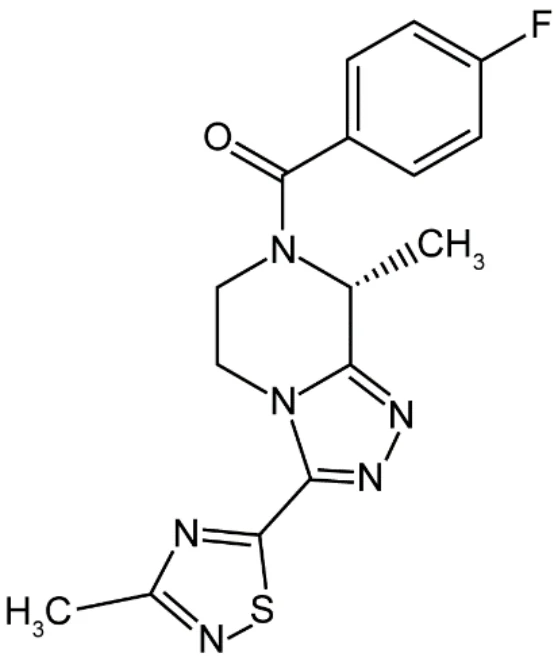
| Chemical Names: | (4-Fluorophenyl)[(8R)-8-methyl-3-(3-methyl-1,2,4-thiadiazol-5-yl)-5,6-dihydro[1,2,4]triazolo[4,3-a]pyrazin-7(8H)-yl]methanone | |
| Molecular Formula: | C16H15FN6OS | |
| Molecular Mass: | 358.39. | |
| Structural Formula: |
| Physicochemical Properties: | A white powder that is very slightly soluble in water (0.29 mg/mL) |
|---|
 |
14 CLINICAL TRIALS
14.1 Clinical Trials by Indication
Treatment of moderate to severe vasomotor symptoms (VMS) associated with menopause
Table 5 – Summary of Patient Demographics for Clinical Trials in Treatment of Moderate to Severe VMS Associated with Menopause
| Study # | Study design | Dosage, route of administration and duration | Study subjects (n) | Mean age (Range) | Sex |
Study 1 (2693-CL-0301) | Phase 3, randomized, double-blind, placebo-controlled, parallel group, multicenter clinical study, followed by an active treatment extension period | Fezolinetant 45 mg, 30 mg, or placebo; once daily, oral for the first 12 weeks After the 12-week double-blind treatment period, all patients received fezolinetant for a 40 week extension treatment period | 522 | 54 years (40 to 65 years) | Female |
Study 2 (2693-CL-0302) | Phase 3, randomized, double-blind, placebo-controlled, parallel group, multicenter clinical study, followed by an active treatment extension period | Fezolinetant 45 mg, 30 mg, or placebo; once daily, oral for the first 12 weeks After the 12-week double-blind treatment period, all patients received fezolinetant for a 40 week extension treatment period | 500 | 54 years (40 to 65 years) | Female |
The efficacy of VEOZAH for the treatment of moderate to severe vasomotor symptoms due to menopause was evaluated in the first 12-week, randomized, placebo-controlled, double-blind portion of each of two identical phase 3 clinical trials. In each of these two trials, after the first 12 weeks, women on placebo were then re-randomized to VEOZAH for a 40-week extension to evaluate safety for up to 52 weeks total exposure.
In study 1 and study 2, a total of 1022 post-menopausal women who had a minimum average of 7 moderate to severe vasomotor symptoms per day were randomized to one of two doses of VEOZAH (including the 45 mg dosage strength) or placebo. Randomization was stratified by smoking status (17% smokers).
Patients self-identified as Caucasian (81%), Black (17%), Asian (1%), and Hispanic/Latina (24%) ethnicity. The study population included post-menopausal women with one or more of the following: prior hysterectomy (32.1%), prior oophorectomy (21.6%), or prior hormone replacement therapy (HRT) use (19.9%). Those who were on prior HRT for VMS underwent a wash-out period prior to trial participation.
Efficacy: Effects on VMS
The 4 co-primary efficacy endpoints for both studies were the mean change from baseline in moderate to severe VMS frequency and severity to Weeks 4 and 12. Data from each of the studies showed a statistically significant and clinically meaningful (≥ 2 hot flashes per 24 hours) reduction from baseline to Weeks 4 and 12 in the frequency of moderate to severe VMS for VEOZAH 45 mg compared to placebo. Data from each of the studies showed a statistically significant reduction from baseline in the severity of moderate to severe VMS (per 24 hours) to Weeks 4 and 12 for VEOZAH 45 mg compared to placebo.
Results of the co-primary endpoint for change from baseline to Weeks 4 and 12 in mean frequency and severity of moderate to severe VMS per 24 hours from studies 1 and 2 are presented in Tables 6 and 7.
Table 6 – Results of Study 1 in the Treatment of Moderate to Severe VMS Associated with Menopause
| Co-primary endpoints | VEOZAH 45 mg (n=174) | Placebo (n=175) |
|---|---|---|
| Mean Frequency of Moderate to Severe VMS per 24 Hours | ||
| Baseline Mean (SD) | 10.4 (3.92) | 10.5 (3.79) |
Change from Baseline to Week 4 LS Mean (SE) Difference vs Placebo (SE) P-value | -5.4 (0.30) -2.1 (0.42) < 0.0011 | -3.3 (0.29) -- -- |
Change from Baseline to Week 12 LS Mean (SE) Difference vs Placebo (SE) P-value | -6.4 (0.31) -2.6 (0.43) < 0.0011 | -3.9 (0.31) -- -- |
| Mean Severity of Moderate to Severe VMS per 24 Hours | ||
| Baseline Mean (SD) | 2.4 (0.35) | 2.4 (0.35) |
Change from Baseline to Week 4 LS Mean (SE) Difference vs Placebo (SE) P-value | -0.5 (0.04) -0.2 (0.06) 0.0021 | -0.3 (0.04) -- -- |
Change from Baseline to Week 12 LS Mean (SE) Difference vs Placebo (SE) P-value | -0.6 (0.05) -0.2 (0.08) 0.0071 | -0.4 (0.05) -- -- |
1 Statistically significantly superior compared to placebo at the 0.05 level with multiplicity adjustment.
LS Mean: Least Squares Mean estimated from a mixed model for repeated measures analysis of covariance;
SD: Standard Deviation; SE: Standard Error.
Table 7 – Results of Study 2 in Treatment of Moderate to Severe VMS Associated with Menopause
| Coprimary endpoints | VEOZAH 45 mg (n=167) | Placebo (n=167) |
|---|---|---|
| Mean Frequency of Moderate to Severe VMS per 24 Hours | ||
| Baseline Mean (SD) | 11.8 (8.26) | 11.6 (5.02) |
Change from Baseline to Week 4 LS Mean (SE) Difference vs Placebo (SE) P-value | -6.3 (0.33) -2.6 (0.46) < 0.0011 | -3.7 (0.33) -- -- |
Change from Baseline to Week 12 LS Mean (SE) Difference vs Placebo (SE) P-value | -7.5 (0.39) -2.5 (0.55) < 0.0011 | -5.0 (0.39) -- -- |
| Mean Severity of Moderate to Severe VMS per 24 Hours | ||
| Baseline Mean (SD) | 2.4 (0.34) | 2.4 (0.32) |
Change from Baseline to Week 4 LS Mean (SE) Difference vs Placebo (SE) P-value | -0.6 (0.05) -0.3 (0.06) < 0.0011 | -0.3 (0.05) -- -- |
Change from Baseline to Week 12 LS Mean (SE) Difference vs Placebo (SE) P-value | -0.8 (0.06) -0.3 (0.08) < 0.0011 | -0.5 (0.06) -- -- |
1 Statistically significantly superior compared to placebo at the 0.05 level with multiplicity adjustment.
LS Mean: Least Squares Mean estimated from a mixed model for repeated measures analysis of covariance;
SD: Standard Deviation; SE: Standard Error.
15 MICROBIOLOGY
No microbiological information is required for this drug product.
16 NON-CLINICAL TOXICOLOGY
General Toxicity
Repeat dose toxicity studies were conducted in intact female rats and cynomolgus monkeys.
In female rats, daily administration of fezolinetant for 26 weeks at doses ≥ 30 mg/kg/day (56-fold the AUC24 at the human therapeutic dose) showed effects consistent with the primary pharmacological action (uterine atrophy and epithelial mucification of the vagina and cervix). Secondary effects seen at doses ≥ 100 mg/kg/day (151-fold the AUC24 at the human therapeutic dose) on the liver (centrilobular hepatocellular hypertrophy) and thyroid (follicular cell hypertrophy) are considered to be an adaptive response to the enzyme induction specific to rats.
In female cynomolgus monkeys, fezolinetant administration at a dose of 40 mg/kg/day for 39 weeks was associated with mortality in one animal (102-fold the AUC24 at the human therapeutic dose). The moribund animal showed acute hemorrhagic anemia and severe thrombocytopenia. Thrombocytopenia was also observed in one surviving animal at the dose of 40 mg/kg/day, but not in other animals. Pharmacological action-related findings at doses ≥ 10 mg/kg/day (26-fold the AUC24 at the human therapeutic dose) included absence of corpora lutea and follicular cyst in the ovaries, stromal atrophy in the uterus and decreased glands in the mammary gland.
Carcinogenicity/Mutagenicity
An increase in the incidence of thyroid follicular cell adenoma was noted in a 2-year rat carcinogenicity study (186-fold the human AUC24 at the human therapeutic dose of 45 mg). The increase is considered to be a rat specific effect secondary to the induction of hepatocyte metabolic enzymes and, therefore, does not constitute a clinical carcinogenic risk. An increased incidence of thymomas, which slightly exceeded the historical control range, was observed. However, these findings were only noted at exposure levels significantly in excess (> 50-fold) of the clinical exposure at the human therapeutic dose, and therefore are not expected to be relevant to humans.
In the 26-week carcinogenicity study in rasH2 transgenic mice, neoplasms were not induced (47-fold the human AUC24 at the human therapeutic dose).
Genotoxicity
Fezolinetant and ES259564 showed no genotoxic potential in the bacterial reverse mutation test, chromosomal aberration test, or in vivo micronucleus test.
Reproductive and Developmental Toxicity
Fezolinetant had no effect on female fertility or early embryonic development up to 100 mg/kg/day in rats (143-fold the human AUC24 at the human therapeutic dose).
In embryo-fetal development toxicity studies, embryo-lethality was noted at 100 mg/kg/day in rats and 125 mg/kg/day in rabbits (128- and 174-fold higher than the human AUC24 at the human therapeutic dose, respectively). Rabbits also showed increased late resorption and reduced fetal weight at 75 mg/kg/day (28-fold the human AUC24 at the human therapeutic dose). The no observed adverse effect level (NOAEL) for embryo-fetal development was 50 mg/kg/day in rats and 45 mg/kg/day in rabbits (62- and 16-fold the human AUC24 at the human therapeutic dose in rats and rabbits, respectively). Fezolinetant did not show teratogenic potential in either rats or rabbits.
In the pre- and post-natal development study in rats, the F1 males showed incomplete balanopreputial separation at doses ≥ 30 mg/kg/day (36-fold the AUC24 at the human therapeutic dose), which delayed male reproductive maturation and affected fertility. No effects were reported in F1 females. The NOAEL for F1 generation development was determined to be 10 mg/kg/day for males (11-fold the human AUC24 at the human therapeutic dose) and 100 mg/kg/day for females (204-fold the human AUC24 at the human therapeutic dose).