


Product Monograph - Lynkuet
Recent Major Label Changes
| 1 Indications | 2026-08 |
|---|---|
| 7 Warnings and Precautions, Neurologic | 2026-08 |
Table of Contents
Certain sections or subsections that are not applicable at the time of the preparation of the most recent authorized product monograph are not listed.
Recent Major Label Changes .............................................................................................. 2
Table of Contents .............................................................................................................. 2
Part 1: Healthcare Professional Information....................................................................... 4
1 Indications ............................................................................................................................. 4
1.1 Pediatrics .......................................................................................................................... 4
1.2 Geriatrics .......................................................................................................................... 4
2 Contraindications................................................................................................................... 4
4 Dosage and Administration ................................................................................................... 4
4.1 Dosing Considerations ...................................................................................................... 4
4.2 Recommended Dose and Dosage Adjustment ................................................................ 4
4.4 Administration.................................................................................................................. 5
4.5 Missed Dose ..................................................................................................................... 5
5 Overdose ................................................................................................................................ 5
6 Dosage Forms, Strengths, Composition, and Packaging ....................................................... 6
7 Warnings and Precautions ..................................................................................................... 6
General ............................................................................................................................ 6
Driving and Operating Machinery ....................................................................................... 6
Neurologic ............................................................................................................................ 6
Reproductive Health ............................................................................................................ 7
7.1 Special Populations .......................................................................................................... 7
7.1.1 Pregnancy ................................................................................................................... 7
7.1.2 Breastfeeding .............................................................................................................. 7
7.1.3 Pediatrics (<18 years of age)....................................................................................... 7
7.1.4 Geriatrics (≥ 65 years of age) ...................................................................................... 7
8 Adverse Reactions ................................................................................................................. 7
8.1 Adverse Reaction Overview ............................................................................................. 7
Moderate to Severe VMS Associated with Menopause ...................................................... 7
Moderate to Severe VMS Caused by Adjuvant Endocrine Therapy .................................... 8
8.2 Clinical Trial Adverse Reactions ....................................................................................... 8
Moderate to Severe VMS Associated with Menopause ...................................................... 8
Moderate to Severe VMS Caused by Adjuvant Endocrine Therapy .................................. 10
8.3 Less Common Clinical Trial Adverse Reactions .............................................................. 12
8.4 Abnormal Laboratory Findings: Hematologic, Clinical Chemistry, and Other Qualitative Data ...................................................................................................... 12
8.5 Post-Market Adverse Reactions ..................................................................................... 12
9 Drug Interactions ................................................................................................................. 12
9.2 Drug Interactions Overview ........................................................................................... 12
9.3 Drug-Behaviour Interactions .......................................................................................... 13
9.4 Drug-Drug Interactions .................................................................................................. 13
9.5 Drug-Food Interactions .................................................................................................. 14
9.6 Drug-Herb Interactions .................................................................................................. 14
9.7 Drug-Laboratory Test Interactions ................................................................................. 14
10 Clinical Pharmacology ........................................................................................................ 15
10.1 Mechanism of Action ................................................................................................... 15
10.2 Pharmacodynamics ...................................................................................................... 15
10.3 Pharmacokinetics ......................................................................................................... 15
Absorption: ........................................................................................................................ 15
Distribution: ....................................................................................................................... 16
Metabolism: ....................................................................................................................... 16
Elimination: ........................................................................................................................ 16
Special Populations and Conditions .................................................................................. 16
11 Storage, Stability, and Disposal ......................................................................................... 17
Part 2: Scientific Information ........................................................................................... 18
13 Pharmaceutical Information .............................................................................................. 18
Drug Substance .................................................................................................................. 18
14 Clinical Trials ...................................................................................................................... 19
14.1 Clinical Trials by Indication ........................................................................................... 19
Moderate to Severe VMS Associated with Menopause .................................................... 19
Moderate to Severe VMS Caused by Adjuvant Endocrine Therapy Related to Breast Cancer ............................................................................................................... 22
16 Non-Clinical Toxicology...................................................................................................... 24
Patient Medication Information ...................................................................................... 27
What LYNKUET is used for: ................................................................................................ 27
How LYNKUET works: ........................................................................................................ 27
The ingredients in LYNKUET are: ....................................................................................... 27
LYNKUET comes in the following dosage forms: ............................................................... 27
Do not use LYNKUET if: ...................................................................................................... 27
Other warnings you should know about: .......................................................................... 28
The following may interact with LYNKUET: ....................................................................... 28
How to take LYNKUET: ....................................................................................................... 28
Usual dose:......................................................................................................................... 29
Overdose: .......................................................................................................................... 29
Missed Dose: ...................................................................................................................... 29
Possible side effects from using LYNKUET: ........................................................................ 29
Serious side effects and what to do about them .............................................................. 30
Storage: .......................................................................................................................... 30
If you want more information about LYNKUET: ................................................................ 30
Part 1: Healthcare Professional Information
1 Indications
LYNKUET (elinzanetant) is indicated for the treatment of moderate to severe vasomotor symptoms (VMS):
- associated with menopause
- caused by adjuvant endocrine therapy (AET) related to breast cancer
1.1 Pediatrics
Pediatrics (<18 years of age): LYNKUET is not indicated for pediatric use. No data are available to Health Canada.
1.2 Geriatrics
Geriatrics (≥ 65 years of age): Limited data in women ≥ 65 years of age were available to Health Canada; the safety and efficacy of elinzanetant in women over 65 years of age has not been established.
2 Contraindications
LYNKUET is contraindicated in patients:
- who are hypersensitive to this drug or to any ingredient in the formulation, including any non-medicinal ingredient, or component of the container. For a complete listing, see 6 Dosage Forms, Strengths, Composition, and Packaging.
- using concomitant strong CYP3A4 inhibitors (see Concomitant use with other medicinal products and 9 Drug Interactions).
- with known or suspected pregnancy (see 7.1.1 Pregnancy).
4 Dosage and Administration
4.1 Dosing Considerations
Not Applicable
4.2 Recommended Dose and Dosage Adjustment
The recommended daily dose of LYNKUET is 120 mg (two 60 mg capsules) taken once daily at bedtime.
Co-administration with moderate CYP3A4 inhibitors
The recommended daily dose of LYNKUET when used with moderate CYP3A4 inhibitors is 60 mg (one 60 mg capsule) taken once daily at bedtime (see 9 Drug Interactions). After discontinuation of the moderate inhibitor (after 3 to 5 half-lives of the inhibitor), LYNKUET should be used at the usual dose of 120 mg once daily.
Pediatrics (<18 years of age)
LYNKUET is not indicated for pediatric use.
Geriatrics (≥ 65 years of age)
The safety and efficacy of elinzanetant in women over 65 years of age has not been established. No dose recommendation can be made for this population.
Patients with hepatic impairment
No dose modification is required for individuals with mild (Child-Pugh A) chronic hepatic impairment.
LYNKUET is not recommended for use in individuals with moderate (Child-Pugh B) chronic hepatic impairment (see 10.3 Pharmacokinetics). LYNKUET has not been studied in individuals with severe (Child-Pugh C) chronic hepatic impairment and is not recommended in this population.
Patients with renal impairment
No dose modification is required for individuals with mild or moderate (estimated glomerular filtration rate (eGFR) of 30 to 89 mL/min/1.73 m2) renal impairment.
LYNKUET is not recommended for use in individuals with severe (eGFR< 30 mL/min/1.73 m2) renal impairment (see 10.3 Pharmacokinetics).
The pharmacokinetics of LYNKUET has not been studied in patients with end stage renal disease (eGFR <15 mL/min/1.73 m2) and is not recommended in this population.
4.4 Administration
For oral use.
LYNKUET can be taken with or without food.
LYNKUET should be swallowed whole with water. The capsules should not be cut, chewed or crushed.
4.5 Missed Dose
If a dose is missed at bedtime, the next dose should be taken as scheduled on the following day. The patient should not take two doses on the same day to make up for a missed dose.
5 Overdose
There are no cases of overdose reported.
Single doses of LYNKUET up to 600 mg have been tested in clinical studies in healthy volunteers. Adverse events at higher doses were similar to those observed with the therapeutic dose but occurred slightly more often and with moderately higher intensity. Multiple once daily doses up to 240 mg/day for 5 days were well tolerated. No dose limiting toxicities were observed with tested doses.
In the case of overdose, the individual should be closely monitored, and supportive treatment should be considered based on signs and symptoms.
There is no specific antidote for LYNKUET.
| For the most recent information in the management of a suspected drug overdose, contact your regional poison control centre or Health Canada’s toll-free number, 1-844 POISON-X (1-844-764-7669). |
|---|
6 Dosage Forms, Strengths, Composition, and Packaging
LYNKUET is presented as opaque red, oblong, soft capsules. The capsules are marked with white printing of “EZN60”. The product is supplied in a carton containing 5 blister packs or 2 blister packs. Each blister pack contains 12 capsules with two capsules of LYNKUET per cavity.
7 Warnings and Precautions
General
Concomitant use with other medicinal products
CYP3A4 inhibitors may decrease the clearance of elinzanetant, resulting in higher exposure. The concomitant use of LYNKUET with strong CYP3A4 inhibitors is contraindicated (see 2 Contraindications and 9 Drug Interactions). Reduce LYNKUET dosage when co-administered with moderate CYP3A4 inhibitors (see 4.2 Recommended Dose and Dosage Adjustment and 9 Drug Interactions).
Driving and Operating Machinery
Patients should be advised to avoid driving or operating machinery if they experience adverse events such as fatigue, dizziness or somnolence during treatment with LYNKUET (see 8 Adverse Reactions).
Neurologic
Seizure was reported in the clinical trials of LYNKUET (see 8.3 Less Common Clinical Trial Adverse Reactions). Cases of seizure were also reported in the post-marketing setting (see 8.5 Post-Market Adverse Reactions). In addition, convulsions were observed in studies conducted in male and female rats (see 16 Non-Clinical Toxicology). Advise patients about the potential risk of seizure. Use LYNKUET with caution in patients with a history of seizures or with conditions that potentially lower the seizure threshold.
| Table 1 – Dosage Forms, Strengths, and Composition | ||
|---|---|---|
| Route of Administration | Dosage Form / Strength/Composition | Non-medicinal Ingredients |
| oral | capsule, 60 mg elinzanetant | All-rac-α-Tocopherol, caprylocaproyl macrogolglycerides, ferric oxide red, ferric oxide yellow, gelatin, glycerol monocaprylocaprate, glycerol mono-oleate, pharmaceutical grade printing ink, polysorbate 80, sorbitol special-glycerin and titanium dioxide |
Reproductive Health
Fertility
No human data on the effect of LYNKUET on fertility are available. Elinzanetant did not affect fertility in female rats (see 16 Non-Clinical Toxicology).
7.1 Special Populations
7.1.1 Pregnancy
LYNKUET is contraindicated during pregnancy. There are no data on the use of LYNKUET in pregnant patients.
Studies in animals have shown embryo-fetal toxicity, but no teratogenicity was observed. (see 16 Non-Clinical Toxicology).
Women of child-bearing potential should use effective contraception during treatment. Non-hormonal contraceptives are recommended for women treated with AET related to breast cancer. If pregnancy occurs during treatment with LYNKUET, discontinue treatment.
7.1.2 Breastfeeding
The use of LYNKUET during breastfeeding is not recommended. There are no data on the presence of elinzanetant or its metabolites in human milk.
Excretion of elinzanetant and its metabolites in milk has been demonstrated in rats. After administration of elinzanetant to nursing rats, 6% of the dose is excreted in milk. Elinzanetant was detectable in the plasma of rat pups (see 16 Non-Clinical Toxicology).
7.1.3 Pediatrics (<18 years of age)
LYNKUET is not indicated for pediatric use. No data are available to Health Canada.
7.1.4 Geriatrics (≥ 65 years of age)
The safety and efficacy of LYNKUET has not been established in patients over 65 years of age. Use in geriatrics is not recommended.
8 Adverse Reactions
8.1 Adverse Reaction Overview
Moderate to Severe VMS Associated with Menopause
The safety of LYNKUET for the treatment of VMS associated with menopause was evaluated in three phase 3 clinical studies [OASIS 1 (Study 1), OASIS 2 (Study 2), OASIS 3 (Study 3)] (see 14 Clinical Trials).
The most frequently reported (≥ 5% in patients receiving LYNKUET and higher than placebo) adverse drug reactions (ADRs) during the 12-week placebo-controlled period in OASIS 1 and 2 were headache (8.5%) and fatigue (6.5%).
During the 52-week placebo-controlled period in OASIS 3, the most frequent ADRs (≥ 5% in patients receiving LYNKUET and higher than placebo) were headache (9.6%), fatigue (7.3%), and somnolence (5.1%).
No serious drug adverse reactions occurred during the 12-week placebo-controlled period in OASIS 1 and 2. No serious adverse reactions occurred during the 52-week placebo-controlled period in OASIS 3.
The most frequent ADRs leading to discontinuation with LYNKUET were fatigue (2.0%), headache (1.8%) and diarrhea (0.8%) during the 12-week placebo-controlled period in OASIS 1 and 2; fatigue and abdominal pain (1.6% for each ADR) and headache (1.3%) during the 52-week placebo-controlled period in OASIS 3.
Moderate to Severe VMS Caused by Adjuvant Endocrine Therapy
The safety of LYNKUET for the treatment of VMS caused by adjuvant endocrine therapy was evaluated in one phase 3 clinical study [OASIS 4) (Study 4)] (see 14 Clinical Trials).
The most frequently reported ADRs (≥ 5% in patients receiving LYNKUET and higher than placebo) during the 12-week placebo-controlled period in OASIS 4 were fatigue (13.3%), somnolence (11.4%), diarrhea (5.4%), dizziness (5.1%) and depression (5.1%).
No serious adverse drug reactions occurred during the 12-week placebo-controlled period or 52-week study duration in OASIS 4.
The most frequent ADRs leading to discontinuation with LYNKUET were fatigue (1.3%), dizziness (0.6%), somnolence (0.6%) and diarrhea (0.6%) during the 12-week placebo-controlled period in OASIS 4.
8.2 Clinical Trial Adverse Reactions
Clinical trials are conducted under very specific conditions. Therefore, the frequencies of adverse reactions observed in the clinical trials may not reflect frequencies observed in clinical practice and should not be compared to frequencies reported in clinical trials of another drug.
Moderate to Severe VMS Associated with Menopause
OASIS 1 and OASIS 2 were 12-week, randomized, placebo-controlled, double-blind studies, followed by a 14-week extension treatment period in patients with moderate to severe VMS associated with menopause (see 14 Clinical Trials). Table 2 shows the adverse drug reactions reported in at least 2% of patients treated with LYNKUET and greater than placebo in combined OASIS 1 and OASIS 2 clinical studies.
| Table 2 – Adverse drug reactions reported in at least 2% in LYNKUET 120 mg and greater than placebo in combined OASIS 1 and OASIS 2 studies during the 12-week placebo-controlled period (safety analysis set) | ||
|---|---|---|
| System Organ Class / Preferred Term | OASIS 1 + OASIS 2 combined | |
LYNKUET (120 mg) N = 400 n (%) | Placebo N = 393 n (%) | |
| Gastrointestinal disorder | ||
| Gastroesophageal reflux disease | 12 (3.0%) | 2 (0.5%) |
| Abdominal paina | 8 (2.0%) | 2 (0.5%) |
| General disorders and administration site conditions | ||
| Fatigueb | 26 (6.5%) | 7 (1.8%) |
| Nervous system disorders | ||
| Headache | 34 (8.5%) | 10 (2.5%) |
| Dizziness | 11 (2.8%) | 4 (1.0%) |
| Somnolence | 10 (2.5%) | 2 (0.5%) |
- a Including abdominal discomfort, abdominal pain lower/upper, gastrointestinal pain.
- b Including asthenia.
OASIS 3 was a randomized, double-blind, placebo-controlled, multicenter study to evaluate long-term safety for up to 52 weeks in patients with moderate to severe VMS associated with menopause. Table 3 shows the adverse drug reactions reported in at least 2% of patients treated with LYNKUET and greater than placebo in OASIS 3.
| Table 3 – Adverse drug reactions reported in at least 2% in LYNKUET 120 mg and greater than placebo in the 52-week placebo-controlled OASIS 3 Study (safety analysis set) | ||
|---|---|---|
| System Organ Class / Preferred Term | OASIS 3 | |
LYNKUET (120 mg) N = 313 n = (%) | Placebo N = 314 n = (%) | |
| Gastrointestinal disorder | ||
| Abdominal paina | 14 (4.5%) | 8 (2.5%) |
| Diarrhea | 12 (3.8%) | 3 (1.0%) |
| General disorders and administration site conditions | ||
| Fatigueb | 23 (7.3%) | 9 (2.9%) |
| Musculoskeletal and connective tissue disorders | ||
| Muscle spasmsc | 10 (3.2%) | 2 (0.6%) |
| Nervous system disorders | ||
| Headache | 30 (9.6%) | 22 (7.0%) |
| Somnolence | 16 (5.1%) | 4 (1.3%) |
| Dizziness | 12 (3.8%) | 5 (1.6%) |
| Skin and subcutaneous tissue disorders | ||
| Rash | 10 (3.2%) | 4 (1.3%) |
- a Including abdominal discomfort, abdominal pain lower/upper, gastrointestinal pain.
- b Including asthenia.
- c Including increased muscle tone and cramping.
Skin
In OASIS 1, OASIS 2 and OASIS 3, a numerical imbalance was observed in the incidence of photosensitivity with 5 cases reported in patients receiving LYNKUET compared to 1 case in the placebo group. A signal was also identified in non-clinical studies at exposures substantially higher than those observed clinically (see 16 Non-Clinical Toxicology). The clinical significance of these findings is unknown due to the limited number of patients affected and the relatively short duration of exposure in the clinical trials.
Moderate to Severe VMS Caused by Adjuvant Endocrine Therapy
OASIS 4 was a randomized, placebo-controlled, double-blind study in patients with moderate to severe VMS caused by adjuvant endocrine therapy. After the 12-week placebo-controlled phase of the study, all study participants received LYNKUET for a total treatment of up to 52 weeks (see 14 Clinical Trials). Table 4 shows the adverse drug reactions reported in at least 2% of patients treated with LYNKUET and greater than placebo in OASIS 4.
| Table 4 – Adverse drug reactions reported in at least 2% in LYNKUET 120 mg and greater than placebo in the 52-week OASIS 4 Study (safety analysis set) | |||
|---|---|---|---|
| System Organ Class / Preferred Term | OASIS 4 | ||
LYNKUET (120 mg) Week 1-12 N = 315 n = (%) | Placebo Week 1-12 N = 158 n = (%) | LYNKUET (120 mg) Week 1-52 N = 465 n = (%) | |
| Gastrointestinal disorder | |||
| Diarrheaa | 17 (5.4%) | 3 (1.9%) | 33 (7.1%) |
| General disorders and administration site conditions | |||
| Fatigueb | 42 (13.3%) | 10 (6.3%) | 66 (14.2%) |
| Musculoskeletal and connective tissue disorders | |||
| Muscle spasmsc | 9 (2.9%) | 3 (1.9%) | 24 (5.2%) |
| Nervous system disorders | |||
| Dizzinessd | 16 (5.1%) | 2 (1.3%) | 29 (6.2%) |
| Somnolencee | 36 (11.4%) | 6 (3.8%) | 44 (9.5%) |
| Psychiatric disorders | |||
| Depressionf | 16 (5.1%) | 1 (0.6%) | 29 (6.2%) |
| Depressed moodg | 10 (3.2%) | 2 (1.3%) | 22 (4.7%) |
| Skin and subcutaneous tissue disorders | |||
| Alopecia | 4 (1.3%) | 1 (0.6%) | 15 (3.2%) |
- a Including intestinal transit time decreased.
- b Including asthenia, mental fatigue.
- c Including muscle tightness, musculoskeletal stiffness.
- d Including dizziness postural, vertigo.
- e Including hypersomnia.
- f Including agitated depression, major depression.
- g Including depressive symptom, mixed anxiety, depressive disorder.
Skin
In OASIS 4, a numerical imbalance was observed in the incidence of photosensitivity with 4 cases reported in patients receiving LYNKUET compared to 1 case in the placebo group. The clinical significance of these findings is unknown due to the limited number of patients affected and the relatively short duration of exposure in the clinical trial.
8.3 Less Common Clinical Trial Adverse Reactions
The less common adverse events are based on the 52-week data from Study 3. Only adverse events reported in at least 2 participants but < 2% in the LYNKUET group and incidence greater than placebo are included.
Cardiac disorders: Palpitations
Ear and labyrinth disorders: Tinnitus, Vertigo
Gastrointestinal disorders: Dry mouth
General disorders and administration site conditions: Pain
Investigations: Blood bicarbonate decreased, Blood thyroid stimulating hormone increased, Coagulation test abnormal, Glycosylated hemoglobin increased, Weight increased
Musculoskeletal and connective tissue disorders: Arthralgia, Myalgia, Pain in extremity, Tendonitis
Nervous system disorders: Migraine, Paresthesia
Psychiatric disorders: Depressed mood, Libido decreased
Skin and subcutaneous tissue disorders: Dry skin
Other clinically important adverse reactions:
Seizure was reported in one patient (less than 0.1%) with a history of seizures in the clinical trials of LYNKUET.
8.4 Abnormal Laboratory Findings: Hematologic, Clinical Chemistry, and Other Qualitative Data
For a treatment duration up to 12 weeks, elevations in serum transaminase (ALT and/or AST) concentrations equal to or greater than three times the ULN occurred in 0.6% of patients receiving LYNKUET and 0.4% of patients receiving placebo in OASIS 1, 2, and 3, and in 1.0% of patients receiving LYNKUET and in no patients receiving placebo in OASIS 4 clinical trials.
8.5 Post-Market Adverse Reactions
The following adverse reactions have been identified during post-approval use of LYNKUET. Because these reactions are reported voluntarily from a population of uncertain size, it is not always possible to reliably estimate their frequency or establish a causal relationship to drug exposure.
Neurologic: seizure; some in patients with prior history of seizures and/or in patients receiving concomitant medications that may lower the seizure threshold.
9 Drug Interactions
9.2 Drug Interactions Overview
Elinzanetant is metabolized via Cytochrome P450 isoform 3A4 (CYP3A4) and is a substrate for the P-glycoprotein (P-gp) transporter protein. Concomitant use of elinzanetant with CYP3A4 inhibitors or inducers can change elinzanetant exposure to varying degree (see 9.4 Drug-Drug Interactions). Concomitant use of elinzanetant with strong CYP3A4 inhibitors is contraindicated (see 2 Contraindications). Reduce LYNKUET dosage when co-administered with moderate CYP3A4 inhibitors (see 4.2 Recommended Dose and Dosage Adjustment and Concomitant use with other medicinal products).
No clinically relevant interaction with P-gp inhibitors is expected due to high permeability of elinzanetant through membranes and its main elimination through metabolism.
Elinzanetant is a weak inhibitor of CYP3A4 (see 9.4 Drug-Drug Interactions).
Co-administration of multiple daily doses of tamoxifen 20 mg and elinzanetant 120 mg resulted in no clinically relevant changes in the pharmacokinetics of tamoxifen and its metabolites N-desmethyltamoxifen, 4-hydroxytamoxifen and endoxifen. Co-administration of multiple daily doses of anastrozole 1 mg and elinzanetant 120 mg did not result in a clinically relevant change of the pharmacokinetics of anastrozole.
9.3 Drug-Behaviour Interactions
Interactions with behaviour have not been established.
9.4 Drug-Drug Interactions
The drugs listed in Table 5 are based on either drug interaction case reports or studies, or potential interactions due to the expected magnitude and seriousness of the interaction.
| Table 5 – Established or Potential Drug-Drug Interactions | |||
|---|---|---|---|
| Table 5 – Established or Potential Drug-Drug Interactions | |||
| [Proper/Common name] | Source of Evidence | Effect | Clinical comment |
| [Proper/Common name] | Source of Evidence | Effect | Clinical comment |
| Effect of other medicinal products on elinzanetant | |||
| Strong CYP3A4 inhibitors | |||
| Itraconazole (200 mg MD) | CT | Elinzanetant AUC ↑ 4.6-fold to 6.3-fold Elinzanetant Cmax ↑ 3.3-fold | Concomitant use of LYNKUET with strong CYP3A4 inhibitors (e.g., clarithromycin, itraconazole, ritonavir) is contraindicated (see 2 Contraindications and 7 Warnings and Precautions, Concomitant use with other medicinal products). |
| Moderate CYP3A4 inhibitors | |||
| Erythromycin | PBPK | Elinzanetant 120 mg AUC ↑ 3.0-fold Elinzanetant 120 mg Cmax ↑ 2.0-fold Elinzanetant 60 mg AUC ↑ 1.4- fold | In patients taking moderate CYP3A4 inhibitors (e.g., erythromycin) the recommended daily dose of LYNKUET is 60 mg (see 4.2 Recommended Dose and Dosage Adjustment and Concomitant use with other medicinal products). The concomitant use of LYNKUET with grapefruit juice is not recommended. |
| Weak CYP3A4 inhibitors | |||
| Cimetidine | PBPK | Elinzanetant AUC ↑ 1.5-fold Elinzanetant Cmax ↑ 1.3-fold | No dose adjustment for the use of weak CYP3A4 inhibitors with LYNKUET is required. |
| Strong CYP3A4 inducers | |||
| Carbamazepine (600 mg OD) | CT | Elinzanetant AUC ↓ 64% Elinzanetant Cmax ↓ 44% | Patients receiving moderate to strong CYP3A4 inducers could experience a reduction in efficacy. No dose adjustment is recommended for the concomitant use of LYNKUET with CYP3A4 and P-gp inducers (e.g., rifampicin, carbamazepine, phenobarbital, St. John´s Wort). |
| Effect of elinzanetant on other medicinal products | |||
| CYP3A4 substrate | |||
| Midazolam | CT | Midazolam AUC ↑ 1.8-fold Midazolam Cmax ↑ 1.5-fold | Elinzanetant is a weak inhibitor of CYP3A4. Caution is required when co-administering LYNKUET with sensitive CYP3A4 substrates with a narrow therapeutic window (e.g., cyclosporine, fentanyl, tacrolimus). The related recommendation in the product information of these CYP3A4 substrates should be followed. |
| Legend: MD = Multiple dose; C = Case Study; CT = Clinical Trial; PBPK = Physiological based pharmacokinetic modelling | |||
9.5 Drug-Food Interactions
The effect of food on elinzanetant is clinically not relevant and LYNKUET can be taken with or without food (see 4 Dosage and Administration and 10.3 Pharmacokinetics). In phase 3 clinical studies, elinzanetant was taken without regard to food.
9.6 Drug-Herb Interactions
No dose adjustment is required for the concomitant use of LYNKUET with CYP3A4 and P-gp inducers (e.g., St. John’s Wort) (see 9.4 Drug-Drug Interactions).
9.7 Drug-Laboratory Test Interactions
Interactions with laboratory tests have not been established.
10 Clinical Pharmacology
10.1 Mechanism of Action
LYNKUET is a non-hormonal, selective, dual neurokinin 1 (NK-1) and 3 (NK-3) receptors antagonist that blocks receptor signaling on kisspeptin/neurokinin B/dynorphin (KNDy) neurons, which are hyperactivated due to estrogen decline in menopause or during use of adjuvant endocrine therapy. NK-1,3 antagonism with LYNKUET modulates neuronal activity involved in thermo-regulation.
Elinzanetant has high affinity for human NK-1 receptors (mean Ki value of 0.37 nM) and NK-3 receptors (mean Ki value of 3.0 nM).
10.2 Pharmacodynamics
In postmenopausal patients, no relevant or consistent changes in sex hormone concentrations were observed with elinzanetant.
Cardiac Electrophysiology: No clinically relevant prolongation of the QTc interval was observed after single oral administration of elinzanetant at doses up to 5 times the maximum recommended dose.
10.3 Pharmacokinetics
In healthy volunteers, elinzanetant Cmax and AUC increased in a greater than dose-proportional manner (20% to 50%) over the dose range from 40 to 160 mg once daily (0.33 to 1.33 times the recommended dose).
Steady state plasma concentrations of elinzanetant were reached 5 to 7 days after daily dosing, with modest (≤2 fold) accumulation.
Elinzanetant is practically insoluble in water and slightly soluble under acidic conditions.
Summary statistics of elinzanetant steady-state exposure variables in patients with VMS is shown in Table 6.
| Table 6 – Summary statistics of elinzanetant steady-state exposure variables in patients with VMS associated with menopause receiving 120 mg elinzanetant once daily estimated by population pharmacokinetic model (geometric mean / geometric CV(%)) | ||||
|---|---|---|---|---|
| AUC(0-24)ss [h∙µg/L] | Cmax,ss [µg/L] | Ctrough,ss [µg/L] | t½ (h) | |
| 120 mg/day | 8572.0 (46.7) | 1422.7 (34.8) | 143.5 (81.3) | 45.3 (24.5) |
Absorption:
The median (range) time to reach elinzanetant Cmax is 1.0 (1 to 4) hour. The absolute bioavailability of elinzanetant is 52%.
Effect of Food:
Administration of elinzanetant (120 mg) after a high-fat, high-calorie meal decreased AUC0-24h and Cmax by approximately 42% and 70%, respectively, compared with administration under fasted conditions. Tmax was delayed by about 1.5 h. The minimum effective steady state plasma concentrations (Ctrough) to ensure almost complete receptor-occupancy were not reduced by food intake.
Distribution:
The mean volume of distribution after intravenous administration at steady state (Vss) of elinzanetant is 137 L, indicating extensive extravascular distribution. The plasma protein binding of elinzanetant is very high (99.7%). The blood-to-plasma ratio is between 0.6 and 0.7. Exposure of elinzanetant in human brain was shown by clinical positron emission tomography (PET) studies.
Metabolism:
Elinzanetant is primarily metabolized by CYP3A4 to yield three principal metabolites. These three metabolites are active and have comparable affinities for the human NK-1 and NK-3 receptors as elinzanetant. Elinzanetant covers 39% of the total exposure in human plasma, with all its metabolites expected to make up the rest.
Elimination:
The clearance of elinzanetant after single intravenous dose is 8.77 L/h.
Following oral administration of elinzanetant, approximately 90% of the dose was excreted with feces (mainly as metabolites) and less than 1% with urine. The median half-life of elinzanetant is approximately 45 hours in patients with vasomotor symptoms.
Special Populations and Conditions
- Pediatrics: No data are available for the pediatric population (< 18 years of age).
- Geriatrics: No data are available for the geriatric population (≥ 65 years of age).
- Ethnic Origin: No clinically relevant differences in effects of race on the pharmacokinetics of elinzanetant were observed (see 14 Clinical Trials).
Pregnancy and Breastfeeding: There are no data from the use of elinzanetant in pregnancy. Studies in animals have shown placental transfer and embryo-fetal toxicity.
It is unknown whether elinzanetant and its metabolites are excreted in human milk. Available pharmacokinetic data in animals showed excretion of elinzanetant and/or its metabolites in animal milk.
Hepatic Insufficiency: In a clinical pharmacokinetic study, following multiple-dose administration of 120 mg elinzanetant in patients with Child-Pugh Class A (mild) chronic hepatic impairment, mean elinzanetant Cmax increased by 1.2-fold and AUC(0-24) increased by 1.5-fold, relative to patients with normal hepatic function. In patients with Child-Pugh Class B (moderate) chronic hepatic impairment, mean elinzanetant Cmax and AUC(0-24) increased by 2.3-fold.
LYNKUET has not been studied in individuals with Child-Pugh Class C (severe) chronic hepatic impairment.
LYNKUET is not recommended for use in individuals with moderate or severe chronic hepatic impairment.
Renal Insufficiency: Population pharmacokinetic analysis of the clinical study data indicate similar total exposure of elinzanetant in patients with mild and moderate renal impairment compared to patients with normal renal function.
Renal impairment may affect protein binding and thus may increase the unbound portion of elinzanetant exposure.
In a clinical pharmacokinetic study, following single-dose administration of 120 mg elinzanetant in patients with moderate (eGFR to 30 to 59 mL/min/1.73 m2) renal impairment, mean elinzanetant Cmax,unbound increased by 2.3-fold and AUCunbound increased by 2.2-fold. In patients with severe (eGFR <30 mL/min/1.73 m2) renal impairment, mean elinzanetant Cmax,unbound and AUCunbound increased by 1.9-fold.
LYNKUET has not been studied in patients with end-stage renal disease (eGFR <15 mL/min/1.73 m2).
LYNKUET is not recommended for use in individuals with severe renal impairment or end-stage renal disease.
11 Storage, Stability, and Disposal
Store at 15°C to 25°C. Do not freeze.
Keep out of reach and sight of children.
Part 2: Scientific Information
13 Pharmaceutical Information
Drug Substance
Proper/Common name:
elinzanetant
Chemical name:
2-[3,5-bis(trifluoromethyl)phenyl]-N-{4-(4-fluoro-2-methylphenyl)-6-[(7S,9aS)-7-(hydroxymethyl) hexahydropyrazino [2,1-c][1,4]oxazin-8(1H)-yl]pyridinyl-3-yl}-N,2-dimethylpropanamide
Molecular formula and Molecular mass:
C33H35F7N4O3
668.7 g/mol
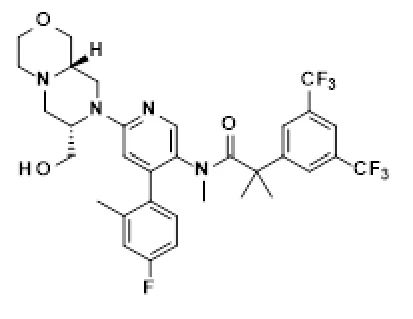
Structural formula:
Physicochemical properties:
Elinzanetant is a white to off-white to yellowish solid. It is practically insoluble in water and slightly soluble under acidic conditions.
14 Clinical Trials
14.1 Clinical Trials by Indication
Moderate to Severe VMS Associated with Menopause
| Table 7 – Summary of patient demographics for clinical trials in the treatment of moderate to severe vasomotor symptoms (VMS) associated with menopause | |||||
|---|---|---|---|---|---|
| Study # | Study design | Dosage, route of administration and duration | Study subjects (n) | Mean age (Range) | Sex |
| Study 1 | Randomized, double-blind, placebo-controlled, multicenter | Elinzanetant 120 mg or placebo orally once daily for 12 weeks, followed by elinzanetant 120 mg for 14 weeks, for a total treatment of up to 26 weeks | Elinzanetant 120 mg: n = 199 Placebo-elinzanetant: n = 197 | 54.6 years (40 - 65) | 100% females |
| Study 2 | Randomized, double-blind, placebo-controlled, multicenter | Elinzanetant 120 mg or placebo orally once daily for 12 weeks, followed by elinzanetant 120 mg for 14 weeks, for a total treatment of up to 26 weeks | Elinzanetant 120 mg: n = 200 Placebo-elinzanetant: n = 200 | 54.6 years (40 - 65) | 100% females |
The efficacy of LYNKUET for the treatment of moderate to severe vasomotor symptoms (VMS) associated with menopause were demonstrated in two similar randomized, double-blind, placebo-controlled, multicenter phase 3 studies (Study 1 and 2). A total of 796 postmenopausal patients were randomized 1:1 to receive LYNKUET or placebo once daily at bedtime for 12 weeks, followed by LYNKUET for 14 weeks, for a total treatment of up to 26 weeks.
Study 1 and Study 2 included female patients aged 40 to 65 years old who were postmenopausal (defined as ≥12 months of spontaneous amenorrhea; or ≥6 months of spontaneous amenorrhea with serum follicle-stimulating hormone >40 mIU/mL and estradiol <30 pg/mL; or status post bilateral oophorectomy) and experiencing ≥50 moderate to severe hot flashes (HFs) per week.
Key exclusion criteria included a current or past history of any malignancy (except basal or squamous cell skin cancer) unless in complete remission for ≥5 years. Patients receiving adjuvant endocrine therapy (e.g., tamoxifen, aromatase inhibitors, or GnRH analogues) were also excluded.
In Study 1 and Study 2, patient demographics were generally balanced between treatment arms. Patients were 80.4% White, 17.1% Black or African American, 0.5% Asian, and 8.5% with Hispanic or Latino ethnicity. The study population included patients with prior hysterectomy (38.8%), prior uni-/bilateral oophorectomy (20.6%), or prior hormone replacement therapy (HRT) use (31.4%). The proportion of patients that experienced early menopause (<45 years) and premature menopause (<40 years) in Study 1 and 2 combined was 26.8% and 11.8% respectively in the elinzanetant arm, and 24.4% and 11.1% respectively in the placebo arm. The proportion of smokers (current or former) was 35.0% overall and comparable between treatment arms in the pooled analysis. In Study 1, smokers (current or former) were more common in the placebo arms (41.7% vs. 24.7%), while in Study 2 the reverse was observed (41.5% in elinzanetant arm vs. 32.5% in the placebo).
The primary efficacy endpoints in both studies were the mean change in frequency of moderate to severe HF from baseline to Weeks 4 and 12, including day and night HFs measured using the Hot Flash Daily Diary (HFDD).
The key secondary endpoints were the mean change in severity of moderate to severe HF from baseline to Week 4 and 12 using the HFDD, and mean change in frequency of moderate to severe HFs from baseline to Week 1 using the HFDD.
Study Results
In OASIS 1 (Study 1) and OASIS 2 (Study 2), LYNKUET treatment arms showed a statistically significant and clinically meaningful reduction in frequency of moderate to severe HFs from baseline to weeks 4 and 12 compared to placebo. In OASIS 1 and OASIS 2, LYNKUET treatment arms showed a statistically significant reduction in severity of moderate to severe HFs from baseline to weeks 4 and 12 compared to placebo. Results of the change in mean frequency and severity of moderate to severe HFs over 24 hours from OASIS 1 and OASIS 2 are shown in Table 8.
Table 8 – Results of the mean change in frequency and severity of moderate to severe VMS associated with menopause at week 4 and 12 in studies 1 and 2
| Study 1 | Study 2 | |||||||||||||||||
|---|---|---|---|---|---|---|---|---|---|---|---|---|---|---|---|---|---|---|
LYNKUET 120mg (N = 199) | Placebo (N = 197) | Adjusteda treatment difference (95% CI) P-value | LYNKUET 120mg (N = 200) | Placebo (N = 200) | Adjusteda treatment difference (95% CI) P-value | |||||||||||||
| Primary endpoints: Frequency | ||||||||||||||||||
| Baseline Mean (SD) | 13.38 (6.57) | 14.26 (13.94) | - | 14.66 (11.08) | 16.16 (11.15) | - | ||||||||||||
Change at Week 4 LS-Means (SE) | -7.60 (0.43) | -4.31 (0.43) | -3.29 (-4.47, -2.10)b <0.0001 | -8.58 (0.49) | -5.54 (0.49) | -3.04 (-4.40, -1.68)b <0.0001 | ||||||||||||
Change at Week 12 LS-Means (SE) | -8.66 (0.58) | -5.44 (0.59) | -3.22 (-4.81, -1.63)b <0.0001 | -9.72 (0.50) | -6.48 (0.49) | -3.24 (-4.60, -1.88)b <0.0001 | ||||||||||||
| Key secondary endpoints: Severity | ||||||||||||||||||
| Baseline Mean (SD) | 2.56 (0.22) | 2.53 (0.23) | - | 2.53 (0.24) | 2.54 (0.24) | - | ||||||||||||
Change at Week 4 LS-Means (SE) | -0.73 (0.04) | -0.40 (0.04) | -0.33 (-0.44, -0.23)b <0.0001 | -0.75 (0.04) | -0.53 (0.04) | -0.22 (-0.34, -0.09)b 0.0003 | ||||||||||||
Change at Week 12 LS-Means (SE) | -0.92 (0.05) | -0.52 (0.05) | -0.40 (-0.54, -0.25)b <0.0001 | -0.91 (0.06) | -0.62 (0.05) | -0.29 (-0.44, -0.14)b <0.0001 | ||||||||||||
a. Based on a mixed model with repeated measures analysis of covariance adjusted for randomization stratification factors b. Statistically significant under multiplicity control for LYNKUET vs PLACEBO comparison (p < 0.05) CI = Confidence Interval, LS-Means = Least Squares Means, SD = Standard Deviation, SE = Standard Error | ||||||||||||||||||
Moderate to Severe VMS Caused by Adjuvant Endocrine Therapy Related to Breast Cancer
| Table 9 – Summary of patient demographics for clinical trials in the treatment of moderate to severe vasomotor symptoms (VMS) caused by adjuvant endocrine therapy | |||||
|---|---|---|---|---|---|
| Study # | Study design | Dosage, route of administration and duration | Study subjects (n) | Mean age (Range) | Sex |
| Study 4 | Randomized, double-blind, placebo-controlled, multicenter | Elinzanetant 120 mg or placebo orally once daily for 12 weeks, followed by elinzanetant 120 mg for 40 weeks, for a total treatment of up to 52 weeks | Elinzanetant 120 mg: n = 316 Placebo-elinzanetant: n = 158 | 51.0 years (28 - 70) | 100% females |
The efficacy of LYNKUET for the treatment of moderate to severe VMS caused by adjuvant endocrine therapy related to breast cancer was demonstrated in a randomized, double-blind, placebo-controlled, multicenter phase 3 study (Study 4) in female patients receiving adjuvant endocrine treatment for hormone receptor-positive breast cancer. A total of 474 female patients were randomized 2:1 to receive LYNKUET or placebo once daily at bedtime for 12 weeks, followed by LYNKUET for 40 weeks, for a total treatment of up to 52 weeks.
Study 4 included female patients aged 28 to 70 years old who had at least 35 moderate to severe HFs, including night-time HFs, per week. All study participants received concurrently adjuvant endocrine therapy with tamoxifen (55.9%) or aromatase inhibitors (44.1%), both with or without the use of GnRH analogues.
Key exclusion criteria included an initial diagnosis of metastatic hormone-receptor positive breast cancer (stage IV) or recurrence under adjuvant endocrine therapy of hormone-receptor positive breast cancer, a current or history of any malignancy (except for hormone-receptor positive breast cancer (stage 0-III), basal and squamous cell skin tumors) unless in complete remission for ≥5 years. Patients who had a surgery or non-surgical treatment for breast cancer within the last 3 months (except use of tamoxifen, aromatase inhibitors, or GnRH analogues) were also excluded.
Patient demographics were generally balanced between treatment arms. Patients were 88.2% White, 1.5% Black or African American, 0.4% Asian, and 2.5% with Hispanic or Latino ethnicity. The study population included patients with prior hysterectomy (12.4%) or prior uni-/bilateral oophorectomy (12.2%). Eighteen women (3.8%) were of 65 years or older.
The primary efficacy endpoint was the mean change in frequency of moderate to severe HFs from baseline to Weeks 4 and 12, including day and night HFs measured using the HFDD.
The key secondary endpoints were the mean change in the patient reported outcome (PRO) instruments’ scores: the Patient-Reported Outcomes Measurement Information System Sleep Disturbance Short Form 8b (PROMIS SD SF 8b) total T-score assessing sleep disturbances and the Menopause Specific Quality of Life (MENQOL) total score evaluating menopause-related quality of life from baseline to Week 12.
Study Results
In OASIS 4 (Study 4), the LYNKUET treatment arm showed a statistically significant reduction in frequency of moderate to severe HFs from baseline to weeks 4 and 12 compared to placebo. Results of the change in mean frequency of moderate to severe HFs from baseline to Weeks 4 and 12 are shown in Table 10.
Patients treated with LYNKUET showed a statistically significant improvement in sleep disturbances from baseline to Week 12 compared to placebo as assessed by the PROMIS SD SF 8b total T-score. Patients treated with LYNKUET also showed a statistically significant improvement in menopause related quality of life from baseline to Week 12 compared to placebo as assessed by the MENQOL total score. Results of the sleep disturbances and menopause related quality of life from baseline to Week 12 as assessed by the PROMIS SD SF 8b total T-score and MENQOL total score are shown in Table 10.
Table 10 – Results of the mean change from baseline in frequency of moderate to severe VMS caused by adjuvant endocrine therapy at week 4 and 12 and mean change from baseline in PROMIS SD SF 8b total T-score and MENQOL total score at week 12 in Study 4
| Study 4 | |||||||||
|---|---|---|---|---|---|---|---|---|---|
LYNKUET 120mg (N = 316) | Placebo (N = 158) | Adjusted a treatment difference (95% CI) P-value | |||||||
| Primary endpoints: Frequency | |||||||||
| Baseline Mean (SD) | 11.41 (6.89) | 11.52 (6.43) | - | ||||||
Change at Week 4 LS-Means (SE) | -6.47 (0.26) | -2.99 (0.36) | -3.48 (-4.35, -2.61)b <0.0001 | ||||||
Change at Week 12 LS-Means (SE) | -7.53 (0.25) | -4.16 (0.35) | -3.38 (-4.21, -2.54)b <0.0001 | ||||||
| Key secondary endpoints: PROMIS SD SF 8b total T-score and MENQOL total score | |||||||||
| PROMIS SD SF 8b total T-score Baseline Mean (SD) | 60.60 (6.33) | 60.74 (6.80) | - | ||||||
Change at Week 12 LS-Means (SE) | -10.06 (0.41) | -3.94 (0.57) | -6.12 (-7.49, -4.75)b <0.0001 | ||||||
| MENQOL total score Baseline Mean (SD) | 4.82 (1.17) | 4.77 (1.25) | - | ||||||
Change at Week 12 LS-Means (SE) | -1.23 (0.06) | -0.55 (0.08) | -0.68 (-0.88, -0.48)b <0.0001 | ||||||
a. Based on a mixed model with repeated measures analysis of covariance adjusted for baseline and randomization stratification factors b. Statistically significant under multiplicity control for LYNKUET vs PLACEBO comparison (one-sided p < 0.025) CI = Confidence Interval, LS-Means = Least Squares Means, MENQOL = Menopause Specific Quality of Life Scale, PROMIS SD SF 8b = Patient-Reported Outcomes Measurement Information System Sleep Disturbance Short Form 8b, SD = Standard Deviation, SE = Standard Error | |||||||||
16 Non-Clinical Toxicology
General toxicology
Repeat dose toxicity studies were conducted in rats and cynomolgus monkeys. Key elinzanetant target organs/systems identified were the female reproductive system, the central nervous system, the gastrointestinal system, and skeletal muscles. In female rats, daily administration of elinzanetant for 4 weeks at doses of 100 mg/kg (40-times the AUC(0-24) at the human therapeutic dose) showed signs of abnormal diestrus including, mucification of the vaginal epithelium, uterine atrophy, and persistent corpora lutea, with the NOAEL considered at 25 mg/kg (10-times the AUC(0-24) at the human therapeutic dose).
In a single 13-week study in rats with BID dosing, daily administration of elinzanetant at doses of 50 mg/kg/day in males or 20 mg/kg/day in females, respectively (4- or 7-times the AUC(0-24) at the human therapeutic dose) led to involuntary muscle contractions from Day 24 in 10/88 animals, which later had also convulsions from Day 34. In the same study, daily administration of elinzanetant at doses equal to or greater than 100 mg/kg/day (16-times the AUC(0-24) at the human therapeutic dose) showed skeletal muscle degeneration and necrosis. The NOAEL was not established in this study due to the observed clinical signs at all doses ≥20 mg/kg/day. Convulsions were also observed in a 2-year rat study at doses equal to or greater than 60 mg/kg/day (20-times the AUC(0-24) at the human therapeutic dose).
In female cynomolgus monkeys, daily administration of elinzanetant for 39 weeks with BID dosing at doses equal to or greater than 60 mg/kg/day showed reduced cyclical ovarian activity, along with decreased ovary and/or uterus weight. In the same study, administration of elinzanetant at doses equal to or greater than 80 mg/kg/day showed diarrhea, with an established NOAEL of 60 mg/kg/day (2-times the AUC(0-24) at the human therapeutic dose) for gastrointestinal toxicity. Finally, minimal sinusoid compression and findings of increased liver weight, indicative of hypertrophy of liver cells, were observed in females at ≥60 mg/kg/day. These findings are regarded as an adaptive response to increased metabolic demand on liver cells.
Genotoxicity
Elinzanetant showed no genotoxic potential in a panel of in vitro and in vivo genotoxicity tests including a bacterial mutation assay (Ames test), a mouse lymphoma assay, and an in vivo bone marrow micronucleus test in rats. Additionally, the principal human metabolites of elinzanetant were negative for genotoxicity in vitro in the Ames and micronucleus test.
Carcinogenicity
The carcinogenic potential of elinzanetant was investigated in a 6-month study in transgenic (Tg.rasH2) mice and in a 2-year study in female rats, both conducted by the oral route. In mice, there were no drug-related neoplasms observed up to the highest dose of 85 or 70 mg/kg/day in males or females, respectively (3- or 2-times the AUC(0-24) at the human therapeutic dose).
In a 2-year carcinogenicity study on elinzanetant in rats, an increase in uterine neoplasms and malignant lymphomas was reported at a dose of 60 mg/kg/day, representing at least 29-times the total AUC(0-24) at the human therapeutic dose. Based on the large margin of exposure LYNKUET is not expected to pose a clinically relevant carcinogenic risk to patients. These effects were not observed at a dose of 20 mg/kg/day, representing 7-times the total AUC(0-24) at the human therapeutic dose. The increased incidence of uterine neoplasms in aged rats undergoing reproductive senescence with pronounced body weight reduction resembles effects observed in dietary restriction studies in rats and chronic, drug-induced hypoprolactinemia, a rat-specific mode of action, which is not relevant for humans.
Reproductive and developmental toxicology
In the female rat fertility and early embryonic development study, female rats were treated with elinzanetant for 22 days prior to pairing and until gestation day 6 (GD6) at oral doses up to 100 mg/kg/day. Elinzanetant did not affect fertility in female rats; however, increased percentage of pre-implantation and post-implantation embryo loss, resulting in reduced litter size, and lower fetal body weights were seen at the dose of 100 mg/kg/day (16-times the AUC(0-24) at the human therapeutic dose). These effects were not observed following dosing at 25 mg/kg/day (4-times the AUC(0-24) at the human therapeutic dose).
In the embryo-fetal development studies with elinzanetant, no evidence of teratogenicity occurred at high doses up to 100 mg/kg/day in rats treated from GD6 to GD17 and up to 140 mg/kg/day in rabbits treated from GD7 to GD19 (23-times and 1-time the AUC(0-24) at the human therapeutic dose respectively).
In the pre- and post-natal development studies in rats, elinzanetant reduced perinatal survival of the offspring in female rats treated from GD6 to lactation day 20 (LD 20) at oral doses ≥5 mg/kg/day, yielding exposure equivalent to that of patients at the recommended dose. Increased post implantation loss, delayed parturition, dystocia, increased stillbirths, and decreased pup body weight were observed in rats at 100 mg/kg/day.
Elinzanetant and/or its metabolites were shown to cross the placenta in rats.
Following administration of radiolabeled elinzanetant, elinzanetant and its major metabolite M30/34 were shown to be readily excreted in the milk of lactating rats and were detectable in pup plasma.
Special Toxicology
Elinzanetant binds to melanin and absorbs light in the visible part of the spectrum. 14C-elinzanetant-derived radioactivity has a long half-life in rat skin, which could indicate prolonged retention of elinzanetant in the skin, and therefore, potentially lead to accumulation in this tissue. Phototoxicity was seen in vitro at a concentration of 316 ng/mL (67x the unbound clinical Cmax at the clinical dose of 120 mg/day). No phototoxicity was seen at 100 ng/mL (21x the unbound clinical Cmax at the clinical dose of 120 mg/day). Clinical relevance is unknown but cannot be excluded.