


Product Monograph - Vepesid
RECENT MAJOR LABEL CHANGES
| 7 Warnings and Precautions, Endocrine and Metabolism | 07/2024 |
|---|---|
| 7 Warnings and Precautions, Driving and Operating Machinery | 07/2024 |
| 8 Adverse Reactions | 07/2024 |
TABLE OF CONTENTS
Sections or subsections that are not applicable at the time of authorization are not listed.
RECENT MAJOR LABEL CHANGES ............................................................................................. 2
TABLE OF CONTENTS ................................................................................................................ 2
PART I: HEALTH PROFESSIONAL INFORMATION ....................................................................... 4
1 INDICATIONS ................................................................................................................ 4
1.1 Pediatrics ................................................................................................................. 4
1.2 Geriatrics ................................................................................................................. 4
2 CONTRAINDICATIONS ................................................................................................... 4
3 SERIOUS WARNINGS AND PRECAUTIONS BOX .............................................................. 5
4 DOSAGE AND ADMINISTRATION .................................................................................. 5
4.1 Dosing Considerations ............................................................................................. 5
4.2 Recommended Dose and Dosage Adjustment ......................................................... 5
4.3 Administration ......................................................................................................... 6
4.4 Missed dose ............................................................................................................. 6
5 OVERDOSAGE ............................................................................................................... 6
6 DOSAGE FORMS, STRENGTHS, COMPOSITION AND PACKAGING .................................. 7
7 WARNINGS AND PRECAUTIONS .................................................................................... 7
7.1 Special Populations ................................................................................................ 10
7.1.1 Pregnant Women ............................................................................................ 10
7.1.2 Breast-feeding ................................................................................................. 10
7.1.3 Pediatrics ........................................................................................................ 10
7.1.4 Geriatrics ......................................................................................................... 10
8 ADVERSE REACTIONS .................................................................................................. 11
8.1 Adverse Reaction Overview ................................................................................... 11
9 DRUG INTERACTIONS ................................................................................................. 14
9.1 Serious Drug Interactions ....................................................................................... 14
9.2 Drug interactions Overview ................................................................................... 14
9.3 Drug-Behavioural Interactions ............................................................................... 14
9.4 Drug-Drug Interactions .......................................................................................... 15
9.5 Drug-Food Interactions .......................................................................................... 16
9.6 Drug-Herb Interactions .......................................................................................... 16
9.7 Drug-Laboratory Test Interactions ......................................................................... 16
10 CLINICAL PHARMACOLOGY ......................................................................................... 16
10.1 Mechanism of Action ....................................................................................... 16
10.2 Pharmacodynamics .......................................................................................... 16
10.3 Pharmacokinetics ............................................................................................. 16
11 STORAGE, STABILITY AND DISPOSAL .......................................................................... 19
12 SPECIAL HANDLING INSTRUCTIONS ............................................................................ 19
PART II: SCIENTIFIC INFORMATION ........................................................................................ 21
13 PHARMACEUTICAL INFORMATION ............................................................................. 21
14 CLINICAL TRIALS ......................................................................................................... 22
15 MICROBIOLOGY .......................................................................................................... 22
16 NON-CLINICAL TOXICOLOGY ....................................................................................... 22
PATIENT MEDICATION INFORMATION ................................................................................... 27
PART I: HEALTH PROFESSIONAL INFORMATION
1 INDICATIONS
VEPESID (etoposide) is indicated for:
Small Cell Carcinoma of the Lung
- first-line therapy in combination with other established antineoplastic agents.
- second-line combination or single agent therapy in patients who have not responded or relapsed on other chemotherapeutic regimens.
Malignant Lymphoma (histiocytic type)
- first-line therapy in combination with other established antineoplastic agents.
Non-small Cell Carcinoma of the Lung
- for patients considered ineligible for surgery, etoposide has been shown effective alone or in combination with PLATINOL (cisplatin).
- for patients who require chemotherapy following surgery.
Testicular Malignancies (germ cell tumours including seminomas)
- in combination with other effective chemotherapeutic agents in patients who have already received appropriate therapy.
1.1 Pediatrics
Pediatrics(<18 years of age): No data are available to Health Canada; therefore, Health Canada has not authorized an indication for pediatric use.
1.2 Geriatrics
Geriatrics: No data are available to Health Canada; therefore, Health Canada has not authorized an indication for geriatric use.
2 CONTRAINDICATIONS
VEPESID (etoposide) is contraindicated
- in patients who are hypersensitive to this drug or to any ingredient in the formulation, including any non-medicinal ingredient, or component of the container. For a complete listing, see 6 DOSAGE FORMS, STRENGTHS, COMPOSITION AND PACKAGING.
- in patients having severe leukopenia, thrombocytopenia and severe hepatic and/or renal impairment.
3 SERIOUS WARNINGS AND PRECAUTIONS BOX
Serious Warnings and Precautions
Vepesid (etoposide) is a potent drug and should be used only by qualified physicians experienced with cancer chemotherapeutic drugs (see 7 WARNINGS AND PRECAUTIONS). Severe myelosuppression with resulting infection or bleeding may occur. Blood counts as well as renal and hepatic function tests should be taken regularly. Discontinue the drug if abnormal depression of bone marrow or abnormal renal or hepatic function is seen. Tumour lysis syndrome (sometimes fatal) has been reported following the use of etoposide in association with other chemotherapeutic drugs. |
|---|
4 DOSAGE AND ADMINISTRATION
4.1 Dosing Considerations
The bioavailability varies from patient to patient following any oral dose. This should be taken into consideration when prescribing this medication.
4.2 Recommended Dose and Dosage Adjustment
Oral: 100 – 200 mg/m2 daily for 5 days
Daily doses greater than 200 mg should be divided and given twice daily.
In view of significant intra-patient variability, dose adjustment may be required to achieve the desired therapeutic effect.
Dosage should be modified to take into account the myelosuppressive effects of other drugs in the combination or the effects of prior X-ray therapy or chemotherapy which may have compromised bone marrow reserve.
Renal Impairment:
In patients with impaired renal function, the following initial dose modification should be considered based on measured creatinine clearance.
Table1: Dosage in Patients with Renal Impairment
| Measured Creatinine Clearance | Dose of Etoposide |
|---|---|
| > 50 mL/min | 100 % of dose |
| 15 – 50 mL/min | 75 % of dose |
Subsequent dosing should be based on patient tolerance and clinical effect. Data are not available in patients with creatinine clearance <15 mL/min and further dose reduction should be considered in those patients.
Health Canada has not authorized an indication for pediatric use.
4.3 Administration
Capsules should be taken on an empty stomach.
4.4 Missed dose
Missed doses should not be replaced by double doses and medication should be resumed at the usual time.
5 OVERDOSAGE
The anticipated acute complications would be related to VEPESID's hematotoxicity.
Total doses of 2.4 g/m2 to 3.5 g/m2 administered intravenously over three days resulted in severe mucositis and myelotoxicity.
Metabolic acidosis and cases of serious hepatic toxicity have been reported in patients receiving higher than recommended intravenous doses of etoposide.
There is no known antidote and therefore symptomatic measures should be taken to sustain the patient through any period of toxicity that might occur. Patients' renal and hepatic functions should be monitored for 3-4 weeks in case of delayed toxicity.
| For management of a suspected drug overdose, contact your regional poison control centre. |
|---|
6 DOSAGE FORMS, STRENGTHS, COMPOSITION AND PACKAGING
Table 2: Dosage Forms, Strengths, Composition and Packaging
Each liquid-filled, soft gelatin pink capsule contains 50 mg of etoposide.
VEPESID 50 mg capsules are available in bottles of 20.
7 WARNINGS AND PRECAUTIONS
Please see 3 SERIOUS WARNINGS AND PRECAUTIONS BOX.
General
The physician must evaluate the need and usefulness of the drug against the risk of adverse reactions. Most such adverse reactions are reversible if detected early. If severe reactions occur, the drug should be reduced in dosage or discontinued and appropriate corrective measures should be taken according to the clinical judgement of the physician. Reinstitution of VEPESID (etoposide) therapy should be carried out with caution, and with adequate consideration of the further need for the drug and alertness to the possible recurrence of toxicity.
VEPESID should be administered by individuals experienced in the use of antineoplastic therapy.
Bacterial infection must be brought under control before the administration of VEPESID therapy because of the risk of septicemia.
Carcinogenesis and Mutagenesis
Carcinogenicity tests with VEPESID have not been conducted in laboratory animals. Given its mechanism of action, it should be considered a possible carcinogen in humans.
| Route of Administration | Dosage Form / Strength/Composition | Non-medicinal Ingredients |
| Oral | Capsules, 50 mg, etoposide | Capsule filling: Citric acid, glycerol, polyethylene glycol 400, purified water. Capsule shell: gelatin, glycerol, parabens (ethyl and propyl), purified water, red iron oxide, sorbitol, titanium dioxide |
The occurrence of acute leukemia, which can occur with or without a preleukemic phase, has been reported rarely in patients treated with VEPESID in association with other antineoplastic drugs.
Neither the cumulative risk, nor the predisposing factors related to the development of secondary leukemia are known. The roles of both administration schedules and cumulative doses of etoposide have been suggested but have not been clearly defined.
An 11q23 chromosome abnormality has been observed in some cases of secondary leukemia in patients who have received epipodophyllotoxins. This abnormality has also been seen in patients developing secondary leukemia after being treated with chemotherapy regimens not containing epipodophyllotoxins and in leukemia occurring de novo. Another characteristic that has been associated with secondary leukemia in patients who have received epipodophyllotoxins appears to be a short latency period, with average median time to development of leukemia being approximately 32 months.
Endocrine and Metabolism
Tumour lysis syndrome (sometimes fatal) has been reported following the use of etoposide in association with other chemotherapeutic drugs. Close monitoring of patients is needed to detect early signs of tumour lysis syndrome, especially in patients with risk factors such as bulky treatment-sensitive tumours, and renal insufficiency. Appropriate preventive measures should also be considered in patients at risk of this complication of therapy.
Contamination
Professional staff administering VEPESID should exercise particular care to prevent spillage and self-contact with the drug. Skin reactions, at times severe, associated with accidental exposure to VEPESID may occur. Gloves should be worn by anyone handling the drug.
Driving and Operating Machinery
No studies on the effects on the ability to drive and use machines have been performed. Etoposide may cause adverse reactions that affect the ability to drive and use machines such as fatigue, somnolence, nausea, vomiting, cortical blindness, hypersensitivity reactions with hypotension. Patients who experience such adverse reactions should be advised to avoid driving or using machines.
Hematologic
Fatal myelosuppression has been reported following etoposide administration. Patients being treated with VEPESID (etoposide) must be frequently observed for myelosuppression both during and after therapy. Dose-limiting bone marrow suppression is the most significant toxicity associated with VEPESID therapy. The following studies should be obtained at the start of therapy and prior to each subsequent dose of VEPESID: platelet count, hemoglobin, white blood cell count and differential.
The occurrence of a platelet count below 50,000/mm3 or an absolute neutrophil count below 500/mm3 is an indication to withhold further therapy until the blood counts have sufficiently recovered. A white blood cell count of between 2,000 – 3,000 cells/mm3 suggests that the dose of VEPESID should be reduced by 50%. Platelet counts between 75,000 - 100,000 cells /mm3 require a dosage reduction of 50%.
Myelosuppression is dose related and dose limiting, with granulocyte nadirs occurring 7 to 14 days and platelet nadirs occurring 9 to 16 days after drug administration. Bone marrow recovery is usually complete by day 20, and no cumulative toxicity has been reported.
Hepatic/Biliary/Pancreatic
Liver function should be regularly monitored.
Patients with low serum albumin may be at increased risk for etoposide-associated toxicities.
Immune
Concomitant use of VEPESID with a live virus vaccine may potentiate the replication of the vaccine virus and/or may increase the adverse reaction of the vaccine virus because normal defense mechanisms may be suppressed by VEPESID. Vaccination with a live vaccine in a patient taking VEPESID may result in severe infection. Patient's antibody response to vaccines may be decreased. The use of live vaccines should be avoided and individual specialist advice sought (see 9.1 Serious Drug Interactions).
Physicians should be aware of the possible occurrence of an anaphylactic reaction manifested by chills, fever, tachycardia, bronchospasm, dyspnea and/or hypotension (see 8 ADVERSE REACTIONS). Treatment is symptomatic. The administration of VEPESID should be terminated immediately, followed by the administration of pressor agents, corticosteroids, antihistamines, or volume expanders at the discretion of the physician.
Renal
Renal function should be regularly monitored.
Reproductive Health: Female and Male Potential
Fertility
Given the mutagenic potential of VEPESID, an effective contraception is required for both male and female patients during treatment and up to 6 months after ending treatment. Genetic consultation is recommended if the patient wishes to have children after ending the treatment. VEPESID may decrease fertility. As VEPESID may decrease male fertility, preservation of sperm may be considered for the purpose of later fatherhood.
VEPESID has caused reduced or absent spermatogenesis and reduced testes weights at autopsy in rats and dogs, as well as reduced weight of ovaries in female rats. Chronic toxicity studies in rats have shown etoposide to have an oncogenic potential (see 16 NON-CLINICAL TOXICOLOGY Error! Reference source not found.Error! Reference source not found.).
Teratogenic Risk
VEPESID can cause fetal harm when administered to pregnant women. (See 7.1.1 Pregnant Women).
7.1 Special Populations
7.1.1 Pregnant Women
VEPESID can cause fetal harm when administered to pregnant women.
VEPESID has been shown to be embryotoxic in rats and teratogenic in mice and rats. There are no adequate and well-controlled studies in pregnant women. If the drug is used during pregnancy, or if the patient becomes pregnant while receiving this drug, the patient should be apprised of the potential hazard to the fetus. Women of childbearing potential should be advised to avoid becoming pregnant.
7.1.2 Breast-feeding
There has been evidence of VEPESID being excreted in human milk.
Because of the potential for serious adverse reactions in nursing infants from etoposide, breast feeding should be discontinued.
As with any potent antineoplastic drug, the benefit to patient versus the risk of toxicity must be carefully weighed.
7.1.3 Pediatrics
No data are available to Health Canada; therefore, Health Canada has not authorized an indication for pediatric use.
Safety and effectiveness in pediatric patients have not been systematically studied. Clinical experience in childhood malignancies is very limited.
7.1.4 Geriatrics
No data are available to Health Canada; therefore, Health Canada has not authorized an indication for geriatric use.
8 ADVERSE REACTIONS
8.1 Adverse Reaction Overview
The most commonly reported adverse reactions are leukopenia, thrombocytopenia, nausea and vomiting, anorexia and alopecia.
The following data on adverse events are based on both oral and intravenous administration of VEPESID (etoposide) as a single agent, using several different dose schedules for treatment of a wide variety of malignancies.
The incidences of adverse reactions are derived from multiple data bases from studies in patients when VEPESID was used either orally or by injection as a single agent.
Blood and lymphatic system disorders:
Leukopenia (less than 4,000 cells/mm3) and severe leukopenia (less than 1,000 cells/mm3) were observed in 60% to 91% and 3% to 17%, respectively, of patients treated with single agent VEPESID. Thrombocytopenia (less than 100,000 platelets/mm3) and severe thrombocytopenia (less than 50,000 platelets/mm3) were seen in 22% to 41% and 1% to 20 %, respectively, of this same group of patients. Anemia was observed in 0% to 33% of patients.
Since leukopenia (including neutropenia) and thrombocytopenia have been reported in patients on VEPESID therapy, platelets and white blood cell counts should be performed prior to each cycle (see 7 WARNINGS AND PRECAUTIONS).
Myelosuppression with fatal outcome has been reported following etoposide administration (see 7 WARNINGS AND PRECAUTIONS).
Cardiac disorders:
Myocardial infarction (some with a fatal outcome) and arrhythmia have been reported.
Gastrointestinal disorders:
Nausea and vomiting are the major gastrointestinal toxicities. They have been noted in 31% to 43% of patients given intravenous VEPESID. The severity of such nausea and vomiting is generally mild to moderate with treatment discontinuation required in 1% of patients. Nausea and vomiting can usually be controlled with standard antiemetic therapy. Gastrointestinal toxicities are slightly more frequent after oral administration than after intravenous infusion. Anorexia was seen in 10% to 13% and stomatitis in 1% to 6%. of those patients given intravenous VEPSID. Abdominal pain and diarrhea were noted in 0% to 2% and in 1% to 13%, respectively. Mild to severe mucositis/esophagitis may occur. Mouth ulceration has been reported in 2% of the patients. Constipation, dysgeusia and dysphagia have been reported rarely.
General disorders and administration site conditions:
Asthenia has been reported in 3% of the patients. Fatigue, malaise and pyrexia have been reported rarely.
Hepatobiliary disorders:
Hepatotoxicity has been reported rarely.
Immune system disorders:
Anaphylactic-like reactions have occurred very rarely in patients treated with oral capsules. During or immediately after intravenous VEPESID administration, anaphylactic-like reactions characterized by chills, fever, tachycardia, bronchospasm, dyspnea and/or hypotension have been reported to occur in 0.7% - 2% of patients. Higher rates of anaphylactic- like reactions have been reported in children who received VEPESID infusions at concentrations higher than those recommended. The role that concentration of infusion (or rate of infusion) plays in the development of anaphylactic-like reactions is uncertain. Anaphylactic-like reactions have usually responded promptly to the cessation of the infusion of VEPESID, and subsequent administration of pressor agents, corticosteroids, antihistamines or volume expanders as appropriate. Acute fatal reactions associated with bronchospasm have been reported. Hypertension and/or flushing and/or seizures have also been reported. Blood pressure usually normalizes within a few hours after cessation of the infusion. Anaphylactic-like reactions can occur with the initial dose of VEPESID. Apnea with spontaneous resumption of breathing following discontinuation has been described in patients receiving etoposide infusion.
There have been case reports where angioedema has been reported in hypersensitivity reactions following etoposide administration.
Infections and infestations:
Infection, including opportunistic infections like pneumocystis jirovecii pneumonia, has been reported. Candida infections (including moniliasis) have been reported in less than 1% of patients.
Sepsis has been reported in less than 1% of patients.
Investigations:
Alanine aminotransferase increased, alkaline phosphatase increased, aspartate amino transferase increased, and bilirubin increased have been reported with unknown frequency.
Metabolism and nutrition disorders:
Tumour lysis syndrome (sometimes fatal) has been reported following the use of VEPESID in association with other chemotherapeutic drugs.
Hyperuricemia has been reported in less than 1% of patients.
Neoplasms benign and Malignant (including cysts and polyps)
The occurrence of acute leukemia with or without a preleukemic phase has been reported in patients treated with VEPESID in association with other antineoplastic agents.
Nervous system disorders:
Peripheral neuropathy has been reported in 0.7% of patients. The occurrence of Posterior Reversible Encephalopathy Syndrome (PRES) has been reported in patients treated with VEPESID in association with other antineoplastic agents.
Neurotoxicity has been reported in 1% to 2% of the patients. Dizziness, hypoesthesia and paresthesia have been reported in less than 1% of the patients. Somnolence, transient cortical blindness and optic neuritis have been rarely reported.
Psychiatric disorders:
Depression has been reported in less than 1% of patients.
Reproductive system and breast disorders:
VEPESID may lead to infertility.
Respiratory, thoracic and mediastinal disorders:
Interstitial pneumonitis and pulmonary fibrosis have been rarely reported.
Skin and subcutaneous tissue disorders:
Alopecia, sometimes progressing to total baldness, has been observed in up to 66% of patients.
Nail pigmentation has been reported in less than 1% of patients.
Stevens-Johnson syndrome, toxic epidermal necrolysis (one fatal case), rash, pigmentation, pruritus, urticaria, and radiation recall dermatitis have been reported rarely.
Vascular disorders:
Events of haemorrhage have been observed.
9 DRUG INTERACTIONS
9.1 Serious Drug Interactions
Serious Drug Interactions There is increased risk of fatal systemic vaccine disease with the concomitant use of live vaccines. Live vaccines are not recommended in immunosuppressed patients. See 9.4 Drug-Drug Interactions |
|---|
9.2 Drug interactions Overview
Effects of other drugs on VEPESID
Cyclosporine: High dose cyclosporine, resulting in concentrations above 2,000 ng/mL, administered with oral etoposide has led to an 80% increase in etoposide exposure (AUC) with a 38% decrease in total body clearance of etoposide compared to etoposide alone.
Vincristine: Severe cases of neuropathy have been reported in 0.7% of patients possibly due to an interaction of vincristine and VEPESID.
Cisplatin: Concomitant cisplatin therapy is associated with reduced total body clearance of etoposide.
Phenytoin and other antiepileptic drugs: Concomitant phenytoin therapy is associated with increased VEPESID clearance and reduced efficacy. Other antiepileptic therapy may also be associated with increased VEPESID clearance and reduced efficacy.
Effects of VEPESID on other drugs
Co-administration of antiepileptic drugs and VEPESID can lead to decreased seizure control due to pharmacokinetic interactions between the drugs.
Warfarin: Concomitant warfarin therapy may result in elevated international normalized ratio (INR). Close monitoring of INR is recommended.
Other interactions
Cross resistance between anthracyclines and etoposide has been reported in preclinical experiments.
9.3 Drug-Behavioural Interactions
Drug-Behavioural interactions have not been established.
9.4 Drug-Drug Interactions
The drugs listed in this table are based on either drug interaction case reports or studies, or potential interactions due to the expected magnitude and seriousness of the interaction (i.e., those identified as contraindicated).
Table 4: Established or Potential Drug-Drug Interactions
| [Proper/Common name] | Source of Evidenc e | Effect | Clinical comment |
| Anthracyclines | PCE | Cross resistance with etoposide | Close monitoring of therapeutic effects. |
| Antiepileptic drugs, e.g. phenytoin | PM | Increase of etoposide clearance; pharmacokinetic interaction | Reduced efficacy of VEPESID. Decreased seizure control. Close monitoring of the patient for therapeutic effects. |
| Cyclosporine (high dose) | CT | Decrease in total body clearance of etoposide | Increase in etoposide exposure when used with high dose cyclosporine (>2,000 ng/mL) Monitor the patient closely for adverse reactions of etoposide. |
| Cisplatin | PM | Decrease in total body clearance of etoposide | Increase in etoposide exposure when used with cisplatin. Monitor the patient closely for adverse reactions of etoposide. |
| Live vaccines | PM | Suppression of normal defense mechanisms against viruses by VEPESID. | Increased risk of fatal systemic vaccine disease. Live vaccines are not recommended in immunosuppressed patients. |
| Vincristine | T | Interaction of unknown mechanism | Close monitoring of the patient for neuropathy. |
| Warfarin | PM | Elevated international normalized ratio (INR) | Close monitoring of INR is recommended. |
Legend: C = Case Study; CT = Clinical Trial; PCE = Preclinical Experiments; PM = Post Marketing Information (safety database and literature); T = Theoretical
9.5 Drug-Food Interactions
Interactions with food have not been established.
9.6 Drug-Herb Interactions
Interactions with herbal products have not been established.
9.7 Drug-Laboratory Test Interactions
Interactions with laboratory tests have not been established.
10 CLINICAL PHARMACOLOGY
10.1 Mechanism of Action
VEPESID (etoposide) is a semi-synthetic derivative of podophyllotoxin used in the treatment of certain neoplastic diseases.
In vitro, etoposide has cytostatic action, which prevents the cells from entering mitosis or destroys them in the premitotic phase. Etoposide interferes with the synthesis of DNA and has a secondary effect on arresting cells in resting (G2) phase in experiments with human lymphoblastic cell lines. Its main effect appears to be at the late S or early G2 portion of the cell cycle in mammalian cells. Two different dose-dependent responses are seen. At high concentrations (10 µg/mL or more), lysis of cells entering mitosis is observed. At low concentrations (0.3 to 10 µg/mL), cells are inhibited from entering prophase. It does not interfere with microtubular assembly. The predominant macromolecular effect of VEPESID (etoposide) appears to be the induction of DNA strand breaks by an interaction with DNA-topoisomerase II or the formation of free radicals. Etoposide has been shown to cause metaphase arrest in chick fibroblasts.
In vitro experiments with radiolabelled thymidine have demonstrated that etoposide has a concentration dependent inhibition of thymidine uptake. Etoposide has demonstrated in vitro sensitivity as shown in studies with cell line of P-815, HeLa and L types.
In vivo, etoposide has shown activity in rodent transplantable tumours of the sarcomas 37 and 180 and the Walker carcinosarcoma, as well as leukemias P-1534 and L-1210.
10.2 Pharmacodynamics
This information is not available for the product.
10.3 Pharmacokinetics
On intravenous administration, the disposition of VEPESID (etoposide) is best described as a biphasic process with a distribution half-life of about 1.5 hours and terminal elimination half-life ranging from 4 to 11 hours. Total body clearance values range from 33 to 48 mL/min or 16 to 36 mL/min/m2 and, like the terminal elimination half-life, are independent of dose over a range 100- 600 mg/m2. Over the same dose range, the areas under the plasma concentration vs. time curves (AUC) and the maximum plasma concentration (Cmax) values increase linearly with dose.
Etoposide does not accumulate in the plasma following daily administration of 100 mg/m2 for 4 to 6 days.
Absorption
A plasma decay with a beta half-life of 6.8 hours was observed following oral administration of etoposide. The T1/2 for oral absorption was 0.44 hour and peak plasma concentrations were noted 0.5 to 3 hours after oral administration.
Cmax and AUC values for orally administered etoposide capsules for doses up to approximately 250 mg consistently fall in the same range as the Cmax and AUC values for an intravenous dose of one-half the size of the oral dose. The overall mean value of oral capsule bioavailability is approximately 50% (range 25-76%). A recent study concluded that the mean bioavailability of a 100 mg oral dose was 76 ± 22%. A 400 mg dose of VEPESID capsule proved to be 48 ± 18% bioavailable.
Distribution:
An intravenous dose (259 mg/m²) of tritium-labelled etoposide given over one hour in man, showed the mean volume of distribution to be 32% of body weight. The plasma decay was biphasic with a beta half-life of 11.5 hours. Urinary recovery was 44% of which 67% was unchanged drug. Recovery in feces was variable (1.5 - 16%) over a three-day period.
After either intravenous infusion or oral capsule administration of etoposide, the Cmax and AUC values exhibit marked intra- and inter-subject variability. This results in variability in the estimates of the absolute oral bioavailability of etoposide oral capsules. The overall mean value of oral capsule bioavailability is approximately 50% (range 25-75%).
The mean volumes of distribution at steady state fall in the range of 18 to 29 litres or 7 to 17 L/m2. Etoposide crosses the blood brain barrier in low concentrations. Etoposide enters the CSF poorly. Although it is detectable in CSF and intracerebral tumours, the concentrations are lower than in extracerebral tumours and in plasma. Etoposide concentrations are higher in normal lung than in lung metastases and are similar in primary tumours and normal tissues of the myometrium.
In vitro, etoposide is highly protein bound (97%) to human plasma proteins. In a study of the effects of other therapeutic agents on in vitro binding of 14C etoposide to human serum proteins, only phenylbutazone, sodium salicylate, and aspirin displace protein-bound etoposide at concentrations generally achieved in vivo.
Etoposide binding ratio correlates directly with serum albumin in cancer patients and normal volunteers. Unbound fraction of etoposide correlates significantly with bilirubin in cancer patients. There appears to be a significant inverse correlation between serum albumin concentration and free etoposide fraction.
Metabolism:
There is no evidence of a first-pass effect for etoposide. For example, no correlation exists between the absolute oral bioavailability of etoposide capsules and non-renal clearance. No evidence exists for any other differences in etoposide metabolism and excretion after administration of oral capsules as compared to intravenous infusion.
Biliary excretion of unchanged drug and/or metabolites is an important route of etoposide elimination as fecal recovery of radioactivity is 44% of the intravenous dose. The hydroxyacid metabolite [4'-dimethyl- epipodophyllic acid-9-(4,6-0-ethylidene-β-D-glucopyranoside)], formed by opening of the lactone ring, is found in the urine of adults and children. It is also present in human plasma, presumably as the trans isomer. Glucuronide and/or sulfate conjugates of etoposide are also excreted in human urine. Only 8% or less of an intravenous dose is excreted in the urine as radiolabeled metabolites of 14C-etoposide. In addition, O-demethylation of the dimethoxyphenol ring occurs through the CYP450 3A4 isoenzyme pathway to produce the corresponding catechol.
Elimination
Etoposide is cleared by both renal and nonrenal processes, i.e. metabolism and biliary excretion. Biliary excretion, however, appears to be a minor route of etoposide elimination.
After intravenous administration of 14C-etoposide (100-124 mg/m2), mean recovery of radioactivity in the urine was 56% of the dose at 120 hours, 45% of which was excreted as etoposide; fecal recovery of radioactivity was 44% of the dose at 120 hours.
In adults, the total body clearance of etoposide is correlated with creatinine clearance, low serum albumin concentration, and nonrenal clearance.
Special Populations and Conditions
Pediatrics
In a limited number of children, VEPESID administered in a dose of 200-250 mg/m2 produced a peak serum concentration between 17 and 88 µg/mL and showed a terminal half-life (T1/2 β) of 5.7 ± 1.3 hours. Mean plasma clearance was 21.5 mL/min/m2 and CSF concentrations 24 hours post-infusion ranged from less than 10 ng/mL to 45 µg/mL.
In children, approximately 55% of the dose is excreted in the urine as etoposide in 24 hours. The mean renal clearance of etoposide is 7 to 10 mL/min/m2 or about 35% of the total body clearance over a dose range of 80 to 600 mg/m2. An inverse relationship between plasma albumin levels and etoposide renal clearance is found in children.
Etoposide, therefore, is cleared by both renal and nonrenal processes, i.e. metabolism and biliary excretion. The effect of renal disease on plasma etoposide clearance is not known in children.
In children, elevated SGPT levels are associated with reduced drug total body clearance. Prior use of cisplatin may also result in a decrease of etoposide total body clearance in children.
Geriatrics
Although minor differences in pharmacokinetic parameters between patients ≤ 65 years and > 65 years of age have been observed, these are not considered clinically significant.
Sex
Although minor differences in pharmacokinetic parameters between gender have been observed, these are not considered clinically significant.
Hepatic Insufficiency
In adult cancer patients with liver dysfunction, total body clearance of etoposide is not reduced.
Renal Insufficiency
Patients with impaired renal function receiving etoposide have exhibited reduced total body clearance, increased AUC and higher steady state volume of distribution (see 4 DOSAGE AND ADMINISTRATION).
11 STORAGE, STABILITY AND DISPOSAL
VEPESID capsules should be stored at room temperature (15 °C – 30 °C).
12 SPECIAL HANDLING INSTRUCTIONS
Keep out of reach and sight of children.
To minimize the risk of dermal exposure, always wear impervious gloves when handling bottles containing VEPESID capsules. This includes handling activities in clinical settings, pharmacies, storerooms, and home healthcare settings, including during unpacking and inspection, transport within a facility, and dose preparation and administration.
Procedures for proper handling and disposal of anticancer drugs should be considered. Several guidelines on this subject have been published. There is no general agreement that all of the procedures recommended in the guidelines are necessary or appropriate.
PART II: SCIENTIFIC INFORMATION
13 PHARMACEUTICAL INFORMATION
Drug Substance
| Proper name: | Etoposide |
|---|---|
| Chemical name: | (1)Furo[3',4':6,7]naphtho[2,3-d]-1,3-dioxol-6(5aH)-one, 9- [(4,6-0-ethylidene-β-D-glucopyranosyl)oxyl]5,8,8a,9- tetrahydro-5-(4-hydroxy-3,5-dimethoxyphenyl), [5R- [5α,5aβ,-8aα,9β(R*)]]-;(2)4'-Demethylepipodophyllotoxin 9- [4-6-O-(R)-ethylidene-β-D-glucopyranoside] |
| Molecular formula: | C29H32013 |
| Molecular mass: | 588.58 |
| Structural formula: | 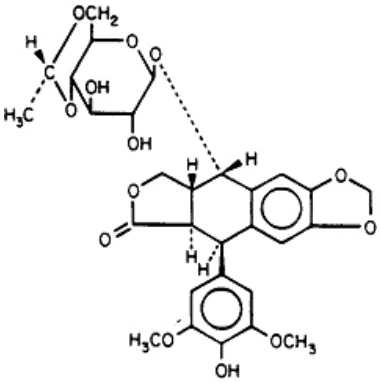 |
| Physicochemical properties: | Etoposide is a white to yellowish or brown-tinged yellowish, fine, crystalline powder. Etoposide is a semi-synthetic derivative of podophyllotoxin. It is very soluble in methanol and chloroform, slightly soluble in ethanol and very slightly soluble in water and ether. It is made water soluble by means of organic solvents. |
14 CLINICAL TRIALS
This information is not available for this drug product.
15 MICROBIOLOGY
No microbiological information is required for this drug product.
16 NON-CLINICAL TOXICOLOGY
General Toxicology:
Acute Toxicity
The LD50 was determined in mice, rats and rabbits (see following Table).
Table 5: LD50 of etoposide i.v.
| Etoposide solution | Ampoule solvent | ||||||||
|---|---|---|---|---|---|---|---|---|---|
| mg/kg | mL/kg | mL/kg | |||||||
| Mouse | 118 ± 9.5 | 5.9 | 6.6 ± 0.3 | ||||||
| Rat | 68 ± 3.5 | 3.4 | 4.2 ± 0.4 | ||||||
| Rabbit | 80 | 4.0 | ca 4.0 | ||||||
The exact estimate of the toxicity of etoposide is limited by the toxicity of the solvent, so acute intravenous toxicity of etoposide cannot be given with certainty.
Subacute Toxicity
Etoposide was administered intraperitoneally at doses of 0.6, 1.8 and 6.0 mg/kg/day to three groups of 20 rats (10 males and 10 females) for four weeks.
A dose of 0.6 mg/kg produced no significant effects. No deaths occurred.
1.8 mg/kg/day produced anemia and transient lymphopenia with significant thymus involution and reduced splenic lymphoid tissue in some animals. No deaths occurred. 6.0 mg/kg/day had significant effects on the hemopoietic and lymphopoietic systems, characterized by fairly severe anemia and marked leukopenia with agranulocytosis in one case. Spermiogenesis in the males was diminished or absent. Non-specific effects (weight loss, diarrhea, pulmonary lesions, hepatocyte degeneration) were reported. Mortality was 2/20 in this group.
0.6 mg/kg/day at necropsy showed slight evidence of thymus involution in 11/20 rats. There were marked areas of retroperitoneal hemorrhage and small petechial hemorrhages in the pleura and renal capsule.
1.8 mg/kg/day at necropsy showed moderate thymus involution in 18/20 rats. There was a small quantity of serosanguinous ascitic fluid in 7/20 rats. Also seen were small petechial hemorrhage in pleura and renal capsule as in other dosage groups.
6.0 mg/kg/day at necropsy resulted in two spontaneous deaths, one with no postmortem changes, the other with hemorrhagic peritonitis due to perforation. At necropsy significant thymus involution was seen in three, with obvious involution in the remainder. The liver appeared swollen and edematous in 10/18 rats.
Petechial hemorrhages in lungs and renal capsule were observed.
Etoposide was administered intravenously at dosage levels of 0.4, 1.2 and 3.6 mg/kg/day to three groups of four rhesus monkeys (two males and two females) for four weeks.
0.4 mg/kg/day was without any significant effect. 1.2 mg/kg/day produced non-significant anemia and leukopenia and diminished lymphoid tissue. 3.6 mg/kg/day produced progressive anemia and severe leukopenia and agranulocytosis and impaired platelet function (plasma clot retraction). There was diminished lymphoid tissue and reaction centres in the spleen and lymph nodes in all four monkeys and evidence of focal hepatocyte degeneration. Non-specific effects at this dosage included weight loss, reduced serum albumin, mild enteritis and increased hemosiderin deposition in one or two animals. Mortality was zero in all groups.
0.4 mg/kg/day at necropsy showed small grey/yellow nodules in the lungs of two monkeys. 1.2 mg/kg/day showed small grey/yellow nodules in the lungs of one monkey, and in another the liver was congested with small surface scars.
3.6 mg/kg/day at necropsy showed findings of enlarged submandibular glands, small lung abscesses, grey nodules, small hemorrhagic foci, enlarged mesenteric lymph nodes and fatty bone marrow.
The veins showed no evidence of poor local tolerance.
Chronic Toxicity
Three groups of 80 rats (40 males and 40 females) were given etoposide ampoule solution orally for 26 weeks at 3, 10 and 30 mg/kg daily. Following the completion of the 26 week study, 40 rats at the mid and high dose level received no drug orally for an additional eight weeks to detect possible reversibility of effects.
At 3 mg/kg
Females had a decrease in leukocytes. Both females and males had decreases in RBC, erythropoiesis, leukopoiesis and increased serum cholesterol.
At 10 mg/kg
Decreased total leukocytes, lymphocytes and monocytes, plasma cell increase, bone marrow changes showing moderate disturbance of erythropoiesis and leukopoiesis.
At 30 mg/kg
Females had increased platelet counts. Males had diarrhea. Both females and males had impaired food intake and weight gain, decreased leukocytes, lymphocytes, monocytes, neutrophils and anemia due to changes in the bone marrow. Serum cholesterol was increased. Urine volume was increased with enhanced electrolyte excretion.
At necropsy, the following changes were noted - reduced weight of testes, ovary and spleen; increased liver weights; thymus involution; a mammary adenocarcinoma and nephroblastoma; degenerative changes in seminal epithelium. These immunosuppressive effects on the hemopoietic and lymphatic system were reversible following treatment, however, histological lung changes were more pronounced after the recovery phase. The tumour findings can be related to the cytostatic mechanism.
Three groups of six beagle dogs (three males and three females) were given etoposide ampoule solution for 26 weeks orally at 0.5, 1.5 and 5-6 mg/kg once daily. Following the completion of the 26 week study, two dogs each of the mid and high dose level were kept for a further five weeks without drug administration to demonstrate reversibility of effects. The following toxicity was reported:
0.5 mg/kg
Changes in bone marrow, slight disturbances of erythropoiesis, sporadic occurrence of micronuclei in normoblasts and leukocytes, increased urinary excretion of potassium.
1.5 mg/kg
Increased platelet counts, disturbed erythropoiesis and leukopoiesis, ECG changes. Three males showed decreased testicular weights and reduced spermiogenesis.
5-6 mg/kg
Reduction in body weight gain, food intake impaired, loss of weight, black pigmentation of ear skin due to melanin deposition in basal cells of epidermis. Hematological findings showed a decrease in total leukocyte counts, neutrophils, lymphocytes and monocytes and a slight decrease in erythrocytes, hematocrit and hemoglobin. Also, macrocytosis, hypochromic anemia and micronuclei in the erythrocytes and leukocytes, bone marrow changes, and increased platelet count were noted. Also, a marked transient increase of SGPT values and a slight trend to increased BUN and creatinine values together with a decrease in blood protein were observed.
The immunosuppressive effects on the hematopoietic and lymphatic system were reversible following withdrawal of treatment.
In summary, the results of the two oral 26-week toxicity studies revealed clear-cut toxic effects after oral administration of high doses of the ampoule solution of etoposide in rats and dogs. The main evidence of toxicity was seen in the erythro and leukopoietic organs, thymus and testes.
Carcinogenicity:
Carcinogenicity tests with VEPESID have not been conducted in laboratory animals. Given its mechanism of action, it should be considered a possible carcinogen in humans.
Genotoxicity:
Human hemopoietic cell lines treated with etoposide showed a high incidence of multiple chromosomal abnormalities.
Reproductive and Developmental Toxicology:
Etoposide was subjected to a teratology study in SPF rats at doses of 0.13, 0.4, 1.2 and 3.6 mg/kg/day administered intravenously on days 6 to 15 of gestation. Etoposide caused dose-related maternal toxicity, embryotoxicity and teratogenicity at dose levels of 0.4 mg/kg/day and higher.
Embryonic resorptions were 90 and 100 percent at the two highest dosages. At 0.4 and 1.2 mg/kg, fetal weights were decreased and fetal abnormalities occurred including major skeletal abnormalities, exencephaly, encephalocele and anophthalmia. At the dose of 1.2 mg/kg, a prenatal mortality of 92 percent was observed with 50 percent of the implanting fetuses abnormal. Even at the lowest dose tested, 0.13 mg/kg, a significant increase in retarded ossification was observed.
A study of Swiss-Albino mice given a single intraperitoneal injection of etoposide at dosages of 1.0, 1.5 and 2 mg/kg on days 6, 7 and 8 of gestation disclosed dose-related embryotoxicity, various cranial abnormalities, major skeletal malformations, an increased incidence of intrauterine death and significantly decreased average fetal body weights. Maternal weight gain was not affected.
Etoposide induced aberrations in chromosome number and structure in embryonic murine cells.
Special Toxicology:
Hemolysis Studies
Etoposide given in a four-week intravenous study in monkeys produced no evidence of intravascular hemolysis. Plasma protein precipitation studies in vivo and in vitro indicate that intravenous administration of etoposide ampoule solution should have no untoward effects on human blood and plasma at the doses likely to be used.