


Product Monograph - Verapamil Hydrochloride Injection USP (Sandoz Canada)
1 INDICATIONS
Verapamil Hydrochloride Injection USP (verapamil hydrochloride) is indicated for life-threatening cardiac arrhythmias under the following conditions:
- Rapid conversion to sinus rhythm of paroxysmal supraventricular tachycardias, including those associated with accessory bypass tracts (Wolff-Parkinson-White [WPW] and Lown-Ganong-Levine [LGL] syndromes). When clinically advisable, appropriate vagal manœuvres (e.g. Valsalva manœuvre) should be attempted prior to verapamil hydrochloride administration.
- Temporary control of rapid ventricular rate in atrial flutter or atrial fibrillation except when the atrial flutter and/or atrial fibrillation are associated with accessory bypass tracts (Wolff-Parkinson-White and Lown-Ganong-Levine syndromes).
Because a small fraction (<1.0%) of patients treated with verapamil hydrochloride react with life-threatening adverse responses (rapid ventricular rate in atrial flutter/fibrillation and an accessory bypass tract, marked hypotension, or extreme bradycardia/asystole) (see 2 CONTRAINDICATIONS and 7 WARNINGS AND PRECAUTIONS), the use of intravenous (IV) verapamil hydrochloride should be in a treatment setting with monitoring and resuscitation facilities, including DC-cardioversion capability (see 5 OVERDOSAGE). Cardioversion has been used safely and effectively after IV verapamil hydrochloride.
1.1 Pediatrics
Pediatrics (< 18 years of age): Caution should be used when administering Verapamil Hydrochloride Injection USP to pediatric patients.
1.2 Geriatrics
Geriatrics (≥ 65 years of age): Caution should be exercised when Verapamil Hydrochloride Injection USP is administered to elderly patients (see 7 WARNINGS AND PRECAUTIONS, Special Populations, Geriatrics).
2 CONTRAINDICATIONS
Verapamil Hydrochloride Injection USP is contraindicated in the following situations:
- patients who are hypersensitive to this drug or to any ingredient in the formulation, including any non-medicinal ingredient, or component of the container. For a complete listing, see 6 DOSAGE FORMS, STRENGTHS, COMPOSITION AND PACKAGING.
Complicated myocardial infarction (patients who have ventricular failure manifested by
- pulmonary congestion).
- Severe left ventricular dysfunction, (see 7 WARNINGS AND PRECAUTIONS, Cardiovascular, Heart Failure).
- Cardiogenic shock.
- Severe hypotension.
- Second or third-degree atrioventricular (AV) block.
- Sick sinus syndrome (see 7 WARNINGS AND PRECAUTIONS, Cardiovascular, Conduction Disturbance).
- Marked bradycardia.
- Patients with atrial flutter or atrial fibrillation in the presence of an accessory bypass tract (e.g. Wolff-Parkinson-White, Lown-Ganong-Levine syndromes). These patients are at risk to develop ventricular arrhythmias including ventricular fibrillation and Torsade de pointes if verapamil hydrochloride is administered (see 7 WARNINGS AND PRECAUTIONS, Cardiovascular, Accessory Bypass Tract).
- Ventricular Tachycardia (see 7 WARNINGS AND PRECAUTIONS, Ventricular Tachycardia).
- Receiving IV beta-adrenergic blocking drugs (e.g. propanolol). Intravenous verapamil and intravenous beta adrenergic blocking drugs should not be administered in close proximity to each other (i.e. within a few hours), since both may have a depressant effect on myocardial contractility and AV conduction (see 77 WARNINGS AND PRECAUTIONS; 9 DRUG INTERACTIONS Table 4).
- Women who are breast-feeding (see 7 WARNINGS AND PRECAUTIONS; Breast-feeding).
- Concomitant use of ivabradine as it may result in increased concentrations of ivabradine due to inhibition of CYP3A4 (see 9 DRUG INTERACTIONS).
- Co-administration with flibanserin as it may result in significantly increased concentrations of flibanserin, which can lead to severe hypotension and syncope (see 7 WARNINGS AND PRECAUTIONS, Cardiovascular, Hypotension).
4 DOSAGE AND ADMINISTRATION
4.1 Dosing Considerations
Verapamil hydrochloride should be given as a slow intravenous injection over at least a two-minute period of time (longer if the patient is 65 years of age or older). Because a small fraction (<1%) of patients treated with verapamil hydrochloride respond with life-threatening adverse responses (e.g rapid ventricular rate in atrial flutter/fibrillation and accessory bypass tract, marked hypotension, or extreme bradycardia/asystole) (see 2 CONTRAINDICATIONS and 7 WARNINGS AND PRECAUTIONS) − It should be administered in hospital, where coronary care facilities are available, continuous electrocardiographic and blood pressure monitoring are performed and resuscitation facilities (including D.C.-cardioversion capability) is available.
Verapamil Hydrochloride Injection USP should be inspected visually for particulate matter and discolouration prior to administration.
Admixing verapamil hydrochloride with albumin, amphotericin B, hydralazine HCl and trimethoprim with sulfamethoxazole should be avoided. Verapamil hydrochloride will precipitate in any solution with a pH above 6.
The dosage regimen for verapamil hydrochloride should be individualized for each patient based on response and tolerance. Injections should be continued only to the point where therapeutic effect has been achieved, at which point the intravenous infusion may be terminated, i.e. before the total recommended dose has been administered. Its intravenous use may be accompanied by a hypotensive response which can be precipitous, by a rapid ventricular rate, extreme bradycardia, or asystole.
An intravenous preparation of calcium chloride, or calcium gluconate should be available in the event of any adverse hemodynamic phenomenon. Simultaneous concomitant use of beta-blockers is contraindicated.
4.2 Recommended Dose and Dosage Adjustment
The recommended intravenous doses of verapamil hydrochloride are as follows:
Adult
Initial Dose: 5 to 10 mg (0.075 to 0.15 mg/kg body weight) given as an IV bolus over at least
2 minutes.
Repeat Dose: 10 mg (0.15 mg/kg body weight) 30 minutes after the first dose if the initial response is not adequate. An optimal interval for subsequent IV doses has not been determined, and should be individualized for each patient.
Older Patients: The dose should be administered over at least 3 minutes to minimize the risk of untoward drug effects.
4.4 Administration
Children
Initial Dose:
0 to 1 year: 0.1 to 0.2 mg/kg body weight (usual single dose range 0.75 to 2 mg) should be administered as an IV bolus over at least 2 minutes under continuous ECG monitoring.
1 to 15 years: 0.1 to 0.3 mg/kg body weight (usual single dose range 2 to 5 mg) should be administered as an IV bolus over at least 2 minutes. Do not exceed 5 mg.
Repeat Dose:
0 to 1 year: 0.1 to 0.2 mg/kg body weight (usual single dose range 0.75 to 2 mg) 30 minutes after the first dose if the initial response is not adequate (under continuous ECG monitoring). An optimal interval for subsequent doses has not been determined and should be individualized for each patient.
1 to 15 years: 0.1 to 0.3 mg/kg body weight (usual single dose range 2 to 5 mg) 30 minutes after the first dose if the initial response is not adequate. An optimal interval for subsequent doses has not been determined and should be individualized for each patient. Do not exceed 10 mg as a single dose.
Oral treatment should replace intravenous therapy as soon as possible, when the physician wishes to continue treatment with verapamil hydrochloride. Duration of treatment will depend on the underlying cause and history of recurrence.
4.5 Missed Dose
Not applicable.
5 OVERDOSAGE
Symptoms
Based on reports of intentional overdosage of verapamil hydrochloride, the following symptoms have been observed: Hypotension (varying from transient to severe), bradycardia to high degree AV block and sinus arrest, hyperglycemia, stupor and metabolic acidosis and acute respiratory distress syndrome (ARDS). Conduction disturbances seen included: prolongation of AV conduction time, AV dissociation, nodal rhythm, ventricular fibrillation and ventricular asystole. Fatalities have occurred as a result of overdose.
Treatment
Treatment of overdosage should be supportive. Beta-adrenergic stimulation or parenteral administration of calcium solutions (calcium chloride or calcium gluconate) may increase calcium ion influx across the slow channel.
These pharmacologic interventions have been effectively used in treatment of overdosage with oral verapamil hydrochloride. Clinically significant hypotensive reactions should be treated with vasopressor agents. AV block is treated with atropine and cardiac pacing. Asystole should be handled by the usual Advanced Cardiac Life Support measures including the use of beta-adrenergic receptor agonists (e.g., isoproterenol hydrochloride), other vasopressor agents, or cardiopulmonary resuscitation. Verapamil hydrochloride is not removed by hemodialysis.
Actual treatment and dosage should depend on the severity of the clinical situation and the judgement of the treating physician. Patients with hypertrophic cardiomyopathy treated with verapamil hydrochloride should not be administered with positive inotropic agents marked by asterisks in Table 1).
Overdose-related ARDS can result from noncardiogenic pulmonary edema and has been reported up to 24 hours after initial hemodynamic stabilization is achieved.
Table 1. Overdosage Adverse Reactions and Recommended Treatments
| Adverse Reaction | Proven Effective Treatment | Treatment with Good Theoretical Rationale | Supportive Treatment |
|---|---|---|---|
| Shock, cardiac failure, severe hypotension | Calcium salt (IV) (e.g. IV calcium gluconate; IV metaraminol bitartrate* ) Isoproterenol HCl (IV) Dopamine (IV) Norepinephrine bitartrate (IV) | IV dopamine HC1* IV dobutamine HC1* | Intravenous fluids Trendelenburg position |
| Bradycardia, AV block, asystole | IV isoproterenol HC1* Calcium chloride (IV) Cardiac pacing Norepinephrine bitartrate (IV) IV Atropine sulphate | Intravenous fluids (slow drip) | |
| Rapid ventricular rate (due to antegrade conduction in flutter/fibrillation with WPW or LGL syndromes) | DC-cardioversion (high energy may be required) Procainamide (IV) Lidocaine HC1 (IV) | Intravenous fluids (slow drip) | |
* Positive inotropic agent Definition : IV = intravenous | |||
For the most recent information in the management of a suspected drug overdose, contact your regional poison control centre or Health Canada's toll-free number, 1-844 POISON-X (1-844-764-7669).
6 DOSAGE FORMS, STRENGTHS, COMPOSITION AND PACKAGING
Table 2 – Dosage Forms, Strengths, Composition and Packaging
| Route of Administration | Dosage Form / Strength/Composition | Non-medicinal Ingredients |
Verapamil Hydrochloride Injection USP is a sterile, clear, colourless aqueous solution for intravenous injection.
Verapamil Hydrochloride Injection USP containing 2.5 mg/mL verapamil hydrochloride, is available in 2 mL single use amber vials, boxes of 10.
The chlorobutyl rubber stopper is not made with natural rubber latex.
7 WARNINGS AND PRECAUTIONS
General
In patients with angina or arrhythmias using antihypertensive drugs, the additional hypotensive effect of Verapamil Hydrochloride Injection USP should be taken into consideration.
Verapamil hydrochloride does not alter total serum calcium levels. However, one report suggested that calcium levels above the normal range may decrease the therapeutic effect of verapamil hydrochloride.
Carcinogenesis and Mutagenesis
There was no evidence of a carcinogenic effect when verapamil hydrochloride was administered orally (diet) to male and female rats at doses up to 112.2 and 102.5 mg/kg/day, respectively, for 24 months. These doses correspond to approximately 2.3 and 2 times human exposure based on body surface area, respectively.
In vitro mutagenicity tests showed that verapamil did not have mutagenic properties in five different strains of Salmonella typhimurium, nor in studies on chromosomal aberrations and sister chromatid exchanges (SCE) in human lymphocytes, nor in the hypoxanthine guanine phosphoribosyltransferase (HGPRT)-test with V-79 Chinese hamster cells, and also not in the cell transformation assay with Syrian hamster embryo cells. In addition, verapamil did not show any SCE-inducing activity in vivo (Chinese hamster) (see 16 NON-CLINICAL TOXICOLOGY, Carcinogenicity and Mutagenicity).
Cardiovascular
Accessory Bypass Tract (Wolff-Parkinson-White or Lown-Ganong-Levine)
Intravenous administration of verapamil hydrochloride may precipitate ventricular fibrillation. Patients with atrial flutter/fibrillation and an accessory AV pathway (e.g. Wolff-Parkinson-White [WPW] or Lown-Ganong-Levine [LGL] syndrome) are at risk of developing ventricular arrhythmias including ventricular fibrillation and Torsade de pointes if verapamil hydrochloride is administered.
| Intravenous | Solution for intravenous injection, 2.5 mg / mL | sodium chloride, hydrochloric acid and/or sodium hydroxide, and water for injection. Preservative free. |
They may develop increased antegrade conduction across the aberrant pathway bypassing the AV node, producing a very rapid ventricular response after receiving verapamil hydrochloride or digitalis. This has been reported in 1% of the patients treated in controlled double-blind trials. The use of verapamil hydrochloride in these patients is contraindicated (see 2 CONTRAINDICATIONS). Treatment is usually DC-cardioversion. Cardioversion has been used safely and effectively after IV verapamil hydrochloride (see 5 OVERDOSAGE).
Bradycardia
The total incidence of bradycardia (ventricular rate less than 50 beats/minute) was 1.4% in controlled studies.
Concomitant Use with Antiarrhythmics or Beta-Blockers
On rare occasions, the concomitant administration of intravenous beta-blockers and intravenous verapamil hydrochloride has resulted in serious adverse reactions, especially in patients with severe cardiomyopathy, congestive heart failure or recent myocardial infarction. Accordingly, intravenous verapamil hydrochloride and intravenous beta adrenergic blocking drugs should not be administered in close proximity to each other (i.e. within a few hours).
Concomitant use of verapamil hydrochloride with antiarrhythmics or beta-blockers may cause mutual potentiation of cardiovascular effects (higher-grade AV block, higher-grade lowering of heart rate, induction of heart failure and potentiated hypotension). Asymptomatic bradycardia (< 36 beats/minute) with a wandering atrial pacemaker has been observed in a patient receiving concomitant timolol (a beta-adrenergic blocker) eye drops and oral verapamil hydrochloride (see 9 DRUG INTERACTIONS, Table 4). This myocardial depressant effect (independent of changes in heart rate) can be significant in patients with impaired left ventricular performance.
Concomitant Use with Lidocaine
Two deaths have been reported in patients receiving both verapamil hydrochloride and lidocaine intravenously.
Concomitant Use with Procainamide
Intravenous verapamil hydrochloride has been administered to a small number of patients receiving oral procainamide without the occurrence of serious adverse effects.
Concomitant Use with HMG-CoA Reductase Inhibitors (“Statins”)
Concomitant use of verapamil hydrochloride and HMG-CoA reductase inhibitors may require dosage adjustments. (See 9 DRUG INTERACTIONS, Table 4).
Conduction disturbance:
Verapamil hydrochloride affects the AV and sinoatrial (SA) nodes. Verapamil hydrochloride slows conduction across the AV node. Verapamil hydrochloride should be used with caution in the presence of first degree AV block. Patients with first degree AV block may progress to second or third-degree AV block or unifascicular, bifascicular or trifascicular bundle–branch block; they require a reduction in the dose or discontinuation of Verapamil Hydrochloride Injection USP, and the institution of appropriate therapy depending upon the patient’s clinical condition (see 5 OVERDOSAGE).
Verapamil hydrochloride causes dose-related suppression of the SA node and rarely may produce second or third-degree AV block, bradycardia and in extreme cases, asystole. In some patients, sinus bradycardia may occur, especially in patients with a sick sinus syndrome (SA nodal disease), which is more common in older patients (see 2 CONTRAINDICATIONS).
Asystole in patients other than those with sick sinus syndrome is usually of short duration (few seconds or less), with spontaneous return to AV nodal or normal sinus rhythm. If this does not occur promptly, appropriate treatment should be initiated immediately (see 8 ADVERSE REACTIONS and 5 OVERDOSAGE).
Heart Failure
Because of the drug's negative inotropic effect, verapamil hydrochloride should not be used in patients with poorly compensated congestive heart failure. Continuous monitoring is mandatory when IV verapamil hydrochloride is used in digitalized patients.
Heart failure patients with ejection fraction higher than 40% should be treated with adequate doses of digoxin and/or diuretics before starting Verapamil Hydrochloride Injection USP treatment.
If verapamil is administered concomitantly with digoxin, reduce digoxin dosage (see 9 DRUG INTERACTIONS, Table 4). The use of verapamil hydrochloride in the treatment of hypertension is not recommended in patients with heart failure caused by systolic dysfunction.
Hypotension
Severe hypotension has occasionally occurred following intravenous administration of the drug. On rare occasions, this has been followed by loss of consciousness. If severe hypotension develops, verapamil hydrochloride should be promptly discontinued and vasoconstrictor substances used as described in 5 OVERDOSAGE.
Intravenous verapamil hydrochloride often produces a decrease in blood pressure below baseline levels that is usually transient and asymptomatic, but may result in dizziness. Administration of IV calcium chloride or calcium gluconate prior to IV administration of verapamil hydrochloride may prevent this hemodynamic response.
In patients using antihypertensive drugs, the additional hypotensive effect of verapamil hydrochloride should be taken into consideration.
Occasionally, the pharmacologic action of verapamil may produce a decrease in blood pressure below normal levels which may result in dizziness or symptomatic hypotension.
Use of a moderate CYP3A4 inhibitor such as verapamil with flibanserin significantly increases flibanserin concentrations, which can lead to severe hypotension and syncope (see 2 CONTRAINDICATIONS). Discontinue verapamil hydrochloride at least 2 weeks prior to starting flibanserin. Do not administer verapamil hydrochloride within 2 days of discontinuing flibanserin.
Patients with Hypertrophic Cardiomyopathy
In 120 patients with hypertrophic cardiomyopathy who received oral therapy with verapamil hydrochloride at doses up to 720 mg/day, a variety of serious adverse effects were seen. Three patients died in pulmonary edema; all had severe left ventricular outflow obstruction and a past history of left ventricular dysfunction. Eight other patients had pulmonary edema and/or severe hypotension, abnormally high (greater than 20 mm Hg) pulmonary wedge pressure and a marked left ventricular outflow obstruction were present in most of these patients. Concomitant administration of quinidine (see 9 DRUG INTERACTIONS) preceded the severe hypotension in 3 of the 8 patients (2 of whom developed pulmonary edema). Sinus bradycardia occurred in 11% of the patients, second-degree AV block in 4%, and sinus arrest in 2%. It must be appreciated that this group of patients had a serious disease with a high mortality rate. Most adverse effects responded well to dose reduction, but in some cases, verapamil hydrochloride use had to be discontinued.
Premature Ventricular Contractions
During conversion to normal sinus rhythm, or marked reduction in ventricular rate, a few benign complexes of unusual appearance (sometimes resembling premature ventricular contractions) may be seen after treatment with verapamil hydrochloride. Similar complexes are seen during spontaneous conversion of supraventricular tachycardias after DC-cardioversion and other pharmacologic therapy. These complexes appear to have no clinical significance.
Sick Sinus Syndrome
Precaution should be taken when treating any supraventricular arrhythmia on an emergency basis as it may be caused by an undiagnosed Sick Sinus Syndrome (see 2 CONTRAINDICATIONS).
Ventricular Tachycardia
Administration of IV verapamil hydrochloride to patients with wide-complex ventricular tachycardia (QRS = 0.12 sec) can result in marked hemodynamic deterioration and ventricular fibrillation. Proper pretherapy diagnosis and differentiation from wide-complex supraventricular tachycardia (based on a 12 lead ECG) is imperative in the emergency room setting.
Hepatic/Biliary/Pancreatic
Elevated Liver Enzymes
Elevations of transaminases with and without concomitant elevations in alkaline phosphatase and bilirubin have been reported. Several published cases of hepatocellular injury produced by verapamil hydrochloride have been proven by rechallenge. Clinical symptoms of malaise, fever, and/or right upper quadrant pain, in addition to elevation of serum glutamic-oxaloacetic transaminase (SGOT), serum glutamic-pyruvic transaminase (SGPT) and alkaline phosphatase have been reported. Periodic monitoring of liver function in patients receiving verapamil hydrochloride is therefore prudent.
Hepatic Insufficiency
Because verapamil hydrochloride is extensively metabolized by the liver, it should be administered cautiously to patients with impaired hepatic function, since the elimination half-life of verapamil hydrochloride in these patients is prolonged 4-fold (from 3.7 to 14.2 hours). A decreased dosage should be used in patients with hepatic insufficiency and careful monitoring for abnormal prolongation of the PR interval or other signs of excessive pharmacologic effect should be carried out (see 10 CLINICAL PHARMACOLOGY, 10.3 Pharmacokinetics and 4 DOSAGE AND ADMINISTRATION).
Monitoring and Laboratory Tests
Patients should be monitored by measuring the blood pressure response.
Concomitant Use with Beta-Blockers: The use of IV verapamil hydrochloride with beta-blockers and cardiac depressant drugs can produce a reduction of myocardial contractility. This myocardial depressant effect (independent of changes in heart rate) can be significant in patients with impaired left ventricular performance.
In exceptional cases, when in the opinion of the physician concomitant use in angina and arrhythmias is considered essential, such use should be instituted gradually under careful supervision. If combined therapy is used, close surveillance of vital signs and clinical status should be carried out and the need for continued concomitant treatment periodically assessed.
Elevated Liver Enzymes: Periodic monitoring of liver function in patients receiving verapamil hydrochloride is prudent.
Hepatic Insufficiency: Careful monitoring for abnormal prolongation of the PR interval or other signs of excessive pharmacologic effect should be carried out.
Renal Insufficiency: Patients with renal insufficiency should be carefully monitored for abnormal prolongation of the PR interval or other signs of excessive pharmacologic effect.
Neurologic
Neuromuscular Transmission Disorders
Due to verapamil hydrochloride’s neuromuscular blocking action, verapamil hydrochloride should be used with caution in the presence of diseases in which neuromuscular transmission is affected (myasthenia gravis, Lambert-Eaton syndrome, advanced Duchenne muscular dystrophy). It has been reported that verapamil hydrochloride decreases neuromuscular transmission in patients with Duchenne’s muscular dystrophy, and that verapamil hydrochloride prolongs recovery from the neuromuscular blocking agent vecuronium.
The decision to administer verapamil hydrochloride should be based on the physician’s assessment of the risk and benefit to the patient. It may be necessary to decrease the dosage of verapamil hydrochloride when it is administered to patients with attenuated neuromuscular transmission. Ventilation support should be available if required (see 9.4 Drug-Drug Interaction, use in Patients with Attenuated (Decreased) Neuromuscular Transmission).
Intravenous verapamil hydrochloride has been seen to increase intracranial pressure in patients with supratentorial tumours at the time of anesthesia induction. Caution should be taken and appropriate monitoring performed.
Ophthalmologic
Atypical lens changes and cataracts were observed in beagle dog studies at high doses. This has been concluded to be species-specific for the beagle dog. (These ophthalmological changes were not seen in a second study.) No similar changes have been observed in long-term prospective human ophthalmological trials
Renal
Renal Insufficiency
About 70% of an administered dose of verapamil hydrochloride is excreted as metabolites in the urine. In one study in healthy volunteers, the total body clearance after intravenous administration of verapamil hydrochloride was 12.08 mL/min/kg, while in patients with advanced renal disease it was reduced to 5.33 mL/min/kg. This pharmacokinetic finding suggests that renal clearance of verapamil hydrochloride in patients with renal disease is decreased.
Therefore, until further data are available, Verapamil Hydrochloride Injection USP should be used with caution in patients with impaired renal function. These patients should be carefully monitored for abnormal prolongation of the PR interval or other signs of excessive pharmacologic effect (see 4 DOSAGE AND ADMINISTRATION).
Verapamil hydrochloride is not removed by hemodialysis.
7.1 Special Populations
7.1.1 Pregnant Women
There are no adequate and well-controlled study data in pregnant women. Verapamil hydrochloride crosses the placental barrier and can be detected in umbilical vein blood at delivery. Verapamil hydrochloride is not recommended for use in pregnant women unless the potential benefits outweigh potential risks to mother and fetus.
Teratology and reproduction studies have been performed in rabbits and rats with oral verapamil administered at doses up to 15 mg/kg/day and 60 mg/kg/day ( human equivalent doses of 288 mg/day and 576 mg / day, respectively, assuming human body weight at 60 kg) respectively, and have revealed no evidence of teratogenicity or impaired fertility. In the rat, however, a dose of 60 mg/kg/day (human equivalent dose of 576 mg / day, similar to the maximum clinical dose of 480 mg / day) was embryocidal and retarded fetal growth and development. These effects occurred in the presence of maternal toxicity (reflected by reduced food consumption and weight gain of damns). This oral dose has also been shown to cause hypotension in rats.
Labour and Delivery - It is not known whether the use of verapamil hydrochloride during labour or delivery has immediate or delayed adverse effects on the fetus, or whether it prolongs the duration of labour or increases the need for forceps delivery or other obstetric intervention.
7.1.2 Breast-feeding
Verapamil hydrochloride is excreted in human breast milk. Because of the potential for adverse reactions in nursing infants from verapamil hydrochloride, nursing should be discontinued while verapamil hydrochloride is administered (see 2 CONTRAINDICATIONS).
7.1.3 Pediatrics
Pediatrics (<18 years of age): Controlled studies with verapamil hydrochloride have not been conducted in pediatric patients, but uncontrolled experience with intravenous administration in more than 250 patients, about half under 12 months of age and about 25% newborn, indicates that results of treatment are similar to those in adults. In rare instances, however, severe hemodynamic side effects - some of them fatal - have occurred following the IV administration of verapamil hydrochloride in neonates and infants. Caution should therefore be used when administering verapamil hydrochloride to this group of pediatric patients.
7.1.4 Geriatrics
Geriatrics (≥ 65 years of age): Caution should be exercised when verapamil hydrochloride is administered to elderly patients (≥ 65 years) especially those prone to developing hypotension or those with a history of cerebrovascular insufficiency (see 4 DOSAGE AND ADMINISTRATION). The incidence of adverse reactions is approximately 4% higher in the elderly. The adverse reactions occurring more frequently include dizziness and constipation. Serious adverse events associated with heart block have occurred in the elderly.
Verapamil Hydrochloride Injection USP should be given as a slow intravenous injection over at least a two-minute period of time and longer (at least three minutes) if the patient is 65 years of age or older (see 4 DOSAGE AND ADMINISTRATION).
8 ADVERSE REACTIONS
8.1 Adverse Reaction Overview
In 4826 patients treated with verapamil hydrochloride immediate release tablets for arrhythmias, angina or hypertension, the overall adverse reaction rate in these patients was 37.1% and the dropout rate was 10.2%. The majority of these patients were seriously ill and treated under emergency drug regulations.
In controlled pivotal studies with 128 patients treated with verapamil hydrochloride sustained-release tablets for hypertension, the overall adverse reaction rate was 21.7% and the dropout rate was 3.9%.
The most common adverse reactions were: constipation (7.3%), dizziness (3.2%), and nausea (2.7%). In hypertension studies, constipation occurred in 18.5% of patients on verapamil hydrochloride immediate release tablets and 4.7% of patients on verapamil hydrochloride sustained-release tablets.
The most serious adverse reactions reported with verapamil hydrochloride are heart failure (1.8%), hypotension (2.5%), AV block (1.2%) and rapid ventricular response (see 7 WARNINGS AND PRECAUTIONS).
The incidence of all adverse reactions, including those seen with both the oral and IV use of verapamil hydrochloride, is about 10.6% with 6.7% associated with oral administration.
Approximately 1.4% of these patients required discontinuation of the drug because of side effects. The most common adverse effect seen with oral verapamil hydrochloride is constipation, while hypotension and bradycardia are most common with its IV use.
In rare cases of hypersensitive patients, broncholaryngeal spasm accompanied by itch and urticaria have been reported.
Isolated cases of angioedema have been reported. Angioedema may be accompanied by breathing difficulty. One case of anaphylactic shock following intravenous verapamil hydrochloride has also been reported.
8.2 Clinical Trial Adverse Reactions
Clinical trials are conducted under very specific conditions. The adverse reaction rates observed in the clinical trials; therefore, may not reflect the rates observed in practice and should not be compared to the rates in the clinical trials of another drug. Adverse reaction information from clinical trials may be useful in identifying and approximating rates of adverse drug reactions in real-world use.
Intravenous verapamil hydrochloride:
The following adverse reactions were reported with intravenous verapamil hydrochloride use in controlled clinical trials involving 324 patients:
Cardiovascular: Symptomatic hypotension (1.5%), bradycardia (1.2%), severe tachycardia (1%). The worldwide experience in open clinical trials in more than 7900 patients was similar.
Central Nervous System: Dizziness (1.2%), headache (1.2%). Occasional cases of seizures during verapamil hydrochloride injection have been reported.
Gastrointestinal: Nausea (0.9%), abdominal discomfort (0.6%).
Respiratory: In rare cases of hypersensitive patients, broncholaryngeal spasm accompanied by itch and urticaria have been reported.
Miscellaneous: The following reactions were reported at low frequency:
Skin reactions, exanthema, urticaria, pruritus, muscular cramps, arthralgia, emotional depression, confusion, rotary nystagmus, diplopia, impaired vision, sleepiness, insomnia, muscle fatigue, diaphoresis, painful coldness and numbness in the extremities, paresthesia, hyperkinesia, impotence.
Adverse Drug Reactions Associated with the Use of Oral Verapamil
The following adverse reactions divided by body system have been reported in clinical trials or marketing experience. When incidences are shown, they are calculated based on the 4954 (4826 + 128) patient base.
Table 3 - Adverse Reactions Reported in Clinical Trials
Verapamil Hydrochloride (N = 4,954) | ||
|---|---|---|
| Vascular Disorders | ||
| Hypotension | 2.5% | |
| Cardiac Disorders | ||
| Edema | 2.1% | |
| CHF/Pulmonary Edema | 1.9% | |
| Bradycardia | 1.4% | |
AV Block Total (1°, 2°, 3°) 2° and 3° | 1.2% 0.8% | |
| Nervous System Disorders | ||
| Dizziness | 3.2% | |
| Headache | 2.2% | |
| General Disorders and Administration Site Conditions | ||
| Fatigue | 1.7% | |
| Gastrointestinal Disorders | ||
| Constipation | 7.3% | |
| Nausea | 2.7% | |
| Respiratory, Thoracic and Mediastinal Disorders | ||
| Dyspnea | 1.4% | |
8.3 Less Common Clinical Trial Adverse Reactions
The following reactions were reported in 1.0% or less of patients in clinical trials:
Cardiac Disorders:
angina pectoris, atrioventricular dissociation, cardiac failure, chest pain, claudication, development of rhythm disturbances, myocardial infarction, painful coldness and numbness of extremities, palpitations, syncope, severe tachycardia, ventricular dysrhythmias
Ear and Labyrinth Disorders:
vertigo
Eye Disorders:
blurred vision, diplopia
Nervous System Disorders:
cerebrovascular accident, confusion, equilibrium disorders, excitation, extrapyramidal disorders, hyperkinesia, paresthesia, rotary nystagmus, shakiness, somnolence, tremor
Gastrointestinal Disorders:
abdominal discomfort, diarrhea, dry mouth, gastrointestinal distress, gingival hyperplasia, vomiting
Musculoskeletal and Connective Tissue Disorders:
arthralgia, muscle cramps, muscle fatigue
Psychiatric Disorders:
depression, insomnia, psychotic symptoms
Renal and Urinary Disorders:
increased frequency of urination
Respiratory, Thoracic and Mediastinal Disorders:
bronchospasm, dyspnea
Reproductive System and Breast Disorders:
erectile dysfunction, gynecomastia, oligomenorrhea, spotty menstruation
Skin and Subcutaneous System Disorders:
alopecia, ecchymosis or bruising, erythema multiforme, exanthema, hyperkeratosis, macules, pruritus, purpura, rash, Stevens-Johnson syndrome, sweating, urticaria
Vascular Disorders:
flushing
Isolated cases of renal failure and angioedema have been reported. Angioedema may be accompanied by breathing difficulty.
In clinical trials related to the control of ventricular response in digitalized patients who had atrial fibrillation or flutter, ventricular rates below 50 at rest occurred in 15% of patients and asymptomatic hypotension occurred in 5% of patients.
8.4 Abnormal Laboratory Findings: Hematologic, Clinical Chemistry and Other Quantitative Data
Hepatotoxicity with elevated enzymes (SGOT, SGPT, alkaline phosphatase) and bilirubin levels, jaundice and associated symptoms of hepatitis with cholestasis have been reported (see 7 WARNINGS AND PRECAUTIONS). Elevated prolactin levels have also been reported.
8.5 Post-Market Adverse Reactions
The following adverse events have been reported with verapamil hydrochloride from post-marketing surveillance or Phase 4 clinical trials.
Cardiac Disorders:
asystole, sinus arrest, sinus bradycardia
Ear and Labyrinth Disorders:
tinnitus
Gastrointestinal Disorders:
abdominal pain, ileus
General Disorders and Administration Site Conditions:
edema peripheral
Immune System Disorders:
Metabolism and Nutrition Disorders:
hypersensitivity
hyperkalaemia
Musculoskeletal and Connective Tissue Disorders:
muscle weakness, myalgia
Nervous System Disorders:
paralysis (tetraparesis)1, seizure
Skin and Subcutaneous System Disorders:
hyperhidrosis, itching, rash maculopapular
Reproductive System and Breast Disorders:
galactorrhea
There has been a single post-marketing report of paralysis (tetraparesis) associated with the combined use of verapamil hydrochloride and colchicine. This may have been caused by colchicine crossing the blood-brain barrier due to CYP3A4 and P-glycoprotein (P-gp) inhibition by verapamil hydrochloride (see 9 DRUG INTERACTIONS).
9 DRUG INTERACTIONS
9.1 Serious Drug Interactions
Serious Drug Interactions
Ivabradine: Verapamil Hydrochloride Injection USP is contraindicated with concomitant use of ivabradine as it may result in increased concentrations of ivabradine due to inhibition of CYP3A4.
Flibanserin: Verapamil Hydrochloride Injection USP is contraindicated with co-administration of flibanserin as it may result in significantly increased concentrations of flibanserin, which can lead to severe hypotension and syncope (see 7 WARNINGS AND PRECAUTIONS, Cardiovascular, Hypotension).
9.2 Drug Interactions Overview
As with all drugs, care should be exercised when treating patients with multiple medications. Verapamil hydrochloride undergoes biotransformation by the CYP3A4, CYP1A2, CYP2C8, CYP2C9 and CYP2C18 isoenzymes of the cytochrome P450 system. Verapamil hydrochloride has also been shown to be an inhibitor of CYP3A4 enzymes and P-glycoprotein (P-gp). Coadministration of verapamil hydrochloride with other drugs which follow the same route of biotransformation or are inhibitors or inducers of these enzymes may result in altered bioavailability of verapamil hydrochloride or these drugs. Coadministration of verapamil and a drug primarily metabolized by CYP3A4 or being a P‐gp substrate may be associated with elevations in drug concentrations that could increase or prolong both therapeutic and adverse effects of the concomitant drug. Dosages of similarly metabolized drugs, particularly those of low therapeutic ratio, and especially in patients with renal and/or hepatic impairment, may require adjustment when starting or stopping concomitantly administered verapamil hydrochloride to maintain optimum therapeutic blood levels.
9.3 Drug-Behavioural Interactions
Verapamil hydrochloride may increase blood alcohol (ethanol) concentrations and prolong its effects.
Depending on the individual response, verapamil hydrochloride may affect the ability to react to the point of impairing the ability to drive a vehicle, operate machinery or work under hazardous conditions. This applies all the more at the start of treatment, when the dose is raised, when switching from another drug and in conjunction with alcohol.
9.4 Drug-Drug Interactions
The drugs listed in this table are based on either drug interaction case reports or studies, or potential interactions due to the expected magnitude and seriousness of the interaction (i.e., those identified as contraindicated).
Table 4 - Potential Drug Interactions Associated with Verapamil Hydrochloride
| Concomitant Drug Class: Drug Name | Ref | Effect on Concentration of Verapamil Hydrochloride or Concomitant Drug | Clinical Comment |
|---|---|---|---|
| Concomitant Drug Class: Drug Name | Ref | Effect on Concentration of Verapamil Hydrochloride or Concomitant Drug | Clinical Comment |
| Concomitant Drug Class: Drug Name | Ref | Effect on Concentration of Verapamil Hydrochloride or Concomitant Drug | Clinical Comment |
| Concomitant Drug Class: Drug Name | Ref | Effect on Concentration of Verapamil Hydrochloride or Concomitant Drug | Clinical Comment |
| Alpha-Blockers | |||
| Prazosin | T | ↑ prazosin Cmax (~40%) with no effect on t½ | Concomitant use of verapamil hydrochloride and alpha-adrenoceptor blockers may result in excessive fall in blood pressure in some patients as observed in one study following the concomitant administration of verapamil hydrochloride and prazosin. |
| Terazosin | CT | ↑ terazosin AUC (~24%) and Cmax (~25%) | |
| Anti-arrhythmics | |||
| Amiodarone | ↑ bradycardia | Verapamil hydrochloride should be used with caution in patients receiving amiodarone because of the possible potentiation of bradycardia, sinus arrest, and AV block. | |
| Disopyramide | T | Until data on possible interactions between verapamil hydrochloride and disopyramide are obtained, disopyramide should not be administered within 48 hours before or 24 hours after verapamil hydrochloride administration. | |
| Flecainide | CT C | Minimal effect on flecainide plasma clearance (< ~10%); no effect on verapamil plasma clearance. | The concomitant administration of flecainide and verapamil hydrochloride may have additive effects on myocardial contractility, AV conduction, and repolarisation. May also have negative inotropic effect and prolongation of |
| atrioventricular conduction. | |||
| Quinidine | CT | ↓ oral quinidine clearance (~35%) | In a small number of patients with hypertrophic cardiomyopathy, concomitant use of verapamil hydrochloride and quinidine resulted in significant hypotension and may result in pulmonary edema. Until further data are obtained, combined therapy of verapamil hydrochloride and quinidine in patients with hypertrophic cardiomyopathy should be avoided. The electrophysiological effects of quinidine and verapamil hydrochloride on AV conduction were studied in 8 patients. Verapamil hydrochloride significantly counteracted the effects of quinidine on AV conduction. There has been a report of increased quinidine levels during verapamil hydrochloride therapy. |
| Anti-asthmatics | |||
| Theophylline | C | ↓ oral and systemic clearance of theophylline by ~20%. Reduction of clearance was lessened in smokers (~11%). | Caution should be exercised when co-administering theophylline and verapamil hydrochloride. |
| Anticoagulants | |||
| Dabigatran | CT | ↑ dabigatran (Cmax up to 90%) and AUC (up to 70%) | To minimize potential interaction, dabigatran should be given at least 2 hours before verapamil. |
| Other direct oral anticoagulants (DOACs; e.g. | C | Increased absorption of DOACs since they are P‐gp substrates | Some data suggest a possible increase of the risk of bleeding, especially in patients with further |
| rivaroxaban, apixaban, and edoxaban) | and, if applicable, also reduced elimination of DOACs which are metabolized by CYP3A4, may increase the systemic bioavailability of DOACs. | risk factors. The dose of DOAC with verapamil may need to be reduced (see DOAC label for dosing instructions). | |
| Anti-convulsants / Anti-epileptics | |||
| Carbamazepine | C | ↑ carbamazepine AUC (~46%) in refractory partial epilepsy patients | Concomitant oral use may potentiate the effects of carbamazepine neurotoxicity. Symptoms include nausea, diplopia, headache, ataxia or dizziness. Patients receiving these drugs concurrently should be monitored for a potential drug interactions and dose adjustment of carbamazepine and/or verapamil may be necessary. |
| Phenytoin | C | ↓ verapamil plasma concentrations | Verapamil plasma concentration may not achieve its therapeutic level when it is administrated concomitantly with phenytoin. |
| Anti-depressants | |||
| Imipramine | T | ↑ imipramine AUC (~15%). No effect on level of active metabolite desipramine. | As with all antihypertensive agents, there is an elevated risk of orthostatic hypotension when combining verapamil hydrochloride with major tranquilizers or tricyclic antidepressants, such as imipramine. |
| Anti-diabetics | |||
| Glibenclamide (glyburide) | T | ↑ glibenclamide Cmax (~28%), AUC (~26%) | |
| Metformin | T | Co-administration of verapamil with metformin may reduce the | |
| efficacy of metformin. | |||
| Anti-gout | |||
| Colchicine | CT | ↑ colchicine AUC (~ 2.0-fold) and Cmax (~1.3-fold) | Colchicine is a substrate for both CYP3A and the efflux transporter P-gp. Verapamil hydrochloride is known to inhibit CYP3A and P-gp. When verapamil hydrochloride and colchicine are administered together, inhibition of P-gp and/or CYP3A by verapamil hydrochloride may lead to increased exposure to colchicine. Combined use is not recommended. |
| Anti-hypertensive Agents | |||
| ACE inhibitors, vasodilators, diuretics. | C | ↓ blood pressure | Verapamil hydrochloride administered concomitantly with antihypertensive agents such as vasodilators, ACE inhibitors, and diuretics may have an additive effect on lowering blood pressure. In patients with angina or arrhythmias using antihypertensive drugs, this additional hypotensive effect should be taken into consideration. |
| Anti-Infectives | |||
| Clarithromycin | C | ||
| Possible ↑ in verapamil when used in combination with clarithromycin |
| Concomitant Drug Class: Drug Name | Ref | Effect on Concentration of Verapamil Hydrochloride or Concomitant Drug | Clinical Comment |
|---|---|---|---|
| Concomitant Drug Class: Drug Name | Ref | Effect on Concentration of Verapamil Hydrochloride or Concomitant Drug | Clinical Comment |
| Concomitant Drug Class: Drug Name | Ref | Effect on Concentration of Verapamil Hydrochloride or Concomitant Drug | Clinical Comment |
| Concomitant Drug Class: Drug Name | Ref | Effect on Concentration of Verapamil Hydrochloride or Concomitant Drug | Clinical Comment |
| Concomitant Drug Class: Drug Name | Ref | Effect on Concentration of Verapamil Hydrochloride or Concomitant Drug | Clinical Comment |
| Concomitant Drug Class: Drug Name | Ref | Effect on Concentration of Verapamil Hydrochloride or Concomitant Drug | Clinical Comment |
| Concomitant Drug Class: Drug Name | Ref | Effect on Concentration of Verapamil Hydrochloride or Concomitant Drug | Clinical Comment |
| Severe hypotension and bradycardia have been observed in patients receiving concurrent clarithromycin. | |||
| Erythromycin | C | Possible ↑ in verapamil when used in combination with erythromycin | |
| Rifampicin | T | ↓ verapamil AUC (~97%), Cmax (~94%) oral bioavailability | Blood pressure lowering effect of verapamil hydrochloride may be reduced when used concomitantly |
| (~92%) | with rifampicin. | ||
| Telithromycin | T | Possible ↑ in verapamil when used in combination with telithromycin | |
| Anti-manic Agents | |||
| Lithium | T | Increased sensitivity to the effects of lithium (neurotoxicity) has been reported during concomitant verapamil hydrochloride-lithium therapy. Lithium based drugs should be administered with caution, and frequent monitoring of serum lithium levels is recommended. If a diuretic is also used, the risk of lithium toxicity may be further increased. | |
| Anti-neoplastics | |||
| Doxorubicin | T | ↑ doxorubicin AUC (104%) and Cmax (61%) with oral verapamil administration in patients with small cell lung cancer. In patients with advanced neoplasm, intravenous verapamil administration did not change significantly doxorubicin PK. | Verapamil hydrochloride inhibits P-glycoprotein (P-gp)-mediated transport of anti-neoplastic agents out of tumour cells, resulting in their decreased metabolic clearance. Dosage adjustments of anti-neoplastic agents should be considered when verapamil hydrochloride is administered concomitantly. |
| Barbiturates | |||
| Phenobarbital | T | ↑ oral verapamil clearance (~5-fold) | |
| Benzodiazepines and Other Anxiolytics | |||
| Buspirone, | T | ↑ buspirone AUC, | Verapamil significantly increases |
| Cmax by ~3.4-fold | peak plasma levels of buspirone and midazolam. Special care (close medical attention and/or dose adjustment) should be taken when prescribing short-acting benzodiazepines metabolized by CYP3A4 in patients using Verapamil HCl | ||
| Midazolam | T C | ↑ midazolam AUC (~3-fold) and, Cmax (~2-fold) | |
| Beta-Blockers | |||
| Atenolol | T C | A variable increase in atenolol plasma concentration at steady state has been reported in patients with angina pectoris. | Concomitant therapy may result in additive negative effects on heart rate, atrioventricular conduction and/or cardiac contractility (see 7 WARNINGS AND PRECAUTIONS). Verapamil hydrochloride should not be combined with beta-blockers for the treatment of hypertension. |
| Metoprolol | T C | ↑ metoprolol AUC (~32.5%) and Cmax (~41%) in patients with angina pectoris | |
| Propranolol | T C | ↑ propanolol AUC (~65%), Cmax (~94%) in patients with angina pectoris | |
| Timolol | T C | Asymptomatic bradycardia (< 36 beats/min) with a wandering atrial pacemaker has been observed in a patient receiving concomitant timolol (a beta-adrenergic blocker) eye drops and oral verapamil hydrochloride. | |
| Cardiac Glycosides | |||
| Digoxin | C | ↑ digoxin levels ~50-75% during the first week of therapy ↑digoxin AUC (~32%), Cmax (~98%) in hepatic | Concurrent use with Digoxin may have additive effects on AV nodal conduction which could result in complete heart block. The increase in digoxin levels can result in digoxin toxicity. |
cirrhosis patients ↑ digoxin Cmax (~44%), ↑ digoxin C12h (~53%), ↑ Css (~44%) and ↑ AUC (~50%) in healthy subjects | Maintenance digoxin doses should be reduced when verapamil hydrochloride is administered and the patient should be carefully monitored to avoid over or under digitalization. Whenever overdigitalization is suspected, the daily dose of digoxin should be reduced or temporarily discontinued. Upon discontinuation of verapamil hydrochloride, the patient should be reassessed to avoid underdigitalization (see 7 WARNINGS AND PRECAUTIONS). | ||
| Cardiac If Current Inhibitor | |||
| Ivabradine | CT | Given its moderate CYP3A4 inhibitory effect, verapamil (120 mg b.i.d.), when co-administered with ivabradine, increases the ivabradine plasma AUC by 2- to 3- fold. Both verapamil and ivabradine are heart rate lowering substances and hence, co-administration could lead to an exacerbated reduction in patient’s heart rate. | Given the increase in ivabradine exposure and additive heart rate lowering effect, the concomitant use of verapamil hydrochloride with ivabradine is contraindicated (see 2 CONTRAINDICATIONS). |
| Diuretics | |||
| T | Concomitant use with diuretics may cause a potentiation of the hypotensive effect. | ||
| Gynecologicals | |||
| Flibanserin | T | Use of a moderate CYP3A4 inhibitor such as verapamil with flibanserin significantly increases flibanserin concentrations, which can lead to severe hypotension and syncope (see 2 CONTRAINDICATIONS and 7 WARNINGS AND PRECAUTIONS, Cardiovascular, Hypotension). | Concomitant use of verapamil hydrochloride and flibanserin is contraindicated. Discontinue verapamil hydrochloride at least 2 weeks prior to starting flibanserin. Do not administer verapamil hydrochloride within 2 days of discontinuing flibanserin (see 2 CONTRAINDICATIONS and 7 WARNINGS AND PRECAUTIONS, Cardiovascular, Hypotension). |
| H2-Receptor Antagonists | |||
| Cimetidine | T | In healthy subjects, ↑ AUC of R-(~25%) and S-(~40%) verapamil with corresponding ↓ in R- and S-verapamil clearance | |
| HIV Antiviral Agents | |||
| HIV Antiviral Agents | T | Due to the metabolic inhibitory potential of some of the HIV antiviral agents, such as ritonavir, plasma concentrations of verapamil hydrochloride may increase. Caution should be used or the dose of verapamil hydrochloride may be decreased. | |
| Immunosuppressive Agents | |||
| Cyclosporine | T | ↑ cyclosporine AUC, Css, Cmax by 45% in renal transplant patients | The co-administration of verapamil and immunosuppressive agents both known substrates and inhibitors for CYP 3A4 may increase the plasma levels of these drugs. Dose adjustment should be considered when these drugs are |
| concomitantly administered, which may be assessed by blood levels, blood pressure monitoring and clinical monitoring of other patient symptoms. | Verapamil: ↑ Ctrough (~2.3-fold) | ||
| Everolimus | T | Everolimus: ↑ AUC (~3.5-fold) and ↑ Cmax (~2.3-fold) | |
| Sirolimus | T C | Sirolimus ↑ AUC (~2.2-fold); S-verapamil ↑ AUC (~1.5-fold) | |
| Tacrolimus | T | Possible ↑ tacrolimus levels | |
| Inhalation Anesthetics | |||
| Inhalation Anesthetics | T | ↑depression of cardiac contractility | Animal experiments have shown that inhalation anesthetics depress cardiovascular activity by decreasing the inward movement of calcium ions. When used concomitantly, inhalation anesthetics and calcium antagonists (such as verapamil hydrochloride) should be titrated carefully to avoid excessive cardiovascular depression |
| Lipid Metabolism Regulators (HMG-CoA Reductase Inhibitors) | |||
| Atorvastatin | T | Possible ↑ atorvastatin levels ↑ verapamil AUC by ~43% | Treatment with HMG-CoA reductase inhibitors (e.g. atorvastatin, simvastatin or lovastatin) in a patient taking verapamil hydrochloride should be started at the lowest possible dose and titrated upwards. If verapamil hydrochloride treatment is to be added to patients already taking an HMG-CoA reductase inhibitor (e.g. atorvastatin, simvastatin or lovastatin), consider a reduction in the statin dose and retitrate against serum cholesterol concentrations. The maximum daily dose of simvastatin and lovastatin coadministered with verapamil hydrochloride should |
not exceed 10 and 20 mg, respectively. Fluvastatin, pravastatin and rosuvastatin are not metabolized by CYP3A4 and are less likely to interact with verapamil hydrochloride. | |||
| Lovastatin | C | Possible ↑ lovastatin levels ↑ verapamil AUC (by~63%) and Cmax by (~32%) | |
| Simvastatin | C | ↑ simvastatin AUC (~2.6-fold), Cmax (~4.6 fold) in healthy subject | |
| Neuromuscular Blocking Agents | |||
Neuromuscular Blocking Agents e.g. atracurium | CT C | Clinical data and animal studies suggest that verapamil hydrochloride may potentiate the activity of neuromuscular blocking agents (curare-like and depolarizing). It may, therefore, be necessary to decrease the dose of verapamil hydrochloride and/or the dose of the neuromuscular blocking agent when the drugs are used concomitantly. | |
| Non-Steroidal Anti-Inflammatory Agents (NSAIDs) | |||
Non-Steroidal Anti-Inflammatory Agents (NSAIDs) e.g. Acetylsalicylic acid | T | Potential adverse reactions in terms of bleeding due to synergistic antiplatelet effects of acetylsalicylic acid and verapamil hydrochloride should be taken into consideration in patients taking the two agents concomitantly. | |
| Serotonin Receptor Agonists | |||
| Almotriptan | T | ↑ almotriptan AUC (~20%) ↑ Cmax (~24%) | |
| Uricosurics | |||
| Sulfinpyrazone | T | ↑ verapamil oral clearance (~3-fold) ↓ bioavailability (~60%) | The blood pressure lowering effect of verapamil hydrochloride may be reduced |
| Vasodilators | |||
| Vasodilators | T | Concomitant use with vasodilators | |
| may cause a potentiation of the hypotensive effect. | |||
| Others | |||
| Dantrolene | Two animal studies suggest concomitant IV use of verapamil and dantrolene sodium may result in cardiovascular collapse. There has also been one report of hyperkalemia and myocardial depression following the coadministration of oral verapamil hydrochloride and intravenous dantrolene. The combination of intravenous dantrolene sodium and calcium channel blockers, such as verapamil, should not be used during the reversal of a malignant hyperthermia crisis. | ||
| Plasma bound drugs | As verapamil is highly bound to plasma proteins, it should be administered with caution to patients receiving other highly protein bound drugs | ||
| Legend : C=Case Study; CT=Clinical Trial; T=Theoretical |
Use in Patients with Attenuated (Decreased) Neuromuscular Transmission
It has been reported that verapamil hydrochloride decreases neuromuscular transmission in patients with Duchenne’s muscular dystrophy, and that verapamil hydrochloride prolongs recovery from the neuromuscular blocking agent vecuronium. Accordingly, it may be necessary to decrease the dosage of verapamil hydrochloride when it is administered to patients with attenuated neuromuscular transmission (see 7 WARNINGS AND PRECAUTIONS, Neurologic, Neuromuscular Transmission Disorders).
9.5 Drug-Food Interactions
In healthy volunteers, multiple high doses of grapefruit juice increased the AUC for R-verapamil and S-verapamil by up to 49 and 37%, respectively. The increase in Cmax for R-verapamil and S-verapamil were up to 75 and 51%, respectively. Elimination half-life and renal clearance of both
S- and R-verapamil were not affected. Grapefruit juice should therefore not be ingested with verapamil.
9.6 Drug-Herb Interactions
In healthy volunteers, multiple doses of St John’s Wort decreased the AUC for R- and S-verapamil hydrochloride by 78 and 80%, respectively, with similar decreases in Cmax.
9.7 Drug-Laboratory Test Interactions
Interactions with laboratory tests have not been evaluated.
10 CLINICAL PHARMACOLOGY
10.1 Mechanism of Action
Verapamil hydrochloride is a calcium ion influx inhibitor (calcium entry blocker or calcium ion antagonist) that exerts its pharmacological effects by modulating the influx of ionic calcium across the cell membrane of the arterial smooth muscle as well as in conducting and contractile myocardial cells.
Verapamil hydrochloride exerts antihypertensive effects by inducing vasodilation and reducing peripheral vascular resistance usually without reflex tachycardia. Verapamil hydrochloride does not blunt hemodynamic response to isometric or dynamic exercise.
Verapamil hydrochloride depresses AV nodal conduction and prolongs functional refractory periods. Verapamil hydrochloride does not alter the normal atrial action potential or intraventricular conduction time, but depresses amplitude, velocity of depolarization and conduction in depressed atrial fibres.
Verapamil hydrochloride may shorten the antegrade effective refractory period of the accessory bypass tract. Acceleration of ventricular rate and/or ventricular fibrillation has been reported in patients with atrial flutter or atrial fibrillation and a coexisting accessory AV pathway following administration of verapamil hydrochloride (see 7 WARNINGS AND PRECAUTIONS, Cardiovascular, Conduction Disturbance). Verapamil hydrochloride has a local anesthetic action that is 1.6 times that of procaine on an equimolar basis.
Verapamil hydrochloride is a potent smooth muscle relaxant with vasodilatory properties, as well as a depressant of myocardial contractility, and these effects are largely independent of autonomic influences.
Compared to baseline, verapamil hydrochloride does not affect electrolytes, glucose, and creatinine. The hypotensive effect of verapamil hydrochloride is not blunted by an increase in sodium intake.
In hypertensive normolipidemic patients, verapamil hydrochloride had no effects on plasma lipoprotein fractions.
Verapamil's antiarrhythmic effects are believed to be brought about largely by its action on the sinus and atrioventricular nodes. Electrical activity in the SA and AV nodes depends, to a large extent, upon calcium influx through the slow channel. By inhibiting this influx, verapamil slows AV conduction and prolongs the effective refractory period within the AV nodes in a rate-related manner. This effect results in a reduction of the ventricular rate in patients with atrial flutter and/or atrial fibrillation and a rapid ventricular response.
Verapamil does not alter the normal atrial action potential or intraventricular conduction time, but depresses amplitude, velocity of depolarization and conduction in depressed atrial fibers.
By interrupting reentry at the AV node, verapamil can restore normal sinus rhythm in patients with paroxysmal supraventricular tachycardias (PSVT), including PSVT associated with Wolff-Parkinson-White syndrome.
It has no effect on conduction across accessory bypass tracts.
The vasodilatory effect of verapamil appears to be due to its effect on blockade of calcium channels as well as α-receptors. Verapamil does not induce peripheral arterial spasm.
Verapamil does not alter total serum calcium levels.
10.2 Pharmacodynamics
In a study in five healthy males, the S-enantiomer was found to be 8 to 20 times more active than the R-enantiomer in slowing AV conduction. In another study using septal strips isolated from the left ventricle of five patients with mitral disease, the S-enantiomer was 8 times more potent than the R-enantiomer in reducing myocardial contractility.
Animal Pharmacology
Verapamil hydrochloride was initially investigated in experimental animals as a smooth muscle relaxant, with vasodilator properties. Subsequent studies have demonstrated that verapamil hydrochloride has significant antiarrhythmic effects when tested in a variety of experimental arrhythmias. The mechanism of action of verapamil hydrochloride seems to be the blocking of transmembrane influx of calcium through the slow channels, without affecting to any significant degree, transmembrane influx of sodium through the fast channels. It does not directly modify calcium uptake, binding or exchange by cardiac microsomes. Its main locus of action seems to be the superficially located membrane storage sites for calcium.
In isolated cardiac tissues, at low to moderate concentrations, verapamil exerts little or no effect on action potential amplitude but suppresses activity in the sinoatrial (SA) and atrioventricular (AV) nodes. Any activity within the SA and AV nodes seems to be particularly sensitive to the suppressant effects of verapamil because normal impulse formation in the sinus node and conduction in the AV node appear to be maintained by operation of slow channel mechanisms. The depressant effects exerted by verapamil on AV nodal conduction may in part explain its effectiveness in treating supraventricular tachycardia.
Verapamil has a marked negative inotropic effect on isolated cardiac muscle. In intact animals, the depressant effect on cardiac output and stroke volume is dose dependent.
Although verapamil has local anaesthetic properties, in clinically relevant doses it does not affect the rate of either the depolarization or the repolarization phase of the cardiac action potential. Verapamil does not have beta-blocking properties, although it antagonizes beta-adrenergic influences on the heart by a functional antagonism, due to its basic pharmacodynamic properties at the level of the conduction system and the myocardium.
In animal studies, the S-enantiomer has 15 and 50 times the activity of the R-enantiomer in reducing myocardial contractility in isolated blood-perfused dog papillary muscle and isolated rabbit papillary muscle, respectively, and twice the effect in reducing peripheral resistance.
10.3 Pharmacokinetics
Distribution
Verapamil is widely distributed throughout the body tissues, the volume of distribution ranging from 1.8 to 6.8 L/kg in healthy subjects. R-verapamil is 94% bound to plasma albumin, while S-verapamil is 88% bound. In addition, R-verapamil is 92% and S-verapamil 86% bound to alpha-1 acid glycoprotein.
Verapamil hydrochloride crosses the placental barrier and can be detected in umbilical vein blood at delivery. Verapamil hydrochloride is excreted in human milk.
Metabolism
In healthy men, orally administered verapamil hydrochloride undergoes extensive metabolism by the cytochrome P-450 system in the liver. The particular isoenzymes involved are CYP3A4, CYP1A2, and CYP2C family. Thirteen metabolites have been identified in urine, most in only trace amounts. The major metabolites have been identified as various N- and O-dealkylated products of verapamil. Norverapamil can reach steady-state plasma concentrations approximately equal to those of verapamil itself. The cardiovascular activity of norverapamil appears to be approximately 20% that of verapamil, which was observed in a study in dogs. The degree of biotransformation during the first pass of verapamil hydrochloride may vary according to the status of the liver in different patient populations. In patients with hepatic insufficiency, metabolism is delayed and elimination t½ prolonged up to 14 to 16 hours.
The onset of action of a single IV injection is usually 1-2 minutes, with peak effect occurring between 3-5 minutes and virtual dissipation of the hemodynamic effects between 10-20 minutes. Verapamil is absorbed rapidly. From a comparison of the areas under the time concentration curves of total plasma radioactivity, following oral and IV administration, as well as based on cumulative urinary excretion, absorption has been calculated at 90 to 92%. The absolute bioavailability of unchanged verapamil is about 10 to 20% because of an intense first-pass metabolism.
The elimination of unchanged substance from plasma after IV administration occurs with a half-life between 3.5 and 7.4 hours. Total radioactivity, however, is eliminated with a half-life of about 24 hours.
The binding of verapamil to plasma protein is about 90%. Sixty-three to 70% of a radioactive dose was eliminated in the urine after oral as well as IV administration, and up to 16% was excreted in the feces.
Verapamil undergoes extensive and variable hepatic metabolism by the cytochrome P450 system. The particular isoenzymes involved are CYP 3A4, CYP 1A2 and the CYP 2C family.
Elimination
Approximately 50% of an administered dose of verapamil is eliminated renally within 24 hours, 70% within five days. Up to 16% of a dose is excreted in the feces. About 3% to 4% of an administered dose is excreted renally as unchanged drug. The total clearance of verapamil is nearly as high as the hepatic blood flow, approximately 1 L/h/kg (range: 0.7-1.3 L/h/kg).
Influence of Food
Administration of verapamil hydrochloride with food results in marked prolongation of Tmax (45 to 75%) and slight decreases in Cmax (about 15%) and AUC (1 to 8%). Food thus produces a slight decrease in bioavailability (AUC), but a narrower peak-to-trough ratio.
Hemodynamics
Verapamil reduces afterload and myocardial contractility. The commonly used IV dose of 5 to 10 mg produces transient, usually asymptomatic, reduction in normal systemic arterial pressure, systemic vascular resistance and contractility; left ventricular filling pressure is slightly increased. In most patients, including those with organic cardiac disease, the negative inotropic action of verapamil is countered by reduction of afterload, and cardiac index is usually not reduced. However, in patients with moderately severe to severe cardiac dysfunction (pulmonary wedge pressure above 20 mmHg, ejection fraction less than 30%), acute worsening of heart failure may be seen. Peak therapeutic effects occur within 3 to 5 minutes after a bolus injection.
Special Populations and Conditions
- Geriatrics: The pharmacokinetics of verapamil hydrochloride are significantly different in elderly (≥ 65 years), compared to younger subjects. AUCs are increased approximately 80% with verapamil hydrochloride. In the elderly, verapamil hydrochloride clearance is reduced resulting in increases in elimination t½.
- Sex: The effect of gender on verapamil hydrochloride has not been investigated.
- Ethnic Origin: The effect of different races on verapamil hydrochloride, when administered as Verapamil Hydrochloride Injection USP, has not been investigated.
- Hepatic Insufficiency : In patients with hepatic insufficiency, verapamil hydrochloride clearance is reduced by 30% and elimination t½ prolonged up to 14 to 16 hours (see 7 WARNINGS AND PRECAUTIONS, Hepatic/Biliary/Pancreatic, Hepatic Insufficiency and 4 DOSAGE AND ADMINISTRATION).
- Renal Insufficiency: About 70% of an administered dose of verapamil hydrochloride is excreted as metabolites in the urine. In one study in healthy volunteers, the total body clearance after intravenous administration of verapamil hydrochloride was 12.08 mL/min/kg, while in patients with advanced renal disease it was reduced to 5.33 mL/min/kg. This pharmacokinetic finding suggests that renal clearance of verapamil hydrochloride in patients with renal disease is decreased. In two studies with oral verapamil hydrochloride, no difference in pharmacokinetics could be demonstrated (see 7 WARNINGS AND PRECAUTIONS, Renal, Renal Insufficiency). Verapamil hydrochloride and norverapamil are not removed by hemodialysis.
- Genetic Polymorphism: The effect of genetic polymorphism on verapamil hydrochloride pharmacokinetics has not been investigated.
11 STORAGE, STABILITY AND DISPOSAL
Store between 15°C and 30°C. Protect from light.
Do not use beyond the expiry date indicated on the label.
12 SPECIAL HANDLING INSTRUCTIONS
Admixing verapamil hydrochloride with albumin, amphotericin B, hydralazine HCl and trimethoprim with sulfamethoxazole should be avoided.
Verapamil hydrochloride will precipitate in any solution with a pH above 6.0.
PART II: SCIENTIFIC INFORMATION
13 PHARMACEUTICAL INFORMATION
Drug Substance
Proper Name: Verapamil hydrochloride
Chemical Name: α-[3-[[2-(3,4-dimethoxyphenyl)ethyl]-methylamino]propyl]-3,4-dimethoxy-α(1-methylethyl)benzeneacetonitrile hydrochloride
Molecular Formula: C27H38N2O4·HCl
Molecular Mass: 491.08 g/mol
Structural Formula:
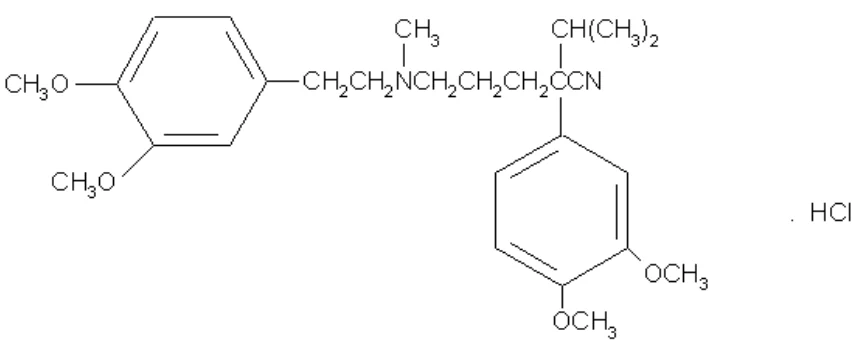
Description: Verapamil as the hydrochloride salt, is an almost white, bitter-tasting crystalline powder, practically free from odour, and readily soluble in chloroform and water (1 part in 20), but sparingly soluble in ethanol and practically insoluble in ether. It melts at 140°C and should be protected from light. The pH of a 5% solution in water is 4.5 to 6.5. The pKa of verapamil is 8.6 with 0.1N KOH in methanol using methanol-water as the sample solvent and extrapolation to pure water, and is 8.75 in human plasma.
14 CLINICAL TRIALS
The clinical trial data on which the original indication was authorized are not available.
16 NON-CLINICAL TOXICOLOGY
General Toxicology:
Acute Toxicity
Table 5 - Lethal Dose 50 (LD50) (mg/kg) of Verapamil
| Intravenous | Intraperitoneal | Subcutaneous | Oral | |||||||||
|---|---|---|---|---|---|---|---|---|---|---|---|---|
| Rat | 16 | 67 | 107 | 114 | ||||||||
| Mouse | 8 | 68 | 68 | 163 | ||||||||
| Guinea Pig | - | - | - | 140 | ||||||||
| Juvenile Rat | - | - | - | 93 (M) | ||||||||
| 113 (F) | ||||||||||||
| Juvenile Rabbit | - | - | - | 114.2 (M) | ||||||||
| 129.8 (F) | ||||||||||||
| Definitions : M = male; F = female | ||||||||||||
Symptoms preceding death were similar in both sexes with marked sedation, decreased excitability, forced respirations, clonic spasms and convulsions.
Subacute Toxicity
Oral Studies
Verapamil was administered orally in doses of 12.5, 25 and 50 mg/kg per day, to rats via food for 14 weeks (29 animals/group) and to dogs for 6 days/week in capsules, for 15 to 16 weeks
(4 animals/group). Baboons received 2, 4, 8, 16, 32 and 64 mg/kg by mouth daily for 4 weeks
(2 animals/group).
In rats, a dose-related increase in heart and lung weights was found. Dogs given 25 to 50 mg/kg showed slight weight loss and a significant reduction in heart rate up to week 11, followed by a gradual return to normal. In one dog on 12.5 mg/kg, one on 25 mg/kg and in all animals on 50 mg/kg, there was emesis during the first two weeks of the study. Serum glutamic-pyruvic transaminase (SGPT) was elevated for one dog on 25 mg/kg at week 9 and for two animals on 50 mg/kg at the end of the test. Macroscopic examinations at necropsy were negative and there were no drug-attributable histological changes. The baboons showed no drug-related changes.
Intramuscular Studies
Beagle dogs were given 0, 2 and 10 mg/kg, 5 days/week for 30 days (4 animals/group). Injection sites in all animals became edematous and a dose-related reduction in heart rate was observed. At 10 mg/kg, hemoglobin and hematocrit values decreased and one animal had a raised SGPT. At necropsy, edema was noted at injection sites and higher spleen weights were recorded at the 10 mg/kg dose. One dog on this dose also showed increased inflammatory cell infiltration in the liver, with some hepatic cell degenerative changes.
Intravenous Studies
Verapamil was given to Sprague-Dawley rats at 0.2, 1.0 and 5.0 mg/kg once daily for 4 weeks
(30 animals/group) and similarly to beagle dogs at 0.1, 0.4 and 1.6 mg/kg levels (6 animals/group).
At the highest dose level, all dogs showed some restlessness, salivation and laboured breathing, along with delayed AV conduction in one-half of the animals. In 4 of 6 animals at the highest dose (1.6 mg/kg) sporadic small focal gatherings of Kupffer cells, with death of individual liver cells (necrobioses and/or necrosis of hepatocytes), were found histopathologically.
Chronic Toxicity
Oral
Rats were given verapamil at 10, 15, 25, 30, 60 and 62.5 mg/kg/day (50 animals/group) and beagle dogs at 10, 15, 25, 30, 40, 60, 62.5, 70, 81 and 85 mg/kg (6 animals/group) for 12 and 18 months. Clinical signs were observed and changes in food consumption, consistency of stools, hemograms, clinical chemistry and urinalyses performed. Blood pressure, electrocardiogram (ECG) and ophthalmoscopic examinations were done on the dogs.
In one 18-month rat study, an increase in weight of the thyroid glands in females on the 62.5 mg dose was noted. In a later 12-month study, a slight reduction in weight gain was recorded.
In dogs, at doses of 60 mg and greater, toxic signs such as vomiting, salivation, reversible hyperplasia of the gums, reduced food consumption, slight weight loss and a transitory, slight to moderate elevation of SGPT were noted and three of the animals died. The 40 mg dose caused loss of coat colour and hair and a delay in AV conduction.
In another study, atypical lens changes (cataracts) were observed in 8 beagles receiving toxic dose levels (62.5 and 70 mg/kg). In a later study, 4 beagles were given 81 mg/kg for 18 months and none developed cataracts. It was concluded that any changes caused by verapamil in lens transparency are specific to the beagle. This is supported by the absence of similar lesions in other species studied, and by the apparent lack of any impairment by verapamil of carbohydrate or energy metabolism in lenticular tissue. The water-soluble proteins of the canine lens are known to have differences from those in other species.
Mutagenicity and Carcinogenicity
Mutagenicity
In vitro mutagenicity tests showed that verapamil did not have mutagenic properties in 5 different strains of Salmonella typhimurium, nor in studies on chromosomal aberrations and sister chromatid exchanges (SCE) in human lymphocytes, nor in the hypoxanthine guanine phosphoribosyltransferase (HGPRT)-test with V-79 Chinese hamster cells, and also not in the cell transformation assay with Syrian hamster embryo cells. In addition, verapamil did not show any SCE-inducing activity in vivo (Chinese hamster).
Carcinogenicity
In a 24-month carcinogenicity study, verapamil hydrochloride was administered orally to 50 male and 50 female rats in the diet as actual mean doses of 9.3/9.5, 32.6/33.2, and 112.2/102.5 mg/kg/day, respectively. Two hundred animals served as controls.
Drug-related significant reductions in body weight and mortality were seen in males and females of the high dose group.
Dose-related cardiac lesions (dilatation, atrial thrombi and myocardial metaplasia, combined with hydrothorax) were seen in the high dose group. These cardiac lesions are considered related to a chronic, exaggerated pharmacologic effect at this high dose level.
At the end of the study, all rats were examined histopathologically with regards to tumorigenesis. All non-neoplastic and neoplastic lesions were considered to reflect the spectrum of spontaneous lesions commonly encountered in rats of this age and strain. As compared to the controls, the type and incidence of these lesions were not increased in treated rats.
Genotoxicity:
In vitro mutagenicity tests showed that verapamil did not have mutagenic properties in five different strains of Salmonella typhimurium, nor in studies on chromosomal aberrations and sister chromatid exchanges (SCE) in human lymphocytes, nor in the hypoxanthine guanine phosphoribosyltransferase (HGPRT)-test with V-79 Chinese hamster cells, and also not in the cell transformation assay with Syrian hamster embryo cells. In addition, verapamil did not show any SCE-inducing activity in vivo (Chinese hamster).
Irritation
Two concentrations of verapamil, 10 mg/mL in a 1 mL dose and 50 mg/mL in 0.25, 0.5 and 1 mL dose were injected intramuscularly into 5 albino rabbits, with each animal receiving the 4 doses once. Gross signs of irritation consisted mainly of congestion at the injection sites, with no evidence of necrosis or other degenerative changes.
In another study, verapamil was examined in mongrel dogs for local tolerance after single intravenous, intramuscular, paravenous and intra-arterial administration of about 5 mg/animal. Sites of injection were checked daily for manifestations of inflammation and sensitivity to pressure. Later, several tissue specimens were taken from the respective injection sites and examined histologically. The intravenous injection of verapamil caused no irritation. After intramuscular, paravenous and intra-arterial administration changes observed were mild inflammation or slight degenerative alterations in muscle cells. These were reversible.
Reproduction and Developmental Toxicology:
Studies were carried out in rats and rabbits with verapamil given in food and/or by gastric tube. These studies included fertility and general reproduction performance in rats, teratogenicity studies in rats and rabbits and peri- and post-natal studies in rats. Rats were given 2.5, 12.5, 25 and 100 mg/kg body weight, by gastric tube and 1.3, 1.6, 5.2, 7.5, 13.3, 16 and 55 mg/kg body weight in food. In another teratogenicity study, rats were given 5, 10, and 20 mg/kg body weight by gavage three times daily at an interval of about 4.5 hours. Rabbits were given 5 and 15 mg/kg body weight by gastric tube.
There was no evidence of teratogenicity in either species and no embryotoxic effects observed in the rats dosed via food, or with doses up to 12.5 mg/kg body weight given by gastric tube, or with doses up to 10 mg/kg three times a day. The single daily dose of 25 mg/kg body weight or more caused a higher resorption rate in the rat. The dose of 20 mg/kg three times a day was embryocidal and retarded fetal growth and development, probably because of adverse maternal effects reflected in reduced weight gains of the dams. This oral dose has also been shown to cause hypotension in rats. There was no difference in resorption rates observed in the rabbit and no effect on peri- and post-natal development or fertility in the rat.
17 SUPPORTING PRODUCT MONOGRAPHS
- 1. PrIsoptin SR (verapamil hydrochloride sustained-release tablets), submission control 253349, Product Monograph, BGP Pharma Inc., December 7, 2021.