


Product Monograph - Vioxx Tab 12.5mg
ACTION AND CLINICAL PHARMACOLOGY
VIOXX® (rofecoxib) is a nonsteroidal anti-inflammatory drug (NSAID) that exhibits anti-inflammatory, analgesic and antipyretic activities in animal models. At therapeutic doses,
VIOXX® is an orally active cyclooxygenase-2 (COX-2) selective inhibitor. At therapeutic concentrations, VIOXX® does not inhibit the cyclooxygenase-1 (COX-1) isoenzyme.
Cyclooxygenase is responsible for the generation of prostaglandins, which are potent biological mediators involved in diverse physiologic functions as well as in pathologic conditions. Two isoforms of cyclooxygenase have been identified: cyclooxygenase-1
(COX-1) and cyclooxygenase-2 (COX-2). COX-1 is constitutively expressed and enzymatically active in various tissues, including the stomach, intestines, and kidneys, and in platelets. The prostaglandins produced by COX-1 play key roles in the maintenance of physiological functions such as platelet aggregation and are among the factors that maintain the GI mucosal barrier. Inhibition of COX-1 has been associated with gastric damage. COX-2 is constitutively expressed and plays a physiological role in a limited number of tissues, including the brain, kidney and female reproductive tract. In addition, inhibition of COX-2 reduces the formation of systemic (and therefore possibly endothelial) prostacyclin. Both COX-1 and COX-2 are important for normal renal function and inhibition of these enzymes has been associated with renal toxicity.
COX-2 is the inducible isoform of the enzyme that has been shown to be up-regulated by proinflammatory stimuli. COX-2 is primarily responsible for the synthesis of prostanoid mediators of pain, inflammation, and fever. Selective inhibition of COX-2 by
VIOXX® decreases these clinical signs and symptoms without influencing gastrointestinal integrity or platelet function at recommended therapeutic doses (see
PHARMACOLOGY, Mechanism of Action).
Pharmacokinetics
Absorption
The mean oral bioavailability of VIOXX® at therapeutically recommended doses of 12.5,
25, and 50 mg is approximately 93%. The geometric mean (95% CI) for the area under the curve (AUC) and peak plasma level (Cmax) following a single 25 mg dose were 3186
(95% CI: [2698, 3763]) ngChr/mL and 185 (95% CI: [137, 250]) ng/mL, respectively.
Both Cmax and AUC are roughly dose proportional across the clinical dose range. At doses greater than 50 mg, there is a less than proportional increase in Cmax and AUC, which is thought to be due to the low solubility of the drug in aqueous media. With multiple dosing, steady-state conditions are reached by Day 4. The geometric mean
(95% CI) AUC0-24hr and Cmax at steady state after multiple doses of 25 mg rofecoxib was
3867 (95% CI: [3212, 4656]) ngChr/mL and 305 (95% CI: [248, 376]) ng/mL, respectively. The accumulation factor based on geometric means was 1.67.
VIOXX® tablets 12.5 mg and 25 mg are bioequivalent to VIOXX® oral suspension 12.5 mg/5 mL and 25 mg/5 mL, respectively.
Food and Antacid Effects
Food had no significant effect on either the peak plasma concentration (Cmax) or extent of absorption (AUC) of rofecoxib when VIOXX® tablets were taken with a high fat meal.
The time to peak plasma concentration (Tmax), however, was delayed by 1 to 2 hours. The food effect on the suspension formulation has not been studied. VIOXX® tablets can be administered without regard to timing of meals.
There was a 13% and 8% decrease in AUC when VIOXX® was administered with calcium carbonate antacid and magnesium/aluminum antacid to elderly subjects, respectively. There was an approximate 20% decrease in Cmax of rofecoxib with either antacid.
Distribution
Rofecoxib is approximately 87% bound to human plasma protein over the range of concentrations of 0.05 to 25 :g/mL. The apparent volume of distribution at steady state
(Vdss) is approximately 91 L following a 12.5 mg dose and 86 L following a 25 mg dose.
Rofecoxib crosses the placenta in rats and rabbits, and the blood-brain barrier in rats.
Metabolism
Metabolism of rofecoxib is primarily mediated through reduction by cytosolic enzymes.
The principal metabolic products are the cis-dihydro and trans-dihydro derivatives of rofecoxib, which account for nearly 56% of recovered radioactivity in the urine. An additional 8.8% of the dose was recovered as the glucuronide of the hydroxy derivative, a product of oxidative metabolism. The biotransformation of rofecoxib and this metabolite is reversible in humans to a limited extent (<5%). These metabolites are inactive as COX-1 or COX-2 inhibitors.
Cytochrome P450 plays a minor role in metabolism of rofecoxib. Inhibition of CYP 3A activity by administration of ketoconazole 400 mg daily does not affect rofecoxib disposition. However, induction of general hepatic metabolic activity by administration of the non specific inducer rifampin 600 mg daily produces a 50% decrease in rofecoxib plasma concentrations (see PRECAUTIONS, Drug Interactions). Excretion
Rofecoxib is eliminated predominantly by hepatic metabolism with little (<1%)
unchanged drug recovered in the urine. Following a single radiolabeled dose of 125 mg, approximately 72% of the dose was excreted into the urine as metabolites and 14% in the feces as unchanged drug.
The effective half-life (based on steady-state levels) was approximately 17 hours. The plasma clearance after 12.5 and 25 mg doses was approximately 141 and 120 mL/min, respectively.
Special Populations
Gender
The pharmacokinetics of rofecoxib are comparable in men and women.
Geriatric
After a single dose of 25 mg VIOXX® in elderly subjects (over 65 years old) a 34% increase in AUC was observed as compared to the young subjects. Dosage adjustment in the elderly is not necessary; however, therapy with VIOXX® should be initiated at the lowest recommended dose.
Race
Meta-analysis of pharmacokinetic studies has suggested a slightly (10-15%) higher AUC of rofecoxib in Blacks and Hispanics as compared to Caucasians. No dosage adjustment is necessary on the basis of race.
Hepatic Insufficiency
A single-dose pharmacokinetic study in mild (Child-Pugh score #6) hepatic insufficiency patients indicated that rofecoxib AUC was similar between these patients and healthy subjects. A pharmacokinetic study in patients with moderate (Child-Pugh score 7-9)
hepatic insufficiency indicated that mean rofecoxib steady-state AUC was increased 55% relative to healthy subjects. Patients with severe hepatic insufficiency have not been studied.
Renal Insufficiency
In a study (N=6) of patients with end stage renal disease undergoing dialysis, peak rofecoxib plasma levels and AUC declined 18% and 9%, respectively, when dialysis occurred four hours after dosing. When dialysis occurred 48 hours after dosing, the elimination profile of rofecoxib was unchanged. While renal insufficiency does not influence the pharmacokinetics of rofecoxib, use of VIOXX® in advanced renal disease is not recommended at present because no safety information is available regarding the use of VIOXX® in these patients (see WARNINGS, Advanced Renal Disease,
PRECAUTIONS, Renal Function, and DOSAGE AND ADMINISTRATION).
Pediatric Patients
The pharmacokinetics of rofecoxib in pediatric patients have not been studied.
Clinical Studies
Osteoarthritis
Six double-blind, randomized clinical trials of VIOXX®, lasting from 6 to 86 weeks, were carried out in 4035 patients with osteoarthritis of the knee and hip, including approximately 400 patients $80 years of age. VIOXX® 12.5 and 25 mg administered once daily demonstrated efficacy comparable to 150 mg (50 mg three times a day) of diclofenac and 2400 mg (800 mg three times a day) of ibuprofen and superior to placebo. Patients showed clinically significant improvements in the signs and symptoms of osteoarthritis, including reduction in pain, joint stiffness, joint tenderness, and physical disability. Additionally, patients’ assessment of response to study medication and investigators’ assessment of the patients’ disease status were similarly comparable to diclofenac and ibuprofen and superior to placebo. Clinical efficacy was demonstrated within one week , the first evaluation timepoint, and continued for the duration of the studies up to one year. Doses above 25 mg daily provided no additional clinical benefit.
As a measure of effect on cartilage, at one year, joint space narrowing (assessed radiographically) of the knee in patients treated with VIOXX® (12.5 and
25 mg daily) was similar to that seen in patients treated with diclofenac (150 mg daily).
Rheumatoid Arthritis (RA)
VIOXX® has demonstrated significant reduction in joint tenderness/pain and joint swelling compared to placebo. VIOXX® was evaluated for the treatment of the signs and symptoms of RA in two 12-week placebo- and active-controlled clinical trials that enrolled a total of approximately 2000 patients. VIOXX® was shown to be superior to placebo on all primary endpoints (number of tender joints, number of swollen joints, patient and physician global assessments of disease activity). In addition, VIOXX® was shown to be superior to placebo using the American College of Rheumatology 20%
(ACR20) Responder Index, a composite of clinical, laboratory, and functional measures of RA. VIOXX® 25 mg once daily and naproxen 500 mg twice daily showed generally similar effects in the treatment of RA. The beneficial effects were maintained over the
12-week treatment period. A 50 mg dose once daily of VIOXX® was also studied;
however, no significant additional efficacy was seen compared to the 25 mg dose.
Analgesia, Including Primary Dysmenorrhea
In clinical studies, VIOXX® relieved pain in acute analgesic models of post-operative dental pain, post-orthopedic surgical pain, and primary dysmenorrhea. In single-dose clinical studies, the analgesic effect of a 50 mg dose of VIOXX® was generally similar to a maximum analgesic dose of naproxen sodium (550 mg) or ibuprofen (400 mg). The onset of analgesia with the single 50 mg dose of VIOXX® occurred within 45 minutes and persisted for as long as 24 hours after dosing. In multiple-dose clinical studies, lasting up to 5 days, of post-orthopedic surgical pain and pain from primary dysmenorrhea, after an initial 50 mg dose, 25 to 50 mg once daily of VIOXX® was effective in relieving pain.
Gastrointestinal Safety
Endoscopy Studies
Upper Endoscopy in Patients with Osteoarthritis
Two identical (U.S. and Multinational) endoscopy studies in a total of 1516 patients were conducted to compare the percentage of patients who developed endoscopically detectable gastroduodenal ulcers with VIOXX® 25 mg daily or 50 mg daily, ibuprofen
2400 mg daily, or placebo. Patients who were 50 years of age and older with osteoarthritis and no ulcers at baseline were evaluated by endoscopy after weeks 6 (for safety), 12, and 24 of treatment. The placebo-treatment group was discontinued at week 16 by design. In each of the U.S. and the Multinational studies, the primary endpoint was the cumulative incidence of gastroduodenal ulcer at 12 weeks. Treatment with VIOXX® 25 mg daily or 50 mg daily resulted in significantly lower percentages of patients with gastroduodenal ulcers than treatment with ibuprofen 2400 mg daily. See
Figure 1 for the combined analysis showing cumulative incidences of ulcers at 12 weeks
(which includes data from the 6- and 12-week endoscopies) and 24 weeks (which includes data from the 6-, 12-, and 24-week endoscopies).
In a predefined, combined analysis of the two trials at 12 weeks of treatment, the percentages of patients with endoscopically detected gastroduodenal ulcers were similar between VIOXX® 25 mg daily, VIOXX® 50 mg daily, and placebo.
Figure 1
Life-Table Cumulative Incidence Rate of Gastroduodenal Ulcers $3 mm† with Detectable Depth
Intention-to-Treat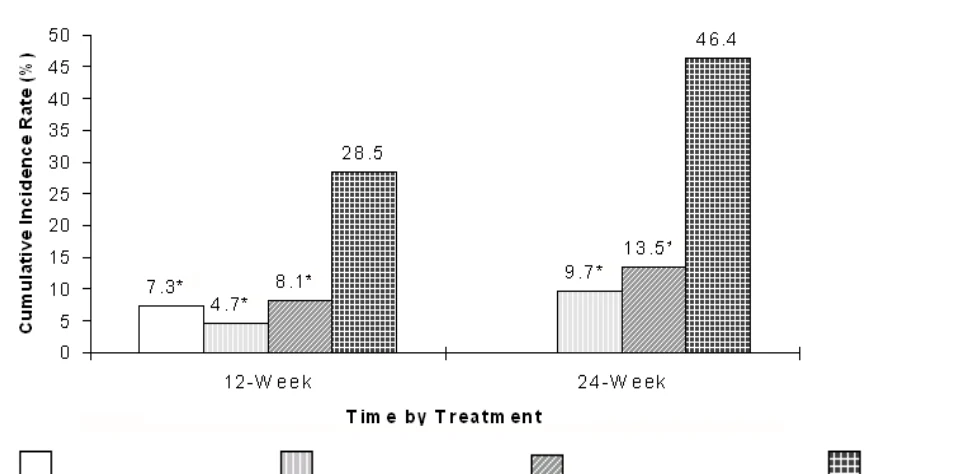

Placebo
V
I
O
X
X ®
m g
V
I
O
X
X ®
mg
Ibup rofe n mg n=340 n=373 n=360 n=354
* p <0.001 versus Ibuprofen 2400 mg
† Results of analyses using a $5 mm gastroduodenal ulcer endpoint were consistent.
The following patients at a higher risk for ulcers were included in the studies: patients with active Helicobacter pylori infection, baseline gastroduodenal erosions, and/or a prior history of perforation, ulcer or bleed (PUB). Five hundred twenty-six patients
(34.7%) were 65 years of age and older. The advantage of VIOXX® was maintained in these higher risk subgroups. Patients receiving acetylsalicylic acid (ASA), including low-dose ASA for cardiovascular prophylaxis, were not enrolled in these studies.
Upper Endoscopy in Patients with Rheumatoid Arthritis
A 12-week, double-blind, placebo- and active-controlled endoscopy study of 660 patients with RA was conducted to compare the percentage of patients who developed endoscopically detectable gastroduodenal ulcers with VIOXX® 50 mg once daily (twice the maximum dose recommended for chronic use), naproxen 500 mg twice daily, or placebo. Entry criteria for this study permitted enrollment of patients with active
Helicobacter pylori infection, baseline gastroduodenal erosions, concomitant use of corticosteroids, prior history of an upper gastrointestinal perforation, ulcer, or bleed
(PUB), and/or age $65 years. However, patients receiving ASA (including low-dose ASA for cardiovascular prophylaxis) were not enrolled in this study. Patients who were 18 years of age and older with RA and who had no ulcers at baseline were evaluated by endoscopy after 6 and 12 weeks of treatment.
Treatment with VIOXX® 50 mg once daily (twice the maximum dose recommended for chronic use) was associated with a significantly lower percentage of patients with endoscopic gastroduodenal ulcers than treatment with naproxen 500 mg twice daily. The advantage of VIOXX® was maintained in the following higher risk subgroups:
patients with active Helicobacter pylori infection, patients with baseline gastroduodenal erosions, patients taking corticosteroids, patients with a prior history of a PUB, and elderly patients (65 years of age and older). See Figure 2 and the accompanying table for the results of this study.
Figure 2
Comparison to Naproxen
Life-Table Cumulative Incidence Rate of Gastroduodenal
Ulcers $3 mm* (Intention-to-Treat)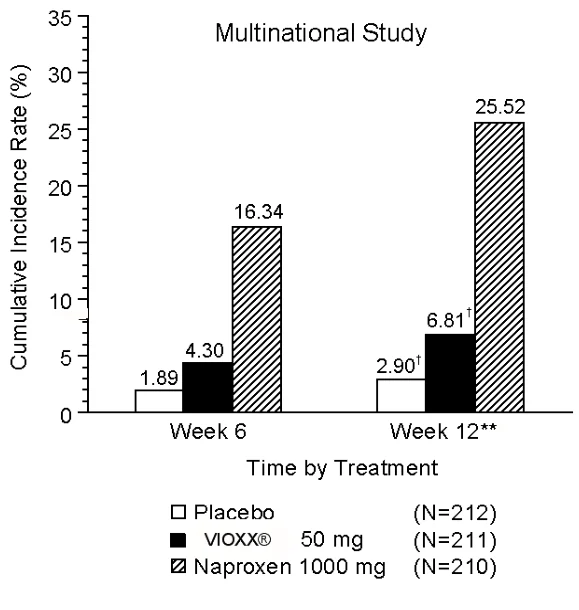
† p<0.001 versus naproxen 500 mg twice daily
* Results of analyses using a $5 mm gastroduodenal ulcer endpoint were consistent. **The primary endpoint was the cumulative incidence of gastroduodenal ulcer at 12 weeks.
Endoscopic Gastroduodenal Ulcers at 12 weeks
Multinational Study
Treatment
Group
Number of Patients With
Ulcer/ Total Number of
Patients
Cumulative Incidence Rate*
Ratio of Rates
vs. Placebo
95% CI on Ratio of Rates
Placebo 6/212 2.90% - -
VIOXX® 50 mg 14/211 6.81% 2.35 (0.92, 6.00)
Naproxen
1000 mg
51/210 25.52% 8.8 (3.86, 20.07)
*by life table analysis
Upper Endoscopy in Healthy Subjects
In a separate study, 167 healthy subjects were evaluated by endoscopy after 7 days of treatment with VIOXX® 250 mg daily, ibuprofen 2400 mg daily, ASA 2600 mg daily, or placebo. No subjects had upper gastrointestinal mucosal abnormalities at baseline endoscopy. The gastroduodenal mucosa was evaluated using a predefined scale with a score ranging from 0 to 4; scores $ 2 corresponded to development of erosion and/or ulcer. Significantly fewer subjects treated with VIOXX® 250 mg daily (a dose 10 to 20-fold higher than that indicated for the treatment of osteoarthritis) developed endoscopically evident mucosal injury than subjects treated with ibuprofen 2400 mg daily or ASA 2600 mg daily. In addition, the number of subjects treated with VIOXX® who developed endoscopically evident mucosal injury was generally similar to placebo
(Figure 3).
Figure 3
Percent of Subjects with Maximum Gastroduodenal
Erosion Score $2 VIOXX® GI Clinical Outcomes Research (VIGOR) Study
Study Design
The VIGOR study was designed to evaluate the comparative GI safety of VIOXX® 50 mg once daily (twice the highest dose recommended for chronic use in OA) versus naproxen 500 mg twice daily (common therapeutic dose). The general safety and tolerability of VIOXX® 50 mg once daily versus naproxen 500 mg twice daily was also studied. VIGOR was a randomized, double-blind study (median duration of 9 months)
in 8076 patients with rheumatoid arthritis (RA) requiring chronic NSAID therapy (mean age 58 years). Patients were not permitted to use concomitant ASA or other antiplatelet drugs. Patients with a recent history of myocardial infarction or stroke and patients deemed to require low-dose ASA for cardiovascular prophylaxis were to be excluded from the study. Fifty-six percent of patients used concomitant oral corticosteroids. The
GI safety endpoints (confirmed by a blinded adjudication committee) included:
- PUBs-symptomatic ulcers, upper GI perforation, obstruction, major or minor upper GI bleeding.
- Complicated PUBs (a subset of PUBs)-upper GI perforation, obstruction or major upper GI bleeding.
Study Results
Gastrointestinal Safety in VIGOR
The VIGOR study showed a significant reduction in the risk of development of PUBs, including complicated PUBs in patients taking VIOXX® compared to naproxen (see
Table 1).
Table 1
VIGOR-Summary of Patients with Gastrointestinal Safety Events1
COMPARISON TO NAPROXEN
GI Safety Endpoints
VIOXX® 50 mg
daily
(N=4047)2
n3 (Cumulative
Rate4)
Naproxen 1000 mg daily (N=4029)2
n3 (Cumulative
Rate4)
Relative Risk of
VIOXX®
compared to
naproxen5 95% CI5
PUBs 56 (1.80) 121 (3.87) 0.46* (0.33, 0.64)
Complicated PUBs 16 (0.52) 37 (1.22) 0.43* (0.24, 0.78)
1As confirmed by an independent committee blinded to treatment, 2N=Patients randomized, 3n=Patients with events,
4Kaplan-Meier cumulative rate at end of study when at least 500 patients remained (approx. 10 1/2 months), 5Based on Cox proportional hazard model
*p-value #0.005 for relative risk compared to naproxen
The risk reduction for PUBs and complicated PUBs for VIOXX® compared to naproxen
(approximately 50%) was maintained in patients with or without the following risk factors for developing a PUB (Kaplan-Meier cumulative rate of PUBs at approximately 10½ months, VIOXX® versus naproxen, respectively): with a prior PUB (5.12, 11.47); without a prior PUB (1.54, 3.27); age 65 or older (2.83, 6.49); or younger than 65 years of age
(1.48, 3.01). A similar risk reduction for PUBs and complicated PUBs (approximately
50%) was also maintained in patients with or without Helicobacter pylori infection or concomitant corticosteroid use.
Other Safety Findings: Cardiovascular Safety
The VIGOR study showed a higher incidence of adjudicated serious cardiovascular thrombotic events in patients treated with VIOXX® 50 mg once daily as compared to patients treated with naproxen 500 mg twice daily (see Table 2). This finding was largely due to a difference in the incidence of myocardial infarction between the groups (see
Table 3) (see PRECAUTIONS, Cardiovascular Effects). Adjudicated serious cardiovascular events (confirmed by a blinded adjudication committee) included: sudden death, myocardial infarction, unstable angina, ischemic stroke, transient ischemic attack and peripheral venous and arterial thromboses.
Table 2
VIGOR-Summary of Patients with Serious Cardiovascular
Thrombotic Adverse Events1 Over Time
COMPARISON TO NAPROXEN
Treatment group
Patients
Randomized 4 Months2 8 Months3 10 ½ Months4
VIOXX® 50 mg 4047
Total number of
events
Cumulative Rate †
0.46%
0.82%
1.81%*
Naproxen
1000 mg 4029
Total number of
events
Cumulative Rate †
0.23%
0.43%
0.60%
1 Confirmed by blinded adjudication committee,
2 Number of patients remaining after 4 months were 3405 and 3395 for VIOXX® and naproxen respectively, 3 Number of patients remaining after 8 months were 2806 and 2798 for VIOXX® and naproxen respectively, 4 Number of patients were 531 and 514 for VIOXX® and naproxen respectively. † Kaplan-Meier cumulative rate.
* p-value <0.002 for the overall relative risk compared to naproxen by Cox proportional hazard model
Table 3
VIGOR- Serious Cardiovascular
Thrombotic Adverse Events1
VIOXX® 50 mg
N2=4047
n3
Naproxen 1000 mg
N2 =4029 n3
Any CV thrombotic event 45* 19
Cardiac events
Fatal MI/Sudden death
Non-fatal MI
Unstable angina
28**
18**
Cerebrovascular
Ischemic stroke
TIA
Peripheral 6 1
1 Confirmed by blinded adjudication committee,
2 N=Patients randomized,
3 n=Patients with events.
* p-value <0.002 and ** p-value #0.006 for relative risk compared to naproxen by Cox proportional hazard model
For cardiovascular data from 2 long-term placebo-controlled studies, see
PRECAUTIONS, Cardiovascular Effects.
Special Studies
Assessment of Fecal Occult Blood Loss in Healthy Subjects
To assess mucosal integrity throughout the gastrointestinal tract, fecal blood loss with
VIOXX® 25 mg daily, VIOXX® 50 mg daily, ibuprofen 2400 mg daily, and placebo was compared in a study utilizing 51Cr-tagged red blood cells in 67 healthy males. After 4 weeks of treatment with VIOXX® 25 mg daily or VIOXX ® 50 mg daily, there was no significant increase in the amount of fecal blood loss compared with placebo-treated subjects. In contrast, ibuprofen 2400 mg daily produced a significant increase in fecal blood loss as compared with placebo-treated subjects and subjects treated with
VIOXX®.
Assessment of Intestinal Permeability in Healthy Subjects
As an additional measure of mucosal integrity in the small bowel, intestinal permeability with VIOXX® 25 mg daily, VIOXX® 50 mg daily, indomethacin 150 mg daily, and placebo was compared in a study utilizing 51Cr-tagged EDTA in 30 healthy subjects. After 1 week of treatment with VIOXX® 25 mg daily or VIOXX® 50 mg daily, there was no significant increase in intestinal permeability compared with placebo-treated subjects.
In contrast, indomethacin 150 mg daily produced a significant increase in intestinal permeability as compared with placebo-treated subjects and subjects treated with
VIOXX®.
Platelet Function
Multiple doses of VIOXX® 12.5, 25, and up to 375 mg administered daily up to 12 days had no effect on bleeding time relative to placebo. Similarly, bleeding time was not altered in a single dose study with 500 or 1000 mg of VIOXX®. There was no inhibition of ex vivo arachidonic acid- or collagen-induced platelet aggregation with 12.5, 25 and
50 mg of VIOXX®. These findings are consistent with the COX-2 selectivity of rofecoxib. ASA
At steady state, VIOXX® 50 mg once daily had no effect on the anti-platelet activity of low-dose (81 mg once daily) ASA, as assessed by ex vivo platelet aggregation and serum TXB2 generated in clotting blood (a biochemical marker of platelet activation)
(see PRECAUTIONS, Drug Interactions).
Use with Acetylsalicylic Acid
As a selective inhibitor of COX-2, rofecoxib does not inhibit platelet function and can not substitute for ASA for protection against myocardial infarction. VIOXX® can be used with low-dose ASA. However, concomitant administration of low-dose ASA with VIOXX® may result in an increased rate of GI ulceration or other complications, compared to use of VIOXX® alone (see PRECAUTIONS, Drug Interactions, ASA).
In 3 six-week, double-blind, randomized efficacy and safety clinical trials, VIOXX® 12.5 mg (n=134) or 25 mg (n=27) was administered to osteoarthritic patients concomitantly with low-dose ASA (less than or equal to 325 mg daily) (N = 161). No clinically important differences in the overall incidence of clinical adverse experiences were noted for users of VIOXX® plus ASA versus VIOXX® alone.
INDICATIONS AND CLINICAL USE
VIOXX® (rofecoxib) is indicated for:
- Acute and chronic treatment of the signs and symptoms of osteoarthritis.
- Acute and chronic treatment of the signs and symptoms of rheumatoid arthritis in adults.
- Relief of pain in adults.
- Treatment of primary dysmenorrhea.
CONTRAINDICATIONS
VIOXX® (rofecoxib) is contraindicated in patients with known hypersensitivity to rofecoxib or any other component of VIOXX®.
VIOXX® should not be given to patients who have experienced asthma, urticaria, or allergic-type reactions after taking ASA or other NSAIDs. Severe, rarely fatal, anaphylactic-like reactions to NSAIDs have been reported in such patients (see
WARNINGS, Anaphylactoid Reactions and PRECAUTIONS, Hypersensitivity
Reactions).
Active peptic ulcer, active GI bleeding or active inflammatory disease of the bowel.
Significant hepatic impairment or active liver disease.
Severely impaired or deteriorating renal disease (creatinine clearance < 0.5 mL/sec: 30 mL/min). Individuals with lesser degrees of renal impairment are at risk of deterioration of their renal function when prescribed NSAIDs and must be monitored.
WARNINGS
Gastrointestinal System (GI)
Serious gastrointestinal toxicity such as bleeding, ulceration, and perforation of the stomach, small intestine or large intestine, can occur at any time, with or without warning symptoms, in patients treated with nonsteroidal anti-inflammatory drugs
(NSAIDs). Minor upper gastrointestinal problems, such as dyspepsia, are common and may also occur at any time during NSAID therapy. Therefore, physicians and patients should remain alert for ulceration and bleeding, even in the absence of previous GI tract symptoms. Patients should be informed about the signs and/or symptoms of serious GI toxicity and the steps to take if they occur. The utility of periodic laboratory monitoring has not been demonstrated, nor has it been adequately assessed. Only one in five patients who develop a serious upper GI adverse event on NSAID therapy is symptomatic. It has been demonstrated that upper GI ulcers, gross bleeding or perforation, caused by NSAIDs, appear to occur in approximately 1% of patients treated for 3-6 months, and in about 2-4% of patients treated for one year. These trends continue thus, increasing the likelihood of developing a serious GI event at some time during the course of therapy. However, even short-term therapy is not without risk.
To minimize the potential risk for an adverse GI event, the lowest effective dose should be used for the shortest possible duration. For high risk patients, alternate therapies that do not involve NSAIDs should be considered.
The risk of GI toxicity is not completely eliminated with VIOXX®. The results of the
VIOXX® GI Clinical outcomes research (VIGOR) study demonstrate that in patients treated with VIOXX®, the risk of GI toxicity with VIOXX® 50 mg once daily is significantly less than with naproxen 500 mg twice daily (see ACTION AND CLINICAL
PHARMACOLOGY, Clinical Studies, Gastrointestinal Safety, Clinical Upper GI
Outcomes, VIOXX® GI Clinical Outcomes Research (VIGOR) Study).
NSAIDs should be prescribed with extreme caution in patients with a prior history of ulcer disease or gastrointestinal bleeding. Most spontaneous reports of fatal GI events are in elderly or debilitated patients and therefore special care should be taken in treating this population.
Studies have shown that patients with a prior history of peptic ulcer disease and/or gastrointestinal bleeding and who use NSAIDs, have a greater than 10-fold higher risk for developing a GI bleed than patients with neither of these risk factors. In addition to a past history of ulcer disease, pharmacoepidemiological studies have identified several other co-therapies or co-morbid conditions that may increase the risk for GI bleeding such as: treatment with oral corticosteroids, treatment with anticoagulants, longer duration of NSAID therapy, smoking, alcoholism, older age, and poor general health status.
Anaphylactoid Reactions
As with NSAIDs in general, anaphylactoid reactions have occurred in patients without known prior exposure to VIOXX®. In post-marketing experience, rare cases of anaphylactic/anaphylactoid reactions and angioedema have been reported in patients receiving VIOXX®. VIOXX® should not be given to patients with the “aspirin triad”. This symptom complex typically occurs in asthmatic patients who experience rhinitis with or without nasal polyps, or who exhibit severe, potentially fatal bronchospasm after taking
ASA or other NSAIDs (see CONTRAINDICATIONS and PRECAUTIONS,
Hypersensitivity Reactions). Emergency help should be sought in cases where an anaphylactoid reaction occurs.
Advanced Renal Disease
No safety information is available regarding the use of VIOXX® in patients with advanced kidney disease. Therefore, treatment with VIOXX® is not recommended in these patients. If VIOXX® therapy must be initiated, close monitoring of the patient’s kidney function is advisable (see PRECAUTIONS, Renal Function).
Cross-sensitivity
Patients sensitive to any one of the nonsteroidal anti-inflammatory drugs may be sensitive to any of the other NSAIDs also.
Aseptic Meningitis
In occasional cases, with some NSAIDs, the symptoms of aseptic meningitis (stiff neck, severe headaches, nausea and vomiting, fever or clouding of consciousness) have been observed. Patients with autoimmune disorders (systemic lupus erythematosus, mixed connective tissues diseases, etc.) seem to be predisposed. Therefore, in such patients, the physician must be vigilant to the development of this complication. In post-marketing experience, very rare cases of aseptic meningitis have been reported in patients.
Pregnancy
There are no adequate and well controlled studies in pregnant women. As with other drugs known to inhibit prostaglandin synthesis, use of VIOXX® should be avoided in late pregnancy because it may cause premature closure of the ductus arteriosus.
VIOXX® should be used during the first two trimesters of pregnancy only if the potential benefit justifies the potential risk to the fetus.
Use in Nursing Mothers
Rofecoxib is excreted in the milk of lactating rats. It is not known whether this drug is excreted in human milk. Because many drugs are excreted in human milk and because of the possible adverse effects of drugs that inhibit prostaglandin synthesis on nursing infants, a decision should be made whether to discontinue nursing or to discontinue the drug, taking into account the importance of the drug to the mother.
Use in Children
Safety and effectiveness in pediatric patients have not been established.
PRECAUTIONS
General
VIOXX® (rofecoxib) cannot be expected to substitute for corticosteroids or to treat corticosteroid insufficiency. Abrupt discontinuation of corticosteroids may lead to exacerbation of corticosteroid-responsive illness. Patients on prolonged cortico-steroid therapy should have their therapy tapered slowly if a decision is made to discontinue corticosteroids.
Cardiovascular Effects
The information below should be taken into consideration and caution should be exercised when VIOXX® is used in patients with a medical history of ischemic heart disease.
In VIGOR, a study in 8076 patients (mean age 58; VIOXX® n=4047, naproxen n=4029)
with a median duration of exposure of 9 months, the risk of developing a serious cardiovascular thrombotic event was significantly higher in patients treated with VIOXX®
50 mg once daily (n=45) as compared to patients treated with naproxen 500 mg twice daily (n=19). In VIGOR, mortality due to cardiovascular thrombotic events (7 vs 6,
VIOXX® vs naproxen, respectively) was similar between the treatment groups (see
ACTION AND CLINICAL PHARMACOLOGY, Clinical Studies, Gastrointestinal Safety,
Clinical Upper GI Outcomes, VIOXX® GI Clinical Outcomes Research (VIGOR) Study).
In a placebo-controlled trials database derived from 2 studies with a total of 2142 elderly patients (mean age 75; VIOXX® n=1067, placebo n=1075) with a median duration of exposure of approximately 14 months, the number of patients with serious cardiovascular thrombotic events was 21 vs 35 for patients treated with VIOXX® 25 mg once daily versus placebo, respectively. In these same 2 placebo-controlled studies, mortality due to cardiovascular thrombotic events was 8 vs 3 for VIOXX® versus placebo, respectively. The significance of the cardiovascular findings from these 3 studies (VIGOR and 2 placebo-controlled studies) is unknown. Prospective studies specifically designed to compare the incidence of serious CV events in patients taking
VIOXX® versus NSAID comparators or placebo have not been performed.
Because of its lack of platelet effects, VIOXX® is not a substitute for ASA for cardiovascular prophylaxis. Therefore, in patients taking VIOXX®, antiplatelet therapies should not be discontinued and should be considered in patients with an indication for cardiovascular prophylaxis (see ACTION AND CLINICAL
PHARMACOLOGY, Clinical Studies, Special Studies, Platelet Function and
PRECAUTIONS, Drug Interactions, ASA). Prospective, long-term studies on concomitant administration of VIOXX® and ASA evaluating cardiovascular outcomes have not been conducted.
Fluid Retention, Edema and Hypertension
Fluid retention, edema, and hypertension have been observed in some patients taking
VIOXX®. Clinical trials with VIOXX® at daily doses of 12.5 and 25 mg in patients with osteoarthritis have shown effects on hypertension and edema similar to those observed with comparator NSAIDs. In RA clinical trials, the incidence of hypertension was twice as high in patients receiving rofecoxib 25 mg daily, compared to patients treated with naproxen 1000 mg daily. Effects on blood pressure and fluid retention occur with an increased frequency with chronic use of VIOXX® at doses above 25 mg (see ADVERSE
REACTIONS). VIOXX® should be used with caution, and should be introduced at the lowest recommended dose in patients with fluid retention, hypertension, or heart failure.
Renal Function
See ACTION AND CLINICAL PHARMACOLOGY, Pharmacokinetics, Special
Populations, Renal Insufficiency, WARNINGS, Advanced Renal Disease, and DOSAGE
AND ADMINISTRATION.
Long-term administration of NSAIDs has resulted in renal papillary necrosis and other renal injury. Renal toxicity has also been seen in patients in whom renal prostaglandins have a compensatory role in the maintenance of renal perfusion. In these patients, administration of a nonsteroidal anti-inflammatory drug may cause a dose-dependent reduction in prostaglandin formation and, secondarily, in renal blood flow, which may precipitate overt renal decompensation. Patients at greatest risk of this reaction are those with impaired renal function, heart failure, liver dysfunction, those taking diuretics and angiotensin converting enzyme (ACE) inhibitors, and the elderly. Discontinuation of NSAID therapy is usually followed by recovery to the pretreatment state. (see
ADVERSE REACTIONS).
Caution should be used when initiating treatment with VIOXX® in patients with considerable dehydration. It is advisable to rehydrate patients first and then start therapy with VIOXX®. Caution is also recommended in patients with pre-existing kidney disease
(see WARNINGS, Advanced Renal Disease).
Gastrointestinal System
There is no definitive evidence that the concomitant administration of histamine H2-receptor antagonists and/or antacids will either prevent the occurrence of gastrointestinal side effects or allow the continuation of VIOXX® when and if these adverse reactions appear.
Genitourinary Tract
Some NSAIDs are known to cause persistent urinary symptoms (bladder pain, dysuria, urinary frequency), hematuria or cystitis. The onset of these symptoms may occur at any time after the initiation of therapy with an NSAID. Some cases have become severe on continued treatment. Should urinary symptoms occur, treatment with VIOXX® must be stopped immediately to obtain recovery. This should be done before any urological investigations or treatments are carried out.
Hepatic Function
Borderline elevations of one or more liver tests may occur in up to 15% of patients taking NSAIDs, and notable elevations of ALT or AST (approximately three or more times the upper limit of normal) have been reported in approximately 1% of patients in clinical trials with NSAIDs. These laboratory abnormalities may progress, may remain unchanged, or may be transient with continuing therapy. Rare cases of severe hepatic reactions, including jaundice and fatal fulminant hepatitis, liver necrosis and hepatic failure (some with fatal outcome) have been reported with NSAIDs. In controlled clinical trials of VIOXX®, the incidence of borderline elevations of liver tests at doses of 12.5 and
25 mg daily was comparable to the incidence observed with ibuprofen and lower than that observed with diclofenac. In placebo-controlled trials, approximately 0.5% of patients taking rofecoxib (12.5 or 25 mg once a day) and 0.1% of patients taking placebo had notable elevations of ALT or AST.
A patient with symptoms and/or signs suggesting liver dysfunction, or in whom an abnormal liver function test has occurred, should be evaluated for persistently abnormal liver function tests. If persistently abnormal liver function tests (three times the upper limit of normal) are detected, VIOXX® should be discontinued (see ACTION AND
CLINICAL PHARMACOLOGY, Pharmacokinetics, Special Populations, Hepatic
Insufficiency).
Hematology
Anemia is sometimes seen in patients receiving VIOXX®. In placebo-controlled trials, there were no significant differences observed between VIOXX® and placebo in clinical reports of anemia. Patients on long-term treatment with VIOXX® should have their hemoglobin or hematocrit checked if they exhibit any signs or symptoms of anemia or blood loss. VIOXX® does not generally affect platelet counts, prothrombin time (PT), or partial thromboplastin time (PTT), and does not inhibit platelet aggregation at indicated dosages (see ACTION AND CLINICAL PHARMACOLOGY, Clinical Studies, Special
Studies, Platelet Function).
Infections
VIOXX® may mask fever, which is a sign of infection. The physician should be aware of this when using VIOXX® in patients being treated for infection.
Ophthalmology
Blurred and/or diminished vision has been reported with the use of nonsteroidal anti-inflammatory drugs. If such symptoms develop, VIOXX® should be discontinued and an ophthalmologic examination performed; ophthalmologic examination should be carried out at periodic intervals in any patient receiving VIOXX® for an extended period of time.
Central Nervous System
Some patients may experience drowsiness, dizziness, vertigo, insomnia or depression with the use of nonsteroidal anti-inflammatory drugs. If patients experience these side effects, they should exercise caution in carrying out activities that require alertness.
Hypersensitivity Reactions
Patients with asthma may have ASA-sensitive asthma. The use of ASA in patients with
ASA-sensitive asthma has been associated with severe bronchospasm which can be fatal. Since cross reactivity, including bronchospasm, between ASA and other nonsteroidal anti-inflammatory drugs has been reported in such ASA-sensitive patients,
VIOXX® should not be administered to patients with this form of ASA sensitivity and should be used with caution in patients with pre-existing asthma. Use in the Elderly
Of the total number of subjects in clinical studies of VIOXX®, 2886 subjects (33.6%)
were 65 and over, 939 subjects (10.9%) were 75 and over, while 463 subjects (5.4%)
were 80 and over. No overall differences in safety or effectiveness were observed between elderly and younger subjects, and other reported clinical experience has not identified differences in responses between the elderly and younger patients.
In one of these studies (a six-week, double-blind, placebo-controlled, randomized clinical trial), in 341 osteoarthritic patients $80 years of age, one-third of these patients were low-dose (less than or equal to 325 mg daily) ASA users. Patients treated with
VIOXX® had an adverse experience profile generally similar to patients treated with placebo.
Drug Interactions
ACE Inhibitors: Reports suggest that NSAIDs may diminish the antihypertensive effect of angiotensin converting enzyme (ACE) inhibitors. In patients with mild-to-moderate hypertension, administration of 25 mg daily of VIOXX® with the ACE inhibitor benazepril,
10 to 40 mg for 4 weeks, was associated with an average increase in mean arterial pressure of about 3 mmHg compared to ACE inhibitor alone. This interaction should be given consideration in patients taking VIOXX® concomitantly with ACE inhibitors.
ASA: VIOXX® can be used with low-dose ASA. However, concomitant administration of low-dose ASA with VIOXX® may result in an increased rate of GI ulceration or other complications, compared to use of VIOXX® alone. At steady state, VIOXX® 50 mg once daily had no effect on the anti-platelet activity of low-dose (81 mg once daily) ASA, as assessed by ex vivo platelet aggregation and serum thromboxane B2 (TXB2) generation in clotting blood (see ACTION AND CLINICAL PHARMACOLOGY, Clinical Studies,
Special Studies, ASA and Use with Acetylsalicylic Acid). Because of its lack of platelet effects, VIOXX® is not a substitute for ASA for cardiovascular prophylaxis. Therefore, in patients taking VIOXX®, antiplatelet therapies should not be discontinued and should be considered in patients with an indication for cardiovascular prophylaxis (see ACTION
AND CLINICAL PHARMACOLOGY, Clinical Studies, Special Studies, Platelet Function and PRECAUTIONS, Cardiovascular Effects.) Prospective, long-term studies on concomitant administration of VIOXX® and ASA have not been conducted.
Cimetidine: Co-administration with high doses of cimetidine (800 mg twice daily)
increased the Cmax of rofecoxib by 21%, the AUC0-120hr by 23% and the t1/2 by 15%.
These changes are not clinically significant and no dose adjustment is necessary.
Digoxin: In a pharmacokinetic study in healthy volunteers, rofecoxib 75 mg once daily for 11 days did not alter the plasma concentration profile or renal elimination of digoxin after a single 0.5 mg oral dose. However, patients at high risk of digoxin toxicity, in whom renal prostaglandins may be important in maintaining renal function, should be monitored when rofecoxib and digoxin are administered concomitantly.
Diuretics: Clinical studies, as well as post-marketing observations, have shown that
NSAIDs can reduce the natriuretic effect of furosemide and thiazides in some patients.
This response has been attributed to inhibition of renal prostaglandin synthesis.
Ketoconazole: Ketoconazole 400 mg daily did not have any clinically important effect on the pharmacokinetics of rofecoxib.
Lithium: In post-marketing experience there have been reports of increases in plasma lithium levels.
Methotrexate: VIOXX® 12.5, 25, and 50 mg, each dose administered once daily for
7 days, had no effect on the plasma concentration of methotrexate as measured by
AUC0-24hr in patients receiving single weekly methotrexate doses of 7.5 to 20 mg for rheumatoid arthritis. At higher than recommended doses, VIOXX® 75 mg administered once daily for 10 days increased plasma concentrations by 23% as measured by AUC0-
24hr in patients receiving methotrexate 7.5 to 15 mg/week for rheumatoid arthritis. An equivalent magnitude of reduction in methotrexate renal clearance was observed. At 24 hours postdose, a similar proportion of patients treated with methotrexate alone (94%)
and subsequently treated with methotrexate co-administered with 75 mg of rofecoxib
(88%) had methotrexate plasma concentrations below the measurable limit (5 ng/mL).
Oral Contraceptives: Rofecoxib did not have any clinically important effect on the pharmacokinetics of ethinyl estradiol and norethindrone.
Prednisone/prednisolone: Rofecoxib did not have any clinically important effect on the pharmacokinetics of prednisolone or prednisone.
Rifampin: Co-administration of VIOXX® with rifampin 600 mg daily, a potent inducer of hepatic metabolism, produced an approximate 50% decrease in rofecoxib plasma concentrations. Therefore, a starting daily dose of 25 mg of VIOXX® should be considered for the treatment of osteoarthritis when VIOXX® is co-administered with potent inducers of hepatic metabolism.
Warfarin: Prothrombin time (measured as International Normalized Ratio [INR])
increased in both single and multiple dose cross over studies in healthy individuals receiving both warfarin and rofecoxib. In a 21-day multiple-dose study in healthy individuals stabilized on warfarin (2 to 8.5 mg daily), administration of rofecoxib 25 mg once a day was associated with mean increases in INR of approximately 8% (range of
INR on warfarin alone, 1.1 to 2.2; range of INR on warfarin plus rofecoxib, 1.2 to 2.4).
Somewhat greater mean increases in INR of approximately 11% (range of maximum
INR on warfarin alone, 1.5 to 2.7; range of maximum INR on warfarin plus rofecoxib, 1.6 to 4.4) were also seen in a single dose pharmacokinetic (PK) screening study using a
30 mg dose of warfarin and 50 mg of rofecoxib. In post-marketing experience there have been reports of increases in INR, some of which prompted reversal of anticoagulation, in patients taking VIOXX® at clinical doses concurrently with warfarin. Standard monitoring of INR values should be conducted when therapy with VIOXX® is initiated or changed, particularly in the first few days, in patients receiving warfarin or similar agents.
Theophylline: VIOXX® 12.5, 25, and 50 mg administered once daily for 7 days increased plasma theophylline concentrations (AUC(0-4)) by 38 to 60% in healthy subjects administered a single 300-mg dose of theophylline. Adequate monitoring of theophylline plasma concentrations should be considered when therapy with VIOXX® is initiated or changed in patients receiving theophylline.
Other Drug Interactions: Pharmacokinetic studies suggest that rofecoxib may produce a modest inhibition of cytochrome P450 (CYP) 1A2. Therefore, there is a potential for an interaction with other drugs that are metabolized by CYP1A2 (e.g., amitriptyline, tacrine, zileuton and clozapine) in addition to rifampin and theophylline. No drug interaction data are available for VIOXX® and the co-administration of the following products: acetaminophen, alcohol, aminoglycosides, bone marrow depressants except methotrexate (see PRECAUTIONS, Drug Interactions, Methotrexate), butemide, cholestyramine, colchicine, cyclosporine, gold compounds, indapamide, insulin, nephrotoxic agents, nonsteroidal anti-inflammatory agents, potassium supplements, probenecid, valproic acid, zidovudine.
ADVERSE REACTIONS
Osteoarthritis (OA)
Approximately 3600 patients with osteoarthritis were treated with VIOXX® (rofecoxib);
approximately 1400 patients received VIOXX® for 6 months or longer and approximately
800 patients for one year or longer. The following table of adverse experiences lists all adverse events, regardless of causality, occurring in at least 2% of patients receiving
VIOXX® in nine controlled studies of 6-week to 6-month duration conducted in patients with OA at the therapeutically recommended doses (12.5 and 25 mg), which included a placebo and/or positive control group.
Clinical Adverse Experiences Occurring in
$ 2.0% of Patients Treated with VIOXX®
VIOXX®
12.5 or 25 mg
daily
Placebo Ibuprofen
2400 mg daily
Diclofenac 150 mg daily
(n = 2829) (n = 783) (n = 847) (n = 498)
Body as a Whole/Site Unspecified
Abdominal Pain
Asthenia/Fatigue
Dizziness
Influenza-Like Disease
Lower Extremity Edema
Upper Respiratory Infection
3.4
2.2
3.0
2.9
3.7
8.5
4.1 1.0 2.2 3.1 1.1 7.8
4.6 2.0 2.7 1.5 3.8 5.8
5.8
2.6
3.4
3.2
3.4
8.2
Cardiovascular System
Hypertension 3.5 1.3 3 1.6
Digestive System
Diarrhea
Dyspepsia
Epigastric Discomfort
Heartburn
Nausea
6.5
3.5
3.8
4.2
5.2
6.8 2.7 2.8 3.6 2.9
7.1 4.7 9.2 5.2 7.1
10.6
4.0
5.4
4.6
7.4
Eyes, Ears, Nose, and Throat
Sinusitis 2.7 2 1.8 2.4
Musculoskeletal System
Back Pain 2.5 1.9 1.4 2.8
Nervous System
Headache 4.7 7.5 6.1 8
Respiratory System
Bronchitis 2 0.8 1.4 3.2
Urogenital System
Urinary Tract Infection 2.8 2.7 2.5 3.6
In the OA studies, the following spontaneous adverse events occurred in >0.1% to 1.9% of patients treated with VIOXX® regardless of causality:
Body as a Whole: abdominal distension, abdominal tenderness, abscess, chest pain, chills, contusion, cyst, diaphragmatic hernia, fever, fluid retention, flushing, fungal infection, infection, laceration, pain, pelvic pain, peripheral edema, post-operative pain, syncope, trauma, upper extremity edema, viral syndrome.
Cardiovascular System: angina pectoris, atrial fibrillation, bradycardia, hematoma, irregular heartbeat, palpitation, premature ventricular contraction, tachycardia, venous insufficiency.
Digestive System: acid reflux, aphthous stomatitis, constipation, dental caries, dental pain, digestive gas symptoms, dry mouth, duodenal disorder, dysgeusia, esophagitis, flatulence, gastric disorder, gastritis, gastroenteritis, hematochezia, hemorrhoids, infectious gastroenteritis, oral infection, oral lesion, oral ulcer, vomiting.
Eyes, Ears, Nose, and Throat: allergic rhinitis, blurred vision, cerumen impaction, conjunctivitis, dry throat, epistaxis, laryngitis, nasal congestion, nasal secretion, ophthalmic injection, otic pain, otitis, otitis media, pharyngitis, tinnitus, tonsillitis.
Immune System: allergy, insect bite reaction.
Metabolism and Nutrition: appetite change, hypercholesterolemia, weight gain.
Musculoskeletal System: ankle sprain, arm pain, arthralgia, back strain, bursitis, cartilage trauma, joint swelling, muscular cramp, muscular disorder, muscular weakness, musculoskeletal pain, musculoskeletal stiffness, myalgia, osteoarthritis, tendinitis, traumatic arthropathy, wrist fracture.
Nervous System: hypesthesia, insomnia, median nerve neuropathy, migraine, muscular spasm, paresthesia, sciatica, somnolence, vertigo.
Psychiatric Disorder: anxiety, depression, mental acuity decreased.
Respiratory System: asthma, cough, dyspnea, pneumonia, pulmonary congestion, respiratory infection.
Skin and Skin Appendages: abrasion, alopecia, atopic dermatitis, basal cell carcinoma, blister, cellulitis, contact dermatitis, herpes simplex, herpes zoster, nail unit disorder, perspiration, pruritus, rash, skin erythema, urticaria, xerosis.
Urogenital System: breast mass, cystitis, dysuria, menopausal symptoms, menstrual disorder, nocturia, urinary retention, vaginitis.
Other Serious Adverse Reactions Which Occur Rarely (<0.1%), Regardless of
Causality: The following serious adverse events have occurred rarely in patients taking
VIOXX®:
Cardiovascular: cerebrovascular accident, congestive heart failure, deep venous thrombosis, myocardial infarction, pulmonary embolism, transient ischemic attack, unstable angina.
Gastrointestinal: colitis, colonic malignant neoplasm, cholecystitis, duodenal ulcer, gastrointestinal bleeding, intestinal obstruction, pancreatitis.
Hemic and Lymphatic: lymphoma.
Urogenital: breast malignant neoplasm, prostatic malignant neoplasm, urolithiasis.
In 1-year controlled clinical trials and in extension studies for up to 86 weeks
(approximately 800 patients treated with VIOXX® for one year or longer), the adverse experience profile was qualitatively similar to that observed in studies of shorter duration.
Rheumatoid Arthritis
Approximately 1100 patients were treated with VIOXX® in the rheumatoid arthritis efficacy studies. The adverse experience profile was generally similar to that reported in the osteoarthritis studies. In clinical studies, the following additional adverse * Adverse experience that resulted in death, permanent or substantial disability, hospitalization, congenital anomaly, or cancer, was immediately life threatening, was due to an overdose, or was thought by the investigator to require intervention to prevent one of the above outcomes. experiences occurred at an incidence of at least 2% in RA patients treated with VIOXX®
25 mg: pharyngitis, pruritus, and rash.
Analgesia, Including Primary Dysmenorrhea
Approximately one thousand patients were treated with VIOXX® in analgesia studies.
All patients in post-dental surgery pain studies received only a single dose of study medication. Patients in primary dysmenorrhea studies may have taken up to 3 daily doses of VIOXX®, and those in the post-orthopedic surgery pain study were prescribed
5 daily doses of VIOXX®.
The adverse experience profile in the analgesia studies was generally similar to those reported in the osteoarthritis studies. The following additional adverse experience, which occurred at an incidence of at least 2% of patients treated with VIOXX®, was observed in the post-dental pain surgery studies: post-dental extraction alveolitis (dry socket).
In 110 patients treated with VIOXX® (average age approximately 65 years) in the post-orthopedic surgery pain study, the most commonly reported adverse experiences were constipation, fever, and nausea.
Clinical Studies in OA and RA with VIOXX® 50 mg (Twice the highest dose recommended for chronic use in OA)
In OA and RA clinical trials which contained VIOXX® 12.5 or 25 mg as well as VIOXX®
50 mg, VIOXX® 50 mg once a day was associated with a higher incidence of gastrointestinal symptoms (abdominal pain, epigastric pain, heartburn, nausea and vomiting), lower extremity edema, hypertension, serious* adverse experiences and discontinuations due to clinical adverse experiences compared to the recommended chronic doses of 12.5 and 25 mg (see PRECAUTIONS, Fluid Retention, Edema and
Hypertension and ACTIONS AND CLINICAL PHARMA-COLOGY, Clinical Studies, Gastrointestinal Safety, Clinical Upper GI Outcomes, VIOXX® GI Clinical Outcomes
Research (VIGOR) Study and DOSAGE AND ADMINISTRATION).
Post-Marketing Experience
The following adverse reactions have been reported in post-marketing experience:
Body as a Whole: dizziness, hypersensitivity reactions, including anaphylactic/anaphylactoid reactions, angioedema, bronchospasm, pruritus, rash, urticaria, vasculitis.
Cardiovascular: congestive heart failure, hypertensive crisis, pulmonary edema.
Digestive: constipation, hepatic failure, hepatitis, jaundice, pancreatitis, peptic ulcers including perforation and bleeding (mainly in elderly patients), vomiting.
Hematologic: aplastic anemia, leukopenia, pancytopenia, thrombocytopenia.
Nervous System and Neuropsychiatric: anxiety, aseptic meningitis, confusion, decreased mental acuity, drowsiness, epilepsy aggravated, hallucinations, hypesthesia/ paresthesia.
Skin and Skin Appendages: alopecia, photosensitivity reactions, severe skin reactions, including Stevens-Johnson syndrome and toxic epidermal necrolysis.
Urogenital: hyperkalemia, interstitial nephritis, renal insufficiency, including renal failure, usually reversible upon discontinuation of therapy (see PRECAUTIONS, Renal
Function).
Laboratory Test Findings
INR: increases in INR during concomitant therapy with warfarin (see PRECAUTIONS,
Drug Interactions, Warfarin).
SYMPTOMS AND TREATMENT OF OVERDOSAGE
No overdoses of VIOXX® (rofecoxib) were reported during clinical trials.
In clinical studies, administration of single doses of VIOXX® at up to 1000 mg and multiple doses up to 250 mg/day for 14 days did not result in significant toxicity.
In the event of overdose, it is reasonable to employ the usual supportive measures, e.g., remove unabsorbed material from the gastrointestinal tract, employ clinical monitoring, and institute supportive therapy, if required.
Rofecoxib is not dialyzable by hemodialysis; it is not known whether rofecoxib is dialyzable by peritoneal dialysis.
DOSAGE AND ADMINISTRATION
VIOXX® (rofecoxib) is administered orally.
Osteoarthritis
The recommended starting dose is 12.5 mg once daily. Some patients may receive additional benefit by increasing the dose to 25 mg once daily. The maximum recommended daily dose is 25 mg. Patients should be maintained on the lowest individual effective dose (see ACTION AND CLINICAL PHARMACOLOGY, Clinical
Studies, Osteoarthritis).
Rheumatoid Arthritis
The recommended dose is 25 mg once daily. The maximum recommended daily dose is 25 mg. A 50 mg dose once daily of VIOXX® was also studied; however, no significant additional efficacy was seen compared to the 25 mg dose. Patients should be maintained on the lowest individual effective dose (see ACTION AND CLINICAL
PHARMACOLOGY, Clinical Studies, Rheumatoid Arthritis).
Relief of Acute Pain and Treatment of Primary Dysmenorrhea
The recommended initial dose is 50 mg once daily. Subsequent doses should be 25 to 50 mg once daily. The maximum recommended daily dose is 50 mg. VIOXX® was studied in the management of acute pain for up to 5 days. Chronic use of 50 mg daily is not recommended (see ACTION AND CLINICAL PHARMACOLOGY, Clinical studies,
Analgesia, Including Primary Dysmenorrhea).
No dosage adjustment is necessary for elderly patients, for patients with mild-to-moderate renal insufficiency (creatinine clearance 30 to 80 mL/min) or for patients with mild hepatic insufficiency (Child-Pugh score 5-6). In patients with moderate hepatic insufficiency (Child-Pugh score 7-9), the lowest possible dose is recommended. In chronic use, the maximum recommended daily dose is 12.5 mg There are no clinical data in patients with severe hepatic insufficiency (Child-Pugh score >9) (see ACTION
AND CLINICAL PHARMACOLOGY, Pharmacokinetics, Special Populations).
VIOXX® may be taken with or without food.
Oral Suspension
VIOXX® oral suspension 12.5 mg/5 mL or 25 mg/5 mL may be substituted for VIOXX® tablets 12.5 or 25 mg, respectively, in any of the above indications.
PHARMACEUTICAL INFORMATION
I. DRUG SUBSTANCE
Proper name: Rofecoxib
Chemical name: 4-[4-(methylsulfonyl)phenyl]-3-phenyl-2(5H)-furanone
Molecular formula: C17H14O4S
Molecular weight: 314.36
O O
S
O
O
H3C
Structural formula:
Description: Rofecoxib is a white to off-white to light yellow powder.
Rofecoxib is sparingly soluble in acetone, slightly soluble in methanol and isopropyl acetate, very slightly soluble in ethanol, practically insoluble in octanol, and insoluble in water.
II. COMPOSITION
Each tablet of VIOXX® (rofecoxib) for oral administration contains either 12.5, 25 or
50 mg of rofecoxib and the following inactive ingredients: croscarmellose sodium, hydroxypropyl cellulose, lactose, magnesium stearate, microcrystalline cellulose, and yellow ferric oxide. The 50 mg tablets also contain red ferric oxide.
Each 5 mL of the oral suspension contains either 12.5 or 25 mg of rofecoxib and the following inactive ingredients: citric acid (monohydrate), purified water, sodium citrate (dihydrate), sorbitol solution, strawberry flavor, and xanthan gum. Added as preservatives are sodium methylparaben 0.13% and sodium propylparaben 0.02%.
III. STABILITY AND STORAGE RECOMMENDATIONS
VIOXX® Tablets:
Store at 25/C, excursions permitted to 15/C-30/C (room temperature).
VIOXX® Oral Suspension:
Store at 25/C, excursions permitted to 15/C-30/C (room temperature). Protect from freezing. Shake well before using.
AVAILABILITY OF DOSAGE FORMS
VIOXX® 12.5 mg tablets, are cream/off-white, round, shallow cup tablets engraved MRK
74 on one side and VIOXX on the other. Available in blister packages of 10 and 30, and in bottles of 30, 90, 100 and 1000 tablets.
VIOXX® 25 mg tablets, are yellow, round tablets engraved MRK 110 on one side and
VIOXX on the other. Available in blister packages of 10 and 30, and in bottles of 30, 90,
100 and 1000 tablets.
VIOXX® 50 mg tablets, are orange, round tablets engraved MRK 114 on one side and
VIOXX on the other. Available in blister packages of 10 and 30, and in bottles of 30, 90, and 100 tablets.
VIOXX® oral suspension, 12.5 mg/5 mL, is an opaque, white to faint yellow suspension with a strawberry flavor that is easily resuspended upon shaking. Available in bottles containing 150 mL (12.5 mg/5 mL).
VIOXX® oral suspension, 25 mg/5 mL, is an opaque, white to faint yellow suspension with a strawberry flavor that is easily resuspended upon shaking. Available in bottles containing 150 mL (25 mg/5 mL).