


Patient Medication Information: uses, side effects, how to take - Vyvgart SC
What VYVGART SC is used for:
gMG
VYVGART SC is used to treat adults with generalised Myasthenia Gravis (gMG). gMG is an autoimmune disease that causes muscle weakness. gMG can affect multiple muscle groups throughout the body. The condition can also lead to shortness of breath, extreme fatigue and difficulties swallowing.
In patients with gMG, IgG autoantibodies attack and damage proteins at the neuromuscular junction. Because of this damage, the nerves are not able to make the muscles contract as well as normal, leading to muscle weakness and difficulty moving. By binding to the neonatal Fc receptor (FcRn) protein and reducing autoantibody levels, VYVGART SC can improve the ability of muscles to contract and reduce the symptoms of the disease and their impact on daily activities.
CIDP
VYVGART SC is also used to treat adults with chronic inflammatory demyelinating polyneuropathy (CIDP), a form of autoimmune disease. CIDP causes muscle weakness and/or numbness mainly in the legs and arms. VYVGART SC can protect the nerves from being attacked and reduce the symptoms of the disease and their impact on daily activities.
How VYVGART SC works:
VYVGART SC contains the active substance efgartigimod alfa. Efgartigimod alfa binds to and blocks a protein in the body called FcRn. By blocking FcRn, efgartigimod alfa decreases the level of IgG autoantibodies which are proteins of the immune system that attack parts of a person’s own body by mistake.
The ingredients in VYVGART SC are:
Medicinal ingredients: efgartigimod alfa
Non-medicinal ingredients: Hyaluronidase (rHuPH20), L-arginine hydrochloride, L-histidine, L-histidine hydrochloride monohydrate, L-methionine, polysorbate 80, sodium chloride, sucrose, and water for injection
VYVGART SC comes in the following dosage form:
1000 mg efgartigimod alfa per 5 mL in a single-use prefilled syringe, for subcutaneous (under the skin) administration
Do not use VYVGART SC if:
- you are allergic to efgartigimod alfa or any other ingredients in VYVGART SC.
To help avoid side effects and ensure proper use, talk to your healthcare professional before you take VYVGART SC. Talk about any health conditions or problems you may have, including if you:
- have a history of infection or think you have an infection.
- have had a recent vaccination or are scheduled to receive any vaccinations. You should receive any required vaccines at least 4 weeks before you start treatment with VYVGART SC.
are pregnant or plan to become pregnant. It is not known if VYVGART SC will harm your unborn baby.
- are breastfeeding or plan to breastfeed. It is not known if VYVGART SC passes into your breast milk.
- have had an allergic reaction to VYVGART SC in the past.
Other warnings you should know about:
It is not known whether VYVGART SC may affect your fertility. Talk to your healthcare practitioner if you are planning on having children.
VYVGART SC may cause serious side effects, including:
- Infections: VYVGART SC may increase the risk of infection. Tell your healthcare professional right away if you have signs or symptoms of an infection during treatment with VYVGART SC such as fever, chills, frequent and/or painful urination, cough, pain and blockage of nasal passages/sinus, wheezing, shortness of breath, fatigue, sore throat, excess of secretion, nasal discharge, back pain, and/or chest pain.
- Undesirable immune reactions (hypersensitivity reactions): VYVGART SC can cause the immune system to have undesirable reactions such as rashes, swelling under the skin, itchiness, and shortness of breath. Tell your healthcare professional immediately about any undesirable reactions to VYVGART SC.
Tell your healthcare professional about all the medicines you take, including any drugs, vitamins, minerals, natural supplements or alternative medicines.
The following may also interact with VYVGART SC:
No relevant drug-drug interactions are known, however, use of VYVGART SC with medications that bind to the FcRn (e.g., immunoglobulin products, monoclonal antibodies, or antibody derivates containing the human Fc domain of the IgG subclass) may reduce effectiveness of such medications. Inform your healthcare professional of any other medications you are taking.
How to take VYVGART SC:
The initial injection(s) will be administered by a healthcare professional. After that, you may administer VYVGART SC by yourself, following proper training, or it may be administered by your caregiver or by a healthcare professional. VYVGART SC is administered subcutaneously (under the skin) in the stomach area (abdomen). (see Instructions for Use)
Usual dose:
Generalized Myasthenia Gravis (gMG)
The recommended dose is 1000 mg efgartigimod alfa administered subcutaneously (under the skin) in cycles of once weekly injections for 4 weeks. Your doctor will determine when further treatment cycles are needed.
Chronic Inflammatory Demyelinating Polyneuropathy (CIDP)
The recommended dose is 1000 mg efgartigimod alfa administered subcutaneously (under the skin) as once-weekly injections.
Overdose:
If you suspect that you have been accidentally administered a higher dose of VYVGART SC than prescribed, please contact your healthcare professional.
| If you think you, or a person you are caring for, have taken too much VYVGART SC, contact a healthcare professional, hospital emergency department, regional poison control centre or Health Canada’s toll-free number, 1-844 POISON-X (1-844-764-7669) immediately, even if there are no signs or symptoms. |
|---|
Missed Dose:
If you miss a dose, you should administer the missed dose as soon as possible and at least 3 days ahead of the next dose. If there are less than 3 days to the next administration, the missed dose should be skipped and the next dose should be administered at the scheduled time.
Possible side effects from using VYVGART SC:
These are not all the possible side effects you may have when taking VYVGART SC. If you experience any side effects not listed here, tell your healthcare professional.
Serious side effects and what to do about them
| Frequency/Side Effect/Symptom | Talk to your healthcare professional | Stop taking this drug and get immediate medical help | |
|---|---|---|---|
| Only if severe | In all cases | ||
| Very common | |||
| Upper Respiratory Tract Infection: nose and throat | ✓ | ||
| Injection Site Reactions: redness of the skin | ✓ | ||
| Common | |||
| Urinary Tract Infection: pain or a burning sensation during urination | ✓ | ||
| Bronchitis: inflammation of the airways in the lungs | ✓ | ||
| Myalgia: muscle pain | ✓ | ||
| Headache during or after the administration | ✓ | ||
If you have a troublesome symptom or side effect that is not listed here or becomes bad enough to interfere with your daily activities, tell your healthcare professional.
Reporting Side Effects
You can report any suspected side effects associated with the use of health products to Health Canada by:
NOTE: Contact your health professional if you need information about how to manage your side effects. The Canada Vigilance Program does not provide medical advice. |
Storage:
Store VYVGART SC unopened prefilled syringes in a refrigerator at 2°C to 8°C in the original carton. Unopened prefilled syringes may be stored at room temperature up to 30°C in the original carton for a single period of up to 1 month after removing them from the refrigerator or until the expiration date on the carton, whichever occurs first.
Do not freeze. Do not shake. Protect from light.
Keep out of reach and sight of children.
If you want more information about VYVGART SC:
- Talk to your healthcare professional
- Find the full product monograph that is prepared for healthcare professionals and includes this Patient Medication Information by visiting the Health Canada website: (https://www.canada.ca/en/health-canada/services/drugs-health-products/drug-products/drug-product-database.html, or by calling 1-800-731-8917.
Date of Authorization: 2026-09-08
Instructions for Use (Prefilled Syringe)
PrVYVGART® SC
Efgartigimod alfa injection
1000 mg/5 mL (200 mg/mL) solution in single-use prefilled syringe
Subcutaneous use
Important Information You Need to Know Before Injecting VYVGART SC
- VYVGART SC is for subcutaneous (under the skin) injection only.
- Be sure to read and understand this Instructions for Use before injecting VYVGART SC. Your healthcare provider should show you or your caregiver how to prepare and inject VYVGART SC the right way before using it for the first time. Ask your healthcare provider if you have any questions.
- The prefilled syringe is for single-use only and cannot be reused.
- Do not use VYVGART SC if it has been at room temperature for longer than 1 month.
- Do not use the prefilled syringe if it is expired.
- Do not use the prefilled syringe if it is damaged. Return damaged prefilled syringes to the specialty pharmacy.
Do not use a prefilled syringe if the medicine is discoloured or contains particles. The medicine should look clear to light yellow in colour. A little cloudiness is
normal.
- Do not shake the prefilled syringe.
Storing VYVGART SC
Do not freeze the prefilled syringes or store them in direct sunlight. Do not use a prefilled syringe that has been frozen or left in direct sunlight. | 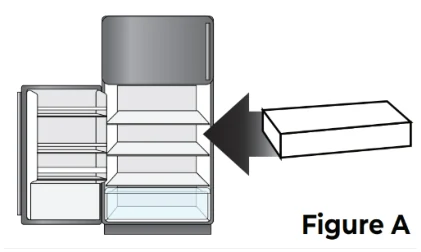 |
|---|
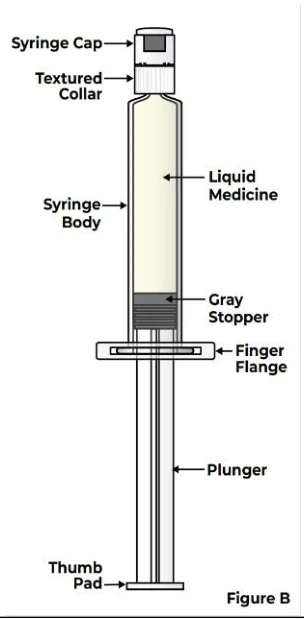
Prefilled syringe parts
 | |
|---|---|
Safety Needle (Not provided with syringe) 25G, 5/8” length, thin wall | 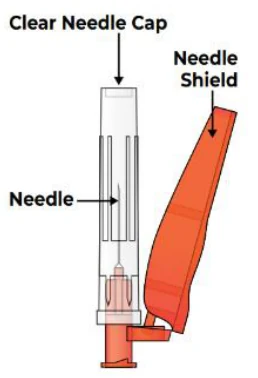 |
Gather & Check Supplies
| 1 Remove the carton from the refrigerator | |
|---|---|
| 1.1 Remove the prefilled syringe carton from the refrigerator (see Figure C). | 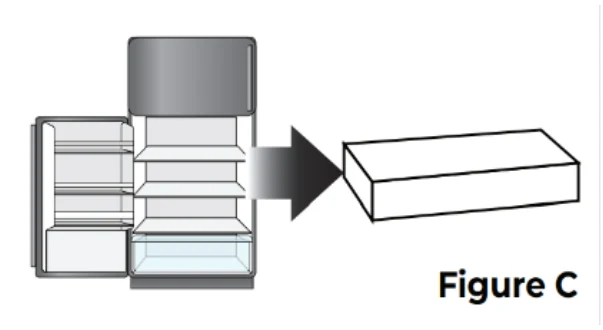 |
| 1.2 Remove the prefilled syringe from the carton (see Figure D). | 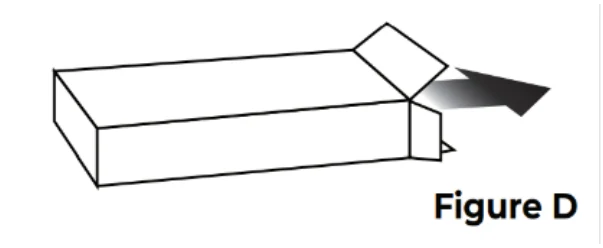 |
| 1.3 Remove the prefilled syringe from the tray (see Figure E). | 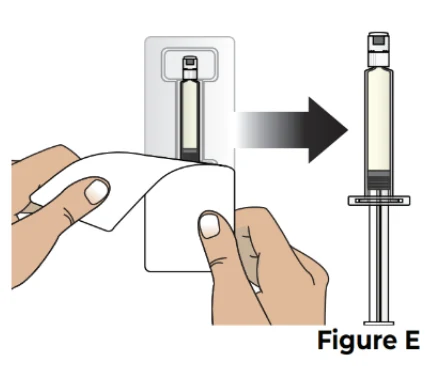 |
| 2 Check the prefilled syringe before use | |
2.1 Check the expiration date on the prefilled syringe label (see Figure F). Do not use the prefilled syringe if the expiration date has passed. | 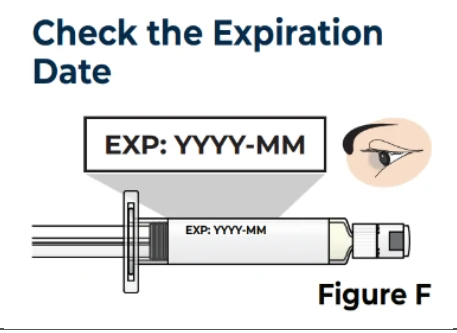 |
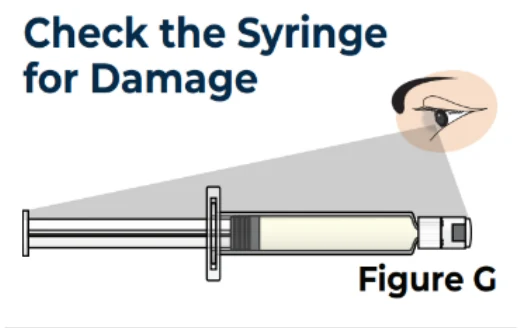
2.2 Check the condition of the prefilled syringe and the prefilled syringe cap (see Figure G). Do not use the prefilled syringe if it is cracked, broken, damaged, or if the cap is missing. | |
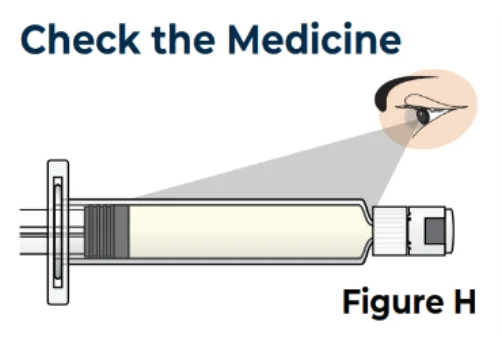
2.3 Check the appearance of the medicine in the prefilled syringe (see Figure H). The medicine should look clear to light yellow in colour. A little cloudiness is normal. Do not use the prefilled syringe if the medicine is discoloured or contains particles. |
Prepare for the Injection
| 3 Allow the prefilled syringe to warm to room temperature | |
|---|---|
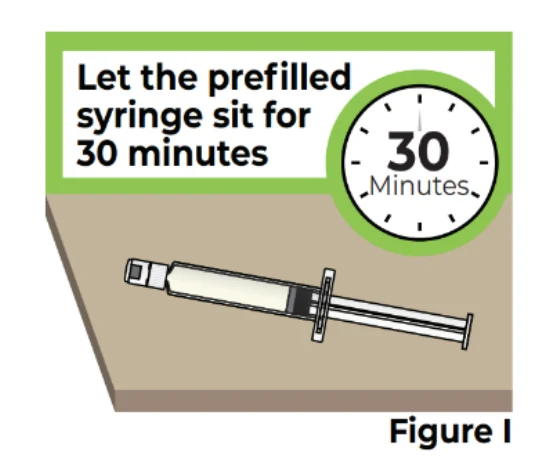
3.1 Place the prefilled syringe on a clean flat surface and let it sit for at least 30 minutes, to allow it to warm to room temperature (see Figure I). Do not attempt to warm the prefilled syringe in any other way. Do not use VYVGART SC if it has been at room temperature for longer than 1 month. |
 | |
 |
 | |
| 4 Gather supplies & wash hands | |
| 4.1 Gather the following supplies that are not provided with the prefilled syringe (see Figure J). | 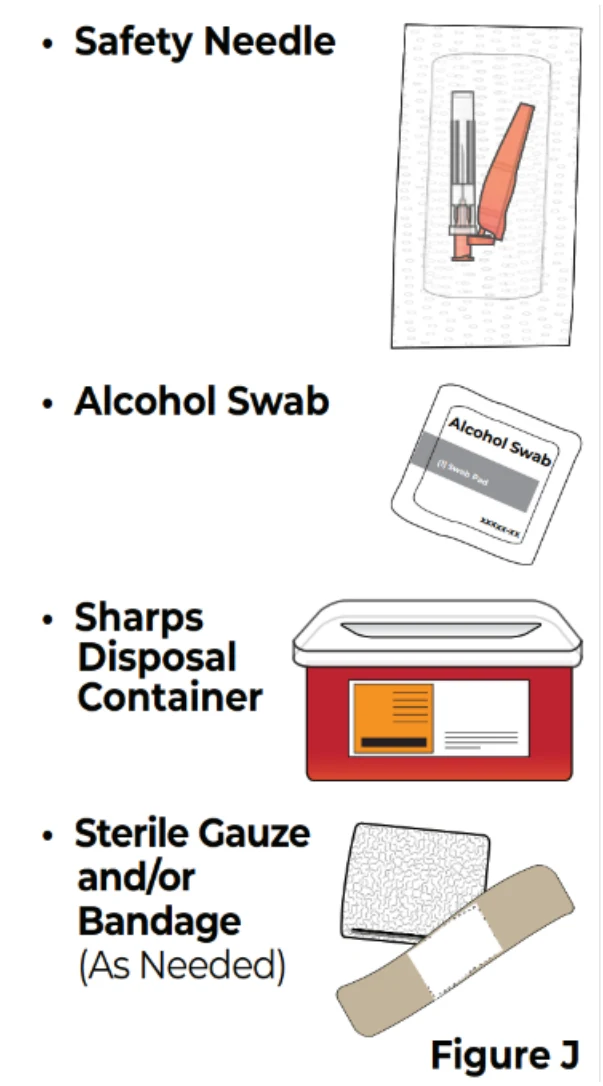 |
| 4.2 Wash hands with soap and water (see Figure K). | 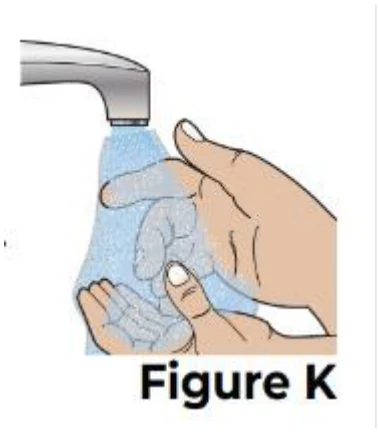 |
| 5 Snap off the prefilled syringe cap & attach the needle | |
5.1 Carefully open the needle package and remove the needle (see Figure L). Throw away the packaging into household trash. | 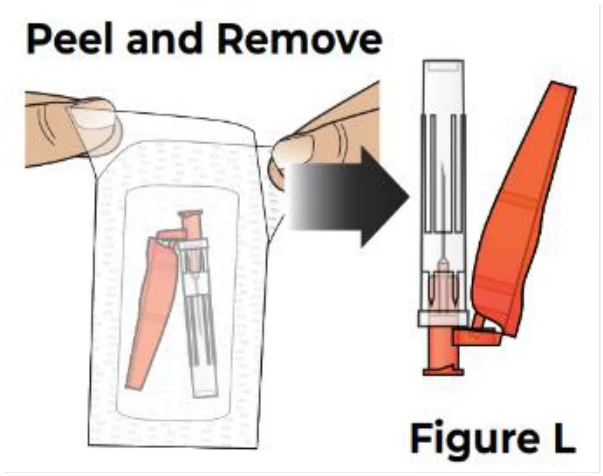 |
5.2 Bend the prefilled syringe cap to one side to snap it off and remove it from the prefilled syringe (see Figure M). Throw away the syringe cap. Do not touch the tip of the prefilled syringe after the cap has been removed. | 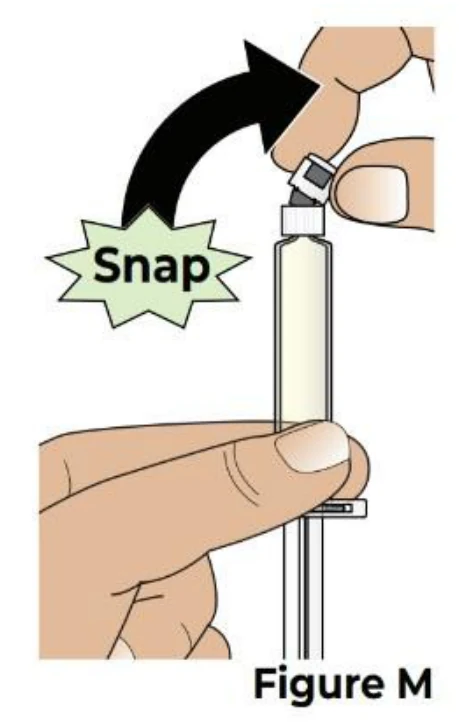 |
5.3 Hold the prefilled syringe in one hand, and attach the needle to the prefilled syringe by twisting it on (clockwise/to the right) until you feel resistance (see Figure N). The needle is now attached to the prefilled syringe (see Figure O). | 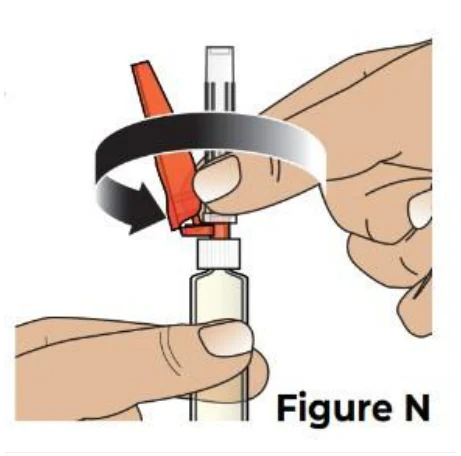 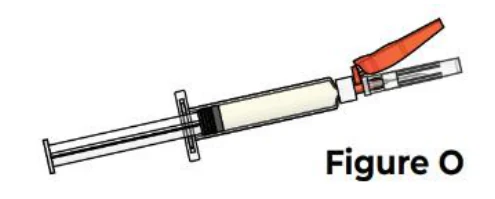 |
| 6 Choose & clean the injection site on abdomen | |
6.1 Choose an injection site on the abdomen (belly area) at least two inches away from the belly button (navel) (see Figure P). Rotate (change) the injection site for each injection. Do not inject into skin that is irritated, red, bruised, infected, or scarred. Do not inject into a vein. VYVGART SC is for subcutaneous (under the skin) injection only. | 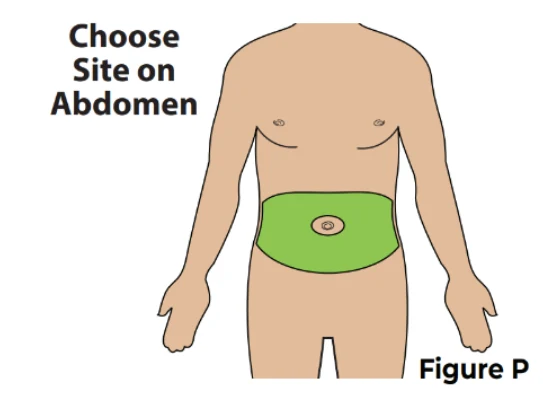 |
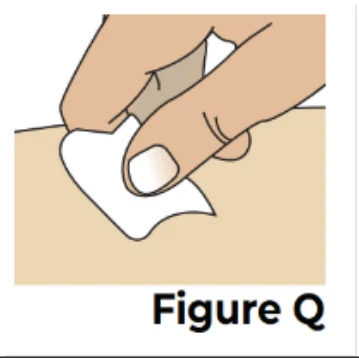
6.2 Clean the chosen injection site with an alcohol swab and let it air dry (see Figure Q). Do not blow on or touch the injection site after it has been cleaned. |
Inject VYVGART SC
| 7 Pull back the needle shield & remove the needle cap | |
|---|---|
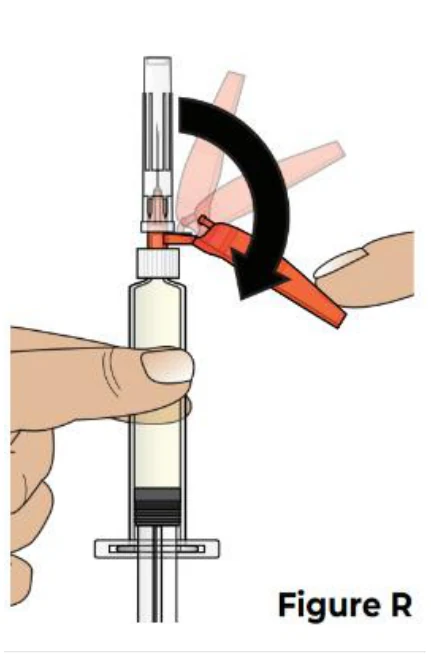
7.1 Pull the needle shield back (see Figure R). Note: The needle shield will be used after the injection to cover the needle and protect from needle-stick injuries. |
 |
 | |
7.2 Hold the prefilled syringe body and remove the clear needle cap by pulling it straight off of the needle (see Figure S). Throw away the needle cap into household trash. Do not recap the needle. | 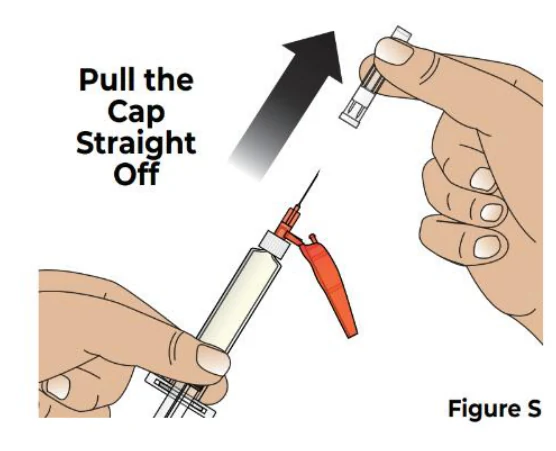 |
| 8 Give the injection | |
8.1 Pinch the cleaned injection site (Figure T). While pinching the skin, insert the needle at a 45 to 90 degree angle all the way into the pinched skin (see Figure U). Then release the pinched skin. Do not pinch the skin too tightly as this can cause bruising. | 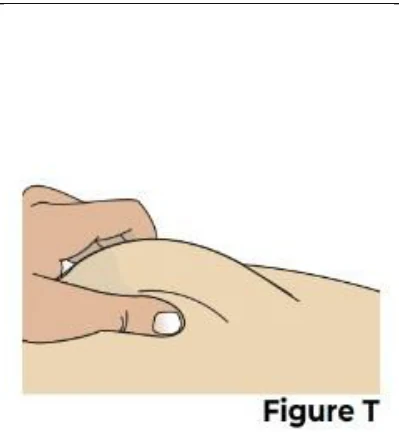 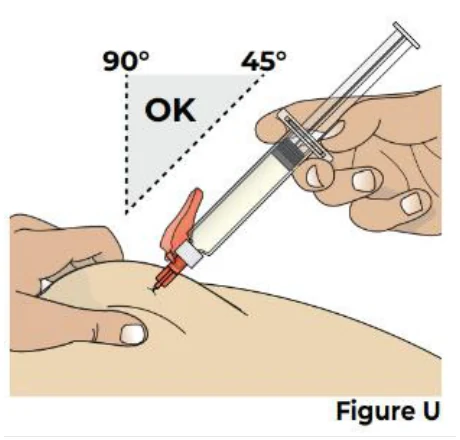 |
8.2 Slowly press the plunger down all the way until it stops to inject the medicine (see Figure V). It will take approximately 20-30 seconds to inject all of the medicine. You will feel resistance as you press down. Inject more slowly in case of discomfort. It is ok if you need to pause or change your grip during the injection. Do not try to force the plunger down quickly as this will make the plunger harder to press. | 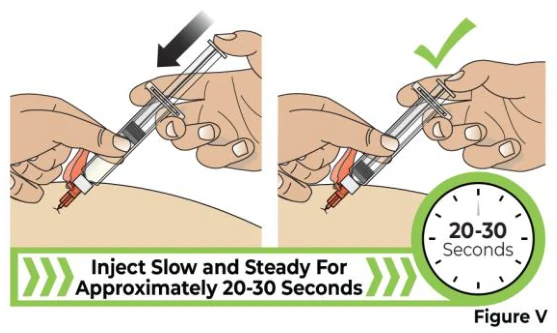 |
8.3 After all the liquid medicine is injected, remove the needle from the skin by pulling it out straight out without changing the angle (see Figure W). | 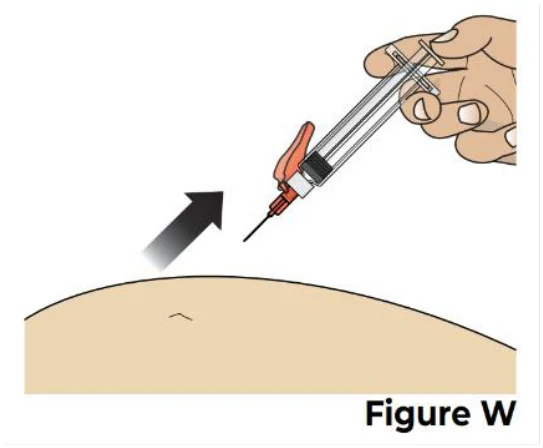 |
Dispose of the Used Syringe
| 9 Cover the needle & throw away the used syringe | |
|---|---|
9.1 Carefully push the needle shield over the needle until it snaps into place and covers the needle (see Figure X). This helps to prevent needle-stick injuries. Do not recap the needle using the needle cap; only use the needle shield to cover the needle. | 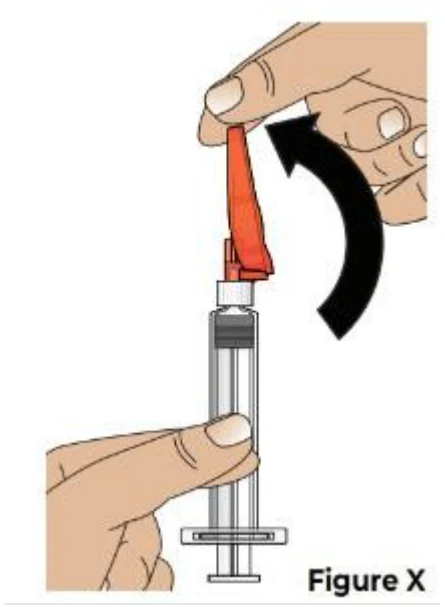 |
9.2 Throw away the used syringe, with the needle still attached, into a sharps disposal container right away after use (see Figure Y). Do not throw away (dispose of) loose needles and syringes in your household trash. | 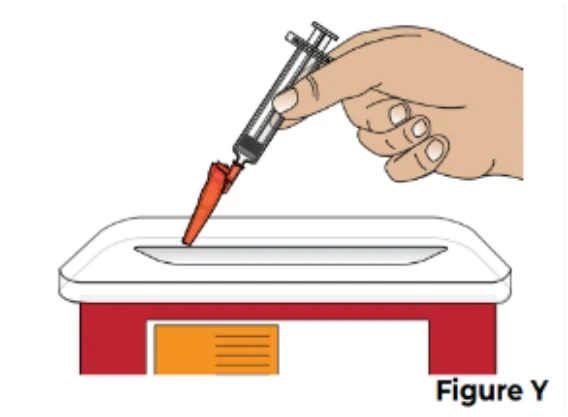 |
| 10 Treat the injection site | |
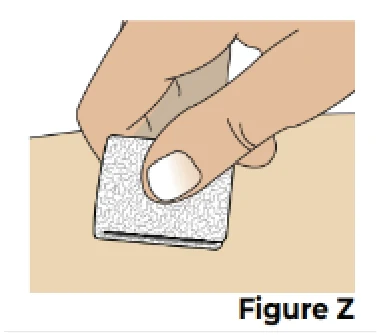
10.1 If there is a small amount of blood or liquid at the injection site, press a gauze over the injection site until the bleeding stops (see Figure Z). If needed, you may apply a small adhesive bandage. |
Additional disposal information
If you do not have an sharps disposal container, you may use a household container that is:
When your sharps disposal container is almost full, you will need to follow your community guidelines for the right way to dispose of your sharps disposal container. There may be local laws about how you should throw away used needles and syringes. Do not dispose of your used sharps disposal container in your household trash unless your community guidelines permit this. Do not recycle your used sharps disposal container. Always keep the sharps disposal container out of the reach of children. |
|---|
 |