


Product Monograph - Vyzulta
1 INDICATIONS
VYZULTA™ (latanoprostene bunod ophthalmic solution, 0.024%) is indicated for the reduction of intraocular pressure (IOP) in patients with open-angle glaucoma or ocular hypertension.
Pediatrics (≤ 16 years of age): No data are available to Health Canada; therefore, Health Canada has not authorized an indication for pediatric use.
Geriatrics (≥ 65 years of age): Evidence from clinical studies and experience suggests that safety and effectiveness is comparable between elderly and other adult patients.
2 CONTRAINDICATIONS
Latanoprostene bunod is contraindicated in patients who are hypersensitive to this drug or to any ingredient in the formulation, including any non-medicinal ingredient, or component of the container. For a complete listing, see Dosage Forms, Strengths, Composition and Packaging.
3 DOSAGE AND ADMINISTRATION
Dosing Considerations
- Do not administer VYZULTA™ more than once daily since it has been shown that more frequent administration of prostaglandin analogues may lessen the intraocular pressure lowering effect.
- If VYZULTATM is to be used concomitantly with other topical ophthalmic drug products to lower intraocular pressure, administer each drug product at least 5 minutes apart.
Recommended Dose and Dosage Adjustment
The recommended dosage is one drop in the conjunctival sac of the affected eye(s) once daily in the evening.
Health Canada has not authorized an indication for pediatric use (≤ 16 years of age).
Administration
Patients should be instructed to avoid allowing the tip of the dispensing container to contact the eye, surrounding structures, fingers, or any other surface in order to avoid contamination of the solution by common bacteria known to cause ocular infections. Serious damage to the eye and subsequent loss of vision may result from using contaminated solutions.
Contact lenses should be removed prior to administration of VYZULTATM, because this product contains Benzalkonium Chloride. Lenses may be reinserted 15 minutes following administration of VYZULTATM.
Missed Dose
If a dose is missed, treatment should continue with the next dose as normal.
4 OVERDOSAGE
Apart from ocular irritation and conjunctival or episcleral hyperemia, no other ocular side effects of latanoprost administered at high doses are known. If overdosage with VYZULTA™ occurs, treatment should be symptomatic.
| For management of a suspected drug overdose, particularly accidental oral ingestion, contact your regional poison control centre. |
5 DOSAGE FORMS, STRENGTHS, COMPOSITION AND PACKAGING
VYZULTATM 0.024% sterile topical ophthalmic solution is supplied in an eye drop dispenser consisting of a natural low density polyethylene bottle with dropper tip and a turquoise cap, in the following size:
- 7.5 mL bottle with a 5 mL fill volume
6 WARNINGS AND PRECAUTIONS
Ophthalmologic
Bacterial Keratitis
There have been reports of bacterial keratitis associated with the use of multiple-dose containers of topical ophthalmic products. These containers had been inadvertently contaminated by patients who, in most cases, had a concurrent corneal disease or a disruption of the ocular epithelial surface.
Eyelash Changes
VYZULTA™ may gradually change eyelashes and vellus hair in the treated eye. These changes include increased length, thickness, and the number of lashes or hairs. Eyelash changes are usually reversible upon discontinuation of treatment.
| Route of Administration | Dosage Form / Strength/Composition | Non-medicinal Ingredients |
| Ophthalmic | Solution / 0.24 mg/mL (0.024%) latanoprostene bunod | Benzalkonium Chloride, Citric acid, EDTA, Glycerin, Polysorbate 80, Sodium Citrate and Water. |
Intraocular Inflammation
VYZULTA™ should be used with caution in patients with a history of intraocular inflammation (iritis/uveitis) and should generally not be used in patients with active intraocular inflammation as it may exacerbate this condition.
Macular Edema
Macular edema, including cystoid macular edema, has been reported during treatment with prostaglandin analogues. These reports mainly occurred in aphakic patients, in pseudophakic patients with a torn posterior lens capsule, or in patients with known risk factors for macular edema. VYZULTA™ should be used with caution in patients who do not have an intact posterior capsule or who have known risk factors for macular edema.
Pigmentation
VYZULTA™ may cause changes to pigmented tissues. The most frequently reported changes with prostaglandin analogues have been increased pigmentation of the iris and periorbital tissue (eyelid).
Pigmentation is expected to increase as long as VYZULTA™ is administered. The pigmentation change is due to increased melanin content in the melanocytes rather than to an increase in the number of melanocytes. After discontinuation of VYZULTA™, pigmentation of the iris is likely to be permanent, while pigmentation of the periorbital tissue and eyelash changes are likely to be reversible in most patients. Patients who receive prostaglandin analogues, including VYZULTA™, should be informed of the possibility of increased pigmentation, including permanent changes. The long-term effects of increased pigmentation are not known.
Iris color change may not be noticeable for several months to years. Typically, the brown pigmentation around the pupil spreads concentrically towards the periphery of the iris and the entire iris or parts of the iris become more brownish. Neither nevi nor freckles of the iris appear to be affected by treatment. While treatment with VYZULTA™ can be continued in patients who develop noticeably increased iris pigmentation, these patients should be examined regularly.
Use with Contact Lenses
Contact lenses should be removed prior to the administration of VYZULTA™ because this product contains benzalkonium chloride. Lenses may be reinserted 15 minutes after administration of VYZULTATM.
Inflammatory Ocular Conditions
There is no experience with VYZULTATM in patients with inflammatory ocular conditions, inflammatory glaucoma, neovascular glaucoma or congenital glaucoma, and only limited experience with pseudophakic patients and in patients with pigmentary glaucoma.
Herpetic keratitis
VYZULTATM should be used with caution in patients with a history of herpetic keratitis. VYZULTATM should be avoided in cases of active herpes simplex keratitis and in patients with a history of recurrent herpetic keratitis specifically associated with prostaglandin analogues.
Hepatic/Biliary/Pancreatic
VYZULTATM has not been studied in patients with hepatic impairment and should, therefore, be used with caution in such patients.
Renal
VYZULTATM has not been studied in patients with renal impairment and should, therefore, be used with caution in such patients.
Respiratory
There is no experience in patients with severe or uncontrolled asthma. Such patients should therefore be treated with caution until there is sufficient experience.
Ocular and cutaneous melanoma
VYZULTA™ has not been studied in models of ocular and cutaneous melanoma. Latanoprost had no proliferative effect on human cultured uveal and cutaneous melanoma cell lines, implying that latanoprost does not enhance proliferation of malignant melanoma cells.
Special Populations
Pregnant Women
There are no available human data for the use of VYZULTA™ during pregnancy to inform any drug associated risks. However, animal studies indicate that latanoprost acid, the active metabolite of VYZULTATM readily cross placenta. Therefore, VYZULTA™ should be used during pregnancy only if the potential benefit justifies the potential risk to the fetus.
Latanoprostene bunod was shown to be abortifacient and teratogenic when administered intravenously (IV) to pregnant rabbits at exposures ≥ 0.28 times the clinical dose. No margins of safety were established in the rabbit embryo-fetal development (EFD) study and at a dose level of 0.24 mcg/kg/day the margins of safety were < 1- time the human clinical dose, based on body surface area (BSA). Doses ≥ 20 mcg/kg/day (23 times the clinical dose) produced 100% embryofetal lethality. Structural abnormalities observed in rabbit fetuses included anomalies of the great vessels and aortic arch vessels, domed head, sternebral and vertebral skeletal anomalies, limb hyperextension and malrotation, abdominal distension and edema. Latanoprostene bunod was not teratogenic in the rat when administered IV at 150 mcg/kg/day (87 times the clinical dose). Latanoprostene bunod induced miscarriage and was teratogenic in rats at a dose levels of ≥ 300 mcg/kg/day (> 174 times the clinical dose). The background risk of major birth defects and miscarriage for the indicated population is unknown.
Breast-feeding
There are no data on the presence of VYZULTA™ in human milk, the effects on the breastfed infant, or the effects on milk production. The active metabolites of VYZULTA™ may pass into breast milk and VYZULTA™ should therefore be used with caution in nursing women.
The developmental and health benefits of breastfeeding should be considered, along with the mother’s clinical need for VYZULTA™, and any potential adverse effects on the breastfed infant from VYZULTA™.
Pediatrics (≤ 16 years of age): No data are available to Health Canada; therefore, Health Canada has not authorized an indication for pediatric use.
Geriatrics (≥ 65 years of age): Evidence from clinical studies and experience suggests that safety and effectiveness is comparable between elderly and other adult patients.
7 ADVERSE REACTIONS
Adverse Reaction Overview
VYZULTA™ was evaluated in 811 patients in two Phase 3 controlled clinical trials of up to 12 months duration. The most common ocular adverse reactions observed in patients treated with latanoprostene bunod were: conjunctival hyperemia (6%), eye irritation (5%), and eye pain (4%), and instillation site pain (2%). Approximately 0.7% of patients discontinued therapy due to ocular adverse reactions including ocular hyperemia, conjunctival irritation, eye irritation, eye pain, conjunctival edema, conjunctivitis, vision blurred, punctate keratitis and foreign body sensation.
Clinical Trial Adverse Reactions
Because clinical trials are conducted under very specific conditions, the adverse reaction rates observed in the clinical trials may not reflect the rates observed in practice and should not be compared to the rates in the clinical trials of another drug. Adverse reaction information from clinical trials is useful for identifying drug-related adverse events and for approximating rates.
A summary of all Treatment-Emergent Adverse Events (TEAEs) by system organ class (SOC) and preferred term (PT) for any PT that occurred in ≥ 2% of subjects in any treatment group for the Phase 3 controlled clinical trials is presented in Table 1. The TEAEs that occurred in ≥ 2% of subjects treated with VYZULTA™ included conjunctival hyperemia, eye irritation, eye pain, and instillation site pain.
Table 1: Summary of All Ocular TEAEs in ≥ 2% of Subjects in Any Treatment Group by SOC and PT (Phase 3 Pool)
SOC PT | LBN Ophthalmic Solution 0.024% (N = 811) n (%) | Timolol Maleate 0.5% (N = 271) n (%) |
| Eye disorders | 178 (21.9) | 32 (11.8) |
| Conjunctival hyperaemia | 52 (6.4) | 4 (1.5) |
| Eye irritation | 37 (4.6) | 7 (2.6) |
| Eye pain | 33 (4.1) | 6 (2.2) |
| General disorders and administration site conditions | 28 (3.5) | 7 (2.6) |
| Instillation site pain | 17 (2.1) | 5 (1.8) |
In the Phase 3 clinical trials 11 (1.4%) subjects in the VYZULTA™ group had at least 1 ocular TEAE in the study eye leading to discontinuation. The most common ocular TEAE in the study eye for subjects treated with VYZULTA™ leading to discontinuation was ocular hyperemia, 2 (0.2%) subjects.
Conjunctival hyperemia, a common side effect of most prostaglandins, was evaluated in the
Phase 3 clinical trials. The proportion of subjects with mild or moderate conjunctival hyperemia in the study eye and treated fellow eye was similar for VYZULTA™ and timolol maleate 0.5% with crossover to the VYZULTA™ group across study visits and across time points assessed. Few subjects had severe conjunctival hyperemia at any study visit. A slightly higher proportion of subjects had mild or moderate conjunctival hyperemia at study visits post baseline than at baseline for the study eye and the treated fellow eye in both treatment groups. There were a few subjects who had severe conjunctival hyperemia in either the study or the treated fellow eye. There were no notable differences in conjunctival hyperemia in the subgroups assessed (age, racial group, gender, ethnicity, region, iris color, and prior treatment status).
In the Phase 2/3 pool, the most common TEAEs in the study eye for subjects treated with VYZULTA™ 0.024% were conjunctival hyperaemia, followed by eye irritation and nasopharyngitis. A total of 42 (3.8%) subjects in the VYZULTA™ 0.024% group experienced the TEAE of instillation site pain. A summary of all TEAEs by SOC and PT for any PT that occurred in ≥ 2% of subjects in any treatment group for the Phase 2/3 Pool is presented in Table 2.
Table 2: Summary of All Treatment-Emergent Adverse Events in ≥ 2% of Subjects in Any Treatment Group, by System Organ Class and Preferred Term (Phase 2/3 Pool)
VYZULTA™ 0.024% (N=1119) n (%) | Timolol Maleate 0.5% (N=294) n (%) | Latanoprost 0.005% (N=185) n (%) | |
| Ocular | |||
| Conjunctival hyperaemia | 87 (7.8) | 4 (1.4) | 5 (2.7) |
| Eye irritation | 51 (4.6) | 7 (2.4) | 4 (2.2) |
| Eye pain | 33 (2.9) | 6 (2.0) | 1 (0.5) |
| Ocular hyperemia | 20 (1.8) | 2 (0.7) | 9 (4.9) |
| Punctate keratitis | 17 (1.5) | 4 (1.4) | 3 (1.6) |
| Instillation site pain | 42 (3.8) | 6 (2.0) | 5 (2.7) |
| Infections and infestations | |||
| Nasopharyngitis | 53 (4.7) | 4 (1.4) | 2 (1.1) |
Notes: An AE is considered treatment-emergent if it occurred or worsened following the first dose of study medication. SOCs are presented alphabetically; PTs are sorted within each SOC alphabetically. A subject with multiple occurrences of a SOC/PT under 1 treatment was counted only once in the AE category for that treatment. Phase 2/3 Pool includes Studies A9441001, A9441003, 659, 803, 769, 770, and 811.
TEAEs of special interest to the use of prostaglandin analogues were evaluated in the Phase 3 clinical trials. A summary of all significant TEAEs of special interest in the study eye and treated fellow eye by SOC and PT that occurred in subjects in any treatment group for the Phase 3 controlled clinical trials is presented in Table 3. The TEAEs of special interest in the study eye in the VYZULTA™ group included growth of eyelashes (1 [0.1%] subjects). The TEAEs of special interest in the treated fellow eye in the VYZULTA™ group included growth of eyelashes and iris hyperpigmentation (1 [0.1%] subjects each).
Table 3: Treatment-Emergent Ocular Adverse Events of Special Interest, Study and Treated Fellow Eye (Phase 3 Pool)
SOC PT | LBN Ophthalmic Solution 0.024% n (%) | Timolol Maleate 0.5% n (%) |
| Study Eye | (N = 811) | (N = 271) |
| Eye disorders | 152 (18.7) | 30 (11.1) |
| Growth of eyelashes | 1 (0.1) | 0 |
| Treated Fellow Eye | (N = 794) | (N = 269) |
| Eye disorders | 157 (19.8) | 29 (10.8) |
| Growth of eyelashes | 1 (0.1) | 0 |
| Iris hyperpigmentation | 1 (0.1) | 0 |
Less Common Clinical Trial Adverse Reactions
Eye disorders: abnormal sensation in eye, asthenopia, blepharal pigmentation, blepharitis, conjunctival irritation, conjunctival oedema, conjunctivitis allergic, cystoid macular oedema, dry eye, erythema of eyelid, eye discharge, eye prutitus, eyelid margin crusting, eyelid oedema, eyelids pruritus, foreign body sensation in eyes, hypopigmentation of eyelid, iris hyperpigmentation, keratitis, lacrimation increased, meibomianitis, ocular discomfort, photophobia, punctate keratitis, trichiasis, uveitis, vision blurred, visual acuity reduced, visual acuity reduced transiently
Gastrointestinal: dry mouth, nausea
General disorders and administration site conditions: chest, discomfort, fatigue, instillation site discomfort, instillation site erythema, instillation site hypersensitivity, instillation site irritation, instillation site lacrimation, instillation site reaction, pain
Injury, poisoning and procedural complications: chemical eye injury
Investigations: intraocular pressure increased, vital dye staining cornea present
Nervous system: dysgeusia, headache
Psychiatric: insomnia
Respiratory, thoracic and mediastinal disorders: cough, dyspnoea, sinus congestion
Skin and subcutaneous tissue disorders: hair colour changes, hair disorder, hyperhidrosis, madarosis, pruritus, urticarial
8 DRUG INTERACTIONS
The interaction of latanoprostene bunod with other medications was not evaluated since no significant systemic exposure of latanoprostene bunod and its metabolites, latanoprost acid and butanediol mononitrate (the nitric oxide-donating moiety), were detected in plasma. Therefore, there is very low potential for latanoprostene bunod, latanoprost acid, and butanediol mononitrate to inhibit or induce isozymes of cytochrome P450.
Drug-drug, drug-food, drug-herb, drug-laboratory and drug-lifestyle interactions have not been studied. There have been reports of paradoxical elevations in IOP following the concomitant ophthalmic administration of two prostaglandin analogues. Therefore, the use of two or more prostaglandins, prostaglandin analogues, or prostaglandin derivatives is not recommended.
In vitro studies have shown that precipitation occurs when eye drops containing thimerosal are mixed with benzalkonium chloride, the preservative used in VYZULTATM. If such drugs are used, they should be administered with an interval of at least 5 minutes between applications.
9 ACTION AND CLINICAL PHARMACOLOGY
Mechanism of Action
Intraocular pressure is a major modifiable risk factor for glaucoma progression. Reduction of intraocular pressure reduces risk of glaucomatous visual field loss. Latanoprostene bunod is thought to lower intraocular pressure by increasing outflow of aqueous humor through both uveoscleral and trabecular meshwork routes.
Pharmacodynamics
Effect of VYZULTATM in reducing IOP was measured over a 24-hr period in healthy subjects. 24 volunteers instilled 1 drop of latanoprostene bunod ophthalmic solution 0.024% into each eye QD in the evening at approximately 8:00 PM for 14 days. A statistically significant reduction in IOP (p-value < 0.001) was observed in the study population (intent-to-treat [ITT] and per protocol [PP]) at all measured time points over the 24-hr monitoring period after 14 days (2 weeks) of treatment. Reduction of the intraocular pressure starts approximately 1 to 3 hours after the first administration with the maximum effect reached after 11-13 hours in eyes with elevated intraocular pressure.
Pharmacokinetics
Table 4: Summary of Latanoprostene Bunod Pharmacokinetic Parameters in Healthy Subjects
| Cmax | Tmax | t½ (h) | AUC0-∞ | CL | Vd | |
|---|---|---|---|---|---|---|
| Single dose mean | 59.1 pg/mL | 0.083 hours | N/A | 6.09 pg•hr/mL | N/A | N/A |
Absorption
The systemic exposure of latanoprostene bunod and its metabolites latanoprost acid and butanediol were evaluated in one study with 22 healthy subjects after topical ocular administration of VYZULTATM 0.024% once daily (one drop bilaterally in the morning) for 28 days. There were no quantifiable plasma concentrations of latanoprostene bunod (lower limit of quantitation, LLOQ, of 10.0 pg/mL) or butanediol mononitrate (LLOQ of 200 pg/mL) post dose on Day 1 and Day 28. The mean maximal plasma concentrations (Cmax) of latanoprost acid (LLOQ of 30 pg/mL) were 59.1 pg/mL and 51.1 pg/mL on Day 1 and Day 28, respectively. The mean time of maximal plasma concentration (Tmax) for latanoprost acid was approximately 5 min post administration on both Day 1 and Day 28.
Distribution
There were no ocular distribution studies performed in humans.
Metabolism
In animals, after topical ocular administration, latanoprostene bunod is rapidly metabolized in the eye to latanoprost acid (main active metabolite), an F2α prostaglandin analogue, and likely butanediol mononitrate. After latanoprost acid reaches the systemic circulation, it is primarily metabolized by the liver to the 1,2-dinor and 1,2,3,4-tetranor metabolites via fatty acid β-oxidation. The fate of butanediol mononitrate in ocular tissues is unknown. However, in liver cytosol in vitro, it is reported to be metabolized to 1,4-butanediol and nitric oxide. The metabolite 1,4-butanediol is further oxidized to succinic acid and enters the tricarboxylic acid (TCA) cycle.
Elimination
No elimination studies were conducted for latanoprostene bunod since latanoprostene bunod was not detected in plasma. In humans, given a single topical ocular dose (1.5 μg) of [3H] latanoprost, a majority of the excreted radioactivity was recovered in urine (88%), while 15% was recovered in feces. The latanoprost acid metabolites 1,2-dinor and 1,2,3,4-tetranor latanoprost acid accounted for approximately 66% of the radioactivity in urine. The elimination of latanoprost acid from human plasma is rapid as latanoprost acid plasma concentration dropped below the LLOQ (30 pg/mL) in the majority of subjects by 15 min following ocular administration of VYZULTATM 0.024% in humans.
10 STORAGE, STABILITY AND DISPOSAL
Unopened bottle should be stored refrigerated at 2º to 8ºC. Once a bottle is opened it may be stored at 2º to 25ºC for 8 weeks.
During shipment, bottles may be maintained at temperatures up to 40°C for a period not exceeding 14 days.
Protect from light. Protect from freezing.
PART II: SCIENTIFIC INFORMATION
11 PHARMACEUTICAL INFORMATION
Drug Substance
Proper name: latanoprostene bunod
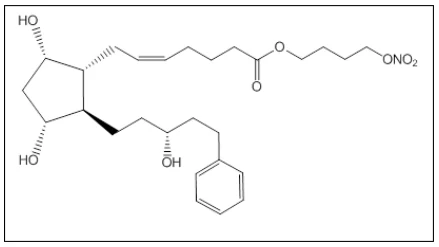
Chemical name: 4-(Nitrooxy) butyl (5Z)-7-{(1R,2R,3R,5S)-3,5-dihydroxy-2-[(3R)-3-hydroxy-5-phenylpentyl] cyclopentyl} hept-5-enoate
Molecular formula: C27H41NO8
Molecular mass: 507.62 g/mol
Structural formula:
Physicochemical properties
Description: Latanoprostene bunod is a colorless to yellow oil.
Solubility: Very soluble in acetone, methanol, ethanol, isopropanol, dichloromethane, dimethyl formamide, ethyl acetate, hexane-isopropanol mixture. Practically insoluble in water and hexane.
12 CLINICAL TRIALS
The IOP-lowering effect of VYZULTATM was evaluated in a range of clinical studies of up to 1 year in patients with open-angle glaucoma or ocular hypertension, including two Phase 3 studies (LUNAR, Clinical Study #769, APOLLO, Clinical Study #770) (Table 5). In clinical studies up to 12 months duration, patients with open-angle glaucoma or ocular hypertension with average baseline IOPs of 26.7 mmHg, the IOP-lowering effect of VYZULTA™ 0.024% once daily (in the evening) was up to 7 to 9 mmHg.VYZULTA™ demonstrated durable efficacy in lowering IOP and a tolerable safety profile with ocular effects comparable to those of the first-line agent latanoprost and no significant systemic effects. Study population included males and non-pregnant females with open-angle glaucoma (OAG) or ocular hypertension (OHT).
Two phase 3, randomized, multicenter, double-masked, non-inferiority, pivotal clinical trials were performed in 91 sites (APOLLO, Clinical Study # 769; LUNAR, Clinical Study # 770) in the United States and Europe. Both studies included a 3-month, double-masked efficacy phase followed by an open-label safety extension phase (APOLLO, 9 months; LUNAR, 3 months). Combining both studies, the mean (SD) diurnal IOP at baseline was 26.7 (2.43) mmHg in subjects randomized to latanoprostene bunod 0.024% QD and 26.5 (2.35) mmHg in subjects randomized to timolol 0.5% bid. The primary efficacy endpoint was the IOP in the study eye measured at 8AM, 12PM, and 4PM at week 2, week 6, and month 3. Secondary efficacy endpoints included the proportion of subjects with IOP ≤ 18 mmHg and the proportion of subjects with IOP reduction ≥25% (at all 9 time points in the first 3 months). Another secondary endpoint was change in mean diurnal IOP from baseline to month 3, 6, 9 and 12.
A total of 840 subjects were randomized across the 2 studies (LBN, n=569; timolol crossover to LBN, n=271), of which 774 (LBN, n=523; timolol crossover to LBN, n=251) completed the efficacy phase, and 738 completed the safety extension phase. Pooled result from APOLLO (Clinical Study #769) and LUNAR (Clinical Study #770) showed that that latanoprostene bunod 0.024% administered once daily led to greater reductions in mean IOP when compared to timolol maleate 0.5% administered twice daily at all evaluation time points (p < 0.001 for all time points) (Table 5). A significant greater proportion of subjects treated with latanoprostene bunod 0.024% vs timolol 0.5% attained a mean IOP ≤ 18 mmHg at all of the 9 evaluation time points during the first 3 months of treatment (20.2% vs. 11.2%, p=0.001). In addition, the percentage of subjects with IOP reduction ≥ 25% from baseline at all of the 9 evaluation time points during the first 3 months of treatment (32.9% vs. 19.0%, p=0.001). Patients who switched over from timolol to latanoprostene bunod also experienced additional IOP lowering (1.1-1.2 mmHg, p ≤ 0.009 for all vs. month 3). Efficacy was maintained through 12 months of therapy.
Table 5: ANCOVA Results for Comparison of Mean IOP by Visit and Time Point ITT Populations of Study 769 and Study 770 and Studies 769 & 770 Pool with LOCF
| Week 2, Study 769 | Week 2, Study 770 | Week 2 Studies 769 & 770 Pool | |||||||||||||||||||||||
8:00 AM | 12:00 PM | 4:00 PM | 8:00 AM | 12:00 PM | 4:00 PM | 8:00 AM | 12:00 PM | 4:00 PM | |||||||||||||||||
| LBN Ophthalmic Solution 0.024% | |||||||||||||||||||||||||
| N | 282 | 282 | 281 | 275 | 270 | 270 | 558 | 553 | 552 | ||||||||||||||||
| Mean (mmHg)a | 18.61 | 18.00 | 18.09 | 19.17 | 18.46 | 18.10 | 18.90 | 18.22 | 18.09 | ||||||||||||||||
| Timolol Maleate 0.5% | |||||||||||||||||||||||||
| N | 133 | 131 | 131 | 134 | 134 | 134 | 268 | 266 | 266 | ||||||||||||||||
| Mean (mmHg)a | 19.84 | 19.37 | 19.20 | 19.61 | 19.22 | 18.79 | 19.72 | 19.30 | 18.99 | ||||||||||||||||
| Treatment Differenceb | |||||||||||||||||||||||||
| Adjusted Meanc | -1.22 | -1.37 | -1.11 | -0.44 | -0.76 | -0.69 | -0.82 | -1.08 | -0.90 | ||||||||||||||||
| Upper 95% CIc,d | -0.54 | -0.69 | -0.46 | 0.26 | -0.11 | -0.09 | -0.33 | -0.61 | -0.46 | ||||||||||||||||
| Lower 95% CId | -1.91 | -2.05 | -1.76 | -1.13 | -1.42 | -1.29 | -1.31 | -1.55 | -1.34 | ||||||||||||||||
| p-valuec | <0.001 | <0.001 | <0.001 | 0.216 | 0.022 | 0.025 | <0.001 | < 0.001 | < 0.001 | ||||||||||||||||
| Week 6, Study 769 | Week 6, Study 770 | Week 6, Studies 769 & 770 Pool | |||||||||||||||||||||||
| 8:00 AM | 12:00 PM | 4:00 PM | 8:00 AM | 12:00 PM | 4:00 PM | 8:00 AM | 12:00 PM | 4:00 PM | |||||||||||||||||
| LBN Ophthalmic Solution 0.024% | |||||||||||||||||||||||||
| N | 283 | 283 | 284 | 277 | 271 | 271 | 561 | 555 | 556 | ||||||||||||||||
| Mean (mmHg)a | 18.59 | 17.84 | 17.82 | 18.67 | 18.02 | 17.87 | 18.63 | 17.92 | 17.84 | ||||||||||||||||
| Timolol Maleate 0.5% | |||||||||||||||||||||||||
| N | 133 | 131 | 131 | 135 | 135 | 135 | 269 | 267 | 267 | ||||||||||||||||
| Mean (mmHg)a | 19.63 | 19.09 | 19.09 | 19.59 | 18.86 | 18.85 | 19.6 | 18.98 | 18.97 | ||||||||||||||||
| Treatment Differenceb | |||||||||||||||||||||||||
| Adjusted Meanc | -1.04 | -1.25 | -1.27 | -0.92 | -0.84 | -0.98 | -0.98 | -1.05 | -1.12 | ||||||||||||||||
| Upper 95% CIc,d | -0.38 | -0.62 | -0.58 | -0.28 | -0.23 | -0.35 | -0.52 | -0.62 | -0.66 | ||||||||||||||||
| Lower 95% CId | -1.7 | -1.88 | -1.96 | -1.56 | -1.45 | -1.61 | -1.44 | -1.49 | -1.59 | ||||||||||||||||
| p-valuec | 0.002 | < 0.001 | <0.001 | 0.005 | 0.007 | 0.003 | <0.001 | < 0.001 | < 0.001 | ||||||||||||||||
| Month 3, Study 769 | Month 3, Study 770 | Month 3, Studies 769 & 770 Pool | |||||||||||||||||||||||
| 8:00 AM | 12:00 PM | 4:00 PM | 8:00 AM | 12:00 PM | 4:00 PM | 8:00 AM | 12:00 PM | 4:00 PM | |||||||||||||||||
| LBN Ophthalmic Solution 0.024% | |||||||||||||||||||||||||
| N | 283 | 283 | 284 | 277 | 271 | 271 | 561 | 555 | 556 | ||||||||||||||||
| Mean (mmHg)a | 18.71 | 17.88 | 17.83 | 18.68 | 17.92 | 17.72 | 18.69 | 17.90 | 17.77 | ||||||||||||||||
| Timolol Maleate 0.5% | |||||||||
| N | 133 | 131 | 131 | 135 | 135 | 135 | 269 | 267 | 267 |
| Mean (mmHg)a | 19.73 | 19.15 | 19.15 | 19.56 | 19.21 | 19.06 | 19.64 | 19.18 | 19.1 |
| Treatment Differenceb | |||||||||
| Adjusted Meanc | -1.03 | -1.27 | -1.32 | -0.88 | -1.29 | -1.34 | -0.96 | -1.29 | -1.32 |
| Upper 95% CIc,d | -0.37 | -0.61 | -0.64 | -0.25 | -0.67 | -0.72 | -0.5 | -0.84 | -0.87 |
| Lower 95% CId | -1.68 | -1.92 | -2.01 | -1.51 | -1.91 | -1.95 | -1.41 | -1.74 | -1.78 |
| p-valuec | 0.002 | < 0.001 | <0.001 | 0.006 | <0.001 | < 0.001 | <0.001 | < 0.001 | < 0.001 |
Abbreviations: ANCOVA = analysis of covariance; CI = confidence interval; IOP = intraocular pressure; ITT = intent to treat; LBN = latanoprostene bunod; LOCF = last observation carried forward; N = number of subjects.
Note: Phase 3 Study 769, Study 770, and Study pool incudes 769 and 770.
a Mean is the LS mean of IOP for the corresponding time point and visit at time-matched overall average baseline under ANCOVA.
b Treatment difference = LBN ophthalmic solution 0.024% minus timolol maleate 0.5%.
c Adjusted mean, 95% CI, and p-values are from an ANCOVA model with study (769 or 770) and treatment as fixed effect variables and time-matched baseline mean IOP as a covariate.
d Non-inferiority could be claimed if the upper limit of the CI < 1.5 mmHg at all time points of each visit and < 1.00 mmHg for at least 5 out of the 9 time points in the efficacy phase. If non-inferiority was determined on the pooled analysis, superiority at each time point could be claimed if the upper limit of the 95% CI < 0 mmHg at all time points of each visit in the efficacy phase
13 NON-CLINICAL TOXICOLOGY
13.1 Carcinogenesis, Mutagenesis, Impairment of Fertility
Latanoprostene bunod was not mutagenic in bacteria and did not induce micronuclei formation in the in vitro rat bone marrow micronucleus assay. Chromosomal aberrations were observed in vitro with human lymphocytes in the absence of metabolic activation.
Latanoprostene bunod has not been tested for carcinogenic activity in long-term animal studies. Latanoprost acid is a main metabolite of latanoprostene bunod. Exposure of rats and mice to latanoprost acid, resulting from oral dosing with latanoprost in lifetime rodent bioassays, was not carcinogenic.
Embryofetal studies were conducted in pregnant rabbits administered latanoprostene bunod daily by intravenous injection on gestation days 7 through 19, to target the period of organogenesis. The doses administered ranged from 0.24 to 80 mcg/kg/day. Abortion occurred at doses ≥ 0.24 mcg/kg/day latanoprostene bunod (0.28 times the clinical dose, on a body surface area basis, assuming 100% absorption). Embryofetal lethality (resorption) was increased in latanoprostene bunod treatment groups, as evidence by increases in early resorptions at doses ≥ 0.24 mcg/kg/day and late resprptions at doses ≥ 6 mcg/kg/day (approximately 7 times the clinical dose). No fetuses survived in any rabbit pregnancy at doses 20 mcg/kg/day (23 times the clinical dose) or greater. Latanoprostene bunod produced structural abnormalities at doses ≥ 0.24 mcg/kg/day (0.28 times the clinical dose). Malformations included anomalies of sternum, coarctation of the aorta with pulmonary trunk dilation, retroesophageal subclavian artery with absent brachiocephalic artery, domed head, forepay hyperextension and hindlimb malrotation, abdominal distention/edema, and missing/fused caudal vertebrae.
An embryofetal study was conducted in pregnant rats administered latanoprostene bunod daily by intravenous injection on gestation days 7 through 17, to target the period of organogenesis. The doses administered ranged from 150 to 1500 mcg/kg/day. Maternal toxicity was produced at 1500 mcg/kg/day (870 times the clinical dose, on a body surface area basis, assuming 100% absorption), as evidence by reduced maternal weight gain. Embryofetal lethality (resorption and fetal death) and structural anomalies were produced at doses ≥ 300 mcg/kg/day (174 times the clinical dose). Malformations included anomalies of the sternum, domed head, forepay hyperextension and hindlimb malrotation, vertebral anomalies and delayed ossification of distal limb bones. A no observed adverse effect level (NOAEL) was established at 150 mcg/kg/day (87 times the clinical dose) in this study.
Fertility and early embryonic development studies were not conducted on latanoprostene bunod. Combined fertility, early embryonic development, and embryo-fetal development were conducted in rats with latanoprost at the dose levels ranging from 5 to 250 mcg/kg/day (IV), and with naproxcinod administered orally at a dose levels ranging from 5.2 to 34.7 mg/kg/day. The NOAEL for latanoprost was considered to be 35 mcg/kg/day. At 250 mcg/kg/day, latanoprost exceeded the maximum tolerated dose resulting in deaths of most of the male rats in this group. The NOAEL for naproxcinod in this study was the highest dose tested of 34.7 mg/kg/day.
The potential to impact fertility can be partially characterized by exposure to latanoprost acid, a common metabolite of both latanoprostene bunod and latanoprost. Latanoprost acid has not been found to have any effect on male or female fertility in animal studies.
13.2 Animal Toxicology and/or Pharmacology
A 9-month toxicology study administered topical ocular doses of latanoprostene bunod to one eye of cynomolgus monkeys: control (vehicle only), one drop of 0.024% bid, one drop of 0.04% bid and two drops of 0.04% per dose, bid. The systemic exposures are equivalent to 4.2-fold, 7.9-fold, and 13.5-fold the clinical dose, respectively, on a body surface area basis (assuming 100% absorption). Microscopic evaluation of the lungs after 9 months observed pleural/subpleural chronic fibrosis/inflammation in the 0.04% dose male groups, with increasing incidence and severity compared to controls. Lung toxicity was not observed at the 0.024% dose.