


Patient Medication Information: uses, side effects, how to take - Wainua
What WAINUA is used for:
WAINUA is used to treat polyneuropathy (damage to the body’s peripheral nerves) in adults who have stage 1 or stage 2 hereditary transthyretin amyloidosis (hATTR).
hATTR is a disease caused by problems with a protein in the body called ‘transthyretin’ (TTR). It happens when TTR protein clumps together and builds up in the body. The buildup of TTR can stop the organs in your body from working properly.
How WAINUA works:
WAINUA belongs to a group of medicines called ‘antisense oligonucleotides’ (ASO). It reduces the levels of TTR proteins in the body by preventing TTR from being made by the liver.
The ingredients in WAINUA are:
Medicinal ingredient(s): eplontersen (as eplontersen sodium)
Non-medicinal ingredients: disodium hydrogen phosphate anhydrous, hydrochloric acid, sodium chloride, sodium dihydrogen phosphate dihydrate, sodium hydroxide, and water for injection
WAINUA comes in the following dosage form(s):
Solution for injection.
Each single-dose autoinjector contains 45 mg / 0.8 mL of eplontersen (as eplontersen sodium).
Do not use WAINUA if:
- you are allergic to eplontersen or any of the other ingredients of this medicine. Check with your healthcare professional if you are not sure if this applies to you.
To help avoid side effects and ensure proper use, talk to your healthcare professional before you take WAINUA. Talk about any health conditions or problems you may have including if you:
- have low vitamin A levels.
- are pregnant, think you are pregnant, or are trying to become pregnant.
- are breastfeeding.
Other warnings you should know about:
Low Levels of Vitamin A: Treatment with WAINUA is expected to decrease your vitamin A levels and it is likely that you will need to take a vitamin A supplement. Your healthcare professional will monitor your vitamin A levels and tell you how much vitamin A you need to take. If you experience any symptoms of vitamin A deficiency, tell your healthcare professional. Symptoms may include:
- dry eyes.
- poor vision.
- decreased night vision.
- hazy or cloudy vision.
Pregnancy: Tell your healthcare professional right away if you become pregnant while taking WAINUA as you should stop your treatment. WAINUA affects your vitamin A levels, which can harm your unborn baby. If you are of childbearing potential, use an effective method of birth control while taking WAINUA
Tell your healthcare professional about all the medicines you take, including any drugs, vitamins, minerals, natural supplements or alternative medicines.
The following may interact with WAINUA:
There are no known interactions with WAINUA at this time.
How to take WAINUA:
- Always use WAINUA exactly as your healthcare professional has instructed you. Check with your healthcare professional if you are unsure.
- You and your healthcare professional will decide if you can inject WAINUA by yourself, or if a caregiver should give you your injection.
- You and/or your caregiver will receive training on the right way to prepare and inject WAINUA. Read the “INSTRUCTIONS FOR USE” carefully before using WAINUA.
- WAINUA is given as an injection under the skin (subcutaneously) in the lower part of the stomach (abdomen), or the upper thighs by you or a caregiver. If a caregiver is giving you the injection, they may also inject WAINUA in the back of your upper arm.
- Your healthcare professional will tell you how long you need to take/receive WAINUA. Do not stop treatment with WAINUA unless your healthcare professional tells you to.
- If you or your caregiver have any questions, ask your healthcare professional.
Usual dose:
The recommended dose of WAINUA is 45 mg (the contents of one autoinjector), once every month.
Overdose:
If you think you, or a person you are caring for, have taken too much WAINUA, contact a healthcare professional, hospital emergency department, regional poison control centre or Health Canada’s toll-free number, 1-844 POISON-X (1-844-764-7669) immediately, even if there are no signs or symptoms.
Missed dose:
If you miss your dose of WAINUA, take your next dose as soon as possible. The dosing schedule for your monthly injections will now continue from this date.
If you have questions about your schedule, ask your healthcare professional.
Possible side effects from using WAINUA:
These are not all the possible side effects you may have when taking WAINUA. If you experience any side effects not listed here, tell your healthcare professional.
- Vomiting
- Nausea
- Blurred vision
- Injection site reactions (redness, itching, pain)
- Muscle aches or pain
- Rash
- Hair loss
Serious side effects and what to do about them
| Frequency/Side Effect/Symptom | Talk to your healthcare professional | Stop taking the/this drug (if applicable) and get immediate medical help | |
|---|---|---|---|
| Frequency/Side Effect/Symptom | Talk to your healthcare professional | Stop taking the/this drug (if applicable) and get immediate medical help | |
| Only if severe | In all cases | ||
| Only if severe | In all cases | ||
| VERY COMMON | |||
| Anemia (decreased number of red blood cells): fatigue, loss of energy, looking pale, shortness of breath, weakness | ✓ | ||
| Peripheral edema (swelling of the legs or hands caused by fluid retention): swollen or puffy legs or hands, feeling heavy, achy or stiff | ✓ | ||
| COMMON | |||
| Atrioventricular block (a heart rhythm disorder): slower than normal heart rate, light-headedness, dizziness shortness of breath | ✓ | ||
| Cataracts: clouding of the lens in the eye, blurry vision, dim vision and/or eye pain | ✓ | ||
| Hypotension (low blood pressure): dizziness, fainting, light-headedness, blurred vision, nausea, vomiting, fatigue (may occur when you go from lying or sitting to standing up) | ✓ | ||
| Kidney problems: nausea, vomiting, fever, swelling of extremities, fatigue, thirst, itchy skin, irritability, urinating too | ✓ | ||
| much or too little, loss of appetite | |||
| Proteinuria (excess proteins in urine): swelling of the hands, feet, face | ✓ | ||
| Syncope (fainting): a temporary loss of consciousness due to a sudden drop in blood pressure | ✓ | ||
| Vitamin A deficiency (low levels of vitamin A): dry eyes, poor vision, decreased night vision, hazy or cloudy vision | ✓ | ||
If you have a troublesome symptom or side effect that is not listed here or becomes bad enough to interfere with your daily activities, tell your healthcare professional.
Reporting Side Effects
You can report any suspected side effects associated with the use of health products to Health Canada by:
- Visiting the Web page on Adverse Reaction Reporting (canada.ca/drug-device-reporting) for information on how to report online, by mail or by fax; or
- Calling toll-free at 1-866-234-2345.
NOTE: Contact your healthcare professional if you need information about how to manage your side effects. The Canada Vigilance Program does not provide medical advice.
Storage:
Store in the refrigerator (2°C to 8°C) in the original carton to protect from light. Do NOT freeze or expose to heat.
If needed, WAINUA can be stored at room temperature (up to 30°C) in the original carton for up to 6 weeks. If it is not used within 6 weeks, discard the medication.
Keep out of reach and sight of children.
If you want more information about WAINUA:
- Talk to your healthcare professional.
- Find the full product monograph that is prepared for healthcare professionals and includes this Patient Medication Information by visiting the Health Canada Drug Product Database website: https://www.canada.ca/en/health-canada/services/drugs-health-products/drug-products/drug-product-database.html; the manufacturer’s website: www.astrazeneca.ca, or by calling 1-800-668-6000.
Date of Authorization:2025-08-26
WAINUA® is a registered trademark of AstraZeneca AB, used under license by AstraZeneca Canada Inc. The AstraZeneca logo is a registered trademark of AstraZeneca AB, used under license by AstraZeneca Canada Inc.

© AstraZeneca Canada Inc. 2025
Instructions for Use
Pr WAINUA®
eplontersen injection, subcutaneous use
45 mg / 0.8 mL single-dose pre-filled autoinjector

This “Instructions for Use” contains information on how to inject using the WAINUA autoinjector.
Read this “Instructions for Use” before you start using your WAINUA autoinjector and each time you get a refill. There may be new information. This information does not take the place of talking to your healthcare professional about your medical condition and your treatment.
Your healthcare professional should show you or your caregiver how to use it the right way. If you or your caregiver have any questions, talk to your healthcare professional.
The dose is given only as an injection under the skin (subcutaneous).
Important information you need to know before using WAINUA
- WAINUA is for use under the skin (subcutaneous use) only.
- Each autoinjector contains 1 dose and can only be used 1 time.
- Do not share your autoinjector with anyone.
Do not use your autoinjector if it has:
- been frozen or heated
- been dropped, damaged, or appears to be tampered with
- passed the expiration date (EXP)
Storing WAINUA autoinjector
- Store WAINUA in the refrigerator (2°C to 8°C). Keep in the original carton until ready to use, to protect from light.
- If needed, the autoinjector can be stored at room temperature (up to 30°C) in the original carton for up to 6 weeks. If you do not use the autoinjector within 6 weeks, throw it away in a sharps disposal container.
- Do not remove the clear cap until you are ready to inject WAINUA.
Keep your autoinjector and all medicines out of the reach and sight of children.
Your WAINUA autoinjector
Do not remove the cap until just before you give the injection.
Do not touch the orange needle guard.
Before use
After use
Viewing window
Cap (removed)
Protective sleeve


Cap
(clear)
Liquid medicine
Orange needle guard
(needle hidden inside)
Orange plunger
How does the WAINUA autoinjector work?
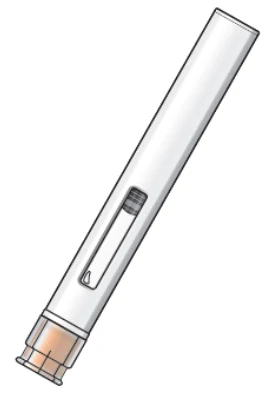
The injection starts automatically when the orange needle guard is pushed against the skin.
The autoinjector must be held firmly against the skin to allow it to deliver the full dose of medication.
The injection is done only when the window is completely orange (not shown).
Make sure you read the entire instructions before uncapping and injecting.
Preparing to inject WAINUA
Step 1 – Gather supplies for your injection
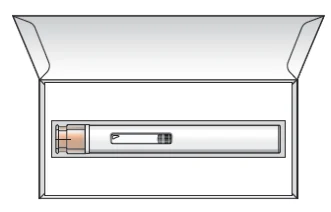
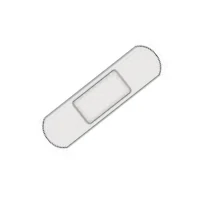



1 autoinjector from the refrigerator
1 alcohol wipe
1 cotton ball
or gauze
1 small bandage
1 puncture-resistant (sharps) disposal container
Not included
Step 2 – Inspect carton and wait 30 minutes

Keep the autoinjector in the carton for 30 minutes at room temperature before injecting.
- Do not warm up in any other way. For example, do not warm it in a microwave or hot water, or near other heat sources.
- Keep it away from light or direct sunlight.
Step 3 – Remove the autoinjector from carton and inspect
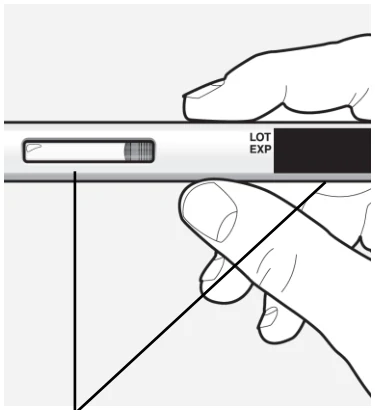
Check the autoinjector for damage.
- Do not use if the clear cap is missing or not attached.
- Do not use if the autoinjector appears damaged.
Check the expiration (EXP) date.
- Do not use if the expiration (EXP) date has passed.
Check the liquid through the viewing window.
- It is normal to see small air bubbles in the liquid.
- The liquid should be clear and colourless to slightly yellow.
Do not use if the liquid is cloudy, discoloured, or contains particles.
Inspect
Injecting WAINUA
Step 4 – Choose an injection site
You or your caregiver can inject in the front of your thigh or the lower part of your stomach (abdomen).
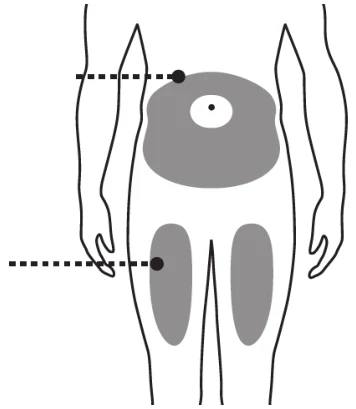
A caregiver may also inject you in the back of your upper arm.
Do not try to inject yourself in the back of the upper arm.
For each injection, choose a different site that is at least 1 inch (3 cm) away from where you last injected.
Do not inject:
- within 2-inches (5-cm) of the belly button
- into skin that is red, warm, tender, bruised, scaly, or hard
- into scars, damaged, discoloured, or tattooed skin
through clothing
abdomen
For all thigh
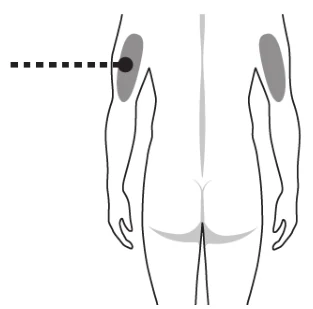
back of upper arm
For caregivers only
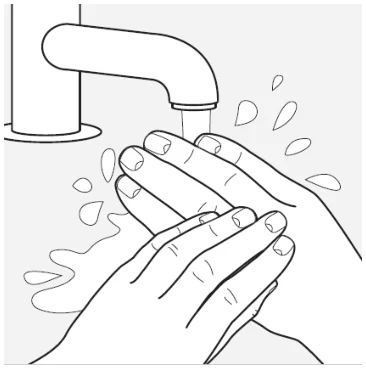
Step 5 – Wash your hands and clean the injection site
Wash your hands well with soap and water.
Clean the injection site with an alcohol wipe. Let the site air dry.
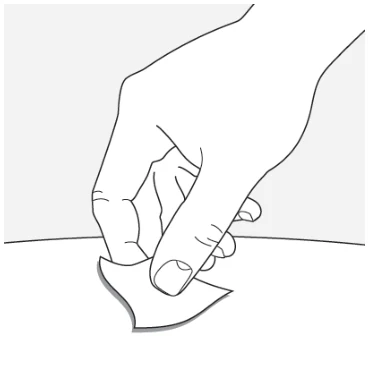
- Do not touch the cleaned area before injecting.
Step 6 – Pull off the cap
Hold the autoinjector body with 1 hand, and carefully pull the clear cap straight off with your other hand. Do not twist the cap off. The orange needle guard is now exposed and the needle is hidden underneath.
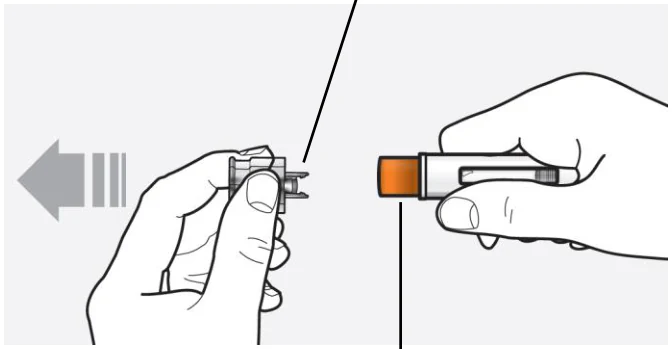
- Throw away (dispose of) the clear cap.
- Do not touch the needle or push on the orange needle guard with your finger.
Do not recap the autoinjector. This could cause the medicine to come out too soon or damage the autoinjector.
Protective sleeve
Orange needle guard
Step 7 – Inject WAINUA
Inject using the autoinjector by following the steps in figures a, b, c and d.
When injecting, press and hold the autoinjector for 10 seconds until the orange plunger fills the viewing window. You will hear a first ‘click’ at the start of the injection and may hear a second ‘click’ during the injection. This is normal.
Do not move or change the position of the autoinjector after the injection has started.
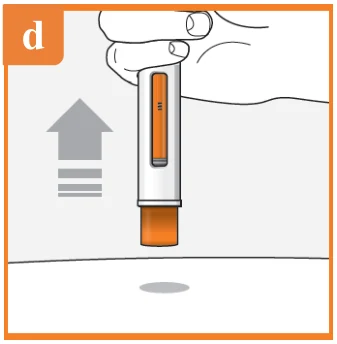
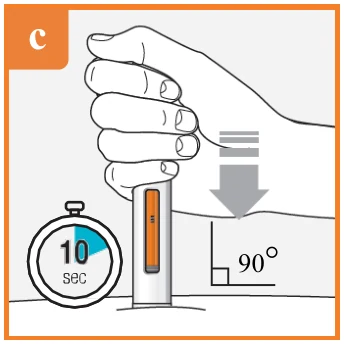
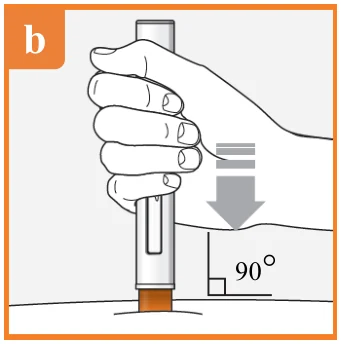
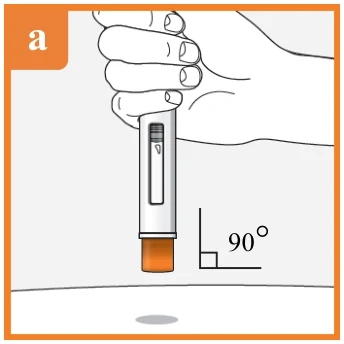


Position the autoinjector.
- Place the orange needle guard flat against your skin (90-degree angle).
Make sure you can see the viewing window.
Press down firmly and hold.
- You will hear the first ‘click’ right away, this tells you the injection has started.
The orange plunger will move down in the viewing window.
Hold down firmly for about 10 seconds.
- Check that the orange plunger fills the viewing window.
You may hear a second ‘click’ during the injection.
After you have completed your injection, lift the autoinjector straight up.
- The orange needle guard will slide down and lock into place over the needle.
c
b
90°
90°
d
a
90°
Step 8 – Check the viewing window
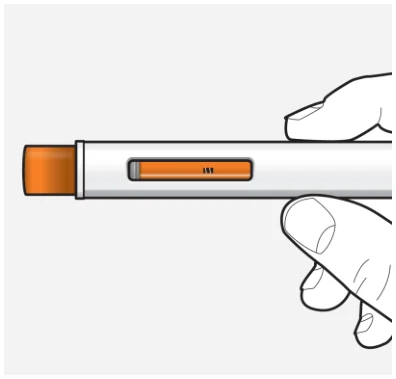
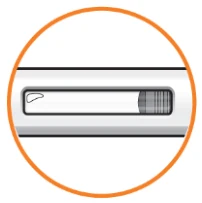
Check the viewing window to make sure all the medicine has been injected.
If the orange plunger rod does not fill the viewing window, you may not have received the full dose.
If this happens or if you have any other concerns, contact your healthcare professional.
Do not reuse the autoinjector.
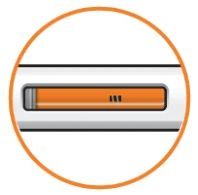
Before injection
After injection
Step 9 – Check the injection site
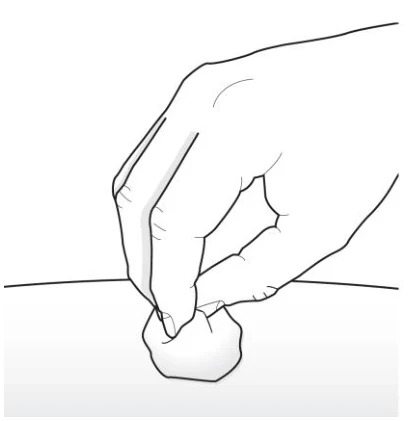
There may be a small amount of blood or liquid where you injected. This is normal.
If needed, press a cotton ball or gauze on the area and apply a small bandage.
Step 10 – Dispose of the used autoinjector
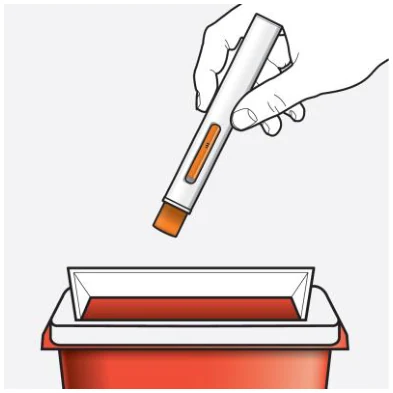
Put your used autoinjector in a sharps disposal container right away after use.
Do not throw away the autoinjector in your household trash.
Disposal guidelines
Dispose of the full container as instructed by your healthcare professional or pharmacist.
Do not dispose of your used sharps disposal container in your household trash.
Do not recycle your used sharps disposal container.
For more information, go to www.astrazeneca.ca or call 1-800-668-6000. If you still have questions, contact your healthcare professional.
WAINUA® is a registered trademark of AstraZeneca AB, used under license by AstraZeneca Canada Inc. The AstraZeneca logo is a registered trademark of AstraZeneca AB, used under license by AstraZeneca Canada Inc.
© AstraZeneca Canada Inc. 2025