


Patient Medication Information: uses, side effects, how to take - Xyrem
What is XYREM used for?
XYREM is used to treat cataplexy (suddenly weak or paralyzed muscles) in adults with narcolepsy (a type of sleep disorder).
How does XYREM work?
The exact way XYREM works to reduce the number of cataplexy attacks is not known.
Serious Warnings and Precautions
Abuse and Misuse: The main active component of XYREM is oxybate, or gamma-hydroxybutyrate (GHB), a known drug of abuse. Abuse or misuse of GHB, either alone or when taken with other central nervous system (CNS) depressants may cause serious medical problems, including seizures, difficulty breathing (respiratory depression), decreases in the level of consciousness, coma, and death. Do NOT take XYREM with alcohol or other CNS depressants. This includes the following examples of CNS depressants:
Due to these risks, you must be enrolled in a program to receive XYREM. During your treatment, your healthcare professional will also regularly monitor your health. However, if you notice any side effects, tell your healthcare professional. If you have any questions about XYREM, ask your healthcare professional or call the program at 1-866-599-7365. XYREM can also cause serious side effects when taken as prescribed, including:
See the Serious side effects and what to do about them table for more information on this and other serious side effects. |
What are the ingredients in XYREM?
Medicinal ingredient: sodium oxybate.
Non-medicinal ingredients: malic acid and purified water.
XYREM comes in the following dosage forms:
Oral solution: 500 mg/mL sodium oxybate.
Do not use XYREM if:
- you are allergic to sodium oxybate or to any of the other ingredients in XYREM.
- you are taking or plan to take medicines that can cause sleepiness (e.g., other sleep medicines or sedatives).
you are drinking or plan to drink alcohol. Do not consume any alcohol while taking XYREM.
- you have a rare condition called succinic semialdehyde dehydrogenase deficiency.
To help avoid side effects and ensure proper use, talk to your healthcare professional before you take XYREM. Talk about any health conditions or problems you may have, including if you:
- have past or current depression. You may be more likely to get depressed taking XYREM. XYREM should not be used if you have major depression.
- have liver problems because your dosage of XYREM may need to be reduced.
- have breathing or lung problems.
- have snoring problems or sleep apnea (a sleep disorder which causes pauses in breathing or shallow breathing while sleeping). You may be more likely to get serious side effects.
- are on a salt restricted diet.
- have high blood pressure.
- have diabetes.
- have high cholesterol (hyperlipidemia).
- think you are overweight.
- have heart problems.
- have kidney problems.
are pregnant or plan to become pregnant.
- are breastfeeding or plan to breastfeed. XYREM can pass through your milk and may harm the baby.
- have a history of substance use problems.
- have had previous thoughts or attempts of suicide.
have or had behaviour or other psychiatric problems such as:
- seeing or hearing things that are not real (hallucinations)
- feeling more suspicious (paranoia)
- being out of touch with reality (psychosis)
- acting aggressive
- agitation
- anxiety
Other warnings you should know about:
Dependence and addiction: The active ingredient in XYREM, GHB, has been used illegally for its sedating effects. When GHB is used illegally (usually at higher doses and frequencies), dependence and craving for GHB have been reported. Acute withdrawal symptoms have also been reported after repeated illicit use. It is important that you talk to your healthcare professional if you have questions or concerns about abuse, addiction, or dependence. Always use XYREM as prescribed.
Driving and using machines: XYREM can affect your mental alertness, judgment, thinking, and movement. Do NOT drive or do tasks that require special attention for at least 6 hours after taking XYREM. In addition, before you drive or do tasks that require special attention the next day, wait until you know how you respond to XYREM. This is especially important when you first start taking XYREM.
Unusual behaviours during sleep: XYREM can cause unwanted events or experiences that occur during sleep, including walking while being asleep. Tell your healthcare professional if you develop any abnormal movements or behaviours while sleeping.
High sodium (salt) content: XYREM contains a high amount of sodium (salt). High amounts of salt can increase the risk of high blood pressure and major heart problems (such as heart attack, heart failure, stroke or death). It is important to talk about your salt intake with your healthcare professional. Your healthcare professional may check blood pressure before starting and during treatment with XYREM.
Tell your healthcare professional about all the medicines you take, including any drugs, vitamins, minerals, natural supplements or alternative medicines.
Serious Drug Interactions Serious drug interactions exist with XYREM and CNS depressants (used to slow your brain down, relax your muscles, and/or provide a sense of calm). Do not take XYREM with the following CNS depressants:
Other CNS depressants are not recommended for use with XYREM. These include:
Talk to your healthcare professional if you take or plan to take any CNS depressants. |
|---|
The following may also interact with XYREM:
- a high fat meal.
- anticonvulsants used to prevent or treat certain types of seizures (e.g., divalproex sodium, ethosuximide, phenytoin, topiramate, and valproate).
- herbal products such as sleep-aids (e.g., melatonin, valerian, and kava) or St. John’s Wort.
How to take XYREM:
- The program will teach you about the safe and proper use of XYREM.
- Take XYREM two times each night exactly as prescribed by your healthcare professional. The first dose is taken at bedtime and the second dose is taken 2.5 to 4 hours later both while sitting in bed. You may need to set an alarm to awaken for the second dose.
- Food will affect the amount of XYREM that your body absorbs. Make sure to eat your last meal at least 2 hours before you take your first dose and go to bed. You should try to wait the same amount of time after your last meal each night before taking XYREM to ensure the timing is the same for each dose.
- You should lie down and remain in bed after taking your first and second dose of XYREM. XYREM can cause you to fall asleep quickly. Falling asleep while standing or while rising from the bed has led to falls and injuries which has required hospitalization.
- Prepare both doses of XYREM before bedtime. Each dose of XYREM must be diluted with a quarter (¼) cup (approximately 60 mL) of water or enough to fill ¾ (three-quarters) of the supplied pharmacy containers provided prior to ingestion and sealed with the child-resistant cap. The second dose should be placed in close proximity to your bed.
Instructions for use:
CAUTION: Be very careful not to leave your XYREM in a place where children, pets, or people whom this product is not prescribed can get to it.
Before starting your treatment with XYREM, be certain that you are completely familiar with the supplies needed for mixing and taking XYREM and the steps for preparation and use of XYREM.
Supplies you will need for mixing and taking XYREM (also see Figure A):
- the XYREM bottle;
- a dosing syringe for measuring and dispensing the XYREM doses;
- two empty pharmacy containers with child-resistant caps for mixing, storing, and taking the XYREM doses;
- the Patient Medication Information leaflet;
- a measuring cup that can measure about a quarter (¼) cup (approximately 60 mL) of water.
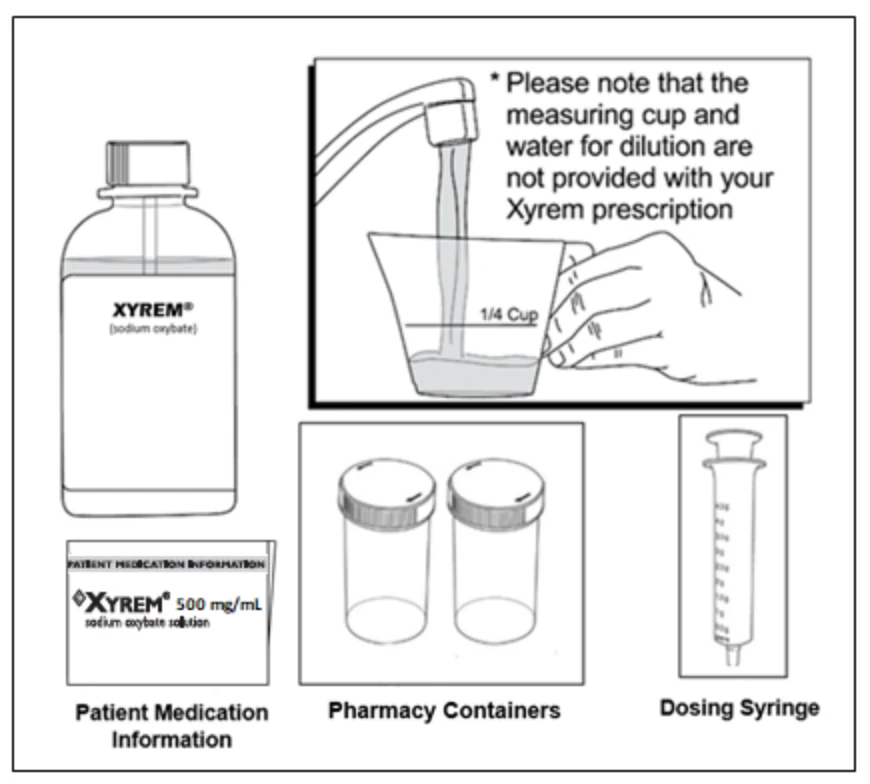
Figure A
Step 1: Setup
- a. Take the XYREM bottle and syringe out of the packaging.
- b. Remove the plastic wrapper from the syringe. Only use the syringe provided with your XYREM prescription.
- c. Fill a measuring cup with about a quarter (¼) cup (approximately 60 mL) of water.
- d. Open both pharmacy containers by pressing down on the child-resistant locking cap and turning the cap counterclockwise to the left (see Figure B). Make sure the pharmacy containers are empty.
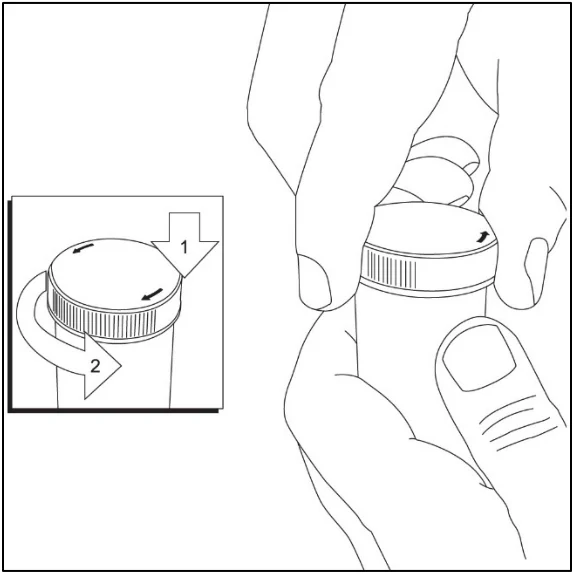
Figure B
- e. Open the XYREM bottle by removing the child-resistant bottle cap by pushing down while turning the cap counterclockwise to the left (see Figure C).
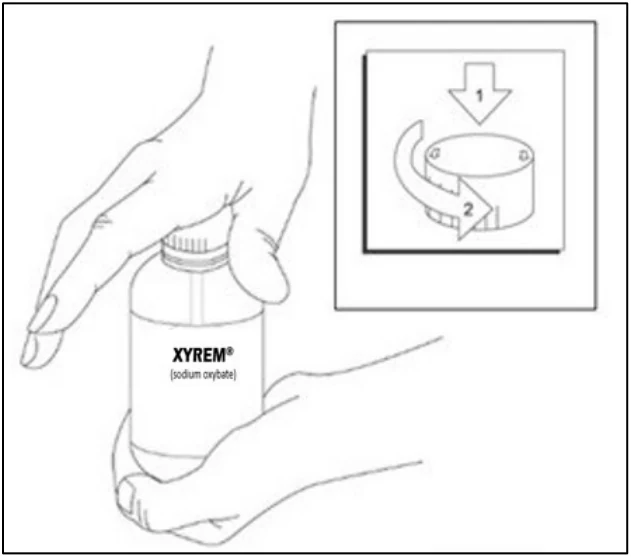
Figure C
- f. After removing the cap, set the bottle upright on a tabletop.
Step 2: Preparation of the First XYREM Dose (prepare before bedtime)
The two doses of XYREM are prepared separately. To prepare the first dose:
- a. Place the XYREM bottle on a hard, flat surface and grip the bottle with one hand.
- b. Firmly press the syringe into the center opening of the bottle with your other hand (see Figure D).
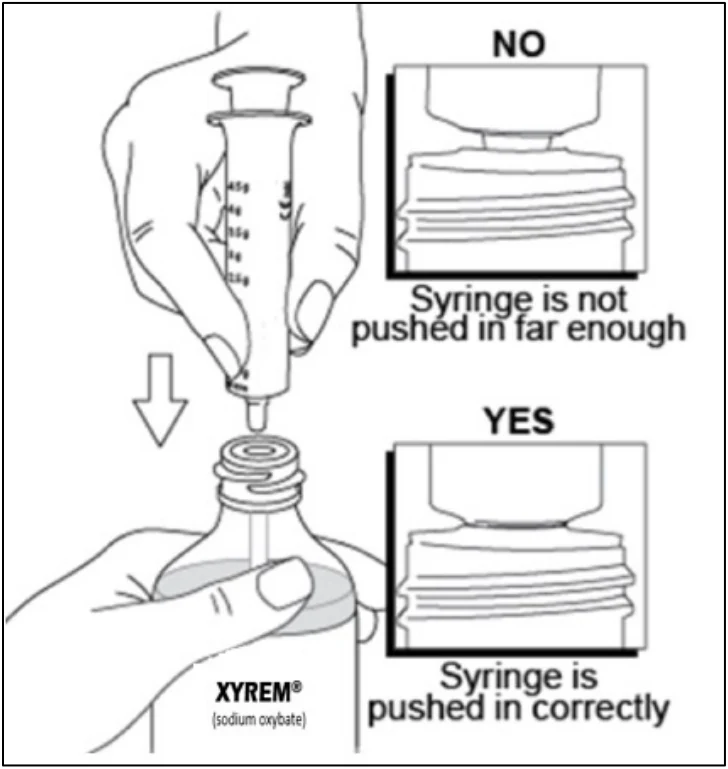
Figure D
- c.
On the syringe, identify the specific amount in grams (g) that matches your prescribed dose.
The measuring device is a syringe with markings only in grams. In case you need the dose in millilitres (mL), you can consult the conversion tables below:
| Single dose in grams (to be taken twice per night) | Single dose in mL (to be taken twice per night) |
| 1.5 grams | 3 mL |
| 2.25 grams | 4.5 mL |
| 3 grams | 6 mL |
| 3.75 grams | 7.5 mL |
| 4.5 grams | 9 mL |
| Total dose per night in grams | Total dose per night in mL |
| 3 grams | 6 mL |
| 4.5 grams | 9 mL |
| 6 grams | 12 mL |
| 7.5 grams | 15 mL |
| 9 grams | 18 mL |
- d. Pull up on the plunger on the syringe until the medicine flows into the syringe and the liquid level is lined up with the marking on the syringe that matches your prescribed dose (see Figure E). Keep the bottle upright so that the XYREM medicine will flow into the syringe.
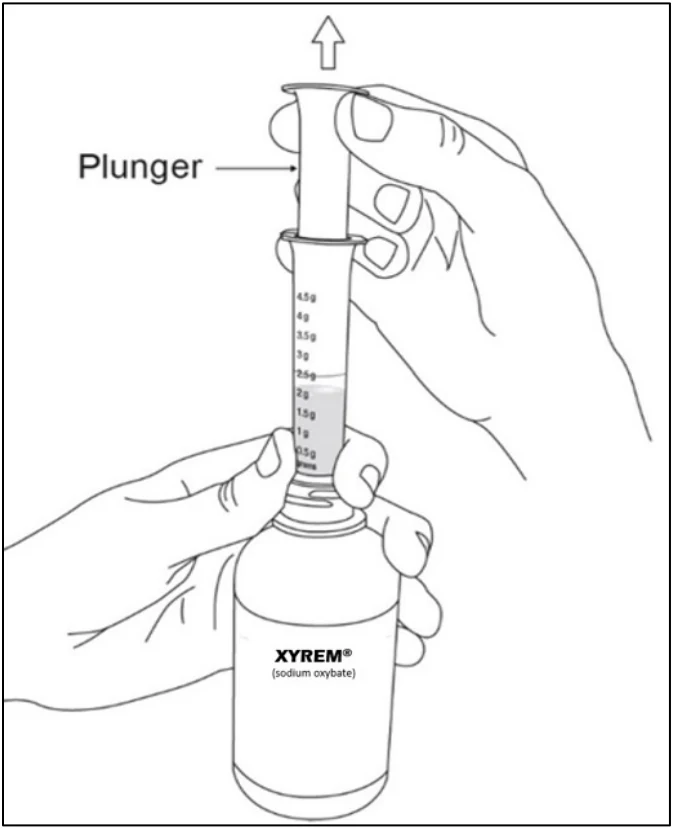
Figure E
Note: Make sure that the liquid level lines up with the marking on the syringe that matches your prescribed dose even if an air space forms between the plunger and the liquid (see Figure F for an example of drawing up 2.25 g).
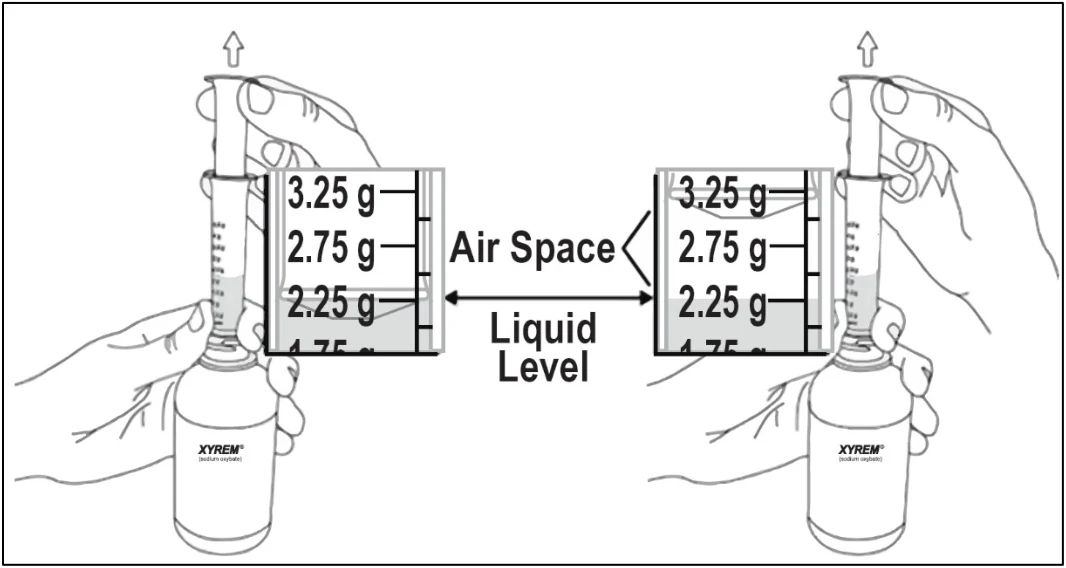
Figure F
- e. After you draw up the first dose, remove the syringe from the opening of the XYREM bottle.
- f. Empty all of the medicine from the syringe into one of the provided empty pharmacy containers by pushing down on the plunger until it stops (see Figure G).
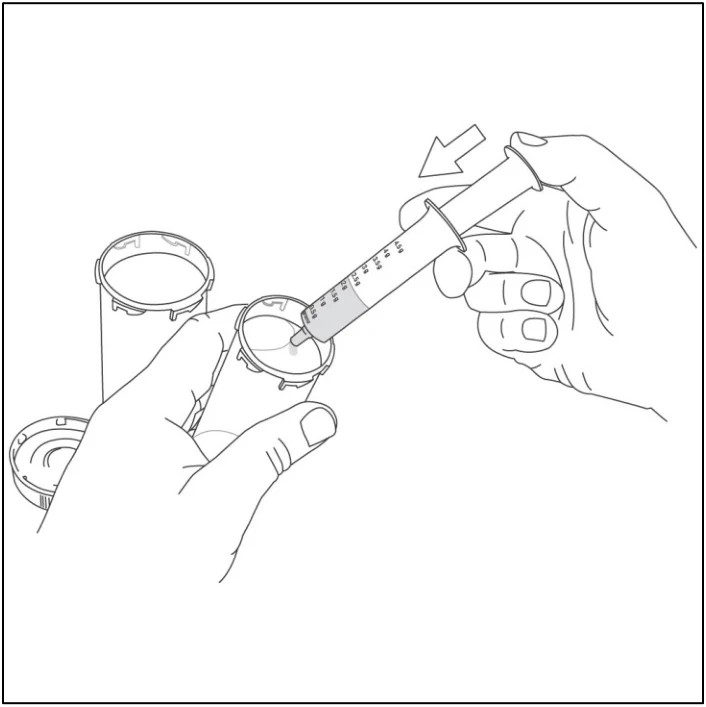
Figure G
- g. Using a measuring cup, pour about a quarter (¼) cup (approximately 60 mL) of water into the pharmacy container with the first dose of XYREM solution. Be careful to add only water to the pharmacy container and not more XYREM.
- h. Place the child-resistant cap on the pharmacy container and turn the cap clockwise to the right until it clicks and locks into its child-resistant position (see Figure H).
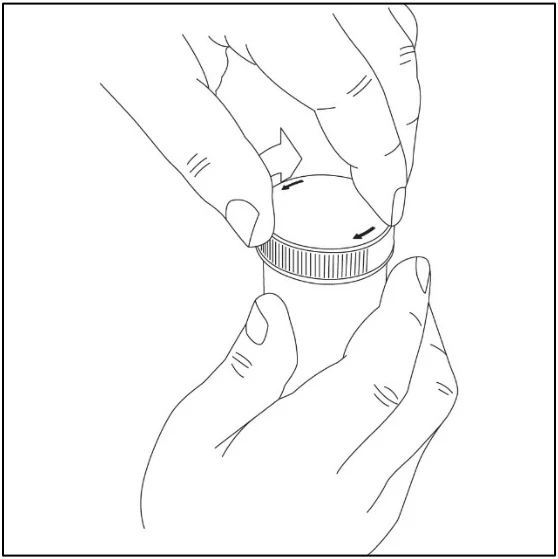
Figure H
Step 3: Preparation of the Second XYREM Dose (prepare before bedtime)
- a. Repeat Step 2 drawing up the amount of medicine prescribed for your second dose.
- b. Empty the syringe into the second pharmacy container.
- c. Add a quarter (¼) cup (approximately 60 mL) of water into the pharmacy container with the second dose of XYREM solution. Be careful to add only water to the pharmacy container and not more XYREM.
- d. Place the child-resistant cap on the pharmacy container and turn the cap clockwise to the right until it clicks and locks into its child-resistant position (see Figure H).
Step 4: Storing the Prepared XYREM Doses and Cleaning the Syringe
- a. Put the cap back on the XYREM bottle and store the XYREM bottle and both prepared doses in a safe and secure place. Store in a locked place if needed.
- b. The prepared XYREM doses should be taken within 24 hours.
- c. Keep the XYREM bottle and both prepared XYREM doses out of the reach of children and pets.
- d. Rinse the syringe out with water and squirt the liquid into the sink drain by pushing down on the plunger until it stops.
Step 5: Taking the First XYREM Dose
- a. At bedtime, and before you take the first XYREM dose, put the second XYREM dose in a secure location (locked up if appropriate) near your bed. You may want to set an alarm clock for 2.5 to 4 hours later to make sure you wake up to take the second dose.
- b. When it is time to take the first XYREM dose, remove the cap from the pharmacy container by pressing down on the child-resistant locking cap and turning the cap counterclockwise to the left.
- c. Drink all of the first XYREM dose while sitting in bed. Put the cap back on the first pharmacy container and immediately lie down to sleep.
- d. You should fall asleep soon. Some people fall asleep within 5 minutes and most fall asleep within 15 minutes. Some patients take less time to fall asleep, and some take more time. The time it takes you to fall asleep might be different from night to night.
Step 6: Taking the Second XYREM Dose
- a. When you wake up 2.5 to 4 hours later for your second dose of XYREM, take the cap off the second pharmacy container by pressing down on the child-resistant locking cap and turning the cap counterclockwise to the left.
- b. If you wake up before the alarm and it has been at least 2.5 hours since the first XYREM dose, turn off the alarm and take the second XYREM dose.
- c. Drink all of the second XYREM dose while sitting in bed. Put the cap back on the second pharmacy container and immediately lie down to continue sleeping.
Usual dose:
Your healthcare professional will decide the right dose of XYREM for you. This will depend on your condition, age, health, and if you take certain other medications.
You will discuss your response to XYREM with your healthcare professional and they may adjust your dose every two weeks. Never change or stop your dose of XYREM yourself.
Overdose:
| If you think you, or a person you are caring for, have taken too much XYREM, contact a healthcare professional, hospital emergency department, regional poison control centre or Health Canada’s toll-free number, 1-844 POISON-X (1-844-764-7669) immediately, even if there are no signs or symptoms. |
|---|
Missed Dose:
If you miss a dose, do not take two doses at one time.
- If the first dose is missed or delayed, take it as soon as you remember. A second dose may be taken 2.5 to 4 hours later only if there is sufficient sleep time prior to waking up, otherwise, the second dose should be skipped.
- If a first dose is taken and the second dose is missed or delayed, it should only be taken if there is sufficient sleep time prior to waking up. If there is insufficient sleep time prior to waking up, skip the second dose.
If insufficient sleep time has passed since the last dose has been taken, do NOT drive or engage in activities that require complete mental alertness.
What are possible side effects from using XYREM?
These are not all the possible side effects you may have when taking XYREM. If you experience any side effects not listed here, tell your healthcare professional.
Side effects of XYREM may include:
- accidental injury and falls;
- acne;
- akathisia (a movement disorder that makes it hard to stay still);
- anorexia (an eating disorder characterized by low body weight);
- bed-wetting during the night. To help prevent bed-wetting, make sure you go to the bathroom before taking your first dose of XYREM;
- bleeding outside of the menstrual cycle;
- bruising;
- chills;
- complete or partial loss of feeling or sensation in an area of the body (hypoesthesia);
- confusion;
- dehydration or thirst;
- dizziness;
- dry mouth;
- enlarged abdomen size;
- flu symptoms;
- frequent urination;
- hair loss;
- hangover effects;
- headache;
- hiccups;
- increased sweating;
- infection, including viral infection;
- involuntary and rhythmic shaking;
- leg cramps;
- mouth ulcers or sores;
- muscle aches, pain, or weakness;
- nausea;
- neck rigidity;
- nervousness;
- panic attack;
- vomiting;
- weight decreased.
Serious side effects and what to do about them
| Symptom / effect | Talk to your healthcare professional | Stop taking drug and get immediate medical help |
|---|---|---|
| Only if severe | In all cases | |
| COMMON | ||
| Allergic reaction: difficulty swallowing or breathing, wheezing, drop in blood pressure, feeling sick to your stomach and throwing up, hives, rash, or swelling of the face, lips, tongue or throat. | ||
| ✓ | ||
Serious side effects and what to do about them
| Symptom / effect | Talk to your healthcare professional | Stop taking drug and get immediate medical help | |
|---|---|---|---|
| Only if severe | In all cases | ||
| Behavioural or mental changes: psychosis, paranoia, hallucinations, anxiety, irritability, hostility, aggression, agitation, memory impairment, or abnormal thinking. | ✓ | ||
| Central nervous system (CNS) depression (brain slows down): respiratory depression (slow, shallow or weak breathing), low blood pressure, drowsiness, loss of consciousness, or coma. | ✓ | ||
| Depression (sad mood that won’t go away): difficulty sleeping or sleeping too much, changes in appetite or weight, feelings of worthlessness, guilt, regret, helplessness or hopelessness, withdrawal from social situations, family, gatherings and activities with friends, reduced libido (sex drive), or thoughts of death or suicide. | ✓ | ||
| Eye problems: vision blurred in one or both eyes, or vision changes. | ✓ | ||
| Hypertension (high blood pressure) | ✓ | ||
| Seizures (fit): loss of consciousness with uncontrollable shaking. | ✓ | ||
| Sleeping problems: abnormal dreams, nightmares, sleep walking, sleep apnea (stop breathing for short periods during your normal nightly sleep), insomnia (hard to fall asleep and hard to stay asleep), or confused behaviour occurring at night. | ✓ | ||
If you have a troublesome symptom or side effect that is not listed here or becomes bad enough to interfere with your daily activities, tell your healthcare professional.
Reporting Side Effects
You can report any suspected side effects associated with the use of health products to Health Canada by:
NOTE: Contact your healthcare professional if you need information about how to manage your side effects. The Canada Vigilance Program does not provide medical advice. |
Storage:
- Always store XYREM at room temperature (15°C to 30°C), in the original bottle.
- After preparing the XYREM solution in the provided containers, they should be taken within 24 hours as directed by your healthcare professional.
- Always keep XYREM and your nightly doses out of the reach and sight of children and pets in a safe and secure place (locked up if appropriate).
- Return any unused XYREM to your pharmacy for proper disposal. Do not pour it down the drain.
If you want more information about XYREM:
- Talk to your healthcare professional.
- Find the full Product Monograph that is prepared for healthcare professionals and includes this Patient Medication Information by visiting the Health Canada website: (https://www.canada.ca/en/health-canada/services/drugs-health-products/drug-products/drug-product-database.html); the manufacturer’s website www.jazzpharma.com, or by calling the program at 1-866-599-7365.
Date of Authorization 2025-01-23