


Patient Medication Information: uses, side effects, how to take - Firdapse
What FIRDAPSE is used for:
FIRDAPSE is used to treat the symptoms of Lambert-Eaton myasthenic syndrome (LEMS) in children (6 years of age and older) and adults.
How FIRDAPSE works:
It is not fully understood how FIRDAPSE works. Symptoms are generally improved within several hours of taking FIRDAPSE.
The ingredients in FIRDAPSE are:
Medicinal ingredient(s): amifampridine phosphate
Non-medicinal ingredients: calcium stearate, colloidal silicon dioxide, microcrystalline cellulose
FIRDAPSE comes in the following dosage form(s):
Tablets containing amifampridine phosphate, equivalent to 10 mg amifampridine
Do not use FIRDAPSE if:
- You have ever had a seizure
- You are allergic to amifampridine, or another aminopyridine
- You are taking other forms of amifampridine or other aminopyridines, such as compounded 3,4-diaminopyridine (3,4-DAP)
To help avoid side effects and ensure proper use, talk to your healthcare professional before you take FIRDAPSE. Talk about any health conditions or problems you may have, including if you:
- Have a known gene that may reduce your ability to break down a drug
- Have had a seizure
- Have kidney problems
- Have liver problems
- Have asthma
Are pregnant or plan to become pregnant
- It is not known if FIRDAPSE will harm your unborn baby. You should not use FIRDAPSE if you are pregnant.
- If you are a woman of childbearing potential, you must use effective birth control during your treatment with FIRDAPSE. A registry for pregnant women exposed to FIRDAPSE has been established. The purpose of this registry is to collect information about the safety of FIRDAPSE during pregnancy. Patients are asked to register themselves or have their healthcare provider register for them by visiting the website www.firdapsepregnancystudy.com or by calling 1-855-212-5856 (toll free).
- Are breastfeeding or plan to breastfeed. It is not known if FIRDAPSE passes into your breastmilk. Talk to your healthcare professional about the best way to feed your baby while taking FIRDAPSE.
Other warnings you should know about:
FIRDAPSE can cause problems with your heart rhythm called QTc prolongation, particularly if you have a known gene that may reduce your ability to break down FIRDAPSE. You may have no symptoms or you may have dizziness, feeling like your heart has skipped or added a beat, fainting or seizures. If these symptoms continue, they can lead to sudden death. You may be more at risk if you have had or have:
- a known gene that may reduce your body’s ability to break down a drug
- a heart attack
- congestive heart failure
- an irregular heartbeat or heart rhythm
- a blockage in one or more of your arteries that affects blood flow to your heart
- an abnormally rapid heart rate
- heart palpitations (feeling like your heart has skipped a beat or added an extra beat)
- a family history of sudden cardiac death at less than 50 years of age
- problems of electrocardiogram (ECG) abnormality called “Long QT syndrome”
- diabetes
- imbalances in the electrolytes in your body (potassium, magnesium and calcium)
FIRDAPSE can cause blurred vision, dizziness, drowsiness or seizures. Before you drive or operate machinery, know how you feel while taking FIRDAPSE.
Tell your healthcare professional about all the medicines you take, including any drugs, vitamins, minerals, natural supplements or alternative medicines.
The following may interact with FIRDAPSE:
- Antidepressant medicines
- Mefloquine, a medication to treat malaria
- Tramadol, a medication used to treat pain
Drugs that can affect the levels of electrolytes (potassium, magnesium and calcium) in your body:
- Diuretics
- Laxatives and enemas
- Certain antibiotics
- High doses of steroids
Certain drugs
- antiarrhythmics (such as flecainide and propafenone)
- antipsychotics (such as chlorpromazine and haloperidol)
- antidepressants (such as fluoxetine and amitriptyline)
- opioids (such as methadone)
- some antibiotics (such as erythromycin, clarithromycin and ciprofloxacin)
- antimalarials (such as quinone and chloroquine)
- antifungals (such as ketoconazole)
- kinase inhibitors (such as sunitinib)
- histone deacetylase inhibitors (such as vorinostat)
- beta-2 adrenoceptor agonists (such as salmeterol
How to take FIRDAPSE:
- Take FIRDAPSE exactly as your healthcare professional tells you to take it. Do not change your dose of FIRDAPSE.
FIRDAPSE can be taken with or without food.
- Do not take FIRDAPSE together with other medicines known to increase the risk of seizures or QT intervals without talking to your healthcare professional.
- FIRDAPSE tablets have a score line in the middle. This can help you break a tablet in half if you need less than a full tablet to get the right dose.
- If you require less than half of a tablet to reach your prescribed dose, have difficulty swallowing tablets, or require a feeding tube, you can prepare a 1 mg/mL suspension by following the instructions below:
Supplies you will need: This is a catheter tip | ||||||
|---|---|---|---|---|---|---|
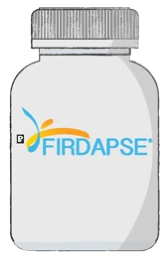 |  |  | 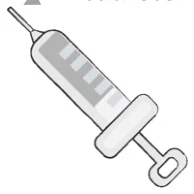 | |||
| Your Firdapse tablets | Empty bottle with cap (50 – 100 mL recommended) | Sterile water | 10 mL oral syringe with catheter tip (may require smaller syringe for dosing) | |||
Instructions to make a 1 mg/mL suspension:
- Do not use any foods or liquids other than sterile water to mix FIRDAPSE.
- Prepare fresh suspensions every day.
- You can prepare each dose separately or all of your doses for the day at one time.
| FIRDAPSE tablets | |
|---|---|
| Place the number of FIRDAPSE tablets you need for your dose or doses in the bottle. | For each tablet, add 10 mL of water to the bottle. Measure the water with an oral syringe, and inject the water into the bottle. Note: Depending on the number of tablets and the size of the syringe, you may need to measure and inject the water more than one time. |
| Step 1 | Step 2 |
Secure the cap back on the bottle. Wait for 5 minutes. | Shake well for 30 seconds. |
| Step 3 | Step 4 |
Instructions to administer the prepared suspension:
- The prepared FIRDAPSE suspension can be taken by mouth or through a feeding tube.
- Refrigerate the suspension between uses and shake well before taking your dose.
- Discard any unused suspension after 24 hours.
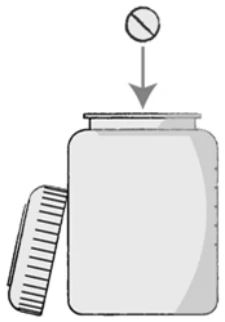 | 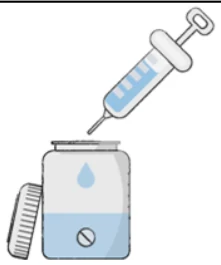 Add 10 mL of sterile water to the bottle for each tablet |
|---|---|
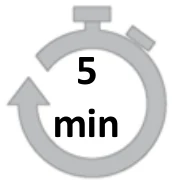 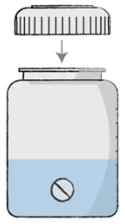 5 min | 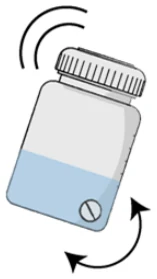 Then shake well 30 seconds |
| Option 1 To administer by mouth: | ||||
|---|---|---|---|---|
| Remove the bottle cap and use an oral syringe with a catheter tip to measure the prescribed dose. | Push syringe plunger to administer by mouth. Note: Depending on the dose and size of syringe, you may need to repeat steps 5 and 6 until the prescribed dose is given. | |||
| Step 5 | Step 6 | |||
| Option 2 To administer by feeding tube: | |||||
|---|---|---|---|---|---|
Important:
| |||||
| Inject medicine into feeding tube | |||||
| Remove the bottle cap and use an oral syringe with a catheter tip to measure the prescribed dose. | Inject the medicine using the oral syringe with a catheter tip into the feeding tube right away. Note: Depending on the dose and size of syringe, you may need to repeat steps 5 and 6 until the prescribed dose is given. | ||||
| Step 5 | Step 6 | ||||
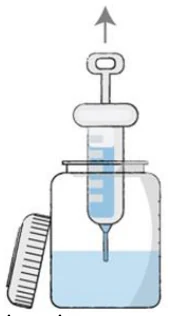 Pull plunger to measure dose | 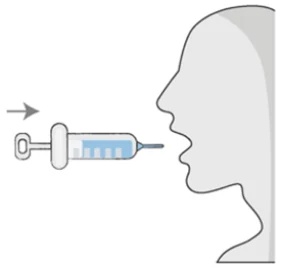 Push plunger to administer by mouth |
|---|
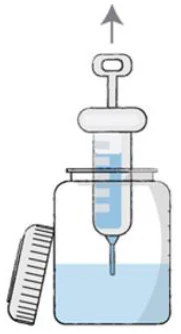 Pull plunger to measure dose | 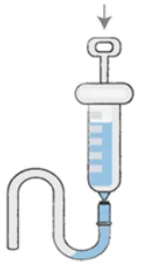 |
|---|---|
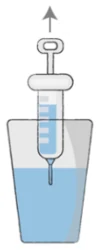
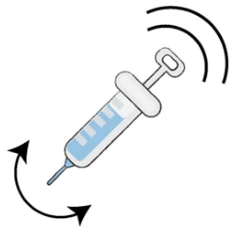
| Pull plunger up to refill with sterile water | Shake the syringe |
| To flush the feeding tube, refill the syringe with 10 mL of sterile water. | Shake the syringe, insert the catheter tip into the feeding tube to flush any remaining medicine from the feeding tube into the stomach. |
| Step 7 | Step 8 |
Usual dose:
Your dose will be decided by your healthcare professional based on your condition and how you react to FIRDAPSE. FIRDAPSE is taken 3 to 5 times a day. Do not take more than 2 tablets of FIRDAPSE at one time or more than 10 tablets in a 24-hour period.
Overdose:
| If you think you, or a person you are caring for, have taken too much FIRDAPSE, contact a healthcare professional, hospital emergency department, regional poison control centre or Health Canada’s toll-free number, 1-844 POISON-X (1-844-764-7669) immediately, even if there are no signs or symptoms. |
|---|
Missed dose:
If you miss a dose of FIRDAPSE, skip that dose and take your next dose at your next scheduled dose time. Do not double your dose to make up the missed dose.
Possible side effects from using FIRDAPSE:
These are not all the possible side effects you may have when taking FIRDAPSE. If you experience any side effects not listed here, tell your healthcare professional.
The most common side effects of FIRDAPSE include:
- Upper respiratory infection
- Stomach pain
- Nausea
- Diarrhea
- Headache
- Increased liver enzymes
- Back pain
- High blood pressure
- Muscle spasms
- Partial loss or total loss of sensation in your mouth
 |  |
|---|
- Cough
- Vomiting
- Dehydration
- Unusual physical weakness or lack of energy
Serious side effects and what to do about them
| Frequency/Side Effect/Symptom | Talk to your healthcare professional | Stop taking this drug and get immediate medical help | ||||
|---|---|---|---|---|---|---|
| Only if severe | In all cases | |||||
| Very common | ||||||
| Paresthesia: tingling around the mouth, tongue, face, fingers, toes and other body parts | ✓ | |||||
| Common | ||||||
| Dizziness | ✓ | |||||
| Abdominal pain | ✓ | |||||
| Rare | ||||||
| Seizures | ✓ | |||||
| Allergic reaction: rash, hives, swelling of your throat or tongue, trouble breathing | ✓ | |||||
| Difficult breathing, worsening asthma symptoms | ✓ | |||||
If you have a troublesome symptom or side effect that is not listed here or becomes bad enough to interfere with your daily activities, tell your healthcare professional.
Reporting side effects
You can report any suspected side effects associated with the use of health products to Health Canada by:
NOTE: Contact your healthcare professional if you need information about how to manage your side effects. The Canada Vigilance Program does not provide medical advice. |
Storage:
- Store FIRDAPSE at room temperature (15°C to 30°C)
- Safely throw away FIRDAPSE that is out of date or no longer needed
Keep out of reach and sight of children.
Refrigerate prepared FIRDAPSE oral suspension between doses for up to 24 hours. Discard any unused portion of the suspension after 24 hours.
If you want more information about FIRDAPSE:
- Talk to your healthcare professional
- Find the full product monograph that is prepared for healthcare professionals and includes the Patient Medication Information by visiting the Health Canada Drug Product Database website (Drug Product Database: Access the database); the manufacturer’s website www.kyepharma.com; or by calling 1-888-822-7126.
Date of Authorization: 2025-06-10