


Product Monograph - Firdapse
Recent Major Label Changes
| 1 Indications | 2025-06 |
|---|---|
| 4 Dosage and Administration, 4.2 Recommended Dose and Dose Adjustment | |
| 7 Warnings and Precautions, 7.1 Special Populations, 7.1.3 Pediatrics | |
Table of Contents
Certain sections or subsections that are not applicable at the time of the preparation of the most recent authorized product monograph are not listed.
Recent Major Label Changes .................................................................................................. 2
Table of Contents................................................................................................................... 2
Part 1: Healthcare Professional Information........................................................................... 5
- 1.
Indications ...................................................................................................................... 5
1.1. Pediatrics ............................................................................................................ 5
1.2. Geriatrics............................................................................................................. 5
- 2. Contraindications ............................................................................................................ 5
- 4.
Dosage and Administration ............................................................................................. 5
4.1. Dosing Considerations ......................................................................................... 5
4.2. Recommended Dose and Dosage Adjustment....................................................... 6
4.4. Administration..................................................................................................... 7
4.5. Missed Dose ........................................................................................................ 7
- 5. Overdose ........................................................................................................................ 7
- 6. Dosage Forms, Strengths, Composition, and Packaging ................................................... 8
- 7.
Warnings and Precautions............................................................................................... 8
Carcinogenesis and Genotoxicity...................................................................................... 8
Cardiovascular................................................................................................................. 8
Driving and Operating Machinery..................................................................................... 9
Endocrine and Metabolism .............................................................................................. 9
Hepatic/Biliary/Pancreatic ............................................................................................... 9
Immune .......................................................................................................................... 9
Neurologic....................................................................................................................... 9
Renal............................................................................................................................. 10
Respiratory.................................................................................................................... 10
7.1. Special Populations ............................................................................................ 10
7.1.1. Pregnancy .................................................................................................. 10
7.1.2. Breastfeeding............................................................................................. 10
7.1.3. Pediatrics ................................................................................................... 11
7.1.4. Geriatrics ................................................................................................... 11
- 8.
Adverse Reactions......................................................................................................... 11
8.1. Adverse Reaction Overview................................................................................ 11
8.2. Clinical Trial Adverse Reactions .......................................................................... 11
8.2.1. Clinical Trial Adverse Reactions – Pediatrics ................................................ 13
8.3. Less Common Clinical Trial Adverse Reactions .................................................... 14
8.4. Abnormal Laboratory Findings: Hematologic, Clinical Chemistry, and Other Quantitative Data .......................................................................................................... 14
8.5. Post-Market Adverse Reactions.......................................................................... 14
- 9.
Drug Interactions .......................................................................................................... 14
9.2. Drug Interactions Overview................................................................................ 14
9.4. Drug-Drug Interactions ...................................................................................... 14
9.5. Drug-Food Interactions ...................................................................................... 15
9.6. Drug-Herb Interactions ...................................................................................... 16
9.7. Drug-Laboratory Test Interactions ...................................................................... 16
- 10.
Clinical Pharmacology ................................................................................................... 16
10.1. Mechanism of Action ......................................................................................... 16
10.2. Pharmacodynamics............................................................................................ 16
10.3. Pharmacokinetics .............................................................................................. 16
- 11. Storage, Stability, and Disposal ..................................................................................... 18
- 12. Special Handling Instructions ........................................................................................ 19
Part 2: Scientific Information ............................................................................................... 20
- 13. Pharmaceutical Information.......................................................................................... 20
- 14.
Clinical Trials ................................................................................................................. 20
14.1. Clinical Trials by Indication ................................................................................. 20
- 16. Non-Clinical Toxicology ................................................................................................. 24
Patient Medication Information........................................................................................... 26
Part 1: Healthcare Professional Information
1. Indications
FIRDAPSE (amifampridine) is indicated for:
- Symptomatic treatment of Lambert-Eaton Myasthenic Syndrome (LEMS) in patients 6 years of age and older.
FIRDAPSE should only be prescribed by healthcare professionals who have experience in the treatment of LEMS, are knowledgeable of the efficacy and safety profile of this drug and are able to discuss benefits/risks of treatment with patients.
1.1. Pediatrics
Pediatrics (<6 years of age): The safety and efficacy of FIRDAPSE in patients younger than 6 years of age have not been studied. FIRDAPSE is not indicated for use in this patient population.
1.2. Geriatrics
Geriatrics (≥65 years of age): In clinical studies of FIRDAPSE, 25.4% (16 of 63) of LEMS patients receiving FIRDAPSE were ≥ 65 years of age. These studies did not include sufficient number of patients aged 65 years and over to determine whether its safety and efficacy differs in elderly patients compared to younger patients (see 4. Dosage and Administration and 10.3 Pharmacokinetics, Special Populations and Conditions)
2. Contraindications
Amifampridine is contraindicated in patients:
- who are hypersensitive to this drug or another aminopyridine.
- with a history of seizures.
- who are hypersensitive to any ingredient in the formulation, including any non-medicinal ingredient, or component of the container. For a complete listing, see 6 Dosage Forms, Strengths, Composition and Packaging.
- who are taking other forms of amifampridine or other aminopyridines.
4. Dosage and Administration
4.1. Dosing Considerations
The dose of FIRDAPSE should be individually titrated for each patient.
Caution is advised if administering FIRDAPSE to patients with risk factors for torsade de pointes or in combination with drugs known to prolong the QT interval (see 7 Warnings and Precautions, Cardiovascular; 5 Overdose; 9 Drug Interactions and 10.2 Pharmacodynamics).
4.2. Recommended Dose and Dosage Adjustment
The recommended dosage regimen of FIRDAPSE for adults and pediatric patients 6 years of age and older is included in Table 1. For pediatric patients, the recommended dosing regimen is dependent on body weight. Dosage should be increased every 3 to 4 days based on clinical response and tolerability until effective dose is achieved. Titration increments should not exceed those shown in Table 1.
Table 1 - Recommended Oral Dosage for the Treatment of LEMS
| Age and Body Weight | Initial Daily Dosage* | Titration Regimen | Maximum Single Dose | Maximum Total Daily Maintenance Dosage |
|---|---|---|---|---|
| All patients 6 years of age and older weighing less than 45 kg | 5 mg to 15 mg daily, in 3 to 5 equally divided doses | Increase total daily dosage by 2.5* mg every 3 or 4 days | 10 mg | 40 mg Given in divided doses |
| All patients 6 years of age and older weighing more than 45 kg | 15 mg to 30 mg daily, in 3 to 5 equally divided doses | Increase total daily dosage by 5 mg every 3 or 4 days | 20 mg | 80 mg Given in divided doses. Some patients may benefit from a total daily dose of 100 mg. |
| *See 4.4 Administration for a method to achieve these doses. | ||||
Elderly Patients
In general, dose selection for an elderly patient should be cautious, reflecting the greater frequency of decreased hepatic, renal or cardiac function and of concomitant disease or other drug therapy.
Patients with Renal Impairment
Renal clearance is an elimination pathway for amifampridine and the inactive metabolite, 3-N-acetyl amifampridine, and exposure of amifampridine is higher in subjects with renal impairment. Therefore, patients with renal impairment should be closely monitored for adverse reactions.
The recommended starting dosage of FIRDAPSE in patients with any degree of renal impairment (creatinine clearance 15 to 90 mL/min) is the lowest recommended initial daily dosage taken orally in divided doses (15 mg daily for patients weighing 45 kg or more, and 5 mg daily for patients weighing less than 45 kg).
No dosage recommendations for FIRDAPSE can be made for patients with end-stage renal disease (see 10.3 Pharmacokinetics, Special Populations and Conditions).
Patients with Hepatic Impairment
Exposure of amifampridine is higher in subjects with hepatic impairment (see 10.3 Pharmacokinetics, Special Populations and Conditions). Therefore, patients with any degree of hepatic impairment should be closely monitored for adverse reactions.
The recommended starting dosage of FIRDAPSE in patients with any degree of hepatic impairment is the lowest recommended initial dose taken orally in divided doses (15 mg for patients weighing 45 kg or more, and 5 mg for patients weighing less than 45 kg) (see 4.2 Recommended Dose and Dosage Adjustment, 4.4 Administration and 10.3 Pharmacokinetics, Special Populations and Conditions).
Known N-acetyltransferase 2 (NAT2) Slow Acetylators
Exposure of FIRDAPSE is increased in patients who are N-acetyltransferase (NAT2) slow acetylators (see 10.3 Pharmacokinetics, Special Populations and Conditions). Therefore, when initiating FIRDAPSE known NAT2 poor acetylators should be closely monitored for adverse reactions.
The recommended starting dosage for FIRDAPSE in patients who are known N-acetyltransferase 2 (NAT2) poor metabolizers is the lowest recommended initial dose taken orally in divided doses (15 mg for patients weighing 45 kg or more, and 5 mg daily for patients weighing less than 45 kg) (see 4.2 Recommended Dose and Dosage Adjustment and 10.3 Pharmacokinetics, Special Populations and Conditions).
4.4. Administration
FIRDAPSE is to be taken orally in equally divided doses 3 to 5 times per day. FIRDAPSE may be taken without regard to food.
Preparation of 1mg/mL Suspension
When patients require a dosage in less than 5 mg increments, have difficulty swallowing tablets, or require feeding tubes, a 1 mg/mL suspension can be prepared (e.g. by placing the required number of tablets in a 50 mL to 100 mL container adding 10 mL of sterile water for each tablet, waiting for 5 minutes, and shaking well for 30 seconds).
Crushing the tablets prior to making the suspension is not necessary. After preparation of the suspension, an oral syringe can be used to draw up and administer the correct dose by mouth or by feeding tube.
Refrigerate the suspension between doses and shake well before drawing up each dose. The suspension can be stored under refrigeration (between 2°C and 8°C) for up to 24 hours. Discard any unused portion of the suspension after 24 hours.
4.5. Missed Dose
If a dose is missed, treatment should be continued with the next dose as planned, patients should not take double or extra doses.
5. Overdose
Overdose with FIRDAPSE was not reported during clinical studies.
In a case report, a 65-year-old patient with LEMS inadvertently received a total daily amifampridine dose of 360 mg/day (more than 4 times the maximum recommended total daily dose) and was hospitalized for general weakness, paresthesia, nausea, vomiting, and palpitations. The patient developed convulsions and paroxysmal supraventricular tachycardia, and four days after admission, experienced cardiac arrest. The patient was resuscitated and ultimately recovered following withdrawal of amifampridine.
Patients with suspected overdose with FIRDAPSE should be monitored for signs or symptoms of exaggerated FIRDAPSE adverse reactions or effects, and appropriate symptomatic treatment instituted immediately. ECG monitoring is recommended.
| For the most recent information in the management of a suspected drug overdose, contact your regional poison control centre or Health Canada’s toll-free number, 1-844 POISON-X (1-844-764-7669). |
|---|
- 6. Dosage Forms, Strengths, Composition, and Packaging
Table 2 - Dosage Forms, Strengths, and Composition
Description
FIRDAPSE 10 mg tablets are white to off white, round, and functionally scored. Each tablet is debossed on the non-scored side with “CATALYST” and on the scored side with “211” above the score and “10” below the score. Tablets can be divided in half at the score.
FIRDAPSE tablets are supplied in child resistant bottles containing 240 tablets.
7. Warnings and Precautions
Carcinogenesis and Genotoxicity
In a 2-year dietary carcinogenicity study in rats, low incidences of benign and malignant schwannomas were observed in males and/or females at all dose levels and there was an increased incidence of endometrial adenomas and carcinomas tumors at the mid and high dose levels (see 16 Non-Clinical Toxicology). The significance of these tumors for patients is unknown. Schwannomas in humans are usually benign.
Cardiovascular
QTc Interval Prolongation
FIRDAPSE can cause QTc interval prolongation in N-acetyltransferase 2 slow acetylators (see 10.2 Pharmacodynamics, Cardiac Electrophysiology; 9.4 Drug-Drug Interactions). Drugs that prolong the QTc increase the risk of torsade de pointes, a polymorphic ventricular tachyarrhythmia. Generally, the risk
| Route of Administration | Dosage Form/ Strength/Composition | Non-Medicinal Ingredients |
| Oral | Tablet 10 mg Each scored tablet contains 10 mg amifampridine which is equivalent to 18.98 mg amifampridine phosphate | calcium stearate, colloidal silicon dioxide, microcrystalline cellulose |
of torsade de pointes increases with the magnitude of QTc prolongation produced by the drug. Torsade de pointes can be asymptomatic or experienced by the patient as dizziness, palpitations, syncope, or seizures. If sustained, torsade de pointes can progress to ventricular fibrillation and sudden cardiac death.
Caution should be observed if FIRDAPSE is administered to patients who have risk factors for torsade de pointes. Risk factors for torsade de pointes in the general population include, but are not limited to, the following: female gender; age 65 years or older; baseline prolongation of the QT/QTc interval; congenital long QT syndrome; cardiac disease (e.g., myocardial infarction, heart failure); history of arrhythmias; bradycardia (<50 beats per minute); and electrolyte disorders. Hypokalemia, hypocalcemia, and hypomagnesemia should be corrected prior to initiation or continuation of FIRDAPSE.
Driving and Operating Machinery
Due to adverse reactions such as drowsiness, dizziness, seizures and blurred vision, amifampridine may have minor or moderate influence on the ability to drive or use machines. Caution should be exercised when driving or operating a vehicle or potentially dangerous machinery.
Endocrine and Metabolism
Exposure of FIRDAPSE is increased in patients who are N-acetyltransferase (NAT2) slow acetylators (see 10.3 Pharmacokinetics, Special Populations and Conditions). Therefore, when initiating FIRDAPSE, known NAT2 poor acetylators should be closely monitored for adverse reactions (see 4 Dosage and Administration).
Hepatic/Biliary/Pancreatic
Since FIRDAPSE is extensively metabolized/acetylated by N-acetyltransferase 2 (NAT2), hepatic impairment can cause an increase in exposure (see 10.3 Pharmacokinetics, Special Populations and Conditions). Therefore, when initiating FIRDAPSE, patients with hepatic impairment should be closely monitored for adverse reactions (see 4 Dosage and Administration).
Immune
Hypersensitivity
In clinical trials, hypersensitivity reactions and anaphylaxis associated with FIRDAPSE administration have not been reported. Anaphylaxis has been reported in patients taking another aminopyridine; therefore, it may occur with FIRDAPSE. If anaphylaxis occurs, administration of FIRDAPSE should be discontinued and appropriate therapy initiated.
Neurologic
Seizures/ Convulsions
FIRDAPSE can cause seizures. Seizures have been observed in patients without a history of seizures taking FIRDAPSE at the recommended doses, at various times after initiation of treatment, at an incidence of approximately 2%. Many of the patients were taking medications or had comorbid medical conditions that may have lowered the seizure threshold. FIRDAPSE should be used with caution in combination with drugs that are known to lower seizure threshold (see 9.4 Drug-Drug Interactions). Seizures may be dose-dependent. Consider discontinuation or dose-reduction of FIRDAPSE in patients who have a seizure while on treatment. FIRDAPSE is contraindicated in patients with a history of seizures (see 2 Contraindications).
Renal
Renal clearance is an elimination pathway for amifampridine and the inactive metabolite, 3-N-acetyl amifampridine, and exposure of amifampridine is higher in subjects with renal impairment (see 10.3 Pharmacokinetics, Special Populations and Conditions). Therefore, when initiating FIRDAPSE, patients with renal impairment should be closely monitored for adverse reactions (see 4 Dosage and Administration).
Respiratory
Based upon its pharmacodynamic properties, amifampridine could exacerbate asthma symptoms. Patients with asthma should be treated so their symptoms are controlled. In post-market settings, cases of bronchospasms, asthma attacks in asthmatic patients and patients with a history of asthma have been reported, some of them were serious.
7.1. Special Populations
7.1.1. Pregnancy
FIRDAPSE should not be used during pregnancy. Women of childbearing potential must use effective contraception during FIRDAPSE treatment. There are no adequate and well-controlled studies with FIRDAPSE in pregnant women to inform a drug-associated risk of adverse developmental outcomes.
Amifampridine administered during organogenesis had no effect on embryo-fetal development in rabbits. In rats, amifampridine administered during pregnancy and lactation resulted in an increase in the number of mothers delivering still-born offspring (see 16 Non-Clinical Toxicology).
Pregnancy Registry
A pregnancy registry has been established to collect information about the effect of FIRDAPSE exposure during pregnancy. Healthcare professionals are encouraged to register patients, and pregnant women are encouraged to enroll themselves by visiting the website https://www.firdapsepregnancystudy.com or by calling 1-855-212-5856 (toll free).
7.1.2. Breastfeeding
It is unknown if amifampridine is excreted in human milk. Because many drugs are excreted in human milk, a decision should be made to either discontinue nursing or discontinue the drug, taking into account the mother’s clinical need for FIRDAPSE and any potential adverse effects on the breastfed infant from FIRDAPSE or from the underlying maternal condition.
In lactating rats, amifampridine was excreted in milk and reached levels similar to those in maternal plasma. (see 16 Non-Clinical Toxicology)
7.1.3. Pediatrics
There is no controlled experience for the safety and efficacy of FIRDAPSE in pediatric LEMS patients. Two patients, 10 and 13 years of age, have received FIRDAPSE in clinical practice.
There are no pharmacokinetic/exposure data in pediatric LEMS patients 6 to 17 years of age. Use of FIRDAPSE in this population is supported by evidence from studies of FIRDAPSE in adults with LEMS, pharmacokinetic data in adult patients, pharmacokinetic modeling and simulation to identify the dosing regimen in pediatric patients, and some safety data from pediatric neuromuscular dysfunction patients (LEMS n=2 and non-LEMS; n=24) (see 8 Adverse Reactions and 10 Clinical Pharmacology).
Safety and efficacy in pediatric patients below 6 years of age have not been studied.
7.1.4. Geriatrics
Clinical studies of FIRDAPSE did not include sufficient number of patients aged 65 years and over to determine whether safety and tolerability differs in elderly patients compared to younger patients. In clinical studies, 25.4% (16 of 63) of LEMS patients receiving FIRDAPSE were ≥ 65 years of age.
In general, dose selection for an elderly patient should be cautious, reflecting the greater frequency of decreased hepatic, renal or cardiac function and of concomitant disease or other drug therapy.
8. Adverse Reactions
8.1. Adverse Reaction Overview
The following adverse reactions are described elsewhere in the labeling:
The most commonly reported (> 10%) adverse reactions associated with FIRDAPSE for healthy individuals and LEMS patients receiving FIRDAPSE in clinical studies include peripheral and perioral paresthesia; dizziness; headache; and oral hypoesthesia.
Additional adverse reactions associated with FIRDAPSE, when taken at doses greater than 80 mg/day, include: Abdominal pain lower, Gastritis, Sinusitis, Dizziness, Sjogren’s syndrome, Oxygen saturation decreased, Electrocardiogram QT prolonged, Dysphonia, Seasonal allergies, Gout, Rash, Weight decreased, Fatigue, Asthenia, Dyspnea, and Constipation.
8.2. Clinical Trial Adverse Reactions
Clinical trials are conducted under very specific conditions. Therefore, the frequencies of adverse reactions observed in the clinical trials may not reflect frequencies observed in clinical practice and should not be compared to frequencies reported in clinical trials of another drug.
In controlled and uncontrolled trials (Study 1 and 2) in patients with LEMS, 63 patients were treated with FIRDAPSE, including 40 patients treated for more than 6 months, and 39 patients treated for more than 12 months. In an expanded access program, 139 patients with LEMS were treated with FIRDAPSE, including 102 patients treated for more than 6 months, 77 patients treated for more than 12 months, and 53 patients treated for more than 18 months.
Study 1 was a double-blind, placebo-controlled, randomized discontinuation study in adults with LEMS. Following an initial open-label run-in phase (up to 90 days), patients were randomized to either continue FIRDAPSE treatment or transition to placebo, for a 14-day double-blind phase. Following final assessments, patients were allowed to resume FIRDAPSE treatment for up to 2 years (open label long-term safety phase of the study).
During the open-label run-in phase of Study 1, 53 patients received FIRDAPSE for an average of 81 days at a mean daily dosage of 50.5 mg/day. The mean patient age was 52.1 years and 66% were female. There were 42 patients who had no prior exposure to amifampridine at the initiation of this study. Table 3 shows adverse reactions with an incidence of 5% or greater occurring in the 42 LEMS patients newly initiated on treatment with FIRDAPSE during the run-in phase of the study.
Table 3 – Summary of Adverse Reactions in ≥5% of LEMS Patients Newly Treated with FIRDAPSE in Study 1
FIRDAPSE N = 42 % | ||
|---|---|---|
| Paresthesia* | 62 | |
| Upper respiratory tract infection | 33 | |
| Abdominal pain | 14 | |
| Nausea | 14 | |
| Diarrhea | 14 | |
| Headache | 14 | |
| Elevated liver enzymes** | 14 | |
| Back pain | 14 | |
| Hypertension | 12 | |
| Muscle spasms | 12 | |
| Dizziness | 10 | |
| Asthenia | 10 | |
| Muscular weakness | 10 | |
| Pain in extremity | 10 | |
| Cataract | 10 | |
| Constipation | 7 | |
| Bronchitis | 7 | |
| Fall | 7 | |
| Lymphadenopathy | 7 | |
* Includes paresthesia, oral paresthesia and oral hypoesthesia **Includes elevated alanine aminotransferase (ALT), aspartate aminotransferase (AST), lactate dehydrogenase (LDH), and gammaglutamyl transferase (GGT) | ||
Other Adverse Reactions:
In the overall population treated in Study 1 (n=53), including the double-blind phase and the 2-year open-label long-term safety phase, additional adverse reactions occurring in at least 5% of the patients included: dyspnea, urinary tract infection, gastro esophageal reflux, insomnia, peripheral edema, pyrexia, viral infection, blood creatine phosphokinase increase, depression, erythema, hypercholesterolemia, and influenza. These patients received a mean daily dosage of 66 mg of FIRDAPSE.
8.2.1. Clinical Trial Adverse Reactions – Pediatrics
Two clinical studies were combined to provide the safety experience of FIRDAPSE in pediatric neuromuscular dysfunction patients (LEMS n=2; non-LEMS n=24).
Pediatric patients were exposed to FIRDAPSE for a mean of 1045 days. Pediatric patients were prescribed a mean daily dose of 37.8 mg of FIRDAPSE. The mean patient age was 9 years and 54% were female. Table 4 shows adverse reactions with an incidence of 5% or greater occurring in pediatric patients treated with FIRDAPSE.
Table 4 - Adverse Events in at Least 5% of Pediatric Patients Treated with FIRDAPSE
| Adverse Event | Overall Treatment (N=26) |
|---|---|
| Upper respiratory infection | 12 (46%) |
| Vomiting | 6 (23%) |
| Abdominal pain | 4 (15%) |
| Cough | 4 (15%) |
| Diarrhea | 3 (12%) |
| Headache | 3 (12%) |
| Acute respiratory failure | 2 (8%) |
| Asthenia | 2 (8%) |
| Asthma | 2 (8%) |
| Back pain | 2 (8%) |
| Dehydration | 2 (8%) |
| Fatigue | 2 (8%) |
| Paresthesia | 2 (8%) |
Other Adverse Reactions
Additionally, the following adverse reactions were reported in ≥5% of patients: corona virus infection, dysphonia, ear infection, eyelid ptosis, gait disturbance, hypotonia, influenza, muscle weakness, myopathy, pyrexia, sinusitis.
8.3. Less Common Clinical Trial Adverse Reactions
Eye disorders: blurred vision, diplopia
Gastrointestinal: vomiting
Nervous System: cholinergic syndrome, disturbance in attention, dysgeusia
Psychiatric disorders: anxiety, laziness
Skin and subcutaneous disorders: cold sweat, hyperhidrosis
Vascular disorders: cold extremities
8.4. Abnormal Laboratory Findings: Hematologic, Clinical Chemistry, and Other Quantitative Data
In LEMS patients newly treated with FIRDAPSE in Study 1, elevated liver enzymes alanine (including aminotransferase (ALT), aspartate aminotransferase (AST), lactate dehydrogenase (LDH), and gammaglutamyl transferase (GGT)) were observed in 6 individuals (14%) (Table 3). Blood creatine kinase increase and hypercholesterolemia were also reported.
8.5. Post-Market Adverse Reactions
The following events have been reported during post-marketing surveillance.
Cardiovascular: arrhythmias, palpitations
Eye disorders: photophobia
General Disorders: malaise, weight loss
Gastrointestinal: dysphagia
Nervous System: myoclonia, drowsiness, seizure
Respiratory, thoracic and mediastinal disorders: asthma attack in patients with a history of asthma, bronchial hypersecretion, cough, bronchospasm
Vascular disorders: Raynaud’s syndrome
9. Drug Interactions
9.2. Drug Interactions Overview
Specific drug interaction studies have not been conducted with FIRDAPSE.
9.4. Drug-Drug Interactions
No clinical studies of interactions with other medicines have been performed. However, based on the pharmacodynamic properties of FIRDAPSE and case reports, the following should be used with close observation.
Table 5 – Established or Potential Drug-Drug Interactions
| Non-proprietary name(s) of the drug product(s) | Source of evidence | Effect | Clinical comment |
Drugs that Lower Seizure Threshold These substances include most antidepressants (tricyclic antidepressants, selective serotonin uptake inhibitors), neuroleptics (phenothiazines and butyrophenones), mefloquine, bupropion and tramadol. | T | Increase the risk of seizures | The concomitant use of FIRDAPSE and drugs that lower seizure threshold may lead to an increased risk of seizures (see 7 Warnings and Precautions). The decision to administer FIRDAPSE concomitantly with drugs that lower the seizure threshold should be carefully considered in light of the severity of the associated risks. |
Drugs with Cholinergic Effects (e.g., direct or indirect cholinesterase inhibitors) | T | Increase cholinergic effects of FIRDAPSE or other drugs with cholinergic effects | The concomitant use of FIRDAPSE and drugs with cholinergic effects may increase the cholinergic effects of FIRDAPSE and of those drugs and increase the risk of adverse reactions. |
Drugs that Prolong the QTc Interval (Current lists of QTc-prolonging drugs should be consulted) | T | QT prolongation | Caution should be observed if FIRDAPSE is administered with drugs that can prolong the QTc interval because of potential additive effects (see 7 Warnings and Precautions, Cardiovascular; 5 Overdose; 10.2 Pharmacodynamics, Cardiac Electrophysiology). |
Drug that Can Reduce Serum Electrolytes (Drugs that can decrease serum electrolyte levels include, but are not limited to, loop, thiazide, and related diuretics; laxatives and enemas; amphotericin B; high dose corticosteroids.) | T | QT prolongation | Caution should be observed if FIRDAPSE is administered with drugs that can decrease serum levels of potassium, magnesium, and/or calcium because of potential augmentation of the QTc prolongation effect (see 7 Warnings and Precautions, Cardiovascular; 5 Overdose; 10.2 Pharmacodynamics, Cardiac Electrophysiology). |
Legend: T = Theoretical
9.5. Drug-Food Interactions
Amifampridine may be administered with or without food.
9.6. Drug-Herb Interactions
Interactions with herbal products have not been established.
9.7. Drug-Laboratory Test Interactions
Interactions with laboratory tests have not been established.
10. Clinical Pharmacology
10.1. Mechanism of Action
The mechanism by which amifampridine exerts its therapeutic effect in LEMS patients has not been fully elucidated. In vitro, amifampridine at high concentrations is a voltage-gated potassium (K+) channel blocker.
10.2. Pharmacodynamics
Cardiac Electrophysiology
In a double-blind, randomized, placebo- and positive-controlled crossover ECG assessment study in healthy subjects of N-acetyltransferase 2 slow acetylator genotype (N=52), amifampridine phosphate was administered at single doses of 30 mg and 60 mg (1.5X and 3X multiples of the maximum recommended single dose of 20 mg). The maximum differences from placebo in the mean change from baseline QTcF interval were 4.2 ms (90% CI 1.7, 6.8) at 2 h post-dosing for the 30 mg dose and 5.5 ms (90% CI 2.8, 8.1) at 4 h post-dosing for the 60 mg dose (see 7 Warnings and Precautions, Cardiovascular, 5 Overdose, 9.4 Drug-Drug Interactions).
Amifampridine phosphate was also associated with a decrease in heart rate. The maximum differences from placebo in mean change from baseline heart rate were -5.4 bpm (90% CI -7.3, -3.5) at 1.25 h post-dosing for the 30 mg treatment and -4.9 bpm (90% -6.8, -3.0) at 1.5 and 2 h post-dosing for the 60 mg treatment.
The mean (SD) Cmax values for amifampridine were 72.1 (33.3) ng/mL for the 30 mg single dose treatment and 137 (49.2) ng/mL for the 60 mg single dose treatment, which were comparable to those for the maximum recommended clinical dose of 20 mg 4 times daily (QID) Q4h in N-acetyltransferase 2 slow acetylators (see 10.3 Pharmacokinetics).
10.3. Pharmacokinetics
The pharmacokinetics of amifampridine are similar between healthy individuals and LEMS patients. Following single and multiple doses, AUC, Cmax and Cmin were highly variable between individuals. Amifampridine exposure increased proportionally with dose across the range of 20 mg to 80 mg single oral doses.
At any given dose, the systemic exposure (Cmax and AUC) depends on the N-acetyltransferase (NAT) phenotype. Individuals who are fast (or rapid) acetylators have an approximately 3.5-to 4.5-fold lower mean peak concentration (Cmax) and 5.6-to 9-fold lower AUC of amifampridine when compared to slow acetylators.
Table 6 – Summary of amifampridine pharmacokinetic parameters in healthy subjects administered a single dose of 10 mg
Single Dose (10 mg) Mean | Cmax (ng/mL) | Tmax (hours) | t½ (hours) | AUC0-∞ (ng•h/mL) | CL (L/h) | Vd (L) |
| Fast acetylators | 9.91 | 0.805 | 1.21 | 11.1 | 920 | 1575 |
| Slow acetylators | 34.4 | 1.14 | 2.60 | 68.9 | 150 | 577 |
In a multiple-dose study, healthy subjects who received the maximum recommended dose of amifampridine (20 mg amifampridine, 4 times daily [QID], Q4 h) had mean Cmax values that ranged between 13.3 and 24.4 ng/mL in fast acetylators and between 67.1 and 97.1 ng/mL in slow acetylators on Days 1, 3 and 4 of dosing.
Absorption
Amifampridine peak plasma concentration is reached 20 minutes to 1 hour after administration. A high-fat, high-calorie meal decreased the rate of amifampridine exposure (Cmax) by 44% and the extent of exposure (AUCT) by 20% when compared to administration under fasting conditions. This decreased exposure is not considered to be clinically significant. Amifampridine may be administered without regard to food.
Distribution
Data from in vitro studies in human plasma show [14C] amifampridine phosphate was not highly bound to plasma protein with percentage of unbound ranging from 88.0 to 91.2% depending on the concentration.
Metabolism
Amifampridine is extensively metabolized by N-acetyltransferase 2 (NAT2) to 3-N-acetyl-amifampridine, which is considered an inactive metabolite.
Elimination
Amifampridine is eliminated primarily through metabolism to 3-N-acetyl- amifampridine and to a smaller extent through the kidneys. The terminal half-life ranges from 1.8 to 2.5 hours in healthy subjects. Following administration of amifampridine to healthy subjects, 93% to 100% of the administered dose was eliminated in the urine as amifampridine or 3-N-acetyl amifampridine over 24 hours.
Special populations and conditions
Pediatrics Pediatric patients (6 years of age and older)
Pharmacokinetics (PK) in pediatric patients were predicted using population pharmacokinetic (popPK) modeling, with allometric scaling based on body weight. The weight-based dosing regimen is predicted to achieve similar amifampridine exposures in pediatric patients 6 to less than 17 years of age to those observed in adults at effective doses of FIRDAPSE.
Geriatrics In clinical studies, 25.4% (16 of 63) of LEMS patients receiving amifampridine were ≥ 65 years of age.
In general, dose selection for an elderly patient should be cautious, reflecting the greater frequency of decreased hepatic, renal or cardiac function and of concomitant disease or other drug therapy.
- Pregnancy and breastfeeding No studies in pregnant women have been conducted with amifampridine. It is not known if amifampridine is secreted in human milk. (see 7.1 Special Populations).
Genetic polymorphism Genetic variants in the N-acetyltransferase gene 2 (NAT2) affect the rate and extent of amifampridine metabolism. Poor acetylators, also referred to as “slow acetylators” (i.e., carriers of two reduced function alleles), have 3.5-to 4.5-fold higher Cmax, and 5.6-to 9-fold higher AUC than fast acetylators (i.e., carriers of two normal function alleles).
Therefore, when initiating FIRDAPSE, known NAT2 poor acetylators should be closely monitored for adverse reactions (see 4 Dosage and Administration). In the general population, the NAT2 poor acetylator phenotype prevalence is 40 – 60% in the White and African American populations and is 10 – 30% in Asian ethnic populations (individuals of Japanese, Chinese, or Korean descent).
- Ethnic origin In a population PK analysis, including healthy subjects and patients, race was not found to influence the oral clearance of amifampridine.
- Hepatic Insufficiency The effect of hepatic impairment on the pharmacokinetics of amifampridine has been studied in a PK study (n=7). The subjects with moderate hepatic impairment had a 22% higher Cmax and a 33% higher AUCinf for amifampridine than subjects with normal hepatic function. Amifampridine was not evaluated in subjects with severe hepatic impairment (see 4 Dosage and Administration). Consider dosage modification or discontinuation of FIRDAPSE for patients with hepatic impairment as needed based on clinical effect and tolerability.
- Renal Insufficiency Renal clearance is an elimination pathway for amifampridine and the inactive metabolite, 3-N-acetyl amifampridine, and exposure of amifampridine is higher in subjects with renal impairment. Pharmacokinetic data are available from a study of 24 otherwise healthy subjects with impaired renal function who received a single 10 mg dose of amifampridine. The exposure of amifampridine (measured as AUC) was 2-to 3-fold higher in subjects with moderate (CLcr 30-59 mL/min) or severe (CLcr 15-29 mL/min) renal impairment than in subjects with normal renal function (CLcr greater than or equal to 90 mL/min). Compared with subjects with normal renal function, subjects with mild renal impairment (CLcr 60-89 mL/min) had a 36% increase in exposure. Therefore, when initiating FIRDAPSE, patients with renal impairment should be closely monitored for adverse reactions (see 4 Dosage and Administration). Cmax was marginally affected by renal impairment.
- Storage, Stability, and Disposal
FIRDAPSE tablets are stored at room temperature 15°C to 30°C. Do not use beyond the date stamped on the label.
Keep out of reach and sight of children.
1 mg/ mL Suspension:
The suspension can be stored under refrigeration (2°C to 8°C) for up to 24 hours. Discard any unused portion of the suspension after 24 hours.
12. Special Handling Instructions
Any unused medicinal product or waste material should be disposed of in accordance with local requirements.
Part 2: Scientific Information
13. Pharmaceutical Information
Drug Substance
Non-proprietary name of the drug substance(s): amifampridine phosphate
Chemical name: 3,4-diaminopyridine phosphate
Molecular formula and molecular mass: C5H7N3 • H3PO4, 207.1 g/mol
Structural formula:
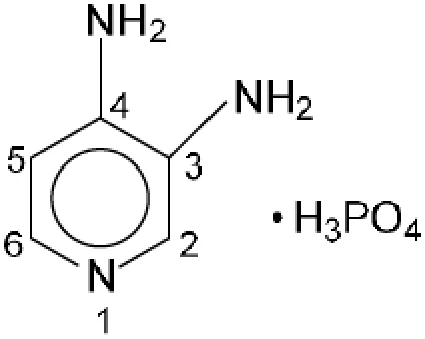
Physicochemical properties: Amifampridine phosphate is a white, crystalline powder that is freely soluble in water, and slightly soluble in solvents ethanol, methanol and acetic acid. A 1% aqueous solution of amifampridine phosphate has a pH of 4.4 at ambient conditions.
14. Clinical Trials
14.1. Clinical Trials by Indication
The efficacy of FIRDAPSE for the treatment of LEMS was demonstrated in two randomized, double-blind, placebo-controlled discontinuation clinical studies. A total of 64 adults (age 21 to 88 years) with LEMS were enrolled in the double-blind phase (Study 1 and Study 2). The studies enrolled patients with a confirmed diagnosis of LEMS, based on either neurophysiology studies or a positive anti-P/Q type voltage-gated calcium channel antibody test. Patients were required to be on an adequate and stable dosage (30 to 80 mg daily) of amifampridine phosphate prior to entering the randomized discontinuation phases of both studies.
The two co-primary efficacy endpoints in both studies were the change from baseline to the end of the discontinuation period in the Quantitative Myasthenia Gravis (QMG) score and in the Subject Global Impression (SGI) score.
The QMG is a 13-item physician-rated categorical scale assessing muscle weakness. Each item is assessed on a 4-point scale, where a score of 0 represents no weakness, and a score of 3 represents severe weakness (total score 0-39). Higher scores represent greater impairment.
The SGI is a 7-point scale on which patients rated their global impression of the effects of the study treatment on their physical well-being. Lower scores on the SGI represent lower perceived benefit with the study treatment.
Table 7 summarizes the patient demographics from the two pivotal trials. In Study 1, patients had a median age of 54 years (range: 21 to 88 years), 61% were female, and 90% were White. Eighty-four percent of patients had a diagnosis of autoimmune LEMS, and 16% of patients had a diagnosis of paraneoplastic LEMS. In Study 2, patients had a median age of 55.5 years (range: 31 to 75 years), 62% were female, and 88% were White. Seventy-seven percent of patients had a diagnosis of autoimmune LEMS, and 23% of patients had a diagnosis of paraneoplastic LEMS.
Table 7 – Summary of Patient Demographics for Clinical Trials in LEMS
| Study # | Study design | Dosage, route of administration and duration | Study subjectsa (n) | Age (range) | Sex | ||||
| 1 | Double-blind, placebo- controlled, randomized discontinuation | 15 to 80 mg per day, oral administration Open label run-in of up to 91 days Double-blind treatment duration of 14 days | 38 | 51.5 years (21-88) | 15 males (39.5%) 23 females (60.5%) | ||||
| 2 | Double-blind, placebo- controlled, randomized discontinuation | 30 to 80 mg per day, oral administration Double-blind treatment duration of 4 days | 26 | 54.2 years (31-75) | 10 males (38.5%) 16 females (61.5%) | ||||
| a Number of subjects entering the double-blind phase of the study. | |||||||||
Study Results
Study 1
After an initial open-label run-in phase, 38 patients were randomized in a double-blind fashion to either continue treatment with FIRDAPSE (n=16) or to a downward titration to placebo (n=22) over 7 days. Following the downward titration period, patients remained on blinded FIRDAPSE® or placebo for 7 more days. Efficacy was assessed at Day 14 of the double-blind period.
Patients were allowed to use stable dosages of peripherally acting cholinesterase inhibitors or oral immunosuppressants. Twenty-six percent of patients randomized to FIRDAPSE were receiving cholinesterase inhibitors, versus 36% in the placebo group, and 28% of patients randomized to FIRDAPSE were receiving oral immunosuppressant therapies, versus 34% in the placebo group.
During the double-blind period (from Baseline to Day 14), the QMG scores tended to worsen in both treatment groups, but there was significantly greater worsening in the placebo group than in the FIRDAPSE group (p=0.045). Similarly, the SGI score tended to worsen in both treatment groups during the double-blind period, but there was significantly greater worsening in the placebo group than in the FIRDAPSE group (p=0.003), as summarized in Table 8. These results indicate that in Study 1, patients randomized to placebo had a significantly greater worsening of muscle weakness and of global impression of the effects of the study treatment on their physical well-being, compared to patients who continued FIRDAPSE in the double-blind period.
Table 8 – Results of Study 1 in LEMS
| Primary Endpoints | FIRDAPSE N = 16a | Placebo N = 21a |
|---|---|---|
| QMG Scoresb | ||
Baseline (Mean) | 6.4 | 5.6 |
Change from Baseline (LS Mean) | 0.4 | 2.2 |
| FIRDAPSE-placebo Treatment Difference (LS Mean (95% CI)) | 1.7 (-3.4, -0.0) | |
| p-valued | 0.045 | |
| SGI Scoresc | ||
| Baseline (Mean) | 5.6 | 5.9 |
| Change from Baseline (LS Mean) | -0.8 | -2.6 |
| FIRDAPSE-placebo Treatment Difference (LS Mean (95% CI)) | 1.8 (0.7, 3.0) | |
| p-valued | 0.003 | |
LS Means = Least Squares Mean
| ||
Study 2
Patients enrolled from an open-label expanded access program on stable treatment with FIRDAPSE were randomized 1:1 in a double-blind fashion to either continue treatment with FIRDAPSE (n=13) or change to placebo (n=13) for 4 days. Efficacy was assessed at the end of the 4-day double-blind discontinuation period. Patients were allowed to use stable doses of peripherally acting cholinesterase inhibitors or corticosteroids. Sixty-one percent of patients randomized to FIRDAPSE were receiving cholinesterase inhibitors, versus 54% of patients randomized to placebo. Corticosteroid use was similar between FIRDAPSE and placebo (8%). Patients with recent use of immunomodulatory therapies (e.g., azathioprine, mycophenolate, cyclosporine), rituximab, intravenous immunoglobulin G, and plasmapheresis were excluded from the study.
From Baseline to Day 4, there was significantly greater worsening in the QMG score in the placebo group than in the FIRDAPSE group (p=0.0004), and also significantly greater worsening in the SGI score in the placebo group than in the FIRDAPSE group (p=0.0003), as summarized in Table 9. These results indicate that in Study 2, patients randomized to placebo had a significantly greater worsening of muscle weakness and of global impression of the effects of the study treatment on their physical well-being, compared to patients who continued FIRDAPSE in the double-blind period.
Table 9 – Results of Study 2 in LEMS
| Primary Endpoints | FIRDAPSE N = 13a | Placebo N = 13a |
|---|---|---|
| QMG Scoresb | ||
Baseline (Mean) | 7.8 | 8.5 |
Change from Baseline (LS Mean) | 0.00 | 6.54 |
| FIRDAPSE-placebo Treatment Difference (LS Mean (95% CI)) | -6.54 (-9.78, -3.29) | |
| p-valued | 0.0004 | |
| SGI Scoresc | ||
Baseline (Mean) | 6.1 | 5.8 |
Change from Baseline (LS Mean) | -0.64 | -3.59 |
| FIRDAPSE-placebo Treatment Difference (LS Mean (95% CI)) | 2.95 (1.53, 4.38) | |
| p-valued | 0.0003 | |
LS Means = Least Squares Mean
| ||
16. Non-Clinical Toxicology
General toxicology
In acute and chronic studies, central and autonomic nervous system toxicities were observed related to the exaggerated pharmacology of amifampridine phosphate. CNS and respiratory clinical signs in both rats and dogs included: tremors, convulsion, non-responsiveness to stimuli, stiffness of limbs, outstretched limbs, hyperesthesia, and/or labored breathing. Mortality was observed at high doses (53 mg/kg in mice, 40 mg/kg in rats and 4 mg/kg in dogs).
In a chronic repeat-dose toxicity study in rats, amifampridine phosphate was administered daily (three times a day) for 26 weeks at dose levels up to 40 mg/kg/day (free base equivalent). At the highest dose, amifampridine treatment was associated with the development of non-specific neurological findings and acinar cell hypertrophy in the submandibular salivary glands. Based on the findings in this study, it was concluded that the NOAEL for amifampridine was 12 mg free base/kg/day which is 50% higher than the maximum recommended human dose (MRHD) of 80 mg/day based on body surface area (mg/m2 basis).
In a chronic repeat-dose toxicity study in dogs, amifampridine phosphate was administered daily (three times a day by oral capsule) for 9 months at amifampridine free base dose levels of 0.5, 1 and 2 mg/kg/day. Dose-dependent clinical observations included sneezing, tremors, seizures, hypersalivation, lip-licking, and squinty eyes, which were found most often for the mid and high dose levels. Three high dose dogs developed signs of seizures or seizure-like activity. There was no mortality or moribundity during the study. There were no amifampridine-related findings for body weight, food consumption, ophthalmic examination, ECG evaluation, or clinical pathology findings. At necropsy, there were no gross abnormal findings considered to be amifampridine-related. For the mid and high dose female groups, salivary gland weights were significantly increased compared to controls, but there were no corresponding histopathologic findings reported. The NOAEL for amifampridine was determined to be 0.5 mg free base/kg/day. All findings related to amifampridine exposure for the 1 and 2 mg free base/kg/day groups resolved during the 4-week recovery period. At the NOAEL dose of 0.5 mg free base/kg/day, Cmax was approximately 75 to 80 ng/mL, and the estimated daily AUC0-24h was approximately 660 to 680 ng·h/mL, which are comparable to exposures in slow acetylators taking the MRHD. Dogs did not show systemic exposure to the 3-N-acetyl metabolite due to the absence of the enzyme N-acetyltransferase in this species.
Low incidences of myodegeneration and myoregeneration in skeletal muscle, tongue, and larynx were observed in a generally dose dependent manner at dose levels of 1, 3, and 4 mg free base/kg/day and minimal myopathy in skeletal muscles seen at 0.5, 1.3, and 3.3 mg free base/kg/day, but also one control animal, in a pair of 4-week studies in dogs. However, similar findings were not observed in the 39-week chronic dog study, or in rats, and thus the relevance of these findings for patients is uncertain.
Genotoxicity
Amifampridine phosphate was negative in the in vitro bacterial reverse mutation (with and without metabolic activation) and in vivo rat micronucleus and unscheduled DNA synthesis assays. Amifampridine phosphate was positive for clastogenicity in the in vitro mouse lymphoma tk assay in the absence of metabolic activation.
Carcinogenicity
In a 104-week rat carcinogenicity study, oral administration of amifampridine phosphate in the diet (8,
25, or 55 mg free base/kg/day) resulted in an increase in uterine tumors (endometrial carcinoma and combined endometrial adenoma/endometrial carcinoma/squamous cell carcinoma) at the mid and high dose levels and a low incidence of mainly malignant schwannomas in males and/or females at all dose levels that was not observed in controls. The low dose, not associated with an increase in uterine tumors, is similar to the MRHD (80 mg/day amifampridine) on a body surface area (mg/m2) basis. The relevance of these increased tumor incidences in rats for patients is unknown.
In a 26-week oral carcinogenicity study in transgenic (Tg.rasH2) mice, resulting doses of 0, 2, 7, or 21 mg/kg/day amifampridine in males and 0, 3, 10, or 30 mg/kg/day amifampridine in females showed no increase in tumors at exposures similar to, or higher than expected in patients at the MRHD (80 mg/day amifampridine).
Reproductive and developmental toxicology
A combination fertility and embryo fetal development study was conducted in rats. Oral administration of amifampridine phosphate (0, 3.9, 12.0, or 39.6 mg free base/kg/day) to male and female rats prior to and during mating, and continuing in females throughout organogenesis to gestation day (GD) 17 had no adverse effects on fertility in either males or females. In this study amifampridine was not teratogenic and had no effect on fetal growth. The NOAEL in this study was approximately 5 times MRHD (80 mg amifampridine) based on a body surface area (mg/m2).
In the rabbit embryo fetal toxicity study, amifampridine phosphate at 4.74, 15.9 or 30 mg free base/kg/day was administrated orally from GD 7-20. Amifampridine at 4.74 mg/kg/day did not cause any maternal toxicity whereas 30 mg/kg/day resulted in severe CNS toxicities and decreased body weight gain and food consumption with moribundity/mortality of five animals. Amifampridine had no effect on embryo fetal development which included evaluations for external, visceral and skeletal anomalies. The NOAEL for maternal toxicity is at 4.74 mg/kg/day and the NOEL for embryo fetal developmental toxicity is 30 mg/kg/day. The 30 mg/kg/day dose is approximately 7 times MRHD based on a body surface area (mg/m2).
Peri and postnatal toxicity was evaluated after oral administration of amifampridine phosphate (0, 3.95, 12.0, or 39.6 mg free base/kg/day) to female rats from GD6 of pregnancy and throughout lactation resulted in an increase in stillbirths and pup deaths, reduced pup weight, and delayed sexual development in female pups at the mid and high doses tested. The no-effect dose (3.95 mg free base/kg/day) for adverse developmental effects is associated is less than that in humans at the MRHD on a body surface area basis.
Juvenile toxicology
A juvenile toxicology study in rats is currently underway.
Special toxicology
Amifampridine’s abuse liability potential was assessed in rats. There were no indications of drug abuse liability in rats where cocaine was reference used for dependence and benzodiazepine for withdrawal. There are no class specific standards for reference.