


Product Monograph - Daybue
Recent Major Label Changes
| N/A |
|---|
Table of Contents
Recent Major Label Changes .................................................................................................. 2
Table of Contents................................................................................................................... 2
Part 1: Healthcare Professional Information........................................................................... 4
- 1.
Indications ...................................................................................................................... 4
1.1 Pediatrics ............................................................................................................ 4
1.2 Geriatrics............................................................................................................. 4
- 2. Contraindications ............................................................................................................ 4
- 4.
Dosage and Administration ............................................................................................. 4
4.1 Dosing Considerations ......................................................................................... 4
4.2 Recommended Dose and Dosage Adjustment....................................................... 5
4.4 Administration..................................................................................................... 6
4.5 Missed Dose............................................................................................................. 6
- 5. Overdose ........................................................................................................................ 6
- 6. Dosage Forms, Strengths, Composition, and Packaging ................................................... 6
- 7.
Warnings and Precautions............................................................................................... 7
Cardiovascular................................................................................................................. 7
Endocrine and Metabolism .............................................................................................. 7
Gastrointestinal ............................................................................................................... 7
7.1 Special Populations .............................................................................................. 8
7.1.1 Pregnant Women ......................................................................................... 8
7.1.2 Breastfeeding............................................................................................... 8
7.1.3 Pediatrics ..................................................................................................... 8
7.1.4 Geriatrics ..................................................................................................... 8
- 8.
Adverse Reactions........................................................................................................... 8
8.1 Adverse Reaction Overview.................................................................................. 8
8.2 Clinical Trial Adverse Reactions ............................................................................ 9
8.2.1 Clinical Trial Adverse Reactions – Pediatrics ................................................ 10
8.3 Less Common Clinical Trial Adverse Reactions .................................................... 10
8.3.1 Less Common Clinical Trial Adverse Reactions – Pediatrics .......................... 10
8.4 Abnormal Laboratory Findings: Hematologic, Clinical Chemistry, and Other Quantitative Data .......................................................................................................... 11
8.5 Post-Market Adverse Reactions.......................................................................... 11
- 9.
Drug Interactions .......................................................................................................... 11
9.2 Drug Interactions Overview................................................................................ 11
9.4 Drug-Drug Interactions ...................................................................................... 11
9.5 Drug-Food Interactions ...................................................................................... 13
9.6 Drug-Herb Interactions ...................................................................................... 13
9.7 Drug-Laboratory Test Interactions ...................................................................... 13
- 10.
Clinical Pharmacology ................................................................................................... 13
10.1 Mechanism of Action ......................................................................................... 13
10.2 Pharmacodynamics............................................................................................ 13
10.3 Pharmacokinetics .............................................................................................. 13
- 11. Storage, Stability, and Disposal ..................................................................................... 15
Part 2: Scientific Information ............................................................................................... 16
- 13. Pharmaceutical Information.......................................................................................... 16
- 14.
Clinical Trials ................................................................................................................. 16
14.1 Clinical Trials by Indication ................................................................................. 16
Treatment of Rett Syndrome in Adults and Pediatric Patients 2 Years of Age and Older and Weighing at Least 9 kg ................................................................................................... 16
- 15. Microbiology................................................................................................................. 18
- 16. Non-Clinical Toxicology ................................................................................................. 18
Patient Medication Information........................................................................................... 20
Part 1: Healthcare Professional Information
1. Indications
DAYBUE (trofinetide oral solution) is indicated for:
- the treatment of Rett syndrome in adults and pediatric patients 2 years of age and older and weighing at least 9 kg.
Limitation of use:
There are limited data on DAYBUE for patients over 20 or under 5 years of age, male patients with Rett syndrome, individuals without a MECP2 mutation, or those who are diagnosed with atypical/variant Rett syndrome. Individuals with Rett syndrome with underlying QTc > 450 ms were excluded from clinical studies of DAYBUE (see 14 Clinical Trials ).
1.1 Pediatrics
Pediatrics (< 2 years of age or < 9 kg): No data are available to Health Canada in pediatric patients < 2 years of age or weighing < 9 kg; therefore, Health Canada has not authorized an indication for pediatric use in patients < 2 years of age or < 9 kg (see 7.1.3 Pediatrics).
1.2 Geriatrics
Clinical studies of DAYBUE did not include patients 65 years of age and older to determine whether or not they respond differently from younger patients. Assess renal function in geriatric patients prior to treating with DAYBUE to determine appropriate dosing (see 4.1Dosing Considerations).
2. Contraindications
DAYBUE is contraindicated in patients who are hypersensitive to this drug or to any ingredient in the formulation, including any non-medicinal ingredient, or component of the container. For a complete listing, see 6 Dosage Forms, Strengths, Composition, and Packaging.
4. Dosage and Administration
4.1 Dosing Considerations
- Advise patients to stop laxatives before starting DAYBUE.
- To increase tolerability, dose titration is advised to the recommended dose (see 4.2 Recommended Dose and Dosage Adjustment).
- Interrupt, reduce the dose, or discontinue DAYBUE if severe diarrhea occurs, if dehydration is suspected, if vomiting is severe or occurs despite medical management, or if significant weight loss occurs (see 7 Warnings and Precautions).
- If no improvement in any Rett syndrome signs and symptoms after 12 months, DAYBUE should be discontinued.
- Assess renal function in geriatric patients prior to treating with DAYBUE to determine appropriate dosing (see 4.2 Recommended Dose and Dosage Adjustment).
- A calibrated measuring device, such as an oral syringe or oral dosing cup, should be obtained from the pharmacy to measure and deliver the prescribed dose accurately. A household measuring cup is not an adequate measuring device.
4.2 Recommended Dose and Dosage Adjustment
Administer DAYBUE twice daily, in the morning and evening, according to patient weight as shown in Table 1.
Table 1 Recommended Dosage of DAYBUE in Patients 2 Years of Age and Older
| Patient Weight | DAYBUE Dosage | DAYBUE Volume |
| 9 kg to less than 12 kg | 4 g twice daily | 20 mL twice daily |
| 12 kg to less than 20 kg | 6 g twice daily | 30 mL twice daily |
| 20 kg to less than 35 kg | 8 g twice daily | 40 mL twice daily |
| 35 kg to less than 50 kg | 10 g twice daily | 50 mL twice daily |
| 50 kg or more | 12 g twice daily | 60 mL twice daily |
Recommended Titration Dosing Schedule of DAYBUE
- Start with 50% of the recommended dose (see Table 1 or Table 2) taken twice daily.
- Increase the dose over 4 to 8 weeks until the recommended dose is reached.
A longer titration period may be required if patients are experiencing side effects and/or are not able to tolerate DAYBUE (See 7 Warnings and Precautions).
Hepatic Impairment
No dosage adjustment is required in patients with hepatic impairment.
Renal Impairment
No dosage adjustment is required in patients with mild renal impairment with an estimated glomerular filtration rate (eGFR) of 70 to 89 mL/min/1.73 m2. However, as the degree of renal impairment increases so does trofinetide exposure. Consider a 20% to 30% dose reduction for those with a high degree of mild renal impairment with eGFR 60 to 70 mL/min/1.73 m2.
The recommended dose of DAYBUE for patients with moderate renal impairment (eGFR 30 to 59 mL/min/1.73 m2) is described in Table 2.
Table 2 Recommended Dosage of DAYBUE in Patients with Moderate Renal Impairment
| Patient Weight | DAYBUE Dosage | DAYBUE Volume |
| 9 kg to less than 12 kg | 2 g twice daily | 10 mL twice daily |
| 12 kg to less than 20 kg | 3 g twice daily | 15 mL twice daily |
| 20 kg to less than 35 kg | 4 g twice daily | 20 mL twice daily |
| 35 kg to less than 50 kg | 5 g twice daily | 25 mL twice daily |
| 50 kg or more | 6 g twice daily | 30 mL twice daily |
Consider a 20% to 30% further dose reduction for those with a high degree of moderate renal impairment.
DAYBUE is not recommended in patients with severe renal impairment (eGFR 15 to 29 mL/min/1.73 m2) or with end stage renal disease (see 10.3 Pharmacokinetics).
Dose Reduction and Discontinuation
- If a patient continues to experience intolerable adverse reactions despite medical management (i.e. persistent diarrhea or vomiting), temporarily interrupt or reduce dose to 50% of recommended dose.
- Once adverse reaction improves, increase dose as tolerated with a goal of reaching the recommended dose.
- If a patient is unable to tolerate the recommended dose of DAYBUE on an ongoing basis, drug discontinuation is suggested.
4.4 Administration
Administer DAYBUE orally or via gastrostomy (G) tube; doses administered via gastrojejunal (GJ) tubes must be administered through the G-port.
DAYBUE can be taken with or without food.
Discard any unused DAYBUE oral solution after 14 days of first opening the bottle (see 11 Storage, Stability, and Disposal).
4.5 Missed Dose
A missed dose should be taken as soon as possible. If it is almost time for the next dose, the missed dose should not be taken. Instead, the next scheduled dose should be taken. Doses should not be combined or doubled.
If vomiting occurs after DAYBUE administration, an additional dose should not be taken. Instead, continue with the next scheduled dose. Interrupt, reduce dose, or discontinue DAYBUE if vomiting is severe or occurs despite medical management.
5. Overdose
There is no recommended course of action for an overdose. If an overdose occurs or is suspected, the subject should be monitored closely.
For the most recent information in the management of a suspected drug overdose, contact your regional poison control centre or Health Canada’s toll-free number, 1-844 POISON-X (1-844-764-7669).
- 6. Dosage Forms, Strengths, Composition, and Packaging
Table 3 Dosage Forms, Strengths, and Composition
| Route of Administration | Dosage Form / Strength / Composition | Non-medicinal Ingredients |
| Oral or gastrostomy tube | Solution/200 mg/mL, 450 mL | FD&C Red #40, maltitol, methylparaben sodium, propylparaben sodium, purified water, strawberry flavour, and sucralose. |
Description
DAYBUE oral solution is a pink to red, strawberry flavoured solution supplied in a 500 mL round HDPE multi-dose bottle with a child-resistant closure.
7. Warnings and Precautions
Cardiovascular
QT prolongation
Patients with Rett syndrome are at increased risk of QT prolongation. A dedicated QT study using single doses of either 12, 18, or 24 g trofinetide in healthy adults did not provide evidence of QT prolongation. In the clinical trials, patients with Rett syndrome with baseline QTc prolongation (QTc > 450 ms) were excluded. Some patients in the trofinetide studies experienced QT prolongation while on trofinetide; however, causality was unknown. Consider more frequent electrocardiogram monitoring in patients with Rett syndrome (see 7 Warnings and Precautions, Monitoring and Laboratory Tests).
Endocrine and Metabolism
Weight Loss
In Study 1, 12% of patients treated with DAYBUE experienced weight loss of greater than 7% from baseline, compared to 4% of patients who received placebo (see 14 Clinical Trials). In long-term studies, 2.2% of patients discontinued treatment with DAYBUE due to weight loss.
Monitor weight and interrupt, reduce dose, or discontinue DAYBUE if significant weight loss occurs (see 4.1 Dosing Considerations).
Gastrointestinal
Diarrhea
In Study 1 and in long-term studies, 85% of patients treated with DAYBUE experienced diarrhea. In those treated with DAYBUE, 49% either had persistent diarrhea or recurrence after resolution despite dose interruptions, reductions, or concomitant antidiarrheal therapy. Diarrhea severity was of mild or moderate severity in 96% of cases. In Study 1 and in long-term studies, antidiarrheal therapy was used by 70.8% of patients (59% with anti-propulsive loperamide, a CYP3A4 and P-gp substrate (see 9.4 Drug-Drug Interactions, Table 7)) over the course of these studies.
Advise patients to stop laxatives before starting DAYBUE. If diarrhea occurs, patients should notify their healthcare professional, consider starting antidiarrheal treatment, and monitor hydration status and increase oral fluids, if needed. Interrupt, reduce dose, or discontinue DAYBUE if severe diarrhea occurs or if dehydration is suspected (see 4.1 Dosing Considerations).
Vomiting
In Study 1, vomiting occurred in 27% of patients treated with DAYBUE and 10% of patients who received placebo.
Patients with Rett syndrome are at risk for aspiration and aspiration pneumonia. Aspiration and aspiration pneumonia have been reported following vomiting in patients being treated with DAYBUE. Interrupt, reduce dose, or discontinue DAYBUE if vomiting is severe or occurs despite medical management (see 4.1 Dosing Considerations).
Monitoring and Laboratory Tests:
All patients should have baseline testing for serum potassium, calcium and magnesium levels as hypokalemia, hypocalcemia and hypomagnesemia are established risk factors for torsades de pointes in patients with underlying QTc prolongation. If a patient develops the adverse event of diarrhea, electrolyte abnormalities are more likely, thus more frequent monitoring of electrolytes is recommended. Any abnormalities should be promptly corrected. Additional ECG monitoring may also be considered in these patients.
7.1 Special Populations
7.1.1 Pregnant Women
There are no adequate data on the developmental risks associated with the use of DAYBUE in pregnant women. No adverse developmental effects were observed following oral administration of trofinetide to pregnant rats at doses associated with plasma exposures below those used clinically. However, maternal toxicity was observed in pregnant rabbits treated with 300 or 600 mg/kg/day. Occurrences of abortions (i.e. early and late resorptions, dead conceptuses) were reported in females administered with 600 mg/kg/day. Furthermore, severely reduced body weight gains in females treated with 300 or 600 mg/kg/day were reported (see 16 Non-Clinical Toxicology).
7.1.2 Breastfeeding
It is unknown if trofinetide is excreted in human milk. Precaution should be exercised because many drugs can be excreted in human milk.
7.1.3 Pediatrics
Safety and effectiveness in pediatric patients less than 2 years of age have not been established.
See 8.2 Clinical Trial Adverse Reactions for adverse reactions in pediatric patients with Rett syndrome 5 to 20 years of age treated with DAYBUE. See 8.2.1 Clinical Trial Adverse Reactions – Pediatrics for adverse reactions in pediatric patients 2 to 4 years of age treated with DAYBUE.
7.1.4 Geriatrics
Clinical studies of DAYBUE did not include patients 65 years of age and older. Therefore, it is unknown whether or not they respond differently from patients less than 65 years of age. Renal function should be checked to aid in dosing in geriatric patients (see 4.1 Dosing Considerations).
8. Adverse Reactions
8.1 Adverse Reaction Overview
The most common adverse reactions (that occurred in at least 5% of DAYBUE-treated patients and greater than in placebo) were diarrhea (81%) and vomiting (27%) (see Table 4). In Study 1 and in long-term studies, 49% of patients treated with DAYBUE either had persistent diarrhea or recurrence after resolution despite dose interruptions, reductions, or concomitant antidiarrheal therapy.
In Study 1, 35.5% of DAYBUE-treated patients required a dose modification due to adverse events compared to 5.3% of placebo-treated patients. In long-term studies, 43.5% of DAYBUE-treated patients required dose modifications secondary to adverse events.
In Study 1, adverse events led to discontinuation of study medication in 17.2% of DAYBUE-treated patients compared to 2.1% of placebo-treated patients. In long-term studies, 39.0% of DAYBUE-treated patients discontinued treatment secondary to adverse events. The most common adverse events leading to discontinuation of treatment with DAYBUE in these studies were diarrhea (24.2%) and vomiting (6.7%).
In Study 1 and long-term studies, 11.8% of DAYBUE-treated patients experienced serious adverse events including seizure (3.4%), vomiting (1.1%), pneumonia (1.1%), urinary tract infection (1.1%), aspiration (1.1%), and acute respiratory failure (1.1%).
8.2 Clinical Trial Adverse Reactions
Clinical trials are conducted under very specific conditions. Therefore, the frequencies of adverse reactions observed in the clinical trials may not reflect frequencies observed in clinical practice and should not be compared to frequencies reported in clinical trials of another drug. Adverse reaction information from clinical trials may be useful in identifying and approximating rates of adverse drug reactions in real-world use.
In controlled and uncontrolled trials in patients with Rett syndrome, 260 patients between the ages of 2 and 40 years were treated with DAYBUE, including 112 patients treated for more than 6 months, 92 patients treated for more than 1 year, and 44 patients treated for more than 2 years and 16 patients treated for more than 2.5 years.
Adult and Pediatric Patients With Rett Syndrome 5 Years of Age and Older
The safety of DAYBUE was evaluated in a randomized, double-blind, placebo-controlled, 12-week study of patients with Rett syndrome (Study 1) (see 14 Clinical Trials). In Study 1, 93 patients received DAYBUE and 94 patients received placebo. All patients were female, 92% were White, and the mean age was 11 years (range 5 to 20 years).
Common Adverse Reactions
Adverse reactions that occurred in at least 5% of patients treated with DAYBUE and greater than placebo are presented in Table 4.
Table 4 Adverse Reactions in at Least 5% of Patients Treated with DAYBUE and Greater than Placebo in Study 1
| System Organ Class/Preferred Term | DAYBUE (N=93) n (%) | Placebo (N=94) n (%) |
Gastrointestinal Disorders Diarrhea Vomiting | 75 (81) 25 (27) | 18 (19) 9 (10) |
General Disorders and Administration Site Conditions Pyrexia Fatiguea | 8 (9) 6 (6) | 4 (4) 2 (2) |
Metabolism and Nutrition Disorders Decreased appetite Weight loss ≥ 7% from baseline | 5 (5) 11 (12) | 2 (2) 4 (4) |
Nervous System Disorders Seizure | 8 (9) | 5 (5) |
Psychiatric Disorders Irritability | 6 (7) | 0 (0) |
a Includes lethargy and somnolence
Vomiting, Diarrhea, and Weight Decreased
Higher trofinetide exposure was associated with a higher probability for diarrhea, vomiting and weight decreased adverse reactions (see 7 Warnings and Precautions).
Long-term safety of DAYBUE was evaluated in open-label safety extension studies with up to 144 additional weeks of treatment in 154 patients. The adverse reactions reported in the long-term open-label safety extension studies were similar to those reported in Study 1.
8.2.1 Clinical Trial Adverse Reactions – Pediatrics
Pediatric Patients with Rett Syndrome 2 to 4 Years of Age
In an open-label study in pediatric patients 2 to 4 years of age with Rett syndrome, a total of 15 patients received DAYBUE for at least 12 weeks and 9 patients received DAYBUE for at least 6 months. Adverse reactions in pediatric patients 2 to 4 years of age treated with DAYBUE were similar to those reported in adult and pediatric patients 5 years of age and older with Rett syndrome in Study 1.
8.3 Less Common Clinical Trial Adverse Reactions
Adverse reactions that occurred with an incidence of less than 5% in Study 1 and long-term studies are listed below:
Cardiac disorders: cardiac arrest
Gastrointestinal Disorders: retching, gastroesophageal reflux disease, abdominal discomfort, faecaloma, faeces soft, frequent bowel movements, nausea, salivary hypersecretion
General disorders and administration site conditions: screaming, sudden unexplained death in epilepsy
Infections and Infestations: pharyngitis streptococcal, urinary tract infection, bacteraemia, pneumonia
Injury, Poisoning and Procedural Complications: fall
Investigations: alanine aminotransferase increased, carbon dioxide decreased, gamma-glutamyl transferase increased, aspartate aminotransferase increased, blood alkaline phosphatase increased, troponin increased, thyroid stimulation hormone abnormal, basophil count increased, eosinophil count increased, monocyte count increased, platelet count decreased, electrocardiogram QT prolonged
Metabolism and Nutrition Disorders: dehydration, feeding disorder, vitamin D decreased, hyper/hyponatremia, hypokalemia, hypoglycemia, hypocalcemia hypophosphatemia, metabolic acidosis
Psychiatric Disorders: bruxism, agitation, breath holding, listless, stereotypy
Respiratory, Thoracic and Mediastinal Disorders: pneumonia aspiration
Skin and Subcutaneous Tissue Disorders: dermatitis diaper
8.3.1 Less Common Clinical Trial Adverse Reactions – Pediatrics
See 8.2 Clinical Trial Adverse Reactions.
8.4 Abnormal Laboratory Findings: Hematologic, Clinical Chemistry, and Other Quantitative Data
Abnormal Clinical Chemistry Findings
Table 5 Significant Changes in Chemistry
DAYBUE (N=93) n (%) | Placebo (N=94) n (%) | |
|---|---|---|
| Increased alanine aminotransferase (U/L) | 2 (2) | 0 (0) |
| Increased gamma-glutamyl transferase (U/L) | 1 (1) | 0 (0) |
| Increased Glucose (mmol/L) | 1 (1) | 0 (0) |
Abnormal Hematologic Findings
Table 6 Significant Changes in Hematology
DAYBUE (N=93) n (%) | Placebo (N=94) n (%) | |
|---|---|---|
| Increased Leukocytes (109/L) | 1 (1) | 0 (0) |
| Increased Platelets (109/L) | 1 (1) | 0 (0) |
8.5 Post-Market Adverse Reactions
Aspiration and aspiration pneumonia secondary to vomiting (see 7 Warnings and Precautions).
9. Drug Interactions
9.2 Drug Interactions Overview
Trofinetide is a weak inhibitor of CYP3A4 and P-gp. In vitro, trofinetide inhibits UGT enzymes, UGT1A9, 2B7, and 2B15. It also inhibits OATP1B1 and OATP1B3.
Trofinetide is not a substrate of CYP450 enzymes, uridine diphosphate glucuronosyltransferase (UGT), or major drug transporters. No inhibition of CYP450 enzymes, CYP1A2, 2C8, 2B6, 2C9, 2C19, and 2D6, is expected at therapeutic concentrations.
At therapeutic systemic concentrations, no inhibition was observed on P-gp, BCRP, BSEP, OAT1, OAT3, OCT2, MATE1 and MATE2-K, based on the in vitro assays.
9.4 Drug-Drug Interactions
Information listed in Table 7 is based on either drug interaction studies, or potential interactions based on physiologically based pharmacokinetic modeling.
Table 7 Established or Potential Drug-Drug Interactions
| Non-proprietary name of the drug product | Source of Evidence | Effect | Clinical comment |
|---|---|---|---|
| CYP3A4 and/or P-gp substrate | CT PBPK (CYP3A4) | Trofinetide is a weak inhibitor of CYP3A4 and P-gp. | Closely monitor when DAYBUE is used in combination with orally administered CYP3A4 and P-gp substrates particularly for which a small change in substrate plasma concentration may lead to serious adverse reactions. |
| Loperamide | CT | Concomitant administration of loperamide (4 mg single dose), a CYP3A4 and P-gp substrate, and trofinetide (12 g twice daily), in healthy subjects, led to an increase in loperamide Cmax by 1.95-fold. Similarly, the AUC0-t and AUC0-∞ were increased by 1.8- and 1.7-fold, respectively. Delaying administration of loperamide until 2 hours after trofinetide led to an increase in loperamide Cmax by 1.4-fold. Similarly, the AUC AUC0-t and AUC0-∞ were increased by 1.3- and 1.2-fold, respectively. | No dose adjustment is required. The increase in loperamide exposure when it is concomitantly administered with trofinetide may increase the risk of adverse reactions associated with loperamide. Delaying loperamide administration may help mitigate some of the associated risks. |
| OATP1B1 and OATP1B3 substrates | T | Increase in plasma concentrations of OATP1B1 and OATP1B3 substrates is predicted. | Avoid the concomitant use of DAYBUE with OATP1B1 and OATP1B3 substrates for which a small change in substrate plasma concentration may lead to serious adverse reactions. |
CT = Clinical Trial; T = Theoretical (non-clinical); PBPK = Physiologically based pharmacokinetic modeling
9.5 Drug-Food Interactions
Administration of DAYBUE following a high-fat, high-calorie meal decreased peak plasma concentration (Cmax) by approximately 20%, relative to fasted conditions (see 10.3 Pharmacokinetics).
DAYBUE may be taken with or without food.
9.6 Drug-Herb Interactions
Interactions with herbal products have not been established.
9.7 Drug-Laboratory Test Interactions
Interactions with laboratory tests have not been established.
10. Clinical Pharmacology
10.1 Mechanism of Action
Trofinetide is a synthetic analog of the N-terminal tripeptide of insulin-like growth factor 1. The mechanism by which trofinetide exerts therapeutic effects in patients with Rett syndrome is unknown.
10.2 Pharmacodynamics
Cardiac Electrophysiology
At the maximum recommended dose in healthy adult subjects, trofinetide does not prolong the QT interval to any clinically relevant extent.
10.3 Pharmacokinetics
Trofinetide exhibits linear kinetics with no time- or dose-dependent effect on pharmacokinetic parameters. Systemic exposure to trofinetide was dose-proportional across the studied dose range. Minimal to no accumulation was observed following multiple-dose administration.
Table 8 Summary of DAYBUE Steady State Pharmacokinetic Parameters in Rett Syndrome Population by Dosage
| Recommended dosagea | Cmax | Tmax | t½ (h) | AUCτ | CL | Vd |
4 g twice daily (N=3) | 162.5 | 1.71 | 1.10 | 886.6 | 4.23 | 71.3 |
6 g twice daily (N=33) | 165.5 | 1.93 | 1.35 | 975.5 | 5.50 | 76.7 |
8 g twice daily (N=41) | 158.8 | 1.98 | 1.36 | 937.1 | 7.42 | 78.3 |
10 g twice daily (N=21) | 147.4 | 2.17 | 1.64 | 936.5 | 9.02 | 83.9 |
12 g twice daily (N=7) | 144.1 | 2.00 | 1.32 | 845.6 | 11.7 | 85.3 |
a Recommended dosage: twice daily, morning and evening, according to patient weight.
Absorption
The time to maximum drug concentration (Tmax) is about 2 to 3 hours after administration. Based on the mass balance study, at least 84% of the administered dose was absorbed following oral administration of 12 g trofinetide.
Effect of Food
Coadministration of DAYBUE with a high-fat, high-calorie meal (approximately 800 to 1000 calories and 50% fat) had no impact on the total exposure (AUCT) of trofinetide and reduced the peak plasma concentration (Cmax) by approximately 20% when compared to administration under fasting conditions.
Distribution
Following oral administration, the apparent volume of distribution of trofinetide in adult healthy subjects was approximately 80 L. Trofinetide protein binding in human plasma is less than 6%.
Metabolism
Trofinetide is not significantly metabolized by CYP450 enzymes. Hepatic metabolism is not a significant route of trofinetide elimination.
Elimination
Trofinetide is primarily excreted unchanged (approximately 80% of the dose) in urine, with minor excretion in feces.
The effective elimination half-life of orally administered trofinetide in healthy subjects is about 1.5 hours.
Special populations and conditions
- Pediatrics: The drug exposure of trofinetide in pediatric patients 2 to 4 years of age is similar to children older than 4 years and adults when following the recommended dosage.
- Hepatic Insufficiency: The pharmacokinetics in patients with hepatic impairment have not been studied. However, hepatic impairment is not expected to impact the exposure of trofinetide because hepatic metabolism is not a significant route of trofinetide elimination.
Renal Insufficiency: The effect of moderate renal impairment on the pharmacokinetics of trofinetide was studied in an open-label phase I study, where a single dose of trofinetide 6 g was administered to subjects with moderate renal impairment (eGFR 30 to 59 mL/min/1.73 m2) and compared to healthy subjects receiving a single 12 g dose of trofinetide. Dose-normalized systemic exposure to trofinetide was approximately 2-fold higher in subjects with moderate renal impairment compared to healthy subjects. Time to and rate of maximum elimination of trofinetide in urine was slower and lower in subjects with moderate renal impairment compared to healthy subjects. The pharmacokinetic analysis supports these findings as it indicated exposure of trofinetide in patients with moderate renal impairment (eGFR 30 to 59 mL/min/1.73 m2) was 1.80-fold higher compared to subjects with normal renal function. Results of the pharmacokinetic analysis also indicated that median exposure of trofinetide in patients with mild renal impairment with an eGFR of 60 to 89 mL/min/1.73 m2 exposure was up to 1.25-fold higher compared to subjects with normal renal function.
Based on the results from the Phase I and pharmacokinetic analysis, a 50% reduction in trofinetide dosage is recommended in patients with moderate renal impairment. Trofinetide is not recommended in patients with severe renal impairment or end stage renal disease. (see 4.2 Recommended Dose and Dosage Adjustment).
- Storage, Stability, and Disposal
Store DAYBUE in an upright position refrigerated at 2°C to 8°C. Do not freeze.
Keep the child-resistant cap tightly closed.
Discard any unused DAYBUE oral solution after 14 days of first opening the bottle.
Part 2: Scientific Information
13. Pharmaceutical Information
Drug Substance
Non-proprietary name of the drug substance(s): Trofinetide
Chemical name: (2S)-2-{[(2S)-1-(2-aminoacetyl)-2-methylpyrrolidine-2-carbonyl]amino}pentanedioic acid
Molecular formula: C13H21N3O6 (dry basis)
Molecular mass: 315.33 g/mol (dry basis)
Structural formula:
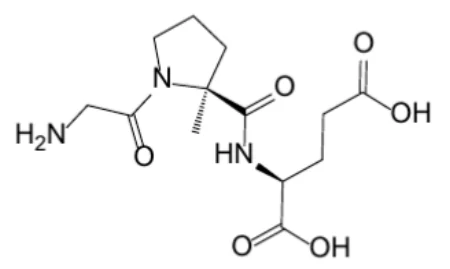
Physicochemical properties: Trofinetide is a white to off-white solid and is freely soluble in water. Trofinetide drug substances is either amorphous or a crystalline hydrate (with 2-3 moles of water per mole of trofinetide).
14. Clinical Trials
14.1 Clinical Trials by Indication
Treatment of Rett Syndrome in Adults and Pediatric Patients 2 Years of Age and Older and Weighing at Least 9 kg
Table 9 Summary of Patient Demographics for Clinical Trials in Rett Syndrome
| Study # | Study Design | Dosage, Route of Administration and Duration | Study Subjects (n) | Mean Age (Range) | Sex |
| Study 1 (ACP-2566-003) | Randomized, double-blind, placebo-controlled, parallel-group | Dosing was based on body weight at baseline (provided as 500 mL [200mg/mL trofinetide] either orally or by G-tube for 12 weeks. | 187 | 10.9 (5-20) | F |
Demographic characteristics were generally well balanced between the two treatment groups. Subjects were predominantly White (91.8%), not Hispanic or Latino (91.3%), and all subjects were female, per protocol. The overall mean age was 10.9 years (range 5 to 20 years). About half of the subjects (58.2%)
were in the age category of 5 to < 12 years, with 29.9% in the 12 to < 18 years old category and 12% in the ≥ 18 years old category. Mean body weight was 29.9 kg (13 kg – 78 kg).
The efficacy of DAYBUE for the treatment of Rett syndrome was established in a 12-week randomized, double-blind, placebo-controlled study in patients with Rett syndrome 5 to 20 years of age (Study 1).
Patients (N=187) had a diagnosis of typical Rett syndrome according to the Rett Syndrome Diagnostic Criteria with a documented disease-causing mutation in the MECP2 gene. Patients were randomized to receive DAYBUE (N=93) or matching placebo (N=94) for 12 weeks. The DAYBUE dosage was based on patient weight to achieve similar exposure in all patients (see Dosage and Administration).
The co-primary efficacy measures were change from baseline after 12 weeks of treatment in the total score of the Rett Syndrome Behaviour Questionnaire (RSBQ) and the Clinical Global Impression-Improvement (CGI-I) score. The RSBQ is a 45-item rating scale completed by the caregiver that assesses a range of symptoms of Rett syndrome (breathing, hand movements or stereotypies, repetitive behaviors, night-time behaviors, vocalizations, facial expressions, eye gaze, and mood). Each item is scored as 0 (not true), 1 (somewhat or sometimes true), or 2 (very true or often true), with a maximum possible score of 90 points. Lower scores reflect lesser severity in signs and symptoms of Rett syndrome. The items of the RSBQ total score are grouped into 8 subscales for General Mood, Breathing Problems, Hand Behaviors, Repetitive Face Movements, Body Rocking/ Expressionless Face, Night-Time Behaviors, Fear/Anxiety, Walking/Standing, and seven ungrouped items. The CGI-I is rated by clinicians (using Rett syndrome-specific anchors) to assess whether a patient has globally improved or worsened on a 7-point scale (1=very much improved to 7=very much worse) in which a decrease in score indicates improvement.
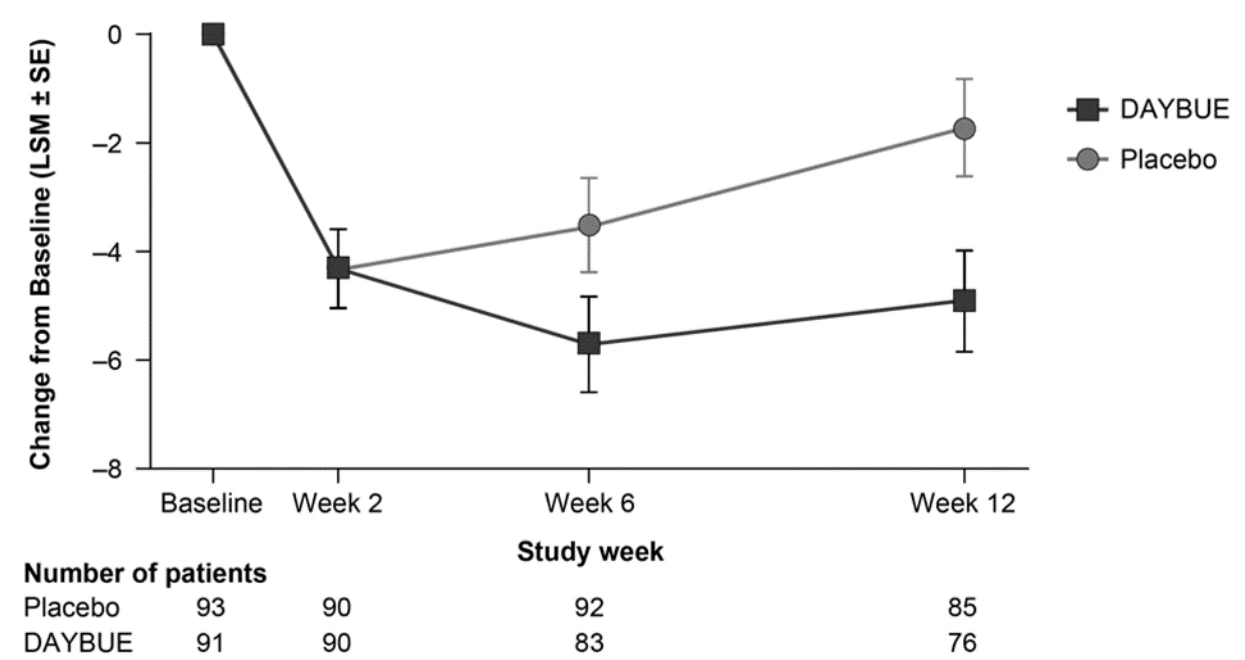
Treatment with DAYBUE demonstrated a statistically significant improvement in signs and symptoms of Rett syndrome compared to placebo on the co-primary efficacy endpoints, the change from baseline in RSBQ total score, and the CGI-I score at week 12 (Table 10 and b Statistically significant under multiplicity control for DAYBUE vs Placebo comparison (p < 0.05)
Figure 1).
Table 10 Results of Study 1 in the Treatment of Rett Syndrome in Adult and Pediatric Patients 2 Years of Age and Older and > 9 kg
| Co-primary Efficacy Endpoints | DAYBUE (N=93) | Placebo(N=94) |
|---|---|---|
| Change from baseline in RSBQ total score at week 12 | ||
| Mean Baseline Score (SD) | 43.7 (1.21) | 44.5 (1.26) |
Change from Baseline to Week 12 Mean week 12 score (SE) LS Mean Change from Baseline to Week 12 (SE) DAYBUE-Placebo Treatment Difference, LS Mean (95% CI)a p-valueb | 39.9 (1.38) -4.9 (0.94) -3.2 (-5.7, -0.6) 0.018 | 42.8 (1.42) -1.7 (0.90) -- |
| Change in the CGI-I score | ||
Change at Week 12 Mean week 12 score (SE) DAYBUE-Placebo Treatment Difference, LS Mean (95% CI)a p-valueb | 3.5 (0.08) -0.3 (-0.5, -0.1) 0.003 | 3.8 (0.06) -- |
CI = confidence interval; LS Mean = least-squares mean; SE = standard error
a Difference in LS mean from the mixed-effect model for repeated measure analysis
b Statistically significant under multiplicity control for DAYBUE vs Placebo comparison (p < 0.05)
Figure 1 Change from Baseline in RSBQ Total Score in Study 1
Patients that continued their DAYBUE treatment in an open-label extension study of up to 40 weeks had generally consistent continued reduction of their symptoms (as measured by mean RSBQ and CGI-I scores) for the duration of their DAYBUE open-label treatment as was observed in Study 1. Use of DAYBUE for up to an additional 32 months was associated with stabilization in RSBQ and CGI-I scores.
Use of DAYBUE in patients 2 to 4 years of age is supported by evidence from Study 1 and pharmacokinetic and safety data in 15 pediatric patients 2 to 4 years of age treated with DAYBUE.
15. Microbiology
No microbiological information is required for this drug product.
16. Non-Clinical Toxicology
General Toxicology: In dogs, trofinetide orally administered for up to 39 weeks at doses of 50, 300, and 1000 mg/kg/day was not associated with adverse antemortem or postmortem findings. An increased incidence and frequency of fecal excretion findings (unformed stool, watery and/or mucoid diarrhea) was observed at 1000 mg/kg/day only; however, were not considered adverse as there was no impact on animal health, behavior, or viability, and all stool effects resolved when dosing stopped. The No Observable Adverse Effect Level (NOAEL) was conservatively established at 300 mg/kg/day based on a difference in uterine weights, likely attributable to biologic variability of estrous cycling, but not considered adverse. At the highest dose of 1000 mg/kg/day, the plasma exposure achieved was less than that in humans at the Maximum Recommended Human Dose (MRHD). In rats, doses up to 2100 mg/kg/day resulted in no adverse effects; plasma exposure was approximately half of that in humans at the MRHD.
Genotoxicity: Trofinetide was negative in in vitro (bacterial reverse mutation, chromosomal aberration in Chinese hamster ovary cells) and in vivo (mouse micronucleus) assays.
Carcinogenicity: Studies to evaluate the carcinogenic potential of trofinetide have not been conducted.
Reproductive and Developmental Toxicology:
No adverse effects on fertility or reproductive function were observed following the oral administration of trofinetide (0, 300, 900, or 2000 mg/kg/day) to male and female rats prior to and throughout mating and continuing in females through gestation day (GD) 7. There was no impact on embryofetal development in pregnant rats with similar doses from GD7 to lactation day 20. At the highest dose tested (2000 mg/kg/day), the plasma exposure (AUC) was similar to that in humans at the MRHD.
In pregnant rabbits, treated with 0, 150, 300, or 600 mg/kg/day during the period of organogenesis, no adverse effects were observed on embryofetal development but maternal toxicity was reported at doses ≥ 300 mg/kg/day with occurrences of abortions and severely reduced maternal body weight gains. Therefore, while the NOAEL for developmental toxicity was the highest dose of 600 mg/kg/day, the maternal NOAEL was determined to be 150 mg/kg/day, at which the plasma exposure was much less than that in humans at the MRHD.
Rats treated with up to 2000 mg/kg/day throughout pregnancy and lactation did not show adverse effects on pre- and postnatal development. At the highest dose tested, the plasma exposure (AUC) was similar to that in humans at the MRHD.
Juvenile Toxicity: No adverse effects on growth or neurobehavioral function were observed following the oral administration of trofinetide (0, 300, 600, or 2000 mg/kg/day) to juvenile rats from 2 to 28 weeks of age. Test article-related clinical signs consisted of soft feces, increased weight gain and food consumption. Plasma exposures at the highest dose tested were similar to those in humans at the MRHD. When these juvenile rats (PND 13-14) were assessed for sexual maturation or reproductive function after 10 weeks, no adverse effects were observed.