


Product Monograph - Amvuttra
Recent Major Label Changes
| 2025-12 |
|---|---|
| 2025-12 |
Table of Contents
Certain sections or subsections that are not applicable at the time of the preparation of the most recent authorized product monograph are not listed
Table of Contents ................................................................................................................... 2
Part 1: Healthcare Professional Information ........................................................................... 4
1 Indications .................................................................................................................. 4
1.1 Pediatrics .............................................................................................................. 4
1.2 Geriatrics .............................................................................................................. 4
2 Contraindications ........................................................................................................ 4
4 Dosage and Administration ......................................................................................... 4
4.1 Dosing Considerations .......................................................................................... 4
4.2 Recommended Dose and Dosage Adjustment ..................................................... 5
4.4 Administration ...................................................................................................... 5
4.5 Missed Dose ......................................................................................................... 7
5 Overdose..................................................................................................................... 7
6 Dosage Forms, Strengths, Composition and Packaging ................................................ 8
7 Warnings and Precautions ........................................................................................... 8
General ............................................................................................................................. 8
Driving and Operating Machinery .................................................................................... 8
Monitoring and Laboratory Tests ..................................................................................... 8
Ophthalmologic ................................................................................................................ 9
Reproductive Health ........................................................................................................ 9
7.1 Special Populations ............................................................................................... 9
7.4.1 Pregnancy ......................................................................................................... 9
7.4.2 Breastfeeding ................................................................................................. 10
7.4.3 Pediatrics ........................................................................................................ 10
7.4.4 Geriatrics ........................................................................................................ 10
8 Adverse Reactions ..................................................................................................... 10
8.1 Adverse Reaction Overview ................................................................................ 10
8.2 Clinical Trial Adverse Reactions .......................................................................... 10
8.3 Less Common Clinical Trial Adverse Reactions ................................................... 11
9 Drug Interactions ...................................................................................................... 12
9.2 Drug Interactions Overview ................................................................................ 12
9.3 Drug-Behavioural Interactions ............................................................................ 12
9.4 Drug-Drug Interactions ....................................................................................... 12
9.5 Drug-Food Interactions ....................................................................................... 12
9.6 Drug-Herb Interactions ....................................................................................... 12
9.7 Drug-Laboratory Test Interactions ...................................................................... 12
10 Clinical Pharmacology ............................................................................................... 13
10.1 Mechanism of Action .......................................................................................... 13
10.2 Pharmacodynamics ............................................................................................ 13
10.3 Pharmacokinetics ............................................................................................... 14
11 Storage, Stability, and Disposal ................................................................................. 16
Part 2 : Scientific Information ............................................................................................... 17
13 Pharmaceutical Information ...................................................................................... 17
14 Clinical Trials ............................................................................................................. 18
14.1 Clinical Trials by Indication ................................................................................. 18
Indication: Treatment of Polyneuropathy in Adult Patients with hATTR Amyloidosis .... 18
Indication: Treatment of Adult Patients with wtATTR or hATTR Amyloidosis with Cardiomyopathy ............................................................................................................. 22
15 Microbiology ............................................................................................................. 28
16 Non-Clinical Toxicology ............................................................................................. 28
Patient Medication Information ........................................................................................... 30
Part 1: Healthcare Professional Information
1 Indications
AMVUTTRA (vutrisiran injection) is indicated for the treatment of:
- stage 1 or stage 2 polyneuropathy in adult patients with hereditary transthyretin-mediated amyloidosis (hATTR amyloidosis).
- cardiomyopathy in adult patients with wild-type or hereditary transthyretin-mediated amyloidosis (wtATTR or hATTR amyloidosis).
1.1 Pediatrics
Pediatrics (< 18 years of age): No data are available to Health Canada; therefore, Health Canada has not authorized an indication for pediatric use.
1.2 Geriatrics
Evidence from clinical studies and experience suggests that use in the geriatric population is not associated with differences in safety or effectiveness.
2 Contraindications
- AMVUTTRA is contraindicated in patients with a history of severe hypersensitivity to this drug or to any ingredient in the formulation, including any non-medicinal ingredient, or component of the container. For a complete listing, see 6 Dosage Forms, Strengths, Composition and Packaging.
4 Dosage and Administration
4.1 Dosing Considerations
- AMVUTTRA should be administered by a healthcare professional.
- Treatment should be started as early as possible in the disease course to prevent the accumulation of disability.
- Follow administration instructions carefully (see 4.4 Administration).
- There is limited experience with switching patients from other transthyretin (TTR) reducing agents; when switching, monitoring is recommended.
- The decision to continue treatment in those patients whose disease progresses to stage 3 polyneuropathy should be taken at the discretion of the physician based on the overall benefit and risk assessment.
- There is limited data with vutrisiran in patients who progressed to New York Heart Association (NYHA) Class IV heart failure or to NYHA Class III heart failure accompanied by stage 3 ATTR amyloidosis (defined as NT-proBNP >3000 ng/L and eGFR <45 mL/min/1.73m2). However, these patients may remain on treatment.
4.2 Recommended Dose and Dosage Adjustment
Adults: The recommended dose of AMVUTTRA is 25 mg administered via subcutaneous injection once every 3 months.
Pediatric: Health Canada has not authorized an indication for pediatric use.
Geriatrics: No dose adjustment is required in patients 65 years of age or older (see 10.3 Pharmacokinetics).
Hepatic Insufficiency: There is limited experience with the use of AMVUTTRA in patients with hepatic insufficiency. Based on population pharmacokinetic analyses and a clinical study, no dose adjustment is necessary in patients with mild (total bilirubin ≤ 1 x the upper limit of normal (ULN) and aspartate aminotransferase (AST) > 1 x ULN, or total bilirubin > 1.0 to 1.5 x ULN and any AST) or moderate (total bilirubin >1.5 to 3 × ULN and any AST) hepatic impairment (see 10.3 Pharmacokinetics). AMVUTTRA has not been studied in patients with severe hepatic impairment.
Renal Insufficiency: There is limited experience with the use of AMVUTTRA in patients with renal insufficiency. Based on population pharmacokinetic analyses and a clinical study, no dose adjustment is necessary in patients with mild or moderate renal impairment (estimated glomerular filtration rate [eGFR] ≥ 30 to < 90 mL/min/1.73 m2) (see 10.3 Pharmacokinetics). AMVUTTRA has not been studied in patients with severe renal impairment or end-stage renal disease.
4.4 Administration
- AMVUTTRA should be administered by a healthcare professional.
AMVUTTRA is supplied as a single use prefilled syringe for subcutaneous use only.
Detailed stepwise instructions for administration:
Prepare syringe
If stored cold, allow the syringe to warm to room temperature for 30 minutes prior to use.
Remove the syringe from the packaging by gripping the syringe body.
Do not touch plunger rod until ready to inject.
AMVUTTRA is a sterile, preservative-free, clear, colorless-to-yellow solution. Visually inspect the drug solution. Do not use if it contains particulate matter or if it is cloudy or discolored.
Check:
- Syringe is not damaged, such as cracked or leaking
- Needle cap is attached to the syringe
- Expiration date on syringe label.
Do not use the syringe if any issues are found while checking the syringe.
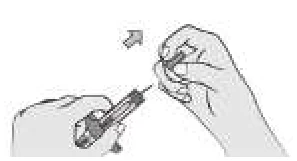
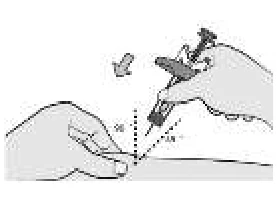
Clean the chosen injection site. | 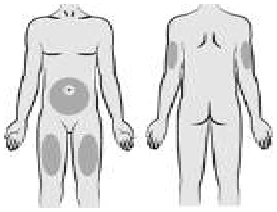 |
|---|---|
|  |
|  |
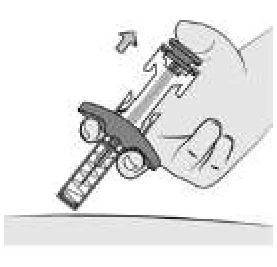
Inject all of the medicine Push the plunger rod as far as it will go to administer the dose and activate the needle shield. Continue to pinch the skin until the injection is complete. | 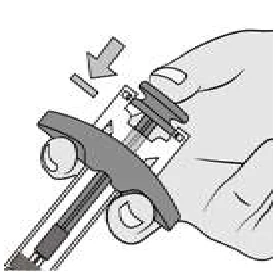 |
Release the plunger rod to allow the needle shield to cover the needle. Do not block plunger rod movement. | |
Immediately dispose of the used syringe into a sharps container. |
4.5 Missed Dose
If a dose is missed, administer AMVUTTRA as soon as possible. Resume dosing every 3 months from the most recently administered dose.
5 Overdose
Reported experience with overdose is limited. In case of overdose, it is recommended that the patient be monitored for any signs or symptoms of adverse effects and given appropriate treatment.
For the most recent information in the management of a suspected drug overdose, contact your regional poison control centre or Health Canada’s toll-free number, 1-844-POISON-X (1-844-764-7669).
 |
6 Dosage Forms, Strengths, Composition and Packaging
Table 1 – Dosage Forms, Strengths, and Composition
AMVUTTRA contains vutrisiran, a chemically modified double-stranded small interfering ribonucleic acid (siRNA), covalently linked to a ligand containing three N-acetylgalactosamine (GalNAc) residues to enable delivery of the siRNA to hepatocytes.
Description
AMVUTTRA contains 25 mg vutrisiran [equivalent to 26.5 mg vutrisiran sodium] in 0.5 mL per syringe. AMVUTTRA is a sterile, preservative-free, clear, colorless-to-yellow solution for subcutaneous injection. AMVUTTRA is supplied as a 0.5-mL solution in a single-use, 1-mL prefilled syringe made from Type I glass with stainless steel 29-gauge needle with a needle shield. The prefilled syringe components are not made with natural rubber latex.
AMVUTTRA is available in cartons containing one single-use prefilled syringe.
7 Warnings and Precautions
General
- Reduced Serum Vitamin A Levels and Recommended Supplementation
By reducing serum transthyretin (TTR) protein, treatment with AMVUTTRA leads to a decrease in serum vitamin A levels. Supplementation at the recommended daily allowance/amount of vitamin A (3,000 IU/1,200 mcg RAE) is advised for patients taking AMVUTTRA. Serum vitamin A levels should not be used to guide vitamin A supplementation during treatment with AMVUTTRA (see 9.7 Drug-Laboratory Test Interactions and 10.2 Pharmacodynamics).
Driving and Operating Machinery
No studies with AMVUTTRA have been performed to assess effects on the ability to drive and operate machinery during treatment. AMVUTTRA is not expected to have significant influence on the ability to drive and use machines.
Monitoring and Laboratory Tests
Serum TTR is a carrier of retinol binding protein, which facilitates transport of vitamin A in the blood. Treatment with AMVUTTRA reduces serum TTR levels, which results in reduced levels of retinol binding
| Route of Administration | Dosage Form / Strength/Composition | Non-medicinal Ingredients |
| subcutaneous injection | Solution; 25 mg / 0.5 mL (as vutrisiran sodium) | sodium chloride; sodium phosphate dibasic dihydrate; sodium phosphate monobasic dihydrate; water for injection. Phosphoric acid and sodium hydroxide may have been added to adjust pH. |
protein and vitamin A in the serum. However, transport and tissue uptake of vitamin A can occur through alternative mechanisms in the absence of retinol binding protein. As a result, laboratory tests for serum vitamin A do not reflect the total amount of vitamin A in the body and should not be used to guide vitamin A supplementation during treatment with AMVUTTRA (see 7 Warnings and Precautions, General; 10.2 Pharmacodynamics).
Ophthalmologic
Ocular signs and symptoms may be caused by hATTR amyloidosis due to amyloid deposition in the eye. However, if a patient develops ocular symptoms suggestive of vitamin A deficiency, including reduced night vision or night blindness, persistent dry eyes, eye inflammation, corneal inflammation or ulceration, corneal thickening or corneal perforation, referral to an ophthalmologist is recommended (see 7 Warnings and Precautions, General).
Reproductive Health
- Fertility
Treatment with AMVUTTRA reduces serum levels of vitamin A, which is thought to play an important role in fertility. There are no data on the effects of AMVUTTRA on human fertility. No impact on male or female fertility was detected in animal studies (see 16 Non-Clinical Toxicology, Reproductive and developmental toxicology).
- Function
There are no data on the effects of AMVUTTRA on human sexual function.
- Teratogenic Risk
Due to the potential teratogenic risk arising from unbalanced vitamin A levels, it is recommended that women of childbearing potential use effective contraception during treatment with AMVUTTRA. If a woman intends to become pregnant, it is recommended to stop AMVUTTRA and monitor serum vitamin A levels. Serum vitamin A levels may remain reduced for more than 12 months after the last dose of AMVUTTRA.
In pregnant rats dosed daily during organogenesis, adverse reductions in fetal body weight were observed at greater than or equal to 10 mg/kg/day (see 16 Non-Clinical Toxicology, Reproductive and development toxicology).
7.1 Special Populations
7.4.1 Pregnancy
AMVUTTRA is not recommended for use during pregnancy (see 7 Warnings and Precautions, Reproductive Health).
There are no data on the use of AMVUTTRA in pregnant women. The effects of a reduction in maternal serum TTR or serum vitamin A levels on the fetus are unknown (see 10.2 Pharmacodynamics).
During the first 60 days of pregnancy, too high or too low vitamin A levels may both be associated with an increased risk of fetal malformation. Therefore, pregnancy should be ruled out before initiating AMVUTTRA. Women of childbearing potential should practice effective contraception while receiving AMVUTTRA. If a woman intends to become pregnant, AMVUTTRA and vitamin A supplementation should be discontinued, and serum vitamin A levels should be monitored and seen to have returned to normal before conception is attempted.
In the event of an unplanned pregnancy, AMVUTTRA should be discontinued.
7.4.2 Breastfeeding
It is unknown if AMVUTTRA is excreted in human milk. Precaution should be exercised because many drugs can be excreted in human milk. There is no information regarding the presence of AMVUTTRA in human milk, the effects on the breastfed infant, or the effects on milk production. The developmental and health benefits of breastfeeding should be considered along with the mother’s clinical need for AMVUTTRA and any potential adverse effects on the breastfed infant from AMVUTTRA or from the underlying maternal condition.
There is no information on the effect of AMVUTTRA on vitamin A levels in human milk. Breast milk is a critical source of vitamin A for infants. Concentrations of vitamin A in breast milk may be influenced by the mother’s vitamin A status (see 7 Warnings and Precautions, General).
7.4.3 Pediatrics
Pediatrics (< 18 years of age): No data are available to Health Canada; therefore, Health Canada has not authorized an indication for pediatric use (see 1.1 Pediatrics).
7.4.4 Geriatrics
No overall differences in safety or effectiveness were observed between patients ≥ 65 years old and younger patients, but greater sensitivity of some older individuals cannot be ruled out.
8 Adverse Reactions
8.1 Adverse Reaction Overview
Two Phase 3 randomized, multi-center clinical trials (HELIOS-A and HELIOS-B) evaluated the safety of AMVUTTRA in 448 ATTR amyloidosis patients, including 122 patients with hATTR amyloidosis with polyneuropathy (HELIOS-A), and 326 patients with hATTR or wtATTR amyloidosis with cardiomyopathy (HELIOS-B).
8.2 Clinical Trial Adverse Reactions
Clinical trials are conducted under very specific conditions. The adverse reaction rates observed in the clinical trials, therefore, may not reflect the rates observed in practice and should not be compared to the rates in the clinical trials of another drug. Adverse reaction information from clinical trials may be useful in identifying and approximating rates of adverse drug reactions in real-world use.
hATTR Amyloidosis with Polyneuropathy
In the Phase 3 randomized, open-label study (HELIOS-A), a total of 122 patients with hATTR amyloidosis received AMVUTTRA administered once every 3 months by subcutaneous injection. Of these, 118 patients received treatment for 18 months or more. The mean duration of treatment was 18.8 months (range: 1.7 to 19.4 months).
During the HELIOS-A 18-month treatment period, the most frequently occurring adverse reactions (≥10%) reported in patients treated with AMVUTTRA were pain in extremity (14.8%) and arthralgia (10.7%). None of the adverse reactions resulted in discontinuation of treatment.
The safety profile of AMVUTTRA was generally consistent across all subgroups including age, sex, race, weight, geographic region, genotype, disease stage, and patients that met pre-defined criteria for cardiac involvement (baseline left ventricular [LV] wall thickness ≥ 13 mm with no history of hypertension or aortic valve disease).
Table 2– Adverse reactions reported in the HELIOS-A study in at least 5% of patients treated with AMVUTTRA and that occurred at least 3% more frequently than in patients treated with placebo*
AMVUTTRA n=122 (%) | Placebo* n=77 (%) | |
Musculoskeletal and connective tissue disorders Pain in extremity Arthralgia | 15 11 | 10 0 |
Respiratory, thoracic, and mediastinal disorders Dyspnea† | 7 | 0 |
*External placebo group from APOLLO randomized, controlled trial in patients with hATTR amyloidosis (Phase 3 trial with patisiran). Mean duration of exposure was 15 months (range: 1.3 to 18.8 months).
†Includes dyspnea, dyspnea exertional, and dyspnea paroxysmal nocturnal
wtATTR or hATTR Amyloidosis with Cardiomyopathy
In the HELIOS-B double-blind period, 257 patients received AMVUTTRA treatment for ≥30 months, and 77 patients received AMVUTTRA treatment for ≥36 months; the mean duration of treatment was 30.7 months (range: 0.6 to 38.7 months). No new adverse reactions were identified.
8.3 Less Common Clinical Trial Adverse Reactions
Injection-site reactions
During the HELIOS-A 18-month treatment period, injection-site reactions were reported in 5 (4.1%) patients treated with AMVUTTRA, occurring in 0.6% of injections. Reported symptoms included bruising, erythema, pain, pruritus, and warmth. Injection-site reactions were mild, transient, and did not lead to treatment discontinuation.
Immunogenicity
In the HELIOS-A and HELIOS-B studies, 4 (3.3%) and 1 (0.3%) patients treated with AMVUTTRA, respectively, developed anti-drug antibodies (ADA). In both studies, ADA titers were low and transient with no evidence of an effect on clinical efficacy, safety, pharmacokinetic or pharmacodynamic profiles of vutrisiran.
The detection of antibody formation is highly dependent on the sensitivity and specificity of the assay. Additionally, the observed incidence of antibody (including neutralizing antibody) positivity in an assay may be influenced by several factors, including assay methodology, sample handling, timing of sample collection, concomitant medications, and underlying disease. For these reasons, comparison of the incidence of antibodies in the study described above with the incidence of antibodies in other studies or to other products may be misleading.
Other Less Common Adverse Reactions
In the HELIOS-A study, patient numbers were too low to accurately identify other less common adverse reactions (see 14.1 Clinical Trials by Indication).
9 Drug Interactions
9.2 Drug Interactions Overview
No formal clinical drug interaction studies have been performed with AMVUTTRA.
9.3 Drug-Behavioural Interactions
No formal studies on drug-behavioural interactions have been performed with AMVUTTRA.
9.4 Drug-Drug Interactions
No clinical studies on drug-drug interaction have been performed. AMVUTTRA is not expected to cause drug-drug interactions or to be affected by inhibitors or inducers of cytochrome P450 enzymes, or to modulate the activity of drug transporters.
9.5 Drug-Food Interactions
Interactions with food have not been established.
9.6 Drug-Herb Interactions
Interactions with herbal products have not been established.
9.7 Drug-Laboratory Test Interactions
Serum TTR is a carrier of retinol binding protein, which facilitates transport of vitamin A in the blood. Treatment with AMVUTTRA reduces serum TTR levels, which results in reduced levels of retinol binding protein and vitamin A in the serum; however, transport and tissue uptake of vitamin A can occur through alternative mechanisms in the absence of retinol binding protein. As a result, laboratory tests for serum vitamin A do not reflect the total amount of vitamin A in the body and should not be used to guide vitamin A supplementation during treatment with AMVUTTRA (see 7 Warnings and Precautions, General; 10.1 Mechanism of Action).
10 Clinical Pharmacology
10.1 Mechanism of Action
In patients with ATTR amyloidosis, variant and/or wild-type serum TTR proteins form amyloid deposits in tissues, leading to progressive polyneuropathy (typically in hATTR amyloidosis) and/or cardiomyopathy (in hATTR amyloidosis and wtATTR amyloidosis).
Vutrisiran is a chemically modified double-stranded siRNA that specifically targets variant and wild-type TTR messenger RNA (mRNA), and is covalently linked to a ligand containing three N-acetylgalactosamine (GalNAc) residues to enable targeted delivery of the siRNA to hepatocytes.
Through a natural process called RNA interference (RNAi), vutrisiran causes the catalytic degradation of TTR mRNA in the liver, resulting in a reduction of serum TTR protein and a consequent reduction of amyloid deposits in tissues.
10.2 Pharmacodynamics
In the HELIOS-A study, the pharmacodynamic effects of 25 mg AMVUTTRA administered subcutaneously once every 3 months were evaluated in patients with hATTR amyloidosis with polyneuropathy. Following the first vutrisiran dose, mean serum TTR was reduced by 64% from baseline as rapidly as Day 22, with near steady-state TTR reduction of 73% by Week 6. With repeat dosing every 3 months, mean reductions of serum TTR after 9 and 18 months of treatment were 83% and 88%, respectively. Similar TTR reductions were observed regardless of genotype (V30M or non-V30M), prior TTR stabilizer use, weight, sex, age, or race. The median percent reduction in serum TTR levels in the vutrisiran arm was non-inferior to the within study patisiran reference arm through Month 18, with a difference of 5.3% (95% CI; 1.2, 9.3) (see 14.1 Clinical Trials by Indication).
In the HELIOS-B study, the pharmacodynamic effects of 25 mg AMVUTTRA administered subcutaneously once every 3 months were evaluated in patients with ATTR amyloidosis with cardiomyopathy. The mean serum TTR reduction profile in HELIOS-B was similar with that observed in HELIOS-A, and consistent across all the subgroups studied (age, sex, race, body weight, anti-drug antibody [ADA] status, ATTR disease type (wtATTR or hATTR), NYHA class, and baseline tafamidis use).
Serum TTR is a carrier of retinol binding protein, which facilitates transport of vitamin A in the blood. In HELIOS-A, in patients taking concomitant vitamin A supplements, AMVUTTRA decreased vitamin A levels with mean steady state peak and trough reductions of 70% and 63%, respectively. In HELIOS-B, the mean steady state serum vitamin A was reduced by 65% over 36 months (see 7 Warnings and Precautions, General; 9.7 Drug-Laboratory Test Interactions).
Cardiac electrophysiology
Vutrisiran had no effect on QTc interval in healthy subjects who received doses up to 300 mg. A dedicated thorough QT study has not been conducted with vutrisiran.
10.3 Pharmacokinetics
The pharmacokinetic properties of AMVUTTRA were characterized by measuring the plasma and urine concentrations of vutrisiran.
Table 3 - Summary of vutrisiran pharmacokinetic parameters in patients with hATTR amyloidosis
| Cmax (mcg/mL) | Tmax (hours) | AUC0-∞ (h·mcg/mL) | |
| Single dose mean (SD) | N=120 0.1138 (0.0936) | N=120 3.12* (2.0, 6.6) | N=20 0.79 (0.31)† |
*Tmax reported as median (minimum, maximum)
†For a majority of the patients, vutrisiran plasma concentrations reached the lower limit of quantitation (LLOQ) by 24 hours and as a result, AUC0-24 could only be estimated for few patients.
Absorption
Following subcutaneous administration, vutrisiran is rapidly absorbed with a time to maximum plasma concentration (tmax) of 3.0 (range: 2.0 to 6.5) hours. At the recommended dosing regimen of 25 mg once every 3 months subcutaneously, the mean (% coefficient of variation [%CV]) steady state peak concentrations (Cmax), and area under the concentration time curve from 0 to 24 hours (AUC0-24) were 0.12 mcg/mL (64.3%), and 0.80 mcg·h/mL (35.0%), respectively. There was no accumulation of vutrisiran in plasma after repeated quarterly dosing.
Distribution
Vutrisiran is greater than 80% bound to plasma proteins over the concentration range observed in humans at the dose of 25 mg once every 3 months subcutaneously. Vutrisiran plasma protein binding was concentration-dependent and decreased with increasing vutrisiran concentrations (from 78% at 0.5 mcg/mL to 19% at 50 mcg/mL). The population estimate for the apparent central compartment volume of distribution (Vd/F) of vutrisiran in humans was 10.2 L (% Relative standard error [RSE]=5.71%). Vutrisiran distributes primarily to the liver after subcutaneous dosing.
There are no clinical data on the PK of vutrisiran in the liver. In animal studies, liver Cmax after single subcutaneous injections were reached by 7 and 24 h in rats and monkeys, respectively. Targeted delivery of vutrisiran to the liver was confirmed by consistently higher concentrations in liver compared with plasma in both rats and monkeys. After a single subcutaneous dose to rats (0.3 to 3 mg/kg) and to monkeys (0.3 to 30 mg/kg), liver AUClast was 4350- to 11,425-fold higher than plasma exposure across the range of doses tested in rats and 2600- to 21,000-fold in monkeys. The t½ of vutrisiran, in liver, after a single dose was 3.5 to 6.3 days in rats and 18 to 31 days in monkeys across the range of doses tested.
Metabolism
Vutrisiran is metabolized by endo- and exonucleases to short nucleotide fragments of varying sizes within the liver. There were no major circulating metabolites in humans. In vitro studies indicate that vutrisiran does not undergo metabolism by CYP450 enzymes.
Elimination
Following a 25-mg single subcutaneous dose, the median apparent plasma clearance was 21.4 (range: 19.8, 30.0) L/h. The median terminal elimination half-life (t1/2) of vutrisiran was 5.23 (range: 2.24, 6.36) hours. After a single subcutaneous dose of 5 to 300 mg, the mean fraction of unchanged drug eliminated in urine ranged from 15.4% to 25.4% and the mean renal clearance ranged from 4.45 to 5.74 L/h for vutrisiran.
Special Populations and Conditions
- Pediatrics: The safety and efficacy of AMVUTTRA have not been studied in children or adolescents < 18 years old; therefore, Health Canada has not authorized an indication for pediatric use (see 1.1 Pediatrics).
- Geriatrics: In the HELIOS-A study, 46 (38%) patients treated with AMVUTTRA were ≥ 65 years old and of these, 7 (5.7%) patients were ≥ 75 years old. There were no significant differences in steady-state pharmacokinetic parameters or TTR reduction between patients < 65 years old and ≥ 65 years old. In the HELIOS-B study, 299 (91.7%) patients treated with AMVUTTRA were ≥65 years old, with a median age of 77.0 years, and of these 203 (62.3%) were ≥75 years old. There were no significant differences in steady state pharmacokinetic parameters or TTR reduction by patient age in HELIOS-B.
- Sex: Clinical studies did not identify clinically significant differences in steady state vutrisiran pharmacokinetic parameters or TTR reduction based on sex.
- Pregnancy and breastfeeding: Vutrisiran has not been studied in pregnant and breast-feeding women.
- Genetic polymorphism: Vutrisiran is metabolized by endo‑ and exonucleases to short nucleotide fragments of varying sizes within the liver. Based on the in vitro data, vutrisiran is not a substrate, inhibitor, or inducer of CYP enzymes or transporters. Vutrisiran is not expected to be affected by genetic polymorphisms in CYP enzymes or transporters.
- Ethnic Origin: Clinical studies did not identify clinically significant differences in steady-state vutrisiran pharmacokinetic parameters or TTR reduction based on race.
- Hepatic Insufficiency: Population pharmacokinetic and pharmacodynamic analyses based on HELIOS-A and healthy volunteers data indicated no impact of mild hepatic impairment (total bilirubin ≤ 1 x ULN and AST > 1 x ULN, or total bilirubin > 1.0 to 1.5 x ULN and any AST on AMVUTTRA exposure or TTR reduction compared to patients with normal hepatic function. No impact of mild or moderate (total bilirubin >1.5 to 3 × ULN and any AST) hepatic impairment on AMVUTTRA exposure or TTR reduction was observed in the HELIOS-B study. AMVUTTRA has not been studied in patients with severe hepatic impairment.
- Renal Insufficiency: Population pharmacokinetic and pharmacodynamic analyses based on HELIOS-A and healthy volunteers data indicated no impact of mild or moderate renal impairment (eGFR ≥ 30 to < 90 mL/min/1.73 m2) on AMVUTTRA exposure or TTR reduction compared to subjects with normal renal function. No impact of mild or moderate renal impairment on AMVUTTRA exposure or TTR reduction was observed in the HELIOS-B study. AMVUTTRA has not been studied in patients with severe renal impairment or end-stage renal disease.
11 Storage, Stability, and Disposal
Store at 2 °C to 30 °C in the original carton, until ready for use.
Do not freeze.
Part 2: Scientific Information
13 Pharmaceutical Information
Drug Substance
Non-proprietary name of the drug substance: vutrisiran sodium
Molecular formula and molecular mass: C530 H672 F9 N171 Na43 O323 P43 S6; 17290 Da.
Structural formula:
Physicochemical properties:
- The solubility of vutrisiran drug substance in water has been determined to be 361 mg/mL
- pH of a 1% solution in KCl: approximately 7.0
14 Clinical Trials
14.1 Clinical Trials by Indication
Indication: Treatment of Polyneuropathy in Adult Patients with hATTR Amyloidosis
Table 4 - Summary of Patient Demographics for Clinical Trial in Patients with hATTR Amyloidosis – Polyneuropathy
| Study # | Study design | Dosage, route of administration and duration | Study subjects (n) | Mean age years (Range) | Sex |
| ALN-TTRSC02-002 (HELIOS-A) | Global, randomized (3:1), open-label | 25 mg, via subcutaneous injection, once every 3 months, for 18 months | vutrisiran: 122 patisiran: 42 | 58 (26, 85) | Male (65%) Female (35%) |
The efficacy of AMVUTTRA was demonstrated in a global, randomized, open-label clinical trial (HELIOS-A) in adult patients with hATTR amyloidosis with stage 1 or stage 2 polyneuropathy. Patients were randomized 3:1 to receive 25 mg of AMVUTTRA (N=122) subcutaneously once every 3 months, or 0.3 mg/kg patisiran (N=42) intravenously every 3 weeks as a reference group.
The treatment period of the study was conducted over 18 months with analyses performed at Month 9 and Month 18. Ninety-seven percent (97%) and ninety-six percent (96%) of patients treated with AMVUTTRA completed at least 9 and 18 months of the assigned treatment, respectively. Efficacy assessments were based on a comparison of the vutrisiran arm of the study with an external placebo group (placebo arm of the APOLLO Phase 3 study) comprised of a similar population of patients with hATTR amyloidosis with polyneuropathy. All Month 9 endpoints were analyzed using the analysis of covariance (ANCOVA) with multiple imputation (MI) method and all Month 18 endpoints were analyzed using the mixed-effects model for repeated measures (MMRM).
Of the patients who received AMVUTTRA, the median patient age at baseline was 60 years and 65% of patients were male. Seventy percent (70%) of patients were Caucasian, 17% were Asian, 3% were Black, and 9% were reported as Other. Patients were from Western Europe (35%), North America (22%), or rest of world (43%). Twenty-two (22) different transthyretin (TTR) variants were represented: V30M (44%), T60A (13%), E89Q (8%), A97S (6%), S50R (4%), V122I (3%), L58H (3%), and Other (18%). Twenty percent (20%) of patients had the V30M genotype and early onset of symptoms (< 50 years old). At baseline, 69% of patients had stage 1 disease (unimpaired ambulation; mild sensory, motor and autonomic neuropathy in the lower limbs), and 31% had stage 2 disease (assistance with ambulation required; moderate impairment of the lower limbs, upper limbs, and trunk). Sixty-one percent (61%) of patients had prior treatment with TTR stabilizers. According to the New York Heart Association (NYHA) classification of heart failure, 9% of patients had class I and 35% had class II. Thirty-three percent (33%) of patients met pre-defined criteria for cardiac involvement (baseline LV wall thickness ≥ 13 mm with no history of hypertension or aortic valve disease).
Month 9 assessments
The primary efficacy endpoint was the change from baseline to Month 9 in modified Neuropathy Impairment Score +7 (mNIS+7). This endpoint is a composite measure of motor, sensory, and autonomic neuropathy, including assessments of motor strength, reflexes, quantitative sensory testing, nerve conduction studies, and postural blood pressure, with the score ranging from 0 to 304 points, where an increasing score indicates worsening impairment.
The clinical meaningfulness of effects on the mNIS+7 was assessed by the key secondary endpoint, which was the change from baseline to Month 9 in Norfolk Quality of Life-Diabetic Neuropathy (QoL-DN) total score. The Norfolk QoL-DN questionnaire is a patient-reported assessment that includes domains relating to small fiber, large fiber, and autonomic nerve function, symptoms of polyneuropathy, and activities of daily living, with the total score ranging from -4 to 136, where increasing score indicates worsening quality of life. Secondary efficacy endpoints at 9 months also included gait speed (10-meter walk test).
Month 18 assessments
Efficacy assessments included a change from baseline to Month 18 for mNIS+7, Norfolk QoL-DN, 10-meter walk test, nutritional status (modified body mass index [mBMI]), and patient-reported ability to perform activities of daily living and social participation such as eating, bathing, dressing, and standing (Rasch-Built Overall Disability Scale [R-ODS]).
Study Results
Table 5 - Results of Study ALN-TTRSC02-002 in Patients with hATTR Amyloidosis
| Endpoint | Baseline, Mean (SD) | Change from Baseline, LS Mean (SEM) | AMVUTTRA-Placebo† Treatment Difference, LS Mean (95% CI) | p-value | ||
|---|---|---|---|---|---|---|
AMVUTTRA N=122 | Placebo† N=77 | AMVUTTRA | Placebo† | |||
| Month 9 | ||||||
mNIS+7‡ (Primary Endpoint) | 60.6 (36.0) | 74.6 (37.0) | -2.2 (1.4) | 14.8 (2.0) | -17.0 (-21.8, -12.2) | p < 0.0001 |
| Norfolk QoL-DN‡ | 47.1 (26.3) | 55.5 (24.3) | -3.3 (1.7) | 12.9 (2.2) | -16.2 (-21.7, -10.8) | p < 0.0001 |
| Month 18 | ||||||
| mNIS+7‡ | 60.6 (36.0) | 74.6 (37.0) | -0.5 (1.6) | 28.1 (2.3) | -28.6 (-34.0, -23.1) | p < 0.0001 |
| Norfolk QoL-DN‡ | 47.1 (26.3) | 55.5 (24.3) | -1.2 (1.8) | 19.8 (2.6) | -21.0 (-27.1, -14.9) | p < 0.0001 |
| mBMI¶ | 1057.5 (233.8) | 989.9 (214.2) | 25.0 (9.5) | -115.7 (13.4) | 140.7 (108.4, 172.9) | p < 0.0001 |
Abbreviations: CI = confidence interval; LS mean = least squares mean; mBMI = modified body mass index; mNIS = modified Neuropathy Impairment Score; QoL-DN = Quality of Life - Diabetic Neuropathy; SD = standard deviation; SEM = standard error of the mean; †External placebo group from APOLLO randomized controlled trial. ‡A lower number indicates less impairment/fewer symptoms. ¶mBMI: body mass index (BMI; kg/m2) multiplied by serum albumin (g/L); a higher number indicates better nutritional status. | ||||||
Treatment with AMVUTTRA led to an improvement in mNIS+7, relative to placebo (p < 0.0001) at 9 months (primary endpoint) and 18 months (Table 5 and Figure 1).
A statistically significant benefit in favor of AMVUTTRA treatment was also demonstrated for Norfork QoL-DN change from baseline to Month 9 and Month 18 (Table 5).
Treatment with AMVUTTRA in the HELIOS-A study also demonstrated statistically significant improvements in all other secondary endpoints measured from baseline to Month 9 or Month 18, compared to the external placebo group (all p < 0.0001).
Figure 1 - Change from Baseline in mNIS+7 (Month 9 and Month 18)
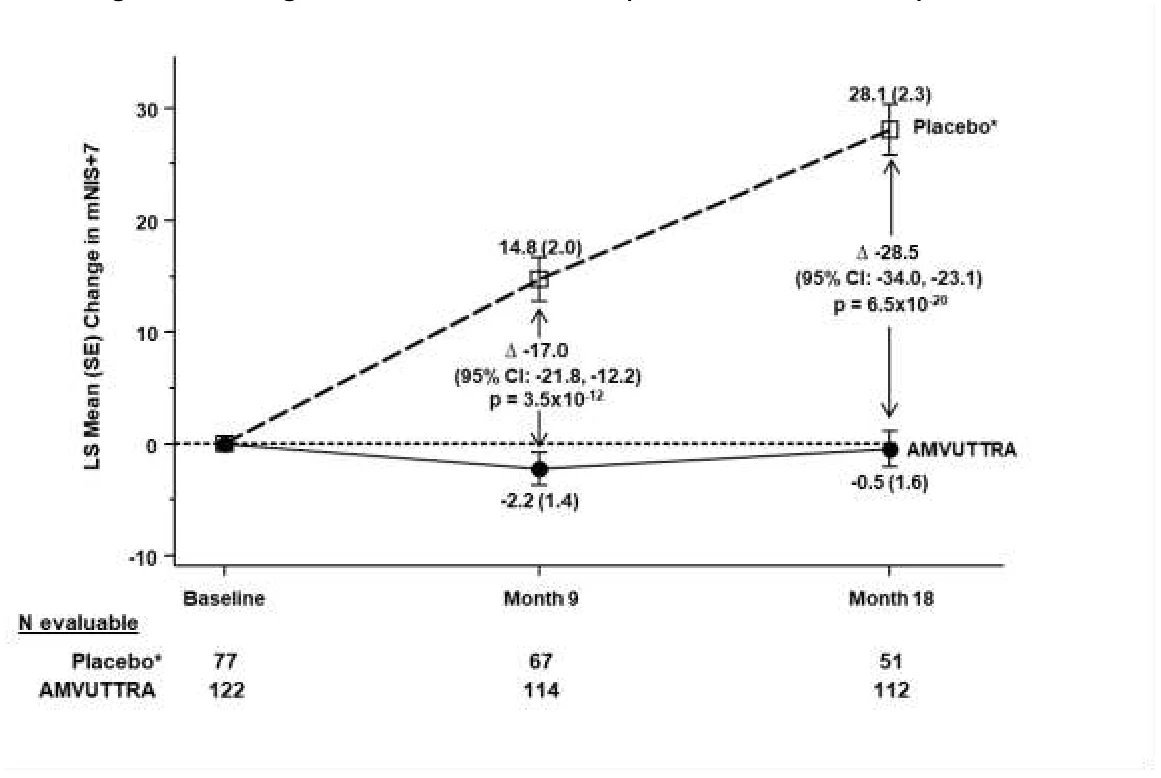
A decrease in mNIS+7 indicates improvement.
Δ indicates between-group treatment difference, shown as the LS mean difference (95% CI) for AMVUTTRA – placebo.
*External placebo group from APOLLO randomized controlled trial.
Patients receiving AMVUTTRA experienced similar improvements relative to those in the placebo group in mNIS+7 and Norfolk QoL-DN total score at Month 9 and Month 18 across all subgroups including age, sex, race, region, NIS score, V30M genotype status, prior TTR stabilizer use, disease stage (1 and 2), and patients that met pre-defined criteria for cardiac involvement.
Indication: Treatment of Adult Patients with wtATTR or hATTR Amyloidosis with Cardiomyopathy
Table 6 - Summary of Patient Demographics for Clinical Trial in Patients with ATTR Amyloidosis – Cardiomyopathy
| Study # | Study design | Dosage, route of administration and duration | Study subjects (n) | Mean age years (Range) | Sex |
| ALN-TTRSC02-003 (HELIOS-B) | Global, randomized (1:1), double-blind | 25 mg, via subcutaneous injection, once every 3 months, for up to 36 months | vutrisiran: 326 placebo: 328 | 75.4 (45, 85) | Male (92.5%) Female (7.5%) |
The efficacy of AMVUTTRA was demonstrated in a global, randomized, double-blind, placebo-controlled clinical trial (HELIOS-B) in adult patients with wtATTR or hATTR amyloidosis with cardiomyopathy. Patients were randomized 1:1 to receive 25 mg of AMVUTTRA administered subcutaneously once every 3 months, or matching placebo. Randomization was stratified by baseline tafamidis use (yes or no), ATTR disease type (wtATTR or hATTR amyloidosis), and by baseline severity of disease and age (New York Heart Association (NYHA) Class I or II and age <75 years versus all other). At baseline, 40% of patients were receiving treatment with tafamidis. Table 7 describes the patient demographics and baseline disease characteristics. Patients with NYHA Class IV heart failure or NYHA Class III heart failure accompanied by stage 3 ATTR amyloidosis (defined as NT-proBNP >3000 ng/L and eGFR <45 mL/min/1.73m2) at baseline were excluded from the study.
Table 7 - Patient Demographics and Baseline Characteristics of HELIOS-B
| Characteristic | Overall Population | ||||||||
|---|---|---|---|---|---|---|---|---|---|
| Characteristic | Overall Population | ||||||||
AMVUTTRA (N=326) | Placebo (N=328) | ||||||||
AMVUTTRA (N=326) | Placebo (N=328) | ||||||||
| Age - years | |||||||||
| Median (minimum, maximum) | 77 (45, 85) | 76 (46, 85) | |||||||
| Age group (years), n (%) | |||||||||
| <65 | 27 (8.3) | 20 (6.1) | |||||||
| 65 to <75 | 96 (29.4) | 114 (34.8) | |||||||
| ≥75 | 203 (62.3) | 194 (59.1) | |||||||
| Sex (%) | |||||||||
| Male | 91.7 | 93.3 | |||||||
| Female | 8.3 | 6.7 | |||||||
| Race (%) | |||||||||
| Caucasian | 85.0 | 83.8 | |||||||
| Black or African American | 7.1 | 7.3 | |||||||
| Asian | 5.5 | 5.8 | |||||||
| Not Reported | 1.8 | 2.4 | |||||||
| Other | 0.6 | 0.6 | |||||||
| ATTR Amyloidosis Type (%) | |||||||||
| wtATTR amyloidosis | 88.7 | 88.1 | |||||||
| hATTR amyloidosis | 11.3 | 11.9 | |||||||
| NYHA Class (%) | |||||||||
| NYHA Class I | 15.0 | 10.7 | |||||||
| NYHA Class II | 76.7 | 78.7 | |||||||
| NYHA Class III | 8.3 | 10.7 | |||||||
| Abbreviations: ATTR = transthyretin amyloidosis; NYHA = New York Heart Association; hATTR = hereditary ATTR amyloidosis; wtATTR = wild-type ATTR amyloidosis | |||||||||
The primary efficacy endpoint was the composite outcome of all-cause mortality and recurrent cardiovascular (CV) events (CV hospitalizations and urgent heart failure [UHF] visits) during the double-blind treatment period of up to 36 months, evaluated in the overall population and in the monotherapy population (defined as patients not receiving tafamidis at study baseline).
Study results
AMVUTTRA led to significant reductions in the risk of all-cause mortality and recurrent CV events compared to placebo in the overall and monotherapy populations of 28.2% and 32.8%, respectively (Table 8). Of the total number of CV events, 87.9% were CV hospitalizations, and 12.1% were UHF visits in the overall population. A Kaplan-Meier curve illustrating time to first CV event or all-cause mortality is presented in Figure 2.
Both components of the primary composite endpoint individually contributed to the treatment effect in the overall population and monotherapy population (Table 8).
Table 8 - Primary Composite Endpoint and its Individual Components in HELIOS-B
| Endpoint | Overall population | Monotherapy population | |
|---|---|---|---|
AMVUTTRA (N=326) | Placebo (N=328) | AMVUTTRA (N=196) | Placebo (N=199) |
| Primary composite endpointa | Hazard Ratio (95% CI)b p-valueb | 0.718 (0.555, 0.929) 0.0118 | 0.672 (0.487, 0.929) 0.0162 |
| Patients with at least one event – primary composite endpoint, n (%) | 125 (38) | 159 (48) | 76 (39) |
| 105 (53) | |||
| All-cause mortality | 51 (16) | 69 (21) | 36 (18) |
| 46 (23) | |||
| CV hospitalizations and UHF visits | 112 (34) | 133 (41) | 66 (34) |
| 87 (44) | |||
| Components of the Primary Composite Endpoint | |||
All-cause mortality | Hazard Ratio (95% CI) c | 0.694 (0.490, 0.982) | 0.705 (0.467, 1.064) |
| CV hospitalizations and UHF visits | Relative Rate Ratio (95% CI)d | 0.733 (0.610, 0.882) | 0.676 (0.533, 0.857) |
Abbreviations: CI=confidence interval; CV=cardiovascular; UHF=urgent heart failure Heart transplantation and left ventricular assist device placement are treated as death. Deaths after study discontinuation are included in the all-cause mortality component analysis. a Primary composite endpoint defined as: composite outcome of all-cause mortality and recurrent CV events. Primary analysis included at least 33 months (and up to 36 months) follow-up on all patients. b Hazard Ratio (95% CI) and p-value are based on a modified Andersen-Gill model. c Hazard Ratio (95% CI) is based on a Cox proportional hazard model. d Relative rate ratio (95% CI) is based on a Poisson regression model. | |||
Figure 2 - Time to First CV Event or All-Cause Mortality (Overall population)
Abbreviations: CI=confidence interval; CV=cardiovascular; HR = hazard ratio.
Heart transplantation and left ventricular assist device placement are treated as death. Kaplan-Meier curves are adjusted for baseline disease characteristics using the inverse probability of treatment weighting method. HR and 95% CI are based on a Cox proportional hazard model, and p-value is based on log-rank test.
Results from the subgroup analysis for the primary composite endpoint were consistent across prespecified subgroups in the overall population and the monotherapy population (Figure 3).
Figure 3 - Subgroup Analyses of the Primary Composite Endpoint (Overall Population)
Abbreviations: ATTR = transthyretin amyloidosis; CI = confidence interval; hATTR = hereditary transthyretin amyloidosis; HR = hazard ratio; NT-proBNP = N-terminal prohormone of B-type natriuretic peptide; NYHA = New York Heart Association; wtATTR = wild-type transthyretin amyloidosis.
HR and 95% CI are based on modified Andersen-Gill model analyses.
In the secondary endpoint analysis of all-cause mortality including data up to Month 42, incorporating the double-blind period and up to an additional 6 months of survival data for all patients, AMVUTTRA treatment led to a 35.5% reduction in the risk of death relative to placebo in the overall population (hazard ratio: 0.645; 95% CI: 0.463, 0.898; p=0.0098), and to a 34.5% reduction in the monotherapy population (hazard ratio: 0.655; 95% CI: 0.440, 0.973; p=0.0454).
The treatment effects of AMVUTTRA on functional capacity, patient-reported health status and quality of life, and heart failure symptom severity were assessed by the change from baseline to Month 30 in 6-Minute Walk Test (6-MWT), the Kansas City Cardiomyopathy Questionnaire-Overall Summary (KCCQ-OS) score and NYHA class, respectively.
A statistically significant treatment effect favoring AMVUTTRA was observed for 6-MWT distance, KCCQ-OS score, and stable or improved NYHA class in both the overall population and monotherapy population (Table 9 ).
Table 9 - Change from Baseline in 6-MWT Distance, KCCQ-OS Score and NYHA Class at Month 30
| Overall population | Monotherapy population | |||||||||||||||||
|---|---|---|---|---|---|---|---|---|---|---|---|---|---|---|---|---|---|---|
AMVUTTRA (N=326) | Placebo (N=328) | AMVUTTRA (N=196) | Placebo (N=199) | |||||||||||||||
| 6-MWT (meters) | ||||||||||||||||||
| Baseline Mean (SD) | 372 (104) | 377 (96) | 363 (103) | 373 (98) | ||||||||||||||
| Change from baseline to Month 30, LS Mean (SE)a | -45 (5) | -72 (5) | -60 (7) | -92 (6) | ||||||||||||||
Treatment Difference from Placebo, LS Mean Difference (95% CI) p-valuea,b | 26 (13, 40) <0.0001 | 32 (14, 50) 0.0005 | ||||||||||||||||
| KCCQ-OS (points) | ||||||||||||||||||
| Baseline Mean (SD) | 73 (19) | 72 (20) | 70 (20) | 70 (21) | ||||||||||||||
| Change from baseline to Month 30, LS Mean (SE)a | -10 (1) | -15 (1) | -11 (2) | -19 (2) | ||||||||||||||
Treatment Difference from Placebo, LS Mean Difference (95% CI) p-valuea,b | 6 (2, 9) 0.0008 | 9 (4, 13) 0.0003 | ||||||||||||||||
| NYHA Class | ||||||||||||||||||
| Patients with stable or improved NYHA class at Month 30 (%) | 68 | 61 | 66 | 56 | ||||||||||||||
Difference from Placebo, (%) (95% CI) c p-valuec | 9 (1, 16) 0.0217 | 13 (3, 22) 0.0121 | ||||||||||||||||
Abbreviations: 6-MWT = 6-minute walk test; KCCQ-OS = Kansas City Cardiomyopathy Questionnaire, LS = least squares; CI = confidence interval; SD = Standard deviation; SE = Standard Error; NYHA = New York Heart Association a For assessment missing because of death (including heart transplantation and left ventricular assist device placement), and inability to walk as the result of ATTR disease progression (applicable to 6-MWT only), data were imputed from resampling of the worst 10% of observed changes. b Estimated from the MMRM (mixed-effect model repeated measures) model. c Based on Cochran-Mantel-Haenszel method. | ||||||||||||||||||
NT-proBNP and Troponin I, cardiac biomarkers associated with heart failure, demonstrated relative stability in AMVUTTRA-treated patients while levels in placebo patients demonstrated worsening. Results in the monotherapy population were consistent.
Centrally-assessed echocardiograms showed reduction relative to placebo in AMVUTTRA-treated patients in left ventricular (LV) wall thickness and longitudinal strain in the overall population. Results in the monotherapy population were consistent.
15 Microbiology
No microbiological information is required for this drug product.
16 Non-Clinical Toxicology
General toxicology: Vutrisiran is pharmacologically active in monkeys but not in rodents or rabbits.
In studies performed in monkeys, there were no observed effects of vutrisiran on the cardiovascular, respiratory, or central nervous systems, with a no observed effect level (NOEL) of 300 mg/kg (the highest dose evaluated).
Following once monthly repeated dosing for up to 6 months in rats and 9 months in monkeys, the mild and consistent non-adverse histological changes in liver (hepatocytes, Kupffer cells), kidneys (renal tubules), lymph nodes and injection sites (macrophages) reflected the principal distribution and accumulation of vutrisiran. However, no toxicities were identified at up to more than 1 000- and 3 000-fold higher plasma AUC, when normalised to quarterly dosing and compared to the anticipated exposure at the maximum recommended human dose [MRHD].
Serum samples taken from rats as part of the long-term toxicity study were negative for the presence of anti-drug antibodies. In monkeys, 8/32 animals had a positive anti-drug antibody response with low titers; baseline (predose) positivity was observed in 3 animals, suggesting the presence of pre-existing cross-reactive antibodies. There were no effects of anti-drug antibodies on pharmacodynamics, toxicokinetics or toxicity of vutrisiran.
Genotoxicity: Vutrisiran was not mutagenic in the bacterial reverse mutation assay, clastogenic or aneugenic in the chromosome aberration assay in human blood peripheral lymphocytes, and did not induce micronucleus formation in rat bone marrow following subcutaneous administration.
Carcinogenicity: In a 2-year carcinogenicity study in Sprague Dawley rats, no related neoplastic or proliferative findings were noted at the highest dose levels tested (15 mg/kg [once monthly] or 15 mg/kg [once every 3 months] in males, and 25 mg/kg [once monthly] or 25 mg/kg [once every 3 months] in females). When normalized to the once every 3 months clinical dosing schedule, the AUC-based exposure margins at 15 mg/kg (once monthly) and at 25 mg/kg (once monthly) for male and female rats, respectively, are 57 times and 52 times the human exposure at the maximum recommended human dose.
In a 2-year carcinogenicity study in CD-1 mice, vutrisiran was not carcinogenic at the highest dose tested in males (13 mg/kg [once monthly]). When normalized to the once every 3 months clinical dosing schedule, the AUC-based exposure margin at 13 mg/kg (once monthly) for male mice is 26x the human exposure at the MRHD. In female mice dosed once monthly with vutrisiran at 3, 9, or 18 mg/kg, a statistically significant dose-dependent trend for combined hepatocellular adenomas and carcinomas was observed. Given the absence of these findings in males and the lack of preneoplastic lesions in the liver of females, the clinical relevance of these findings in female mice is unclear.
Reproductive and developmental toxicology: Vutrisiran is not pharmacologically active in rats and rabbits, which limits the predictivity of these investigations. Once weekly doses of a rat-specific orthologue of vutrisiran did not impact fertility and early embryonic development in female rats. However, the impact of vutrisiran-induced TTR and vitamin A reduction could not be assessed using this model.
Weekly subcutaneous administrations of vutrisiran did not affect fertility and early embryonic development at more than 300-times the normalised MRHD. In an embryo-foetal study with daily subcutaneous vutrisiran administration in pregnant rats, adverse effects on maternal body weight, food consumption, increased premature delivery and post-implantation loss were observed with a maternal NOAEL of 10 mg/kg/day that was more than 300-times the normalised MRHD of 0.005 mg/kg/day. Based on an adverse reduction in fetal body weights and increased skeletal variations at ≥10 mg/kg/day, the fetal NOAEL of vutrisiran was 3 mg/kg/day which is 97-times the normalised MRHD.
In an embryo-fetal development study in pregnant rabbits, vutrisiran was administered subcutaneously at doses of 0, 3, 10, or 30 mg/kg/day during organogenesis (GD 7-19). No adverse effects on embryo-fetal development were observed at ≤ 30 mg/kg which is 1935 times the normalized MRHD.
In a prenatal-postnatal development study, vutrisiran was administered subcutaneously to pregnant female rats on GD 7, 13, 19 and on lactation days 6, 12, and 18 at doses of 0, 5, 10, or 20 mg/kg. There was no effect on growth and development of the offspring at ≤ 20 mg/kg.
Juvenile toxicology: No studies have been conducted.
Special toxicology: In monkeys receiving a vitamin A replete diet, repeated once monthly subcutaneous doses of vutrisiran at 1 and 3 mg/kg resulted in > 95% maximum reductions in serum TTR protein concentrations. Repeated once-monthly subcutaneous administration of vutrisiran at ≥ 30 mg/kg resulted in the expected sustained reductions from baseline in circulating TTR (up to 99%) without any apparent toxicological findings. A secondary effect on serum vitamin A concentrations resulted in decreases (up to 89%). These reductions were not associated with signs of vitamin A deficiency, as evaluated through ophthalmic examinations, electroretinograms, and histopathology of the eye. However, these findings may be confounded by the vitamin A replete diet, the impact of which remains unclear. Similarly, a secondary effect on thyroxine (decreases up to 48%) was observed, with no effect on histopathology of the thyroid.