


Product Monograph - Rilutek
SUMMARY PRODUCT INFORMATION
Route of Administration | Pharmaceutical Form/Strength | Nonmedicinal Ingredients (NMIs) |
| Oral | Film-Coated Tablet/50 mg | Core: anhydrous dibasic calcium phosphate, anhydrous colloidal silica, croscarmellose sodium, magnesium stearate, microcrystalline cellulose. Film Coating: hydroxypropyl methylcellulose, polyethylene glycol 6000, titanium dioxide. |
INDICATIONS AND CLINICAL USE
RILUTEK (riluzole):
- may extend survival and/or time to tracheostomy in some patients with amyotrophic lateral sclerosis (ALS).
There is no evidence that RILUTEK exerts a therapeutic effect on motor function, lung function, fasciculations, muscle strength and motor symptoms.
RILUTEK has not been shown to be effective in the late stage of ALS.
Initially, RILUTEK should be prescribed only by physicians experienced in the diagnosis and management of ALS. If necessary, subsequent follow up and continuing treatment of the patient may be undertaken by non-specialized physicians, under the supervision of a specialist.
The symptomatic management of patients with ALS is not changed by the addition of RILUTEK. Knowledge of the disease natural history and use of management strategies that assist the patient in coping with complications of the inevitable decline in motor power, such as non-invasine positive pressure ventilation (NIPPV), remain the most effective means to prolonging quality survival.
RILUTEK is not a cure for ALS, but a modest prolongation of survival represents a first step forward in treating ALS patients. No data exist to help predict how any individual patient will benefit from RILUTEK treatment. No evidence exists to define the duration of the benefit of continued RILUTEK use. Similarly, there is no evidence of additional benefit if RILUTEK were continued after tracheostomy is performed for ventilation.
The following advisory recommendations are made:
ALS patients for whom Class I evidence suggests RILUTEK may prolong survival includes those who have:
- definite or probable ALS by World Federation of Neurology (WFN) criteria (other causes for progressive muscle atrophy have been excluded)
- symptoms present for less than 5 years
- FVC >60% predicted
- no tracheostomy
ALS patients for whom no Class I evidence supports the use of RILUTEK, but for whom there may be potential benefit includes those who have:
- suspected or possible ALS by WFN criteria
- symptoms present for more than 5 years
- FVC <60% predicted
- tracheostomy for prevention of aspiration only (ventilator independent)
RILUTEK is of uncertain benefit in patients with:
- tracheostomy required for ventilation
- other incurable life-threatening disorders
- other forms of anterior horn cell disease
The safety and efficacy of RILUTEK have not been studied in motor neuron diseases other than ALS. Therefore, RILUTEK should not be used in any other form of motor neuron disease.
Geriatrics (> 65 years): In controlled clinical trials, about 30% of patients were over 65. There were no differences in adverse effects between younger and older patients. A brief discussion can be found in the appropriate sections (See WARNINGS AND PRECAUTIONS, Special Populations, Geriatrics and ACTION AND CLINICAL PHARMACOLOGY, Special Populations and Conditions, Geriatrics).
Pediatrics (< 18 years of age): The safety and efficacy of RILUTEK in any neurodegenerative disease occurring in children or adolescents have not been established.
CONTRAINDICATIONS
RILUTEK is contraindicated in:
- Patients who have a history of hypersensitivity reactions to riluzole or any of the tablet components. For a complete listing of the tablet components, see the DOSAGE FORMS, COMPOSITION AND PACKAGING section of the product monograph.
- Patients who have hepatic disease or who have baseline transaminases greater than 3 times the ULN (upper limit of normal) (See WARNINGS AND PRECAUTIONS, General, Liver Injury / Monitoring Liver Chemistries; ACTION AND CLINICAL PHARMACOLOGY, Special Populations and Conditions, Hepatic Insufficiency; DOSAGE AND ADMINISTRATION, Special Population, Hepatic Insufficiency).
- Patients who are pregnant or breast-feeding
WARNINGS AND PRECAUTIONS
General
Liver Injury / Monitoring Liver Chemistries
RILUTEK is contraindicated in Patients who have hepatic disease or who have baseline transaminases greater than 3 times the ULN (upper limit of normal) (See CONTRAINDICATIONS).
RILUTEK should be used with caution in patients with a history of abnormal liver function, with known concomitant liver insufficiency or in patients with elevations in any of serum transaminase (ALT/SGPT; AST/SGOT), bilirubin, or gamma-glutamyl transferase (GGT) levels. Baseline elevations of several liver function tests (especially including elevated bilirubin) should preclude the use of RILUTEK® (See CONTRAINDICATIONS; DOSAGE AND ADMINISTRATION, Special Populations, Hepatic Insufficiency; ADVERSE REACTIONS, Abnormal Hematologic and Clinical Chemistry Findings).
Liver chemistries should be monitored in all patients on RILUTEK as the drug can increase serum aminotransferase, even in patients without a prior history of liver abnormality. Serum ALT levels should be measured every month during the first 3 months of treatment, every 3 months during the remainder of the first year, and periodically thereafter (See WARNINGS AND PRECAUTIONS, Monitoring and Laboratory Tests).
There were uncommon instances of jaundice and hepatitis.
| RILUTEK should be discontinued if the ALT levels increase to 5 X the ULN. There is no | |
| experience with dose reduction or rechallenge in patients who have developed an increase of | |
| ALT to 5 X ULN. Readministration of RILUTEK to patients in this situation cannot be | |
| recommended. | |
In cases of RILUTEK-induced hepatic injury manifested by elevated liver enzymes, the effect of the hepatic injury on RILUTEK metabolism is unknown (See ACTION AND CLINICAL PHARMACOLOGY, Special Populations and Conditions, Hepatic Insufficiency).
Findings from Clinical Trials
Experience in almost 800 ALS patients indicates that about 50% of RILUTEK-treated patients will experience at least one ALT/SGPT level above the ULN, about 8% will have elevations >3 X ULN, and about 2% of patients will have elevations >5 X ULN. A single non-ALS patient with epilepsy treated with concomitant carbamazepine and phenobarbital experienced marked, rapid elevations of liver enzymes with jaundice (ALT 26 X ULN, AST 17 X ULN, and bilirubin 11 X ULN) four months after starting RILUTEK; these returned to normal 7 weeks after treatment discontinuation.
Maximum increases in serum ALT usually occurred within 3 months after the start of RILUTEK therapy and were usually transient when < 5 X ULN. In trials, if ALT levels were < 5 X ULN, treatment continued and ALT levels usually returned to below 2 X ULN within 2 to 6 months. However, treatment in studies was discontinued if ALT levels exceeded 5 X ULN; in these cases, the levels generally returned to less than 2 X ULN within 2 to 6 months.
Carcinogenesis and Mutagenesis
See the TOXICOLOGY, Mutagenicity section for the animal data.
Hematologic
Patients should be warned to report any febrile illness to their physicians. The report of a febrile illness should prompt treating physicians to check white blood cell counts and to discontinue RILUTEK in case of neutropenia (See ADVERSE REACTIONS, Abnormal Hematologic and Clinical Findings).
Among approximately 5000 patients given RILUTEK for ALS, there were three cases of marked neutropenia (absolute neutrophil count less than 500/mm3), all seen within the first 2 months of RILUTEK treatment. In one case, neutrophil counts rose on continued treatment. In a second case, counts rose after therapy was stopped. A third case was more complex, with marked anemia as well as neutropenia and the etiology of both is uncertain.
Respiratory, Thoracic and Mediastinal Disorders
Interstitial lung disease: Cases of interstitial lung disease have been reported in patients treated with RILUTEK, some of them were severe (See ADVERSE REACTIONS). If respiratory symptoms develop such as dry cough and/or dyspnea, chest radiography should be performed, and in case of findings suggestive of interstitial lung disease (e.g. bilateral diffuse lung
opacities), RILUTEK should be discontinued immediately. In the majority of the reported cases, symptoms resolved after drug discontinuation and symptomatic treatment.
Hepatic/Biliary/Pancreatic
See CONTRAINDICATIONS, WARNINGS and PRECAUTIONS, General, Liver Injury / Monitoring Liver Chemistries and Special Population, Hepatic Insufficiency, ACTION AND CLINICAL PHARMACOLOGY, Special Populations and Conditions, Hepatic Insufficiency; DOSAGE AND ADMINISTRATION, Special Population, Hepatic Insufficiency.
Special Populations
Pregnant Women:
There are no adequate and well-controlled studies in pregnant women and RILUTEK is known to cross the placental barrier in rats. RILUTEK must not be used in pregnant women (See CONTRAINDICATIONS).
In the pregnant rat, the transfer of 14C-riluzole across the placenta to the foetus has been detected. Oral administration of riluzole to pregnant animals during the period of organogenesis caused embryotoxicity in rats and rabbits at doses of 27 mg/kg and 60 mg/kg, respectively, or 2.6 and 11.5 times, respectively, the recommended maximum human daily dose on a mg/m2 basis. Evidence of maternal toxicity was also observed at these doses.
When administered to rats prior to and during mating (males and females) and throughout gestation and lactation (females), RILUTEK produced adverse effects on pregnancy (decreased implantations, increased intrauterine death) and offspring viability and growth at an oral dose of 15 mg/kg or 1.5 times the maximum daily dose on a mg/m2 basis.
Nursing Women:
In rat studies, 14C-riluzole was detected in maternal milk. It is not known whether riluzole is excreted in human breast milk. Because many drugs are excreted in human milk, and because of the potential for serious adverse reactions in nursing infants from RILUTEK, RILUTEK must not be used in nursing women (See CONTRAINDICATIONS).
Pediatrics (< 18 years of age):
The safety and efficacy of RILUTEK in any neurodegenerative disease occurring in children or adolescents have not been established.
Geriatrics (> 65 years):
In controlled clinical trials, about 30% of patients were over 65. There were no differences in adverse effects between younger and older patients. Based on pharmacokinetic data, there are no special instructions for the use of RILUTEK in this population (See ACTION and CLINICAL PHARMACOLOGY, Special Populations and Conditions, Geriatrics).
Gender
See ACTION and CLINICAL PHARMACOLOGY, Special Populations and Conditions, Gender
Race
See ACTION and CLINICAL PHARMACOLOGY, Special Populations and Conditions, Race
Hepatic Insufficiency
See CONTRAINDICATIONS; WARNINGS AND PRECAUTIONS, General, Liver Injury / Monitoring Liver Chemistries; ACTION AND CLINICAL PHARMACOLOGY, Special Populations and Conditions, Hepatic Insufficiency; DOSAGE AND ADMINISTRATION, Special Population, Hepatic Insufficiency.
Renal Insufficiency
RILUTEK is not recommended for use in patients with impaired renal function, as studies at repeated doses have not been conducted in this population (See DOSAGE AND ADMINISTRATION, Special Populations, Renal Insufficiency; ACTION AND CLINICAL PHARMACOLOGY, Special Populations and Conditions, Renal Insufficiency).
Monitoring and Laboratory Tests
Hepatic
Because of risks of hepatitis and jaundice, serum transaminases, including ALT (SGPT) levels, should be measured before and during therapy with RILUTEK. Serum ALT levels should be measured every month during the first 3 months of treatment, every 3 months during the remainder of the first year, and periodically thereafter. Serum ALT levels should be measured more frequently in patients who develop elevated ALT levels (see WARNINGS AND PRECAUTIONS, General, Liver Injury / Monitoring Liver Chemistries).
As noted in the WARNINGS AND PRECAUTIONS, General, Liver Injury / Monitoring Liver Chemistries section, there is no experience with continued treatment of patients once ALT exceeds 5 X ULN. If a decision is made to continue to treat these patients, frequent monitoring (at least weekly) of complete liver function is recommended. Treatment should be discontinued if ALT exceeds 10 X ULN or if clinical jaundice develops. Because there is no experience with rechallenge of patients who have had RILUTEK discontinued for ALT > 5 X ULN, no recommendations about restarting RILUTEK can be made.
Blood Counts
In the two controlled trials in patients with ALS, the frequency with which values for hemoglobin, hematocrit, and erythrocyte counts fell below the lower limit of normal was greater in RILUTEK-treated patients than in placebo-treated patients; however, these changes were mild and transient. The proportions of patients observed with abnormally low values for these parameters showed a dose-response relationship. Only one patient was discontinued from treatment because of severe anemia. The significance of this finding is unknown.
ADVERSE REACTIONS
Adverse Drug Reaction Overview
The most commonly observed adverse events associated with the use of RILUTEK, more frequently than with placebo treatment were: asthenia, nausea, elevations in liver function tests, dizziness, decreased lung function, diarrhea, abdominal pain, pneumonia, vomiting, vertigo, circumoral paresthesia, anorexia and somnolence.
Approximately 14% (n = 199) of the 1396 individuals with ALS who received RILUTEK in clinical trials discontinued treatment because of an adverse event. Of those patients who discontinued due to adverse events, the most commonly reported associated adverse events were nausea, abdominal pain, constipation and ALT elevations.
Hepatitis, anaphylactoid reaction, angioedema and pancreatitis have been reported in isolated cases.
Clinical Trial Adverse Drug Reactions
Because clinical trials are conducted under very specific conditions the adverse drug reaction rates observed in the clinical trials may not reflect the rates observed in practice and should not be compared to the rates in the clinical trials of another drug. Adverse drug reaction information from clinical trials is useful for identifying drug-related adverse events and for approximating rates.
The events cited in the table below reflect all adverse experiences of ALS patients in placebo-controlled trials, treated with either RILUTEK at the recommended daily dosage of 100 mg/day or placebo, where the incidence with RILUTEK was numerically greater than placebo by at least 1%.
Table 1 -Adverse Events Occurring in Placebo-Controlled Clinical Trials, for which the incidence with RILUTEK was ≥ 1% than placebo
| SYSTEM ORGAN CLASS | Preferred Term | Rilutek (100 mg/day) Studies 216, 301, 302 (N=395) % | Placebo Studies 216, 301, 302 (N=406) % |
General disorders and administration site conditions | Asthenia | 17 | 11 |
| Pain | 5 | 2 | |
| Gastrointestinal disorders | Nausea | 14 | 9 |
| Abdominal pain | 5 | 4 | |
| Vomiting | 4 | 2 | |
| Paraesthesia oral | 1 | 0 | |
| Nervous system disorder | Headache | 7 | 6 |
| Dizziness | 3 | 2 | |
| Somnolence | 2 | 1 | |
| Cardiac disorders | Tachycardia | 3 | 2 |
| Hepatobiliary Disorders | Alanine aminotransferase (ALT/SGPT) abnormal | 29 | 14 |
| Aspartate aminotransferase (AST/SGOT) abnormal | 23 | 19 | |
| Gamma-glutamyltransferase (GGT) abnormal | 15 | 11 | |
| Blood bilirubin abnormal | 12 | 8 |
Confirmatory Phase IV trial (study 401)
Study 401 is an open-label Phase IV confirmatory trial conducted in Canada, consisting of a prospective treatment arm of n = 414 ALS patients treated with RILUTEK at the recommended daily dosage of 100 mg/day and a historical control arm for which there are no safety data. Patients treated with RILUTEK were instructed to report any events that occurred during the study. However, the investigators had to report only a) any events which required discontinuation of study drug and b) all serious adverse events, with the exception of events due to the progression of ALS, hospitalization for permanently assisted ventilation or tracheostomy (primary efficacy endpoints). In addition, the investigators were to assess causality as either possibly related, or not related, to RILUTEK.
Study medication was permanently discontinued in response to an adverse reactions considered possibly related to study medication in 35/414 (8.5%) of the patients. Within this subset, there were only two patients with serious adverse reactions: one patient presented with vomiting and
diarrhea of moderate intensity and another patient presented with increased alanine aminotransferase rated as severe in intensity.
Table 2 shows the most common treatment-emergent adverse reactions (TEAR) considered possibly related to study medication and for which the incidence was ≥ 1%.
Table 2 -The most common treatment-emergent adverse reactions (TEAR) considered possibly related to study medication occurring in study 401 and for which the incidence was ≥ 1%
| System Organ Class | Preferred Term | Studies 401 (N=414) % |
| Gastrointestinal Disorders | Nausea | 6 |
| Stomach discomfort | 3 | |
| Diarrhea | 2 | |
| Dyspepsia | 1 | |
| Constipation | 1 | |
| Hypoaesthesia oral | 1 | |
| General Disorders and Administration Site Conditions | Fatigue | 4 |
| Nervous System Disorder | Dizziness | 4 |
| Headache | 1 | |
| Dysgeusia | 1 | |
| Psychiatric Disorders | Insomnia | 1 |
| Skin and Subcutaneous Tissue Disorders | Rash | 1 |
| Pruritus | 1 | |
| Hepatobiliary Disorders* | Alanine aminotransferase (ALT/SGPT) abnormal | 1 |
* Alert terms (ALT and/or AST values >10 times the upper limit of normal) or abnormal values that led to study drug termination
Other Events Observed During the Clinical Development of RILUTEK
RILUTEK has been administered to 1713 individuals during all clinical trials, some of which were placebo-controlled (safety data from Study 401 are not included due to differences in data collection process). All reported adverse events are included below except those already listed in the previous tables, those too general to be informative, and those events where a drug cause was remote. For the placebo-controlled trials, events are included if the incidence rate for RILUTEK is numerically greater than the rate for placebo. It is important to emphasize that although the events reported occurred during treatment with RILUTEK, they were not necessarily caused by it.
Events are classified within body system categories and enumerated in order of decreasing frequency using the following definitions: common (≥ 1%), uncommon (≥ 0.1% and < 1%); rare (≥ 0.01% and < 0.1%), very rare < 0.01%).
Blood and Lymphatic System Disorders
Uncommon: leucocytosis, leucopenia
Rare: aplastic anemia, hypochromic anemia, iron deficiency anemia, lymphadenopathy, neutropenia.
Cardiac Disorders
Uncommon: bundle branch block, congestive heart failure, heart failure, pericarditis, ventricular extrasystoles
Rare: bradycardia, cyanosis, ventricular fibrillation, ventricular tachycardia
Endocrine Disorders
Rare: diabetes insipidus, parathyroid disorder
Ear and Labyrinth Disorders:
Rare: deafness, ear pain, hyperacusis, vestibular disorder
Eye Disorders:
Uncommon: amblyopia, ophthalmitis
Rare: blepharitis, cataract, glaucoma, photophobia
Gastrointestinal Disorders
Uncommon: enlarged abdomen, esophageal stenosis, fecal impaction, fecal incontinence, gastrointestinal haemorrhage, gastrointestinal ulceration, glossitis, pancreatitis, peritonitis, tenesmus
Rare: hematemesis, proctitis, enlarged salivary gland, tongue discoloration
General Disorders and Administration Site Conditions
Uncommon: abnormal gait, edema, hernia, injection site reaction
Rare: generalized edema, hypothermia
Hepatobiliary Disorders:
Uncommon: jaundice, hepatitis
Rare: Cholecystitis, biliary pain
Immune System Disorders:
Uncommon: anaphylactoid reaction
Rare: angioedema
Infections and Infestations
Uncommon: cellulitis, flu syndrome, laryngitis, respiratory moniliasis Rare: breast abscess, cutaneous moniliasis, pseudomembranous enterocolitis, pyelonephritis, tooth caries, vaginal moniliasis
Injury, Poisoning and Procedural Complications
Uncommon: intentional injury, subdural hematoma
Metabolism and Nutrition
Uncommon: diabetes mellitus, hypokalemia, hyponatremia, increased appetite Rare: hypercalcemia, hypercholesteremia, tetany
Musculoskeletal and Connective Tissue Disorders
Uncommon: arthrosis, leg cramps
Rare: bone necrosis, osteoporosis, rheumatoid arthritis, trismus
Neoplasm Benign, Malignant and Unspecified (Including Cysts and Polyps)
Uncommon: bone neoplasm, lung carcinoma, neoplasm, prostate carcinoma, thyroid neoplasia Rare: enlarged uterine fibroids
Nervous System Disorders
Common: tremor
Uncommon: amnesia, ataxia, cerebral hemorrhage, coma, convulsion, dysarthria, extrapyramidal syndrome, facial paralysis, hypokinesia, hypesthesia, incoordination, hemiplegia, migraine, myoclonus, stupor
Rare: acrodynia, cerebral embolism, cerebral ischemia, CNS depression, dementia, hypotonia, peripheral neuritis, subarachnoid hemorrhage, taste loss, wrist drop
Psychiatric Disorders
Uncommon: apathy, attempted suicide, libido decreased, delirium, delusions, depersonalization, emotional lability, hallucinations, increased libido, manic reaction
Rare: abnormal dreams, acute brain syndrome, psychotic depression, schizophrenic reaction
Renal and Urinary Disorders
Uncommon: hematuria, kidney calculus, kidney pain, urinary incontinence, urinary retention, urinary urgency, urine abnormality
Rare: nocturia
Reproductive System and Breast Disorders
Uncommon: impotence, metrorrhagia, priapism
Rare: amenorrhea, breast pain, uterine hemorrhage
Respiratory, Thoracic and Mediastinal Disorders:
Uncommon: asthma, epistaxis, hemoptysis, hiccup, hypoxia, pleural effusion, respiratory acidosis, stridor, yawn, interstitial lung disease (See WARNINGS AND PRECAUTIONS)
Skin and Subcutaneous Tissue Disorders:
Uncommon: ecchymosis, psoriasis, skin disorder, skin ulceration, urticaria Rare: contact dermatitis, erythema multiforme, purpura, skin granuloma, skin nodule
Vascular Disorders:
Uncommon: hypotension, lower extremity embolus, peripheral vascular disease Rare: hemorrhage, mesenteric artery occlusion, thrombosis.
Abnormal Hematologic and Clinical Chemistry Findings
The table 3 shows number of patients treated with RILUTEK at the recommended daily dosage of 100 mg/day or placebo who had values for investigational parameters that were above the ULN at any time during the studies and the incidence was numerically greater than placebo by at least 1% (See also CONTRAINDICATIONS and WARNINGS and PRECAUTIONS, General, Liver Injury / Monitoring Liver Chemistries).
Table 3 - Abnormal hematologic and Clinical Chemistry Occurring in Placebo-Controlled Clinical Trials, for which the incidence with RILUTEK was ≥ 1% than placebo.
| SYSTEM ORGAN CLASS | Preferred Term | Rilutek (100 mg/day) Studies 216, 301, 302 (N=395) % | Placebo Studies 216, 301, 302 (N=406) % |
| Investigations | Alanine aminotransferase (ALT/SGPT) abnormal | 29 | 14 |
| Aspartate aminotransferase (AST/SGOT) abnormal | 23 | 19 | |
| Gamma-glutamyltransferase (GGT) abnormal | 15 | 11 | |
Blood creatine phosphokinase (CPK) abnormal | 13 | 11 | |
| Blood bilirubin abnormal | 12 | 8 |
Very common: abnormal liver function test
Uncommon: Increased gamma glutamyl transferase, increased alkaline phosphatase, positive direct Coombs test, increased gamma globulins.
Rare: increased lactic dehydrogenase.
Post-Market Adverse Drug Reactions
Post-Market Spontaneous Adverse Drug Reactions
This section provides the adverse drug reactions not listed above which have been reported through post-market surveillance. Although a causal relationship with RILUTEK may be suspected, other causes can not be excluded. The adverse drug reactions (ADRs) have been classified as per the MEDRA terminology. In some cases, the ADRs have been re-classified so that like-reactions are grouped together.
Blood and Lymphatic System Disorders: disseminated intravascular coagulation, granulocytopenia, lymphopenia, methaemoglobinaemia, normochromic normocytic anaemia, pancytopenia, platelet count decreased, prothrombin time shortened, red blood cell count decreased, thrombocytopenia, thrombocytopenic purpura, white blood cell count decreased, white blood cell count increased
Cardiac Disorders: atrial fibrillation, cardiac failure, cardiac murmur, congestive cardiomyopathy, cor pulmonale, heart rate decreased, myocardial infarction, myocardial ischaemia
Congenital, familial and genetic disorders: congenital central nervous system anomaly, congenital foot malformation, exomphalos, talipes
Drug Interactions: cardioactive drug level increased
Endocrine Disorders: inappropriate antidiuretic hormone selection
Eye Disorders: blindness
Gastrointestinal Disorders: abdominal pain lower, abdominal pain upper, dysphagia, gastrointestinal disorders, gastrointestinal dysplasia, illeus, illeus paralytic, intestinal functional disorder, intestinal obstruction, mouth ulceration, oesophagitis, pancreatitis acute
General disorders and administration site conditions: chest pain, condition aggravated, death, disease progression, general physical health deterioration, inflammation, influenza like illness, malaise, pyrexia, sudden death
Hepatobiliary Disorders: cholestasis, cytolytic hepatitis, hepatitis cholestatic, hepatitis fulminant, hepatocellular damage, hepatotoxicity
Infections and Infestations: hepatitis B, herpes zoster infection neurological, lobar pneumonia, urinary tract infection
Injury, Poisoning and Procedural Complications: accidental overdose, extradural haematoma, post procedural haemorrhage
Metabolism and Nutrition Disorders: blood methaemoglobin present, blood potassium decreased, decreased appetite, dehydration, diabetic ketoacidosis, hyperamylasaemia, hyperlipidaemia, lactic acidosis
Musculoskeletal and Connective Tissue Disorders: amyotrophy, arthralgia, back pain, muscle rigidity, myalgia, pain in extremity, rhabdomyolysis, shoulder pain
Neoplasms benign, malignant and unspecified (incl cysts and polyps): gastric cancer, lung neoplasm malignant, non-Hodgkin's lymphoma
Nervous System Disorders: cerebral hematoma, depressed level of consciousness, disturbance in attention, dystonia, hypoaesthesia, intercostal neuralgia, intracranial pressure increased, lethargy, loss of consciousness, motor neurone disease, myasthenia gravis, neuropathy peripheral, poor quality sleep, radiculopathy, sedation, sensory disturbance, somnolence
Pregnancy, Puerperium and Perinatal Conditions: intra-uterine death
Psychiatric Disorders: anxiety, completed suicide, depression, mental disorder, mental status change, psychiatric symptom, psychiatric disorder, restlessness
Renal and Urinary Disorders: anuria, blood creatinine increased, dysuria, pancreatorenal syndrome, renal failure, renal failure acute, renal impairment
Reproductive System and Breast Disorders: postmenopausal haemorrhage
Respiratory, Thoracic and Mediastinal Disorders: alveolitis, alveolitis allergic, aspiration, choking, cough, dyspnoea, eosinophilic pneumonia, interstitial lung disease, Mendelson's syndrome, nasal congestion, pneumonitis, pulmonary embolism, pulmonary toxicity, respiratory disorder, respiratory distress, respiratory failure
Skin and Subcutaneous Tissue Disorders: alopecia, drug eruption, hyperhidrosis, pemphigoid, pruritus, rash, rash popular, skin discolouration, skin exfoliation, skin nodule
Vascular Disorders: blood pressure increased, flushing
DRUG INTERACTIONS
Overview
There have been no clinical studies to evaluate the interaction of RILUTEK with other drugs.
As with all drugs, the potential for interaction by a variety of mechanisms is a possibility.
Hepatotoxic Drugs: The clinical trials in ALS excluded patients on concomitant medications which were potentially hepatotoxic, (e.g., allopurinol, methyldopa, sulfasalazine). Accordingly, there is no information about the safety of administering RILUTEK in conjunction with such medications. If the practitioner chooses to prescribe such a combination, caution should be exercised.
Drugs Highly Bound to Plasma Proteins: RILUTEK is highly bound (96%) to plasma proteins, binding mainly to serum albumin and to lipoproteins. The effect of RILUTEK (up to 5 mcg/mL) on warfarin (5 mcg/mL) binding did not show any displacement of warfarin. Conversely, RILUTEK binding was unaffected by the addition of warfarin, digoxin, imipramine and quinine at high therapeutic concentrations.
Effect of Other Drugs on RILUTEK Metabolism: In vitro studies using human liver microsomal preparations suggest that CYP 1A2 is the principal isozyme involved in the initial oxidative metabolism of RILUTEK, and, therefore, potential interactions may occur when RILUTEK is given concurrently with agents that affect CYP 1A2 activity. Potential inhibitors of CYP 1A2 (e.g., caffeine, phenacetin, theophylline, amitriptyline, and quinolones) could decrease the rate of RILUTEK elimination, while inducers of CYP 1A2 (e.g., cigarette smoke, charcoal-broiled food, rifampicin, and omeprazole) could increase the rate of RILUTEK elimination.
Effect of RILUTEK on the Metabolism of Other Drugs: CYP 1A2 is the principal isoenzyme involved in the initial oxidative metabolism of RILUTEK; potential interactions may occur when RILUTEK is given concurrently with other agents which are also metabolized primarily by CYP
1A2 (e.g. theophylline, caffeine and tacrine). Currently, it is not known whether RILUTEK has any potential for enzyme induction in humans.
Drug-Drug Interactions
There have been no clinical studies to evaluate the interaction of RILUTEK with other drugs. As CYP 1A2 is the principal isoenzyme involved in the initial oxidative metabolism of RILUTEK, it appears that CYP 1A2 inhibition or induction is the major source of potential drug interaction.
Drug-Food Interactions
A high fat meal decreases absorption (See ACTION AND CLINICAL PHARMACOLOGY, Pharmacokinetics, Absorption). RILUTEK tablets should be taken at least 1 hour before, or 2 hours after, a meal to avoid a food-related decrease in bioavailability (See DOSAGE AND ADMINISTRATION).
Drug-Herb Interactions
Interactions with herbal products have not been established.
Drug-Laboratory Test Interactions
Interactions with laboratory tests have not been established.
DOSAGE AND ADMINISTRATION
Initially, RILUTEK should be prescribed only by physicians experienced in the diagnosis and management of ALS. If necessary, subsequent follow up and continuing treatment of the patient may be undertaken by non-specialized physicians, under the supervision of a specialist.
Dosing Considerations
RILUTEK tablets should be taken at least 1 hour before, or 2 hours after, a meal to avoid a food-related decrease in bioavailability.
Recommended Dose and Dosage Adjustment
The dose at which survival benefit is seen in clinical trials is 50 mg every 12 hours.
No evidence exists to define the duration of the benefit of continued RILUTEK use. Similarly, there is no evidence of additional benefit if RILUTEK is continued after tracheostomy is performed for ventilation.
Special Populations
Pediatrics (< 18 years of age):
RILUTEK is not recommended for use in children, as the safety and efficacy of RILUTEK in any neurodegenerative disease occurring in children or adolescents have not been established.
Geriatrics (> 65 years):
Based on pharmacokinetic data from a dedicated PK study and from the efficacy trials, there are no special instructions for the use of RILUTEK in this population (See ACTION and CLINICAL PHARMACOLOGY, Special Populations and Conditions, Geriatrics).
Hepatic Insufficiency:
RILUTEK is contraindicated in patients who have hepatic disease or who have baseline transaminases greater than 3 times the ULN (upper limit of normal). Liver chemistries should be monitored in all patients on RILUTEK regularly for the first year of treatment, and periodically thereafter (See CONTRAINDICATIONS, WARNINGS AND PRECAUTIONS, General, Liver Injury / Monitoring Liver Chemistries; ACTION AND CLINICAL PHARMACOLOGY, Special Populations and Conditions, Hepatic Insufficiency).
Renal Insufficiency:
RILUTEK is not recommended for use in patients with impaired renal function, as studies at repeated doses have not been conducted in this population (See WARNINGS AND PRECAUTIONS, Special Populations, Renal Insufficiency; ACTION AND CLINICAL PHARMACOLOGY, Special Populations and Conditions, Renal Insufficiency).
Missed Dose
If a dose of RILUTEK is missed, the next dose should be taken at the next scheduled time. Extra tablets should not be taken to make up for the missed dose.
OVERDOSAGE
For management of a suspected drug overdose, contact your regional Poison Control Centre.
Experience with RILUTEK overdose in humans is limited. Neurological and psychiatric symptoms, acute toxic encephalopathy with stupor, coma, and methemoglobinemia have been observed in isolated cases. No specific antidote or information on treatment of overdosage with RILUTEK is available. In the event of overdose, RILUTEK therapy should be discontinued immediately. Treatment should be supportive and directed toward alleviating symptoms. Severe methemoglobinemia may be rapidly reversible after treatment with methylene blue.
The estimated oral median lethal dose is 94 mg/kg and 39 mg/kg for male mice and rats, respectively.
ACTION AND CLINICAL PHARMACOLOGY
Mechanism of Action
The etiology and pathogenesis of ALS are not known, although a number of hypotheses have been advanced. One hypothesis is that motor neurons, made vulnerable through either genetic predisposition or environmental factors, are injured by glutamate. In some cases of familial ALS the enzyme superoxide dismutase has been found to be defective.
The mode of action of RILUTEK is unknown. Its pharmacological properties include the following, some of which may be related to its effect: 1) an inhibitory effect on glutamate release, 2) inactivation of voltage-dependent sodium channels, and 3) ability to interfere with intracellular events that follow transmitter binding at excitatory amino acid receptor.
Pharmacodynamics
RILUTEK has also been shown, in a single study, to delay median time to death in a transgenic mouse model of ALS. These mice express human superoxide dismutase bearing one of the mutations found in one of the familial forms of human ALS.
It is also neuroprotective in various in vivo experimental models of neural injury involving excitotoxic mechanisms. In vitro, riluzole protected cultured rat motor neurons from the excitotoxic effects of glutamic acid and prevented the death of cortical neurons induced by anoxia.
Due to its blockade of glutamatergic neuro-transmission, riluzole also exhibits myorelaxant and sedative properties in animal models at doses of 30 mg/kg (about 20 times the recommended human daily dose) and anticonvulsant properties at a dose of 2.5 mg/kg (about 2 times the recommended human daily dose).
Pharmacokinetics
Absorption:
Pharmacokinetics are linear over a dose range of 25-100 mg given every 12 hours.
Riluzole is rapidly absorbed after oral administration with maximal plasma concentrations occurring within 60 to 90 minutes. Riluzole is well absorbed (approximately 90%), with average absolute oral bioavailability of about 60% (CV=30%). A high fat meal decreases absorption, reducing AUC by about 20% and peak blood levels by about 45%.
With multiple-dose administration, riluzole accumulates in plasma by about 2 fold and steady-state is reached in less than 5 days.
The 50 mg market tablet was equivalent, with respect to AUC, to the tablet used in the dose ranging clinical trials, while the Cmax was approximately 30% higher. Both tablets have been
used in clinical trials. However, if doses greater than those recommended are given, it is likely that higher plasma levels will be achieved, the safety of which has not been established (See DOSAGE AND ADMINISTRATION).
Distribution:
Riluzole is extensively distributed throughout the body and has been shown to cross the blood brain barrier. The volume of distribution of riluzole is about 3.4 L/kg.
Riluzole is 96% bound to plasma proteins, mainly to albumin and lipoproteins over the clinical concentration range.
Metabolism:
Riluzole is extensively metabolized to six major and a number of minor metabolites, not all of which have been identified. Some metabolites appear pharmacologically active in in vitro assays. The metabolism of riluzole is mostly hepatic and consists of cytochrome P450-dependent hydroxylation and glucuronidation.
There is marked inter-individual variability in the clearance of riluzole, probably attributable to variability of CYP 1A2 activity, the principal isozyme involved in N-hydroxylation.
In vitro studies using liver microsomes show that hydroxylation of the primary amine group producing N-hydroxyriluzole (RPR 112512), is the main metabolic pathway in human, monkey, dog and rabbit. In humans, cytochrome P450 1A2 is the principal isozyme involved in N-hydroxylation. In vitro studies predict that CYP 2D6, CYP 2C19, CYP 3A4 and CYP 2E1 are unlikely to contribute significantly to riluzole metabolism in humans. Whereas direct glucuroconjugation of riluzole (involving the glucurotransferase isoform UGT-HP4) is very slow in human liver microsomes, N-hydroxyriluzole is readily conjugated at the hydroxylamine group resulting in the formation of O-(>90%) and N-glucuronides.
Excretion:
Following a single 150 mg dose of 14C-riluzole to 6 healthy males, 90% and 5% of the radioactivity was recovered in the urine and feces respectively over a period of 7 days. Glucuronides accounted for more than 85% of the metabolites in urine. Only 2% of a riluzole dose was recovered in the urine as unchanged drug.
The mean elimination half-life of riluzole is 12 hours (CV = 35%) after repeated doses.
Special Populations and Conditions
Hepatic Insufficiency:
The AUC of riluzole after single oral dose of 50 mg increases by about 1.7 fold in n = 6 subjects with mild chronic liver insufficiency and by about 3 fold in n = 6 subjects with moderate chronic liver insufficiency, compared to n = 12 healthy subjects. The pharmacokinetics of RILUTEK have not been studied in patient with severe hepatic impairment (See CONTRAINDICATIONS; WARNINGS AND PRECAUTIONS, General, Liver Injury / Monitoring Liver Chemistries;
DOSAGE AND ADMINISTRATION, Recommended Dose and Dosage Adjustment, Special Populations, Hepatic Insufficiency).
Renal Insufficiency:
After a single oral dose of riluzole 50 mg, no significant difference in mean pharmacokinetic parameters between n = 12 subjects with moderate or severe chronic renal insufficiency (10 to 50 mL/min) and n = 12 healthy volunteers were observed. (See WARNINGS AND PRECAUTIONS, Special Populations, Renal Insufficiency, DOSAGE AND ADMINISTRATION, Recommended Dose and Dosage Adjustment, Special Populations, Renal Insufficiency).
Geriatrics:
The pharmacokinetic parameters of riluzole after multiple dose administration (4.5 days of treatment at 50 mg riluzole BID) in n = 18 elderly and n = 18 young subjects are not affected in the elderly (> 70 years) (See WARNINGS AND PRECAUTIONS, Special Populations, Geriatrics).
Gender:
In one placebo-controlled clinical trial with population pharmacokinetics, RILUTEK mean clearance was found to be 30% lower in female patients (corresponding to an approximate increase in AUC of 45%). CYP 1A2 activity has been reported to be lower in women than in men. Therefore, a gender effect on riluzole kinetics may be expected in women, resulting in higher blood concentrations of riluzole and its metabolites. However, regarding benefits or adverse events of riluzole, no gender effect was seen in controlled trials.
Smoking:
Cigarette smoking is known to induce CYP 1A2. Patients who smoke cigarettes would be expected to eliminate riluzole faster. There is no information, however on the effect of, or need for, dosage adjustment in these patients.
Race:
A clinical study was conducted in Germany to evaluate the pharmacokinetics of riluzole and its metabolite N-hydroxyriluzole following repeated oral administration twice daily for 8 days in n = 16 healthy Japanese and n = 16 Caucasian adult males, with the former having Japanese citizenship, and resident in North America or Europe for < 10 years. Results showed no difference in mean pharmacokinetic parameters between the two groups, either for RILUTEK or the major metabolite.
STORAGE AND STABILITY
RILUTEK should be stored at room temperature (15 to 30°C) and protected from bright light.
Keep in a safe place out of the reach of children.
DOSAGE FORMS, COMPOSITION AND PACKAGING
RILUTEK (riluzole) 50 mg tablets are white, film-coated, capsule-shaped and engraved with “RPR 202” on one side.
Non-medicinal Ingredients
Core: anhydrous dibasic calcium phosphate, anhydrous colloidal silica, croscarmellose sodium, magnesium stearate, microcrystalline cellulose.
Film Coating: hydroxypropyl methylcellulose, polyethylene glycol 6000, titanium dioxide.
RILUTEK is supplied in HDPE bottles of 60 tablets. These bottles are designed with a child-resistant closure.
PART II: SCIENTIFIC INFORMATION
PHARMACEUTICAL INFORMATION
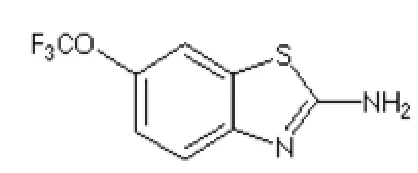
Drug Substance
Proper name: Riluzole
Chemical name: 2-amino-6-(trifluoromethoxy)benzothiazole
Molecular formula: C8H5F3N2OS
Molecular mass: 234.2
Structural formula:
Physicochemical properties:
Description: Riluzole is a white to slightly yellow powder.
Solubility: Riluzole is highly soluble in dimethylformamide, dimethylsulfoxide and methanol, freely soluble in dichloromethane, sparingly soluble in 0.1 N HCl and very slightly soluble in water and in 0.1 N NaOH.
pKa: 3.8.
Partition Coefficient: Octanol/Water is about 3000.
Melting Point: Between 117°C and 120°C.
CLINICAL TRIALS
The efficacy of RILUTEK (riluzole) as treatment of ALS was established in two of the four placebo-controlled trials (Studies #216 and #301) in which the median time to tracheostomy or death was longer for patients randomized to RILUTEK than for those randomized to placebo, by approximately 60 to 90 days. These results were confirmed in an open-label Phase IV trial (Study #401) utilizing historical controls, for which median survival time was found to be longer for RILUTEK-treated patients by 92 days.
Study Demographics and Trial Design
Table 4 - Summary of patient demographics for clinical trials in ALS
| Study # | Trial design | Dosage, route of administration and duration | Number of study patients | Number of patients assigned to RILUTEK |
| 216 | double-blind, placebo-controlled | 100 mg/day Oral | 155 | 77 |
| 301 | double-blind, placebo-controlled | 50 mg, 100 mg, or 200 mg/day Oral | 959 | 717 |
| 302 | double-blind, placebo-controlled | 100 mg/day Oral | 168 | 82 |
| 304 | double-blind, placebo-controlled | 100 mg/day Oral | 195 | 98 |
| 401 | Open-label, Prospective treatment arm and historical controls | 100 mg/day Oral | 414 | 414 |
Study Results
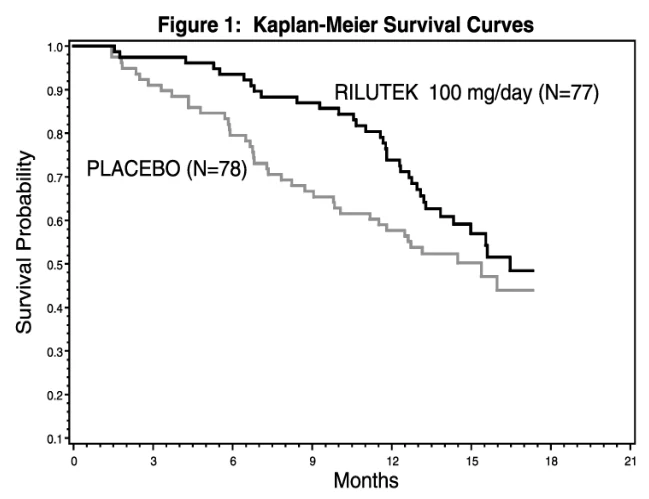
Study 216: In this double-blind, placebo-controlled study, performed in France and Belgium, 155 outpatients with definite or probable ALS were randomized to either 100 mg/day (50 mg BID) of RILUTEK or placebo.
Figure 1, which follows, displays the survival curves for time to death or tracheostomy. The vertical axis represents the proportion of individuals alive without tracheostomy at various times following treatment initiation (horizontal axis). Although these survival curves were not statistically significantly different when evaluated by the analysis specified in the study protocol (Logrank test p = 0.12), the difference was found to be significant by another analysis (Wilcoxon test p = 0.05). As seen, the study showed an early increase in survival in patients given RILUTEK. The effect was totally attributable to improved survival among the 32 patients with disease of bulbar onset. Among the patients in whom treatment failed during the study (tracheostomy or death) there was a difference between the treatment groups in median survival of approximately 90 days. There was no statistically significant difference in mortality at the end of the study.
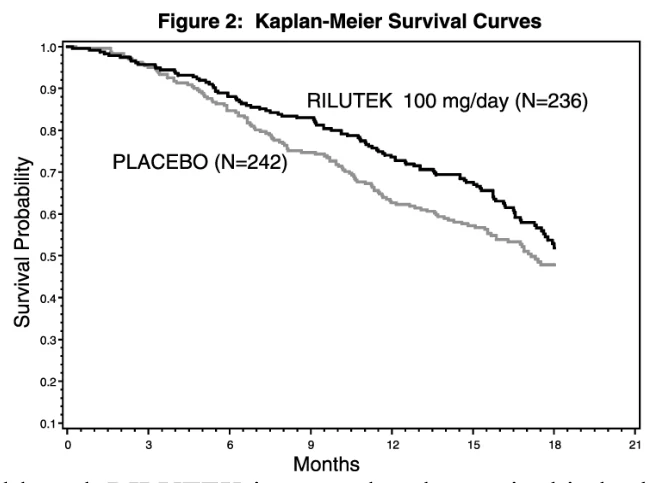
Study 301: In this second double-blind, placebo-controlled study, performed in seven countries in both Europe and North America, 959 patients with ALS were followed for 14 to 18 months. The patients were randomized to either 50 mg, 100 mg, 200 mg/day of RILUTEK or placebo.
Figure 2, which follows, displays the survival curves for time to death or tracheostomy for patients randomized to either 100 mg/day of RILUTEK or placebo. Although these survival curves were not statistically significantly different when evaluated by the analysis specified in the study protocol (Logrank test p = 0.076), the difference was found to be significant by another analysis (Wilcoxon test p = 0.05). As seen, the study showed an early increase in survival in patients given RILUTEK. Among the patients in whom treatment failed during the study (tracheostomy or death) there was a difference between the treatment groups in median survival of approximately 60 days. There was no statistically significant difference in mortality at the end of the study.
Although RILUTEK improved early survival in both studies, measures of muscle strength and neurological function did not show a benefit.
Study 302: In another study conducted at the same time as the previous one, 168 patients who did not qualify for the latter trial due to the advanced stage of their disease or because they were over 75 years of age. Survival time and motor function outcomes did not differ between placebo and RILUTEK 100 mg/day. The majority of patients had a vital capacity less than 60%.
Study 304: In this double-blind, placebo-controlled study, conducted in Japan, 195 ALS patients receiving either RILUTEK 100 mg/day or placebo were followed for 18 months. Entry criteria differed from those normally used in “survival” studies, as the patients had mild ALS at entry. Efficacy criteria included time to the following events: inability to walk alone, disability of upper limb function, tracheostomy, artificial ventilation, artificial nutrition or death. The study failed to show any differences between placebo and RILUTEK on any of the efficacy criteria.
Controversial issues in evaluating RILUTEK in the placebo-controlled clinical trial data:
$ the lack of effect in secondary measures
$ the absence of Quality of Life data
$ the difference in outcomes between geographical areas. In study 301, promising results were observed mainly in the French/ Belgium centres
$ the partial unblinding investigators, who were aware of the liver enzyme tests $ the lack of consistency between studies
$ patients in the USA were followed for 12 months, compared with 18 months in Europe $ the placebo group in North America performed much better than in Europe $ the fact that no mortality benefit has been demonstrated for RILUTEK
Study 401:
This trial was an open-label, confirmatory Phase IV trial conducted in Canada, and included two study arms: a prospective treatment arm in which 414 patients received open-label RILUTEK 100 mg/day and a historical control arm in which an equal number of historical control patients who had not received RILUTEK, and were diagnosed no earlier than 1990, were matched 1:1 with the prospective treatment patients. Prospective and historical patients were paired based on four criteria: 1) gender; 2) age at symptom onset; 3) classification of ALS (bulbar vs. peripheral); and 4) diagnosis of ALS (familial vs. sporadic). As with previous studies, duration of disease had to be ≤ 5 years and Forced Vital Capacity had to be ≥ 60% at study entry in the prospective cohort.
The primary efficacy endpoint was the time to the occurrence of an ALS-related event (Permanently Assisted Ventilation (PAV), tracheostomy or ALS-related death), as measured for each patient from their date of symptom onset. The duration of this study was expected to be a minimum of 39 months and a maximum of 66 months or until 200 RILUTEK-treated patients reached a primary endpoint. As with previous studies, discontinuation from RILUTEK drug treatment did not require discontinuation from the study.
There was a statistically significant advantage (p = 0.0005 based on the log rank statistic) seen in event-free rate for the RILUTEK-treated patients versus the historical controls according to the pre-planned analysis described in the protocol. However, the inclusion of patients whose disease 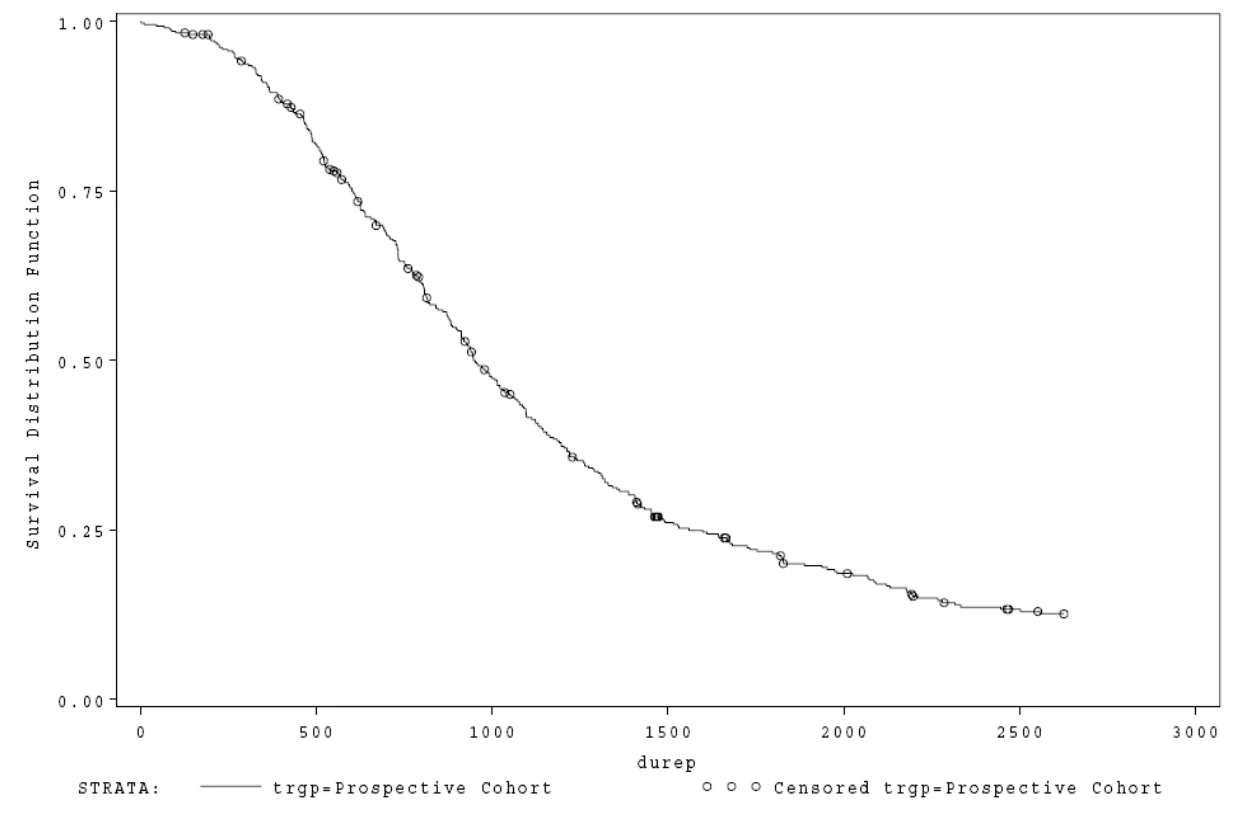
progressed rapidly (primarily from the historical control group) may have introduced a bias into the analysis. As a consequence, a post-hoc analysis was conducted using only patients known to have remained event-free for at least 300 days (i.e. from date of symptom onset). Thus, the two original patient pools (prospective and historical) were adjusted by this parameter, and then matching and the survival analysis performed as per the study protocol. This analysis, which was based on 393 pairs, showed a statistically significant advantage (p = 0.0068 based on the log rank statistic) for patients treated with RILUTEK versus the historical controls. The difference in median survival as estimated from the Kaplan-Meier curves was 92 days.
Figure 3: Kaplan-Meier Plot of Time to PAV, Tracheostomy or ALS Related Death for the prospective cohort (n = 414 patients).
DETAILED PHARMACOLOGY
Neuroprotective Effects
Riluzole is a neuroprotective agent on central neurons, blocking the excitotoxicity of glutamic acid on cultured rat motoneurons (0.1 M), and cell death induced by anoxia on cultured rat cerebellar neurons (EC50 ~ 30 M). On cultured rat cortical neurons, riluzole also blocks the excitotoxicity of the toxic factor present in the cerebrospinal fluid of ALS patients (0.5 M).
In vitro, riluzole protects hippocampal slices against necrosis induced by incubation with N-methyl-D-aspartic acid (NMDA) and veratridine (60 and 90 % protection respectively at 100 M).
In vivo, riluzole (8 mg/kg i.p. or 4 mg/kg i.v.) decreases the volume of ischemic necrotic lesions following median cerebral artery cauterisation in the rat and (at 4 mg/kg i.p.) following bilateral carotid artery occlusion in the gerbil. In this latter model, functional recovery could also be demonstrated using electroencephalographic techniques. The release of glutamic acid provoked by cerebral ischemia is blocked by riluzole (8 mg/kg i.v.). In a model of direct excitotoxicity, riluzole (4 and 8 mg/kg p.o.) could decrease lesion size following injection of the excitatory amino acid quinolinic acid into the striatum.
In the Mnd strain of mice, which develop a progressive motoneuron atrophy of unknown etiology, whose symptoms bear certain similarities to those seen in ALS, riluzole modified in part the evolution of the pathology. Given orally at a dose of 8 mg/kg five days a week for 15 weeks, riluzole significantly improved mobility in the terminal phase of the neuro-degenerative process. Upon sacrifice, a significant sparing of motoneurons in the lumbar part of the spinal cord was observed; motoneurons in other regions did not seem to be spared.
Other Effects on the Central Nervous System
Riluzole displays potent anticonvulsant properties against a wide range of convulsant agents, following both intraperitoneal and oral administration. It is active against convulsions evoked by excitatory amino acids and by maximal electroshock. The anticonvulsant activity is of rapid onset, and long-lasting (> 6 hours) in both mice and rats.
Riluzole is also a potent anticonvulsant agent in animals genetically prone to seizures. In the DBA/2 strain of mice, in which seizures can be elicited by auditory stimuli, riluzole protected against the appearance of clonic and tonic seizures in response to a bell with ED50 values of 2.5 and 1.2 mg/kg i.p., respectively. In baboons with photosensitive epilepsy, riluzole also blocked myoclonus in response to stroboscopic stimulation (4 and 8 mg/kg i.v.).
Mechanisms of Action
The mechanism of action of riluzole may involve blockade of glutamatergic transmission, as suggested by its anticonvulsivant profile. Riluzole (0.6 mg/kg i.p.) will block the firing of facial motoneurons in response to excitatory amino acids, without affecting excitatory responses to acetylcholine or serotonin in other brain regions. In several models, riluzole has been shown to inhibit excitatory amino acid-evoked neurotransmitter release, both in vivo and in vitro. Calcium mobilisation in primary cultures of rodent brain neurons in response to glutamic acid is also blocked by riluzole (IC50 = 0.3 M).
Electrophysiological experiments on isolated excitatory amino acid receptors expressed in the Xenopus oocyte have revealed that riluzole will inhibit currents evoked by NMDA (IC50 = 18 M) and kainic acid (IC50 = 167 M), suggesting that riluzole may interact directly, albeit non-competitively, with excitatory amino acid receptors.
Riluzole can block the release of glutamic acid, both in vivo and in vitro. This has been observed both for basal glutamic acid release, and for release evoked by neuronal activation.
Riluzole may prevent neuronal depolarisation by the blockade of voltage-dependent sodium channels, since it stabilises the inactivated state of this ion channel in frog sciatic nerve, rat cerebellar granule slices and on recombinant receptors expressed in Xenopus oocytes (Ki = 0.2 M).
Riluzole thus appears to have several different mechanisms of action, including a direct, but non-competitive, blockade of excitatory amino acid receptors, inhibition of glutamic acid release, inactivation of voltage-dependent sodium channels, and stimulation of a G-protein dependent signal transduction pathway. Whether these mechanisms are all really independent of one another, and if so, which of them accounts for the various behavioural and neuroprotective properties of riluzole remains to be demonstrated.
General Pharmacology
Riluzole seems to be generally well-tolerated at doses up to 10 mg/kg p.o. and 3 mg/kg i.v. The principal side-effect observed was sedation. Riluzole is inactive in tests predictive of neuroleptic, antidepressant, anxiolytic and psychostimulant activities.
Although riluzole modified the cardiac action potential in vitro, it did not have appreciable cardiovascular effects in vivo at doses up to 3 mg/kg i.v. Effects of riluzole on respiratory function were limited to small and transient increases in pulmonary resistance and decreases in pulmonary compliance in dogs (cumulative dose of 8 mg/kg i.v.). Decreased urine volume and potassium excretion was observed after administration of a high oral dose (25 mg/kg) in mice and decreased intestinal transit after 30 mg/kg p.o. in rats. At the dose of 20 mg/kg p.o., a significant increase in prothrombin time, associated with reduced prothrombin levels, was observed 24 hours after riluzole administration in rats.
TOXICOLOGY
Acute Toxicity
Single dose toxicity was evaluated in mice, rats and cynomolgus monkeys given a single oral (p.o.) or intravenous (i.v.) dose of riluzole and monitored for up to 14 days. The median lethal dose (LD50) of riluzole in mice was 85 mg/kg p.o. and 34.5 mg/kg i.v., while the LD50 in rats was 45 mg/kg p.o. and 21 mg/kg i.v. In monkeys, the highest non-lethal dose was 50 mg/kg p.o. and 10 mg/kg i.v., and the minimal lethal dose was 100 mg/kg p.o. and 20 mg/kg i.v.
Death was delayed following oral administration of riluzole (between 1 and 3 days after dosing in mice, on the day of dosing in rats and the day after dosing in monkeys), while death occurred rapidly following i.v. dosing (within 15 minutes in mice, 15 to 30 minutes in rats and 30 minutes in monkeys). Clinical signs induced by riluzole were similar in all species tested and reflected the drug’s impact on the CNS. They included lethargy/prostration, decreased motor activity, ataxia and other neurobehavioural signs.
Both mortality and clinical signs are considered to be secondary to exaggerated pharmacologic activity at the high doses administered in these studies. Riluzole has been shown to have sedative and myorelaxant properties at considerably lower doses in various pharmacologic tests; these properties would be expected of a drug which blocks glutamatergic transmission.
Subacute and Chronic Toxicity
In subacute and chronic toxicity studies completed in mice, rats and monkeys, clinical signs induced by riluzole (sedation, lethargy, prostration, reduced motor activity, ataxia, hypothermia) reflected the CNS-active pharmacologic properties of the compound. Riluzole-related mortality which occurred in these studies also was the consequence of exaggerated pharmacologic activity and was observed at doses at least 15 times higher than the proposed therapeutic dose.
In all of these studies, CNS effects represented the dose-limiting toxicity. Effects on food consumption and, consequently body weight gain also were noted in these studies and were considered secondary to CNS effects.
Reproductive and Teratology
Oral administration of riluzole to pregnant animals during the period of organogenesis caused embryotoxicity in rats and rabbits at doses of 27 mg/kg and 60 mg/kg, respectively, or 2.6 and 11.5 times, respectively, the recommended maximum human daily dose on a mg/m2 basis. Evidence of maternal toxicity was also observed at these doses.
When administered to rats prior to and during mating (males and females) and throughout gestation and lactation (females), riluzole produced adverse effects on pregnancy (decreased implantations, increased intrauterine death) and offspring viability and growth at an oral dose of 15 mg/kg or 1.5 times the maximum daily dose on a mg/m2 basis.
| Riluzole impaired fertility when administered to male and female rats prior to and during mating | |
| at an oral dose of 15 mg/kg or 1.5 times the maximum daily dose on a mg/m2 basis. | |
Mutagenicity
Riluzole:
Genotoxicity in vitro assays, using rat liver S9 fraction to model metabolism, and in vivo assays in rat and mouse, gave no evidence of genotoxic potential for riluzole. The in vitro assays conducted with riluzole consisted of gene mutation tests (Ames tests, HGPRT test in mouse lymphoma cells, and mouse lymphoma assay) and chromosome aberration test in human lymphocytes. In vivo assays consisted of micronucleus test in mouse bone marrow and chromosome aberration test in rat bone marrow. There was an equivocal clastogenic response in the in vitro lymphocyte chromosomal aberration assay, which was not reproduced in a second assay performed at equal or higher concentrations; riluzole was therefore considered nonclastrogenic in human lymphocytes.
n-hydroxyriluzole:
The genotoxic potential of n-hydroxyriluzole, the main and active metabolite of riluzole, was evaluated in bacterial mutagenicity (Ames) tests, the in vitro UDS test in rat hepatocytes, the mouse lymphoma mutation assay in L5178Y cells, the HPRT mutation test in the L5178Y cell line, in vitro chromosomal aberration assays in human lymphocytes, and the in vivo mouse micronucleus assay in bone marrow.
N-hydroxyriluzole caused chromosomal damage in the in-vitro mammalian mouse lymphoma assay and in the in vitro micronucleus assay that used the same mouse lymphoma cell line, LY1787, but was not mutagenic in this cell line when tested in the HPRT gene mutations assay. N-hydroxyriluzole was negative in all other in vitro tests (two Ames tests with and without rat or hamster S9, an in vitro UDS test in rat hepatocytes, two chromosome aberrations tests in human lymphocytes) and in an in vivo test (micronucleus test in mouse bone marrow).
REFERENCES
- 1. Benavides J, Camelin J, Mitrani N, et al. 2-amino-6-trifluoromethoxy benzothiazole, a possible antagonist of excitatory amino acids neurotransmission-II. Biochemical properties. Neuropharm 1985;24:1085-1092.
- 2. Benoit E, Escance D. Riluzole specifically blocks inactivated Na channels in myelinated nerve fibre. Pflügers Arch 1991;419:603-609.
- 3. Bensimon G, Lacomblez L, Meininger V. A controlled trial of riluzole in amyotrophic lateral sclerosis. New Eng J Med 1994;330:585-591.
- 4. Bryson H, Fulton B, Benfield P. Riluzole. A review of its pharmacodynamic and pharmacokinetic properties and therapeutic potential in amyotrophic lateral sclerosis. Drugs 1996;53(4):549-563.
- 5. Couratier P, Sindou P, Esclaire F, et al. Neuroprotective effects of riluzole in ALS CSF toxicity. Neuroreport, 1994;5:1012-1014.
- 6.
Doble A. The pharmacology and mechanism of action of riluzole. Neurology
1996;47(Suppl.4):S233-S241.
- 7.
Guiloff Rj, Goonetilleke A, Emami J. Riluzole and amyotrophic lateral sclerosis. Lancet
1996;348:336-337.
- 8. Hubert J. Delumeau J, Glowinski J, et al. Antagonism by riluzole of entry of calcium evoked by NMDA and veratridine in rat cultured granule cells: evidence for a dual mechanism of action. Br J Pharmacol 1994;113:216-267.
- 9. Lacomblez L, Bensimon G, Leigh P, et al. Dose-ranging study of riluzole in amyotrophic lateral sclerosis. Lancet 1996;347(9013):1425-1431.
- 10.
Lacomblez L, Bensimon G, Leigh P, et al. A confirmatory dose-ranging study in ALS.
Neurology 1996;47(Suppl.4):S242-S250.
- 11. Malgouris C, Bardot F, Daniel M, et al. Riluzole, a novel antiglutamate, prevents memory loss and hippocampal neuronal damage in ischemic gerbils. J Neurosci 1989;9:3720-3727.
- 12.
Martin D, Thompson M, Nadler V. The neuroprotective agent riluzole inhibits release of
L-glutamate and L-aspartate from slices of the hippocampal area CA1. Eur J Pharmacol 1993;250:473-476.
- 13.
Miller RG, Bouchard JP, Duquette P, et al. Clinical trials of riluzole in patients with ALS.
Neurology 1996;47(Suppl.2):S86-S92.
- 14. Mizoule J, Meldrum B, Mazadier M, et al. 2-amino-6-trifluoromethoxy benzothiazole, a possible antagonist of excitatory amino acids neurotransmission-II. Anticonvulsant properties. Neuropharm 1985;24:767-773.
- 15. Practice Advisory on the treatment of amyotrophic lateral sclerosis with riluzole: Report of the Quality Standards Subcommittee of the American Academy of Neurology. Neurology 1997;49:657-659.
- 16. Riviere M, Meininger V, Zeisser P, et al. An analysis of extended survival in patients with amyotrophic lateral sclerosis treated with riluzole. Arch Neurol 1998;55:526-528.
- 17.
Rowland LP. Riluzole for the treatment of amyotrophic lateral sclerosis - too soon to tell?
N Engl J Med 1994;330:636-637.
- 18. Riluzole in amyotrophic lateral sclerosis. N Engl J Med 1994;331:272-274.