


Product Monograph - Albrioza
RECENT MAJOR LABEL CHANGES
| 1 INDICATIONS | 05/2024 |
|---|---|
| 3 SERIOUS WARNINGS AND PRECAUTIONS BOX | 05/2024 |
| 7 WARNINGS AND PRECAUTIONS, Carcinogenesis and Mutagenesis | 03/2023 |
Table of Contents……………………………………………………………………………3
1 INDICATIONS ..................................................................................................... 5
1.1 Pediatrics .................................................................................................... 5
1.2 Geriatrics .................................................................................................... 5
2 CONTRAINDICATIONS ...................................................................................... 5
3 SERIOUS WARNINGS AND PRECAUTIONS BOX ........................................... 5
4 DOSAGE AND ADMINISTRATION .................................................................... 5
4.1 Dosing Considerations................................................................................ 5
4.2 Recommended Dose and Dosage Adjustment ........................................... 5
4.3 Reconstitution ............................................................................................. 6
4.4 Administration ............................................................................................. 6
4.5 Missed Dose ............................................................................................... 6
5 OVERDOSAGE ................................................................................................... 6
6 DOSAGE FORMS, STRENGTHS, COMPOSITION AND PACKAGING ............ 7
7 WARNINGS AND PRECAUTIONS ..................................................................... 7
7.1 Special Populations .................................................................................... 9
7.1.1 Pregnant Women .................................................................................. 9
7.1.2 Breast-feeding ....................................................................................... 9
7.1.3 Pediatrics .............................................................................................. 9
7.1.4 Geriatrics ............................................................................................... 9
8 ADVERSE REACTIONS ..................................................................................... 9
8.1 Adverse Reaction Overview ....................................................................... 9
8.2 Clinical Trial Adverse Reactions ............................................................... 10
8.3 Less Common Clinical Trial Adverse Reactions ....................................... 13
8.4 Abnormal Laboratory Findings: Hematologic, Clinical Chemistry and Other Quantitative Data ............................................................................................... 14
8.5 Post-Market Adverse Reactions ............................................................... 14
9 DRUG INTERACTIONS .................................................................................... 14
9.3 Drug-Behavioural Interactions .................................................................. 14
9.4 Drug-Drug Interactions ............................................................................. 14
9.5 Drug-Food Interactions ............................................................................. 16
9.6 Drug-Herb Interactions ............................................................................. 16
9.7 Drug-Laboratory Test Interactions ............................................................ 16
10 CLINICAL PHARMACOLOGY .......................................................................... 16
10.1 Mechanism of Action ........................................................................... 16
10.2 Pharmacodynamics ............................................................................. 16
10.3 Pharmacokinetics ................................................................................ 17
11 STORAGE, STABILITY AND DISPOSAL ........................................................ 22
12 SPECIAL HANDLING INSTRUCTIONS ........................................................... 22
PART II: SCIENTIFIC INFORMATION ........................................................................ 23
13 PHARMACEUTICAL INFORMATION .............................................................. 23
14 CLINICAL TRIALS ............................................................................................ 24
14.1 Clinical Trial by Indication .................................................................... 24
Amyotrophic Lateral Sclerosis ........................................................................... 24
15 MICROBIOLOGY .............................................................................................. 28
16 NON-CLINICAL TOXICOLOGY ........................................................................ 28
PATIENT MEDICATION INFORMATION .................................................................... 31
PART I: HEALTH PROFESSIONAL INFORMATION
1 INDICATIONS
ALBRIOZA (sodium phenylbutyrate/ursodoxicoltaurine) is indicated for:
- The treatment of patients with amyotrophic lateral sclerosis (ALS).
The clinical benefit of ALBRIOZA in the ALS setting remains unconfirmed. ALBRIOZA must not be initiated in new patients.
Distribution Restriction
ALBRIOZA is only available through the Patient Support Program to patients currently receiving treatment with ALBRIOZA. ALBRIOZA may only be dispensed to patients through the Patient Support Program. ALBRIOZA will be withdrawn from the Canadian market no later than December 31, 2024. For more information on the Patient Support Program contact Amylyx’ patient support program at 1-877-710-0711 or support@amylyxcareteam.ca.
1.1 Pediatrics
Pediatrics (<18 years): No data are available to Health Canada; therefore, Health Canada has not authorized an indication for pediatric use.
1.2 Geriatrics
Geriatrics (≥65 years of age): Limited data with the use of ALBRIOZA in this population are available. Of the 89 patients with ALS who received ALBRIOZA in the Phase II safety and efficacy study, 25 patients were between 65 and 79 years of age.
2 CONTRAINDICATIONS
ALBRIOZA is contraindicated in:
- patients who are hypersensitive to this drug, bile salts, or to any ingredient in the formulation, including any non-medicinal ingredients, or component of the container. For a complete listing see 6 DOSAGE FORMS, STRENGTHS, COMPOSITION AND PACKAGING.
- Pregnancy (see 1
- Pregnant Women).
- Breast-feeding (see 14.1.2 Breast-feeding).
3 SERIOUS WARNINGS AND PRECAUTIONS BOX
ALBRIOZA is only available through the Patient Support Program to patients currently receiving treatment with ALBRIOZA (see 1 INDICATIONS, Distribution Restriction).
4 DOSAGE AND ADMINISTRATION
4.1 Dosing Considerations
If ALBRIOZA is not tolerated at the proposed dose of one sachet twice a day, dosage may be reduced to one sachet daily, although the efficacy of this dosage has not been studied.
NOC/c
NOC/c
NOC/c
4.2 Recommended Dose and Dosage Adjustment
For the first 3 weeks of treatment, take 1 sachet daily. After 3 weeks, dosing should be increased to 1 sachet twice a day.
Hepatic Impairment: The use of ALBRIOZA in patients with any degree of hepatic impairment has not been studied. Caution is warranted when dosing ALS patients with hepatic insufficiency (See 7 WARNINGS AND PRECAUTIONS, Hepatic/Biliary/Pancreatic).
Renal Impairment: The use of ALBRIOZA in patients with any degree of renal impairment has not been studied. Caution is warranted when dosing ALS patients with renal insufficiency (see 7 WARNINGS AND PRECAUTIONS, Renal).
Pediatrics: Health Canada has not authorized an indication for pediatric use.
The recommended dose of ALBRIOZA (two sachets daily) contains 400 mg sucralose, which is equivalent to 53% of the acceptable daily intake.
4.3 Reconstitution
Oral Suspension:
The contents of one sachet are to be vigorously stirred with a cup (250 mL or 8 oz.) of room temperature water and taken orally or administered via feeding tube within 1 hour of preparation.
4.4 Administration
ALBRIOZA is to be taken before a meal. This is particularly important for patients of low body weight (< 70 kg) (see 10.3 Pharmacodynamics, Absorption).
To reduce the bitter aftertaste, patients can:
- Use mint-flavored mouth strips or mouth spray immediately before or after taking ALBRIOZA.
- Eat a snack or meal, eat honey, or drink milk after taking ALBRIOZA.
- Avoid drinking fruit juice at the same time as ALBRIOZA as it may magnify the bitter taste.
Patients with Feeding Tubes
For any dose, the contents of one sachet are to be vigorously stirred with a cup (250 mL or 8 oz.) of room temperature water and administered via feeding tube within 1 hour of preparation.
4.5 Missed Dose
If a patient forgets to take one or more doses, they should take their next dose at the normal time and in the normal amount. Patients should not take more than what is prescribed. If a patient misses one dose, they should skip it and continue with their normal schedule.
5 OVERDOSAGE
There have been no reported experiences involving overdose of ALBRIOZA. In the event of an overdose, treatment should be discontinued immediately, and supportive measures implemented.
The adverse events reportedly associated with high levels of phenylacetate, which may occur after overdosage with ALBRIOZA, have most commonly included nausea, headache, emesis, fatigue, weakness, lethargy, somnolence, dizziness, slurred speech, memory loss, confusion, and disorientation. Except for the symptoms of Kussmaul respiration, metabolic acidosis, cerebral edema, and coma associated with a fatal overdose of sodium phenylacetate/sodium benzoate, these symptoms have been reported as rapidly reversible with reduced dosing or interruption of dosing.
No information is available on TURSO and overdosage.
No specific antidote for the treatment of ALBRIOZA overdose is available.
| For management of a suspected drug overdose, contact your regional poison control centre. |
|---|
6 DOSAGE FORMS, STRENGTHS, COMPOSITION AND PACKAGING
Table 1: Dosage Forms, Strengths, Composition and Packaging
ALBRIOZA is a ~10-gram powder-filled sachet containing 3 g sodium phenylbutyrate and 1 g ursodoxicoltaurine for oral suspension.
ALBRIOZA is packaged in the following configurations:
- Seven individual sachets filled into a carton (7 sachets total)
- 14 individual sachets filled in a small carton; 4 small cartons are packed into a larger carton (56 sachets total)
7 WARNINGS AND PRECAUTIONS
General
The recommended dose of ALBRIOZA (two sachets daily) contains 927.9 mg of sodium. ALBRIOZA should be used with caution in patients with congestive heart failure, renal insufficiency, or other conditions associated with sodium retention with edema.
The recommended dose of ALBRIOZA (two sachets daily) contains 3.2 g of dextrates. Patients with rare hereditary problems of glucose-galactose malabsorption should be made aware that the dextrates included in ALBRIOZA contain 93-99% glucose.
The recommended dose of ALBRIOZA (two sachets daily) contains 800 mg sorbitol. Sorbitol is known to cause gastrointestinal discomfort and laxative effects at doses greater than 5 g per day.
Carcinogenesis and Mutagenesis
ALBRIOZA was negative for genotoxicity in an in vivo rat micronucleus assay but was not tested in other genotoxicity assays. ALBRIOZA has not been evaluated to determine its potential for carcinogenicity. As such, its potential for carcinogenicity cannot be ruled out. See 16 NON-CLINICAL TOXICOLOGY; Genotoxicity; Mutagenicity; Carcinogenicity.
Cardiovascular
| Route of Administration | Dosage Form / Strength/Composition | Non-medicinal Ingredients |
| Oral | Powder for oral suspension/ 3 g sodium phenylbutyrate, 1 g ursodoxicoltaurine / per sachet | Flavor masking and mixed berry flavoring, hydrated dextrates, maltodextrin, silicon dioxide, sodium phosphate dibasic anhydrous, sodium stearyl fumarate, sorbitol, sucralose. |
NOC/c
There was an imbalance in cardiac events and electrocardiogram (EKG) abnormalities between the ALBRIOZA-treated patients and placebo-treated patients. All cardiac adverse events occurred in the ALBRIOZA treatment group.
A total of 14 ALBRIOZA-treated patients had a total of 17 events (8 cardiac events, 9 EKG abnormalities and 3 patients with both). Of those, 8 patients had a total of 11 events in the main phase (6 cardiac events, 5 EKG abnormalities and 3 patients with both), and 6 patients in the OLE (2 cardiac events and 4 EKG abnormalities). Three (3) cases of EKG abnormalities were reported for the placebo group.
Cardiac adverse events determined to be possibly due to ALBRIOZA included atrial fibrillation (2 cases), atrioventricular block first degree, bundle branch block left, left anterior hemiblock, palpitations (2 cases), tachycardia and intraventricular conduction delay.
There was one serious event of cardiac death in the open-label extension.
Hepatic/Biliary/Pancreatic
The use of ALBRIOZA in patients with any degree of hepatic impairment has not been studied. Caution is warranted when dosing ALS patients with hepatic insufficiency.
Because sodium phenylbutyrate and ursodoxicoltaurine are metabolized in the liver and kidney, increased plasma levels may occur with hepatic impairment. The effect of hepatic impairment on the pharmacokinetics of ALBRIOZA has not been studied. It is unknown whether patients with hepatic impairment are more at risk for adverse reactions or reduced efficacy of ALBRIOZA (see 10.3 Pharmacokinetics).
ALBRIOZA should also be used with caution:
- in patients with enterohepatic circulation disorders (e.g., frequent biliary colic, biliary infection),
- in pancreatic disorders or intestinal diseases which may alter the concentration of bile acids (e.g., ileal resection and stoma, regional ileitis) and affect ursodoxicoltaurine levels,
- when administered in a setting of partial biliary obstruction of extra-hepatic origin. Maintenance of bile flow is important in patients taking ursodoxicoltaurine.
Neurologic
The major metabolite of sodium phenylbutyrate, phenylacetate (PAA), is associated with neurotoxicity.
In cancer patients administered phenylacetate intravenously, signs and symptoms of neurotoxicity, including somnolence, fatigue, light headedness, headache, dysgeusia, hypoacusis, disorientation, impaired memory, and exacerbation of pre-existing neuropathy, have been seen at phenylacetate-plasma concentrations ≥ 3.5 mmol/I. These concentrations are approximately ten-fold greater than maximal concentrations of PAA (0.4 mmol/l) predicted in participants dosed with ALBRIOZA. The relevance to patients with ALS taking ALBRIOZA is unknown.
Prenatal exposure to PAA has also been associated with neurotoxicity in rats (see 16 NON-CLINICAL TOXICOLOGY).
Renal
The use of ALBRIOZA in patients with any degree of renal impairment has not been studied. Caution is warranted when dosing ALS patients with renal insufficiency.
Patients with renal impairment are at risk for sodium retention/edema as ALBRIOZA contains 927.9 mg of sodium per daily maintenance dose.
The effect of renal impairment on the pharmacokinetics of ALBRIOZA has not been studied; therefore, it is unknown whether these patients are more at risk for adverse reactions or reduced efficacy of ALBRIOZA (see 10.3 Pharmacokinetics, Renal Insufficiency). Phenylbutyrate and its major metabolite phenylacetate are metabolized in the liver and kidney. Additionally, the main terminal metabolite of phenylacetate, phenylacetylglutamine, is excreted by the kidney. Therefore, increased plasma levels of phenylbutyrate and metabolites may occur with renal impairment.
The pharmacokinetics of ALBRIOZA in patients undergoing hemodialysis are unknown.
7.1 Special Populations
14.1.1 Pregnant Women
ALBRIOZA is contraindicated during pregnancy (see 2 CONTRAINDICATIONS). Inform female patients of childbearing potential to use effective methods of birth control. Men and women wishing to have children should wait at least 30 days after stopping treatment with ALBRIOZA before attempting to conceive.
The safety of ALBRIOZA in human pregnancy is unknown. In animals, the effects of ALBRIOZA on reproductive toxicity have not been adequately studied. Additionally, animal studies in the scientific literature have shown toxicity of phenylacetate (the major metabolite of phenylbutyrate) on embryo-fetal development. The extent of prenatal exposure to sodium phenylbutyrate, ursodoxicoltaurine, their metabolites (including phenylacetate), and their derivatives in mothers taking ALBRIOZA is unknown (see 16 NON-CLINICAL TOXICOLOGY, Reproductive and Developmental Toxicology).
14.1.2 Breast-feeding
ALBRIOZA is contraindicated during breast-feeding (see 2 CONTRAINDICATIONS).
There are no data on the presence of sodium phenylbutyrate, ursodoxicoltaurine, their metabolites, or their derivatives in human milk, the effects of ALBRIOZA on the breastfed infant, or the effects of ALBRIOZA on milk production.
There is no evidence for whether sodium phenylbutyrate, ursodoxicoltaurine, their metabolites, or their derivatives are excreted in animal milk.
14.1.3 Pediatrics
Pediatrics (< 18 years): No data are available to Health Canada; therefore, Health Canada has not authorized an indication for pediatric use.
14.1.4 Geriatrics
Geriatrics (≥ 65 years): Limited data are available with the use of ALBRIOZA in this population.
Of the 89 patients with ALS who received ALBRIOZA in the Phase II safety and efficacy study, 25 patients were between 65 and 79 years of age.
8 ADVERSE REACTIONS
8.1 Adverse Reaction Overview
The most common adverse reactions with ALBRIOZA in the CENTAUR study were mainly gastrointestinal-related (e.g., diarrhea, nausea, constipation, decreased appetite, abdominal pain, flatulence) and occurred more often during the first 3 weeks of treatment.
Discontinuation due to an adverse event occurred in 20% (18/89) of ALBRIOZA patients vs. 10% (5/48) of patients on placebo. Half of the ALBRIOZA patients who discontinued did so because of diarrhea (5/18 patients) and abdominal pain and/or discomfort (4/18 patients).
A total of 6 drug-related TEAEs in 5 ALBRIOZA group subjects (diverticulitis, diarrhea, nephrolithiasis, depression and fatigue, and nausea) and in 2 placebo group subjects (diarrhea and nephrolithiasis) were assessed as serious and/or severe.
There was an imbalance in cardiac events and electrocardiogram (EKG) abnormalities between the ALBRIOZA-treated patients and placebo-treated patients. All cardiac adverse events occurred in the ALBRIOZA treatment arm.
Overall, 5 patients (6%) on ALBRIOZA and 2 (4%) patients on placebo died during the 24-week study. The majority of deaths in the study were from respiratory failure/arrest (3 patients on ALBRIOZA and 2 patients on placebo).
8.2 Clinical Trial Adverse Reactions
Clinical trials are conducted under very specific conditions. The adverse reaction rates observed in the clinical trials, therefore, may not reflect the rates observed in practice and should not be compared to the rates in the clinical trials of another drug. Adverse reaction information from clinical trials may be useful in identifying and approximating rates of adverse drug reactions in real-world use.
CENTAUR STUDY
CENTAUR was a multicenter, randomized, placebo-controlled, double-blind, parallel-group, 24- week study with an open-label phase evaluating the safety and efficacy of ALBRIOZA in 137 patients ≥18 and <80 years of age with a confirmed definite diagnosis of sporadic or familial ALS, with onset of symptoms within 18 months of study. Patients were randomized in a 2:1 ratio to receive ALBRIOZA (n=89) or matching placebo (n=48). Key exclusion criteria included slow vital capacity (SVC) ≤60%, the presence of a tracheostomy, abnormal liver or renal function, severe pancreatic or intestinal disorders, biliary disease, cholecystectomy, poorly controlled arterial hypertension, and history of congestive heart failure.
Concomitant use of standard of care (SOC) treatments (e.g., riluzole and/or edaravone) were permitted, with 77% of all patients taking at least one additional ALS drug; 71% taking riluzole and 34% taking edaravone.
Both treatment groups were comparable, with no statistically significant differences with respect to demographics, general baseline characteristics, and baseline disease characteristics except that more patients in the placebo group were receiving edaravone at or prior to study entry (50%) compared with patients in the ALBRIOZA treatment group (25%); more patients in the placebo group were receiving riluzole at or prior to study entry (77%) compared with patients in the ALBRIOZA treatment group (68%); more patients in the ALBRIOZA treatment group were bulbar onset patients (placebo vs. ALBRIOZA: 21% vs. 30%). The mean age at enrollment was 57.7 years; the majority of patients were male (68%), predominantly White (95%) and of non-Hispanic or Latino ethnicity (95%).
The mean treatment duration was 19.7 weeks for ALBRIOZA and 21.5 weeks on placebo.
NOC/c
Table 2: Adverse Reactions Reported in >2 (3%) of ALBRIOZA-Treated Patients and that occurred ≥1% more frequently than in placebo-treated patients in the CENTAUR study
ALBRIOZA + SOC*† n = 89 (%) | Placebo + SOC*‡ n = 48 (%) | |
Gastrointestinal Diarrhea Nausea Constipation Abdominal pain (combined) Flatulence | 16 (18%) 8 (9%) 7 (8%) 9 (10%) 3 (3%) | 5 (10%) 2 (4%) 2 (4%) 1 (2%) 0 (0%) |
General Disorders and Administration Site Conditions Fatigue | 7 (8%) | 1 (2%) |
Metabolism and Nutrition Disorders Decreased appetite | 6 (7%) | 2 (4%) |
Nervous System Disorders Dizziness Dysgeusia Somnolence | 5 (6%) 3 (3%) 3 (3%) | 1 (2%) 1 (2%) 0 (0%) |
Skin and Subcutaneous Tissue Disorders Skin odor abnormal | 3 (3%) | 0 (0%) |
*SOC = Standard of Care
†70% were taking riluzole and 33% were taking edaravone.
‡77% were taking riluzole and 54% were taking edaravone.
See Table 4 for laboratory abnormalities reported in ALBRIOZA-treated patients.
A total of 23 serious adverse events (14 in the ALBRIOZA treatment group and 9 in the placebo group) were reported in 19 (14%) participants overall (11 [12%] in the ALBRIOZA treatment group and 8 [17%] in the placebo group). Overall, 7 participants (5 [6%] in the ALBRIOZA treatment group and 2 [4%] in the placebo group) died over the course of the double-blind treatment phase. Regardless of causality, causes of death in the ALBRIOZA-treated group were as follows: respiratory failure (2), respiratory arrest, subdural hematoma, and diverticular perforation (1 each).
OPEN-LABEL EXTENSION (OLE) PHASE
The participants who completed the 24-week, parallel group phase were eligible to enroll in an
Open-Label Extension (OLE) phase designed to evaluate the long-term (up to 132 weeks) safety of ALBRIOZA.
A total of 56 ALBRIOZA-treated (AA) and 34 placebo-treated (PA) patients from the CENTAUR study continued participation into the OLE. All patients in the OLE were treated with ALBRIOZA orally (or via feeding tube) administered as 1 sachet twice daily (BID) (no dose-escalation) and were permitted to continue on a stable dose of riluzole or edaravone. Baseline demographics and disease characteristics were consistent with those of the double-blind portion of the study.
Patients continuing treatment with ALBRIOZA in the OLE had a mean exposure of 44 weeks, which was 11 weeks longer than the exposure for the placebo to ALBRIOZA crossover patients.
Table 3: Adverse Reactions Reported in ≥2% of Patients Overall in the OLE study
PA + SOC* n = 34 (%) | AA + SOC* n = 56 (%) | |
Gastrointestinal Disorders Nausea Diarrhea Abdominal discomfort Vomiting Abdominal distension | 5 (15%) 6 (18%) 0 (0%) 1 (3%) 2 (6%) | 4 (7%) 2 (4%) 3 (5%) 2 (4%) 0 (0%) |
Investigations Alanine aminotransferase increased Aspartate aminotransferase increased Transaminases increased Weight decreased | 0 (0%) 0 (0%) 1 (3%) 2 (6%) | 3 (5%) 2 (4%) 1 (2%) 1 (2%) |
Nervous System Disorders Headache | 1 (3%) | 1 (2%) |
Blood and Lymphatic System Disorders Leukopenia | 0 (0%) | 2 (4%) |
Metabolism and Nutrition Disorders Decreased appetite | 1 (3%) | 1 (2%) |
* AA = active→active; PA = placebo→active; SOC = standard of care
A total of 40 serious adverse events were reported in 31 (34%) participants overall. Overall, 15 participants died during study participation in the OLE phase. Causes of death were as follows: respiratory failure (10), disease progression (2), ALS, cardiac arrest, and pneumonia aspiration (1 each).
Cardiac events/EKG abnormalities
There was an imbalance in cardiac events and electrocardiogram (EKG) abnormalities between the ALBRIOZA-treated patients and placebo-treated patients. All cardiac adverse events occurred in the ALBRIOZA treatment group.
A total of 14 ALBRIOZA-treated patients had a total of 17 events (8 cardiac events, 9 EKG abnormalities and 3 patients with both). Of those, 8 patients had a total of 11 events in the main phase (6 cardiac events, 5 EKG abnormalities and 3 patients with both), and 6 patients in the OLE (2 cardiac events and 4 EKG abnormalities). Three (3) cases of EKG abnormalities were reported for the placebo group.
Cardiac adverse events determined to be possibly due to ALBRIOZA included atrial fibrillation (2 cases), atrioventricular block first degree, bundle branch block left, left anterior hemiblock, palpitations (2 cases), tachycardia and intraventricular conduction delay.
There was one serious event of cardiac death in the open-label extension.
8.3 Less Common Clinical Trial Adverse Reactions
List of less common adverse reactions reported in ≤ 2 of ALBRIOZA-treated patients and that occurred at least 1% more frequently than in placebo-treated patients, in the CENTAUR study.
Blood and lymphatic system disorders: leukopenia
Cardiac disorders: atrial fibrillation, atrioventricular block first degree, bundle branch block left
Eye disorders: blepharospasm, eye irritation
Gastrointestinal disorders: dyspepsia, gastrointestinal hypermotility, aphthous ulcer, epigastric discomfort, faeces soft, hypertrophy of tongue papillae, retching, tooth discolouration
General disorders and administration site conditions: asthenia, chest pain, chills, feeling abnormal, pyrexia, swelling
Infections and infestations: diverticulitis, upper respiratory tract infection, urinary tract infection
Injury, poisoning and procedural complications: fall
Investigations: aspartate aminotransferase increased, transaminases increased, mean cell volume increased
Metabolism and nutrition disorders: hypochloraemia
Musculoskeletal and connective tissue disorders: muscle twitching
Nervous system disorders: migraine, muscle contractions involuntary, paraesthesia
Psychiatric disorders: adjustment disorder with depressed mood, affect lability, anger, anxiety, euphoric mood
Renal and urinary disorders: pollakiuria, polyuria
Reproductive system and breast disorders: menstruation irregular
Respiratory, thoracic and mediastinal disorders: dyspnoea, throat irritation, cough, sinus congestion
Skin and subcutaneous tissue disorders: rash, rash erythematous
Vascular disorders: hot flush, deep vein thrombosis, flushing
8.4 Abnormal Laboratory Findings: Hematologic, Clinical Chemistry and Other Quantitative Data
Clinical Trial Findings
Table 4: Laboratory abnormalities reported in >2 of ALBRIOZA- treated patients and that occurred at least 1% more frequently than in placebo-treated patients in the CENTAUR study
ALBRIOZA + SOC*† n = 89 (%) | Placebo + SOC*‡ n = 48 (%) | |
Proteinuria Ketonuria Crystal urine present | 6% 5% 3% | 4% 2% 0% |
*SOC = Standard of Care
†70% were taking riluzole and 33% were taking edaravone.
‡77% were taking riluzole and 54% were taking edaravone.
8.5 Post-Market Adverse Reactions
No new adverse drug reactions have been identified in the post-market setting.
9 DRUG INTERACTIONS
9.3 Drug-Behavioural Interactions
The effect of ALBRIOZA on sexual activity, driving, and operating machinery have not been established.
The interaction of ALBRIOZA, cigarette smoking, cannabis use, and/or alcohol consumption has not been studied.
9.4 Drug-Drug Interactions
No clinical drug-drug interaction studies have been performed with ALBRIOZA.
Potential interactions between ALBRIOZA and riluzole, and ALBRIOZA and edaravone, have not been studied.
The drugs listed in Table 5 are based on drug interaction studies, or potential interactions due to the expected magnitude and seriousness of the interaction (i.e., those identified as contraindicated).
Table 5: Established or Potential Drug-Drug Interactions
| Proper/Common name | Source of Evidence | Effect | Clinical comment |
|---|---|---|---|
| Bile acid sequestering agents (e.g., cholestyramine, colestipol, colesevlam) | T | Bile acid sequestering agents may interfere with the absorption of ursodoxicoltaurine | Do not use bile acid sequestering agents with ALBRIOZA |
| Inhibitors of the bile salt efflux pump (BSEP) such as cyclosporine | T | Inhibitors of the BSEP may exacerbate accumulation of conjugated bile salts in the liver and result in clinical symptoms | If concomitant use is deemed necessary, monitoring of serum transaminases and bilirubin is recommended |
| Aluminum-based antacids | T | Aluminum-based antacids may interfere with the absorption of ursodoxicoltaurine | If aluminum-based antacids are required, take at least 2 hours prior to ALBRIOZA administration, or 2 hours afterwards |
| Probenecid | T | Probenecid may affect renal excretion of the conjugated product of sodium phenylbutyrate as well as its metabolite | Probenecid should not be used with ALBRIOZA |
| Histone deacetylase (HDAC) inhibitors such as valproate, vorinostat, romidepsin, panobinostat, topiramate and lithium | T | The combination of these drugs with ALBRIOZA may lead to excess inhibition of HDAC. | ALBRIOZA should not be administered concomitantly with other HDAC inhibitors as class- or product-specific adverse reactions may be additive. |
| Organic anion transporter (OAT1) substrates such as penicillins, NSAIDs that are known substrates of OAT1/3 (e.g., diclofenac and ketoprofen) methotrexate, HIV protease inhibitors, and antivirals | T | Plasma concentrations of OAT1 substrates may be increased if given concomitantly with ALBRIOZA. In rat, ALBRIOZA was associated with an increase in exposure to tenofovir (a known substrate for OAT1). | Use with caution. |
| Proper/Common name | Source of Evidence | Effect | Clinical comment |
|---|---|---|---|
| Drugs with narrow therapeutic index that are substrates of CYP P450 substrates (e.g., mexiletine, alfentanil, quinidine, cyclosporine, warfarin, digoxin) | T | ALBRIOZA inhibits CYP1A2, CYP2C19, CYP2C8, CYP2C9, CYP2D6, CYP2B6, and CYP3A4 isoenzymes in vitro. Therefore, plasma increases in drugs that are metabolized by cytochrome may be expected. | ALBRIOZA should not be given concomitantly with a drug metabolized by CYP450 that has a narrow therapeutic index. If a clinical decision is made to use this combination, plasma levels of the substrate drug should be monitored, and the dose adjusted accordingly. |
Enzyme-inducing antiepileptic drugs (EI-AEDs), including: carbamazepine, phenytoin, phenobarbital, primidone | C | EI-AEDs may increase PB clearance | Concomitant use of ALBRIOZA and EI-AEDs may affect efficacy. |
Legend: C = Case Study; CT = Clinical Trial; T = Theoretical
9.5 Drug-Food Interactions
No clinically meaningful food effect on absorption
9.6 Drug-Herb Interactions
Interactions with herbal products have not been established.
9.7 Drug-Laboratory Test Interactions
Interactions with laboratory tests have not been established.
10 CLINICAL PHARMACOLOGY
10.1 Mechanism of Action
The mechanism by which ALBRIOZA exerts its therapeutic effects in patients with ALS is unknown. In vitro, the combination of sodium phenylbutyrate and ursodoxicoltaurine may reduce neuronal cell death. Activity could be attributed to sodium phenylbutyrate, ursodoxicoltaurine, their metabolites, or derivatives (see 10.2 Pharmacodynamics and 10.3 Pharmacokinetics).
10.2 Pharmacodynamics
The effects of sodium phenylbutyrate and ursodoxicoltaurine were tested in non-clinical studies.
Activity of the major metabolite phenylacetate, and derivatives ursodeoxycholic acid, and glycoursodeoxycholic acid (see 10.3 Pharmacokinetics) were not studied in vitro or in vivo. Therefore, it is not known whether they are pharmacologically active.
Cardiac Electrophysiology: A thorough QT study has not been performed.
NOC/c
10.3 Pharmacokinetics
The pharmacokinetics of ALBRIOZA are based on plasma concentration data from two studies: a single dose PK study in healthy volunteers, and sparse sampling from patients in a clinical efficacy and safety study. The dose proportionality of ALBRIOZA was not evaluated in these studies. There are no exposure-response data; therefore, dose and ratio selection studied in the Phase II efficacy and safety trial were not fully developed and optimized.
Potential interactions between the two components, or any metabolites/derivatives, were not evaluated.
The primary metabolite of sodium phenylbutyrate (PB) is phenylacetate (PAA). PAA occurs endogenously as a phenylalanine metabolite. Population-PK analysis indicates that PAA has non-linear (saturable) elimination. It is unknown whether the metabolite contributes to the pharmacological effect of ALBRIOZA in ALS.
Population PK analysis has shown an inverse relationship between PAA exposure and body weight. As the relationship between exposure and safety has not been assessed, the clinical significance of this finding is unknown. There is a potential additive effect of fasting to low body weight, in terms of increased PAA exposure. While sex was not identified as a significant covariate, the possibility of an additive effect from being female cannot be ruled out.
TURSO (ursodoxicoltaurine), UDCA (ursodiol) and GUDCA (glycoursodeoxycholic acid) are naturally occurring hydrophilic bile acids and represent a minor fraction of the total bile acid pool in humans. All three entities are subject to extensive enterohepatic circulation. Oral administration of TURSO results in increased plasma levels of all three entities. It is unknown whether the derivatives contribute to the pharmacological effect of ALBRIOZA.
The pharmacokinetic parameters after a single dose of ALBRIOZA under fasted conditions in healthy subjects are shown for phenylbutyrate and the primary metabolite PAA in Table 6 and for ursodoxicoltaurine and its metabolites in Table 7.
Table 6: Geometric Mean (CV%) Pharmacokinetic Parameters for Phenylbutyrate (PB) and Phenylacetate (PAA) After Single Oral Doses of ALBRIOZA (3 g phenylbutyrate and 1 g ursodoxicoltaurine) in n = 14 Healthy Subjects Under Fasted Conditions
Cmax (µg/mL) | Tmax* (h) | T1/2 (h) | AUC(0-inf) (µg.h/mL) | CL/F (mL/min) | Vz/F (L) | |
|---|---|---|---|---|---|---|
PB N= 13 | 188 (39.0) | 0.500 (0.25-0.50) | 0.461 (15.1) | 237 (44.9) | 211 (44.9) | 8.4 (45.8) |
PAA N= 13 | 26.4 (30.7) | 2.500 (1.50-3.50) | 0.813 (11.5) ** | 83.4 (37.4) | N/A** | N/A** |
Cmax = maximum plasma concentration; Tmax = time to maximum concentration; ; T1/2 = half-life; AUC(0-inf) = area under the concentration-time curve from time 0 to infinity; CL/F = oral clearance; Vz/F = apparent volume of distribution.
*Median (range).
** terminal phase T1/2, based on population-PK analysis, the metabolite appears to have non-linear (saturable) elimination
NA not applicable.
Table 7: Geometric Mean (CV%) Pharmacokinetic Parameters* for Ursodoxicoltaurine (TURSO) and Derivatives, UDCA and GUDCA, After Single Oral Doses of ALBRIOZA (1 g ursodoxicoltaurine and 3 g phenylbutyrate) in n = 14 Healthy Subjects Under Fasted Conditions
Cmax (ng/mL) N= 13 | Tmax** (h) N= 13 | T1/2 (h) | AUC(0-last) (ng.h/mL) N= 13 | CL/F (mL/min) | Vz/F (L) | |
|---|---|---|---|---|---|---|
| TURSO | 741 (71.6) | 4.5 (1.5 – 10.0) | 4.34 (49.7) N = 5*** | 4360 (79.4) | 4260 (58.9) N= 5*** | 1600 (22.1) N= 5*** |
| UDCA | 639 (73.0) | 6.0 (0.25 – 20.0) | NC | 5540 (72.5) | NA | NA |
| GUDCA | 381 (76.6) | 16.0 (6.0 – 20.0) | NC | 5060 (88.2) | NA | NA |
Cmax = maximum plasma concentration; Tmax = time to maximum concentration; T1/2 = half-life; AUC(0-last) = area under the concentration-time curve from time 0 to the last measured concentration (samples were collected for 24 h post-dose);; CL/F = oral clearance; Vz/F = apparent volume of distribution.
* Pharmacokinetic parameters derived from time-matched, baseline corrected plasma concentrations to account for endogenous levels
** Median (range),
*** Reduced number of subjects contributing to the PK parameter value, due to insufficient number of samples collected in the terminal elimination phase
NC = not calculated due to insufficient number of samples collected in the terminal elimination phase
NA = not applicable
Steady-state plasma concentrations of ursodoxicoltaurine, UDCA and GUDCA following twice-daily administration of ALBRIOZA in ALS patients are shown in Table 8. These were obtained from sparse sampling and are therefore likely an underestimate.
Table 8: Steady-state Plasma Concentrations – Ursodoxicoltaurine, UDCA and GUDCA
TURSO* ng/mL | UDCA* ng/mL | GUDCA* ng/mL | |
|---|---|---|---|
| Predose (Baseline Visit), n = 77 | 39.7 (82.93) n= 10/77 with measurable plasma levels | 137.9 (682.55) n= 34/77 with measurable plasma levels | 208.9 (540.96) n= 66/77 with measurable plasma levels |
| 1 hr Post-dose (Week 12 and Week 24 Pooled), n = 67 | 447.5 (595.25) | 909.9 (1046.64) | 1074.3 (1005.89) |
| 4 hrs Post-dose (Week 12 and Week 24 Pooled), n = 70 | 566.1 (558.25) | 1168.9 (1376.14) | 1319.2 (989.37) |
*Plasma levels recorded as below measurable levels (< 20 ng/ml) were set at 20 ng/mL. For all plasma concentration values other than Pre-Dose (Baseline): the maximum number of samples with below measurable levels for any given plasma concentration is 6.
Absorption
Following oral administration of a single dose of ALBRIOZA in healthy subjects under fasting conditions, sodium phenylbutyrate was rapidly absorbed and reached a mean Cmax of 188 mcg/mL (range of 64.4 - 260) by a median time of 1 hour. The estimated steady-state mean Cmax for ALS patients, based on population PK, was 131 mcg/mL (range of 3.8 - 423).
Under physiological conditions, bile acids in the intestine are absorbed primarily in the distal portion (ileum) via both passive diffusion (unconjugated bile acids), and active uptake (conjugated bile acids) by the apical sodium-dependent transporter (ASBT). Specific transporters in the intestinal enterocytes ensure bile acids are directed to the liver via the portal vein, where they are subject to extensive enterohepatic recirculation. Bile acids can be recycled 4 - 12 times per day between hepatocytes in the liver and enterocytes in the intestine. Following oral administration of a single dose of ALBRIOZA in healthy subjects under fasting conditions, ursodoxicoltaurine reached a mean Cmax of 871 ng/mL (range of 219 to 1740) by a median time of 4.5 hours. Ursodoxicoltaurine plasma concentration profiles in many subjects had 2 to 3 peaks, consistent with bile acid storage and release upon a meal/snack.
Effect of Food
Administration to healthy volunteers of a single dose of 3 g sodium phenylbutyrate and 1 g ursodoxicoltaurine with a high-fat, high-calorie meal (approximately 800-1000 calories: 500-600, 250, and 150 calories from fat, carbohydrate, and protein, respectively) decreased the rate and extent of absorption of sodium phenylbutyrate (Cmax and AUC decreased 75% and 55%, respectively). A high-fat, high-calorie meal did not affect the Cmax for ursodoxicoltaurine, but the exposure (AUC) increased by 46%. The clinical significance of this food effect is unknown. In the Phase II safety and efficacy study, patients were advised to take the drug before a meal.
Distribution
Plasma protein binding for sodium phenylbutyrate and ursodoxicoltaurine, when co-administered in vitro, is 82% and 98%, respectively.
Under physiological conditions, less than 10% of the total bile acid pool reaches systemic circulation, as the liver clears the majority from the hepatic circulation for reuse. Serum concentration of bile acid reflects a balance between intestinal input and hepatic extraction, with hepatic extraction of conjugated bile acids known to be more efficient than that of unconjugated.
Drug-related radioactivity was widely distributed throughout the body following oral administration of [14C]PB or [14C]TURSO in rats. There are no data on the presence of sodium phenylbutyrate, ursodoxicoltaurine, their metabolites, and their derivatives in breastmilk of humans or animals.
Metabolism
Sodium phenylbutyrate is rapidly cleared by metabolism (β-oxidation in the liver and kidney) to the primary metabolite phenylacetate (PAA), which may have pharmacological activity. Plasma concentrations of metabolite PAA were evident from 0.25 h in all 13 dosed subjects, reaching a mean Cmax of 26.44 µg/mL (range of 13.3 - 42.3) by a median time of 2.5 hours. The estimated steady-state mean Cmax for ALS patients, based on population PK analysis, was 24.1 mcg/mL (range of 9.08-46.3).
Phenylacetate is rapidly conjugated with glutamine via acetylation, in the liver and kidney, to form phenylacetylglutamine, which is excreted by the kidneys.
Under physiological conditions, enterohepatic recirculation results in active de-conjugation of ursodoxicoltaurine to UDCA by intestinal microflora, and reconjugation of UDCA in the liver with glycine or taurine (GUDCA and ursodoxicoltaurine, respectively); about 95% of bile acids in the intestine are (re)absorbed into enterohepatic circulation.
All metabolites detected in human hepatocytes in vitro that were ascribed to TURSO were also detected in rat and minipig hepatocytes.
Elimination
Phenylacetate shows non-linear pharmacokinetics characterized by saturable metabolism. By 6 hours post-dose, both phenylbutyrate and phenylacetate were eliminated from systemic circulation, with estimated terminal half-life of 0.46h and 0.81h, respectively. Based on this rapid elimination of PB and PAA, there was no accumulation in plasma after once- or twice-daily dosing in patients. Other minor metabolites of phenylbutyrate have been identified. The majority of administered sodium phenylbutyrate (~80 - 100%) is excreted in the urine within 24 hours as the conjugated product, phenylacetylglutamine.
Terminal half-life of the bile acids could not be reliably determined in most subjects due primarily to insufficient duration of sampling in the terminal elimination phase (see also Table 7 and Table 8 above). Comparison across studies (single-dose pharmacokinetic study, and sparse sampling data from the Phase II safety and efficacy study) indicates there appears to be little accumulation of ursodoxicoltaurine after twice-daily dosing, while there was substantial accumulation of UDCA and GUDCA.
Bile acids not (re)absorbed in the intestine (5% under physiological conditions) are further modified bacterially before excretion primarily in the feces. Bile acids found in feces are unconjugated and consist primarily of the hydrophobic secondary bile acids lithocholic acid and deoxycholic acid, as well as a complex mixture of others. With administration of ursodoxicoltaurine, UDCA levels in feces are known to be increased.
Special Populations and Conditions
- Geriatrics
Model-based analysis showed no significant difference in the pharmacokinetics of sodium phenylbutyrate or its metabolite, phenylacetate, in ALS patients aged 65 - 76 versus ALS patients less than 65 years of age (number of patients included in dataset: n = 18 vs n=39, respectively).
There was no difference in steady-state plasma concentration of ursodoxicoltaurine or its major derivatives UDCA and GUDCA in ALS patients aged 65 - 76 versus ALS patients less than 65 years of age (number of patients included in dataset: n = 24-27, vs n = 78-82, respectively).
- Sex
Following single oral administrations of ALBRIOZA to healthy volunteers, differences in exposure to sodium phenylbutyrate and phenylacetate were observed between males (N= 8) and females (N=6), that were consistent across the fed and fasted food conditions, about 35% and 31% higher exposure levels in females when compared to males, respectively. However, due to the moderate variability between the subjects, this difference was not found to be statistically significant. Similarly, sex was not identified as a significant covariate affecting sodium phenylbutyrate or phenylacetate PK parameters in a pharmacometric analysis across studies in healthy subjects and ALS patients (N=26 females and 56 males contributing to dataset).
Following single oral administrations of ALBRIOZA to healthy volunteers, differences in exposure to ursodoxicoltaurine and UDCA were observed between males (N=8) and females (N=6), that were consistent across both food conditions: about 55% higher exposure seen in females for ursodoxicoltaurine, and about 29% lower exposure in females for UDCA, when compared to males. This effect was statistically significant for ursodoxicoltaurine AUC(0-last) only. No such effects were seen for GUDCA. There were no consistent discernible effects of sex on steady-state plasma concentrations of ursodoxicoltaurine, UDCA and GUDCA in ALS patients (N=34 females; 75 males).
- Ethnic Origin
There are insufficient data to assess the effect of race on the pharmacokinetics of the components of ALBRIOZA.
- Hepatic Insufficiency
The effect of hepatic insufficiency on the pharmacokinetics of ALBRIOZA has not been studied.
Because sodium phenylbutyrate and ursodoxicoltaurine are metabolized in the liver and kidney, increased plasma levels are anticipated with hepatic impairment. Given that the pharmacological activity of the metabolite phenylacetate, and the bile acid derivatives UDCA and GUDCA are unknown, the efficacy and safety of ALBRIOZA in patients with hepatic impairment are unknown.
Ursodoxicoltaurine and its derivatives such as UDCA and GUDCA are biliary salts and are recycled by the enterohepatic recirculation and stored in the gallbladder. The effect of the following conditions on TURSO/UDCA/GUDCA plasma exposure has not been studied: cholecystectomy; biliary diseases which impede biliary flow (including active cholecystitis, primary biliary cirrhosis, sclerosing cholangitis, gallbladder cancer, gallbladder polyps, gangrene of the gallbladder, abscess of the gallbladder); pancreatic or intestinal disorders that may alter the enterohepatic circulation and absorption of bile salts (including biliary infections, pancreatitis and ileal resection).
Lithocholic acid, one of the products of bile acid metabolism in the intestine, is known to have potent toxic properties. While not observed in the Phase 2 safety and efficacy study, increases in serum levels of lithocholic acid have been reported with TURSO administration, and hepatic insufficiency is anticipated to contribute to potential for harm.
- Renal Insufficiency
There are limited data on the effect of renal insufficiency on the pharmacokinetics of ALBRIOZA.
The pharmacokinetics of the components of ALBRIOZA in patients with moderate or severe renal insufficiency, including those with end-stage renal disease (ESRD) or those on hemodialysis, have not been studied.
The Phase II safety and efficacy study included 32 ALS patients with mild renal impairment (estimated glomerular filtration rate (eGFR 60-90 mL/minute). Model-based analysis showed no significant correlation in the pharmacokinetics of sodium phenylbutyrate or its metabolite, phenylacetate, in healthy subjects and ALS patients with normal renal function and mild renal insufficiency (eGFR greater than 60 mL/min). There was no discernible difference in steady-state plasma concentration of ursodoxicoltaurine or its major metabolites UDCA and GUDCA between ALS patients with mild renal insufficiency (eGFR greater than 60 mL/min and less than 90 mL/min=71-76). However, these data are inconclusive because i) a limited number of patients (N= 8) had eGFR < 75, and ii) eGFR is an overestimate of renal function in ALS patients.
The main terminal metabolite, phenylacetylglutamine, is excreted by the kidney, and additionally phenylbutyrate and its major metabolite phenylacetate are metabolized in the kidney and liver. Therefore, increased plasma levels of phenylbutyrate and metabolites are anticipated with renal impairment. As well, renal insufficiency may alter distribution and efficacy of TURSO, due to high protein binding (~ 99%) with ALBRIOZA. Given these uncertainties, the efficacy and safety of ALBRIOZA in patients with renal impairment are unknown.
11 STORAGE, STABILITY AND DISPOSAL
Store at controlled room temperature 20°C to 25°C.
12 SPECIAL HANDLING INSTRUCTIONS
Protect from moisture.
PART II: SCIENTIFIC INFORMATION
13 PHARMACEUTICAL INFORMATION
ALBRIOZA is a white to yellow powder for oral suspension that consists of fine to large granules. ALBRIOZA is supplied in a sachet containing 3 g sodium phenylbutyrate and 1 g ursodoxicoltaurine.
Drug Substance
Proper name: sodium phenylbutyrate
Chemical name: sodium 4-pheylbutanoate
Molecular formula and molecular mass: C10H11NaO2, 186.2
Structural formula:
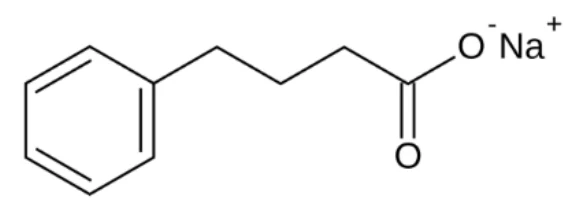
Physicochemical properties: Sodium phenylbutyrate is a white or yellowish white powder which decomposes at about 220°C. It is freely soluble in water and methanol, sparingly soluble in ethanol, practically insoluble in methylene chloride, acetone, diethyl ether.
Drug Substance
Proper name: ursodoxicoltaurine
Chemical name: 2-[(3α, 7β-dihydroxy-24-oxo-5β-cholan-24-yl) amino] ethane sulfonic acid, dihydrate
Molecular formula and molecular mass: C26H45NO6S . 2H2O 535.74 (dihydrate)
Structural formula:
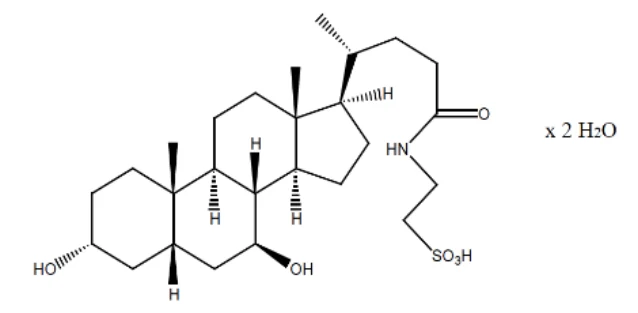
Physicochemical properties: Ursodoxicoltaurine is a white microcrystalline powder, practically odorless, with a bitter taste. It is freely soluble in ethyl alcohol, very slightly soluble in acetone and dioxane, sparingly soluble in water, and practically insoluble in ether and ethyl acetate.
14 CLINICAL TRIALS
14.1 Clinical Trial by Indication
Amyotrophic Lateral Sclerosis
CENTAUR Study
Table 9: Summary of patient demographics for clinical trials in ALS
| Study # | Study design | Dosage, route of administration and duration | Study subjects (Total) | Mean age (Range) | Sex |
CENTAUR (Main phase) | Multicenter, randomized 2:1, double-blind, placebo-controlled, parallel-group study | 1 sachet* daily for 3 weeks; then twice daily 24 weeks (weeks 0-24) | ALBRIOZA (n=89†) placebo (n=48) | 58 years (18- <80) | Male (93) Female (44) |
| CENTAUR OLE | Open-label extension for patients who completed the main phase | 1 sachet* twice daily Up to 132 weeks (weeks 24-48) | ALBRIOZA (n=90) | 58 years (18- <80) | Male (67) Female (23) |
*1 sachet contains 3 g sodium phenylbutyrate and 1 g ursodoxicoltaurine
†Of 89 patients included in the main phase of the study, 87 were included in the efficacy analysis
The efficacy of ALBRIOZA was assessed in a 24-week, multicenter, randomized, double-blind, placebo-controlled, parallel-group study that evaluated ALBRIOZA in patients with familial or sporadic amyotrophic lateral sclerosis (ALS) as defined by the World Federation of Neurology revised El Escorial criteria. The study included patients ≥18 and <80 years of age, with ALS symptom onset (i.e., muscle weakness) ≤18 months, and SVC >60% of predicted capacity for age, height, and gender. Concomitant use of riluzole and/or edaravone was permitted; patients on riluzole had to be on a stable dose for at least 30 days. Key exclusion criteria included the presence of a tracheostomy, abnormal liver or renal function, severe pancreatic or intestinal disorders, biliary disease, cholecystectomy, poorly controlled arterial hypertension, and history of congestive heart failure.
A total of 137 patients from 25 sites in the United States were randomized 2:1 to receive either ALBRIOZA (n=89) or placebo (n=48) for 24 weeks (Intent-to-Treat [ITT] population). Two of the subjects randomized to the ALBRIOZA group did not receive a follow up efficacy assessment; therefore, the modified ITT (mITT) population included 135 patients, 87 patients in the ALBRIOZA group and 48 patients in the placebo group.
Patients were administered the contents of one sachet of ALBRIOZA or placebo, once daily for the first 3 weeks. After 3 weeks of treatment, the dose was increased to one sachet twice daily if well tolerated.
Baseline disease characteristics were generally comparable between the treatment groups; 95% were Caucasian, the mean age was 57.7 years, and 68% were males. Thirty percent of patients in the ALBRIOZA treatment group were bulbar onset patients vs. 21% in the placebo group. On average, patients had been diagnosed with ALS six months prior to baseline with the time since onset of first symptom approximately 13.5 months.
NOC/c
Of note, the individual components, sodium phenylbutyrate and ursodoxicoltaurine were not studied separately. The benefit of the combination over the individual components has therefore not been demonstrated.
Overall, 42/48 (88%) placebo-treated and 64/89 (71%) ALBRIOZA-treated subjects were on either edaravone and/or riluzole at or prior to study entry; more placebo group subjects were taking edaravone (25% vs 50%), and fewer ALBRIOZA group subjects were taking riluzole (68% vs 77%).
However, the efficacy of ALBRIOZA was unchanged by concomitant use with edaravone and/or riluzole.
The primary efficacy endpoint was a comparison of the rate (slope) of reduction in the ALS Functional Rating Scale-Revised (ALSFRS-R) total scores between ALBRIOZA plus standard of care (SOC) versus SOC alone from baseline to Week 24 in the mITT population. In addition, an analysis was conducted to compare the change between treatment arms in the ALSFRS-R total scores from baseline to Week 24. The ALSFRS-R scale consists of 12 questions that evaluate the fine motor, gross motor, bulbar, and respiratory function of patients with ALS (speech, salivation, swallowing, handwriting, cutting food, dressing/hygiene, turning in bed, walking, climbing stairs, dyspnea, orthopnea, and respiratory insufficiency). Each item is scored from 0-4, with higher scores representing greater functional ability. Secondary endpoints included an evaluation of muscle strength (measured by Accurate Test of Limb Isometric Strength, ATLIS), respiratory function (measured by SVC), and impact on survival, tracheostomy, and hospitalization. The impact on survival, tracheostomy, and hospitalization was evaluated at both Week 24 (main phase) and over long-term follow-up at the end of the OLE phase.
ALBRIOZA met the primary endpoint, slowing of disease progression as measured by the ALSFRS-R total score compared to placebo (p = 0.03) (see Figure 1). The decline in ALSFRS-R scores from baseline was also significantly less in the ALBRIOZA-treated patients as compared to placebo (see Table 10).
None of the secondary efficacy results, various measures of disease progression, in the main phase of the study were statistically significant.
PRIMARY ENDPOINT
Figure 1: Estimated Rate of Decline in ALSFRS-R over 24 Weeks
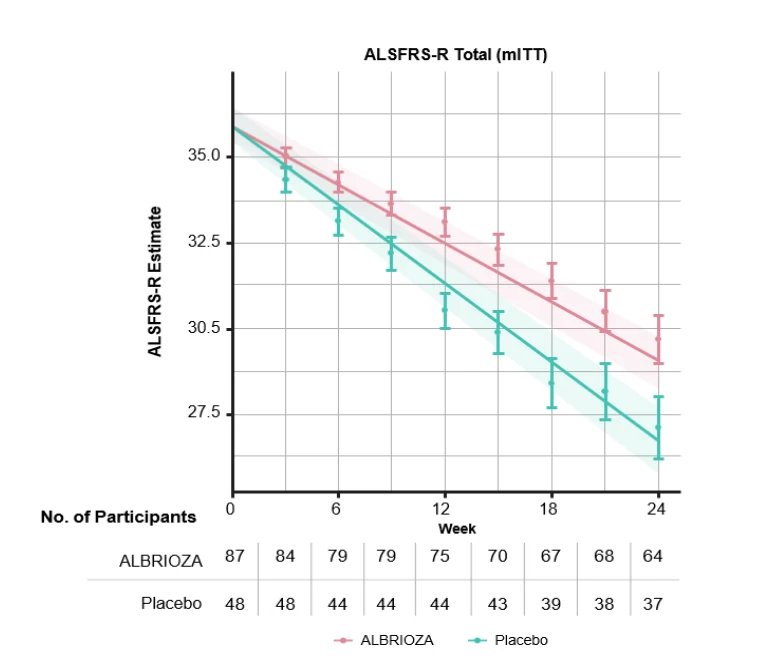
Figure 1 shows the treatment-dependent rates of decline in ALSFRS-R total score estimated in the mITT population in the primary analysis (red = sodium phenylbutyrate/ursodoxicoltaurine, green = placebo; shading reflects plus and minus one standard error).
Table 10: ALSFRS-R Total Score at Week 24—Shared Baseline Mixed Effects Statistical Analysis (Primary, mITT)
| Treatment* | LS Mean (SE) ALSFRS-R Total Score at Week 24 | Treatment Difference (SE) ALBRIOZA-placebo [95% CI]) | p-value | |||
|---|---|---|---|---|---|---|
| ALBRIOZA + SOC (n = 87) | 29.06 (0.781) | 2.32 points (1.094) [95% CI: 0.18, 4.47] | 0.03 | |||
| Placebo + SOC (n = 48) | 26.73 (0.975) | |||||
*mITT population
† The average baseline ALSFRS-R total score was 35.7 (5.78) in the ALBRIOZA treatment group and 36.7 (5.08) in the placebo group.
Table 11: Secondary Endpoints - ATLIS (Percent of Strength) at Week 24
ALBRIOZA + SOC n=87 | Placebo + SOC n=48 | Difference (SE) | 95% CI | Nominal p-value | |
|---|---|---|---|---|---|
| ATLIS-Total Score* | 39.09 | 36.26 | 2.82 (1.774) | -0.67, 6.31 | 0.11 |
| Upper ATLIS Domain Score† | 36.63 | 32.36 | 4.27 (2.089) | 0.16, 8.38 | 0.04 |
| Lower ATLIS Domain Score‡ | 41.17 | 39.09 | 2.09 (2.195) | -2.23, 6.41 | 0.34 |
SOC: Standard of Care
*The average baseline ATLIS-Total Score was 56.83 (20.08) in the ALBRIOZA treatment group vs. 53.92 (20.94) in the placebo group.
†The average baseline Upper ATLIS Domain Score was 54.8 (24.40) in the ALBRIOZA treatment group vs. 51.4 (25.22) in the placebo group.
‡The average baseline Lower ATLIS Domain Score was 57.6 (24.89) in the ALBRIOZA treatment group vs. 57.1 (25.81) in the placebo group.
Table 12: Secondary Endpoint: Decline in pNF-H Levels at Week 24
ALBRIOZA + SOC n=87 | Placebo + SOC n=48 | Difference | 95% CI | Nominal p-value | |
|---|---|---|---|---|---|
| Mean rate of change in pNF-H concentration | 3.58 pg/mL per month | -2.34 pg/mL per month | 5.93 pg/mL per month | -4.41, 16.26 | 0.26 |
Table 13: Secondary Endpoint: SVC (Respiratory Function) at Week 24
ALBRIOZA + SOC n=87 | Placebo + SOC n=48 | Difference (SE) | 95% CI | Nominal p-value | |
|---|---|---|---|---|---|
| SVC % Predicted* | 66.17 | 61.06 | 5.11 (2.872) | -0.54, 10.76 | 0.08 |
SOC: Standard of Care
*The average baseline SVC % predicted normal score was 83.6% (18.17) in the ALBRIOZA treatment group and 83.9% (15.92) in the placebo group.
Table 14: Secondary Endpoint: Survival Analysis Over 24-week Randomized Phase
| Categorical Outcome | Estimated Percentage of Risk Event (SE) | Hazard Ratio: Active vs. Placebo (95% CI) | Nominal p-Value | ||||
|---|---|---|---|---|---|---|---|
| ALBRIOZA + SOC | Placebo + SOC | ||||||
| Death, Death Equivalent*, or Hospitalization | 19.2 (4.20) | 31.0 (6.78) | 0.575 (0.290, 1.152) | 0.11 | |||
| Death or Death Equivalent* | 2.8 (1.69) | 4.4 (3.02) | 0.632 (0.110, 3.924) | 0.60 | |||
| Hospitalization | 17.4 (4.07)) | 27.7 (6.50) | 0.590 (0.286, 1.234) | 0.15 | |||
| Death Events Only | 2.6 (1.65) | 2.6 (2.28) | 1.016 (0.151, 9.753) | 0.99 | |||
SOC: Standard of Care
* Death Equivalent defined as tracheostomy or time to permanent ventilation PAV.
15 MICROBIOLOGY
No microbiological information is required for this drug product.
16 NON-CLINICAL TOXICOLOGY
Toxicological profiles of metabolites or derivatives of sodium phenylbutyrate or ursodoxicoltaurine were not studied.
Safety Pharmacology
As part of 28-day repeat dose study in rats PB/TURSO was administered by oral gavage at dosage levels of 0, 250/83.3, 750/250, 1000/333.3, (PB/TURSO mg/kg/day) and a neurological (functional observational battery) evaluation was performed. No neurological effects or relevant findings were observed.
The single oral dose of PB/TURSO (250/83.3, 750/250, 1000/333.3 mg/kg) were assessed on the respiratory system of male rats. No effects on tidal volume, minute volume and respiratory rate were observed.
The single oral dose of PB/TURSO (125/41.66, 250/83.33, 1000/333.3 mg/kg) were assessed on the cardiovascular system of minipigs. Increased heart rate and decreased pulse height were observed at 1000/333.3 mg/kg. There were no effects of AMX0035 (PB/TURSO) at 1000/333.3 mg/kg on QRS, QT, or QTca.
General Toxicology
In 26-week and 9-month studies in rats and miniature swine, respectively, ALBRIOZA was administered orally as once-daily doses of 250, 420, and 840 mg/kg in rats and 250, 423, and 845 mg/kg in mini swine. In rats, histologic findings were reported in the ovary, vagina, cervix, and mammary gland. The no-observed-adverse-effect level (NOAEL) was considered to be 840 and 845 mg/kg/day, respectively. AUC-based exposure multiples of 0.45 to 0.59 in rats and 0.67 to 1.37 in miniature swine were calculated relative to the human exposure at a daily maintenance dose of 6 g sodium phenylbutyrate. Exposure multiples for ursodoxicoltaurine were not calculated as the human exposure could not be determined from the data available.
Genotoxicity
The drug product ALBRIOZA was tested in an in vivo (rat micronucleus) assay and was negative for genotoxicity. Other genotoxicity assays were not conducted with ALBRIOZA. However, three genotoxicity assays were conducted with the combination of sodium phenylbutyrate and ursodoxicoltaurine. The combination was negative for genotoxicity in in vitro (bacterial reverse mutation and chromosomal aberration assay in human lymphocytes) and in vivo (mouse micronucleus) assays. Breathing difficulties and piloerection were observed at all three dose levels in the mouse micronucleus test (sodium phenylbutyrate and ursodoxicoltaurine were combined in a 3:1 ratio by mass and administered at 500, 1000, and 2000 mg/kg/day). Hunched posture was seen at 2000 mg/kg/day.
Mutagenicity
The mutagenic potential of two impurities that were detected in the drug product ALBRIOZA has not been assessed in vitro or in silico.
Carcinogenicity
Carcinogenicity studies were not conducted with ALBRIOZA.
Reproductive and Developmental Toxicology
In a combined mating and fertility study in male and female rats, no adverse effects on gonadal function, mating behavior, implantation, female estrous cyclicity or fertility were seen with oral gavage administration of ALBRIOZA at doses of 0, 375, 750, or 1500 mg/kg/day prior to pairing, throughout the pairing phase, and for up to 14 days following the pairing phase. Male fertility index at 1500 mg/kg/day was lower than that in control group. Post-implantation loss in females at 750 mg/kg/day was significantly lower than in control group although there was no loss at 1500 mg/kg/day.
In an embryo/fetal developmental study in rabbits, oral administration of ALBRIOZA (0, 250, 500, 1000, 1500 mg/kg/day) from gestation day 7-20 was associated with lower maternal food consumption at all dose levels which ranged from 0.24- to 1.54-fold the recommended human dose (based on body surface area and assuming a 60 kg human). Aborted fetuses were noted in two females and lower mean fetal body weight was noted at 250 mg/kg/day. 12/12 animals at 500 and 1000 mg/kg/day and 5/6 animals at 1500 mg/kg/day were euthanized due to excessive body weight losses. Ovarian/uterine and fetal examinations were not completed in these animals.
In an embryo/fetal developmental study in rats, oral administration of ALBRIOZA (0, 375, 750, and 1500 mg/kg/day) from gestation day 6-17 was not associated with embryo/fetal development or maternal toxicity.
In an embryo/fetal developmental study in mice, ALBRIOZA (0, 375, 750, and 1500 mg/kg/day) was administered orally from gestation day 6-15. One female at 375 mg/kg/day aborted on gestation day 15, following observation of pale skin and body weight loss.
In a pre- and postnatal developmental study in rats, oral administration of ALBRIOZA (0, 375, 750, and 1500 mg/kg/day) throughout pregnancy and lactation (gestation day 6 to lactation day 20) resulted in increases in stillbirth at all doses and pup deaths at the highest dose tested and was considered adverse at the highest dose tested which is 1.41-fold the recommended human dose (based on body surface area and assuming a 60 kg human).
Animal studies have shown reproductive toxicity of sodium phenylbutyrate, i.e. effects on the development of the embryo or the fetus. Prenatal exposure of rat pups to phenylacetate (the major metabolite of phenylbutyrate) produced lesions in cortical pyramidal cells; dendritic spines were longer and thinner than normal and reduced in number.