


Patient Medication Information: uses, side effects, how to take - Tegsedi
Serious Warnings and Precautions
TEGSEDI can cause serious side effects, including:
This is especially important if you:
If you experience or notice:
Call your healthcare professional right away.
If you experience or notice:
Call your healthcare professional right away. Some patients taking TEGSEDI have also developed a decline in how well their kidneys are working without having had glomerulonephritis. Tell your healthcare professional if you are taking any medicines that may damage your kidneys or affect your kidney function (e.g., certain antibiotics called sulfonamides, certain “water pills” called aldosterone antagonists, and certain types of painkillers). See the Serious side effects and what to do about them table for more information on this and other serious side effects. |
What is TEGSEDI used for?
TEGSEDI is used for treatment of stage 1 or stage 2 polyneuropathy in adult patients with hereditary transthyretin amyloidosis (hATTR).
In hATTR, a change or mutation in the gene alters the structure of the transthyretin (TTR) protein causing it to fold into an unusual shape or clump together and build up in the body. This buildup of TTR can stop the organs in your body from working properly.
How does TEGSEDI work?
TEGSEDI belongs to a group of medicines called anti-sense oligonucleotides (ASO). It helps to reduce the levels of TTR proteins in the body by preventing TTR production by the liver.
What are the ingredients in TEGSEDI?
Medicinal ingredients: inotersen (as inotersen sodium)
Non-medicinal ingredients: hydrochloric acid, sodium hydroxide and water for injection
TEGSEDI comes in the following dosage forms:
Sterile solution for subcutaneous use; 284 mg Inotersen / 1.5 ml per syringe
Do not use TEGSEDI if:
- You are allergic to inotersen or to any other ingredients in TEGSEDI.
- Your blood platelet count is below 100 x 109 per liter.
You have the following kidney function test results:
- A protein to creatinine ratio (UPCR) greater than or equal to 113 mg / mmol.
- An estimated glomerular filtration rate (eGFR) less than 45 mL / min / 1.73 m2.
- You suffer from severe liver disease.
To help avoid side effects and ensure proper use, talk to your healthcare professional before you take TEGSEDI. Talk about any health conditions or problems you may have, including if you:
have a low blood platelet count. Symptoms of low platelet count include:
- Easy or unexplained bruising
- Prolonged bleeding from cuts
- Blood in urine or stools
- Bleeding from your gums and nose
- Bleeding into the skin that appears as a rash of red spots
- take medicines that prevent the formation of blood clots or platelets, or that may lower your platelet count (e.g., acetylsalicylic acid, clopidogrel, blood thinners such as warfarin, heparin, low-molecular weight heparins, rivaroxaban, apixaban, dabigatran).
consume alcohol.
- have had severe bleeding in the past.
- are 65 years of age or older.
- have had a liver transplant in the past.
- have liver problems.
- have kidney problems.
- take any medicines that may damage your kidney function, such as certain antibiotics called sulfonamides, certain “water pills” called aldosterone antagonists, and certain pain killers (e.g., opioids).
- are pregnant, think you might be pregnant or are planning to become pregnant.
- are breast-feeding. It is not known if TEGSEDI can pass into breast milk.
Other warnings you should know about:
Low levels of Vitamin A: If you experience symptoms of low vitamin A before starting TEGSEDI, your healthcare professional will recommend you take a vitamin A supplement. Once your symptoms are gone, your healthcare professional will start you on TEGSEDI.
TEGSEDI may decrease the levels of vitamin A in your body and you may need to take a vitamin A supplement while on it. Your healthcare professional will tell you the correct dose of vitamin A for you. Symptoms of low vitamin A may include:
- dry eyes
- poor vision
- decreased night vision
- hazy or cloudy vision
Pregnancy:
- If you are pregnant, think you might be pregnant or are planning to become pregnant, it is important that you tell your healthcare professional right away. TEGSEDI may affect your levels of vitamin A and low or high levels of vitamin A can harm the baby.
- If you are able to become pregnant, you should use an effective birth control method while on this treatment.
- There is a registry for women who become pregnant during treatment with TEGSEDI. If you become pregnant while taking TEGSEDI, talk to your healthcare professional about registering with the TEGSEDI Pregnancy Exposure Registry. The purpose of this registry is to collect information about your health and your baby’s health. You can get more information about this registry by calling: 1-877-465-7510, emailing: tegsedipregnancy@ubc.com, or visiting online at: www.tegsedipregnancystudy.com.
Check-ups and testing: Your healthcare professional will perform laboratory tests to check the effects of TEGSEDI. These tests will check the:
- health of your kidneys. Blood and urine tests should be done before starting TEGSEDI, every 2 weeks during treatment, and 8 weeks after stopping TEGSEDI.
- health of your liver. Blood tests should be done before starting TEGSEDI, and every 4 months during treatment. If you had a liver transplant, you may be tested more often.
- level of platelets in your blood. This blood test should be done before starting TEGSEDI, every 2 weeks during treatment or more often if needed, and continue 8 weeks after stopping TEGSEDI.
TEGSEDI can cause serious side effects, including:
- Liver injury: TEGSEDI may cause serious liver problems, even up to a year after injection. If you have had a liver transplant, TEGSEDI may lead to rejection of the transplant.
- Allergic reactions: TEGSEDI may cause serious allergic reactions. They often occur within 2 hours after injecting TEGSEDI.
- Risk of bleeding: TEGSEDI may decrease the level of platelets in your blood. Platelets are blood cells that help blood to clot. This means you may be at a higher risk of bleeding.
See the Serious side effects and what to do about them table for more information on this and other serious side effects.
Tell your healthcare professional about all the medicines you take, including any drugs, vitamins, minerals, natural supplements or alternative medicines.
The following may interact with TEGSEDI:
- Medicines that may affect your kidney function (e.g., certain antibiotics called sulfonamides, certain “water pills” called aldosterone antagonists, and certain types of painkillers such as opioids)
- Medicines that prevent the formation of blood clots or platelets or that may lower your platelet count (e.g., acetylsalicylic acid, clopidogrel, blood thinners such as warfarin, heparin, low-molecular weight heparins, rivaroxaban, apixaban, dabigatran).
- Alcohol. It should be avoided during treatment with TEGSEDI.
How to take TEGSEDI:
Before using TEGSEDI, your healthcare professional should show you or your caregiver how to use it the right way. If you or your caregiver have any questions, ask your healthcare professional.
Read these instructions for use before you start using your TEGSEDI prefilled syringe and each time you get a repeat prescription. There may be new information. This information does not take the place of talking to your healthcare professional about your medical condition or your treatment.
Each TEGSEDI prefilled syringe has a Safety Syringe Device (SSD), contains one dose and is for one-time use only. Do not use this medication if it shows haziness, particulate matter or discolouration or if the prefilled syringe is leaking. If the solution looks hazy, has particulate matter, discolouration or if the prefilled syringe is leaking, throw the prefilled syringe away in a puncture resistant (Sharps) container, and use a new prefilled syringe.
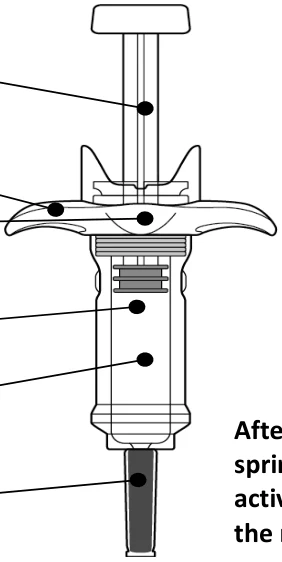
Plunger Finger Grip Safety Spring (inside body) (Expiry date is provided here) Inspection Area |
|---|
PARTS OF THE SAFETY SYRINGE DEVICE (SSD)
Warnings
Do not remove needle cap until you have reached Step 6 of these instructions and are ready to inject TEGSEDI;
Do not share your syringe with another person or re-use your syringe;
Do not use if dropped onto a hard surface, if damaged, or if the needle is bent;
Do not shake or freeze the prefilled syringe;
Do not use if the expiry date on the side of the syringe body has passed.
If any of the above happens, throw away the prefilled syringe in a puncture-resistant (Sharps) container and use a new prefilled syringe.
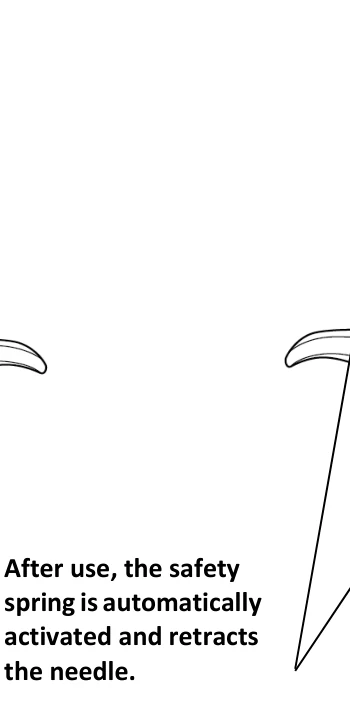
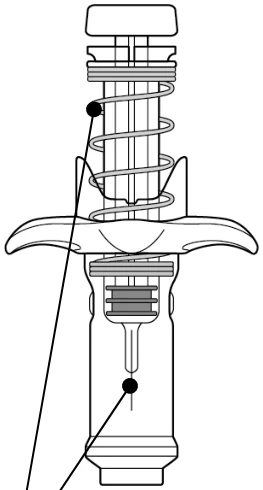
| After use, the safety spring is automatically activated and retracts the needle. |
|---|
Body
Before use
After use
| PREPARATION | |
|---|---|
| |
Do not perform the injection without all the supplies listed. | |
| |
Do not use if the expiry date has passed. Do not warm the syringe in any other way. For example, do not warm in a microwave or hot water, or near other heat sources. Do not move the plunger. Do not remove the syringe from the tray by holding onto the needle cap or plunger. | |
| |
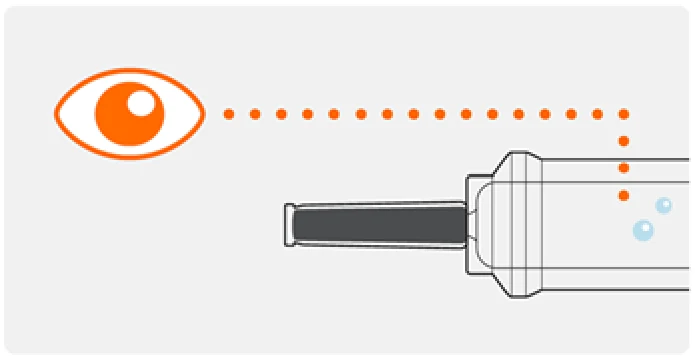 | Look in the inspection area to check that the solution is clear and colourless or pale yellow in colour. It is normal to see air bubbles in the solution. You do not need to do anything about it. Do not use the product if the solution shows haziness, particulate matter, discolouration or leakage. |
| If the solution looks hazy, has particulate matter, discolouration or leakage, throw the prefilled syringe away in a puncture resistant (Sharps) container, and use a new prefilled syringe. | |
|
|---|
|
|---|
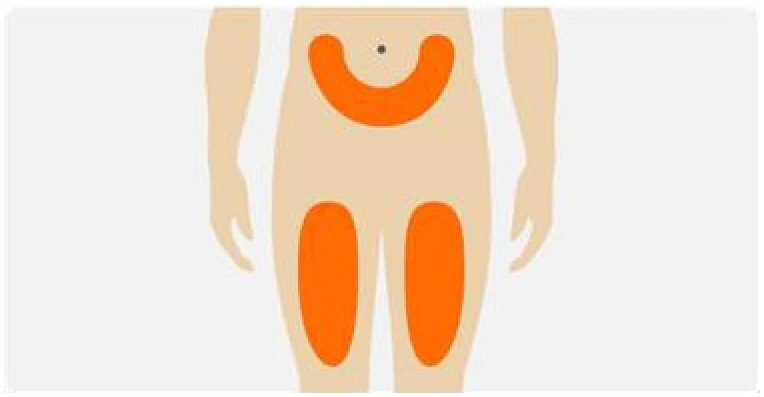
| Choose an injection site on your abdomen or the front of your thigh. Do not inject into the 3 cm area around the belly-button (navel). Do not inject into the same site each time. Do not inject where skin is bruised, tender, red or hard. Do not inject into scars or damaged skin. Do not inject through clothing. | |
|---|---|---|
| ||
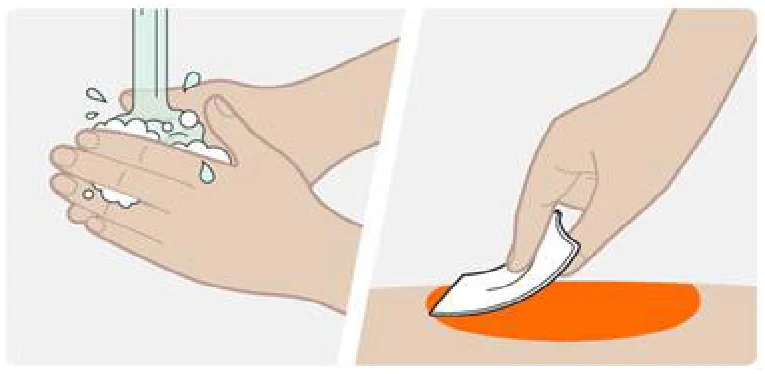 | Wash your hands with soap and water. Clean the injection site with an alcohol wipe in a circular motion. Let the skin air dry. Do not touch the area again before injecting. | |
| INJECTION | |
|---|---|
| |
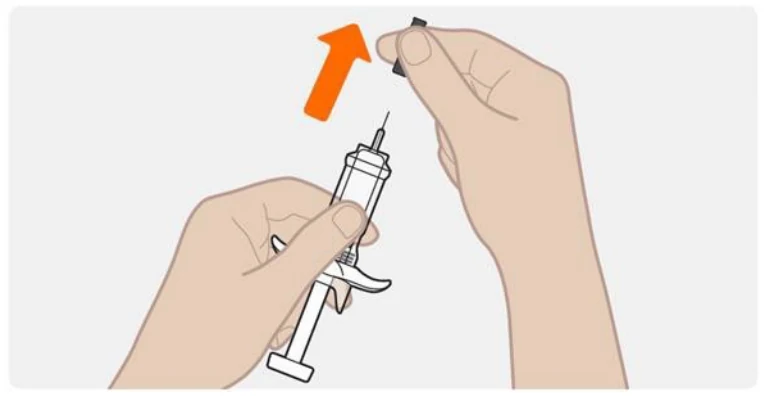 | Hold the syringe by the body, with the needle facing away from you. Remove needle cap by pulling it straight off. Do not twist it off. You may see a drop of liquid at the end of the needle. This is normal. Keep your hands away from the plunger to avoid pushing the plunger before you are ready to inject. Do not remove the needle cap until right before you inject. Do not pull the cap off while holding the syringe by the plunger. Always hold by the body of the syringe. Do not let the needle touch any surface. Do not remove any air bubbles from the syringe. Do not put the needle cap back onto the syringe. |
| |
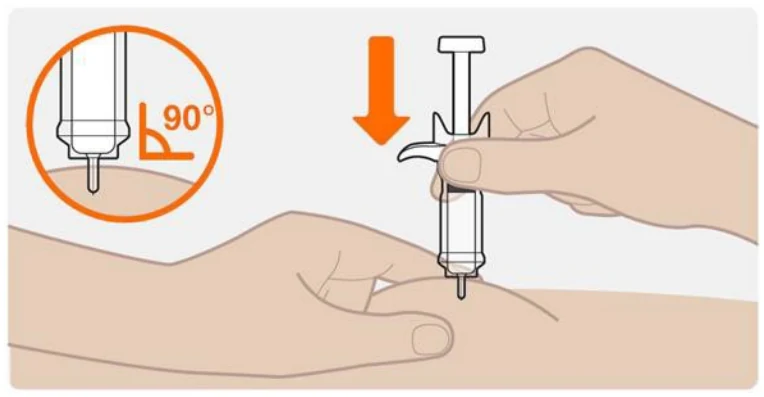 | Hold the syringe in 1 hand. Hold the skin around at the injection site as your healthcare provider has instructed you. You should either gently pinch the skin at the injection site or give the injection without pinching the skin. Slowly insert the entire needle into the chosen injection site at a 90° angle until fully inserted. Do not hold the syringe by the plunger or push against the plunger to insert the needle. |
| |
|---|---|
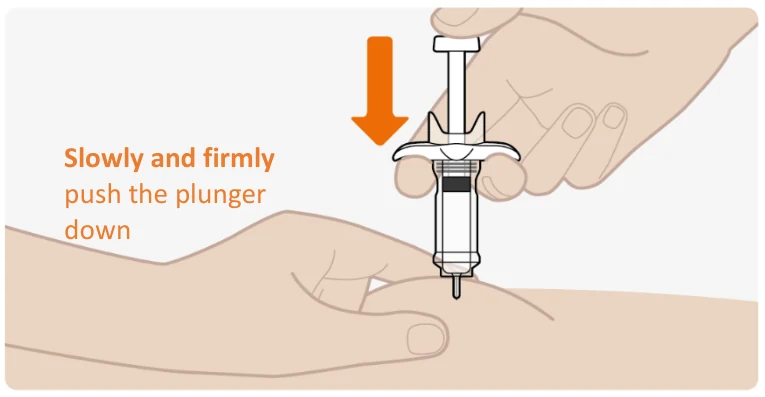 Slowly and firmly push the plunger down | Slowly and firmly push the plunger all the way down until the medicine is injected. Make sure the needle stays fully inserted in the injection site while you are injecting the medicine. It is important to fully push the plunger all the way down. Your syringe may make a click sound as you push the plunger down. This is normal. This does not mean that the injection is finished. The plunger can feel stiffer towards the end of the injection. You may need to press a little harder on the plunger to make sure you have pushed it as far as it will go. Do not let go of the plunger. |
| |
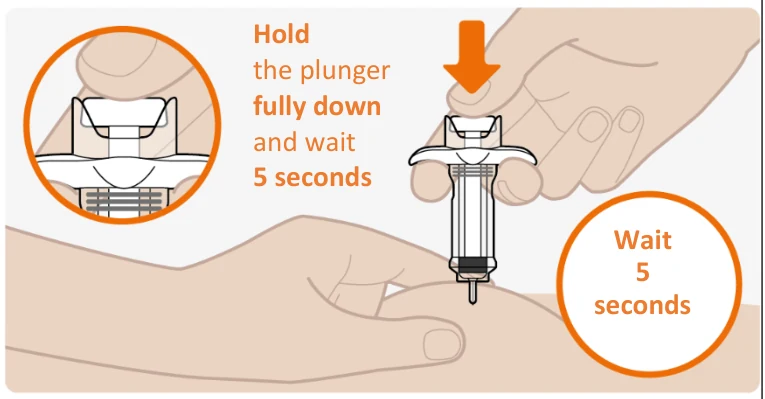 Hold the plunger fully down and wait 5 seconds Wait 5 seconds | Push firmly on the plunger at the end of the injection. Hold the plunger fully down and wait for 5 seconds. If you let go of the plunger too quickly, you may lose some of the medicine. The plunger will start to lift automatically which means that the plunger has been pushed fully down. Press down again if the plunger does not start to lift automatically. |
| |
|---|---|
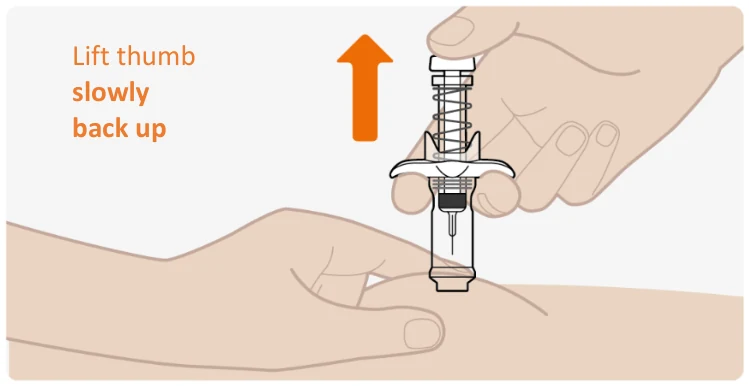 Lift thumb slowly back up | Slowly lift up on the plunger and let the safety spring push the plunger up automatically. The needle should now be retracted safely inside the syringe, and the safety mechanism spring visible on the outside of the plunger. When the plunger comes to a stop, your injection is complete. If the plunger does not rise up automatically when you release the pressure, it means the safety spring did not activate and you should push the plunger again but harder. Throw away the cap and syringe into the puncture-resistant (Sharps) container right away (See section - “Dispose of the used syringe”). Do not pull the plunger up by hand. Lift the whole syringe straight up. Do not try to replace the cap on the retracted needle. Do not rub the injection site. |
| DISPOSAL AND CARE | |
| Dispose of the used syringe | |
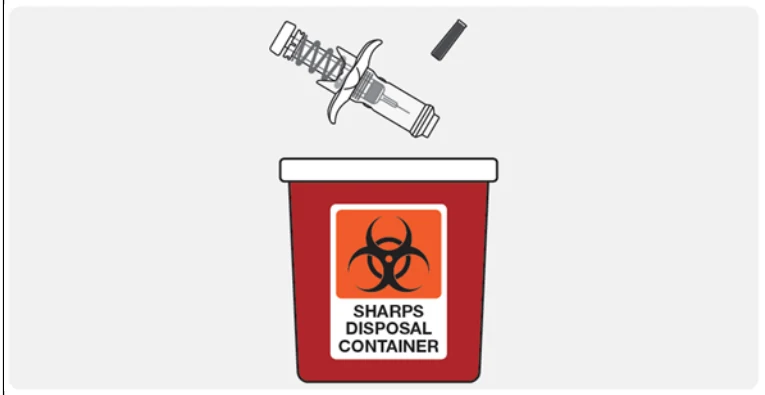 | Put the used TEGSEDI prefilled syringe in a sharps disposal container right away after use. Do not throw away the prefilled syringe in your household waste. |
Usual dose:
- 284 mg / 1.5 mL inotersen injected just below your skin once a week.
- Your healthcare professional may change how often you inject your dose depending on the results of your platelet count.
- Each prefilled syringe contains one dose and is for one-time use only.
- Use the entire contents of the syringe.
- Choose the same day of the week to have your dose.
- Your healthcare professional will recommend taking vitamin A while on TEGSEDI.
Overdose:
| If you think you, or a person you are caring for, have taken too much TEGSEDI, contact a healthcare professional, hospital emergency department, or regional poison control centre immediately, even if there are no symptoms. |
|---|
Missed Dose:
If you missed a dose of this medication, take it as soon as you remember. But if it is 2 days or less until your next dose, skip the missed dose and continue with your next scheduled dose. Go back to the regular dosing schedule. Do not take two doses at the same time or dose on consecutive days.
What are possible side effects from using TEGSEDI?
These are not all the possible side effects you may have when taking TEGSEDI. If you experience any side effects not listed here, tell your healthcare professional.
Side effects with TEGSEDI may include:
- Vomiting or nausea
- Diarrhea
- Constipation
- Redness, itching or pain at the injection site
- Lack of energy
- Swelling of the legs, feet, arms or hands
- Fever
- Chills
- Muscle or joint pain
- Headache
- Chest pain
- Feelings of spinning or being off balance or unsteady
- Dry mouth
- Swelling or bloating of the belly
- Flu like symptoms such as fever, aches and chills
- Infection in the mouth, nose, throat or voice box
- An infection that affects a specific part of the body or organ
- Bruising
- Injury to the legs or arms
- Decreased appetite
- Dehydration
- A lack of vitamin D (symptoms may include muscle or bone pain or weakness, increased sensitivity to pain, bone fractures)
- Back pain, muscle spasms, pain or stiffness that may affect ligaments, tendons, muscles or bones
- Pins and needles feeling
- Feeling lightheaded or feeling faint
- Migraine
- Sleepiness or drowsiness
- Shortness of breath
- Throat pain
- Cough that produces phlegm
- Excessive sweating
- Itchiness, rash, hives, redness of the skin, skin infection, scrape, graze, or open sore or an abnormal lump on the skin
- Night sweats
Serious side effects and what to do about them
| Symptom / effect | Talk to your healthcare professional | Stop taking drug and get immediate medical help | |
|---|---|---|---|
| Only if severe | In all cases | ||
| VERY COMMON | |||
| Thrombocytopenia (low blood platelets): bruising or bleeding for longer than usual if you hurt yourself, neck stiffness, unusually severe headache, fatigue and weakness | √ | ||
| Anemia (decreased number of red blood cells): fatigue, loss of energy, looking pale, shortness of breath, weakness | √ | ||
Serious side effects and what to do about them
| Symptom / effect | Talk to your healthcare professional | Stop taking drug and get immediate medical help | |
|---|---|---|---|
| Only if severe | In all cases | ||
| COMMON | |||
| Glomerulonephritis (inflammation and damage to the filtering part of your kidneys): foaming urine, pink or brown coloured urine, or blood in the urine, passing less urine than usual | √ | ||
| Reactions at the injection site: inflammation, bruising, swelling, discolouration, rash, excessive bleeding, abnormal pooling of blood under the skin, hardening of the area | √ | ||
| Eosinophilia (increased numbers of certain white blood cells): abdominal pain, rash, weight loss, wheezing | √ | ||
Heart problems such as:
| √ √ | ||
Serious side effects and what to do about them
| Symptom / effect | Talk to your healthcare professional | Stop taking drug and get immediate medical help | |
|---|---|---|---|
| Only if severe | In all cases | ||
| Hypothyroidism (underactive thyroid): weight gain, tiredness, hair loss, muscle weakness, feeling cold, dry skin, constipation, puffy face, heavier than normal or irregular menstrual periods, enlarged thyroid gland | √ | ||
| Eye disorders: cataracts (clouding of the eye lens which can lead to decreased vision), ocular hyperaemia (white part of the eye is bloodshot) or vitreous floaters (visual spots that resemble grey or black specks and can drift across the eyes) | √ | ||
| Gastroesophageal reflux disease (acid in the stomach flows back into the food pipe): heartburn, backwash of food or sour liquid in the throat, upper belly or chest pain, trouble swallowing, sensation of a lump in the throat | √ | ||
| Viral gastroenteritis (inflammation of the stomach and intestines caused by a virus): abdominal pain, diarrhea, results in nausea, vomiting | √ | ||
| Syncope (fainting): a temporary loss of consciousness due to a sudden drop in blood pressure | √ | ||
Serious side effects and what to do about them
| Symptom / effect | Talk to your healthcare professional | Stop taking drug and get immediate medical help | |
|---|---|---|---|
| Only if severe | In all cases | ||
| Depression (sad mood that won’t go away): difficulty sleeping or sleeping too much, changes in appetite or weight, feelings of worthlessness, guilt, regret, helplessness or hopelessness, withdrawal from social situations, family, gatherings and activities with friends, reduced libido (sex drive) and thoughts of death or suicide | √ | ||
| Pleural effusion (fluid around the lungs): chest pain, difficult or painful breathing, cough | √ | ||
Changes in blood pressure:
| √ | ||
| Intracerebral hemorrhage (bleeding in the brain): sudden, unusually severe headache, stiffness in your neck, confusion, nausea and vomiting, seizures, loss of consciousness | √ | ||
Serious side effects and what to do about them
| Symptom / effect | Talk to your healthcare professional | Stop taking drug and get immediate medical help | |
|---|---|---|---|
| Only if severe | In all cases | ||
| Unusual or prolonged bleeding: spontaneous bruising or bleeding on or from any part of your body. This may include a rash of red spots or bruising on your skin, bleeding in your eye, urine or stools, or from your gums or nose | √ | ||
| Hematoma (solid collection of blood within the tissues that may look similar to bruising) | √ | ||
| UKNOWN FREQUENCY | |||
| Allergic reaction: swelling of the face, lip or throat, rash, itchiness, hives, difficulty breathing or wheezing | √ | ||
| Liver injury: yellowing of the eyes or skin, or dark urine, pale stools potentially accompanied by itching of the skin, pain/tenderness on the upper right side of your stomach area (abdomen), loss of appetite, bleeding or bruising more easily than normal, unexplained flu-like symptoms or feeling unusually tired | √ | ||
If you have a troublesome symptom or side effect that is not listed here or becomes bad enough to interfere with your daily activities, tell your healthcare professional.
Reporting Side Effects
You can report any suspected side effects associated with the use of health products to Health Canada by:
NOTE: Contact your health professional if you need information about how to manage your side effects. The Canada Vigilance Program does not provide medical advice. |
Storage:
- Store refrigerated at 2 °C to 8 °C in the original container and protect from light. Remove from refrigerator at least 30 minutes before use. TEGSEDI may be stored unrefrigerated (2 °C to 30 °C) in the original container for up to 6 weeks; if not used within the 6 weeks, throw TEGSEDI away.
- Keep out of reach and sight of children.
If you want more information about TEGSEDI:
- Talk to your healthcare professional.
- Find the full product monograph that is prepared for healthcare professionals and includes this Patient Medication Information by visiting the Health Canada website: (https://www.canada.ca/en/health-canada/services/drugs-health-products/drug-products/drug-product-database.html); the distributor’s website https://www.sobi.com/canada/en/products, or by calling 1-833-327-0723.