


Patient Medication Information: uses, side effects, how to take - Wixela Inhub
ABOUT THIS MEDICATION
What the medication is used for:
Asthma (patients 4 years old and older):
Asthma is a chronic inflammatory disease of the lungs characterized by episodes of difficulty in breathing. People with asthma have extra sensitive or "twitchy" airways. During an asthma attack, the airways react by narrowing, making it more difficult for the air to flow in and out of the lungs.
Wixela® Inhub® should be used in patients:
- who have asthma that is not adequately controlled with a long-term asthma medication such as an inhaled corticosteroid (ICS) alone; or
- whose asthma severity requires treatment with both an ICS and long-acting beta2 agonist (LABA).
Wixela® Inhub® should not be the first asthma medication you
use unless advised by your doctor. It is only used when a regular
ICS medicine along with a fast acting ‘reliever’ medicine, such as
salbutamol are not adequately helping you with your breathing
problems. Wixela® Inhub® helps to prevent breathlessness
and wheezing from happening due to asthma.
Control of asthma requires avoiding irritants that cause asthma attacks and taking the appropriate medications. For example, patients should avoid exposure to house dust mites, mold, pets, tobacco smoke and pollens.
Chronic Obstructive Pulmonary Disease (COPD):
COPD is a type of lung disease in which there is often a permanent narrowing of the airways, leading to breathing difficulties. In many patients, this narrowing of the airways is a result of many years of cigarette smoking. If you suffer from
COPD, you must stop smoking to prevent further lung damage. Please contact your physician or other health care provider for help in smoking cessation.
Wixela® Inhub® is to be used for the long-term control of symptoms due to COPD and to prevent wheezing in adults with COPD.
This medicine is for you. Only a doctor can prescribe it for you. Never give it to someone else. It may harm them even if their symptoms are the same as yours.
What it does:
Wixela® Inhub® contains two medicinal ingredients,
fluticasone propionate and salmeterol xinafoate.
Fluticasone propionate is an inhaled corticosteroid.
Corticosteroids are used to treat breathing problems because they have an anti-inflammatory action. They reduce the swelling and irritation in the walls of the small air passages in the lungs and so ease breathing problems.
Salmeterol xinafoate is a LABA. It relaxes the muscles in the walls of the small air passages in the lungs. This helps to open the airways and makes it easier for air to get in and out of the lungs. The effects of salmeterol xinafoate last for at least 12 hours. When it is taken regularly with an inhaled
corticosteroid, it helps the small air passages to remain open.
Corticosteroids also help to prevent attacks of asthma.
When you take these two ingredients together regularly they will both help to control your breathing difficulties.
When it should not be used:
Wixela® Inhub® does not act quickly enough to provide relief from a sudden attack of breathlessness or wheezing due to asthma or COPD. A fast acting ‘reliever’ medicine, such as salbutamol should be used for any sudden attacks of breathlessness or wheezing (e.g., asthma attacks).
Remember:
Do not use Wixela® Inhub® if you:
- Are allergic or have had an allergic reaction to fluticasone propionate, salmeterol xinafoate.
- Are allergic to lactose (milk sugar) or milk protein.
- Have a medical history of cardiac tachyarrhythmias (problems of your heart beating fast and/or irregularly).
- Have an untreated fungal, bacterial or tuberculosis infection.
What the medicinal ingredients are:
fluticasone propionate and salmeterol xinafoate.
What the nonmedicinal ingredients are:
lactose monohydrate
What dosage forms it comes in:
Wixela® Inhub® is an inhalation powder administered through a plastic inhaler device containing two foil sealed discs each with 30 pre-metered doses. Each pre-metered dose contains 100, 250 or 500 mcg of fluticasone propionate and 50 mcg of salmeterol (as the xinafoate salt) per inhalation.
WARNINGS AND PRECAUTIONS
Wixela® Inhub® is not for the treatment of acute asthma attacks or sudden increase of breathlessness and wheezing in
COPD. If you get a sudden attack of wheezing and breathlessness between your doses of Wixela® Inhub®, you should use your fast acting ‘reliever’ medicine, such as salbutamol which your doctor has prescribed to you. Use the medication as directed by your doctor.
You may need to also take steroid tablets or syrup during a severe asthma attack, during other illnesses or during times of stress. Your doctor may give you some steroid tablets or syrup to carry with you as well as a steroid warning card, which will give you advice on when and how to use them.
Before and while you use Wixela® Inhub® talk to your doctor or pharmacist if the following situations apply to you so that they can determine whether you should start or continue taking this medication:
- Have eye problems such as glaucoma, cataracts, blurry vision or other changes in vision.
- Are suffering from any chest infection (cold, bronchitis).
- Have ever had to stop taking another medication for your breathing problems because you were allergic to it or it caused problems.
- Have been told you are allergic to lactose (milk sugar) or milk protein.
- Ever had a yeast infection (thrush) in your mouth.
- Are having treatment for a thyroid condition.
- Have diabetes.
- Have high blood pressure.
- Have heart problems.
- Have had tuberculosis (TB) infections.
- Are taking other “steroids” by mouth or by inhalation.
Are pregnant, planning to become pregnant or breastfeeding.
- Are taking a medicine called ketoconazole, used to treat fungal infection.
- Are taking medicines used to treat HIV infection (e.g. ritonavir, atazanavir, indinavir, nelfinavir, saquinavir and cobicistat containing products).
- Have liver problems or cirrhosis.
You should avoid coming into contact with anyone who has measles or the chicken pox while taking an ICS. If you or your child are exposed, tell your doctor right away.
Drugs like Wixela® Inhub® can cause eye disorders:
- Cataracts: Clouding of the lens in the eye, blurry vision, eye pain;
- Glaucoma: An increased pressure in your eyes, eye pain. Untreated, it may lead to permanent vision loss;
- Central serous chorioretinopathy (CSCR): blurry vision or other changes in vision.
Contact your healthcare professional if you experience blurry vision or other vision problems. You should have regular eye exams.
Other warnings you should know about:
Asthma specific warnings:
After you start taking Wixela® Inhub®, your doctor may change the dosages of your other asthma medicines. Rarely, this may make a patient feel worse rather than better. This especially applies to oral corticosteroids (sometimes referred to as steroids), including prednisone. If your doctor decreases your oral steroid dose, and you become unwell, tell your doctor immediately.
You should have your asthma assessed at regular intervals as agreed upon with your doctor. Once control of your asthma is achieved and maintained, your doctor may further adjust your dose of Wixela® Inhub®. Do not stop or change the dose of your Wixela® Inhub® unless your doctor has advised you to do so.
When LABA medicines are used alone without an ICS, they increase the risk of hospitalization and death from asthma problems. Wixela® Inhub® contains both an ICS and LABA.
Studies showed that when an ICS and LABA are used together, there is not a significant increased risk in hospitalizations and death from asthma problems.
Tell your doctor immediately if:
- There is a change in your symptoms such as more coughing, attacks of wheezing, chest tightness, or an unusual increase in the severity of the breathlessness.
- You wake up at night with chest tightness, wheezing or shortness of breath.
- You use increasing amounts of your fast acting ‘reliever’ medicine.
These could be warning signs that your condition may be worsening. Do not stop taking Wixela® Inhub® without talking to your doctor.
COPD specific warnings:
- Tell your doctor immediately if you notice symptoms of a ‘flare up”.
- Patients with COPD have a higher chance of getting pneumonia (a lung infection). Drugs like Wixela® Inhub® may also increase your chance of getting pneumonia. However, symptoms of pneumonia and COPD ‘flare ups’ frequently overlap. It is therefore important you tell your doctor immediately if you suspect an infection, as even mild chest infections should be treated immediately. Your doctor may also recommend that you receive a flu shot each year.
You should avoid close contact with people who have colds or the flu (influenza). You should ask your doctor about flu vaccination.
The following warning signs indicate that your COPD condition may be worsening. You should contact your doctor as soon as possible if you notice:
- An unusual increase or decrease in the amount of phlegm.
- An unusual increase in the consistency and stickiness of the phlegm.
- The presence of blood in phlegm.
- A change in the colour of the phlegm to either brown, yellow
- or green.
- An unusual increase in the severity of the breathlessness, cough or wheeze.
- Symptoms of a cold (e.g., sore throat).
- Unexplained tiredness or fever.
- Chest tightness.
- Unexplained swelling.
- The necessity to increase the number of pillows in order to sleep in comfort.
INTERACTIONS WITH THIS MEDICATION
As with most medicines, interactions with other drugs are possible. Tell your doctor, nurse, or pharmacist about all the medicines you take, including drugs prescribed by other doctors, vitamins, minerals, natural supplements, or alternative medicines.
Drugs that may interact with Wixela® Inhub® include:
- medicines similar to Wixela® Inhub® used for your lung disease, as it may increase the risk of experiencing possible side effects. This includes other medicines containing a LABA or a corticosteroid.
- medicines used to treat HIV infection or AIDS (e.g. ritonavir, atazanavir, indinavir, nelfinavir, saquinavir and cobicistat containing products).
- ketoconazole (used to treat fungal infections).
- beta-blockers used in the treatment of high blood pressure or other heart problems (e.g. propranolol) or in the treatment of glaucoma.
- medicines used to treat depression (i.e., tricyclic antidepressants, monoamine oxidase inhibitors).
- medicines used to decrease the level of potassium in your blood (i.e., diuretics). These are also known as “water pills” and are used to treat high blood pressure.
- methylxanthines (such as theophylline) used to treat asthma and COPD.
PROPER USE OF THIS MEDICATION
It is very important that you use your Wixela® Inhub® every day, twice a day, even if you have no symptoms. This will help you to keep free of symptoms throughout the day and night. You should not use it more than twice a day. If you take more than one inhaled medicine, make sure you understand the purpose for taking each medication and when you should use them.
Do not stop taking Wixela® Inhub® suddenly, even if you feel better. Your doctor can provide you with information about how to slowly stop the medication if necessary. Do not change your dose unless told to by your doctor. If you have to go into hospital for an operation, take your Wixela® Inhub® with you and tell the doctor what medicine(s) you are taking. If your doctor decides to stop the treatment, do not keep any left-over medicine unless your doctor tells you to.
Usual Asthma Dose:
For patients 12 years of age and older, the usual dose is:
One inhalation Wixela® Inhub® 100 mcg/50 mcg twice daily or One inhalation Wixela® Inhub® 250 mcg/50 mcg twice daily or One inhalation Wixela® Inhub® 500 mcg/50 mcg twice daily.
For children 4 to 11 years of age the usual dose is:
One inhalation Wixela® Inhub® 100 mcg/50 mcg twice daily.
At present, there are insufficient clinical data to recommend the use of Wixela® Inhub® in children younger than 4 years of age.
Usual COPD Dose:
The usual dose for adults (18 years and older) is:
One inhalation Wixela® Inhub® 250 mcg/50 mcg twice daily or One inhalation Wixela® Inhub® 500 mcg/50 mcg twice daily
If you are troubled with mucus, try to clear your chest as completely as possible by coughing before you use Wixela® Inhub®. This will allow Wixela® Inhub® to pass more deeply into your lungs.
Overdose:
| If you think you have taken too much Wixela® Inhub®, contact your healthcare professional, hospital emergency department or regional poison control centre immediately, even if there are no symptoms. |
If you accidentally take a larger dose than recommended, you may notice that your heart is beating faster than usual and that you feel shaky. Other symptoms you may experience include headache, muscle weakness and aching joints.
Excessive use of medication can be extremely dangerous. If you have used a larger than allowed recommended dose of Wixela® Inhub® for a long period of time (months or years), you should talk to your doctor or pharmacist for advice. A gradual reduction of your dose may be needed. Do not stop taking the medication suddenly.
Missed Dose:
It is very important that you use Wixela® Inhub® regularly. If you forget to inhale a dose do not worry, inhale another as soon as you remember but if it is near to the time for the next dose, wait until it is due. Do not take a double dose. Then go on as before.
About your Wixela® Inhub®:
The Wixela® Inhub® inhaler is packaged in a moisture-protective foil pouch. Do not open the foil pouch until you are ready to use the inhaler. When you take your Wixela® Inhub® out of its foil pouch, it will be in the closed position. Safely throw away the pouch. Before you take your first dose write the “Use by” date on the label. The “Use by” date is 30 days from the date of opening the pouch.
Wixela® Inhub® has a dose counter which will always tell you how many doses are left in your inhaler. Your dose counter will be set at 60 when you first receive your inhaler. A red indicator
will be present when there are 9 doses or less remaining to remind you to order your next inhaler. The dose counter will read “0” and the lever will not reach the end of the purple arrows when there are no doses remaining.
Each dose is accurately measured and hygienically protected. The inhaler requires no maintenance, and no refilling.
How to use your Wixela® Inhub® properly:
It is important that you take each dose as instructed by your doctor, nurse, or pharmacist. Your doctor will decide which strength of Wixela® Inhub® you should use.
Follow the 6 steps below each time you take a dose.
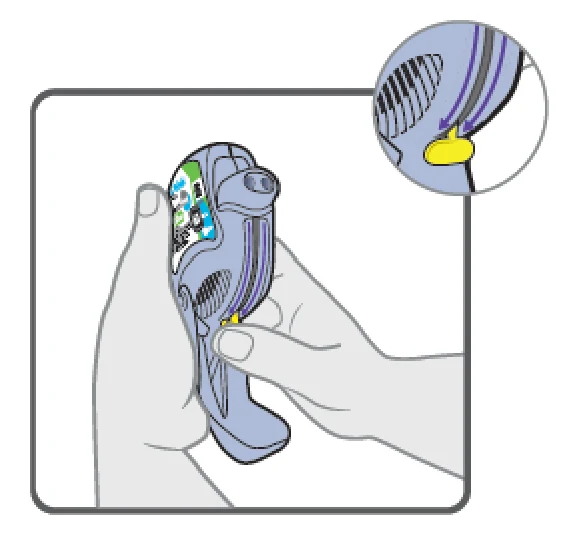
- 1. Open
- Before you use your inhaler it will be in the closed position.
- Hold the inhaler in one hand and with your other hand on the grip, lower the mouthpiece cover from top to bottom.
- The inhaler is now open.
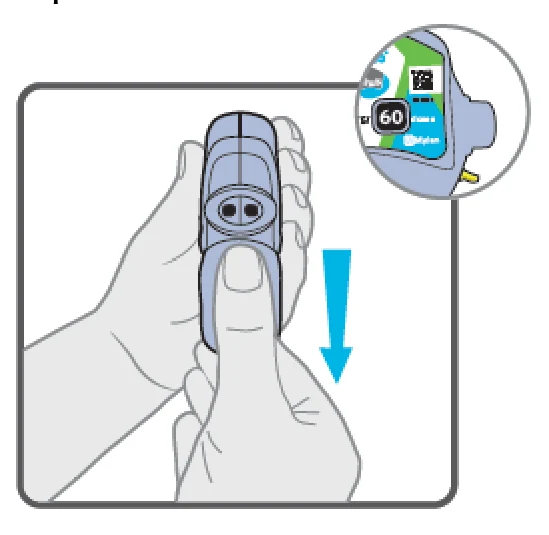
Push down
- Push the yellow lever down to the end of the purple arrows (you may hear a click). The lever must now stay in this position until the dose has been taken.
- Do not move the lever once pushed down.
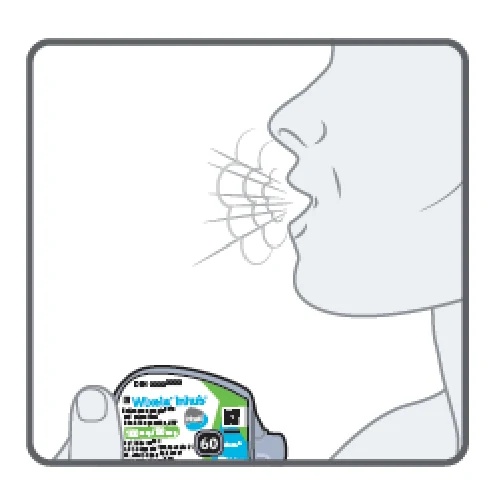
- Exhale
- Hold the inhaler away from your mouth and breathe out fully.
- Do not breathe into the inhaler.
- Inhale
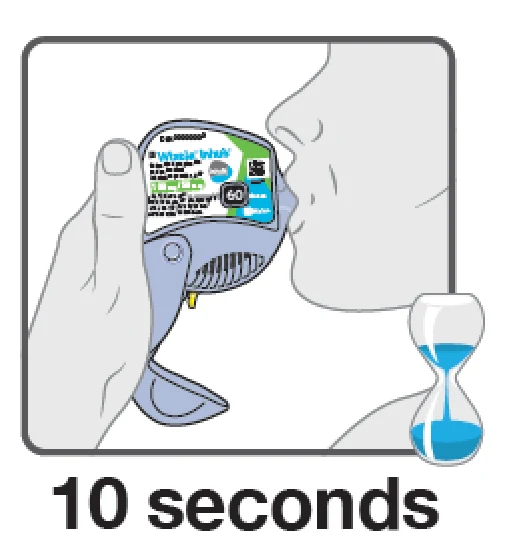
- Hold the inhaler in the vertical position as shown.
- Do not cover the air vents. Do not breathe in through your nose.
- Seal your lips around the mouthpiece and inhale one breath as quickly and deeply as you can.
- Remove the inhaler from your mouth and hold your breath for 10 seconds (or as long as you feel comfortable).
- Breathe out slowly for as long as you can.
- The inhaler delivers your dose of medicine as a very fine powder that you may or may not taste or feel. Do not take an extra dose from your inhaler even if you do not taste or feel the medicine.
- Close
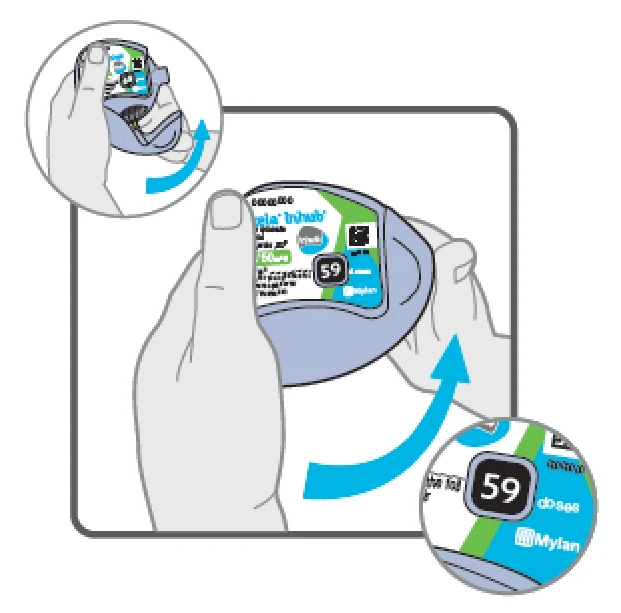
- Push the mouthpiece cover up to the closed position, this will automatically return the yellow lever to the start position.
The dose counter will count down one dose as you close the mouthpiece cover. This will let you know how many doses are left.
- Always store your inhaler with the mouthpiece cover closed.
- Rinse
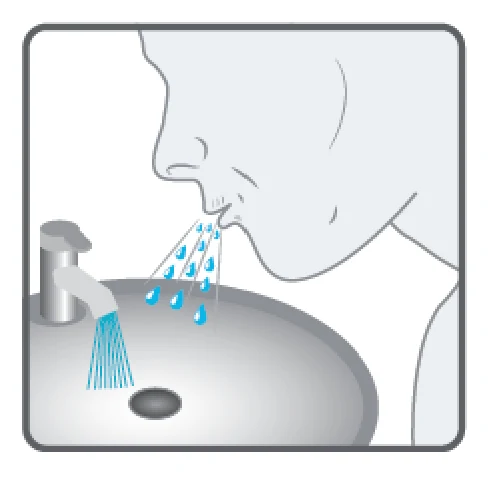
- Rinse your mouth with water after breathing in the medicine. Spit the water out. Do not swallow. This may help to stop you from developing oral thrush.
The inhaler is now ready for you to take your next scheduled dose in about 12 hours. When you are ready to take your next dose, repeat Steps 1 through 6.
IMPORTANT INFORMATION
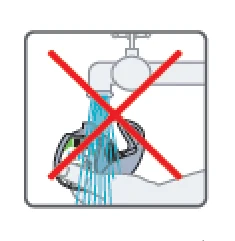 Do not wet or wash the mouthpiece or any part of the inhaler. | 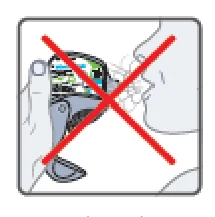 Do not breathe into the inhaler. | 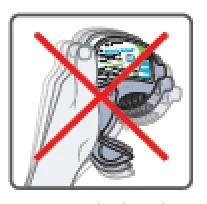 Do not shake the inhaler. |
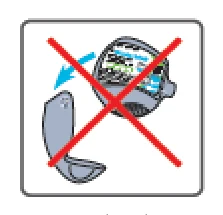 Do not take the inhaler apart. | 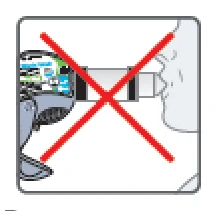 Do not use a Spacer. |
To get the most from your treatment, remember to take one inhalation of Wixela® Inhub® twice a day, everyday or as prescribed by your doctor.
SIDE EFFECTS AND WHAT TO DO ABOUT THEM
Medicines affect different people in different ways. Just because side effects have occurred in other patients does not mean you will get them. If you experience any side effects that bother you, please contact your doctor. This includes the following side effects, which usually wear off with continued treatment:
Effects on heart
- faster heart beat than usual
Effects on muscles and joints
- pain in joints
- muscle cramps
Effects on nervous system
- feeling a little shaky
- headache
- behavioural changes (including agitation, anxiety, and irritability)
- disturbed sleep
- fainting
- spinning sensation (vertigo)
- dizziness
Other Effects
- hoarseness and voice changes
- increased bruising
It is very important that you use your medicine regularly to control your asthma and to ask your doctor whether you need to be monitored in any special way.
Special attention should be paid if you:
- were previously taking another form of corticosteroids (like an injection or an oral tablet) and have switched to an ICS, to look out for tiredness, weakness, nausea and vomiting, low blood pressure.
- are being treated for diabetes as you may need more frequent blood sugar monitoring or a dosage adjustment of your diabetes medication.
- develop a mild yeast infection of the mouth or throat (thrush, Candidiasis) or, rarely, in the esophagus. Common signs are white, slightly raised, sore patches on your tongue and inner cheeks. Remember to rinse and gargle your mouth with water and spit after using Wixela® Inhub®. Cleaning dentures may also help.
- are a child or adolescent with asthma, as your growth should be monitored regularly by a physician when being treated with corticosteroids. Studies have also shown that children whose asthma is not controlled do not grow as quickly as other children.
| SERIOUS SIDE EFFECTS, HOW OFTEN THEY HAPPEN AND WHAT TO DO ABOUT THEM |
|---|
| Symptom / effect | Talk with your doctor or pharmacist | Stop taking drug and seek immediate emergency medical attention | |||||
|---|---|---|---|---|---|---|---|
| Only if severe | In all cases | ||||||
| Common | Thrush: yeast infection of the mouth or throat; thick white patches in the mouth, tongue or on the throat, sore throat | ✓ | |||||
| Pneumonia (in COPD patients), symptoms such as increased cough with increase in mucus (sputum) production, fever accompanied by shaking chills, shortness of breath, sharp or stabbing chest pain during deep breaths, and increased rapid breathing.* | ✓ | ||||||
| Uncommon | Allergic reactions: lumpy skin rash or hives anywhere on the body. | ✓ | |||||
| Fast or irregular heartbeat that does not go away on its own | ✓ | ||||||
| Increase amount of sugar in blood (excessive thirst, frequent urination, dry skin, blurred vision and fatigue) | ✓ | ||||||
| Blurry vision or eye pain (cataracts) | ✓ | ||||||
| SERIOUS SIDE EFFECTS, HOW OFTEN THEY HAPPEN AND WHAT TO DO ABOUT THEM |
|---|
| Symptom / effect | Talk with your doctor or pharmacist | Stop taking drug and seek immediate emergency medical attention |
|---|
| Only if severe | In all cases | |||
|---|---|---|---|---|
| Rare | Eosinophilic granulomatosis with polyangiitis: a flu-like illness, rash, pins and needles or numbness of arms or legs, severe sinusitis and worsening lung or breathing problems | ✓ | ||
| Low blood potassium: muscle weakness and muscle spasms | ✓ | |||
| Rounded face, loss of bone density, blurry vision or eye pain (glaucoma), slowing of growth in children and adolescents | ✓ | |||
| Decreased adrenal function: symptoms may include tiredness, weakness, nausea and vomiting, low blood pressure | ✓ | |||
Allergic reactions: sudden wheeziness and chest pain or tightness; or swelling of eyelids, face, lips, tongue or throat. | ✓ |
| SERIOUS SIDE EFFECTS, HOW OFTEN THEY HAPPEN AND WHAT TO DO ABOUT THEM |
|---|
| Symptom / effect | Talk with your doctor or pharmacist | Stop taking drug and seek immediate emergency medical attention |
|---|
| Only if severe | In all cases | |||
|---|---|---|---|---|
| Sudden worsening of shortness of breath and wheezing shortly after using Wixela® Inhub®. | ✓ | |||
| Mouth, throat becomes unusually irritated causing high pitched wheezing and choking | ✓ | |||
| Esophageal candidiasis: Yeast infection of the esophagus (food tube); difficulty swallowing | ✓ | |||
| Very rare | Persistent pain and/or limited range of motion of a joint or a limb. | ✓ | ||
| Unknown | Decreased ability to fight infections. Symptoms of infection may include fever, pain, chills, feeling tired and sore throat | ✓ | ||
| Worsening of lung symptoms such as increased shortness of breath, wheezing, cough and chest tightness accompanied by fever and more phlegm | ✓ |
*Symptoms of pneumonia and COPD exacerbations frequently overlap.
This is not a complete list of side effects. For any unexpected effects while taking Wixela® Inhub®, contact your doctor or pharmacist.
HOW TO STORE IT
Keep out of reach and sight of children. Your medicine may harm them.
Do not store Wixela® Inhub® above 25°C. Keep in a dry place, away from direct heat or sunlight. Store Wixela® Inhub® in the unopened foil pouch and only open when ready for use. Discard Wixela® Inhub® 30 days after you open the foil pouch or when the counter reads “0”, whichever comes first.
Remember
Keep your Wixela® Inhub® dry and away from direct heat or sunlight. Keep it closed when not in use.
Reporting Side Effects
You can report any suspected side effects associated with the use of health products to Health Canada by:
NOTE: Contact your health professional if you need information about how to manage your side effects. The Canada Vigilance Program does not provide medical advice. |
MORE INFORMATION
This document can be found at: www.mylan.ca.
The full Product Monograph prepared for health professionals can be obtained by contacting the sponsor, Mylan Pharmaceuticals ULC at: 1-844-596-9526
Etobicoke, Ontario M8Z 2S6
Approved on: January 09, 2020.
Mylan Pharmaceuticals ULC Etobicoke, ON M8Z 2S6 1-844-596-9526 www.mylan.ca