


Product Monograph - Xylocaine Ointment 5%
RECENT MAJOR LABEL CHANGES
N/A
TABLE OF CONTENTS
Sections or subsections that are not applicable at the time of authorization are not listed.
RECENT MAJOR LABEL CHANGES .......................................................................................... 2
TABLE OF CONTENTS ............................................................................................................ 2
PART I: HEALTH PROFESSIONAL INFORMATION .................................................................... 4
1 INDICATIONS ............................................................................................................. 4
1.1 Pediatrics .................................................................................................................. 4
1.2 Geriatrics .................................................................................................................. 4
2 CONTRAINDICATIONS ................................................................................................ 4
4 DOSAGE AND ADMINISTRATION ................................................................................ 5
4.1 Dosing Considerations ............................................................................................. 5
4.2 Recommended Dose and Dosage Adjustment ........................................................ 5
4.2.1 Special Populations ............................................................................................ 6
4.3 Administration ......................................................................................................... 6
5 OVERDOSAGE ............................................................................................................ 6
6 DOSAGE FORMS, STRENGTHS, COMPOSITION AND PACKAGING ................................ 8
7 WARNINGS AND PRECAUTIONS ................................................................................. 9
7.1 General ..................................................................................................................... 9
7.2 Special Populations ................................................................................................ 11
7.2.1 Pregnant Women ............................................................................................. 12
7.2.2 Breast-feeding .................................................................................................. 12
7.2.3 Pediatrics .......................................................................................................... 12
7.2.4 Geriatrics .......................................................................................................... 13
8 ADVERSE REACTIONS............................................................................................... 13
8.1 Adverse Reaction Overview ................................................................................... 13
8.2 Post-Market Adverse Reactions ............................................................................. 13
9 DRUG INTERACTIONS .............................................................................................. 14
9.1 Drug Interactions Overview ................................................................................... 14
9.2 Drug-Behavioural Interactions ............................................................................... 14
9.3 Drug-Drug Interactions .......................................................................................... 14
9.4 Drug-Food Interactions .......................................................................................... 16
9.5 Drug-Herb Interactions .......................................................................................... 16
9.6 Drug-Laboratory Test Interactions......................................................................... 16
10 CLINICAL PHARMACOLOGY ...................................................................................... 16
10.1 Mechanism of Action ....................................................................................... 16
10.2 Pharmacodynamics .......................................................................................... 16
10.3 Pharmacokinetics ............................................................................................. 17
11 STORAGE, STABILITY AND DISPOSAL ........................................................................ 18
12 SPECIAL HANDLING INSTRUCTIONS .......................................................................... 18
PART II: SCIENTIFIC INFORMATION ..................................................................................... 19
13 PHARMACEUTICAL INFORMATION .......................................................................... 19
15 MICROBIOLOGY ...................................................................................................... 19
PATIENT MEDICATION INFORMATION ................................................................................ 20
PART I: HEALTH PROFESSIONAL INFORMATION
1 INDICATIONS
XYLOCAINE Ointment 5% (lidocaine) is indicated for:
- Temporary relief of pain associated with minor burns and abrasions of the skin, e.g. sunburn, herpes zoster and labialis, pruritus, sore nipples, insect bites;
- Anesthesia of mucous membranes, e.g. various anal conditions such as hemorrhoids and fissures;
- The alleviation of pain during examination and instrumentation, e.g. proctoscopy, sigmoidoscopy, cystoscopy, endotracheal intubation.
1.1 Pediatrics
Pediatrics (2-18 years of age): Children should be given reduced doses commensurate with their age; weight and physical condition (see 4.2.1 DOSAGE AND ADMINISTRATION, Special Populations).
Pediatrics (<2 years of age): Lidocaine should be used with caution in children younger than two years of age as there are insufficient data to support the safety and efficacy of this product in this patient population at this time. (see 7.2.3 WARNINGS AND PRECAUTIONS, Special Populations).
1.2 Geriatrics
Geriatrics (> 65 years of age): Evidence from clinical studies and experience suggests that use in the geriatric population is associated with differences in safety or effectiveness. Elderly patients should be given reduced doses commensurate with their age and physical condition as they may be more sensitive to systemic effects due to increased blood levels of lidocaine following repeated doses and may require dose reductions. (see 4.2.1 DOSAGE AND ADMINISTRATION, Special Populations and 7.2.4 WARNINGS AND PRECAUTIONS, Special Populations).
2 CONTRAINDICATIONS
- Lidocaine is contraindicated in patients who are hypersensitive to this drug or to any ingredient in the formulation, including any non-medicinal ingredient, or component of the container. For a complete listing, see 6 DOSAGE FORMS, STRENGTHS, COMPOSITION AND PACKAGING.
- Lidocaine is contraindicated in patients with a known history of hypersensitivity to local anesthetics of the amide type or to other components of the ointment (see 6 DOSAGE FORMS, STRENGTHS, COMPOSITION AND PACKAGING).
- Lidocaine is contraindicated in patients with congenital or idiopathic methemoglobinemia.
- Lidocaine is contraindicated in infants who require treatment with methemoglobin-inducing agents, e.g., sulfonamides and are 12 months of age or younger (see 9 DRUG INTERACTIONS).
4 DOSAGE AND ADMINISTRATION
4.1 Dosing Considerations
When XYLOCAINE Ointment 5% (lidocaine) is used concomitantly with other products containing lidocaine, the total dose contributed by all formulations must be kept in mind.
4.2 Recommended Dose and Dosage Adjustment
Maximum Dosage
Adults
No more than 2 g (100 mg lidocaine base) in a single dose for endotracheal intubation.
No more than 10 g (500 mg lidocaine base) in a single dose for other indications.
After a maximum endotracheal dose or application to mucous membranes the next dose should not be applied until 4 hours later. After a maximal dose given rectally or to burns the minimum dosing interval should be 8 hours.
The total maximum dose administered in a 24-hour period to healthy adults should not exceed 20 g (1000 mg lidocaine base).
Children
XYLOCAINE Ointment 5% should be used with caution in children under the age of 2 as there is insufficient data to support the safety and efficacy of this product in this patient population at this time.
Children should be closely observed during and after use of topical anesthetics, as they are at greater risk than adults for serious adverse events (e.g., methemoglobinemia).
- 2-11 Years
It is difficult to recommend a maximum dose of any drug for children since this varies as a function of age and weight. Hence, for safety reasons, in children less than 12 years of age 100% bioavailability should be assumed following application to mucous membranes and broken skin, and the maximum amount of XYLOCAINE Ointment 5% administered to children should not exceed 0.1 g ointment/kg body weight (corresponding to 5 mg lidocaine/kg of body weight). The minimum dosing interval in children should be 8 hours.
- 12-18 Years
For children over 12 years of age doses should be commensurate with weight and physical condition.
Dosage Adjustment
4.2.1 Special Populations
Debilitated, elderly patients, acutely ill patients, patients with sepsis, and children should be given reduced doses commensurate with their age, weight and physical condition because they may be more sensitive to systemic effects due to increased blood levels of lidocaine following repeated doses.
4.3 Administration
The ointment should be applied in a thin layer for adequate control of symptoms. A sterile gauze pad is recommended for application to broken and burned tissue.
For sore nipples, apply on a small piece of gauze; the ointment must be washed away before the next feeding.
For endotracheal intubation, apply 1-2 g of ointment to the tube prior to intubation.
5 OVERDOSAGE
Acute systemic toxicity from local anesthetics is generally related to high plasma levels encountered during therapeutic use of local anesthetics and originates mainly in the central nervous and the cardiovascular systems (see 8 ADVERSE REACTIONS and 7 WARNINGS AND PRECAUTIONS). It should be kept in mind that clinically relevant pharmacodynamic drug interactions (i.e., toxic effects) may occur with lidocaine and other local anesthetics or structurally related drugs, and Class I and Class III antiarrhythmic drugs due to additive effects (see 9 DRUG INTERACTIONS).
Symptoms
Central nervous system toxicity is a graded response, with symptoms and signs of escalating severity. The first symptoms are circumoral paresthesia, numbness of the tongue, lightheadedness, hyperacusis and tinnitus. Visual disturbance and muscular tremors are more serious and precede the onset of generalized convulsions. Unconsciousness and grand mal convulsions may follow, which may last from a few seconds to several minutes. Hypoxia and hypercarbia occur rapidly following convulsions due to the increased muscular activity, together with the interference with normal respiration. In severe cases apnea may occur. Acidosis increases the toxic effects of local anesthetics.
Recovery is due to redistribution and metabolism of the local anesthetic drug. Recovery may be rapid unless large amounts of the drug have been administered.
Cardiovascular effects may be seen in cases with high systemic concentrations. Severe hypotension, bradycardia, arrhythmia and cardiovascular collapse may be the result in such cases.
Cardiovascular toxic effects are generally preceded by signs of toxicity in the central nervous system, unless the patient is receiving a general anesthetic or is heavily sedated with drugs such as a benzodiazepine or barbiturate.
Methemoglobinemia
Rare cases of methemoglobinemia have been reported.
Mild methemoglobinemia is characterized by tissue cyanosis, a bluish-grey or brownish discoloration of the skin, especially around the lips and nail beds, which is not reversed by breathing 100% oxygen. Clinical signs may also include pallor and marbleization.
Severe methemoglobinemia (MetHb concentrations above approximately 25%) is associated with signs of hypoxemia, ie. dyspnea, tachycardia and depression of consciousness.
Drug-induced methemoglobinemia may occur with the use of drugs including but not limited to amino-amide, sulfonamides, acetanilid, aniline dyes, benzocaine, lidocaine, chloroquine, dapsone, naphthalene, nitrates and nitrites, nitrofurantoin, nitroglycerin, nitroprusside, pamaquine, para-aminosalicylic acid, phenacetin, phenobarbital, phenytoin, primaquine and quinine.
Acetaminophen has been shown to induce methemoglobin formation in vitro and in animals. In humans, methemoglobin formation is very rare at therapeutic doses and overdoses of acetaminophen.
It should be kept in mind that XYLOCAINE Ointment 5% is contraindicated for patients with congenital or idiopathic methemoglobinemia and for infants 12 months of age or younger who require treatment with methemoglobin-inducing drugs. Patients with glucose-6-phosphate dehydrogenase deficiency are more susceptible to drug-induced methemoglobinemia (see also 2 CONTRAINDICATIONS and 7 WARNINGS AND PRECAUTIONS).
Treatment
The first consideration is prevention, best accomplished by careful and constant monitoring of cardiovascular and respiratory vital signs and the patient's state of consciousness after each local anesthetic administration. At the first sign of change, oxygen should be administered.
The first step in the management of systemic toxic reactions consists of immediate attention to the maintenance of a patent airway and assisted or controlled ventilation with oxygen and a delivery system capable of permitting immediate positive airway pressure by mask. This may prevent convulsions if they have not already occurred.
If convulsions occur, the objective of the treatment is to maintain ventilation and oxygenation and support circulation. Oxygen must be given and ventilation assisted if necessary (mask and bag or tracheal intubation). Should convulsions not stop spontaneously after 15-20 seconds, an anticonvulsant should be given iv to facilitate adequate ventilation and oxygenation. Thiopental sodium 1-3 mg/kg iv is the first choice. Alternatively diazepam 0.1 mg/kg bw iv may be used, although its action will be slow. Prolonged convulsions may jeopardise the patient's ventilation and oxygenation. If so, injection of a muscle relaxant (e.g. succinylcholine 1 mg/kg bw) will facilitate ventilation, and oxygenation can be controlled. Early endotracheal intubation is required when succinylcholine is used to control motor seizure activity.
If cardiovascular depression is evident (hypotension, bradycardia), ephedrine 5-10 mg i.v. should be given and may be repeated, if necessary, after 2-3 minutes.
Should circulatory arrest occur, immediate cardiopulmonary resuscitation should be instituted. Continual oxygenation and ventilation and circulatory support as well as treatment of acidosis are of vital importance, since hypoxia and acidosis will increase the systemic toxicity of local anesthetics. Epinephrine (0.1-0.2 mg as intravenous or intracardial injections) should be given as soon as possible and repeated, if necessary.
Children should be given doses of epinephrine commensurate with their age and weight.
In neonates, methemoglobin concentrations of up to 5 - 6% are not considered to be of clinical significance, with treatment of symptomatic methemoglobinemia not typically necessary unless methemoglobin concentrations are above 25 - 30%. However, the severity of clinical symptoms should be the primary consideration in the decision to initiate treatment, rather than the level of methemoglobin. Most patients recovered spontaneously after removal of the jelly. Methemoglobinemia may be treated with a slow intravenous injection of methylene blue. It has been reported in published literature that methylene blue should be used cautiously as a treatment for methemoglobinemia in patients with glucose-6-phosphate dehydrogenase deficiency because it may not be effective for these patients and may cause hemolytic anemia.
| For management of a suspected drug overdose, contact your regional poison control centre. |
6 DOSAGE FORMS, STRENGTHS, COMPOSITION AND PACKAGING
Table 1 – Dosage Forms, Strengths, Composition and Packaging
Dosage Forms
XYLOCAINE Ointment 5% (lidocaine) is a white to greyish-white ointment.
| Route of Administration | Dosage Form / Strength/Composition | Non-medicinal Ingredients |
| Topical | Ointment 5% (50 mg/g) | polyethylene glycol, propylene glycol purified water |
Packaging
XYLOCAINE Ointment 5% is available in 35 g aluminum tubes.
7 WARNINGS AND PRECAUTIONS
7.1 General
Excessive dosage, or short intervals between doses, can result in high plasma levels of lidocaine or its metabolites and serious as well as life-threatening adverse effects, including methemoglobinemia. Absorption from wound surfaces and the mucous membranes is variable but is especially high from the bronchial tree. Such applications may therefore result in rapidly rising or excessive plasma concentrations, with an increased risk for toxic symptoms, such as convulsions and methemoglobinemia. Patients should be instructed to strictly adhere to the recommended dosage. This is especially important in children where doses vary with weight. The management of serious adverse reactions may require the use of resuscitative equipment, oxygen and other resuscitative drugs (see 5 OVERDOSAGE).
The lowest dosage that results in effective anesthesia should be used to avoid high plasma levels and serious adverse effects. Tolerance to elevated blood levels varies with the status of the patient.
Lidocaine should be used with caution in patients with sepsis and/or traumatized mucosa at the area of application, since under such conditions there is the potential for rapid systemic absorption.
When using XYLOCAINE Ointment 5% in younger children, especially infants under the age of 3 months, care must be taken to ensure that the caregiver understands the need to limit the dose and area of application and to prevent accidental ingestion (see 4 DOSAGE AND ADMINISTRATION). Children should be closely observed during and after use of lidocaine, as they are at greater risk than adults for serious adverse events (e.g., methemoglobinemia).
In patients under general anesthesia who are paralyzed, higher plasma concentrations may occur than in spontaneously breathing patients. Unparalyzed patients are more likely to swallow a large proportion of the dose, which then undergoes considerable first-pass hepatic metabolism following absorption from the gut.
Avoid contact with eyes.
Many drugs used during the conduct of anesthesia are considered potential triggering agents for familial malignant hyperthermia. It has been shown that the use of amide local anesthetics in malignant hyperthermia patients is safe. However, there is no guarantee that neural blockade will prevent the development of malignant hyperthermia during surgery. It is also difficult to predict the need for supplemental general anesthesia. Therefore, a standard protocol for the management of malignant hyperthermia should be available.
When topical anesthetics are used in the mouth, the patient should be aware that the production of topical anesthesia may impair swallowing and thus enhance the danger of aspiration. Numbness of the tongue or buccal mucosa may enhance the danger of unintentional biting trauma. Food or chewing gum should not be taken while the mouth or throat area is anesthetized. See also the Patient Medication Information Section.
XYLOCAINE Ointment 5% is ineffective when applied to intact skin.
Carcinogenesis and Mutagenesis
Genotoxicity tests with lidocaine showed no evidence of mutagenic potential. A metabolite of lidocaine, 2,6-xylidine, showed weak evidence of activity in some genotoxicity tests. A chronic oral toxicity study of the metabolite 2,6-xylidine (0, 14, 45, 135 mg/kg) administered in feed to rats showed that there was a significantly greater incidence of nasal cavity tumors in male and female animals that had daily oral exposure to the highest dose of 2,6-xylidine for 2 years. The lowest tumor-inducing dose tested in animals (135 mg/kg) corresponds to approximately 40 times the amount of 2,6-xylidine to which a 50 kg subject would be exposed following the application of 8 g of lidocaine ointment 5% for 24 hours on the mucosa, assuming the highest theoretical extent of absorption of 100% and 80% conversion to 2,6-xylidine. Based on a yearly exposure (once daily dosing with 2,6-xylidine in animals and 5 treatment sessions with 8 g lidocaine ointment 5% in humans), the safety margins would be approximately 3000 times when comparing the exposure in animals to man.
Cardiovascular
Lidocaine should be used with caution in patients with bradycardia or impaired cardiovascular function since they may be less able to compensate for functional changes associated with the prolongation of A-V conduction produced by amide-type local anesthetics.
Lidocaine should be used with caution in patients in severe shock.
Driving and Operating Machinery
Exercise caution when driving or operating a vehicle or potentially dangerous machinery.
With the recommended doses, XYLOCAINE Ointment 5% has no effect on the ability to drive and use machines. However, in case of overdosage it will not be the case. It is suggested that the patient should know how he/she feels and be aware that due caution should be exercised when driving or operating a vehicle or potentially dangerous machinery.
Hepatic
Because amide-type local anesthetics such as lidocaine are metabolized by the liver, these drugs, especially repeated doses, should be used cautiously in patients with hepatic disease. Patients with severe hepatic disease, because of their inability to metabolize local anesthetics normally, are at greater risk of developing toxic plasma concentrations.
Neurologic
Epilepsy: The risk of central nervous system side effects when using lidocaine in patients with epilepsy is very low, provided that the dose recommendations are followed (See 4 DOSAGE AND ADMINISTRATION).
Locomotion and Coordination: Topical lidocaine formulations generally result in low plasma concentrations because of a low degree of systemic absorption. However, depending on the dose, local anesthetics may have a very mild effect on mental function and coordination even in the absence of overt CNS toxicity and may temporarily impair locomotion and alertness.
Renal
Lidocaine is metabolized primarily by the liver to monoethylglycinexylidine (MEGX, which has some CNS activity), and then further to metabolites glycinexylidine (GX) and 2,6-xylidine (see 10 CLINICAL PHARMACOLOGY). Only a small fraction (2%) of lidocaine is excreted unchanged in the urine. The pharmacokinetics of lidocaine and its main metabolite were not altered significantly in haemodialysis patients (n=4) who received an intravenous dose of lidocaine. Therefore, renal impairment is not expected to significantly affect the pharmacokinetics of lidocaine when XYLOCAINE Ointment 5% is used for short treatment durations, according to dosage instructions (see 4 DOSAGE AND ADMINISTRATION). Caution is recommended when lidocaine is used in patients with severely impaired renal function because lidocaine metabolites may accumulate during long term treatment (see 4 DOSAGE AND ADMINISTRATION).
Sensitivity
Lidocaine should be used with caution in persons with known drug sensitivities. Patients allergic to para-aminobenzoic acid derivates (procaine, tetracaine, benzocaine, etc.) have not shown cross sensitivity to lidocaine.
7.2 Special Populations
Debilitated patients, acutely ill patients, and patients with sepsis should be given reduced doses commensurate with their age, weight and physical condition because they may be more sensitive to systemic effects due to increased blood levels of lidocaine following repeated doses.
XYLOCAINE Ointment 5% is contraindicated for patients with congenital or idiopathic methemoglobinemia and patients with glucose-6-phosphate dehydrogenase deficiency which are more susceptible to drug-induced methemoglobinemia (see also 2 CONTRAINDICATIONS).
7.2.1 Pregnant Women
There are no adequate and well-controlled studies in pregnant women on the effect of lidocaine on the developing fetus.
It is reasonable to assume that a large number of pregnant women and women of child-bearing age have been given lidocaine. No specific disturbances to the reproductive process have so far been reported, e.g. no increased incidence of malformations. However, care should be given during early pregnancy when maximum organogenesis takes place.
Labour and Delivery: Should XYLOCAINE Ointment 5% be used concomitantly with other products containing lidocaine during labour and delivery, the total dose contributed by all formulations must be kept in mind.
7.2.2 Breast-feeding
Lidocaine and its metabolites are excreted in the breast milk. At therapeutic doses the quantities of lidocaine and its metabolites in breast milk are small and generally are not expected to be a risk for the infant.
7.2.3 Pediatrics
Children should be closely observed during and after use of topical anesthetics, as they are at greater risk than adults for serious adverse events (e.g., methemoglobinemia).
When using XYLOCAINE Ointment 5% in younger children, care must be taken to ensure that the caregiver understands the need to limit the dose and area of application and to prevent accidental ingestion (see 4 DOSAGE AND ADMINISTRATION).
Parents should be reminded of the importance of emotional and psychological support of younger children undergoing medical or surgical procedures.
Pediatrics (2-18 years of age): Children should be given reduced doses commensurate with their age, weight and physical condition because they may be more sensitive to systemic effects due to increased blood levels of lidocaine following repeated doses (see 4 DOSAGE AND ADMINISTRATION).
Pediatrics (< 2 years of age): XYLOCAINE Ointment 5% should be used with caution in children under the age of 2 as there is insufficient data to support the safety and efficacy of this product in this patient population at this time.
7.2.4 Geriatrics
Geriatrics (≥ 65 years of age): Elderly patients may be more sensitive to systemic effects due to increased blood levels of lidocaine following repeated doses and may require dose reductions.
8 ADVERSE REACTIONS
8.1 Adverse Reaction Overview
Adverse experiences following the administration of lidocaine are similar in nature to those observed with other amide local anesthetic agents. These adverse experiences are, in general, dose-related and may result from high plasma levels caused by overdosage or rapid absorption, or may result from a hypersensitivity, idiosyncrasy or diminished tolerance on the part of the patient.
Serious adverse experiences are generally systemic in nature.
8.2 Post-Market Adverse Reactions
The following adverse reactions are those most commonly reported:
Central Nervous System: CNS manifestations are excitatory and/or depressant and may be characterized by the following signs and symptoms of escalating severity: circumoral paresthesia, light-headedness, nervousness, apprehension, euphoria, confusion, dizziness, drowsiness, hyperacusis, tinnitus, blurred vision, vomiting, sensations of heat, cold or numbness, twitching, tremors, convulsions, unconsciousness, respiratory depression and arrest. The excitatory manifestations (e.g., twitching, tremors, convulsions) may be very brief or may not occur at all, in which case the first manifestation of toxicity may be drowsiness merging into unconsciousness and respiratory arrest.
Drowsiness following the administration of lidocaine is usually an early sign of a high lidocaine plasma level and may occur as a consequence of rapid absorption.
Cardiovascular System: Cardiovascular manifestations are usually depressant and are characterized by bradycardia, hypotension, arrhythmia and cardiovascular collapse, which may lead to cardiac arrest.
Allergic: Allergic reactions are characterized by cutaneous lesions, urticaria, edema or, in the most severe instances, anaphylactic shock. Allergic reactions of the amide type are rare (<0.1%) and may occur as a result of sensitivity either to the local anesthetic agent or to other components in the formulation (See 6 DOSAGE FORMS, STRENGTHS, COMPOSITION AND PACKAGING).
Skin Irritation: Topical products that contain propylene glycol may cause skin irritation.
9 DRUG INTERACTIONS
9.1 Drug Interactions Overview
Lidocaine is mainly metabolized in the liver by CYP1A2 and CYP3A4 to its two major metabolites, monoethylglycinexylidine (MEGX) and glycinexylidine (GX), both of which are pharmacologically active. Lidocaine has a high hepatic extraction ratio. Only a small fraction (2%) of lidocaine is excreted unchanged in the urine. The hepatic clearance of lidocaine is expected to depend largely on blood flow.
Strong inhibitors of CYP1A2, such as fluvoxamine, given concomitantly with lidocaine, can cause a metabolic interaction leading to an increased lidocaine plasma concentration. Therefore, prolonged administration of lidocaine should be avoided in patients treated with strong inhibitors of CYP1A2, such as fluvoxamine. When co-administered with intravenous lidocaine, two strong inhibitors of CYP3A4, erythromycin and itraconazole, have each been shown to have a modest effect on the pharmacokinetics of intravenous lidocaine. Other drugs such as propranolol and cimetidine have been reported to reduce intravenous lidocaine clearance, probably through effects on hepatic blood flow and/or metabolism.
When lidocaine is used topically, plasma concentrations are of importance for safety reasons (see 7.1 WARNINGS AND PRECAUTIONS, General and 8 ADVERSE REACTIONS). However, with the low systemic exposure and short duration of topical application, the abovementioned metabolic drug-drug interactions are not expected to be of clinical significance when XYLOCAINE Ointment 5% is used according to dosage recommendations.
Clinically relevant pharmacodynamic drug interactions may occur with lidocaine and other local anesthetics or structurally related drugs, and Class I and Class III antiarrhythmic drugs due to additive effects.
Co-administration of XYLOCAINE Ointment 5% and other methemoglobin-inducing agents to patients 12 months of age or younger may result in clinical signs of methemoglobinemia (see 2 CONTRAINDICATIONS; 7 WARNINGS AND PRECAUTIONS; 9 DRUG INTERACTIONS; and 8 ADVERSE REACTIONS)
9.2 Drug-Behavioural Interactions
Interactions of lidocaine with lifestyle have not been established.
9.3 Drug-Drug Interactions
Local anesthetics and agents structurally related to amide-type local anesthetics
Lidocaine should be used with caution in patients receiving other local anesthetics or agents structurally related to amide-type local anesthetics (e.g. antiarrhythmics such as mexiletine), since the toxic effects are additive.
Antiarrhythmic Drugs
Class I Antiarrhythmic drugs
Class I antiarrhythmic drugs (such as mexiletine) should be used with caution since toxic effects are additive and potentially synergistic.
Class III Antiarrhythmic drugs
Caution is advised when using Class III antiarrhythmic drugs concomitantly with lidocaine due to potential pharmacodynamic or pharmacokinetic interactions with lidocaine, or both. A drug interaction study has shown that the plasma concentration of lidocaine may be increased following administration of a therapeutic dose of intravenous lidocaine to patients treated with amiodarone (n=6). Case reports have described toxicity in patients treated concomitantly with lidocaine and amiodarone. Patients treated with Class III antiarrhythmic drugs (e.g. amiodarone) should be kept under close surveillance and ECG monitoring should be considered, since cardiac effects of these drugs and lidocaine may be additive.
Strong Inhibitors of CYP1A2 and CYP3A4
Cytochrome CYP1A2 and CYP3A4 are involved in the formation of the pharmacologically active lidocaine metabolite MEGX.
Fluvoxamine: Strong inhibitors of CYP1A2, such as fluvoxamine, given during prolonged administration of lidocaine to areas with a high extent of systemic absorption (e.g., mucous membranes) can cause a metabolic interaction leading to an increased lidocaine plasma concentration. The plasma clearance of a single intravenous dose of lidocaine was reduced by 41 to 60% during co-administration of fluvoxamine, a selective and potent CYP1A2 inhibitor, to healthy volunteers.
Erythromycin and Itraconazole: Erythromycin and itraconazole, which are strong inhibitors of CYP3A4, have been shown to reduce clearance of lidocaine by 9 to 18%, following a single intravenous dose of lidocaine to healthy volunteers.
During combined co-administration with fluvoxamine and erythromycin the plasma clearance of lidocaine was reduced by 53%.
β-blockers and cimetidine
Following a single intravenous dose of lidocaine, administered to healthy volunteers, the clearance of lidocaine has been reported to be reduced up to 47% when co-administered with propanolol and up to 30% when co-administered with cimetidine. Reduced clearance of lidocaine when co-administered with these drugs is probably due to reduced liver blood flow and/or inhibition of microsomal liver enzymes. The potential for clinically significant interactions with these drugs should be considered during long-term treatment with high doses of lidocaine.
Methemoglobinemia
In patients treated concomitantly with XYLOCAINE Ointment 5% and other methemoglobin-inducing agents including but not limited to sulfonamides, acetanilid, aniline dyes, benzocaine, chloroquine, dapsone, naphthalene, nitrates and nitrites, nitrofurantoin, nitroglycerin, nitroprusside, pamaquine, para-aminosalicylic acid, phenacetin, phenobarbital, phenytoin, primaquine and quinine, XYLOCAINE Ointment 5% may induce the formation of methemoglobin and result in overt clinical signs of methemoglobinemia (see 2 CONTRAINDICATIONS and 5 OVERDOSAGE).
Acetaminophen has been shown to induce methemoglobin formation in vitro and in animals. In humans, methemoglobin formation is very rare at therapeutic doses and overdoses of acetaminophen.
9.4 Drug-Food Interactions
Interactions with food have not been established.
9.5 Drug-Herb Interactions
Interactions with herbal products have not been established.
9.6 Drug-Laboratory Test Interactions
Interactions with laboratory tests have not been established.
10 CLINICAL PHARMACOLOGY
10.1 Mechanism of Action
Lidocaine stabilizes the neuronal membrane by inhibiting the ionic fluxes required for the initiation and conduction of impulses, thereby effecting local anesthetic action. Local anesthetics of the amide type are thought to act within the sodium channels of the nerve membrane.
10.2 Pharmacodynamics
Onset of Action
Anesthesia usually occurs within 3-5 minutes when applied to mucous membrane. The duration of analgesia for burn wound pain is about 4 hours. The application of gauze over the cream may prolong duration of analgesia in burn wounds. XYLOCAINE Ointment 5% (lidocaine) is ineffective when applied to intact skin.
Hemodynamics
Lidocaine, like other local anesthetics, may also have effects on excitable membranes in the brain and myocardium. If excessive amounts of drug reach systemic circulation rapidly, symptoms and signs of toxicity will appear, emanating from the central nervous and cardiovascular systems.
Central nervous system toxicity (see 5 OVERDOSAGE) usually precedes the cardiovascular effects since it occurs at lower plasma concentrations. Direct effects of local anesthetics on the heart include slow conduction, negative inotropism and eventually cardiac arrest.
10.3 Pharmacokinetics
Absorption
The rate and extent of absorption depends upon concentration and total dose administered, the specific site of application and duration of exposure. In general, the rate of absorption of local anesthetic agents following topical application to wound surfaces and mucous membranes is high, and occurs most rapidly after intratracheal and bronchial administration. Lidocaine is also well absorbed from the gastrointestinal tract, although little intact drug may appear in the circulation because of biotransformation in the liver.
Distribution:
Lidocaine has a total plasma clearance of 0.95 L/min and a volume of distribution at steady state of 91 L.
Following insertion of an endotracheal tube lubricated with a mean of 1.26 g (range 0.49-2.45) XYLOCAINE Ointment 5% in patients 18 to 80 years old, the mean peak venous plasma concentration of lidocaine was 0.45 (range 0.2-0.9) μg/mL and was usually observed within 15 min. A dose increase of 1 g ointment resulted in an average increase of 0.22 μg/mL.
Lidocaine readily crosses the placenta, and equilibrium in regard to free, unbound drug will be reached. Because the degree of plasma protein binding in the fetus is less than in the mother, the total plasma concentration will be greater in the mother, but the free concentrations will be the same.
The plasma binding of lidocaine is dependent on drug concentration, and the fraction bound decreases with increasing concentration. At concentrations of 1 to 4 μg of free base per mL, 60 to 80 percent of lidocaine is protein bound. Binding is also dependent on the plasma concentration of the alpha-1-acid glycoprotein.
Metabolism:
Lidocaine is metabolized rapidly by the liver, and metabolites and unchanged drug are excreted by the kidneys. Biotransformation includes oxidative N-dealkylation, ring hydroxylation, cleavage of the amide linkage, and conjugation. Only 2% of lidocaine is excreted unchanged. Most of it is metabolized first to monoethylglycinexylidide (MEGX) and then to glycinexylidide (GX) and 2,6-xylidine. Up to 70% appears in the urine as 4-hydroxy-2,6-xylidine.
Elimination
Lidocaine has an elimination half-life of 1.6 h and an estimated hepatic extraction ratio of 0.65. The clearance of lidocaine is almost entirely due to liver metabolism, and depends both on liver blood flow and the activity of metabolizing enzymes.
The elimination half-life of lidocaine following an intravenous bolus injection is typically 1.5 to 2.0 hours. The elimination half-life in neonates (3.2 h) is approximately twice that of adults. The half-life may be prolonged two-fold or more in patients with liver dysfunction. Renal dysfunction does not affect lidocaine kinetics but may increase the accumulation of metabolites.
Special Populations and Conditions
Acidosis increases the systemic toxicity of lidocaine while the use of CNS depressants may increase the levels of lidocaine required to produce overt CNS effects. Objective adverse manifestations become increasingly apparent with increasing venous plasma levels above 6.0 μg free base per mL.
11 STORAGE, STABILITY AND DISPOSAL
Store at 15-30°C. Protect from freezing.
12 SPECIAL HANDLING INSTRUCTIONS
On initial opening, do not use if the protective membrane of the tube is punctured.
PART II: SCIENTIFIC INFORMATION
13 PHARMACEUTICAL INFORMATION
Drug Substance
Proper name: Lidocaine
Molecular formula and molecular mass: C14H22N2O and 234.3
Structural formula: 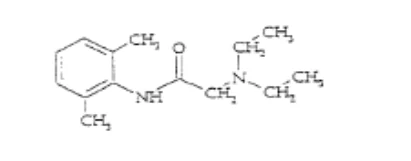
15 MICROBIOLOGY
No microbiological information is required for this drug product.