


Product Monograph - Zinecard
RECENT MAJOR LABEL CHANGES
Not applicable
TABLE OF CONTENTS
Sections or subsections that are not applicable at the time of authorization are not listed.
RECENT MAJOR LABEL CHANGES ............................................................................................ 2
TABLE OF CONTENTS .............................................................................................................. 2
PART I: HEALTH PROFESSIONAL INFORMATION ...................................................................... 4
1 INDICATIONS ............................................................................................................... 4
1.1 Pediatrics ................................................................................................................ 4
1.2 Geriatrics ................................................................................................................ 4
2 CONTRAINDICATIONS ................................................................................................. 4
3 SERIOUS WARNINGS AND PRECAUTIONS BOX ............................................................ 4
4 DOSAGE AND ADMINISTRATION ................................................................................. 5
4.1 Dosing Considerations ............................................................................................ 5
4.2 Recommended Dose and Dosage Adjustment ....................................................... 5
4.3 Reconstitution ........................................................................................................ 5
4.4 Administration ........................................................................................................ 6
5 OVERDOSAGE .............................................................................................................. 6
6 DOSAGE FORMS, STRENGTHS, COMPOSITION AND PACKAGING ................................. 7
7 WARNINGS AND PRECAUTIONS .................................................................................. 7
7.1 Special Populations................................................................................................. 9
7.1.1 Pregnant Women ............................................................................................. 9
7.1.2 Breast-feeding .................................................................................................. 9
7.1.3 Pediatrics .......................................................................................................... 9
7.1.4 Geriatrics .......................................................................................................... 9
8 ADVERSE REACTIONS ................................................................................................ 10
8.1 Adverse Reaction Overview .................................................................................. 10
8.2 Clinical Trial Adverse Reactions ............................................................................ 10
8.2.1 Clinical Trial Adverse Reactions – Pediatrics ................................................... 11
8.3 Less Common Clinical Trial Adverse Reactions ..................................................... 11
8.3.1 Less Common Clinical Trial Adverse Reactions – Pediatrics ............................ 11
8.4 Abnormal Laboratory Findings: Hematologic, Clinical Chemistry and Other Quantitative Data ........................................................................................................... 11
8.5 Post-Market Adverse Reactions ........................................................................... 11
9 DRUG INTERACTIONS ................................................................................................ 12
9.2 Drug Interactions Overview .................................................................................. 12
9.3 Drug-Behavioural Interactions .............................................................................. 12
9.4 Drug-Drug Interactions ......................................................................................... 12
9.5 Drug-Food Interactions ......................................................................................... 12
9.6 Drug-Herb Interactions ......................................................................................... 12
9.7 Drug-Laboratory Test Interactions ........................................................................ 12
10 CLINICAL PHARMACOLOGY ....................................................................................... 12
10.1 Mechanism of Action ...................................................................................... 12
10.2 Pharmacodynamics ........................................................................................ 12
10.3 Pharmacokinetics ........................................................................................... 12
11 STORAGE, STABILITY AND DISPOSAL ......................................................................... 13
12 SPECIAL HANDLING INSTRUCTIONS ........................................................................... 14
PART II: SCIENTIFIC INFORMATION ....................................................................................... 15
13 PHARMACEUTICAL INFORMATION ............................................................................ 15
14 CLINICAL TRIALS ........................................................................................................ 15
14.1 Trial Design and Study Demographics ............................................................ 15
14.2 Study Results .................................................................................................. 16
15 MICROBIOLOGY ........................................................................................................ 16
16 NON-CLINICAL TOXICOLOGY ..................................................................................... 16
PATIENT MEDICATION INFORMATION .................................................................................. 19
PART I: HEALTH PROFESSIONAL INFORMATION
1 INDICATIONS
ZINECARD (dexrazoxane for injection) is indicated for:
- Reducing (preventing) the incidence and severity of cardiotoxicity associated with doxorubicin administration for the treatment of metastatic breast cancer in patients who have already experienced a partial response or at least maintained stable disease.
ZINECARD should be used only with chemotherapy regimens containing doxorubicin.
There is some evidence that the use of dexrazoxane concurrently with the initiation of fluorouracil, doxorubicin and cyclophosphamide (FAC) therapy interferes with the antitumour efficacy of the regimen, and this use is not recommended. ZINECARD should be used only after tolerance to a full dose doxorubicin has been established (see 7 WARNINGS AND PRECAUTIONS).
1.1 Pediatrics
Pediatrics (< 18 years of age): Zinecard is not indicated for use in patients below the age of 18 years (see 7.1 Special Populations, 7.1.3 Pediatrics).
1.2 Geriatrics
Geriatrics (≥ 65 years of age): Clinical studies of Zinecard did not include sufficient numbers of subjects 65 and over to determine whether they respond differently from younger subjects (see 7.1 Special Populations, 7.1.4 Geriatrics).
2 CONTRAINDICATIONS
- Zinecard should not be used as a chemotherapeutic agent.
- Zinecard is contraindicated in patients who have known hypersensitivity to dexrazoxane or any ingredient in the formulation or component of the container. For a complete listing, see 6 DOSAGE FORMS, STRENGTHS, COMPOSITION AND PACKAGING.
- Do not use Zinecard with non-anthracycline chemotherapy regimens.
3 SERIOUS WARNINGS AND PRECAUTIONS BOX
Serious Warnings and Precautions
Zinecard is a potent drug and should be used only by physicians experienced with cancer chemotherapy drugs.
|
|---|
|
|---|
4 DOSAGE AND ADMINISTRATION
4.1 Dosing Considerations
Zinecard (dexrazoxane for injection) should be reconstituted with Sterile Water for Injection, USP to a concentration of 10 mg/mL. The reconstituted Zinecard solution is intended for further dilution with Lactated Ringer’s Injection, USP to a concentration range of 1.3 to 3.0 mg/mL before use according to the instructions given in section 4.3 Reconstitution.
4.2 Recommended Dose and Dosage Adjustment
The recommended dosage ratio of Zinecard:doxorubicin is 10:1 (e.g. 500 mg/m2 Zinecard: 50 mg/m2 doxorubicin) (see 7 WARNINGS AND PRECAUTIONS).
Hepatic insufficiency: Since a doxorubicin dose reduction is recommended in the presence of hyperbilirubinemia, the Zinecard dosage should be proportionately reduced in patients with hepatic impairment to maintain the 10:1 ratio of Zinecard:doxorubicin.
Renal insufficiency: In patients with moderate to severe renal dysfunction (creatinine clearance values <40 mL/min), the recommended dosage ratio of Zinecard:doxorubicin is 5:1 (e.g. 250 mg/m2 Zinecard:50 mg/m2 doxorubicin). Creatinine clearance can be determined from a 24-hour urinary creatinine collection or estimated using the Cockcroft-Gault equation (assuming stable renal function):
Males: CLCR = body weight (kg) x (140 – age in years) 72 x serum creatinine (mg/dL)
Females: CLCR = body weight (kg) x (140 – age in years) x 0.85 72 x serum creatinine (mg/dL)
4.3 Reconstitution
Parenteral Products:
Recommended Diluent for Reconstitution: The reconstitution diluent Sterile Water for Injection, USP, has been studied for compatibility and stability with Zinecard. Zinecard should only be reconstituted with Water for Injection, USP. No other diluent should be used to reconstitute Zinecard.
The reconstituted Zinecard solution is intended for further dilution for rapid intravenous drip infusion. DO NOT ADMINISTER VIA INTRAVENOUS PUSH.
Reconstitute each vial with Sterile Water for Injection, USP, according to Table 1. The reconstituted Zinecard prepared from Sterile Water for Injection, USP, is stable for 30 minutes at room temperature or if storage is necessary, up to 3 hours from the time of reconstitution when stored under refrigeration, 2 to 8°C. The pH of the resultant solution is 1.0 to 3.0. DISCARD UNUSED SOLUTIONS, (see 11 STORAGE, STABILITY AND DISPOSAL).
Table 1 – Reconstitution
| Vial Size | Volume of Diluent to be Added to Vial | Approximate Available Volume | Concentration per mL |
| 250 mg | 25 | 25* | 10 |
| 500 mg | 50 | 50* | 10 |
*Must be further diluted prior to administration
Dilution following reconstitution: The resultant reconstituted Zinecard solution prepared with Sterile Water for Injection, USP, MUST be further diluted with Lactated Ringer’s Injection, USP, to a concentration range of 1.3 to 3.0 mg/mL in intravenous infusion bags for rapid intravenous drip infusion. The pH of the resultant solution is 3.5 to 5.5. The resultant solution is stable for one hour at room temperature or if storage is necessary up to 4 hours when stored under refrigeration, 2 to 8°C. DISCARD UNUSED SOLUTIONS (see 11 STORAGE, STABILITY AND DISPOSAL).
Incompatibility: Unless specific compatibility data are available, Zinecard should not be mixed with other drugs.
4.4 Administration
The reconstituted solution when further diluted with Lactated Ringer’s Injection MUST be given by rapid drip intravenous infusion. DO NOT ADMINISTER VIA INTRAVENOUS PUSH. Administer the final diluted solution of Zinecard over 15 minutes before the administration of doxorubicin. Administer doxorubicin within 30 minutes after the completion of Zinecard infusion.
Zinecard should be administered only after the tolerance of the patient to the full dose of doxorubicin-containing chemotherapeutic regimen has been determined.
Zinecard should be given only when there is no need for dose reduction or dose delay, of the chemotherapeutic regimen due to myelosuppression or other toxicities, in two consecutive courses.
Zinecard should be given only to patients who have already experienced partial response or at least maintained stable disease.
5 OVERDOSAGE
There have been no instances of drug overdose in the clinical studies sponsored by either Pharmacia Corporation or the National Cancer Institute, U.S.A. The maximum dose administered during the cardioprotection trials was 1000 mg/m2 every three weeks.
Disposition studies with Zinecard have not been conducted in cancer patients undergoing dialysis. However, retention of a significant dose fraction (>0.4) of the unchanged drug in the plasma pool, minimal tissue partitioning or binding, and availability of greater than 90% of the systemic drug levels in the unbound form suggest that its toxicity and efficacy would be altered by its removal using conventional peritoneal or hemodialysis.
There is no known antidote. Instances of suspected overdose should be managed with good supportive care until resolution of myelosuppression and related conditions is complete. Management of overdose should include treatment of infections, fluid regulation, and maintenance of nutritional requirements.
| For management of a suspected drug overdose, contact your regional poison control centre. |
|---|
6 DOSAGE FORMS, STRENGTHS, COMPOSITION AND PACKAGING
Table 2 – Dosage Forms, Strengths, Composition and Packaging
Zinecard (dexrazoxane for injection) is available in:
- 250 mg single dose vial, for reconstitution with recommended diluent.
- 500 mg single dose vial, for reconstitution with recommended diluent.
Diluent not provided.
The 250 mg vial contains 250 mg of dexrazoxane; pH is adjusted with hydrochloric acid.
The 500 mg vial contains 500 mg of dexrazoxane; pH is adjusted with hydrochloric acid.
The final concentration of the reconstituted solution is 10 mg/mL (250 mg/25 mL and 500 mg/50 mL).
Vial stopper is not made with natural rubber latex.
7 WARNINGS AND PRECAUTIONS
Please see 3 SERIOUS WARNINGS AND PRECAUTIONS BOX.
General
Zinecard should only be used in those patients who have received a cumulative doxorubicin dose of 300 mg/m2 and are continuing with doxorubicin therapy.
Zinecard should be administered only after the tolerance of the patient to the full dose of doxorubicin-containing chemotherapeutic regimen has been determined. Zinecard should be given only when there is no need for dose reduction or dose delay, of the chemotherapeutic regimen due to myelosuppression or other toxicities, in two consecutive courses.
It is important that physicians use the product according to the recommended dosage as indicated in the label (10:1 Ratio) as any other dosages outside label recommendations can potentially compromise the safety of the patient.
Currently, the only clinical experience with late administration is in patients who were crossed over from placebo and received Zinecard after 6 courses of chemotherapy. Zinecard was found to retain its cardioprotective effect in these patients. However, an incidence of up to 20% of cardiovascular events was seen prior to the initiation of Zinecard administration. Therefore, the administration of Zinecard should not be delayed beyond the 7th course of therapy.
Carcinogenesis and Mutagenesis
Second primary malignancies: Secondary acute myeloid leukaemia (AML) / myelodysplastic syndrome (MDS) have been observed in paediatric patients with Hodgkin’s disease or acute lymphoblastic leukaemia receiving dexrazoxane in combination with chemotherapy. Cases of AML have also been
| Route of Administration | Dosage Form / Strength/Composition | Non-medicinal Ingredients |
| Intravenous infusion | Lyophilized Powder for Solution 250 mg/vial and 500 mg/vial | Hydrochloric acid |
reported in adult breast cancer patients treated with dexrazoxane in combination with chemotherapy. Zinecard is not indicated for use in patients below the age of 18 years.
Cardiovascular
Although clinical studies have shown that patients receiving FAC with Zinecard may receive a higher cumulative dose of doxorubicin before experiencing cardiac toxicity than patients receiving FAC without Zinecard, the use of Zinecard in patients who have already received a cumulative dose of doxorubicin of 300 mg/m2 without Zinecard, does not eliminate the potential for anthracycline induced cardiac toxicity. Therefore, cardiac function should be carefully monitored.
Hematologic
Zinecard may add to the myelosuppression caused by chemotherapeutic agents. Zinecard may interfere with the antitumour activity of chemotherapeutic agents.
Combination of dexrazoxane with chemotherapy may lead to an increased risk of thromboembolism.
Hepatic/Biliary/Pancreatic
Hepatic insufficiency: The pharmacokinetics of Zinecard have not been evaluated in patients with hepatic impairment. The Zinecard dose is dependent upon the dose of doxorubicin. Since a doxorubicin dose reduction is recommended in the presence of hyperbilirubinemia, the Zinecard dosage is proportionately reduced in patients with hepatic impairment (see 4 DOSAGE AND ADMINISTRATION).
Immune
In controlled studies, a slightly higher incidence of infection associated with granulocytopenia occurred in patients receiving Zinecard. As Zinecard will always be used with cytotoxic drugs, patients should be monitored closely. While the myelosuppressive effects of Zinecard at the recommended dose are considered to be mild, additive effects upon the myelosuppressive activity of chemotherapeutic agents may occur.
Monitoring and Laboratory Tests
As Zinecard may add to the myelosuppressive effects of cytotoxic drugs, frequent complete blood counts, including one prior to each treatment, should be performed due to the possibility of additive myelosuppressive effects (see 7 WARNINGS AND PRECAUTIONS, Hematologic, Immune and 8 ADVERSE REACTIONS).
Patients should be monitored for cardiac function before and periodically during therapy to assess left ventricular ejection fraction (LVEF) (see 7 WARNINGS AND PRECAUTIONS, Cardiovascular).
It is recommended that routine liver function tests be performed before each administration of dexrazoxane in patients with known liver function disorders (see 7 WARNINGS AND PRECAUTIONS, Hepatic/Biliary/Pancreatic and 4 DOSAGE AND ADMINISTRATION).
Since renal dysfunction may decrease the rate of elimination of dexrazoxane, patients with initial impaired renal function should be monitored for signs of haematological toxicity (See 7 WARNINGS AND PRECAUTIONS, Renal and 4 DOSAGE AND ADMINISTRATION).
Renal
Patients with moderate or severe renal insufficiency: Greater exposure to dexrazoxane may occur in patients with compromised renal function. The Zinecard dose should be reduced by 50% in patients with creatinine clearance values <40 mL/min (see 4 DOSAGE AND ADMINISTRATION).
Reproductive Health: Female and Male Potential
There is no conclusive information about dexrazoxane adversely affecting human fertility.
Sensitivity/Resistance
Anaphylactic reaction including angioedema, skin reactions, bronchospasm, respiratory distress, hypotension and loss of consciousness have been observed in patients treated with dexrazoxane and anthracyclines.
7.1 Special Populations
7.1.1 Pregnant Women
Zinecard can cause fetal harm when administered to pregnant women. Dexrazoxane administration resulted in maternal toxicity, embryotoxicity and teratogenicity in rats and rabbits at doses significantly lower than the clinically recommended dose. If this drug is used during pregnancy, or if the patient becomes pregnant while taking this drug, the patient should be apprised of the potential hazard to a fetus (see 16 NON-CLINICAL TOXICOLOGY).
Zinecard should be used during pregnancy only if the potential benefit justifies the potential risk to the fetus.
Women of child-bearing potential should be advised to practice effective contraception.
7.1.2 Breast-feeding
Mothers should be advised not to breastfeed while undergoing therapy with Zinecard.
It is not known whether this drug is excreted in human milk. Because many drugs are excreted in human milk and because of the potential for serious adverse reactions in nursing infants from dexrazoxane, it is recommended that nursing be discontinued during treatment.
7.1.3 Pediatrics
Pediatrics (< 18 years of age): Zinecard is not indicated for use in patients below the age of 18 years. Since dexrazoxane is a cytotoxic agent, with topoisomerase II inhibition activity, combination of dexrazoxane with chemotherapy may lead to an increased risk of second primary malignancy. In clinical trials, second primary malignancies, in particular acute myeloid leukaemia (AML) and myelodysplastic syndrome (MDS), have been reported in paediatric patients with Hodgkin’s disease and acute lymphoblastic leukaemia receiving chemotherapy regimens including several cytotoxics (e.g. etoposide, doxorubicin, cyclophosphamide).
7.1.4 Geriatrics
Geriatrics (≥ 65 years of age): Clinical studies of Zinecard did not include sufficient numbers of subjects 65 and over to determine whether they respond differently from younger subjects. Other reported clinical experience has not identified differences in responses between the elderly and younger patients. In general, elderly patients should be treated with caution due to the greater frequency of decreased hepatic, renal, or cardiac function, and concomitant disease or other drug therapy.
8 ADVERSE REACTIONS
8.1 Adverse Reaction Overview
Not available.
8.2 Clinical Trial Adverse Reactions
Clinical trials are conducted under very specific conditions. The adverse reaction rates observed in the clinical trials; therefore, may not reflect the rates observed in practice and should not be compared to the rates in the clinical trials of another drug. Adverse reaction information from clinical trials may be useful in identifying and approximating rates of adverse drug reactions in real-world use.
Zinecard (dexrazoxane for injection) at a dose of 500 mg/m2 has been administered in combination with fluorouracil, doxorubicin, and cyclophosphamide (FAC) or cyclophosphamide, doxorubicin and vincristine (CAV) in randomized placebo controlled double-blind studies to patients with either metastatic breast cancer (FAC) or extensive disease small cell lung cancer (CAV). The dose of doxorubicin was 50 mg/m2 in each of the trials. Courses were repeated every three weeks provided recovery from toxicity had occurred. Table 3 lists the incidence of clinical adverse experiences for patients receiving either Zinecard or placebo in the breast cancer studies.
Table 3. – PERCENTAGE OF BREAST CANCER PATIENTS WITH ADVERSE EXPERIENCE
| ADVERSE EXPERIENCE | FAC + Zinecard N = 244 (%) | FAC + PLACEBO N = 280 (%) |
| Alopecia | 94 | 96 |
| Nausea | 82 | 89 |
| Vomiting | 63 | 77 |
| Fatigue/Malaise | 62 | 64 |
| Anorexia | 50 | 52 |
| Stomatitis | 36 | 45 |
| Fever | 35 | 33 |
| Infection and/or Sepsis | 31 | 28 |
| Diarrhea | 22 | 24 |
| Neurotoxicity | 16 | 13 |
| Pain on Injection | 11 | 4 |
| Streaking/Erythema | 7 | 5 |
| Dysphagia | 6 | 10 |
| Phlebitis | 5 | 5 |
| Urticaria | 4 | 2 |
| ADVERSE EXPERIENCE | FAC + Zinecard N = 244 (%) | FAC + PLACEBO N = 280 (%) |
| Esophagitis | 5 | 9 |
| Hemorrhage | 2 | 2 |
| Extravasation | 2 | 1 |
| Recall Skin Reaction | 1 | 2 |
| CHF | 1 | 5 |
The only adverse experience that was observed in 5% more patients on FAC + Zinecard than on FAC + placebo was pain on injection. However, the early drop-out rate for patients receiving Zinecard was higher than for patients receiving placebo.
Myelosuppression: Eighty-eight percent (88%) of breast cancer patients receiving FAC + 500 mg/m2 Zinecard and 85% of patients receiving FAC + placebo experienced Grade 3 or 4 granulocytopenia. Ten percent (10%) of patients receiving FAC + Zinecard and 9% of patients receiving FAC + placebo experienced Grade 3 or 4 thrombocytopenia at some time while on study.
The median decline in hemoglobin levels from baseline was 2.6 g/dL for patients receiving FAC + Zinecard or FAC + placebo.
8.2.1 Clinical Trial Adverse Reactions – Pediatrics
The clinical trial adverse reaction data is not available.
8.3 Less Common Clinical Trial Adverse Reactions
The clinical trial adverse reaction data is not available.
8.3.1 Less Common Clinical Trial Adverse Reactions – Pediatrics
The clinical trial adverse reaction data is not available.
8.4 Abnormal Laboratory Findings: Hematologic, Clinical Chemistry and Other Quantitative Data
Clinical Trial Findings
Hepatic and Renal: Very few patients receiving FAC + Zinecard or FAC + placebo experienced marked abnormalities in hepatic or renal function tests; the frequency and severity of abnormalities in bilirubin, alkaline phosphatase, LDH, BUN, and creatinine levels were similar.
Post-Market Findings
The post-market abnormal laboratory findings data is not available.
8.5 Post-Market Adverse Reactions
The post-market adverse reaction data is not available.
9 DRUG INTERACTIONS
9.2 Drug Interactions Overview
Based on a kinetic study, Zinecard (dexrazoxane for injection) does not appear to influence the pharmacokinetics of doxorubicin.
The use of Zinecard concurrently with fluorouracil, doxorubicin and cyclophosphamide (FAC) therapy (a chemotherapy regimen) might interfere with the antitumour efficacy of the FAC.
9.3 Drug-Behavioural Interactions
There is no data on drug-behavioural interactions.
9.4 Drug-Drug Interactions
Interactions with other drugs have not been established.
9.5 Drug-Food Interactions
Interactions with food have not been established.
9.6 Drug-Herb Interactions
Interactions with herbal product have not been established.
9.7 Drug-Laboratory Test Interactions
Interactions with laboratory tests have not been established.
10 CLINICAL PHARMACOLOGY
10.1 Mechanism of Action
Dexrazoxane is a cyclic derivative of EDTA which, unlike EDTA, readily penetrates cell membranes. Dexrazoxane was shown to be able to protect the myocardium from anthracycline-induced cardiotoxicity. The mechanism by which dexrazoxane exerts its cardioprotective activity is not fully understood. Results of laboratory studies suggest that dexrazoxane is converted intracellularly to an open-ringed chelating agent which interferes with iron-mediated free radical generation thought to be responsible, in part, for anthracycline-induced cardiotoxicity.
10.2 Pharmacodynamics
This information is not available.
10.3 Pharmacokinetics
Pharmacokinetic studies have been performed in advanced cancer patients with normal renal and hepatic function following administration of Zinecard as a 15-minute intravenous infusion over a dose-range of 60 to 900 mg/m2 with 60 mg/m2 of doxorubicin, and at a fixed dose of 500 mg/m2 with 50 mg/m2 doxorubicin.
Absorption:
The mean peak plasma concentration of dexrazoxane at the end of the 15-minute infusion was 36.5 μg/mL and was below the limit of quantitation (5 ng/mL) after 24 hours. The biphasic decay of the plasma concentration of dexrazoxane is best described by an empirical two-compartment open model.
Distribution:
Following a rapid distributive phase (t½,λ1: ~0.2 to 0.3 hours), dexrazoxane reached post-distributive equilibrium by two to four hours. The estimates of the mean volume of the central compartment (Vc) and the distribution volume at steady-state (Vss) were 12.9 and 25.6 L/m2, respectively. This suggests minimal tissue uptake of dexrazoxane and its confinement in a volume equal to the total body water (25 L/m2).
In vitro studies have shown that Zinecard is not bound to plasma proteins.
Metabolism:
Plasma clearance of Zinecard is via both renal and nonrenal elimination. The nonrenal component is mainly metabolic. Qualitative metabolism studies with Zinecard have confirmed the presence of unchanged drug, a diacid-diamide cleavage product, and two monoacid-monoamide ring products in the urine of animals and man.
Elimination:
The means (± sd; range) of the terminal elimination half-life (t½,λz) and systemic clearance (CLs) were 2.5 (± 0.4; 1.8 to 3.3) hours and 9.56 (± 3.56; 5.93 to 16.71) L/Hr/m2, respectively. The coefficient of variation (%CV) in these estimates was generally less than 42%. Excellent proportionality between the area under the plasma dexrazoxane concentration-time curve (AUC) and administered dose, and no change in CLs, t½, and Vss indicate that its disposition kinetics are apparently dose-independent. The mean (± sd; range) urinary excretion (expressed as percent dose) for dexrazoxane was 37.0% (± 15.0; 17.1 to 61.2%).
Special Populations and Conditions
- Renal Insufficiency: The pharmacokinetics of Zinecard were assessed following a single 15-minute intravenous infusion of 150 mg/m2 of dexrazoxane in male and female subjects with varying degrees of renal dysfunction as determined by creatinine clearance (CLCR) based on a 24-hour urinary creatinine collection. Dexrazoxane clearance was reduced in subjects with renal dysfunction. Compared with controls, the mean AUC0-inf value was two-fold greater in subjects with moderate (CLCR 30-50 mL/min) to severe (CLCR <30 mL/min) renal dysfunction. Modeling demonstrated that equivalent exposure (AUC0-inf) could be achieved if dosing were reduced by 50% in subjects with creatinine clearance values < 40 mL/min compared with control subjects (CLCR >80 mL/min).
11 STORAGE, STABILITY AND DISPOSAL
Unreconstituted Vials
Zinecard (dexrazoxane for injection) lyophilized powder for injection should be stored at controlled room temperature, 15-30°C.
Reconstituted Solution
The reconstituted solution in Sterile Water for Injection is stable for 30 minutes at room temperature or a maximum of 3 hours under refrigeration, 2°-8°C (see 4.3 Reconstitution).
Reconstituted and further Diluted Solution
The reconstituted solution when further diluted with Lactated Ringer’s Injection is stable for 1 hour at room temperature or a maximum of 4 hours under refrigeration, 2°-8°C (see 4.3 Reconstitution).
12 SPECIAL HANDLING INSTRUCTIONS
Caution in the handling and preparation of the reconstituted solution must be exercised and the use of gloves is recommended. If Zinecard (dexrazoxane for injection) powder or solution contacts the skin or mucosae, immediately wash thoroughly with soap and water.
Procedures normally used for proper handling and disposal of anticancer drugs should be considered for use with Zinecard. However, there is no general agreement that all of the procedures recommended in the guidelines are necessary or appropriate.
Preparation and Handling
- 1. Preparation of the reconstituted solutions should be done in a vertical laminar flow hood (Biological Safety Cabinet - Class II).
- 2. Personnel handling dexrazoxane solutions should wear PVC gloves, safety glasses and protective clothing such as disposable gowns and masks. If dexrazoxane solutions contact the skin or mucosa, the area should be washed with soap and water immediately.
- 3. Personnel regularly involved in the preparation and handling of antineoplastics should have blood examinations on a regular basis.
Disposal
- 1. Avoid contact with skin and inhalation of airborne particles by use of PVC gloves and disposable gowns and masks.
- 2. All needles, syringes, vials and other materials which have come in contact with dexrazoxane should be segregated in plastic bags, sealed, and marked as hazardous waste. Incinerate at 1000°C or higher. Sealed containers may explode if a tight seal exists.
- 3. If incineration is not available, dexrazoxane may be detoxified by adding sodium hypochlorite solution (household bleach) to the vial, in sufficient quantity to decolourize the dexrazoxane, care being taken to vent the vial to avoid a pressure build-up of the chlorine gas which is generated. Dispose of detoxified vials in a safe manner.
Needles, syringes, disposable and non-disposable equipment:
Rinse equipment with an appropriate quantity of sodium hypochlorite solution. Discard the solution and disposable equipment in a safe manner. Thoroughly wash non-disposable equipment in soap and water.
Spillage/Contamination
Wear gloves, mask, protective clothing. Treat spilled liquid with sodium hypochlorite solution. Carefully absorb solution with gauze pads or towels, wash area with water and absorb with gauze or towels again and place in polyethylene bag; seal, double bag and mark as hazardous waste. Disposal of waste by incineration or by other methods approved for hazardous materials. Personnel involved in clean-up should wash with soap and water.]
PART II: SCIENTIFIC INFORMATION
13 PHARMACEUTICAL INFORMATION
Drug Substance
Proper name: Dexrazoxane
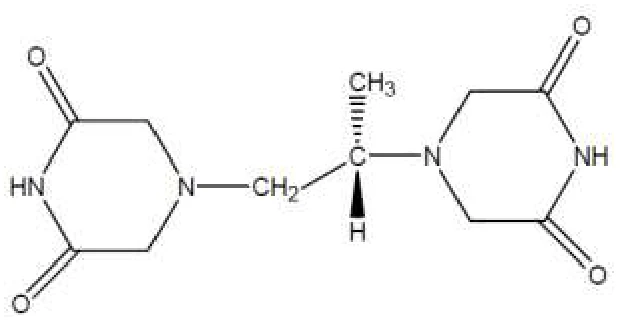
Chemical name: (S)-4,4'-(1-methyl-1,2-ethanediyl)bis[2,6-piperazinedione]
Molecular formula and molecular mass: C11H16N4O4 and 268.28
Structural formula:
Physicochemical properties: Dexrazoxane is a white to off-white crystalline powder.
It is sparingly soluble in water and 0.1 N HCl, slightly soluble in acetonitrile, ethanol, methanol and water/dimethylacetamide (1:1), and practically insoluble in non-polar organic solvents. Its melting range is 187-197°C. The acidic pKa value of dexrazoxane at 25°C is 2.1. The alkaline pKa's are 10.1 and 11.1. The partition coefficient, expressed as the dexrazoxane concentration in 1-octanol divided by the aqueous phase concentration, is 0.025 at 25°C.
14 CLINICAL TRIALS
14.1 Trial Design and Study Demographics
Prospective studies
The efficacy of Zinecard in preventing/reducing the incidence and severity of doxorubicin-induced cardiomyopathy was demonstrated in a series of prospective studies.
In these studies, patients were treated with a doxorubicin-containing regimen and either Zinecard or placebo starting with the first course of chemotherapy. Cardiac function was assessed by measurement of the left ventricular ejection fraction (LVEF) utilizing resting multigated nuclear medicine (MUGA) scans and by clinical evaluations.
Amended randomized breast cancer studies
Two of the randomized breast cancer studies evaluating the efficacy and safety of FAC with either Zinecard or placebo were amended to allow patients on the placebo arm who had attained a cumulative dose of doxorubicin of 300 mg/m2 (six (6) courses of FAC) to receive FAC with open-label Zinecard for each subsequent course. Most of these patients had already experienced a partial or complete response or had stable disease.
14.2 Study Results
Prospective studies
Patients receiving Zinecard had significantly smaller mean decreases from baseline in LVEF and lower incidences of congestive heart failure than the control group. The difference in decline from baseline in LVEF was evident beginning with a cumulative doxorubicin dose of 150 mg/m2 and reached statistical significance in patients who received > 400 mg/m2 of doxorubicin. The studies also assessed the effect of the addition of Zinecard on the antitumour efficacy of the chemotherapy regimens.
In one of the studies (the largest of the breast cancer studies) patients with advanced breast cancer receiving fluorouracil, Adriamycin and cyclophosphamide (FAC) with Zinecard had a lower response rate and a shorter time to progression than patients on the control arm although the survival of the patients who did or did not receive Zinecard with FAC was similar. More non-responders dropped out by course three in the Zinecard arm. The non-responders correlated to dose delays due to additive myelotoxicity. It appears that Zinecard may potentiate doxorubicin toxicity in some patients, thus causing increased early dropout rate or decreased dose-intensity.
Amended randomized breast cancer studies
Analyses of these amended studies indicate that significant though not complete cardioprotection can be obtained with the administration of Zinecard only after the accumulated dose of 300 mg/m2 of doxorubicin. In addition, the time to tumour progression and survival of these two groups of patients were also compared. Results demonstrate significantly longer overall survival for the group of patients who received Zinecard starting with the seventh course of FAC treatment.
15 MICROBIOLOGY
No microbiological information is required for this drug product.
16 NON-CLINICAL TOXICOLOGY
General Toxicology: Toxicology studies were carried out in the mouse, rat and dog, with dexrazoxane alone and in combination with either doxorubicin or epirubicin, two of the most widely used antineoplastic anthracyclines, as well as with other antineoplastic drugs likely to be used in anthracycline-containing chemotherapeutic regimens.
Single intravenous doses of dexrazoxane of up to 1000 mg/kg in either saline or sodium lactate, were well tolerated in the mouse. In the rat, the LD50 of dexrazoxane was estimated to be greater than 1000 mg/kg. Acute toxic effects of single infusions of dexrazoxane at doses of 250, 500, 1000 or 2000 mg/kg were examined in the beagle dog. The 250 and 500 mg/kg doses were considered well tolerated in the dog. Cytoplasmic alterations were observed in the liver at the two highest doses and hemorrhage was noted in several tissues of the high dose dog. There was some evidence of granulocyte hypoplasia or erythroid hyperplasia in the high dose male.
In the mouse, the LD50 for doxorubicin alone was 16 and 23 mg/kg in males and females, respectively, whereas the LD50 for doxorubicin given in combination with dexrazoxane (20 to 1, dexrazoxane:doxorubicin) was 25 and 26 mg/kg in males and females, respectively. The LD50 of epirubicin alone in male and female mice, were 26 and 28 mg/kg, respectively, whereas in combination with dexrazoxane, the LD50 were 30 and 34 mg/kg, respectively.
The pathologic changes found in the dexrazoxane:epirubicin treatment groups were consistent with anthracycline toxicity. Dexrazoxane had no appreciable effect on the acute toxicity of vincristine or cisplatin in the mouse.
The effects of dexrazoxane on the acute toxicity of doxorubicin were examined in the rat using doses of 3 to 12 mg/kg doxorubicin at ratios of 20 to 1, dexrazoxane:doxorubicin. The LD50 for doxorubicin alone were 12.5 and 15 mg/kg in males and females, respectively, and for the combination, 12 and 11.3 mg/kg. Dexrazoxane tended to exacerbate the lethality of doxorubicin at the higher doses (>9 mg/kg doxorubicin), but exhibited some protection against the gross pathologic effect of doxorubicin (small thymus, fluid in abdominal and thoracic cavities).
In the dog, the acute toxicity of dexrazoxane given 30 minutes prior to doxorubicin was studied at doses of 5, 10, 20 and 40 mg/kg dexrazoxane and 0.25, 0.5, 1.0 and 2.0 mg/kg doxorubicin. Doses up to 20 mg/kg were well tolerated with slight transient changes in haematology and clinical chemistry, but the highest dose was toxic. In combination with epirubicin or cisplatin, dexrazoxane did not affect the toxicity profile commonly seen with these two agents administered alone. Chronic toxicity studies were carried out in the, rat and beagle dog after intravenous courses of dexrazoxane both alone or in combination with doxorubicin or epirubicin for a total of 6 and 13 weeks.
Results showed that in the rat and dog, dexrazoxane (administered at 20 to 1 dose ratios) exhibited protection against doxorubicin-induced cardiotoxicity and epirubicin-induced renal tubulonephrosis, but did not affect the other commonly associated toxicities. Dexrazoxane was given intravenously at doses of 10, 20 and 40 mg/kg approximately 25 minutes before an intravenous dose of doxorubicin at 0.5, 1.0 and 2.0 mg/kg, respectively. Controls included dexrazoxane alone (40 mg/kg) and doxorubicin alone (2.0 mg/kg). Dexrazoxane alone had minimal effects, the most important of which was a decrease in testes and thymus weights which were not associated with histomorphological changes. Doxorubicin, either alone or together with dexrazoxane, caused anaemia, leukopenia, bone marrow depletion, thymus atrophy, hyperplasia of immature lymphocytes and lymphoid depletion of mesenteric lymph nodes. Doxorubicin caused renal tubulonephrosis which was prevented to a significant degree by dexrazoxane. Changes in serum chemistry in doxorubicin-treated rats were less severe in the rats given dexrazoxane with doxorubicin. Dexrazoxane also exhibited protection against doxorubicin-induced cardiotoxicity.
Epirubicin given intravenously at doses of 0.6, 1.2, and 2.4 mg/kg, caused anaemia, leukopenia, bone marrow depletion, testicular atrophy, renal tubulonephrosis and cardiotoxicity in the rat. Dexrazoxane (12, 24, and 48 mg/kg) exhibited some protection against the renal tubulonephrosis and cardiotoxicity induced by epirubicin, but did not affect the other toxicities of epirubicin appreciably.
Carcinogenicity: No long-term carcinogenicity studies have been carried out with dexrazoxane in animals.
Genotoxicity and Mutagenicity: Dexrazoxane was not mutagenic in the Ames test but was found to be clastogenic in human lymphocytes in vitro and to bone marrow erythrocytes in the mouse (micronucleus test). Dexrazoxane did not alter the mutagenic or the genotoxic properties of doxorubicin.
Secondary malignancies (primarily acute myeloid leukemia) have been reported in patients treated chronically with oral razoxane. Razoxane is the racemic mixture, of which dexrazoxane is the S(+)-enantiomer. In these patients, the total cumulative dose of razoxane ranged from 26 to 480 grams and the duration of treatment was from 42 to 319 weeks. One case of T-cell lymphoma, a case of B-cell lymphoma and six to eight cases of cutaneous basal cell or squamous cell carcinoma have also been reported in patients treated with razoxane.
Reproductive and Developmental Toxicology: Dexrazoxane was maternotoxic at dosages of 2 mg/kg and embryotoxic and teratogenic at 8 mg/kg when given daily to pregnant rats during the period of organogenesis. Teratogenic effects in the rat included imperforate anus, microphthalmia, and anophthalmia. In rabbits, dosages of 5 mg/kg daily during the period of organogenesis were maternotoxic and dosages of 20 mg/kg were embryotoxic and teratogenic. Teratogenic effects in the rabbit included several malformations as well as agenesis of the gallbladder and of the intermediate lobe of the lung.