


Patient Medication Information: uses, side effects, how to take - AA-Ipravent
What is AA-IPRAVENT used for?
AA-IPRAVENT is used in children and adults (5 years of age and older) to treat bronchospasm caused by:
- chronic obstructive pulmonary disease (COPD; a lung disease that blocks airflow from the lungs making it hard to breathe), which includes chronic bronchitis and emphysema; and
- asthma if used with other medicines known as beta2-adrenergic agonist (e.g., salbutamol).
How does AA-IPRAVENT work?
AA-IPRAVENT belongs to a group of medicines known as “bronchodilators”. It works by relaxing the muscles in the walls of the air passages in the lungs. This helps open up the narrowed airways of the lungs making it easier to breath.
What are the ingredients in AA-IPRAVENT?
Medicinal ingredient: Ipratropium bromide.
Non-medicinal ingredients: Benzalkonium chloride, edetate disodium dihydrate hydrochloric acid, purified water, and sodium chloride.
AA-IPRAVENT comes in the following dosage forms:
Inhalation Solution: 250 mcg/mL (0.025% w/v).
Do not use AA-IPRAVENT if:
- you are allergic to ipratropium bromide, atropine, medicines related to atropine, or any of the other ingredients in AA-IPRAVENT.
Serious Warnings and Precautions
AA-IPRAVENT may cause increased wheezing or tightness in the chest, difficulty in breathing, or coughing bouts. If you have any of these symptoms, stop taking AA-IPRAVENT and get immediate medical help.
To help avoid side effects and ensure proper use, talk to your healthcare professional before you take AA-IPRAVENT. Talk about any health conditions or problems you may have, including if you:
are pregnant or intend to become pregnant;
- are breastfeeding or intend to breastfeed;
- have eye problems (e.g., glaucoma or eye pain);
- have difficulty urinating;
- have enlarged prostate gland;
- have cystic fibrosis (a rare genetic disorder where mucus builds up in the body’s organ);
In addition, when AA-IPRAVENT is to be used in combination with a medicine known as a beta2-adrenergic agonist (e.g. salbutamol), talk to your healthcare professional if you:
- are having treatment for a thyroid or an adrenal gland condition;
- are having treatment for high blood pressure, angina, or a heart problem;
- have diabetes;
- have any allergies or reactions to foods or drugs;
- have a history of convulsions (uncontrolled shaking or seizures);
- are taking any other medications, including eye drops or any medications you can buy without a prescription;
- have liver or kidney problems;
have low levels of potassium in your blood (hypokalemia), especially if you are taking:
- medicines known as xanthine derivatives (such as theophylline),
- steroids used to treat asthma,
- medicines known as water pills (diuretics).
Other warnings you should know about:
Driving and using machines: AA-IPRAVENT may cause dizziness, difficulty in focusing the eye, dilated pupils, and blurred vision. Before you drive or do tasks that require special attention, wait until you know how you react to AA-IPRAVENT.
Eye problems: While taking AA-IPRAVENT, do NOT let the mist produced by the nebulizer get into your eyes. This may cause or worsen blindness known as acute angle glaucoma. The symptoms may include:
- eye pain,
- eye discomfort,
- blurred vision,
- visual halos, or
- coloured images in association with red eyes.
If any combination of these symptoms occurs, get medical attention right away. If you have already have glaucoma, you should use swimming goggles or a nebulizer with a mouthpiece to prevent the nebulized solution getting into your eyes.
Tell your healthcare professional about all the medicines you take, including any drugs, vitamins, minerals, natural supplements or alternative medicines.
The following may interact with AA-IPRAVENT:
- other medicines that can be used to treat asthma and/or COPD (e.g., theophylline, beta-adrenoceptor agonists, salbutamol, ipratropium, tiotropium, glycopyrronium, aclidinium, umeclidinium, sodium cromoglycate, and anticholinergic medicines).
The following may also interact with AA-IPRAVENT when it is used in combination with a medicine known as a beta2-adrenergic agonist (e.g. salbutamol):
- antidepressants, medicines used to treat depression (e.g., monoamine oxidase inhibitors such as isocarboxazid, and tricyclic antidepressants such as amitriptyline);
- beta-blockers, medicines used to lower blood pressure (e.g., propranolol);
- digitalis, a medicine used to treat certain heart problems;
- diuretics also known as the “water pill”, medicines used to lower fluid levels (e.g., furosemide and hydrochlorothiazide);
- epinephrine, a medicine that can be used to treat allergic reactions or sudden asthma attacks.
If you are unsure, ask your healthcare professional.
How to take AA-IPRAVENT:
- Take AA-IPRAVENT exactly as directed by your healthcare professional. They will tell you how to prepare and take AA-IPRAVENT. If you forget or are unsure about how to properly prepare or take AA-IPRAVENT, check with your healthcare professional.
- AA-IPRAVENT should only be inhaled using a nebulizer with a mouthpiece or a face mask. Avoid any other routes of administration. The nebulizer should be properly functioning and regularly maintained. Before starting treatment, be certain that you are completely familiar with the use and proper care of your nebulizer.
- If you are told to use a nebulizer mask, make sure it fits your face properly and the nebulized solution does NOT come in contact with your eyes. This may cause or worsen blindness known as narrow-angle glaucoma.
- Use your nebulizer in a well-ventilated room. Some of the mist will be released into the air and may be breathed in by others.
- Do NOT mix AA-IPRAVENT with other medicines in the same nebulizer.
- During administration your healthcare professional may want to monitor your blood.
- Contact your healthcare professional right away if your response to AA-IPRAVENT is reduced and you don’t get the same benefit from as before.
Dilution: Your healthcare professional may instruct you to use another inhalation solution (e.g., preservative-free 0.9% sterile sodium chloride solution) to dilute AA-IPRAVENT. As directed, your doses may be diluted to a total nebulization volume of 3 to 5 mL. If you are told to dilute
AA-IPRAVENT solution, you must do so right before you plan to use the solution. Discard any unused solution. Only dilute if you are directed to do so by your healthcare professional, the solution does not always need to be diluted before use.
Instructions for use:
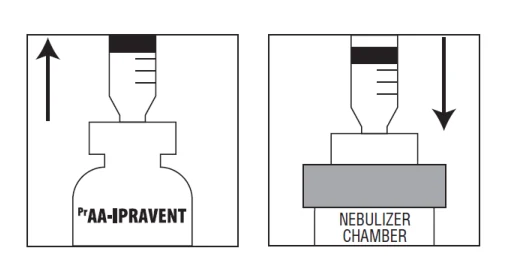
- 1) Immediately before you plan to use the nebulizer, withdraw the prescribed dose, usually 0.5 to 2 mL (cc), of AA-IPRAVENT using a syringe from the bottle and add to the nebulizer chamber. Do NOT store the prescribed dose in the syringe for later use.
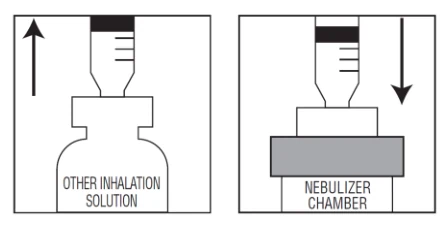
- 2) If your healthcare professional has instructed you to use another inhalation solution (e.g., 0.9% sodium chloride solution) in combination with AA-IPRAVENT, you should add the appropriate amount of that solution to the nebulizer chamber as well.
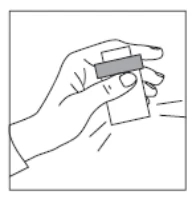
- 3) Gently shake the nebulizer chamber and connect it to the mouthpiece or face mask. Then connect the nebulizer tube to the air or oxygen pump and begin therapy at gas flow of 6 to 10 L/min.
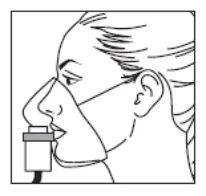
- 4) Breathe calmly and deeply through the mask or mouthpiece until no more mist is formed in the nebulizer chamber. This usually takes 10 to 15 minutes. It is very important to adjust the face mask, if required, to prevent the mist from getting in your eyes.
- 5) Store your re-capped bottle of AA-IPRAVENT at room temperature (15oC to 30oC) for up to 28 days.
- 6) Follow the instructions provided by the nebulizer and air pump manufacturers for the proper care and maintenance of the equipment. Keep the nebulizer, nebulizer tube, and face mask or mouthpiece clean to minimize contamination.
Usual dose:
Your healthcare professional will decide your dose of AA-IPRAVENT. This may depend on your condition, your age, and how you react to AA-IPRAVENT. Your dose may be repeated every 4 to 6 hours as directed.
Overdose:
If you think you, or a person you are caring for, have taken too much AA-IPRAVENT, contact a healthcare professional, hospital emergency department, or regional poison control centre immediately, even if there are no symptoms.
Missed Dose:
If a dose is missed and no symptoms occur, the regular next dose according to the dosing schedule should be taken. If a dose is missed and respiratory symptoms are experienced, the missing dose should be taken and the dosing schedule according to the recommended dosage should be resumed.
What are possible side effects from using AA-IPRAVENT?
These are not all the possible side effects you may have when taking AA-IPRAVENT. If you experience any side effects not listed here, tell your healthcare professional.
Side effects of AA-IPRAVENT may include:
- burning or prickling sensation in the hands, arms, legs, or feet;
- change in taste or bad taste. Sucking on a sour candy or rinsing your mouth may help. Check with your healthcare professional if the dry mouth or bad taste persists;
- chest pain;
- constipation. Check with your healthcare professional if you experience constipation for a long period of time;
- diarrhea;
- difficulty falling or staying asleep;
- difficultly speaking;
- dizziness;
- drowsiness;
- dry mouth;
- dry throat, sore throat, or throat irritation;
- fatigue;
- flushing;
- flu-symptoms;
- increased mucus;
- increased saliva;
- nervousness;
- numbness;
- rhinitis (sneezing, stuffy nose, runny nose, itching);
- increased sweating;
- tremor (shaking).
Additional side effects of AA-IPRAVENT when combined with a medicine known as a beta2-adrenergic agonist (e.g. salbutamol) include:
- bronchitis and upper respiratory tract infection (a cold);
- cough;
- digestive problems (e.g., vomiting);
- headache;
- impaired voice sounds;
- mental health disorder;
- muscle problems (e.g., cramps, weakness, pain, and feeling weak);
- nausea (feeling sick);
- wheezing after inhalation.
If you have any questions about AA-lPRAVENT or your nebulizer, contact your healthcare professional.
Serious side effects and what to do about them
| Symptom / effect | Talk to your healthcare professional | Stop taking drug and get immediate medical help | |
|---|---|---|---|
| Only if severe | In all cases | ||
| UNCOMMON | |||
| Dyspnea (shortness of breath) | √ | ||
| Hypotension (low blood pressure) or hypertension (high blood pressure), or changes in blood pressure: dizziness, fainting, lightheadedness, blurred vision, nausea, vomiting, fatigue, shortness of breath, chest pain or pressure, swelling in your ankles and legs, bluish colour to your lips and skin, racing pulse, or heart palpitations. | √ | ||
| Skin rash | √ | ||
Serious side effects and what to do about them
| Symptom / effect | Talk to your healthcare professional | Stop taking drug and get immediate medical help | |
|---|---|---|---|
| Only if severe | In all cases | ||
| RARE | |||
Allergic reaction: itchiness, swelling of the tongue, lips, throat and face, difficulty speaking, difficulty breathing, difficulty swallowing, chocking due to swelling of the muscles around the voice box, wheezing, drop in blood pressure, nausea, hives, or rash. | √ | ||
| Fast or irregular heart beat, or chest pain | √ | ||
Eye problems: new or worsened pressure in your eyes, eye pain or discomfort, blurred vision, seeing halos or rainbows around items, red eyes, burning eyes, vision changes, nausea, vomiting, headache, or swelling of the cornea. | √ | ||
| Urinary retention (inability to pass urine or to empty the bladder): difficulty and pain when passing urine, urinating frequently, or urination in a weak stream or drips. | √ | ||
| Muscle pain, weakness, spasms, or paralysis | √ | ||
| Myocardial ischemia (lack of blood flow to the heart which can lead to a heart attack): chest pain, shortness of breath, a heart attack, chest pressure or discomfort, feeling faint, feeling anxious, irregular heartbeat, nausea, or sudden heavy sweating. | √ | ||
Serious side effects and what to do about them
| Symptom / effect | Talk to your healthcare professional | Stop taking drug and get immediate medical help | |
|---|---|---|---|
| Only if severe | In all cases | ||
| Angina (not enough oxygen to the heart muscle): chest pain, pressure in the chest, or discomfort in the shoulder, arm, back, throat, jaw or teeth. | √ | ||
| Hypokalemia (low level of potassium in the blood): irregular heartbeats, muscle weakness, generally feeling unwell, cramping, constipation, feeling of skipped heart beats, palpitations, fatigue, tingling, or numbness. | √ | ||
If you have a troublesome symptom or side effect that is not listed here or becomes bad enough to interfere with your daily activities, tell your healthcare professional.
Reporting Side Effects
You can report any suspected side effects associated with the use of health products to Health Canada by:
NOTE: Contact your healthcare professional if you need information about how to manage your side effects. The Canada Vigilance Program does not provide medical advice. |
Storage:
- Store the unopened bottles of AA-IPRAVENT at room temperature (between 15°C and 30°C).
- After first opening of the bottle, the re-capped bottle may be stored at room temperature for up to 28 days.
Solutions diluted with preservative-free 0.9% sterile sodium chloride solution should be
- used within 24 hours from the time of dilution when stored at room temperature or within 48 hours when stored in the refrigerator.
- AA-IPRAVENT should not be disposed down the drain or in the household garbage. It can be returned to a pharmacy for proper disposal.
Keep out of reach and sight of children.
If you want more information about AA-IPRAVENT:
- Talk to your healthcare professional.
- Find the full Product Monograph that is prepared for healthcare professionals and includes this Patient Medication Information by visiting the Health Canada website (https://www.canada.ca/en/health-canada/services/drugs-health-products/drug-products/drug-product-database.html); the manufacturer’s website (https://www.aapharma.ca/en/), or by calling 1-877-998-9097.