


Product Monograph - AA-Theo LA
RECENT MAJOR LABEL CHANGES
| 1 Indications | 12/2021 |
| 3 Serious Warnings and Precautions Box | 12/2021 |
| 7 Warnings and Precautions | 12/2021 |
TABLE OF CONTENTS
Sections or subsections that are not applicable at the time of authorization are not listed.
TABLE OF CONTENTS ................................................................................................................2
PART I: HEALTH PROFESSIONAL INFORMATION .......................................................................4
1 INDICATIONS ................................................................................................................4
1.1 Pediatrics ............................................................................................................4
1.2 Geriatrics.............................................................................................................4
2 CONTRAINDICATIONS ...................................................................................................4
3 SERIOUS WARNINGS AND PRECAUTIONS BOX ..............................................................4
4 DOSAGE AND ADMINISTRATION...................................................................................5
4.1 Dosing Considerations .........................................................................................5
4.2 Recommended Dose and Dosage Adjustment.......................................................5
4.4 Administration.....................................................................................................5
5 OVERDOSAGE ...............................................................................................................5
6 DOSAGE FORMS, STRENGTHS, COMPOSITION AND PACKAGING ...................................7
7 WARNINGS AND PRECAUTIONS ....................................................................................8
7.1 Special Populations ............................................................................................ 10
7.1.1 Pregnant Women .........................................................................................10
7.1.2 Breast-feeding..............................................................................................10
7.1.3 Pediatrics .....................................................................................................10
7.1.4 Geriatrics .....................................................................................................10
8 ADVERSE REACTIONS .................................................................................................. 10
8.1 Adverse Reaction Overview................................................................................ 10
9 DRUG INTERACTIONS.................................................................................................. 11
9.2 Drug Interactions Overview................................................................................ 11
9.4 Drug-Drug Interactions ...................................................................................... 11
9.5 Drug-Food Interactions ...................................................................................... 12
9.6 Drug-Herb Interactions ...................................................................................... 12
9.7 Drug-Laboratory Test Interactions ...................................................................... 12
10 CLINICAL PHARMACOLOGY ......................................................................................... 13
10.1 Mechanism of Action.................................................................................... 13
10.2 Pharmacodynamics ...................................................................................... 13
10.3 Pharmacokinetics ......................................................................................... 13
11 STORAGE, STABILITY AND DISPOSAL ........................................................................... 15
12 SPECIAL HANDLING INSTRUCTIONS............................................................................. 15
PART II: SCIENTIFIC INFORMATION ........................................................................................ 15
13 PHARMACEUTICAL INFORMATION.............................................................................. 15
14 CLINICAL TRIALS.......................................................................................................... 15
14.2 Comparative Bioavailability Studies .............................................................. 15
15 MICROBIOLOGY .......................................................................................................... 16
16 NON-CLINICAL TOXICOLOGY ....................................................................................... 16
17 SUPPORTING PRODUCT MONOGRAPHS...................................................................... 17
PART I: HEALTH PROFESSIONAL INFORMATION
1 INDICATIONS
AA-THEO LA (theophylline) Tablets are indicated for:
Symptomatic treatment of reversible bronchospasm associated with asthma, chronic bronchitis, emphysema and related bronchospastic disorders in patients 12 years and older.
1.1 Pediatrics
Pediatrics (<12 years of age): The use of AA-THEO LA in children under the age of twelve years is not recommended.
1.2 Geriatrics
Geriatrics (>65 years of age): Dose Reduction may be required in elderly patients (see 4 DOSAGE AND ADMINISTRATION and 7 WARNINGS AND PRECAUTIONS).
2 CONTRAINDICATIONS
AA-THEO LA is contraindicated in patients who are hypersensitive to this drug or to any ingredient in the formulation, including any non-medicinal ingredient, or component of the container. For a complete listing, see Dosage Forms, Strengths, Composition and Packaging. AA-THEO LA (theophylline sustained release tablets) should not be administered in patients with:
- hypersensitivity to theophylline, xanthines derivative, or the excipients used in these drug products, or component of the container.
- coronary artery disease (where cardiac stimulation might prove harmful)
- peptic ulcers
- concomitant use with ephedrine in children
3 SERIOUS WARNINGS AND PRECAUTIONS BOX
Serious Warnings and Precautions
Theophylline clearance can be changed by various disease states, as well as by the age of the patient, concomitant use of other medications and lifestyle habits. Serum theophylline levels should be monitored in patients (see 7 WARNINGS AND PRECAUTIONS and 9 DRUG INTERACTIONS). Serious side effects associated with overdosage include tachycardia, arrhythmia, seizures, vascular collapse and even death may occur without warning and may not be preceded by less severe symptoms such as nausea and restlessness. Use with caution in patients with severe cardiac disease, severe hypoxemia, hypertension, hyperthyroidism, acute myocardial injury, cor pulmonale, congestive heart failure, liver disease, in the elderly (especially males). |
4 DOSAGE AND ADMINISTRATION
4.1 Dosing Considerations
Therapeutic serum levels are generally considered to be between 10 and 20 mcg/mL (55 mcmol/L and 110 mcmol/L). Due to variable rates of elimination, there is patient-to-patient variation in dosage needed to achieve a therapeutic serum level. Because of the variation from patient to patient, the variation within the same patient, and the relatively narrow therapeutic range, dosage should be individualized. Monitoring of serum theophylline concentrations is also extremely important, especially in the initial stages of therapy (see 7 WARNINGS AND PRECAUTIONS).
It is preferable to monitor peak concentrations rather than trough concentrations. Therefore, blood samples should be drawn 4-8 hours after AA-THEO LA dosing. It should be ascertained that all doses have been taken for 60 hours prior to blood sampling (steady state is usually achieved within 3 days). Depending on the sensitivity of the assay method used, dietary xanthines may interfere with assay results. If a dosage increase is not tolerated, dosage should be reduced to the previously tolerated level. Do not attempt to maintain dosage which is not tolerated or which produces serum concentrations above the therapeutic range.
Elderly patients are at a greater risk of experiencing serious toxic effects from theophylline than younger patients. Careful attention to dose reduction and monitoring of serum theophylline concentrations are required in elderly patients due to pharmacokinetic and pharmacodynamic changes associated with aging, including the potential for decreased theophylline clearance.
4.2 Recommended Dose and Dosage Adjustment
Adults:
The usual initial adult dose is 200-300 mg every 12 hours. This dose may be increased by 50-100 mg every 12 hours at 3 day intervals until a satisfactory response is obtained or toxic effects appear.
Dosage adjustments should be based upon serum theophylline concentration and/or upon the patient's clinical response. However, doses of 450 mg every 12 hours or higher (900 mg/day) should not be given unless serum theophylline concentration can be monitored. It should not be necessary to exceed a daily dose of 16 mg/kg in adult patients. Even with serum level monitoring, this dose may lead to side effects because of day-to-day variations in blood levels within individual patients.
Children:
The use of AA-THEO LA in children under the age of twelve years is not recommended.
4.4 Administration
AA-THEO LA tablets should be swallowed whole. Do not break, chew or crush.
5 OVERDOSAGE
Overdoses of theophylline may cause serious side effects such as tachycardia, arrhythmias, seizures, vascular collapse and even death. These may occur without warning and may not be preceded by less severe side effects such as nausea or restlessness.
Symptoms
Insomnia, restlessness, mild excitement or irritability, and rapid pulse, are early symptoms which may progress to mild delirium. Sensory disturbances such as tinnitus or flashes of light are common. Anorexia, nausea and vomiting are frequently early observations of theophylline overdosage.
Fever, diuresis, dehydration and extreme thirst may be seen. Severe poisoning results in bloody, syrup-like 'coffee-ground' vomitus, tremors, tonic extensor spasm interrupted by clonic convulsions, extrasystoles, quickened respiration, stupor and finally coma.
Cardiovascular disorders and respiratory collapse, leading to shock, cyanosis and death follow gross overdosages.
Treatment
A. Monitoring serum theophylline levels
Following intake of theophylline sustained-release tablets, the blood theophylline peak levels may not show until 5-8 hours post-ingestion in adults. Patients ingesting overdoses of sustained-release theophylline formulations may have, after the initial rise in blood theophylline, also a secondary increase in theophylline levels. One report on fatal self-poisoning has attributed this to compacted tablet masses in the gastrointestinal tract. Careful clinical and laboratory monitoring of stabilized patients is advisable.
B. If potential oral overdose is established and seizure has not occurred:
- 1) Administration of oral activated charcoal has been found to reduce high theophylline serum concentrations. Multiple doses of activated charcoal should be also considered. Seizure prophylaxis may be indicated for certain patients.
- 2) Administer a cathartic (this is particularly important when a sustained-release preparation has been taken). Repeated doses of cathartic are not recommended due to possible adverse effects.
- 3) In severe poisoning or cases where gastric decontamination is not feasible, extracorporeal removal (i.e., hemodialysis, charcoal-column hemoperfusion) can be employed.
C. If the patient is having a seizure:
- 1) Establish an airway.
- 2) Administer oxygen.
- 3) Intravenous benzodiazepines are generally considered as first line therapy although some benzodiazepines may have reduced efficacy in theophylline overdose due to suspected pharmacodynamics interactions. Second line agents should be used if resistant, although phenytoin should be avoided.
- 4)
Monitor vital signs, maintain blood pressure and provide adequate
hydration.
D. Post-seizure coma:
- 1) Maintain airway and oxygenation.
- 2) Consider the recommendations (B above, steps 1 to 3) to prevent absorption of the drug. Note that an unprotected airway is a contraindication to activated charcoal administration due to concerns of aspiration.
- 3) Continue to provide full supportive care and adequate hydration while waiting for drug to be metabolized. In general, the drug is metabolized sufficiently rapidly so as not to warrant consideration of dialysis. However, if serum levels exceed 50 mcg/mL (257 mcmol/L), charcoal hemoperfusion may be indicated.
The human oral lethal dose is estimated to be from 50 to 500 mg/kg. Children are more susceptible to the toxic effects of theophylline than adults.
The incidence of adverse reactions increases at serum concentrations over 15 mg/L (82.5 μmol/L). Levels in excess of (20 mg/L) 110 μmol/L are usually quite toxic in most patients, although a few patients can tolerate higher levels without significant side-effects. Tolerance to some of the toxic effects of theophylline is known to occur.
| For management of a suspected drug overdose, contact your regional poison control centre. |
6 DOSAGE FORMS, STRENGTHS, COMPOSITION AND PACKAGING
Table – Dosage Forms, Strengths, Composition and Packaging
AA-THEO LA is available in bottles of 100.
Description
AA-THEO LA formulated as sustained-release tablets contains anhydrous theophylline with no colour additives. AA-THEO LA is available in three strengths: 100 mg, 200 mg and 300 mg.
AA-THEO LA 100 mg: White, round, biconvex tablets; scored and engraved “THE 100” on one side, and "APO'' on the other.
AA-THEO LA 200 mg: White, oval, biconvex, tablets; scored and engraved “THE 200” on one side and "APO” on the other.
| Route of Administration | Dosage Form / Strength/Composition | Non-medicinal Ingredients |
| oral | tablet 100 mg, 200 mg and 300 mg | colloidal silicon dioxide, hydroxypropyl methylcellulose, lactose, and magnesium stearate. |
AA-THEO LA 300 mg: White, capsule-shaped, biconvex, tablets; scored and engraved “THE 300” on one side, and ''APO'' on the other.
7 WARNINGS AND PRECAUTIONS
General
In clinical situations where immediate bronchodilation is required, such as status asthmaticus, AA-THEO LA is not appropriate.
Since theophylline has a narrow therapeutic index, the margin of safety above therapeutic doses is small. In patients showing intolerance to theophylline, the therapy should be reassessed.
Marked differences in serum levels may be seen in patients receiving the same theophylline dose. This may be explained by differences between patients in the rate of metabolism. Smokers and children are usually high metabolizers. Dosage regimens should therefore be individualized.
Theophylline half-life is shorter in smokers than in nonsmokers. Smokers may require larger or more frequent doses of theophylline.
Although AA-THEO LA has pharmacokinetic properties similar to other controlled-release theophylline products, it is not possible to ensure interchangeability between different products. Careful clinical monitoring is required when changing from one drug product to another.
The concurrent administration of other theophylline derivatives along with AA-THEO LA is not recommended.
Monitoring and Laboratory Tests
Ideally, serum theophylline levels should be monitored in all patients and a theophylline half-life calculated which would enable doses and dosing regimens to be tailored to each patient to maintain a therapeutic level, to ensure optimal clinical response and to avoid toxicity.
The incidence of toxicity increases at serum theophylline levels greater than 15 mcg/mL (82.5 mcmol/L) and levels above 20 mcg/mL (110 mcmol/L) are usually quite toxic in most adult patients. High serum levels may be seen in some patients receiving doses considered to be conventional. The possibility of overdose should therefore not be considered with large doses only. Overdosage of theophylline may cause peripheral vascular collapse.
Reduced theophylline clearance has been documented in the following readily identifiable groups:
- 1) patients with impaired renal or hepatic function;
- 2) patients over 55 years of age, particularly males and those with chronic lung disease;
- 3) those with cardiac failure from any cause;
- 4) patients taking certain drugs (i.e., macrolide antibiotics and cimetidine). Decreased clearance may be associated with either influenza immunization or active infection with influenza.
- 5) patients on a high carbohydrate, low protein diet
- 6) patients with hypothyroidism (and when starting acute treatment for hypothyroidism)
- 7)
patients with a sustained high fever
Laboratory monitoring of serum theophylline is especially appropriate in the above individuals to maintain an appropriate theophylline dosage.
Cardiovascular
Patients with congestive heart failure frequently have markedly prolonged serum levels with theophylline persisting in serum for long periods following discontinuation of the drug.
Many patients who require theophylline may exhibit tachycardia due to their underlying disease process so that the cause/effect relationship to elevated serum theophylline concentrations may not be appreciated.
Use with caution in patients with severe cardiac disease, severe hypoxemia, hypertension, acute myocardial injury, cor pulmonale, congestive heart failure.
Endocrine and Metabolism
Due to potential increased theophylline clearance, dose increase and monitoring of serum theophylline concentrations may be required in patients with hyperthyroidism (and when starting acute hyperthyroidism treatment) and cystic fibrosis.
Gastrointestinal
Theophylline may occasionally act as a local irritant to the gastrointestinal tract although gastrointestinal symptoms are more commonly centrally mediated and associated with serum drug concentrations over 20 mcg/mL (110 mcmol/L).
Theophylline increases gastric secretion, and caution should be exercised in patients with a history of peptic ulcer.
Hepatic
Use with caution in patients with liver disease or porphyria.
Neurologic
Theophylline may exacerbate frequency and duration of seizures and therefore caution should be exercised in patients with history of seizures.
Renal
Use with caution in elderly males with pre-existing partial urinary tract obstruction, such as prostatic enlargement, due to risk of urinary retention.
Respiratory
Particular care is advised in patients suffering from severe asthma who require acute theophylline administration. It is recommended that serum theophylline concentrations are monitored in such situations.
7.1 Special Populations
7.1.1 Pregnant Women
Theophylline crosses the placental barrier, where concentrations are similar to plasma levels. Safe use in pregnancy has not been established relative to possible adverse effects on fetal development. AA-THEO LA should not be administered during pregnancy unless considered essential by the physician. Theophylline should be given to pregnant women only when the anticipated benefits outweigh the risk to the child.
7.1.2 Breast-feeding
Theophylline passes freely into breast milk, where concentrations are similar to plasma levels. Therefore, use of theophylline for uncontrolled asthma in nursing mothers should be balanced against the risk of potential effects on the nursing newborn.
7.1.3 Pediatrics
The use of AA-THEO LA in children under the age of twelve years is not recommended.
7.1.4 Geriatrics
Dose reduction may be required in elderly patients.
8 ADVERSE REACTIONS
8.1 Adverse Reaction Overview
The most common adverse reactions are gastric irritation, nausea, vomiting, epigastric pain, headache and tremor. These are usually early signs of toxicity; however, with high doses cardiac arrhythmias or seizures may be the first signs to appear.
Adverse reactions reported with classified by body system include:
Gastrointestinal: Abdominal pain, nausea, vomiting, epigastric pain, hematemesis, diarrhea, anorexia, reactivation of peptic ulcer, intestinal bleeding.
Central Nervous System: headaches, irritability, restlessness, insomnia, hyperactivity, reflex hyperexcitability, muscle twitching and tremors, clonic and tonic generalized convulsions.
Cardiovascular: palpitation, atrial tachycardia, extrasystoles, flushing, hypotension, circulatory failure, life-threatening ventricular arrhythmias.
Skin and Subcutaneous: Prurtius and rash.
Immune: Anaphlactic reaction, anaphylactoid reaction and hypersensitivity.
Respiratory: tachypnea.
Psychiatric: Agitation, anxiety, insomnia and sleep disorder.
Renal: albuminuria, diuresis, hematuria and urinary retention.
Others: hyperuricemia, hyperglycemia and inappropriate ADH syndrome.
9 DRUG INTERACTIONS
9.2 Drug Interactions Overview
Concurrent use of theophylline and a number of drugs (e.g. cimetidine, macrolides, phenytoin, quinolones) has been shown to be associated with an increased risk of hospitalization. As theophylline is metabolized by CYP1A2, concomitant use of drugs that inhibit this enzyme is expected to decrease theophylline clearance.
9.4 Drug-Drug Interactions
- A. Theophylline pharmacokinetics are altered by the concurrent use of various drugs as listed below:
| DRUG | THEOPHYLLINE |
| Acyclovir, allopurinol, carbimazole, cimetidine, diltiazem, disulfiram, fluconazole, interferon, quinolone antibiotics (ciprofloxacin), macrolide antibiotics (erythromycin), methotrexate, mexiletine, oral contraceptives, propranolol, pentoxifylline, selective serotonin re-uptake inhibitors (e.g. fluvoxamine), terbinafine, thiabendazole, verapamil | ↑ t½, ↓ clearance |
| Alkalinizing agents | ↑ t½, ↓ clearance |
| Treatments associated with hypothyroidism | ↑ t½, ↓ clearance |
| Treatments associated with hyperthyroidism | ↓ t½, ↑ clearance |
| Influenza vaccine | ↑ t½, clearance reported to be decreased or no change. |
| Aminoglutethimide, barbiturates, carbamazepine, isoproterenol, phenytoin, rifampin, ritonavir, sulfinpyrazone | ↓ t½, ↑ clearance |
| Alcohol, smoking (tobacco) | ↓ t½, ↑ clearance |
| Acidifying agents | ↓ t½, ↑ clearance |
- B. Concurrent use of theophyll i ne influences effects of certain drugs:
| DRUG | EFFECTS |
| Adenosine receptor agonists | Inhibits the effect of adenosine receptor agonists |
| Benzodiazepines | Opposes the sedatory effects |
| Digitalis glycosides | ↑ Cardiac effect |
| Halothane | Occurrence of arrhythmias |
| Thiazides | ↑ diuresis |
| Nephrotoxic drugs | ↑ nephrotoxicity |
| Lithium | ↑ Ratio of lithium/ creatinine clearance, thus decrease serum lithium |
| Lomustine | Results in thrombocytopenia |
| Sympathomimetic amines | ↑ toxicity, ↑ CNS stimulation |
| Coumarin anticoagulants | ↓ anticoagulant activity, increase prothrombin and fibrinogen blood concentrations, shorten prothrombin time |
| Allopurinol | ↓ antihyperuremic action |
| Probenecid and pyrazolon derivatives | ↓ uricosuric action |
| Ketamine | ↓ threshold value for inducing convulsions |
| Terbinafine | ↑ exposure by 25% (AUC and Cmax) |
For COPD patients, the concomitant use of theophylline and roflumilast should usually be avoided.
Care should be taken with concomitant use of β-adrenergic agonists, glucagon and other xanthine drugs, as these will potentiate the effects of theophylline. The incidence of toxic effects may be enhanced by the concomitant use of ephedrine.
Hypokalemia resulting from β2 agonist therapy, steroids, diuretics and hypoxia may be potentiated by xanthines. Particular care is advised in patients suffering from severe asthma who require hospitalization. It is recommended that serum potassium concentrations are monitored in such situations. Theophylline may decrease steady-state phenytoin levels.
9.5 Drug-Food Interactions
Theophylline clearance is increased when diet includes a low carbohydrate, high protein intake, or there is a chronic ingestion of charcoal broiled meats. Theophylline clearance may be decreased with a high carbohydrate, low protein diet. However, the administration of AA-THEO LA with meals appears not to significantly affect the amount of theophylline released from AA-THEO LA tablets.
9.6 Drug-Herb Interactions
Theophylline clearance is increased with concurrent use of Hypericum perforatum (St. John’s Wort).
9.7 Drug-Laboratory Test Interactions
In the interpretation of biochemistry tests, it should be remembered that theophylline may cause an elevation of urine catecholamines and plasma free fatty acids.
When plasma levels of theophylline are measured by spectrophotometric methods, coffee, tea, cola beverages, chocolate and acetaminophen contribute to falsely high values.
When a high pressure liquid chromatography (HPLC) method is used, plasma theophylline concentration may be falsely increased by caffeine, some cephalosporin and sulfa medications.
Theophylline may cause elevation of urine catecholamines, plasma uric acid and free fatty acids.
10 CLINICAL PHARMACOLOGY
10.1 Mechanism of Action
Theophylline relaxes the smooth muscle of the bronchial airways and pulmonary blood vessels to relieve bronchospasm and increase flow rates and vital capacity. It also produces other actions typical of the xanthine derivatives: coronary vasodilation, diuresis, increase in gastric secretion, and cardiac, cerebral, and skeletal muscle stimulation. The actions of theophylline may be mediated through inhibition of phosphodiesterase and a resultant increase in intracellular cyclic adenosine monophosphate, but the exact mechanism(s) has not been determined. Theophylline is usually readily absorbed and distributed into all body compartments. Protein binding accounts for some 55-65%. The liver is the primary site of metabolism.
The therapeutic serum concentration of theophylline is accepted as 10 to 20 mcg/mL (55-110 mcmol/L); levels above 20 mcg/mL are associated with toxic reactions. The pharmacokinetics of theophylline are influenced by a number of variables such as: age, disease state, smoking, concomitant medication. Therefore the optimum therapeutic maintenance dose should be determined by individual titration.
Tolerance to many of the toxic effects of theophylline is widely recognized. The tolerance of an oral overdose of theophylline is individual, and doses of 50 mg/kg and higher have been reported as lethal. Rectal administration of 9 mg/kg theophylline as aminophylline (ethylenediamine, salt of theophylline) has produced adverse drug experiences in children.
10.2 Pharmacodynamics
Theophylline is chemically named 1,3-dimethyl-xanthine. The pharmacologic actions of theophylline include stimulation of respiration, augmentation of cardiac inotropy and chronotropy, relaxation of smooth muscles, including those in the bronchi and blood vessels (other than cerebral vessels) and diuresis. The main use of theophylline has been in the treatment of reversible airway obstruction.
10.3 Pharmacokinetics
Absorption
Theophylline is usually readily absorbed following oral administration.
Distribution:
The drug is 55-65% bound to plasma proteins at the therapeutic plasma concentration range of 10 to 20 mcg/ml (55-110 mcmol/L). It is not likely to be subject to pronounced displacement effect. In the case of sustained-release products, steady-state plasma concentrations are achieved within 3 days in most patients.
Theophylline is distributed into all body compartments and crosses the placental barrier producing high fetal concentrations. It is also excreted in human breast milk. Volume of distribution (Vd) ranges from 0.3 to 0.7 L per kg (30-70% ideal body weight) and averages 0.45 L per kg among both children and adults. However, the mean Vd for premature neonates, adults with hepatic cirrhosis or uncorrected acidemia, and the elderly is slightly larger since protein binding is reduced in these patients.
Metabolism:
Theophylline is metabolized by the liver to 3-methylxanthine, 1-methyluric acid and 1,3-dimethyluric acid. About 10% of a dose is excreted unchanged in the urine. The metabolism of theophylline at therapeutic concentrations is primarily dependant on the CYP1A2 enzyme.
Serum uric acid concentrations do not increase; therefore, the drug is not contraindicated in the presence of either gout or allopurinol administration.
Elimination
AA-THEO LA Tablets are sustained-release tablets which produce peak blood levels between 5-8 hours after dosing in adults. Once the steady state level has been reached (3 days), the therapeutic blood levels persist for 12 hours in most adult patients. The mean elimination half-life of theophylline in nonsmoking adults is about 8 hours. The degree of fluctuation between peak trough theophylline levels can be defined as follows:
% Theophylline Fluctuation
| Nonsmoking Adults | |
| Theophylline sustained- release tablets 200, 300 mg | 27% |
| Theophylline sustained- release tablets 100 mg | 34% |
Special Populations and Conditions
The half-life of theophylline is influenced by a number of known variables. It is prolonged in patients suffering from chronic alcoholism, impaired hepatic or renal function, congestive heart failure, and in patients receiving macrolide antibiotics and cimetidine. Older adults (over age 55) and patients with chronic obstructive pulmonary disease, with or without cor pulmonale, may also have much slower clearance rates. For such patients, the theophylline half-life may exceed 24 hours.
Administration of influenza vaccine and infection with influenza have been associated with the impaired rate of theophylline elimination and consequent increases in serum theophylline levels, sometimes with toxic symptoms.
The half-life of theophylline in smokers (one to two packs/day) averages four to five hours, much shorter than the half-life in non-smokers which averages seven to nine hours. The increase in theophylline clearance caused by smoking is probably the result of induction of drug metabolizing enzymes that do not readily normalize after cessation of smoking. It appears that between three months and two years may be necessary for normalization of the effect of smoking on theophylline pharmacokinetics.
11 STORAGE, STABILITY AND DISPOSAL
Store at controlled room temperature 15°C - 30°C.
12 SPECIAL HANDLING INSTRUCTIONS
None
PART II: SCIENTIFIC INFORMATION
13 PHARMACEUTICAL INFORMATION
Drug Substance
Proper name: Theophylline anhydrous
Chemical name: 1,3-dimethyl-xanthine
Molecular formula and molecular mass: C7H8N4O2 and 180.2 g/mol
Structural formula:
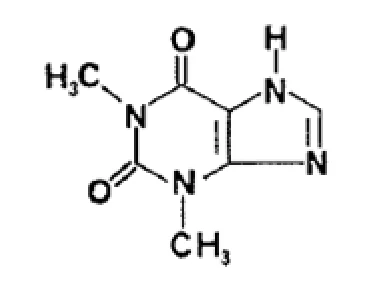
Physicochemical properties: Theophylline is a white, odourless, crystalline powder which has a bitter taste. It is slightly soluble in water, but more soluble in hot water; freely soluble in solutions of alkali hydroxides and in ammonia; sparingly soluble in alcohol, chloroform and ether.
14 CLINICAL TRIALS
14.2 Comparative Bioavailability Studies
A multi-dose, two-way, randomized crossover study was performed on healthy human volunteers. The rate and extent of absorption of theophylline was measured and compared following oral administration of one 300 mg tablet (AA-THEO LA or THEO-DUR) every 12 hours for 9 doses. Results for AUC and Cmax are reported for the 96 - 108 hour steady-state interval and are summarized as follows:
| Geometric means (CV) | |||||||
|---|---|---|---|---|---|---|---|
| THEO DUR | AA-THEO LA | Percentage of THEO-DUR | |||||
| AUCT (mcg.hr/mL) | 102.72 (26) | 95.89 (24) | 93.4 | ||||
| Cmax (mcg/mL) | 9.57 (23) | 8.89 (24) | 92.9 | ||||
An additional single-dose bioavailability study was performed to determine the effect of food on the bioavailability of theophylline tablets. The rate and extent of absorption of theophylline after a single 1000 mg oral dose of AA-THEO LA (5 x 200 mg tablets) administered under fasting and fed conditions were measured and compared. The results are summarized as follows:
| Arithmetic mean (SD) | |||
| AA-THEO LA without food | AA-THEO LA with food | ||
| AUCT (mcg.hr/mL) | 353.2 (101.3) | 347.4 (97.3) | |
| Cmax (mcg/mL) | 17.79 (2.68) | 20.29 (2.85) | |
15 MICROBIOLOGY
No microbiological information is required for this drug product.
16 NON-CLINICAL TOXICOLOGY
General Toxicology:
Carcinogenicity:
No evidence of carcinogenicity was observed in 2-year oral gavage studies carried out in mice (oral doses of 7.5 - 150 mg/kg) and rats (oral doses of 7.5 - 75 mg/kg). Therefore, it is unlikely that theophylline poses a carcinogenic risk in humans.
Genotoxicity:
Theophylline has been studied using the bacterial Ames test and with in vivo and in vitro cytogenetic tests. Theophylline showed limited evidence of mutagenicity in these tests.
Mammalian cells in vitro and in vivo showed increased sister chromatid exchanges, but negative results were observed in all other assays.
Reproductive and Developmental Toxicology:
In 13-week oral gavage studies conducted with 37.5, 75, and 150 mg/kg/day theophylline administered to mice and rats, significant effects on body and testicular weights were observed. Male mouse terminal body and testicular weights were reduced, and male rats had reduced testicular weights. Parallel studies in mice and rats with 0.1, 0.2 and 0.4% theophylline administered in the feed produced reduced body weights in male and female mice, but not rats. In rats, the average cauda epididymis weight was reduced at the high dose compared to a control group, and there was an increase in abnormal sperm.
In 14-week continuous breeding assays in mice using 125, 265, and 530 mg/kg/day (0.075, 0.15, and 0.30%) theophylline administered in the feed, negative effects on reproduction were observed. These included a dose-dependent decrease in the number of live pups produced per litter, a decrease in the number of litters produced per pair and a decrease in the live pup weight (high dose), a decrease in the percentage of pups born alive (mid and high doses), and an increase in the number of days needed to produce each litter (high dose).
The observed changes in fertility indicated the likelihood of embryotoxicity. Other studies have indicated that high dose theophylline can also have teratogenic effects. In mice, theophylline administered intraperitoneally during gestation produced cleft palate, aberrant digit formation, micrognathia, and micromelia in the offspring. Therefore theophylline should be considered to have the potential for developmental toxicity in humans.
17 SUPPORTING PRODUCT MONOGRAPHS
Product Monograph PrUNIPHYL® (Theophylline Sustained Release Tablets, 400 mg and 600 mg), Elvium Life Sciences, Date of Revision: (SEP 30, 2020), Submission control (241455).