


Product Monograph - Actonel (Abbvie)
Recent Major Label Changes
| 7 Warning and Precautions, Musculoskeletal | 2026-10 |
|---|
Table of Contents
Certain sections or subsections that are not applicable at the time of the preparation of the most recent authorized product monograph are not listed.
Recent Major Label Changes ................................................................................................... 2
Table of Contents ................................................................................................................... 2
Part 1: Healthcare Professional Information ........................................................................... 5
- 1.
Indications ....................................................................................................................... 5
1.1. Pediatrics .................................................................................................................. 5
1.2. Geriatrics .................................................................................................................. 6
- 2. Contraindications ............................................................................................................ 6
- 4.
Dosage and Administration ............................................................................................. 6
4.1. Dosing Considerations .............................................................................................. 6
4.2. Recommended Dose and Dosage Adjustment ......................................................... 6
4.4. Administration .......................................................................................................... 7
4.5. Missed Dose ............................................................................................................. 8
- 5. Overdose ......................................................................................................................... 8
- 6. Dosage Forms, Strengths, Composition, and Packaging ................................................... 9
- 7.
Warnings and Precautions ............................................................................................... 9
General ................................................................................................................................. 9
Gastrointestinal .................................................................................................................. 10
Monitoring and Laboratory Tests ....................................................................................... 10
Musculoskeletal .................................................................................................................. 10
Ophthalmologic .................................................................................................................. 11
Renal ................................................................................................................................... 11
7.1. Special Populations ................................................................................................ 11
7.1.1. Pregnancy ...................................................................................................... 11
7.1.2. Breastfeeding ................................................................................................ 12
7.1.3. Pediatrics ....................................................................................................... 12
7.1.4. Geriatrics ....................................................................................................... 12
- 8.
Adverse Reactions ......................................................................................................... 12
8.1. Adverse Reaction Overview .................................................................................... 12
8.2. Clinical Trial Adverse Reactions .............................................................................. 12
8.3. Less Common Clinical Trial Adverse Reactions ....................................................... 18
8.4. Abnormal Laboratory Findings: Hematologic, Clinical Chemistry, and Other Quantitative Data ............................................................................................................... 18
8.5. Post-Market Adverse Reactions ............................................................................. 19
- 9.
Drug Interactions ........................................................................................................... 19
9.2. Drug Interactions Overview .................................................................................... 19
9.3. Drug-Behaviour Interactions .................................................................................. 19
9.4. Drug-Drug Interactions ........................................................................................... 19
9.5. Drug-Food Interactions........................................................................................... 21
9.6. Drug-Herb Interactions ........................................................................................... 21
9.7. Drug-Laboratory Test Interactions ......................................................................... 21
- 10.
Clinical Pharmacology ................................................................................................... 22
10.1. Mechanism of Action .............................................................................................. 22
10.2. Pharmacodynamics ................................................................................................ 22
10.3. Pharmacokinetics ................................................................................................... 25
- 11. Storage, Stability, and Disposal ...................................................................................... 27
- 12. Special Handling Instructions ......................................................................................... 27
Part 2: Scientific Information ................................................................................................ 28
- 13. Pharmaceutical Information .......................................................................................... 28
- 14.
Clinical Trials .................................................................................................................. 29
14.1. Clinical Trials by Indication ..................................................................................... 29
Treatment of Osteoporosis in Postmenopausal Women .................................................... 29
Prevention of Osteoporosis in Postmenopausal Women ................................................... 36
Combined Administration with Hormone Replacement Therapy ....................................... 37
Treatment of Osteoporosis in Men, to Improve Bone Mineral Density .............................. 38
Glucocorticoid-Induced Osteoporosis ................................................................................. 40
Paget’s Disease of Bone ...................................................................................................... 42
- 15. Microbiology ................................................................................................................. 45
- 16. Non-Clinical Toxicology .................................................................................................. 45
Patient Medication Information ........................................................................................... 47
Patient Medication Information ........................................................................................... 53
Part 1: Healthcare Professional Information
1. Indications
ACTONEL (risedronate sodium hemi-pentahydrate) is indicated for:
- the treatment and prevention of osteoporosis in postmenopausal women1
- the treatment of osteoporosis in men, to improve bone mineral density
- the treatment and prevention of glucocorticoid-induced osteoporosis in men and women1
- Paget's disease of bone1
ACTONEL DR (risedronate sodium hemi-pentahydrate) in indicated for:
- The treatment of osteoporosis in postmenopausal women
1Although risedronate tablets 5 mg and 30 mg are available in the marketplace, ACTONEL is no longer marketed in the 5 mg and 30 mg strengths. It may be necessary to use alternate risedronate sodium products to achieve the appropriate dose.
Postmenopausal Osteoporosis: In the treatment of osteoporosis in postmenopausal women at risk of fracture, ACTONEL and ACTONEL DR prevent vertebral and nonvertebral osteoporosis-related (fragility) fractures and increase bone mineral density (BMD) at all measured skeletal sites of clinical importance for osteoporotic fractures, including spine, hip, and wrist.
Osteoporosis may be confirmed by the presence or history of osteoporotic fracture, or by the finding of low bone mass (e.g., at least 2 standard deviation [SD] below the premenopausal mean).
For the prevention of osteoporosis in postmenopausal women who are at risk of developing osteoporosis, ACTONEL preserves or increases BMD at sites of clinical importance.
ACTONEL may be considered in postmenopausal women who are at risk of developing osteoporosis and for whom the desired clinical outcome is to maintain bone mass and to reduce the risk of fracture.
Factors such as family history of osteoporosis (particularly maternal history), age, previous fracture, smoking, moderately low BMD, high bone turnover, thin body frame, Caucasian or Asian race, and early menopause are associated with an increased risk of developing osteoporosis and fractures.
Important Limitations of Use: The optimal duration of use has not been determined. Patients should have the need for continued therapy re-evaluated on a periodic basis. See 4. Dosage and Administration.
Paget’s Disease of Bone: ACTONEL is indicated for patients with Paget's disease of bone (osteitis deformans) having alkaline phosphatase levels at least two times the upper limit of normal, or who are symptomatic, or who are at risk for future complications from their disease, to induce remission (normalization of serum alkaline phosphatase).
1.1. Pediatrics
Pediatrics (<18 years of age): No data are available to Health Canada; therefore, Health Canada has not authorized an indication for pediatric use.
1.2. Geriatrics
Geriatrics (> 65 years of age): In ACTONEL and ACTONEL DR osteoporosis studies, 26-46% of patients were between 65 and 75 years of age and 10-23% were over 75 years of age. No overall differences in efficacy or safety were observed between these patients and younger patients (< 65 years) in the above osteoporosis studies. See 14. Clinical Trials.
2. Contraindications
ACTONEL and ACTONEL DR are contraindicated in:
- Patients who are hypersensitive to this drug or to any ingredient in the formulation, including any non-medicinal ingredient or component of the container. For a complete listing, see 6. Dosage Forms, Strengths, Composition, and Packaging.
- Hypocalcemia. See 7. Warnings and Precautions.
4. Dosage and Administration
4.1. Dosing Considerations
- Although risedronate tablets 5 mg and 30 mg are available in the marketplace, ACTONEL is no longer marketed in the 5 mg and 30 mg strengths. It may be necessary to use alternate risedronate sodium products to achieve the appropriate dose.
- Patients should receive supplemental calcium and vitamin D if dietary intake is inadequate. See 7. Warnings and Precautions.
4.2. Recommended Dose and Dosage Adjustment
- For all indications and doses: The patient should be informed to pay particular attention to the dosing instructions as clinical benefits may be compromised by failure to take the drug according to instructions.
- Treatment of Postmenopausal Osteoporosis: The recommended regimens are daily (5 mg), weekly (35 mg Once-a-Week film-coated and delayed-release tablets), or monthly (1 tablet of 150 mg once-a-month on the same calendar day each month), taken orally. The use of alternate risedronate sodium product is necessary to achieve the daily 5 mg dose.
- Prevention of Postmenopausal Osteoporosis: The recommended regimens are daily (5 mg) or weekly (35 mg Once-a-Week film-coated tablets), taken orally. The use of alternate risedronate sodium product is necessary to achieve the daily 5 mg dose.
- Treatment of Osteoporosis in Men, to Improve Bone Mineral Density: The recommended regimen is weekly, (35 mg Once-a-Week film-coated tablets), taken orally.
- Treatment and Prevention of Glucocorticoid-Induced Osteoporosis: The recommended regimen is 5 mg daily, taken orally. The use of alternate risedronate sodium product is necessary to achieve this dose.
Treatment of Paget’s Disease of Bone: The recommended regimen is 30 mg daily for 2 months, taken orally. Re-treatment may be considered (following post-treatment observation of at least 2 months) if relapse has occurred, or if treatment fails to normalize serum alkaline phosphatase. For
- re-treatment, the dose and duration of therapy are the same as for initial treatment. There are no data available on more than one course of re-treatment. The use of alternate risedronate sodium product is necessary to achieve this dose.
- Renal Impairment: No dosage adjustment is necessary in patients with a creatinine clearance ≥ 30 mL/min or in the elderly. Not recommended for use in patients with severe renal impairment (creatinine clearance < 30 mL/min).
- Pediatrics (<18 years of age): Health Canada has not authorized an indication for pediatric use.
- Geriatrics: No dosage adjustment is necessary in elderly patients. See 1.2. Geriatrics.
4.4. Administration
ACTONEL film-coated tablets
- ACTONEL should be taken on an empty stomach at least 30 minutes before consuming the first food, drink (other than plain water) and/or any other medication of the day. Food, medication or drink (other than plain water) can interfere with the absorption of ACTONEL. See 4.2. Recommended Dose and Dosage Adjustment and 9. Drug Interactions).
- Each ACTONEL tablet should be swallowed whole while the patient is in an upright position and with sufficient plain water (≥ 120 mL) to facilitate delivery to the stomach.
- Patients taking ACTONEL should not lie down for at least 30 minutes after taking the medication. See 7. Warnings and Precautions.
- ACTONEL tablets should not be chewed, cut, or crushed. See 7. Warnings and Precautions.
- Medications containing polyvalent cations (e.g. calcium, magnesium, aluminum, and iron) can interfere with the absorption of ACTONEL. These medications should be administered at a different time of the day than ACTONEL.
- The optimal duration of bisphosphonate treatment for osteoporosis has not been established. The need for continued treatment should be re-evaluated periodically based on the benefits and potential risks of ACTONEL on an individual patient basis.
ACTONEL DR delayed-release tablets
- ACTONEL DR should be taken in the morning, with breakfast, (this may include high fat foods, coffee, tea, milk, orange juice etc. See 4.2. Recommended Dose and Dosage Adjustment. A higher incidence of upper abdominal pain was seen when ACTONEL DR was taken in a fasted state before breakfast. See 9.5. Drug-Food Interactions.
- Each ACTONEL DR tablet should be swallowed whole while the patient is in an upright position and with sufficient plain water (≥ 120 mL) to facilitate delivery to the stomach.
- Patients taking ACTONEL DR should not lie down for at least 30 minutes after taking the medication. See 7. Warnings and Precautions.
- ACTONEL DR tablets should not be chewed, cut, or crushed. Care should be taken not to break the outer coating which is designed to remain intact until the tablet reaches the small intestine where the tablet coating dissolves and releases the active ingredient. See 7. Warnings and Precautions.
- Calcium supplements and antacids can interfere with the absorption of ACTONEL DR. These medications should be administered at a different time of the day than ACTONEL DR.
- The optimal duration of bisphosphonate treatment for osteoporosis has not been established. The need for continued treatment should be re-evaluated periodically based on the benefits and potential risks of ACTONEL DR on an individual patient basis.
4.5. Missed Dose
Daily: Patients should be instructed that if they miss a dose of ACTONEL 5 mg or 30 mg, they should take 1 tablet of ACTONEL as they normally would for their next dose. Patients should not double their next dose or take 2 tablets on the same day. The use of alternate risedronate sodium product is necessary to achieve the daily 5 mg and 30 mg doses.
Weekly: Patients should be instructed that if they miss a dose of ACTONEL or ACTONEL DR 35 mg Once-a-Week on their regularly scheduled day, they should take 1 tablet on the day they first remember missing their dose. Patients should then return to taking 1 tablet once a week as originally scheduled on their chosen day. Patients should not take 2 tablets on the same day.
Once-a-Month: Patients should be instructed that if they miss a 150 mg dose of ACTONEL (1 tablet of 150 mg), and the next month’s scheduled dose is more than 7 days away, they should take the missed tablet in the morning after the day it is remembered. Patients should then return to taking their ACTONEL 150 mg as originally scheduled.
If a dose of ACTONEL 150 mg is missed, and the next month’s scheduled dose is within 7 days, patients should be instructed to wait until their next month’s scheduled dose and then continue taking ACTONEL 150 mg. Patients should not take more than 150 mg of ACTONEL within 7 days.
5. Overdose
Decreases in serum calcium following substantial overdose may be expected in some patients. Signs and symptoms of hypocalcemia may also occur in some of these patients.
Milk or antacids containing calcium, magnesium, and aluminum may be given to bind ACTONEL (film-coated tablets) and reduce absorption of the drug; the impact of this intervention for ACTONEL DR (delayed-release tablets) has not been evaluated. The ACTONEL DR formulation is less sensitive to the binding effects of divalent cations. In cases of substantial overdose, gastric lavage may be considered to remove unabsorbed drug if performed within 30 minutes of ingestion. Standard procedures that are effective for treating hypocalcemia, including the administration of calcium intravenously, would be expected to restore physiologic amounts of ionized calcium and to relieve signs and symptoms of hypocalcemia.
| For the most recent information in the management of a suspected drug overdose, contact your regional poison control centre or Health Canada’s toll-free number, 1-844 POISON-X (1-844-764-7669). |
|---|
- 6. Dosage Forms, Strengths, Composition, and Packaging
Table 1 – Dosage Forms, Strengths, Composition and Packaging
Description
ACTONEL
- 35 mg – film-coated, oval-shaped, orange tablets with “RSN” engraved on one face and “35 mg” engraved on the other. Available in cartons of 4 blister-packaged tablets.
- 150 mg - film-coated, oval-shaped, blue tablets with “RSN” engraved on one face and “150 mg” engraved on the other. Available in cartons on one blister-packaged tablet.
ACTONEL DR
- 35 mg – delayed-release, oval-shaped, yellow tablets with “EC 35” engraved on one face. Available in cartons of 4 blister-packaged tablets.
The ACTONEL DR tablet has an enteric coating, which delays the release of risedronate until the small intestine. The other formulations of ACTONEL are film coated and must be taken before the first food of the day.
7. Warnings and Precautions
General
Hypocalcemia and other disturbances of bone and mineral metabolism should be effectively treated before starting ACTONEL therapy.
Adequate intake of calcium and vitamin D is important in all patients, especially in patients with Paget's disease in whom bone turnover is significantly elevated.
ACTONEL DR delayed release tablets are formulated to release in the small intestine to provide effective absorption of risedronate when taken as directed with breakfast. Other ACTONEL formulations should be taken on an empty stomach at least 30 minutes before first food of the day. For this reason, ACTONEL 35 mg should not be substituted for ACTONEL DR 35 mg. Detailed dosing
| Route of Administration | Dosage Form / Strength/Composition | Non-medicinal Ingredients |
| Oral | Film-coated tablet 35 mg and 150 mg | Colloidal silicone dioxide, crospovidone, ferric oxide red (35 mg), ferric oxide yellow (35 mg), hydroxypropyl cellulose, hypromellose, indigo carmine (150 mg), lactose monohydrate (35 mg), magnesium stearate, microcrystalline cellulose, polyethylene glycol and titanium dioxide. |
| Oral | Enteric-coated, delayed-release tablet 35 mg | Edetate sodium, ferric oxide yellow, magnesium stearate, methacrylic acid copolymer dispersion, polysorbate 80, silicified microcrystalline cellulose, simethicone, sodium starch glycolate, stearic acid, talc and triethyl citrate. |
instructions (see 4.2. Recommended Dose and Dosage Adjustment and 4.4. Administration ) are provided to ensure correct dosing of each ACTONEL therapy.
Gastrointestinal
Bisphosphonates may cause upper gastrointestinal (GI) disorders such as dysphagia, esophagitis, esophageal ulcer, and gastric ulcer (see 8.1. Adverse Reaction Overview). Since some bisphosphonates have been associated with esophagitis and esophageal ulcerations, to facilitate delivery to the stomach and minimize the risk of these events, patients should take ACTONEL and ACTONEL DR while in an upright position (i.e., sitting or standing) and with sufficient plain water (> 120 mL). Patients should not lie down for at least 30 minutes after taking the drug. Health professionals should be particularly careful to emphasize the importance of the dosing instructions to patients with a history of esophageal disorders (e.g., inflammation, stricture, ulcer, or disorders of motility).
Monitoring and Laboratory Tests
Osteonecrosis of the jaw: Prior to treatment with ACTONEL and ACTONEL DR, a routine oral examination should be performed. Patients with positive risk factors (e.g. cancer, chemotherapy, immunosuppression, angiogenesis inhibitors, head and neck radiotherapy, corticosteroids, poor oral hygiene, and diabetes) should be referred to a dentist for examination and appropriate preventative dentistry should be performed prior to treatment with ACTONEL and ACTONEL DR. Patients should receive routine dental check-ups while taking ACTONEL and ACTONEL DR.
Musculoskeletal
Osteonecrosis of the Jaw: Osteonecrosis of the jaw (ONJ) has been reported post-market in patients treated with bisphosphonates as well as with other oral and intravenous bisphosphonates, including in, but not limited to, patients with cancer receiving treatment or patients that underwent invasive dental procedures such as root canal or dental extraction (see 8.5. Post-Market Adverse Reactions).
Prior to treatment with ACTONEL or ACTONEL DR, a routine oral examination should be performed. Patients with possible risk factors (e.g., cancer, immunosuppression, chemotherapy, angiogenesis inhibitors, head and neck radiotherapy, corticosteroids, poor oral hygiene, and diabetes) should be referred to a dentist for examination and appropriate preventative dentistry should be performed prior to treatment with ACTONEL and ACTONEL DR.
During treatment with risedronate sodium, patients should maintain good oral hygiene, undergo routine dental check-ups and immediately report any oral symptoms. While on treatment, these patients should avoid invasive dental procedures if possible but should continue with regular dental cleaning and oral hygiene. For patients requiring dental procedures, there are no data available to suggest whether discontinuation of bisphosphonate treatment prior to the procedure reduces the risk of ONJ. In patients who develop ONJ while on bisphosphonate therapy, surgery at the affected area may exacerbate the condition. Clinical judgment of the treating physician should guide the management of patients undergoing dental procedures, based on individual benefit/risk assessment.
The following should be considered when evaluating a patient's risk of developing ONJ:
- Potency of the medicinal product that inhibits bone resorption (higher risk for highly potent compounds),
- Route of administration (higher risk for parenteral administration),
- Cumulative dose of bone resorption therapy.
- Co-morbid conditions (e.g. anaemia, coagulopathies) and smoking,
- Periodontal disease, poorly fitting dentures, history of dental disease.
Atypical Fractures Including Femur Fractures: Atypical, low-energy, or low trauma fractures of the femoral shaft have been reported in bisphosphonate-treated patients, including patients treated with risedronate. These fractures can occur anywhere in the femoral shaft from just below the lesser trochanter to above the supracondylar flare and are transverse or short oblique in orientation without evidence of comminution. Atypical fractures of other bones have also been reported.
Atypical femur fractures most commonly occur with minimal or no impact trauma to the affected area. They may be bilateral and many patients report prodromal pain in the affected area, usually presenting as dull, aching thigh pain, weeks to months before a complete fracture occurs. Poor healing of these fractures was also reported. These fractures can also occur in osteoporotic patients who have not been treated with bisphosphonates. Concomitant treatment with glucocorticoids may also induce these fractures.
Any patient with a history of bisphosphonate exposure who presents with thigh or groin pain should be suspected of having an atypical fracture and should be evaluated to rule out an incomplete femur fracture. Patients presenting with an atypical fracture should also be assessed for symptoms and signs of fracture in the contra-lateral limb. Bony pain in other locations should also be considered for evaluation of atypical fractures. Interruption of bisphosphonate therapy should be considered, pending a risk/benefit assessment. Although causality has not been established, the role of bisphosphonates cannot be ruled out.
Musculoskeletal Pain: In post-marketing experience, severe and occasionally incapacitating bone, joint, and/or muscle pain has been reported in patients taking bisphosphonates (see 8.1. Adverse Reactions Overview ). The time-to-onset of symptoms varied from one day to several months after starting the drug. Most patients had relief of symptoms after stopping the medication. A subset of patients had recurrence of symptoms when rechallenged with the same drug or another bisphosphonate. Consider discontinuing use if severe symptoms develop.
Ophthalmologic
Ocular disturbances including conjunctivitis, uveitis, episcleritis, iritis, and scleritis have been reported with ACTONEL therapy. Patients with ocular events other than uncomplicated conjunctivitis should be referred to an ophthalmologist for evaluation. If ocular inflammatory symptoms are observed, treatment may have to be discontinued.
Renal
Risedronate sodium is not recommended for use in patients with severe renal impairment (creatinine clearance < 30 mL/min).
7.1. Special Populations
7.1.1. Pregnancy
Risedronate sodium is not intended for use during pregnancy. There are no studies of risedronate sodium in pregnant women.
7.1.2. Breastfeeding
Risedronate sodium is not intended for use with nursing mothers. It is not known whether risedronate is excreted in human milk. Risedronate was detected in feeding pups exposed to lactating rats for a 24-hour period post-dosing, indicating a small degree of lacteal transfer. Since many drugs are excreted in human milk and because of the potential for serious adverse reactions in nursing infants from bisphosphonates, a decision should be made whether to discontinue nursing or to discontinue the drug, taking into account the importance of the drug to the mother.
7.1.3. Pediatrics
Pediatrics (<18 years of age): No data are available to Health Canada; therefore, Health Canada has not authorized an indication for pediatric use.
7.1.4. Geriatrics
In ACTONEL and ACTONEL DR osteoporosis studies, 26-46% of patients were between 65 and 75 years of age and 10-23% were over 75 years of age. No overall differences in efficacy or safety were observed between these patients and younger patients (< 65 years of age) in the above osteoporosis studies. See 14. Clinical Trials.
8. Adverse Reactions
8.1. Adverse Reaction Overview
Bisphosphonates may cause upper gastrointestinal disorders such as dysphagia, esophagitis, esophageal ulcer and gastric ulcer. It is therefore important to follow the recommended dosing instructions. See 4.4. Administration.
Musculoskeletal pain, rarely severe, has been reported as a common adverse event in patients who received ACTONEL and ACTONEL DR for all indications and dosage forms.
In ACTONEL and ACTONEL DR osteoporosis studies, the most commonly reported adverse reactions were abdominal pain, dyspepsia and nausea. In addition, diarrhea was the most commonly reported adverse reaction for the highest ACTONEL monthly dose.
In Paget’s disease studies with ACTONEL, the most commonly reported adverse reactions were diarrhea, nausea, abdominal pain and headache.
8.2. Clinical Trial Adverse Reactions
Clinical trials are conducted under very specific conditions. The adverse reaction rates observed in the clinical trials; therefore, may not reflect the rates observed in practice and should not be compared to the rates in the clinical trials of another drug. Adverse reaction information from clinical trials may be useful in identifying and approximating rates of adverse drug reactions in real-world use.
Treatment and Prevention of Postmenopausal Osteoporosis: ACTONEL 5 mg daily has been studied for up to 3 years in over 5000 women enrolled in Phase III clinical trials for treatment or prevention of postmenopausal osteoporosis. Most adverse events reported in these trials were either mild or moderate in severity, and did not lead to discontinuation from the study. The distribution of severe adverse events was similar across treatment groups. In addition, the overall incidence of adverse events (AEs) was found to be comparable amongst ACTONEL and placebo-treated patients.
Table 2 lists adverse events considered possibly or probably drug-related, reported in ≥ 1% of ACTONEL 5 mg daily-treated patients, in Phase III postmenopausal osteoporosis trials. Discontinuation of therapy due to serious clinical adverse events occurred in 5.5% of ACTONEL 5 mg daily-treated patients and 6.0% of patients treated with placebo.
Table 2 - Drug-Related* Adverse Events Reported in ≥ 1% of ACTONEL 5 mg Daily-Treated Patients in Combined Phase III Postmenopausal Osteoporosis Trials
ACTONEL 5 mg n = 1742 (%) | placebo n = 1744 (%) | |||
Body as a Whole Abdominal Pain Headache Asthenia | 4.1 2.5 1.0 | 3.3 2.3 0.7 | ||
Digestive System Dyspepsia Nausea Constipation Diarrhea Flatulence Gastritis | 5.2 4.8 3.7 2.9 2.1 1.1 | 4.8 5.0 3.6 2.5 1.8 0.9 | ||
Skin and Appendages Rash Pruritus | 1.4 1.0 | 0.9 0.5 | ||
| * Considered to be possibly or probably causally related by clinical study Investigators | ||||
Weekly Dosing: In the 1-year, double-blind, multicentre study comparing ACTONEL 35 mg Once-a-Week to ACTONEL 5 mg daily for the treatment of osteoporosis in postmenopausal women, the overall safety and tolerability profiles of the 2 oral dosing regimens were similar.
The proportion of patients who experienced an upper gastrointestinal adverse event and the pattern of those events were found to be similar between the ACTONEL 35 mg Once-a-Week and ACTONEL 5 mg daily-treated groups. In addition to the previously described adverse reactions reported in ACTONEL osteoporosis clinical trials, arthralgia (ACTONEL 35 mg, 2.1%; ACTONEL 5 mg, 1.3%) was reported in ≥ 1% of patients and in more ACTONEL 35 mg weekly treated patients than in ACTONEL 5 mg daily treated patients.
In the 1-year, double-blind, multicentre study comparing ACTONEL 35 mg Once-a-Week to placebo for the prevention of osteoporosis in postmenopausal women, the overall safety and tolerability profiles of the two groups were comparable with the exception of arthralgia. Specifically, 1.5% of patients taking ACTONEL 35 mg Once-a-Week experienced arthralgia compared to 0.7% of placebo patients. The overall safety profile observed in this study showed no substantive difference from that observed in the ACTONEL 5 mg daily versus ACTONEL 35 mg Once-a-Week treatment study.
ACTONEL DR- In a 2-year, double-blind, multicentre study comparing ACTONEL DR 35 mg weekly taken following breakfast to ACTONEL 5 mg daily for the treatment of osteoporosis in postmenopausal women, gastrointestinal adverse events were reported in 38.8% of patients taking ACTONEL DR 35 mg, compared to 34.9% of patients taking ACTONEL 5 mg. Abdominal pain, vomiting, and upper abdominal pain were reported more frequently by patients taking ACTONEL DR (6.2%, 4.9%, 3.6%) compared to patients taking ACTONEL 5 mg (3.3%, 3.3%, 2.6%). Other events reported more frequently by patients taking ACTONEL DR included diarrhea, constipation, nasopharyngitis, upper respiratory tract infection, and pharyngitis.
Monthly Dosing: (Once-a-Month) – In a 1-year, double-blind, multicentre study for the treatment of osteoporosis in postmenopausal women comparing ACTONEL 150 mg Once-a-Month to ACTONEL 5 mg daily, the overall safety profiles of the dosing regimens were similar. The proportion of patients who experienced an upper gastrointestinal adverse event and the pattern of those events were found to be similar between the ACTONEL 150 mg Once-a-Month and the ACTONEL 5 mg daily treated groups. In addition to the previously described adverse reactions diarrhea (ACTONEL 150 mg, 3.1%; ACTONEL 5 mg, 0.5%), vomiting (ACTONEL 150 mg, 1.5%; ACTONEL 5 mg, 0.6%), arthralgia (ACTONEL 150 mg, 1.5%; ACTONEL 5 mg, 0.9%) and myalgia (ACTONEL 150 mg, 1.1%; ACTONEL 5 mg, 0.3%) were reported in ≥1% of patients and in more ACTONEL 150 mg treated patients than in ACTONEL 5 mg daily treated patients.
Symptoms consistent with acute phase reactions have been reported. Based on reporting of any 33 acute phase reaction-like symptoms (without regard to causality) within the first 3 days of first dose and lasting less than 7 days, the overall incidence of acute phase reaction was 5.2 % of patients in the ACTONEL 150 mg once-a-month group and 1.1% in the ACTONEL 5 mg daily group. Fever or influenza-like illness (without regard to causality) occurring within the first 3 days of first dose and lasting less than 7 days was reported by 1.4% of patients in the ACTONEL 150 mg Once-a-Month group and 0.2% of patients in the ACTONEL 5 mg daily group.
Treatment of Osteoporosis in Men, to Improve Bone Mineral Density: In a 2-year, double-blind, multicentre study using ACTONEL 35 mg Once-a-Week (n=191) and placebo (n=93) in men with osteoporosis, the overall safety and tolerability profiles of the two treatment groups were similar.
The proportion of patients who experienced an upper gastrointestinal adverse event and the pattern of those events were higher in placebo (18%) than in ACTONEL 35 mg Once-a-Week treated patients (8%).
In addition to the previously described adverse events, the following adverse events were reported in ≥ 2% of patients and in more ACTONEL-treated patients than placebo-treated patients in the male osteoporosis study (events are included without attribution of causality): hypoaesthesia (ACTONEL 35 mg, 2%; placebo, 1%), nephrolithiasis (ACTONEL 35 mg, 3%; placebo, 0%), benign prostatic hyperplasia (ACTONEL 35 mg, 5%; placebo, 3%) and arrhythmia (ACTONEL 35 mg, 2%; placebo, 0%).
Glucocorticoid-Induced Osteoporosis: ACTONEL 5 mg daily has been studied in two Phase III glucocorticoid-induced osteoporosis trials enrolling more than 500 patients. The adverse event profile of this population was similar to that seen in postmenopausal osteoporosis trials.
The overall incidence of adverse events was found to be comparable between the ACTONEL 5 mg daily and placebo treatment groups, with the exception of back and joint pain. Back pain was reported in 8.8% of placebo-treated patients and 17.8% of ACTONEL-treated patients; joint pain occurred in 14.7% of placebo patients and 24.7% of ACTONEL patients. Most adverse experiences reported were either mild or moderate in severity, and did not lead to discontinuation from the study. Discontinuation of therapy due to serious clinical adverse events occurred in 2.9% of ACTONEL 5 mg daily-treated patients and 5.3% of patients treated with placebo. The occurrence of adverse events does not appear to be related to patient age, gender or race.
Table 3 lists adverse events considered possibly or probably drug-related, reported in ≥ 1% of ACTONEL 5 mg daily-treated patients, in Phase III glucocorticoid-induced osteoporosis studies.
Table 3 Drug-Related* Adverse Events Reported in ≥ 1% of ACTONEL 5 mg Daily-Treated Patients in the Phase III Glucocorticoid-Induced Ostoeporosis Trials
| Adverse Event | ACTONEL 5 mg N = 174 (%) | Placebo N = 170 (%) | ||
|---|---|---|---|---|
Body as a Whole Abdominal Pain Headache | 4.0 1.1 | 4.7 1.2 | ||
Digestive System Dyspepsia Nausea Constipation Diarrhea Dry mouth Duodenitis Esophagitis Flatulence Gastrointestinal Disorder | 5.7 5.7 2.9 2.9 1.1 1.1 1.1 1.1 1.1 | 2.9 5.3 3.5 3.5 0.6 0.0 0.0 1.8 0.0 | ||
Nervous System Dizziness | 1.1 | 1.2 | ||
Skin and Appendages Rash Skin Disorder | 1.1 1.1 | 2.4 0.0 | ||
| * Considered to be possibly or probably causally related by clinical study Investigators | ||||
Endoscopic Findings: ACTONEL 5 mg daily clinical studies enrolled over 5700 patients for the treatment and prevention of postmenopausal and glucocorticoid-induced osteoporosis, many with pre-existing gastrointestinal disease and concomitant use of NSAIDs or ASA. Investigators were encouraged to perform endoscopies in any patients with moderate-to-severe gastrointestinal complaints while maintaining the blind. These endoscopies were ultimately performed on equal numbers of patients between the treated and placebo groups (75 ACTONEL; 75 placebo).
Across treatment groups, the percentage of patients with normal esophageal, gastric and duodenal mucosa on endoscopy was similar (21% ACTONEL; 20% placebo). Positive findings on endoscopy were also generally comparable across treatment groups. There were a higher number of reports of mild duodenitis in the ACTONEL group; however, there were more duodenal ulcers in the placebo group. Clinically important findings (perforations, ulcers or bleeding) among this symptomatic population were similar between groups (39% ACTONEL; 51% placebo).
At the 1-year time point in studies, comparing ACTONEL 35 mg Once-a-Week to ACTONEL 5 mg daily and ACTONEL DR 35 mg weekly to ACTONEL 5 mg daily in the treatment of postmenopausal osteoporosis, endoscopies performed during the studies revealed no dose dependent pattern in the number of patients with positive endoscopic findings or in the anatomical location of abnormalities detected. Endoscopies were conducted only on consenting patients experiencing moderate to severe gastrointestinal complaints.
In a 1-year study for the treatment of osteoporosis in postmenopausal women comparing ACTONEL 150 mg Once-a-Month to ACTONEL 5 mg daily, a similar percentage of patients for each of the intermittent regimens had at least one abnormal endoscopic finding when compared to the daily regimen (ACTONEL 150 mg, 3.4%; ACTONEL 5 mg, 4.2%).
Paget’s Disease of Bone: ACTONEL has been studied in over 390 patients with Paget's disease of bone. The adverse experiences reported have usually been mild or moderate and generally have not required discontinuation of treatment. The occurrence of adverse experiences does not appear to be related to patient age, gender or race.
In a Phase III clinical study, ACTONEL and DIDRONEL® (etidronate disodium tablets) showed similar adverse event profiles: 6.6% (4/61) of the patients treated with ACTONEL 30 mg daily for 2 months discontinued treatment due to adverse experiences, compared with 8.2% (5/61) of the patients treated with DIDRONEL 400 mg daily for 6 months.
Table 4 lists adverse events considered possibly or probably drug-related, reported in ≥ 1% of ACTONEL 30 mg daily-treated patients, in the Phase III Paget’s trial.
Table 4 Drug-Related* Adverse Events Reported in ≥ 1% of ACTONEL 30 mg Daily-Treated Patients in the Phase III Paget’s Trial
| Adverse Event | ACTONEL 30 mg/day x 2 months N = 61 (%) | DIDRONEL 400 mg/day x 6 months N = 61 (%) | ||
|---|---|---|---|---|
| Adverse Event | ACTONEL 30 mg/day x 2 months N = 61 (%) | DIDRONEL 400 mg/day x 6 months N = 61 (%) | ||
Body as a Whole Abdominal Pain Headache Infection Flu Syndrome Neck Rigidity Neoplasm Pain Chest Pain | 6.6 4.9 3.3 1.6 1.6 1.6 1.6 1.6 | 3.3 6.6 6.6 0.0 1.6 0.0 8.2 0.0 | ||
Digestive System Diarrhea Nausea Constipation Flatulence Colitis | 13.1 8.2 3.3 3.3 1.6 | 9.8 4.9 1.6 4.9 0.0 | ||
Metabolic and Nutritional Peripheral Edema Hypocalcemia Weight Decreased | 1.6 1.6 1.6 | 0.0 0.0 0.0 | ||
Musculoskeletal System Arthralgia Leg Cramps Myasthenia Bone Pain | 9.8 1.6 1.6 1.6 | 8.2 0.0 0.0 0.0 | ||
Nervous System Dizziness | 1.6 | 0.0 | ||
Respiratory System Apnea Bronchitis Sinusitis | 1.6 1.6 1.6 | 0.0 0.0 0.0 | ||
Skin Rash | 1.6 | 0.0 | ||
Special Senses Amblyopia Corneal Lesion Dry Eyes Ear Pain Tinnitus | 1.6 1.6 1.6 1.6 1.6 | 0.0 0.0 0.0 1.6 0.0 | ||
Urogenital System Nocturia | 1.6 | 0.0 | ||
| * Considered to be possibly or probably causally related by clinical study Investigators | ||||
In the Phase III comparative study versus DIDRONEL, patients with a history of upper GI disease or abnormalities were not excluded. Patients were also not excluded based on NSAID or ASA use. The proportion of ACTONEL 30 mg daily-treated patients with mild or moderate upper GI experiences was similar to that in the DIDRONEL-treated group, with no severe upper GI experiences observed in either treatment group.
8.3. Less Common Clinical Trial Adverse Reactions
The following adverse drug reactions were reported in ≤ 1% of patients who received ACTONEL for all indications:
- Eye Disorders: iritis (0.1-1.0%)
- Gastrointestinal Disorders: duodenitis (0.1-1.0%), glossitis (<0.1%)
- Investigations: abnormal liver function tests (<0.1%)
8.4. Abnormal Laboratory Findings: Hematologic, Clinical Chemistry, and Other Quantitative Data
Clinical Trial Findings
Asymptomatic mild decreases in serum calcium and phosphorus levels have been observed in some patients. Asymptomatic elevations in PTH levels were observed in some patients receiving ACTONEL DR. See 10.2. Pharmacodynamics.
Rare cases of leukemia have been reported following therapy with bisphosphonates. Any causal relationship to either the treatment or to the patients' underlying disease has not been established.
8.5. Post-Market Adverse Reactions
Hypersensitivity and Skin Reactions: angioedema, generalized rash and bullous skin reactions, some severe.
Musculoskeletal and Connective tissue: low-energy femoral shaft fractures, atypical fractures of other bones, osteonecrosis of the jaw. See Musculoskeletal.
Ophthalmologic: conjunctivitis, episcleritis, iritis, scleritis and uveitis. See Ophthalmologic.Error! Reference source not found.
9. Drug Interactions
9.2. Drug Interactions Overview
No specific drug-drug interaction studies were performed with risedronate sodium film-coated tablets. Animal studies have demonstrated that risedronate is highly concentrated in bone and is retained only minimally in soft tissue. No metabolites have been detected systemically or in bone. The binding of risedronate to plasma proteins in humans is low (24%), resulting in minimal potential for interference with the binding of other drugs. In an additional animal study, there was also no evidence of hepatic microsomal enzyme induction. In summary, risedronate sodium is not systemically metabolized, does not induce cytochrome P450 enzymes and has low protein binding.
Risedronate sodium is therefore not expected to interact with other drugs based on the effects of protein binding displacement, enzyme induction or metabolism of other drugs.
In vitro studies suggest that the amount of EDTA contained in the ACTONEL DR formulation (approximately 1.5 mM) will not significantly affect aqueous solubility of antivirals (nelfinavir, lamivudine, emtricitabin) and drugs with a narrow therapeutic index (digoxin, lithium carbonate, potassium chloride). Thus, co-administration with ACTONEL DR is not likely to alter their absorption.
9.3. Drug-Behaviour Interactions
No drug-behavioural interactions have been identified.
9.4. Drug-Drug Interactions
Patients in the clinical trials were exposed to a wide variety of commonly used concomitant medications (including NSAIDs, H2-blockers, proton pump inhibitors, antacids, calcium channel blockers, beta-blockers, thiazides, glucocorticoids, anticoagulants, anticonvulsants, cardiac glycosides).
While there was no apparent evidence of clinically relevant interactions in the clinical trials, such interactions cannot be ruled out on the basis on these data.
The drugs listed in Table 5 are based on either drug interaction case reports or predicted interactions due to the expected magnitude and seriousness of the interaction (i.e., those identified as contraindicated).
Table 5 - Established or Potential Drug-Drug Interactions
| Proper/Common name | Source of Evidence | Effect | Clinical comment |
| Proper/Common name | Source of Evidence | Effect | Clinical comment |
| Antacids and calcium supplements which contain polyvalent cations (e.g., calcium, magnesium, aluminum and iron) | CT/T | Interference with the absorption of ACTONEL and ACTONEL DR. Co-administration of ACTONEL DR with calcium supplement after breakfast reduced bioavailability of ACTONEL DR by approximately 38%. | Such medications should be administered at a different time of the day from ACTONEL or ACTONEL DR (see 4.4. Administration ). |
| Hormone replacement therapy (HRT) | CT | No clinically significant effect for ACTONEL | If considered appropriate, ACTONEL may be used concomitantly with HRT (see Combined Administration with Hormone Replacement Therapy). No data are available on the concomitant use of ACTONEL DR and HRT |
| H2-blockers and proton pump inhibitors (PPIs) | CT | Among H2-blockers and PPIs users, the incidence of upper gastrointestinal adverse events was similar between the ACTONEL-treated patients and placebo-treated patients. | Of over 5700 patients enrolled in the ACTONEL 5 mg daily Phase III osteoporosis studies, 21% used H2-blockers and/or PPIs. |
| Among H2-blockers and PPIs users, the incidence of upper gastrointestinal adverse experiences was found to be similar between the weekly- and daily-treated groups. | In the 1-year study comparing ACTONEL Once-a-Week and daily dosing regimens in postmenopausal women with osteoporosis, at least 9% of patients in the ACTONEL 35 mg Once-a-Week and 5 mg daily groups used H2-blockers and/or PPIs. | ||
Concomitant administration of PPIs and Actonel DR has been shown to affect the bioavailability of ACTONEL DR (see 10.3. Pharmacokinetics). The effects of concomitant administration of H2-blockers on bioavailability of ACTONEL DR have not been evaluated. | In the 2-year study comparing ACTONEL DR and daily dosing regimens in postmenopausal women with osteoporosis, at least 8% and 14% of patients in the ACTONEL DR and 5 mg daily groups used H2-blockers and/or PPIs respectively. Concomitant administration of ACTONEL DR and H2 blockers or PPIs is not recommended. | ||
| Angiogenesis inhibitors | T | Osteonecrosis of the jaw (ONJ) | Concomitant administration of risedronate sodium and angiogenesis inhibitors may increase the risk of developing ONJ. Caution should be exercised. Patients taking angiogenesis inhibitors should have a dental examination prior to treatment with ACTONEL and ACTONEL DR. (see Musculoskeletal). |
| Legend: CT = Clinical Trial; T = Theoretical | |||
Of over 5700 patients enrolled in the ACTONEL 5 mg daily Phase III osteoporosis studies, ASA use was reported by 31% of patients and NSAID use by 48%. Among these ASA or NSAID users, the incidence of upper gastrointestinal adverse events was similar between the ACTONEL-treated patients and placebo-treated patients.
In the 1-year study comparing ACTONEL 35 mg Once-a-Week to ACTONEL 5 mg daily, ASA use was reported by 56% and NSAID use by 41%. The incidence of upper gastrointestinal adverse events was similar between the ACTONEL weekly- and daily-treated groups.
In the Phase 3 study comparing ACTONEL DR 35 mg weekly immediately following breakfast and ACTONEL 5 mg daily, 22% of NSAID/ASA users in both groups developed upper gastrointestinal adverse reactions. Among non-users, 16% of patients taking ACTONEL DR 35 mg weekly immediately following breakfast developed upper gastrointestinal adverse reactions, compared to 13% taking ACTONEL 5 mg daily.
In a 1-year study comparing ACTONEL 150 mg once-a-month to ACTONEL 5 mg daily in postmenopausal women, 46% (150 mg) of patients reported the use of ASA and/or NSAIDs. Among these ASA or NSAID users, the incidence of upper gastrointestinal adverse events was similar in the ACTONEL monthly-treated groups when compared to the daily-treated groups respectively.
9.5. Drug-Food Interactions
Clinical benefits may be compromised by failure to take ACTONEL on an empty stomach.
ACTONEL DR should be taken with food. When compared with ACTONEL 5 mg, treatment with ACTONEL DR resulted in a higher incidence of upper abdominal pain when administered before breakfast under fasting conditions. For dosing information see 4.4. Administration.
9.6. Drug-Herb Interactions
Interactions with herbs have not been studied.
9.7. Drug-Laboratory Test Interactions
Bisphosphonates are known to interfere with the use of bone-imaging agents. Specific studies with ACTONEL and ACTONEL DR have not been performed.
10. Clinical Pharmacology
10.1. Mechanism of Action
Risedronate sodium, a pyridinyl-bisphosphonate in the form of hemi-pentahydrate with small amounts of monohydrate, inhibits osteoclast bone resorption and modulates bone metabolism. Risedronate has a high affinity for hydroxyapatite crystals in bone and is a potent antiresorptive agent. At the cellular level, risedronate inhibits osteoclasts. The osteoclasts adhere normally to the bone surface, but show evidence of reduced active resorption (e.g., lack of ruffled border). Histomorphometry in rats, dogs, minipigs and humans showed that risedronate treatment reduces bone turnover (i.e., activation frequency, the rate at which bone remodelling sites are activated) and bone resorption at remodelling site.
10.2. Pharmacodynamics
Treatment and Prevention of Osteoporosis in Postmenopausal Women: Osteoporosis is a degenerative and debilitating bone disease characterized by decreased bone mass and increased fracture risk at the spine, hip, and wrist. The diagnosis can be confirmed by the finding of low bone mass, evidence of fracture on x-ray, a history of osteoporotic fracture, or height loss or kyphosis indicative of vertebral fracture. Osteoporosis occurs in both men and women but is more common among women following menopause.
In healthy humans, bone formation and resorption are closely linked; old bone is resorbed and replaced by newly-formed bone. In postmenopausal osteoporosis, bone resorption exceeds bone formation, leading to bone loss and increased risk of bone fracture. After menopause, the risk of fractures of the spine and hip increases dramatically; approximately 40% of 50-year-old women will experience an osteoporosis-related fracture of the spine, hip, or wrist during their remaining lifetimes. After experiencing one osteoporosis-related fracture, the risk of future fracture increases 5-fold compared to the risk among a non-fractured population. One in five men older than 50 years will have an osteoporotic fracture, most commonly at the spine, hip and wrist.
Risedronate sodium treatment decreases the elevated rate of bone turnover and corrects the imbalance of bone resorption relative to bone formation that is typically seen in postmenopausal osteoporosis. In clinical trials, administration of ACTONEL to postmenopausal women resulted in dose-dependent decreases in biochemical markers of bone turnover, including urinary markers of bone resorption and serum markers of bone formation, at doses as low as 2.5 mg daily. At the 5 mg daily dose, decreases in resorption markers were evident within 14 days of treatment. Changes in bone formation markers were observed later than changes in resorption markers, as expected, due to the coupled nature of bone formation and bone resorption; decreases in bone formation of about 20% were evident within 3 months of treatment. Bone turnover markers (BTMs) reached a nadir of about 40% below baseline values by the sixth month of treatment and remained stable with continued treatment for up to 3 years.
These data demonstrate that ACTONEL 5 mg administered daily to postmenopausal women produces a rapid reduction in bone resorption without over-suppression of bone formation. Bone turnover is decreased as early as 2 weeks and maximally within about 6 months of treatment, with achievement of a new steady-state which more nearly approximates the rate of bone turnover seen in premenopausal women.
In weekly and monthly ACTONEL postmenopausal osteoporosis dosing studies, consistent decreases in bone resorption (50-60%) and bone formation (30-40%) markers were observed at Month 12. Similarly, in a 2-year study for the treatment of osteoporosis in postmenopausal women comparing ACTONEL DR 35 mg weekly to baseline, consistent decreases in bone resorption (47-50%, 49-54%) and bone formation (33-34%, 35-37%) markers were observed at Month 12 and Month 24, respectively.
As a result of the inhibition of bone resorption, asymptomatic and usually transient decreases from baseline in serum calcium (about 2%) and serum phosphate levels (about 5%) and compensatory increases in serum parathyroid hormone (PTH) levels were observed within 6 months in ACTONEL 5 mg daily-treated patients in postmenopausal osteoporosis trials. No further decreases in serum calcium or phosphate, or increases in PTH were observed in postmenopausal women treated for up to 3 years.
In two 1-year studies for the treatment of osteoporosis in postmenopausal women comparing ACTONEL 35 mg Once-a-Week and ACTONEL 150 mg Once-a-Month respectively to ACTONEL 5 mg daily, similar mean changes from baseline in serum calcium, phosphate and PTH were found for each of the intermittent regimens when compared to the daily dosage regimen.
In a 2-year study for the treatment of osteoporosis in postmenopausal women comparing ACTONEL DR 35 mg weekly to ACTONEL 5 mg daily, similar mean percent changes from baseline to 2 years were found between the 2 oral dosing regimens in serum calcium and phosphate. The effect of ACTONEL DR 35 mg weekly and ACTONEL 5 mg daily on PTH was evaluated in postmenopausal women with osteoporosis. At 2 years, in subjects with normal levels at baseline, PTH levels greater than 65 ng/L (upper limit of normal) were noted in 12% of subjects receiving ACTONEL DR 35 mg weekly immediately following breakfast and 6% of subjects receiving ACTONEL 5mg daily. In subjects with normal levels at baseline, PTH levels greater than 97 ng/L (1.5 times the upper limit of normal) at 2 years were seen in 3% of subjects receiving ACTONEL DR 35 mg weekly immediately following breakfast and 0 subjects receiving ACTONEL 5 mg daily. There were no clinically significant differences between treatment groups for levels of calcium, phosphorus and magnesium.”
Consistent with the effects of ACTONEL on biochemical markers of bone turnover, daily oral doses as low as 2.5 mg produced dose dependent, significant increases in lumbar spine bone mineral density (BMD) (ACTONEL 2.5 mg, 3% to 3.7%; ACTONEL 5 mg, 4% to 4.5%) after 12 months of treatment in large-scale postmenopausal osteoporosis trials. A dose-dependent response to treatment was also observed in the BMD of the femoral neck over the same time (ACTONEL 2.5 mg, 0.7% to 0.9%; ACTONEL 5 mg, 1.5% to 2%). In two 1-year weekly and monthly dosing studies for the treatment of osteoporosis in postmenopausal women, comparing ACTONEL 35 mg Once-a-Week and ACTONEL 150 mg Once-a-Month respectively to ACTONEL 5 mg daily, similar mean changes from baseline in BMD of the lumbar spine, total proximal femur, femoral neck and femoral trochanter were found for each of the intermittent regimens when compared to the daily regimen. In the two year study of ACTONEL DR 35 mg weekly, it was shown that at 1 year and 2 years, ACTONEL DR 35 mg weekly was non-inferior to the ACTONEL 5 mg daily regimen for the primary efficacy variable of percent change from baseline of lumbar spine BMD. The two treatment groups were also similar with regard to percent change from baseline BMD at the total proximal femur, greater trochanter and femoral neck. Non-inferiority was observed with ACTONEL DR relative to ACTONEL 5 mg. At 2 years, the mean percent change from baseline in lumbar spine BMD was 4.1% for ACTONEL 5mg and 5.2% for the ACTONEL DR 35 mg (upper limit CI = -0.355%). See Treatment of Osteoporosis in Postmenopausal Women.
The ACTONEL DR tablet has an enteric coating, which delays the release of risedronate until the small intestine. The other formulations of ACTONEL are film coated.
Treatment of Osteoporosis in Men, to Improve Bone Mineral Density: In a 2-year clinical trial in the treatment of osteoporosis in men, ACTONEL 35 mg Once-a-Week decreased urinary collagen cross-linked N-telopeptide (NTX) (a marker of bone resorption), and serum bone specific alkaline phosphatase (BAP) (a marker of bone formation) by approximately 40% and 30%, below baseline values, respectively, within 12 months. The BTMs all had statistically significant decreases in bone turnover from baseline compared to placebo at all time points. The decreases in bone turnover were observed within 3 months after initiation of therapy and maintained throughout the 2-year study.
Glucocorticoid-Induced Osteoporosis: Chronic exposure to glucocorticoids (
- 7.5 mg/day prednisone or its equivalent) induces rapid bone loss by decreasing bone formation and increasing bone resorption. The bone loss occurs most rapidly during the first 6 months of therapy with persistent but slowing bone loss for as long as glucocorticoid therapy continues.
Glucocorticoid-induced osteoporosis is characterized by low bone mass that leads to an increased risk of fracture (especially vertebral, hip and rib). It occurs in both men and women, and approximately 50% of patients on chronic glucocorticoid treatment will experience fractures. The relative risk of a hip fracture in patients on > 7.5 mg/day prednisone is more than doubled (RR = 2.27); the relative risk of vertebral fracture is increased five-fold (RR = 5.18).
ACTONEL treatment decreases bone resorption without directly inhibiting bone formation. In 1-year clinical trials in the treatment and prevention of glucocorticoid-induced osteoporosis, ACTONEL 5 mg daily produced rapid and statistically significant reductions in biochemical markers of bone turnover, similar to those seen in postmenopausal osteoporosis. Urinary collagen cross-linked N-telopeptide (a marker of bone resorption) and serum bone specific alkaline phosphatase (a marker of bone formation) were decreased by 50% to 55% and 25% to 30%, respectively, within 3 to 6 months after initiation of therapy. The reduction was evident within 14 days and BTMs remained decreased throughout the duration of ACTONEL treatment.
Consistent with the changes in biochemical markers of bone turnover, ACTONEL 5 mg daily provides a beneficial effect on bone mineral density and reduces the risk of vertebral fractures by approximately 70% when compared to placebo (see Glucocorticoid- Induced Osteoporosis).
Paget's Disease of Bone: Paget’s disease of bone is a chronic focal skeletal disorder characterized by greatly increased and disordered bone remodelling. Excessive osteoclastic bone resorption is followed by osteoblastic new bone formation, leading to the replacement of the normal bone architecture by disorganized, enlarged and weakened bone structure.
Clinical manifestations of Paget’s disease range from no symptoms to severe morbidity due to bone pain, bone deformity, pathological fractures, and neurological and other complications. Serum alkaline phosphatase, the most frequently used biochemical marker of disease activity, provides an objective measure of disease severity and response to therapy.
ACTONEL is a bisphosphonate that acts primarily to inhibit bone resorption. This effect is related to its inhibitory effect on osteoclasts. In the Phase III clinical trial, ACTONEL 30 mg daily for 2 months produced significant (p < 0.001) reductions of 81% to 88% in serum alkaline phosphatase excess, as well as significant reductions in bone-specific serum alkaline phosphatase (Ostase, 67% to 70%) and urinary deoxypyridinoline/creatinine (47% to 51%). Reductions were evident as early as 1 month after the start of treatment, and progressively increased in magnitude (following completion of the 2 month treatment) when measured at monthly intervals over a 6 month period. Clinically meaningful reductions in serum alkaline phosphatase were observed starting at 1 month with levels maintained through 12 months.
Asymptomatic and mild decreases in serum calcium and phosphorus levels have been observed in some patients. These decreases in calcium are associated with increases in serum intact PTH and 1,25-dihydroxy vitamin D, resulting in an increase in tubular reabsorption of calcium.
Markers of bone resorption (such as urinary deoxypyridinoline/creatinine or hydroxyproline/creatinine) usually decrease before markers of bone formation (such as serum alkaline phosphatase). This difference is indicative of the primary antiresorptive effect of ACTONEL.
Bone turnover marker levels continue to decrease when ACTONEL treatment is stopped. Therefore, to assess the full effect of response, patients should be followed for at least 2 months following the 2 month treatment period.
10.3. Pharmacokinetics
Table 6 - Summary of Pharmacokinetic Parameters of Risedronate
Cmax (ng/mL) | Tmax (h) | t½,z (h) | AUC0-∞ (ng.h/mL) | Clearance (L/h/kg) | Vz (L/kg) | |||||||||
| 35 mg tablet; multiple dosea, steady state | 10.6 | 0.49 | nd | 53.3 | 12.9 | nd | ||||||||
| 35 mg DR tablet; single dose | 14.1 | 3.0b | nd | 34.2c | nd | nd | ||||||||
| 150 mg tablet; single dose | 74.8b | 0.66b | 349.6b | 332.4b | 6.94b | 3118b | ||||||||
| a= administered weekly; b= geometric mean; t1/2, z = the half-life of the terminal exponential phase; Vz = is the terminal volume of distribution uncorrected for bioavailability; nd = not determined; c = AUCtlast | ||||||||||||||
Absorption
Absorption after an oral dose is relatively rapid (tmax ~ 1 hour) for the film-coated tablet and occurs throughout the upper gastrointestinal tract. Absorption is independent of dose up to 75 mg two consecutive days per month; systemic exposure increases disproportionally at 150 mg (about 2-fold greater than expected based on dose). Steady-state conditions in the serum are observed within 57 days of daily dosing. The mean oral bioavailability of the 30 mg film-coated tablet is 0.63% and is bioequivalent to a solution. Extent of absorption when administered 30 minutes before breakfast is reduced by 55% compared to dosing in the fasting state (i.e., no food or drink for 10 hours prior to or 4 hours after dosing). Dosing 1 hour prior to breakfast reduces extent of absorption by 30% compared to dosing in the fasting state. Dosing either 30 minutes prior to breakfast or 2 hours after a meal results in a similar extent of absorption.
ACTONEL DR 35 mg delayed-release tablet achieved a peak serum concentration at approximately 3 hours. Urinary excretion data showed that the fraction of the dose absorbed from ACTONEL DR is independent of the dose over the range studied (single dose, from 20 mg to 100 mg.
In a crossover pharmacokinetic study that evaluated food effect, the bioavailability of ACTONEL DR 35 mg delayed-release tablets decreased by ~30% when administered immediately after a high-fat breakfast compared to administration 4 hours before a meal. The bioavailability of the 35 mg ACTONEL DR tablet administered after a high fat breakfast was ~2 to 4-fold greater than the 35 mg risedronate film-coated tablet administered 30 minutes prior to a high-fat breakfast. Across different studies, the bioavailability of ACTONEL DR was not affected by breakfast meals with varying amount of fat and calories.
In a separate study, ACTONEL DR administered after dinner exhibited approximately 87% increase in exposure compared to administration following a breakfast. The safety and efficacy of dosing ACTONEL DR after dinner has not been evaluated. See 4.4. Administration.
A post-approval cross-over pharmacokinetic study evaluated the impact of co-administered esomeprazole on the bioavailability of ACTONEL DR. Esomeprazole was administered 1 hour prior to breakfast for 6 days prior to one dose of ACTONEL DR administered after breakfast on day 6. The resulting median tmax values were shorter (3.5 vs 5.0 hours), and the Cmax and AUC values of ACTONEL DR increased 60% and 22%, respectively. A 47% increase in the amount of risedronate excreted was also observed.
Distribution
The mean steady-state volume of distribution is 6.3 L/kg in humans. Human plasma protein binding of drug is about 24%. Preclinical studies in rats and dogs dosed intravenously with single doses of [14C] risedronate indicate that approximately 60% of the dose is distributed to bone. The remainder of the dose is excreted in the urine. After multiple oral dosing in rats, the uptake of risedronate in soft tissues was found to be minimal (in the range of 0.001% to 0.01%), with drug levels quickly decreasing after the final dose.
Metabolism
There is no evidence that risedronate is systemically metabolized.
Elimination
Approximately half of the absorbed dose is excreted in urine within 24 hours, and 85% of an intravenous dose is recovered in the urine over 28 days. The mean renal clearance is 105 mL/min (CV = 34%) and mean total clearance is 122 mL/min (CV = 19%), with the difference primarily reflecting non-renal clearance or clearance due to adsorption to bone. The renal clearance is not concentration dependent, and there is a linear relationship between renal clearance and creatinine clearance. Unabsorbed drug is eliminated unchanged in feces. Once risedronate is absorbed, the serum concentration-time profile is multi-phasic with an initial half-life of about 1.5 hours and a terminal exponential half-life of 480 hours. Although the elimination rate of bisphosphonates from human bone is unknown, the 480 hour half-life is hypothesized to represent the dissociation of risedronate from the surface of bone.
Special Populations and Conditions
- Pediatrics: Risedronate pharmacokinetics have not been studied in patients < 18 years of age.
- Geriatrics: Bioavailability and disposition are similar in elderly (> 65 years of age) and younger subjects. No dosage adjustment is necessary.
- Sex: Bioavailability and disposition following oral administration are similar in men and women.
- Genetic Polymorphism: No data are available.
- Ethnic Origin: Pharmacokinetic differences due to race have not been studied.
Hepatic Insufficiency: No studies have been performed to assess risedronate's safety or efficacy in patients with hepatic impairment. Risedronate is not metabolized in rat, dog, and
- human liver preparations. Insignificant amounts (< 0.1% of intravenous dose) of drug are excreted in the bile in rats. Therefore, dosage adjustment is unlikely to be needed in patients with hepatic impairment.
- Renal Insufficiency: Risedronate is excreted intact primarily via the kidney. Patients with mild-to-moderate renal impairment (creatinine clearance > 30 mL/min) do not require a dosage adjustment. Exposure to risedronate was estimated to increase by 44% in patients with creatinine clearance of 20 mL/min. ACTONEL and ACTONEL DR are not recommended for use in patients with severe renal impairment (creatinine clearance < 30 mL/min) because of a lack of clinical experience.
- Storage, Stability, and Disposal
Store at controlled room temperature 20°C - 25°C.
12. Special Handling Instructions
There are no special handling instructions.
Part 2: Scientific Information
13. Pharmaceutical Information
Drug Substance
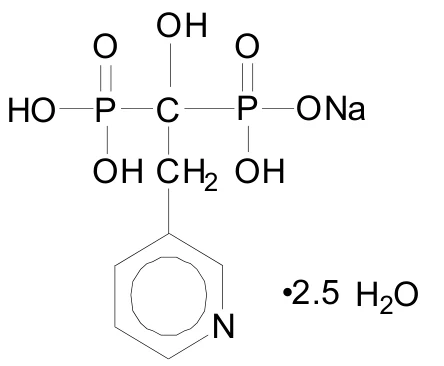
Proper name: risedronate sodium hemi-pentahydrate
Chemical name: Phosphonic acid, [1-hydroxy-2-(3-pyridinyl)ethylidene]bis-,monosodium salt
Molecular formula and molecular mass: C7H10NO7P2Na·2.5H2O
Anhydrous molecular weight: 305.10
Hemi-pentahydrate molecular weight: 350.13
Structural formula:
Physicochemical properties: Risedronate sodium is a fine white to off-white crystalline powder. Risedronate sodium is present in the form of hemi-pentahydrate with small amounts of monohydrate.
- Solubility: Risedronate sodium is soluble in pH 7.0 potassium phosphate dibasic solution, 0.1 N sodium hydroxide, and water; very slightly soluble in 0.1 N hydrochloric acid, practically insoluble in ethanol, and insoluble in isopropanol.
- Solution pH: The pH of a 1.0% aqueous solution of risedronate sodium is 4.15.
- Dissociation Constants: The five pKa values for risedronate sodium are as follows: pK1 = 1.6 ± 0.2, pK2 = 2.2 ± 0.2, pK3 = 5.9 ± 0.1, pK4 = 7.1 ± 0.1 and pK5 = 11.7 ± 0.3.
14. Clinical Trials
14.1. Clinical Trials by Indication
Treatment of Osteoporosis in Postmenopausal Women
Table 7 - Summary of patient demographics for clinical trials of ACTONEL and ACTONEL DR in The Treatment of Osteoporosis in Postmenopausal Women
| Study # | Study design | Dosage, route of administration and duration | Study subjects (n) | Mean age (Range) | Daily Supplement** | |||||||||
| Study # | Study design | Dosage, route of administration and duration | Study subjects (n) | Mean age (Range) | Daily Supplement** | |||||||||
| Vitamin D | ||||||||||||||
| Vitamin D | ||||||||||||||
1 VERT-MN | R, PC, DB, MC, PG | 2.5 mg/day – 2 years 5 mg/day – 3 years Placebo – 3 years Oral administration | 1226 | 71.0 (48-85) | ≤ 500IU | |||||||||
2 VERT-NA | R, PC, DB, MC, PG | 2.5 mg/day – 1 year 5 mg/day – 3 years Placebo – 3 years Oral administration | 2458 | 68.6 (28-85) | ≤ 500 IU | |||||||||
| 3 | R, PC, DB, MC, PG | 2.5 mg/day, 5 mg/day or Placebo Oral administration 2 years | 543 | 64.7 (45-80) | - | |||||||||
| 4 | R, PC, DB, MC, PG | 2.5 mg/day, 5 mg/day or Placebo Oral administration 12-18 months | 648 | 62.5 (39-80) | - | |||||||||
| 5 | R, AC, DB, MC, PG | 5 mg/day, 35 mg/week* or 50 mg/week* Oral administration 12 months | 1456 | 67.9 (48-95) | ≤ 500 IU | |||||||||
| 6 | R, AC, DB, MC, PG | 5 mg/day or 35 mg/week*† Oral administration 24 months | 922 | 65.7 (50-87) | 800 – 1000 IU | |||||||||
| 7 | R, AC, DB, MC, PG | 5 mg/day or 150 mg once/month* Oral administration 12 months | 1292 | 64.9 (50-88) | 400-500 to 1000 IU | |||||||||
R=randomized; AC = active-controlled; PC=placebo-controlled; DB = double-blind; MC = multicentre; PG = parallel-group * Placebo on other days of treatment; † 35 mg enteric-coated following breakfast and before breakfast; ** patients in these studies were supplemented with 1000 mg elemental calcium/day | ||||||||||||||
In Studies 1 and 2, patients were selected on the basis of radiographic evidence of previous vertebral fracture, and had established disease. The average number of prevalent vertebral fractures per patient at study entry was 4 in Study 1, and 2.5 in Study 2, with a broad range of baseline BMD levels. All fractures (symptomatic/painful/clinical vertebral fractures and asymptomatic/nonpainful/silent vertebral fractures) were systematically captured and measured by annual radiographs.
In Studies 3 to 5 postmenopausal women were recruited on the basis of low lumbar spine bone mass (i.e., more than 2 SD below the premenopausal mean) rather than a history of vertebral fracture.
In Studies 5 to 7, patients had either lumbar spine bone mass more than 2.5 SD below the premenopausal mean, or lumbar spine bone mass more than 2.0 SD below, and a prevalent vertebral fracture.
Patients with active or a history of upper gastrointestinal disorders at baseline and those taking ASA, NSAIDs or drugs usually used for the treatment of peptic ulcers were not specifically excluded from participating in the ACTONEL daily, weekly or monthly or ACTONEL DR weekly dosing osteoporosis studies.
Study Results
Results of Studies 1 and 2:
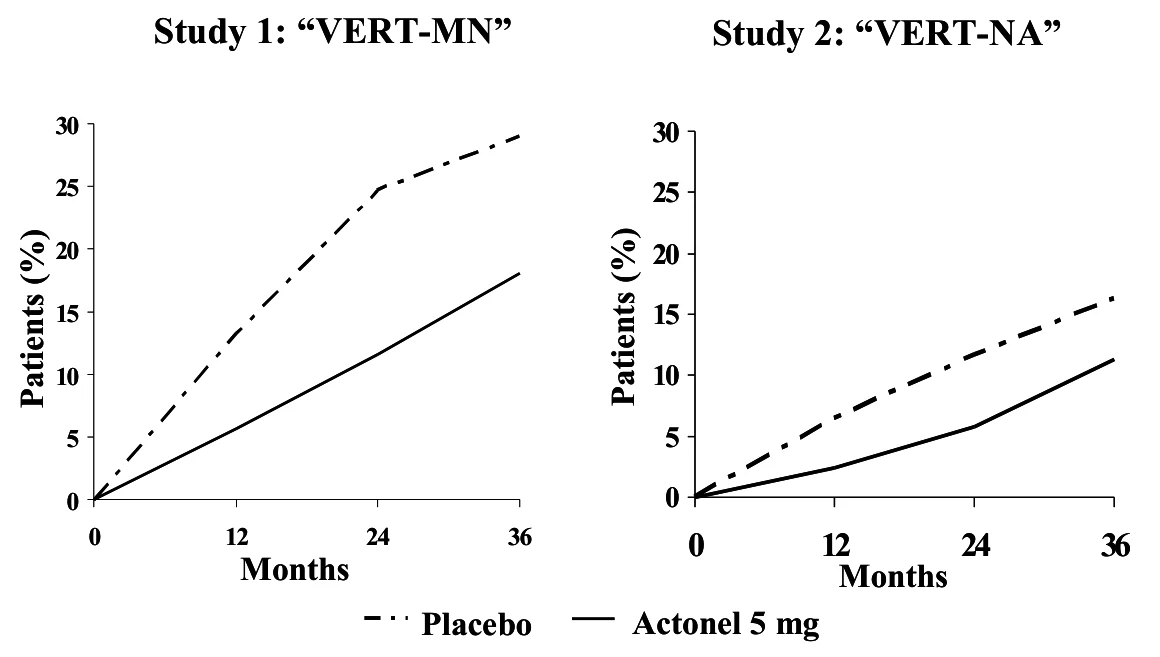
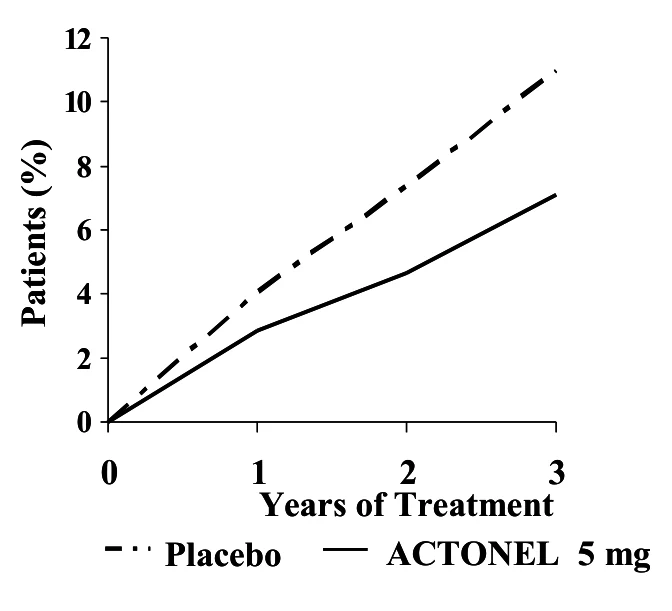
The pivotal studies of ACTONEL in the treatment of postmenopausal osteoporosis clearly demonstrate that ACTONEL 5 mg daily reduces vertebral fracture incidence in patients with low bone mass and vertebral fractures, regardless of age, years since menopause or disease severity at baseline. ACTONEL 5 mg daily significantly reduced the risk of new vertebral fractures in each of the two large treatment studies. When measured by annual radiographs, the effect of ACTONEL 5 mg daily on vertebral fracture incidence was seen at the first year of treatment in each study. In the North American study, treatment with ACTONEL 5 mg daily for 1 year significantly reduced the risk of new vertebral fractures by 65% compared to treatment with placebo (p < 0.001). In the Multinational study, a similar significant reduction of 61% was seen (p = 0.001). Treatment with ACTONEL 5 mg daily also significantly reduced the proportion of patients experiencing new and worsening vertebral fractures in each of the studies. Figure 1 and Figure 2 below display the cumulative incidence of vertebral and nonvertebral fractures (i.e., hip, wrist, humerus, clavicle, pelvis and leg). In both figures, the cumulative incidence of these types of fractures is lower with ACTONEL compared with placebo at all time points, consistent with the positive effect of ACTONEL on bone strength.
Table 8 - Effect of ACTONEL on Fracture, Height and Bone Mineral Density in the Treatment of Osteoporosis in Postmenopausal Women
| Endpoints | ACTONEL 5 mg | Placebo | Mean Difference from Placebo | Relative Risk Reduction % | p-value | |||||||||
|---|---|---|---|---|---|---|---|---|---|---|---|---|---|---|
| Study 1: VERT-MN | ||||||||||||||
| Cumulative incidence of new vertebral fracture over 3 years (% of patients) | 18.1 | 29.0 | 49 | <0.001 | ||||||||||
| Median annual height changea (mm/yr) | -1.33 | -2.4 | 0.003 | |||||||||||
| Mean increase in BMD (%) | ||||||||||||||
| 6 months Lumbar Spine | 3.3 | -0.1 | 3.4 | <0.001 | ||||||||||
| 36 months Lumbar Spine | 7.1 | 1.3 | 5.9 | <0.001 | ||||||||||
| Femoral Neck | 2.0 | -1.0 | 3.1 | <0.001 | ||||||||||
| Trochanter | 5.1 | -1.3 | 6.4 | <0.001 | ||||||||||
| 36 months Midshaft Radius | 0.5 | -1.9 | 2.4 | <0.001 | ||||||||||
| Study 2: VERT-NA | ||||||||||||||
| Cumulative incidence of new vertebral Fracture over 3 years (% of patients) | 11.3 | 16.3 | 41 | 0.003 | ||||||||||
| Median annual height changea (mm/yr) | -0.67 | -1.14 | 0.001 | |||||||||||
| Mean increase in BMD (%) | ||||||||||||||
| 6 months Lumbar Spine | 2.7 | 0.4 | 2.2 | <0.001 | ||||||||||
| 36 months Lumbar Spine | 5.4 | 1.1 | 4.3 | <0.001 | ||||||||||
| Femoral Neck | 1.6 | -1.2 | 2.8 | <0.001 | ||||||||||
| Trochanter | 3.3 | -0.7 | 3.9 | <0.001 | ||||||||||
| 36 months Midshaft Radius | 0.2 | -1.4 | 1.6 | <0.001 | ||||||||||
| Prospectively Combined Studies 1 and 2: VERT-MN and VERT-NA | ||||||||||||||
| Cumulative incidence of non-vertebral fractureb over 3 years (% of patients) | 7.1 | 11.0 | 36 | 0.005 | ||||||||||
a Measured by stadiometer b Osteoporosis-related non-vertebral fractures (hip, wrist, humerus, clavicle, pelvis, and leg) | ||||||||||||||
Figure 1 - Cumulative New Vertebral Fracture Incidence in Postmenopausal Women with Osteoporosis
Figure 2 - Cumulative Incidence of Osteoporosis-Related Non-vertebral Fractures Studies 1 and 2 Combined
ACTONEL 5 mg daily was associated with a significant reduction of about 50% in the annual rate of height loss compared to treatment with placebo.
ACTONEL 5 mg daily produced increases in lumbar spine BMD which were progressive over the 3 years of treatment, and were statistically significant relative to baseline and to placebo at 6 months and at all later time points (12, 18, 24 and 36 months).
Results of Studies 3 and 4:
Table 9 - Effect of ACTONEL on Bone Mineral Density in the Treatment of Osteoporosis in Postmenopausal Women
| Endpoints | ACTONEL 5 mg Daily Mean Increase in BMD % | Placebo Mean Increase in BMD % | Mean Difference from Placebo % | |||||
|---|---|---|---|---|---|---|---|---|
| Study 3 | ||||||||
| 6 months Lumbar Spine | 3.3 | 0.4 | 2.8** | |||||
| 24 months Lumbar Spine | 4.1 | 0.0 | 4.1** | |||||
| Femoral Neck | 1.3 | -1.0 | 2.3* | |||||
| Trochanter | 2.7 | -0.6 | 3.3** | |||||
| Study 4 | ||||||||
| 6 months Lumbar Spine | 3.3 | 0.7 | 2.6** | |||||
| 18 months Lumbar Spine | 5.2 | 0.3 | 5.0** | |||||
| Femoral Neck | 3.1 | 0.2 | 2.8** | |||||
| Trochanter | 4.8 | 1.4 | 3.3** | |||||
| vs. placebo: *p<0.01; **p<0.001 | ||||||||
In Studies 3 and 4, ACTONEL 5 mg daily produced significant mean increases in BMD of the lumbar spine compared to placebo at 6 months in women with low bone mass. Compared to placebo after 1.5 to 2 years, further significant mean increases in BMD were seen at the lumbar spine, femoral neck and trochanter.
The results of four large, randomized, placebo-controlled trials (Studies 1 to 4) in women with postmenopausal osteoporosis separately and together demonstrate that ACTONEL 5 mg daily reverses the progression of disease, increasing BMD at the spine, hip and wrist compared to the effects seen with placebo.
Results of Study 5:
Table 10 - Comparison of ACTONEL Once–a-Week vs. Daily Dosing in the Treatment of Osteoporosis in Postmenopausal Women – Primary Efficacy Analysis of Completers
| Endpoints | ACTONEL 5 mg Daily Mean Increase in BMD % (95% Confidence Interval) | ACTONEL 35 mg Once-a-Week Mean Increase in BMD % (95% Confidence Interval) |
|---|---|---|
| n = 391 | n = 387 | |
| 12 months Lumbar Spine | 4.0 (3.7, 4.3) | 3.9 (3.6, 4.3) |
The results of the intent-to-treat analysis with the last observation carried forward were consistent with the primary efficacy analysis of completers. There were also no statistically significant differences between the two treatment groups at 1 year in regards to BMD increases from baseline at other skeletal sites (total proximal femur, femoral neck and femoral trochanter). Based on these BMD outcomes, ACTONEL 35 mg Once-a-Week was concluded to be non-inferior to ACTONEL 5 mg daily.
In trials with ACTONEL 5 mg daily, changes in BMD of this magnitude were associated with a significant decrease in fracture incidence relative to placebo (see Table 8). This is further supported by the fact that within the 1-year study comparing ACTONEL 35 mg Once-a-Week to ACTONEL 5 mg daily, no statistically significant differences amongst these treatment groups were seen with respect to the number of patients with at least 1 new fractured vertebra at 1 year.
ACTONEL 35 mg taken once a week is similar in safety and efficacy to ACTONEL 5 mg daily for the treatment of postmenopausal osteoporosis.
Results of Study 6:
Table 11 - Comparison of ACTONEL DR Weekly vs. ACTONEL Daily Dosing in the Treatment of Osteoporosis in Postmenopausal Women – Primary Efficacy Analysis*
| Endpoints | ACTONEL 5 mg Daily Mean Increase in BMD % (95% Confidence Interval) | ACTONEL DR 35 mg Weekly following breakfast Mean increase in BMD % (95% Confidence Interval) | ||||
|---|---|---|---|---|---|---|
| n=307 | n=307 | |||||
| 12 months* Lumbar Spine | 3.1** (2.7, 3.5) | 3.3** (2.9, 3.7) | ||||
| 24 months† Lumbar Spine | 4.1** (3.7, 4.6) | 5.2** (4.7, 5.7) | ||||
*Last available observation on or prior to month 12, †Last available observation on or prior to month 24 ** Indicates a statistically significant difference from baseline determined from 95% CI unadjusted for multiple comparisons. | ||||||
In a 2-year, double-blind, multicentre study of postmenopausal women with osteoporosis, ACTONEL DR 35 mg weekly was statistically shown to be non-inferior to ACTONEL 5 mg administered daily. At all time points, increases in BMD were statistically significant (p<0.05) compared to baseline for all sites measured.
At 1 year, ACTONEL DR 35 mg weekly was shown to be non-inferior to the ACTONEL 5 mg daily regimen for the primary efficacy variable of percent change from baseline of lumbar spine BMD. The two treatment groups were also similar with regard to percent change from baseline BMD at the total proximal femur, greater trochanter and femoral neck.
At 2 years, there were statistically significant greater increases (p<0.05; unadjusted for multiple comparisons) in mean percent change from baseline BMD at the total proximal femur for ACTONEL DR 35 mg weekly following breakfast (2.8) compared to ACTONEL 5 mg daily (2.2). This statistically significant difference at 2 years was also observed at the lumbar spine (see Table 11). The treatment groups were similar with regard to percent change from baseline BMD at the femoral neck.
At 2 years, a statistically significant greater (p<0.05) percentage of patients in the ACTONEL DR 35 mg weekly group (89%) were considered responders (i.e., change from baseline in lumbar spine >0%) compared to the ACTONEL 5 mg group (82%).
Results of Study 7:
Table 12 - Comparison of ACTONEL Once-a-Month vs. Daily Dosing in the Treatment of Osteoporosis in Postmenopausal Women – Primary Efficacy Analysis
| Endpoints | ACTONEL 5 mg Daily Mean Increase in BMD % (95% Confidence Interval) | ACTONEL 150 mg Once-a-Month Mean Increase in BMD % (95% Confidence Interval) | ||
|---|---|---|---|---|
| n = 561 | n = 578 | |||
| 12 months (using LOCF*) Lumbar Spine | 3.4 (3.0, 3.8) | 3.5 (3.1, 3.9) | ||
| * LOCF: last observation carried forward | ||||
In the first year of a 2-year, double-blind, multicentre study of postmenopausal women with osteoporosis, ACTONEL 150 mg Once-a-Month was shown to be non-inferior to ACTONEL 5 mg daily. ACTONEL 150 mg Once-a-Month was statistically shown to be non-inferior to the ACTONEL 5 mg daily regimen for the primary efficacy variable of percent change from baseline to 1 year in increasing lumbar spine BMD. The two treatment groups were similar with regard to BMD increases at the lumbar spine, total proximal femur, femoral neck and femoral trochanter. The incidence of vertebral and non-vertebral fractures, reported as adverse events, was similar in the two treatment groups. ACTONEL 150 mg Once-a-Month is similar in safety and efficacy to ACTONEL 5 mg daily for the treatment of postmenopausal osteoporosis. The safety and efficacy of ACTONEL 150 mg Once-a-Month is currently being assessed beyond one year of treatment.
Histology/Histomorphometry: Histomorphometric evaluation of 278 bone biopsy samples from 204 postmenopausal women who received ACTONEL 5 mg or placebo once daily for 2 to 3 years (including 74 pairs of biopsies, 43 from ACTONEL-treated patients) showed a moderate and expected decrease in bone turnover in ACTONEL-treated women.
Histologic assessment showed no osteomalacia, impaired bone mineralization, or other adverse effects on bone in ACTONEL-treated women. These findings demonstrate that the bone formed during ACTONEL administration is of normal quality.
Prevention of Osteoporosis in Postmenopausal Women
Table 13 - Summary of patient demographics for clinical trials of ACTONEL in The Prevention of Osteoporosis in Postmenopausal Women
| Study # | Study design | Dosage, route of administration and duration | Study subjects (n) | Mean age (Range) | Daily Supplement | |||||||||
| Elemental calcium | Vitamin D | |||||||||||||
| 8 | R, PC, DB, MC, PG | 2.5 mg/day or 5 mg/day Oral administration 2 years | 383 | 52.7 (42-63) | 1000 mg | - | ||||||||
| 9 | R, PC, DB, MC, PG | 35 mg/week Oral administration 1 year | 280 | 53.6 (44-64) | 1000 mg | 400 IOU | ||||||||
| ||||||||||||||
Women in Study 8 were within 3 years of menopause and all patients in this study received supplemental calcium 1000 mg/day. Study 9 included women who were 0.5 to 5 years postmenopausal without osteoporosis. All patients were supplemented with 1000 mg elemental calcium and 400 IU vitamin D per day.
Results of Study 8:
Table 14 - Effect of ACTONEL 5 mg Daily on Bone Mineral Density in Postmenopausal Women without Osteoporosis
| Endpoints | ACTONEL 5 mg Mean Increase in BMD % | Placebo Mean Increase in BMD % | Mean Difference from Placebo % | |||||
|---|---|---|---|---|---|---|---|---|
| 24 months Lumbar Spine | 2.0 | -2.5 | 4.5* | |||||
| Femoral Neck | 1.0 | -2.3 | 3.3* | |||||
| Trochanter | 2.3 | -2.0 | 4.3* | |||||
| * vs. placebo: p<0.001 | ||||||||
Increases in BMD were observed as early as 3 months following initiation of ACTONEL treatment. Prevention of spinal bone loss was observed in the vast majority of women who received ACTONEL treatment. In contrast, most placebo-treated women experienced significant and progressive bone loss, despite receiving supplemental calcium 1000 mg/day. ACTONEL 5 mg daily was similarly effective in patients with lower baseline BMD (i.e., more than 1 SD below the premenopausal mean) and in those with higher BMD.
Results of Study 9:
Table 15 - Effect of ACTONEL 35 mg Once-a-Week on Bone Mineral Density in Postmenopausal Women without Osteoporosis
| Endpoints | ACTONEL 35 mg Once-a-Week Mean Increase in BMD % | Placebo Mean Increase in BMD % | Mean Difference from Placebo % | |||||
|---|---|---|---|---|---|---|---|---|
| 6 months Lumbar Spine | 1.7 | -0.5 | 2.2* | |||||
| Trochanter | 1.0 | -0.4 | 1.3* | |||||
| Femoral Neck | 0.4 | -1.0 | 1.4* | |||||
| 12 months Lumbar Spine | 1.9 | -1.1 | 3.0* | |||||
| Trochanter | 1.0 | -0.7 | 1.7* | |||||
| Femoral Neck | 0.3 | -1.0 | 1.3** | |||||
| vs. placebo: *p<0.0001; ** p=0.0041 | ||||||||
Combined Administration with Hormone Replacement Therapy
Table 16 - Summary of patient demographics for clinical trials of ACTONEL in Combined Administration with Hormone Replacement Therapy
| Study # | Study design | Dosage, route of administration and duration | Study subjects (n) | Mean age (Range) | Gender | ||||||
| 10 | R, PC, DB, MC, PG stratified | 5 mg/day and oral conjugated estrogen 0.625 mg/day Placebo and conjugated estrogen 0.625 mg/day Oral administration 1 year | 524 | 58.9 (37-82) | Postmenopausal female | ||||||
| R: randomized; PC: placebo-controlled; DB: double-blind; MC: multicentre; PG: parallel-group | |||||||||||
- -menopausal mean and had recently initiated conjugated estrogen treatment (i.e., not taken estrogen for more than 1 month in the past year).
Table 17 - Effect of ACTONEL on Bone Mineral Density in Combination Therapy with Conjugated Estrogen
| Endpoints | ACTONEL 5 mg Daily and Conjugated Estrogen Mean increase in BMD (%) | Conjugated Estrogen Mean increase in BMD (%) | |||||
|---|---|---|---|---|---|---|---|
| 12 months Lumbar Spine | 5.2 | 4.6 | |||||
| Femoral Neck | 2.7* | 1.8 | |||||
| Trochanter | 3.7 | 3.2 | |||||
| Midshaft Radius | 0.7* | 0.4 | |||||
All values represent significant (p<0.05) change vs. baseline. vs. conjugated estrogen alone: *p≤0.05 | |||||||
- deoxypyridinoline/creatinine, was significantly greater in the combined ACTONEL 5 mg daily plus estrogen group compared to the estrogen alone group (45-50% vs. 40%) and remained within the premenopausal range.
- received either placebo or ACTONEL 5 mg daily for 1 year (including 32 pairs of biopsies, 16 from ACTONEL-treated patients) found decreases in bone turnover in the ACTONEL-treated patients that were consistent with the changes in BTMs. Bone histology demonstrated that the bone of patients treated with ACTONEL plus estrogen was of normal lamellar structure and normal mineralization.
Treatment of Osteoporosis in Men, to Improve Bone Mineral Density
Table 18 - Summary of Patient Demographics for Clinical Trial of ACTONEL in Treatment of Osteoporosis in Men, to Improve Bone Mineral Density
| Study # | Study design | Dosage, route of administration and duration | Study subjects (n) | Mean age (Range) | Daily Supplement | ||||||||
| Elemental calcium | Vitamin D | ||||||||||||
| 11 | R, PC, DB, MC, PG | 35 mg/week Placebo Oral administration 2 years | 191 93 | 60.8 (36-84) | 1000 mg | 400-500 IU | |||||||
| |||||||||||||
Patients with active or a history of upper gastrointestinal disorders at baseline and those taking ASA, NSAIDs, or drugs traditionally used for the treatment of peptic ulcers were not specifically excluded from participating in the 2-year male osteoporosis study.
Results of Study 11:
ACTONEL 35 mg Once-a-Week demonstrated efficacy in men with osteoporosis, as measured by change in BMD. All patients in this study received supplemental calcium 1000 mg/day and vitamin D 400-500 IU/day. ACTONEL 35 mg produced significant mean increases in BMD at the lumbar spine, femoral neck, trochanter and total hip compared to placebo in a 2 year study (lumbar spine, 4.5%; femoral neck, 1.1%; trochanter, 2.2%; total hip, 1.5%). Statistically significant increases in lumbar spine BMD were observed within 6 months following initiation of ACTONEL treatment. Lumbar spine BMD percent change from baseline at Months 6, 12 and 24 showed that the ACTONEL 35 mg Once-a-Week group had a statistically significant increase in mean percent change from baseline versus placebo at all time points (see Figure 3).
Figure 3 – Mean Percent Change from Baseline in Lumbar Spine BMD at all Time Points (Intent-to-Treat Population)
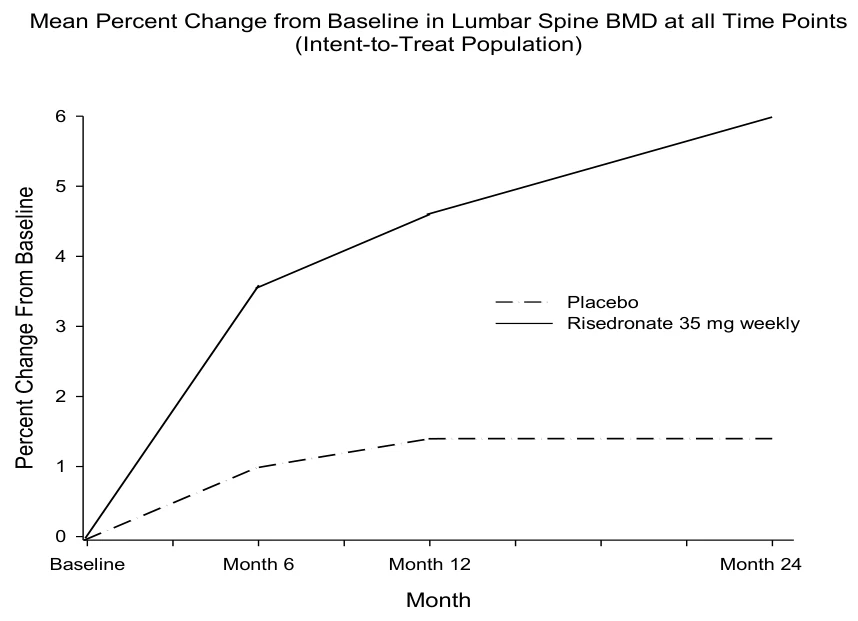
Glucocorticoid-Induced Osteoporosis
Study Demographics and Trial Design
Table 19 Summary of Patient Demographics for Clinical Trials of ACTONEL in the Prevention and Treatment of Glucocorticoid-Induced Osteoporosis
| Study # | Study design | Dosage, route of administration and duration | Study subjects (n) | Mean age (Range) | Gender |
12 (Recent GC) | DB, PC | 5 mg/day Placebo Oral administration 1 year | 228 | 59.5 (18-85) | Men and women |
13 (Long-term GC) | DB, PC | 5 mg/day Placebo Oral administration 1 year | 290 | 58.4 (19-85) | Men and women |
| |||||
In Study 12, each patient had initiated glucocorticoid therapy (> 7.5 mg/day of prednisone or equivalent) within the previous 3 months for rheumatic, skin and pulmonary diseases. The mean lumbar spine BMD was normal at baseline. All patients in this study received supplemental calcium 500 mg/day.
Long-term use in Study 13 was defined as > 6 months of glucocorticoids for rheumatic, skin and pulmonary diseases. The baseline mean lumbar spine BMD was low (1.63 SD below the young healthy population mean), with 28% of the patients more than 2.5 SD below the mean. All patients in this study received supplemental calcium 1000 mg/day and supplemental vitamin D 400 IU/day.
Results of Studies 12 and 13:
Table 20 Change in Bone Mineral Density at 12 months from Baseline in Patients Taking Glucocorticoid Therapy
| Endpoints | ACTONEL 5 mg Mean Change in BMD % | Placebo Mean Change in BMD % | Least Squares Mean Difference from Placebo % | |||||||||
|---|---|---|---|---|---|---|---|---|---|---|---|---|
| Study 12: Recent GC | N = 58-60 | N = 56-57 | ||||||||||
| Lumbar Spine | 0.6 | -2.8 | 3.8** | |||||||||
| Femoral Neck | 0.8 | -3.1 | 4.1** | |||||||||
| Trochanter | 1.4 | -3.1 | 4.6** | |||||||||
| Study 13: Long-term GC | N = 77-79 | N = 66-67 | ||||||||||
| Lumbar Spine | 2.9 | 0.4 | 2.7** | |||||||||
| Femoral Neck | 1.8 | -0.3 | 1.9* | |||||||||
| Trochanter | 2.4*** | 1.0 | 1.4* | |||||||||
| GC = glucocorticoid; *p<0.01 vs. placebo: **p<0.001 vs placebo; *** p<0.05 vs baseline | ||||||||||||
By the third month of treatment, and continuing through treatment, the placebo group experienced losses in BMD at the lumbar spine, femoral neck and trochanter, while BMD was maintained or increased in the ACTONEL 5 mg group. At each skeletal site there were statistically significant differences between the ACTONEL 5 mg group and the placebo group at all time points (Months 3, 6, 9, 12). The treatment differences increased with continued treatment. The results at these skeletal sites were also statistically significant when the subgroups of men and postmenopausal women were analyzed separately.
ACTONEL was effective and prevented bone loss regardless of underlying disease, age, gender, glucocorticoid dose or baseline BMD.
Vertebral Fractures: Vertebral fractures were monitored for safety in the two placebo-controlled studies.
Table 21 Incidence of Vertebral Fracture in Patients Initiating or Continuing Glucocorticoid Therapy
| Endpoints | ACTONEL 5 mg Daily | Placebo | |||||||
|---|---|---|---|---|---|---|---|---|---|
| N | % of patients | N | % of patients | ||||||
| Study 12: Recent GC | 53 | 6 | 52 | 17 | |||||
| Study 13: Long-term GC | 58 | 5 | 59 | 15 | |||||
| Combined Studies 12 and 13 | 111 | 5* | 111 | 16 | |||||
| GC = glucocorticoid; *p≤0.05 vs placebo | |||||||||
The statistically significant reduction in vertebral fracture incidence in the analysis of the combined studies corresponded to a relative risk reduction of 70%.
Histology/Histomorphometry: Histomorphometric evaluation of 70 bone biopsy samples from 48 patients on glucocorticoid therapy who received either placebo or ACTONEL 5 mg daily for 1 year (including 22 pairs of biopsies, 16 from ACTONEL-treated patients) indicated that ACTONEL reduces bone resorption and produces a mild-to-moderate decrease in the rate of bone turnover. The rate of bone formation was preserved or increased and there was no evidence of impaired mineralization. The structure of the cortical bone (cortical thickness and porosity) was maintained in the ACTONEL-treated patients; cortical porosity increased, however, in the placebo group. These findings indicate that bone formed during ACTONEL treatment is of normal quality.
Bone histology demonstrated that bone formed during treatment with ACTONEL was of normal lamellar structure and normal mineralization, with no bone or marrow abnormalities observed.
Paget’s Disease of Bone
Table 22 Summary of Patient Demographics for Clinical Trials in the Treatment of Paget’s Disease of Bone
| Study # | Study design | Dosage, route of administration and duration | Study subjects (n) | Mean age (Range) | Gender |
| 14 | DB, AC | ACTONEL 30 mg for 2 months DIDRONEL 400 mg for 6 months Oral administration | 123 | 66.8 (34-85) | Men and women |
| 15 | AC | Risedronate 10, 20 or 30 mg for 28 days Oral administration | 62 | 67.7 | Men and women |
| 16 | OL | Risedronate 30 mg Oral administration | 162 | 68.4 | Men and women |
| 17 | OL | Risedronate 30 mg Oral administration | 13 | 68.2 | Men and women |
| 18 | OL | Risedronate 30 mg Oral administration | 20 | 74.0 | Men and women |
| 19 | OL | Risedronate 30 mg Oral administration | 73 | 69 | Men and women |
| |||||
Patients in Study 14 had moderate-to-severe Paget's disease (i.e., serum alkaline phosphatase levels of at least two times the upper limit of normal). The efficacy of ACTONEL 30 mg daily was demonstrated in six clinical studies involving over 390 male and female patients.
Results of Study 14:
Figure 4 below shows that at Day 180, 77% (43/56) of ACTONEL-treated patients achieved normalization of serum alkaline phosphatase levels compared to 10.5% of patients treated with DIDRONEL (p < 0.001). For 33 of these 43 patients (77%), the remission (i.e., normalization of serum alkaline phosphatase) induced by ACTONEL treatment was maintained through at least 300 days of post-treatment observation.
Figure 4 Percent of Patients with Normalized Serum Alkaline Phosphatase vs. Time
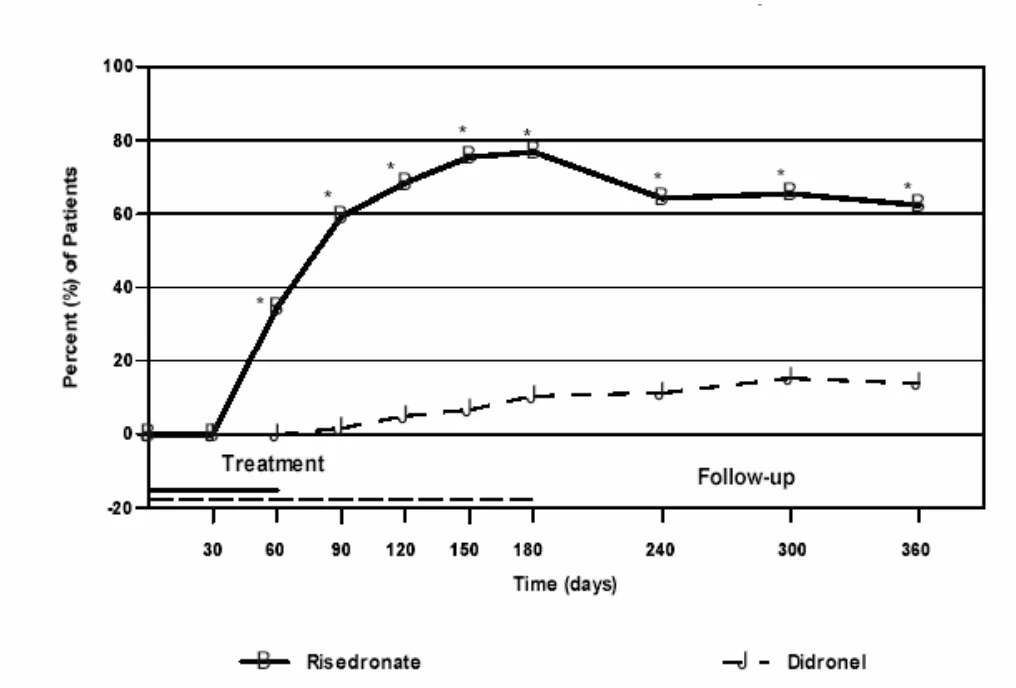
p-value <0.001
During the first 180 days of the active-controlled study, 85% (51/60) of ACTONEL-treated patients demonstrated a ≥ 75% reduction from baseline in serum alkaline phosphatase excess (difference between measured level and midpoint of the normal range) with 2 months of treatment compared to 20% (12/60) in the DIDRONEL-treated group with 6 months of treatment (p < 0.001). Changes in serum alkaline phosphatase excess over time (shown in Figure 5 below) reveal that the onset of the effect of ACTONEL is significant following only 30 days of treatment, with a 36% reduction in serum alkaline phosphatase excess at that time compared to only 6% seen with DIDRONEL treatment at the same time point (p < 0.001).
Figure 5 Mean Percent from Baseline in Serum Alkaline Phosphatase Excess by Visit, Study RPD-001694
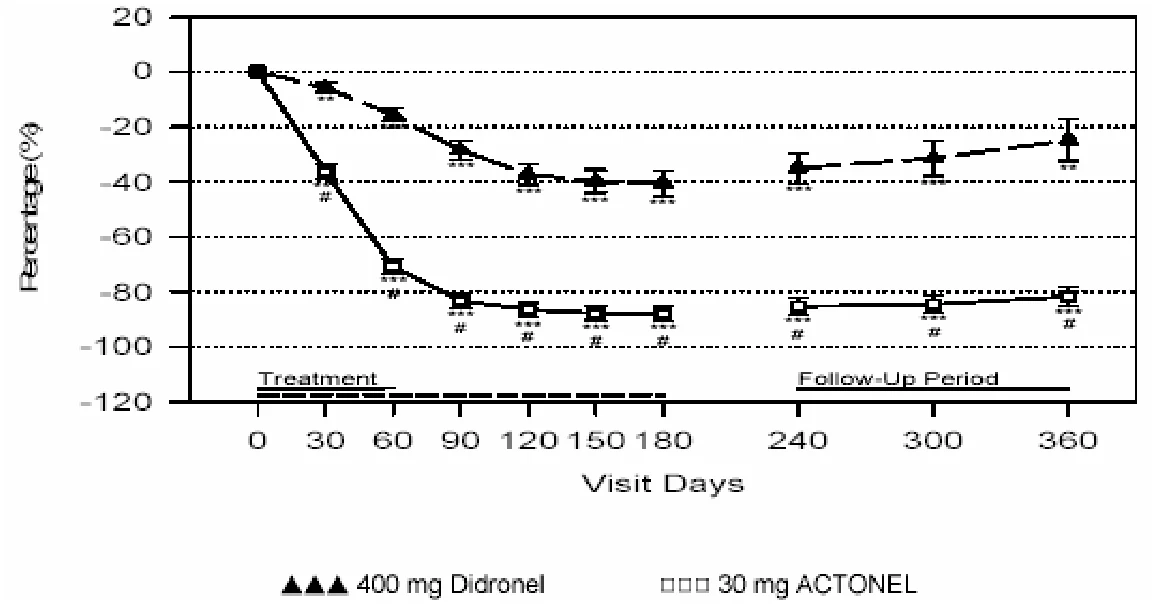
# p-value <0.05, significant difference between treatments based on a three-way ANOVA model *, **, *** Significant change from baseline (p<0.050, 0.010, 0.001, respectively), based on a one-sample t-test
Response to ACTONEL therapy was independent of age, gender, or race and was similar in patients with mild to very severe Paget's disease. Table 23 below shows the maximum mean percent reduction from baseline in excess serum alkaline phosphatase in patients with mild, moderate, or severe disease.
Table 23 Maximum Percent Reduction from Baseline in Total Serum Alkaline Phosphatase (AP) Excess by Disease Severity – 30 mg ACTONEL
Subgroup: Baseline Disease Severity (AP) | N | Baseline Serum AP (U/L)* | Mean Maximum % Reduction | |||
|---|---|---|---|---|---|---|
> 2, < 3 x ULN ≥ 3, < 7 x ULN ≥ 7 x ULN | 32 14 17 | 271.6 ± 5.3 475.3 ± 28.8 1611.3 ± 231.5 | -90.2 -90.4 -80.9 | |||
| * values shown are mean ± SEM; ULN = upper limit of normal | ||||||
Results of Study 15:
Response to ACTONEL was similar between patients who had previously received anti-pagetic therapy and those who had not. In the active-controlled study, four out of five patients (80%) previously non-responsive to complete courses of anti-pagetic therapy (calcitonin, DIDRONEL, clodronate) responded to treatment with ACTONEL 30 mg daily (defined by at least a 30% change from baseline). Of these four patients, all achieved at least 90% reduction from baseline in serum alkaline phosphatase excess with three patients achieving normalization of serum alkaline phosphatase levels. ACTONEL does not impair mineralization. Histology data showed that the bone formed during ACTONEL treatment was lamellar and of normal quality.
Radiographs taken at baseline and after 6 months from patients treated with ACTONEL 30 mg daily demonstrate that ACTONEL is highly effective in decreasing the extent of osteolysis across all anatomical sites including the appendicular and axial skeleton. Importantly, osteolytic lesions in the lower extremities improved or were unchanged in 15/16 (94%) of assessed patients; 9/15 (60%) patients showed clear improvement in osteolytic lesions. No evidence of new fractures was observed.
15. Microbiology
No microbial information is required for this drug product.
16. Non-Clinical Toxicology
General toxicology
Acute Toxicity: Lethality after single oral doses was seen in female rats at 903 mg/kg (5826 mg/m2) and male rats at 1703 mg/kg (10967 mg/m2). The minimum lethal dose in mice, rabbits, and dogs was 4000 mg/kg (10909 mg/m2), 1000 mg/kg (10870 mg/m2), and 128 mg/kg (2560 mg/m2), respectively. These values represent 140 to 620 times the human 30 mg dose based on surface area, mg/m2.
Chronic Toxicity: In a 1-year daily repeat dose toxicity study in dogs, the limiting toxicity of risedronate was observed at 8 mg/kg/day (160 mg/m2) and consisted of liver, testicular, renal, and gastrointestinal changes. Gastrointestinal effects at 16 mg/kg (111 mg/m2) were the first limiting toxicity in rats in a 26-week study. These doses are equivalent to approximately 6.25 to 9 times the human 30 mg dose based on surface area, mg/m2. In 6 month and 1-year monthly repeat dose toxicity studies in dogs, the limiting systemic toxicity of risedronate was observed at 32 mg/kg (640 mg/m2) and consisted of liver, testicular, and renal toxicities. Gastric lesions were observed at 16 mg/kg (320 mg/m2). These doses are equivalent to approximately 3.5 and 7 times the human 150 mg dose based on surface area, mg/m2.
A 13-week oral dog study was performed to evaluate the gastric and lower gastrointestinal toxicity and toxicokinetics of risedronate (8 and 16 mg/kg) when dosed with or without EDTA (2.5 and 12.5 mg/kg) following 14 once-weekly oral doses. No additional GI toxicity was observed with the addition of either dose of EDTA to either dose of risedronate. No new organs of toxicity were identified when dogs were treated with risedronate in combination with EDTA (vs risedronate alone). Treatment with EDTA alone was not associated with any treatment-related changes.
Co-administration of EDTA with 8 and/or 16 mg/kg risedronate was associated with potentiation of risedronate-mediated histologic alterations in the liver, kidneys, and testes (incidence and/or severity). Potentiation of toxicity was more evident at 12.5 mg/kg EDTA when compared with 2.5 mg/kg EDTA. With respect to expected pharmacological effects (e.g. increased bone), 12.5 mg/kg EDTA potentiated the severity of rib hypertrophy and the incidence of increased bone in nasal turbinates when administered in combination with 8 and 16 mg/kg risedronate (vs risedronate alone). These findings may be related to the observed increase in exposure noted when risedronate was administered in combination with EDTA.
Genotoxicity
In a series of seven in vitro and in vivo mutagenicity assays, risedronate was not genotoxic. An in vitro chromosomal aberration assay in Chinese hamster ovary cells was weakly positive at highly cytotoxic doses (> 675 µg/mL). However, when the assay was repeated at doses exhibiting increased cell survival (300 µg/mL), risedronate was negative.
Carcinogenicity
Three carcinogenicity studies in two species (mouse and rat) have been completed. All studies clearly showed dose-dependent bone pharmacologic effects. Risedronate was not carcinogenic in male or female rats dosed daily by gavage for 104 weeks at doses up to 24 mg/kg/day (12 times the human 30 mg dose based on surface area, mg/m2). Similarly, there was no evidence of a carcinogenic potential in male or female mice dosed daily by gavage for 80 weeks at doses up to 32 mg/kg/day (5 times the human 30 mg dose based on surface area, mg/m2).
Reproductive and developmental toxicology
In female rats, ovulation was inhibited at an oral dose of 16 mg/kg/day (approximately 5.2 times the 30 mg/day human dose based on surface area, mg/m2). Decreased implantation was noted in female rats treated with doses ≥ 7 mg/kg/day (approximately 2.3 times the 30 mg/day human dose based on surface area, mg/m2). In male rats, testicular and epididymal atrophy and inflammation were noted at 40 mg/kg/day (approximately 13 times the 30 mg/day human dose based on surface area, mg/m2). Testicular atrophy was also noted in male rats after 13 weeks of treatment at oral doses of 16 mg/kg/day (approximately 5.2 times the 30 mg/day human dose based on surface area, mg/m2). There was moderate-to-severe spermatid maturation block after 13 weeks in male dogs at an oral dose of 8 mg/kg/day (approximately 8 times the 30 mg/day human dose based on surface area, mg/m2). These findings tended to increase in severity with increased dose and exposure time.
Survival of neonates was decreased in rats treated during gestation with oral doses ≥ 16 mg/kg/day (approximately 5.2 times the 30 mg/day human dose based on surface area, mg/m2). Body weight was decreased in neonates from dams treated with 80 mg/kg (approximately 26 times the 30 mg/day human dose based on surface area, mg/m2). In rats treated during gestation, the number of fetuses exhibiting incomplete ossification of sternebrae or skull was statistically significantly increased at 7.1 mg/kg/day (approximately 2.3 times the 30 mg/day human dose based on surface area, mg/m2). Both incomplete ossification and unossified sternebrae were increased in rats treated with oral doses ≥ 16 mg/kg/day (approximately 5.2 times the 30 mg/day human dose based on surface area, mg/m2). A low incidence of cleft palate was observed in fetuses from female rats treated with oral doses ≥ 3.2 mg/kg/day (approximately 1 time the 30 mg/day human dose based on surface area, mg/m2). The relevance of this finding to human use of ACTONEL is unclear. No significant fetal ossification effects were seen in rabbits treated with oral doses up to 10 mg/kg/day during gestation (approximately 6.7 times the 30 mg/day human dose based on surface area, mg/m2). However, in rabbits treated with 10 mg/kg/day, 1 of 14 litters were aborted and 1 of 14 litters were delivered prematurely.
Similar to other bisphosphonates, treatment during mating and gestation with doses as low as 3.2 mg/kg/day (approximately 1 time the 30 mg/day human dose based on surface area, mg/m2) has resulted in periparturient hypocalcemia and mortality in pregnant rats allowed to deliver.
Bisphosphonates are incorporated into the bone matrix, from which they are gradually released over periods of weeks to years. The amount of bisphosphonate incorporation into adult bone, and hence, the amount available for release back into the systemic circulation, is directly related to the dose and duration of bisphosphonate use. There are no data on fetal risk in humans. However, there is a theoretical risk of fetal harm, predominantly skeletal, if a woman becomes pregnant after completing a course of bisphosphonate therapy. The impact of variables such as time between cessation of bisphosphonate therapy to conception, the particular bisphosphonate used, and the route of administration (intravenous versus oral) on this risk has not been studied.