Patient Medication Information: uses, side effects, how to take - Adlyxine (Sanofi-Aventis Canada, 10 mcg, 20 mcg)
What is ADLYXINE used for?
ADLYXINE is used along with diet and exercise to improve control of blood sugar levels in adults with type 2 diabetes. It is used in combination with the following medicines when these medicines no longer provide enough control of blood sugar levels on their own:
- metformin
- a sulfonylurea (alone or with metformin)
- pioglitazone (alone or with metformin)
- a basal insulin (alone or with metformin)
How does ADLYXINE work?
- ADLYXINE belongs to a class of medicines called glucagon-like peptide-1 (GLP-1) receptor agonists.
- ADLYXINE helps your body release more insulin when your blood sugar level is high.
- This helps to improve control of your blood sugar levels
What are the ingredients in ADLYXINE?
Medicinal ingredients: lixisenatide
Non-medicinal ingredients: glycerol, hydrochloric acid / sodium hydroxide solution for pH adjustment, metacresol, methionine, sodium acetate trihydrate, water for injection
ADLYXINE comes in the following dosage forms:
solution for injection, 0.05 mg per mL (10 mcg/dose) and 0.1 mg per mL (20 mcg/dose)
Do not use ADLYXINE if you:
- are allergic to lixisenatide or any of the non-medicinal ingredients in ADLYXINE
- have type 1 diabetes
- have diabetic ketoacidosis (a serious complication of diabetes)
are pregnant, or are planning to become pregnant
- are breastfeeding, or are planning to breastfeed
- are under 18 years of age
To help avoid side effects and ensure proper use, talk to your healthcare professional before you take ADLYXINE. Talk about any health conditions or problems you may have, including if you:
- have or have had inflammation of the pancreas known as pancreatitis;
have stones in your gallbladder (gallstones), high levels of fat in your blood (hypertriglyceridemia) or if you abuse alcohol;
- have severe gastrointestinal disease including a condition called gastroparesis;
- have or have had an inflammatory bowel disease like Crohn disease or ulcerative colitis;
- have had or will have surgery on your stomach or intestines;
- have any heart problems or heart rhythm disturbances such as fast pulse or irregular heart rhythm;
- are taking a sulfonylurea. Taking ADLYXINE with a sulfonylurea can increase your risk of having low blood sugar known as hypoglycemia;
- are taking a basal insulin. Taking ADLYXINE with insulin can increase your risk of having low blood sugar known as hypoglycemia;
- are taking a rapid-acting or short-acting insulin. ADLYXINE has not been studied with this type of insulin.
- have or have had a type of thyroid cancer called medullary thyroid carcinoma or if a family member of yours has had this;
- have or have had an inherited disorder of your endocrine glands called multiple endocrine neoplasia syndrome type 2 or if a family member of yours has had this;
- have severe kidney problems or end-stage renal disease (ESRD) or if you are on dialysis;
- are 65 years of age or older;
- are allergic to other medicines in the GLP-1 receptor agonist class.
Other warnings you should know about:
- Do not inject ADLYXINE into a vein or muscle. It should only be injected under the skin.
- Do not share ADLYXINE with anyone else. You may give another person an infection or get an infection from them.
- ADLYXINE may change how your kidneys function. Your healthcare professional will do blood tests to monitor how well your kidneys are working before you take ADLYXINE and while you are taking ADLYXINE.
- ADLYXINE can cause abnormal blood test results. Your healthcare professional will decide when to perform blood tests and will interpret the results.
- Seek medical attention right away and stop taking ADLYXINE if you experience severe pain in your stomach area (abdomen) that will not go away with or without vomiting. This could be a sign of inflamed pancreas (acute pancreatitis).
- Gallbladder inflammation or gallstones have been seen in people who took medicines belonging to the same family of anti-diabetic medicines as ADLYXINE. If you have stomach pain, fever, nausea, vomiting, or yellowing of the skin and eyes, seek medical attention right away and stop taking ADLYXINE.
Driving and using machine: Taking ADLYXINE with a sulfonylurea or insulin can increase your risk of having low blood sugar known as hypoglycemia. When using ADLYXINE with a sulfonylurea or an insulin, take precautions to avoid hypoglycemia while driving and using machines.
Tell your healthcare professional about all the medicines you take, including any drugs, vitamins, minerals, natural supplements or alternative medicines.
The following may interact with ADLYXINE:
- medicines from the sulfonylurea class used to control blood sugar levels such as glyburide, gliclazide and glimepiride
- a basal insulin used to control blood sugar levels such as insulin glargine and NPH insulin
- medicines that increase your heart rate or that affect your heart rhythm
- warfarin, a blood thinner
- birth control pills
- acetaminophen, used to treat pain and fever
- atorvastatin, used to lower cholesterol
- antibiotics, used to treat bacterial infections
- other medicines taken by mouth.
ADLYXINE slows stomach emptying. It can interact with medicines that need to pass through your stomach quickly like:
- Birth control pills: Take these at least 1 hour before your ADLYXINE injection or at least 11 hours after your ADLYXINE injection.
- Antibiotics: Take these at least 1 hour before your ADLYXINE injection.
- Acetaminophen: Take this at least 1 hour before your ADLYXINE injection.
- Atorvastatin: Take this at least 1 hour before your ADLYXINE injection.
- Ask your healthcare professional when you should take any other medicines that you take by mouth.
Taking other medicines used to treat diabetes like those from the sulfonylurea class or basal insulins in combination with ADLYXINE may cause your blood sugar to get too low (hypoglycemia). Ask your healthcare professional how often you should check your blood sugar. Your healthcare professional may also decide to adjust the dose of your sulfonylurea or basal insulin.
How to take ADLYXINE:
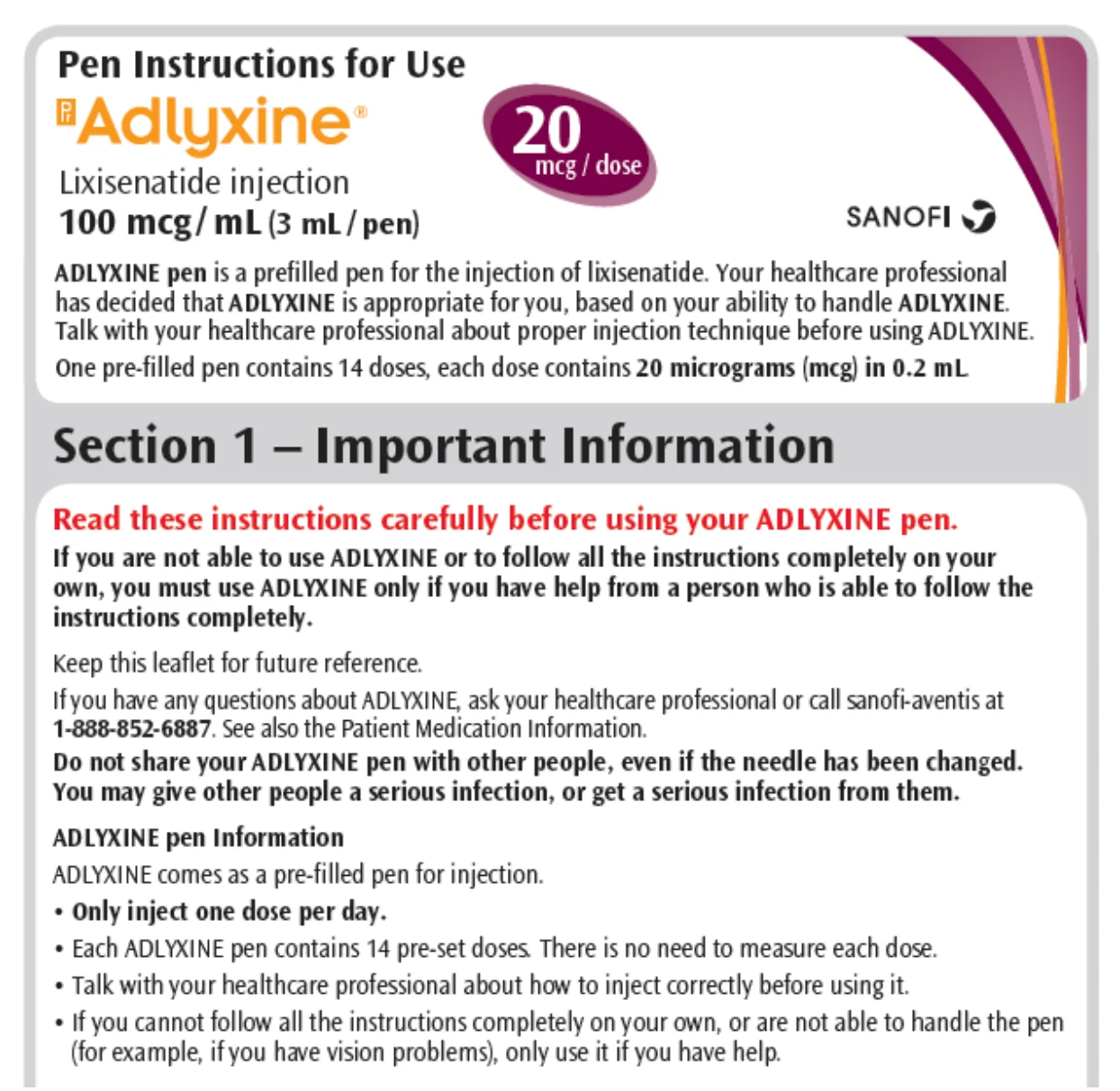
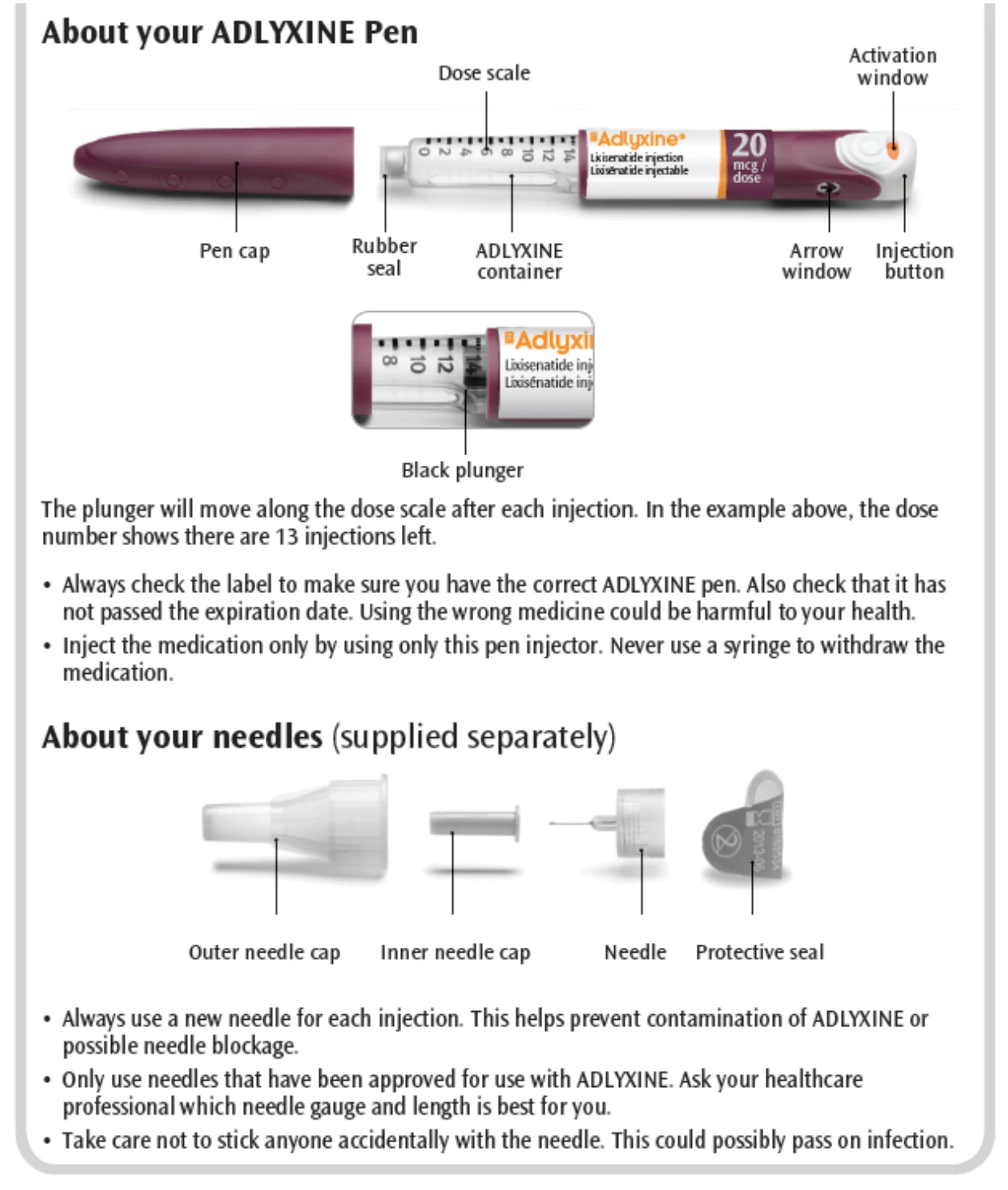
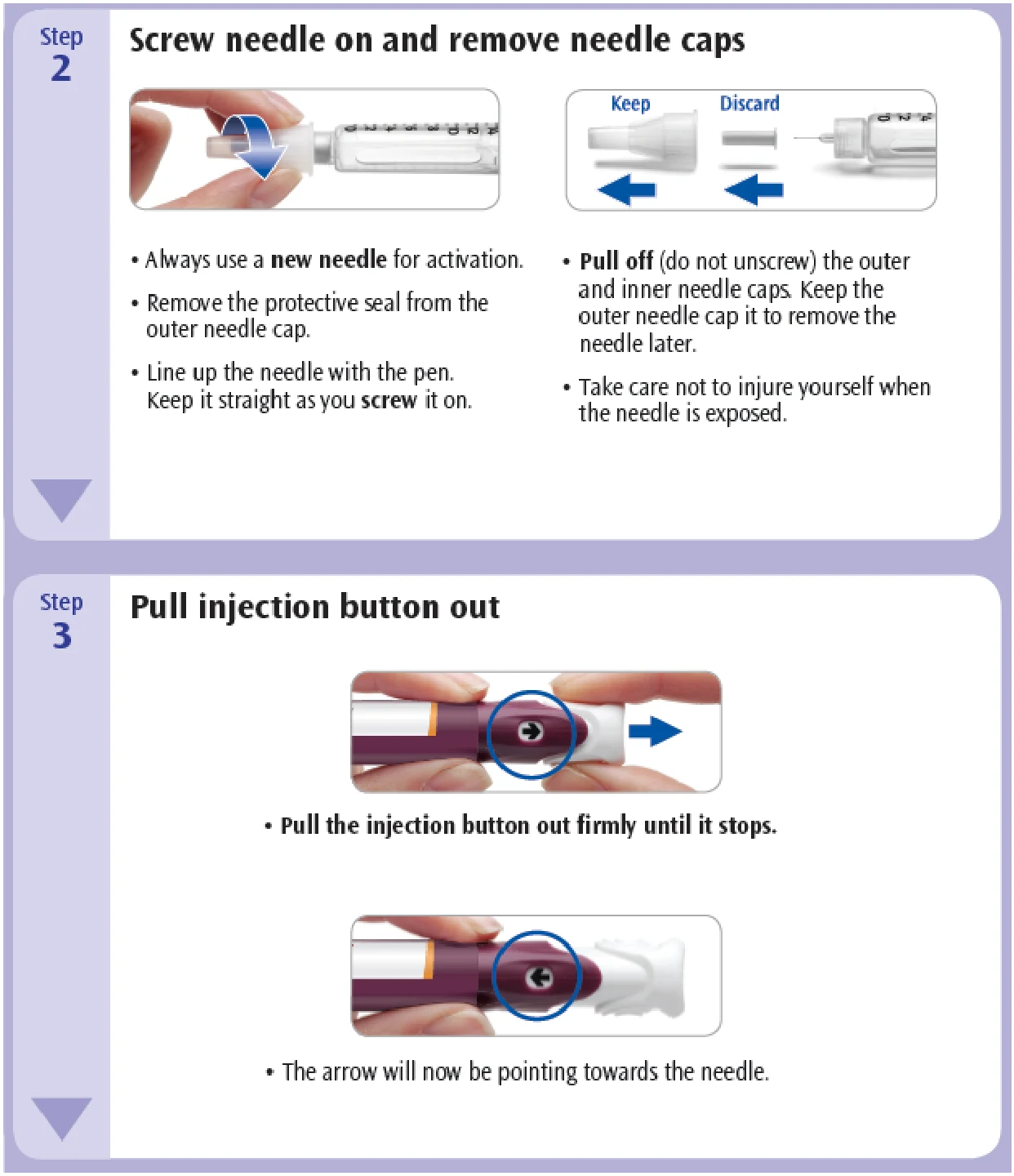
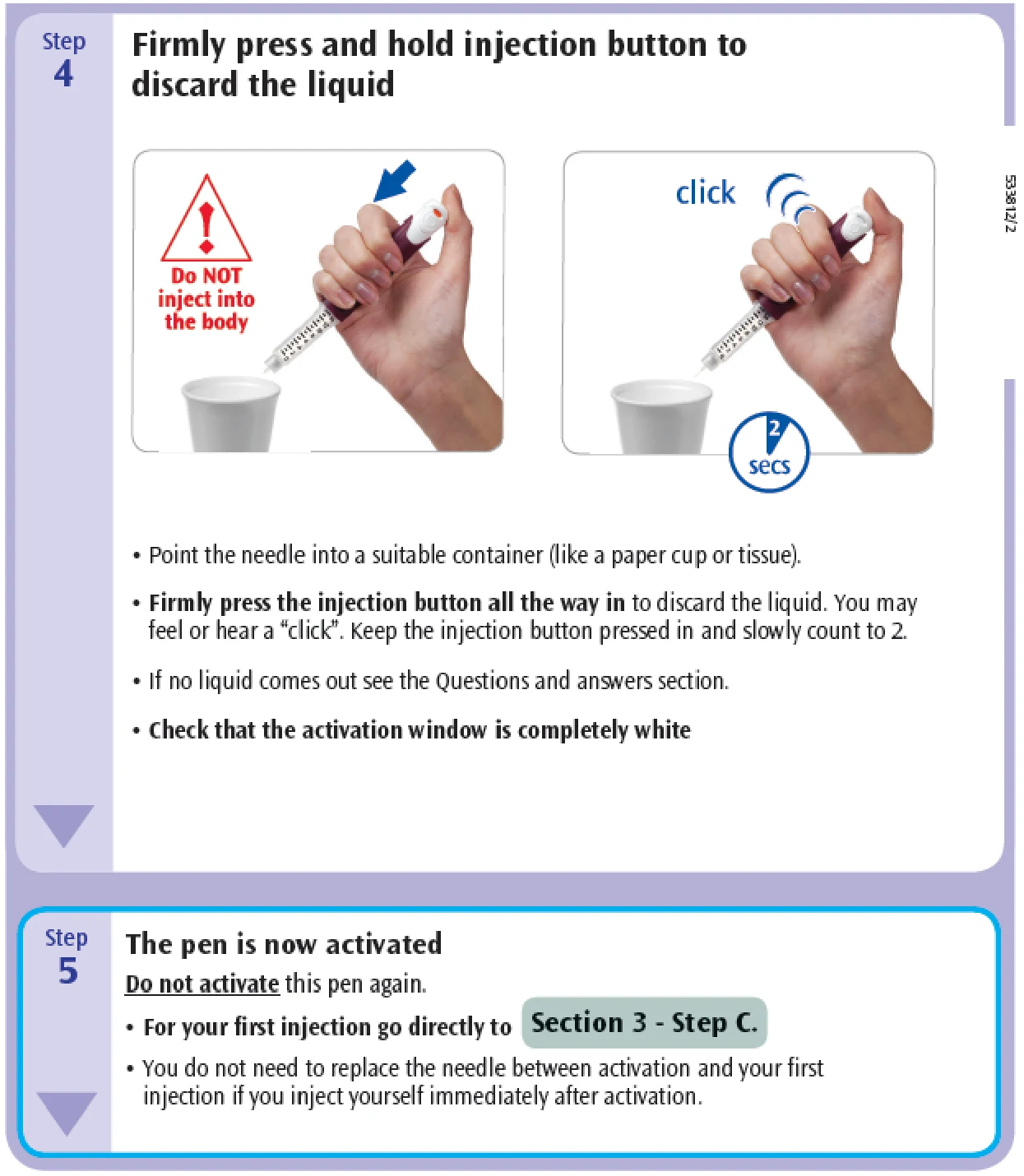
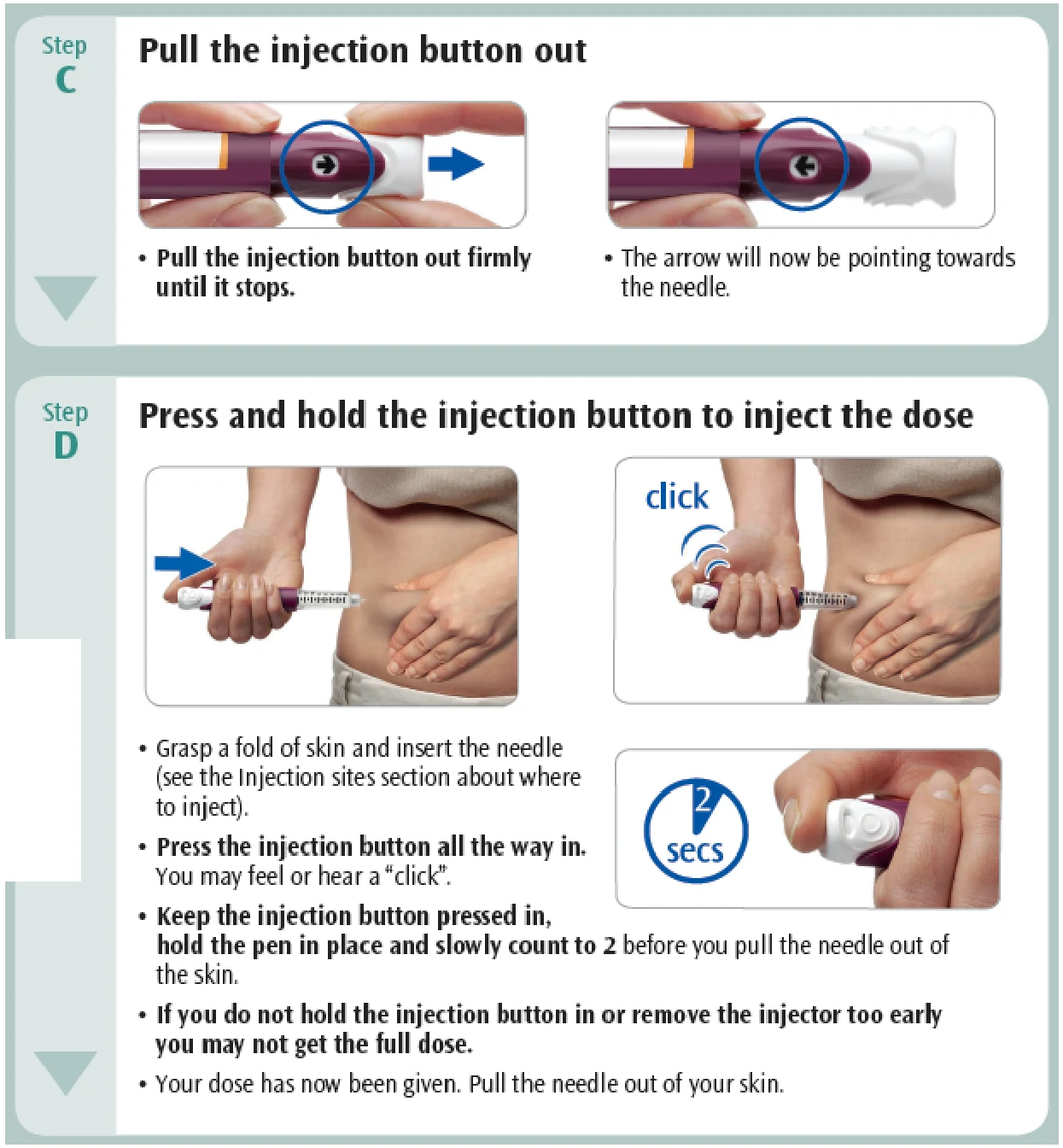
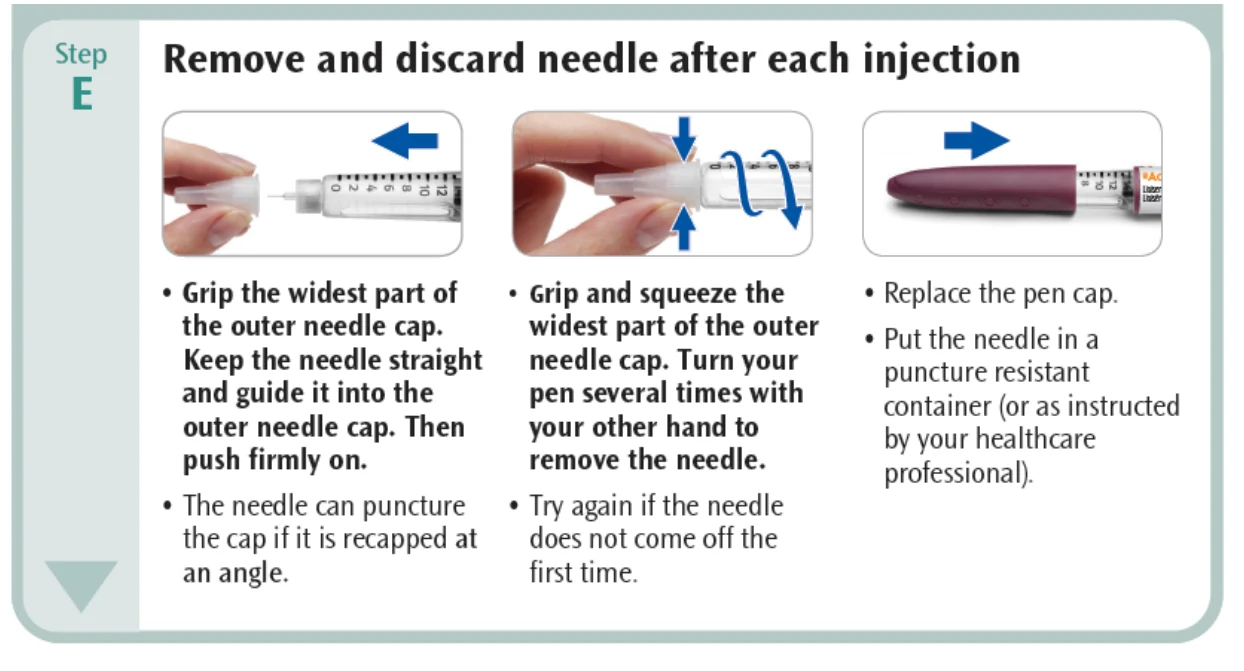
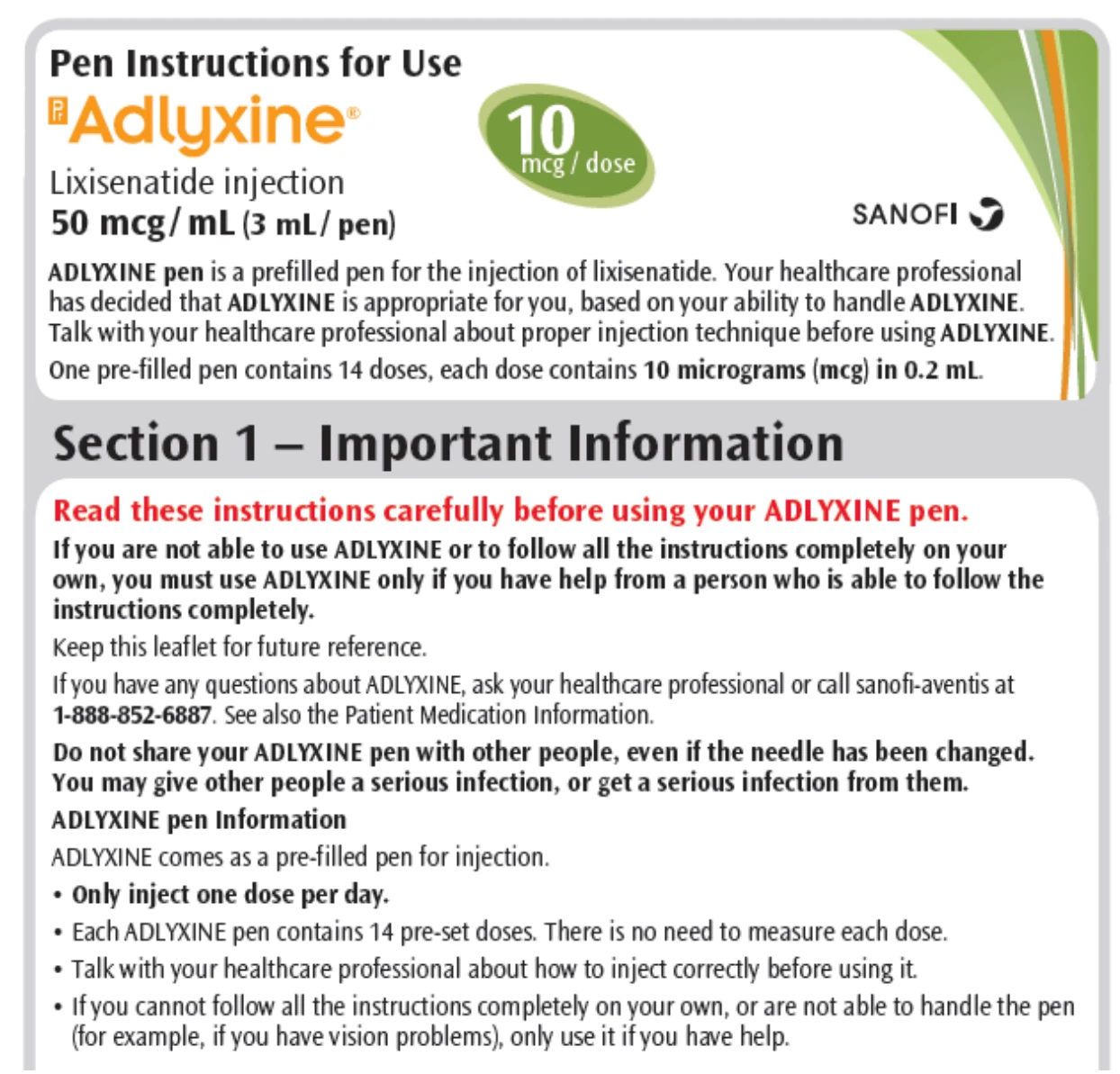
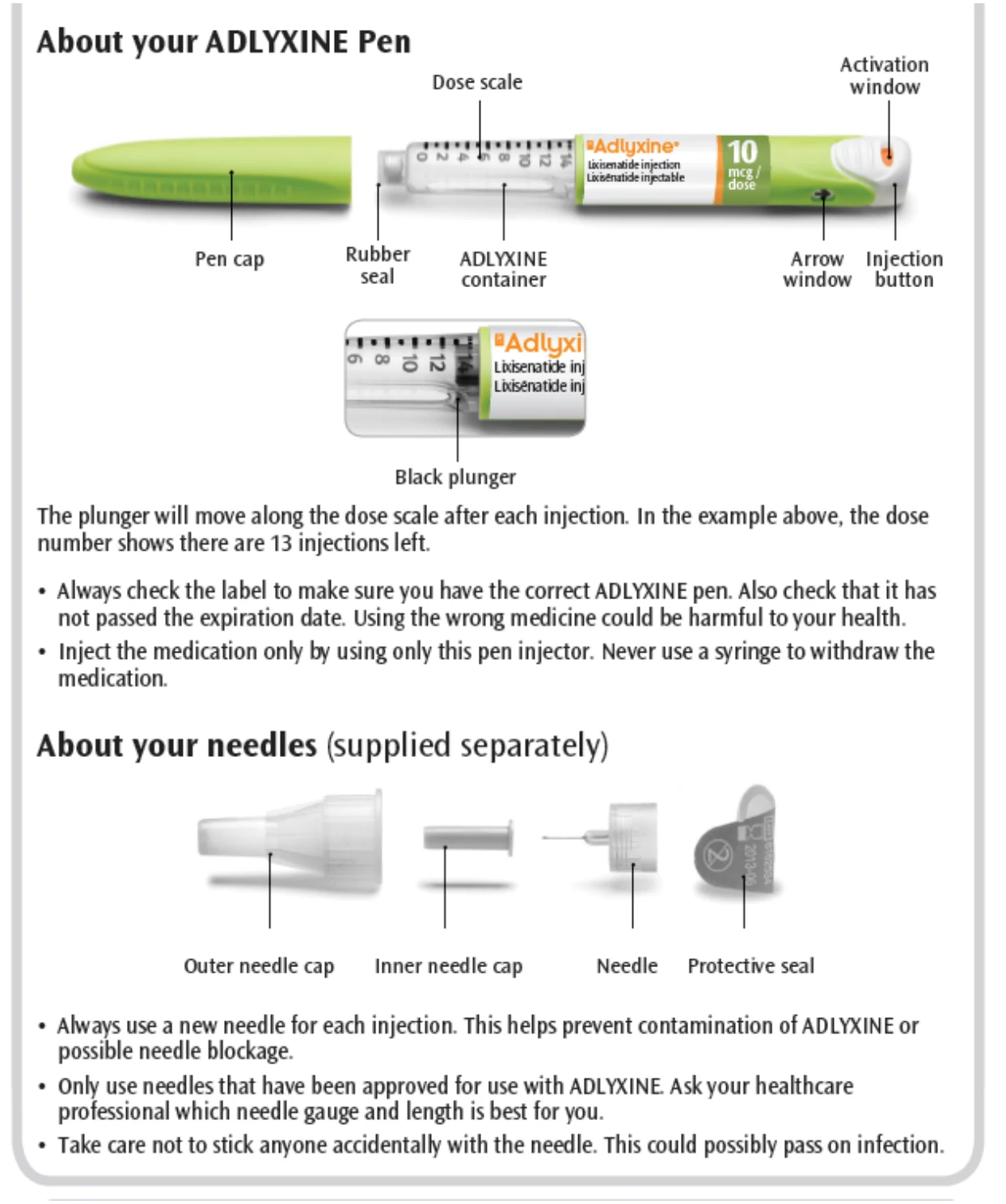
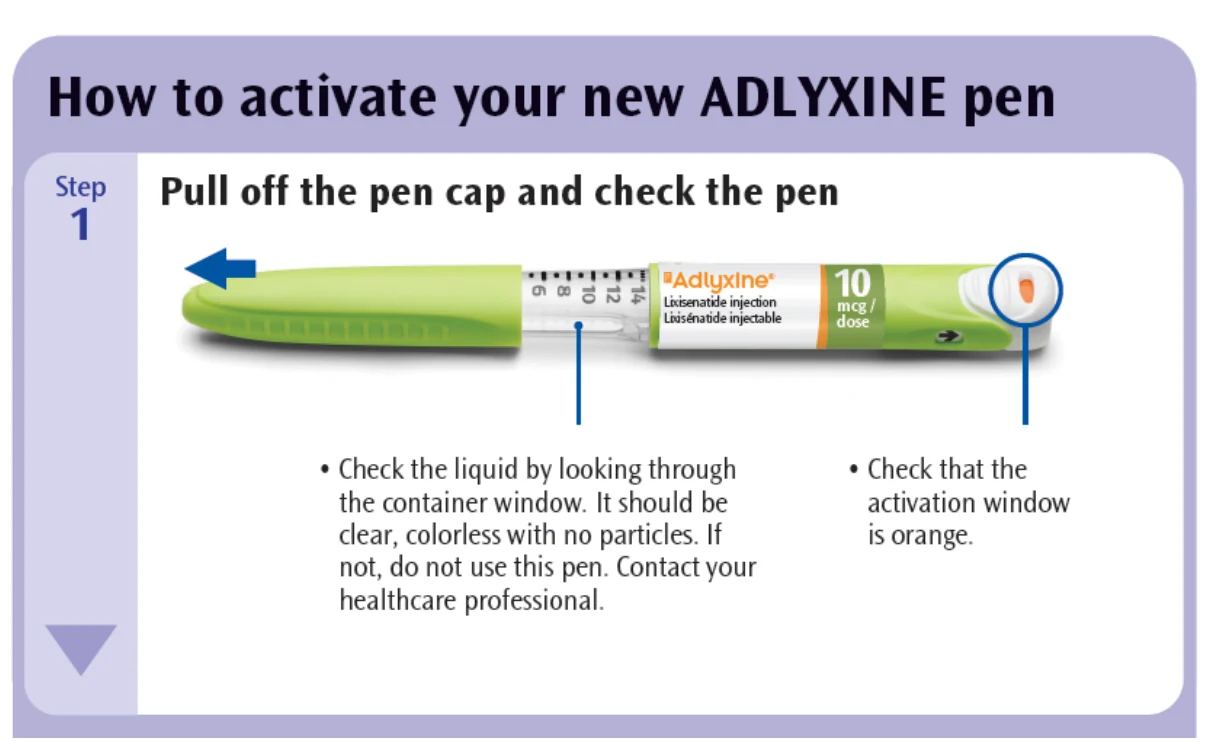
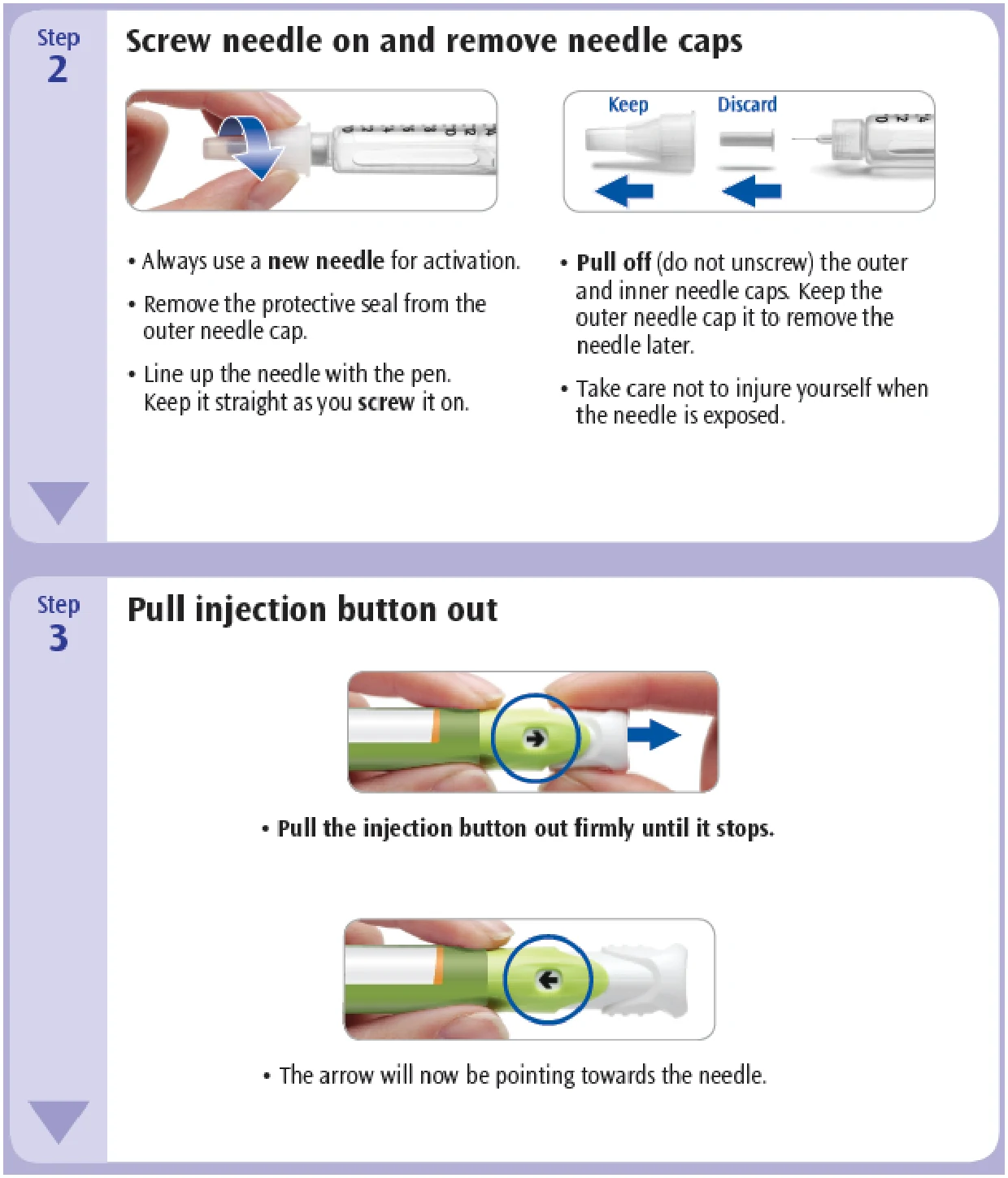
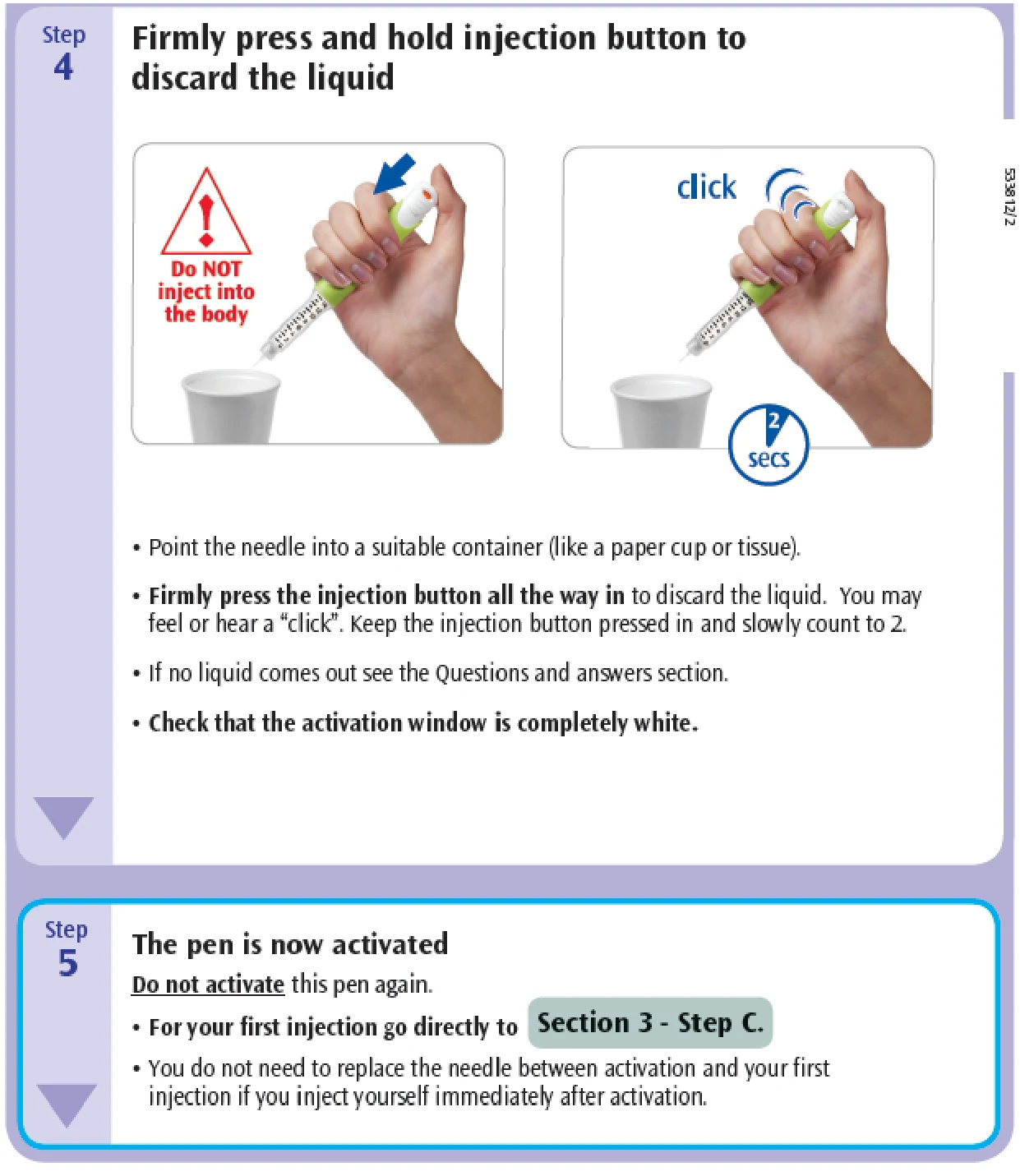
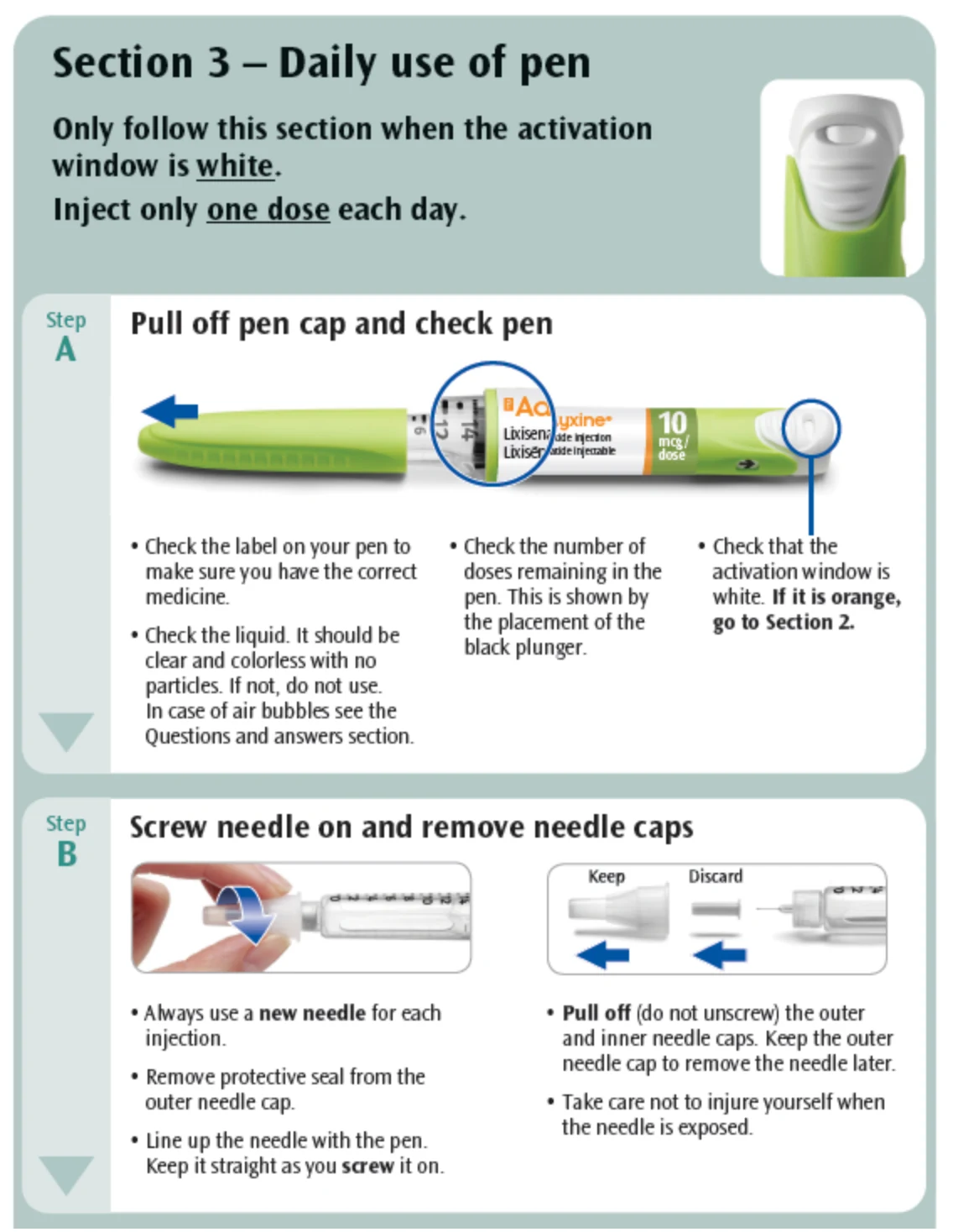
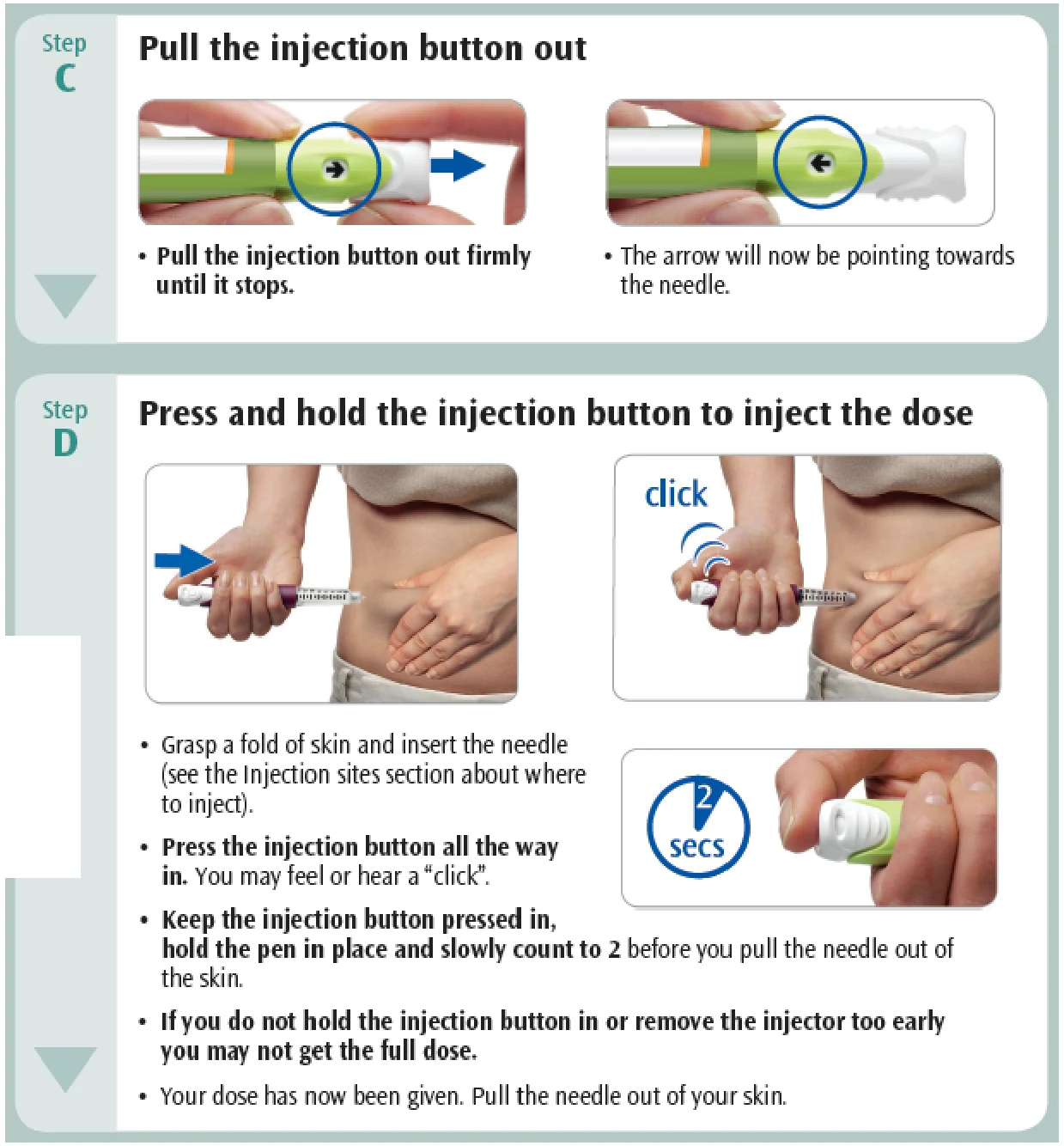
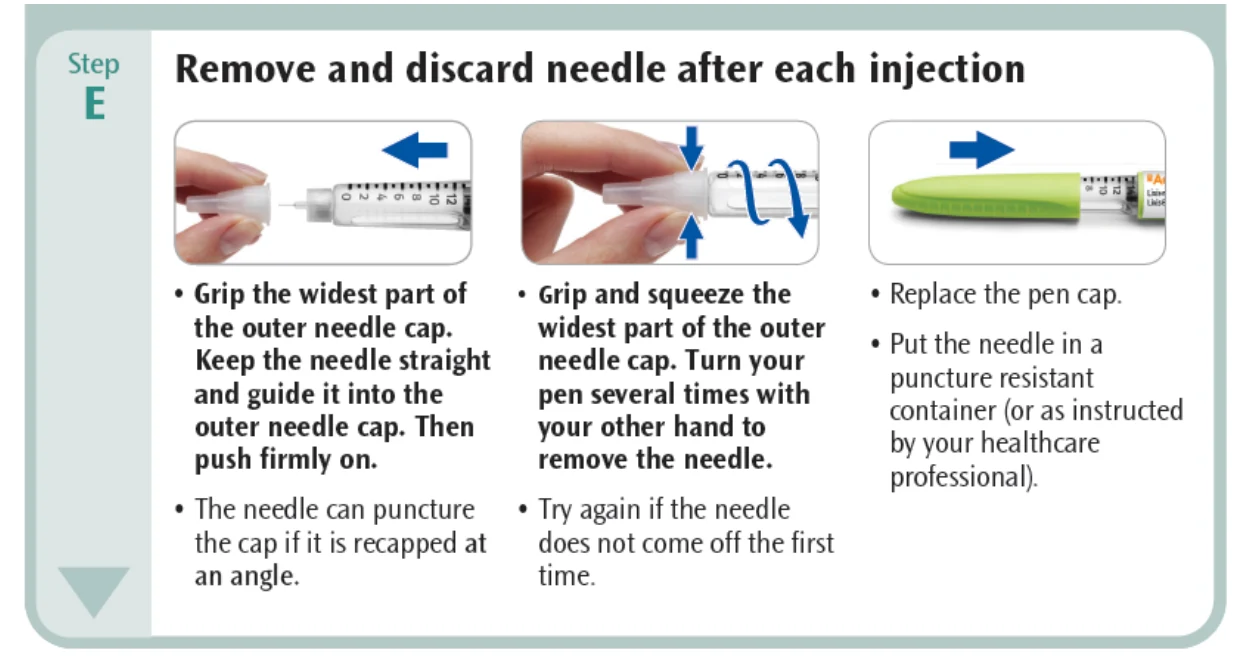
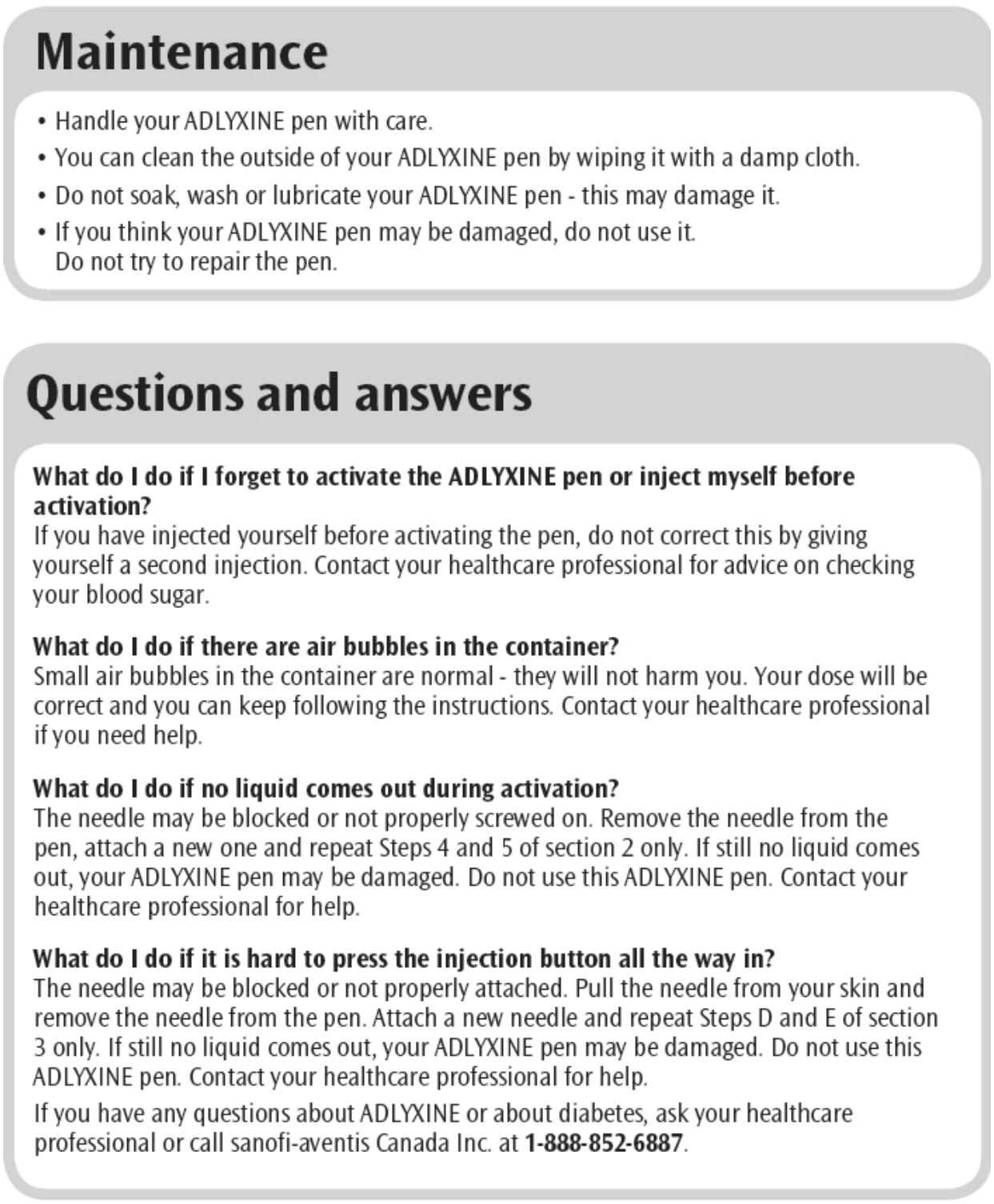
- Read the Pen Instructions for Use included in the package for complete instructions on how to use the ADLYXINE pen and how to inject ADLYXINE.
- Talk to your healthcare professional about how to properly use ADLYXINE before you use it for the first time.
- Use ADLYXINE exactly as it has been prescribed to you by your healthcare professional.
- Pen needles are not included. Ask your healthcare professional which needles to use.
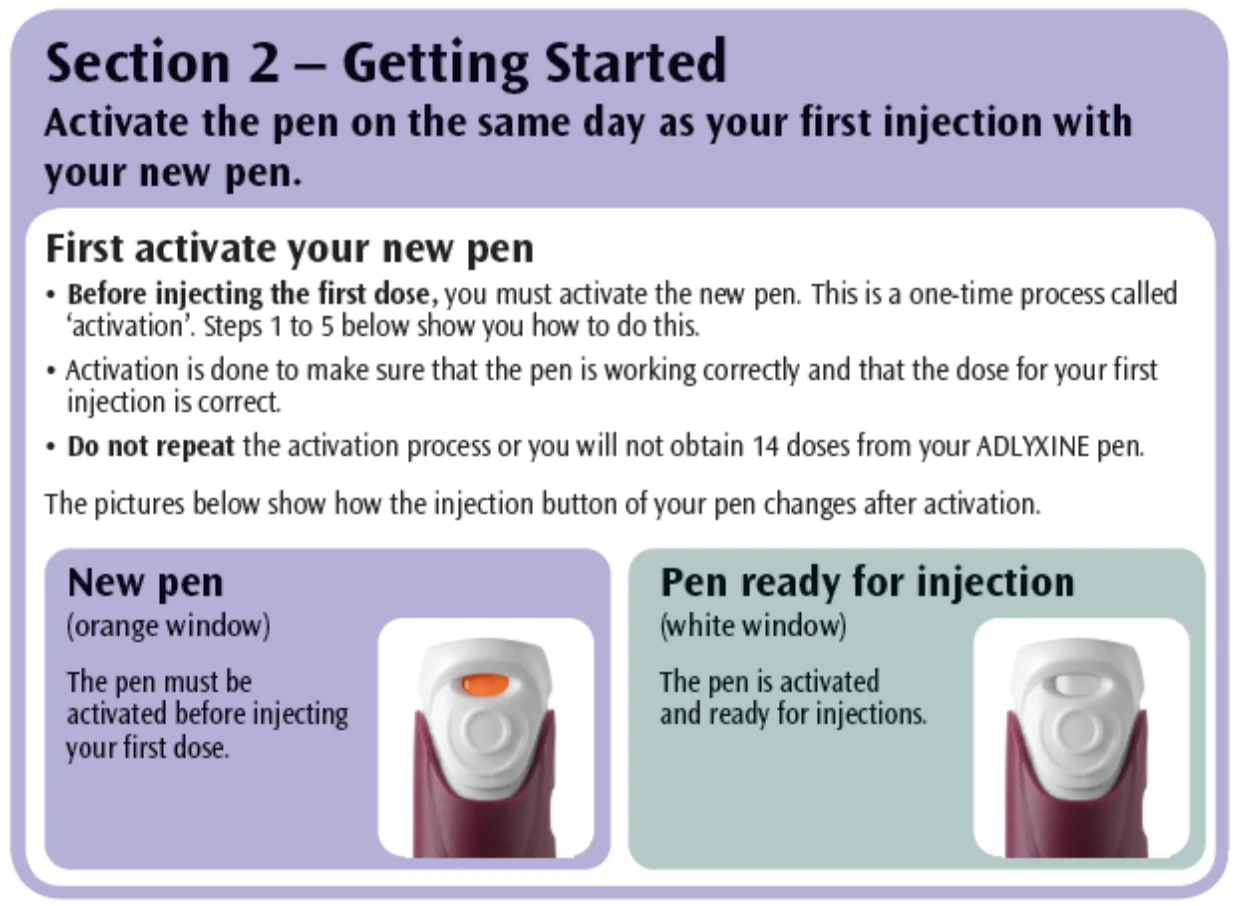
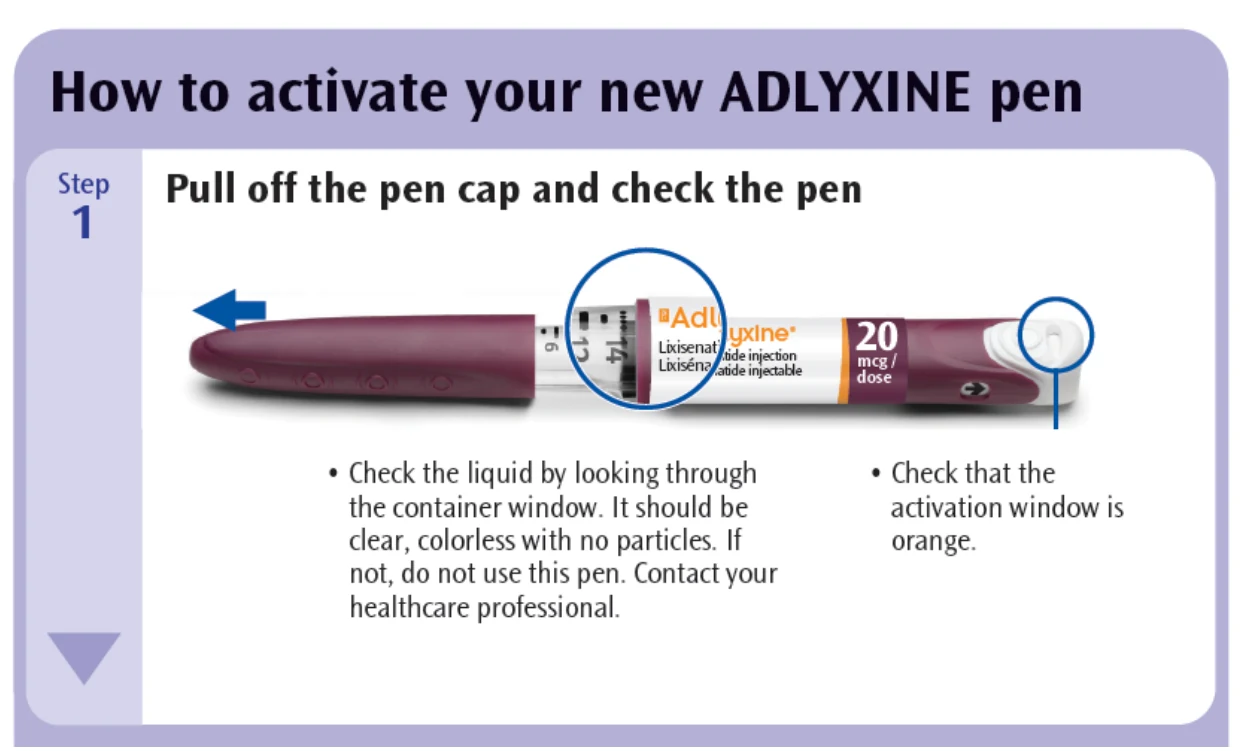
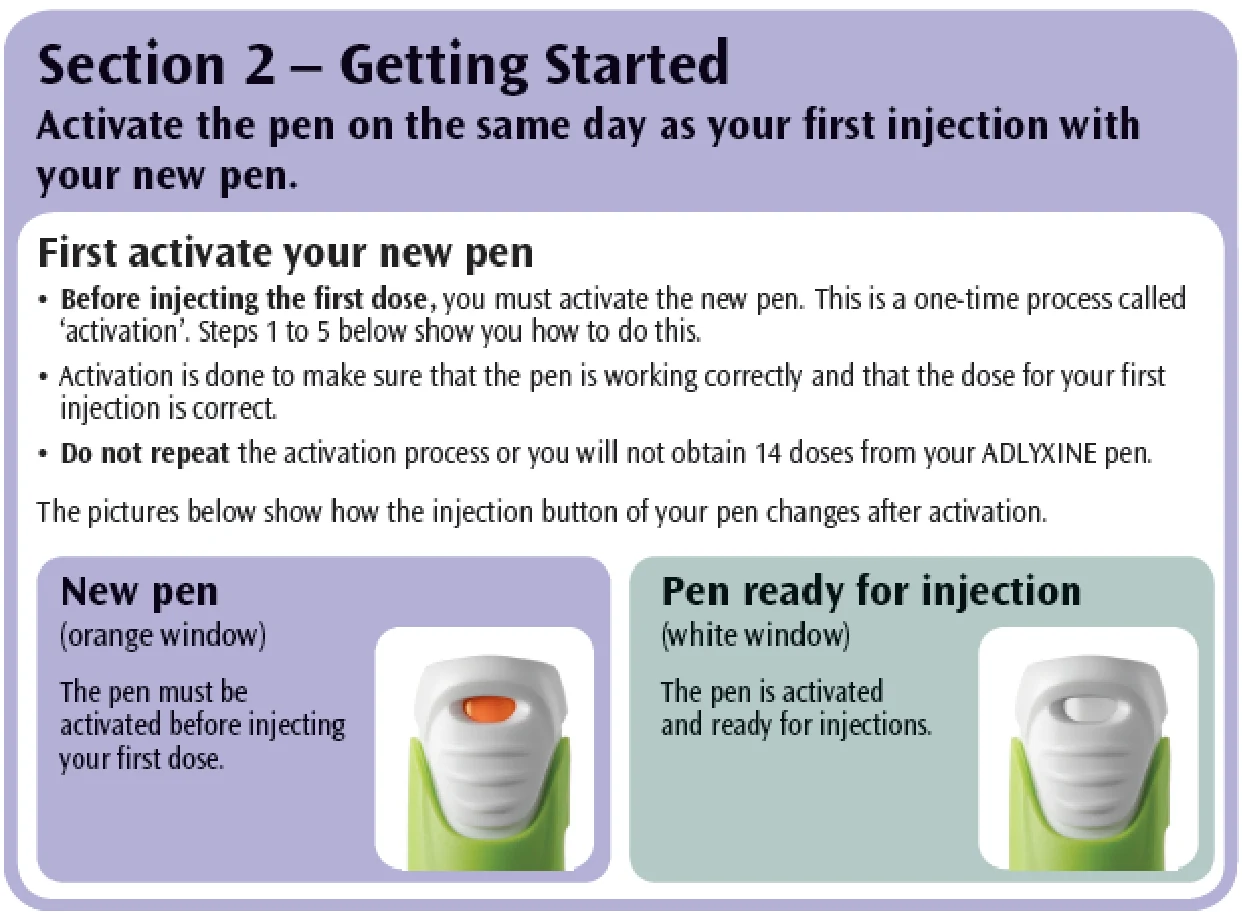
- You must activate your ADLYXINE pen before you use it for the first time. Only activate your pen once.
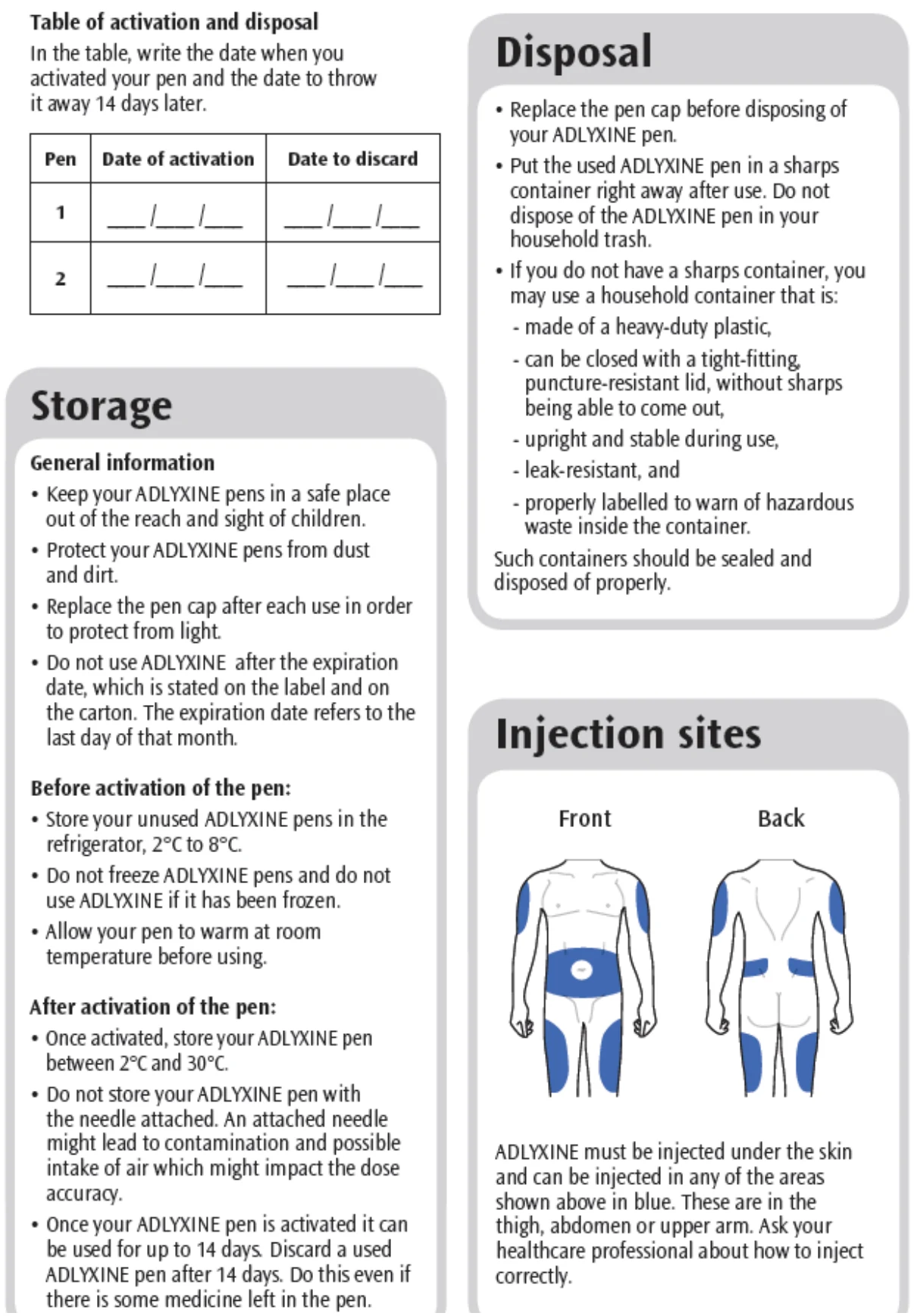
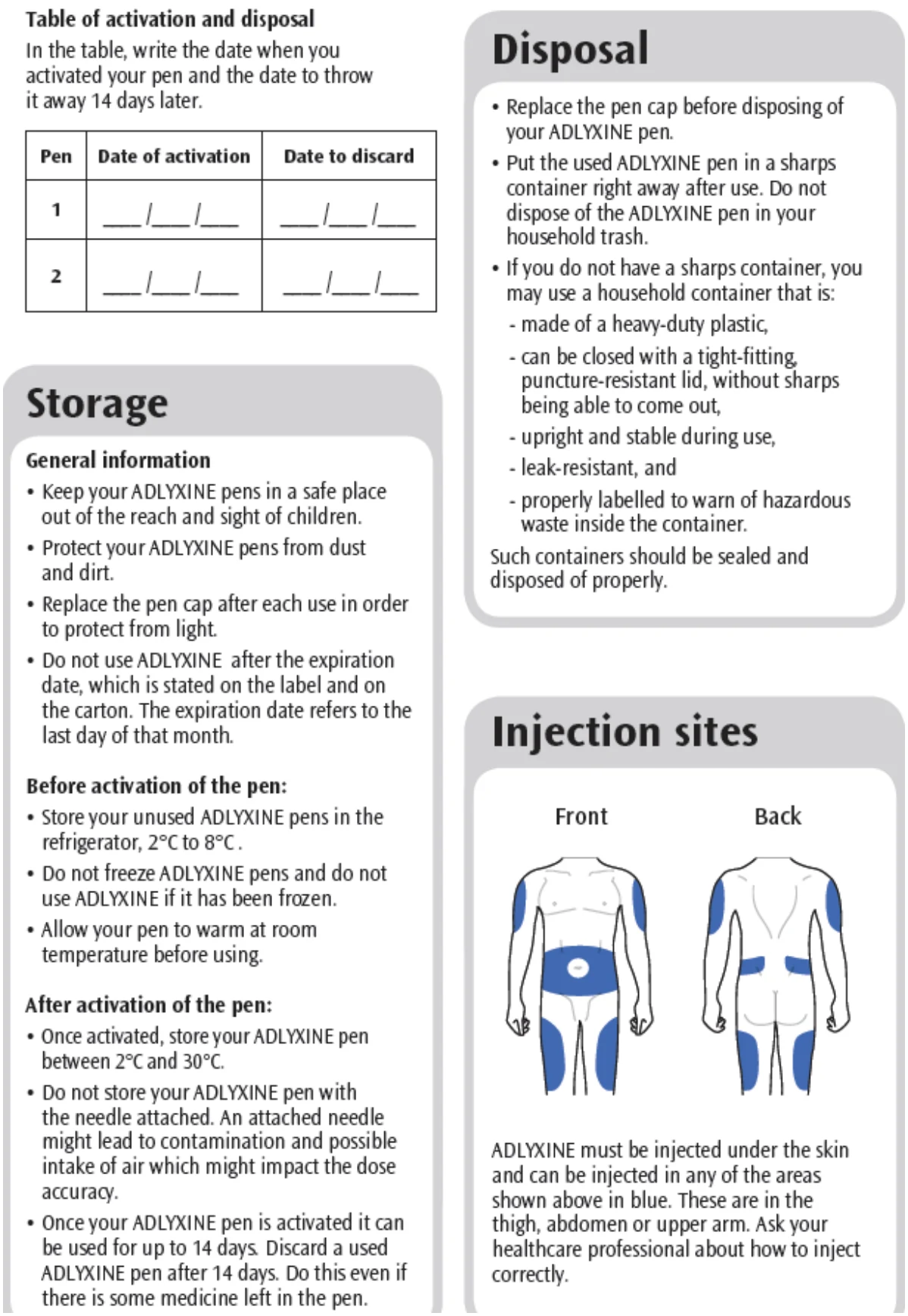
- ADLYXINE is given as an injection under the skin (subcutaneous injection). You should give yourself the injection in your upper leg (thigh), stomach area (abdomen) or upper arm. You must change the injection site every day. If you are injecting the same area (thigh, abdomen or upper arm), you must change the injection spot in that area every day.
- Do not inject ADLYXINE into a vein or muscle.
- Do not share ADLYXINE with anyone else, even if the needle is changed. You may give another person an infection or get an infection from them.
- Do not use ADLYXINE if it is discolored, contains particles, is cloudy or if there are any signs of leakage. Look through the pen window. The liquid inside the pen should be clear and colourless.
Usual dose:
The recommended starting dose is 10 mcg once a day for 14 days. Your dose will be increased to 20 mcg once a day on day 15. Your healthcare professional may lower your dose temporarily if you do not tolerate 20 mcg once a day.
Take ADLYXINE once a day within the hour before any meal. Choose the meal that suits you best and take ADLYXINE before that same meal every day.
Overdose:
| If you think you, or a person you are caring for,have taken too much ADLYXINE, contact a healthcare professional, hospital emergency department, or regional poison control centre immediately, even if there are no symptoms. |
|---|
Missed Dose:
- If you miss a dose of ADLYXINE, take it within the hour before your next meal.
- Never take two doses on the same day to make up for a missed dose.
- Do not stop using ADLYXINE without talking to your healthcare professional. If you stop using it, your blood sugar levels can increase.
What are possible side effects from using ADLYXINE?
These are not all the possible side effects you may have when taking ADLYXINE. If you experience any side effects not listed here, tell your healthcare professional.
Side effects may include:
- nausea, vomiting
- diarrhea
- bloating, gas
- constipation
- decreased appetite
- dry mouth
- abdominal pain
- upset stomach, heartburn
- dry mouth
- excessive sweating
- bruising, itching, redness or pain of the injection area
- weakness, tiredness
- headache, dizziness
- motion sickness
- tremor
- nervousness
- cough
- runny or stuffy nose, sneezing
- flu (fever, tiredness, body aches)
- back pain
- muscle pain
- urinary tract infection
- heartbeat that feels too fast, strong or irregular
- blurry vision
- hair loss
- rash
Serious side effects and what to do about them
| Symptom / effect | Talk to your healthcare professional | Stop taking drug and get immediate medical help | |
|---|---|---|---|
| Only if severe | In all cases | ||
COMMON Hypoglycemia (low blood sugar): change in mood, change in vision, confusion, dizziness, fast heartbeat, feeling faint, headache, hunger, shaking, sweating, weakness. | ✓ | ||
UNCOMMON Pancreatitis (inflammation of the pancreas): prolonged severe abdominal pain which may be accompanied by vomiting; pain may spread out towards the back. | ✓ | ||
| Gallbladder inflammation or gallstones: stomach pain, fever, nausea, vomiting, and yellowing of the skin and eyes | ✓ | ||
| Dehydration from prolonged nausea, vomiting or diarrhea, or from not taking enough liquids by mouth: light-headedness and fainting particularly upon standing. | ✓ | ||
Serious side effects and what to do about them
| Symptom / effect | Talk to your healthcare professional | Stop taking drug and get immediate medical help | |
|---|---|---|---|
| Only if severe | In all cases | ||
| Kidney problems including kidney failure: any change in the amount, frequency or colour (pale or dark) of urine. | ✓ | ||
| Severe allergic reactions including anaphylaxis and angioedema: difficulty breathing or swallowing, itching, hives, fainting, sudden swelling of the face, lips, tongue or throat, rash, very fast heartbeat. | ✓ | ||
If you have a troublesome symptom or side effect that is not listed here or becomes bad enough to interfere with your daily activities, tell your healthcare professional.
Reporting Side Effects
You can report any suspected side effects associated with the use of health products to Health Canada by:
NOTE: Contact your health professional if you need information about how to manage your side effects. The Canada Vigilance Program does not provide medical advice. |
Storage:
Before first use: Store pen in a refrigerator in original package to protect from light, between 2°C to 8°C. Do not freeze.
After first use: Store pen between 2°C to 30°C for up to 14 days. Do not store with needle attached. Replace pen cap after each use to protect from light.
Discard pen 14 days after first use or if heated or frozen.
Keep out of reach and sight of children.
If you want more information about ADLYXINE:
- Talk to your healthcare professional
- Find the full product monograph that is prepared for healthcare professionals and includes this Patient Medication Information by visiting the Health Canada website: (https://www.canada.ca/en/health-canada/services/drugs-health-products/drug-products/drug-product-database.html; the manufacturer’s website www.sanofi.ca, or by calling sanofi-aventis, at 1-888-852-6887.
Last Revised JUL 11, 2023
INSTRUCTIONS FOR USE: ADLYXINE® – 10 MCG PEN

Last Revised JUL 11, 2023
INSTRUCTIONS FOR USE: ADLYXINE® – 20 mcg Pen