


Patient Medication Information: uses, side effects, how to take - Agamree
What AGAMREE is used for:
AGAMREE is used to treat Duchenne muscular dystrophy (DMD) in patients 4 years of age and older.
How AGAMREE works:
DMD is a genetic condition caused by defects in a specific gene, which normally makes a protein that keeps muscles healthy and strong. In patients with DMD, this protein is not generated, and the body is unable to grow new muscle cells or replace damaged muscle. This causes the muscles of the body to become weaker over time. AGAMREE is used to stabilize muscle strength in patients with DMD.
AGAMREE is similar in structure to a group of medicines called glucocorticoids and corticosteroids. It decreases the body’s reaction to some diseases and reduces inflammation and changes the way the immune system works.
The ingredients in AGAMREE are:
Medicinal ingredient: vamorolone
Non-medicinal ingredients: citric acid (monohydrate), disodium phosphate (anhydrous), glycerin/glycerol, hydrochloric acid (for pH adjustment), octanal, orange oil, orange terpenes, sodium benzoate, sucralose, purified water, and xanthan gum.
AGAMREE comes in the following dosage form:
Oral Suspension: 40 mg / mL
Do not use AGAMREE if:
- you are allergic to vamorolone, any other corticosteroid medicine, or any of the non-medicinal ingredients in AGAMREE (see The ingredients in AGAMREE are:)
- you have severe liver problems
- you have received a type of vaccine called a live or live-attenuated vaccine in the last 6 weeks. Do not receive this type of vaccine during treatment with AGAMREE.
To help avoid side effects and ensure proper use, talk to your healthcare professional before you take AGAMREE. Talk about any health conditions or problems you may have, including if you:
- have or have had an infection such as herpes simplex, chicken pox, tuberculosis, threadworm or fungal infections. If you or your child is exposed to measles or chickenpox during treatment with AGAMREE, talk to your healthcare professional immediately. Serious or fatal side effects can occur if you or your child have not already had these infections.
- have recently had or are about to have any vaccinations
- have blood clotting problems or have had a blood clot
- have heart problems, such as heart failure
- have edema (water retention)
- have high blood pressure
- have brittle bones (osteoporosis)
- have liver or kidney problems
- have thyroid problems (hypothyroidism or hyperthyroidism)
- have low levels of potassium or calcium in your blood
- have diabetes
- have myasthenia gravis, a condition that causes progressive muscle pain and weakness
- have certain eye problems, such as glaucoma, cataracts, herpes infection, or any problems with the retina
- have Cushing’s disease
- have mental health problems, such as irritability
- have skin cancer (Kaposi’s sarcoma)
- have a tumour of the adrenal glands (pheochromocytoma)
- have stomach or gut problems, such as ulcers, ulcerative colitis
- have a weak immune response. Talk to your healthcare professional if you suspect you have an infection as AGAMREE can make infections more likely and mask their signs.
- are a Hepatitis B carrier (a liver disease)
- have seizures (convulsions) or other neurological problems
Other warnings you should know about:
Adrenal insufficiency: AGAMREE can make it hard for your body to respond to stress and illness. Adrenal insufficiency is when the body does not make enough cortisol hormone, a stress hormone that is important for many bodily functions. This can include symptoms such as fatigue, weakness, restlessness, nausea, vomiting, headache, dizziness, muscle weakness or joint pain and may cause death. Talk to your healthcare professional if you have any of these symptoms while taking AGAMREE.
- Do not reduce your dose of AGAMREE or stop taking AGAMREE without taking to your healthcare professional. If you abruptly reduce or stop taking AGAMREE for a few days you may develop adrenal insufficiency which may be life-threatening.
- If you are under unusual stress (such as an acute infection, traumatic injuries or have a major surgical procedure) you may need to take an additional steroidal medicine to avoid adrenal insufficiency. Talk to your healthcare professional about what to do in cases of unusual stress or if you are going to have surgery, including dental surgery.
Talk to your healthcare professional about the AGAMREE Patient Alert Card which contains important safety information about early recognition of the signs and symptoms of adrenal crisis and treatment. Keep this card with you at all times. You can
- also obtain this card through Fax: +1 888-789-9596; Phone: +1 833-294-7033; Email: agamree@programsupport.ca
Immunosuppression: AGAMREE can:
- hide symptoms of infections
- reactivate dormant infections
- worsen existing infections
- cause infections due to lowered resistance
If you think you have an infection while you are taking AGAMREE talk to your healthcare professional.
- Weight gain: AGAMREE can cause an increase in appetite and weight gain. Talk to your healthcare professional about dietary recommendations and nutrition management for patients with DMD before and during your treatment with AGAMREE.
Osteoporosis: When taking medicines like AGAMREE long-term you may be at risk of:
- Breaking a bone (bone fractures)
- Weak bones (osteoporosis, increased risk of broken bones)
Take extra care to avoid any injury, especially falls.
Pregnancy and breastfeeding:
- You should not get pregnant while you are taking AGAMREE.
- Women who are able to get pregnant must use effective birth control while they are taking AGAMREE.
- You should not breastfeed while you are taking AGAMREE as it could pass into breastmilk and harm your baby. Talk to your healthcare professional about the best way to feed your baby during treatment.
- Blood tests and monitoring: AGAMREE can cause abnormal blood test results. Your healthcare professional will decide when to perform blood tests and will interpret the results. If you are going to have a skin test for allergies, talk to your healthcare professional as AGAMREE may interfere with the results.
Children (less than 18 years of age): AGAMREE can affect growth in children. Your healthcare professional will prescribe the lowest dose to minimize the risk. Your healthcare professional will regularly monitor growth and development in growing children.
Tell your healthcare professional about all the medicines you take, including any drugs, vitamins, minerals, natural supplements or alternative medicines.
The following may interact with AGAMREE:
- medicines used to treat seizures and neuropathic pain, such as carbamazepine, phenytoin
- medicines used to treat fungal infections, such as voriconazole, itraconazole
- medicines used to treat bacterial infections, such as clarithromycin, telithromycin
- rifampicin, used to treat tuberculosis
- medicines used to treat high blood pressure or heart failure, such as spironolactone, eplerenone
- St John’s wort (Hypericum perforatum), an herbal medicine used to treat depression
- grapefruit and grapefruit juice
How to take AGAMREE:
Take AGAMREE exactly as directed by your healthcare professional. If you are not sure talk to your healthcare professional. Your healthcare professional might change your dose or stop treatment if
- you are having certain side effects. Do not change your dose or stop taking AGAMREE without talking to your healthcare professional.
- Shake AGAMREE well for about 30 seconds before administration.
- Use only with the oral syringe provided with the product.
- After withdrawing the appropriate dose into the oral syringe, dispense AGAMREE directly into the mouth.
AGAMREE should be taken once daily. It can be taken with or without with a meal (preferably with a meal).
- Discard any unused AGAMREE remaining after 3 months of first opening the bottle.
- See the Instructions for Use for complete information on how to take AGAMREE.
Usual dose:
Your healthcare professional will decide on the dose that is right for you, or your child, depending on you/your child’s age and weight.
Overdose:
If you think you, or a person you are caring for, have taken too much AGAMREE, contact a healthcare professional, hospital emergency department, regional poison control centre or Health Canada’s toll-free number, 1-844 POISON-X (1-844-764-7669) immediately, even if there are no signs or symptoms.
Missed dose:
If you missed a dose of this medication, take it as soon as you remember. But if it is almost time for your next dose, skip the missed dose and continue with your next scheduled dose. Go back to the regular dosing schedule. Do not take two doses at the same time.
Possible side effects from using AGAMREE:
These are not all the possible side effects you may have when taking AGAMREE. If you experience any side effects not listed here, tell your healthcare professional.
Side effects may include:
- vomiting
- diarrhea
- constipation
- abdominal pain
- increased appetite
- weight gain
- irritability
- headache
Serious side effects and what to do about them
| Frequency/Side Effect/Symptom | Talk to your healthcare professional | Stop taking this drug and get immediate medical help | |
|---|---|---|---|
| Frequency/Side Effect/Symptom | Talk to your healthcare professional | Stop taking this drug and get immediate medical help | |
| Frequency/Side Effect/Symptom | Talk to your healthcare professional | Stop taking this drug and get immediate medical help | |
| Only if severe | In all cases | ||
| Only if severe | In all cases | ||
| Only if severe | In all cases | ||
| Very common | |||
| Adrenal insufficiency: dizziness, fatigue, headache, joint pain, | ✓ | ||
| muscle weakness, nausea, restlessness, vomiting, weakness | |||
| Cushing’s syndrome: round "moon face", slow healing of cuts, fragile skin that bruises easily, severe fatigue, muscle weakness, headache, bone loss leading to fractures, weight gain, impaired growth in children | ✓ | ||
Mental health problems: In children: hyperactivity symptoms (irritability, aggressive behavior, increased frequency of tantrums, mood swings), sleep disorders In adults: feeling depressed including thinking about suicide, feeling anxious, insomnia, confusion, hallucinations (seeing or hearing things that are not really there), euphoria (intense feelings of well-being, elation, happiness, excitement and joy), mood swings, personality changes, memory problems | ✓ | ||
| Unknown | |||
| Allergic reaction: rash, hives, itching, swelling of the face, lips, tongue or throat, difficulty swallowing or breathing, chest pain or tightness | ✓ | ||
| Congestive heart failure (heart does not pump blood as well as it should): shortness of breath, fatigue and weakness, swelling in ankles, legs and feet, cough, fluid retention, lack of appetite, nausea, rapid or irregular heartbeat, reduced ability to exercise | ✓ | ||
| Eye disorders: blurred vision, loss of vision, sensitivity to light, irritation, pain or redness of the eye or eyelids, increased eye | ✓ | ||
| pressure, clouding in the lens of the eye, bulging eye | |||
| Infections: fever, chills, feeling unwell, sore throat, cough, body aches, fatigue | ✓ | ||
| Liver problems (including hepatitis): yellowing of your skin and eyes (jaundice), right upper stomach area pain, nausea or vomiting, dark urine, unusual tiredness, unexplained loss of appetite | ✓ | ||
| Rhabdomyolysis (breakdown of damaged muscle): muscle tenderness, weakness, red-brown (tea-coloured) urine | ✓ | ||
| Tuberculosis (reactivation of lung disease): cough that does not go away, fever, weight loss | ✓ | ||
If you have a troublesome symptom or side effect that is not listed here or becomes bad enough to interfere with your daily activities, tell your healthcare professional.
Reporting side effects
You can report any suspected side effects associated with the use of health products to Health Canada by:
- Visiting the Web page on Adverse Reaction Reporting (canada.ca/drug-device-reporting) for information on how to report online, by mail or by fax; or
- Calling toll-free at 1-866-234-2345.
NOTE: Contact your healthcare professional if you need information about how to manage your side effects. The Canada Vigilance Program does not provide medical advice.
Storage:
Store the bottle upright at room temperature between 15°C to 30°C in the original carton.
After opening, store the bottle upright in a refrigerator 2°C to 8°C. Do not freeze.
Discard any unused AGAMREE remaining after 3 months of first opening the bottle.
Keep out of reach and sight of children.
If you want more information about AGAMREE:
- Talk to your healthcare professional
- Find the full product monograph that is prepared for healthcare professionals and includes the Patient Medication Information by visiting the Health Canada Drug Product Database website (https://www.canada.ca/en/health-canada/services/drugs-health-products/drug-products/drug-product-database.html); the manufacturer’s website www.kyepharma.com ; or by calling 1-888-822-7126.
Date of Authorization: 2025-09-29
INSTRUCTIONS FOR USE
How to take AGAMREE:
Read this Instructions for Use before you start taking AGAMREE and each time you get a new bottle. This information does not take the place of talking to your healthcare professional about your medical condition or treatment.
Supplies provided in the AGAMREE carton:
- 1 bottle containing 100 mL of AGAMREE, with a child-resistant cap
- 1 bottle adaptor
- Two 5 mL oral syringes
- Patient Medication Information with Instructions for Use
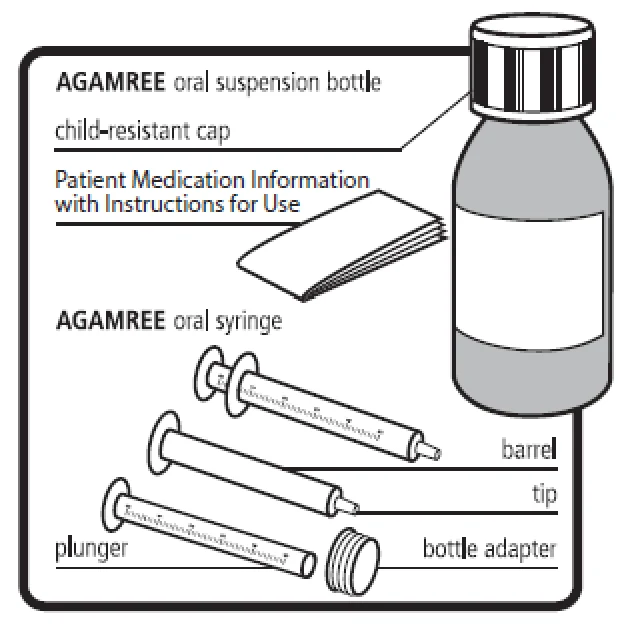
Important information you need to know before taking AGAMREE
- For oral use only (take by mouth).
- Always use the oral syringes provided with AGAMREE to make sure you measure the right amount.
- Take AGAMREE exactly as your healthcare professional tells you to take it. Do not stop taking AGAMREE suddenly without first speaking with your healthcare professional.
- AGAMREE should be taken 1-time daily with or without a meal (preferably with a meal).
- Do not mix AGAMREE with any type of liquids before taking or giving the prescribed daily dose.
- To withdraw the medicine, use one of the oral syringes included in the carton. Use only these oral syringes when measuring out your dose. Your healthcare professional will tell you how much you need to withdraw with the syringe for your daily dose. Caregivers should provide assistance with the administration of AGAMREE, particularly with regards to the use of oral syringes to measure and administer the prescribed dose.
- Shake the bottle well before withdrawing with the syringe.
- Withdraw your dose into the oral syringe, then immediately and slowly empty the syringe directly into your mouth. Please read the instructions below for more information about how to measure and take the dose correctly.
- Check with your healthcare professional if you are unsure how to use the oral syringe. After taking your prescribed dose, disassemble the oral syringe, rinse the syringe and plunger under running cold tap water and air dry.
- Store the cleaned oral syringe in the carton until next use. An oral syringe should only be used for up to 45 days. Write the date of first opening on your AGAMREE bottle when you first open it. After 45 days, discard the first oral syringe and use the second oral syringe provided in the carton. If you have any further questions on the use of this medicine, ask your healthcare professional.
How to prepare your dose of AGAMREE
| Preparing the AGAMREE bottle | ||
|---|---|---|
| Step 1 | Place the child-resistant bottle cap on the bottle. Make sure the child-resistant bottle cap is tightly secured and shake the bottle well for about 30 seconds. | 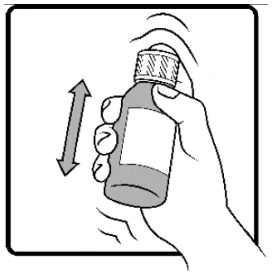 |
| Step 2 | Open the bottle by firmly pressing down on the child-resistant bottle cap and turning it to the left (counter-clockwise). Do not throw away the child-resistant bottle cap. | 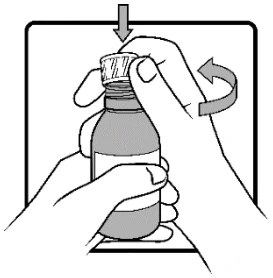 |
| Step 3 | Place the open bottle on a flat surface. Firmly insert the bottle adapter into the bottle by pushing it tightly into the top of the bottle. The top edge of the bottle adapter should be even with the bottle top. Do not remove the bottle adapter after it is inserted into the bottle. Write the date of first opening on your AGAMREE bottle when you first open it. | 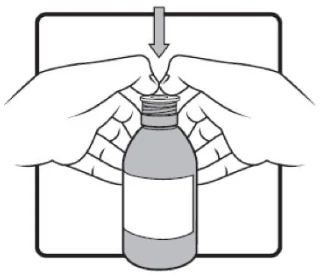 |
| Preparing and withdrawing the AGAMREE dose | ||
| Step 4 | Check your dose in milliliters (mL) as prescribed by your healthcare professional. Each mark on the oral syringe is equal to 0.1 mL. Do not take more than the prescribed daily dose. | 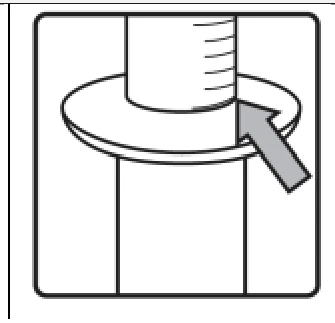 |
| Step 5 | Place the bottle on a flat surface. Before inserting the tip of the oral syringe into the bottle adapter, push the plunger completely down toward the tip of the oral syringe. Use 1 hand to hold the bottle upright. Insert the oral syringe tip firmly into the opening of the bottle adapter. | 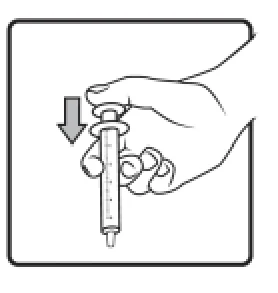 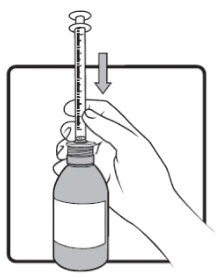 |
| Step 6 | Hold the oral syringe in place and carefully turn the bottle upside down. Pull the plunger down slowly until you reach the mL markings on the plunger for the prescribed dose. Do not pull the plunger out of the oral dispenser. | 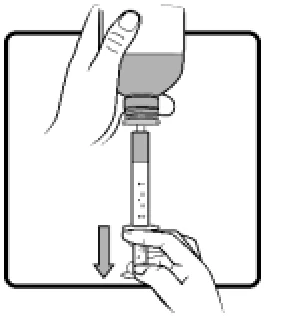 |
| Step 7 | If there are large bubbles in the oral syringe or if you draw up the wrong dose of AGAMREE, push the plunger all the way up so that AGAMREE flows back into the bottle. Pull the plunger down slowly until you reach the mL markings for your prescribed dose. Repeat Step 7 if any large air bubbles remain or if you draw up the wrong dose of AGAMREE. | 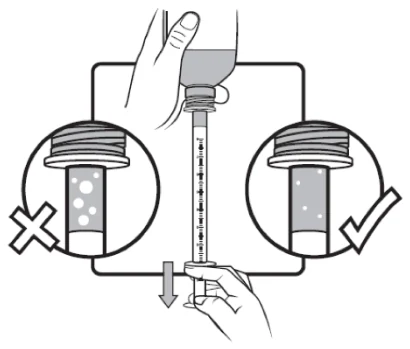 |
| Step 8 | Leave the tip of the oral syringe in the bottle and turn the entire bottle to an upright position. Slowly remove the oral syringe tip from the bottle by pulling the oral syringe straight up. Do not hold the oral syringe by the plunger, because the plunger may come out. Take or give AGAMREE right away after it is drawn up into the oral syringe. Do not store the filled oral syringe. | 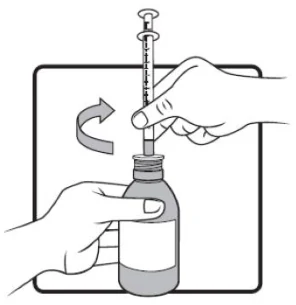 |
| Taking AGAMREE | ||
| Step 9 | The child or adult should sit upright to take a dose of AGAMREE. Place the oral syringe tip in the mouth towards the cheek and slowly push the plunger down until the oral syringe is empty. Do not forcefully push on the plunger. Do not give AGAMREE too fast into the back of the mouth or throat. This may cause choking. | 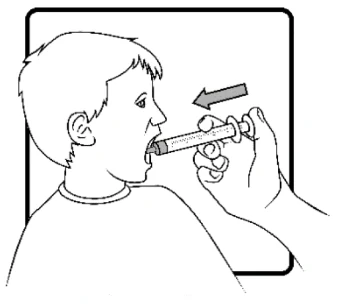 |
| Step 10 | If your prescribed dose is greater than 5 mL, repeat Steps 4 to 9. | |
| After taking or giving AGAMREE | ||
| Step 11 | Put the child-resistant bottle cap back on the bottle and turn the cap to the right (clockwise) to close the bottle. Keep the bottle tightly closed after each use. | 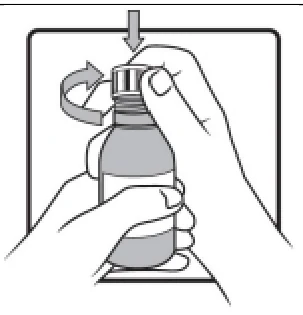 |
| Cleaning the oral syringes | ||
| Step 12 | Disassemble the oral syringe, rinse under running cold water and air dry prior to next use. Each oral syringe supplied with AGAMREE may be used for up to 45 days. | 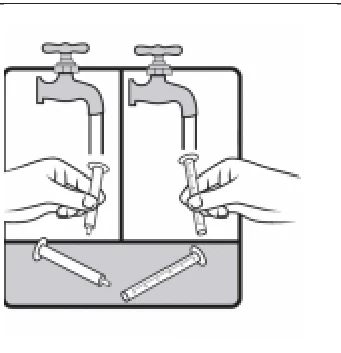 |