


Product Monograph - Agamree
Recent Major Label Changes
Not applicable
Table of Contents
Recent Major Label Changes ............................................................................................................ 2
Table of Contents ............................................................................................................................. 2
- 1.
Indications ............................................................................................................................... 4
1.1. Pediatrics ................................................................................................................................ 4
1.2. Geriatrics ................................................................................................................................ 4
- 2. Contraindications ..................................................................................................................... 4
- 4.
Dosage and Administration ....................................................................................................... 4
4.1. Dosing Considerations ............................................................................................................ 4
4.2. Recommended Dose and Dosage Adjustment....................................................................... 4
4.2.1. Discontinuing Treatment .............................................................................................. 5
4.4. Administration ........................................................................................................................ 5
4.5. Missed Dose ........................................................................................................................... 5
- 5. Overdose ................................................................................................................................. 6
- 6. Dosage Forms, Strengths, Composition, and Packaging .............................................................. 6
- 7.
Warnings and Precautions ........................................................................................................ 6
General ................................................................................................................................................ 6
Carcinogenesis and Genotoxicity ......................................................................................................... 6
Cardiovascular ..................................................................................................................................... 6
Endocrine and Metabolism .................................................................................................................. 7
Gastrointestinal ................................................................................................................................... 8
Hematologic ......................................................................................................................................... 8
Hepatic/Biliary/Pancreatic ................................................................................................................... 9
Hypersensitivity/Anaphylaxis ............................................................................................................... 9
Immune ................................................................................................................................................ 9
Immunizations ...................................................................................................................................10
Monitoring and Laboratory Tests ......................................................................................................10
Musculoskeletal .................................................................................................................................10
Neurologic ..........................................................................................................................................11
Ophthalmologic .................................................................................................................................11
Psychiatric ..........................................................................................................................................11
Renal ..................................................................................................................................................12
7.1. Special Populations ..............................................................................................................12
7.1.1. Pregnancy ................................................................................................................... 12
7.1.2. Breastfeeding ............................................................................................................. 12
7.1.3. Pediatrics .................................................................................................................... 13
7.1.4. Geriatrics .................................................................................................................... 13
- 8.
Adverse Reactions .................................................................................................................. 13
8.1. Adverse Reaction Overview .................................................................................................13
8.2. Clinical Trial Adverse Reactions ............................................................................................13
8.2.1 Clinical Trial Adverse Reactions – Pediatrics .............................................................. 13
8.3 Less Common Clinical Trial Adverse Reactions ....................................................................15
8.3.1 Less Common Clinical Trial Adverse Reactions – Pediatrics ........................................... 15
- 9.
Drug Interactions .................................................................................................................... 15
9.2. Drug Interactions Overview .................................................................................................15
9.3. Drug-Behaviour Interactions ................................................................................................16
9.4. Drug-Drug Interactions .........................................................................................................16
9.5. Drug-Food Interactions ........................................................................................................17
9.6. Drug-Herb Interactions ........................................................................................................17
9.7. Drug-Laboratory Test Interactions .......................................................................................17
- 10.
Clinical Pharmacology ............................................................................................................. 17
10.1. Mechanism of Action ...........................................................................................................17
10.2. Pharmacodynamics ..............................................................................................................18
10.3. Pharmacokinetics .................................................................................................................18
- 11. Storage, Stability, and Disposal ............................................................................................... 20
Part 2: Scientific Information .......................................................................................................... 21
- 13. Pharmaceutical Information ................................................................................................... 21
- 14.
Clinical Trials .......................................................................................................................... 21
14.1. Clinical Trials by Indication ...................................................................................................22
- 15. Microbiology .......................................................................................................................... 24
- 16. Non-Clinical Toxicology ........................................................................................................... 24
Patient Medication Information ..................................................................................................... 26
Part 1: Healthcare Professional Information
1. Indications
AGAMREE (vamorolone oral suspension) is indicated for the treatment of Duchenne muscular dystrophy (DMD) in patients 4 years of age and older.
1.1. Pediatrics
Pediatrics (4 - <18 years): Based on the data submitted and reviewed by Health Canada, the safety and efficacy of AGAMREE in pediatric patients has been established. Therefore, Health Canada has authorized an indication for pediatric use. (See 7 Warnings and Precautions, 8 Adverse Reactions and 10 Clinical Pharmacology).
1.2. Geriatrics
Geriatrics (≥65 years): No data are available to Health Canada; therefore, Health Canada has not authorized an indication for geriatric use.
2. Contraindications
AGAMREE is contraindicated in:
- patients with known hypersensitivity to this drug or to any ingredients in the formulation or component of the container (See 6 Dosage Forms, Strengths, Composition, and Packaging)
- patients with hypersensitivity to corticosteroid therapy, including a history of anaphylaxis, (See 7 Warnings and Precautions).
- patients with severe liver impairment (Child-Pugh class C).
- use of live or live-attenuated vaccines in the 6 weeks prior to starting treatment and during the treatment
4. Dosage and Administration
4.1. Dosing Considerations
Assessments Prior to First Dose of AGAMREE
Administer all immunizations according to immunization guidelines prior to starting AGAMREE. Administer live attenuated or live vaccines at least 4 to 6 weeks prior to starting AGAMREE. (7 Warnings and Precautions, Immunizations)
4.2. Recommended Dose and Dosage Adjustment
The recommended dosage of AGAMREE is 6 mg/kg taken orally once daily with or without a meal, up to a maximum daily dosage of 240 mg for patients weighing more than 40 kg.
Daily dose may be down-titrated to 4 mg/kg/day or 2 mg/kg/day based on individual tolerability. Patients should be maintained at the highest tolerated dose within the dose range.
Considerations for Use in Patients with Altered Thyroid Function
Changes in thyroid status of the patient may necessitate a dose adjustment of the corticosteroid. When concomitant administration of AGAMREE and levothyroxine is required, administration of AGAMREE should precede the initiation of levothyroxine therapy to reduce the risk of adrenal crisis (see 7 Warnings and Precautions, Endocrine and Metabolism).
Recommended Dosage for Hepatic Impairment
Vamorolone is contraindicated in patients with severe liver impairment.
The recommended dosage of AGAMREE in patients with mild (Child-Pugh A) to moderate (Child-Pugh B) hepatic impairment is 2 mg/kg taken orally once daily with or without a meal up to a maximum daily dosage of 80 mg for patients weighing more than 40 kg (see Use in 7.1 Special Populations and 10 Clinical Pharmacology).
Doses may be titrated down based on individual tolerability.
Dosage Modification for Use with Strong CYP3A4 Inhibitors
The recommended dosage of AGAMREE when administered with strong CYP3A4 inhibitors is 4 mg/kg taken orally once daily with or without a meal, up to a maximum daily dosage of 160 mg for patients weighing more than 40 kg. No dosage adjustments are required when AGAMREE is concomitantly administered with moderate or weak CYP3A4 inhibitors. (see 9 Drug Interactions and 10 Clinical Pharmacology).
Switching from Corticosteroid Treatment to AGAMREE
Patients can be switched from oral corticosteroid treatment to AGAMREE without treatment interruption or period of prior corticosteroid dosage reduction to minimize the risk for adrenal insufficiency.
Patients switching after long term treatment with oral corticosteroids should start AGAMREE at a dosage of 6 mg/kg/day.
4.2.1. Discontinuing Treatment
The dose of vamorolone must not be decreased abruptly. Dose tapering should be done progressively over weeks to months. The duration of each tapering step should be adjusted depending on individual tolerability, dose and duration of therapy. (see 7 Warnings and Precautions, Endocrine and Metabolism).
4.4. Administration
AGAMREE is for oral use. AGAMREE can be taken with or without a meal (preferably with a meal).
Shake AGAMREE oral suspension well for about 30 seconds before administration. Use only the oral syringe provided with the product. After withdrawing the appropriate dose into the oral syringe, dispense directly into the mouth.
Discard any unused AGAMREE oral suspension remaining after 3 months of first opening the bottle.
4.5. Missed Dose
If a dose is missed, it should be taken as soon as possible. However, if it is almost time for the patient’s next dose, the missed dose should be skipped and regular dosing schedule resumed. Patients should not take a double dose to make up for a missed dose.
5. Overdose
Treatment of acute overdose is by immediate supportive and symptomatic therapy. Gastric lavage or emesis can be considered.
For the most recent information in the management of a suspected drug overdose, contact your regional poison control centre or Health Canada’s toll-free number, 1-844 POISON-X (1-844-764-7669).
- 6. Dosage Forms, Strengths, Composition, and Packaging
Table 1– Dosage Forms, Strengths, Composition and Packaging
Description
AGAMREE is an orange-flavoured white to off-white oral suspension filled to 100 mL in a 125 mL amber type III glass bottle closed with a child resistant PP cap with LDPE liner. It is available in cartons packed with 2 x 5 mL dosing syringes and one LDPE press-in bottle adaptor (PiBA).
7. Warnings and Precautions
General
Patients should be advised to inform physicians of the prior use of AGAMREE. AGAMREE has structural similarities to other corticosteroids.
Carcinogenesis and Genotoxicity
Kaposi’s sarcoma has been reported to occur in patients receiving corticosteroid therapy, most often for chronic conditions. Discontinuation of treatment may result in clinical improvement of Kaposi’s sarcoma. (See 16 Non-Clinical Toxicology, Genotoxicity and Carcinogenesis).
Cardiovascular
Corticosteroids, including AGAMREE, can cause elevation of blood pressure, salt and water retention, and increased excretion of potassium and calcium.
Monitor blood pressure and assess for signs and symptoms of volume overload. Monitor serum potassium levels.
| Route of Administration | Dosage Form / Strength/Composition | Non-medicinal Ingredients |
| Oral | Suspension, 40 mg/mL vamorolone | Citric acid (monohydrate), disodium phosphate (anhydrous), glycerin/glycerol, hydrochloric acid (for pH adjustment), octanal, orange oil, orange terpenes, sodium benzoate, sucralose, purified water, and xanthan gum. |
AGAMREE should be used with caution in patients with congestive heart failure, hypertension, or renal insufficiency. Literature reports suggest an association between use of corticosteroids and left free wall rupture after a recent myocardial infarction; therefore, therapy with AGAMREE should be used with great caution in these patients.
Endocrine and Metabolism
Corticosteroids such as AGAMREE can cause serious and life-threatening alterations in endocrine function, especially with chronic use. Monitor patients for Cushing’s syndrome, hyperglycemia, and adrenal insufficiency during AGAMREE treatment and after withdrawal.
There is no available information on the effects of AGAMREE on pubertal development.
Patients with hypopituitarism, primary adrenal insufficiency or congenital adrenal hyperplasia, altered thyroid function, or pheochromocytoma may be at increased risk for adverse endocrine events.
Risk of Adrenal Insufficiency Following Withdrawal and During Periods of Stress
AGAMREE produces dose-dependent suppression of the hypothalamic-pituitary-adrenal (HPA) axis potentially resulting in secondary adrenal insufficiency, which may persist for months to years after discontinuation of prolonged therapy. The degree and duration of chronic adrenal insufficiency produced depends on the dose, frequency and time of administration and duration of therapy.
Acute adrenal insufficiency (also known as adrenal crisis), which can be fatal, can occur during a period of increased stress or if the AGAMREE dose is reduced or withdrawn abruptly. Symptoms of adrenal crisis may include excess fatigue, unexpected weakness, vomiting, dizziness and confusion. The risk is reduced by gradually tapering the dose over weeks or months when down-titrating or withdrawing treatment, adjusted depending on individual tolerability (See 4.1 Dosing Considerations).
During periods of increased stress, such as acute infection, traumatic injury or surgical procedure, patients should be monitored for signs of acute adrenal insufficiency and the regular treatment with AGAMREE should be temporarily supplemented with systemic hydrocortisone to prevent the risk of adrenal crisis.
Monitoring for signs and symptoms of drug-induced secondary adrenocortical insufficiency may be necessary for up to one year following cessation of long-term glucocorticoid therapy.
Supplementation with a systemic corticosteroid is also recommended in any situation of stress occurring during the period of discontinuation.
There is no data available on the effects of increasing AGAMREE dose for situations of increased stress.
The Patient Alert Card provides important safety information to support early recognition and treatment of adrenal crisis (See Patient Medication Information).
A steroid “withdrawal syndrome”, seemingly unrelated to adrenocortical insufficiency, may also occur following abrupt discontinuation of glucocorticoids. This syndrome includes symptoms such as anorexia, nausea, vomiting, lethargy, headache, fever, joint pain, desquamation, myalgia, and/or weight loss. These effects are thought to be due to the sudden change in glucocorticoid concentration rather than to low glucocorticoid levels.
Weight gain
Vamorolone is associated with dose-dependent increase in appetite and weight gain. Weight gain was the main adverse drug reaction leading to down-titration from the 6 mg/kg/day dose to 4 mg/kg/day, which did not always mitigate the weight gain in the long-term clinical trial. Age-appropriate dietary advice should be provided before and during treatment with AGAMREE in line with general recommendations for nutrition management in patients with DMD.
Cushing’s Syndrome
Cushing’s syndrome (hypercortisolism) occurs with prolonged exposure to exogenous corticosteroids, such as AGAMREE. Symptoms include hypertension, truncal obesity and thinning of the limbs, purple striae, facial rounding, facial plethora, muscle weakness, easy and frequent bruising with thin fragile skin, posterior neck fat deposition, osteopenia, acne, amenorrhea, hirsutism, and psychiatric abnormalities.
Hyperglycemia
Long-term therapy with corticosteroids increases the risk for diabetes mellitus.
Greater mean increases in fasting glucose and fasting insulin were reported in children treated with vamorolone 6 mg/kg/day compared with the placebo and vamorolone 2 mg/kg groups in the pivotal trial. The difference was maintained long-term.
Blood glucose should be monitored at regular intervals in patients chronically treated with vamorolone.
Pheochromocytoma Crisis
There have been reports of pheochromocytoma crisis, which can be fatal, after administration of systemic corticosteroids. In patients with suspected or identified pheochromocytoma, consider the risk of pheochromocytoma crisis prior to administering AGAMREE.
Considerations for use in patients with altered thyroid function
Metabolic clearance of corticosteroids is decreased in hypothyroid patients and increased in hyperthyroid patients. Changes in thyroid status of the patient may necessitate a dose adjustment of the corticosteroid. When concomitant administration of AGAMREE and levothyroxine is required, administration of AGAMREE should precede the initiation of levothyroxine therapy to reduce the risk of adrenal crisis.
Gastrointestinal
There is an increased risk of gastrointestinal perforation with use of corticosteroids in patients with certain gastrointestinal disorders, such as active or latent peptic ulcers, diverticulitis, fresh intestinal anastomoses, and non-specific ulcerative colitis. Signs of gastrointestinal perforation, such as peritoneal irritation, may be masked in patients receiving corticosteroids.
Avoid AGAMREE if there is a probability of impending perforation, abscess, or other pyogenic infections; diverticulitis; fresh intestinal anastomoses; or active or latent peptic ulcer.
Hematologic
Thromboembolic Events
Observational studies have shown an increased risk of thromboembolism (including venous thromboembolism) particularly with higher cumulative doses of corticosteroids. Use AGAMREE with caution in patients who have or may be predisposed to thromboembolic disorders.
Hepatic/Biliary/Pancreatic
A case of acute hepatitis with positive dechallenge/rechallenge was identified in the pivotal trial. There were other cases of elevated liver function tests throughout the clinical trials, some leading to discontinuation of vamorolone. A risk of drug-induced liver toxicity cannot be excluded. Hepatic impairment increases AGAMREE exposure (see 10.3 Pharmacokinetics). AGAMREE dose should be reduced in patients with mild (Child Pugh class A) to moderate (Child-Pugh class B) hepatic impairment (see 4.24.2 Recommended Dose and Dosage Adjustment).
There is no experience with AGAMREE in patients with severe hepatic impairment (Child-Pugh class C). AGAMREE is contraindicated in patients with severe hepatic impairment. (See 8 Adverse Reactions).
Hypersensitivity/Anaphylaxis
Rare instances of anaphylaxis have occurred in patients receiving glucocorticoid therapy.
Vamorolone is a glucocorticoid and is contraindicated in patients with known hypersensitivity to glucocorticoids. (see 2 Contraindications).
Immune
Corticosteroids, including AGAMREE, suppress the immune system and increase the risk and severity of infection with any pathogen, including viral, bacterial, fungal, protozoan and helminthic pathogens.
Corticosteroid-associated infections can be severe, and at times fatal. The rate of infectious complications increases with increasing corticosteroid dosages.
Corticosteroids can reduce resistance to new infections, exacerbate existing infections, increase the risk of disseminated infections, increase the risk of reactivation or exacerbation of latent infections, and mask some signs of infection.
Consider dose adjustment, discontinuation and/or corticosteroid supplementation in patients with moderate-to-severe infection.
Varicella Zoster and Measles Viral Infections
Varicella and measles can have a serious and even fatal course in non-immune patients taking corticosteroids. In corticosteroid-treated patients who have not had these diseases or are non- immune, particular care should be taken to avoid exposure to varicella and measles.
If an AGAMREE-treated patient is exposed to varicella, prophylaxis with varicella zoster immunoglobulin may be indicated. If varicella develops, treatment with antiviral agents may be considered.
If an AGAMREE-treated patient is exposed to measles, prophylaxis with immunoglobulin may be indicated.
Hepatitis B Virus Reactivation
Hepatitis B virus reactivation can occur in patients who are hepatitis B carriers treated with immunosuppressive dosages of corticosteroids. Reactivation can also occur in corticosteroid-treated patients who appear to have resolved hepatitis B infection.
Screen patients for hepatitis B infection before initiating immunosuppressive (e.g., prolonged) treatment with AGAMREE. For patients who show evidence of hepatitis B infection, recommend consultation with physicians with expertise in managing hepatitis B regarding monitoring and consideration for hepatitis B antiviral therapy.
Fungal Infections
AGAMREE may exacerbate systemic fungal infections; avoid AGAMREE use in the presence of such infections. For patients on chronic AGAMREE therapy who develop systemic fungal infections, AGAMREE withdrawal or dosage reduction is recommended.
Amebiasis
AGAMREE may activate latent amebiasis. Latent amebiasis or active amebiasis should be ruled out before initiating AGAMREE in any patient who has spent time in the tropics or any patient with unexplained diarrhea.
Strongyloides Infestation
AGAMREE should be used with great care in patients with known or suspected Strongyloides (threadworm) infestation. In such patients, AGAMREE-induced immunosuppression may lead to Strongyloides hyperinfection and dissemination with widespread larval migration, often accompanied by severe enterocolitis and potentially fatal gram-negative septicemia. For patients on AGAMREE who develop known or suspected Strongyloides (threadworm) infestation, withdrawal or reduction of the dose of AGAMREE is recommended.
Tuberculosis
If AGAMREE is used to treat a condition in patients with latent tuberculosis or tuberculin reactivity, reactivation of tuberculosis may occur. Closely monitor such patients for reactivation. During prolonged AGAMREE therapy, patients with latent tuberculosis or tuberculin reactivity should receive chemoprophylaxis.
Immunizations
Administer all immunizations according to immunization guidelines prior to starting AGAMREE. Administer live attenuated or live vaccines at least 4 to 6 weeks prior to starting AGAMREE.
For patients without a history of chicken pox or vaccination, vaccination against varicella zoster virus should be initiated before treatment with AGAMREE.
Monitoring and Laboratory Tests
Glucocorticoids may suppress reactions to skin tests.
Because AGAMREE is a glucocorticoid, dosage adjustments may be required upon exposure of the patient to emotional or physical stress such as serious infection, surgery or injury. Monitoring for signs and symptoms of drug-induced secondary adrenocortical insufficiency may be necessary for up to one year following cessation of long-term glucocorticoid therapy.
Musculoskeletal
Bone Mineral Density
Adverse events and laboratory data suggest that vamorolone has off-target steroidogenic effects, proportional to dose, with evidence for deleterious effects on bone. Data suggest that the proposed dose of vamorolone causes suppression of bone turnover, decreases bone density, and increases the risk of bone fracture. A dose-dependent increase in the risk of bone fractures was seen with the use of vamorolone in clinical trials.
Corticosteroids, such as AGAMREE, decrease bone formation and increase bone resorption, leading to bone loss, which can predispose patients to vertebral and long bone fractures.
Consider a patient’s risk of osteoporosis before initiating corticosteroid therapy. Monitor bone mineral density in patients on long-term treatment with AGAMREE.
Growth and Development
Long-term use of corticosteroids such as AGAMREE, can have negative effects on growth and development in children.
Myopathy
Patients receiving AGAMREE and concomitant therapy with neuromuscular blocking agents (e.g., pancuronium) or patients with disorders of neuromuscular transmission (e.g., myasthenia gravis) may be at increased risk of developing acute myopathy. This acute myopathy is generalized, may involve ocular and respiratory muscles, and may result in quadriparesis. Clinical improvement or recovery after stopping AGAMREE may require weeks to years.
Avascular Necrosis
Corticosteroids may cause avascular necrosis.
Neurologic
AGAMREE should be used with caution in patients with seizure disorders. There have been reports of epidural lipomatosis in patients taking glucocorticoids (including cases in children).
Cerebral Malaria
Avoid corticosteroids such as AGAMREE, in patients with cerebral malaria.
Ophthalmologic
The use of glucocorticoids, such as AGAMREE, may produce posterior subcapsular cataracts, glaucoma with possible damage to the optic nerves, central serous chorioretinopathy, which may lead to retinal detachment, and may increase the risk of secondary ocular infections caused by bacteria, fungi, or viruses.
Intraocular pressure may become elevated in patients taking glucocorticoids. If treatment with AGAMREE is continued for more than 6 weeks, monitor intraocular pressure.
Glucocorticoids should be used cautiously in patients with ocular herpes simplex because of the risk of corneal perforation.
Psychiatric
Potentially severe psychiatric adverse reactions may occur with systemic corticosteroids, such as AGAMREE. Symptoms typically emerge within a few days or weeks of starting treatment and may be dose-related. These reactions may improve after either dose reduction or withdrawal, although pharmacologic treatment may be necessary.
In the pivotal study, psychiatric adverse reactions were reported in 21% of patients on AGAMREE 6 mg/kg, 10% of patients on AGAMREE 2 mg/kg, and 14% of patients on placebo. Psychiatric adverse reactions reported on AGAMREE resolved without requiring treatment or drug discontinuation.
In children receiving corticosteroids, psychiatric adverse reactions usually involve hyperactivity symptoms, including irritability, aggressive behavior, increased frequency of tantrums, and mood swings, and sleep disorder during treatment. In adults, psychiatric adverse reactions with corticosteroids usually involve hypomanic or manic symptoms (e.g., euphoria, insomnia, mood swings) during treatment and depressive episodes after discontinuation of treatment. Inform patients or caregivers of the potential for behavioral and mood changes and encourage them to seek medical attention if psychiatric symptoms develop, especially if depressed mood or suicidal ideation is suspected.
Renal
Corticosteroids, including AGAMREE, can cause elevation of blood pressure, salt, and water retention, and increased excretion of potassium and calcium. Monitor blood pressure and assess for signs and symptoms of volume overload. Monitor serum potassium levels. Dietary salt restriction and potassium supplementation may be necessary.
7.1. Special Populations
7.1.1. Pregnancy
There are no data on the use of AGAMREE during pregnancy. AGAMREE should not be used during pregnancy unless the potential benefit justifies the potential risk to the fetus. Women of childbearing potential must use effective contraception during treatment with AGAMREE.
Fetal/Neonatal Adverse Reactions
Infants born to mothers who have received corticosteroids during pregnancy should be carefully observed for signs of hypoadrenalism, such as poor feeding and growth, irritability, weakness, and vomiting, and managed accordingly.
Adverse developmental outcomes, including orofacial clefts (cleft lip, with or without cleft palate), intrauterine growth restriction, and decreased birth weight, have been reported with maternal use of corticosteroids during pregnancy. Intrauterine growth restriction and decreased birth weight appear to be dose-related.
Animal reproduction studies have not been conducted with AGAMREE.
Animal reproduction studies conducted with corticosteroids in pregnant mice, rats, hamsters, and rabbits using clinically relevant doses have shown an increased incidence of cleft palate. An increase in embryofetal death, intrauterine growth retardation, and constriction of the ductus arteriosus were observed in some animal species.
7.1.2. Breastfeeding
There are no data on the excretion of vamorolone or its metabolites in human milk or the effects on milk production. Systemically administered corticosteroids appear in human milk and could suppress growth, interfere with endogenous corticosteroid production, or cause other untoward effects.
A risk to the newborns and infants cannot be excluded. Breastfeeding should be discontinued during treatment with AGAMREE.
7.1.3. Pediatrics
Pediatrics (4 to < 18 years): Agamree was only studied in children. The safety and effectiveness of AGAMREE for the treatment of DMD have been established in patients 4 years of age and older. Use of AGAMREE in pediatric patients is supported by a multicenter, randomized, double-blind, placebo- and active-controlled study in which 60 males aged 4 to less than 7 years were treated with AGAMREE (See 14 Clinical Trials). Use of AGAMREE in patients aged 7 to less than 18 years is supported by findings of efficacy and safety in patients aged 4 to less than 7 years with DMD, and by pharmacokinetic and safety data from patients aged 7 to less than 18 years (See 8 Adverse Reactions and 10 Clinical Pharmacology).
The safety and effectiveness in pediatric patients less than 4 years of age have not been established.
7.1.4. Geriatrics
Geriatrics (≥ 65 years): There is no geriatric experience with AGAMREE.
8. Adverse Reactions
8.1. Adverse Reaction Overview
The most commonly reported adverse drug reactions for vamorolone 6 mg/ kg/ day in patients 4 to less than 7 years of age treated for 24 weeks in the placebo-controlled study are Cushingoid features (29%), abdominal pain (18%), vomiting (14%), vitamin D deficiency (11%), weight increased (11%), irritability (11%), diarrhea (7%), increased appetite (7%), headache (7%) and diabetes conditions (4%). Serious adverse reactions reported for vamorolone 6 mg/ kg/ day include 1 case of rhabdomyolysis and 1 case of acute hepatitis.
Factors that affect the frequency or severity of a reaction include age and dose. Dose-dependent adverse reactions, including gastrointestinal symptoms, vomiting, weight gain, Cushingoid features, diabetic conditions, vitamin D deficiency, and irritability, were reported at a higher frequency in patients receiving 6 mg/kg compared with 2 mg/kg. Dose-dependent adrenal suppression (morning cortisol <100 nmol/L, indicative of adrenal insufficiency) was reported at 93% for vamorolone 6 mg/kg, 26% for vamorolone 2 mg/kg, and 4% for placebo.
Adverse reactions were more common in younger children <5 years of age and include adrenal suppression (50%), psychiatric disorders (aggression, 10%, irritability, 10%, and mood swings, 10%), cortisol decreased (10%), and gastrointestinal disorders (abdominal pain, 10%, diarrhea, 10% and vomiting 13%).
Adverse reactions leading to interventions include dose reduction due to weight increase (22%) Cushingoid and irritability (1 case), and discontinuation due to rhabdomyolysis (1 case) and acute hepatitis (1 case).
8.2. Clinical Trial Adverse Reactions
8.2.1 Clinical Trial Adverse Reactions – Pediatrics
Clinical trials are conducted under very specific conditions. Therefore, the frequencies of adverse reactions observed in the clinical trials may not reflect frequencies observed in clinical practice and should not be compared to frequencies reported in clinical trials of another drug.
Safety data was analyzed from 118 male patients 4 to < 7 years of age with DMD randomized to vamorolone 2 mg/kg/day (30 boys) or 6 mg/kg/day (28 boys), prednisone (31 boys), or placebo (29 boys) once daily up to 24 weeks (VBP15-004). (See 14 Clinical Trials).
Table 2 presents common adverse reactions reported in ≥ 2 patients (approximately 7%) and more frequent in any AGAMREE group than on placebo.
Table 2. Adverse Drug Reactions Reported at Frequencies ≥ 7 % in any AGAMREE Treated Patients 4 to < 7 years of age over 24 weeks at Greater Frequencies than Placebo
System Organ Class Preferred Term | AGAMREE 6 mg/kg N = 28 n (%) | AGAMREE 2 mg/kg/ N = 30 n (%) | Placebo N = 29 n (%) | |||||||
|---|---|---|---|---|---|---|---|---|---|---|
| Endocrine disorders | ||||||||||
| Cushingoid features | 8 (29) | 2 (7) | 0 | |||||||
| Gastrointestinal symptoms | ||||||||||
Abdominal pain* Vomiting | 5 (18) 4 (14) | 3 (10) 5 (17) | 3 (10) 2 (7) | |||||||
| Constipation | 1 (4) | 3 (10) | 2 (7) | |||||||
| Diarrhea | 2 (7) | 1 (3) | 1 (3) | |||||||
| Injury | ||||||||||
| Fall | 3 (11) | 0 | 1 (3) | |||||||
Infections Rhinitis | 2 (7) | 1 (3) | 1 (3) | |||||||
| Metabolism and nutrition disorders | ||||||||||
| Vitamin D deficiency | 3 (11) | 2 (7) | 0 | |||||||
| Weight increased | 3 (11) | 0 | 1 (3) | |||||||
| Increased appetite | 2 (7) | 1 (3) | 1 (3) | |||||||
| Nervous system disorders | ||||||||||
| Headache | 2 (7) | 2 (7) | 1 (3) | |||||||
Contusion Psychomotor hyperactivity | 0 0 | 3 (10) 2 (7) | 0 0 | |||||||
| Psychiatric | ||||||||||
Irritability Abnormal behaviour | 3 (11) 1 (4) | 0 2 (7) | 0 1 (3) | |||||||
| Respiratory, thoracic and mediastinal disorders | ||||||||||
Upper Respiratory Tract Infection Cough Nasal Congestion | 2 (7) 2 (7) 1 (4) | 6 (20) 3 (10) 0 | 4 (14) 1 (3) 0 | |||||||
| * “Abdominal pain” combines the Preferred Terms “abdominal pain” and “abdominal pain upper.” | ||||||||||
8.3 Less Common Clinical Trial Adverse Reactions
8.3.1 Less Common Clinical Trial Adverse Reactions – Pediatrics
Less common adverse reactions reported at frequencies ≥2% and ≤7 % in boys aged 4 to <7 years treated with AGAMREE in pooled clinical trials:
Cardiovascular: cardiac disorders (left ventricular dysfunction)
Ear and labyrinth disorders: ear pain
Endocrine: hypothyroidism
Gastrointestinal: dental caries, gastroesophageal reflux disease, nausea, toothache
General disorders: fatigue, influenza like illness, pyrexia
Hepatobiliary disorder: hepatitis acute, hyperbilirubinemia
Immune system: drug hypersensitivity, seasonal allergy
Infections and infestations: enterobiasis, viral gastroenteritis, impetigo, pharyngitis, respiratory syncytial virus
Injury, poisoning, and procedural complications: fractures, limb injury, muscle strain, skin laceration, tooth injury
Investigations: blood pressure increased, cortisol decreased, ejection fraction decreased, serum ferritin decreased
Metabolism and nutrition: hyperuricemia
Musculoskeletal and connective tissue disorder: arthralgia, mobility decreased, osteopenia, tendinous contracture, tendonitis
Nervous system disorders: poor quality sleep
Psychiatric disorders: agitation, anxiety, insomnia, mood altered, personality change
Renal and urinary disorders: chromaturia, micturition urgency, myoglobinuria, pollakiuria, proteinuria, urinary incontinence
Reproductive disorders: penile pain, penis disorder
Respiratory, thoracic, and mediastinal disorders: allergic rhinitis, nasal and respiratory tract congestion
Skin and subcutaneous tissue disorders: perioral dermatitis, rash, skin hyperpigmentation
Vascular disorders: flushing, pallor
9. Drug Interactions
9.2. Drug Interactions Overview
Certain medications can cause an interaction with AGAMREE (see 9 Drug Interactions). Strong CYP3A4 inhibitor increases vamorolone exposure. Advise patients and/or caregivers to inform their healthcare provider of all the medicines the patient is taking, including over-the-counter medicines (such as insulin, aspirin or other NSAIDS), dietary supplements, and herbal products. Inform patients and/or caregivers that alternate therapy, dosage adjustment, and/or special test(s) may be needed during the treatment.
9.3. Drug-Behaviour Interactions
AGAMREE is not expected to affect the ability to drive, cycle or use machines. The interaction of AGAMREE with individual behavioural risks (e.g. cigarette smoking, cannabis use, and/or alcohol consumption) has not been studied.
9.4. Drug-Drug Interactions
Co-administration of AGAMREE with itraconazole, a strong CYP3A4 inhibitor, increases
vamorolone exposure (See 10 Clinical Pharmacology). Reduce the dosage of AGAMREE in patients when strong CYP3A4 inhibitors (e.g. clarithromycin, rifampicin) are used concomitantly (See 4.2 Recommended Dose and Dosage Adjustment). No dosage adjustments are required when AGAMREE is concomitantly administered with moderate or weak CYP3A4 inhibitors.
Strong inducers of CYP3A4 or Pregnane X Receptor (PXR) (e.g. carbamazepine, phenytoin, rifampicin, St. John’s wort) may decrease plasma concentrations of vamorolone and compromise its efficacy. Therefore, alternative treatments that are not strong inducers of CYP3A4 or PXR should be considered. Concomitant use with moderate PXR or CYP3A4 inducers should be used with caution, as they may also lower vamorolone exposure to a clinically relevant extent.
UGT substrates
The potential for drug-drug-interactions involving UGTs has not been fully evaluated, therefore all inhibitors of UGTs should be avoided as concomitant medication and should be used with caution if medically required.
Transporter-mediated interactions
Vamorolone is not an inhibitor of P-gp, BCRP, OATP1B1, OATP1B3, OCT2, OAT1, MATE1, or BSEP. Vamorolone shows weak inhibition of OAT3 and MATE2-K transporters in vitro. Vamorolone is not a substrate of P-gp, BCRP, OATP1A2, OATP1B1, OATP1B3, OCT2, OAT1, OAT3, MATE1, MATE2-K or BSEP.
Table 3 - Established or Potential Drug-Drug Interactions
| Drug class | Source of Evidence | Effect | Clinical comment |
| Drug class | Source of Evidence | Effect | Clinical comment |
Medicines used to treat seizures and neuropathic pain (e.g. carbamazepine, phenytoin) | T | Strong CYP3A4 or PXR inducers decrease the plasma concentration of vamorolone and lead to lack of efficacy | Alternative treatments that are not strong inducers of CYP3A4 activity should be considered. |
| Anti-fungal triazoles (e.g. itraconazole, voriconazole) | CT | Strong CYP3A4 inhibitors can increase the plasma concentration of vamorolone | The recommended dose of vamorolone when administered with strong CYP3A4 inhibitors is 4 mg/kg/day. |
| Antibiotic macrolides or “ketolides” (e.g. clarithromycin, telithromycin | T | Strong CYP3A4 inhibitors can increase the plasma concentration of vamorolone | The recommended dose of vamorolone when administered with strong CYP3A4 inhibitors is 4 mg/kg/day. |
| Antibiotic rifamycins (e.g. rifampicin) | T | Strong CYP3A4 or PXR inducers decrease the plasma concentration of vamorolone and lead to lack of efficacy | Alternative treatments that are not strong inducers of CYP3A4 activity should be considered. |
| Mineralocorticoid antagonists (e.g. Spironolactone and eplerenone) | T | Increased risk of hyperkalaemia | Monitoring potassium levels one month after starting a combination between vamorolone and a mineralocorticoid receptor antagonist is recommended. In case of hyperkalaemia, a reduction of the dose of the mineralocorticoid receptor antagonist should be considered. |
Legend: C = Case Study; CT = Clinical Trial; T = Theoretical
9.5. Drug-Food Interactions
Avoid grapefruit and grapefruit juice during treatment with AGAMREE, as these can influence the effect of the medicine. This drug may be taken with or without food.
9.6. Drug-Herb Interactions
Avoid St John’s wort (Hypericum perforatum), an herbal medicine used to treat depression and emotional disorders, as these can influence the effect of the medicine.
9.7. Drug-Laboratory Test Interactions
Glucocorticoids may suppress reactions to skin tests.
10. Clinical Pharmacology
10.1. Mechanism of Action
Vamorolone is a corticosteroid that selectively binds to the glucocorticoid receptor, which triggers anti-inflammatory effects via inhibition of NF-kB mediated gene transcripts. In addition, vamorolone inhibits the activation of the mineralocorticoid receptor by aldosterone. Due to its specific structure, vamorolone is likely not a substrate for 11ß-hydroxysteroid dehydrogenases. The precise mechanism by which vamorolone exerts its therapeutic effects in patients with DMD is unknown.
10.2. Pharmacodynamics
Vamorolone produced a dose-dependent decrease in morning cortisol levels in the clinical studies.
Cardiac Electrophysiology
Vamorolone does not cause a mean increase in the QTc interval >20 milliseconds (ms) in healthy adults at 1.6 times the approved recommended dose.
10.3. Pharmacokinetics
Vamorolone is well absorbed and distributes quickly into tissues. The major route of elimination is by metabolism with subsequent excretion of metabolites into urine and feces. The PK are linear and vamorolone exposure increases proportionally with either single (0.1 to 20 mg/kg) or multiple (0.25 to 20 mg/kg) doses. Vamorolone does not accumulate upon repeated administration after once daily dosing.
Table 4 - Summary of Vamorolone Pharmacokinetic Parameters in Healthy Adult Male
| Single dose mean | Parameters1 | |||||||||||
Cmax ng /mL | Tmax h | t½ h | AUC0-∞ ng∙h/mL | CL/F mL/h/kg | Vd mL/kg | |||||||
| 6 mg/kg | 1476 | 1.25 | 2.23 | 5125 | 1171 | 3768 | ||||||
1 Geometric mean, except Tmax for which the median is reported.
Table 5 - Model estimated Pharmacokinetic Parameters in a typical DMD patient with a body weight of 20 kg in the fed state
| Single dose mean | Cmax ng /mL | Tmax h | t½ h | AUCss ng∙hr/mL | CL L/hr | Vd L |
| 2 mg/kg | 185 | 2.4 | 1.945 | 981 | 57.89 | 162.4 |
| 6 mg/kg | 555 | 2.4 | 1.945 | 2944 | 57.89 | 162.4 |
Absorption
Effect of Food
Co-administration of vamorolone (2 mg/kg) with a high-fat/high-calorie meal reduced Cmax by 18%, increased AUC by 13%, and delayed Tmax by one hour. Co-administration of vamorolone (2 mg/kg) with a low-fat/low-calorie meal reduced Cmax by 4%, increased AUC by 14%, and delayed Tmax by one hour. After oral administration with food, the median Tmax is about 2 hours (range 0.5 to 5 hours). (See 4 Dosage and Administration).
Distribution
The apparent volume of distribution of vamorolone for a DMD patient with a body weight of 20 kg taking AGAMREE with a meal is 162 L based on the population PK analysis. Protein binding is 88.1% in vitro. The blood to plasma ratio is approximately 0.87.
Metabolism
Vamorolone is metabolized via multiple Phase I and Phase II metabolic pathways, such as glucuronidation, hydroxylation, and reduction. The main plasma and urine metabolites are formed through direct glucuronidation as well as hydrogenation with subsequent glucuronidation. Metabolism of vamorolone is mediated through CYP3A4/5, CYP2C8, UGT1A3, UGT2B7, and UGT2B17.
Elimination
Vamorolone clearance for a DMD patient with a body weight of 20 kg taking AGAMREE with a meal is 58 L/h based on the population PK analysis. The terminal elimination half-life of vamorolone is approximately 2 hours.
Approximately 30% of vamorolone dose is excreted in feces (15.4% unchanged) and 48% of vamorolone dose is excreted in urine as metabolites (<1% unchanged). The major metabolites in urine are glucuronides.
Special populations and conditions
- Pediatrics In children aged 4 to less than 7 years who were administered 6 mg/kg of AGAMREE daily for 14 days, the Cmax value of vamorolone was 970 ng/mL and the AUC24 value of vamorolone was 3606 ng•h/mL. Vamorolone pharmacokinetics were also characterized in DMD patients aged 7 to ˂ 18 years at doses of 2 mg/kg/day and 6 mg/kg/day and similar PK parameters were observed in the two age groups.
- Geriatrics There is no geriatric experience with AGAMREE.
- Sex No clinically significant differences in the pharmacokinetics of vamorolone were observed based on sex.
- Pregnancy and breastfeeding There are no available data from the use of vamorolone in pregnant women. There is no data on the excretion of vamorolone or its metabolites in human milk.
- Ethnic origin No clinically significant differences in the pharmacokinetics of vamorolone were observed based on race or ethnicity.
Hepatic Insufficiency The effect of moderate hepatic impairment (Child-Pugh class B) of vamorolone was studied in humans. Vamorolone Cmax and AUC0inf values were approximately 1.7- and 2.6-fold higher in subjects with moderate hepatic impairment compared to age, weight and sex matched healthy adults. The recommended dosage of AGAMREE in patients with mild (Child-Pugh A) to moderate (Child-Pugh B) hepatic impairment is 2 mg/kg taken orally once daily with or without a meal, up to a maximum daily dosage of 80 mg for patients weighing more than 40 kg.
There is no experience with vamorolone in patients with severe hepatic impairment (Child-Pugh class C).
- Renal Insufficiency There is no clinical experience in patients with renal impairment. Vamorolone is not excreted unchanged via the kidney, and increases in exposure due to renal impairment are considered unlikely.
- Storage, Stability, and Disposal
Store the bottle upright at room temperature between 15°C to 30°C in the original carton.
After opening, store the bottle upright in a refrigerator between 2°C to 8°C. Do not freeze. Keep out of the sight and reach of children.
Discard any unused AGAMREE oral suspension remaining after 3 months of first opening the bottle.
Part 2: Scientific Information
13. Pharmaceutical Information
Drug Substance
Non-proprietary name of the drug substance(s): Vamorolone
Chemical name: 17α,21-dihydroxy-16α-methyl-pregna-1,4,9(11)-triene-3,20-dione
Molecular formula and molecular mass: C22H28O4 and 356.46 g / mol
Structural formula:
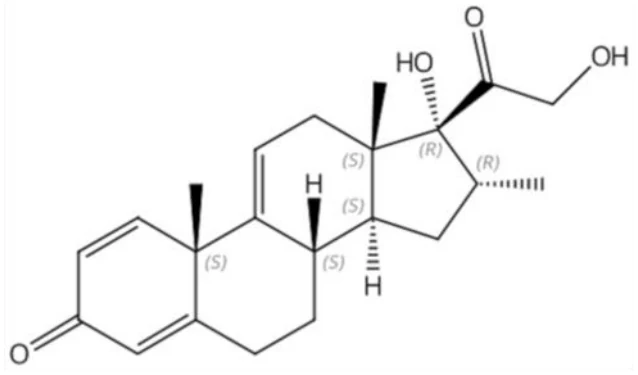
Physicochemical properties: white to off-white powder. Vamorolone is freely soluble in methanol and dioxane and sparingly soluble in ethanol and acetone.
14. Clinical Trials
Table 6 - Summary of Patient Demographics for Clinical Trials in Duchenne Muscular Dystrophy (DMD)
| Study # | Study design | Dosage, route of administration and duration | Study subjects (n) | Mean age (Range) | Sex |
| Study # | Study design | Dosage, route of administration and duration | Study subjects (n) | Mean age (Range) | Sex |
| VBP15-004 | Randomized, double-blind, parallel group, placebo and active control | Period 1: 1-24 weeks, oral PBO PRED 0.75 mg/ kg/ day VAM 2 mg/ kg/ day VAM 6 mg/ kg/ day | 121 | 5.4 years (4 - < 7) | Males |
Period 2: 24-48 weeks, oral PBO crossed over 1:1 VAM (2 mg/ kg/ day or 6 mg/ kg/ day) PRED crossed over 1:1 VAM (2 mg/ kg/ day or 6 mg/ kg/ day) Retained on VAM 2 mg/ kg/ day Retained on VAM 6 mg/ kg/ day | 114 | ||||
| VBP15-006 | A Phase II Open-label, Multiple Dose Study to Assess the Safety, (PK), (PD), and Exploratory Efficacy of Vamorolone | Daily doses of 2 mg/kg or 6 mg/kg in steroid-naïve boys aged 2 to <4 years, and in glucocorticoid-pretreated and previously untreated boys aged 7 to <18 years with DMD | 20 34 | 2-<4 Years 7-<18 years | Males |
PBO = Placebo, VAM = Vamorolone
14.1. Clinical Trials by Indication
The efficacy of AGAMREE for the treatment of DMD was evaluated in a multi-centre, randomised, double-blind, parallel-group, placebo- and active-controlled study of 24 weeks duration (Period 1) followed by a double-blind extension phase (Period 2). The population consisted of 121 male patients 4 to < 7 years of age at time of enrolment in the study who were corticosteroid naïve and ambulatory, with a confirmed diagnosis of DMD.
The patients were randomized to one of the following treatments: vamorolone 6 mg/kg/day (n = 30), vamorolone 2 mg/kg/day (n = 30), prednisone 0.75 mg/kg/day (n = 31), or placebo (n = 30). After 24 weeks (Period 1, primary efficacy analysis), patients who had been receiving prednisone or placebo were re-assigned according to an initially defined randomisation scheme to either vamorolone 6 mg/kg/day or 2 mg/kg/day for an additional 20 weeks of treatment (following the 3-week tapering period) (Period 2).
Efficacy was evaluated by assessing the change from Baseline to Week 24 in Time to Stand Test (TTSTAND) velocity for vamorolone 6 mg/kg/day compared to placebo. A pre-specified hierarchical analysis of relevant secondary endpoints consisted of change from baseline in TTSTAND velocity for the vamorolone 2 mg/kg/day vs placebo group, change from baseline in 6 Minute Walk Test (6MWT) distance for vamorolone 6 mg/kg/day followed by 2 mg/kg/day vs placebo and Time to Run/Walk 10 m (TTRW) velocity for 6 mg/kg/day followed by 2 mg/kg/day.
Study Results
Treatment with vamorolone 6 mg/kg/day and 2 mg/kg/day resulted in a statistically significant improvement in change in TTSTAND velocity and change in 6MWT distance between baseline and Week 24 compared to placebo (See Table 7).
No clinically meaningful difference was seen in efficacy at week 24 for vamorolone 2 mg/kg compared with 6 mg/kg.
Table 7 – Results of Key Endpoints at Week 24 in Subjects with Duchenne Muscular Dystrophy in Study VBP15-004
| VBP15-004 | |||||||||
|---|---|---|---|---|---|---|---|---|---|
| VBP15-004 | |||||||||
| Vamorolone (mg/kg) | Placebo | Adjusteda treatment difference (95% CI) | P-value | ||||||
| Vamorolone (mg/kg) | Placebo | Adjusteda treatment difference (95% CI) | P-value | ||||||
| Primary endpoint | |||||||||
TTSTAND velocity (meters/sec) with vamorolone 6 mg/ kg LSM (SE) change from baseline | 0.0483 (0.0136) N = 27 | -0.0120 (0.0135) N = 28 | 0.0603b (0.0230, 0.0976)b | 0.0018 | |||||
| Key secondary endpoints | |||||||||
TTSTAND velocity (meters/sec) with vamorolone 2 mg/kg LSM (SE) change from baseline | 0.0328 (0.0131) N = 29 | -0.0120 (0.0135) N = 28 | 0.0449 b (0.0082, 0.0816) | 0.0171 | |||||
6MWT Distance (meters) with 6 mg/kg vamorolone LSM (SE) change from baseline | 28.3408 (9.5565) N = 20 | -13.2450 (10.0384) N = 19 | 41.5858 b (14.2320, 68.9396) | 0.0033 | |||||
6MWT Distance (meters) with 2 mg/kg vamorolone LSM (SE) change from baseline | 23.8792 (9.6944) N = 20 | -13.2450 (10.0384) N = 19 | 37.1243 b (9.5528, 64.6957) | 0.0089 | |||||
TTRW velocity (meters/sec) with 6 mg/kg vamorolone LSM (SE) change from baseline | 0.2578 (0.0542) N = 25 | 0.0140 (0.0556) N = 24 | 0.2439 b (0.0932, 0.3945) | 0.0018 | |||||
TTRW velocity (meters/sec) with 2 mg/kg vamorolone LSM (SE) change from baseline | 0.1413 (0.0554) N = 24 | 0.0140 (0.0556) N = 24 | 0.1273 (-0.0262, 0.2809) | 0.1031 | |||||
TTSTAND velocity = 1 / TTSTAND and is expressed as rises/sec. a. Based on restricted maximum likelihood (REML)-based mixed model repeated measures adjusted for randomization stratification factors b. Statistically significant under multiplicity control for vamorolone vs placebo comparison (p < 0.05) CI = Confidence Interval, TTSTAND = Time to stand, 6MWT = 6-minute walk test, TTRW = time to run/ walk | |||||||||
15. Microbiology
No microbiological information is required for this drug product.
16. Non-Clinical Toxicology
General toxicology Repeated vamorolone administration resulted in transient increases of triglycerides and cholesterol as well as liver enzymes in mice and dogs. Focal hepatic inflammation/necrosis observed in both species might have developed secondary to the hepatocellular hypertrophy and vacuolation containing glycogen and lipid accumulations that likely reflect the stimulation of gluconeogenesis. Long-term vamorolone dosing also caused adrenal cortex atrophy in mice and dogs, which are ascribable to the known suppression of the hypothalamic-pituitary-adrenal axis by glucocorticoid agents. The primary anti-inflammatory activity of vamorolone further accounted for mild to moderate lymphocyte depletion in spleen, thymus and lymph nodes of both species. The adverse liver and adrenal gland findings and the lymphoid changes in mice and dogs developed with no safety margins to the MRHD based on AUC.
Genotoxicity
Vamorolone did not exert any genotoxic potential in the standard test battery.
Carcinogenicity
Carcinogenicity studies have not been conducted with vamorolone, but the absence of pre-neoplastic lesions in long-term toxicity studies and experience with other glucocorticoid agents do not suggest a particular carcinogenic hazard.
Reproductive and developmental toxicology
No standard reproductive and developmental toxicity studies have been performed. Vamorolone did not adversely affect the development of sperm and reproductive tissues in the chronic toxicity study in mice. Following chronic dosing in dogs, incompletely reversible spermatocyte/spermatid degenerations were observed in testes leading to oligospermia and germ cell debris in epididymides. Furthermore, the prostate glands were reduced and contained less secretory product. In female animals, long-term repeated dosing in dogs additionally resulted in partially reversible bilateral absence of corpora lutea in the ovaries. The inhibition of male and female fertility is attributable to the known interference of long-term glucocorticoid treatment with the hypothalamus-pituitary-gonadal axis and developed without AUC-based safety margin to humans at the MRHD.
Juvenile toxicity
The main target organs of vamorolone in male and female juvenile mice overlap with those of adult mice such as adrenal cortical atrophy and vamorolone-related adverse hepatocellular degeneration/necrosis. Vamorolone-related effects exclusively observed in juvenile mice were non-adverse tibia and body lengths reductions in male and female animals and were attributed to the induction of slower growths. In addition, acinar cell hypertrophy of mandibular salivary glands were detected in female animals. Whereas growth retardation is a well-known effect associated with glucocorticoid treatment of children, the relevance of the salivary gland findings for children is unknown. At the no observed adverse effect level (NOAEL) for general toxicity in male and female juvenile mice, no safety margin with respect to human exposure at the MRHD exists.
Oral administration of vamorolone (0, 15, 30, or 100 mg/kg/day) to juvenile mice from postnatal days 21 to 81 resulted in no adverse effects on neurobehavioral function, sexual maturation, or reproductive function. Atrophy of the adrenal cortex, degeneration/necrosis of the liver, and decreased lymphocytes in lymphatic tissues were observed at all doses. A no effect dose for general toxicity was not identified. Plasma exposures (AUC) at the lowest dose tested (15 mg/kg/day) were lower than that in humans at the maximum recommended human dose (240 mg/day).