


Product Monograph - Trispan
RECENT MAJOR LABEL CHANGES
Not Applicable
TABLE OF CONTENTS
Sections or subsections that are not applicable at the time of authorization are not listed.
RECENT MAJOR LABEL CHANGES ........................................................................................ 2
TABLE OF CONTENTS ............................................................................................................. 2
PART I: HEALTH PROFESSIONAL INFORMATION.................................................................. 4
1 INDICATIONS .................................................................................................................... 4
1.1 Pediatrics (3 - 12 years of age): .................................................................................... 4
1.2 Geriatrics (over 65 years of age): ................................................................................. 4
2 CONTRAINDICATIONS...................................................................................................... 4
4 DOSAGE AND ADMINISTRATION..................................................................................... 4
4.1 Dosing Considerations ................................................................................................. 4
4.2 Recommended Dose and Dosage Adjustment............................................................. 5
4.4 Administration............................................................................................................... 6
5 OVERDOSAGE .................................................................................................................. 6
6 DOSAGE FORMS, STRENGTHS, COMPOSITION AND PACKAGING............................... 6
7 WARNINGS AND PRECAUTIONS ..................................................................................... 7
7.1 Special Populations ...................................................................................................... 9
7.1.1 Pregnant Women: .................................................................................................. 9
7.1.2 Breast-feeding: ...................................................................................................... 9
7.1.3 Pediatrics (< 18 years of age):............................................................................... 9
8 ADVERSE REACTIONS ................................................................................................... 10
8.1 Adverse Reaction Overview........................................................................................ 10
9 DRUG INTERACTIONS .................................................................................................... 11
9.2 Drug Interactions Overview ........................................................................................ 11
9.4 Drug-Drug Interactions ............................................................................................... 11
9.5 Drug-Food Interactions ............................................................................................... 13
9.6 Drug-Herb Interactions ............................................................................................... 13
9.7 Drug-Laboratory Test Interactions ............................................................................. 13
10 CLINICAL PHARMACOLOGY.......................................................................................... 13
10.1 Mechanism of Action .................................................................................................. 13
10.2 Pharmacodynamics .................................................................................................... 14
10.3 Pharmacokinetics ....................................................................................................... 14
11 STORAGE, STABILITY AND DISPOSAL ......................................................................... 14
PART II: SCIENTIFIC INFORMATION ..................................................................................... 15
13 PHARMACEUTICAL INFORMATION ............................................................................... 15
16 NON-CLINICAL TOXICOLOGY ........................................................................................ 16
PATIENT MEDICATION INFORMATION ................................................................................. 17
PART I: HEALTH PROFESSIONAL INFORMATION
1 INDICATIONS
Trispan (triamcinolone hexacetonide) is indicated for intra-articular, intrasynovial, or periarticular use in adults and adolescents (12 – 18 years of age) for the symptomatic treatment of subacute and chronic inflammatory joint diseases including:
- Rheumatoid arthritis
- Juvenile Idiopathic Arthritis (JIA)
- Osteoarthritis and post-traumatic arthritis
- Synovitis, tendinitis, bursitis and epicondylitis
Trispan has low solubility, delayed onset of action, and prolonged duration of action. If a more rapid therapeutic effect is desired, then a more soluble corticosteroid should be administered (locally or systemically).
1.1 Pediatrics (3 - 12 years of age):
Trispan may be used as an intra-articular injection in children aged 3-12 years with Juvenile Idiopathic Arthritis (see 7 WARNINGS AND PRECAUTIONS – Special Populations, and 4 DOSAGE AND ADMINISTRATION).
1.2 Geriatrics (over 65 years of age):
No overall differences in safety or effectiveness were observed between elderly subjects and younger subjects. Reported clinical experience has not identified differences in responses between the elderly and younger patients, but greater sensitivity of some older individuals cannot be ruled out.
2 CONTRAINDICATIONS
Trispan is contraindicated in:
- Patients with acute psychoses, active tuberculosis, herpes simplex keratitis, and systemic mycoses and parasitoses (strongyloides infections).
- Infants and children up to 3 years of age. Trispan contains benzyl alcohol, which may provoke toxic reactions in children under 3 years of age.
- Patients who are hypersensitive to this drug or to any ingredient in the formulation (including benzyl alcohol and any other non-medicinal ingredients), or to any component of the container (For a complete listing, see the 6 DOSAGE FORMS, STRENGTHS, COMPOSITION AND PACKAGING section).
- Use for epidural and intrathecal administration. Reports of serious medical events, including death, have been associated with epidural and intrathecal routes of corticosteroid administration. Appropriate measures must be taken to avoid intravascular injection.
4 DOSAGE AND ADMINISTRATION
4.1 Dosing Considerations
Trispan contains benzyl alcohol as a preservative. Benzyl alcohol has been linked to severe adverse reactions and death, especially in very young pediatric patients (see 2 CONTRAINDICATIONS, and 7 WARNINGS AND PRECAUTIONS – Special Populations, Pediatrics).
At each session, several injections may be given into multiple joints. Do not administer into unstable joints.
This formulation is intended for intra-articular, periarticular and intrasynovial use. It must not be used for intravenous, intra-ocular, epidural or intrathecal use.
Patients should be monitored for undesirable effects related to triamcinolone, and the dose should be adjusted if necessary.
4.2 Recommended Dose and Dosage Adjustment
The lowest effective dose should be used, and injections should not be repeated unless clinically indicated.
Intra-Articular Injection (dosage for adults and adolescents (12 – 18 years of age)) for all indications:
Average Dose: 2 to 20 mg (0.1 mL to 1.0 mL)
The dose depends on the size of the joint to be injected, the degree of inflammation and the amount of articular fluid present. In general, large joints (such as knee, hip, shoulder) require 10 to 20 mg (0.5 – 1.0 mL) and medium-sized joints require 5-10 mg (0.25 – 0.5 mL). For small joints, (such as interphalangeal, metacarpophalangeal), 2 to 6 mg may be employed. When the amount of synovial fluid is increased, aspiration may be performed before administering Trispan. Subsequent dosage and frequency of injections can best be judged by clinical response.
The usual frequency of injection into a single joint is every three to four weeks (although in many cases patients may experience longer relief of symptoms), and injection more frequently than that is generally not advisable. Triamcinolone hexacetonide is long-acting, and therefore administration of injections into individual joints more frequently than at 3–4-week intervals is not recommended. To avoid possible joint destruction from repeated use of intra-articular corticosteroids, injection should be as infrequent as possible, consistent with adequate patient care. Attention should be paid to avoid deposition of drug along the needle path, which might produce atrophy of surrounding tissues.
Dosage for intra-articular use in children aged 3 to 12 years with Juvenile Idiopathic Arthritis:
The dosage regime for triamcinolone hexacetonide intra-articular injection for JIA in children (3- 12 years old) is 1 mg/kg for large joints (knees, hips, and shoulders) and 0.5 mg/kg for smaller joints (ankles, wrists and elbows). For the hands and feet, 1-2 mg/joint for metacarpophalangeal/ metatarsophalangeal (MCP/MTP) joints, and 0.6-1 mg/joint for proximal interphalangeal (PIP) joints may be used.
Peri-Articular Injection (dosage for adults and adolescents only):
Bursitis/Epicondylitis: Generally the dose is 10-20 mg (0.5-1.0 mL) depending on the size of the bursa and the severity of the disease. In the majority of cases a single treatment is sufficient.
Synovitis/Tendinitis: Generally the dose is 10-20 mg (0.5-1.0 mL). The need for additional injections should be determined on the basis of response to treatment.
4.4 Administration
Strict aseptic administration technique is mandatory. The injection site should be sterilised using the same technique as for lumbar puncture. Topical ethyl chloride spray may be used locally before injection. Over-distention of the joint capsule and deposition of the steroid along the needle track should be avoided. Do not administer into unstable joints.
The product is a milky white suspension in which some white or grey crystals may be visible before use. No filter should be used during administration.
The vial should be shaken before use to ensure a uniform suspension. Prior to withdrawal, the suspension should be inspected for clumping or granular appearance. The presence of visible crystals is normal as the product is a suspension. To open, firmly grasp the top portion in your dominant hand, between thumb and forefinger. Hold the bottom of the ampoule in the other hand. Apply firm but gentle pressure near the blue dot to break the neck of the ampoule.
If necessary, Trispan may be mixed with 1% or 2% lidocaine hydrochloride. Trispan should be drawn into the syringe before drawing in the lidocaine to prevent contamination of triamcinolone hexacetonide. The syringe should then be shaken gently, and the resulting solution used immediately thereafter. Since Trispan has been designed for ease of administration, a small bore needle (25 or 26 gauge) may be used.
The use of solvents containing methylparaben, propylparaben, phenol, etc. should be avoided, since they may cause precipitation of the steroid.
The ready-to-use crystal suspension should be used immediately after opening. Any unused portion should be discarded after use and must not be reused.
5 OVERDOSAGE
Treatment of acute overdosage is by supportive and symptomatic therapy. Excess dosage or too-frequent administration of injections into the same site may cause local subcutaneous atrophy. If this occurs, recovery may take several months due to the long-term effect of the drug.
There is no satisfactory treatment or antidote known.
| For management of a suspected drug overdose, contact your regional Poison Control Centre. |
6 DOSAGE FORMS, STRENGTHS, COMPOSITION AND PACKAGING
Table – Dosage Forms, Strengths, Composition and Packaging
| Route of Administration | Dosage Form / Strength/ Composition | All Nonmedicinal Ingredients |
| Intra-Articular/ Periarticular/ Intrasynovial Injection | Suspension, 20 mg/mL | benzyl alcohol, polysorbate 80, sorbitol liquid and water for injection |
Trispan is supplied in 1 mL ampoules, 20 mg/mL in packs of 10
7 WARNINGS AND PRECAUTIONS
General
Trispan must not be administered intravenously, intraocularly, epidurally or intrathecally.
Trispan should not be used to alleviate joint pain arising from infectious states such as gonococcal or tubercular arthritis.
Warning and precautions relating to potential systemic glucocorticoid effects.
This product contains a potent glucocorticoid, and even though systemic adverse effects are unusual when glucocorticoids are given as an intra-articular injection triamcinolone hexacetonide should be used with caution in patients suffering from the following conditions:
- cardiac insufficiency, acute coronary artery disease,
- hypertension,
- thrombophlebitis, thromboembolism
- myasthenia gravis,
- osteoporosis,
- gastric ulcer, diverticulitis, ulcerative colitis, recent intestinal anastomosis,
- exanthematous diseases,
- psychosis,
- Cushing’s syndrome,
- diabetes mellitus (transient increase in blood glucose levels can occur),
- hypothyroidism,
- renal insufficiency, acute glomerulonephritis, chronic nephritis,
- cirrhosis,
- infections that cannot be treated with antibiotics,
- metastatic carcinoma
- active tuberculosis
- herpes simplex keratitis,
- systemic mycoses and parasitoses (strongyloides infections).
Inadvertent injection into the soft tissues around the joint may lead to an increased incidence of systemic effects, as may peri-articular injections. As with all local injections, care should be taken to avoid entering a blood vessel. Adverse reactions may be minimised by using the lowest effective dose for a minimum duration of time. Frequent patient review is required to titrate the dose appropriately against disease activity (refer to 4 DOSAGE AND ADMINISTRATION).
Carcinogenesis, Mutagenesis, Impairment of Fertility
No adequate studies have been conducted in animals to determine whether corticosteroids have a potential for carcinogenesis or mutagenesis.
Cardiovascular
Glucocorticoids may increase the risk for thromboembolic events.
Endocrine and Metabolism
Adrenal cortical atrophy develops during prolonged corticosteroid therapy and may persist for years after stopping treatment. Withdrawal of corticosteroids after prolonged therapy must, therefore, always be gradual to avoid acute adrenal insufficiency and should be tapered off over weeks or months according to the dose and duration of treatment. During prolonged therapy any intercurrent illness, trauma, or surgical procedure may require a temporary increase in dosage. If corticosteroids have been stopped following prolonged therapy, they may need to be reintroduced temporarily.
Immune
Patients should not be vaccinated or immunized with live vaccines while they are under treatment with moderate or high dose corticosteroids for longer than 2 weeks treatment, since a possible lack of an antibody response may predispose to medical, and particularly neurological, complications. Intraarticular and periarticular corticosteroid use, or steroids given for less than 2 weeks, or in a long-term regular dosage of 10 mg daily, are not considered a contraindication to use of live vaccines.
Caution should be used in the event of exposure to chickenpox, measles or other communicable diseases, since the course of specific viral diseases such as chickenpox and measles may be particularly severe in patients treated with glucocorticoids. At particular risk are immunocompromised (immunosuppressed) children and individuals with no history of chickenpox or measles infection. If such individuals should come into contact with people infected with chickenpox or measles during treatment with Trispan, prophylactic treatment should be considered as appropriate.
Musculoskeletal
Trispan is a corticosteroid product which may increase calcium excretion, and predispose patients to osteoporosis.
The prolonged and repeated use of glucocorticoids in weight-bearing joints may result in further joint degeneration. This may be related to increased use of still-diseased joints following relief of pain and other symptoms, or it may be due to inhibition by corticosteroids of protein synthesis in articular cartilage. It is inadvisable to inject unstable joints. Repeated injections may, in some cases, result in instability of the joint. Severe joint destruction with necrosis of bone may occur if repeated intra-articular injections are given over a long period of time.
Sterile technique is necessary to prevent infections or contamination. Appropriate examination of any joint fluid present is necessary to exclude a septic process. A marked increase in pain, accompanied by local swelling, further restriction of joint motion, fever and malaise occurring after intra-articular injection is suggestive of septic arthritis. If this complication appears and the diagnosis of sepsis is confirmed, antimicrobial therapy should be instituted immediately.
Patients should be advised not to overuse treated joints in which symptomatic benefit has been obtained as long as the inflammatory process remains active.
Ophthalmologic
Ophthalmic complications during prolonged corticosteroid therapy have been observed. These include posterior subcapsular cataract, central serous chorioretinopathy, glaucoma and possible damage to optic nerves, and enhancement of secondary ocular infections due to fungi or virus.
Psychiatric Disorders
Psychiatric disorders may be seen with corticosteroid treatment, including sleep disorders, depression, euphoria, mood swings, psychotic disorders and personality disorders. Existing emotional instability or psychotic disorder may be aggravated by corticosteroids.
Sensitivity/Intolerance
Trispan contains sorbitol. Patients with very rare hereditary problems of fructose intolerance should not take this medicine.
Reproductive Health: Female and Male Potential
Corticosteroid therapy may cause menstrual disorders and amenorrhea in premenopausal women, and vaginal bleeding in postmenopausal women.
Steroids may increase or decrease motility and number of spermatozoa in some patients.
(See also 2 CONTRAINDICATIONS, 7.1.1 Pregnant Women)
7.1 Special Populations
1.1.1 Pregnant Women:
Triamcinolone crosses the placenta. Corticosteroids have been shown to be teratogenic in many species when given at doses equivalent to the human dose. Animal studies in which corticosteroids have been given to pregnant mice, rats, and rabbits have yielded an increased incidence of cleft palate in the offspring. Long-term use of corticosteroids in humans and animals has led to a decrease in weight of the placenta and the newborn.
There are no adequate and well-controlled studies in pregnant women. Trispan should be used during pregnancy only if the potential benefit to the mother clearly outweighs the risk to the fetus. Infants born to mothers who have received corticosteroids during pregnancy should be carefully observed for signs of hypoadrenalism.
7.1.2 Breast-feeding:
Triamcinolone hexacetonide is excreted in human milk, but is not likely to have any effect on the child at therapeutic doses. Caution must be observed with the long-term use of large doses.
7.1.3 Pediatrics (< 18 years of age):
Children on prolonged corticosteroid therapy should have their growth and development monitored.
This product contains benzyl alcohol as a preservative. Benzyl alcohol has been linked to severe adverse reactions and death, especially in very young pediatric patients. Exposure to excessive quantities of benzyl alcohol has been linked to toxicity (hypotension, metabolic acidosis, respiratory distress – “Gasping Syndrome”), especially in neonates, and to an increased incidence of kernicterus, mainly in premature infants. Although normal therapeutic doses of Trispan release substantially lower quantities of benzyl alcohol than those associated with “Gasping Syndrome,” the minimum quantity of benzyl alcohol capable of producing toxicity is not known. Premature and low-birth-weight infants, as well as patients taking high doses, are more likely to develop toxicity.
8 ADVERSE REACTIONS
8.1 Adverse Reaction Overview
Adverse reactions depend on the dose and the duration of treatment. Systemic adverse reactions are rare, but may occur as a result of repeated periarticular injection. As with other intra-articular steroid treatments, transient adrenocortical suppression has been observed during the first week after injection. This effect is enhanced if corticotropin or oral steroids are used concomitantly.
Administration site conditions: local reactions include sterile abscesses, post-injection erythema, pain, swelling and necrosis at the injection site; excess dosage or too-frequent administration of injections into the same site may cause local subcutaneous atrophy, which, due to the properties of the drug, will only return to normal after several months. As with all glucocorticoids, an exacerbation of symptoms or “flare-up” may occur following injection. Local atrophy, burning, flushing, pain and swelling may occur. See 7 WARNINGS AND PRECAUTION
Cardiovascular: cardiac failure; arrhythmias, bradycardia, cardiac arrest, cardiac enlargement, circulatory collapse, congestive heart failure, fat embolism, hypertension, hypertrophic cardiomyopathy in premature infants, myocardial rupture following recent myocardial infarction, pulmonary edema, syncope, tachycardia, thromboembolism, thrombophlebitis, vasculitis. See 7 WARNINGS AND PRECAUTION
Dermatologic: hyperpigmentation or hypopigmentation, impaired wound healing, thin and fragile skin, petechiae and ecchymoses, facial erythema, increased sweating, purpurea, striae, acneiform eruptions, hives, rash, acne, allergic dermatitis, cutaneous and subcutaneous atrophy, dry scaly skin, edema, sterile abscess, striae, suppressed reactions to skin tests, thinning scalp hair, urticaria.
Endocrine: menstrual irregularities, amenorrhoea and postmenopausal vaginal bleeding, hirsutism, development of a Cushingoid state, secondary adrenocortical and pituitary unresponsiveness, particularly during periods of stress (e.g. trauma, surgery or illness), manifestation of latent diabetes mellitus, decreased carbohydrate and glucose tolerance, glycosuria, hypertrichosis, increased requirements for insulin or oral hypoglycemic agents in diabetics, suppression of growth in pediatric patients. See 7 WARNINGS AND PRECAUTION
Gastrointestinal disorders: peptic ulcers with possibility of subsequent perforation and haemorrhage, pancreatitis, abdominal distention, bowel/bladder dysfunction (after intrathecal administration), elevation in serum liver enzyme levels (usually reversible upon discontinuation), hepatomegaly, increased appetite, nausea, perforation of the small and large intestine (particularly in patients with inflammatory bowel disease), ulcerative esophagitis. See 7 WARNINGS AND PRECAUTION
Immune system disorders: anaphylactoid reactions, anaphylaxis, angioedema, exacerbation or masking of infections. See 7 WARNINGS AND PRECAUTION
Metabolic: negative nitrogen balance owing to protein catabolism. See 7 WARNINGS AND PRECAUTION
Musculoskeletal: tendon rupture, loss of muscle mass, osteoporosis, aseptic necrosis of the heads of the humerus and femur, spontaneous fractures, Charcot-like arthropathy, calcinosis (following intra-articular or intralesional use), muscle weakness, pathologic fracture of long bones, post-injection flare (following intra-articular use), steroid myopathy, vertebral compression fractures. See 7 WARNINGS AND PRECAUTION
Neurologic/Psychiatric: vertigo; increased intracranial pressure with papilloedema (pseudotumor cerebri) usually after treatment; headache, insomnia; exacerbation of existing psychiatric symptoms; depression (sometimes severe); euphoria; mood swings; psychotic symptoms, convulsions, emotional instability, neuritis, neuropathy, paresthesia, personality changes, psychic disorders, vertigo. Arachnoiditis, meningitis, paraparesis/paraplegia, and sensory disturbances have occurred after intrathecal administration. See 7 WARNINGS AND PRECAUTION
Ophthalmic: posterior subcapsular cataracts, increased intraocular pressure, glaucoma, blurred vision, exophthalmos, rare instances of blindness associated with periocular injections. See 7 WARNINGS AND PRECAUTION
Renal and urinary: Increased calcium excretion. See 7 WARNINGS AND PRECAUTION
9 DRUG INTERACTIONS
9.2 Drug Interactions Overview
The drug-drug interactions listed in Table 1 below outline the potential interactions associated with corticosteroid injectable products.
9.4 Drug-Drug Interactions
Table 1 - Established or Potential Drug-Drug Interactions
| Triamcinolone Hexacetonide | Ref | Clinical comment |
|---|---|---|
| Amphotericin B injection and potassium-depleting agents | T | Patients should be monitored for additive hypokalaemia. |
| Anticholinesterases | T | The effect of anticholinesterase agent may be antagonised. |
| Anticholinergics (e.g. atropine) | T | Additional increase of intraocular pressure is possible. |
| Anticoagulants (oral) | T | Corticosteroids may potentiate or decrease anticoagulant effect. For this reason, patients receiving oral anticoagulants and corticosteroids should be closely monitored |
| Antidiabetics (e.g. sulfonylurea derivatives) and insulin | T | Corticosteroids may increase the levels of glucose in the blood. Diabetic patients should be monitored, especially on instigation and discontinuation of treatment of corticosteroids and if the dosage is changed. |
| Antihypertensives, including diuretics | T | The reduction in arterial blood pressure may be diminished. |
| Triamcinolone Hexacetonide | Ref | Clinical comment |
|---|---|---|
| Antituberculosis drugs | T | Isoniazid serum concentrations may be decreased. |
| Cyclosporine | T | When used concomitantly, this substance may produce an increase in both cyclosporine and corticosteroid activity. |
| Digitalis glycosides | T | Concomitant administration may increase the likelihood of digitalis toxicity. |
| Hepatic Enzyme Inducers (e.g. barbiturates, phenytoin, carbamazepine, rifampicin, primidone, aminoglutethimide) | T | There may be increased metabolic clearance of triamcinolone hexacetonide. Patients should be carefully observed for possible reduced effect of triamcinolone hexacetonide, and the dosage should be adjusted accordingly. |
| Hepatic enzyme inhibitors | T | Protease inhibitors (including ritonavir) or ketoconazole may decrease corticosteroid clearance via CYP3A4 inhibition resulting in increased effects such as Cushing’s syndrome and adrenal suppression. Patients should be monitored for undesirable effects due to triamcinolone and the dose should be adjusted if needed. |
| Human growth hormone (somatropin) | T | The growth-promoting effect may be inhibited during long-term therapy with triamcinolone hexacetonide. |
| Non-depolarising muscle relaxants | T | Corticosteroids may decrease or enhance the neuromuscular blocking action. |
| Non-steroidal anti-inflammatory agents (NSAIDs) | T | Corticosteroids may increase the incidence and/or severity of gastrointestinal bleeding and ulceration associated with NSAIDs. Corticosteroids may also reduce serum salicylate levels and therefore decrease their efficacy. Conversely, discontinuing corticosteroids during high-dose salicylate therapy may result in salicylate toxicity. Caution must be exercised during concomitant use of acetylsalicylic acid and corticosteroids in patients with hypoprothrombinaemia. |
| Oestrogens, including oral contraceptives | T | Corticosteroid half-life and concentration may be increased and clearance decreased. |
| Thyroid drugs | T | Metabolic clearance of adrenocorticoids is decreased in hypothyroid patients and increased in hyperthyroid patients. Changes in thyroid status of the patient may necessitate adjustments to the dosage of adrenocorticoids. |
| Triamcinolone Hexacetonide | Ref | Clinical comment |
|---|---|---|
| Vaccines | T | Neurological complications and a diminished antibody response may occur when patients taking corticosteroids are vaccinated. Corticosteroids may also potentiate the replication of some organisms contained in live attenuated vaccines. If possible, routine administration of vaccines or toxoids should be deferred until corticosteroid therapy is discontinued. |
| Medications that prolong the QT interval or induce torsade de pointes | T | Concomitant treatment with triamcinolone hexacetonide and class Ia antiarrhythmic agents such as disopyramide, quinidine and procainamide, or other class II antiarrhythmic agents such as amiodarone, bepridil and sotalol, is not recommended. Extreme caution is required in cases of concomitant administration with phenothiazines, tricyclic antidepressants, terfenadine and astemizole, vincamine, erythromycin i.v., halofantrine, pentamidine and sultopride. Combination with agents that cause electrolyte disturbances such as hypokalaemia (potassium-depleting diuretics, amphotericin B i.v. and certain laxatives), hypomagnesaemia and severe hypocalcaemia is not recommended. |
Legend: C = Case Study; CT = Clinical Trial; T = Theoretical
9.5 Drug-Food Interactions
Interactions with food have not been established.
9.6 Drug-Herb Interactions
Interactions with herbal products have not been established.
9.7 Drug-Laboratory Test Interactions
Corticosteroids may interfere with the nitroblue tetrazolium test for bacterial infection, producing false-negative results.
Athletes should be informed that this medicinal product contains an ingredient (triamcinolone hexacetonide) that may produce a positive result in anti-doping tests.
10 CLINICAL PHARMACOLOGY
10.1 Mechanism of Action
Trispan contains the synthetic long-acting glucocorticoid, triamcinolone hexacetonide, as a sterile aqueous suspension. It has a prolonged anti-inflammatory action.
The product is a microcrystalline water suspension with a depot effect. Trispan is a relatively water insoluble derivative of triamcinolone acetonide (0.0002% at 25°C in water). It is not rapidly removed from the site of injection after intra-articular administration, nor is it rapidly metabolized in situ.
10.2 Pharmacodynamics
Trispan is a synthetic glucocorticoid with pronounced anti-inflammatory activity. TAH, the t-butylacetic acid ester of triamcinolone acetonide, is almost insoluble in water and therefore dissolution/dispersion in the tissue at the injection site is generally slow, taking a few weeks to several months. Esterification at C21 of the steroid ring prevents glucocorticoid activity, but once in solution the t-butylacetic acid ester group is hydrolysed to release the active anti-inflammatory moiety, triamcinolone acetonide. TAH forms a depot in/around the affected joint, resulting in extremely low systemic levels, although systemic absorption is almost complete.
The anti-inflammatory potency of triamcinolone on a milligram by milligram comparison is approximately five times that of hydrocortisone. Triamcinolone has practically no mineralocorticoid effect, therefore no sodium retention occurs.
10.3 Pharmacokinetics
The hexacetonide ester is almost insoluble in water, so dissolution is slow and the effect in the tissue of the injection site lasts for a long time, from a few weeks to several months. Generally, the onset of effect after Trispan administration occurs after 24 hours and normally lasts for 4 to 6 weeks.
Triamcinolone hexacetonide is hydrolysed by human serum in vitro (43% hydrolysed after 24 hours), but following intra-articular injection the substance does not disperse in situ.
Special Populations and Conditions
- Pediatrics
Pediatrics: Published studies and current therapeutic guidelines on the treatment of Juvenile Idiopathic Arthritis (JIA) indicate efficacy and safety of Trispan in children and adolescents with this condition.
11 STORAGE, STABILITY AND DISPOSAL
Keep out of the reach or sight of children.
Store between 15°C – 30°C.
PART II: SCIENTIFIC INFORMATION
13 PHARMACEUTICAL INFORMATION
Drug Substance
Proper name: triamcinolone hexacetonide
Chemical name: 9-fluoro-11β,16α,17,21-tetrahydroxypregna-1,4-diene-3,20-dione cyclic 16,17-acetal with acetone 21-(3,3-dimethylbutyrate)
Molecular formula and molecular mass: C30H41FO7 and 532.6 g/mol
Structural formula:
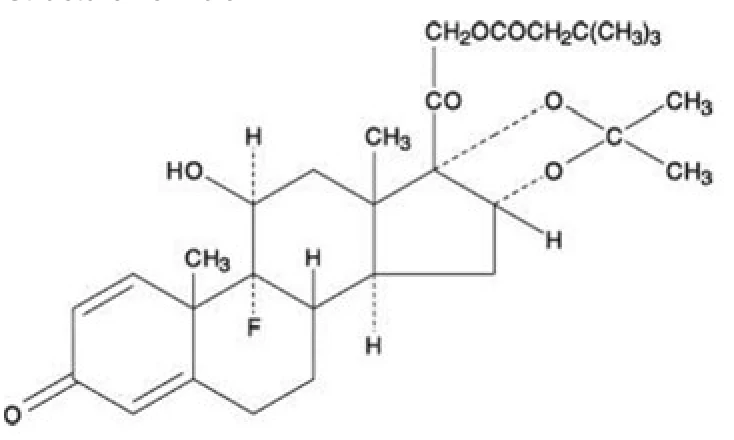
Physicochemical properties: Triamcinolone hexacetonide is a white or cream coloured powder, insoluble in water.
16 NON-CLINICAL TOXICOLOGY
General Toxicology
Based on conventional studies of safety pharmacology and repeat dose toxicology studies, no unexpected hazards have been identified. The median lethal dose in mice after 7, 14 and 21 days was in excess of 4000 mg/kg, 2000 mg/kg and 1000 mg/kg respectively following subcutaneous administration. The median lethal dose in rats after 7 and 14 days was 419 mg/kg and 21 mg/kg, following subcutaneous administration.
Sub-acute and chronic toxicity studies in animals did not produce any findings that could be attributed to the drug, other than those which are associated with the pharmacologic activities of steroids, (decreased body weight gain, the reduction in resistance to infection, hematologic abnormalities, effects on adrenals, thymus, etc.).
Carcinogenicity
Long-term studies in animals have not been performed to evaluate carcinogenic potential.
Genotoxicity
There was no evidence of a potential for genetic and chromosome mutations when tested in limited studies performed in bacterial and mammalian cells.
Reproductive and Developmental Toxicology
Corticosteroids have been shown to reduce fertility when administered to rats.
Triamcinolone hexacetonide is a potent teratogen in many animals. Cleft palate has been reported in mice, rats, rabbits, and hampsters at doses equivalent to the human dose. CNS anomalies and cranial malformations have been observed in monkeys following gestational exposure. To date however, no signs of teratogenicity of corticosteroids have been observed in humans.