


Product Monograph - Kenalog-10 Injection
RECENT MAJOR LABEL CHANGES
| 4 DOSAGE AND ADMINISTRATION, 4.4 Administration | 06/2024 |
|---|---|
| 7 WARNINGS AND PRECAUTIONS, Ophthalmologic | 08/2023 |
TABLE OF CONTENTS
RECENT MAJOR LABEL CHANGES .................................................................................... 2
TABLE OF CONTENTS ..................................................................................................... 2
PART I: HEALTH PROFESSIONAL INFORMATION ............................................................... 4
1 INDICATIONS ...................................................................................................... 4
1.1 Pediatrics ................................................................................................ 4
1.2 Geriatrics ................................................................................................. 4
2 CONTRAINDICATIONS ......................................................................................... 4
4 DOSAGE AND ADMINISTRATION .......................................................................... 4
4.1 Dosing Considerations .............................................................................. 4
4.2 Recommended Dose and Dosage Adjustment ............................................ 4
4.4 Administration ......................................................................................... 5
5 OVERDOSAGE ..................................................................................................... 6
6 DOSAGE FORMS, STRENGTHS, COMPOSITION AND PACKAGING ............................ 6
7 WARNINGS AND PRECAUTIONS ........................................................................... 7
7.1 Special Populations ................................................................................ 11
7.1.1 Pregnant Women................................................................................ 11
7.1.2 Breast-feeding .................................................................................... 11
7.1.3 Pediatrics ........................................................................................... 11
7.1.4 Geriatrics ........................................................................................... 12
8 ADVERSE REACTIONS ........................................................................................ 12
8.1 Adverse Reaction Overview .................................................................... 12
9 DRUG INTERACTIONS ........................................................................................ 13
9.4 Drug-Drug Interactions ........................................................................... 13
9.5 Drug-Food Interactions .......................................................................... 14
9.6 Drug-Herb Interactions ........................................................................... 15
9.7 Drug-Laboratory Test Interactions .......................................................... 15
10 CLINICAL PHARMACOLOGY ............................................................................... 15
10.1 Mechanism of Action ............................................................................. 15
11 STORAGE, STABILITY AND DISPOSAL .................................................................. 15
12 SPECIAL HANDLING INSTRUCTIONS .................................................................... 15
PART II: SCIENTIFIC INFORMATION ............................................................................... 16
13 PHARMACEUTICAL INFORMATION ..................................................................... 16
14 CLINICAL TRIALS ............................................................................................... 16
15 MICROBIOLOGY ................................................................................................ 16
16 NON-CLINICAL TOXICOLOGY .............................................................................. 16
PART III: PATIENT MEDICATION INFORMATION .............................................................. 17
PART I: HEALTH PROFESSIONAL INFORMATION
1 INDICATIONS
KENALOG-10 INJECTION (triamcinolone acetonide) is indicated for:
- Intra-articular: For intra-articular or intrabursal administration, and for injections into tendon sheaths, as adjunctive therapy for short-term administration in the following conditions: synovitis of osteoarthritis, rheumatoid arthritis, acute and subacute bursitis, acute gouty arthritis, epicondylitis, acute nonspecific tenosynovitis, and post-traumatic osteoarthritis.
- Intradermal: Intralesional administration is indicated for the treatment of keloids, discoid lupus erythematosus, necrobiosis lipoidica diabeticorum, alopecia areata, and localized hypertrophic, infiltrated, inflammatory lesions of lichen planus, psoriatic plaques, granuloma annulare, and lichen simplex chronicus (neurodermatitis).
1.1 Pediatrics
Pediatrics (<18 years of age): KENALOG-10 INJECTION is not for use in newborn or preterm infants. This preparation is not recommended for children under 6 years of age.
1.2 Geriatrics
Geriatrics (≥65 years of age): The common adverse effects of systemic corticosteroids such as osteoporosis or hypertension may be associated with more serious consequences in old age. Close clinical supervision is recommended
2 CONTRAINDICATIONS
- KENALOG-10 INJECTION is contraindicated in patients who are hypersensitive to this drug or to any ingredient in the formulation, including any non-medicinal ingredient, or component of the container. For a complete listing, (see 6 DOSAGE FORMS, STRENGTHS, COMPOSITION AND PACKAGING)
- Corticosteroids are generally contraindicated in patients with systemic infections.
- The preparation should not be injected into infected areas.
4 DOSAGE AND ADMINISTRATION
4.1 Dosing Considerations
- NOTE: KENALOG-10 INJECTION is triamcinolone acetonide, a synthetic glucocorticoid corticosteroid with marked anti-inflammatory action, in a sterile aqueous suspension suitable for intradermal, intra-articular, and intrabursal injection and for injection into tendon sheaths. This formulation is not suitable for intravenous, intramuscular, intraocular, epidural, or intrathecal injection.
- This preparation contains benzyl alcohol. Not for use in newborn or premature infants, (see 7.1.3 WARNINGS AND PRECAUTIONS, Special Populations, Pediatrics), when injected intradermally.
4.2 Recommended Dose and Dosage Adjustment
- Intra-articular or intrabursal and tendon sheaths: The initial dose of KENALOG-10 INJECTION for intra-articular or intrabursal administration and for injection into tendon sheaths may vary from 2.5 to 5 mg (0.25 to 0.5 mL) for smaller joints and from 5 to 15 mg (0.5 to 1.5 mL) for larger joints, depending on the specific disease entity being treated. Single injections into several joints, up to a total of 20 mg (2 mL) or more, have been given without incident.
- Intradermal: The initial dose of triamcinolone acetonide will vary depending upon the specific disease entity being treated but should be limited to 1 mg (0.1 mL) per injection site, since larger volumes are more likely to produce cutaneous atrophy.
- Multiple sites separated by 1 cm or more may be injected, keeping in mind that the greater the total volume employed the more corticosteroid becomes available for systemic absorption and systemic effects. Such injections may be repeated, if necessary, at weekly or less frequent intervals.
- Localization of Dose: The lower dosages in the initial dosage range of triamcinolone may produce the desired effect when the corticosteroid is administered to provide a localized concentration. The site and volume of the injection should be carefully considered when triamcinolone is administered for this purpose.
- General: The initial dosage should be maintained or adjusted until a satisfactory response is noted. If after a reasonable period of time there is a lack of satisfactory clinical response, KENALOG-10 should be gradually discontinued, and the patient transferred to other appropriate therapy.
Dosage requirements are variable and must be individualized on the basis of the disease under treatment and the response of the patient. Dosage adjustments may be necessary in accordance with changes in clinical status.
4.4 Administration
Strict aseptic technique is mandatory. The vial should be shaken before use to ensure a uniform suspension. Prior to withdrawal, the suspension should be inspected for clumping or granular appearance (agglomeration). Agglomeration occurs when the drug substance separates from the solution and appears as a white precipitate in the vial. An agglomerated product should be discarded and should not be used. After withdrawal, inject without delay to prevent settling in the syringe. Careful technique should be employed to avoid the possibility of entering a blood vessel or introducing infection.
Injection Technique: For treatment of joints, the usual intra-articular injection techniques should be followed. If an excessive amount of synovial fluid is present in the joint, some, but not all, should be aspirated to aid in the relief of pain and to prevent undue dilution of the steroid.
With intra-articular or intrabursal administration, and with injection of KENALOG-10 INJECTION into tendon sheaths or ganglia, prior use of a local anesthetic may often be desirable. Care should be taken with this kind of injection, particularly in the deltoid region, to avoid injecting the suspension into the tissues surrounding the site, since this may lead to tissue atrophy.
For treatment of ganglia, KENALOG-10 INJECTION is injected directly into the cyst cavity.
In treating acute nonspecific tenosynovitis, care should be taken to ensure that the injection of KENALOG-10 INJECTION is made into the tendon sheath rather than the tendon substance. Epicondylitis may be treated by infiltrating the preparation into the area of greatest tenderness.
Intralesional: For treatment of dermal lesions, KENALOG-10 INJECTION should be injected directly into the lesion, i.e., intradermally, or subcutaneously. For accuracy of dosage measurement and ease of administration, it is preferable to employ a tuberculin syringe and a small-bore needle (23 to 25 gauge). Ethyl chloride spray may be used to alleviate the discomfort of the injection.
5 OVERDOSAGE
Chronic
The symptoms of glucocorticoid overdose may include confusion, anxiety, depression, gastrointestinal cramping or bleeding, ecchymosis, moon face, and hypertension. After long-term use, rapid withdrawal can result in acute adrenal insufficiency (which may also occur in times of stress). Cushingoid changes can result from continued use of large doses.
Acute
There is no specific treatment for overdose, but supportive therapy should be instituted and, if gastrointestinal bleeding occurs, it should be treated as peptic ulcer.
For management of a suspected drug overdose, contact your regional poison control centre.
6 DOSAGE FORMS, STRENGTHS, COMPOSITION AND PACKAGING
Table – Dosage Forms, Strengths, Composition and Packaging
Each mL of sterile, aqueous suspension contains 10 mg of triamcinolone acetonide.
Description
KENALOG-10 (Triamcinolone Acetonide Injectable Suspension) is supplied as Vials of 5 mL. The pH is between 5.0 and 7.5. At the time of manufacture, the air in the container is replaced by nitrogen.
Medicinal ingredients: Each mL of sterile, aqueous suspension contains 10 mg of triamcinolone acetonide.
7 WARNINGS AND PRECAUTIONS
General
Because KENALOG-10 is a suspension, it should not be administered intravenously.
Epidural and intrathecal administration of this product should not be used. Reports of serious medical events have been associated with epidural and intrathecal routes of administration.
KENALOG-10 is a long-acting preparation and is not suitable for use in acute situations.
This product contains benzyl alcohol as a preservative. Benzyl alcohol has been associated with serious adverse events and death, particularly in pediatric patients. The "gasping syndrome" has been associated with benzyl alcohol. Although normal therapeutic doses of this product deliver amounts of benzyl alcohol that are substantially lower than those reported in association with the "gasping syndrome", the minimum amount of benzyl alcohol at which toxicity may occur is not known. Premature and low-birth-weight infants, as well as patients receiving high dosages, may be more likely to develop toxicity.
Corticosteroids should be used with caution in the following conditions: Nonspecific ulcerative colitis (if there is a probability of perforation, abscess, or other pyogenic infection), diverticulitis, recent intestinal anastomoses, active or latent peptic ulcer, renal insufficiency, acute glomerulonephritis, chronic nephritis, hypertension, congestive heart failure,
| Route of Administration | Dosage Form / Strength/Composition | Non-medicinal Ingredients |
| intra-articular and intradermal | Injectable Suspension 10 mg/mL | benzyl alcohol, carboxymethylcellulose sodium, hydrochloric acid, polysorbate, sodium chloride, sodium hydroxide, water |
thrombophlebitis, thromboembolism, osteoporosis, exanthema, Cushing's syndrome, diabetes mellitus, convulsive disorders, metastatic carcinoma, myasthenia gravis.
Although therapy with KENALOG-10 may ameliorate symptoms of inflammation, it does not obviate the need to treat the cause.
In peptic ulcer, recurrence may be asymptomatic until perforation or hemorrhage occurs. Long-term adrenocortical therapy may itself produce hyperacidity or peptic ulcer. Therefore, anti-ulcer therapy is recommended.
Continued supervision of the patient after termination of triamcinolone acetonide therapy is essential since there may be a sudden reappearance of severe manifestations of the disease for which the patient was treated.
Patients should be advised to inform subsequent physicians of the prior use of corticosteroids.
Driving and Operating Machinery
The effects of corticosteroid therapy on the ability to drive or operate machinery have not been studied.
Endocrine and Metabolism
Average and large doses of hydrocortisone or cortisone can cause elevation of blood pressure, salt and water retention, and increased excretion of potassium. These effects are less likely to occur with the synthetic derivatives except when they are used in large doses; dietary salt restriction and potassium supplementation may be necessary. All corticosteroids increase calcium excretion, which may be associated with osteoporosis or aggravate pre-existing osteoporosis.
Drug induced adrenocortical insufficiency may occur with corticosteroids and persist for months after discontinuation of therapy; therefore, in any situation of stress such as trauma, surgery or severe illness occurring during that period, hormone therapy should be reinstituted. Since mineralocorticoid secretion may be impaired, salt and/or a mineralocorticoid should be administered concurrently.
There is an enhanced corticosteroid effect in patients with hypothyroidism and in those with cirrhosis.
Like other potent corticosteroids, triamcinolone acetonide should be used under close clinical supervision. Triamcinolone acetonide can cause elevation of blood pressure, salt and water retention, and increased potassium and calcium excretion necessitating dietary salt restriction and potassium supplementation. Edema may occur in the presence of renal disease with a fixed or decreased glomerular filtration rate.
During prolonged therapy, an adequate protein intake is essential to counteract the tendency to gradual weight loss sometimes associated with negative nitrogen balance, wasting and weakness of skeletal muscles.
Genitourinary/Gynecologic
Menstrual irregularities may occur with corticosteroid treatment. In postmenopausal women, vaginal bleeding has been observed. Any unexpected bleeding or significant change in withdrawal bleeding should prompt further investigation.
Immune
Corticosteroids may mask some signs of infection, and new infections may appear during their use. There may be decreased resistance and inability to localize infection when corticosteroids are used. In addition, patients who are on immunosuppressant drugs including corticosteroids are more susceptible to infections than those not taking these drugs. Moreover, chickenpox and measles can have a more serious or even fatal course in patients on corticosteroids. In such children, or adults receiving corticosteroids who have not had these diseases, particular care should be taken to avoid exposure. If exposed, therapy with varicella zoster immune globulin (VZIG) or pooled intravenous immunoglobulin (IVIG), as appropriate, may be indicated. If chickenpox or herpes zoster develops, treatment with antiviral agents may be considered. Similarly, corticosteroids should be used with great caution in patients with Strongyloides (threadworm) infestation because corticosteroid-induced immunosuppression may lead to Strongyloides hyperinfection and dissemination with widespread larval migration, often accompanied by severe enterocolitis and potentially fatal Gram-negative septicemia.
Patients should not be vaccinated or immunized while on corticosteroid therapy, especially on high doses, because of a lack of antibody response predisposing to medical complications, particularly neurological ones.
Hepatitis B virus reactivation can occur in patients who are hepatitis B carriers treated with immunosuppressive dosages of corticosteroids, including KENALOG-10 INJECTION. Reactivation can also occur infrequently in corticosteroid-treated patients who appear to have resolved hepatitis B infection. Screen patients for hepatitis B infection before initiating immunosuppressive treatment with KENALOG-10 INJECTION.
For patients who show evidence of current or previous hepatitis B infection, recommend consultation with physicians with expertise in managing hepatitis B regarding monitoring and consideration for hepatitis B antiviral therapy.
The use of triamcinolone acetonide in patients with active tuberculosis should be restricted to those cases of fulminating or disseminated tuberculosis in which the corticosteroid is used for the management of the disease in conjunction with an appropriate antituberculous regimen. Chemoprophylaxis should be used in patients with latent tuberculosis or tuberculin reactivity who are taking corticosteroids.
Musculoskeletal
Intra-articular injection of a corticosteroid may produce systemic as well as local effects. The inadvertent injection of the suspension into the soft tissues surrounding a joint may lead to the occurrence of systemic effects and is the most common cause of failure to achieve the desired local results. Following intra-articular steroid therapy, patients should be specifically warned to avoid overuse of joints in which symptomatic benefit has been obtained. Otherwise, an increase in joint deterioration can occur.
Over distention of the joint capsule and deposition of steroid along the needle track should be avoided in intra-articular injection since this may lead to subcutaneous atrophy.
Corticosteroids should not be injected into unstable joints. Repeated intra-articular injection may in some cases itself result in instability of the joint. In selected cases, particularly where repeated injections are given, x-ray follow-up is suggested.
An increase in joint discomfort has seldom occurred. A marked increase in pain accompanied by local swelling, further restriction of joint motion, fever, and malaise are suggestive of a septic arthritis. If these complications should appear, and the diagnosis of septic arthritis is confirmed, administration of triamcinolone acetonide should be stopped, and antimicrobial therapy should be instituted immediately and continued for 7 to 10 days after all evidence of infection has disappeared. Appropriate examination of any joint fluid present is necessary to exclude a septic process. Injection of a steroid into a previously infected joint should therefore be avoided. Repeated injection into inflamed tendons has been followed by tendon rupture. Therefore, it should also be avoided.
Psychiatric
Psychiatric disturbances may appear when corticosteroids are used. These can include insomnia, depression (sometimes severe), euphoria, mood swings, psychotic symptoms, and personality changes. Pre-existing emotional instability or psychosis may also be aggravated by corticosteroids. The use of antidepressant drugs does not relieve and may exacerbate adrenocorticoid-induced mental disturbances.
Ophthalmologic
Visual disturbance may be reported with systemic and topical corticosteroid use. If a patient presents with symptoms such as blurred vision or other visual disturbances, the patient should be considered for referral to an ophthalmologist for evaluation of possible causes which may include cataract, glaucoma or rare diseases such as central serous chorioretinopathy (CSCR) which have been reported after use of systemic and topical corticosteroid including triamcinolone acetonide.
Prolonged use of corticosteroids may produce posterior subcapsular cataracts or glaucoma with possible damage to the optic nerve. Prolonged use may also enhance the likelihood of secondary ocular infections.
Adequate studies to demonstrate the safety of KENALOG-10 INJECTION use by intraturbinal, subconjunctival, sub-tenons, retrobulbar and intraocular (intravitreal) injections have not been performed.
Endophthalmitis, eye inflammation, increased intraocular pressure, chorioretinopathy, including crystalline maculopathy and viral retinitis (mainly by cytomegalovirus) and visual disturbances including vision loss have been reported with intravitreal administration. Several instances of blindness have been reported following injection of corticosteroid suspensions into the nasal turbinates and intralesional injection about the head. Administration of KENALOG-10 INJECTION by intraturbinal, subconjunctival, sub-tenons, retrobulbar and intraocular (intravitreal) injections is not recommended.
Corticosteroids should be used cautiously in patients with ocular herpes simplex because of possible corneal perforation.
Sensitivity / Resistance
Cases of serious anaphylactic reactions and anaphylactic shock, including death, have been reported in individuals receiving triamcinolone acetonide injection, regardless of the route of administration.
Rare instances of anaphylactoid reactions have occurred in patients receiving parenteral corticosteroid therapy. Appropriate precautionary measures should be taken prior to administration, especially when the patient has a history of allergy to any drug.
7.1 Special Populations
7.1.1 Pregnant Women
Many corticosteroids have been shown to be teratogenic in laboratory animals at low doses. Since adequate human reproduction studies have not been performed with corticosteroids, the use of these drugs in pregnancy, nursing mothers, or women of childbearing potential requires that the possible benefits of the drug be weighed against the potential hazards to the mother and the embryo, fetus, or breast-fed infant. Other systemic corticosteroids have been shown to appear in breast milk and to slightly elevate (by 1%) the risk of cleft palate in human fetuses. Infants born to mothers who have received substantial doses of corticosteroids during pregnancy should be carefully observed for signs of adrenal suppression.
7.1.2 Breast-feeding
Many corticosteroids have been shown to be teratogenic in laboratory animals at low doses. Since adequate human reproduction studies have not been performed with corticosteroids, the use of these drugs in pregnancy, nursing mothers, or women of childbearing potential requires that the possible benefits of the drug be weighed against the potential hazards to the mother and the embryo, fetus, or breast-fed infant. Other systemic corticosteroids have been shown to appear in breast milk and to slightly elevate (by 1%) the risk of cleft palate in human fetuses. Infants born to mothers who have received substantial doses of corticosteroids during pregnancy should be carefully observed for signs of adrenal suppression.
7.1.3 Pediatrics
KENALOG-10 INJECTION is not for use in newborn or preterm infants.
Because corticosteroids can suppress growth, the development of infants and children on prolonged corticosteroid therapy should be carefully observed. Caution should be used in the event of exposure to chickenpox, measles, or other communicable diseases. Children should not be vaccinated or immunized while on corticosteroid therapy. (See 7 WARNINGS AND PRECAUTIONS, Immune).
Corticosteroids may also affect endogenous steroid production.
Exposure to excessive amounts of benzyl alcohol has been associated with toxicity (hypotension, metabolic acidosis), particularly in neonates, and an increased incidence of kernicterus, particularly in small preterm infants. There have been rare reports of deaths, primarily in preterm infants, associated with exposure to excessive amounts of benzyl alcohol.
7.1.4 Geriatrics
The common adverse effects of systemic corticosteroids such as osteoporosis or hypertension may be associated with more serious consequences in old age. Close clinical supervision is recommended.
8 ADVERSE REACTIONS
8.1 Adverse Reaction Overview
Undesirable reactions following intra-articular administration of the preparation have included post-injection flare, transient pain, irritation at the injection site, sterile abscesses, hyper- or hypopigmentation, Charcot-like arthropathy, and occasional increase in joint discomfort. Following intradermal administration, rare instances of blindness associated with intralesional therapy around the face and head, transient local discomfort, sterile abscesses, hyper- or hypopigmentation, cutaneous and subcutaneous atrophy (which usually disappears, unless the basic disease process is itself atrophic) have occurred.
Since systemic absorption may occasionally occur with intra-articular or other local administration, patients should be watched closely for the following adverse reactions which may be associated with any corticosteroid therapy:
General: anaphylactoid reactions, anaphylactic reactions, anaphylactic shock, aggravation, or masking of infections.
Cardiovascular: hypertension, syncope, congestive heart failure, arrhythmias, necrotizing angiitis, thromboembolism, thrombophlebitis.
Fluid and Electrolyte Disturbances: sodium retention, fluid retention associated with hypertension or congestive heart failure, potassium loss which may lead to cardiac arrhythmias or ECG changes, hypokalemic alkalosis.
Musculoskeletal: muscle weakness, fatigue, steroid myopathy, loss of muscle mass, osteoporosis, vertebral compression fractures, delayed healing of fractures, aseptic necrosis of femoral and humeral heads, pathologic fractures of long bones, spontaneous fractures.
Gastrointestinal: peptic ulcer with possible subsequent perforation and hemorrhage, pancreatitis, abdominal distention, ulcerative esophagitis.
Dermatologic: impaired wound healing, thin fragile skin, petechiae and ecchymoses, facial erythema, increased sweating, purpura, striae, hirsutism, acneiform eruptions, lupus erythematosus-like lesions, hives, rash, suppressed reactions to skin tests.
Neuropsychiatric: convulsions, increased intracranial pressure with papilledema (pseudotumor cerebri) usually after treatment, vertigo, headache, insomnia, neuritis, parasthesias, aggravation of pre-existing psychiatric conditions, depression (sometimes severe), euphoria, mood swings, psychotic symptoms, personality changes.
Endocrine: menstrual irregularities, postmenopausal vaginal haemorrhage, development of the cushingoid state, suppression of growth in children, secondary adrenocortical and pituitary unresponsiveness, particularly in times of stress (e.g., trauma, surgery, or illness), decreased carbohydrate tolerance, manifestations of latent diabetes mellitus, increased requirements for insulin or oral hypoglycemic agents in diabetics.
Ophthalmic: central serous chorioretinopathy, posterior subcapsular cataracts, increased intra-ocular pressure, glaucoma, exophthalmos, corneal perforation, blurred vision.
Metabolic: hyperglycemia, glycosuria, negative nitrogen balance due to protein catabolism.
9 DRUG INTERACTIONS
9.4 Drug-Drug Interactions
Amphotericin B injection and potassium-depleting agents: Patients should be observed for hypokalemia.
Anticholinesterases: Effects of the anticholinesterase agent may be antagonized.
Anticoagulants, oral: Corticosteroids may potentiate or decrease anticoagulant action. Patients receiving oral anticoagulants and corticosteroids should therefore be closely monitored.
Antidiabetics: Corticosteroids may increase blood glucose; diabetic control should be monitored, especially when corticosteroids are initiated, discontinued, or changed in dosage.
Antitubercular drugs: Isoniazid serum concentrations may be decreased.
Cyclosporine: Monitor for evidence of increased toxicity of cyclosporine when the two are used concurrently.
CYP 3A4 inhibitors: Triamcinolone acetonide is a substrate of CYP3A4. Caution is advised in co-administration of strong CYP3A4 inhibitors (e.g., grapefruit or its juice, ritonavir, atazanavir, clarithromycin, indinavir, itraconazole, nefazodone, nelfinavir, saquinavir, ketoconazole, telithromycin) with KENALOG-10 INJECTION, because increased systemic corticosteroid adverse effects may occur (see 8 ADVERSE REACTIONS). During post-marketing use, there have been reports of clinically significant drug interactions in patients receiving triamcinolone acetonide and ritonavir, resulting in systemic corticosteroid effects including Cushing’s syndrome and adrenal suppression (see 5 OVERDOSAGE and 7 WARNINGS AND PRECAUTIONS, General).
Digitalis glycosides: Co-administration may enhance the possibility of digitalis toxicity.
Estrogens, including oral contraceptives: Corticosteroid half-life and concentration may be increased, and clearance decreased.
Hepatic enzyme inducers (e.g., barbiturates, phenytoin, carbamazepine, rifampin): There may be increased metabolic clearance of KENALOG-10 INJECTION. Patients should be carefully observed for possible diminished effect of steroid, and the dosage of KENALOG-10 INJECTION should be adjusted accordingly.
Human growth hormone (e.g., somatrem): The growth-promotion effect of somatrem may be inhibited.
Nondepolarizing muscle relaxants: Corticosteroids may decrease or enhance the neuromuscular blocking action.Nonsteroidal anti-inflammatory agents (NSAIDS): Corticosteroids may increase the incidence and/or severity of gastrointestinal bleeding and ulceration associated with NSAIDS. Also, corticosteroids can reduce serum salicylate levels and therefore decrease their effectiveness. Conversely, discontinuing corticosteroids during high-dose salicylate therapy may result in salicylate toxicity. Acetylsalicylic acid should be used cautiously in conjunction with corticosteroids in patients with hypoprothrombinemia.
Thyroid drugs: Metabolic clearance of adrenocorticoids is decreased in hypothyroid patients and increased in hyperthyroid patients. Changes in thyroid status of the patient may necessitate adjustment in adrenocorticoid dosage.
Vaccines: Neurological complications and lack of antibody response may occur when patients taking corticosteroids are vaccinated (see 7 WARNINGS AND PRECAUTIONS, Immune).
9.5 Drug-Food Interactions
Interactions with food have not been established.
9.6 Drug-Herb Interactions
Interactions with herbal products have not been established.
9.7 Drug-Laboratory Test Interactions
Corticosteroids may affect the nitroblue tetrazolium test for bacterial infection, producing false negative results.
10 CLINICAL PHARMACOLOGY
10.1 Mechanism of Action
Naturally occurring glucocorticoids (e.g., hydrocortisone), which also have salt-retaining properties, are used as replacement therapy in adrenocortical deficiency states. Synthetic analogs such as triamcinolone are primarily used for their potent anti-inflammatory effects in disorders of many organ systems.
Glucocorticoids cause profound and varied metabolic effects. In addition, they modify the body’s immune responses to diverse stimuli.
11 STORAGE, STABILITY AND DISPOSAL
Store at controlled room temperature (15°C to 30°C). Do not freeze or refrigerate. Protect from light.
Once in use: Use within 28 days of first puncture when stored at 15°C to 25°C.
12 SPECIAL HANDLING INSTRUCTIONS
Due to the high potency of this drug and its potential for absorption through the skin, persons who handle KENALOG-10 INJECTION should avoid skin and eye contact, as well as inhalation of airborne drug.
PART II: SCIENTIFIC INFORMATION
13 PHARMACEUTICAL INFORMATION
Drug Substance
Proper name: Triamcinolone Acetonide
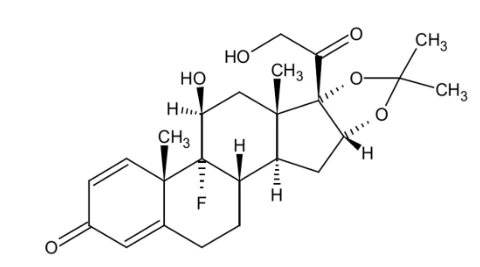
Chemical name: 9-Fluoro-11β,16α,17,21-tetrahydroxypregna1,4- diene-3,20-dione cyclic 16,17-acetal with acetone
Molecular formula and molecular mass: C24H31FO6, 434.51 g/mol
Structural formula:
Product Characteristics:
KENALOG-10 INJECTION is triamcinolone acetonide, a synthetic glucocorticoid corticosteroid with marked anti-inflammatory action, in a sterile aqueous suspension.
14 CLINICAL TRIALS
Not applicable.
15 MICROBIOLOGY
Not applicable.
16 NON-CLINICAL TOXICOLOGY
Not applicable.