


Product Monograph - Solu-Medrol (Pfizer Canada, 125 mg, 40 mg)
SUMMARY PRODUCT INFORMATION
Route of Administration | Dosage Form / Strength | Clinically Relevant Nonmedicinal Ingredients |
intravenous or intramuscular injection or by intravenous infusion | sterile powder 40 mg, 125 mg, 500 mg, 1 g | lactose hydrous For a complete listing see Dosage Forms, Composition and Packaging section. |
INDICATIONS AND CLINICAL USE
Intravenous administration of SOLU-MEDROL (methylprednisolone sodium succinate) is indicated in situations in which a rapid and intense hormonal effect is required. These include the following:
Hypersensitivity and dermatologic conditions
- Status asthmaticus
- Anaphylactic reactions (see text)
- Drug reactions
- Contact dermatitis
- Urticaria
- Generalized neurodermatitis
- Reactions to insect bites
- Pemphigus foliaceous and vulgaris
- Exfoliative dermatitis
- Erythema multiforme
As Adjunctive therapy in
- Acute systemic lupus erythematosus
- Acute rheumatic fever
- Acute gout
Ulcerative colitis
In addition to the above conditions, colonic instillation of SOLU-MEDROL in retention enemas or by continuous drip, have been shown to be a useful adjunct in the treatment of patients with ulcerative colitis.
In anaphylactic reactions epinephrine or norepinephrine should be administered first for an immediate hemodynamic effect followed by intravenous injection of SOLU-MEDROL and other accepted procedures. There is evidence that the corticoids through their prolonged hemodynamic effect are of value in preventing recurrent attacks of acute anaphylactic reactions.
In sensitivity reactions such as in serum sickness, allergic dermatosis (urticaria) and reactions to insect bites, SOLU-MEDROL is capable of providing relief within 1/2 to 2 hours. In some asthmatic patients it may be advantageous to administer SOLU-MEDROL by slow intravenous drip over a period of hours.
As adjunctive therapy in fulminating acute systemic lupus erythematosus and acute rheumatic fever, and to relieve pain during the acute manifestations of gout, SOLU-MEDROL may be given by slow intravenous administration over a period of several minutes. Thereafter, the patient should be placed on intramuscular or oral therapy as required for continued relief of symptoms. In these conditions, other accepted measures of therapy should also be instituted.
Shock
In severe hemorrhagic or traumatic shock, adjunctive use of intravenous methylprednisolone sodium succinate (SOLU-MEDROL) may aid in achieving hemodynamic restoration. Corticoid therapy should not replace standard methods of combating shock, but present evidence indicates that concurrent use of large doses of corticoids with other measures may improve survival rates.
Organ transplants
Corticosteroids both, parenterally and orally, in high doses have been used following organ transplantation as part of multi-faceted attempts to reduce the rejection phenomenon. SOLU-MEDROL is suitable for such indications.
Cerebral edema of non traumatic origin
Administration of SOLU-MEDROL immediately prior to intracranial surgery and in the immediate post-operative period has reduced the duration of post-operative complications related to cerebral edema.
CONTRAINDICATIONS
Except when used for short-term or emergency therapy as in acute sensitivity reactions, SOLU-MEDROL (methylprednisolone sodium succinate) is contraindicated in patients with arrested tuberculosis, herpes simplex keratitis, acute psychoses, Cushing's syndrome, peptic ulcer, markedly elevated serum creatinine, vaccinia and varicella. SOLU-MEDROL is also contraindicated for systemic fungal infections and known hypersensitivity to the ingredients.
WARNINGS AND PRECAUTIONS
General
SOLU-MEDROL (methylprednisolone sodium succinate) should not be used to treat head injury as demonstrated by the results of a multicenter study. The study results revealed an increased mortality in the 2 weeks after injury in patients administered methylprednisolone sodium succinate compared to placebo (1.18 relative risk).
Recent studies do not establish the efficacy of SOLU-MEDROL in septic shock, and suggest that increased mortality may occur in some subgroups at higher risk (i.e. elevated serum creatinine greater than 2.0 mg/dL or secondary infections).
Since complications of treatment with glucocorticoids are dependent on the size of the dose and the duration of treatment, a risk/benefit decision must be made in each individual case as to dose and duration of treatment and as to whether daily or intermittent therapy should be used.
In patients on corticosteroid therapy subjected to unusual stress, increased dosage of rapidly acting corticosteroids before, during and after the stressful situation is indicated.
Dosage must be decreased or discontinued gradually when the drug has been administered for more than a few days.
Patients should be advised to inform subsequent physicians of the prior use of SOLU-MEDROL.
The diluent for reconstitution of the vials is Bacteriostatic Water for Injection (included in the Act-O-Vials), which contains benzyl alcohol. Benzyl alcohol has been reported to be associated with fatal “Gasping Syndrome” in premature infants.
Cardiovascular
There are reports of cardiac arrhythmias and/or circulatory collapse and/or cardiac arrest following the rapid administration of large intravenous doses of methylprednisolone sodium succinate (greater than 0.5 gram administered over a period of less than 10 minutes). Bradycardia has been reported during or after the administration of large doses of methylprednisolone sodium succinate, and may be unrelated to the speed or duration of infusion.
Endocrine and Metabolism
Since methylprednisolone, like prednisolone, suppresses endogenous adrenocortical activity, it is highly important that the patient receiving SOLU-MEDROL be under careful observation, not only during the course of treatment but for some time after treatment is terminated.
Gastrointestinal
The existence of diabetes, osteoporosis, renal insufficiency, chronic psychosis, diverticulitis, fresh intestinal anastomoses, active or latent peptic ulcer, hypertension, myasthenia gravis or predisposition to thrombophlebitis requires that SOLU-MEDROL (methylprednisolone sodium succinate) be administered with extreme caution. The same caution should also be used in non-specific ulcerative colitis, if there is a probability of impending perforation, abscess or other pyogenic infections.
Immune
Corticosteroids may mask some signs of infection, and new infections may appear during their use. There may be decreased resistance and inability to localize infection when corticosteroids are used. Infections with any pathogen including viral, bacterial, fungal, protozoan or helminthic infections, in any location in the body, may be associated with the use of corticosteroids alone or in combination with other immunosuppressive agents that affect cellular immunity, humoral immunity, or neutrophil function. These infections may be mild, but can be severe and at times fatal. With increasing doses of corticosteroids, the rate of occurrence of infectious complications increases.
Administration of live or live, attenuated vaccines is contraindicated in patients receiving immunosuppressive doses of corticosteroids. Killed or inactivated vaccines may be administered to patients receiving immunosuppressive doses of corticosteroids; however, the response to such vaccines may be diminished. Indicated immunization procedures may be undertaken in patients receiving non immunosuppressive doses of corticosteroids.
The use of methylprednisolone sodium succinate in active tuberculosis should be restricted to those cases of fulminating or disseminated tuberculosis in which the corticosteroid is used for the management of the disease in conjunction with appropriate anti-tuberculosis regimen.
If corticosteroids are indicated in patients with latent tuberculosis or tuberculin reactivity, close observation is necessary as reactivation of the disease may occur. During prolonged corticosteroid therapy, these patients should receive chemoprophylaxis.
Because rare instances of anaphylactoid (e.g. bronchospasm) reactions have occurred in patients receiving parenteral corticosteroid therapy, appropriate precautionary measures should be taken prior to administration, especially when the patient has a history of allergy to any drug.
Neurologic
Convulsions have been reported with concurrent use of methylprednisolone and cyclosporine. Since concurrent administration of these agents results in a mutual inhibition of metabolism, it is possible that convulsions and other adverse events associated with the individual use of either drug may be more apt to occur.
An acute myopathy has been described with the use of high doses of corticosteroids, most often occurring in patients with disorders of neuromuscular transmission (e.g. myasthenia gravis), or in patients receiving concomitant therapy with neuromuscular blocking drugs (e.g. pancuronium). This acute myopathy is generalized, may involve ocular and respiratory muscles, and may result in quadriparesis. Elevations of creatine kinase may occur. Clinical improvement or recovery after stopping corticosteroids may require weeks to years.
Ophthalmologic
Corticosteroids should be used cautiously in patients with ocular herpes simplex because of possible corneal perforation.
Psychiatric
Psychic derangements may appear when corticosteroids are used, ranging from euphoria, insomnia, mood swings, personality changes, and severe depression to frank psychotic manifestations. Also, existing emotional instability or psychotic tendencies may be aggravated by corticosteroids, and therefore these patients should be treated with caution.
Skin
Kaposi's sarcoma has been reported to occur in patients receiving corticosteroid therapy. Discontinuation of corticosteroids may result in clinical remission.
Special Populations
Pregnant Women: Some animal studies have shown that corticosteroids, when administered to the mother at high doses, may cause fetal malformations. There are, however, no adequate and well-controlled studies in pregnant women. Because animal reproduction studies are not always predictive of human response, the use of this drug during pregnancy, in nursing mothers and women of child-bearing potential, requires that the benefits of the drug be carefully weighed against the potential risk to the mother and embryo or fetus. Newborn infants of mothers who received such therapy during pregnancy should be observed for signs of hypoadrenalism and appropriate measures instituted if such signs are present. No effect is known upon labour and delivery.
Nursing Women: Because prednisolone is excreted in breast milk it is reasonable to assume that all corticosteroids are. No specific data are available for methylprednisolone sodium succinate.
ADVERSE REACTIONS
The following Adverse Reactions have been reported with the systemic use of corticosteroid preparations (e.g. SOLU-MEDROL (methylprednisolone sodium succinate)). Their inclusion in this list does not necessarily indicate that the specific event has been observed with SOLU-MEDROL:
Infections and Infestations: masking of infections, latent infections becoming active, opportunistic infections
Immune System Disorders: hypersensitivity reactions, including anaphylaxis with or without circulatory collapse, cardiac arrest, bronchospasm, may suppress reactions to skin tests
Endocrine Disorders: development of Cushingoid state, suppression of pituitary-adrenal axis, suppression of growth in children
Metabolism and Nutrition Disorders: sodium retention, sodium excretion, fluid retention, diuresis, decreased carbohydrate tolerance, manifestation of latent diabetes mellitus, increased requirements for insulin or oral hypoglycemic agents in diabetics, negative nitrogen balance due to protein catabolism
Psychiatric Disorders: psychic derangements
Nervous System Disorders: increased intracranial pressure with papilloedema (pseudotumor cerebri), seizures
Eye Disorders: posterior subcapsular cataracts, exophthalmos, increased intraocular pressure
Cardiac Disorders: congestive heart failure in susceptible patients, myocardial rupture following a myocardial infarction, arrhythmia, hypertension, hypotension
Vascular Disorders: ecchymosis, petechiae
Gastrointestinal Disorders: peptic ulceration with possible perforation and hemorrhage, gastric hemorrhage, pancreatitis, esophagitis, perforation of the bowel, transient nausea, vomiting or dysgeusia (with rapid administration of large doses)
Skin and Subcutaneous Tissue Disorders: thin fragile skin, impaired wound healing
Musculoskeletal and Connective Tissue Disorders: steroid myopathy, muscle weakness, osteoporosis, aseptic necrosis, pathologic fractures, vertebral compression fractures, tendon rupture, particularly of the Achilles tendon
Reproductive System and Breast Disorders: menstrual irregularities
Abnormal Hematological & Clinical Findings: potassium loss with resulting hypokalemic alkalosis, sodium and fluid retention, increases in alanine transaminase (ALT, SGPT), aspartate transaminase (AST, SGOT) and alkaline phosphatase,
DRUG INTERACTIONS
Overview
CYP3A4 inhibitors (such as macrolides, triazole antifungals, and some calcium channel blockers) may inhibit the metabolism of methylprednisolone and thus decrease its clearance. Therefore the dose of methylprednisolone should be titrated to avoid steroid toxicity.
Drug-Drug Interactions
The following table includes the common interactions seen with Solu-Medrol and other drug products. Methylprednisolone, like all glucocorticoids, can cause the following effects when administered in combination with these products. This table is meant to serve as a guide to professionals when considering a rational course of therapy.
| COMMON INTERACTIONS SEEN WITH SOLU-MEDROL AND OTHER DRUG PRODUCTS | ||||
| CLASS OF DRUG | DRUG(S) INVOLVED | AFFECTS THERAPY OF DRUG(S) | CLINICAL IMPLICATION | MECHANISM |
| Antibiotic/ Antifungal Therapy | Troleandomycin Erythromycin Ketoconazole Rifampin | Methylprednisolone Methylprednisolone | Enhanced clinical effects and side effects of methylprednisolone. May reduce efficacy; dosage adjustment may be required. | Enzyme inhibition: Reduced MP elimination. Enzyme induction, increased clearance. |
| Anticholinesterase | Neostigmine, Pyridostigmine | Anticholinesterase | Precipitation of myasthenic crisis. | |
| Anticoagulants | Oral Anticoagulants or Heparin | Anticoagulant | Increased or decreased clotting. Monitor response. Adjust dose | |
| COMMON INTERACTIONS SEEN WITH SOLU-MEDROL AND OTHER DRUG PRODUCTS | ||||
| CLASS OF DRUG | DRUG(S) INVOLVED | AFFECTS THERAPY OF DRUG(S) | CLINICAL IMPLICATION | MECHANISM |
| Anticonvulsants | e.g. Phenobarbitone, Phenytoin | Methylprednisolone | May reduce methylprednisolone efficacy. Monitor clinical response. Adjust dose if necessary. | Enzyme induction: increased clearance of methylprednisolone |
| Antidiabetic Drugs | e.g. Insulin, Glibenclamide, Metformin | Antidiabetic | May impair glucose control. Monitor glucose levels and adjust dose of antidiabetic therapy. | Diabetogenic effects of corticosteroid. |
| Antihypertensive Agents | All Antihypertensives | Antihypertensive | May result in partial loss of hypertensive control. | Mineralocorticoid effect of corticosteroid leading to raised blood pressure. |
| Diuretics | All potassium losing Diuretics e.g. Furosemide | Enhanced toxicity. Monitor K+ levels and supplement if necessary. | Potassium loss. | |
| Cardioactive Drugs | Digoxin and related Glycosides | Digoxin | Potentiation of digoxin toxicity. | Corticosteroid induced potassium loss (mineralocorticoid effect) |
| Immunizing Agents | Live Vaccine: Poliomyelitis, BCG, Mumps, Measles, Rubella, Smallpox Killed Virulent Vaccines | Vaccine Vaccine | May see increased toxicity from vaccine. Disseminated viral disease may occur. Reduced response to vaccine. | Corticosteroid induced immunosuppression Impaired immune response. |
Immuno- suppressants | Methotrexate Azathioprine Cyclosporin (CYA) | Methylprednisolone Both | May allow reduced dose of corticosteroid. Monitor cyclosporin A levels. Adjust dose as necessary. | Synergistic effect on disease state. Mutual inhibition of metabolism. |
| Neuromuscular Blocking Agents | Pancuronium | Pancuronium | Partial reversal of neuromuscular block. | |
| Psychotherapeutic | Anxiolytics Antipsychotics | CNS active drug | Recurrence or poor control of CNS symptoms. May require dose adjustment. | CNS effects of corticosteroid. |
| Salicylates | Salicylate | Apparent decrease in salicylate efficacy or salicylate toxicity upon reduction of corticosteroid dose. | Increased clearance and decreased plasma level. | |
| Sympathomimetic Agents | e.g. Salbutamol | Increased efficacy and potentially increased toxicity. | Increased response to sympathetic agents. | |
Drug-Food Interactions
Interactions with food have not been established.
Drug-Herb Interactions
Interactions with herbal products have not been established.
Drug-Laboratory Interactions
Interactions with laboratory tests have not been established.
DOSAGE AND ADMINISTRATION
Recommended Dose and Dosage Adjustment
As adjunctive therapy in life threatening conditions (e.g., shock states), the recommended dose of SOLU-MEDROL (methylprednisolone sodium succinate) is 30 mg per kg, given intravenously over a period of at least 30 minutes. The large doses may be repeated every 4 - 6 hours for up to 48 hours.
In other indications, initial dosage will vary from 10 to 500 mg depending on the clinical problem being treated. Larger doses may be required for short-term management of severe, acute conditions. Therapy may be initiated by administering SOLU-MEDROL intravenously over a period of at least 5 minutes (e.g., doses up to 250 mg) to at least 30 minutes (e.g., doses greater than 250 mg). Subsequent doses may be given intravenously or intramuscularly at intervals dictated by the patient's response and clinical condition. Corticosteroid therapy is an adjunct to, and not replacement for, conventional therapy.
SOLU-MEDROL in doses of 40 to 120 mg administered as retention enemas or by continuous drip three to seven times weekly for periods of two or more weeks have been shown to be a useful adjunct in the treatment of some patients with ulcerative colitis. Many patients can be controlled with 40 mg of SOLU-MEDROL administered in from 1 to 10 fluid ounces of water depending on the degree of involvement of the inflamed colonic mucosa. Other accepted therapeutic measures should, of course, be instituted.
Administration
SOLU-MEDROL may be administered by intravenous or intramuscular injection or by intravenous infusion, the preferred method for initial emergency use being intravenous injection. To administer intravenous (or intramuscular) injection, prepare solution as directed. 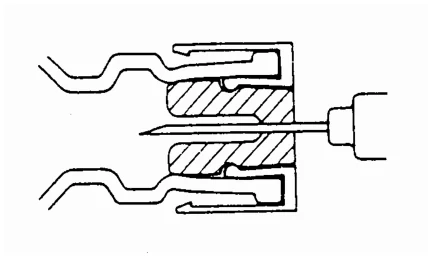
Reconstitution:
DIRECTIONS FOR USING THE ACT-O-VIAL SYSTEM
- 1. Press down on plastic activator to force diluent into the lower compartment.
- 2. Gently agitate to effect solution.
- 3. Remove plastic tab covering center of stopper.
- 4. Sterilize top of stopper with suitable germicide.
- 5. Insert needle squarely through center of stopper until tip is just visible. Invert vial and withdraw dose.
Parenteral drug products should be inspected visually for particulate matter and discolouration prior to administration, whenever solution and container permit.
| Volume of Diluent to be Added | Nominal Concentration per mL | |
| 40 mg AOV | Entire contents supplied | 40 mg/mL |
| 125 mg AOV | Entire contents supplied | 62.5 mg/mL |
| 500 mg AOV | Entire contents supplied | 125 mg/mL |
| 1 g AOV | Entire contents supplied | 125 mg/mL |
| 40 mg Vial | 1 mL | 40 mg/mL |
| 125 mg Vial | 2 mL | 62.5 mg/mL |
| 500 mg Vial | 8 mL | 62.5 mg/mL |
| 1 g Vial | 16 mL | 62.5 mg/mL |
SOLU-MEDROL 40 mg Vial: reconstitute with 1 mL Bacteriostatic Water for Injection USP (benzyl alcohol as preservative).
SOLU-MEDROL 125 mg Vial: reconstitute with 2 mL Bacteriostatic Water for Injection USP (benzyl alcohol as preservative).
SOLU-MEDROL 500 mg Vial: reconstitute with 8 mL Bacteriostatic Water for Injection USP (benzyl alcohol as preservative).
SOLU-MEDROL 1 g Vial: reconstitute with 16 mL Bacteriostatic Water for Injection USP (benzyl alcohol as preservative).
Store powder or reconstituted solution at room temperature (between 15 and 30°C). Use reconstituted solution within 48 hours. SOLU-MEDROL Vials and Act-O-Vials are single dose vials. Discard unused portion.
To prepare solutions for intravenous infusion, first reconstitute SOLU-MEDROL as directed. The medication may be administered in dilute solutions by admixing the reconstituted product with
Dextrose 5% Water (D5W)
or
0.9% Sodium Chloride (NS)
or
Dextrose 5% in 0.45% Sodium Chloride
Dilute solution concentrations of 0.25 mg/mL or greater are physically and chemically stable for 48 hours.
Compatibility
The compatibility and stability of SOLU-MEDROL, in solutions and with other drugs in intravenous admixtures is dependent on admixture pH, concentration, time, temperature, and the ability of methylprednisolone to solubilize itself. Thus, to avoid compatibility and stability problems, whenever possible it is recommended that SOLU-MEDROL be administered separate from other drugs and as either I.V. push, through an I.V. medication chamber, or as an I.V. "piggy-back" solution. If desired, reconstituted methylprednisolone sodium succinate may be diluted with dextrose 5% in water, normal saline, or dextrose 5% in 0.45% or 0.9% sodium chloride. The resulting solutions are physically and chemically stable for 48 hours.
OVERDOSAGE
There is no clinical symptom of acute overdosage with SOLU-MEDROL (methylprednisolone sodium succinate). Methylprednisolone is dialyzable. Continuous overdosage would require careful gradual reduction of dosage in order to prevent the occurrence of acute adrenal insufficiency.
ACTION AND CLINICAL PHARMACOLOGY
Pharmacodynamics
Methylprednisolone is a potent anti-inflammatory steroid. It has a greater anti-inflammatory potency than prednisolone and has less tendency than prednisolone to induce sodium and water retention.
Methylprednisolone sodium succinate has the same metabolic and anti-inflammatory actions as methylprednisolone. When given parenterally and in equimolar quantities, the two compounds are equivalent in biologic activity. The relative potency of methylprednisolone sodium succinate and hydrocortisone sodium succinate, following intravenous administration, is at least four to one. This is in good agreement with the relative oral potency of methylprednisolone and hydrocortisone.
Pharmacokinetics
The metabolism and excretion of methylprednisolone sodium succinate is similar to that of other corticosteroids. It influences carbohydrate, protein, fat and purine metabolism, electrolyte and water balance, and the functional capacities of the cardiovascular system, the kidney, skeletal muscle, the nervous system and other organs and tissues. Like other corticosteroids, methylprednisolone sodium succinate endows the organism with the capacity to resist not a few but all types of noxious stimuli and environmental change.
Exceeding prednisolone in anti-inflammatory potency and having even less tendency than prednisolone to induce retention of sodium and water, methylprednisolone sodium succinate offers the use of lower doses with an enhanced split between anti-inflammatory and mineralocorticoid activities. Thus methylprednisolone sodium succinate may be indicated for emergency use in patients in whom increased sodium retention would be hazardous.
The relative potency of methylprednisolone sodium succinate (SOLU-MEDROL) and hydrocortisone sodium succinate (SOLU-CORTEF), as indicated by depression of eosinophil count, following intravenous administration, is at least four to one. This is in good agreement with the relative oral potency of methylprednisolone (MEDROL) and hydrocortisone (CORTEF). Studies indicate that the administration of methylprednisolone results in an appreciable prolongation of plasma steroid levels over those obtained following equivalent doses of hydrocortisone or prednisolone. The following table illustrates this prolongation of blood levels expressed as the half-life in minutes of the 17-hydroxy-corticosteroid levels obtained following intravenous administration of methylprednisolone, prednisolone and hydrocortisone.
| COMPOUND | DOSE | HALF-LIFE (minutes) |
| Methylprednisolone | 25 mg | 188 |
| Prednisolone | 25 mg | 69 |
| Hydrocortisone | 25 mg | 57 |
STORAGE AND STABILITY
Store unreconstituted SOLU-MEDROL Sterile Powder at room temperature (15° - 30°C). Store reconstituted solution at room temperature (15° - 30°C). Use reconstituted solution within 48 hours after mixing. Protect unreconstituted sterile powder and reconstituted solution from light.
DOSAGE FORMS, COMPOSITION AND PACKAGING
SOLU-MEDROL Sterile Powder is available as:
SOLU-MEDROL 40 mg Act-O-Vial, packages of 10's.
SOLU-MEDROL 125 mg Act-O-Vial, packages of 10's.
SOLU-MEDROL 500 mg Act-O-Vial, packages of 5's.
SOLU-MEDROL 1 g Act-O-Vial, packages of 1.
SOLU-MEDROL 40 mg Vial, packages of 25.
SOLU-MEDROL 125 mg Vial, packages of 25.
SOLU-MEDROL 500 mg Vial, packages of 5.
SOLU-MEDROL 1 g Vial, packages of 1.
Composition
Each Act-O-Vial (AOV) or vial of SOLU-MEDROL delivers after reconstitution with the diluent supplied or as directed:
| SOLU-MEDROL | 40 mg AOV | 125 mg AOV | 500 mg AOV | 1 g AOV | 40mg Vial | 125 mg Vial | 500 mg Vial | 1 g Vial |
| POWDER | ||||||||
| Deliverable Volume | 1 mL | 2 mL | 4 mL | 8 mL | 1 mL | 2 mL | 8 mL | 16 mL |
Methylprednisolone (as sodium succinate) | 40 mg | 125 mg | 500 mg | 1 g | 40 mg | 125 mg | 500 mg | 1 g |
| Monobasic sodium phosphate anhydrous | 1.6 mg | 1.6 mg | 6.4 mg | 12.8 mg | 1.84 mg | 1.84 mg | 6.4 mg | 12.8 mg |
| Dibasic sodium phosphate dried | 17.5 mg | 17.4 mg | 69.6 mg | 139.2 mg | 17.46 mg | 17.4 mg | 69.6 mg | 139.2 mg |
| Lactose Hydrous | 25 mg | - | - | - | 25 mg | - | - | - |
| DILUENT | ||||||||
| Benzyl Alcohol | 8.8 mg | 17.6 mg | 33.7 mg | 66.8 mg | - | - | - | - |
| Sterile Water for Injection | q.s. | q.s. | q.s. | q.s. | - | - | - | - |
When needed, the pH of each formula was adjusted with sodium hydroxide so that the pH of the reconstituted solution is within the range of 7 to 8.
PART II: SCIENTIFIC INFORMATION
PHARMACEUTICAL INFORMATION
Drug Substance
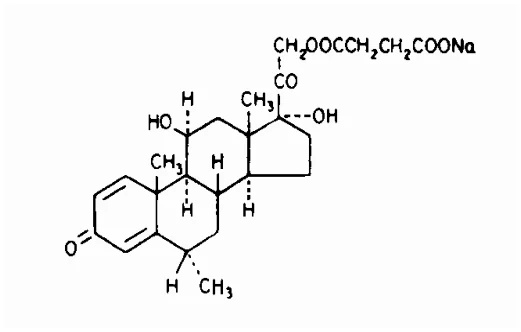
Proper name: methylprednisolone sodium succinate for injection USP
(methylprednisolone sodium succinate is prepared in situ from methylprednisolone hemisuccinate with the aid of sodium hydroxide)
Chemical name: pregna-1,4-diene-3,20-dione,21-(3-carboxy-1-oxopropoxy)-11,17-dihydroxy-6-methyl-monosodium salt, (6α,11β)
Molecular mass: 496.53
Structural formula:
Physicochemical properties: white, or nearly white, odourless hygroscopic, amorphous solid, very soluble in water and in alcohol, insoluble in chloroform, very slightly soluble in acetone, melting point of 228° to 237°C, pka of 4.6, partition coefficient (butyronitrile-water) of 0.03 at pH 8.5
CLINICAL TRIALS
Hypersensitivity and Dermatologic Conditions
Status Asthmaticus
In a double-blind, placebo-controlled, randomized trial, the use of intravenous methylprednisolone (125 mg), given on presentation in the emergency room in addition to standard emergency treatments for asthma, reduced the need for hospital admission in acutely ill patients with bronchial asthma. Nine of 48 patients (19 percent) treated with methylprednisolone
required hospital admission compared with 23 of 49 patients (47 percent) in the control group (p < 0.003).
Pemphigus Vulgaris
A small (n=15) retrospective study compared high-dose pulsed methylprednisolone sodium succinate to oral prednisone in patients with pemphigus vulgaris. Methylprednisolone sodium succinate was administered intravenously (n=9); the dose varied from 250 to 1000 mg/day for 2 to 5 days. Four of 6 responders to methylprednisolone sodium succinate maintained a remission without prednisone for almost 2 years. Patients in the control group (n=6) treated with prednisone required long-term treatment with higher doses of prednisone, and none of the patients maintained a long-term remission.
Acute Systemic Lupus Erythematosus
High-dose, intravenous methylprednisolone pulse therapy in 34 patients (30 adults and 4 adolescents) with lupus nephritis was evaluated. The 30 adult patients received 1 g of methylprednisolone intravenously over 30 minutes on 3 successive days, while the 4 adolescents received a 15 mg/kg/day dose for 3 days. Twelve of the 34 patients responded to treatment, as indicated by at least a 20% improvement in renal function and corresponding improvement in creatinine clearance levels. These improvements were maintained for at least 6 months in 60% of patients who responded to treatment.
Ulcerative Colitis
In a prospective, single-blind study of 60 patients with active ulcerative colitis, patients were randomized to receive either sucralfate enemas (20 g/100 ml) or methylprednisolone enemas (20 mg/100 ml). The enemas were administered twice daily for the first week and then once daily for three weeks. Results showed similar reductions in diarrhea and rectal bleeding at two weeks and at four weeks in the two groups. Sigmoidoscopic examination of the rectal mucosa demonstrated similar significant improvement in the macroscopic appearance of the rectal mucosa in both groups (8.28 to 6.20 in sucralfate group, p < 0.02; and 8.72 to 6.36 in the methylprednisolone treated group, p < 0.04). Histological assessment of the rectal biopsies taken at entry into the study and following four weeks of therapy also revealed similar improvements in the two groups.
Organ Transplants
A prospective, controlled study was conducted among 100 renal transplant patients to compare two different regimens of immunosuppressive therapy. In the study, 86 patients received kidneys from cadavers and 14 patients received kidneys from living, related donors. Patients were assigned to receive either double therapy (methylprednisolone plus cyclosporine) or triple therapy (methylprednisolone plus cyclosporine and azathioprine). In both groups, patients were given intravenous pulse doses of 0.5 g methylprednisolone at the moment of transplantation. Oral methylprednisolone was subsequently administered in a single morning dose of 16 mg until the end of the third month. Patients then received 12 mg/day oral methylprednisolone until the end of month 6, and a maintenance dosage of 8 mg/day thereafter. The results were similar with both regimens. No significant differences between groups were reported in the 2-year patient and kidney survival rates.
DETAILED PHARMACOLOGY
See ACTION AND CLINICAL PHARMACOLOGY, Pharmacodynamics and Pharmacokinetics sections.
TOXICOLOGY
The acute LD50 of methylprednisolone sodium succinate intraperitoneally in the mouse is 850 mg/kg. The oral LD50 of this drug in the rat is 5150 mg/kg. Dogs receiving single intravenous injections of methylprednisolone sodium succinate in doses of 4.4 to 6.4 mg/kg were free from clinical signs of drug intoxication during the 24 hour post-injection observation period.
Carcinogenesis, Mutagenesis, Impairment of Fertility
There is no evidence that corticosteroids are carcinogenic, mutagenic, or impair fertility.
REFERENCES
- 1.
Antman EM, Braunwald E. Acture myocardial infarction. In: Fauci AS, et al, eds.
Harrison’s Principles of Internal medicine. 1998:1356-7.
- 2. Baethge BA, Lidsky MD. Intractable hiccups associated with high-dose intravenous methylprednisolone therapy. Ann Intern Med. 1986;104:58-9.
- 3. Bagheri H, Cismondo S, Montastruc JL. Drug-induced hiccup: A review of the France pharmacolgic vigilance database. Therapie. 1999;54(1):35-9. (French)
- 4.
Burkle WS. Cyclosporin pharmacokinetics and blood level monitoring. Drug Intell Clin
Pharm 1985;19:101-5.
- 5.
Cowley RA, Trump BF. Pathophysiology of shock, anoxia and ischemia. Baltimore,
MD. Williams and Wilkins 1982;692-3.
- 6.
CRASH trial collaborators. Effect of intravenous corticosteroids on death within 14 days in
10,008 adults with clinically significant head injury (MRC CRASH trial): randomized placebo-controlled trial. The Lancet 2004; 364:1321-8.
- 7. Dietzman RH, Bloch JH, Lillehei RC. Treatment of shock GP 1967;36(3):135-41.
- 8.
Dietzman RH, Manax WG, Lillehei RC. Shock: Mechanism and Therapy. Can Anaes
Soc J 1967;14(4):276-86.
- 9. Dugger JA. Parenteral methylprednisolone acetate in management of allergy and contact dermatitis in children. Clinical Medicine 1962;69(10):2253-7.
- 10.
Fekety R. Infections associated with corticosteroids and immunosuppressive therapy.
In: Gorbach SL, Bartlett JG, Blacklow NR, eds. Infectious Diseases. Philadelphia: WB Saunders Company 1992:1050-1.
- 11.
Fox JL. Use of methylprednisolone in intracranial surgery. Medical Annals of District of
Columbia 1965;34(6):261-6.
- 12.
Goldberg LC. Routine use of intravenous 6-methylprednisolone. Journal of Michigan
State Medical Society 1960;59:1049-51.
- 13.
Kimberly RP, Lockshin MD, Sherman RL et al. High-dose intravenous
methylprednisolone pulse therapy in systemic lupus erythematosus. Am J Med. 1981;70:817-24.
- 14.
Lillehei RC, Longerbeam JK, Bloch JH, Manax WG. The nature of irreversible shock:
Experimental and clinical observations. Ann Surg 1964;160(4):682-710.
- 15. Lillehei RC, Longerbeam JK, Bloch JH, Manax WG. The modern treatment of shock based on physiologic principals. Clin Pharmacol Ther 1964;5(1):63-101.
- 16. Littenberg B, Gluck EH. A controlled trial of methylprednisolone in the emergency treatment of acute asthma. N Engl J Med. 1986;314(3):150-2.
- 17.
Marcus PS, Sheehan JC, Comunale FL. Corticosteroids in hypovolemic shock.
Anesthesiology, Dept. of Anesthesiology, Boston City Hospital 1966;27(2):221.
- 18.
Melby JC. Corticosteroids in shock in man and in animals. The New Physician
1964;13:425-8.
- 19. Panes J, Esteve M, Cabre E et al. Comparison of heparin and steroids in the treatment of moderate and severe ulcerative colitis. Gastroenterology 2000; 119(4):903-8.
- 20. Ponticelli C, Tarantino A, Montagnino G et al. A randomized trial comparing triple-drug and double-drug therapy in renal transplantation. Transplantation. 1988;45:913-18.
- 21.
Robins J. Modern Concepts in the management of shock. Obstet Gynecol (View and
Reviews Section) 1966;28(1):130-8.
- 22.
Sauerland S, Maegele M. A CRASH landing in severe head injury. The Lancet 2004;
364:1291-92.
- 23. Sholter DE, Armstrong PW. Adverse effects of corticosteroids on the cardiovascular system. Can J Cardiol. 2000;16:505-11.
- 24. Speed Rogers J, Hudson FM. Parenteral corticosteroids in the management of acute brain stem injuries. W V Med J 1963;59(8):18-20.
- 25. Stinson EB, Dong E Jr, Bieber CP, Schroeder JS, Shumway NE. Cardiac Transplantation in Man. I. Early Rejection. JAMA 1969;207(12):2233-47.
- 26. Stubbs SS, Morrell RM. Intravenous methylprednisolone sodium succinate: Adverse reactions reported in association with immunosuppressive therapy. Transplantation Proceedings 1973;5(2):1145-6.
- 27. Stuck AE, Minder CE, Frey FJ. Risk of infectious complications in patients taking glucocorticoids. Rev Infect Dis 1989;11(6):954-63.
- 28.
Turcotte JG, et al. Rejection crises in human renal transplant recipients. Arch Surg
1972;105:230-6.
- 29.
Turlapaty PDMV, Altura BM. Extracellular magnesium ions control calcium exchange
and content of vascular smooth muscle. Eur J Pharmacol 1978;52(3-4):421-3.
- 30. Weissman G, Thomas L. The effects of corticosteroids upon connective tissue and lysosomes. Recent Prog Horm Res 1964;20:215-45.
- 31. Werth VP. Treatment of pemphigus vulgaris with brief, high-dose intravenous glucocorticoids. Arch Dermatol 1996;132:1435-9.
- 32.
Wilson RD, Steroids stem "Burn Lung Syndrome". Medical News Section, JAMA
1969:208(1):26.
- 33. Woods JE, et al. High-dosage intravenously administered methylprednisolone in renal transplantation. JAMA 1973;223(8):896-9.
- 34. Zahony I, Winnie AP, Collins VJ. Delayed postoperative effects of antihypertensive therapy. Illinois Medical Journal 1962;Aug:155-8.