


Product Monograph - Pediapred
RECENT MAJOR LABEL CHANGES
| 2 CONTRAINDICATIONS | 05/2020 |
|---|---|
| 7 WARNINGS AND PRECAUTIONS | 04/2022 |
| 7 WARNINGS AND PRECAUTIONS, 7.1.1 Pregnant Women | 04/2022 |
TABLE OF CONTENTS
RECENT MAJOR LABEL CHANGES .......................................................................................... 2
TABLE OF CONTENTS ............................................................................................................ 2
PART I: HEALTH PROFESSIONAL INFORMATION .................................................................... 4
1 INDICATIONS ............................................................................................................. 4
1.1 Pediatrics .................................................................................................................. 4
2 CONTRAINDICATIONS ................................................................................................ 4
4 DOSAGE AND ADMINISTRATION ................................................................................ 4
4.1 Dosing Considerations ............................................................................................. 4
4.2 Recommended Dose and Dosage Adjustment ........................................................ 4
4.4 Administration ......................................................................................................... 5
4.5 Missed Dose ............................................................................................................. 5
5 OVERDOSAGE ............................................................................................................ 6
6 DOSAGE FORMS, STRENGTHS, COMPOSITION AND PACKAGING ................................ 6
7 WARNINGS AND PRECAUTIONS ................................................................................. 6
7.1 Special Populations ................................................................................................ 10
7.1.1 Pregnant Women ............................................................................................. 10
7.1.2 Breast-feeding .................................................................................................. 11
7.1.3 Pediatrics .......................................................................................................... 11
7.1.4 Geriatrics .......................................................................................................... 11
8 ADVERSE REACTIONS............................................................................................... 11
8.1 Adverse Reaction Overview ................................................................................... 11
8.2 Clinical Trial Adverse Reactions ............................................................................. 12
8.5 Post-Market Adverse Reactions ............................................................................. 13
9 DRUG INTERACTIONS .............................................................................................. 13
9.2 Drug Interactions Overview ................................................................................... 13
9.4 Drug-Drug Interactions .......................................................................................... 14
9.7 Drug-Laboratory Test Interactions......................................................................... 18
10 CLINICAL PHARMACOLOGY ...................................................................................... 18
10.1 Mechanism of Action ....................................................................................... 18
10.2 Pharmacodynamics .......................................................................................... 19
10.3 Pharmacokinetics ............................................................................................. 20
11 STORAGE, STABILITY AND DISPOSAL ........................................................................ 20
PART II: SCIENTIFIC INFORMATION ..................................................................................... 21
13 PHARMACEUTICAL INFORMATION .......................................................................... 21
15 MICROBIOLOGY ...................................................................................................... 21
16 NON-CLINICAL TOXICOLOGY .................................................................................... 21
PATIENT MEDICATION INFORMATION ................................................................................ 22
PART I: HEALTH PROFESSIONAL INFORMATION
1 INDICATIONS
Management of conditions known to be responsive to PREDNISONE or PREDNISOLONE where anti-inflammatory action or immunosuppression or adrenocortical supplementation and replacement is required.
For most indications, glucocorticoid administration provides symptomatic relief, but has no effect on the underlying disease processes. Use of these medications does not eliminate the need for other therapies that may be required.
1.1 Pediatrics
PEDIAPRED is appropriate for pediatric usage and for those patients with difficulty swallowing solid oral dosage forms.
2 CONTRAINDICATIONS
PEDIAPRED is contraindicated in patients with:
- Untreated systemic fungal infections.
- Known hypersensitivity to this drug or to any ingredient in the formulation, including any non-medicinal ingredient, or component of the container. For a complete listing, see 6 DOSAGE FORMS, STRENGTHS, COMPOSITION AND PACKAGING.
- Any infectious condition (including measles, or uncontrolled active infections).
- Some progressive herpes group viruses (including hepatitis, herpes, varicella, shingles).
- Psychotic states still not controlled by a treatment.
- Live vaccines (when PEDIAPRED is used at immunosuppressive doses).
4 DOSAGE AND ADMINISTRATION
4.1 Dosing Considerations
Standardized dosing is not available for oral corticosteroids. Therefore, any adjustments in consideration of age or renal function of the patient should be taken into account, along with the patient's weight and severity of the disease when the initial dosage is established.
4.2 Recommended Dose and Dosage Adjustment
The initial dosage may vary from 5 to 60 mg prednisolone base per day, depending on the specific disease entity being treated. In situations of less severity, lower doses will generally suffice, while in selected patients, higher initial doses may be required. The initial dosage should be maintained or adjusted until a satisfactory response is noted. If after a reasonable period of time there is a lack of satisfactory clinical response, PEDIAPRED should be discontinued, and the patient transferred to other appropriate therapy.
IT SHOULD BE EMPHASIZED THAT DOSAGE REQUIREMENTS ARE VARIABLE AND MUST BE INDIVIDUALIZED ON THE BASIS OF THE DISEASE UNDER TREATMENT AND THE RESPONSE OF THE PATIENT.
After a favorable response is noted, the proper maintenance dosage should be determined by decreasing the initial drug dosage in small decrements, at appropriate time intervals, until the lowest dosage, which will maintain an adequate clinical response, is reached. It should be kept in mind that constant monitoring is needed in regard to drug dosage.
Included in the situations which may make dosage adjustments necessary are changes in clinical status secondary to remissions or exacerbations in the disease process, the patient's individual drug responsiveness, and the effect of patient exposure to stressful situations not directly related to the disease entity under treatment; in this latter situation, it may be necessary to increase the dosage of prednisolone for a period of time consistent with the patient's condition. If after long-term therapy the drug is to be stopped, it is recommended that it be withdrawn gradually, rather than abruptly, to avoid glucocorticoid withdrawal syndrome.
| EQUIVALENT MILLIGRAM DOSAGE OF GLUCOCORTICOIDS1,2 | |
NAME Cortisone Hydrocortisone Prednisolone Prednisone Methylprednisolone Triamcinolone Paramethasone Betamethasone Dexamethasone | MG/DOSE 25 20 5 5 4 4 2 0.6 0.75 |
| |
4.4 Administration
If on a once-daily therapy, PEDIAPRED should be administered in the morning to simulate the natural circadian rhythm of corticosteroid secretion.
4.5 Missed Dose
The course of action will depend on the dosage regimen:
One dose every other day: The missed dose should be taken as soon as possible the same morning, and the regular dosing schedule should be resumed. If it is later in the day, the missed dose should be taken the next morning, and the regular dosing schedule should be resumed after skipping a day.
One dose a day: The missed dose should be taken as soon as possible, and the regular dosing schedule should be resumed. If the patient has missed a day, the missed dose should be skipped, and the regular dosing schedule should be resumed. The patient should be advised not to take a double dose to compensate for the missed one.
Several doses a day: The missed dose should be taken as soon as possible, and the regular dosing schedule should be resumed. If it is time for the next dose, the dose should be doubled, and the regular dosing schedule should be resumed.
5 OVERDOSAGE
The effects of accidental ingestion of large quantities of prednisolone over a very short period of time have not been reported.
Treatment of acute overdosage is by immediate gastric lavage or emesis. For chronic overdosage in the face of severe disease requiring continuous steroid therapy, the dosage of prednisolone may be reduced only temporarily, or alternate day treatment may be introduced.
| For management of a suspected drug overdose, contact your regional poison control centre. |
|---|
6 DOSAGE FORMS, STRENGTHS, COMPOSITION AND PACKAGING
Table 1 – Dosage Forms, Strengths, Composition and Packaging
PEDIAPRED is a dye-free, colourless to, slightly yellow raspberry-flavored solution supplied in 120 mL bottles. Each 5 mL (teaspoonful) contains 5.0 mg prednisolone base (as prednisolone sodium phosphate) in a palatable, aqueous vehicle.
7 WARNINGS AND PRECAUTIONS
General
The lowest possible dose of corticosteroid should be used to control the condition under treatment, and when reduction in dosage is possible, the reduction should be gradual.
Since complications of treatment with glucocorticoids are dependent on the size of the dose and the duration of treatment, a risk/benefit decision must be made in each individual case as to dose and duration of treatment, and as to whether daily or intermittent therapy should be used.
Patients should be warned not to discontinue the use of PEDIAPRED abruptly or without medical supervision, to advise any medical attendants that they are taking PEDIAPRED and to seek medical advice at once should they develop fever or other signs of infection.
Corticosteroids should be used with caution in the following clinical conditions: non-specific ulcerative colitis (if there is a probability of impending perforation), abscess or other pyogenic infection, diverticulitis, fresh intestinal anastomoses, active or latent peptic ulcer, renal insufficiency, hypertension, osteoporosis, cardiac disease, thromboembolic disorders and diabetes mellitus.
Carcinogenesis and Mutagenesis
| Route of Administration | Dosage Form / Strength/Composition | Non-medicinal Ingredients |
| Oral | Liquid, 5 mg / 5 mL prednisolone | Artificial raspberry flavor, dibasic sodium phosphate, edetate disodium, methylparaben, purified water, sodium phosphate monobasic, sorbitol. |
Limited information is available. Glucocorticoids produce cleft palate in the offspring when administered to pregnant mice, rats and hamsters. There are few studies on the carcinogenicity or mutagenicity of prednisolone in animals.
Cardiovascular
Literature reports suggest an association between use of corticosteroids and left ventricular free wall rupture after a recent myocardial infarction; therefore, therapy with corticosteroids should be used with caution in these patients.
Driving and Operating Machinery
PEDIAPRED may cause blurred vision, which may affect one’s ability to drive (see 8 ADVERSE REACTIONS). Due caution should be exercised when driving or operating a vehicle or potentially dangerous machinery.
Endocrine and Metabolism
Electrolytes
Average and large doses of corticosteroids can cause elevation of blood pressure, salt and water retention, and increased excretion of potassium. These effects are less likely to occur with the synthetic derivatives except when used in large doses. Dietary salt restriction and potassium supplementation may be necessary. All corticosteroids increase calcium excretion.
Hypothyroidism
There is an enhanced effect of corticosteroids in patients with hypothyroidism.
Pheochromocytoma Crisis
Pheochromocytoma crisis, which can be fatal, has been reported after administration of corticosteroids. Corticosteroids should only be administered to patients with suspected or identified pheochromocytoma after an appropriate risk/benefit evaluation.
Secondary Adrenocortical Insufficiency
Drug-induced secondary adrenocortical insufficiency may be minimized by gradual reduction of dosage. This type of relative insufficiency may persist for months after discontinuation of therapy; therefore, in any situation of stress occurring during that period, hormone therapy should be reinstated. Since mineralocorticoid secretion may be impaired, salt and/or mineralocorticoid should be administered concurrently.
Steroid Withdrawal Syndrome
When discontinuing long-term administration of corticosteroids, it should be done gradually. The risks associated with sudden discontinuation are exacerbation or recurrence of the underlying disease, adrenocortical insufficiency or steroid withdrawal syndrome. Steroid withdrawal syndrome may present with a wide range of signs and symptoms, however typical symptoms include fever, anorexia, nausea, lethargy, malaise, arthralgias, desquamation of the skin, weakness, hypotension, and weight loss.
Suppression of HPA (Hypothalamic-Pituitary-Adrenal) Function
Glucocorticoid-induced suppression of HPA function is dependent on dose and duration of treatment. Recovery occurs gradually as the steroid dose is reduced and withdrawn. Suppression persists for a period of time after withdrawal depending on dose and length of treatment time. In patients on corticosteroid therapy subjected to unusual stress, increased dosage of rapidly acting corticosteroids before, during and after the stressful situation is indicated.
Tumor Lysis Syndrome
In post marketing experience, tumor lysis syndrome (TLS) has been reported in patients with hematological malignancies following the use of PEDIAPRED alone or in combination with other chemotherapeutic agents. Patients at high risk of TLS, such as patients with high proliferative rate, high tumor burden, and high sensitivity to cytotoxic agents, should be monitored closely and appropriate precautions should be taken (see 8 ADVERSE REACTIONS).
Gastrointestinal
In the case of a history of ulcers, corticotherapy may be prescribed, with clinical monitoring and after endoscopy when needed.
Hematologic
Aspirin (ASA) and other Non-Steroidal Anti-Inflammatory Drugs (NSAIDs) should be used cautiously in conjunction with corticosteroids in hypoprothrombinemia.
Hepatic/Biliary/Pancreatic
There is an enhanced effect of corticosteroids in patients with cirrhosis of the liver.
Corticosteroid use requires monitoring that is specifically adapted in patients with hepatic failure.
Immune
Infections
Unless they have had varicella or measles, patients should avoid contact with subjects who have varicella, herpes zoster and measles. If they are exposed to such infections whilst receiving PEDIAPRED, they must contact a physician immediately even if there are no symptoms.
Patients who are on drugs which suppress the immune system are more susceptible to infections than healthy individuals. Immunosuppressed patients should be warned to avoid exposure to varicella or measles. Varicella and measles can have a more serious or even fatal course in non-immune children or adults who have not had these diseases, and particular care should be taken to avoid exposure. It is not known whether the risk of developing serious cases of these infections is due to prior corticosteroid treatment, or to the contribution of the underlying disease which is being treated. If exposed to varicella, prophylaxis with varicella zoster immune globulin (VZIG) may be indicated. If exposed to measles, prophylaxis with pooled intramuscular immunoglobulin (IG) may be indicated. If varicella develops, treatment with antiviral agents may be considered.
The use of PEDIAPRED is contraindicated in patients with varicella, measles or uncontrolled active infections (see 2 CONTRAINDICATIONS).
While on corticosteroid therapy, patients should not be vaccinated with any live vaccine (see 2 CONTRAINDICATIONS). Other immunization procedures should not be undertaken in patients who are on corticosteroids, especially on high doses, because of possible hazards of neurological complications and lack of antibody response.
Other people living with the patient should not receive oral polio vaccine, due to risk of passing on the polio virus.
Corticosteroids may mask some signs of infection, and new infections may appear during their use. There may be decreased resistance and inability to localize infection when corticosteroids are used.
If corticosteroids have to be used in the presence of fungal or bacterial infections, institute appropriate anti-infective therapy and closely monitor.
In the case of known or suspected Strongyloides (threadworm) infestation, immunosuppression may lead to hyperinfection and dissemination, leading to severe enterocolitis and potentially fatal gram-negative septicemia (oral).
The use of corticosteroids in active tuberculosis should be restricted to those cases of fulminating or disseminated tuberculosis in which the corticosteroid is used for the management of the disease in conjunction with an appropriate antituberculous regimen.
If corticosteroids are indicated in patients with latent tuberculosis or tuberculin reactivity, close observation is necessary as reactivation of the disease may occur. During prolonged corticosteroid therapy these patients should receive chemoprophylaxis.
Monitoring and Laboratory Tests
During prolonged corticosteroid therapy, routine laboratory studies such as urinalysis, 2-hour postprandial blood sugar determinations, blood pressure monitoring, body weight and chest X-ray should be performed at regular intervals. If doses of prednisolone are high, serum potassium should be monitored regularly. Serious consideration of upper gastrointestinal studies should be contemplated when patients complain of gastric symptoms while on this medication. In general, prolonged therapy above 8 mg/day is associated with increased incidence of adverse effects; mental disorders are associated with doses exceeding 40 mg/day.
Musculoskeletal
Myasthenia Gravis
In myasthenia gravis, hospitalization with careful observation is recommended because transient worsening of symptoms, possibly leading to respiratory distress, may precede clinical improvement.
Tendinopathy
Oral or injectable corticosteroids may promote the onset of tendinopathy, even tendon rupture (rare). This risk is increased during the co-prescription with fluoroquinolones and in dialysis patients with secondary hyperparathyroidism or who have undergone a kidney, heart or lung transplant, and in patients older than 60 years of age.
Ophthalmologic
Visual disturbance may be associated with systemic and topical corticosteroid use. Prolonged use of corticosteroids may produce posterior subcapsular cataracts or glaucoma with possible damage to the optic nerves and may enhance the establishment of secondary ocular infections due to fungi or viruses.
Chorioretinopathy
Systemic glucocorticoid treatment can cause chorioretinopathy which can lead to visual disorders including visual loss. Prolonged use of systemic glucocorticoid treatment even at low dose can cause chorioretinopathy. If a patient under glucocorticoid treatment presents with blurred vision or other visual disturbances, the patient should be considered for referral to an ophthalmologist for evaluation of possible causes (which may include cataract, glaucoma or rare diseases such as central serous chorioretinopathy (CSCR)).
Ocular Herpes Simplex
Corticosteroids should be used cautiously in patients with ocular herpes simplex because of possible corneal perforation.
Psychiatric
Psychic derangements may appear when corticosteroids are used, ranging from euphoria, insomnia, mood swings, personality changes, and severe depression, to frank psychotic manifestations. Also, existing emotional instability or psychotic tendencies may be aggravated by corticosteroids.
Dependence/Tolerance
Following prolonged therapy, psychological and/or physiological dependence may develop (see 8 ADVERSE REACTIONS). Withdrawal of glucocorticoids may result in symptoms of the glucocorticoid withdrawal syndrome including: fever, myalgia, arthralgia and malaise. This may occur in patients even without evidence of adrenal insufficiency.
Renal
In patients with systemic sclerosis, cases of scleroderma renal crisis (including fatal cases) with hypertension and/or decreased urinary output have been reported with a daily dose of 15 mg or more of prednisolone. Blood pressure and renal function (serum creatinine) should therefore be routinely checked in such patients (see 8 ADVERSE REACTIONS).
Reproductive Health: Female and Male Potential
Fertility
Steroids may increase or decrease motility and number of spermatozoa in some male patients. However, it is not known whether reproductive capacity in humans is adversely affected.
Skin
Cases of acne, ecchymosis, contusion, skin atrophy, hypertrichosis, purpura, skin discoloration, and striae have been reported with PEDIAPRED use (see 8 ADVERSE REACTIONS, Post-Market Adverse Reactions).
7.1 Special Populations
7.1.1 Pregnant Women
Prednisolone sodium phosphate (corticosteroids) has been shown to be teratogenic in various animal species when given in doses equivalent to the human dose. There are no adequate and well controlled studies in pregnant women. Animal studies in which prednisolone sodium phosphate has been given to pregnant mice, rats and rabbits have yielded an increased incidence of cleft palate in the offspring (see 16 NON-CLINICAL TOXICOLOGY).
Based on epidemiological study data, use of glucocorticoids during first trimester may increase the risk of cleft lip and/or cleft palate. PEDIAPRED should be used during pregnancy only if the potential benefits to the mother outweigh the potential risks, including those to the fetus.
Infants born to mothers who have received substantial doses of corticosteroids during pregnancy, should be carefully observed for signs of hypoadrenalism.
During chronic diseases requiring treatment throughout pregnancy, an intrauterine growth retardation is possible.
It is justified to monitor the newborn baby clinically (weight, diuresis) and biologically for a while.
7.1.2 Breast-feeding
Prednisolone sodium phosphate is excreted in breast milk. Caution should be exercised when PEDIAPRED is administered to a nursing woman.
In the case of a chronic treatment at high doses, breastfeeding is not recommended.
7.1.3 Pediatrics
Hypertrophic cardiomyopathy has been reported after systemic administration of glucocorticosteroids in preterm infants. In infants receiving administration of systemic glucocorticosteroids, echocardiograms should be performed to monitor myocardial structure and function.
Growth and development of infants and children on prolonged corticosteroid therapy should be carefully observed. Administration of corticosteroids to children should be limited to the least amount compatible with an effective therapeutic regimen.
Pediatric patients demonstrate greater susceptibility to corticosteroid-induced HPA axis suppression and Cushing's syndrome than mature patients. HPA axis suppression, Cushing's syndrome and intracranial hypertension have been reported in children taking oral corticosteroids. This is commonly related either to the withdrawal or reduction in dose of a steroid, or to a change in another drug. Manifestations of adrenal suppression in children include linear growth retardation, delayed weight gain, low plasma cortisol levels and absence of response to ACTH stimulation. Manifestations of intracranial hypertension include bulging fontanelles, headaches and bilateral papilledema.
7.1.4 Geriatrics
Clearance of prednisolone is impaired in geriatric patients. Corticosteroid use requires monitoring that is specifically adapted in elderly subjects.
Cases of acne, ecchymosis, contusion, skin atrophy, hypertrichosis, purpura, skin discoloration, and striae have been reported with PEDIAPRED use (see 8 ADVERSE REACTIONS, Post-Market Adverse Reactions).
8 ADVERSE REACTIONS
8.1 Adverse Reaction Overview
Corticosteroids have a potential for multiple adverse effects. There are essentially two types of toxicity observed when administered in therapeutic dosages: withdrawal effects, which could produce life-threatening adrenal insufficiency, and high dosage over long periods, which could produce fluid/electrolyte disturbances, hyperglycemia, increased susceptibility to infections, peptic ulceration, osteoporosis, myopathy, behavioural disturbances, cataracts, or Cushing's habitus. Single doses, or short courses of therapy (over several days), are usually associated with less harmful effects. The approach to therapy should follow logical and rational sequence of: (i) attempting to control the condition with more conventional mode(s) of management, (ii) weighing the benefits of steroid therapy against the risks, (iii) commencing therapy with high loading dose, reducing to the minimum effective dosage as soon as possible.
8.2 Clinical Trial Adverse Reactions
Clinical trials are conducted under very specific conditions. The adverse reaction rates observed in the clinical trials; therefore, may not reflect the rates observed in practice and should not be compared to the rates in the clinical trials of another drug. Adverse reaction information from clinical trials may be useful in identifying and approximating rates of adverse drug reactions in real-world use.
Cardiac Disorders
Congestive heart failure in susceptible patients. Hypertrophic cardiomyopathy in preterm infants.
Endocrine Disorders
Menstrual irregularities, development of iatrogenic cushingoid syndrome, secondary adrenocortical and pituitary unresponsiveness, particularly in times of stress, as in trauma, surgery or illness, suppression or retardation of growth in children, decreased carbohydrate tolerance, manifestations of latent diabetes mellitus, increased requirements for insulin or oral hypoglycemic agents in diabetics, pheochromocytoma crisis.
Fluid and Electrolyte Disturbances
Sodium retention, fluid retention, potassium loss, hypokalemic alkalosis.
Gastrointestinal Disorders
Peptic ulcer with possible perforation and hemorrhage, pancreatitis, abdominal distention, ulcerative esophagitis.
Metabolism and Nutrition Disorders
Negative nitrogen balance due to protein catabolism.
Musculoskeletal and Connective Tissue Disorders
Muscle weakness, steroid myopathy, loss of muscle mass, osteoporosis, vertebral compression fractures, aseptic necrosis of femoral and humeral heads and knee, pathologic fracture of long bones.
Nervous System Disorders
Convulsions, increased intracranial pressure with papilledema (pseudotumor cerebri) usually after treatment withdrawal, vertigo, headache.
Ophthalmic Disorders
Posterior subcapsular cataracts, increased intraocular pressure, glaucoma, exophthalmos, blurred vision, chorioretinopathy.
Renal and Urinary Disorders
Scleroderma renal crisis*
*Amongst the different subpopulations the prevalence of scleroderma renal crisis varies. The highest risk has been reported in patients with diffuse systemic sclerosis. The lowest risk has been reported in patients with limited systemic sclerosis and juvenile onset systemic sclerosis.
Skin and Subcutaneous Tissue Disorders
Impaired wound healing, thin fragile skin, petechiae, ecchymoses, facial erythema, increased sweating, may suppress reactions to skin tests.
Vascular Disorders
Hypertension.
8.5 Post-Market Adverse Reactions
Endocrine Disorders
Adrenal suppression, adrenocortical atrophy, steroid withdrawal syndrome (see 7 WARNINGS AND PRECAUTIONS).
Gastrointestinal Disorders
Small intestine ulceration.
Immune System Disorders
Hypersensitivity reactions.
Metabolism and Nutrition Disorders
Hypokalemia, metabolic alkalosis. Cases of tumor lysis syndrome have been reported in association with PEDIAPRED when used in patients with hematological malignancies (see 7 WARNINGS AND PRECAUTIONS).
Musculoskeletal and Connective Tissue Disorders
Muscle atrophy preceded by muscle weakness (increased protein catabolism), tendon rupture.
Nervous System Disorders
Seizures.
Psychiatric Disorders:
Insomnia, euphoria, depressed state when treatment is discontinued, restlessness, manic-like episodes, delirium or confused dream-like states.
Skin and Subcutaneous Tissue Disorders
Acne, contusion, skin atrophy, hypertrichosis, purpura, striae.
9 DRUG INTERACTIONS
9.2 Drug Interactions Overview
Since prednisolone sodium phosphate is metabolized in the liver, the possibility exists that concomitant administration of other hepatically metabolized drugs may lead to interactions (e.g. barbiturates). Dosage adjustment may be required for hepatic CYP450 enzyme inducers and inhibitors.
It is recommended to increase the maintenance dose of glucocorticoids if the following drugs are administered at the same time: anticonvulsants (phenobarbital, phenytoin), certain antibiotics (rifampin), anticoagulants (coumarin) and bronchodilators (ephedrine). If the patient receiving glucocorticoids is treated at the same time with some other antibiotics (erythromycin), ketoconazole, estrogens or preparations containing estrogens, a reduction in the dose of prednisolone sodium phosphate is recommended.
9.4 Drug-Drug Interactions
The drugs listed in this table are based on either drug interaction case reports or studies, or potential interactions due to the expected magnitude and seriousness of the interaction (i.e., those identified as contraindicated).
Table 2 – Established or Potential Drug-Drug Interactions
| Proper/Common name | Source of Evidence | Effect | Clinical comment |
| Alcohol | T | ↑ effect | Alcohol and prednisolone can each irritate the digestive tract. The effect can be potentiated by taking the two concurrently. |
| Antacids | T | ↓ absorption | Antacids can decrease the absorption of prednisolone. |
| Anticholinesterases | T | ↓ efficacy | Anticholinesterase effects may be antagonized in myasthenia gravis. |
Anticoagulants (e.g. coumarin) | T | ↑ efficacy | The efficacy of coumarin anticoagulants may be enhanced by concurrent corticosteroid therapy and close monitoring of the INR or prothrombin time is required to avoid spontaneous bleeding. |
| Cyclosporin | T | ↑ toxicity | Toxicity may be enhanced when cyclosporin and glucocorticoids are combined in organ transplant patients. |
CYP3A inhibitors (e.g. cobicistat-containing products) | T | ↑ risk of systemic corticosteroid effects | Co-treatment with CYP3A inhibitors, including cobicistat-containing products, may increase the risk of systemic corticosteroid side-effects. The combination should be avoided unless the benefit outweighs the increased risk of such side-effects, in which case patients should be closely monitored. |
Digitalis glycosides (e.g. digoxin) | T | ↑ toxicity | Co-administration with digitalis glycosides may enhance the possibility of digitalis toxicity associated with hypokalemia. Digoxin should be used in combination with caution because hypokalemia favors the toxic effects of cardiac glycosides. Correct any hypokalemia beforehand and carry out clinical, electrolyte, and electrocardiographic monitoring. |
| Proper/Common name | Source of Evidence | Effect | Clinical comment |
| Enzyme-inducing anticonvulsants | T | ↓ plasma concentration and efficacy | Enzyme-inducing anticonvulsants should be used in combination with caution. There is risk of decreased plasma concentrations and efficacy of corticosteroids due to an increase in their hepatic metabolism by the inducer. The consequences are particularly significant in patients with Addison’s disease treated with hydrocortisone and in the case of transplantation. Clinical and biological monitoring are recommended, as well as adjustment of the dosage of corticosteroids during treatment through the inducer and after its discontinuation. |
| Fluoroquinolones | T | ↑ risk of tendinopathy | There is a possible increased risk of tendinopathy, even tendon rupture (rare), particularly in patients receiving prolonged corticotherapy. |
Hypokalemia-inducing drugs (e.g. hypokalemia-inducing diuretics alone or combined, stimulant laxatives, amphotericin B by IV route, tetracosactide) | T | ↑ risk of hypokalemia and cardiac rhythm disturbances | Hypokalemia-inducing medicinal products (hypokalemia-inducing diuretics alone or combined, stimulant laxatives, amphotericin B by IV route, tetracosactide) should be used in combination with caution due to the increased risk of hypokalemia. Monitoring of serum potassium with, if needed, correction. Hypokalemia is a factor favouring the onset of cardiac rhythm disturbances (particularly torsades de pointes) and increasing the toxicity of some medicinal products. Therefore, the medicinal products that may cause hypokalemia are involved in a large number of interactions. |
| Proper/Common name | Source of Evidence | Effect | Clinical comment |
| Isoniazid | T | ↓ plasma concentration | Isoniazid should be used in combination with caution. There is risk of decreased plasma concentrations of isoniazid by increasing acetylation rate and/or renal clearance which may reduce isoniazid efficacy. Clinical and biological monitoring are recommended. |
| Medicines containing potassium and sodium | T | ↑ absorption of sodium and water ↑ secretion of potassium | Glucocorticoids increase sodium and water absorption and potassium secretion. Monitoring is recommended. |
| NSAIDs | T | ↑ risk of ulceration and hemorrhage | Co-administration with NSAIDs may increase the risk of gastrointestinal ulceration and gastrointestinal hemorrhage. |
Potassium-depleting agents (e.g. thiazide diuretics) | T | ↑ hypocalcemia and hypokalemia | Potassium-depleting agents (e.g. thiazide diuretics) may enhance hypocalcemia and hypokalemia secondary to glucocorticoid use. |
| Salicylates | T | ↓ plasma concentration | Salicylate serum concentrations may be decreased upon co-administration with glucocorticoids. |
| Proper/Common name | Source of Evidence | Effect | Clinical comment |
| Vaccines | T T | ↓ immunologic response ↑ vaccine-induced disease | Immunologic response to vaccines and toxoids is reduced by glucocorticoids which may also potentiate the replication of organisms in attenuated vaccines (e.g. measles). Immunization procedures may be undertaken in patients who are receiving corticosteroids as replacement therapy (e.g. Addison's disease). Live attenuated vaccines are contraindicated even during the 3 months following the discontinuation of the corticotherapy; there is risk of generalized, potentially fatal vaccine-induced disease. Except for inhalation and local use, live attenuated vaccines are contraindicated in patients who are taking corticosteroids at immunosuppressive doses (i.e., above 2 mg/kg of body weight or more than 20 mg/day or equivalent for persons who weigh more than 10 kg when administered for more than 14 days). |
Legend: C = Case Study; CT = Clinical Trial; T = Theoretical
9.7 Drug-Laboratory Test Interactions
Glucocorticoids may alter laboratory or radiological tests for serum T3 or serum protein-bound iodine, may decrease T4 minimally or decrease the uptake of 131iodine.
10 CLINICAL PHARMACOLOGY
10.1 Mechanism of Action
PEDIAPRED is a synthetic adrenocortical steroid derivative with predominantly glucocorticoid properties possessing anti-inflammatory and immunosuppressive action.
Prednisolone sodium phosphate belongs to the pharmacologic class of glucocorticoid / anti-inflammatory drugs which, following systemic absorption, diffuse across cell membranes and complex with specific cytoplasmic receptors. These complexes may enter the cell nucleus, bind to DNA and stimulate transcription of mRNA. Subsequent cellular responses result in a variety of local and systemic effects. Inflammatory processes such as edema, fibrin deposition, decreased prostaglandin/thromboxane synthesis, capillary dilatation, migration of leukocytes, the phagocytosis stage of wound healing and cicatrization are inhibited. Immune reactions are suppressed. Metabolically, protein catabolism and increased gluconeogenesis, along with decreased peripheral utilization of glucose, leads to glycogen storage in the liver, increased blood glucose concentration and insulin resistance (diabetogenic effect). During therapy lipolysis is enhanced and abnormal distribution of fat may result (Cushingoid effect). Skeletal calcium is mobilized and lost via renal excretion. Glucocorticoids, in general, augment renal glomerular filtration and promote urate excretion.
In respect of electrolyte and water balance, sodium tends to be reabsorbed and potassium and hydrogen excreted resulting in water retention and risk of hypokalemic alkalosis.
Prednisolone is rapidly and well absorbed from the gastrointestinal tract following oral administration. PEDIAPRED Oral Liquid produces a 20% higher peak plasma level of prednisolone which occurs approximately 15 minutes earlier than that seen with tablet formulations. Prednisolone is 70-90% protein-bound in the plasma and it is eliminated from the plasma with a half-life of 2 to 4 hours. It is metabolized mainly in the liver and excreted in the urine as sulphate and glucuronide conjugates.
10.2 Pharmacodynamics
Prednisolone sodium phosphate is a synthetic corticosteroid with, primarily, glucocorticoid activity. Its primary actions are via control of protein synthesis, eliciting specific effects within given metabolic systems. Corticosteroids generally act by (i) conversion of protein to carbohydrate, protecting glucose-dependent cerebral functions by stimulating glucose formation; (ii) decreasing glucose utilization in peripheral tissue and increasing hepatic glucogen storage; (iii) promoting gluconeogenesis by peripheral and hepatic activity, protein catabolism for amino acid mobilization as substrate for glucose/glycogen production.
Glucocorticoids have only slight mineralocorticoid activity; however, prednisolone can promote sodium influx and potassium efflux across cell membranes and decreases calcium absorption by the gastrointestinal tract. Although not thought to be related to electrolyte imbalance, prednisolone, during prolonged therapy, may result in hypertension due to unclear etiology. Decreased bone formation, and increased resorption do occur as a result of decreased calcium absorption which decreases plasma calcium levels, increasing PTH secretion and osteoclast activity.
Excessive amounts of glucocorticoids such as prednisolone causes skeletal muscle wasting. The mechanism for this is not known.
The effects on the Central Nervous System are varied - mood elevation, euphoria, insomnia; this may be due to an increase in brain excitability unrelated to sodium or potassium levels.
Glucocorticoids increase the hemoglobin and red cell content of blood, and retard erythrophagocytosis. They increase the number of polymorphonuclear leukocytes, decrease lymphocytes, eosinophils and monocytes. T-lymphocytes are depressed more than β-lymphocytes.
Glucocorticoids prevent or suppress tissue response to the inflammatory process and reduce the symptoms of inflammation without affecting the underlying cause. Their action is via the inhibition of neutrophil, leukocyte, monocyte-macrophage accumulation at the site of inflammation. Glucocorticoids are effective in the prevention and suppression of cell-mediated (delayed hypersensitivity) immune reactions which may occur via similar mechanisms, as described for anti-inflammatory activity.
For prednisolone, as other glucocorticoids, usage and dosage varies depending on the indication, the duration of treatment, and the reaction of the patient. In general, high doses are administered for short term therapy, and the lowest possible dose which provides adequate response is maintained for long term therapy. The daily dosage can range from 5 - 100 mg prednisolone.
Prednisolone is an extremely potent and effective agent, with the potential for multiple adverse effects. There are essentially 2 types of toxicity observed when administered in therapeutic dosages: withdrawal effects, which could produce life-threatening adrenal insufficiency; and high dosage over long periods, which could produce fluid/electrolyte disturbances, hyperglycemia, increased susceptibility to infections, peptic ulceration, osteoporosis, myopathy, behavioural disturbances, cataracts, or Cushings’ habitus. Single doses, or short courses of therapy (over several days) are usually without harmful effects. The approach to institution of therapy should follow the sequence of: (i) attempting to control the condition with more conventional mode(s) of therapy; (ii) weighing the benefits of steroid therapy against the risks; (iii) commencing therapy with a high loading dose, reducing to the minimum effective dosage as soon as possible.
During prolonged therapy, routine laboratory studies such as urinalysis, 2-hour postprandial blood sugar determinations, body weight and chest X-ray should be performed at regular intervals. If doses of prednisolone are high, serum potassium should be monitored regularly. If the patient has a history of gastrointestinal (GI) disturbances, upper GI X-rays should be performed. Prolonged therapy above 8 mg/day is associated with increase rise of adverse effects; mental disorders are associated with doses exceeding 40 mg/day.
10.3 Pharmacokinetics
Absorption
Prednisolone is rapidly and almost completely absorbed following oral administration. It is reversibly bound (90%) with high affinity to corticosteroid binding globulin (Transcortin) or to albumin, with lower affinity, in plasma. Caution should be exercised in patients with decreased serum protein binding of steroids, as the free, or pharmacologically active, prednisolone levels can vary. Prednisolone is the active form; it is also the active metabolite of prednisone, which must be converted to prednisolone for biological activity. The pharmacokinetics of prednisolone are as follows:
| % Availability (oral) | 82 +/- 13 |
| % Urinary Excretion | 90 - 95 |
| Clearance (mL.min-1kg-1) | 8.7 +/- 1.6 |
| Volume of Dist. (L/kg) | 1.5 +/- 0.2 |
| T1/2 (hours) | 2.2 +/- 0.1 |
Metabolism:
Prednisolone is metabolized primarily by the liver and excretion is mainly renal.
11 STORAGE, STABILITY AND DISPOSAL
Store at 15-30oC. Do not refrigerate. Keep bottle tightly closed.
Keep out of reach and sight of children.
PART II: SCIENTIFIC INFORMATION
13 PHARMACEUTICAL INFORMATION
Drug Substance
Proper name: Prednisolone sodium phosphate
Chemical name: pregna-1, 4 diene-3, 20-dione, 11, 17-dihydroxy-21-(phosphonooxy)-,disodium salt, (11β)-
Molecular formula and molecular mass: C21H27Na2O8P and 484.39
Structural formula:
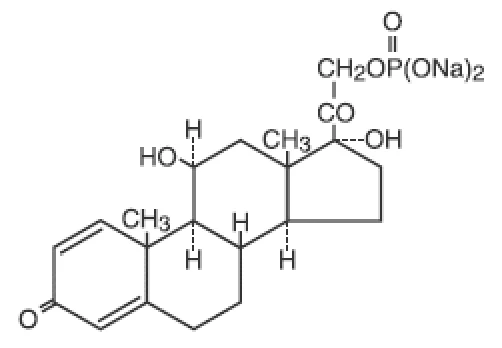
Physicochemical properties: White or slightly yellow friable granules or powder, freely soluble in water, soluble in methanol, slightly soluble in alcohol and chloroform, very slightly soluble acetone and in dioxane.
15 MICROBIOLOGY
No microbiological information is required for this drug product.
16 NON-CLINICAL TOXICOLOGY
Limited information is available. Animal studies in which glucocorticoids have been given to pregnant mice, rats, and rabbits have shown an increased incidence of cleft palate in litters. There are few studies on the carcinogenicity or mutagenicity of prednisolone in animals.