


Product Monograph - Ajovy
RECENT MAJOR LABEL CHANGES
| 2026/01 |
|---|---|
| 2026/01 |
| 7.1 Special Populations 7.1.3 Pediatrics | 2026/01 |
TABLE OF CONTENTS
TABLE OF CONTENTS ................................................................................................... 2
PART 1: HEALTHCARE PROFESSIONAL INFORMATION ................................................. 4
1 INDICATIONS ............................................................................................. 4
1.1 Pediatrics .................................................................................................. 4
1.2 Geriatrics .................................................................................................. 4
2 CONTRAINDICATIONS ............................................................................... 4
4 DOSAGE AND ADMINISTRATION ............................................................... 5
4.1 Dosing Considerations .............................................................................. 5
4.2 Recommended Dose and Dosage Adjustment .......................................... 5
4.4 Administration .......................................................................................... 6
4.5 Missed Dose .............................................................................................. 6
5 OVERDOSE ................................................................................................ 7
6 DOSAGE FORMS, STRENGTHS, COMPOSITION AND PACKAGING .............. 7
7 WARNINGS AND PRECAUTIONS ................................................................ 8
7.1 Special Populations ................................................................................... 9
7.1.1 Pregnancy ................................................................................................. 9
7.1.2 Breast-feeding ........................................................................................... 9
7.1.3 Pediatrics .................................................................................................. 9
7.1.4 Geriatrics ................................................................................................. 10
8 ADVERSE REACTIONS .............................................................................. 10
8.1 Adverse Reaction Overview .................................................................... 10
8.2 Clinical Trial Adverse Reactions ............................................................... 10
8.2.1 Clinical Trial Adverse Reactions – Pediatrics ........................................... 14
8.3 Less Common Clinical Trial Adverse Reactions ........................................ 14
8.5 Post-Market Adverse Reactions .............................................................. 15
9 DRUG INTERACTIONS .............................................................................. 15
9.2 Drug Interactions Overview .................................................................... 15
10 CLINICAL PHARMACOLOGY .................................................................... 15
10.1 Mechanism of Action .............................................................................. 15
10.2 Pharmacodynamics ................................................................................. 15
10.3 Pharmacokinetics .................................................................................... 16
10.4 Immunogenicity ...................................................................................... 18
11 STORAGE, STABILITY AND DISPOSAL ....................................................... 18
12 SPECIAL HANDLING INSTRUCTIONS ........................................................ 18
PART 2: SCIENTIFIC INFORMATION ............................................................................ 20
13 PHARMACEUTICAL INFORMATION ......................................................... 20
14 CLINICAL TRIALS ...................................................................................... 20
14.1 Clinical Trials by Indication ...................................................................... 20
Adults ................................................................................................................ 20
Pediatrics (6 to 17 years of age) EPISODIC MIGRAINE ............................................... 30
16 NON-CLINICAL TOXICOLOGY ................................................................... 35
PATIENT MEDICATION INFORMATION ....................................................................... 37
INSTRUCTIONS FOR USE – PREFILLED SYRINGE .......................................................... 43
INSTRUCTIONS FOR USE – PREFILLED AUTOINJECTOR ............................................... 53
Part 1: Healthcare Professional Information
1 INDICATIONS
PrAJOVY® (fremanezumab solution for subcutaneous injection) is indicated for:
- the prevention of migraine in adults who have at least 4 migraine days per month.
- the prevention of episodic migraine (fewer than 15 migraine days per month) in pediatric patients aged 6 to 17 years and weighing at least 45 kg.
AJOVY should be initiated by healthcare professionals experienced in the diagnosis and treatment of migraine.
1.1 Pediatrics
Pediatrics (6 to 17 years of age): Based on the data submitted and reviewed by Health Canada, the safety and efficacy of AJOVY in pediatric patients 6-17 years, weighing at least 45 kg and with a clinical diagnosis of episodic migraine (fewer than 15 migraine days per month) have been established (see Recommended Dose and Dosage Adjustment). Therefore, Health Canada has authorized an indication for pediatric use in these patients.
The safety and efficacy of AJOVY in children below 6 years of age have not been established.
1.2 Geriatrics
Geriatrics (≥ 65 years of age): Clinical studies of AJOVY did not include sufficient numbers of subjects aged 65 and over to determine whether they respond differently from younger subjects. (See WARNINGS AND PRECAUTIONS, Geriatrics)
2 CONTRAINDICATIONS
AJOVY (fremanezumab) is contraindicated in patients who are hypersensitive to this drug or to any ingredient in the formulation, including any non-medicinal ingredient, or component of the container. For a complete listing, (see DOSAGE FORMS, STRENGTHS, COMPOSITION AND PACKAGING).
4 DOSAGE AND ADMINISTRATION
4.1 Dosing Considerations
AJOVY is administered subcutaneously through single dose prefilled syringes or single dose prefilled autoinjectors. AJOVY may be self-administered by patients 13 years of age and older, or administered by healthcare professionals and/or adult caregivers. In pediatric patients 6 to 12 years of age, AJOVY must be administered by a healthcare professional or adult caregiver. Administration should be performed by an individual who has been trained to administer the product. (See Administration and Instructions for Use leaflets)
4.2 Recommended Dose and Dosage Adjustment
- Adults
Two subcutaneous dosing options of AJOVY are available to administer the recommended dosage (See Clinical Trials):
- 225 mg (1 subcutaneous injection) once a month (monthly dosing), or
- 675 mg (3 separate subcutaneous injections of 225 mg one after another) every 3 months (quarterly dosing).
The dose regimen must be followed as prescribed. Patients should be advised that monthly dosing consists of a single subcutaneous injection.
When switching dosage options, the first dose of the new regimen should be given on the next scheduled dosing date of the prior regimen.
- Pediatrics (6 to 17 years of age) and weighing at least 45 kg
The recommended dosage in pediatric patients aged 6 to 17 years, weighing at least 45 kg is:
- 225 mg (1 subcutaneous injection) once a month (monthly dosing)
Do not administer AJOVY to pediatric patients weighing less than 45 kg as an appropriate strength presentation is not available. (see CLINICAL TRIALS).
For both adult and pediatric patients, the treatment benefit should be assessed within 3 months after initiation of the treatment. Any further decision to continue treatment should be taken on an individual patient basis. Evaluation of the need to continue treatment is recommended regularly thereafter. (See CLINICAL TRIALS).
4.4 Administration
AJOVY is for subcutaneous use only.
AJOVY may be administered by healthcare professionals, patients and/or caregivers. Only healthcare professionals and/or caregivers may administer AJOVY to pediatric patients aged 12 years and younger.
Prior to use, provide proper training to patients and/or caregivers on the preparation and administration of AJOVY prefilled syringe or prefilled autoinjector, including aseptic technique [see respective Instructions for Use].
- Remove AJOVY from the refrigerator. Prior to use, allow AJOVY to sit at room temperature for 30 minutes protected from direct sunlight. Do not warm by using a heat source such as hot water or a microwave. Do not use AJOVY if it has been at room temperature for 7 days or longer. (See STORAGE, STABILITY AND DISPOSAL).
- Follow aseptic injection technique every time AJOVY is administered. Inspect AJOVY for particles or discolouration prior to administration. Do not use if the solution is cloudy, discoloured, or contains particles. (See DOSAGE FORMS, STRENGTHS, COMPOSITION AND PACKAGING).
- Administer AJOVY by subcutaneous injection into areas of the abdomen, thigh, or upper arm that are not tender, bruised, red, or indurated.
- For multiple injections, you may use the same body site, but not the exact location of the previous injection.
- Do not co-administer AJOVY with other injectable drugs at the same injection site
4.5 Missed Dose
If an AJOVY injection is missed on the planned date, the missed dose should be administered as soon as possible. The regular dosing regimen should resume from the new dosing day.
A double dose must not be administered to make up for a missed dose.
5 OVERDOSE
In case of overdose, it is recommended that the patient be monitored for any signs or symptoms of adverse effects and given appropriate symptomatic treatment if necessary.
For the most recent information in the management of a suspected drug overdose, contact your regional poison control centre or Health Canada’s toll-free number, 1-844 POISON-X (1-844-764-7669).
6 DOSAGE FORMS, STRENGTHS, COMPOSITION AND PACKAGING
Table 1: Dosage Forms, Strengths, Composition and Packaging
| Route of Administration | Dosage Form / Strength/Composition | Non-medicinal Ingredients |
| Subcutaneous injection | Injection: 225 mg/1.5 mL solution in a single- dose prefilled syringe Injection: 225 mg/1.5 mL solution in a single-dose prefilled autoinjector | Disodium ethylenediaminetetraacetic acid dihydrate (EDTA), L-histidine, polysorbate 80, sucrose, and Water for Injection. |
AJOVY is a sterile, preservative-free, clear to opalescent, colourless to slightly yellow solution practically free from particles.
AJOVY prefilled syringe cap is not made with natural rubber latex. AJOVY prefilled syringe cap is made from natural latex-free material.
Prefilled Syringe
AJOVY is supplied as a carton of one 225 mg/1.5 mL (150 mg/mL) single-dose pre-filled syringe.
Prefilled Autoinjector
AJOVY is supplied as a carton of one 225 mg/1.5 mL (150 mg/mL) single-dose prefilled autoinjector
Description
AJOVY contains fremanezumab, a fully humanized IgG2∆a/kappa monoclonal antibody specific for calcitonin gene-related peptide (CGRP) ligand. Fremanezumab is produced by recombinant DNA technology in Chinese hamster ovary (CHO) cells. The antibody consists of 1324 amino acids and has a molecular weight of approximately 148 KDa.
7 WARNINGS AND PRECAUTIONS
Cardiovascular
No safety data are available in these populations. Patients with significant cardiovascular disease, vascular ischemia, or thrombotic events, such as cerebrovascular accident, transient ischemic attacks, deep vein thrombosis, or pulmonary embolism were excluded from the clinical trials. (See CLINICAL TRIALS).
Hepatic/Biliary/Pancreatic/Renal
No safety data are available in these populations. Fremanezumab as a monoclonal antibody is not expected to undergo hepatic metabolism or renal clearance. Patients with severe hepatic impairment and severe renal impairment (eGFR <30 mL/min/1.73 m2) have not been studied in AJOVY clinical trials. (See CLINICAL TRIALS).
Sensitivity/Resistance
Serious hypersensitivity reactions, including rash, angioedema, and anaphylactic reactions, were reported with the CGRP- class products including AJOVY in clinical trials and in post-market experience.
These reactions may occur within minutes, although some may occur up to one month after administration.
If a hypersensitivity reaction occurs, consider discontinuing AJOVY, and institute appropriate therapy.
7.1 Special Populations
7.1.1 Pregnancy
There are no adequate data on the developmental risk associated with the use of AJOVY in pregnant individuals. AJOVY has a long half-life (see CLINICAL PHARMACOLOGY). This should be taken into consideration for individuals who are pregnant or plan to become pregnant while using AJOVY. (See Non-Clinical Toxicology).
7.1.2 Breast-feeding
It is unknown if the drug is excreted in human milk. Because many drugs are excreted in human milk, precaution should be exercised.
There are no data on the presence of fremanezumab in human milk, the effects on the breastfed infant, or the effects on milk production. The developmental and health benefits of breastfeeding should be considered along with the mother’s clinical need for AJOVY and any potential adverse effects on the breastfed infant from AJOVY or from the underlying maternal condition.
7.1.3 Pediatrics
Episodic migraine
Safety and efficacy of AJOVY in patients aged 6-17 years and older, suffering from episodic migraine and weighing at least 45 kg have been established, and are similar to the safety and efficacy profile seen in clinical trials in adults with migraine.
The safety and efficacy of AJOVY in children below 6 years of age have not been established.
Chronic migraine
The safety and efficacy of AJOVY in pediatric patients (<18 years of age) with chronic migraine have not been established.
Bone growth and development (pediatrics): Longterm effects of CGRP pathway inhibition on skeletal growth and maturation in children are unknown. In the pediatric program, growth and puberty were monitored (e.g., height/weight; Tanner staging); however, clinical exposure is limited in duration, which may be insufficient to detect delayed changes. Health care professionals should periodically monitor growth velocity and pubertal development during treatment (e.g., height z-scores and Tanner staging), and reassess therapy if concerns arise.
7.1.4 Geriatrics
Geriatrics (≥ 65 years of age): Clinical studies of AJOVY did not include sufficient numbers of subjects aged 65 and over to determine whether they respond differently from younger subjects.
8 ADVERSE REACTIONS
8.1 Adverse Reaction Overview
Adults
Hypersensitivity reactions, including rash, pruritus and urticaria were reported with fremanezumab in less than 1% of patients in clinical trials. Most reactions were mild to moderate, but some led to discontinuation or required corticosteroid treatment. Most reactions were reported from within hours to one month after administration. Hypersensitivity reactions, including urticaria, pruritus, rash and swelling/edema have also been reported with fremanezumab in post-marketing experience.
Very common reported adverse drug reactions (ADRs) from the clinical trials were local reactions at the injection site pain, induration, erythema and pruritus.
The adverse reactions that most commonly led to discontinuations were injection site reactions.
Pediatrics
No new clinical trial safety findings were noted for AJOVY use in the pediatric population compared to the known safety profile from the adult clinical trials.
8.2 Clinical Trial Adverse Reactions
Clinical trials are conducted under very specific conditions. Therefore, the frequencies of adverse reactions observed in the clinical trials may not reflect frequencies observed in clinical practice and should not be compared to frequencies reported in clinical trials of another drug.
The safety of AJOVY was evaluated in 2512 adult patients with migraine who received at least one dose of AJOVY 225 mg monthly or AJOVY 675 mg quarterly for at least six months; 775 patients for at least 12 months; and 138 patients for at least 15 months. In placebo-controlled clinical trials (Studies 1 and 2), 662 patients received AJOVY 225 mg monthly for 12 weeks (with or without a loading dose of 675 mg), and 663 patients received AJOVY 675 mg quarterly for 12 weeks (See CLINICAL TRIALS) . In the controlled trials, 87% of patients were female, 80% were White, and the mean age was 41 years.
The most common adverse reactions in the clinical trials for the preventive treatment of migraine were injection site reactions. The adverse reactions that most commonly led to discontinuations were injection site reactions.
Patients with significant cardiovascular disease, vascular ischemia, or thrombotic events, such as cerebrovascular accident, transient ischemic attacks, deep vein thrombosis, or pulmonary embolism were excluded from the clinical trials. (See CLINICAL TRIALS)
Table 2: Adverse Reactions Occurring with an Incidence of ≥ 1% and Greater Than Placebo in Episodic and Chronic Migraine Studies
System Organ Class Preferred Term | AJOVY 225 mg monthly N=290 | AJOVY 675 mg quarterly N=667 | Placebo N=668 |
| Injection site reactions* | 43 % | 45 % | 38 % |
*Injection site reactions include multiple related adverse event terms, such as injection site pain, induration, and erythema
Table 3: Treatment Emergent adverse events occurring with an incidence of ≥1% in the Placebo Controlled Studies
System Organ Class Preferred Term | AJOVY 225 mg monthly N=290 n= (%) | AJOVY 675 mg quarterly N=667 n= (%) | Placebo N=668 n= (%) |
|---|---|---|---|
System Organ Class Preferred Term | AJOVY 225 mg monthly N=290 n= (%) | AJOVY 675 mg quarterly N=667 n= (%) | Placebo N=668 n= (%) |
System Organ Class Preferred Term | AJOVY 225 mg monthly N=290 n= (%) | AJOVY 675 mg quarterly N=667 n= (%) | Placebo N=668 n= (%) |
| Patients with at least 1 AE | 192 (66) | 458 (69) | 411 (62) |
| Gastrointestinal Disorders | |||
| Nausea | 4 (1) | 11 (2) | 16 (2) |
| Diarrhoea | 2 (<1) | 5 (<1) | 8 (1) |
| General disorders and administration site conditions | |||
| Injection site pain | 87 (30) | 200 (30) | 180 (27) |
| Injection site induration | 71 (24) | 131 (20) | 113 (17) |
| Injection site erythema | 52 (18) | 135 (20) | 101 (15) |
| Injection site haemorrhage | 3 (1) | 16 (2) | 16 (2) |
| Injection site pruritus | 4 (1) | 10 (1) | 2 (<1) |
| Fatigue | 2 (<1) | 9 (1) | 9 (1) |
| Injection site rash | 3 (1) | 5 (<1) | 0 |
| Injection site swelling | 3 (1) | 4 (<1) | 0 |
| Infections and infestations | |||
| Upper respiratory tract infection | 16 (6) | 29 (4) | 30 (4) |
| Nasopharyngitis | 11 (4) | 30 (4) | 29 (4) |
| Urinary tract infection | 7 (2) | 14 (2) | 11 (2) |
| Bronchitis | 6 (2) | 9 (1) | 6 (<1) |
| Sinusitis | 4 (1) | 12 (2) | 18 (3) |
| Influenza | 2 (<1) | 8 (1) | (1) |
| Gastroenteritis | 4 (1) | 4 (<1) | 5 (<1) |
| Cystitis | 3 (1) | 1 (<1) | 1 (<1) |
| Herpes zoster | 3 (1) | 0 | 1 (<1) |
| Injury, poisoning and procedural complications | |||
| Ligament sprain | 1 (<1) | 3 (<1) | 2 (<1) |
| Investigations | |||
| Blood creatine phosphokinase increased | 1 (<1) | 3 (<1) | 7 (1) |
| Alanine aminotransferase increased | 1 (<1) | 3 (<1) | 1 (<1) |
| Aspartate aminotransferase increased | 1 (<1) | 3 (<1) | 1 (<1) |
| Musculoskeletal and connective tissue disorders | |||
| Back pain | 3 (1) | 11 (2) | 9 (1) |
| Musculoskeletal pain | 3 (1) | 4 (<1) | 0 |
| Arthralgia | 3 (1) | 2 (<1) | 1 (<1) |
| Nervous system disorders | |||
| Dizziness | 3 (1) | 9 (1) | 9 (1) |
| Paraesthesia | 2 (<1) | 9 (1) | 4 (<1) |
| Migraine | 1 (<1) | 6 (<1) | 11 (2) |
| Respiratory, thoracic and mediastinal disorders | |||
| Cough | 1 (<1) | 8 (1) | 6 (<1) |
| Skin and subcutaneous tissue disorders | |||
| Pruritus | 0 | 8 (1) | 1 (<1) |
Injection site reactions
The most frequently observed local reactions at the injection site were pain, induration and erythema. Most local injection site reactions were transient and predominantly mild to moderate in severity. Pain, induration and erythema were typically observed immediately after injection while pruritus and rash appeared within a median of 24 and 48 hours, respectively. Most injection site reactions resolved, generally within a few hours or days. If the intensity of Injection site reactions is severe, discontinuation of fremanezumab should be considered.
8.2.1 Clinical Trial Adverse Reactions – Pediatrics
Over 400 pediatric patients with migraine, 6 to 17 years of age, have been treated with AJOVY in registration studies. This included 123 pediatric patients in the placebo-controlled trial with episodic migraine (EM). The only adverse reactions of AJOVY observed in this study were injection site reactions, which is similar to the overall safety profile observed in adult clinical studies. The injection site reactions reported were injection site erythema, injection site pain, and injection site swelling. Table 4 summarizes adverse reactions reported in the 3-month placebo-controlled study.
Table 4: Adverse Reactions Occurring with an Incidence of ≥ 1% in Pediatric Patients with Episodic Migraine
| Adverse Reaction | AJOVY N=123 n= (%) | Placebo N=112 n= (%) |
|---|---|---|
| Injection site reactionsa | 20 (%) | 12 (%) |
aInjection site reactions include multiple related adverse event terms, such as injection site erythema, swelling, and pain.
8.3 Less Common Clinical Trial Adverse Reactions
From all clinical trials with AJOVY in adult patients with chronic and episodic migraine, the following less common adverse events of <1% have been observed. Causality to AJOVY has not been established.
Cardiac disorders (palpitations, angina pectoris).
Eyes disorders (vision blurred, diplopia, eye irritations).
Gastrointestinal disorders (nausea, diarrhea, constipation, vomiting, abdominal distension).
General disorders (chest pain, malaise).
Hepatobiliary disorders (weight increased, Gamma-glutamyltransferase increased).
Musculocutaneous and connective tissue disorders (pain, myalgia).
Nervous system disorders (migraine, headache, somnolence).
Psychiatric disorders (insomnia, anxiety, depression, suicidal ideation).
Skin disorders (rash, urticaria)
Vascular disorder (hypertension)
8.5 Post-Market Adverse Reactions
The following adverse reactions are based on post-marketing spontaneous reports. Because these reactions are reported voluntarily from a population of uncertain size, it is not possible to reliably estimate the frequency.
Isolated cases of serious hypersensitivity reactions including angioedema and anaphylaxis have been reported in the post-marketing experience.
9 DRUG INTERACTIONS
9.2 Drug Interactions Overview
No formal clinical drug interaction studies have been performed with AJOVY. Fremanezumab is not metabolized by cytochrome P450 enzymes, therefore, interactions with concomitant medications that are substrates, inducers, or inhibitors of cytochrome P450 enzymes are unlikely. Furthermore, concomitant use of acute migraine treatments (specifically analgesics, ergots and triptans) and preventive treatment of migraine were found not to influence fremanezumab exposure.
10 CLINICAL PHARMACOLOGY
10.1 Mechanism of Action
Fremanezumab is a humanized monoclonal antibody that binds to calcitonin gene-related peptide (CGRP) ligand and blocks its binding to the receptor.
10.2 Pharmacodynamics
The relationship between the pharmacodynamic activity and the mechanism(s) by which fremanezumab exerts its clinical effects is unknown.
10.3 Pharmacokinetics
Table 5 provides a summary of the pharmacokinetic parameters of fremanezumab following subcutaneous administration in adult healthy participants and adult and pediatric migraine patients.
Table 5: Summary of mean (%CV) pharmacokinetic parameters of fremanezumab in healthy participants and migraine patients after subcutaneous doses
| Dose regimen | Age group | Population | Cmaxa (μg/mL) | AUCb (μgxday/mL) | Clearancec (L/day) | Volume of distributiond (L) | t1/2 (day) |
|---|---|---|---|---|---|---|---|
| 225 mg single dose | Adults | Healthy participants | 29.7 (13.7) | 1771 (17.5) | 0.129 (17.8) | 6.43 (14.0) | 35.0 (11.5) |
| 675 mg single dose | 104.8 (28.8) | 5534 (31.7) | 0.127 (30.1) | 5.71 (27.5) | 32.2 (21.5) | ||
| 225 mg monthlye | Migraine patients | 71.2 (29.2) | 1670 (31.2) | 0.098 (33.0) | 2.02 (34.4) | 30.4 (21.3) | |
| 675 mg quarterlye | 116 (24.3) | 5050 (31.0) | |||||
| 225 mg monthlye | Pediatrics 6 to 17 years weighing at least 45 kg | Migraine patients | 93.5 (12.9) | 1744 (13.4) | 0.110 (28.5) | 1.55 (467.9) | - |
aCmax for single dose and Cmax,ss for multiple doses; bAUC0-∞ for single dose and AUCτ,ss for multiple doses; cCL/F from NCA for single dose and CL from population PK for multiple doses; dVz/F from NCA for single dose and Vc from population PK for multiple doses; eestimated by population PK analysis.
AUC0-∞: area under the concentration-time curve from time of dosing to infinity; AUCτ,ss: area under the concentration-time curve for a dosing interval at steady state; Cmax: maximum concentration; Cmax,ss: maximum concentration during a dosing interval at steady state; CL: clearance; CL/F: apparent clearance; Vc= central volume of distribution; Vz/F=apparent volume of distribution during the terminal phase.
Absorption
After single subcutaneous administrations of 225 mg, 675 mg and 900mg fremanezumab, median time to maximum concentrations (tmax) in healthy subjects was 5 to 7 days. Dose proportionality, based on population pharmacokinetics, was observed from 225 mg to 900 mg. The absolute bioavailability was 54% and 57% for doses at 225 mg and 900 mg, respectively. Steady state was achieved by approximately 168 days (about 6 months) following 225 mg monthly and 675 mg quarterly dosing regimens. Median accumulation ratio, based on once monthly and once quarterly dosing regimens, is approximately 2.4 and 1.2, respectively.
Distribution
The apparent volume of distribution was approximately 6 L following subcutaneous administration of fremanezumab.
Metabolism
Similar to other monoclonal antibodies, fremanezumab is expected to be degraded by enzymatic proteolysis into small peptides and amino acids.
Elimination
Based on a population pharmacokinetic analysis, the estimated apparent clearance was 0.14 L/day (23% CV) and the estimated half-life was 30 days (21% CV) following subcutaneous administration of fremanezumab.
Special Populations and Conditions
Pediatrics
Based on population pharmacokinetic analysis of pediatric patients with migraine, fremanezumab has an apparent volume of distribution of approximately 3.19 L and an apparent clearance of 0.0974 L/day. Following subcutaneous administration of 225 mg fremanezumab monthly in the pediatric population weighing at least 45 kg, the predicted steady-state exposures (maximum plasma concentration [Cmax], area under the plasma concentration-time curve [AUC], average plasma concentration [Cav]) to fremanezumab generally overlapped with those of adults, with 31% higher mean Cmax and approximately 4% higher mean AUC and Cav in the pediatric population.
Hepatic Insufficiency
No dedicated hepatic/renal impairment studies were conducted to assess the effect of hepatic or renal impairment on the pharmacokinetics of fremanezumab. Population pharmacokinetic analysis did not reveal a difference in the pharmacokinetics of fremanezumab in patients with hepatic or renal impairment relative to those with normal hepatic or renal function. Patients with severe renal impairment (eGFR <30 mL/min/1.73 m2) have not been studied in AJOVY clinical trials.
- 10.4 Immunogenicity
All therapeutic proteins have the potential for immunogenicity.
The detection of antibody formation is highly dependent on the sensitivity and specificity of the assay. Additionally, the observed incidence of antibody (including neutralizing antibody) positivity in an assay may be influenced by several factors including assay methodology, sample handling, timing of sample collection, concomitant medications, and underlying disease. For these reasons, comparison of incidence of antibodies in the studies described below with the incidences of antibodies in other studies or to other products may be misleading.
In 3-month placebo-controlled studies, 0.4 % of patients (6 out of 1,701) treated with fremanezumab developed anti-drug antibodies (ADA). The antibody responses were of low titer. One of these 6 patients developed neutralizing antibodies. With 12 months of treatment, ADA were detected in 2.3% of the patients (38 out of 1,888) with 0.95% of the patients developing neutralizing antibodies.
In a 3-month placebo-controlled study in pediatric patients 6 to 17 years of age with episodic migraine (TV48125-CNS-30083), 1.6% (2 of 123) of participants treated with fremanezumab tested positive for treatment-emergent ADA. Neutralizing antibodies were observed in one of the two participants who developed treatment-emergent ADA (overall 1 of 123, 0.8%).
11 STORAGE, STABILITY AND DISPOSAL
- Store refrigerated at 2°C to 8°C in the original outer carton to protect from light until time of use.
- If necessary, AJOVY may be kept in the original carton at room temperature up to 25°C for a maximum of 7 days. After removal from the refrigerator, AJOVY must be used within 7 days or discarded.
- Do not freeze. Do not expose to extreme heat or direct sunlight. Do not shake.
- Disposal: Any unused medicinal product or waste material should be disposed of in accordance with local requirements.
12 SPECIAL HANDLING INSTRUCTIONS
- Detailed instructions for use are provided respectively for the prefilled syringe, and the prefilled autoinjector at the end of the package leaflet and must be followed step-by-step carefully.
- The prefilled syringe and the prefilled autoinjector are each for single use only.
AJOVY should not be used if the solution is cloudy or discoloured or contains particles.
- AJOVY should not be used if the solution has been frozen.
The prefilled syringe and the prefilled autoinjector should not be shaken.
Part 2: Scientific Information
13 PHARMACEUTICAL INFORMATION
Drug Substance
Proper name: fremanezumab
Chemical name: Immunoglobulin G2, anti-(human alpha-calcitonin gene-related peptide/beta-calcitonin gene-related peptide)
Molecular formula and molecular mass: C6470H9952N1716O2016S46 - Approximately 148 kDa
Structural formula: fremanezumab is composed of 2 heavy chains, each predicted to contain 448 amino acids residues and 2 light chains containing 214 amino acid residues.
Physicochemical properties: AJOVY (fremanezumab) injection is a sterile, preservative-free, clear to opalescent, colorless to slightly yellow solution for subcutaneous administration with a pH of 5.5.
Pharmaceutical standard: Professed
Product Characteristics:
Fremanezumab is a fully humanized IgG2Δa/kappa monoclonal antibody specific for calcitonin gene-related peptide (CGRP) ligand. Fremanezumab is produced by recombinant DNA technology in Chinese hamster ovary (CHO) cells. The antibody consists of 1324 amino acids and has a molecular weight of approximately 148 kDa.
Each prefilled syringe and prefilled autoinjector delivers 1.5 mL of solution containing 225 mg fremanezumab, disodium ethylenediaminetetraacetic acid dihydrate (EDTA) (0.204 mg), L-histidine (0.815 mg), L-histidine hydrochloride monohydrate (3.93 mg), polysorbate-80 (0.3 mg), sucrose (99 mg), and Water for Injection, and has a pH of 5.5.
14 CLINICAL TRIALS
14.1 Clinical Trials by Indication
Adults – Episodic Migraine
The efficacy of AJOVY was evaluated as a preventive treatment of episodic migraine in adult patients in a multicenter, randomized, 3-month, double-blind, placebo-controlled study TV48125-CNS-30050.
Table 6: Summary of Patient Demographics in Episodic Migraine Study TV48125-CNS-30050
| Study # | Study design | Dosage, route of administration and duration | Study subjects (n) | Mean age (Range) | Sex |
TV48125-CNS-30050 (Efficacy and safety) Episodic migraine | Randomized, double-blind, placebo-controlled, parallel-group study | 3-month treatment perioda: sc PBO monthly (PBO/PBO/PBO) sc fremanezumab at 675 mg followed by monthly doses of PBO (675 mg/PBO/PBO) sc fremanezumab 225 mg monthly (225/225/225 mg) | Enrolled: 875 Treated: 874 Completed: 791 | 41.8 (18-70) | M: 133(15%) F: 742 (85%) |
aIn order to maintain blinding throughout the study, the number of injections at each visit was the same for all patients regardless of the treatment group to which they were randomized.
AJOVY was evaluated for the preventive treatment of episodic migraine in study TV48125-CNS-30050 which included adults with a history of episodic migraine (patients with <15 headache days per month). All patients were randomized (1:1:1) to receive subcutaneous injections of either AJOVY 675 mg every three months (quarterly), AJOVY 225 mg monthly, or placebo monthly, over a 3-month treatment period. Patients were allowed to use acute headache treatments during the study. Randomization was stratified based on sex, country, and baseline preventive migraine medication use (yes, no). The total number of patients who received concomitant migraine preventive medication during the study was pre-specified not to exceed 30% of the total sample size of the study. Overall, 21% of randomized patients received concomitant migraine preventive medication during the study.
The study excluded patients with a history of significant cardiovascular disease, vascular ischemia, or thrombotic events, such as cerebrovascular accident, transient ischemic attacks, deep vein thrombosis, or pulmonary embolism.
Headache information was captured daily throughout study participation using the electronic headache diary device. The primary efficacy endpoint was the mean change from baseline in the monthly average number of migraine days during the 3-month treatment period. Secondary endpoints included the proportion of patients reaching at least a 50% reduction in monthly average number of migraine days during the 3-month treatment period, the mean change from baseline in the monthly average number of days of use of any acute headache medication during the 3-month treatment period, and the mean change from baseline in the number of migraine days during the first month of the treatment period.
In Study TV48125-CNS-30050, a total of 875 patients (742 females, 133 males), ranging in age from 18 to 70 years, were randomized. A total of 791 (90.4%) patients completed the 3-month double-blind phase.
Both monthly and quarterly dosing regimens of AJOVY demonstrated statistically significant improvements for efficacy endpoints compared to placebo over the 3-month period, as summarized in Table 7.
Table 7: Results of study TV48125-CNS-30050 in Episodic Migraine- Adults
| Efficacy Endpoint | Placebo (n=290) | Fremanezumab 675 mg quarterly (n=288) | Fremanezumab 225 mg monthly (n=287) |
|---|---|---|---|
| Efficacy Endpoint | Placebo (n=290) | Fremanezumab 675 mg quarterly (n=288) | Fremanezumab 225 mg monthly (n=287) |
| Monthly Migraine Days (MMD) | |||
| Baseline MMD | 9.1 | 9.2 | 8.9 |
| LS mean change from baselinea | -2.2 | -3.4 | -3.7 |
| LS mean difference from placebo (95% CI)a | - | -1.2 (-1.74, -0.69) | -1.4 (-1.96, 0.90) |
| P-value (vs. placebo)a | - | p<0.0001 | p<0.0001 |
| 50% Responder Rate MMD | |||
| Percentage [%] | 27.9% | 44.4% | 47.7% |
| Estimated difference from placebo (95%) CI) | - | 16.5 (8.8, 24.2) | 19.8 (12.1, 27.6) |
| P-value (vs. placebo)b | - | p<0.0001 | p<0.0001 |
| Monthly Acute Headache Medication Days (MAHMD) | |||
| Baseline MAHMD | 7.7 | 7.7 | 7.7 |
| LS mean change from baselinea | -1.6 | -2.9 | -3.0 |
| LS mean difference from placebo (95% CI)a | - | -1.3 (-1.73, -0.78) | -1.3 (-1.81, -0.86) |
| P-value (vs. placebo)a | - | p<0.0001 | p<0.0001 |
FAS (Full Analysis Set): Includes all randomized patients who received at least 1 dose of study drug and had at least 10 days of post-baseline efficacy assessments on the primary endpoint.
CI = confidence interval
LS = least squares
A fixed-sequence (hierarchical) testing procedure was implemented to control the type 1 error rate at 0.05.
a Based on the ANCOVA model that included treatment, gender, region, and baseline preventive medication use (yes/no) as fixed effects and corresponding baseline value and years since onset of migraine as covariates.
b P-value was based on the Cochran-Mantel-Haenszel test stratified by baseline preventive medication use (yes/no). The early discontinued patients were considered as non-responders for overall analysis.
Figure 1 displays the mean change from baseline in the average of monthly number of migraine days in Study TV45128-CNS-30050.
Figure 1: Mean Change from Baseline in the Monthly Average Number of Migraine Days for TV45128-CNS-30050
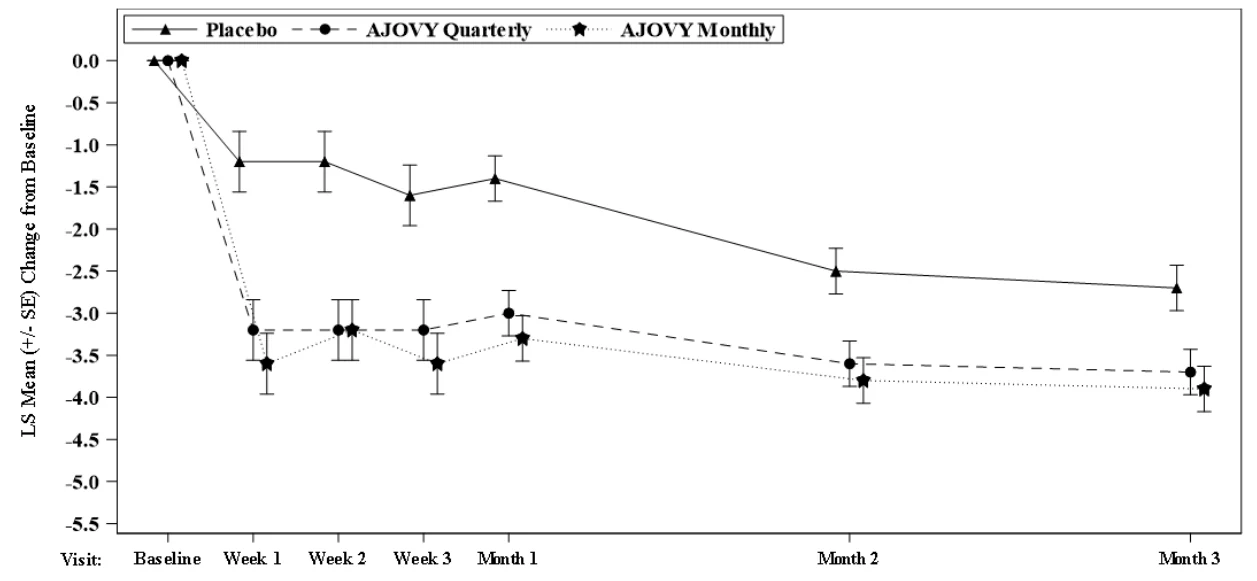
Note: Least squares (LS) mean and standard error (SE) of the mean are presumed in the figure.
Adults – Chronic Migraine
Table 4: Summary of patient demographics for clinical trials in Adult Patients with Chronic Migraine
| Study # | Study design | Dosage, route of administration and duration | Study subjects (n) | Mean age (Range) | Sex |
TV48125-CNS-30049 (Efficacy and safety) Chronic migraine | Randomized, double-blind, placebo-controlled, parallel-group study | 3-month treatment perioda: sc PBO monthly (PBO/PBO/PBO) sc fremanezumab at 675 mg followed by monthly doses of PBO (675 mg/PBO/PBO) sc fremanezumab 225 mg monthly with a starting dose of 675 mg (675/225/225 mg) | Enrolled:1130 Treated: 1130 Completed: 1034 | 41.3 (18-71) | M: 139 (12%) F: 991 (88%) |
aIn order to maintain blinding throughout the study, the number of injections at each visit was the same for all patients regardless of the treatment group to which they were randomized.
The study included adults with a history of chronic migraine (patients with ≥15 headache days per month). All patients were randomized (1:1:1) to receive subcutaneous injections of either AJOVY 675 mg starting dose followed by 225 mg monthly, 675 mg every 3 months (quarterly), or placebo monthly, over a 3-month treatment period. Patients were allowed to use acute headache treatments during the study. Randomization was stratified based on sex, country, and baseline preventive migraine medication use (yes, no). The total number of patients who received concomitant migraine preventive medication during the study was pre-specified not to exceed 30% of the total sample size of the study. Overall, 21% of randomized patients received concomitant migraine preventive medication during the study.
The study excluded patients with a history of significant cardiovascular disease, vascular ischemia, or thrombotic events, such as cerebrovascular accident, transient ischemic attacks, deep vein thrombosis, or pulmonary embolism.
Headache information was captured daily throughout study participation using the electronic headache diary device. The primary efficacy endpoint was the mean change from baseline in the monthly average number of headache days of at least moderate severity during the 3-month treatment period. The secondary endpoints were the mean change from baseline in the monthly average number of migraine days during the 3-month treatment period, the proportion of patients reaching at least 50% reduction in the monthly average number of headache days of at least moderate severity during the 3-month treatment period, the mean change from baseline in the monthly average number of days of use of any acute headache medication during the 3-month treatment period, and the mean change from baseline in the number of headache days of at least moderate severity during the first month of treatment.
In Study TV48125-CNS-30049, a total of 1130 patients (991 females, 139 males), ranging in age from 18 to 70 years, were randomized. A total of 1034 (91.5%) patients completed the 3-month double-blind phase.
Table 5: Key Efficacy outcomes in Chronic Migraine – Study TV48125-CNS-30049 Based on FAS
| Efficacy Endpoint | Placebo (n=371) | Fremanezumab 675 mg quarterly (n=375) | Fremanezumab 225 mg monthly with 675 mg starting dose (n=375) |
|---|---|---|---|
| Efficacy Endpoint | Placebo (n=371) | Fremanezumab 675 mg quarterly (n=375) | Fremanezumab 225 mg monthly with 675 mg starting dose (n=375) |
Monthly Headache Days of At Least Moderate Severity (MHD) Baseline MHD LS mean change from baselinea | 13.3 -2.5 | 13.2 -4.3 | 12.8 -4.6 |
| LS mean difference from placebo (95% CI)a | - | -1.8 (-2.45, -1.13) | -2.1 (-2.77, -1.46) |
| P-value (vs. placebo)a | - | p<0.0001 | p<0.0001 |
Monthly Migraine Days (MMD) Baseline MMD LS mean change from baselinea | 16.3 -3.2 | 16.2 -4.9 | 16.0 -5.0 |
| LS mean difference from placebo (95% CI)a | - | -1.7 (-2.44, -0.92) | -1.9 (-2.61, -1.09) |
| P-value (vs. placebo)a | - | p<0.0001 | p<0.0001 |
50% Responder Rate MHD Percentage [%] | 18.1% | 37.6% | 40.8% |
| Estimated difference from placebo (95%) CI) | - | 19.5 (13.2, 25.7) | 22.9 (16.5, 29.2) |
| P-value (vs. placebo)b | - | p<0.0001 | p<0.0001 |
Monthly Acute Headache Medication Days (MAHMD) Baseline MAHMD LS mean change from baselinea | 13.0 -1.9 | 13.1 -3.7 | 13.1 -4.2 |
FAS (Full Analysis Set): Includes all randomized patients who received at least 1 dose of study drug and had at least 10 days of post-baseline efficacy assessments on the primary endpoint.
CI = confidence interval
LS = least squares
A fixed-sequence (hierarchical) testing procedure was implemented to control the type 1 error rate at 0.05.
a Based on the ANCOVA model that included treatment, gender, region, and baseline preventive medication use (yes/no) as fixed effects and corresponding baseline value and years since onset of migraine as covariates.
b P-value was based on the Cochran-Mantel-Haenszel test stratified by baseline preventive medication use (yes/no). The early discontinued patients were considered as non-responders for overall analysis.
Figure 2: Mean Change from Baseline in the Monthly Average Number of Headache Days of At Least Moderate Severity for Study TV48125-CNS-30049
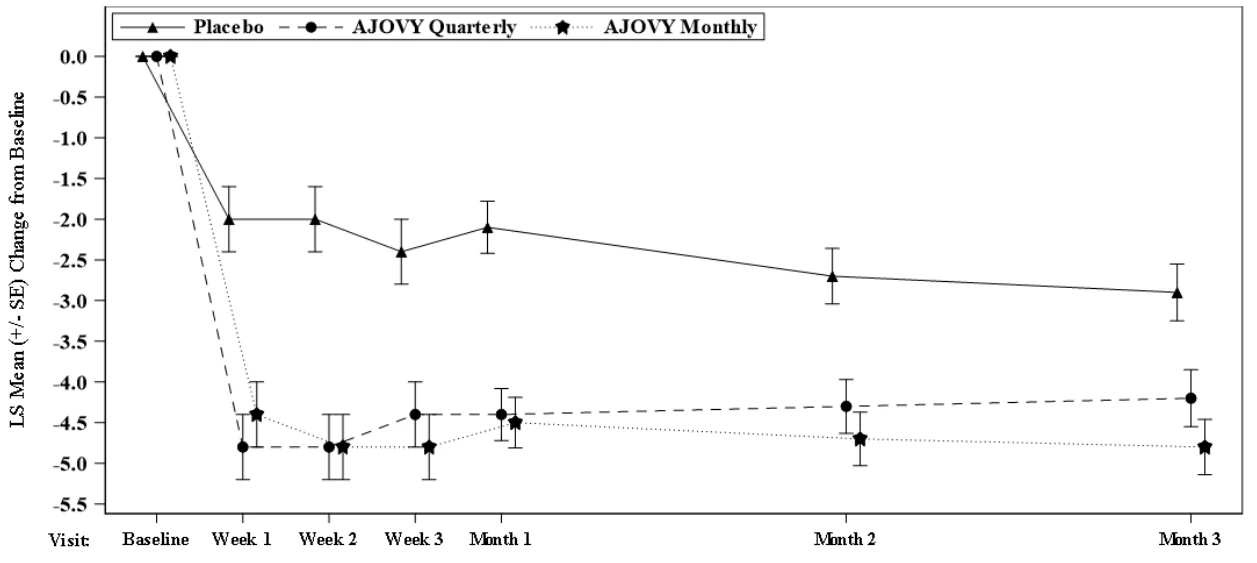
Note: Least squares (LS) mean and standard error (SE) of the mean are presumed in the figure.
Difficult to treat migraine
The efficacy and safety of fremanezumab in a total of 838 episodic and chronic migraine patients with documented inadequate response to two to four classes of prior migraine preventive medicinal products was assessed in a randomised study (FOCUS), which was composed of a 12-week double-blind, placebo-controlled treatment period.
All patients were randomized (1:1:1) to receive subcutaneous injections of either AJOVY 675 mg every three months (quarterly), AJOVY 225 mg monthly (with the starting dose 675 mg for chronic migraine only), or placebo monthly. Randomization was stratified based on sex, country, and a special treatment failure group defined as having documented inadequate response to valproic acid and 2 to 4 classes of prior preventive migraine medications. Patients were allowed to use acute headache treatments during the study.
The study excluded patients with a history of significant cardiovascular disease, vascular ischemia, or thrombotic events, such as cerebrovascular accident, transient ischemic attacks, deep vein thrombosis, or pulmonary embolism. A total of 838 patients (700 females, 138 males), ranging in age from 18 to 70 years, were randomized. A total of 807 (96.3%) patients completed the 3-month double-blind phase.
Headache information was captured daily throughout study participation using the electronic headache diary device. The primary efficacy endpoint was the mean change from baseline in the monthly average number of migraine days during the 12-week double-blind treatment period. Key secondary endpoints were the achievement of at least 50% reduction from baseline in monthly migraine days, the mean change from baseline in the monthly average number of headache days of at least moderate severity and change from baseline in monthly average number of days of acute headache medicinal product use.
Both monthly and quarterly dosing regimens of fremanezumab demonstrated statistically significant and clinically meaningful improvement from baseline compared to placebo for key endpoints.
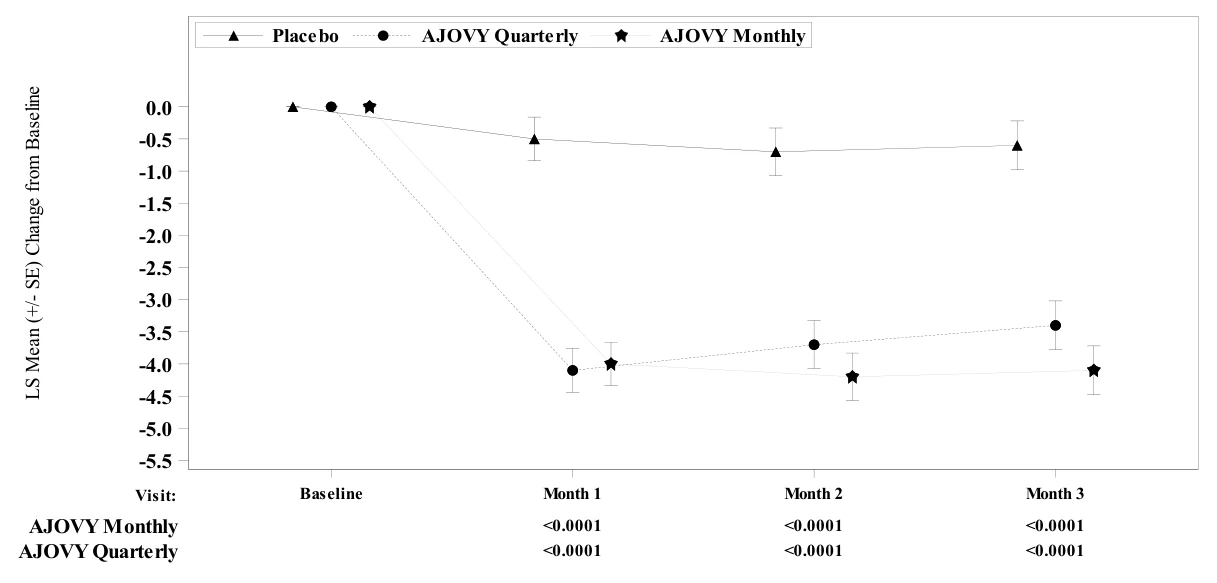
For the primary endpoint, the mean reduction in monthly migraine days (MMD) were -3.7 (95% CI: -4.38, -3.05) in fremanezumab quarterly group and -4.1 (95% CI: -4.73, -3.41) in fremanezumab monthly group compared to -0.6 (95% CI: -1.25, 0.07) in placebo group. 34% of patients in fremanezumab quarterly group and 34% of patients in fremanezumab monthly group achieved at least 50% reduction in MMD, during the 12-week treatment period, compared to 9% of patients in placebo group (p<0.0001). The effect also occurred from as early as the first month and was sustained over the 12-week double-blind treatment period.
Figure 3: Mean Change from Baseline in Monthly Average Number of Migraine Days for Difficult to Treat Migraine - FOCUS Study
Mean at baseline (monthly average number of migraine days): Placebo: 14.4, AJOVY Quarterly: 14.1, AJOVY Monthly: 14.1.
Note: Least squares (LS) mean and standard error (SE) of the mean are presumed in the figure.
Pediatrics (6 to 17 years of age) EPISODIC MIGRAINE
The efficacy of AJOVY was evaluated as a preventive treatment of episodic migraine in pediatric patients 6 to 17 years of age in one multicenter, randomized, 3-month, double-blind, placebo-controlled study (TV48125-CNS-30083).
Table 10: Summary of patient demographics for clinical trials in Pediatric Patients with Episodic Migraine
| Study # | Study design | Dosage, route of administration and duration | Study subjects (n) | Mean age (Range) | Sex |
TV48125-CNS-30083 (Efficacy and safety) Episodic migraine | Randomized, double-blind, placebo-controlled, group study | 3-month treatment period sc fremanezumab 225 mg or 120 mg, or placebo monthly | Enrolled: 235 Treated: 235 Completed: 225 | 13.3 (6 – 17) | M: 105 (45%) F: 130 (55%) |
The study included pediatric patients 6 to 17 years of age with a history of episodic migraine (patients with <15 headache days per month). All participants were randomized (1:1) to receive subcutaneous injections of either AJOVY or placebo monthly, over a 3-month period. Patients who weighed 45 kg or more received 225 mg fremanezumab and patients who weighed under 45 kg received 120 mg fremanezumab. Patients were allowed to use acute headache treatments during the study. A subset of patients (21%) was allowed to use one or two additional concomitant preventive medication(s). The study excluded patients with clinically significant cardiovascular disease. Efficacy measures were derived from headache variables collected daily using an electronic diary device.
The primary endpoint was the mean change from baseline (28-day baseline period) in the monthly average number of migraine days during the 12-week period after the first dose of trial drug.
Secondary endpoints included:
- Mean change from baseline (28-day baseline period) in monthly average number of headache days of at least moderate severity during the 12-week period after the first dose of trial drug.
- Proportion of patients reaching at least 50% reduction in the monthly average number of migraine days during the 12-week period after the first dose of trial drug.
- Mean change from baseline (28-day baseline period) in the monthly average number of days of use of any acute headache medications during the 12-week period after the first dose of trial drug.
In study 30083, a total of 235 patients were randomized. A total of 225 patients completed the 3-month, double-blind treatment period.
Table 11: Efficacy Endpoints in Study TV48125-CNS-30083 Based on Full Analysis Set (FAS)
| Efficacy Endpoint | Placebo (N=111) * | Fremanezumab combined (N=123)** |
|---|---|---|
| Efficacy Endpoint | Placebo (N=111) * | Fremanezumab combined (N=123)** |
| Efficacy Endpoint | Placebo (N=111) * | Fremanezumab combined (N=123)** |
| Monthly migraine days (MMD) # | ||
| Baseline | 7.5 | 7.8 |
| LS mean change from baselinea | -1.4 | -2.5 |
| LS mean difference from placebo (95% CI)a | -1.0 (-1.90, -0.16) | |
| P-value (vs. placebo)a | 0.0210 | |
| Monthly headache days of at least moderate severity # | ||
| Baseline | 7.9 | 8.2 |
| LS mean change from baselinea | -1.5 | -2.6 |
| LS mean difference from placebo (95% CI)a | -1.1 (-2.06, -0.20) | |
| P-value (vs. placebo)a | 0.0172 | |
| ≥ 50% MMD responders | ||
| Percentage [%] | 27.0% | 47.2% |
| Estimated difference from placebo | 20.1% | |
| P-value (vs. placebo)b | 0.0016 | |
| Monthly acute headache medication days # | ||
| Baseline | 5.6 | 5.8 |
| LS mean change from baselinea | -1.0 | -2.1 |
| LS mean difference from placebo (95% CI)a | -1.1 (-1.77, -0.42) | |
| P-value (vs. placebo)a | 0.0016 | |
FAS (Full Analysis Set): Includes all randomized patients who received at least 1 dose of study drug and had at least 10 days of post-baseline efficacy assessments on the primary endpoint.
CI = confidence interval.
LS= least squares
A fixed-sequence (hierarchical) testing procedure was implemented to control the type I error rate at 0.05.
* One patient in the placebo group was excluded from the analysis due to not having at least 10 days of post-baseline efficacy data.
**Fremanezumab combined group (N = 123) includes 36 patients treated with 120 mg and 87 patients treated with 225 mg.
# Those efficacy endpoints are continuous. No missing data imputation is done for those endpoints as all patients in FAS have their monthly average number of days of efficacy variables during the 12-week period.
a Based on the ANCOVA model that included treatment, gender, region, and baseline preventive medication use (yes/no) as fixed effects and corresponding baseline value and years since onset of migraine as covariates.
b p-value is from a logistic regression model with the following factors: treatment, sex, region, puberty status, weight category, and preventive migraine medication use at baseline (Yes/No).
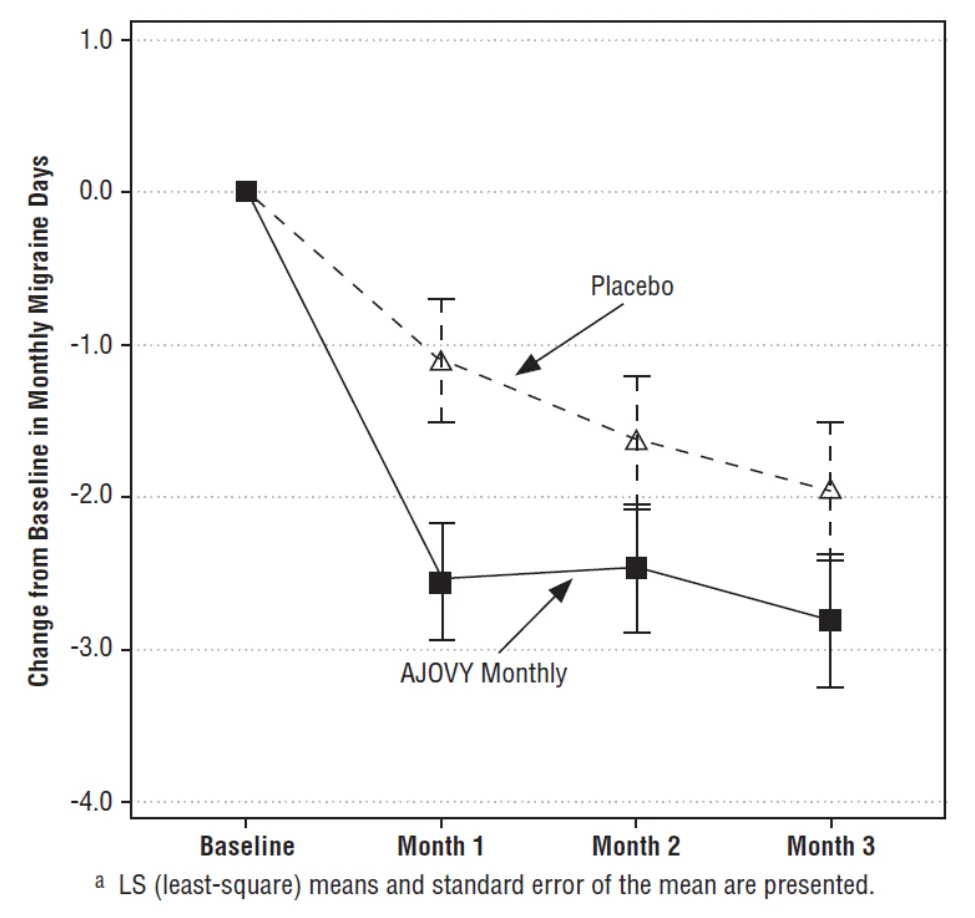
Figure 2 displays the mean change from baseline in the average monthly number of migraine days in Study TV48125-CNS-30083.
Figure 4: Change from Baseline in Monthly Migraine Days (Fremanezumab 120 mg and 225 mg combined versus placebo) in Study TV48125-CNS-30083a
16 NON-CLINICAL TOXICOLOGY
General Toxicology: The safety of fremanezumab was evaluated in repeat-dose toxicity studies in rats and monkeys for the duration of 3 months, and in chronic toxicity studies in cynomolgus monkeys for the duration of 6 months. Both the iv and sc routes were tested following once weekly dosing.
In rats, the no-observed-adverse-effect-level (NOAEL) was the highest dose tested in the 3month repeat dose study (300 mg/kg sc) and safety margins (based on AUC) were 21 times higher than the exposure in humans at the recommended clinical sc dose regimen of 225 mg once monthly.
In monkeys, in the 6-month chronic toxicity study, at the NOAEL dose of 300 mg/kg/weekly, safety margins (based on AUC) were at least 158 times higher than the human exposure at the 225 mg once monthly sc dose.
Other studies in rats and monkeys via sc dosing were of shorter duration and therefore, safety margins were slightly lower than the values mentioned above, ranging from 18 to 48 times higher than the clinical exposure at the 225 mg once monthly sc dose. In one study in monkeys via iv dosing, the NOAEL (10 mg/kg) and corresponding safety margin (approximately 4-fold higher) were lower due to incidental findings which were not reproducible in the chronic toxicity study
Other studies in rats and monkeys via sc dosing were of shorter duration and therefore, safety margins were slightly lower than the values mentioned above, ranging from 18 to 48 times higher than the clinical exposure at the 225 mg once monthly sc dose. In one study in monkeys via iv dosing, the NOAEL (10 mg/kg) and corresponding safety margin (approximately 4-fold higher) were lower due to incidental findings (perivasculitis of the ciliary vessel of the eye) which were not reproducible in the chronic toxicity study.
Carcinogenicity: Animal studies have not been performed to evaluate the carcinogenic potential of fremanezumab.
Genotoxicity: No studies have been performed to evaluate the genotoxic potential of fremanezumab.
Reproductive and Developmental Toxicology: When fremanezumab (0, 50, 100, or 200 mg/kg) was administered to male and female rats by weekly subcutaneous injection prior to and during mating and continuing in females throughout organogenesis, no adverse effects on male or female fertility were observed. The highest dose tested was associated with calculated safety margins of approximately 43-fold and 9-fold in male and female rats, respectively, based on AUC over the human exposure following 225 mg once monthly sc dosing.
Administration of fremanezumab (0, 10, 50, or 100 mg/kg) weekly by subcutaneous injection to pregnant rabbits throughout the period of organogenesis produced no adverse effects on embryo-fetal development. The highest dose tested was associated with a calculated safety margin (based on AUC) of 20-fold relative to the human exposure administered a monthly sc dose of 225 mg.
Administration of fremanezumab (0, 50, 100, or 200 mg/kg) weekly by subcutaneous injection to female rats throughout pregnancy and lactation resulted in no adverse effects on pre- and postnatal development. Exposure at the NOAEL (based on AUC) was 14 times higher than the human exposure at 225 mg monthly sc dose.
Special Toxicology: Safety pharmacology endpoints were evaluated in the general toxicology studies (up to 300 mg/kg/week) and in an additional stand-alone single dose study (100 mg/kg) in conscious telemetered cynomolgus monkeys, as well as single dose respiratory and CNS studies in rats (up to 300 mg/kg). No treatment-related effects were identified after single or repeated administrations up to 6 months via once weekly administration at doses of up to 300 mg/kg.
Juvenile Toxicity: A GLP study in 4-week old juvenile rats evaluated the potential effects of fremanezumab following 6 weekly sc injections at dose levels of 0 (vehicle control), 50, 150, and 450 mg/kg/week, up to 9 weeks of age, followed by a 6-week treatment-free period.
No toxicological effects were observed on incidence of clinical signs or food consumption. No effects on growth and development parameters, including body weight, tibia length measurement, and bone densitometry, neuro-behavioral development, and sexual maturation, were observed up to 9 weeks of age. A statistically significant reduction of total white blood cell count characterized by reduced absolute lymphocyte count in males and females across all dose groups relative to the control group was observed following the dosing phase, and in high-dose females at the end of the 6-week treatment-free period. However, all values were within historical control ranges and were not associated with any clinical signs or adverse effects. Fertility in dosed males and females and fetal development up to gestational day 13 in dosed females were not adversely affected following mating at 13 weeks of age. The NOAEL was the highest dose tested (450 mg/kg bw/week), equivalent to 58-fold the maximum recommended human dose in pediatric patients (225 mg dose/month), based on AUC in male and female animals.