


Product Monograph - Aklief
INDICATIONS
AKLIEF (Trifarotene 50 mcg/g) topical cream is indicated for the topical treatment of acne vulgaris of the face and/or trunk in patients 12 years of age and older.
Pediatrics
Pediatrics (<12 years of age): Safety and effectiveness of AKLIEF in children below the age of 12 years have not been established. Therefore, Health Canada has not authorized an indication in pediatric patients less than 12 years of age.
Geriatrics
Geriatrics (> 65 years of age): Safety and effectiveness of AKLIEF in geriatric patients age 65 years and above have not been established.
CONTRAINDICATIONS
AKLIEF is contraindicated in patients who are hypersensitive to this drug or to any ingredient in the formulation, including any non-medicinal ingredient, or component of the container. For a complete listing, see Dosage Forms, Strengths, Composition and Packaging.
AKLIEF is also contraindicated in the following conditions:
- Patients with eczema or seborrheic dermatitis
- Pregnancy
- Women planning a pregnancy
DOSAGE AND ADMINISTRATION
Dosing Considerations
- Avoid contact with the eyes, mouth, lips, angles of nose and mucous membranes. If product enters the eye, wash immediately with warm water.
- Should not be applied to cuts, abrasions, eczematous, or sunburned skin.
- For topical use only. Not for oral, ophthalmic or intravaginal use.
Recommended Dose and Dosage Adjustment
Apply a small amount of AKLIEF (patients 12 years of age and older) to provide a thin layer to the affected areas of the face and/or trunk once a day, in the evening, on clean and dry skin.
Health Canada has not authorized an indication in pediatric patients less than 12 years of age.
Administration
One pump actuation should be enough to cover the face (i.e. forehead, cheeks, nose, and chin). Apply a thin layer to cover the entire affected areas.
Two pump actuations should be enough to cover the upper trunk (i.e. reachable upper back, shoulders and chest). One additional pump actuation may be used for middle and lower back if acne is present.
The use of a moisturizer before and after is recommended as frequently as needed from the initiation of treatment, while allowing sufficient time before and after the application of AKLIEF to allow the skin to dry.
Hands should be washed after applying AKLIEF.
Clinical improvement is expected to be evident between 4-8 weeks of treatment.
Application of AKLIEF may cause excessive irritation in the skin of certain sensitive individuals. If irritation occurs, the patient should be directed to apply non-comedogenic moisturizers. Discontinue treatment if a severe local inflammatory response is experienced. Reinstitute therapy when the reaction has subsided, initially applying the preparation less frequently (e.g. every other day). Once-daily application may be resumed if it is judged that the patient is able to tolerate the treatment. Frequency of application should be closely monitored by careful observation of the clinical therapeutic response and skin tolerance.
Missed Dose
If a single dose is missed, dosing should continue as per usual the following evening, and the usual amount should be applied.
OVERDOSAGE
If the medication is applied excessively, neither more rapid nor better results will be obtained, and marked redness, scaling, or skin discomfort may occur. In this event, discontinue use and wait until the skin has recovered.
Inadvertent oral ingestion of trifarotene may lead to the same adverse effects as those associated with excessive oral intake of Vitamin A including teratogenesis in women of childbearing age.
In the event of accidental oral ingestion of the product, the patient should be monitored, and appropriate supportive measures should be administered as necessary, including pregnancy testing in women of childbearing age.
| For management of a suspected drug overdose, contact your regional poison control centre. |
DOSAGE FORMS, STRENGTHS, COMPOSITION AND PACKAGING
| Route of Administration | Dosage Form / Strength | Clinically Relevant Nonmedicinal Ingredients |
| Topical | Cream 50 mcg/g | Allantoin, Copolymer of acrylamide and sodium acryloyldimethyltaurate with isohexadecane, polysorbate 80 and sorbitan oleate, Cyclomethicone 5, Ethanol (96%), Phenoxyethanol, Propylene glycol, Purified water, Triglycerides medium-chain. |
AKLIEF (trifarotene 50 mcg/g) topical cream is white in colour and is available in:
- 2 g tube (sample) White Low density polyethylene (LDPE)/Aluminium (Al)/High density polyethylene (HDPE) laminated tubes with a white high density polyethylene (HDPE) head and a white polypropylene (PP) closure.
- 15 g, 30 g, 45 g and 75 g pump with Polypropylene (PP)/High density polyethylene (HDPE) white airless bottle closed with a white polypropylene (PP) pump and a white polypropylene (PP) overcap.
Not all pack sizes may be marketed.
Each gram of AKLIEF contains 50 mcg trifarotene in a vehicle consisting of allantoin, Copolymer of acrylamide and sodium acryloyldimethyltaurate with isohexadecane, polysorbate 80 and sorbitan oleate, Cyclomethicone 5, Ethanol (96% alcohol), Phenoxyethanol, Propylene glycol, Triglycerides medium-chain and purified water.
WARNINGS AND PRECAUTIONS
General
For external use only. Not for ophthalmic use.
AKLIEF should not be applied to cuts, abrasions, eczematous or sunburned skin.
Avoid contact with the eyes, mouth, lips, angles of the nose, mucous membranes, abraded skin and open wounds. If contact occurs, rinse thoroughly with warm water.
AKLIEF should be applied only to the affected areas. Excessive use should be avoided.
If a reaction suggesting allergic / hypersensitivity reactions to any component of the formulation occurs, the use of the product should be discontinued.
Concomitant topical acne therapy is not recommended because a possible cumulative irritancy effect may occur, especially with the use of peeling, desquamating, or abrasive agents (see DRUG INTERACTIONS, Drug-Drug Interactions).
Avoid concomitant use of dermatologic medications and potentially irritating topical products (abrasive soaps and cleansers, soaps and cosmetics) that have strong skin-drying effect and products with high concentrations of alcohol, astringents, spices, or limes.
Patients should be advised to use non-comedogenic cosmetics. Colour cosmetics such as blushes and powders are acceptable, however, make-up cosmetics should be water based only. Cosmetics must be removed by thorough cleansing before the area is treated.
The treatment area should not be covered with dressings or bandages.
Weather extremes, such as wind or cold, may be more irritating to some patients using AKLIEF.
Skin
Local cutaneous reaction
Certain cutaneous signs and symptoms such as erythema, dryness, scaling, burning or pruritus are associated with the topical application of retinoids and can also be expected with the use of AKLIEF. Most of these treatment-related reactions are mild to moderate with few being severe (see ADVERSE REACTIONS). Maximum severity typically occurred within the first 4 weeks of treatment, and decreased with continued use of the medication. AKLIEF was better tolerated on the trunk than on the face. To mitigate the risk of such treatment-related reactions, patients should be instructed to use a non-comedogenic moisturizer before and after application from the initiation of treatment, and if appropriate reduce the frequency of application of AKLIEF, or discontinue use temporarily until the symptoms subside. Despite mitigation measures, if severe reactions persist the treatment may be discontinued permanently (see DOSAGE AND ADMINISTRATION).
As with other retinoids, use of “waxing” as a depilatory method should be avoided on skin treated with AKLIEF.
Ultraviolet Light and Environmental Exposure
As with any retinoid, exposure to excessive sunlight, including sunlamps, should be avoided while using the preparation, or a suitably effective sunscreen product and protective clothing over the treated areas is recommended when exposure cannot be avoided. Patients with sunburn should be advised not to use AKLIEF until fully recovered.
Patients who may have considerable sun exposure due to their occupation and those patients with inherent sensitivity to sunlight should exercise particular caution when using AKLIEF.
AKLIEF should be administered with caution if the patient is also taking drugs known to be photosensitizers (e.g., thiazides, tetracyclines, fluoroquinolones, phenothiazines, sulfonamides) because of the increased possibility of augmented photosensitivity
Carcinogenesis and Mutagenesis
See NON-CLINICAL TOXICOLOGY.
Special Populations
Pregnant Women
Orally administered retinoids have been associated with congenital abnormalities. Topical trifarotene (AKLIEF) is contraindicated in pregnant women and women planning a pregnancy because of the possibility of an increased systemic exposure due to various factors (e.g., damaged skin barrier, excessive use) (see CONTRAINDICATIONS).
There have been rare reports of birth defects among babies born to women exposed to topical retinoids during pregnancy. However, there are no adequate and well-controlled studies in pregnant women with AKLIEF; therefore the safety and efficacy of trifarotene in pregnant women has not been established (see CONTRAINDICATIONS). If the patient believes they have become pregnant while using AKLIEF, they should discontinue treatment immediately and contact their healthcare provider.
Women of child-bearing potential should be informed of the potential risk and use effective birth-control measures when AKLIEF is used. The possibility that a woman of childbearing potential is pregnant at the time of institution of therapy should be considered. Confirmation that the patient is not pregnant should be received prior to starting treatment and before each new treatment course. Although there may be less systemic exposure in the treatment of acne of the face and/or trunk alone due to less surface area for application, trifarotene is a teratogenic substance, and it is not known what level of exposure is required for teratogenicity in humans.
Studies in animals with trifarotene by the oral route have shown reproductive toxicity at high systemic exposure with safety margin based on the rat study of about 55-fold compared to the maximum recommended human dose (MRHD), while safety margins based on the rabbit study could not be established (see NON-CLINICAL TOXICOLOGY).
Due to the limited available data and considering the low cutaneous passage of trifarotene, AKLIEF should not be used during pregnancy or in women planning a pregnancy. If the product is used during pregnancy, or if the patient becomes pregnant while taking this drug, treatment should be discontinued and their healthcare provider notified immediately.
Breastfeeding Women
It is unknown whether trifarotene is excreted in human milk following the use of AKLIEF. Oral animal studies have shown that trifarotene is excreted in the milk of lactating rats. In a two-generation study in rats, no relevant plasma levels were detectable in pups of treated mothers indicating very low exposure during lactation. No adverse effects due to trifarotene were evident in those animals during development. However, because many drugs are excreted in human milk, precaution should be exercised when AKLIEF is administered to a nursing mother.
To avoid exposure of the infant, application of AKLIEF to the chest should be avoided when used during breast-feeding.
Pediatrics
Pediatrics (< 12 years of age): Safety and effectiveness of AKLIEF in children below the age of 12 years have not been established. Therefore, Health Canada has not authorized an indication in pediatric patients less than 12 years of age.
Geriatrics
Geriatrics (> 65 years of age): Safety and effectiveness of AKLIEF in geriatric patients age 65 years and above have not been established.
ADVERSE REACTIONS
Adverse Reaction Overview
Treatment-related adverse reactions typically associated with the use of AKLIEF include application site reactions, such as skin irritation characterized by local cutaneous reactions such as erythema, scaling, dryness, and stinging/burning. Most of these treatment-related adverse reactions are mild to moderate with few being severe. Maximum severity typically occurred within the first 4 weeks of treatment, and decreased with continued use of the medication (see WARNINGS & PRECAUTIONS, Local Cutaneous Reaction section).
Clinical Trial Adverse Reactions
Because clinical trials are conducted under very specific conditions, the adverse reaction rates observed in the clinical trials may not reflect the rates observed in practice and should not be compared to the rates in the clinical trials of another drug. Adverse reaction information from clinical trials is useful for identifying drug-related adverse events and for approximating rates.
In the Phase 3 clinical trials, 1673 patients with acne vulgaris on the face and trunk were exposed to AKLIEF. Of these, 1220 subjects were treated once daily for up to 12 weeks and 453 were treated once daily for up to 1 year.
Adverse reactions reported in the 12-week Phase 3 vehicle-controlled clinical trials with ≥1% of subjects treated with AKLIEF or treated with the vehicle cream and relatedness of adverse reactions to the investigational product are presented in Table 1.
Table 1 Summary of treatment-emergent adverse events with incidence ≥1% by System Organ Class and Preferred Term
| Preferred Term | AKLIEF (N= 1220) (%) | Vehicle (N=1200) (%) | |||||||
| Number of TEAEs with incidence ≥1% | 297 | 140 | |||||||
| Subjects with any TEAE with incidence ≥1%, n (%) | 206 (16.9) | 116 (9.7) | |||||||
| General disorders and administration site conditions | |||||||||
| Application site irritation | 84 (6.9) | 4 (0.3) | |||||||
| Application site pruritus | 29 (2.4) | 10 (0.8) | |||||||
| Infections and infestations | |||||||||
| Nasopharyngitis | 50 (4.1) | 56 (4.7) | |||||||
| Upper respiratory tract infection | 19 (1.6) | 16 (1.3) | |||||||
| Influenza | 11 (0.9) | 18 (1.5) | |||||||
| Injury, poisoning and procedural complications | |||||||||
| Sunburn | 33 (2.7) | 6 (0.5) | |||||||
| Nervous system disorders | |||||||||
| Headache | 16 (1.3) | 16 (1.3) | |||||||
Additional adverse reactions that were reported in more than one patient treated with AKLIEF (and at a frequency < 1%) included application site pain, skin irritation, application site dryness, application site discoloration, application site rash, application site swelling, application site erosion, acne, dermatitis allergic, and erythema.
In the one-year open label safety study including 453 patients with acne vulgaris of the face and trunk, aged 9 years and older, the pattern of adverse reactions for AKLIEF was similar to that experienced in the 12-week controlled studies. A total of 12.6% of subjects had at least one adverse reaction during the study, and 2.9% of subjects had an adverse reaction leading to treatment discontinuation. The most common adverse reactions (≥1% of subjects) for the entire study were application site pruritus (4.6%), application site irritation (4.2%) and sunburn (1.8%). The frequency of adverse reactions decreased over time.
Serious Adverse Effects:
There were 6 (0.5%) subjects in the trifarotene 50 mcg/g cream group who presented a total of 7 serious treatment-emergent adverse effects (TEAE) and 6 (0.5%) subjects in the Vehicle Cream group who presented a total of 7 serious TEAEs. Of the 7 serious TEAEs reported with trifarotene 50 mcg/g cream, 2 were mild (Dizziness after a medical procedure, Sprain of Cervical Spine), 1 was moderate (Cellulitis on thigh), and 4 were severe (Mononucleosis Infectiosa, Right Facial Fracture, Major Depression Disorder and Suicide Attempt). Of the 7 serious TEAEs reported with Vehicle Cream, 4 were moderate (Worsening of Hereditary Angioedema, Atypical Pneumonia, Urinary Tract Infectious and Asthma Bronchitis), and 3 were severe (Gangrenous Appendicitis, Acute Purulent Pansinusitis, Suicide Attempt). None of the serious TEAEs were considered to be related to study drug. Except for the serious TEAEs of ligament sprain and facial bones fracture, all these events resolved during the study
Adverse Events of Special Interest:
There were 26 adverse events of special interest (AESIs) reported by 25 (2.0%) subjects in the trifarotene 50 mcg/g cream group, and 7 AESIs were reported by 4 (0.3%) subjects in the Vehicle Cream group. Most of the AESIs were treatment-related cutaneous TEAEs that led to study drug discontinuation and occurred in the trifarotene 50 mcg/g cream group. Treatment-related cutaneous TEAEs were coded in the SOCs of General disorders and administration site conditions (17 [1.4%] subjects in the trifarotene 50 mcg/g cream group) or Skin and subcutaneous tissue disorders (8 [0.7%] subjects in the trifarotene 50 mcg/g cream group).
The most frequently reported treatment-related cutaneous TEAEs that led to study drug discontinuation was application site irritation (14 [1.1%] subjects in the trifarotene 50 mcg/g cream group). Other treatment-related cutaneous TEAEs included application site dryness, application site erosion, application site erythema, and application site pain (each occurred in 1 subject). Other treatment-related cutaneous TEAEs included dermatitis allergic (3 subjects), skin irritation (3 subjects), and acne (2 subjects). In the
Vehicle Cream group, AESIs were abnormal laboratory results considered to be clinically significant and related to study drug by the Investigator: blood creatinine increased (3 subjects), liver function test abnormal (2 subjects), blood bilirubin increased (1 subject), and hyperuricemia
1 subject).
Local tolerability
Local tolerability signs/symptoms (erythema, scaling, dryness and stinging/burning) expected with the use of a topical retinoid were collected separately from the adverse events in order to better characterize the tolerability profile of AKLIEF and summarized in Table 2 and Table 3. In the two 12-week Phase 3 clinical trials, these signs/symptoms were assessed at baseline and at least one post-baseline visit, in 1214 patients (for face) and 1202 patients (for trunk) treated with AKLIEF, using specific scales ranging from 0 (none) to 3 (severe).
Local tolerability, on the face, worsened for any of the signs/symptoms compared to baseline to a score of moderate for up to 29.7% of patients or severe for up to 6.2% of patients. On the trunk, the corresponding percentages were up to 18.9% (moderate) and up to 5.2% (severe). The scores, presented in Figure 1 and Figure 2 reached maximum severity at Week 1 for the face, and at Week 2 to 4 of treatment for the trunk, and decreased thereafter.
In the open-label, 1-year Phase 3 trial, the local tolerability profile was comparable to that observed in the two pivotal Phase 3 trials.
Table 2 Summary of local tolerability parameters worsened from Baseline on the face (final and worst post-Baseline), Safety population – Safety Pool 1
| trifarotene 50 mcg/g cream (N = 1220) (%) | Vehicle cream (N=1200) (%) | |||||||||
| Erythema | ||||||||||
| Final, n | 1214 | 1194 | ||||||||
| Mild (1) | 257 (21.2) | 103 (8.6) | ||||||||
| Moderate (2) | 88 (7.2) | 22 (1.8) | ||||||||
| Severe (3) | 13 (1.1) | 1 (0.1) | ||||||||
| Worst Post-Baseline, n | 1214 | 1194 | ||||||||
| Mild (1) | 371 (30.6) | 251 (21.0) | ||||||||
| Moderate (2) | 345 (28.4) | 81 (6.8) | ||||||||
| Severe (3) | 75 (6.2) | 10 (0.8) | ||||||||
| Scaling | ||||||||||
| Final, n | 1214 | 1194 | ||||||||
| Mild (1) | 263 (21.7) | 107 (9.0) | ||||||||
| Moderate (2) | 90 (7.4) | 18 (1.5) | ||||||||
| Severe (3) | 7 (0.6) | 2 (0.2) | ||||||||
| Worst Post-Baseline, n | 1214 | 1194 | ||||||||
| Mild (1) | 455 (37.5) | 283 (23.7) | ||||||||
| Moderate (2) | 329 (27.1) | 71 (5.9) | ||||||||
| Severe (3) | 59 (4.9) | 4 (0.3) | ||||||||
| Dryness | ||||||||||
| Final, n | 1214 | 1194 | ||||||||
| Mild (1) | 300 (24.7) | 153 (12.8) | ||||||||
| Moderate (2) | 88 (7.2) | 18 (1.5) | ||||||||
| Severe (3) | 10 (0.8) | 2 (0.2) | ||||||||
| Worst Post-Baseline, n | 1214 | 1194 | ||||||||
| Mild (1) | 473 (39.0) | 357 (29.9) | ||||||||
| Moderate (2) | 360 (29.7) | 81 (6.8) | ||||||||
| Severe (3) | 58 (4.8) | 9 (0.8) | ||||||||
| Stinging/burning | ||||||||||
| Final, n | 1214 | 1194 | ||||||||
| Mild (1) | 167 (13.8) | 50 (4.2) | ||||||||
| Moderate (2) | 51 (4.2) | 12 (1.0) | ||||||||
| Severe (3) | 13 (1.1) | 1 (0.1) | ||||||||
| Worst Post-Baseline, n | 1214 | 1194 | ||||||||
| Mild (1) | 432 (35.6) | 190 (15.9) | ||||||||
| Moderate (2) | 250 (20.6) | 45 (3.8) | ||||||||
| Severe (3) | 72 (5.9) | 6 (0.5) | ||||||||
N=number of subjects; ISS=integrated summary of safety.
Note: Percentages were calculated out of the number of subjects in each category. A subject's final data was the last data observed during the post-Baseline period.
Figure 1 Mean local tolerability scores on the face by visit, Safety population – Study 18250
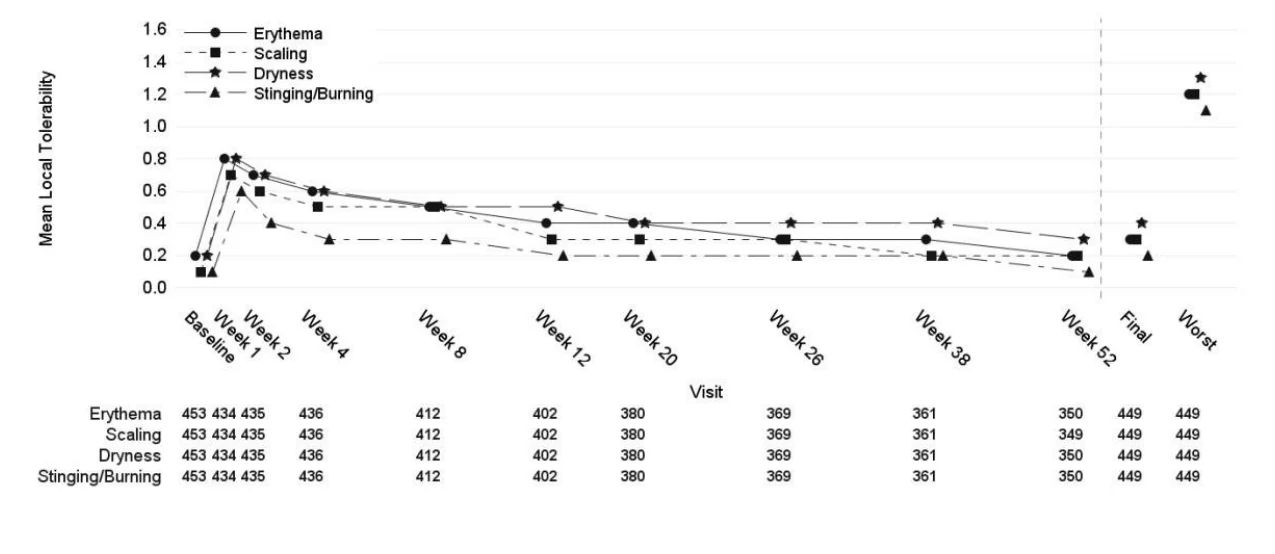
Local severity scale: 0: none; 1: mild; 2: moderate; 3: severe
Table 3 Summary of local tolerability parameters worsened from Baseline on the trunk (final and worst post-Baseline), Safety population – Safety Pool 1
| trifarotene 50 mcg/g cream (N = 1208) (%) | Vehicle cream (N=1191) (%) | ||||||||||
| Erythema | |||||||||||
| Final, n | 1202 | 1185 | |||||||||
| Mild (1) | 165 (13.7) | 57 (4.8) | |||||||||
| Moderate (2) | 73 (6.1) | 15 (1.3) | |||||||||
| Severe (3) | 13 (1.1) | 0 | |||||||||
| Worst Post-Baseline, n | 1202 | 1185 | |||||||||
| Mild (1) | 318 (26.5) | 150 (12.7) | |||||||||
| Moderate (2) | 227 (18.9) | 52 (4.4) | |||||||||
| Severe (3) | 63 (5.2) | 5 (0.4) | |||||||||
| Scaling | |||||||||||
| Final, n | 1202 | 1185 | |||||||||
| Mild (1) | 168 (14.0) | 47 (4.0) | |||||||||
| Moderate (2) | 46 (3.8) | 4 (0.3) | |||||||||
| Severe (3) | 4 (0.3) | 0 | |||||||||
| Worst Post-Baseline, n | 1202 | 1185 | |||||||||
| Mild (1) | 357 (29.7) | 157 (13.2) | |||||||||
| Moderate (2) | 165 (13.7) | 31 (2.6) | |||||||||
| Severe (3) | 20 (1.7) | 1 (0.1) | |||||||||
| Dryness | |||||||||||
| Final, n | 1202 | 1185 | |||||||||
| Mild (1) | 207 (17.2) | 73 (6.2) | |||||||||
| Moderate (2) | 51 (4.2) | 7 (0.6) | |||||||||
| Severe (3) | 3 (0.2) | 0 | |||||||||
| Worst Post-Baseline, n | 1202 | 1185 | |||||||||
| Mild (1) | 396 (32.9) | 211 (17.8) | |||||||||
| Moderate (2) | 193 (16.1) | 46 (3.9) | |||||||||
| Severe (3) | 22 (1.8) | 1 (0.1) | |||||||||
| Stinging/burning | |||||||||||
| Final, n | 1202 | 1185 | |||||||||
| Mild (1) | 116 (9.7) | 37 (3.1) | |||||||||
| Moderate (2) | 46 (3.8) | 2 (0.2) | |||||||||
| Severe (3) | 13 (1.1) | 1 (0.1) | |||||||||
| Worst Post-Baseline, n | 1202 | 1185 | |||||||||
| Mild (1) | 314 (26.1) | 109 (9.2) | |||||||||
| Moderate (2) | 131 (10.9) | 26 (2.2) | |||||||||
| Severe (3) | 52 (4.3) | 6 (0.5) | |||||||||
N=number of subjects; ISS=integrated summary of safety.
Note: Percentages were calculated out of the number of subjects in each category. A subject's final data was the last data observed during the post-Baseline period.
Figure 2 Mean local tolerability scores on the trunk by visit, Safety population – Study 18250
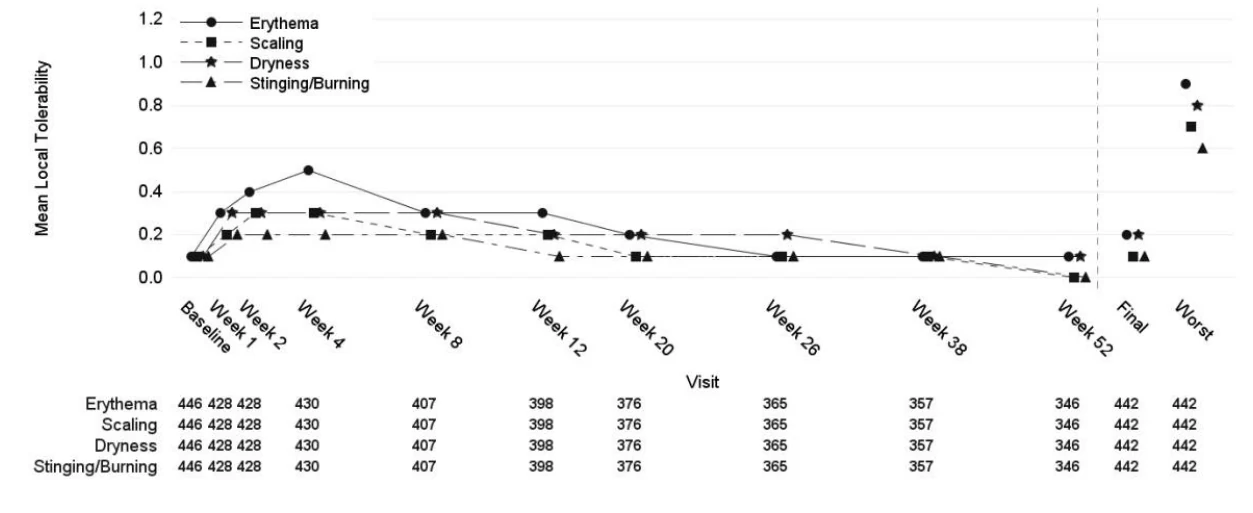
Local severity scale: 0: none; 1: mild; 2: moderate; 3: severe
Less Common Clinical Trial Adverse Reactions
Skin and Appendages: Acne, dermatitis allergic, discolouration, dry skin, erosion, erythema, pain of the skin, rash, skin irritation and swelling.
Abnormal Laboratory Findings: Hematologic, Clinical Chemistry and Other Quantitative Data
No clinically significant changes were observed in the clinical studies.
Post-Market Adverse Reactions
AKLIEF is not marketed in any region to date.
DRUG INTERACTIONS
Overview
The potential for drug-drug interactions was investigated in 5 in vitro studies using human biomaterials, in one PBPK model, and in one clinical study in healthy subjects. Overall, data from in vitro, clinical and modeling and simulation studies confirmed the absence of drug-drug interaction. Thus, no clinically meaningful drug-drug interactions are expected when using AKLIEF in acne subjects. Moreover, absorption of trifarotene through human skin is low, and therefore interaction with systemic medications is unlikely.
Drug-Drug Interactions
In vitro studies have shown that trifarotene, at therapeutic concentrations, neither inhibits nor induces cytochrome P450 (CYP450) enzymes.
In vitro studies have shown that trifarotene, at therapeutic concentrations, did not inhibit efflux and uptake transporters.
A clinical drug-drug interaction study has shown that topical application of AKLIEF did not affect the circulating concentrations of hormonal contraceptives (ethinyl estradiol and levonorgestrel) administered by oral route.
No clinical drug-drug interaction studies were performed to assess effects of other drugs on trifarotrene systemic levels. The metabolism of Trifarotene via the cytochrome P450 system primarily involves CYP2C9 isozymes. Simulations using PBPK model predicted a less than 20% increase in the systemic exposure of trifarotene in the presence of fluconazole, a known inhibitor of CYP2C9. This finding is unlikely to have adverse clinical consequences.
As AKLIEF has the potential for local irritation, it is possible that concomitant use of abrasive cleansers, strong drying agents, or irritant products may produce additive irritant effects. Particular caution should be exercised in using preparations containing sulfur, resorcinol, or salicylic acid in combination with AKLIEF. If these preparations have been used, it is advisable not to start therapy with AKLIEF until the effects of such preparations have subsided.
Drug-Food Interactions
Interactions of AKLIEF with food have not been established.
Drug-Herb Interactions
Interactions of AKLIEF with herbal products have not been established.
Drug-Laboratory Test Interactions
Interactions of AKLIEF with laboratory tests have not been established.
Drug-Lifestyle Interactions
As with other retinoids, use of electrolysis, “waxing” and chemical depilatories for hair removal should be avoided on skin treated with AKLIEF.
Non-comedogenic cosmetics (cosmetics that do not cause acne) may be used as well as eye and lip makeup. Cosmetics can be applied after the product has dried.
ACTION AND CLINICAL PHARMACOLOGY
Mechanism of Action
AKLIEF contains trifarotene which is a retinoid-like compound. Trifarotene consists of a terphenyl acid derivative that belongs to a new generation of the pharmacological class of retinoid acid receptor γ (RARγ) (gamma) agonist.
Biochemical and pharmacological profile studies have demonstrated that trifarotene is a potent modulator of cellular differentiation, keratinization and inflammatory processes all of which represent important features in the pathology of acne vulgaris. Although the exact mode of action of trifarotene is unknown, in primary pharmacology studies, trifarotene has shown a high RAR activity and a very high selectivity for RAR γ (gamma) the receptor subtype present in keratinocytes and recognized to be the most relevant in acne over RARα and RARβ.
Pharmacodynamics
Trifarotene has demonstrated, in the Rhino-mouse model, marked comedolytic activity with the reduction in the comedone count and marked increased epidermis thickness. In the Rhino-mouse model, trifarotene produced the same comedolytic effect as other known retinoids, at about 10 times lower dose.
In addition, trifarotene has also shown anti-inflammatory and depigmenting activities.
No pharmacodynamic interactions due to the alteration in the pharmacokinetic profile of other drugs are anticipated in patients treated with Aklief (see Drug-Drug Interactions).
Cardiac Electrophysiology
In a randomized, double-blind, vehicle- and positive-controlled, parallel group ECG assessment study in healthy subjects (N=58-59/treatment group), trifarotene topical gel at 100 mcg/g was applied on a body surface area of 6000 cm2 as a dose of 12 g once daily on days 1-13, 12 g twice daily on day 14, and 12 g once daily on day 15 with the intent of achieving supratherapeutic exposure. No clinically relevant effects on the QTcF interval, the QRS duration, the PR interval, or heart rate were observed during the ECG assessment on day 15.
Pharmacokinetics
Absorption: The absorption of trifarotene from AKLIEF was evaluated in two maximal-use pharmacokinetics clinical trials, involving nineteen (19) adult and 17 pediatric (10-17 year old) subjects with acne vulgaris (Table 4). Subjects were treated once daily for 30 days with 2 grams/day of AKLIEF applied on face, shoulders, chest, and upper back. After 4 weeks of treatment, seven of nineteen (37%)
adult subjects had quantifiable Trifarotene plasma levels. Cmax ranged from below the limit of quantification (<5 pg/mL) to 10 pg/mL and AUC0-24h ranged from 75 to 104 pg.h/mL.
Three of the seventeen (18%) pediatric subjects presented quantifiable systemic exposure. Cmax ranged from below the limit of quantification (<5 pg/mL) to 9 pg/mL and AUC0-24h ranged from 89 to 106 pg.h/mL.
Table 4 Summary of AKLIEF Pharmacokinetic Parameters in patients with acne vulgaris of the face and trunk under maximal usage conditions
| Steady state PK parametersa,c | Cmax (pg/mL) | Tmax (h) | AUC0-24 h (pg.h/mL) |
|---|---|---|---|
| Adults | |||
| Mean(b) | - | - | - |
| N/n | 19 (7) | 19 (7) | 19 (7) |
| Min-Max | <5-10 | 4-4 | 75-104 |
| Pediatrics | |||
| Mean (b) | - | - | - |
| N/n | 17 (3) | 17 (3) | 17 (3) |
| Min-Max | <5- 9 | 4 - 4 | 89-106 |
- a) The single dose PK parameters are not presented for the single dose because all patients presented unquantifiable plasma concentration (< 5 pg/mL)
- b) Due to the high number of subjects with unquantifiable concentrations, the mean values could not be accurately calculated at steady state
- c) Due to the lack of a distinct elimination phase, derived PK parameters i.e. t1/2, AUC0-inf, Clearance, Vdss could not be calculated
After a single topical administration at 4.9 mg/kg in rats, the bioavailability of AKLIEF was 5% in both genders. A marked sex effect was observed with exposures higher in female animals in most test species. Overall, systemic exposure levels were low and similar between males and females in clinical studies.
Steady state conditions were achieved in both adults and pediatric subjects (12-18 years old) following 2 weeks of topical administration; and no drug accumulation is expected with long-term use.
Overall, systemic exposure levels were low and similar between adults and pediatric (12-18 years old) populations.
Distribution: Trifarotene penetrates into the skin with an exponential distribution from the stratum corneum to the epidermis and dermis.
In vitro data indicate that trifarotene penetrates into the pilosebaceous unit.
An in vitro study demonstrated that trifarotene is greater than 99.9% bound to plasma proteins. No significant binding of trifarotene to erythrocytes was observed.
AKLIEF was highly distributed in the rat with high concentrations measured in the liver, kidney, preputial gland, adrenal cortex and salivary gland. It was shown to cross the placental and blood-brain barrier, though distribution to these areas was relatively low.
Metabolism: In vitro studies using human hepatic microsomes and recombinant CYP450 enzymes have shown that trifarotene is primarily metabolized by CYP2C9, CYP3A4, CYP2C8 and at lesser extent by CYP2B6.
In vitro studies have shown that AKLIEF at therapeutic concentrations did not inhibit the CYP450 isoenzymes CYP1A2, 2B6, 2C8, 2C9, 2C19, 2D6 and 3A4, and did not induce CYP1A2, 2B6, and 3A4.
In vitro studies have shown that AKLIEF at therapeutic concentrations did not inhibit either MATE, OATP, OAT or OCT uptake transporters or BCRP, PgP, BSEP or MPR efflux transporters.
Elimination: The terminal half-life ranged from 2 to 9 hours in patients receiving a once daily cutaneous application of AKLIEF.
Animal studies have shown that the excretion of trifarotene appears to be primarily by the feces after intravenous or oral route.
Special Populations and Conditions: Pharmacokinetic studies have not been conducted in subjects with a medical condition which might interfere with the absorption, distribution, metabolism, or excretion of AKLIEF, in particular, a history of hepatic or renal disease.
Pediatrics (< 12 years of age): Safety and effectiveness of AKLIEF in children below the age of 12 years have not been established. Therefore, Health Canada has not authorized an indication in pediatric patients less than 12 years of age (see WARNINGS AND PRECAUTIONS).
STORAGE, STABILITY AND DISPOSAL
AKLIEF should be stored at room temperature (15°C to 30°C). Keep from freezing. Keep out of reach and sight of children.
SPECIAL HANDLING INSTRUCTIONS
There are no special handling instructions for AKLIEF.
PART II: SCIENTIFIC INFORMATION
PHARMACEUTICAL INFORMATION
Drug Substance
Proper/Common Name: Trifarotene
Chemical name: 3”-tert-Butyl-4’-(2-hydroxy-ethoxy)-4”-pyrrolidin-1-yl-[1,1’,3’,1”]terphenyl-4-carboxylic acid
Molecular formula and molecular mass: C29H33NO4, 459.58
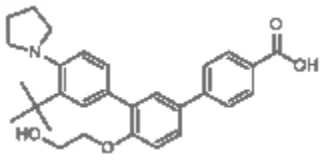
Structural formula:
Description: White to off-white to slightly yellow powder.
Polymorphism: Form I and Form II are the only polymorphic forms obtained with the current manufacturing route
Solubilities and Dose/Solubility Volume over the physiological pH range (1.2-6.8):
Form I and Form II are:
- Slightly soluble in acetone, ethanol and toluene
- Very slightly soluble in isopropanol
- Practically insoluble in water at 20°C
- Practically insoluble in 0.1M hydrochloric acid, buffer pH 3, acetate buffer pH 4.6, buffer pH 7, purified water and phosphate water pH 12, at 37°C
pKa:
pKa1 = 5.69 (± 0.31)
pKa2 = 4.55 (± 0.21)
CLINICAL TRIALS
Trial Design and Study Demographics
AKLIEF applied once daily in the evening was evaluated for 12 weeks in 2 randomized, multi-center, parallel group, double-blind, vehicle-controlled trials of identical design. The trials were conducted in a total of 2420 patients aged, 9 years and older, with moderate facial and truncal acne vulgaris.
Key inclusion criteria
Male or female subjects, 9 years or older at Screening. Subjects were to have moderate acne vulgaris on the face with Investigator’s Global Assessment (IGA) severity score of 3 (moderate) and at least 20 inflammatory lesions and 25 non-inflammatory lesions on the face at Screening and Baseline. Subjects also were to have moderate acne vulgaris on the trunk with Physician Global Assessment (PGA) severity score of 3 (moderate) on the trunk at Screening and Baseline and at least 20 inflammatory lesions and 20 non-inflammatory lesions but not more than 100 non-inflammatory lesions on the trunk (shoulders, upper back, and upper anterior chest) reachable to self-application of the study drug. The criteria regarding moderate truncal acne were optional for subjects between 9 and 11 years of age.
Key exclusion criteria
Subjects were excluded if they had severe forms of acne (e.g., acne conglobata, acne fulminans) or secondary acne form (chloracne, drug-induced acne, etc.), and if they had more than 1 nodule on the face or trunk, or any acne cysts on the face or trunk at Screening and Baseline.
Table 5 Summary of patient demographics for clinical trials with AKLIEF™ in acne vulgaris
| Study # | Trial design | Dosage, route of administration and duration | Study subjects (n) | Mean age (Range) | Gender | |||
| RD.03.SPR.18251 | Multi-Centre, randomized, double-blind, parallel-group vehicle controlled study | 1208 | ||||||
| Trifarotene 50 mcg/g | 612 | 19.6 years | 305 Female 307 Male | |||||
| Vehicle cream | 596 | 19.3 years | 324 Female 272 Male | |||||
| RD.03.SPR.18252 | Multi-Centre, randomized, double-blind, parallel-group vehicle controlled study | 1212 | ||||||
| Trifarotene 50 mcg/g | 602 | 19.6 years | 357 Female 245 Male | |||||
| Vehicle cream | 610 | 19.9 years | 338 Female 272 Male | |||||
Overall, 87% of subjects were Caucasian and 55% were female. Thirty four (1.4%) subjects were 9 to 11 years of age, 1128 (47%) subjects were 12 to 17 years and 1258 (52%) subjects were 18 years and older.
All patients had moderate acne vulgaris on the face and 99% on the trunk. At baseline subjects had between 7 and 200 (average 36) inflammatory lesions on the face and between 0 and 220 (average 38) on the trunk. Additionally subjects had 21 to 305 (average 52) non-inflammatory lesions on the face and 0 to 260 (average 46) on the trunk.
Acne severity was evaluated using the 5-point Investigator’s Global Assessment (IGA) scale for the face and Physician’s Global Assessment (PGA) scale for the trunk with moderate acne vulgaris defined as a score of Grade 3-Moderate (see Table 6).
Table 6 Investigator’s Global Assessment and Physician’s Global Assessment Scales
| 0 | Clear | Clear skin with no inflammatory or non-inflammatory lesions. |
| 1 | Almost Clear | A few scattered comedones and a few small papules. |
| 2 | Mild | Easily recognizable; less than half the surface is involved. Some comedones and some papules and pustules. |
| 3 | Moderate | More than half of the surface is involved. Many comedones, papules and pustules. One nodule may be present. |
| 4 | Severe | Entire surface is involved. Covered with comedones, numerous papules and pustules. Few nodules may be present. |
The efficacy endpoints in both pivotal trials were defined as the success rate based on the IGA and PGA outcome (percentage of subjects “clear” and “almost clear” and with at least a 2-grade change from baseline) and absolute and percentage change from baseline in inflammatory and non-inflammatory lesion counts at Week 12.
Study Results
The IGA and PGA success rates, mean absolute, and percent reduction in acne lesion counts from baseline to week 12 of treatment are presented in Table 7 (face) and Table 8 (trunk).
Table 7 Facial Acne Improvement in Investigator’s Global Assessment and Change in Lesion Counts at Week 12 (ITT, MI)
| Primary Efficacy Endpoints | RD.03.SPR.18251 | RD.03.SPR.18252 | ||||||||||||||||
| AKLIEF cream | Vehicle cream | AKLIEF cream | Vehicle cream | |||||||||||||||
| (N= 612) | (N= 596) | N= 602 | N=610 | |||||||||||||||
IGA, n(%) Success Rate (At least 2-grade improvement and IGA of “Clear” (0) or “Almost Clear” (1) %) | 29.4% | 19.5% | 42.3% | 25.7% | ||||||||||||||
| Difference from vehicle (95% CI)a | 9.8 (4.8, 14.8) | - | 16.6 (11.3, 22.0) | - | ||||||||||||||
Inflammatory Lesions Mean Absolute Change from Baseline | ||||||||||||||||||
| LS Mean (SE) | -19.0 (0.50) | 15.4 (0.51) | -24.2 (0.51) | -18.7 (0.51) | ||||||||||||||
| LS Mean Difference from vehicle (95% CI)a | -3.6 (-4.9, -2.2) | - | -5.6 (-6.9, -4.3) | - | ||||||||||||||
Non-inflammatory Lesions Mean Absolute change from Baseline | ||||||||||||||||||
| LS Mean (SE) | -25.0 (0.87) | -17.9 (0.87) | -30.1 (0.71) | -21.6 (0.71) | ||||||||||||||
| LS Mean Difference from vehicle (95% CI)a | -7.1 (9.4, -4.8) | - | -8.5 (-10.3, -6.6 | - | ||||||||||||||
MI= Multiple Imputation; ITT= Intent-to-Treat
- a) p˂ 0.001 vs. Vehicle
Study 18251 onset of effect for IGA was as early at week 4 and for study 18252 was at week 8.
Table 8 Truncal Acne Improvement in Physician’s Global Assessment and Change in Lesion Counts at Week 12 (ITT, MI)
| Secondary Endpoints | RD.03.SPR.18251 | RD.03.SPR.182522 | ||||||||||||||||||
AKLIEF cream | Vehicle cream | AKLIEF cream | Vehicle cream | |||||||||||||||||
| (N= 600) | (N=585) | N= 598 | N=609 | |||||||||||||||||
PGA Success Rate (At least 2-grade improvement and IGA of “Clear” (0) or “Almost Clear” (1) %) | 35.7 | 25.0 | 42.6 | 29.9 | ||||||||||||||||
| Difference from vehicle (95% CI)a | 10.7 (5.4, 16.1) | - | 12.7 (7.2, 18.2) | - | ||||||||||||||||
Inflammatory Lesions Mean Absolute Change from Baseline | ||||||||||||||||||||
| LS Mean (SE) | -21.4 (0.54) | -18.8(0.55) | -25.5 (0.59) | -19.8 (0.58) | ||||||||||||||||
| LS Mean Difference from vehicle (95% CI)a | -2.5 (-4.0, -1.1) | - | -5.7 (-7.2, -4.2) | - | ||||||||||||||||
Non-inflammatory Lesions Mean Absolute Change from Baseline | ||||||||||||||||||||
| LS Mean (SE) | -21.9 (0.93) | -17.8 (0.94) | -25.9 (0.67) | -20.8 (0.66) | ||||||||||||||||
| LS Mean Difference from vehicle (95% CI)a | -4.1 (-6.6, -1.7) | - | -5.0 (-6.8, -3.3) | - | ||||||||||||||||
MI= Multiple Imputation; ITT= Intent-to-Treat
- a) p˂ 0.001 vs. Vehicle
Study 18251 and 18252: onset of effect for PGA was at week 8.
NON-CLINICAL TOXICOLOGY
General Toxicology
Treatment related skin irritation was observed in all species, regardless of the route of administration, and clinically it presented mostly as erythema and desquamation. Microscopically these findings consisted of epidermal hyperplasia, acanthosis/ parakeratosis with or without spongiosis and exocytosis. In the most extreme cases, skin erosions and/or ulcers were observed as well. These findings were noted at all dose concentrations administered dermally (0.001% to 0.01% cream), and the incidence and severity of these observations increased with the dose. In the minipig dermal toxicity study, the maximum irritation scores were reached in 3 to 5 weeks after initiation of the treatment, and after that the irritation reactions stabilized, diminished in its intensity, or did not persist.
Systemic effects of administration of trifarotene included those of hypervitaminosis A syndrome: slight decrease in erythrocyte mass, with compensatory reticulocytosis, increase in white blood cell counts, slight increases in cholesterol and triglycerides, and decrease in albumin and increase in globulin functions, with a subsequent reduction in A/G ratios. This was associated with increased extramedullary erythropoiesis and/or increased granulocytopoiesis. These changes were observed in mice, rats, and dogs. Epiphyseal growth plate disorganization (femur/ sternum), and ossification of the epiphyseal cartilage, and/or increased osteoclastic activity, and hyperplasia/ hyperkeratosis/ ulcers of forestomach were observed in rodents only (mice and rats). Based on these findings, the no observed adverse effect level (NOAEL) of trifarotene, when administered dermally to mice for 91-days was considered to be 0.1 mg/kg/day (0.005% cream), and in minipigs it was 25 mcg/kg/day, administered dermally for 9 months. In rats, the NOAEL of trifarotene administered orally for 26 weeks was 0.5 and 0.2 mg/kg/day, for male and female rats, respectively. In dogs, the NOAEL was not established, and the low observed adverse effect level (LOAEL) was considered to be 0.02 mg/kg/day, because of germ cell degeneration and hypospermia observed at all dose levels.
In mice relative exposure and safety margins based on systemic exposure (AUC) ranged between 402- to 474-fold, relative to the MRHD and in rats the safety margins ranged between 612-fold (for males) and 1913-fold (for females), relative to the MRHD. In male dogs the safety margins were 119-fold, and in females 1596-fold, relative to the MRHD. In minipigs, the systemic exposure to trifarotene was minimal, and the safety margins based on body surface area were 11.1-fold, relative to the MRHD.
Trifarotene was found to be an eye irritant, and the results from skin sensitization and photosensitization studies indicated that trifarotene may induce skin sensitization and/or photoallergy in sensitive individuals.
Carcinogenicity
Two year carcinogenicity studies with trifarotene have been completed in mice at topical doses of 0.01 (0.0005%), 0.02 (0.001%), 0.05 (0.0025%), and 0.1 (0.005%) mg/kg/day, and in rats at oral doses of 0.1, 0.3, and 0.75 mg/kg/day for males and 0.05, 0.1, and 0.2 mg/kg/day for females.
In a mouse study, due to the severity of the skin irritation, dosing of mice with 0.0025% and 0.005% creams had to be suspended.
Pre-neoplastic and neoplastic findings in both species, and both genders, in the control, placebo groups, and test groups were consistent with background incidence of tumors of aging mice and/or rats of these strains, and their distribution was similar across the groups. The neoplastic no observed effect level (NOEL) of trifarotene in mice and rats was 0.02 mg/kg/day in mice, and 0.75 and 0.2 mg/kg/day for male and female rats, respectively. Calculated margins of safety based on systemic exposure were 83- to 101-fold (for male and female mice), and 508-fold for male rats and 1673-fold for female rats, relative to the MRHD.
Genotoxicity
In a series of in vitro and in vivo tests with bacterial and cellular cultures, with and without metabolic activation, and with and without UV-irradiation, trifarotene did not demonstrate any mutagenic or genotoxic activity.
Reproductive and Developmental Toxicology
In a rat fertility and early embryonic development study, no adverse effect on parental fertility, or early embryonic development were noted at exposure levels of approximately 1788- and 1760-fold, relative to the MRHD.
In animal reproductive studies, oral administration of trifarotene in rats was clearly teratogenic at systemic exposures (AUC) of 4157-fold higher than those observed in humans. Due to a high incidence of skeletal anomalies (variations) in groups dosed at 0.03 and 0.1 mg/kg/day, which is usually a signal for malformations at higher dose levels, the LOAEL for developmental toxicity in rats is considered to be 0.03 mg/kg/day, which corresponds to systemic exposure (AUC) of 505-fold relative to those in humans, or a safety factor of about 51-fold, relative to the MRHD. The NOEL for developmental toxicity was not established in rats.
In rabbits, trifarotene induced fetal malformations (especially skeletal malformations) at all dose levels tested, ranging from 0.5 to 50 mg/kg/day, and the effects were dose related. Teratogenic no observed effect level was not established, and thus the systemic exposure (AUC) for NOEL was less than 61.5 to 100-fold than those observed in humans.
In a pre- and postnatal development study, lacteal transfer of trifarotene to neonates was confirmed.
Juvenile Toxicology
No adequate juvenile toxicity studies were conducted.