


Product Monograph - Anapen Junior
SUMMARY PRODUCT INFORMATION
| Route of Administration | Dosage Form / Strength | All Non medicinal Ingredients |
|---|---|---|
Intramuscular Injection injected into anterolateral aspect of the thigh. Do not inject into the buttock. | ANAPEN Solution, Unidose 0.3 mg epinephrine auto-injector; 0.3 mg in 0.3 mL ANAPEN JUNIOR Solution, Unidose 0.15 mg epinephrine auto-injector; 0.15 mg in 0.3 mL | Hydrochloric acid, sodium chloride, sodium metabisulfite and water for injection. |
INDICATIONS AND CLINICAL USE
ANAPEN (0.3 mg Epinephrine Injection, 0.3 mg/0.3 mL) and ANAPEN JUNIOR (0.15 mg Epinephrine Injection, 0.15 mg/0.3 mL) are indicated for the emergency treatment of anaphylactic reactions in patients who are determined to be at increased risk for anaphylaxis, including individuals with a history of anaphylactic reactions. Selection of the appropriate dosage strength is determined according to patient body weight (see DOSAGE AND ADMINISTRATION section).
ANAPEN and ANAPEN JUNIOR are intended for immediate self-administration for the emergency treatment of severe allergic reactions (Type I), including anaphylaxis associated with:
- foods (e.g., peanuts, tree nuts, shellfish, fish, milk, eggs, and wheat)
- stinging insects (e.g., Order Hymenoptera, including bees, wasps, hornets, yellow jackets, and fire ants) and biting insects (e.g., mosquitoes and black flies)
- medications
- latex
- idiopathic anaphylaxis
- exercise-induced anaphylaxis
- other allergens
Epinephrine (adrenaline) is the drug of choice for the emergency treatment of severe allergic reactions. The strong vasoconstrictor action of epinephrine, through its effect on alpha adrenergic receptors, quickly counteracts vasodilation and increased vascular permeability which can lead to loss of intravascular fluid volume and hypotension during anaphylactic reactions.
ANAPEN and ANAPEN JUNIOR are designed as emergency supportive therapy only and not as a replacement or substitute for subsequent medical or hospital care, nor are they intended to supplant insect venom hyposensitization.
Clinical Signs and Symptoms of Anaphylaxis
Anaphylaxis is a serious, acute, allergic reaction that may cause death1. It has a sudden onset and generally lasts less than 24 hours. Because anaphylaxis is a generalized reaction, a wide variety of clinical signs and symptoms may be observed.
One to 2% of the general population are estimated to be at risk for anaphylaxis from food allergies and insect stings, with a lower reported prevalence for drugs and latex. People with asthma are at particular risk.
Symptoms of anaphylaxis may include:
Oral: pruritus of lips, tongue, and palate, edema of lips and tongue; metallic taste in the mouth.
Cutaneous: flushing, pruritus, urticaria, angioedema, morbilliform rash, and pilor erecti.
Gastrointestinal: nausea, abdominal pain, vomiting, and diarrhea.
Respiratory:
Laryngeal: pruritus and “tightness” in the throat, dysphagia, dysphonia, hoarseness, wheezing, and cough:
Nasal: nasal pruritus, congestion, rhinorrhea, sneezing, and sensation of itching in the external auditory canals.
Cardiovascular: feeling of faintness, syncope, chest pain, dysrhythmia, hypotension. Note: Hypotension is a sign of anaphylaxis. Patients should be treated in the early stages of anaphylaxis to prevent hypotension from developing.
Other: periorbital pruritus, erythema and edema, conjunctival erythema, and tearing; lower back pain and uterine contractions in women; aura of “doom.”
The severity of previous anaphylactic reactions does not determine the severity of future reactions, and subsequent reactions could be the same, better, or worse. The severity may depend on the degree of sensitivity, the dose of allergen, and other factors.
Research shows that fatalities from anaphylaxis are often associated with failure to use epinephrine or a delay in the use of epinephrine treatment.
Epinephrine should be administered as early as possible after the onset of symptoms of a severe allergic response. Patients requiring epinephrine will not always have predictable reactions.
Adequate warning signs are not always present before serious reactions occur.
It is recommended that epinephrine be given at the start of any reaction associated with a known or suspected allergen contact. In patients with a history of severe cardiovascular collapse on exposure to an allergen, the physician may advise that epinephrine be administered immediately after exposure to that allergen, and before any reaction has begun.
Epinephrine may prove to be life saving when used as directed immediately following exposure to an allergen.
In most patients, epinephrine is effective after 1 injection. However, symptoms may recur and further injections may be required to control the reaction. Epinephrine can be re-injected every 5 to 15 minutes until there is resolution of the anaphylaxis or signs of adrenaline excess (such as palpitations, tremor, uncomfortable apprehension and anxiety).
All individuals receiving emergency epinephrine must be immediately transported to hospital, ideally by ambulance, for evaluation and observation. Repeat attacks have occurred hours later without additional exposure to the offending allergen.2-4 Therefore, it is recommended that a patient suffering from an anaphylactic reaction be observed in an emergency facility for an appropriate period because of the possibility of either a “biphasic” reaction (a second reaction) or a prolonged reaction.4 At least a four hour period of observation is advised, although this time may vary. The attending physician will take into consideration such factors as the severity of the reaction, the patient’s response and history and the distance from the hospital to the patient’s home.
Anaphylactic reactions typically follow a uniphasic course; however, 20% will be biphasic in nature. The second phase usually occurs after an asymptomatic period of 1 to 8 hours, but may occur up to 38 hours (mean 10 hours) after the initial reaction. About one third of the second- phase reactions are more severe, one third are as severe, and one third are less severe. The second-phase reactions can occur even following administration of corticosteroids.
Following treatment of anaphylaxis, the patient must stay within close proximity to a hospital or where he or she can call 911 for the next 48 hours.
Protracted anaphylaxis, which is frequently associated with profound hypotension and sometimes lasts longer than 24 hours, is minimally responsive to aggressive therapy, and has a poor prognosis.
CONTRAINDICATIONS
There are no absolute contraindications to the use of epinephrine in a life-threatening allergic situation.
WARNINGS AND PRECAUTIONS
Emergency Treatment
ANAPEN and ANAPEN JUNIOR are intended for immediate administration as emergency supportive therapy and are not intended as a substitute for immediate medical care. In conjunction with the administration of epinephrine, the patient should seek immediate medical or hospital care. More than two sequential doses of epinephrine should only be administered under direct medical supervision.
General
All patients who are prescribed ANAPEN and ANAPEN JUNIOR should be thoroughly instructed to understand the indications for use and the correct method of administration. It is strongly advised also to educate the patient's immediate associates (e.g. parents, caregivers, teachers) for the correct usage of ANAPEN and ANAPEN JUNIOR in case support is needed in the emergency situation.
Patients with a history of anaphylaxis are at risk for subsequent episodes and even death. All patients who have had one or more episodes of anaphylaxis should have injectable epinephrine with them or with their parent or caregiver at all times, and should wear some form of medical identification bracelet or necklace.
Following the resolution of an anaphylactic episode and discharge from hospital, the patient should immediately obtain and fill a new ANAPEN or ANAPEN JUNIOR auto-injector prescription.
Epinephrine injection is not intended as a substitute for medical attention or hospital care. In conjunction with the administration of epinephrine, the patient should seek appropriate medical care.
The patient/carer should be informed about the possibility of biphasic anaphylaxis which is characterised by initial resolution followed by recurrence of symptoms some hours later.
In patients with a thick subcutaneous fat layer, there is risk for adrenaline not reaching the muscle tissue resulting in a suboptimal effect.
Antihistamines and asthma medications must not be used as first line treatment for an anaphylactic reaction5.
Injection-Related Complications
Epinephrine should ONLY be injected into the anterolateral aspect of the thigh.
Do not inject intravenously: Large doses or accidental intravenous injection of epinephrine may result in cerebral hemorrhage due to sharp rise in blood pressure. Rapidly acting vasodilators can counteract the marked pressor effects of epinephrine if there is such inadvertent administration.
Do not inject into buttock: Patients should be advised that ANAPEN and ANAPEN JUNIOR is not intended for injection into the buttock. Injection into the buttock may not provide effective treatment of anaphylaxis; advise the patient to go immediately to the nearest emergency room for further treatment of anaphylaxis. Additionally, injection into the buttock has been associated with Clostridial infections (gas gangrene).
Do not inject into digits, hands or feet: Since epinephrine is a strong vasoconstrictor, accidental injection into the hands or feet may result in loss of blood flow to the affected areas and should be avoided. If there is an accidental injection into these areas, the patient must go immediately to the nearest emergency room for treatment.
Hold leg firmly during injection. Lacerations, bent needles, and embedded needles have been reported with epinephrine auto-injectors when epinephrine has been injected into the thigh of young children who are uncooperative and kick or move during an injection. To minimize the risk of injection related injury when administering ANAPEN and ANAPEN JUNIOR to young children, instruct caregivers to hold the child’s leg firmly in place and limit movement prior to and during injection.
Serious Infections at the Injection Site
Rare cases of serious skin and soft tissue infections, including necrotizing fasciitis and myonecrosis caused by Clostridia (gas gangrene), have been reported at the injection site following epinephrine injection for anaphylaxis. Clostridium spores can be present on the skin and introduced into the deep tissue with subcutaneous or intramuscular injection. While cleansing with alcohol may reduce presence of bacteria on the skin, alcohol cleansing does not kill Clostridium spores. To decrease the risk of Clostridium infection, do not inject ANAPEN and ANAPEN JUNIOR into the buttock. Advise patients to seek medical care if they develop signs or symptoms of infection, such as persistent redness, warmth, swelling, or tenderness, at the epinephrine injection site.
The presence of a condition listed below is not a contraindication to epinephrine administration in an acute, life-threatening situation. Therefore, patients with these conditions, or any other person who might be in a position to administer epinephrine to a patient with these conditions experiencing anaphylaxis, should be instructed about the circumstances under which epinephrine should be used:
Cardiovascular
Epinephrine use should be avoided in patients with cardiogenic, traumatic, or hemorrhagic shock; cardiac dilation; and/or cerebral arteriosclerosis.
Epinephrine should be used with caution in patients with cardiac arrhythmias, coronary artery or organic heart disease, hypertension, or in patients who are on medications that may sensitize the heart to arrhythmias, e.g., digitalis, diuretics, or anti-arrhythmics. In such patients, epinephrine may precipitate or aggravate angina pectoris as well as produce ventricular arrhythmias.
Patients with hypertension or hyperthyroidism are prone to more severe or persistent effects.
Endocrine and Metabolism
Patients with diabetes may develop increased blood glucose levels following epinephrine administration.
Neurologic
Epinephrine use should be avoided in patients with organic brain damage.
Patients with Parkinson’s disease may notice a temporary worsening of symptoms after treatment with epinephrine.
Ophthalmologic
Epinephrine use should be avoided in patients with narrow-angle glaucoma.
Respiratory
There is a significantly increased risk of respiratory symptoms in patients with concomitant asthma, especially if poorly controlled. These patients are at increased risk of death from anaphylaxis.
Fatalities may also occur from pulmonary edema resulting from peripheral constriction and cardiac stimulation.
There is also a risk for adverse reactions after the administration of adrenaline to patients with hyperthyroidism, phaeochromocytoma, severe renal impairment, prostate adenoma, hypercalcaemia, hypokalaemia, and in elderly patients and pregnant women.
Sensitivity
This product contains sodium metabisulfite, a substance which may cause allergic-type reactions including anaphylactic symptoms or mild to severe asthmatic episodes in certain susceptible persons.
Nevertheless, epinephrine is the drug of choice for serious allergic reactions and the presence of a sulfite in this product should not deter administration of the drug for treatment of serious allergic or other emergency situations, even if the patient is sulfite-sensitive.
Reproduction
No studies have been conducted to determine epinephrine’s potential effect on fertility.
Special Populations
Geriatrics (>65 years of age):
Elderly patients with hypertension, coronary artery disease or cardiac arrythmias are particularly at risk for epinephrine overdose. More careful monitoring and avoidance of epinephrine overdose is recommended for these patients.
Pediatrics (patients 15-30 kg):
There are no data to suggest a difference in safety or effectiveness of epinephrine between adults and children in this weight group.
See DOSAGE AND ADMINISTRATION section for dosage requirements based on weight.
Pregnancy:
Although there are no adequate and well-controlled studies in pregnant women, epinephrine should be used in pregnancy only if the potential benefit justifies the potential risk to the fetus.
ADVERSE REACTIONS
Adverse Drug Reaction Overview
Adverse reactions of epinephrine include transient, moderate anxiety; feelings of over stimulation; apprehensiveness; restlessness; tremor; weakness; shakiness; dizziness; sweating; tachycardia; palpitations; pallor; nausea and vomiting; headache; and/or respiratory difficulties. Ventricular arrhythmias may follow administration of epinephrine. While these symptoms occur in some patients treated with epinephrine, they are likely to be more pronounced in patients with hypertension or hyperthyroidism. These signs and symptoms usually subside rapidly, especially with bed rest.
Some patients may be at greater risk of developing adverse reactions after epinephrine administration. These include elderly individuals, pregnant women, and patients with diabetes. Patients with coronary artery disease are prone to more severe or persistent effects, and may experience angina. Cases of takotsubo (stress) cardiomyopathy have been reported in patients treated with epinephrine. Patients with epinephrine-triggered takotsubo cardiomyopathy are predominantly women and are younger than the typical takotsubo cardiomyopathy patient. These events are characterized by rapid onset of symptoms after epinephrine administration and high complication rates, mostly in the form of cardiogenic shock and acute pulmonary edema. The prognosis is however good with complete recovery in most cases.
Excessive doses cause acute hypertension. Rapid rises in blood pressure have produced cerebral hemorrhage, particularly in elderly patients with cardiovascular disease.
Arrhythmias, including fatal ventricular fibrillation, have been reported, particularly in patients with underlying cardiac disease or those receiving certain drugs (see DRUG INTERACTIONS).
Lacerations, bent needles, and embedded needles have been reported with epinephrine auto-injectors when epinephrine has been injected into the thigh of young children who are uncooperative and kick or move during the injection (see WARNING AND PRECAUTIONS section).
Injection into the buttock has resulted in cases of gas gangrene.
Accidental injections can lead to injury at the injection site resulting in bruising, bleeding, discoloration, erythema or skeletal injury.
Serious Infections at the Injection Site
Rare cases of serious skin and soft tissue infections, including necrotizing fasciitis and myonecrosis caused by Clostridia (gas gangrene), have been reported at the injection site following epinephrine injection in the thigh. Advise patients to seek medical care if they develop signs or symptoms of infection, such as persistent redness, warmth, swelling, or tenderness, at the epinephrine injection site (see WARNINGS AND PRECAUTIONS section).
The potential for epinephrine to produce these types of adverse reactions does not contraindicate its use in an acute life-threatening allergic reaction.
DRUG INTERACTIONS
Overview
There are no known contraindications to the use of epinephrine in a life-threatening allergic reaction.
Drug-Drug Interactions
Epinephrine should be used with caution in patients who are on medications that may sensitize the heart to arrhythmias, e.g., digitalis, diuretics, or anti-arrhythmics. In such patients, epinephrine may precipitate or aggravate angina pectoris as well as produce ventricular arrhythmias.
Caution is advised in patients receiving cardiac glycosides or diuretics, since these agents may sensitize the myocardium to beta-adrenergic stimulation and make cardiac arrhythmias more likely.
The effects of epinephrine may be potentiated by tricyclic antidepressants, monoamine oxidase inhibitors, sodium levothyroxine, and certain antihistamines, notably chlorpheniramine, tripelennamine, and diphenhydramine.
The cardiostimulating and bronchodilating effects of epinephrine are antagonized by beta adrenergic blocking drugs, such as propranolol. Anaphylaxis may be made worse by beta blockers because these drugs decrease the effectiveness of epinephrine.
The vasoconstricting and hypertensive effects of epinephrine are antagonized by alpha adrenergic blocking drugs, such as phentolamine.
Phenothiazines may also reverse the pressor effects of epinephrine.
Deaths have been reported in asthmatic patients treated with epinephrine following the use of isoproterenol, orciprenaline, salbutamol, and long acting beta agonists.
Drug-Lifestyle Interactions
Cocaine sensitizes the heart to catecholamines (as does uncontrolled hyperthyroidism), and epinephrine use in these patients should be cautious.
DOSAGE AND ADMINISTRATION
Dosing Considerations
Dosage in any specific patient should be based on body weight. A physician who prescribes ANAPEN or ANAPEN JUNIOR should take appropriate steps to ensure that the patient thoroughly understands the indications and use of the device. The physician should review with the patient, in detail, the CONSUMER INFORMATION section and operation of the auto-injector.
Recommended Dose and Dosage Adjustment
The effective dose is usually in the range 0.005-0.01 mg/kg body weight.
ANAPEN:
The ANAPEN auto-injector is intended for intramuscular administration in adults and children who weigh 30 kg or more.
ANAPEN auto-injector delivers a single intramuscular dose of 0.3 mg epinephrine in a 0.3 mL volume (0.3 mg/0.3 mL).
ANAPEN JUNIOR:
The ANAPEN JUNIOR auto-injector is intended for pediatric intramuscular administration in children who weigh between 15 kg and 30 kg.
ANAPEN JUNIOR auto-injector delivers a single intramuscular dose of 0.15 mg epinephrine in a 0.3 mL volume (0.15 mg/0.3 mL).
For children weighing more than 30 kg, ANAPEN auto-injector 0.3 mg (adult formulation) is recommended.
Since the dose of epinephrine delivered from ANAPEN JUNIOR is fixed at 0.15 mg, the physician can consider other forms of injectable epinephrine if doses lower than 0.15 mg are felt to be necessary (e.g., for children weighing less than 15 kg).
Administration
An initial dose should be administered as soon as symptoms of anaphylaxis are recognised. In the absence of clinical improvement or if deterioration occurs after the initial treatment, a second injection with an additional ANAPEN auto-injector may be administered 5 – 15 minutes after the first injection. It is recommended that patients are prescribed two ANAPEN or ANAPEN JUNIOR auto-injectors which they should carry at all times.
All individuals receiving emergency epinephrine must be immediately transported to hospital, ideally by ambulance, for evaluation and observation even if symptoms appear to be improving.
The patient/carer should be informed that following each use of ANAPEN and ANAPEN JUNIOR auto-injector:
- As ANAPEN and ANAPEN JUNIOR auto-injector is designed as emergency treatment only, the patient should be advised to always seek medical help immediately.
- Conscious patients should preferably lie flat with feet elevated but sit up if they have breathing difficulties. Unconscious patients should be placed on their side in the recovery position.
- The patient should if possible, remain with another person until medical assistance arrives.
ANAPEN and ANAPEN JUNIOR are intended for intramuscular use in the anterolateral aspect of the thigh, through clothing if necessary. Do not inject into the buttock.
Instruct caregivers to hold the leg of young children firmly in place and limit movement prior to and during injection. Lacerations, bent needles, and embedded needles have been reported with epinephrine auto-injectors when epinephrine has been injected into the thigh of young children who are uncooperative and kick or move during an injection (see WARNINGS AND PRECAUTIONS section).
Patients with a history of severe allergic reactions should be instructed about the circumstances under which epinephrine should be used (see INDICATIONS AND CLINICAL USE section).
A physician who prescribes ANAPEN or ANAPEN JUNIOR should take appropriate steps to ensure that the patient thoroughly understands the indications and use of the device. The patient’s physician or pharmacist should review the package insert in detail with the patient or caregiver to ensure that he/she understands the indications and use of ANAPEN or ANAPEN JUNIOR. Actual demonstration of the injection technique by a physician or a pharmacist is recommended.
A training device for patient instruction purposes is also available. Instruct patients and/or caregivers to use and practice with the Trainer to familiarize themselves with the use of ANAPEN and ANAPEN JUNIOR in an allergic emergency.
ANAPEN and ANAPEN JUNIOR contain 1.05 mL of solution but deliver only a single dose in a volume of 0.3 mL, with 0.75 mL remaining in the unit after use.
OVERDOSAGE
Epinephrine is rapidly inactivated in the body, and treatment following overdose with epinephrine is primarily supportive. If necessary, pressor effects may be counteracted by rapidly acting vasodilators or alpha-adrenergic blocking drugs. If prolonged hypotension follows such measures, it may be necessary to administer another pressor drug.
Overdosage of epinephrine may produce extremely elevated arterial pressure, which may result in cerebrovascular hemorrhage, particularly in elderly patients. Overdosage sometimes also results in extreme pallor and coldness of the skin, metabolic acidosis, and kidney failure. Suitable corrective measures must be taken in such situations. Epinephrine overdosage can also cause transient bradycardia followed by tachycardia, and these may be accompanied by potentially fatal cardiac arrhythmias. Treatment of arrhythmias consists of administration of a beta-adrenergic blocking drug such as propranolol.
If an epinephrine overdose induces pulmonary edema that interferes with respiration, treatment consists of a rapidly acting alpha-adrenergic blocking drug and/or intermittent positive-pressure respiration.
Premature ventricular contractions may appear within 1 minute after injection and may be followed by multifocal ventricular tachycardia (prefibrillation rhythm).
Subsidence of the ventricular effects may be followed by atrial tachycardia and occasionally by atrioventricular block.
ACTION AND CLINICAL PHARMACOLOGY
Epinephrine acts on both alpha- and beta-adrenergic receptors. Through its action on alpha-adrenergic receptors, epinephrine counters the vasodilation and high vascular permeability that occurs during an anaphylactic reaction that can lead to loss of intravascular fluid volume and hypotension. Through its action on beta-adrenergic receptors, epinephrine causes bronchial smooth muscle relaxation that helps alleviate bronchospasm, wheezing, and dyspnea that may occur during anaphylaxis.
Epinephrine also helps to alleviate pruritus, urticaria, and angioedema, and may be effective in relieving gastrointestinal and genitourinary symptoms of anaphylaxis because of its relaxant effects on the smooth muscle of the stomach, intestine, and urinary bladder. Epinephrine contracts the smooth muscle of the uterus.
Epinephrine, when given intramuscularly or subcutaneously, has a rapid onset and short duration of action.
In a pharmacokinetic study in 35 healthy adult subjects, grouped by varying degrees of thickness in the subcutaneous fat layer of the thigh and stratified by gender, a single 0.3 mg/0.3 mL injection at the anterolateral aspect of the mid-thigh was made with an epinephrine Auto-Injector and was compared in crossover design to a manual syringe-delivered dose with needles individualized for delivery to muscle layer. The results indicate no significant differences between subjects with varying thicknesses of subcutaneous fat layer (<15 mm, ≥15 mm and ≤20 mm, or >20 mm skin to muscle distance under maximum compression). Overall adrenaline exposure from 0 to 30 min (AUC 0-30min) for all groups of subjects receiving epinephrine exceeded exposures resulting from syringe delivery. Both inter-subject and intra-subject variability was, however, high in this study and therefore robust conclusions cannot be drawn.
STORAGE AND STABILITY
Shelf-life:
ANAPEN: 24 months
ANAPEN JUNIOR: 21 months
Always keep ANAPEN or ANAPEN JUNIOR in the outer carton in order to protect from light.
Do not refrigerate or freeze.
Store between 15 - 25°C (59 - 77°F).
Periodically check to make sure the solution in the auto-injector is not brown in color. Discard and replace if it is discolored or contains a precipitate.
The expiry date is indicated on the label; ANAPEN or ANAPEN JUNIOR should not be used after this date. Replace and discard the auto-injector after expiry date.
DOSAGE FORMS, COMPOSITION AND PACKAGING
ANAPEN and ANAPEN JUNIOR are designed to provide emergency treatment when medical care is not immediately available.
Highly sensitive individuals should have epinephrine injectable products readily available at all times.
ANAPEN
Each auto-injector contains: 1.05 mL epinephrine injection 1 mg/mL and is designed to deliver a single dose of 0.3 mg epinephrine in 0.3 mL.
Non-medicinal ingredients: Each auto-injector contains: sodium chloride 6.3 mg, sodium metabisulfite 1.785 mg, hydrochloric acid to adjust pH, and water for injection.
ANAPEN JUNIOR
Each auto-injector contains: 1.05 mL epinephrine injection 0.5 mg/mL and is designed to deliver a single dose of 0.15 mg epinephrine in 0.3 mL.
Non-medicinal ingredients: Each auto-injector contains: sodium chloride 6.3 mg, sodium metabisulfite 1.785 mg, hydrochloric acid to adjust pH, and water for injection.
PART II: SCIENTIFIC INFORMATION
PHARMACEUTICAL INFORMATION
Drug Substance
Proper name: Epinephrine
Chemical name: 1-(3,4-dihydroxyphenyl)-2-(methylamino)ethanol Structural formula:
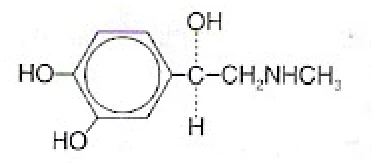
Physicochemical properties: Epinephrine is a sympathomimetic catecholamine. Its naturally occurring l-isomer, which is twenty times as active as the d-isomer, is obtained in pure form by separation from the synthetically produced racemate.
REPRODUCTION
Teratogenic Effects: Pregnancy Category C
Epinephrine has been shown to have adverse developmental effects in rabbits at a subcutaneous dose of 1.2 mg/kg (approximately 30 times the maximum recommended daily subcutaneous or intramuscular dose on a mg/m2 basis), in mice at a subcutaneous dose of 1 mg/kg (approximately 7 times the maximum recommended daily subcutaneous or intramuscular dose on a mg/m2 basis), and in hamsters at a subcutaneous dose of 0.5 mg/kg (approximately 5 times the maximum recommended daily subcutaneous or intramuscular dose on a mg/m2 basis).
These effects were not seen in mice at a subcutaneous dose of 0.5 mg/kg (approximately 3 times the maximum recommended daily subcutaneous or intramuscular dose on a mg/m2 basis).
REFERENCES
- 1. Sampson H. et al. Second Symposium on the Definition and Management of Anaphylaxis: Summary Report – Second National Institute of Allergy and Infectious Disease/Food Allergy and Anaphylaxis Network Symposium. Journal of Allergy and Clinical Immunology 2006: 117(2) 391-397.
- 2. Stark BJ, Sullivan TJ. Biphasic and protracted anaphylaxis. Journal of Allergy and Clinical Immunology 1986; 78:76-83.
- 3. Lieberman P. Biphasic Anaphylaxis (Review) Allergy and Clinical Immunology International – Journal of the World Allergy Organization 2004;16:241-248.
- 4. Sampson HA. Anaphylaxis and Emergency Treatment. Pediatrics 2003;111;1601-1608 5. Allen, M. et al. (2005) Anaphylaxis in Schools and Other Settings, Hamilton, Ontario: Canadian Society of Allergy and Clinical Immunology.
- 5. Prescribing Information: Epipen® and Epipen Jr®, Mylan Specialty L.P., Date of Revision: April 9, 2020, Submission Control No.: 236785