


Product Monograph - Anoro Ellipta
RECENT MAJOR LABEL CHANGES
Not applicable
TABLE OF CONTENTS
Sections or subsections that are not applicable at the time of authorization are not listed.
RECENT MAJOR LABEL CHANGES .......................................................................................... 2
TABLE OF CONTENTS ............................................................................................................ 2
PART I: HEALTH PROFESSIONAL INFORMATION .................................................................... 4
1 INDICATIONS ............................................................................................................. 4
1.1 Pediatrics .................................................................................................................. 4
1.2 Geriatrics .................................................................................................................. 4
2 CONTRAINDICATIONS ................................................................................................ 4
3 SERIOUS WARNINGS AND PRECAUTIONS BOX ........................................................... 5
4 DOSAGE AND ADMINISTRATION ................................................................................ 5
4.1 Dosing Considerations ............................................................................................. 5
4.2 Recommended Dose and Dosage Adjustment ........................................................ 5
4.4 Administration ......................................................................................................... 6
4.5 Missed Dose ............................................................................................................. 6
5 OVERDOSAGE ............................................................................................................ 6
6 DOSAGE FORMS, STRENGTHS, COMPOSITION AND PACKAGING ................................ 7
7 WARNINGS AND PRECAUTIONS ................................................................................. 7
7.1 Special Populations ................................................................................................ 11
7.1.1 Pregnant Women ............................................................................................. 11
7.1.2 Breast-feeding .................................................................................................. 11
7.1.3 Pediatrics .......................................................................................................... 11
7.1.4 Geriatrics .......................................................................................................... 11
8 ADVERSE REACTIONS............................................................................................... 11
8.1 Adverse Reaction Overview ................................................................................... 11
8.2 Clinical Trial Adverse Reactions ............................................................................. 12
8.3 Less Common Clinical Trial Adverse Reactions (<1%) ............................................ 13
8.5 Post-Market Adverse Reactions ............................................................................. 13
9 DRUG INTERACTIONS .............................................................................................. 13
9.2 Drug Interactions Overview ................................................................................... 13
9.4 Drug-Drug Interactions .......................................................................................... 14
9.5 Drug-Food Interactions .......................................................................................... 15
9.6 Drug-Herb Interactions .......................................................................................... 15
9.7 Drug-Laboratory Test Interactions......................................................................... 16
10 CLINICAL PHARMACOLOGY ...................................................................................... 16
10.1 Mechanism of Action ....................................................................................... 16
10.2 Pharmacodynamics .......................................................................................... 16
10.3 Pharmacokinetics ............................................................................................. 18
11 STORAGE, STABILITY AND DISPOSAL ........................................................................ 20
12 SPECIAL HANDLING INSTRUCTIONS .......................................................................... 20
PART II: SCIENTIFIC INFORMATION ..................................................................................... 21
13 PHARMACEUTICAL INFORMATION .......................................................................... 21
14 CLINICAL TRIALS ...................................................................................................... 22
14.1 Clinical Trials by Indication .............................................................................. 22
COPD ................................................................................................................................ 22
15 MICROBIOLOGY ...................................................................................................... 26
16 NON-CLINICAL TOXICOLOGY .................................................................................... 26
17 SUPPORTING PRODUCT MONOGRAPHS ................................................................... 28
PATIENT MEDICATION INFORMATION ................................................................................ 29
PART I: HEALTH PROFESSIONAL INFORMATION
1 INDICATIONS
ANORO ELLIPTA (umeclidinium/vilanterol) is a combination of a long-acting muscarinic antagonist (LAMA) and a long-acting beta2-agonist (LABA) indicated for the long-term once-daily maintenance bronchodilator treatment of airflow obstruction in patients with chronic obstructive pulmonary disease (COPD), including chronic bronchitis and emphysema.
ANORO ELLIPTA is not indicated for the relief of acute deterioration of COPD.
ANORO ELLIPTA is not indicated for the treatment of asthma. The safety and efficacy of ANORO ELLIPTA in asthma have not been established (see 2 CONTRAINDICATIONS and 7 WARNINGS AND PRECAUTIONS, General).
1.1 Pediatrics
Pediatrics (<18 years of age): ANORO ELLIPTA should not be used in patients under 18 years of age.
1.2 Geriatrics
Geriatrics (≥65 years of age): No dosage adjustment is required in patients 65 years of age and older.
2 CONTRAINDICATIONS
- ANORO ELLIPTA is contraindicated in patients who are hypersensitive to this drug or to any ingredient in the formulation, including any non-medicinal ingredient, or component of the container. For a complete listing, see 6 DOSAGE FORMS, STRENGTHS, COMPOSITION AND PACKAGING.
- ANORO ELLIPTA is contraindicated in patients with severe hypersensitivity to milk proteins, see 7 WARNINGS AND PRECAUTIONS, Immune.
- All LABAs are contraindicated in patients with asthma without use of a long-term asthma control medication (see 7 WARNINGS AND PRECAUTIONS, General, 3 SERIOUS WARNINGS AND PRECAUTIONS BOX).
3 SERIOUS WARNINGS AND PRECAUTIONS BOX
ASTHMA-RELATED DEATH
Long-acting beta2-adrenergic agonists (LABA) increase the risk of asthma-related death. Data from a large placebo-controlled US study that compared the safety of salmeterol (SEREVENT Inhalation Aerosol) or placebo added to patients’ usual asthma therapy showed an increase in asthma-related deaths in patients receiving salmeterol. This finding with salmeterol is considered a class effect of LABA, including vilanterol, one of the active ingredients in ANORO ELLIPTA.
ANORO ELLIPTA is only indicated for COPD. The safety and efficacy of ANORO ELLIPTA in patients with asthma have not been established. ANORO ELLIPTA is therefore not indicated for the treatment of asthma.
4 DOSAGE AND ADMINISTRATION
4.1 Dosing Considerations
- Counselling by doctors on smoking cessation should be the first step in treating patients with COPD who smoke, independent of the clinical presentation i.e., chronic bronchitis (with or without airflow limitation) or emphysema. Cessation of smoking produces dramatic symptomatic benefits and has been shown to confer a survival advantage.
- As with other inhaled drugs containing beta2-adrenergic agents, ANORO ELLIPTA should not be used more often than recommended, at higher doses than recommended, or in conjunction with other medicines containing a long-acting beta-adrenergic agonist or a long-acting muscarinic antagonist, as an overdose may result.
- When beginning treatment with ANORO ELLIPTA, patients who have been taking oral or inhaled, short-acting beta2-agonists on a regular basis (e.g., 4 times a day) should be instructed to discontinue the regular use of these drugs and use them only for symptomatic relief of acute respiratory symptoms.
- Patients should be made aware that for optimum benefit, ANORO ELLIPTA must be used regularly, even when asymptomatic.
4.2 Recommended Dose and Dosage Adjustment
The recommended and maximum dose is one inhalation of ANORO ELLIPTA 62.5/25 mcg once daily.
Geriatrics
No dosage adjustment is required in patients 65 years of age and older (see 10.3 PHARMACOKINETICS, Special Populations and Conditions, Geriatrics).
Pediatrics
ANORO ELLIPTA should not be used in patients under 18 years of age.
Hepatic Insufficiency
No dosage adjustment is required for patients with mild or moderate hepatic impairment. ANORO ELLIPTA has not been studied in patients with severe hepatic impairment (see 10.3 PHARMACOKINETICS,
Special Populations and Conditions, Hepatic Insufficiency).
Renal Insufficiency
No dosage adjustment is required in patients with renal impairment (see 10.3 PHARMACOKINETICS, Special Populations and Conditions, Renal Insufficiency).
4.4 Administration
ANORO ELLIPTA is for oral inhalation only.
ANORO ELLIPTA should be administered once-daily at the same time of the day each day.
4.5 Missed Dose
If a dose is missed, the patient should be instructed to take the next dose when it is due. The patient should not be instructed to take an extra dose.
5 OVERDOSAGE
No data from clinical studies are available regarding overdose with ANORO ELLIPTA.
An overdose of ANORO ELLIPTA will likely produce signs and symptoms due to the individual components’ actions, consistent with the known inhaled muscarinic antagonist adverse effects (e.g., dry mouth, visual accommodation disturbances and tachycardia) and those seen with overdose of other beta2-agonists (e.g., myocardial ischemia, hypertension or hypotension, tremor, headache, tachycardia, QTc prolongation, arrhythmias, palpitation, dizziness, nervousness, insomnia, anxiety, muscle spasms, nausea, fatigue, seizures, malaise, hypokalemia, hyperglycemia, and metabolic acidosis). As with all inhaled sympathomimetic medicines, cardiac arrest and even death may be associated with an overdose of vilanterol.
If overdose occurs, discontinue ANORO ELLIPTA and initiate appropriate symptomatic and/or supportive therapy. Cardiac monitoring including electrocardiogram monitoring is recommended in cases of overdosage.
| For management of a suspected drug overdose, contact your regional poison control centre. |
|---|
6 DOSAGE FORMS, STRENGTHS, COMPOSITION AND PACKAGING
Table 1 – Dosage Forms, Strengths, Composition and Packaging
ANORO ELLIPTA is supplied as a disposable grey and red plastic inhaler containing 2 double-foil strips. Each blister on one of the strips contains a white powder mix of micronized umeclidinium bromide (74.2 mcg, equivalent to 62.5 mcg of umeclidinium) and each blister on the other strip contains a white powder mix of micronized vilanterol trifenatate (40 mcg, equivalent to 25 mcg vilanterol).
The inhaler is packaged within a moisture-protective foil laminate tray with a desiccant and a peelable foil lid. ANORO ELLIPTA is supplied with either 30 or 7 blisters on each double-foil strip.
The actual amount of drug delivered to the lung will depend on patient factors, such as inspiratory flow rate and inspiratory time.
7 WARNINGS AND PRECAUTIONS
Please see 3 SERIOUS WARNINGS AND PRECAUTIONS BOX.
General
Not for use in asthma
ANORO ELLIPTA is only indicated for COPD. The use of ANORO ELLIPTA has not been studied in patients with asthma, and is contraindicated in this patient population.
It has been shown that long-acting beta2-adrenergic agonists increase the risk of asthma-related death. Data from a 28-week, large placebo-controlled US study comparing the safety of a twice-daily long-acting beta2-adrenergic agonist (salmeterol) with placebo, each added to usual asthma therapy, showed an increase in asthma-related deaths in patients receiving salmeterol (13 out of 13,176 in patients treated with salmeterol vs. 3 out of 13,179 in patients treated with placebo; RR 4.37, 95% CI 1.25, 15.34). The increased risk of asthma related death may represent a class effect of long-acting beta2-adrenergic agonists, including vilanterol, one of the active ingredients of ANORO ELLIPTA.
Acute bronchospasm
ANORO ELLIPTA is not indicated for the treatment of acute episodes of bronchospasm, i.e., as rescue therapy. ANORO ELLIPTA should not be initiated in patients during rapidly deteriorating or potentially life-threatening episodes of COPD. The initiation of ANORO ELLIPTA in this setting is not appropriate. An inhaled, short-acting beta2-agonist should be used to relieve acute symptoms such as shortness of breath. When prescribing ANORO ELLIPTA, the physician must also provide the patient with an inhaled, short-acting beta2-agonist for treatment of acute symptoms. Patients should be advised to have their short-acting beta2-agonist available at all times.
| Route of Administration | Dosage Form / Strength/Composition | Non-medicinal Ingredients |
| Oral Inhalation | Dry powder for oral inhalation 62.5 mcg umeclidinium (as bromide) and 25 mcg vilanterol (as trifenatate) | Lactose monohydrate (which contains milk protein) and magnesium stearate |
When beginning treatment with ANORO ELLIPTA, patients who have been taking oral or inhaled, short-acting beta2-agonists on a regular basis (e.g., 4 times a day) should be instructed to discontinue the regular use of these drugs and use them only for symptomatic relief of acute respiratory symptoms.
COPD may deteriorate acutely over a period of hours or chronically over several days or longer. If ANORO ELLIPTA no longer controls the symptoms of bronchoconstriction, or the patient’s inhaled, short-acting beta2-agonist becomes less effective or the patient needs more inhalation of a short-acting beta2-agonist than usual, these may be markers of deterioration of disease. In this setting, a re-evaluation of the patient and the COPD treatment regimen should be undertaken at once. Increasing the daily dosage of ANORO ELLIPTA beyond the recommended dose is not appropriate in this situation.
Exacerbations may occur during treatment with ANORO ELLIPTA. Patients should be advised to continue treatment and seek medical advice if COPD symptoms remain uncontrolled or worsen after initiation of therapy with ANORO ELLIPTA.
Excessive use and use with other LABA and LAMA products
As with other inhaled bronchodilators, ANORO ELLIPTA should not be used more often or at higher doses than recommended.
ANORO ELLIPTA should not be administered concomitantly with other medicines containing a long-acting beta2-adrenergic agonist or a short- or long-acting muscarinic antagonist (e.g., ipratropium, tiotropium, glycopyrronium, aclidinium), as an overdose may result. Clinically significant cardiovascular effects and fatalities have been reported in association with excessive use of inhaled sympathomimetic drugs.
There have been no studies investigating the effect of ANORO ELLIPTA on the ability to perform tasks that require judgement, motor or cognitive skills. The occurrence of headache or blurred vision may influence the ability to drive or to use machinery.
Anticholinergic Effects
Consistent with its antimuscarinic activity, ANORO ELLIPTA should be used with caution in patients with narrow-angle glaucoma or urinary retention.
Worsening of Narrow-Angle Glaucoma
ANORO ELLIPTA, like other antimuscarinic-containing products, should be used with caution in patients with narrow-angle glaucoma. Prescribers and patients should be alert for signs and symptoms of acute narrow-angle glaucoma (e.g., eye pain or discomfort, blurred vision, visual halos or coloured images in association with red eyes from conjunctival congestion and corneal edema). Instruct patients to consult a physician immediately should any of these signs or symptoms develop.
Worsening of Urinary Retention
ANORO ELLIPTA, like other antimuscarinic-containing products, should be used with caution in patients with urinary retention. Prescribers and patients should be alert for signs and symptoms of urinary retention (e.g., difficulty passing urine, painful urination), especially in patients with prostatic hyperplasia or bladder-neck obstruction. Instruct patients to consult a physician immediately should any of these signs or symptoms develop.
Carcinogenesis and Mutagenesis
Animal data only (see 16 NON-CLINICAL TOXICOLOGY).
Cardiovascular
ANORO ELLIPTA is a combination of a long-acting beta2-agonist (vilanterol) and a long-acting muscarinic antagonist (umeclidinium). Cardiovascular effects, such as cardiac arrhythmias, e.g., atrial fibrillation and tachycardia, may be seen after the administration of sympathomimetic agents and muscarinic receptor antagonists, including ANORO ELLIPTA. In case such effects occur, treatment may need to be discontinued.
Clinically significant cardiovascular effects and fatalities have been reported in association with excessive use of inhaled sympathomimetic drugs. Cardiovascular effects such as tachycardia, arrhythmia, palpitations, myocardial ischemia, angina pectoris, hypertension or hypotension have been associated with use of beta-adrenergic agonists. In addition, beta-adrenergic agonists have been reported to produce electrocardiogram (ECG) changes, such as flattening of the T wave, prolongation of the QTc interval, and ST segment depression. Therefore, ANORO ELLIPTA, like all products containing beta-adrenergic agonists, should be used with caution in patients with cardiovascular disorders, especially coronary insufficiency, acute myocardial infarction, cardiac arrhythmias, and hypertension.
Heart Rate
Like other beta2-agonists, vilanterol can produce clinically significant cardiovascular effects in some patients as measured by an increase in pulse rate, systolic or diastolic blood pressure, or cardiac arrhythmias such as atrial fibrillation, supraventricular tachycardia and extrasystoles. If such effects occur, ANORO ELLIPTA may need to be discontinued.
ANORO ELLIPTA was associated with a dose-dependent increase in heart rate in healthy subjects receiving steady-state treatment (see 10.2 PHARMACODYNAMICS, Cardiac Electrocardiography).
QTc Interval
As with other beta2-agonists, caution is recommended if ANORO ELLIPTA is administered to patients with a known history of QTc prolongation, risk factors for torsade de pointes (e.g., hypokalemia), or patients who are taking medications known to prolong the QTc interval (see 9.2 DRUG INTERACTIONS OVERVIEW, Drugs known to prolong the QTc interval).
In healthy subjects receiving steady-state treatment, inhaled umeclidinium/ vilanterol was associated with dose-dependent QTcF prolongation. At a dose of umeclidinium/ vilanterol 125/25 mcg, the largest mean difference from placebo in the QTcF interval was <5 ms at steady-state (see 10.2 PHARMACODYNAMICS, Cardiac Electrocardiography).
Driving and Operating Machinery
Exercise caution when driving or operating a vehicle or potentially dangerous machinery.
Endocrine and Metabolism
Co-existing Conditions
ANORO ELLIPTA, like other medications containing sympathomimetic amines, should be used with caution in patients with convulsive disorders or thyrotoxicosis and in those who are unusually responsive to sympathomimetic amines. Doses of the related beta2-adrenoceptor agonist salbutamol, when administered intravenously, have been reported to aggravate pre-existing diabetes mellitus and ketoacidosis.
Hypokalemia and Hyperglycemia
Beta-adrenergic agonist medicines may produce significant hypokalemia in some patients which has the potential to produce adverse cardiovascular effects. The decrease in serum potassium is usually transient, not requiring supplementation. ANORO ELLIPTA should be used with caution in patients predisposed to low levels of serum potassium. In patients with severe COPD, hypokalemia may be potentiated by hypoxia and concomitant treatment (see 9.4 Drug-Drug Interactions), which may increase the susceptibility to cardiac arrhythmias.
Inhalation of high doses of beta2-adrenergic agonists may produce increases in plasma glucose. Upon initiation of treatment with ANORO ELLIPTA plasma glucose should be monitored more closely in diabetic patients. ANORO ELLIPTA has not been studied in patients whose diabetes mellitus is not controlled.
Hepatic /Biliary/Pancreatic
Subjects with moderate hepatic impairment (Child-Pugh score of 7-9) showed no relevant increase in systemic exposure to either umeclidinium or vilanterol (Cmax and AUC), and no relevant difference in protein binding between subjects with moderate hepatic impairment and healthy volunteers. ANORO ELLIPTA has not been evaluated in subjects with severe hepatic impairment.
Immune
Immediate Hypersensitivity Reactions
As with all medications, immediate hypersensitivity reactions may occur after administration of ANORO ELLIPTA. If signs suggesting allergic reactions (in particular, difficulties in breathing or swallowing, swelling of tongue, lips and face, urticaria, skin rash) occur, ANORO ELLIPTA should be discontinued immediately, and alternative therapy instituted. The patient should NOT be re-challenged with ANORO ELLIPTA (see 2 CONTRAINDICATIONS).
There have been reports of anaphylactic reactions in patients with severe milk protein allergy after inhalation of other powder products containing lactose; therefore, patients with severe milk protein allergy should not take ANORO ELLIPTA (see 2 CONTRAINDICATIONS).
Monitoring and Laboratory Tests
Potentially serious hypokalemia has been observed with other beta-agonist therapies, which may increase susceptibility to cardiac arrhythmias. It is therefore recommended that serum potassium levels be monitored in patients predisposed to low levels of serum potassium.
Due to the hyperglycemic effect observed with other beta-agonists, additional blood glucose monitoring is recommended in diabetic patients.
Ophthalmologic
Worsening of Narrow-Angle Glaucoma (see 7 WARNINGS AND PRECAUTIONS, General, Anticholinergic Effects).
Renal
Subjects with severe renal impairment (CrCl <30 mL/min) showed no relevant increase in systemic exposure to either umeclidinium or vilanterol (Cmax and AUC), and no relevant difference in protein binding between subjects with severe renal impairment and healthy volunteers.
Respiratory
Paradoxical bronchospasm
As with other inhalation therapies, administration of ANORO ELLIPTA may produce paradoxical bronchospasm that may be life-threatening. Treatment with ANORO ELLIPTA should be discontinued if paradoxical bronchospasm occurs and alternative therapy instituted if necessary.
7.1 Special Populations
7.1.1 Pregnant Women
There are no adequate and well-controlled studies with ANORO ELLIPTA or the individual components, umeclidinium and vilanterol, in pregnant women. Studies in animals have shown reproductive toxicity after inhaled administration of vilanterol. Beta2-agonists have been shown to be teratogenic in laboratory animals when administered systemically at relatively low dosage levels. ANORO ELLIPTA should be used during pregnancy only if the expected benefit to the mother justifies the potential risk to the fetus. Women should be advised to contact their physician if they become pregnant while taking ANORO ELLIPTA.
Labour and Delivery: There are no adequate and well-controlled human studies that have investigated the effects of umeclidinium and vilanterol, alone or in combination, during labour and delivery. Because beta-agonists may potentially interfere with uterine contractility, ANORO ELLIPTA should be used during labour only if the potential benefit justifies the potential risk.
7.1.2 Breast-feeding
It is unknown whether umeclidinium or vilanterol are excreted in human breast milk. However, other beta2-agonists are detected in human milk. Furthermore, other muscarinic antagonists (including metabolites) are excreted into the milk of lactating rats. A risk to breastfed newborns/infants cannot be excluded. Therefore, the use of ANORO ELLIPTA by breast-feeding women should only be considered if the expected benefit to the woman is greater than any possible risk to the infant.
7.1.3 Pediatrics
Pediatrics (<18 years of age): ANORO ELLIPTA is not indicated for use in children and therefore should not be used in patients under 18 years of age.
7.1.4 Geriatrics
Geriatrics (≥65 years of age): Four well-controlled 24-week trials with ANORO ELLIPTA included 2,143 subjects aged 65 and older and of those 478 subjects were aged 75 and older. No overall differences in safety were observed between these subjects and younger subjects, but greater sensitivity in some older individuals cannot be ruled out.
8 ADVERSE REACTIONS
8.1 Adverse Reaction Overview
Long-acting beta2-adrenergic agonists such as vilanterol, one of the active ingredients of ANORO ELLIPTA increase the risk of asthma-related death. ANORO ELLIPTA is not indicated for the treatment of asthma (See 1 INDICATIONS and 3 SERIOUS WARNINGS AND PRECAUTIONS BOX).
ANORO ELLIPTA is a combination of a long-acting muscarinic antagonist and a long-acting beta2-agonist. Adverse reactions to ANORO ELLIPTA are expected to be similar in nature to other muscarinic antagonists and beta2-agonists. Adverse reactions that have been associated with other muscarinic antagonists include cardiovascular effects (atrial arrhythmias and tachycardia), ocular disorders (blurred vision), urinary retention, gastrointestinal disorders, dry mouth and cough. Adverse reactions that have been associated with other beta2-agonists include immediate hypersensitivity reactions (urticaria, rash, bronchospasm, edema, angioedema, and anaphylactic shock or anaphylactic reaction), cardiovascular effects (tachycardia, arrhythmia, palpitations, myocardial ischemia, angina pectoris, hypertension or hypotension), hypokalemia, hyperglycemia, and metabolic acidosis, headache, nervousness, insomnia, dizziness, nausea, muscle spasms, fatigue, malaise, and tremor.
8.2 Clinical Trial Adverse Reactions
Clinical trials are conducted under very specific conditions. The adverse reaction rates observed in the clinical trials; therefore, may not reflect the rates observed in practice and should not be compared to the rates in the clinical trials of another drug. Adverse reaction information from clinical trials may be useful in identifying and approximating rates of adverse drug reactions in real-world use.
The safety profile of ANORO ELLIPTA is based on 2,454 patients with COPD who received doses of umeclidinium/vilanterol 62.5/25 mcg or greater for up to one year during clinical studies. This includes 1,124 patients who received 62.5/25 mcg and 1,330 patients who received 125/25 mcg, all once-daily. Patients were excluded from clinical studies if they had clinically significant cardiovascular abnormalities that were uncontrolled or a significant ECG finding from the 12-lead ECG conducted at the study entry.
24-week studies
A total of 1,674 subjects (518 females and 1,156 males) with COPD were treated once daily with ANORO ELLIPTA or umeclidinium/vilanterol 125/25 mcg. Other treatments included the individual components (umeclidinium or vilanterol), placebo, or active comparator (tiotropium bromide).
Table 2 shows all adverse events that occurred with a frequency of equal to or greater than 1% in patients receiving ANORO ELLIPTA in the four 24-week well-controlled studies where the rates in patients receiving ANORO ELLIPTA exceeded placebo.
Table 2 Adverse Events With ANORO ELLIPTA With ≥1% Incidence and More Common Than With Placebo in Subjects with Chronic Obstructive Pulmonary Disease
| Adverse Event | Placebo (n=555) | ANORO ELLIPTA 62.5/25 mcg (n=842) | Umeclidinium 62.5 mcg (n=418) | Vilanterol 25 mcg (n=1,034) | ||||
| % | % | % | % | |||||
| Infections and Infestations | ||||||||
Pharyngitis Sinusitis Lower respiratory tract infection | <1 <1 <1 | 2 1 1 | 1 <1 <1 | 2 1 <1 | ||||
Gastrointestinal Disorders Diarrhea Constipation | 1 <1 | 2 1 | <1 <1 | 2 <1 | ||||
Musculoskeletal and Connective Tissue Disorders Pain in extremity Muscle spasms Neck pain | 1 <1 <1 | 2 1 1 | <1 <1 <1 | 2 <1 <1 | ||||
General disorders and administration site conditions Chest pain | <1 | 1 | <1 | <1 | ||||
Studies DB2113361, DB2113373, DB2113360, and DB2113374
Incidence boundaries are applied prior to rounding percentages for presentation in the table.
12-month study
In a long-term safety study, 335 subjects were treated for up to 12 months with umeclidinium/vilanterol 125/25 mcg or placebo. The demographic and baseline characteristics of the long-term safety study were similar to those of the placebo-controlled efficacy studies. Patients with an abnormal/significant ECG finding or 24-hour Holter monitoring finding during the study withdrew from the study.
Adverse events that occurred with a frequency of equal to or greater than 1% in the group receiving 125/25 mcg and exceeded placebo in this study were: headache, back pain, sinusitis, cough, urinary tract infection, arthralgia, nausea, vertigo, abdominal pain, pleuritic pain, respiratory tract infection viral, toothache and diabetes mellitus.
8.3 Less Common Clinical Trial Adverse Reactions (<1%)
Cardiac disorders: atrial fibrillation, atrial flutter, ECG PR prolongation, increased heart rate, palpitation, tachycardia, supraventricular extrasystoles, supraventricular tachycardia (SVT), ectopic supraventricular rhythm, and cardiac ischemia.
Gastrointestinal disorders: dry mouth.
Respiratory, Thoracic and Mediastinal Disorders: cough.
8.5 Post-Market Adverse Reactions
The following relevant adverse reactions have been identified from post-approval use of ANORO ELLIPTA. Because these reactions are reported voluntarily from a population of uncertain size, it is not possible to reliably estimate their frequency or establish a causal relationship to drug exposure.
Immune System Disorders: hypersensitivity reactions including rash (uncommon), anaphylaxis (rare), angioedema (rare), and urticaria (rare)
Psychiatric Disorders: anxiety (uncommon)
Nervous System Disorders: tremor (uncommon), dysgeusia (uncommon)
Eye Disorders: vision blurred (rare), glaucoma (rare), intraocular pressure increased (rare), eye pain (rare)
Respiratory, Thoracic and Mediastinal Disorders: paradoxical bronchospasm (rare), dysphonia (rare)
Renal and Urinary Disorders: urinary retention (rare), dysuria (rare)
9 DRUG INTERACTIONS
9.2 Drug Interactions Overview
Information on ANORO ELLIPTA is based on the potential for interactions for each of its two components as well as two drug-interaction studies.
Drugs known to prolong the QTc interval
As with other beta2-adrenergic agonists, ANORO ELLIPTA should be administered with caution to patients treated with monoamine oxidase inhibitors, tricyclic antidepressants, or drugs known to prolong the QT interval, as any effect of these on the QT interval may be potentiated. Drugs known to prolong the QT-interval may increase the risk of ventricular arrhythmia (see 7 WARNINGS AND PRECAUTIONS, Cardiovascular, QTc Interval and 10.2 Pharmacodynamics, Cardiac Electrocardiography).
Sympathomimetic Agents
Concomitant administration of other sympathomimetic agents (alone or as part of combination therapy) may potentiate the undesirable effects of ANORO ELLIPTA (see 7 WARNINGS AND PRECAUTIONS, Cardiovascular).
Treatments leading to Hypokalemia
Beta-agonists have been associated with reductions in serum potassium levels. Concomitant treatment with xanthine derivatives, oral corticosteroids (e.g., prednisone), or non-potassium sparing diuretics may potentiate any hypokalemic effect of adrenergic agonists (see 7 WARNINGS AND PRECAUTIONS, Endocrine and Metabolism, Hypokalemia and Hyperglycemia).
Beta-adrenergic Blockers
Beta-adrenergic blockers may weaken or antagonise the effect of ANORO ELLIPTA. Therefore, ANORO ELLIPTA should not be given together with beta-adrenergic blockers (including eye-drops) unless there are compelling reasons for their use. In this setting, cardioselective beta-blockers could be considered, although they should be administered with caution.
Metabolic and transporter based drug interactions
Vilanterol is a substrate of CYP3A4. Administration of inhaled vilanterol 25 mcg alone with ketoconazole (400 mg) resulted in a 1.9-fold increase in vilanterol systemic exposure as measured by AUC, with no change in Cmax. Co-administration of vilanterol in combination with an inhaled corticosteroid with the strong CYP3A4 inhibitor ketoconazole (400 mg) increased mean vilanterol AUC and Cmax, 65% and 22%, respectively. The increase in vilanterol exposure was not associated with an increase in beta-agonist related systemic effects on heart rate, blood potassium or QT interval (corrected using the Fridericia method).
Umeclidinium is a substrate of CYP2D6; however, umeclidinium pharmacokinetics were not significantly affected in a population of CYP2D6 poor metabolizers (see 10.3 Pharmacokinetics).
Umeclidinium and vilanterol are both substrates of P-glycoprotein (P-gp). The effect of the moderate P-gp transporter inhibitor verapamil (240 mg once daily) on the steady-state pharmacokinetics of umeclidinium and vilanterol administered together and umeclidinium administered alone was assessed in healthy volunteers. An approximately 1.4-fold increase in umeclidinium AUC was observed with no effect on vilanterol AUC. No effect of verapamil was observed on umeclidinium or vilanterol Cmax. A decrease in blood potassium, an increase in QTc interval and an increased number of supraventricular tachycardia events occurred with co-administration with verapamil.
9.4 Drug-Drug Interactions
The drugs listed in this table are based on either drug interaction case reports or studies, or potential interactions due to the expected magnitude and seriousness of the interaction (i.e., those identified as contraindicated).
Table 3 Established or Potential Drug-Drug Interactions
| Drug Class | Ref | Effect | Clinical Comment |
|---|---|---|---|
| CYP3A4 inhibitors | CT | May inhibit the metabolism of, and increase the systemic exposure to, vilanterol. | Caution should be exercised when considering the co-administration with ketoconazole and other known strong CYP3A4 inhibitors (e.g., itraconazole, voriconazole, ritonavir, indinavir, lopinavir, nelfinavir, saquinavir, clarithromycin). |
| Inhibitors of P-gp | CT | May alter the systemic exposure to umeclidinium and vilanterol resulting in pharmacodynamics effects. | An approximately 1.4-fold increase in umeclidinium AUC was observed with no effect on vilanterol AUC. No effect of verapamil was observed on umeclidinium or vilanterol Cmax. No dose adjustment is warranted. |
Drugs that prolong the QTc interval Monoamine Oxidase Inhibitors and Tricyclic Antidepressants | T | May result in potentiation of cardiovascular effects of adrenergic agonists with drugs that are known to prolong the QTc interval (increased risk of ventricular arrhythmias). | Caution is recommended for concomitant therapy. |
| Beta-Adrenergic Receptor Blocking Agents (including ophthalmic agents) | T | Beta-blockers not only block the pulmonary effect of beta-agonists, such as vilanterol, but may also produce severe bronchospasm in patients with COPD. | If concomitant therapy is required cardioselective beta-blockers could be considered, although they should be administered with caution. |
| Non-Potassium-Sparing Diuretics (i.e., loop or thiazide diuretics) | T | The electrocardiographic changes and/or hypokalemia that may result from the administration of non-potassium-sparing diuretics can be acutely worsened by beta-agonists, especially when the recommended dose of the beta-agonist is exceeded. | Although the clinical significance of these effects is not known, caution is advised in the co-administration of beta-agonists with non-potassium-sparing diuretics. |
| Anticholinergics | T | There is potential for an additive interaction with concomitantly used anticholinergic medications. | Avoid co-administration with other anticholinergic-containing drugs. |
| CYP2D6 inhibitors | T | May alter systemic exposure to umeclidinium resulting in pharmacodynamics effects. | Umeclidinium pharmacokinetics were not significantly affected in a population of CYP2D6 poor metabolizers. No dose adjustment is warranted. |
Abbreviations: CT=Clinical Trial; T=Theoretical
9.5 Drug-Food Interactions
Interactions with food have not been evaluated. The oral bioavailability of UMEC and VI is <1%, therefore no food effect study was performed.
9.6 Drug-Herb Interactions
Interactions with herbal products have not been evaluated.
9.7 Drug-Laboratory Test Interactions
Interactions with laboratory tests have not been evaluated.
10 CLINICAL PHARMACOLOGY
10.1 Mechanism of Action
ANORO ELLIPTA is a once-daily fixed-dose combination of two inhaled bronchodilators, umeclidinium, a long-acting muscarinic receptor antagonist (LAMA) and vilanterol, a long-acting beta2-adrenergic agonist (LABA). Following oral inhalation, both compounds act locally on airways via different modes of action targeting different receptors and pathways to optimize bronchodilation.
Umeclidinium: Umeclidinium is a LAMA [also referred to as a long-acting anticholinergic (LAAC)]. It is a quinuclidine derivative that is a muscarinic receptor antagonist with activity across multiple muscarinic cholinergic receptor subtypes. Umeclidinium exerts its 24-hour bronchodilatory activity by competitively inhibiting the binding of acetylcholine with muscarinic acetylcholine receptors on airway smooth muscle. It demonstrates slow reversibility at the human M3 muscarinic receptor subtype in vitro and a long duration of action in vivo when administered directly to the lungs in pre-clinical models.
Vilanterol: Vilanterol is a selective LABA, with bronchodilatory effects maintained for 24-hours. The pharmacologic effects of beta2-agonists, including vilanterol, are at least in part attributable to stimulation of intracellular adenylate cyclase, the enzyme that catalyzes the conversion of adenosine triphosphate (ATP) to cyclic-3’,5’-adenosine monophosphate (cyclic AMP). Increased cyclic AMP levels cause relaxation of bronchial smooth muscle and inhibition of release of mediators of immediate hypersensitivity from cells, especially from mast cells. Although beta2-receptors are the predominant adrenergic receptors in bronchial smooth muscle and beta1-receptors are the predominant receptors in the heart, there are also beta2-receptors in the human heart comprising 10% to 50% of the total beta-adrenergic receptors. The precise function of these receptors has not been established, but they raise the possibility that even highly selective beta2-agonists may have cardiac effects.
10.2 Pharmacodynamics
Cardiac Electrocardiography
The effect of ANORO ELLIPTA on ECG parameters was investigated in 103 healthy subjects in a double-blind, randomized, placebo- and active- controlled, incomplete block, crossover study. Umeclidinium alone at a dose of 500 mcg and umeclidinium/vilanterol at supratherapeutic doses of 125/25 mcg (2X/1X therapeutic dose) and 500/100 mcg (8X/4X therapeutic dose) were studied once daily for 10 days.
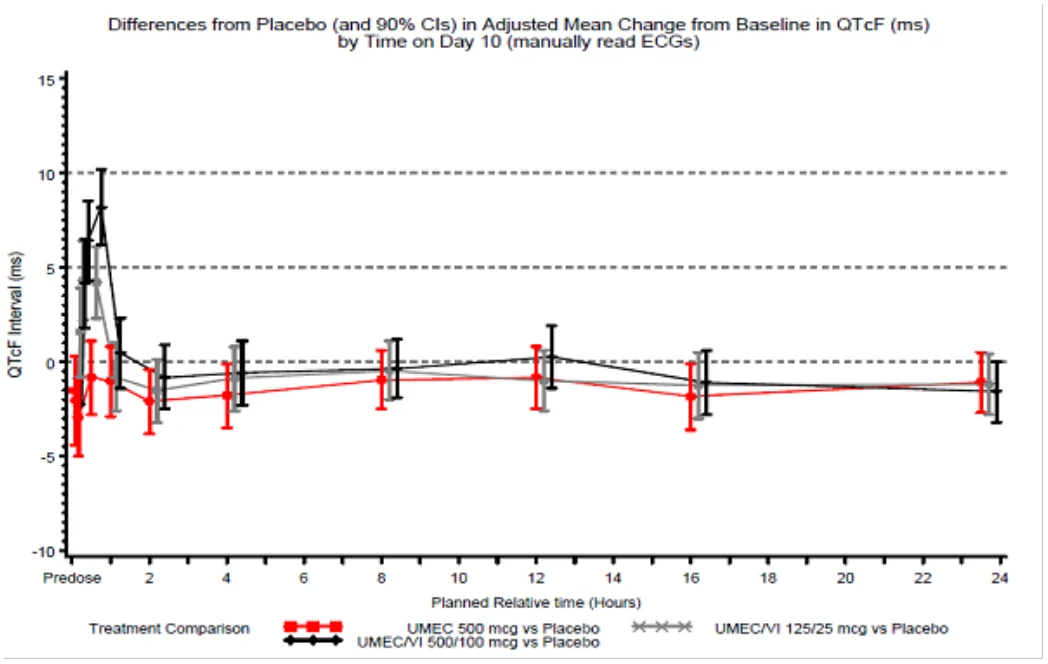
Increases in the QTcF interval were observed that were maximal at 10 min (umeclidinium/vilanterol 125/25 mcg) and 30 min (umeclidinium/vilanterol 500/100 mcg) post-dosing. The maximal placebo-adjusted mean change in the QTcF interval was 4.3 ms (90% CI 2.2, 6.4) at 10 min for the 125/25 mcg dose and 8.2 ms (90% CI 6.2, 10.2) at 30 min for the 500/100 mcg dose.
UMEC 500 mcg alone was not associated with QTc prolongation.
QTcF = QT/RR0.33
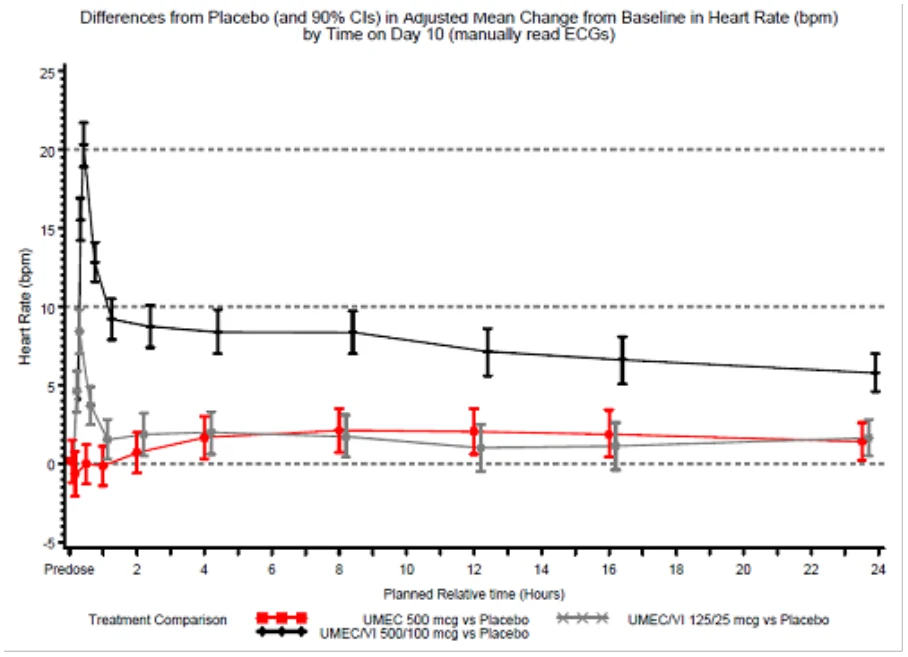
A dose-dependent increase in heart rate was also observed with the administration of umeclidinium/vilanterol. The maximum mean difference in heart rate from placebo after baseline-correction was 8.4 (90% CI: 7.0, 9.8) beats/min and 20.3 (90% CI: 18.9, 21.7) beats/min seen 10 minutes after dosing for umeclidinium/vilanterol 125/25 mcg and umeclidinium/vilanterol 500/100 mcg, respectively.
UMEC 500 mcg was associated with small positive mean differences from placebo in heart rate from 4 to 24 h, inclusive, with a maximum mean difference of 2.1 bpm (90% CI: 0.7, 3.5) at 8 h.
See 7 WARNINGS AND PRECAUTIONS, Cardiovascular; 9.2 DRUG INTERACTIONS OVERVIEW, Drugs known to prolong the QTc interval.
10.3 Pharmacokinetics
Table 4 Summary of Umeclidinium and Vilanterol Pharmacokinetic Parameters in Healthy Subjects
| Umeclidinium/vilanterol 500/100 mcg | Tmax (h) | t½ (h) | |||||
|---|---|---|---|---|---|---|---|
| Median (range) | Geometric Mean (CV%) | ||||||
| Umeclidinium 500 mcg | 0.1 (0.08, 0.12) | 25.2 (0.2) | |||||
| Vilanterol 100 mcg | 0.1 (0.08, 0.22) | 19.2 (33.9) | |||||
Table 5 Summary of Umeclidinium and Vilanterol (Cmax and AUC(0-24)) in Subjects with COPD (Geometric Mean [95% CI])
| ANORO ELLIPTA 62.5/25 mcg | Cmax (pg/mL) | AUC(0-24) (pg.h/mL) |
|---|---|---|
| Umeclidinium 62.5 mcg1 | 69 [65, 72] | 308 [293, 323] |
| Vilanterol 25 mcg1 | 128 [122, 135] | 612 [589, 637] |
1Population pharmacokinetic analyses across 2 trials in subjects with COPD who received ANORO ELLIPTA 62.5/25 mcg (DB2116975).
Available pharmacokinetic data in healthy volunteers and patients with COPD show that the systemic exposure (Cmax and AUC) to umeclidinium and vilanterol is unaffected by administration with the umeclidinium/vilanterol combination compared to the components administered separately.
Absorption
Umeclidinium: Following inhaled administration of umeclidinium in healthy volunteers, Cmax occurred at 5 to 15 minutes. The absolute bioavailability of inhaled umeclidinium was on average 13% of the dose, with negligible contribution from oral absorption. Following repeat dosing of inhaled umeclidinium, steady state was achieved within 7 to 10 days with 1.5 to 2-fold accumulation.
Vilanterol: Following inhaled administration of vilanterol in healthy volunteers, Cmax occurred at 5 to 15 minutes. The absolute bioavailability of inhaled vilanterol was 27%, with negligible contribution from oral absorption. Following repeat dosing of inhaled vilanterol, steady state was achieved within 6 days with up to 2.4-fold accumulation.
Distribution
Umeclidinium: Following intravenous administration to healthy subjects, the mean volume of distribution was 86 L. In vitro plasma protein binding in human plasma was on average 89%.
Vilanterol: Following intravenous administration to healthy volunteers, the mean volume of distribution at steady state was 165 L. In vitro plasma protein binding in human plasma was on average 94%.
Metabolism
Umeclidinium: In vitro studies showed that umeclidinium is metabolized principally by the cytochrome P450 enzyme CYP2D6 and is a substrate for the P-glycoprotein (Pgp) transporter. The primary metabolic routes for umeclidinium are oxidative (hydroxylation, O-dealkylation) followed by conjugation (e.g., glucuronidation, etc.), resulting in a range of metabolites with either reduced pharmacological activity or for which the pharmacological activity has not been established. Systemic exposure to the metabolites is low.
Vilanterol: In vitro studies showed that vilanterol was metabolized principally via CYP3A4 and is a substrate for the Pgp transporter. The primary metabolic routes are O-dealkylation to a range of metabolites with significantly reduced beta1-and beta2-agonist activity. Plasma metabolic profiles following oral administration of vilanterol in a human radiolabel study were consistent with high first-pass metabolism. Systemic exposure to the metabolites is low.
Elimination
Umeclidinium: Plasma clearance following intravenous administration was 151 L/hr. Following intravenous administration, approximately 58% of the administered radio-labeled dose (or 73% of the recovered radioactivity) was excreted in feces and 22% of the administered radio-labelled dose (27% of recovered radioactivity) in urine. The excretion of the drug-related material in the feces following intravenous dosing indicated secretion into the bile. Following oral administration to healthy male subjects, total radioactivity was excreted primarily in feces (92% of the administered radio-labelled dose). Less than 1% of the orally administered dose was excreted in urine, suggesting negligible absorption following oral administration. Umeclidinium plasma elimination half-life following inhaled dosing for 10 days averaged 19 hours, with 3% to 4% drug excreted unchanged in urine at steady-state.
Vilanterol: Plasma clearance of vilanterol following intravenous administration was 108 L/hr. Following oral administration of radio-labelled vilanterol, mass balance showed 70% of the radio-label in urine and 30% in feces. Primary elimination of vilanterol was by metabolism followed by excretion of metabolites in urine and feces. Vilanterol plasma elimination half-life following inhaled dosing for 10 days averaged 11 hours.
Special Populations and Conditions
- Pediatrics: ANORO ELLIPTA should not be used in patients under 18 years of age.
- Geriatrics: A population pharmacokinetic analysis showed that pharmacokinetics of umeclidinium and vilanterol were similar between COPD patients 65 years and older and those younger than 65 years of age.
- Gender: A population pharmacokinetic analysis showed that no dose adjustment is required for umeclidinium or vilanterol based on the effect of gender.
- Ethnic Origin: A population pharmacokinetic analysis showed that no dose adjustment is required for umeclidinium or vilanterol based on the effect of race.
- Hepatic Insufficiency: The pharmacokinetics of umeclidinium and vilanterol following co-administration have been evaluated in subjects with moderate hepatic impairment (Child-Pugh score of 7-9). There was no evidence of an increase in systemic exposure to either umeclidinium or vilanterol (Cmax and AUC), and no evidence of altered protein binding between subjects with moderate hepatic impairment and healthy volunteers. ANORO ELLIPTA has not been evaluated in subjects with severe hepatic impairment.
- Renal Insufficiency: The pharmacokinetics of umeclidinium and vilanterol following co-administration have been evaluated in subjects with severe renal impairment (creatinine clearance < 30 mL/min). Umeclidinium systemic exposure was not significantly increased (10% for AUC) and vilanterol systemic exposure (AUC(0-24)) was 56% higher in subjects with severe renal impairment compared with healthy subjects. There was no evidence of altered protein binding between subjects with severe renal impairment and healthy volunteers.
11 STORAGE, STABILITY AND DISPOSAL
Do not store above 30°C. Store in a dry place away from direct heat or sunlight. If stored in the refrigerator, allow the inhaler to return to room temperature for at least an hour before use.
Keep out of sight and reach of children.
12 SPECIAL HANDLING INSTRUCTIONS
ANORO ELLIPTA is provided in a foil laminate tray containing a desiccant sachet. The tray is sealed with a peelable foil lid, which together provide moisture protection, and should only be opened when it is ready to be used for the first time. Once opened, the desiccant package should be discarded.
Patients should be instructed to write the date the inhaler should be discarded on the label in the space provided. The date should be added as soon as the inhaler has been removed from the tray.
ANORO ELLIPTA should be safely discarded when the dose counter reads “0” or 6 weeks after it was removed from the foil tray, whichever comes first.
PART II: SCIENTIFIC INFORMATION
13 PHARMACEUTICAL INFORMATION
Drug Substance
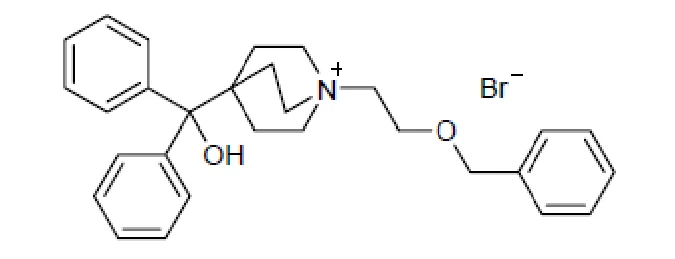
umeclidinium bromide
Proper name: umeclidinium bromide
Chemical name: 1-[2-(benzyloxy)ethyl]-4-(hydroxydiphenylmethyl)-1-azoniabicyclo[2.2.2]octane bromide
Molecular formula and molecular mass: C29H34 NO2•Br 508.5
Structural formula:
Physicochemical properties: umeclidinium is a white powder. It is slightly soluble in water.
vilanterol trifenatate
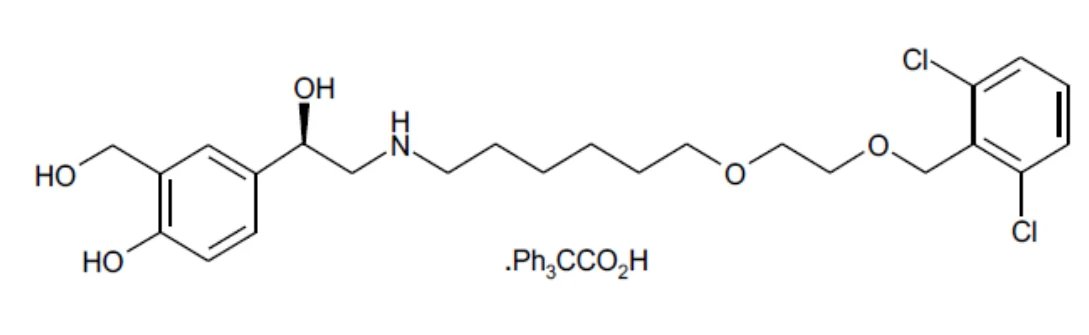
Proper name: vilanterol trifenatate
Chemical name: triphenylacetic acid-4-{(1R)-2-[(6-{2-[2,6-dicholorobenzyl)oxy]ethoxy}hexyl)amino]-1-hydroxyethyl}-2-(hydroxymethyl)phenol (1:1)
Molecular formula and molecular mass: C24H33Cl2NO5.C20H16O2 774.8
Structural formula:
Physicochemical properties: vilanterol is white powder. It is practically insoluble in water.
14 CLINICAL TRIALS
14.1 Clinical Trials by Indication
COPD
Table 6 Summary of Trial Design and Patient Demographics for Pivotal Clinical Trials
| Study # | Trial design, route of administration and study duration | Treatment and Dosage | Study Subjects Mean age (Range) Gender (%) | Primary Efficacy Endpoint |
| DB2113373 | 24-week, multicenter, randomized, double-blind, placebo-controlled, parallel-group study to evaluate the efficacy and safety of UMEC/VI inhalation powder and the individual components delivered once-daily via a novel dry powder inhaler in subjects with COPD. | ANORO ELLIPTA (UMEC/VI 62.5/25 mcg) INCRUSE ELLIPTA (UMEC 62.5 mcg) VI 25 mcg Placebo | Total: 1532 63 years (40-93) Male: 71% Female: 29% | Trough FEV1 at Day 169 |
| DB2113360 | ANORO ELLIPTA (UMEC/VI 62.5/25 mcg) UMEC/VI 125/25 mcg VI 25 mcg TIO 18 mcg | Total: 843 63 years (40-88) Male: 69% Female: 31% | Trough FEV1 at Day 169 | |
| DB2113374 | ANORO ELLIPTA (UMEC/VI 62.5/25 mcg) UMEC/VI 125/25 mcg UMEC 125 mcg TIO 18 mcg | Total: 869 65 years (40-85) Male: 68% Female: 32% | Trough FEV1 at Day 169 |
Abbreviations: UMEC: umeclidinium (GSK573719); VI: vilanterol (GW642444); TIO: tiotroprium bromide
Trial Design and Study Demographics
The efficacy and safety of ANORO ELLIPTA (umeclidinium/vilanterol 62.5/25 mcg once daily) and its individual components (umeclidinium 62.5 mcg once daily and vilanterol 25 mcg once daily) was evaluated in one 24-week randomized, double-blind, parallel-group, placebo-controlled study (DB2113373), and two 24-week active comparator-controlled studies (DB2113360 and DB2113374) (Table 6). All trials had similar inclusion/exclusion criteria and concomitant medications. The primary efficacy endpoint in all three pivotal trials was trough FEV1 at Day 169 (Week 24), and the secondary efficacy endpoint was weighted mean FEV1 over 0-6 hours at Day 168 (Week 24). Transitional Dyspnea Index (TDI) focal score at Day 168 (and also at other days), St. George’s Respiratory Questionnaire (SGRQ) and daily rescue medication use were assessed as other efficacy endpoints in all pivotal trials.
A total of 3,244 subjects were randomized and received treatments from pivotal studies (Table 6). The subjects had a clinical diagnosis of COPD, were 40 years of age or older, had a history of smoking greater than 10 pack-years, had moderate to very severe airflow obstruction (a post-salbutamol FEV1 ≤ 70% of predicted normal values and a ratio of FEV1/FVC < 0.7), and dyspnea (a Modified Medical Research Council (mMRC) score ≥ 2). Concurrent use of systemic corticosteroids, long-acting bronchodilators, including theophyllines, was not allowed and previous use of umeclidinium and/or vilanterol was not allowed. Concurrent use of inhaled corticosteroids (ICS) at a stable dose and study-provided rescue salbutamol were allowed. Subjects with a current diagnosis of asthma, α 1-antitrypsin deficiency, any clinically significant uncontrolled disease, a clinically significant ECG or clinically significant laboratory finding, or a lower respiratory tract infection or recent COPD exacerbation were excluded.
The majority of the 3,244 patients recruited in the 24-week pivotal trials were male (70%), white (83%), with a mean age of 63.5 years. At baseline, the mean post-bronchodilator FEV1 was 1.38 L (GOLD II [46%], GOLD III [42%], GOLD IV [12%]). Mean beta2-agonist responsiveness was 14.2% of baseline (146 mL).
Study Results
Lung Function
The placebo-controlled study (DB2113373) evaluated the efficacy of ANORO ELLIPTA compared with umeclidinium 62.5 mcg and vilanterol 25 mcg, and placebo, all administered once daily. At week 24, ANORO ELLIPTA statistically significantly increased the change from baseline in trough FEV1 by 167 mL (95% CI=128 mL to 207 mL, p<0.001) compared with placebo (Table 7). ANORO ELLIPTA also provided a statistically significant improvement compared with placebo in change from baseline in weighted mean FEV1 over 0-6 hours post-dose at week 24 (see Table 7). In addition, patients receiving ANORO ELLIPTA had a statistically significant greater increase from baseline in trough FEV1 and weighted mean FEV1 over 0-6 hours compared with those receiving umeclidinium 62.5 mcg and vilanterol 25 mcg, indicating a contribution of umeclidinium 62.5 mcg and vilanterol 25 mcg to the improvement of lung function (Table 7).
Table 7 Primary and Secondary Efficacy Endpoints at Week 24 for Treatment with ANORO ELLIPTA (62.5/25 mcg) in DB2113373
| Primary Endpoint | ||||||||||
|---|---|---|---|---|---|---|---|---|---|---|
| Trough FEV1 (mL) at Day 169 | ||||||||||
| Treatment Difference | 95% CI | p-value | ||||||||
| ANORO ELLIPTA vs Placebo | 167 | (128,207) | <0.001 | |||||||
| UMEC 62.5 mcg vs Placebo | 115 | (76,155) | <0.001 | |||||||
| VI 25 mcg vs Placebo | 72 | (32,112) | <0.001 | |||||||
| ANORO ELLIPTA vs VI 25 mcg | 95 | (60,130) | <0.001 | |||||||
| ANORO ELLIPTA vs UMEC 62.5 mcg | 52 | (17,87) | 0.004 | |||||||
| Secondary Endpoint | ||||||||||
| 0-6 Hr Weighted Mean FEV1 (mL) at Day 168 | ||||||||||
| Treatment Difference | 95% CI | p-value | ||||||||
| ANORO ELLIPTA vs Placebo | 242 | (202,282) | <0.001 | |||||||
| UMEC 62.5 mcg vs Placebo | 150 | (110,190) | <0.001 | |||||||
| VI 25 mcg vs Placebo | 122 | (82,162) | <0.001 | |||||||
| ANORO ELLIPTA vs VI 25 mcg | 120 | (84,155) | <0.001 | |||||||
| ANORO ELLIPTA vs UMEC 62.5 mcg | 92 | (56,127) | <0.001 | |||||||
Abbreviations: CI=confidence interval; FEV1=forced expiratory volume in 1 second; UMEC=umeclidinium; VI=vilanterol
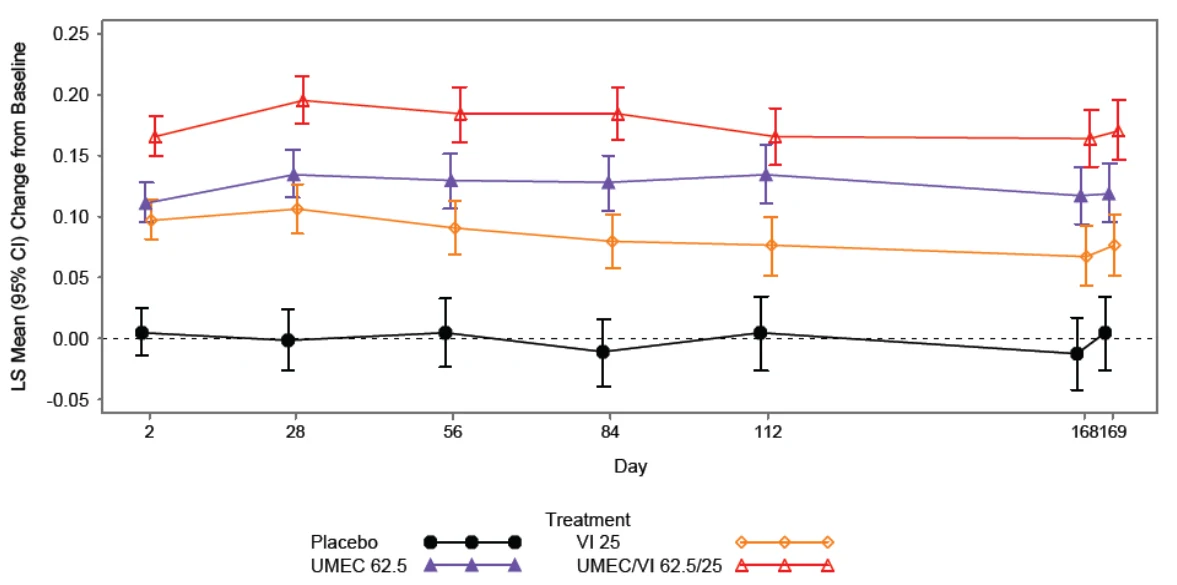
Greater bronchodilation with ANORO ELLIPTA compared with placebo was evident after the first day of treatment and improvement in lung function was maintained over the 24-week treatment period (Figure 1).
Figure 1 DB2113373: LS Mean (95% CI) Change From Baseline in Trough FEV1 (L)
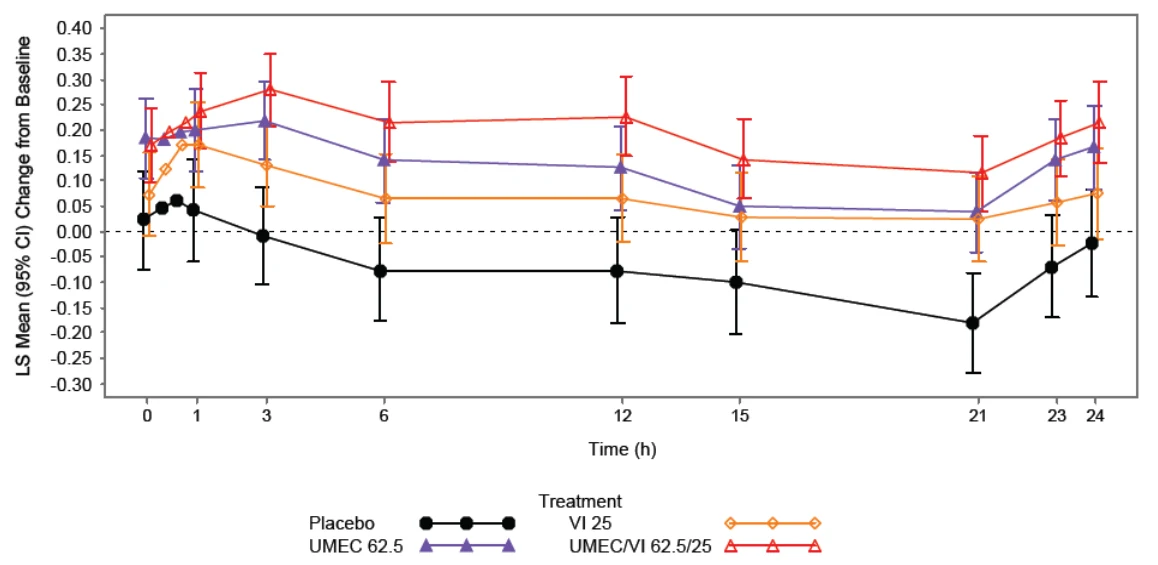
Serial spirometric evaluations throughout the 24-hour dosing interval were performed in a subset of subjects (n=197) at days 1, 84 and 168 in DB2113373. The median time to onset on Day 1, defined as a 100 mL increase from baseline in FEV1, was 27 minutes in subjects receiving ANORO ELLIPTA. Improvement in lung function from baseline was maintained for 24-hours after dosing (see Figure 2) and was consistent over days 1, 84 and 168.
Figure 2 DB2113373: LS Mean Change From Baseline in FEV1 (L) over Time (0-24 hours)
on Day 168
The active comparator-controlled studies (DB2113360 and DB2113374) evaluated the efficacy of ANORO ELLIPTA compared with the individual components (umeclidinium 125 mcg and vilanterol 25 mcg) and tiotropium bromide 18 mcg, all administered once daily. In Study DB2113360, treatment with ANORO ELLIPTA (umeclidinium/vilanterol 62.2/25 mcg) showed a statistically significant greater improvement from baseline in trough FEV1 (90 mL, p<0.001) compared with vilanterol (25 mcg) at Week 24 (Table 8) ANORO ELLIPTA also showed a statistically significant greater improvement from baseline in weighted mean FEV1 over 0-6 hours (77 mL, p=0.004) at Week 24 compared with vilanterol (25 mcg) (Table 8). In Study DB2113374, ANORO ELLIPTA showed an improvement of 70 mL (p=0.003) in change from baseline in weighted mean FEV1over 0-6 hours at Week 24 compared with umeclidinium 125 mcg. However, the treatment difference between ANORO ELLIPTA and umeclidinium 125 mcg in change from baseline in trough FEV1was not statistically significant (Table 8).
Table 8 Primary and Secondary Efficacy Endpoints at Week 24 for Treatment with ANORO ELLIPTA (62.5/25 mcg) in Active Comparator-Controlled Studies DB2113360 and DB2113374
| Comparisons | Primary Efficacy Endpoint Trough FEV1 (mL) at Day 169 | Secondary Efficacy Endpoint 0 to 6 Hour Weighted Mean FEV1 (mL) at Day 168 | ||||
|---|---|---|---|---|---|---|
| Treatment Difference (mL) | 95% CI | p-value | Treatment Difference (mL) | 95% CI | p-value | |
| Study DB2113360 | ||||||
| ANORO ELLIPTA vs VI 25 mcg | 90 | (39,142) | <0.001 | - | - | - |
| ANORO ELLIPTA vs VI 25 mcg | - | - | - | 77 | (25,128) | 0.004 |
| Study DB2113374 | ||||||
| ANORO ELLIPTA vs UMEC 125 mcg | 22 | (-27, 72) | 0.377 | - | - | - |
| ANORO ELLIPTA vs UMEC 125 mcg | - | - | - | 70 | (24, 117) | 0.003 |
CI=confidence interval; FEV1=forced expiratory volume in 1 second; VI=vilanterol
Note: Analysis performed using a repeated measures model with covariates of treatment, baseline (mean of the two assessments made 30 and 5 minutes predose on Day 1), smoking status, center group, Day, Day by baseline and Day by treatment interactions.
Symptom Related Outcomes
In a placebo-controlled study DB2113373, ANORO ELLIPTA demonstrated an improvement when compared with placebo in reducing shortness of breath, as measured by the TDI focal score at week 24 (1.2 units; 95%CI= 0.7 to 1.7). However, when compared with individual components (vilanterol 25 mcg and umeclidinium 62.5 mcg), ANORO ELLIPTA did not show statistically significant improvement in TDI focal scores. The percentage of patients that responded with a minimum clinically important difference (MCID) of ≥ 1 unit TDI focal score at week 24 for ANORO ELLIPTA was 58% (226/389), compared with 41% (106/260) for placebo.
Health-related quality of life was measured using St. George’s Respiratory Questionnaire (SGRQ) in all pivotal trials. In Study DB2113373, following 24 weeks of treatment, the mean difference in change from baseline in SGRQ total score between ANORO ELLIPTA and placebo was -5.51 units (95%CI= -7.88 units to -3.13 units). Improvements from baseline with ANORO ELLIPTA were seen in all 3 SGRQ domains
(symptoms, activities, and impact; mean change from baseline on Day 168 was -11.44, -6.81 and -6.60 units respectively). However, treatment differences in the change from baseline in SGRQ total score between ANORO ELLIPTA and individual components (umeclidinium 62.5 mcg and vilanterol 25 mcg, respectively) were not observed in this study following 24 weeks of treatment. More patients treated with ANORO ELLIPTA had an improvement in SGRQ total score greater than the minimum clinically important difference (MCID) (4 units) compared to placebo (49% vs. 34%).
In Study DB2113373, patients treated with ANORO ELLIPTA required less rescue salbutamol than those treated with placebo, with an average reduction of 0.8 puffs (95%CI = -1.3 puffs to -0.3 puffs) per day.
Supporting Clinical Trials (Exercise Endurance)
The effect of ANORO ELLIPTA on exercise endurance and lung function in COPD patients was evaluated in two 12-week randomized, double-blind, placebo-controlled, cross-over studies (DB2114417 and DB2114418). The two exercise endurance studies treated 655 subjects with a functional residual capacity (FRC) ≥120%. The co-primary efficacy endpoints were exercise endurance time (EET) measured using the endurance shuttle walk test (ESWT) and trough FEV1 at Day 85. In DB2114418, treatment with ANORO ELLIPTA showed a statistically significant improvement over placebo of 69.4 seconds (p=0.003) in exercise endurance time (EET) obtained 3 hours after dosing. However, in DB2114417, treatment with ANORO ELLIPTA did not show statistically significant improvements over placebo in EET (21.9 seconds, p=0.234). ANORO ELLIPTA demonstrated a statistically significant improvement compared to placebo in change from baseline in trough FEV1 at Week 12 (243 mL; p<0.001) in Study DB2114418. ANORO ELLIPTA also reduced lung hyperinflation (reduced functional residual capacity and residual volume) resulting in increased inspiratory capacity at rest and during exercise compared to placebo.
15 MICROBIOLOGY
No microbiological information is required for this drug product.
16 NON-CLINICAL TOXICOLOGY
General Toxicology: Pharmacological and toxicological effects seen with umeclidinium or vilanterol in nonclinical studies were those typically associated with either muscarinic antagonists or beta2-agonists and/or local irritancy.
Umeclidinium
In repeat dose inhalation toxicity studies with umeclidinium, the principal treatment-related findings of relevance to risk assessment were irritant effects in the respiratory tract and expected pharmacology-related cardiovascular effects. In patients following repeated inhaled doses of 62.5 mcg/day plasma concentrations of umeclidinium were typically lower than those achieved in animal toxicology studies (see 10.3 Pharmacokinetics).
Carcinogenicity: There was no evidence of treatment-related increases in tumour incidence in two year inhalation studies in rats and mice.
Genotoxicity: There was no evidence of genotoxicity in in vitro assays (Ames test and Mouse Lymphoma assay) or in the in vivo micronucleus test in rats.
Reproductive and Developmental Toxicology: umeclidinium was not teratogenic in rats or rabbits. In a pre- and post-natal study, subcutaneous administration of umeclidinium to rats resulted in lower maternal body weight gain and food consumption and slightly decreased pre-weaning pup body weights in dams given 180 micrograms/kg/day dose (at exposures approximately 52X those achieved in subjects with COPD given 62.5 mcg/day umeclidinium based on AUC). In rabbits, the NOAEL following subcutaneous administration was 197X, and 35X following inhaled administration.
Local Tolerance: No or negligible hemolysis was evident in rat, dog and human blood treated with umeclidinium.
Umeclidinium was considered to be a non-sensitiser.
Umeclidinium was considered to be a mild/moderate dermal irritant using a reconstituted human skin model.
Umeclidinium was considered to be a mild/moderate ocular irritant using a reconstituted human epidermal model.
Vilanterol
General Toxicology: In animal toxicology studies of vilanterol, the majority of which used administration via the inhaled route, the major findings were those typically associated with systemic exposure to beta2-agonists and are commonly reported for other marketed LABAs. In patients following repeated inhaled doses of 25 mcg/day plasma concentrations of vilanterol were typically much lower than those achieved in animal toxicology studies (see 10.3 Pharmacokinetics).
Carcinogenicity: Consistent with findings for other beta2 agonists, in lifetime inhalation studies vilanterol caused proliferative effects in the female rat and mouse reproductive tract and rat pituitary gland. There was no increase in tumour incidence in rats or mice at exposures 0.5 or 13-fold, respectively, the human clinical exposure of vilanterol at 25 micrograms based on AUC.
Genotoxicity: Genetic toxicity studies indicate vilanterol does not represent a genotoxic hazard to humans.
Reproductive and Developmental Toxicology: Vilanterol did not have any adverse effects on male or female fertility in rats.
Vilanterol was not teratogenic in rats. In rabbits, administration of vilanterol by inhaled or subcutaneous routes resulted in fetal abnormalities (low incidence of cleft palate, open eyelids, sternebral fusion and/or an abnormal pattern of frontal bone ossification). When given subcutaneously there were no effects at 36-times the human clinical exposure of 25 micrograms vilanterol based on AUC. Vilanterol had no adverse effect on pre- or post-natal development in rats.
Local Tolerance: Vilanterol was non-sensitising in mouse local lymph node assay and was shown to be non-irritant to skin and not a severe irritant to the eye in reconstructed/reconstituted human tissue.
Umeclidinium combined with Vilanterol
Umeclidinium combined with vilanterol has been evaluated in a number of studies. No novel toxicity was identified when umeclidinium was given in combination with vilanterol for up to 13 weeks duration in dogs, nor any major exacerbations of findings associated with umeclidinium or vilanterol when administered separately. Following inhaled administration of umeclidinium/vilanterol in combination to rabbits, there were no effects on embryofetal development. No studies of carcinogenicity, genotoxicity, single dose toxicity or local tolerance were conducted using umeclidinium and vilanterol in combination.
In patients following repeated inhaled doses of 62.5/25 mcg/day (umeclidinium/vilanterol respectively) plasma concentrations of umeclidinium/vilanterol were typically lower than those achieved in animal toxicology studies (see 10.3 Pharmacokinetics).
17 SUPPORTING PRODUCT MONOGRAPHS
BREO ELLIPTA (Dry powder for oral inhalation, 100/25 mcg and 200/25 mcg fluticasone furoate/vilanterol (as trifenatate)), Control No. 213290, Product Monograph, GlaxoSmithKline Inc. (January 7, 2019)
INCRUSE ELLIPTA (Dry powder for oral inhalation, 62.5 mcg umeclidinium (as bromide)), Control No. 222505, Product Monograph, GlaxoSmithKline Inc. (September 22, 2020)
TRELEGY ELLIPTA (Dry powder for oral inhalation, 100/62.5/25 mcg and 200/62.5/25 mcg fluticasone furoate/umeclidinium (as bromide)/vilanterol (as trifenatate)), Control No. 255950, Product Monograph, GlaxoSmithKline Inc. (January 17, 2022)