


Product Monograph - Breztri Aerosphere
RECENT MAJOR LABEL CHANGES
Not applicable.
TABLE OF CONTENTS
Sections or subsections that are not applicable at the time of authorization are not listed.
RECENT MAJOR LABEL CHANGES ..................................................................................... 2
TABLE OF CONTENTS .......................................................................................................... 2
PART I: HEALTH PROFESSIONAL INFORMATION............................................................... 4
1 INDICATIONS.............................................................................................................. 4
1.1 Pediatrics ........................................................................................................... 4
1.2 Geriatrics............................................................................................................ 4
2 CONTRAINDICATIONS ............................................................................................... 4
4 DOSAGE AND ADMINISTRATION .............................................................................. 4
4.1 Dosing Considerations ........................................................................................ 4
4.2 Recommended Dose and Dosage Adjustment .................................................... 5
4.4 Administration..................................................................................................... 5
4.5 Missed Dose....................................................................................................... 5
5 OVERDOSAGE ........................................................................................................... 6
6 DOSAGE FORMS, STRENGTHS, COMPOSITION AND PACKAGING ........................ 6
7 WARNINGS AND PRECAUTIONS .............................................................................. 7
7.1 Special Populations ....................................................................................... 15
7.1.1 Pregnant Women .......................................................................................... 15
7.1.2 Breast-feeding ............................................................................................... 15
7.1.3 Pediatrics ...................................................................................................... 15
7.1.4 Geriatrics ...................................................................................................... 15
8 ADVERSE REACTIONS ............................................................................................ 15
8.1 Adverse Reaction Overview .............................................................................. 15
8.2 Clinical Trial Adverse Reactions ........................................................................ 16
8.3 Less Common Clinical Trial Adverse Reactions................................................. 18
8.5 Post-Market Adverse Reactions ........................................................................ 18
9 DRUG INTERACTIONS ............................................................................................. 18
9.2 Drug-Interactions Overview............................................................................... 18
9.4 Drug-Drug Interactions...................................................................................... 19
9.5 Drug-Food Interactions ..................................................................................... 21
9.6 Drug-Herb Interactions...................................................................................... 21
9.7 Drug-Laboratory Test Interactions ..................................................................... 21
10 CLINICAL PHARMACOLOGY ................................................................................... 21
10.1 Mechanism of Action ..................................................................................... 21
10.2 Pharmacodynamics ....................................................................................... 21
10.3 Pharmacokinetics .......................................................................................... 23
11 STORAGE, STABILITY AND DISPOSAL .................................................................. 26
12 SPECIAL HANDLING INSTRUCTIONS ..................................................................... 26
PART II: SCIENTIFIC INFORMATION .................................................................................. 27
13 PHARMACEUTICAL INFORMATION ........................................................................ 27
14 CLINICAL TRIALS .................................................................................................... 28
14.1 Clinical Trials by Indication ............................................................................ 28
COPD ........................................................................................................................ 28
15 MICROBIOLOGY....................................................................................................... 34
16 NON-CLINICAL TOXICOLOGY ................................................................................. 34
17 SUPPORTING PRODUCT MONOGRAPHS ............................................................... 35
PATIENT MEDICATION INFORMATION .............................................................................. 37
INSTRUCTIONS FOR USE ................................................................................................... 45
PART I: HEALTH PROFESSIONAL INFORMATION
1 INDICATIONS
BREZTRI™ AEROSPHERE® (budesonide/glycopyrronium/formoterol fumarate dihydrate) is a combination of an inhaled corticosteroid (ICS), long-acting muscarinic antagonist (LAMA), and a long-acting beta2-adrenergic agonist (LABA), indicated for the long-term maintenance treatment to reduce exacerbations of chronic obstructive pulmonary disease (COPD) and treat airflow obstruction in patients with COPD, including chronic bronchitis and/or emphysema who are not adequately treated by a combination of an ICS/LABA or a combination of a LAMA/LABA.
BREZTRI AEROSPHERE is not indicated for the treatment of acute episodes of bronchospasm (see General).
BREZTRI AEROSPHERE is not indicated for the treatment of asthma.
1.1 Pediatrics
Pediatrics (< 18 years of age): The safety and efficacy of BREZTRI AEROSPHERE in pediatric patients under 18 years of age have not been established; therefore, Health Canada has not authorized an indication for pediatric use.
1.2 Geriatrics
Geriatrics (≥ 65 years of age): No dosage adjustment is required in patients 65 years of age and older.
2 CONTRAINDICATIONS
BREZTRI AEROSPHERE (budesonide/glycopyrronium/formoterol fumarate dihydrate) is contraindicated in patients who are hypersensitive to this drug or to any ingredient(s) in the formulation, including any non-medicinal ingredient(s), or component of the container. For a complete listing, see 6 DOSAGE FORMS, STRENGTHS, COMPOSITION AND PACKAGING.
4 DOSAGE AND ADMINISTRATION
4.1 Dosing Considerations
Counselling by doctors on smoking cessation should be the first step in treating patients with COPD who smoke, independent of the clinical presentation i.e., chronic bronchitis (with or without airflow limitation) or emphysema. Cessation of smoking produces dramatic symptomatic benefits and has been shown to confer a survival advantage.
As with other inhaled drugs containing beta2-adrenergic agents, BREZTRI AEROSPHERE (budesonide/glycopyrronium/formoterol fumarate dihydrate) should not be used more often than recommended, at higher doses than recommended, or in conjunction with other medicines containing LABA or LAMA, as an overdose may result.
When beginning treatment with BREZTRI AEROSPHERE, patients who have been taking rapid onset, short duration, inhaled beta2-agonists on a regular basis should be instructed to discontinue the regular use of these drugs and use them only for symptomatic relief if they develop acute respiratory symptoms while taking BREZTRI AEROSPHERE.
BREZTRI AEROSPHERE should not be used to treat acute symptoms of COPD. Patients should be prescribed a rapid onset, short duration inhaled bronchodilator to relieve the acute symptoms such as shortness of breath and advised to have this available for use at all times.
Patients should be made aware that for optimum benefit, BREZTRI AEROSPHERE must be used regularly, even when asymptomatic.
4.2 Recommended Dose and Dosage Adjustment
The recommended and maximum dose of BREZTRI AEROSPHERE is 320 mcg budesonide / 14.4 mcg glycopyrronium (as bromide) / 10 mcg formoterol fumarate dihydrate twice daily, administered as 2 inhalations in the morning and 2 inhalations in the evening.
Pediatrics (< 18 years of age): BREZTRI AEROSPHERE should not be used in patients under 18 years of age.
Geriatrics (≥ 65 years of age): No dosage adjustment is required in patients 65 years of age and older.
Renal Impairment: No dosage adjustment is necessary for patients with renal impairment. However, because glycopyrronium is primarily eliminated via renal metabolism, for patients with severe renal impairment (creatine clearance of ≤30 mL/min) or end-stage renal disease requiring dialysis, BREZTRI AEROSPHERE should only be used if the expected benefit outweighs the potential risk and patients should be closely monitored.
Hepatic Impairment: No dosage adjustment is necessary for patients with hepatic impairment. However because both budesonide and formoterol are primarily eliminated via hepatic metabolism, an increased exposure can be expected in patients with severe liver impairment, and patients with hepatic disease should be closely monitored.
4.4 Administration
BREZTRI AEROSPHERE is for oral inhalation only.
BREZTRI AEROSPHERE should be administered as 2 inhalations twice daily, in the morning and in the evening.
To ensure proper administration of BREZTRI AEROSPHERE patients should be instructed how to administer the product correctly and advised to read the instructions for use carefully (see INSTRUCTIONS FOR USE).
To assist patients with proper use of BREZTRI AEROSPHERE, an instructional video is available at:
 | www.breztri.ca/video |
|---|
4.5 Missed Dose
If a dose is missed, it should be taken as soon as possible, and the next dose should be taken at the usual time. A double dose should not be taken to make up for a forgotten dose.
5 OVERDOSAGE
There is limited evidence on the management of overdose with BREZTRI AEROSPHERE (budesonide/glycopyrronium/formoterol fumarate dihydrate). An overdose of BREZTRI AEROSPHERE may lead to exaggerated anticholinergic and/or β2-adrenergic signs and symptoms; the most frequent of which include blurred vision, dry mouth, nausea, muscle spasm, tremor, headache, palpitations and systolic hypertension. Acute overdosage with budesonide, even in excessive doses, is not expected to be a clinical problem. When used chronically in excessive doses, systemic glucocorticosteroid effects may appear.
BREZTRI AEROSPHERE should be discontinued in case of overdose. Supportive and symptomatic treatment should be initiated. The judicious use of a cardioselective beta-receptor blocker may be considered, bearing in mind that such medication can produce bronchospasm. Cardiac monitoring including electrocardiogram monitoring is recommended in cases of overdosage.
| For management of a suspected drug overdose, contact your regional poison control centre. |
|---|
6 DOSAGE FORMS, STRENGTHS, COMPOSITION AND PACKAGING
Table 1 – Dosage Forms, Strengths and Composition
BREZTRI AEROSPHERE (budesonide/glycopyrronium/formoterol fumarate dihydrate) is a pressurized inhalation suspension in a metered dose inhaler, comprising a coated aluminum canister, sealed with a metering valve, desiccated flow path (comprising a collar, seal and desiccant puck), a yellow plastic actuator and white mouthpiece with an attached grey plastic dust cap, and a shield-style dose indicator. Each inhaler is individually packaged in a foil laminate pouch containing a desiccant sachet and packed into a carton.
Each BREZTRI AEROSPHERE metered dose per actuation contains budesonide 170 micrograms, glycopyrronium bromide 9.6 micrograms, equivalent to 7.7 micrograms of glycopyrronium, and formoterol fumarate dihydrate 5.3 micrograms, equivalent to 5.1 micrograms of formoterol fumarate.
The delivered dose per actuation (the dose that leaves the mouthpiece) contains budesonide 160 micrograms, glycopyrronium bromide 9 micrograms, equivalent to 7.2 micrograms of glycopyrronium, and formoterol fumarate dihydrate 5 micrograms, equivalent to 4.8 micrograms of formoterol fumarate.
BREZTRI AEROSPHERE also contains hydrofluoroalkane (HFA-134a) and porous particles
| Route of Administration | Dosage Form / Strength / Composition | Non-medicinal Ingredients |
| Inhalation use | Pressurized inhalation suspension 160 mcg budesonide / 7.2 mcg glycopyrronium (as bromide) / 5 mcg formoterol fumarate dihydrate per metered actuation | Hydrofluoroalkane (HFA-134a) Porous particles (1,2-distearoyl-sn-glycero-3-phosphocholine (DSPC); Calcium chloride). |
(comprised of 1,2-distearoyl-sn-glycero-3-phosphocholine (DSPC) and calcium chloride) that form a co-suspension with the drug crystals.
BREZTRI AEROSPHERE is available in a carton containing 1 inhaler with either 56 or 120 actuations.
7 WARNINGS AND PRECAUTIONS
General
Not for use in asthma
The safety and efficacy of BREZTRI AEROSPHERE in patients with asthma have not been evaluated.
BREZTRI AEROSPHERE is not indicated for the treatment of asthma.
Serious Asthma-Related Events – Hospitalizations, Intubations, Death
Use of long-acting beta2-agonists (LABA) as monotherapy (without inhaled corticosteroids [ICS]) for asthma is associated with an increased risk of asthma-related death (see Salmeterol Multicenter Asthma Research Trial). Available data from controlled clinical trials also suggest that the use of LABA as monotherapy increases the risk of asthma-related hospitalization in pediatric and adolescent patients. These findings are considered a class effect of LABA monotherapy. When LABA are used in fixed-dose combination with ICS, data from large clinical trials do not show a significant increase in the risk of serious asthma-related events (hospitalizations, intubations, death) compared with ICS alone (see Serious Asthma-Related Events with Inhaled Corticosteroid/Long-acting Beta2-adrenergic Agonist Combination Products).
Available data do not suggest an increased risk of death with use of LABA in patients with COPD.
Serious Asthma-Related Events with Inhaled Corticosteroid/Long-acting Beta2-adrenergic Agonist Combination Products
Four (4) large, 26-week, randomized, double-blind, active-controlled clinical safety trials were conducted to evaluate the risk of serious asthma-related events when LABA were used in fixed-dose combination with ICS compared with ICS alone in subjects with asthma. Three (3) trials included adult and adolescent subjects aged 12 years and older: 1 trial compared budesonide/formoterol with budesonide, 1 trial compared fluticasone propionate/salmeterol with fluticasone propionate, and 1 trial compared mometasone furoate/formoterol with mometasone furoate. The fourth trial included pediatric subjects aged 4 to 11 years and compared fluticasone propionate/salmeterol with fluticasone propionate. The primary safety endpoint for all 4 trials was serious asthma-related events (hospitalizations, intubations, death). A single, blinded, independent, joint adjudication committee determined whether events were asthma related.
The 3 adult and adolescent trials were designed to rule out a 2.0-fold increase in relative risk for ICS/LABA compared with ICS, and the pediatric trial was designed to rule out a 2.7-fold increase in this relative risk. Each individual trial met its pre-specified objective and demonstrated non-inferiority of ICS/LABA to ICS alone. A meta-analysis of the 3 adult and adolescent trials did not show a significant increase in risk of a serious asthma-related event with ICS/LABA fixed-dose combination compared with ICS alone (Table 2). These trials were not designed to rule out all risk for serious asthma-related events with ICS/LABA compared with ICS.
Table 2 – Meta-analysis of serious asthma-related events in subjects with asthma aged 12 years and older
ICS = Inhaled corticosteroid; LABA = Long-acting beta2-adrenergic agonist.
a Randomized subjects who had taken at least 1 dose of study drug. Planned treatment used for analysis.
b Estimated using a Cox proportional hazards model for time to first event with baseline hazards stratified by each of the 3 trials.
c Number of subjects with an event that occurred within 6 months after the first use of study drug or 7 days after the last date of study drug, whichever date was later. Subjects may have had one or more events, but only the first event was counted for analysis. A single, blinded, independent, joint adjudication committee determined whether events were asthma related.
Salmeterol Multicenter Asthma Research Trial
A 28-week, placebo-controlled, U.S. trial that compared the safety of salmeterol with placebo, each added to usual asthma therapy, showed an increase in asthma-related deaths in subjects receiving salmeterol (13/13,176 in subjects treated with salmeterol versus 3/13,179 in subjects treated with placebo; relative risk: 4.37 [95% CI: 1.25, 15.34]). Use of background ICS was not required in the Salmeterol Multicenter Asthma Research Trial. The increased risk of asthma-related death is considered a class effect of LABA monotherapy.
Deterioration of disease
BREZTRI AEROSPHERE should not be initiated in patients with acutely deteriorating COPD which may be a life-threatening condition. The use of BREZTRI AEROSPHERE in this setting has not been studied and is not considered appropriate.
COPD may deteriorate acutely over a period of hours or chronically over several days or longer. If BREZTRI AEROSPHERE no longer controls symptoms of bronchoconstriction, the patient’s inhaled, short-acting bronchodilator becomes less effective or the patient needs more inhalation of a short-acting bronchodilator than usual, these may be markers of deterioration of disease. In this setting, a re-evaluation of the patient and the treatment regimen should be undertaken at once. Consideration should be given to the need for increased therapy such as a course of oral corticosteroids or antibiotic treatment if an infection is present.
Exacerbations may occur during treatment with BREZTRI AEROSPHERE. Patients should be advised to continue treatment and seek medical advice if symptoms remain uncontrolled or worsen after initiation of therapy with BREZTRI AEROSPHERE.
Patients should not stop therapy with BREZTRI AEROSPHERE without physician supervision since symptoms may recur after discontinuation.
ICS/LABA (n=17,537)a | ICS (n=17,552)a | ICS/LABA vs. ICS Hazard Ratio (95% CI)b | |
| Serious asthma-related eventc | 116 | 105 | 1.10 (0.85, 1.44) |
| Asthma-related death | 2 | 0 | |
| Asthma-related intubation (endotracheal) | 1 | 2 | |
| Asthma-related hospitalization (≥24-hour stay) | 115 | 105 |
Not for acute use
BREZTRI AEROSPHERE should not be used for the relief of acute symptoms of COPD (i.e., as rescue therapy for the treatment of acute episodes of bronchospasm).
Patients should be prescribed a rapid onset, short duration inhaled bronchodilator to relieve acute symptoms such as shortness of breath, and advised to have this available for use at all times.
When beginning treatment with BREZTRI AEROSPHERE, patients who have been taking a rapid onset, short duration, inhaled bronchodilator on a regular basis should be instructed to discontinue the regular use of these drugs and use them only for symptomatic relief if they develop acute symptoms while taking BREZTRI AEROSPHERE.
Excessive use and use with other LABA and LAMA products
BREZTRI AEROSPHERE should not be used more often or at higher doses than recommended.
BREZTRI AEROSPHERE should not be administered concomitantly with other medicines containing a long-acting beta2-adrenergic agonist (e.g., salmeterol, formoterol fumarate, indacaterol, olodaterol), or a long-acting muscarinic antagonist (e.g., tiotropium, glycopyrronium, aclidinium, umeclidinium) for any reason, as an overdose may result. Clinically significant cardiovascular effects and fatalities have been reported in association with excessive use of inhaled sympathomimetic drugs.
Anticholinergic activity
Due to its anticholinergic activity, BREZTRI AEROSPHERE should be used with caution in patients with symptomatic prostatic hyperplasia, urinary retention (see Renal) or narrow-angle glaucoma (see Ophthalmologic).
Cardiovascular
Cardiovascular effects, such as cardiac arrhythmias, e.g., atrial fibrillation and tachycardia, may be seen after the administration of sympathomimetic agents and muscarinic receptor antagonists, including BREZTRI AEROSPHERE. In case such effects occur, treatment may need to be discontinued.
Clinically significant cardiovascular effects and fatalities have been reported in association with excessive use of inhaled sympathomimetic drugs. Cardiovascular effects such as tachycardia, arrhythmia, palpitations, myocardial ischemia, angina pectoris, hypertension or hypotension have been associated with use of beta-adrenergic agonists. In addition, beta-agonists have been reported to produce electrocardiographic changes, such as flattening of the T wave, prolongation of the QTc interval, and ST segment depression. Like all products containing sympathomimetic agents, BREZTRI AEROSPHERE should therefore be used with caution in patients with unstable or life-threatening cardiovascular disease, especially coronary insufficiency, cardiac arrhythmias (including tachyarrhythmias), or hypertension.
Heart rate
Like other beta2-agonists, formoterol fumarate can produce clinically significant cardiovascular effects in some patients as measured by an increase in pulse rate, systolic or diastolic blood pressure or cardiac arrhythmias, such as supraventricular tachycardia and extrasystoles. If such effects occur, BREZTRI AEROSPHERE may need to be discontinued.
QT Interval
As with other beta2-agonists, caution is recommended if BREZTRI AEROSPHERE is administered to patients with a known history of QTc prolongation, risk factors for torsade de pointes (e.g., hypokalemia), or patients who are taking medications known to prolong the QTc interval (see Drugs Known to Prolong the QTc Interval and 10 CLINICAL PHARMACOLOGY).
Driving and Operating Machinery
No studies on the effects on the ability to drive and use machines have been performed. Based on the pharmacological profile (see 10 CLINICAL PHARMACOLOGY), BREZTRI AEROSPHERE is expected to have no or negligible influence on the ability to drive and use machines. The occurrence of headache or nausea may influence the ability to drive or to use machinery.
Ear/Nose/Throat
BREZTRI AEROSPHERE contains budesonide, an ICS. Therapeutic dosages of budesonide may cause the appearance of Candida albicans (thrush) in the mouth and throat. Advise the patient to rinse his/her mouth with water without swallowing following inhalation to help reduce the risk of oropharyngeal candidiasis.
The development of pharyngeal and laryngeal candidiasis is a cause for concern because the extent of its penetration into the respiratory tract is unknown. Symptomatic candidiasis can be treated with topical anti-fungal therapy while continuing to use BREZTRI AEROSPHERE.
Endocrine and Metabolism
Systemic effects may occur with any inhaled corticosteroid, particularly at high doses prescribed for long periods.
These effects are much less likely to occur with inhaled corticosteroid treatments than with oral corticosteroids. Possible systemic effects include Cushing's syndrome, Cushingoid features, adrenal suppression, decrease in bone mineral density, cataract and glaucoma. Potential effects on bone density should be considered particularly in patients on high doses for prolonged periods that have co-existing risk factors for osteoporosis. Long-term studies with inhaled budesonide in adults at daily doses of 800 micrograms (metered dose) have not shown any significant effects on bone mineral density (see Reduction in Bone Mineral Density and Ophthalmologic).
Hypercorticism and Adrenal Suppression
Budesonide, a component of BREZTRI AEROSPHERE, will often help control COPD symptoms with less suppression of HPA function than therapeutically equivalent oral doses of prednisone. Inhaled budesonide is absorbed into the circulation and can be systemically active. Effects of budesonide on the HPA axis are not observed with the therapeutic doses of budesonide in BREZTRI AEROSPHERE. Exceeding the recommended dosage or coadministration with a strong cytochrome P450 3A4 (CYP3A4) inhibitor may result in HPA dysfunction. The beneficial effects of BREZTRI AEROSPHERE in minimizing HPA dysfunction may be expected only when recommended dosages are not exceeded.
Because of the possibility of systemic absorption of ICS, patients treated with BREZTRI AEROSPHERE should be observed carefully for any evidence of systemic corticosteroid effects.
Particular care should be taken in observing patients postoperatively or during periods of stress for evidence of inadequate adrenal response.
It is possible that systemic corticosteroid effects, such as hypercorticism and adrenal suppression (including adrenal crisis) may appear in a small number of patients who are sensitive to these effects. If such effects occur, when appropriate, therapy should be initiated.
Systemic Steroid Replacement by Inhaled Steroid
Particular care is needed for patients who have been transferred from systemically active corticosteroids to ICS because deaths due to adrenal insufficiency have occurred in patients during and after transfer from systemic corticosteroids to less systemically available ICS. After withdrawal from systemic corticosteroids, a number of months are required for recovery of hypothalamic-pituitary-adrenal (HPA) function.
Patients who have been previously maintained on 20 mg or more per day of prednisone (or its equivalent) may be most susceptible, particularly when their systemic corticosteroids have been almost completely withdrawn. During this period of HPA suppression, patients may exhibit signs and symptoms of adrenal insufficiency when exposed to trauma, surgery, or infection (particularly gastroenteritis) or other conditions associated with severe electrolyte loss. Although BREZTRI AEROSPHERE may provide control of COPD symptoms during these episodes, in recommended doses it supplies less than normal physiological amounts of glucocorticoid systemically and does not provide the mineralocorticoid activity that is necessary for coping with these emergencies.
During periods of stress, or a severe COPD exacerbation, patients who have been withdrawn from systemic corticosteroids should be instructed to resume oral corticosteroids (in large doses) immediately and to contact their healthcare professional for further instruction. These patients should also be instructed to carry a warning card indicating that they may need supplementary systemic corticosteroids during periods of stress, or a severe COPD exacerbation.
Patients requiring oral corticosteroids should be weaned slowly from systemic corticosteroid use after transferring to BREZTRI AEROSPHERE. Prednisone reduction can be accomplished by reducing the daily prednisone dose by 2.5 mg on a weekly basis during therapy with BREZTRI AEROSPHERE. Lung function (forced expiratory volume in 1 second [FEV1] or morning peak expiratory flow [PEF]), beta-agonist use, and COPD symptoms should be carefully monitored during withdrawal of oral corticosteroids. In addition, patients should be observed for signs and symptoms of adrenal insufficiency, such as fatigue, lassitude, weakness, nausea and vomiting, and hypotension.
Transfer of patients from systemic corticosteroid therapy to BREZTRI AEROSPHERE may unmask allergic conditions previously suppressed by the systemic corticosteroid therapy (e.g., rhinitis, conjunctivitis, eczema, arthritis, eosinophilic conditions). During withdrawal from oral corticosteroids, some patients may experience symptoms of systemically active corticosteroid withdrawal (e.g., joint and/or muscular pain, lassitude, depression) despite maintenance or even improvement of respiratory function.
Reduction in Bone Mineral Density
Decreases in bone mineral density (BMD) have been observed with long-term administration of products containing ICS. The clinical significance of small changes in BMD with regard to long-term consequences such as fracture is unknown. Patients with major risk factors for decreased bone mineral content, such as prolonged immobilization, family history of osteoporosis, postmenopausal status, tobacco use, advanced age, poor nutrition, or chronic use of drugs that can reduce bone mass (e.g., anticonvulsants, oral corticosteroids) should be monitored and treated with established standards of care. If significant reductions in BMD are seen and BREZTRI AEROSPHERE is still considered medically important for that patient's COPD therapy, use of therapy to treat or prevent osteoporosis should be strongly considered. See Bone Density and Ocular Effects.
Hypokalemia and hyperglycemia
Beta-adrenergic agonist medications may produce significant hypokalemia in some patients, which has the potential to produce adverse cardiovascular effects. Metabolic effects of hyperglycemia and hypokalemia may be observed with high doses of β2 adrenergic agonists. The decrease in serum potassium is usually transient, not requiring supplementation. BREZTRI AEROSPHERE should be used with caution in patients predisposed to low levels of serum potassium. In patients with severe COPD, hypokalemia may be potentiated by hypoxia and concomitant treatment (see 9 DRUG INTERACTIONS), which may increase the susceptibility to cardiac arrhythmias.
Inhalation of high doses of beta2-adrenergic agonists may produce increases in plasma glucose. Upon initiation of treatment with BREZTRI AEROSPHERE, plasma glucose should be monitored more closely in diabetic patients. BREZTRI AEROSPHERE has not been studied in patients whose diabetes mellitus is not controlled.
In one clinical trial of 24 weeks that included a 28-week safety extension study, and in one 52-week study evaluating BREZTRI AEROSPHERE in subjects with COPD, there was no evidence of a treatment effect on potassium.
Co-existing conditions
BREZTRI AEROSPHERE, like all medications containing sympathomimetic amines, should be used with caution in patients with convulsive disorders or thyrotoxicosis and in those who are unusually responsive to sympathomimetic amines. Doses of the rapid onset, short-duration, beta2-adrenoceptor agonist salbutamol, when administered intravenously, have been reported to aggravate pre-existing diabetes mellitus and ketoacidosis.
Hematologic
Eosinophilic conditions
In rare cases, patients on inhaled corticosteroids may present with systemic eosinophilic conditions, with some patients presenting with clinical features of vasculitis consistent with eosinophilic granulomatosis with polyangiitis (EGPA) (formerly Churg-Strauss syndrome), a condition that is often treated with systemic corticosteroid therapy. These events usually, but not always, have been associated with the reduction and/or withdrawal of oral corticosteroid therapy following the introduction of inhaled corticosteroid. Physicians should be alerted to eosinophilia, vasculitic rash, worsening pulmonary symptoms, cardiac complications, and/or neuropathy presenting in their patients. A causal relationship between inhaled corticosteroid and these underlying conditions has not been established.
Hepatic/Biliary/Pancreatic
As budesonide and formoterol are primarily eliminated via hepatic metabolism an increased exposure can be expected in patients with severe hepatic impairment.
In patients with severe hepatic impairment, BREZTRI AEROSPHERE should be used only if the expected benefit outweighs the potential risk (see 10 CLINICAL PHARMACOLOGY). Patients with hepatic disease should be closely monitored.
Immune
Patients who are using drugs that suppress the immune system are more susceptible to infections than healthy individuals. Chickenpox and measles, for example, can have a more serious or even fatal course in susceptible patients using corticosteroids. In such patients who have not had these diseases or been properly immunized, particular care should be taken to avoid exposure. How the dose, route, and duration of corticosteroid administration affect the risk of developing a disseminated infection is not known. The contribution of the underlying disease and/or prior corticosteroid treatment to the risk is also not known. If a patient is exposed to chickenpox, prophylaxis with varicella zoster immune globulin (VZIG) may be indicated. If a patient is exposed to measles, prophylaxis with pooled intramuscular immunoglobulin (IG) may be indicated. If chickenpox develops, treatment with antiviral agents may be considered.
As with all medications containing a corticosteroid, BREZTRI AEROSPHERE should be administered with caution, and only if necessary, in patients with active or quiescent tuberculosis infections of the respiratory tract; chronic or untreated infections such as systemic fungal, bacterial, viral, or parasitic; or ocular herpes simplex.
Monitoring and Laboratory Tests
Potentially serious hypokalemia has been observed with other beta-agonist therapies, which may increase susceptibility to cardiac arrhythmias. It is therefore recommended that serum potassium levels be monitored in patients predisposed to low levels of serum potassium.
Due to the hyperglycemic effect observed with other beta-agonists, additional blood glucose monitoring is recommended in diabetic patients.
For patients at risk, monitoring of bone and ocular effects (cataract and glaucoma) should also be considered in patients receiving maintenance therapy with BREZTRI AEROSPHERE.
Patients with hepatic impairment should be monitored for corticosteroid effects due to potentially increased systemic exposure of budesonide.
Ophthalmologic
Glaucoma and increased intraocular pressure have been reported in patients with COPD following the long-term administration of inhaled corticosteroids or with use of inhaled anticholinergics. Cataracts have also been reported in patients with COPD following the long-term administration of inhaled corticosteroids.
BREZTRI AEROSPHERE, like other antimuscarinic-containing products, should be used with caution in patients with narrow-angle glaucoma. Prescribers and patients should also be alert for signs and symptoms of acute narrow-angle glaucoma (e.g., eye pain or discomfort, blurred vision, visual halos or colored images in association with red eyes from conjunctival congestion and corneal edema). Instruct patients to consult a healthcare provider immediately if any of these signs or symptoms develops.
Close monitoring is warranted in patients with a change in vision or with a history of increased intraocular pressure, narrow- or open-angle glaucoma, and cataracts.
See Bone Density and Ocular Effects.
Renal
BREZTRI AEROSPHERE, like other antimuscarinic-containing products, should be used with caution in patients with urinary retention. Prescribers and patients should be alert for signs and symptoms of urinary retention (e.g., difficulty passing urine, painful urination), especially in patients with prostatic hyperplasia or bladder-neck obstruction. Instruct patients to consult a healthcare provider immediately if any of these signs or symptoms develops.
Formal pharmacokinetic studies using BREZTRI AEROSPHERE have not been conducted in patients with renal impairment. As glycopyrronium is predominantly renally excreted, patients with severe renal impairment (creatinine clearance of <30 mL/min) should be treated with BREZTRI AEROSPHERE only if the expected benefit outweighs the potential risk. These patients should be closely monitored for potential adverse drug reactions.
Reproductive Health
Fertility
Studies in rats have shown slight reductions in fertility only at dose levels higher than the maximum human exposure to formoterol (see 16 NON-CLINICAL TOXICOLOGY). Budesonide and glycopyrronium individually, did not cause any adverse effects on fertility in rats. It is unlikely that BREZTRI AEROSPHERE administered at the recommended dose will affect fertility in humans.
Respiratory
Paradoxical bronchospasm
As with other inhaled medicines, administration of BREZTRI AEROSPHERE may cause paradoxical bronchospasm. If this occurs, treatment with BREZTRI AEROSPHERE should be stopped and other treatments considered.
Pneumonia
In line with the known class effect of inhaled corticosteroids, pneumonia events (including pneumonias resulting in hospitalization) were observed in patients with COPD receiving BREZTRI AEROSPHERE. In some instances, fatal events of pneumonia have been reported with use of inhaled corticosteroid budesonide-containing drugs, including BREZTRI AEROSPHERE (see 8 ADVERSE REACTIONS). Physicians should remain vigilant for the possible development of pneumonia in patients with COPD as the clinical features of such infections can overlap with the symptoms of COPD exacerbations. Risk factors for pneumonia in patients with COPD receiving inhaled corticosteroid-containing drugs include current smokers, patients with a history of prior pneumonia, patients with low body mass index and patients with severe COPD. These factors should be considered when BREZTRI AEROSPHERE is prescribed, and treatment should be re-evaluated if pneumonia occurs.
Sensitivity/Resistance
As with all medications, immediate hypersensitivity reactions may occur after administration of BREZTRI AEROSPHERE. If signs suggesting allergic reactions (in particular, difficulties in breathing or swallowing, swelling of tongue, lips and face, urticaria or skin rash) occur, therapy with BREZTRI AEROSPHERE should be stopped at once and alternative treatments should be considered. The patient should NOT be re-challenged with BREZTRI AEROSPHERE if this is identified as the cause of the hypersensitivity reaction (see 2 CONTRAINDICATIONS).
7.1 Special Populations
7.1.1 Pregnant Women
There are no adequate data on the use of BREZTRI AEROSPHERE in pregnant women.
Data on the use of inhaled budesonide in more than 2500 exposed pregnancies indicate no increased teratogenic risk associated with budesonide. Single-dose studies in humans found that very small amounts of glycopyrronium passed the placental barrier. There are no adequate data from use of formoterol or glycopyrronium in pregnant women.
No animal reproductive toxicology studies have been conducted with BREZTRI AEROSPHERE. Budesonide has been shown to induce embryofoetal toxicity in rats and rabbits, a class effect of glucocorticoids. At very high doses/systemic exposure levels, formoterol caused implantation losses as well as decreases in birth weight and early postnatal survival, whereas glycopyrrolate had no significant effects on reproduction (see 16 NON-CLINICAL TOXICOLOGY).
BREZTRI AEROSPHERE should only be used during pregnancy if the expected benefits outweigh the potential risks.
7.1.2 Breast-feeding
A clinical pharmacology study has shown that inhaled budesonide is excreted in breast milk. However, budesonide was not detected in nursing infant blood samples. Based on pharmacokinetic parameters, the plasma concentration in the child is estimated to be less than 0.17% of the mother’s plasma concentration. Consequently, no effects due to budesonide are anticipated in breast-fed children whose mothers are receiving therapeutic doses of BREZTRI AEROSPHERE. It is not known whether glycopyrronium or formoterol are excreted in human milk. Evidence of transfer of glycopyrronium and formoterol into maternal milk in rats has been reported.
Administration of BREZTRI AEROSPHERE to women who are breast-feeding should only be considered if the expected benefit to the mother is greater than any possible risk to the child.
7.1.3 Pediatrics
BREZTRI AEROSPHERE is not indicated in the pediatric population as the safety and efficacy of BREZTRI AEROSPHERE has not been evaluated in patients less than 18 years of age.
7.1.4 Geriatrics
No dosage adjustment is required in patients 65 years of age and older, however greater sensitivity in some older individuals cannot be ruled out.
8 ADVERSE REACTIONS
8.1 Adverse Reaction Overview
The overall safety profile of BREZTRI AEROSPHERE (budesonide/glycopyrronium/formoterol fumarate dihydrate) was generally consistent with the known pharmacologic class effects of ICSs, LAMAs and/or LABAs.
8.2 Clinical Trial Adverse Reactions
Clinical trials are conducted under very specific conditions. The adverse reaction rates observed in the clinical trials; therefore, may not reflect the rates observed in practice and should not be compared to the rates in the clinical trials of another drug. Adverse reaction information from clinical trials may be useful in identifying and approximating rates of adverse drug reactions in real-world use.
As BREZTRI AEROSPHERE contains budesonide, glycopyrronium and formoterol fumarate dihydrate, the type and severity of adverse reactions associated with each of the components may be expected with BREZTRI AEROSPHERE.
The safety evaluation of the pivotal program for BREZTRI AEROSPHERE 160/7.2/5 mcg per delivered actuation included 2144 subjects with COPD in one 52-week clinical trial (PT010005), and 639 subjects with COPD in one 24-week clinical trial (PT010006).
Adverse drug reactions that occurred at a frequency of ≥1% are listed by MedDRA system organ class.
| Table 3 – Adverse drug reactions occurring in ≥1% of subjects with BREZTRI AEROSPHERE for the 52-week exacerbation trial (PT010005) | ||||||
|---|---|---|---|---|---|---|
BREZTRI AEROSPHERE1 n = 2144 N (%) | GFF MDI1 n = 2125 N (%) | BFF MDI1 n = 2136 N (%) | ||||
| Gastrointestinal disorders | ||||||
| Nausea | 28 (1.3) | 21 (1.0) | 24 (1.1) | |||
| General disorders and administration site conditions | ||||||
| Chest pain | 21 (1.0) | 14 (0.7) | 22 (1.0) | |||
| Infections and infestations | ||||||
| Pneumonia | 98 (4.6) | 61 (2.9) | 107 (5.0) | |||
| Oral candidiasis | 65 (3.0) | 24 (1.1) | 57 (2.7) | |||
| Metabolism and nutrition disorders | ||||||
| Hyperglycemia | 26 (1.2) | 20 (0.9) | 21 (1.0) | |||
| Musculoskeletal and connective tissue disorders | ||||||
| Muscle spasms | 60 (2.8) | 19 (0.9) | 53 (2.5) | |||
| Nervous system disorders | ||||||
| Headache | 57 (2.7) | 60 (2.8) | 68 (3.2) | |||
| Psychiatric disorders | ||||||
| Anxiety | 30 (1.4) | 24 (1.1) | 28 (1.3) | |||
| Insomnia | 30 (1.4) | 23 ( 1.1) | 11 (0.5) | |||
| Renal and urinary disorders | ||||||
| Urinary tract infection | 58 (2.7) | 60 (2.8) | 41 (1.9) | |||
| Table 3 – Adverse drug reactions occurring in ≥1% of subjects with BREZTRI AEROSPHERE for the 52-week exacerbation trial (PT010005) | ||||||
|---|---|---|---|---|---|---|
BREZTRI AEROSPHERE1 n = 2144 N (%) | GFF MDI1 n = 2125 N (%) | BFF MDI1 n = 2136 N (%) | ||||
| Respiratory, thoracic and mediastinal | ||||||
| Cough | 58 (2.7) | 50 (2.4) | 51 (2.4) | |||
| Dysphonia | 37 (1.7) | 7 (0.3) | 31 (1.5) | |||
| Skin and subcutaneous tissue disorders | ||||||
| Bruising | 22 (1.0) | 14 (0.7) | 16 (0.7) | |||
Abbreviations: GFF = glycopyrronium/formoterol fumarate dihydrate; BFF = budesonide and formoterol fumarate dihydrate; MDI = metered dose inhaler.
1 Administered orally as two inhalations of BREZTRI AEROSPHERE 160/7.2/5 mcg, GFF MDI 7.2/5 mcg, BFF MDI 160/5 mcg, twice daily.
| Table 4 – Adverse drug reactions occurring in ≥1% of subjects with BREZTRI AEROSPHERE for the 24-week lung function trial (PT010006) | ||||||
BREZTRI AEROSPHERE1 n = 639 N (%) | GFF MDI1 n = 625 N (%) | BFF MDI1 n = 314 N (%) | ||||
| Gastrointestinal disorders | ||||||
| Nausea | 7 ( 1.1) | 3 ( 0.5) | 4 ( 1.3) | |||
| Infections and infestations | ||||||
| Pneumonia | 12 ( 1.9) | 10 ( 1.6) | 6 ( 1.9) | |||
| Oral candidiasis | 10 ( 1.6) | 5 ( 0.8) | 5 ( 1.6) | |||
| Musculoskeletal and connective tissue disorders | ||||||
| Muscle spasms | 21 ( 3.3) | 8 ( 1.3) | 17 ( 5.4) | |||
| Renal and urinary disorders | ||||||
| Urinary tract infection | 12 ( 1.9) | 10 ( 1.6) | 4 ( 1.3) | |||
| Respiratory, thoracic and mediastinal disorders | ||||||
| Dysphonia | 20 ( 3.1) | 5 ( 0.8) | 15 ( 4.8) | |||
| Cough | 11 ( 1.7) | 9 ( 1.4) | 3 ( 1.0) | |||
Abbreviations: GFF = glycopyrronium/formoterol fumarate dihydrate; BFF = budesonide and formoterol fumarate dihydrate; MDI = metered dose inhaler.
1 Administered orally as two inhalations of BREZTRI AEROSPHERE 160/7.2/5 mcg, GFF MDI 7.2/5 mcg, BFF MDI 160/5 mcg, twice daily.
Pneumonia
In PT010005, a 52-week trial of subjects with moderate to very severe COPD (N = 8,529) and a history of 1 or more moderate or severe COPD exacerbations in the year prior, the overall incidence of confirmed pneumonia was 4.2% for BREZTRI AEROSPHERE 320/14.4/10 mcg (n = 2144), 3.5% for budesonide, glycopyrronium and formoterol fumarate [BGF MDI 160/14.4/10 mcg] (n = 2124), 2.3% for GFF MDI 14.4/10 mcg (n = 2125) and 4.5% for BFF MDI 320/10 mcg (n = 2136). Fatal cases of pneumonia occurred in 2 subjects receiving BGF MDI 160/14.4/10 mcg, 3 subjects receiving GFF MDI 14.4/10 mcg, and no subjects receiving BREZTRI AEROSPHERE 320/14.4/10 mcg.
In PT010006, a 24-week trial of subjects with moderate to very severe COPD (N = 1,896), the incidence of confirmed pneumonia was low and similar across treatment groups and was 1.9% for BREZTRI AEROSPHERE 320/14.4/10 mcg (n = 639), 1.6% for glycopyrronium and formoterol fumarate [GFF MDI 14.4/10 mcg] (n = 625) and 1.9% for budesonide and formoterol fumarate [BFF MDI 320/10 mcg] (n = 320). There were no fatal cases of pneumonia with BREZTRI AEROSPHERE in the study.
8.3 Less Common Clinical Trial Adverse Reactions
Other less common adverse reactions that occurred with a frequency of <1.0% in patients receiving BREZTRI AEROSPHERE are listed below.
Cardiovascular disorders: angina pectoris, tachycardia, cardiac arrhythmias (atrial fibrillation, supraventricular tachycardia and extrasystoles), palpitations
Endocrine disorders: signs or symptoms of systemic glucocorticosteroid effects, e.g. hypofunctions of the adrenal gland
Gastrointestinal disorders: dry mouth
Immune system disorders: hypersensitivity
Psychiatric disorders: depression, agitation, restlessness, nervousness, abnormal behaviour
Nervous system disorders: tremor, dizziness
Renal and urinary disorders: urinary retention
Respiratory, thoracic and mediastinal disorders: throat irritation, bronchospasm
8.5 Post-Market Adverse Reactions
No post-marketing Adverse Drug Reactions have been identified to date for BREZTRI AEROSPHERE.
9 DRUG INTERACTIONS
9.2 Drug-Interactions Overview
No formal drug interaction studies have been performed with BREZTRI AEROSPHERE (budesonide/glycopyrronium/formoterol fumarate dihydrate). Information on BREZTRI AEROSPHERE is based on the potential for interactions for each of its components.
Co-administration of BREZTRI AEROSPHERE with other anticholinergic and/or long-acting β2-adrenergic agonist containing medicinal products has not been studied and is not recommended.
9.4 Drug-Drug Interactions
Metabolic interactions
The metabolism of budesonide is primarily mediated by CYP3A4. Co-treatment with strong CYP3A inhibitors, e.g. itraconazole, ketoconazole, HIV protease inhibitors and cobicistat-containing products, are expected to increase the risk of systemic side effects (see 7 WARNINGS AND PRECAUTIONS and 10 CLINICAL PHARMACOLOGY). If a patient requires long-term concomitant treatment with BREZTRI AEROSPHERE and a strong CYP3A4 inhibitor, the benefit should be weighed against the increased risk of systemic corticosteroid side effects, patients should be monitored for corticosteroid side effects.
Since glycopyrronium is eliminated mainly by the renal route, drug interactions could potentially occur with medicinal products affecting renal excretion mechanisms. In-vitro glycopyrronium is a substrate for the renal transporters OCT2 and MATE1/2K. The effect of cimetidine, a probe inhibitor of OCT2 and MATE1, on inhaled glycopyrronium disposition showed an increase in its total systemic exposure (AUC0-t) by 22% and a decrease in renal clearance by 23% due to co-administration of cimetidine. No clinically relevant drug interaction is expected in patients with normal renal function and also in patients with mild to moderate renal impairment.
Formoterol does not inhibit the CYP450 enzymes at therapeutically relevant concentrations (see 10 CLINICAL PHARMACOLOGY). Budesonide and glycopyrronium do not inhibit or induce CYP450 enzymes at therapeutically relevant concentrations (see 10 CLINICAL PHARMACOLOGY).
Sympathomimetic Agents
Concomitant administration of other sympathomimetic agents (alone or as part of combination therapy) may potentiate the undesirable effects of BREZTRI AEROSPHERE (see 7 WARNINGS AND PRECAUTIONS).
Treatments leading to hypokalemia
Concomitant treatment with methylxanthine derivatives, oral corticosteroids (e.g., prednisone), or non-potassium-sparing diuretics may potentiate the possible initial hypokalemic effect of beta2-adrenergic agonists, therefore caution is advised in their concomitant use (see Hypokalemia and hyperglycemia).
β-adrenergic blockers
Beta-adrenergic blockers (including eye drops) can weaken or inhibit the effect of formoterol. Therefore, patients with COPD should not normally be treated with beta-blockers. However, under certain circumstances, e.g., as prophylaxis after myocardial infarction, there may be no acceptable alternatives to the use of beta-blockers in patients with COPD. In this setting, cardioselective beta-blockers could be considered, although they should be administered with caution.
Drugs Known to Prolong the QTc Interval
BREZTRI AEROSPHERE, as with other beta2-agonists, should be administered with caution to patients being treated with monoamine oxidase inhibitors or tricyclic antidepressants or other drugs known to prolong the QTc interval, as any effect of these on the QT interval may be potentiated. Drugs that are known to prolong the QTc interval may be associated with an increased risk of ventricular arrhythmias (see 7 WARNINGS AND PRECAUTIONS, and 10 CLINICAL PHARMACOLOGY).
Table 5 – Established or Potential Drug-Drug Interactions
| Drug Type | Source of Evidence | Effect | Clinical comment |
|---|---|---|---|
| CYP3A4 inhibitors | CT | Expected to increase the risk of systemic side effects | Caution should be exercised during long-term treatment with a strong CYP3A4 inhibitor (e.g. itraconazole, ketoconazole, HIV protease inhibitors and cobicistat-containing products) |
| Sympathomimetic Agents | T | Potential pharmacodynamic interaction (additive pharmacologic and adverse effects) | Caution is recommended during concomitant use with long acting sympathomimetic agents administered by any route |
| Methylxanthine derivatives, oral corticosteroids (e.g., prednisone), or non-potassium sparing diuretics | T | Potential pharmacodynamic interaction (increased risk of hypokalemia) | Caution is recommended during concomitant therapy |
| Beta-adrenergic blockers (including ophthalmic agents) | T | Beta-adrenergic blockers may weaken or antagonize the effect of beta2-adrenergic agonists resulting in severe bronchospasm | If concomitant therapy is required, cardioselective beta-adrenergic blockers could be considered, although they should be administered with caution |
Drugs known to prolong QTc interval Monoamine Oxidase Inhibitors Tricyclic Antidepressants | T | Potential pharmacodynamics interaction (prolongation of the QTc interval and increased risk of ventricular arrhythmias) | Caution is recommended during concomitant therapy |
| Anticholinergics | T | Potential for an additive interaction with concomitantly used anticholinergic medications | Avoid co-administration with other anticholinergic-containing drugs administered by any route |
Legend: CT = Clinical Trial; T = Theoretical
9.5 Drug-Food Interactions
No formal drug-food interaction studies have been conducted. No clinically relevant effect of food would be expected and therefore a food interaction study was not conducted.
9.6 Drug-Herb Interactions
No formal drug-herb interaction studies have been conducted.
9.7 Drug-Laboratory Test Interactions
No formal drug-laboratory test interaction studies have been conducted.
10 CLINICAL PHARMACOLOGY
10.1 Mechanism of Action
BREZTRI AEROSPHERE (budesonide/glycopyrronium/formoterol fumarate dihydrate) contains budesonide, a glucocorticosteroid, and two bronchodilators: glycopyrronium, a long-acting muscarinic antagonist (anticholinergic) and formoterol, a long-acting β2-adrenergic agonist.
The combination of these substances with different mechanisms of action results in increased efficacy compared to use with any of the dual component therapies. The respective mechanism of action of each drug is discussed below.
Budesonide, when inhaled, has a rapid (within hours) and dose dependent anti-inflammatory action in the airways, resulting in reduced symptoms and fewer COPD exacerbations. Inhaled budesonide has less severe adverse effects than systemic corticosteroids.
Glycopyrronium has a rapid onset of action and has similar affinity to the subtypes of muscarinic receptors M1 to M5. In the airways, bronchodilation is induced through inhibition of the M3 receptor at the smooth muscle.
Formoterol has a rapid onset of action. Bronchodilation is induced by causing direct relaxation of airway smooth muscle as a consequence of the increase in cyclic AMP through activation of adenylate cyclase.
As a consequence of the differential density of muscarinic receptors and β2-adrenoceptors in the central and peripheral airways of the lung, muscarinic antagonists are more effective in relaxing central airways and β2-adrenergic agonists are more effective in relaxing peripheral airways; relaxation of both central and peripheral airways with combination treatment may contribute to its beneficial effects on lung function.
10.2 Pharmacodynamics
Time to Onset of Action
Rapid onset of action was achieved for BREZTRI AEROSPHERE. The median time to a 100 mL or larger improvement in FEV1 was within 5 minutes of the first dose on Day 1, with a change from baseline of 166 mL (PT010005) and 175 mL (PT010006) observed at 5 minutes post-dose for BREZTRI AEROSPHERE.
Class-Related Beta2-Adrenoceptor Systemic Effects
Class-related systemic effects that are known to occur with systemic administration of beta-agonists include hypokalemia, hyperglycemia, and increases in blood pressure, heart rate and the QTc interval. Following inhaled administration these effects are limited by local topical administration in the lung, low clinical doses and first pass metabolism of the swallowed portion of the dose.
In PT010005, a 52-week trial of subjects with COPD, no clinically meaningful trends were observed in laboratory parameters (including potassium and glucose), vital signs (heart rate, systolic blood pressure, or diastolic blood pressure), or electrocardiogram (ECG) parameters (Calculated Fridericia-corrected QT, PR or QRS interval prolongation) over time across the treatment groups. The incidence of post-baseline newly occurring or worsening potentially clinically significant laboratory, vital sign parameters, and ECG parameters was generally low and similar across treatment groups.
Cardiovascular effects
A thorough QT study was not performed with BREZTRI AEROSPHERE as budesonide is not known to affect the QT interval. The potential for QTc interval prolongation with glycopyrronium/formoterol fumarate was assessed in a randomized double-blind, single-dose, placebo- and positive-controlled crossover trial in 69 healthy subjects. The largest mean (90% confidence interval [CI]) differences from placebo in baseline-corrected Individual-specific corrected QT (QTcI) interval for a single-dose treatment of glycopyrronium/formoterol fumarate dihydrate 14.4/10 mcg (therapeutic dose) and 115.2/40 mcg (supra-therapeutic dose), were 3.1 (90% CI [1.4, 4.7]) ms at 0.17 h and 7.6 (90% CI [6.0, 9.2]) ms at 0.33 h, respectively. No effect on the QTcI interval was observed in the glycopyrronium 132.8 mcg single component treatment arm.
A dose-dependent increase in heart rate was also observed. The largest mean (90% confidence interval) differences from placebo in baseline-corrected heart rate were 3.3 (90% CI [1.8, 4.9]) beats/min at 0.1h and 7.6 (90% CI [5.6, 9.5]) beats/min at 0.17 h with glycopyrronium/formoterol fumarate dihydrate 14.4/10 mcg (therapeutic dose) and 115.2/40 mcg (supra-therapeutic dose), respectively.
Budesonide is not known to effect cardiac rhythm. The effect of glycopyrronium and/or formoterol fumarate on cardiac rhythm in subjects with COPD was assessed using 24-hour Holter monitoring at Week 16 in Study PT010005. All treatments were administered as two inhalations twice daily. The Holter monitoring population in Study PT010005 included 180 subjects on BREZTRI AEROSPHERE 320/14.4/10 mcg, 160 subjects on glycopyrronium and formoterol fumarate (GFF MDI 14.4/10 mcg), and 183 subjects on budesonide/formoterol fumarate (BFF MDI 320/10 mcg). The results of this sub-study in COPD patients showed no notable differences across treatment groups for any of the Holter endpoints, including heart rate (change from baseline: 24-hour mean, daytime mean, nighttime mean, 24-hour maximum, and 24-hour minimum), ventricular arrhythmias, and supraventricular arrhythmias. No clinically meaningful effects on cardiac rhythm were observed across treatment groups, including heart rate (change from baseline: 24-hour mean, daytime mean, nighttime mean, 24-hour maximum, and 24-hour minimum), ventricular arrhythmias, and supraventricular arrhythmias.
HPA Axis Effects
Effects of BREZTRI AEROSPHERE on the HPA axis were assessed by measurement of 24-hour plasma cortisol at Baseline and Week 24 in subjects with COPD. The geometric mean ratio (Week 24/Baseline) was 0.86 for BREZTRI AEROSPHERE and 0.94 for GFF MDI 14.4 mcg/10 mcg, respectively.
Bone Density and Ocular Effects
Effects of BREZTRI AEROSPHERE on bone density and ocular outcomes were assessed in a subset of patients in study PT010006 who were then treated in the 28-week extension study PT010008 for a total of up to 52 weeks. In study PT010006, BREZTRI AEROSPHERE 320/14.4/10 mcg was non-inferior to GFF MDI 14.4/10 mcg for the primary bone mineral density and ocular endpoints. In patients in study PT010005 treated for up to 52 weeks, the incidence of cataracts was comparable across the budesonide-containing and non-budesonide-containing treatment groups.
10.3 Pharmacokinetics
Linear pharmacokinetics were demonstrated for budesonide (80 to 320 mcg), glycopyrronium bromide (18 to 144 mcg), and formoterol fumarate (2.4 to 38.4 mcg). Pharmacokinetic information for glycopyrrolate and formoterol fumarate is for the active moieties, glycopyrronium and formoterol, respectively. The pharmacokinetics of budesonide, glycopyrronium, and formoterol from BREZTRI AEROSPHERE are comparable to the pharmacokinetics of budesonide, glycopyrronium, and formoterol when administered as budesonide/formoterol or glycopyrronium bromide/formoterol in studies of healthy subjects (single dose) and subjects with COPD (repeated dose).
Table 6 - Summary of BREZTRI AEROSPHERE Pharmacokinetic Parameters in subjects with COPD
| Cmax1 (pg/mL) | Tmax2 (h) | t½1 (h) | AUC0-121 (pg·h/mL) | CL1 (L/h) | ||||||||||
| Single dose3 | ||||||||||||||
| Budesonide | 709.3 (57.2) | 0.33 (0.10, 1.03) | 6.2 (24.7) | 2407 (45.4) | 106.8 (41.0) | |||||||||
| Glycopyrronium | 17.2 (80.7) | 0.03 (0.03, 4.00) | 8.5 (131.8) | 42.5 (45.8) | 235.5 (85.1) | |||||||||
| Formoterol | 6.4 (48.1) | 0.33 (0.10, 9.97) | 5.9 (40.7) | 32.6 (30.3) | 208.8 (33.7) | |||||||||
| Repeat dose4 | ||||||||||||||
| Budesonide | 663.2 (65.8) | 0.67 (0.10, 2.00) | N/A | 3005 (58.5) | N/A | |||||||||
| Glycopyrronium | 18.3 (65.4) | 0.10 (0.03, 1.00) | N/A | 73.9 (52.9) | N/A | |||||||||
| Formoterol | 7.4 (38.1) | 0.67 (0.03, 12.00) | N/A | 47.4 (30.0) | N/A | |||||||||
N/A = not applicable
1 expressed as the geometric mean (coefficient of variation)
2 expressed as median values (range)
3 Assessed following a single dose administration on the first treatment day (Day 1)
4 Assessed following 7 days of repeat dosing
Absorption:
Budesonide
Following inhaled administration of BREZTRI AEROSPHERE in subjects with COPD, budesonide Cmax occurred within 20 to 40 minutes. Steady state is achieved after approximately 1 day of repeated dosing of BREZTRI AEROSPHERE and the extent of exposure is approximately 1.3 times higher than after the first dose.
Glycopyrronium
Following inhaled administration of BREZTRI AEROSPHERE in subjects with COPD, glycopyrronium Cmax occurred at 6 minutes. Steady state is achieved after approximately 3 days of repeated dosing of BREZTRI AEROSPHERE and the extent of exposure is approximately 1.8 times higher than after the first dose.
Formoterol
Following inhaled administration of BREZTRI AEROSPHERE in subjects with COPD, formoterol Cmax occurred within 40 to 60 minutes. Steady state is achieved after approximately 2 days of repeated dosing with BREZTRI AEROSPHERE and the extent of exposure is approximately 1.4 times higher than after the first dose.
Distribution:
Budesonide
The estimated budesonide apparent volume of distribution at steady-state is 1200 L, via population pharmacokinetic analysis. Plasma protein binding is approximately 90% for budesonide.
Glycopyrronium
The estimated glycopyrronium apparent volume of distribution at steady-state is 5500 L, via population pharmacokinetic analysis. Over the concentration range of 2-500 nmol/L, plasma protein binding of glycopyrronium ranged from 43% to 54%.
Formoterol
The estimated formoterol apparent volume of distribution at steady-state is 2400 L, via population pharmacokinetic analysis. Over the concentration range of 10-500 nmol/L, plasma protein binding of formoterol ranged from 46% to 58%.
Metabolism:
Budesonide
Budesonide undergoes an extensive degree (approximately 90%) of biotransformation on first passage through the liver to metabolites of low glucocorticosteroid activity. The glucocorticosteroid activity of the major metabolites, 6 beta-hydroxy-budesonide and 16α-hydroxy-prednisolone, is less than 1% of that of budesonide.
Glycopyrronium
Based on literature, and an in-vitro human hepatocyte study, metabolism plays a minor role in the overall elimination of glycopyrronium. CYP2D6 was found to be the predominant enzyme involved in the metabolism of glycopyrronium.
Formoterol
The primary metabolism of formoterol is by direct glucuronidation and by O-demethylation followed by conjugation to inactive metabolites. Secondary metabolic pathways include deformylation and sulfate conjugation. CYP2D6 and CYP2C have been identified as being primarily responsible for O-demethylation.
Elimination:
Budesonide
Budesonide is eliminated via metabolism mainly catalysed by the enzyme CYP3A4. The metabolites of budesonide are excreted in urine as such or in conjugated form. Only negligible amounts of unchanged budesonide have been detected in the urine. The effective terminal elimination half-life of budesonide derived via population pharmacokinetic analysis was 5 hours.
Glycopyrronium
After IV administration of a 0.2 mg dose of radiolabelled glycopyrronium, 85% of the dose was recovered in urine 48 hours post dose and some of radioactivity was also recovered in bile. The effective terminal elimination half-life of glycopyrronium derived via population pharmacokinetic analysis was 15 hours.
Formoterol
The excretion of formoterol was studied in six healthy subjects following simultaneous administration of radiolabelled formoterol via the oral and IV routes. In that study, 62% of the drug-related radioactivity was excreted in the urine while 24% was eliminated in the feces. The effective terminal elimination half-life of formoterol derived via population pharmacokinetic analysis was 10 hours.
Special Populations and Conditions
Age, Sex, Ethnic Origin and Weight:
A population pharmacokinetic analysis of budesonide was performed based on data collected in a total of 220 subjects with COPD. The pharmacokinetics of budesonide was best described by a three-compartment disposition model with first order absorption. The typical clearance (CL/F) of budesonide was 122 L/h.
A population pharmacokinetic analysis of glycopyrronium was performed based on data collected in a total of 481 subjects with COPD. The pharmacokinetics of glycopyrronium was best described by a two-compartment disposition model with first-order absorption and linear elimination. The typical clearance (CL/F) of glycopyrronium was 166 L/h.
A population pharmacokinetic analysis of formoterol was performed based on data collected in a total of 663 subjects with COPD. The pharmacokinetics of formoterol was best described by a two-compartment disposition model with a first-order rate constant of absorption and linear elimination. The typical clearance (CL/F) of formoterol was 124 L/h.
Dose adjustments are not necessary based on the effect of age, gender or weight on the pharmacokinetic parameters of budesonide, glycopyrronium and formoterol.
There were no major differences in total systemic exposure (AUC) for all compounds among healthy Japanese, Chinese and Western subjects. Insufficient pharmacokinetic data is available for other ethnicities or races.
- Pediatrics (<18 years of age): BREZTRI AEROSPHERE has not been evaluated in patients under 18 years of age.
Geriatrics (≥ 65 years of age): Based on available data, no adjustment of the dosage of BREZTRI AEROSPHERE in elderly patients is necessary.
The confirmatory trials of BREZTRI AEROSPHERE for COPD included 343 subjects aged 65 and older. No overall differences in safety or effectiveness were observed between these subjects and younger subjects.
Hepatic Insufficiency: No pharmacokinetic studies have been performed with BREZTRI AEROSPHERE in patients with hepatic impairment.
However, because both budesonide and formoterol are primarily eliminated via hepatic metabolism, an increased exposure can be expected in patients with severe hepatic impairment. Glycopyrronium is primarily cleared from the systemic circulation by renal excretion and hepatic impairment would therefore not be expected to effect systemic exposure.
Renal Insufficiency: Studies evaluating the effect of renal impairment on the pharmacokinetics of budesonide, glycopyrronium and formoterol were not conducted.
The effect of renal impairment on the exposure to budesonide, glycopyrronium and formoterol for up to 24 weeks was evaluated in a population pharmacokinetic analysis. Estimated glomerular filtration rate (eGFR) varied from 31-192 mL/min representing a range of moderate to no renal impairment. Simulation of the systemic exposure (AUC0-12) in subjects with COPD with moderate renal impairment (eGFR of 45 mL/min) indicates an approximate 68% increase for glycopyrronium compared to subjects with COPD with normal renal function (eGFR of >90 mL/min). Renal function was found not to affect exposure to budesonide or formoterol.
11 STORAGE, STABILITY AND DISPOSAL
Store between 15 to 30°C. Store in a dry place.
BREZTRI AEROSPHERE (budesonide/glycopyrronium/formoterol fumarate dihydrate) should be kept protected inside the sealed foil pouch until the administration period starts. After removal from the foil pouch BREZTRI AEROSPHERE should be used within:
- 6 weeks (56 actuation pack size)
- 3 months (120 actuation pack size).
Keep out of sight and reach of children.
12 SPECIAL HANDLING INSTRUCTIONS
The canister should not be broken, punctured or burnt, even when apparently empty. Do not use or store near heat or open flames. Do not expose to temperatures above 50°C and protect from freezing temperatures. If exposed to freezing temperatures, the inhaler should be equilibrated for 1 hour at room temperature prior to taking a dose.
The actuator should be rinsed weekly.
PART II: SCIENTIFIC INFORMATION
13 PHARMACEUTICAL INFORMATION
Drug Substance
Proper name: budesonide
Chemical name:
(22RS)-16α,17α-Propylmethylenedioxypregna-1,4-diene-11β,21-diol-3,20-dione
Molecular formula and molecular mass: C25H34O6; 430.5 g/mol
Structural formula:
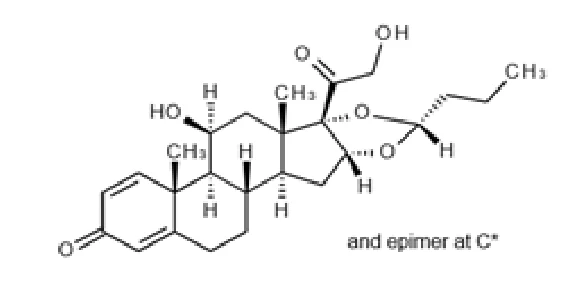
Physicochemical properties: White to off-white powder. Budesonide contains the 22R and 22S epimers in an approximate 53:47 ratio. Melts at 224 – 232°C, with decomposition.
Practically insoluble in water and in heptane, sparingly soluble in ethanol, and freely soluble in chloroform.
Proper name: glycopyrronium bromide
Chemical name:
3-[(2-cyclopent(3S*)-(±)-3-{[(2R*-(±))-2-cyclopentyl-2-hydroxy-2-phenylacetyl]oxy}-1,1-dimethylpyrrolidinium
Molecular formula and molecular mass: C19H28BrNO3; 398.3 g/mol
Structural formula:
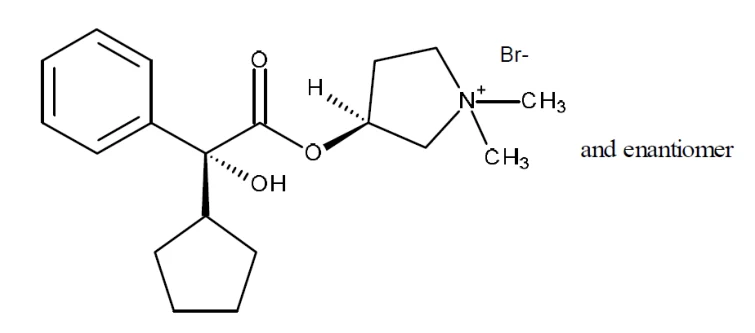
Physicochemical properties: White or almost white crystalline powder. Contains 2 chiral centers and is a racemate of the R,S and S,R diastereomers. Melts between 191 – 195°C.
Freely soluble in water, soluble in alcohol, insoluble in chloroform and insoluble in ether.
Proper name: formoterol fumarate dihydrate
Chemical name:
(R*,R*)-(±)-N-{2-hydroxy-5-[1-hydroxy-2-{[1-(4-hydroxyphenyl)-2-propanyl]amino}ethyl]phenyl}formamide (2E)-2-butenedioate (2:1), dihydrate
Molecular formula and molecular mass: (C19H24N2O4)2 · C4H4O4 · (H2O)2; 840.9 g/mol
Structural formula:
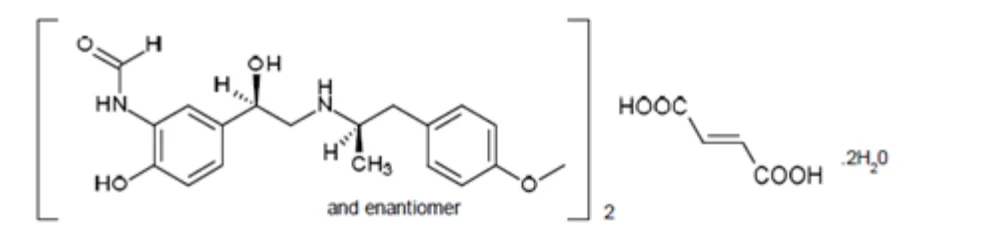
Physicochemical properties: White to off-white or slightly yellow powder. Contains 2 chiral centers and is a racemate of a 1:1 mixture of the R,R and S,S diastereomers. Melts between 138 – 140°C.
Slightly soluble in water, soluble in methanol, slightly soluble in 2-propanol and practically insoluble in acetonitrile.
14 CLINICAL TRIALS
14.1 Clinical Trials by Indication
COPD
| Table 7 - Summary of patient demographics for clinical trials in COPD | |||||||
|---|---|---|---|---|---|---|---|
| Study # | Study design | Treatment and dosage1 | Study Subjects2 Mean age (Range) Sex (%) | Primary Efficacy Endpoint | |||
| PT010005 | A Randomized, Double-Blind, Multi-Center, Parallel-Group Study to Assess the Efficacy and Safety of BGF MDI Relative to GFF MDI and BFF MDI on | BREZTRI AEROSPHERE (320/14.4/10 mcg) twice daily budesonide/glycopyrronium/ formoterol fumarate (BGF MDI) 160/14.4/10 mcg, twice daily | BREZTRI AEROSPHERE: 2137 BGF MDI: 2121 GFF MDI: 2120 BFF MDI: 2131 Total: 8509 | Rate of moderate or severe COPD exacerbations | |||
| Table 7 - Summary of patient demographics for clinical trials in COPD | |||||||
|---|---|---|---|---|---|---|---|
| Study # | Study design | Treatment and dosage1 | Study Subjects2 Mean age (Range) Sex (%) | Primary Efficacy Endpoint | |||
| COPD Exacerbations over a 52-Week Treatment Period in Subjects With Moderate to Very Severe COPD | GFF MDI 14.4/10 mcg, twice daily BFF MDI 320/10 mcg, twice daily | 65 years (40-81 years of age) Male 5081 (59.7%) and Female 3428 (40.3%) | |||||
| PT010006 | A Randomized, Double-Blind, Parallel-Group, 24-Week, Chronic-Dosing, Multi-Center Study to Assess the Efficacy and Safety of BGF MDI, GFF MDI, and BFF MDI Compared with budesonide/for moterol fumarate dihydrate dry powder for inhalation as an Active Control in Subjects with Moderate to Very Severe Chronic Obstructive Pulmonary Disease | BREZTRI AEROSPHERE (320/14.4/10 mcg), twice daily GFF MDI 14.4/10 mcg, twice daily BFF MDI 320/10 mcg, twice daily Open label budesonide/formoterol fumarate dihydrate DPI (400/12 mcg), twice daily | BREZTRI AEROSPHERE: 639 GFF MDI: 625 BFF MDI: 314 Open-label active comparator budesonide/ formoterol fumarate dihydrate DPI: 318 Total: 1896 65.5 years (40-80 years of age) Male 1350 (71.2%) and Female 546 (28.8%) | FEV1 area under the curve from 0-4 hours (FEV1 AUC0-4) and change from baseline in morning pre-dose trough FEV1 over 24 weeks | |||
Abbreviations: FEV1 = forced expiratory volume in 1 second; AUC0-4 = area under the curve from 0-4 hours; BGF = budesonide/glycopyrronium/formoterol fumarate; GFF = glycopyrronium/formoterol fumarate dihydrate; BFF = budesonide and formoterol fumarate dihydrate; MDI = metered dose inhaler; DPI = dry powder for inhalation.
1 Administered orally as two inhalations of BREZTRI AEROSPHERE; BGF MDI 80/7.2/5 mcg, GFF MDI 7.2/5 mcg, BFF MDI 160/5 mcg, or open label budesonide/formoterol fumarate dihydrate DPI 200/6 mcg, twice daily.
2 Modified intent to treat (mITT) population: defined as all subjects randomized and treated with post -randomization data obtained prior to discontinuation from the study drug.
Study demographics and trial design
The efficacy and safety of BREZTRI AEROSPHERE was evaluated in two randomised, multicentre, double-blind, parallel-group trials (PT010005 and PT010006) in patients with moderate to very severe COPD who remained symptomatic (COPD Assessment Test (CAT) score of 10 or above) while receiving 2 or more inhaled maintenance treatments for COPD for at least 6 weeks prior to screening.
PT010005 was a 52-week trial (N=8,509) that compared BREZTRI AEROSPHERE 320/14.4/10 mcg or budesonide/glycopyrronium/formoterol fumarate dihydrate (BGF MDI) 160/14.4/10 mcg twice daily with glycopyrronium/formoterol fumarate dihydrate (GFF MDI) 14.4/10 mcg, and budesonide/formoterol fumarate dihydrate (BFF MDI) 320/10 mcg twice daily. Patients had moderate to very severe COPD (post-bronchodilator FEV1 ≥25% to <65% predicted) with a history of 1 or more moderate or severe COPD exacerbation(s) in the year prior to screening. The mean age was 65 years, with 52% of patients aged 65 or over. During the screening period, the mean post-bronchodilator percent predicted FEV1 was 43%. The mean CAT score was 19.6. A total of 81% of subjects were on ICS-containing treatments prior to screening. At study entry, the most common COPD medications were ICS + LAMA + LABA (39%), ICS + LABA (31%), and LAMA + LABA (14%).
The primary endpoint was the rate of moderate or severe COPD exacerbations. Exacerbations were defined as worsening of 2 or more major symptoms (dyspnea, sputum volume, and sputum color) or worsening of any 1 major symptom together with any 1 of the following minor symptoms: cough, wheeze, sore throat, colds (nasal discharge and/or nasal congestion), and fever without other cause for at least 2 consecutive days. Exacerbations were considered to be moderate severity if treatment with systemic corticosteroids and/or antibiotics for 3 or more days was required. Exacerbations were considered to be severe if they resulted in hospitalization or death. Secondary efficacy endpoints included: time to first moderate or severe COPD exacerbation, rate of severe COPD exacerbations, rate of moderate or severe COPD exacerbations in subjects with ≥2 moderate or severe COPD exacerbations in the prior year, change from baseline in St. George’s Respiratory Questionnaire (SGRQ) total score over 24 weeks, change from baseline in average daily rescue albuterol sulfate use over 24 weeks, Transition Dyspnea Index (TDI) focal score over 24 weeks, change from baseline in Exacerbations of Chronic Pulmonary Disease Tool (EXACT) total score over 52 weeks, and time to death (all cause). Primary endpoints in the pulmonary function test (PFT) sub-study included change from baseline in trough FEV1 over 24 weeks (BREZTRI AEROSPHERE vs. GFF MDI) and FEV1 AUC0-4 over 24 weeks (BREZTRI AEROSPHERE vs. BFF MDI).
PT010006 was a 24-week trial (N=1,896) that compared BREZTRI AEROSPHERE 320/14.4/10 mcg twice daily, glycopyrronium/formoterol fumarate dihydrate (GFF MDI 14.4/10 mcg), budesonide/formoterol fumarate dihydrate (BFF MDI 320/10 mcg) and open-label active comparator budesonide/formoterol fumarate dihydrate dry powder for inhalation (DPI) 400/12 mcg, all administered twice daily.
The two primary endpoints in PT010006 were FEV1 area under the curve from 0-4 hours (FEV1 AUC0-4) (BREZTRI AEROSPHERE 320/14.4/10 mcg vs. BFF MDI 320/10 mcg) and change from baseline in morning pre-dose trough FEV1 over 24 weeks (BREZTRI AEROSPHERE 320/14.4/10 vs. GFF MDI 14.4/10 mcg). Secondary efficacy endpoints included: change from baseline in morning pre-dose trough FEV1 over 24 weeks (BREZTRI AEROSPHERE 320/14.4/10 mcg vs. BFF MDI 320/10 mcg), peak change from baseline in FEV1 within 4 hours post dosing over 24 weeks, rate of moderate or severe COPD exacerbations, TDI focal score over 24 weeks, time to CID, change from baseline in SGRQ total score over 24 weeks, change from baseline in average daily rescue Ventolin HFA use over 24 weeks, change from baseline in Evaluating Respiratory Symptoms in COPD total score (RS-Total Score) over 24 weeks, time to onset of action on Day 1.
Trial PT010006 was conducted in patients with moderate to very severe COPD (post-bronchodilator FEV1 ≥25% to <80% predicted). A prior history of exacerbations in the last 12 months was not required in PT010006 and 74% of patients did not have a history of moderate/severe exacerbations in the prior year. The mean age was 65 years, with 55% of patients aged 65 or over. During the screening period, the mean post-bronchodilator percent predicted FEV1 was 50%. The mean CAT score was 18.3 and a total of 72% of subjects were on ICS-containing treatments prior to screening. At study entry, the most common COPD medication combinations reported were ICS + LAMA + LABA (27%), ICS + LABA (38%), and LAMA + LABA (20%).
Effects on exacerbations - Study PT010005
Rate of moderate or severe exacerbations
BREZTRI AEROSPHERE 320/14.4/10 mcg statistically significantly reduced the rate of moderate or severe COPD exacerbations over 52 weeks by 24% and 13% compared with GFF MDI and BFF MDI, respectively (see Table 8).
Rate of severe exacerbations (resulting in hospitalization or death)
BREZTRI AEROSPHERE 320/14.4/10 mcg statistically significantly reduced the rate of severe COPD exacerbations over 52 weeks by 20% (HR: 0.80; 95%CI: 0.66, 0.97; p=0.0221) compared with BFF MD.
BREZTRI AEROSPHERE 320/14.4/10 mcg numerically reduced the rate of severe COPD exacerbations over 52 weeks by 16% (HR: 0.84; 95%CI: 0.69, 1.03; p=0.0944) compared with GFF MDI.
Benefits on exacerbations were observed in patients with moderate, severe and very severe COPD.
Table 8 – Moderate/Severe COPD Exacerbations, Study PT010005
BREZTRI AEROSPHERE1 320/14.4/10 mcg (N=2137) | GFF MDI1 14.4/10 mcg (N=2120) | BFF MDI1 320/10 mcg (N=2131) | |||||||
| Rate of moderate or severe exacerbations over 52 weeks | |||||||||
| Rate | 1.08 | 1.42 | 1.24 | ||||||
| Rate Ratio: BREZTRI AEROSPHERE 320/14.4/10 mcg vs. comparator | 0.76 | 0.87 | |||||||
| % reduction | 24% | 13% | |||||||
| 95% CI | (0.69, 0.83) | (0.79, 0.95) | |||||||
| p-value | p<0.0001 | p=0.0027 | |||||||
Abbreviations: CI = confidence interval
1 Administered orally as two inhalations of BREZTRI AEROSPHERE 160/7.2/5 mcg, GFF MDI 7.2/5 mcg, BFF MDI 160/5 mcg, twice daily.
Effects on exacerbations - Study PT010006
BREZTRI AEROSPHERE 320/14.4/10 mcg statistically significantly reduced the rate of moderate/severe COPD exacerbations over 24 weeks by 52% (HR: 0.48; 95%CI: 0.37, 0.64; p<0.0001) compared with GFF MDI. BREZTRI AEROSPHERE 320/14.4/10 mcg numerically reduced the rate of moderate/severe COPD exacerbations by 18% compared with BFF MDI.
Effects on lung function – Study PT010005 and Study PT010006
In PT010005 and PT010006, BREZTRI AEROSPHERE provided statistically significant improvements in lung function (FEV1) compared with GFF MDI and BFF MDI (see Table 9 and Table 10 and Figure 1 and Figure 2). The improvements in lung function were sustained over 24 weeks in both studies and over 52-weeks in Study PT010005.
In both studies, there were consistent improvements in lung function in subgroups based on age, sex, degree of airflow limitation (moderate, severe and very severe), and previous inhaled corticosteroid use.
Table 9 – Lung function analyses, Study PT010005
| BREZTRI AEROSPHERE1 320/14.4/10 mcg (N=747) | GFF MDI1 14.4/10 mcg (N=779) | BFF MDI1 320/10 mcg (N=755) | Treatment difference 95% CI | ||||||||
| BREZTRI AEROSPHERE vs. GFF MDI | BREZTRI AEROSPHERE vs. BFF MDI | ||||||||||
| Trough FEV1 (mL) over 24 weeks, LS mean change from baseline (SE) | 129 (6.5) | 86 (6.6) | 53 (6.5) | 43 mL (25, 60) p<0.0001* | 76 mL (58, 94) p<0.0001 | ||||||
| FEV1 AUC0-4 over 24 weeks; LS mean change from baseline (SE) | 294 (6.3) | 245 (6.3) | 194 (6.3) | 49 mL (31, 66) p<0.0001 | 99 mL (82, 117) p<0.0001* | ||||||
1 Administered orally as two inhalations of BREZTRI AEROSPHERE 160/7.2/5 mcg, GFF MDI 7.2/5 mcg, BFF MDI 160/5 mcg, twice daily.
*Statistically significant
Figure 1: Adjusted Mean Change from Baseline in Morning Pre-dose Trough
FEV1 (L) ± SE Over Time – Pulmonary Function Test Sub-study (modified Intent-to-Treat Population)
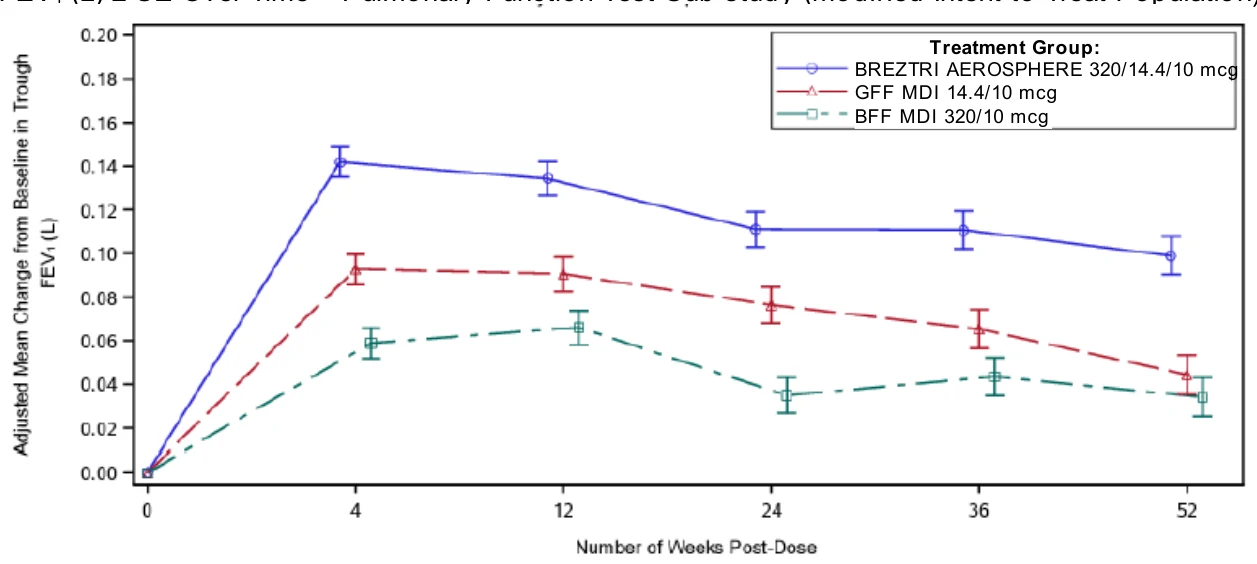
Abbreviations: FEV1 = forced expiratory volume in 1 second; GFF = glycopyrronium and formoterol fumarate dihydrate; BFF = budesonide and formoterol fumarate dihydrate; MDI = metered dose inhaler.
1 Administered as two inhalations of BREZTRI AEROSPHERE 160/7.2/5 mcg, GFF MDI 7.2/5 mcg, BFF MDI 160/5 mcg, twice daily.
Table 10 – Lung function analyses, Study PT010006
| BREZTRI AEROSPHERE1 320/14.4/10 mcg (N=639) | GFF MDI1 14.4/10 mcg (N=625) | BFF MDI1 320/10 mcg (N=314) | Treatment difference 95% CI | |||||||
| BREZTRI AEROSPHERE vs. GFF MDI | BREZTRI AEROSPHERE vs. BFF MDI | |||||||||
| Trough FEV1 (mL) over 24 weeks, LS mean change from baseline (SE) | 147 (6.5) | 125 (6.6) | 73 (9.2) | 22 mL (4, 39) p=0.0139* | 74 mL (52, 95) p<0.0001* | |||||
| FEV1 AUC0-4 over 24 weeks; LS mean change from baseline (SE) | 305 (8.4) | 288 (8.5) | 201 (11.7) | 16 mL (-6, 38) p=0.1448 | 104 mL (77, 131) p<0.0001* | |||||
1 Administered orally as two inhalations of BREZTRI AEROSPHERE 160/7.2/5 mcg, GFF MDI 7.2/5 mcg, BFF MDI 160/5 mcg, twice daily.
*Statistically significant
BREZTRI AEROSPHERE 320/14.4/10 mcg
GFF MDI 14.4/10 mcg
BFF MDI 320/10 mcg
Treatment Group:
Figure 2: Adjusted Mean Change from Baseline in Morning Pre-dose Trough
FEV1 (L) ± SE Over Time (modified Intent-to-Treat Population)
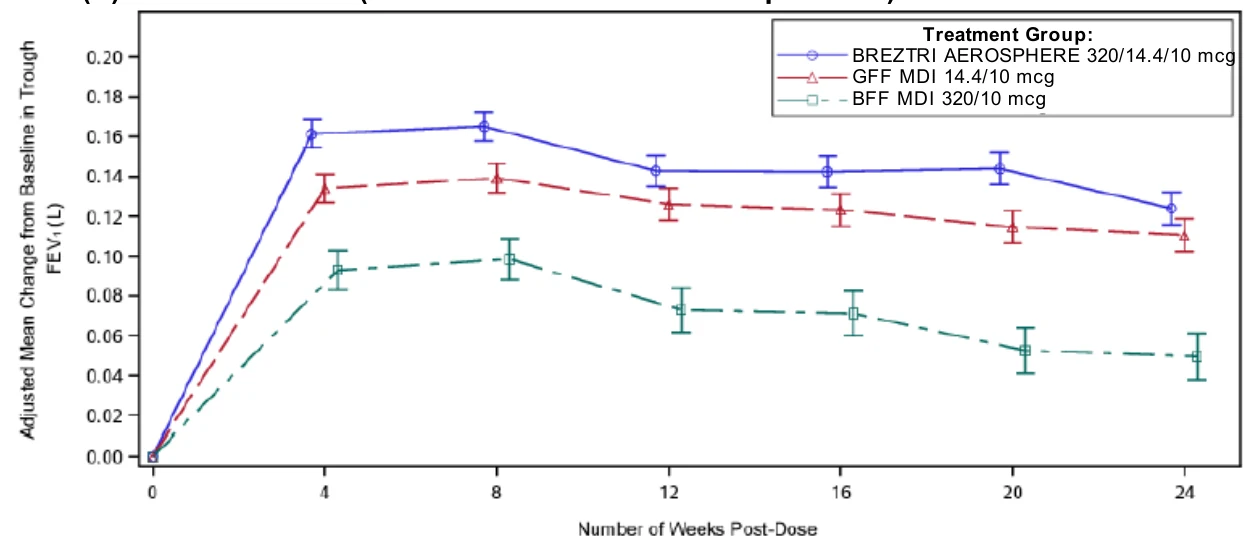
Abbreviations: FEV1 = forced expiratory volume in 1 second; GFF = glycopyrronium and formoterol fumarate dihydrate; BFF = budesonide and formoterol fumarate dihydrate; MDI = metered dose inhaler.
1 Administered as two inhalations of BREZTRI AEROSPHERE 160/7.2/5 mcg, GFF MDI 7.2/5 mcg, BFF MDI 160/5 mcg, twice daily.
Effects on symptoms and quality of life
In study PT010005, BREZTRI AEROSPHERE 320/14.4/10 mcg showed statistically significant improvements over 24 weeks in breathlessness (assessed by TDI) and statistically significant improvements in disease-specific health status (as assessed by SGRQ) compared to GFF MDI and BFF MDI.
In study PT010006, BREZTRI AEROSPHERE 320/14.4/10 mcg showed numerical improvements in breathlessness (assessed by TDI) and numerical improvements in disease-specific health status (as assessed by SGRQ) compared to GFF MDI and BFF MDI.
In study PT010005, a SGRQ responder analysis (responder defined as a reduction in SGRQ versus baseline of greater than or equal to 4) showed that there was a greater percentage of responders over 24 weeks with BREZTRI AEROSPHERE 320/14.4/10 mcg (52%) versus GFF MDI (42%) and BFF MDI (45%).
In study PT010006, a SGRQ responder analysis showed that there was a greater percentage of responders over 24 weeks with BREZTRI AEROSPHERE 320/14.4/10 mcg (47%) versus GFF MDI (41%) and BFF MDI (40%).
15 MICROBIOLOGY
No microbiological information is required for this drug product.
16 NON-CLINICAL TOXICOLOGY
General Toxicology
Non-clinical data reveal no specific hazard for humans based on conventional studies of safety pharmacology, repeated dose toxicity, genotoxicity and carcinogenic potential.
GFF MDI 14.4/10 mcg
BFF MDI 320/10 mcg
BREZTRI AEROSPHERE 320/14.4/10 mcg
Treatment Group:
The toxicity observed in animal studies with budesonide, glycopyrronium and formoterol was similar, whether they were given in combination or separately. The effects were associated with pharmacological actions or minor adaptive responses commonly observed in inhalation toxicology studies and dose dependent.
No genotoxicity, carcinogenicity or reproductive toxicology studies have been conducted with BREZTRI AEROSPHERE (budesonide/glycopyrronium/formoterol fumarate dihydrate).
BREZTRI AEROSPHERE contains the excipients 1,2-distearoyl-sn-glycero-3-phosphocholine (DSPC) and calcium chloride as part of the spray-dried porous particle technology in the pressurized liquid propellant HFA-134a. The safety of HFA-134a has been fully evaluated in preclinical studies. DSPC and calcium chloride have a long history of safe use in man and are approved excipients worldwide. Furthermore, inhaled toxicology studies carried out with BREZTRI AEROSPHERE have shown no evidence of any toxicity attributable to the excipients.
Carcinogenicity/Mutagenicity
Budesonide: budesonide demonstrated no tumourigenic potential in mice. In rats, an increased incidence of hepatocellular tumours was observed, considered to be a class-effect in rats from long-term exposure to corticosteroids.
Glycopyrronium: no evidence of carcinogenicity was seen in 2-year studies in rats and mice.
Formoterol: a slight increase in the incidence of uterine leiomyomas has been observed in rats and mice treated with formoterol; an effect which is considered to be a class-effect in rodents after long-term exposure to high doses of β2-adrenoreceptor agonists.
Reproductive and Developmental Toxicity
Budesonide: in animal reproduction studies, glucocorticosteroids such as budesonide have been shown to induce malformations (cleft palate, skeletal malformations). However, these animal experimental results are not relevant in humans at the recommended doses.
Glycopyrronium: Animal reproduction studies with glycopyrronium have shown reduced rat and rabbit foetal weights, and low body weight gain of rat offspring before weaning, only at very high doses compared to clinical use.
Formoterol: Animal reproduction studies with formoterol have shown a slightly reduced fertility in male rats at high systemic exposure and implantation losses, as well as decreased early postnatal survival and birth weight at considerably higher systemic exposures than those reached during clinical use.
17 SUPPORTING PRODUCT MONOGRAPHS
- 1. Glycopyrronium (as bromide) / Formoterol Fumarate Dihydrate Pressurized Inhalation Aerosol, 8.3 mcg / 5.8 mcg per metered actuation, Control number 252007, Product Monograph, AstraZeneca Canada Inc. (June 2, 2021).
- 2. OXEZE® TURBUHALER® Dry Powder for Oral Inhalation, 6 mcg/dose and 12 mcg/dose, Control number 213703, Product Monograph, AstraZeneca Canada Inc. (April 23, 2018).
- 3.
SYMBICORT® TURBUHALER® Dry Powder for Oral Inhalation, 100 mcg budesonide and 6 mcg formoterol fumarate dihydrate, 200 mcg budesonide and 6 mcg formoterol fumarate
- dihydrate, 400 mcg budesonide and 12 mcg formoterol fumarate dihydrate, Control number 244507, Product Monograph, AstraZeneca Canada Inc. (February 8, 2021).