


Product Monograph - Combivent Respimat
Recent Major Label Changes
| 7 Warnings and Precautions, Neurologic | 07/2026 |
|---|---|
| 7 Warnings and Precautions, Paradoxical Bronchospasm | 07/2026 |
| 7 Warnings and Precautions, 7.1.1 Pregnancy | 07/2026 |
| 7 Warnings and Precautions, 7.1.4 Geriatrics | 07/2026 |
Recent Major Label Changes ................................................................................................... 2
Part 1: Healthcare Professional Information ........................................................................... 4
- 1.
Indications .................................................................................................................. 4
1.1 Pediatrics ..............................................................................................................4
1.2 Geriatrics ..............................................................................................................4
- 2. Contraindications ........................................................................................................ 4
- 4.
Dosage and Administration ......................................................................................... 4
4.1 Dosing Considerations ..........................................................................................4
4.2 Recommended Dose and Dosage Adjustment .....................................................4
- 5. Overdose..................................................................................................................... 5
- 6. Dosage Forms, Strengths, Composition and Packaging ................................................ 5
- 7.
Warnings And Precautions .......................................................................................... 6
General .............................................................................................................................6
Carcinogenesis and Genotoxicity .....................................................................................7
Cardiovascular ..................................................................................................................7
Driving and Operating Machinery ....................................................................................8
Endocrine and Metabolism ..............................................................................................8
Gastrointestinal ................................................................................................................8
Immune ............................................................................................................................8
Monitoring and Laboratory Tests .....................................................................................9
Neurologic ........................................................................................................................9
Ophthalmologic ................................................................................................................9
Renal ................................................................................................................................9
Respiratory .......................................................................................................................9
7.1 Special Populations .............................................................................................10
7.1.1 Pregnancy .......................................................................................................10
7.1.2 Breast-feeding ................................................................................................10
7.1.3 Pediatrics ........................................................................................................11
7.1.4 Geriatrics ........................................................................................................11
- 8.
Adverse Reactions ..................................................................................................... 11
8.1 Adverse Reaction Overview ................................................................................11
8.2 Clinical Trial Adverse Reactions ..........................................................................12
8.3 Less Common Clinical Trial Adverse Reactions ...................................................13
8.5 Post-Market Adverse Reactions .........................................................................14
- 9.
Drug Interactions ...................................................................................................... 15
9.2 Drug Interactions Overview ................................................................................15
- 10.
Clinical Pharmacology ............................................................................................... 16
10.1 Mechanism of Action ..........................................................................................16
10.2 Pharmacodynamics ............................................................................................16
10.3 Pharmacokinetics ...............................................................................................18
- 11. Storage, Stability and Disposal .................................................................................. 21
- 12. Special Handling Instructions .................................................................................... 22
Part 2: Scientific Information ................................................................................................ 23
- 13. Pharmaceutical Information ...................................................................................... 23
- 14.
Clinical Trials ............................................................................................................. 24
14.1 Clinical Trials by Indication .................................................................................24
- 16. Non-Clinical Toxicology ............................................................................................. 26
Patient Medication Information ........................................................................................... 35
INTRODUCTION .................................................................................................................... 41
HOW TO STORE MY COMBIVENT RESPIMAT INHALER ........................................................... 41
HOW TO CARE FOR YOUR COMBIVENT RESPIMAT ................................................................ 41
WHEN TO GET A NEW COMBIVENT RESPIMAT ...................................................................... 41
Part 1: Healthcare Professional Information
1. Indications
COMBIVENT RESPIMAT (ipratropium bromide and salbutamol sulfate) inhalation solution is indicated for:
- treatment of bronchospasm associated with chronic obstructive pulmonary disease (COPD).
1.1 Pediatrics
The efficacy and safety in children and adolescents under 18 years has not been established.
COMBIVENT RESPIMAT is not indicated in this patient population.
1.2 Geriatrics
Elderly patients can use COMBIVENT RESPIMAT at the recommended dose.
2. Contraindications
COMBIVENT RESPIMAT is contraindicated in:
- Patients with a history of hypersensitivity to any of its components or to atropine or its derivatives. For a complete listing, see the 6 DOSAGE FORMS, STRENGTHS, COMPOSITION AND PACKAGING section of the Product Monograph.
- Patients with cardiac tachyarrhythmias, and hypertrophic obstructive cardiomyopathy.
4. Dosage and Administration
4.1 Dosing Considerations
COMBIVENT RESPIMAT dosage should be individualized, and patient response should be monitored to determine the requirement for more than a single bronchodilator by the prescribing physician on an ongoing basis. Patients should be advised to consult a doctor or the nearest hospital immediately in the case of acute or rapidly worsening dyspnoea if additional actuations of COMBIVENT RESPIMAT do not produce an adequate improvement.
If higher than recommended doses of COMBIVENT RESPIMAT are required to control symptoms, the patient’s therapy plan should be reviewed.
Counselling on smoking cessation should be the first step in treating patients with chronic bronchitis who smoke. Smoking cessation produces symptomatic benefits and has been shown to confer a survival advantage by slowing or stopping the progression of chronic bronchitis and emphysema.
4.2 Recommended Dose and Dosage Adjustment
The recommended dosage of COMBIVENT RESPIMAT inhalation solution in adults is one inhalation four times a day. A spacer device is not required.
Patients may take additional inhalations as required; however, the total number of inhalations should not exceed six in 24 hours. Safety and efficacy of additional doses of COMBIVENT RESPIMAT beyond six inhalations/24 hours have not been studied.
Safety and efficacy of extra doses of ipratropium or salbutamol alone in addition to the recommended doses of COMBIVENT RESPIMAT have not been studied.
Each actuation from the COMBIVENT RESPIMAT inhaler delivers 20 mcg of ipratropium bromide and 100 mcg of salbutamol base (equivalent to 120 mcg salbutamol sulfate) from the mouthpiece.
To assist patients with proper use of COMBIVENT RESPIMAT see INSTRUCTIONS FOR USE.
5. Overdose
Symptoms and Signs
The effects of overdosage are expected to be related primarily to salbutamol because acute overdosage with ipratropium bromide is unlikely since ipratropium bromide is not well absorbed systemically after aerosol or oral administration. Expected symptoms of overdosage with ipratropium bromide (such as dry mouth, visual accommodation disorders) are mild and transient in nature. However, should signs of serious anticholinergic toxicity appear, cholinesterase inhibitors may be considered.
The expected symptoms with salbutamol overdosage are those of excessive beta-adrenergic stimulation, such as: tachycardia, palpitations, tremor, cardiac arrhythmia, hypokalemia, hypertension, hypotension, widening of pulse pressure, anginal pain, flushing and, in extreme cases, sudden death.
Lactic acidosis has been reported in association with high therapeutic doses as well as overdoses of short-acting beta-agonist therapy, therefore monitoring for elevated serum lactate and consequent metabolic acidosis (particularly if there is persistence or worsening of tachypnea despite resolution of other signs of bronchospasm such as wheezing) may be indicated in the setting of overdose.
Treatment: Treatment with COMBIVENT RESPIMAT should be discontinued. Acid -base and electrolyte monitoring should be considered. Supportive and symptomatic treatment is indicated. Dialysis is not an appropriate treatment. The judicious use of a cardioselective beta-blocker may be considered, taking into account a possible risk of bronchospasm.
For the most recent information in the management of a suspected drug overdose, contact your regional poison control centre or Health Canada’s toll-free number, 1-844 POISON-X (1-844-764-7669).
6. Dosage Forms, Strengths, Composition and Packaging
Table 1 – Dosage Forms, Strengths, Composition and Packaging
COMBIVENT RESPIMAT is supplied in a carton containing one COMBIVENT RESPIMAT cartridge and one COMBIVENT RESPIMAT inhaler.
The COMBIVENT RESPIMAT cartridge is an aluminum cylinder with a tamper protection seal on the cap. The COMBIVENT RESPIMAT cartridge is only intended for use with the COMBIVENT RESPIMAT inhaler.
The COMBIVENT aqueous solution is contained in a specifically designed plastic container crimped inside an aluminum cartridge.
The COMBIVENT RESPIMAT inhaler is a propellant free hand-held, pocket-sized, multi-dose, oral inhalation device. The COMBIVENT RESPIMAT inhaler is a cylindrical shaped plastic inhalation device with a gray colored body and a clear base. The clear base is removed to insert the cartridge. The inhaler contains a dose indicator and a locking mechanism that engages after the declared number of doses has been delivered. The orange-colored cap and the written information on the label of the grey inhaler body indicate that it is labeled for use with the COMBIVENT RESPIMAT cartridge.
The COMBIVENT RESPIMAT cartridge when used with the COMBIVENT RESPIMAT inhaler, is designed to deliver at least 120 after preparation for use; which is equivalent to 30 days medication when used as one inhalation four times a day. Each actuation from the COMBIVENT RESPIMAT inhaler delivers 20 mcg ipratropium bromide (monohydrate) and 100 mcg salbutamol (equivalent to 120 mcg salbutamol sulfate) from the mouthpiece.
As with all inhaled drugs, the actual amount of drug delivered to the lung may depend on patient factors, such as the coordination between the actuation of the inhaler and inspiration through the delivery system. The duration of inspiration should be at least as long as the spray duration (1.5 seconds).
7. Warnings And Precautions
General
Systemic Effects
| Route of Administration | Dosage Form / Strength/Composition | Non-medicinal Ingredients |
| Oral Inhalation | Inhalation Solution / Each actuation delivers 20 mcg ipratropium bromide (monohydrate) and 100 mcg salbutamol (as salbutamol sulfate) from the mouth piece. | benzalkonium chloride, disodium edetate, hydrochloric acid and purified water |
In the following conditions COMBIVENT RESPIMAT should only be used after careful risk/benefit assessment: uncontrolled diabetes mellitus, recent myocardial infarction, severe organic heart or vascular disorders, hyperthyroidism, pheochromocytoma, risk of narrow-angle glaucoma, prostatic hypertrophy, urinary retention. Care should be taken with patients suffering from coronary insufficiency, arrhythmias and hypertension, convulsive disorders and in patients who are unusually responsive to sympathomimetic amines. Fatalities have been reported following excessive use of inhaled sympathomimetic amines, the exact cause of which is unknown.
Excessive Use and Use with other Sympaticomimetics or Muscarinic Antagonists
As with other inhaled bronchodilators, COMBIVENT RESPIMAT should not be used more often or at higher doses than recommended. Concomitant use of COMBIVENT RESPIMAT with other sympathomimetic agents is not recommended since such combined use may lead to deleterious cardiovascular effects. COMBIVENT RESPIMAT should not be administered concomitantly with other medicines containing a muscarinic antagonist, as this has not been studied, and an overdose may result (see 9 DRUG INTERACTIONS ).
Anticholinergic Effects
Like other anticholinergic drugs, COMBIVENT RESPIMAT should be used with caution in patients with narrow-angle glaucoma or urinary retention.
- Worsening of Narrow-Angle Glaucoma:
COMBIVENT RESPIMAT should be used with caution in patients with narrow-angle glaucoma.
Care should be taken to avoid spraying the mist into the eyes. There have been isolated cases of ocular complications (ie., mydriasis, increased intraocular pressure, narrow angle closure glaucoma, eye pain) when aerosolised ipratropium bromide either alone or in combination with an adrenergic beta2-agonist solution has come in contact with the eyes. Prescribers and patients should be alert for signs and symptoms of acute narrow-angle glaucoma (e.g., eye pain or discomfort, blurred vision, visual halos or colored images in association with red eyes from conjunctival congestion and corneal edema). Instruct patients to consult a physician immediately should any of these signs or symptoms develop. Miotic drops alone are not considered to be effective treatment.
- Worsening of Urinary Retention:
COMBIVENT RESPIMAT should be used with caution in patients with urinary retention. Prescribers and patients should be alert for signs and symptoms of prostatic hyperplasia or bladder-neck obstruction (e.g., difficulty passing urine, painful urination). Instruct patients to consult a physician immediately should any of these signs or symptoms develop.
Carcinogenesis and Genotoxicity
Animal data only (see 16 NON-CLINICAL TOXICOLOGY Section).
Cardiovascular
Special care and supervision are required in patients with idiopathic hypertrophic subvalvular aortic stenosis, in whom an increase in the pressure gradient between the left ventricle and the aorta may occur, causing increased strain on the left ventricle.
Cardiovascular effects in some patients, as measured by pulse rate, blood pressure, and/or symptoms may be seen with sympathomimetic drugs, including COMBIVENT RESPIMAT. There is some evidence from post-marketing data and published literature of rare occurrences of myocardial ischaemia associated with salbutamol, one of the components of COMBIVENT RESPIMAT. In addition, beta-adrenergic agents like salbutamol, have been reported to produce electrocardiogram (ECG) changes, such as flattening of the T wave, prolongation of the QTc interval, and ST segment depression. Therefore, COMBIVENT RESPIMAT should be used with caution in patients with cardiovascular disorders; especially coronary insufficiency, cardiac arrhythmias, and hypertension. Patients with underlying severe heart disease (e.g.ischaemic heart disease, arrhythmia or severe heart failure) who are receiving COMBIVENT RESPIMAT for respiratory disease should be warned to seek immediate medical advice if they experience chest pain or other symptoms of worsening heart disease. Attention should be paid to assessment of symptoms as dyspnoea and chest pain, as they may be of either respiratory or cardiac origin.
Driving and Operating Machinery
No studies on the effects on the ability to drive and use machines have been performed.
However, patients should be advised that they may experience undesirable effects such as dizziness, accommodation disorder, mydriasis and blurred vision during treatment with COMBIVENT RESPIMAT. Therefore, caution should be recommended when driving a car or operating machinery. If patients experience the above mentioned side effects they should avoid potentially hazardous tasks such as driving or operating machinery.
Endocrine and Metabolism
In common with other beta-adrenergic agents, salbutamol can induce reversible metabolic changes; these are more pronounced during infusions of the drug and include hyperglycemia and hypokalemia.
Potentially serious hypokalemia has been reported and can be aggravated by hypoxia. Hypokalemia will increase the susceptibility of digitalis-treated patients to cardiac arrhythmias. It is recommended that serum potassium levels be monitored in such situations.
Large doses of intravenous salbutamol have also been reported to aggravate pre-existing diabetes mellitus and may precipitate ketoacidosis.
The relevance of these observations to the use of COMBIVENT RESPIMAT is unknown.
Care should be taken with patients with hyperthyroidism.
Gastrointestinal
Patients with cystic fibrosis may be more prone to gastrointestinal motility disturbances.
Immune
Hypersensitivity reactions including urticaria, angioedema, rash, bronchospasm, anaphylaxis, and oropharyngeal edema may occur after administration of ipratropium bromide or salbutamol sulfate. In clinical trials and post-marketing experience with ipratropium containing products, hypersensitivity reactions such as skin rash, pruritus, angioedema of tongue, lips and face, urticaria (including giant urticaria), laryngospasm and anaphylactic reactions have been reported (see 8 ADVERSE REACTIONS). If such a reaction occurs, therapy with COMBIVENT RESPIMAT should be stopped at once and alternative treatment should be considered (see 2 CONTRAINDICATIONS).
Monitoring and Laboratory Tests
The use of COMBIVENT RESPIMAT may lead to positive results with regards to salbutamol in tests for nonmedical substance abuse, e.g. in the context of athletic performance enhancement (doping).
Neurologic
Care should be taken with patients with convulsive disorders.
Ophthalmologic
Worsening of Narrow-Angle Glaucoma (see 7 WARNINGS AND PRECAUTIONS, Anticholinergic Effects).
Renal
Worsening of Urinary Retention (see 7 WARNINGS AND PRECAUTIONS, Anticholinergic Effects).
Respiratory
Benzalkonium chloride
This medicine contains 0.0014 mg benzalkonium chloride in each actuation.
Benzalkonium chloride may cause wheezing and breathing difficulties (bronchospasm). Patients with asthma are at an increased risk for these adverse events.
Paradoxical Bronchospasm
Severe life threatening paradoxical bronchospasm has been reported in patients receiving beta2-agonists. If it occurs, therapy with COMBIVENT RESPIMAT should be discontinued immediately and alternative therapy instituted (see 8.1 Adverse Reaction Overview).
Dyspnea
The patient should be instructed to consult a doctor immediately in the event of acute, rapidly worsening dyspnea. In addition, the patient should be warned to seek medical advice should a reduced response becomes apparent.
7.1 Special Populations
7.1.1 Pregnancy
The safety of COMBIVENT RESPIMAT in pregnancy has not been established. There are no adequate and well-controlled studies of COMBIVENT RESPIMAT in pregnant women. Animal reproduction studies have not been conducted with COMBIVENT RESPIMAT.
Salbutamol sulfate, a component of COMBIVENT RESPIMAT, has been shown to be teratogenic in mice and rabbits when inhalation Maximum Recommended Human Daily Dose (MRHDD) was exceeded (see 16 NON-CLINICAL TOXICOLOGY section).
For ipratropium bromide, nonclinical studies have shown no embryotoxic or teratogenic effects following inhalation or intranasal application at doses considerably higher than those recommended in man.
Because animal reproduction studies are not always predictive of human response, COMBIVENT RESPIMAT should be used during pregnancy only if the potential benefit justifies the potential risk to the unborn child.
During worldwide marketing experience, rare cases of various congenital anomalies, including cleft palate and limb defects have been reported in the offspring of patients being treated with salbutamol. Some of the mothers were taking multiple medications during their pregnancies. Because no consistent pattern of defects can be discerned, and baseline rate for congenital anomalies is 2-3%, a relationship with salbutamol use cannot be established.
Labour and Delivery
Although there have been no reports concerning the use of inhaled salbutamol during labour and delivery, intravenously administered salbutamol given at high doses may inhibit uterine contractions. While this effect is extremely unlikely as a consequence of using inhaled formulations, it should be kept in mind. Oral salbutamol has been shown to delay preterm labour in some reports but there are no well-controlled studies which demonstrate that it will stop preterm labour or prevent labour at term. When given to pregnant patients for relief of bronchospasm, cautious use of COMBIVENT RESPIMAT is required to avoid interference with uterine contractility.
7.1.2 Breast-feeding
Since salbutamol is probably excreted in breast milk and because of the potential for tumorigenicity shown for salbutamol in animal studies, a decision should be made whether to discontinue nursing or to discontinue the drug, taking into account the importance of the drug to the mother. It is not known whether salbutamol in breast milk has a harmful effect on the neonate.
No specific studies have been conducted on the excretion of ipratropium bromide in breast milk. It is considered unlikely that ipratropium bromide would reach the infant to an important extent when administered by inhalation. However, caution should be exercised when COMBIVENT RESPIMAT is administered to nursing mothers. The benefits of COMBIVENT RESPIMAT use during lactation should therefore be weighed against possible effects on the infant.
7.1.3 Pediatrics
The efficacy and safety in children and adolescents under 18 years has not been established. COMBIVENT RESPIMAT is not indicated for pediatric patients.
7.1.4 Geriatrics
In the 12-week trial in COPD, 48% of COMBIVENT RESPIMAT clinical trial patients were 65 years of age or over. Overall, these patients had a higher total adverse event frequency (51%) compared to patients who were less than 65 years old (44%). This trend was numerically notable in the cardiac and lower respiratory systems.
As with other beta2-agonists, special caution should be observed when using COMBIVENT RESPIMAT in elderly patients who have concomitant cardiovascular disease that could be adversely affected by this class of drug.
8. Adverse Reactions
8.1 Adverse Reaction Overview
COMBIVENT RESPIMAT contains salbutamol, a beta-adrenergic agonist, and ipratropium bromide, an anticholinergic.
Use of salbutamol may be associated with:
- Paradoxical bronchospasm (see 7 WARNINGS AND PRECAUTIONS, Respiratory)
- Cardiovascular effects such as peripheral vasodilation and a compensatory small increase in heart rate (see 7 WARNINGS AND PRECAUTIONS, General and Cardiovascular)
- Hypersensitivity reactions, including angioedema, urticaria, bronchospasm, hypotension, rash, oropharyngeal oedema, anaphylaxis (see 2 CONTRAINDICATIONS and 7 WARNINGS AND PRECAUTIONS, Immune)
- Hypokalemia (see 7 WARNINGS AND PRECAUTIONS, Endocrine and Metabolism)
In addition, salbutamol, like other sympathomimetic agents, can cause adverse effects such as drowsiness, flushing, restlessness, irritability, chest discomfort, difficulty in micturition, hypertension, angina, vomiting, vertigo, central nervous system stimulation, unusual taste and drying or irritation of the oropharynx, headache, palpitations, transient muscle cramps, insomnia, nausea, weakness and dizziness.
Other adverse reactions associated with salbutamol are nervousness and tremor. In some patients inhaled salbutamol may cause a fine tremor of skeletal muscle, particularly in the hands. This effect is common to all beta2-adrenergic agonists. Adaptation occurs during the first few days of dosing and the tremor usually disappears as treatment continues.
Use of ipratropium bromide may result in:
- Ocular effects (see 7 WARNINGS AND PRECAUTIONS, General and Ophthalmologic)
- Urinary retention (see 7 WARNINGS AND PRECAUTIONS, Anticholinergic Effects)
8.2 Clinical Trial Adverse Reactions
Clinical trials are conducted under very specific conditions. Therefore, the frequencies of adverse reactions observed in the clinical trials may not reflect frequencies observed in clinical practice and should not be compared to frequencies reported in clinical trials of another drug.
The most frequent side effects reported in clinical trials were headache, throat irritation, cough, dry mouth, gastro-intestinal motility disorders (including constipation, diarrhoea and vomiting), nausea, and dizziness.
COMBIVENT RESPIMAT 12-Week Clinical Trials
The safety data described in Table 2 below are derived from one 12-week, randomized, multi-center, double-blind, double-dummy, parallel-group trial that compared COMBIVENT RESPIMAT (20/100 mcg), CFC-propelled COMBIVENT Inhalation Aerosol (36/206 mcg), and ipratropium bromide delivered by the RESPIMAT inhaler (20 mcg) administered four times a day in 1460 adult COPD patients (955 males and 505 females) 40 years of age and older. Of these patients, 486 were treated with COMBIVENT RESPIMAT. The COMBIVENT RESPIMAT group was composed of mostly Caucasian (89%) patients with a mean age of 64 years, and a mean percent predicted FEV1 at screening of 42%. Patients with narrow-angle glaucoma, symptomatic prostatic hypertrophy or bladder-neck obstruction were excluded from the trial.
Table 2 shows all adverse reactions that occurred with a frequency of ≥2% in the COMBIVENT RESPIMAT treatment group in the 12-week COPD trial. The frequency of the corresponding adverse reactions in the CFC-propelled COMBIVENT inhalation aerosol and ipratropium bromide delivered by the RESPIMAT inhaler groups is included for comparison. The rates are derived from all reported adverse reactions of that type not present at baseline, whether considered drug-related or not by the clinical investigator.
Table 2: Adverse Reactions in ≥ 2% of Patients in the COMBIVENT RESPIMAT Group in a 12-Week COPD Clinical Trial
| Body System (Event) | 12-Week Trial Ipratropium-Controlled Trials | |||||||
|---|---|---|---|---|---|---|---|---|
COMBIVENT RESPIMAT (20/100 mcg) n=486 | COMBIVENT Inhalation Aerosol (36/206 mcg) n=491 | Ipratropium RESPIMAT (20 mcg) n=483 | ||||||
| Patients with any adverse reaction | 46 | 52 | 45 | |||||
Respiratory, thoracic and mediastinal disorders: Cough Dyspnea | 3 2 | 2 2 | 2 3 | |||||
Nervous system disorders: Headache | 3 | 2 | 3 | |||||
Infections and infestations Bronchitis | 3 | 3 | 1 | |||||
Nasopharyngitis Upper Respiratory infection | 4 3 | 3 4 | 4 3 | |||||
A separate 12-week trial evaluated a higher than approved dose of COMBIVENT RESPIMAT in 1118 COPD patients. Patients were randomized to COMBIVENT RESPIMAT (40/200 mcg) (n=345), CFC-propelled COMBIVENT Inhalation Aerosol (36/206 mcg) (n=180), ipratropium delivered by the RESPIMAT (40 mcg) (n=252) or placebo (n=341). The overall incidence and nature of adverse reactions observed were similar to the adverse reactions seen with COMBIVENT RESPIMAT 20/100 mcg.
COMBIVENT RESPIMAT Long Term (48-week) Safety Trial
Long term chronic use safety data for COMBIVENT RESPIMAT were obtained from one 48-week, randomized, multi-center, open-label, parallel-group trial that compared COMBIVENT RESPIMAT (20/100 mcg), CFC-propelled COMBIVENT Inhalation Aerosol (36/206 mcg) and the free combination of ipratropium bromide (34 mcg) and salbutamol (180 mcg) HFA-propelled inhalation aerosols administered 4 times a day in 465 adult COPD patients (273 males and 192 females) 40 years of age and older. Of these patients, 157 were treated with COMBIVENT RESPIMAT. The COMBIVENT RESPIMAT group was composed of mostly Caucasian (94%) patients with a mean age of 63 years, and a mean percent predicted FEV1 at screening of 47%. Most of the AEs were attributed to respiratory disorders and infections, which is expected in this patient population. The number of patients who discontinued the study due to adverse events was lowest in the COMBIVENT RESPIMAT 20/100 mcg group (7%), followed by the Combivent CFC 36/206 mcg group (10%) and the free combination group (12%). Overall the safety profile was similar for all treatment groups.
CFC-Propelled COMBIVENT Inhalation Aerosol 12-week Clinical Trial
In addition to the adverse reactions reported in the controlled clinical trial with COMBIVENT RESPIMAT, adverse reaction information concerning CFC-propelled COMBIVENT Inhalation Aerosol is derived from two 12-week controlled clinical trials (N=358 for CFC-propelled COMBIVENT Inhalation Aerosol). Adverse reactions reported in ≥2% of patients in the CFC-propelled COMBIVENT Inhalation Aerosol treatment group include: bronchitis, upper respiratory tract infection, headache, dyspnea, cough, pain, respiratory disorder, sinusitis, pharyngitis and nausea.
8.3 Less Common Clinical Trial Adverse Reactions
COMBIVENT RESPIMAT 12-Week Clinical Trials
Adverse reactions that occurred in <2 % in the COMBIVENT RESPIMAT (20/100 mcg) group observed in the 12-week clinical trials include:
Cardiac disorders: palpitations and tachycardia
Eye disorders: eye pain
Gastrointestinal disorders: diarrhea, nausea, dry mouth, constipation and vomiting
General disorders and administration site conditions: asthenia, influenza-like illness, and chest discomfort
Metabolism and nutritional disorders: hypokalemia
Nervous system disorders: dizziness and tremor
Musculoskeletal and connective tissue disorder: muscle spasms and myalgia
Respiratory, thoracic and mediastinal disorders: pharyngolaryngeal pain and wheezing
Skin and subcutaneous tissue disorders: pruritus and rash
Vascular disorders: hypertension
CFC-Propelled COMBIVENT Inhalation Aerosol 12-week Clinical Trial
Adverse reactions reported in < 2% of patients in the CFC-propelled COMBIVENT Inhalation Aerosol treatment group include: edema, fatigue, hypertension, dizziness, nervousness, tremor, dysphonia, insomnia, diarrhea, dry mouth, dyspepsia, vomiting, arrhythmia, palpitation, tachycardia, arthralgia, angina, increased sputum, taste perversion, urinary tract infection, dysuria, dry throat and bronchospasm.
8.5 Post-Market Adverse Reactions
Many of the listed undesirable effects can be assigned to the anticholinergic and beta2-sympathomimetic properties of COMBIVENT RESPIMAT. As with all inhalation therapy COMBIVENT RESPIMAT may show symptoms of local irritation. Adverse drug reactions were identified from data obtained in pharmacovigilance during post approval use of the drug.
World-wide safety data, including post-marketing data, spontaneous reports, literature reports, list below the most frequent undesirable effects of COMBIVENT RESPIMAT according to system organ class.
Cardiac disorders: Atrial fibrillation, myocardial ischaemia, palpitations, arrhythmia, tachycardia, supraventricular tachycardia
Eye disorders: Glaucoma, eye pain, intraocular pressure increased, mydriasis, vision blurred, accommodation disorder, corneal oedema, conjunctival hyperaemia, halo vision
Gastrointestinal disorders: Oedema mouth, dry mouth, nausea, gastrointestinal motility disorder, vomiting, throat irritation, diarrhoea, constipation, stomatitis
General disorders and administration site conditions: Asthenia
Immune system disorders: Anaphylactic reaction, hypersensitivity
Investigations: Blood pressure diastolic decreased, blood pressure systolic increased
Metabolism and nutrition disorders: Hypokalaemia
Musculoskeletal and connective tissue disorders: Muscle spasms, myalgia, muscular weakness
Nervous system disorders: Dizziness, headache, tremor
Psychiatric disorders: Mental disorder, nervousness
Renal and urinary disorders: Urinary retention
Respiratory, thoracic and mediastinal disorders: Bronchospasm, cough, dysphonia, laryngospasm, pharyngeal oedema, dry throat, bronchospasm paradoxical
Skin and subcutaneous tissue disorders: Angioedema, hyperhidrosis, skin reactions such as rash, pruritus and urticaria
Literature reports regarding adverse events associated with the use of ipratropium bromide or salbutamol inhalation solution singly or in combination have been reported and include, cases of taste perversion, bronchitis, angina, lightheadedness, drowsiness, insomnia, vertigo, CNS stimulation, weakness (asthenia), itching, flushing, alopecia, gastrointestinal distress, vomiting, diarrhea, edema, constipation and urinary difficulty.
9. Drug Interactions
9.2 Drug Interactions Overview
COMBIVENT RESPIMAT has been used concomitantly with other drugs, including beta adrenergic bronchodilators, methylxanthines, and oral and inhaled steroids, commonly used in the treatment of COPD. There are no formal studies fully evaluating the interaction effects of COMBIVENT RESPIMAT and these drugs with respect to safety and effectiveness.
In patients receiving other anticholinergic drugs, COMBIVENT RESPIMAT should be used with caution because of possible additive effects. Xanthine derivatives and beta2-adrenergic agents may increase the side effects of COMBIVENT RESPIMAT.
The chronic co-administration of COMBIVENT® with other anticholinergic drugs has not been studied. Therefore, the chronic co-administration of COMBIVENT® with other anticholinergic drugs is not recommended.
Beta-agonist induced hypokalaemia may be increased by concomitant treatment with xanthine derivatives, glucocorticosteroids, and diuretics. This should be taken into account particularly in patients with severe airway obstruction.
Hypokalaemia may result in an increased susceptibility to arrhythmias in patients receiving digoxin. It is recommended that serum potassium levels are monitored in such situations.
The ECG changes and/or hypokalemia which may result from the administration of non-potassium sparing diuretics (such as loop or thiazide diuretics) can be acutely worsened by beta-agonists, especially when the recommended dose of the beta-agonist is exceeded. Although the clinical significance of these effects is not known, caution is advised in the coadministration of beta-agonist-containing drugs, such as COMBIVENT RESPIMAT, with non-potassium sparing diuretics. Consider monitoring potassium levels.
Other sympathomimetic bronchodilators or epinephrine should not be used concomitantly with COMBIVENT RESPIMAT. If additional adrenergic drugs are to be administered by any route, they should be used with caution to avoid deleterious cardiovascular effects. Such concomitant use must be individualized and not given on a routine basis. If regular co-administration is required then alternative therapy must be considered.
COMBIVENT RESPIMAT should be administered with extreme caution to patients being treated with monoamine oxidase inhibitors or tricyclic antidepressants or within 2 weeks of discontinuation of such agents because the action of salbutamol on the vascular system may be potentiated. Consider alternative therapy in patients taking MAOs or tricyclic antidepressants (see 7 WARNINGS AND PRECAUTIONS, Cardiovascular). Salbutamol is not a substrate for the cellular uptake processes for catecholamines nor for catechol-O-methyl transferase.
Beta-receptor blocking agents and salbutamol inhibit the effect of each other. A potentially serious reduction in bronchodilator effect may occur during concurrent administration of beta-blockers.
Inhalation of halogenated hydrocarbon anaesthetics such as halothane, trichloroethylene and enflurane may increase the susceptibility to the cardiovascular effects of beta-agonists.
Mean decreases of 16-22% in serum digoxin levels were demonstrated after single dose intravenous and oral administration of salbutamol, respectively, to normal volunteers who had received digitoxin for 10 days. It would be prudent to carefully evaluate serum digoxin levels in patients who are currently receiving digoxin and salbutamol.
10. Clinical Pharmacology
10.1 Mechanism of Action
COMBIVENT RESPIMAT is a combination of the anticholinergic bronchodilator, ipratropium bromide, and the beta2-adrenergic bronchodilator, salbutamol sulfate.
Ipratropium Bromide
Ipratropium bromide is a quaternary ammonium compound with anticholinergic (parasympatholytic) properties. In nonclinical studies, it appears to inhibit vagally mediated reflexes by antagonizing the action of acetylcholine, the transmitter agent released from the vagus nerve. Anticholinergics prevent the increase in intracellular concentration of Ca++ which is caused by interaction of acetylcholine with the muscarinic receptor on bronchial smooth muscle. Ca++ release is mediated by the second messenger system consisting of IP3 (inositol triphosphate) and DAG (diacylglycerol).
Salbutamol
Salbutamol produces bronchodilation through stimulation of beta2-adrenergic receptors in bronchial smooth muscle, thereby causing relaxation of muscle fibres. Salbutamol relaxes all smooth muscle from the trachea to the terminal bronchioles and protects against bronchoconstrictor challenges (i.e. methacholine and histamine). This action is manifested by an increase in pulmonary function as demonstrated by spirometric measurements.
COMBIVENT RESPIMAT
COMBIVENT RESPIMAT provides the simultaneous release of ipratropium bromide and salbutamol sulfate allowing the additive effect on both muscarinic and beta2-adrenergic receptors in the lung resulting in a bronchodilation which is superior to that provided by each single agent.
Controlled studies in patients with reversible bronchospasm have demonstrated that COMBIVENT RESPIMAT has a greater bronchodilator effect than either of its components and there was no potentiation of adverse events.
10.2 Pharmacodynamics
Ipratropium Bromide
The bronchodilation following inhalation of ipratropium bromide is primarily local and site specific to the lung and not systemic in nature.
On inhalation, the onset of action is noted within 5 to 15 minutes, with a peak response between 1 and 2 hours, lasting about 2 additional hours, with subsequent decline from the peak. Bronchodilation is still evident 8 hours after inhalation.
Large, single inhaled doses of ipratropium bromide have been given to man without any signs of toxicity. After the administration of 400 mcg to 10 healthy subjects, no changes were detected in pulse rate, blood pressure, intra ocular pressure, salivary secretion, visual accommodation or electrocardiograms. Likewise, in a similar study no change in pulse rate or salivary secretion were seen when cumulative doses up to 1.2 mg were administered by inhalation to healthy volunteers.
Special studies utilizing normal therapeutic doses in asthmatic and chronic bronchitic patients have not revealed any systemic anticholinergic effects.
In one study, 14 patients were treated for 45 days with either ipratropium bromide 40 mcg q.i.d. or ipratropium bromide 40 mcg q.i.d. plus oral fenoterol 5 mg q.i.d. No changes in visual acuity, intra ocular pressure, pupil size or accommodation of vision occurred. Micturition function studies in 20 male patients showed no differences in urinary flow, total flow time and time until maximum flow between placebo and ipratropium bromide 40 mcg t.i.d administered for 3 days.
A wide variety of challenge studies has been conducted using ipratropium bromide as a protective agent. In pharmacologically induced bronchospasm, ipratropium bromide, in clinical doses, was very effective against methacholine and acetylcholine, moderately effective against propranolol but had no effect against histamine or serotonin. Studies in exercise induced bronchospasm have yielded variable results. Some investigations have indicated that ipratropium bromide has little or no effect but other studies have shown that some patients, at least, were protected against bronchospasm induced by exercise. Likewise, the protection against cold air induced bronchospasm has been variable.
Salbutamol
In controlled clinical trials, the onset of improvement in pulmonary function was within 15 minutes, as determined by both maximum mid-expiratory flow rate (MMEF) and FEV1. MMEF measurements also showed that near maximum improvement in pulmonary function generally occurs within 60 to 90 minutes following two inhalations of salbutamol and that clinically significant improvement generally continues for three to four hours in most patients. In clinical trials some patients with asthma showed a therapeutic response (defined as maintaining FEV1 values 15% or more above baseline) that was still apparent at six hours. Continued effectiveness of salbutamol was demonstrated over a 13-week period in these same trials.
In clinical studies, two inhalations of salbutamol taken approximately 15 minutes before exercise prevented exercise-induced bronchospasm, as demonstrated by the maintenance of FEV1 within 80% of baseline values in the majority of patients. One of these studies also evaluated the duration of the prophylactic effect to repeated exercise challenges which was evident at four hours in the majority of patients and at six hours in approximately one third of the patients.
The ability of salbutamol to produce bronchodilation in humans has been demonstrated in many spirometric and plethysmographic studies. Following a challenge with acetylcholine aerosol, in a study examining the effects of salbutamol in airway resistance following challenge testing in 12 patients, the mean airway resistance increased 250%. After salbutamol aerosol (200 mcg), the mean airway resistance decreased to 78% of the initial value.
Challenges with grass pollen or house dust aerosols in five and eight patients, respectively, increased activity resistance 265% and 255%, respectively. Administration of salbutamol decreased airway resistance to initial levels.
Although beta2receptors are the predominant adrenergic receptors in bronchial smooth muscle and beta1-receptors are the predominant receptors in the heart, there are also beta2-receptors in the human heart comprising 10% to 50% of the total beta-adrenergic receptors. At therapeutic doses, salbutamol has little action on the beta1-adrenergic receptors in cardiac muscle.
Controlled clinical studies and other clinical experience have shown that inhaled salbutamol, like other beta-adrenergic agonist drugs, can produce a significant cardiovascular effect in some patients, as measured by pulse rate, blood pressure, symptoms, and/or ECG changes. Fatalities have been reported following excessive use of inhaled sympathomimetic agents, the exact cause of which is unknown.
When salbutamol was administered as a metered-dose inhaler preparation to six normal volunteers, at doses of three or seven inhalations of 100 mcg, it was observed that three inhalations of salbutamol did not alter serum potassium while seven inhalations resulted in a decrease in serum potassium from 4.4 to 3.8 mEq/L. Thus, the recommended dose of salbutamol aerosol (two inhalations) would not be expected to alter serum potassium levels.
Prolonged use of salbutamol inhalation aerosol in most patients caused no significant changes in ECG pattern, blood sugar, liver and kidney functions and hematological values.
The hemodynamic effects of intravenous salbutamol were studied in patients with mitral valve disease. At the dose of 1 mcg/kg, salbutamol reduced mean aortic pressure by 7 mmHg, increased the cardiac output by 0.6 L/minute and reduced systemic vascular resistance by 7 units. It caused no change in left ventricular ejection time. At the dose of 2 mcg/kg, salbutamol increased the mean oxygen uptake by 21 mL/minute, narrowing the mean arteriovenous oxygen difference by 10 mL/minute. Salbutamol has no effect on the pulmonary ventilation/perfusion ratio; therefore, unlike isoprenaline, it does not increase hypoxia during acute asthmatic attacks.
10.3 Pharmacokinetics
Ipratropium Bromide
Absorption
Ipratropium bromide is absorbed quickly after oral inhalation of a nominal dose of 40 mcg administered from a pressurized metered dose inhaler. The peak plasma concentration (mean Cmax = 32 pg/mL) is reached within 5 minutes after inhalation. The therapeutic effect of ipratropium bromide is produced by a local action in the airways. Therefore, time courses of bronchodilation and systemic pharmacokinetics do not run in parallel. The plasma concentration-versus-time curve was similar to that seen after oral administration, likely reflecting the large fraction of inhaled dose which is deposited on the pharyngeal mucosa and swallowed.
Intravenous administration of 1.0 mg in man showed a rapid distribution into tissues (half-life of an alpha phase approximately five minutes), and a terminal half-life (beta phase) of 3-4 hours. Plasma concentrations after inhaled ipratropium bromide were about 1000 times lower than equipotent oral or intravenous doses (15 and 0.15 mg, respectively).
Cumulative renal excretion (0-24 hrs) of ipratropium (parent compound) is approximated to 46% of an intravenously administered dose, below 1% of an oral dose and approximately 3 to 13% of an inhaled dose. Based on these data, the apparent systemic bioavailability of oral and inhaled doses of ipratropium bromide is estimated at 2% and 7 to 28% respectively. Taking this into account, swallowed dose portions of ipratropium bromide do not relevantly contribute to systemic exposure.
Distribution:
Kinetic parameters describing the disposition of ipratropium were calculated from plasma concentrations after i.v. administration. A rapid biphasic decline in plasma concentrations is observed. The apparent volume of distribution at steady-state (Vdss) is approximately 176 L (≈ 2.4 L/kg). The drug is minimally (less than 20%) bound to plasma proteins. Nonclinical data indicate that the quaternary amine ipratropium does not cross the placental or the blood-brain barrier. The main urinary metabolites bind poorly to the muscarinic receptor and have to be regarded as ineffective.
Metabolism:
After intravenous administration approximately 60% of a dose is metabolised, the major portion probably in the liver by oxidation.
Elimination:
The half-life of the terminal elimination phase is approximately 1.6 hours. Ipratropium has a total clearance of 2.3 L/min and a renal clearance of 0.9 L/min.
Up to 8 metabolites of ipratropium bromide have been detected in man, dog and rat. In an excretion balance study cumulative renal excretion (6 days) of drug-related radioactivity (including parent compound and all metabolites) accounted for 72.1% after intravenous administration, 9.3% after oral administration and 3.2% after inhalation. Total radioactivity excreted via the faeces was 6.3% following intravenous application, 88.5% following oral dosing and 69.4% after inhalation. Regarding the excretion of drug-related radioactivity after intravenous administration, the main excretion occurs via the kidneys. The half-life for elimination of drug-related radioactivity (parent compound and metabolites) is 3.6 hours.
Thirty-nine percent of the active ingredient is excreted renally after intravenous administration, 4.4% - 13.1% after inhalation from a metered dose inhaler is excreted as unchanged compound in urine.
Salbutamol
Absorption and Distribution:
Salbutamol is rapidly and completely absorbed following oral administration either by the inhaled or gastric route and has an oral bioavalability of approximately 50%. Mean peak plasma salbutamol concentrations of 492 pg/mL occur within three hours after inhalation of COMBIVENT. Kinetic parameters were calculated from plasma concentrations after i.v. administration. The apparent volume of distribution (Vz) is approximately 156 L (≈ 2.5 L/kg). Only 8% of the drug is bound to plasma proteins. In nonclinical trials, levels of approximately 5% of the plasma level of salbutamol are found in the brain.
However, this amount probably represents the distribution of the substance in the extracellular water of the brain.
After inhalation of recommended doses of salbutamol, plasma drug levels are very low. When 100 mcg of tritiated salbutamol aerosol was administered to two normal volunteers, plasma levels of drug-radioactivity were insignificant at 10, 20 and 30 minutes following inhalation. The plasma concentration of salbutamol may be even less as the amount of plasma drug-radioactivity does not differentiate salbutamol from its principal metabolite, a sulfate ester. In a separate study, plasma salbutamol levels ranged from less than 0.5 ng/mL to 1.6 ng/mL in ten asthmatic children one hour after inhalation of 200 mcg of salbutamol.
Approximately 10% of an inhaled salbutamol dose is deposited in the lungs. Eighty-five percent of the remaining salbutamol administered from a metered-dose inhaler is swallowed; however, since the dose is low (100 to 200 mcg), the absolute amount swallowed is too small to be of clinical significance. Results of animal studies indicate that following systemic administration, salbutamol does not cross the blood-brain barrier but does cross the placenta using an in vitro perfused isolated human placenta model. It has been found that between 2% and 3% of salbutamol was transferred from the maternal side to the fetal side of the placenta.
Metabolism and Elimination:
Following a single inhaled administration, approximately 27% of the estimated mouthpiece dose is excreted unchanged in the 24-hour urine. The mean terminal half-life is approximately 4 hours with a mean total clearance of 480 mL/min and a mean renal clearance of 291 mL/min.
Salbutamol is metabolized in the liver. Salbutamol is conjugatively metabolised to salbutamol 4'-O-sulfate which has negligible pharmacologic activity. Salbutamol may also be metabolized by oxidative deamination and/or conjugation with glucuronide. The R(-)-enantiomer of salbutamol (levosalbutamol) is preferentially metabolised and is therefore cleared from the body more rapidly than the S(+)-enantiomer. Following intravenous administration, urinary excretion was complete after approximately 24 hours. The majority of the dose was excreted as parent compound (64.2%) and 12.0% were excreted as sulfate conjugate. After oral administration urinary excretion of unchanged drug and sulfate conjugate were 31.8% and 48.2% of the dose, respectively.
Salbutamol and its metabolites are excreted in the urine (> 80%) and the feces (5% to 10%). Plasma levels are insignificant after administration of aerosolized salbutamol; the plasma half-life ranges from 3.8 to 7.1 hours.
COMBIVENT RESPIMAT
In a crossover pharmacokinetic study in 12 healthy male volunteers comparing the pattern of absorption and excretion of a single-dose of COMBIVENT to the two active components individually, the co-nebulization of ipratropium bromide and salbutamol sulfate does not potentiate the systemic absorptions of either component. Therefore, the additive activity of COMBIVENT RESPIMAT is due to the combined local effect on the lung following inhalation.
After inhalation of the aqueous solution via the RESPIMAT inhaler, a more than 2-fold higher lung deposition is experimentally observed as compared to the pressurized inhalation, suspension inhaler.
The oropharyngeal deposition is correspondingly decreased and is significantly lower for the RESPIMAT inhaler as compared with the pressurized inhalation, suspension. The portion of the dose deposited in the lungs reaches the circulation rapidly (within minutes). The amount of the active substance deposited in the oropharynx is slowly swallowed and passes through the gastrointestinal tract. Therefore the systemic exposure is a function of both oral and lung bioavailability.
Comparison of Systemic Exposure to Ipratropium and Salbutamol after Inhalation of COMBIVENT RESPIMAT inhalation solution and COMBIVENT pressurized inhalation, suspension
The steady state systemic exposure to ipratropium and salbutamol after inhalation via COMBIVENT pressurized inhalation, suspension or COMBIVENT RESPIMAT inhalation solution was compared in a phase III trial. Systemic exposure to both active ingredients was calculated from plasma and urine samples of 108 patients with COPD receiving either COMBIVENT RESPIMAT inhalation solution (20/100 mcg) or COMBIVENT pressurized inhalation, suspension (36/206 mcg) four times daily. The steady state systemic exposure obtained for ipratropium following COMBIVENT RESPIMAT inhalation solution (20/100 mcg) was comparable to COMBIVENT pressurized inhalation, suspension (36/206 mcg) (ipratropium plasma and urine systemic exposure ratios for COMBIVENT RESPIMAT inhalation solution / COMBIVENT pressurized inhalation, suspension was 1.04 and 1.18). The systemic exposure to salbutamol was less (salbutamol plasma and urine systemic exposure ratio for COMBIVENT RESPIMAT inhalation solution / COMBIVENT pressurized inhalation, suspension was 0.74 and 0.86) because less salbutamol from the RESPIMAT inhaler than metered dose aerosol inhaler is available for oral absorption.
Subgroup analysis
The steady state pharmacokinetic data from 52 patients treated with COMBIVENT RESPIMAT inhalation solution (20/100 mcg) was sub-grouped by age and gender. Consistent with COMBIVENT pressurized inhalation, suspension (36/ 206 mcg), patients receiving COMBIVENT RESPIMAT inhalation solution (20/100 mcg) aged 65 years and over had higher steady state systemic exposures of ipratropium (Cmax = 38.5 pg/mL) and salbutamol (Cmax = 1.19 ng/mL) than patients aged under 65 years (Cmax = 30.1 pg/mL, 0.74 ng/mL, respectively) following administration of COMBIVENT RESPIMAT inhalation solution (20/100 mcg). Male and female patients had comparable systemic ipratropium and salbutamol exposure following administration of COMBIVENT RESPIMAT inhalation solution (20/100 mcg).
Special Populations and Conditions
- Pediatrics The efficacy and safety in children and adolescents under 18 years has not been established.
- Geriatrics Based on available data, no adjustment of COMBIVENT RESPIMAT dosage in geriatric patients is warranted.
- Hepatic Insufficiency COMBIVENT RESPIMAT has not been studied in patients with hepatic insufficiency.
- Renal Insufficiency COMBIVENT RESPIMAT has not been studied in patients with renal insufficiency.
11. Storage, Stability and Disposal
COMBIVENT RESPIMAT should be stored at controlled room temperature (between 15oC and 30oC). Do not freeze.
12. Special Handling Instructions
Prior to first use, the COMBIVENT RESPIMAT cartridge is inserted into the COMBIVENT RESPIMAT inhaler and the unit is primed.
When using the unit for the first time, patients are to actuate the inhaler toward the ground until an aerosol (soft mist) cloud is visible and then repeat the process three more times. The unit is then considered primed and ready for use. If used every day, no further priming is necessary. If not used for more than 3 days, patients are to actuate the inhaler once to prepare the inhaler for use. If not used for more than 21 days, patients are to actuate the inhaler until an aerosol (soft mist) cloud is visible and then repeat the process three more times to prepare the inhaler for use (see PATIENT MEDICATION INFORMATION).
When the labeled number of metered actuations (120) has been dispensed from the inhaler, the COMBIVENT RESPIMAT locking mechanism will be engaged and no more actuations can be dispensed.
After insertion of the cartridge into the inhaler, COMBIVENT RESPIMAT should be discarded at the latest 3 months after first use or when the locking mechanism is engaged (120 actuations), whichever comes first.
Keep out of reach and sight of children. Do not spray into eyes.
Part 2: Scientific Information
13. Pharmaceutical Information
COMBIVENT RESPIMAT is a combination product containing two active ingredients, ipratropium bromide and salbutamol sulfate.
Drug Substance
Proper name: Ipratropium Bromide Monohydrate
Chemical name: (8r)-3α-Hydroxy-8-isopropyl-1αH, 5αH-tropanium bromide(±)-tropate monohydrate
Molecular formula and molecular mass: C20H30 Br NO3. •H2O / 430.4
Structural formula:
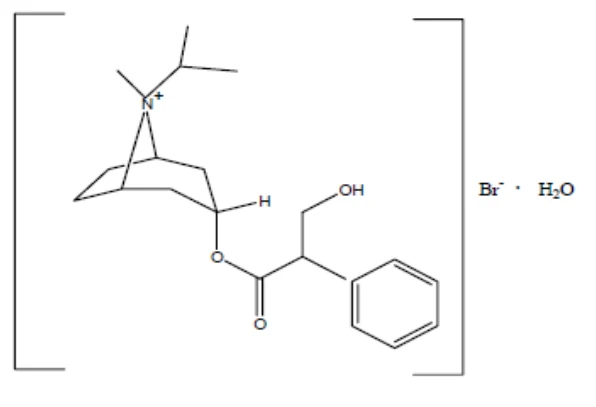
Physicochemical properties: White crystalline substance with a bitter taste. Freely soluble in water and alcohol; insoluble in chloroform and ether. In neutral and acid solutions the substance is rather stable. In alkaline solutions the ester bond is rapidly hydrolysed. Melting point, 230°C with decomposition.
Drug Substance
Proper name: Salbutamol Sulfate
Chemical name: 1,3-benzenedimethanol,α1-[[(1,1-dimethylethyl) amino]methyl]-4-hydroxy-, sulfate (2:1) (salt)
Molecular formula and molecular mass: (C13H21NO3)2. •H2SO4 / 576.7
Structural formula:
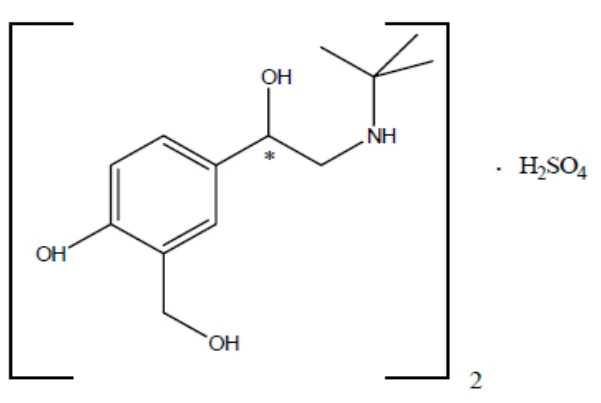
Physicochemical properties: White to off-white crystalline powder soluble in ethanol, sparingly soluble in water and very soluble in chloroform.
14. Clinical Trials
14.1 Clinical Trials by Indication
Table 3: Summary of Patient Demographics for Clinical Trials in adults with chronic obstructive pulmonary disease
| Study # | Trial design | Dosage, route of administration and duration | Study subjects (n=number) / Mean age / Gender |
| 1012.56 | Randomized, double blinded, active controlled, 3-treatment parallel group design | COMBIVENT RESPIMAT 20/100 mcg q.i.d.+ placebo CFC-MDI q.i.d. (486 treated patients) COMBIVENT CFC-MDI 36/206 mcg q.i.d. + Placebo RESPIMAT q.i.d. (491 treated patients) Ipratropium RESPIMAT 20 mcg q.i.d. + placebo CFC-MDI q.i.d. (483 treated patients) Oral inhalation / 12 weeks | n = 1460 Age: 64.1 Males: 955 Females: 505 |
Table 4 : Mean differences in FEV1 AUC (change from test-day baseline in liters) between COMBIVENT RESPIMAT 20/100 mcg (A) and COMBIVENT CFC-MDI 36/206 mcg (B) on Test Days 1, 29, 57, and 85 (Trial 1012.56)
| FEV1 AUC0-6 | FEV1 AUC0-4 | FEV1 AUC4-6 | |||||||||||||
|---|---|---|---|---|---|---|---|---|---|---|---|---|---|---|---|
| Test Day | Mean (SE) (liters) | Mean (SE) (liters) | 95% CI (liters) | Mean (SE) (liters) | Mean (SE) (liters) | P-value | 95% CI (liters) | Mean (SE) (liters) | Mean (SE) (liters) | 95% CI (liters) | |||||
| 1 | A B | 0.173 (0.008) 0.189 (0.008) | -0.016 (0.010) | (-0.036, 0.004) | 0.211 (0.008) 0.149 (0.008) | 0.061 (0.011) | < 0.0001 | (0.040, 0.083) | 0.100 (0.008) 0.074 (0.009) | 0.026 (0.012) | (0.003, 0.049) | ||||
| 29 | A B | 0.154 (0.007) 0.161 (0.007) | -0.007 (0.010) | (-0.026, 0.013) | 0.197 (0.008) 0.153 (0.008) | 0.044 (0.010) | < 0.0001 | (0.024, 0.065) | 0.068 (0.008) 0.078 (0.008) | -0.010 (0.011) | (-0.032, 0.012) | ||||
| 57 | A B | 0.146 (0.007) 0.160 (0.007) | -0.014 (0.010) | (-0.033, 0.005) | 0.188 (0.007) 0.141 (0.007) | 0.047 (0.010) | < 0.0001 | (0.027, 0.067) | 0.063 (0.008) 0.073 (0.008) | -0.011 (0.011) | (-0.033, 0.011) | ||||
| 85 | A B | 0.145 (0.007) 0.149 (0.007) | -0.003 (0.010) | (-0.022, 0.015) | 0.189 (0.007) 0.142 (0.007) | 0.047 (0.010) | < 0001 | (0.028, 0.066) | 0.056 (0.008) 0.073 (0.008) | -0.017 (0.011) | (-0.039, 0.005) | ||||
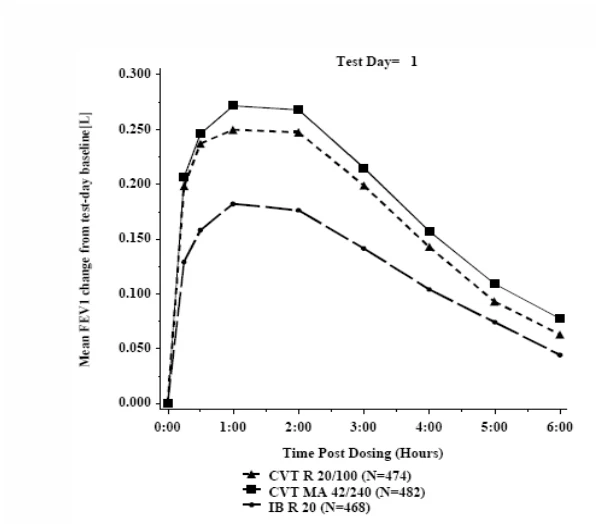
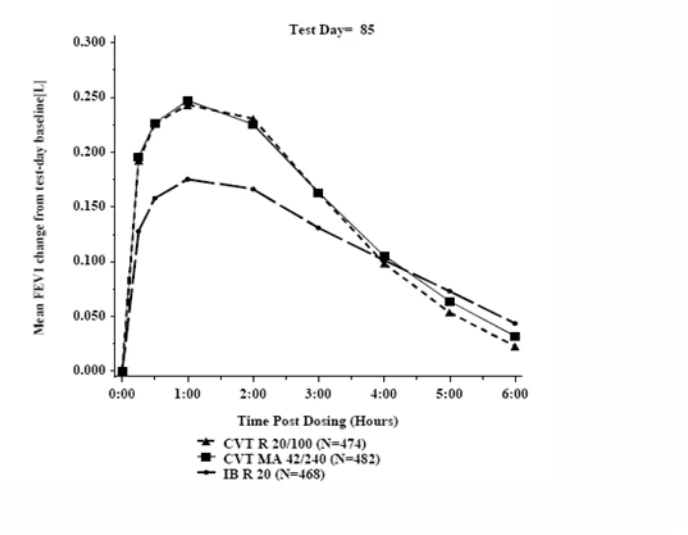
In a 12-week randomized, multicenter, double-blind, double-dummy parallel group trial, 1,424 patients with COPD were evaluated for the bronchodilator efficacy of COMBIVENT RESPIMAT inhalation solution (20/100 mcg) (474 patients) in comparison to COMBIVENT pressurized inhalation, suspension (36/206 mcg) (482 patients), and ipratropium bromide delivered by the COMBIVENT RESPIMAT inhaler (20 mcg) (468 patients). The study enrolled patients who had a clinical diagnosis of COPD, were 40 years of age or older, had a history of smoking greater than 10 pack-years, had an FEV1 less than or equal to 65% of predicted and a ratio of FEV1/FVC of less than or equal to 0.7. Patients with narrow angle glaucoma, symptomatic prostatic hypertrophy or bladder neck obstruction were excluded.
Serial FEV1 measurements (shown in Figure 1 as FEV1 change from test-day baseline) on test-days 1 and 85 showed that COMBIVENT RESPIMAT inhalation solution (20/100 mcg) was therapeutically equivalent to COMBIVENT pressurized inhalation, suspension (36/206 mcg), and both formulations produced significantly greater improvement in pulmonary function than ipratropium bromide when given separately. In this study the COMBIVENT RESPIMAT and COMBIVENT Inhalation Aerosol formulations were equally effective in males and females and in patients over 65 years of age and under 65 years of age.
The median time to onset and peak response and median duration of response were comparable for COMBIVENT RESPIMAT inhalation solution (20/100 mcg) and COMBIVENT pressurized inhalation, suspension (36/206 mcg).
Figure 1 Time profile of FEV1 at days 1 and 85
A long-term randomized, open-label safety study of COMBIVENT RESPIMAT inhalation solution (n=157) in comparison to COMBIVENT inhalation aerosol CFC MDI (36/206 mcg) (n=154) and the free combination of ipratropium bromide HFA inhalation aerosol (34 mcg) and salbutamol HFA inhalation aerosol (180 mcg) (n=154) in adults with COPD was undertaken. After 48 weeks, all three study treatments were well-tolerated. Adverse events were consistent with what is expected in the patient population for beta agonist and anticholinergic agents.
16. Non-Clinical Toxicology
COMBIVENT
General Toxicology
Single Dose Studies
The toxicity of COMBIVENT after single inhalation administration was tested in rats and dogs. Up to the highest technically feasible dose (rat: 887/5397 mcg/kg ipratropium bromide/salbutamol, dog: 164/861 mcg/kg ipratropium bromide/salbutamol) there were no indications of systemic toxic effects, the combination was locally well tolerated. The approximate LD50 after intravenous administration was calculated for the individual substances to be between 12 and 20 mg/kg for ipratropium bromide and between 60 and 73 mg/kg for salbutamol sulfate depending on the species tested (mouse, rat, and dog).
Multiple Dose Studies
Inhalation (Nasal):
In rats, inhalation of the ipratropium bromide/salbutamol sulfate combination for 2 weeks, up to average maximum doses of 298/1876 mcg/kg/day, produced no evidence of toxicity. The increased heart weights in high-dose males, in the absence of any histopathologic findings, was suggestive of an adaptive response to the known cardiac stimulatory actions of sympathomimetic drugs, including salbutamol sulfate.
Inhalation (Oral):
In a 14 day inhalation study in dogs with up to a maximum ipratropium bromide and salbutamol sulfate combination dose of 110/575 mcg/kg/day resulted in sinus tachycardia and exaggerated T-waves changes (secondary to tachycardia) in all treated groups. These effects, noted on the first day of dosing, were either not present or greatly diminished in incidence and magnitude by the end of the second week of treatment. Five of six dogs in the mid-dose group (55/287 mcg/kg) had interstitial fibrosis of the papillary muscle of the left ventricle of the heart; this was not noted at the low or high doses. Hepatic glycogen accumulation was found at each dose level, but was of doubtful toxicological significance.
In another multiple dose inhalation study, beagle dogs were exposed for 14 days with up to 56/348 mcg/kg of the ipratropium bromide and salbutamol sulfate combination to examine the cardiotoxicity of the combination versus the individual components. In this study no evidence of an interactive effect of ipratropium bromide and salbutamol sulfate was noted. The cardiac changes in this study (increased heart rate and changes in electrocardiographic patterns) were virtually identical in the groups treated with the ipratropium bromide and salbutamol combination and those treated with the same dose of salbutamol sulfate alone.
Two 13-week inhalation toxicity studies in rats and dogs have been performed with the combination of ipratropium bromide and salbutamol sulfate. In these studies, the heart proved to be the target organ. In the rat at dosages of 34/197 to 354.5/2604 mcg/kg/day ipratropium bromide/salbutamol sulfate, a dose independent increase in heart weights was present, however without any histopathological correlate. In the dog at doses of 32/198 to 129/790 mcg/kg /day ipratropium bromide/salbutamol sulfate, slightly increased heart rates and, at higher dosages, histopathologically detectable scars and/or fibrosis in the papillary muscle of the left ventricle, sometimes accompanied with mineralisation, were observed.
The cardiovascular findings obtained in the above mentioned studies must be regarded as well known effects of beta-adrenergics such as salbutamol. The toxicological profile of ipratropium bromide is also well known for many years and characterised by typical anticholinergic effects as dryness of the mucosal membranes of the head, mydriasis, keratoconjunctivitis sicca (dry eye) in dogs only, reduction in tone and inhibition of motility in the gastrointestinal tract (rat).
Genotoxicity
COMBIVENT did not show genotoxic activity in in vitro assays.
Special Toxicity
Immunotoxicity
No evidence was found of any immunotoxicological effect caused by COMBIVENT or its individual active ingredients.
IPRATROPIUM BROMIDE
General Toxicology
Single Dose Studies
| LD50 VALUES FOR IPRATROPIUM | ||||
| Species | Sex | Route | LD50 (mg/kg) | |
| Mouse | i.v. | 13.5 | ||
| Mouse | M | i.v. | 12.3 | |
| Mouse | F | i.v. | 15.0 | |
| Mouse | s.c. | 322 | ||
| Mouse | s.c. | 300 | ||
| Mouse | oral | 2010 | ||
| Mouse | oral | 1038 | ||
| Rat | i.v. | 15.8 | ||
| Rat | s.c. | 1500 | ||
| Rat | oral | >4000 | ||
| Rat | oral | 1722 | ||
The signs of toxicity were apathy, reduced motility, ataxia, paralysis of skeletal muscle, clonic convulsions and death from respiratory failure. Toxic signs persisted for 3 hours after i.v. and 8 days after oral administration.
Single dose tolerance studies were performed in dogs. No deaths occurred at doses of up to 400 mg/kg oral or 50 mg/kg s.c. Signs of toxicity were mydriasis, dryness of oral, nasal and optic mucosa, vomiting, ataxia, increased heart rate, decreased body temperature and death from respiratory failure.
A single dose inhalation toxicity study of ipratropium bromide administered as a 4% and 8% solution to guinea pigs was performed. No toxic signs were observed with the 4% solution and death occurred after 5 hours of administration of the 8% solution (approximately 200 mg/kg).
Anaesthetized normal and hypoventilated dogs tolerated doses up to 200 puffs (4 mg) of ipratropium bromide without ECG changes or heart failure. Reductions in heart rate were observed. Similar findings were seen in dogs given i.v. infusions (10 mg/kg/min) up to 1550 mg/kg or 1000 mg/kg plus 200 puffs from a placebo inhaler. Blood pressure reductions were also seen in these experiments.
A single dose inhalation, dose tolerance study in rats using doses up to 160 puffs (3.2 mg) from an ipratropium bromide inhaler was performed. No deaths occurred.
Multiple Dose Studies
Oral:
A multiple dose toxicity study of nine weeks duration in rats, utilizing doses of 10, 100 and 500 mg/kg, revealed no pathologic findings apart from a dose related decrease in food consumption and growth rate.
A four week study in dogs using doses of 3, 30 and 150 mg/kg (for three weeks) increased to 300 mg/kg, showed mydriasis, inhibition of lacrimal and salivary secretion, tracheal and ocular inflammation, decreased food intake and weight loss at the medium and high doses. Three of six dogs died when the dose was increased from 150 to 300 mg/kg.
A supplementary study of 13 weeks using doses of 1.5, 3.0 and 15 mg/kg revealed no pathologic changes apart from a dose related inhibition of lacrimal secretion and associated keratoconjunctivitis and dryness of the mouth.
Subcutaneous:
Rats were treated with subcutaneous injections of 1, 10 and 100 mg/kg. One death occurred in the 10 mg/kg group from paralytic ileus. Inflammatory changes were noted at the injection site.
A 4 week study in dogs using doses of 10, 20 and 30 mg/kg (increased to 40 mg/kg on the last five days) was conducted. Dryness of oral and nasal mucosal membranes and mydriasis were noted along with conjunctivitis and keratitis associated with decreased lacrimal secretions. A decrease in food intake and body weight also occurred. One dog died in the high dose group. Signs of liver damage were noted in two of the high dose dogs. Low testicular weights, which have not been observed in other subsequent studies, were also observed.
Inhalation:
Twelve rats were exposed to aerosolized ipratropium bromide at a concentration of 11.5 mcg/L for 1 hour, 4 times per day for 7 days. No drug toxicity was found.
In another study, administration of ipratropium bromide at concentrations of 128, 256 and 384 mcg per rat per day for 30 days showed no signs of toxicity apart from low grade inflammatory response and areas of fibrosis and hemorrhage in the parametrium of 2 of 9 females in the high dose group. This finding has not been observed in subsequent studies.
Four rhesus monkeys inhaled 500 mcg of ipratropium bromide twice a day (total dose 1 mg/day) for seven days without the appearance of any drug induced toxicity.
In another rhesus monkey study, the animals were given ipratropium bromide at doses of 200, 400 and 800 mcg/day by inhalation, for six weeks. Included in the tests were measurements of mucociliary transport rate and ciliary beat frequency. No signs of drug toxicity were found.
Oral:
A 6 month and 1 year study in rats using doses of 6, 30 and 150 mg/kg were performed. The high dose was increased to 200 mg/kg after 14 weeks. Reductions in food consumption and growth rates were observed in the highest dose group. A dose dependent constipation which caused severe coprostasis and dilatation of the intestines was observed in the highest dose group. A toxic hepatosis was observed in some animals of the highest dose group.
Ipratropium bromide was administered to dogs at doses of 1.5, 3.0, 15.0 and 75.0 mg/kg for 1 year. A decrease in body weight development was seen in the highest dose group and food consumption was reduced in the dogs receiving 3 mg/kg and above. Emesis was seen in all treated groups. A dose dependent decrease (3 mg/kg and above) in nasal, oral and lacrimal secretions, the latter leading to keratoconjunctivitis, was observed. Increases in SGPT and SGOT (15 and 75 mg/kg) and alkaline phosphatase (75 mg/kg) were noted. Localized gastric necrosis was found in two dogs at the highest dose and a non-dose-dependent fatty degeneration of the liver which varied from animal to animal, was also seen.
Inhalation:
A 6 month study in rats was performed using doses of 128, 256 and 384 mcg per rat per day. Measurements included ciliary beat frequency, lung mechanics and blood gas. The only finding was a dose related decrease in growth rate of the male animals.
A 6 month inhalation toxicity study was performed in rhesus monkeys utilizing daily doses of 20, 800 and 1,600 mcg. All findings were negative including measurements of lung mechanics, ciliary beat frequency and blood gases.
Genotoxicity
Three Ames tests, a micronucleus test in mice, a cytogenic study in Chinese hamsters, and a dominant lethal test were performed to assess the mutagenic potential of ipratropium bromide. Two positive tests (one Ames and the micronucleus study) were apparently spurious as they could not be reproduced with subsequent exhaustive experimentation. In the cytogenic study, a dose-related increase in the number of chromatid gaps, but not of other aberrations, was seen. The significance of this finding is not known. All other test results were negative.
Ipratropium bromide was tested in numerous in-vivo and in-vitro genotoxicity tests and showed no evidence of mutagenic properties.
Carcinogenicity
Ipratropium bromide was tested individually for neoplastic properties in several carcinogenicity studies.
Carcinogenicity studies in mice (107 weeks duration) and rats (114 weeks duration) utilizing oral doses of up to 6 mg/kg were performed. Ipratropium bromide revealed no carcinogenic potential when tested orally in mice and rats.
Reproductive and Developmental Toxicology
Three teratology studies, one in mice using oral doses of 2 and 10 mg/kg and two in rats have been conducted. The first rat study used the same dosages while the second employed 10 and 20 mg/kg. None of these studies revealed any drug induced fetal abnormalities.
A similar oral study in rabbits utilizing doses of 2 and 10 mg/kg again demonstrated no teratogenic or embryotoxic effects of ipratropium bromide.
An inhalation teratology study in rabbits using doses of 0.3, 0.9 and 1.8 mg/kg demonstrated no effects on litter parameters and no embryotoxic or teratogenic effects.
A fertility study in rats with oral doses of 5, 10 and 500 mg/kg given 60 days prior to and during early gestation was performed. Fertility was delayed in eight of 20 couples at the 500 mg/kg dose and spurious pregnancy in five of 20 females occurred at this dose. In addition, the conception rate was decreased in 75% of females at this dose. No embryotoxic or teratogenic effects were observed.
Apart from these findings, the studies performed with salbutamol sulfate and with ipratropium bromide revealed only marginal effects, if any, on embryos, foetuses and pups and these only in the range of maternal toxicity. Ipratropium bromide did not affect fertility of male or female rats at oral doses up to 50 mg/kg (approximately 3,400 times the MRHDD on a mg/m2 basis). Reproduction studies in rats with salbutamol revealed no evidence of impaired fertility.
SALBUTAMOL
General Toxicology
Single Dose Studies
| SPECIES (n) | ORAL LD50 | SPECIES (n) | INTRAVENOUS LD50 | |
| Mouse (10) | > 2000 mg/kg | Mouse (10) | 72 mg/kg | |
| Rat (10) | > 2000 mg/kg | Rat (10) | 60 mg/kg | |
| (n) | INTRA PERITONEAL LD50 IN RAT | |||
| Newborn (155) | 216 mg/kg | |||
| Weanling (100) | 524 mg/kg | |||
| 2-week old ( 90) | 437 mg/kg | |||
| Key: (n) - Number of Animals | ||||
The rate of respiration in test animals initially increased, but subsequently became abnormally slow and deep. Death, preceded by convulsions and cyanosis, usually occurred within four hours after drug administration.
Rabbits, cats and dogs survived a single dose of 50 mg/kg salbutamol.
Multiple Dose Studies
Intermediate (Four Months) Toxicity
Rats received salbutamol twice daily, in oral doses from 0.5 to 25 mg/kg, on an increasing scale. The only significant hematological changes were a small increase in hemoglobin and packed cell volume. BUN and SGOT values were elevated while blood glucose and plasma protein levels remained unchanged. Pituitaries had increased amount of PAS-positive material in the cleft at the higher dose levels.
Salbutamol was given to dogs twice daily, in oral doses from 0.05 to 12.5 mg/kg, on an increasing scale. The rate of increase of hemoglobin and packed cell volume was depressed, particularly at higher doses. Leukocyte count decreased after sixteen weeks of treatment at each dose level. Platelet count was increased after eight weeks at the highest dose. No significant biochemical effects were observed. The only significant histological change was the appearance of corpora amylacea in the stomach which was attributed to altered mucus secretion. Inhalation of 1,000 mcg of salbutamol aerosol twice daily for three months did not produce any morphological changes in the lungs, trachea, lymph nodes, liver or heart.
Long-Term Toxicity
Fifty female, Charles River CD Albino rats received salbutamol orally at 2, 10 and 50 mg/kg day for one hundred and four weeks; fifty female Charles River CD Sprague-Dawley-derived rats received 20 mg/kg/day salbutamol orally for fifty weeks, and fifty female Charles River Long-Evans rats received 20 mg/kg/day salbutamol orally for ninety-six weeks. These rat studies demonstrated a dose-related incidence of mesovaria leiomyoma. No similar tumours were seen in mice.
Genotoxicity
In vitro tests involving four microorganisms revealed no mutagenic activity. Salbutamol sulfate was tested in numerous in-vivo and in-vitro genotoxicity tests and showed no evidence of mutagenic properties.
Carcinogenicity
Salbutamol sulfate and ipratropium bromide were tested individually for neoplastic properties in several carcinogenicity studies. After oral administration of salbutamol sulfate in rats, but not in mice, hamsters and dogs, an increased incidence of leiomyomas of the mesovarium was observed at dosages about ≥ 20-fold higher than inhalation MRHDD. The development of the leiomyomas was found to be preventable by simultaneous administration of beta-blockers. These findings were assessed to be species specific and therefore without clinical relevance, consequently not leading to any restriction of the clinical use of salbutamol sulfate.
Reproductive and Developmental Toxicology
Salbutamol has been shown to be teratogenic in mice when given in doses corresponding to 14 times the human aerosol dose; when given subcutaneously in doses corresponding to 0.2 times the maximum human (child weighing 21 kg) oral dose; and when given subcutaneously in doses corresponding to 0.4 times the maximum human oral dose.
Salbutamol sulfate caused cleft palates at high subcutaneous dosages in mice starting at dosages in the range of the inhalation MRHDD (based on mg/m2). However this phenomenon is well known and occurs also after the administration of other beta-adrenergic compounds. Today it is assumed that this effect is caused by an increase in the maternal corticosterone level and might be regarded as a result of general stress not relevant for other species. Apart from these findings, the studies performed with salbutamol sulfate revealed only marginal effects, if any, on embryos, foetuses and pups and these only in the range of maternal toxicity.
In rats, salbutamol treatment given orally at 0.5, 2.32, 10.75 and 50 mg/kg/day throughout pregnancy resulted in no significant fetal abnormalities. However, at the highest dose level there was an increase in neonatal mortality. Reproduction studies in rats revealed no evidence of impaired fertility.
Salbutamol had no adverse effect when given orally to Stride Dutch rabbits, at doses of 0.5, 2.32 and 10.75 mg/kg/day throughout pregnancy. At a dose of 50 mg/kg/day, which represents 2800 times the maximum inhalational dose, cranioschisis was observed in 7 of 19 (37%) fetuses.
Non-clinical Pharmacology
COMBIVENT RESPIMAT
COMBIVENT RESPIMAT is a combination of the anticholinergic ipratropium bromide and the beta2-adrenergic agonist salbutamol sulfate. The mechanisms of action described below for the individual components apply to COMBIVENT RESPIMAT. The two classes of medications are both bronchodilators. Simultaneous administration of both an anticholinergic and a beta2-sympathomimetic is designed to produce a greater bronchodilator effect than when either drug is utilized alone at its recommended dosage. The efficacy of COMBIVENT RESPIMAT is likely to be due to a local effect on the muscarinic and beta2-adrenergic receptors in the lung.
Ipratropium Bromide
Ipratropium bromide is an anticholinergic agent which, when delivered by aerosol, exerts its effect primarily in the bronchial tree. It abolishes acetylcholine induced bronchospasm in the guinea pig and dog after intravenous administration of ED50 of 0.15 and 0.40 mcg/kg with a transient effect on blood pressure. By inhalation, approximately 25 mcg ipratropium bromide produces a 50% inhibition of acetylcholine-induced bronchospasm in the dog with no detectable effect on blood pressure but with an increased duration of action compared to intravenous administration. Histologic evaluation of human bronchial mucosae following chronic inhalation of ipratropium bromide showed no alterations of epithelial, ciliated or goblet cells. Short term mucociliary clearance in normal and bronchitic subjects was not adversely affected by 200 mcg of inhaled ipratropium bromide.
The anticholinergic effects of ipratropium bromide were evaluated in several other organ systems following oral, subcutaneous, intravenous and inhalation administration. In dogs, a 50% increase in heart rate resulted from a s.c. dose of about 0.011 mg/kg, equipotent to atropine, but the equi-effective oral dose of ipratropium was 58 times greater. By inhalation, no increase in heart rate or pathologic changes in ECG pattern were recorded at dose up to 8 mg. In another study, blood pressure and heart rate in the dog could be modulated after intravenous (i.v.) administration of low doses of ipratropium but metered aerosol administration of 100 puffs (40 mcg/puff) was required to produce an 11% increase in heart rate.
Salivary secretion in the rat, mouse and dog was effectively inhibited by low parenteral doses of ipratropium bromide (0.001 to 0.032 mcg/kg) but when given by the oral route, the effective dose increased over 100-fold. Aerosol administration to dogs of about 65 puffs (40 mcg/puff) produced a 50% decrease in salivary flow. Similarly, effects on gastric secretion in the rat showed at least a 100-fold difference between effective enteral and subcutaneous doses.
Mydriatic effects of ipratropium bromide in mice were approximately equipotent to atropine after s.c. doses but were 10-20 times less after oral administration. Tests in the rabbit indicated that doses up to 100 mg/kg had no effect on the central nervous system.
Ipratropium bromide administered s.c. inhibited the secretory effects of the cholinergic antagonist, oxitropium, in mice. It also inhibited spasmolytic effects equivalent to or greater than atropine in isolated guinea pig gut. In vitro tests with isolated rectum of the guinea pig demonstrated the effectiveness of ipratropium bromide in suppressing the spasmogenic effects of acetylcholine and pilocarpine. It was ineffective against histamine or barium chloride induced spasm. Ipratropium bromide exerted anticholinergic effects on the in situ bladder and intestine preparations of the dog. Intravenous doses were 500 times more potent than oral doses or intraduodenal administration.
Salbutamol
In vitro studies and in vivo pharmacologic studies have demonstrated that salbutamol has a preferential effect on beta2-adrenergic receptors. While it is recognized that beta2-adrenergic receptors are the predominant receptors in bronchial smooth muscle, recent data indicate that there is a population of beta2-receptors in the human heart existing in a concentration between 10% and 50%. The precise function of these, however, is not yet established.
The pharmacologic effects of beta-adrenergic agonist drugs, including salbutamol, are at least in part attributable to stimulation through beta-adrenergic receptors of intracellular adenyl cyclase, the enzyme that catalyses the conversion of adenosine triphosphate (ATP) to cyclic-3',5'-adenosine monophosphate (cyclic AMP). Increased cyclic AMP levels are associated with relaxation of bronchial smooth muscle and inhibition of release of mediators of immediate hypersensitivity from cells, especially from mast cells.
The muscle-relaxing effect of salbutamol was found to be more prolonged than when the effect was induced by isoprenaline.
As suggested from the results of experiments in isolated animal tissues, salbutamol has been shown to produce a substantial bronchodilator effect in the intact animal. In the anaesthetized guinea pig, salbutamol completely prevents acetylcholine-induced bronchospasm at the dose of 100 mcg/kg intravenously. Administration of salbutamol aerosol at a dose of 250 mcg/mL for one minute to guinea pigs prevented acetylcholine-induced bronchospasm without any chronotropic effect. A prolonged bronchodilator effect of salbutamol (in terms of mean times to dyspnea following acetylcholine challenge) was observed following oral administration to conscious guinea pigs. The protective action persisted for up to six hours.
In anaesthetized cats and dogs, salbutamol prevented the bronchospasm elicited by vagal stimulation without any significant effect on heart rate and blood pressure. Tests in isolated dog papillary muscle, guinea pig atrial muscle and human heart muscle have shown that the effect of salbutamol on beta1-adrenergic receptors in the heart is minimal.
In a number of studies using guinea pig atrium, it was found that on a weight-to-weight basis, salbutamol was from 2,000 to 2,500 times less active in terms of inotropic effect and 500 times less active in terms of chronotropic effect than isoprenaline. Compared to orciprenaline, salbutamol was about 40 times less active in terms of inotropic effect and four times less potent in terms of chronotropic effect. Salbutamol has been shown to be one-fifth as potent a vasodilator in skeletal muscle as isoprenaline, as measured by effects on hind limb blood flow in the anaesthetized dog. In the perfused rabbit ear, salbutamol was shown to possess only one-tenth the activity of isoprenaline in terms of vasodilating effect. In dogs, salbutamol was shown to increase coronary blood flow, which was subsequently shown to be the result of a direct coronary vasodilating effect of salbutamol.
In six dogs with right-sided cardiac by-pass, salbutamol, given at the dose of 25 mcg/kg, improved left ventricular efficiency and increased coronary blood flow.
Studies in minipigs, rodents and dogs recorded the occurrence of cardiac arrhythmias and sudden death (with histologic evidence of myocardial necrosis) when beta-agonists and methylxanthines were administered concurrently. The significance of these findings when applied to humans is currently unknown.
Animal studies show that salbutamol does not pass the blood brain barrier.