


Product Monograph - Apo-Cromolyn Sterules
INDICATIONS AND CLINICAL USE
APO-CROMOLYN (cromolyn sodium) is indicated as an adjunct in the management of intrinsic and extrinsic asthma. It is used on a continuous basis to prevent symptoms associated with asthma.
APO-CROMOLYN is also indicated for use in the prevention of bronchospasm induced by known precipitating factors such as exercise, cold air, allergens and environmental pollutants.
CONTRAINDICATIONS
Hypersensitivity to components of APO-CROMOLYN (cromolyn sodium).
WARNINGS
Cromolyn sodium has no role in the treatment of an acute attack of asthma, especially status asthmaticus.
Severe anaphylactic reactions can occur after cromolyn sodium administration. The recommended dosage should be decreased in patients with decreased renal or hepatic function. Cromolyn sodium should be discontinued if the patient develops eosinophilic pneumonia (or pulmonary infiltrates with eosinophilia).
The number of APO-CROMOLYN (cromolyn sodium) sterules to be inhaled per day should be specified to the patient. Regular dosage is important and treatment must not be discontinued abruptly, especially when benefit has been obtained. If troublesome symptoms occur, particularly breathlessness at rest, no benefit is likely to be obtained by increasing the dosage above eight sterules a day and the patient should be advised to consult a physician immediately, so that additional measures can be instituted if necessary.
PRECAUTIONS
Mild throat irritation, coughing and transient bronchospasm may occur. Very rarely, severe bronchospasm associated with a marked fall in pulmonary function has been reported. In such cases, treatment should be stopped and should not be reintroduced.
Possible immunologic changes resulting in reactions such as polymyositis, pneumonitis and heart failure, urticaria and anaphylaxis have been reported.
Use in Pregnancy
There are no adequate and well controlled studies in pregnant women. However, during clinical use there have been, to date, no reports of adverse effects on the fetus which could be ascribed to the use of cromolyn sodium. Nevertheless as with all medications, caution must be exercised during pregnancy. For further information on safety in clinical use, please refer to the section on Teratogenicity.
Nursing Mothers
It is not known whether this drug is excreted in human milk; therefore, caution should be exercised when cromolyn sodium is administered to a nursing woman, and the attending physician must make a benefit/risk assessment in regard to its use in this situation.
ADVERSE REACTIONS
In controlled clinical studies, the most frequently reported adverse reactions attributed to cromolyn sodium treatment were: throat irritation or dryness, bad taste, cough, wheeze and nausea.
Bronchospasm [sometimes severe, associated with precipitous fall in pulmonary function (FEV1)], laryngeal edema (rare), nasal congestion (sometimes severe) and pharyngeal irritation have been reported.
Adverse reactions which occur infrequently and are associated with administration of the drug are:
anaphylaxis, angioedema, dizziness, dysuria and urinary frequency, joint swelling and pain, lacrimation, headache, rash, swollen parotid gland, urticaria, pulmonary infiltrates with eosinophilia, substernal burning and myopathy.
The following adverse reactions have been reported as rare events and it is unclear whether they are attributable to the drug: anemia, exfoliative dermatitis, hemoptysis, hoarseness, myalgia, nephrosis, periarteritic vasculitis, pericarditis, peripheral neuritis, photodermatitis, sneezing, drowsiness, nasal itching, nasal bleeding, nasal burning, serum sickness, stomach ache, polymyositis, vertigo and liver disease.
SYMPTOMS AND TREATMENT OF OVERDOSAGE
There have been no reported cases in humans of overdosage of the drug. Symptomatic treatment is suggested should overdosage occur.
DOSAGE AND ADMINISTRATION
APO-CROMOLYN (cromolyn sodium) in a plastic sterule contains 2 mL of a sterile 1% cromolyn sodium
USP solution in water (20 mg cromolyn sodium in 2 mL water). It is recommended for use in a power operated nebulizer operated at an air flow rate of 6-8 liters per minute and equipped with a suitable face mask.
APO-CROMOLYN STERULES are an alternative presentation of cromolyn sodium for those patients
(including young children) who are unable to inhale the drug in powder form.
Adults and Children: APO-CROMOLYN STERULES are used on a continuous basis to prevent the symptoms of asthma and has no role in the treatment of acute attacks.
Initial Treatment: 1 sterule 4 times daily at 4-6 hourly intervals. In more severe cases, or during periods of high antigen challenge, the interval between doses may be reduced to 3 hours (i.e. up to 8 sterules daily may be taken).
For protection against bronchospasm induced by exercise, APO-CROMOLYN should be used 15 to 30 minutes before-hand.
Maintenance Therapy: When adequate response has been obtained, the frequency of inhalations may be reduced to 1 sterule every 8 to 12 hours (i.e. 2 or 3 sterules per day). If chest symptoms are troublesome at night, it is important that the final dose be taken, if awakened during the night.
Patients should be warned against suddenly discontinuing therapy when symptoms have been partially or completely controlled by APO-CROMOLYN STERULES.
Concomitant Therapy: Other asthma therapy should be continued until clinical improvement permits a progressive reduction in dosage. However, APO-CROMOLYN therapy alone may prevent symptoms of mild to moderate asthma, especially in children and young adults.
In severe asthma, particularly in older patients, APO-CROMOLYN therapy alone is insufficient to prevent symptoms. In a proportion of such cases, significant improvement can be obtained by combining APO-
CROMOLYN with corticosteroid therapy even when inadequate relief is obtained from either drug alone.
In steroid-dependent patients, the addition of APO-CROMOLYN to the regimen may permit a slow, progressive and significant reduction in the maintenance dose of steroids.
Reduction or Withdrawal of Corticosteroids: The dangers of sudden withdrawal of corticosteroids are well recognized, particularly in steroid treated patients who have received long-term administration of oral steroids or injections of adrenocorticotrophic hormone (ACTH).
When the physician attempts to reduce the corticosteroid dosage, it is important that the reduction should be gradual and that close surveillance and frequent examination of the patient is maintained. It should be remembered that the adrenal cortex is suppressed by the administration of oral steroids, and that in both oral steroid and ACTH therapy, the ability of the patient to react to stress is usually impaired. In such patients, acute renal insufficiency and severe asthma can be precipitated by an increase in stress and/or reduction or withdrawal of either steroid or ACTH therapy. In order to identify such a risk in patients who have received long-term steroid therapy and where substantial reduction or complete withdrawal of corticosteroids is contemplated, it is advisable to assess adrenal and pituitary function.
Method of Reducing Steroid Dosage: The reduction in the daily maintenance dose of steroids should be stepwise at a suggested rate equivalent to about 1% per day (e.g. a maintenance dose of 10 mg prednisolone per day is reduced to 9 mg per day after 1 week). The gradual reduction should be continued until either the patient cannot tolerate a further reduction or it is found possible to withdraw corticosteroids completely.
Note: If troublesome symptoms recur during the period of reduction, the daily dose should be raised immediately. A larger increase in the steroid dose may be essential at times as a temporary measure, to control a severe relapse induced by antigen challenge, infections or stress. The increased physical or mental activity resulting from subjective improvement can also constitute a stress. When symptoms are brought under control, a progressive reduction may be attempted as before.
Method of Withdrawing ACTH: The same principles apply as discussed above. In practice, either the number of units of ACTH per injection can be reduced, or the interval between injections can be extended
(e.g. from 1 per day, to 1 on alternate days, to 1 biweekly).
Withdrawal of APO-CROMOLYN Therapy: As the action of cromolyn sodium is essentially preventive, continuity of therapy is important in patients who have gained benefit. If for any reason APO-
CROMOLYN is withdrawn, a suggested regimen for withdrawal is to reduce the APO-CROMOLYN dosage gradually over a period of one week. It should be borne in mind that symptoms of asthma may recur when the drug is discontinued.
Caution: In such cases where APO-CROMOLYN has permitted a reduction in the maintenance dose of steroids, it is recommended that the steroid dose first be restored to at least the pre-cromolyn sodium level at the commencement of withdrawal of APO-CROMOLYN, followed by a slow reduction of the steroid dose to tolerance. This is to avoid risk of acute relapse. It is also recommended that adrenal function be assessed before restoring the pre-cromolyn sodium steroid dose.
Administration of APO-CROMOLYN Sterules: Administration by inhalation of the contents of an APO-
CROMOLYN sterule is only possible with the use of the nebulizer unit.
PHARMACEUTICAL INFORMATION
Drug Substance
Proper/Common Name: cromolyn sodium
Chemical Name: Disodium 5, 5'-[(2-hydroxytrimethylene) dioxyl] bis [4-oxo-4H-1-benzopyran-2-carboxylate]
Structural Formula: 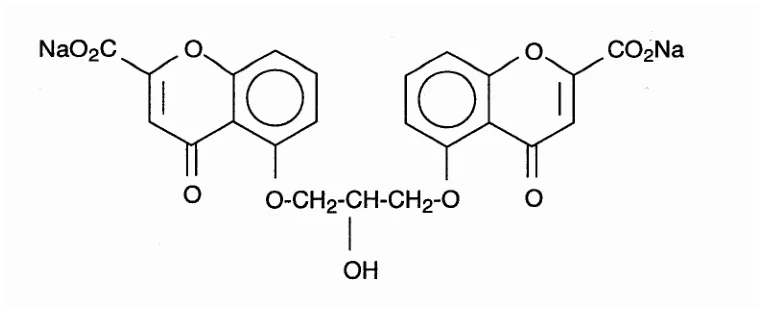
Molecular Formula: C23H14Na2011
Molecular Weight: 512.3
Description: Cromolyn sodium is a white, odorless, crystalline, hygroscopic powder. It is tasteless at first with a slightly bitter aftertaste. Cromolyn sodium is soluble in water; insoluble in alcohol and in chloroform.
Composition
APO-CROMOLYN STERULES contain sterile 1% cromolyn sodium USP solution in purified water. Stability and Storage Recommendations
APO-CROMOLYN STERULES should be stored at room temperature (15 to 25°C) and protected from direct sunlight. Discard any unused sterules in opened foil pouches after 3 months. Do not use if product contains a precipitate.
AVAILABILITY OF DOSAGE FORMS
APO-CROMOLYN STERULES are available in cartons of 50. Each sterule contains 2 mL of a sterile 1% cromolyn sodium solution in water.
INFORMATION TO THE PATIENT
APO-CROMOLYN STERULES
Cromolyn Sodium Inhalation Solution USP 1% w/v
What is Asthma?
Asthma is a condition characterized by periodic shortness of breath, wheeziness (audible noise when breathing) and occasionally cough. It thus may interfere with everyday activities such as sleep, meals, work and play. The effect on an individual may be variable.
What Happens During an Asthma Attack?
During an attack, the muscles surrounding the outside of the air passages go into spasm, as a result of the release of certain substances, causing tightening of the air passages and this interferes with normal breathing.
What Causes These Attacks?
Asthma can be caused by a number of factors:
- allergy-producing substances (ragweed, pollen, dust, some foods and medicines);
- respiratory infections (cold, flu);
- emotional stress (difficult situations at home, school, work);
- strenuous exercise;
- irritant chemicals (chlorine, perfume, etc.);
- sudden changes in temperature and/or humidity.
Relief Measures
There is no medication a patient can take that will "cure" asthma (that is, end the asthmatic condition forever). Relief must concentrate on the prevention of attacks and lessening their severity if they do occur.
Partial prevention of an attack may be achieved if a definite cause for the attack can be established - such as an allergy to certain animals, dust, foods or medications - and that cause is avoided.
Why APO-CROMOLYN Sterules?
Your doctor has prescribed APO-CROMOLYN Sterules as an integral part of your prevention program. It has a unique method of action to help asthma sufferers and works to prevent the release of substances that cause the asthma attacks.
APO-CROMOLYN is preventive medicine that requires regular usage for full benefit. By taking APO-
CROMOLYN regularly even when you feel well, asthma can be controlled and most attacks prevented, resulting in a more normal healthy lifestyle.
APO-CROMOLYN is an inhalation solution for nebulization.
Method of Administration
APO-CROMOLYN should be administered from a power-operated nebulizer having an adequate flow rate, equipped with a suitable face mask.
The doctor will advise on the choice of a suitable nebulizer and how it should be used. Do not use any other appliance without consulting the doctor.
Dosage
Nebulization should be carried out four times a day using the contents of a fresh sterule each time, or as directed by the doctor. Nebulization for 5 to 10 minutes is the clinically effective nebulization period. Any solution remaining in the nebulizer should be discarded.
Inhalation
Assemble and use the device according to the instructions provided by the manufacturer or your doctor. Precautions
Other medications for nebulization should not be mixed with APO-CROMOLYN. Use a fresh sterule for each dose.
Contraindications
There are no specific contraindications, other than hypersensitivity to cromolyn sodium. It is an accepted medical principle to be cautious of using any medication during the first three months of pregnancy.
Cleaning Instructions for Home Use
It is very important that your nebulizer is kept thoroughly clean. Follow the instructions given by the manufacturer.
Storage
APO-CROMOLYN should be stored at room temperature (15 to 25°C) and protected from direct sunlight.
Discard any unused sterules in opened foil pouches after 3 months.
Instructions For Use
- 1) The contents of APO-CROMOLYN STERULES are to be inhaled from a nebulizer. Do not open the foil pouch until the
sterules are required. 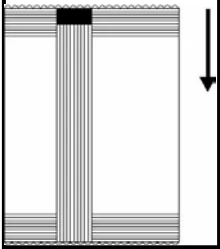
- 2) Prepare the nebulizer for filling according to the manufacturer's instructions.
- 3) To open the foil pouch, tear the foil at the centre and peel downwards
(Diagram 1). Do not peel the foil-wrap of the pouch 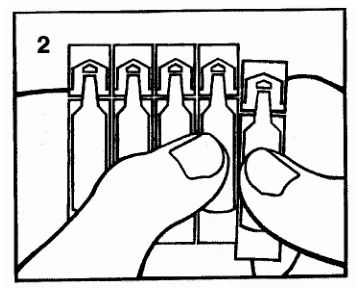
completely. Remove the sterules.
- 4) To detach an APO-CROMOLYN STERULE, push one sterule downwards and away while holding the remaining
sterules securely (Diagram 2). Return the remaining sterules 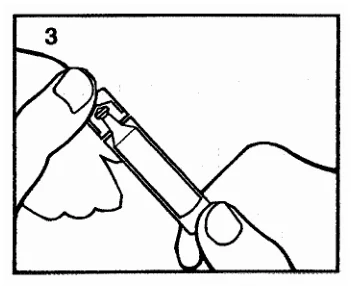
to the foil pouch and place the pouch back in the carton.
- 5) Holding the top of the sterule securely, twist the body to open
(Diagram 3). 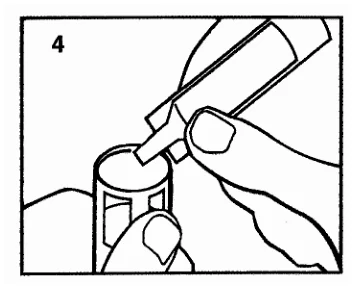
- 6) Place the open end of the sterule well into the nebulizer cup and squeeze slowly (Diagram 4). Ensure the contents are emptied into the nebulizer cup.
- 7) Assemble the nebulizer and use as directed.
- 8) Breathe calmly and evenly as much as possible until no more mist is formed in the nebulizer chamber. At this point, treatment is finished.
- 9) After use discard any solution remaining in the nebulizer cup. Clean the nebulizer according to the manufacturer's instructions.
If further information on APO-CROMOLYN or nebulization is required, consult the doctor.
PHARMACOLOGY
In Vivo Studies in Animals
The principal effect of cromolyn sodium is its specific ability to prevent disruption of sensitized cells and thus to inhibit the release of the mediators of anaphylaxis initiated by the interaction of antigen with reagin-type antibodies.
The compound inhibited the passive cutaneous anaphylactic (PCA) reactions in monkeys (Macaca speciosa) sensitized with human reaginic serum when the compound was given intradermally with the antigen. It did not affect the skin reactions to intradermal histamine, 5-hydroxytryptamine or bradykinin.
Antigen-induced bronchoconstriction in anesthetized marmosets (Hapale jacchus) sensitized intravenously with human reaginic serum was substantially reduced by cromolyn sodium compared with untreated controls.
Homologous PCA reactions with reagin-like antibody in rats using egg albumin/B. pertussis and
Nippostronglyus brasiliensis sensitized systems showed complete inhibition in the presence of the compound. At the cellular level, it could be shown that cromolyn sodium, intravenously, markedly inhibited the rupture of sensitized rat mast cells from subcutaneous connective tissue. Although the drug inhibited PCA reactions, it failed to affect the skin lesions induced by compound 48/80, a potent histamine releaser.
In contrast, homologous PCA reactions with precipitating antibody in guinea-pigs were unaffected, as were aerosol or intravenous antigen-induced bronchospasm and the release of histamine and slow-releasing substance (SRS-A) from actively or passively sensitized guinea-pig lung in vitro.
Other Experiments
The release of histamine and SRS-A from portions of fresh human lung passively sensitized with human reaginic serum was measured after exposure to specific antigens in vitro. Inhibition with cromolyn sodium was found over a narrow range of concentrations.
Weighed portions of passively sensitized human lung were "shocked" in an organ bath containing an unsensitized human bronchial chain which contracted in response to the liberated spasmogens.
Reproducible contractions were obtained by using fresh pieces of sensitized lung tissue of the same weight.
Cromolyn sodium caused a significant (40%) reduction in contraction compared with the previous control responses.
A further series of experiments, using the isolated ileum of the guinea-pig, confirmed that cromolyn sodium has no antagonizing action against the following spasmogens: histamine, serotonin (5-HT), acetylcholine, nicotine, substance P, bradykinin or SRS-A.
Cromolyn sodium had no direct action in human bronchial chain in vitro nor did it antagonize the response to histamine, SRS-A, acetylcholine or prostaglandin F2α. These observations indicate that cromolyn sodium interferes with the release of spasmogens in some way following the union of antigen and reaginic antibody, but does not directly antagonize these spasmogens.
These studies emphasize that cromolyn sodium is most effective when given prior to antigen challenge.
Cromolyn sodium is neither a bronchodilator nor an anti-inflammatory agent and has few general pharmacological effects. Its action is distinct from that of corticosteroids in that it appears to inhibit specifically the anaphylactic process initiated by reaginic antibody/antigen reactions.
Large doses of cromolyn sodium had only weak inconsistent effects on the cardiovascular and respiratory systems of monkey, pig, cat, guinea-pig and rat.
In conscious and anesthetized dogs, the drug activated chemoreceptors originating in the pulmonary and coronary circulations, mediated by the vagi, produced bradycardia, hypotension, bradypnoea and sometimes apnoea.
In the anesthetized marmoset, cromolyn sodium caused a rise in blood pressure and heart rate due to stimulation of post-ganglionic sympathetic fibres.
The compound showed no significant effect in several anti-inflammatory tests.
Other experiments showed that the drug does not affect steroid metabolism as indicated by plasma corticosterone and adrenal ascorbic acid levels.
In experiments on isolated frog oesophagus and human bronchial epithelium in vitro and on cat trachea in vivo, cromolyn sodium was used in high concentrations. There was no evidence that the compound interfered with pulmonary clearance. Further work on this aspect of the drug is in progress.
Absorption, Distribution and Excretion
The metabolism and tissue distribution of cromolyn sodium has been studied in mouse, rat, guinea-pig, rabbit, cat, dog, monkey (Macaca speciosa) and man. Cromolyn sodium, labelled with a radioactive isotope, tritium (3H) has been used for the animal experiments and chemical and spectrofluorimetric methods of estimation for the experiments in man.
- a)
Inhalation Studies: Tritiated cromolyn sodium has been introduced as a fine powder aerosol into the lungs of rats, rabbits and monkeys. All animals showed rapid clearance of the drug from the lung, 50% being absorbed in 20 minutes and 98% after 24 hours. The drug is taken up by the liver and kidneys and excreted unchanged via the bile and urine.
Human volunteers who inhaled the drug as the powdered aerosol (of cromolyn sodium) showed a peak plasma level at 10 minutes. This peak was followed by a fall in concentration similar to that demonstrated in the animal experiments. After inhalation, 3-5% of the administered dose was excreted in the urine over 6 hours. Assuming a similar biliary excretion, this would indicate that approximately 10% of the administered dose was absorbed.
- b)
Other Routes of Administration: Intravenous and intramuscular administration produces a rapid clearance of the compound from the plasma and a general distribution throughout the tissues followed by rapid excretion unchanged via the kidneys and in the bile. Intramuscular administration resulted in rapid absorption and excretion of a similar pattern to that following intravenous injection.
No tissue accumulation could be detected in the rat and dog after repeated intramuscular injections, the compound being excreted in the urine and bile. In the monkey, 6 hours after intravenous administration 80-90% of the total dose could be accounted for by renal and biliary excretion. At this stage, there is a general distribution of the compound throughout the tissues with higher concentration in the liver and kidneys.
In man, oral administration of cromolyn sodium was followed by a low rate of urinary excretion.
The mean urinary excretion of the administered dose over 24 hours was only 0.5%. This indicates that little of the compound is absorbed from the gastrointestinal tract.
TOXICOLOGY
Acute Toxicity
Cromolyn sodium was administered to a wide variety of animals by the intraperitoneal or the intravenous route. These animals included mice, rats (including newborn and suckling rats), guinea-pigs, rabbits, hamsters and monkeys. In most cases, the LD50 was in the region of 4000 mg/kg and in all tests it was above 2000 mg/kg.
Subacute and Chronic Toxicity
Subcutaneous Injection - 90-day Tests in Rats: In one test, groups of 12 rats of each sex were injected daily for 90 days with subcutaneous doses of 30, 78 and 198 mg cromolyn sodium (tetrahydrate) per kg. At the two higher dose levels, some rats showed hemorrhage at the injection site and some showed renal tubular damage. The only other indications of toxic effects were in the higher dose male rats where the growth rates were depressed and the mean relative weights of the hearts and adrenals were significantly increased. These effects were probably secondary to the renal damage, which was most severe in this group. No effects were detected in the group dosed at 30 mg/kg.
Intravenous Injection - 180-day Test in Monkeys: In this test, groups of 4 male and 4 female Rhesus monkeys were given daily intravenous injections of cromolyn sodium for 180 days at the following dose levels: 2, 10 and 50 mg/kg. No compound-induced effects were observed.
Proliferative Arteriopathy in Macaque Monkeys: A previously unreported proliferative arterial lesion has been found in some treated and untreated control Macaque monkeys in four out of seven toxicity studies with cromolyn sodium. In these four studies, the proliferative arterial lesion occurred predominantly in the kidneys, but was also found in other organs. An increased incidence of the lesion in the drug treated group occurred in one of these Macaque monkey studies. Subsequently, the condition has been seen in other laboratories were cromolyn sodium had not been used.
Proliferative Arteritis in Macaque Monkey in Cromolyn Sodium Studies:
ROUTE DURATION OVERALL CONTROL TREATED
Inhalation 3 months 0 in 18 0 in 6 0 in 12
Inhalation 4 months 5 in 30 1 in 18 4 in 12
Inhalation 4 months 2 in 45 1 in 18 1 in 27
Inhalation 3 months 1 in 25 0 in 17 1 in 8
I.V. Acute (7days) 0 in 16 None 0 in 16
I.V Acute (7 days) 1 in 8 0 in 2 1 in 6
I.V 6 months 0 in 30 0 in 6 0 in 24
TOTAL 9 in 172 2 in 67 7 in 105
The lesion has not been seen in chronic primate studies utilizing baboons or squirrel monkeys treated for six months or longer with cromolyn sodium or in toxicity studies in rodents.
It is inferred that the lesion may reflect a spontaneous disease of Macaque monkeys. The possibility that the increased incidence of the lesion in treated monkeys is due to the administration of cromolyn sodium can neither be affirmed nor refuted.
Teratogenicity
In tests in rats, no fetal abnormalities were detected following daily subcutaneous injection of cromolyn sodium at 90 mg/kg throughout pregnancy with or without the addition of 0.05 mg isoproterenol sulphate, these levels of each drug being sufficient to produce evidence of maternal toxicity. Even at a substantially higher dose level (185 mg/kg of cromolyn sodium alone) only one significant deformity (a shortened humerus) was seen in over 270 fetuses examined. Dosing at this level throughout the suckling period had no adverse effects on the young. Treatment of the males at 200 mg/kg for 85 days prior to mating did not affect their fertility.
In mice, daily subcutaneous doses of up to 540 mg/kg cromolyn sodium given during pregnancy caused no fetal malformations.
In rabbits, no teratogenic effect was detected when 250 mg/kg cromolyn sodium alone was given for the first 24 days of pregnancy by the intravenous route. At twice this dose, limb flexures were seen in 2 partially resorbed fetuses, but all 124 full-term fetuses produced were normal. Both these dose levels were sufficient to product substantial tubular degeneration in the maternal kidney.
Administration of subtoxic doses of cromolyn sodium either subcutaneously or intravenously to laboratory animals did not affect their reproductive performance and no teratogenic effects were observed. Safety in Pregnancy
A ten year study was completed in Sri Lanka to test the safety of cromolyn sodium in pregnancy. 296 pregnant asthmatic women, 18 to 44 years of age were maintained on 20 mg of cromolyn sodium, taken by inhalation 2 to 3 times a day during a part of or throughout the pregnancy. 292 of the pregnancies ended in the birth of a normal child whilst 4 infants (1.35%) had malformations. One example each was seen of a club foot, non-fused septum, harelip without cleft palate and patent ductus arteriosis.
Information on the incidence of congenital malformations within the Sri Lankan population is not available.
Epidemiological studies suggest that the incidence of abnormalities is 2-3% for the entire human population.
Cytotoxicity
The effects of cromolyn sodium were studied at the cellular level. Various types of cells were incubated in different concentrations of the drug for several days. No effects were observed at concentrations up to an including 1000 mg/L upon the following:
- migration characteristics of guinea-pig macrophages;
- morphology of chick embryo fibroblasts;
- morphology of human epithelial cells from a cell line;
- ciliary activity of samples of human ciliated epithelium.
The tests on the human respiratory epithelium were included to detect potential interference with pulmonary clearance mechanisms.
Effects on Immune Systems
The precise way in which cromolyn sodium interferes with the release of spasmogens is not yet clear. The effect of the drug was studied on those antibody systems concerned with immunity. In this context, no effect was observed on:
- various antibody neutralizing or agglutinating systems;
- development of active immunity or antibody production;
- protection conferred by passive or active immunity.
No effect was found on the following virus/antibody neutralizing systems in vitro:
influenza A, Polio Type II with human or rabbit antisera;
vaccinia with rabbit antisera;
herpes simplex with human antisera.
No effects were observed on the LD50 in mice of mouse-adapted polio virus nor in their protection by Salk vaccine.
No effect was found on the neutralization of Clostridium welchii Type A α-toxin by specific antiserum, nor on the cytotoxic behaviour of rabbit anti-HeLa serum on HeLa cells in vitro.
BIBLIOGRAPHY
- 1. Altounyan REC. Changes in histamine and atropine responsiveness as a guide to diagnosis and evaluation of therapy in obstructive airways disease. In: Pepys J, Frankland AW, eds. Disodium cromoglycate in allergic airways disease. London Butterworth, 1970; 47-53.
- 2. Blumenthal MN, Schoenwetter WF, MacDonald FM, McHugh RB. Cromolyn in extrinsic and intrinsic asthma. J Allergy Clin Immunol 1973; 52: 105-113.
- 3. Breslin FJ, McFadden ER, Ingram RH. The effects of cromolyn sodium on the airway response to hyperpnea and cold air in asthma. Am Rev Resp Dis 1980; 122: 11-16.
- 4. Brompton Hospital/Medical Research Council Collaborative Trial. Long-term study of disodium cromoglycate in treatment of severe extrinsic or intrinsic bronchial asthma in adults. Br Med J 1972; 4: 383-388.
- 5. Church MK, Warner JO. Sodium cromoglycate and related drugs. Clin Allergy 1985; 15: 311-320.
- 6.
Cogswell JJ, Simpkiss MJ. Nebulized sodium cromoglycate in recurrently wheezy preschool children.
Arch Dis Child 1985; 60: 736 - 738.
- 7. Corkey C, Mindorff C, Levison H, Newth C. Comparison of three different preparations of disodium cromoglycate in the prevention of exercise-induced bronchospasm. A double-blind study. Am Rev Respir Dis 1982; 125: 623-626.
- 8. Cox JSG. Disodium cromoglycate (FPL 670) ("Intal"): a specific inhibitor of reaginic antibody-antigen mechanisms. Nature 1967; 216: 1328-1329.
- 9. Cox JSG. Review of chemistry, pharmacology, toxicity, metabolism, specific side-effects, anti-allergic properties in vitro and in vivo of sodium cromoglycate. In: Pepys J, Frankland AW, eds. Disodium cromoglycate in allergic airway disease. London Butterworth, 1970; 12-25.
- 10. Dahl R, Henriksen JM. Inhibition of exercise-induced bronchoconstriction by nebulized sodium cromoglycate in patients with bronchial asthma. Scand J Respir Dis 1979; 60: 51-55.
- 11.
Davies SE. Effect on single administration of disodium cromoglycate on exercise-induced asthma. In:
Pepys J, Frankland AW, eds. Disodium cromoglycate in allergic airways. London Butterworth 1970; 55-61.
- 12.
Dickson W. A one-year's trial of Intal compound in 24 children with severe asthma. In: Pepys J,
Frankland AW, eds. Disodium cromoglycate in allergic airways. London Butterworth 1970; 105-119.
- 13.
Engstrom I. Evaluation of Lomudal treatment in children. Scand J Respir Dis 1977; Suppl 101: 49-
54.
- 14. Goose J, Blair AMJN. Passive cutaneous anaphylaxis in the rat, induced with two homologous reagin-like antibodies and its specific inhibition with disodium cromoglycate. Immunology 1969; 16: 749-760.
- 15.
Harries MG, Parkes PEG, Lessof MH, Orr TSC. Role of bronchial irritant receptors in asthma. Lancet
1981; 1: 5-7.
- 16.
Hiller EJ, Milner AD, Lenny W. Nebulized sodium cromoglycate in young asthmatic children. Arch
Dis Child 1977; 52: 875-876.
- 17. Howell JBL, Altounyan REC. A double-blind trial of disodium cromoglycate in the treatment of allergic bronchial asthma. Lancet 1967; 2: 539-542.
- 18.
Karr RM, Davies RJ, Butcher BT, et al. Occupational asthma. J Allergy Clin Immunol 1978; 61: 54-
65.
- 19.
Lenny W, Milner AD. Nebulized sodium cromoglycate in the preschool wheezy child. Arch Dis Child
1978; 53: 474-476.
- 20.
Marks MB. Cromolyn sodium prophylaxis in asthmatic children under five. Ann Allergy 1977; 39:
306-310.
- 21.
Matthew DJ. The use of nebulized sodium cromoglycate in children. Acta Allergologia 1977; 39:
306-310.
- 22. Mellon MH, Harden K, Zeiger RS. The effectiveness and safety of nebulizer cromolyn solution in the young childhood asthmatic. Immunol Allergy Pract 1982; 4: 168-172.
- 23.
Moran F, Bankier JDH, Boyd G. Disodium cromoglycate in the treatment of allergic bronchial asthma.
Lancet 1968; 2: 137-141.
- 24.
Murphy S, Kelly HW. Cromolyn sodium: a review of mechanisms and clinical use in asthma. Drug
Intell Clin Pharm 1987; 21: 22-35.
- 25. Newth CJL, Newth CV, Turner JAP. Comparison of nebulized sodium cromoglycate and oral theophylline in controlling symptoms of chronic asthma in pre-school children: a double-blind study. Aust NZ J Med 1982; 12: 232-238.
- 26. Patel KR, Berkin KE, Kerr JW. Dose-response study of sodium cromoglycate in exercise-induced asthma. Thorax 1982; 37: 663-666.
- 27. Patel KR, Tullett WM, Neale MG, Wall RT, Tan KM. Plasma concentrations of sodium cromoglycate given by nebulization and metered dose inhalers in patients with exercise-induced asthma: relationship to protective effect. Br J Clin Pharmacol 1986; 21: 231-233.
- 28.
Pepys J. Basic mechanisms in acute and chronic allergic lung disease. Immunol Allergy Pract 1981; 3:
115-128.
- 29. Pepys J, Hargreave FE, Chan M, McCarthy DS. Inhibitory effects of disodium cromoglycate on allergen-inhalation tests. Lancet 1968; 2: 134-137.
- 30. Petty TL, Rollins DR, Christopher K, Good JT, Oakley R. Cromolyn sodium is effective in adult chronic asthmatics. Am Rev Respir Dis 1989; 139: 694-701.
- 31. Prenner BM. Safety, efficacy and bronchodilator-sparing effects of nebulized cromolyn sodium solution in the treatment of asthma in children. Ann Allergy 1982; 49: 186-190.
- 32.
Read J, Rebuck AS. Steroid-sparing effect of disodium cromoglycate ("Intal") in chronic asthma. Med
J Aust 1969; 566-569.
- 33.
Robertson DG, Epstein SW, Warrell DA. Trial of disodium cromoglycate in bronchial asthma. BMJ
1969; 1: 552-554.
- 34. Settipane GA, Klein DE, Boyd GK. Sturam JH, Freye HB, Weltman JK. Adverse reactions to cromolyn. JAMA 1979; 241: 811-813.
- 35. Shapiro GG, Furukawa CT, Pierson WE, Sharpe MJ, Menendez R, Bierman CW. Double-blind evaluation of nebulized cromolyn, terbutaline, and the combination for children asthma. J Allergy Clin Immunol 1988; 81: 449-454.
- 36.
Thiel H, Ulmer WT. Bakers' asthma: development and possibility for treatment. Chest 1980; 78
(Suppl): 400-405.