


Product Monograph - PMS-Sodium Cromoglycate
ADVERSE REACTIONS
Cases of erythema, urticaria or maculo-papular rash have been reported but these have resolved within a few days of drug withdrawal. Headache, sneezing, cough and unpleasant taste in the mouth have also been reported to occur occasionally. Eosinophilic pneumonia has been reported rarely.
You can report any suspected adverse reactions associated with the use of health products to the Canada Vigilance Program by one of the following 3 ways:
$ Report online at www.healthcanada.gc.ca/medeffect
$ Call toll-free at 1-866-234-2345
$ Complete a Canada Vigilance Reporting Form and:
- Fax toll-free to 1-866-678-6789, or
Mail to: Canada Vigilance Program
Health Canada
Postal Locator 0701E
Ottawa, ON K1A 0K9
Postage paid labels, Canada Vigilance Reporting Form and the adverse reaction reporting guidelines are available on the MedEffect™ Canada Web site at
www.healthcanada.gc.ca/medeffect.
NOTE: Should you require information related to the management of side effects, contact your health professional. The Canada Vigilance Program does not provide medical advice.
SYMPTOMS AND TREATMENT OF OVERDOSAGE
There have been no known cases of overdosage with sodium cromoglycate nebulizer solution. Should overdosage occur symptomatic treatment is suggested.
| For management of a suspected drug overdose, contact your | ||
| regional Poison Control Centre immediately. |
DOSAGE AND ADMINISTRATION
Each plastic polyneb of pms-SODIUM CROMOGLYCATE nebulizer solution contains 2 mL of a sterile 1 % sodium cromoglycate USP Solution in water (20 mg cromolyn sodium in 2 mL water).
It is recommended for use in a Wright nebulizer or a suitable equivalent. The nebulizer must be equipped with a suitable face mask and operated at an air flow rate of 6-8 litres/min.
Dosage for both adults and children:
pms-SODIUM CROMOGLYCATE nebulizer solution is to be used on a continuous basis to prevent the symptoms of asthma and has no role in the treatment of acute attacks of asthma.
Initial Treatment: One plastic polyneb of pms-SODIUM CROMOGLYCATE nebulizer solution, 4 times daily at 4-6 hourly intervals. In more severe cases, or during periods of high antigen challenge, the interval between doses may be reduced to every 3 hours (ie. up to 8 polynebs/day).
Maintenance therapy: When adequate response has been obtained, the frequency of inhalation may be reduced to one plastic polyneb of pms-SODIUM CROMOGLYCATE nebulizer solution every 8 to 12 hours (ie. 2 polynebs/day). If chest symptoms are troublesome at night then it is important that the final polyneb be taken if awakened during the night.
Patients should be warned against suddenly discontinuing therapy when syptoms have been partially or completely controlled by pms-SODIUM CROMOGLYCATE nebulizer solution.
Concomitant Therapy: Other asthma therapy should be continued until clinical improvement allows a progressive reduction in dosage. However, pms-SODIUM CROMOGLYCATE nebulizer solution therapy alone may prevent symptoms of moderately severe asthma, especially in children and young adults.
In severe asthma, particularly in older patients, pms-SODIUM CROMOGLYCATE nebulizer solution therapy alone may be insufficient to prevent symptoms. In a proportion of such cases, significant improvement can be obtained by combining pms-SODIUM CROMOGLYCATE nebulizer solution with corticosteroid therapy when inadequate relief is obtained from either drug alone. In steroid-dependant patients, the addition of pms-SODIUM CROMOGLYCATE nebulizer solution to the regimen often permits a slow progressive and significant reduction in the maintenance dose of steroids.
Reduction or Withdrawal of Corticosteroids:
The danger of sudden withdrawal of corticosteroids are well recognized, particularly in steroid treated patients who have received long-term administration of oral steroids or injections of adrenocorticotropic hormone (ACTH).
Where the physician attempts to reduce the corticosteroid dosage, it is important that the reduction should be gradual and that close surveillance and frequent examination of the patient is maintained.
It should be remembered that the adrenal cortex is suppressed by the administration of oral steroids, and that in both oral steroid and ACTH therapy, the ability of the patient to react to stress is usually impaired. In such patients, acute renal insufficiency and severe asthma can be precipitated by an increase in stress and/or reduction or withdrawal of either steroid or ACTH therapy. In order to identify such a risk in patients who have received long-term steroid therapy and where substantial reduction or complete withdrawal of corticosteroid is contemplated, it is advisable to assess adrenal and pituitary function.
Method of Reducing Steroid Dosage: The reduction in the daily maintenance dose of steroids should be stepwise at a suggested rate equivalent to about 1 % per day (e.g. a maintenance dose of 10 mg prednisolone per day is reduced to 9 mg per day after 1 week). The gradual reduction should be continued until either the patient cannot tolerate a further reduction or it is found possible to withdraw corticosteroids completely.
NOTE:
If troublesome symptoms recur during the period of reduction, the daily dose should be raised immediately. A larger increase in the steroid dose may be essential at times, as a temporary measure, to control a severe relapse induced by antigen challenge, infections or stress. The increased physical or mental activity resulting from subjective improvement can also constitute a stress. When symptoms are brought under control, a progressive reduction may be attempted as before.
Method of withdrawing ACTH: The same principles apply as discussed above. In practice, either the number of units of ACTH per injection can be reduced, or the interval between injections can be extended (e.g. from 1 per day to 1 on alternate days, to 1 bi-weekly).
Withdrawal of pms-SODIUM CROMOGLYCATE nebulizer solution therapy: As the action of Sodium Cromoglycate is essentially preventive, continuity of therapy is important in patients who have gained benefit.
If for any reason pms-SODIUM CROMOGLYCATE nebulizer solution is withdrawn, a suggested regimen for withdrawal is to reduce the pms-SODIUM CROMOGLYCATE nebulizer solution dosage gradually over a period of one week.
It should be borne in mind that symptoms of asthma may recur when the drug is discontinued.
Caution: In such cases where pms-SODIUM CROMOGLYCATE nebulizer solution has permitted a reduction in the maintenance dose of steroids, it is recommended that the steroid dose first be restored to at least the pre-sodium cromoglycate level at the commencement of withdrawal of pms-SODIUM CROMOGLYCATE nebulizer solution.
This is to avoid risk of acute relapse. It is also recommended that adrenal function be assessed before restoring the pre-sodium cromoglycate steroid dose.
Administration of pms-SODIUM CROMOGLYCATE nebulizer solution Polynebs: Administration by inhalation of the contents of an pms-SODIUM CROMOGLYCATE nebulizer solution polyneb is only possible with the use of the nebulizer unit.
PHARMACEUTICAL INFORMATION
DRUG SUBSTANCE
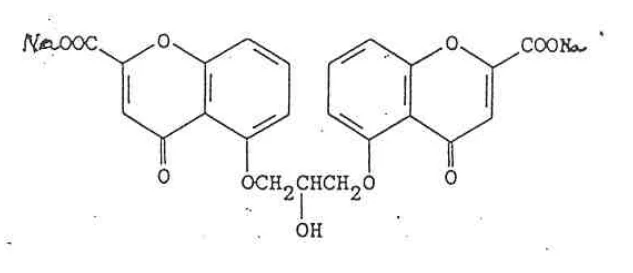
Molecular Formula: C23H14Na2O11
Molecular Weight: 512 g/mol
Chemical Name: Disodium 1,3-bis (2-carboxychromon-5-yloxy)-2-hydroxypropane)
Proper (Common) Name: Cromolyn Sodium
Description:
An odourless, white, hydrated crystalline powder. It is freely soluble in water up to 5 percent at 20EC. It is insoluble in alcohol and sparingly soluble in common organic solvents such as dioxan, pyridine, ether and chloroform.
Composition:
pms-SODIUM CROMOGLYCATE nebulizer solution is a sterile 1% (W/V) solution of sodium cromoglycate, in purified water.
Storage recommendation:
Store between 15EC and 30EC. Do not refrigerate. Protect from direct sunlight. Discard any unused polynebs in opened foil packs after 3 months. Do not use the solution if it contains a precipitate.
AVAILABILITY
pms-SODIUM CROMOGLYCATE nebulizer solution (sodium cromoglycate) 1 % W/V, is available in cartons of 50. Each polyneb contains 2 mL of a sterile 1% cromolyn sodium solution in water.
INFORMATION FOR THE CONSUMER
Directions for Use
Method of Administration: pms-SODIUM CROMOGLYCATE nebulizer solution must be administered from a power- operated nebulizer equipped with a suitable face mask and having an adequate flow rate (6-8 litres/min). Hand operated nebulizers are not suitable. Your physician will advise you on the choice of a suitable nebulizer and how it is to be used. Do not use pms-SODIUM CROMOGLYCATE nebulizer solution in any other apparatus without consulting your physician.
Dosage: Nebulization should be carried out four times per day or as directed by your physician, using the contents of a new plastic polyneb each time. The clinically effective nebulization period is 5-10 minutes. Discard any solution remaining in the nebulizer.
Inhalation: The device for nebulization must be assembled and used in accordance with the instructions provided by the manufacturer or your physician.
Precautions: pms-SODIUM CROMOGLYCATE nebulizer solution should not be mixed with other medications for nebulization.
Use a new plastic polyneb for each dose.
Contraindications: Other than hypersensitivity to the sodium cromoglycate there are no specific contraindications. It is accepted medical practice to be cautious of using any medication during the first three months of pregnancy.
Cleaning Instructions (Home Use): Your nebulizer must be kept thoroughly clean. For proper cleaning procedures follow the instructions given by the manufacturer.
Storage: pms-SODIUM CROMOGLYCATE nebulizer solution should be stored at room temperature (15EC to 30oC). Do not refrigerate. Protect from direct sunlight. Discard any unused polynebs in opened foil packs after 3 months. Do not use the solution if it contains a precipitate.
AVAILABILITY: Cartons containing 50 X 2 mL Polynebs.
Instructions for Use
BEFORE STARTING TREATMENT WITH THIS DRUG, BE SURE THAT YOU ARE FULLY FAMILIAR WITH THE USE AND PROPER CARE OF YOUR NEBULIZER.
- 1.
Your physician has prescribed for you pms-SODIUM
CROMOGLYCATE nebulizer solution. The contents of pms-SODIUM CROMOGLYCATE nebulizer solution in polynebs are to be inhaled from a nebulizer. Do not open the foil pack until the polynebs are required.
- 2.
Prepare the nebulizer for filling according to the manufacturer=s
instructions.
- 3.
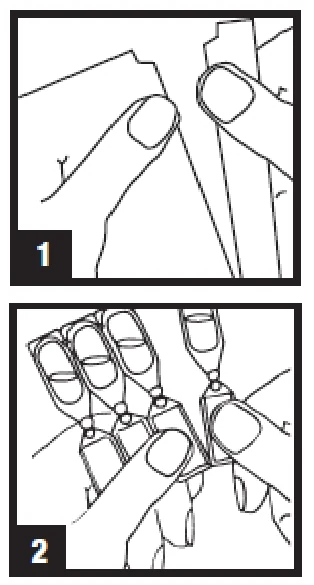
To open, tear the foil pouch at the little incision on the top of the
pouch (Diagram 1) Remove the polynebs.
- 4.
To detach a pms-SODIUM CROMOGLYCATE nebulizer solution
polyneb, push one polyneb on the side and away, beginning with the cap, while holding the remaining polynebs securely (Diagram 2). Return the remaining polynebs to the foil pouch and place the pouch back in the carton.
- 5.
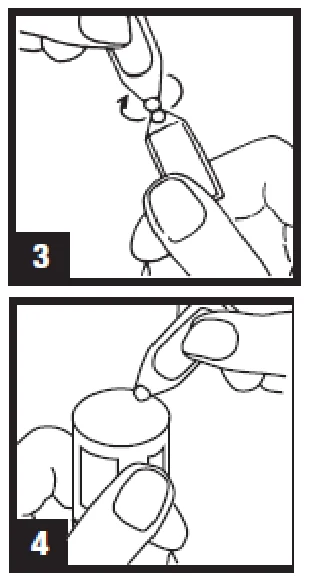
Holding the top of the polyneb securely, twist the body to open
(Diagram 3).
- 6.
Place the open end of the polyneb well into the nebulizer cup and
squeeze slowly (Diagram 4). Ensure the contents are empted into the nebulizer cup.
- 7. Assemble the nebulizer and use as directed.
- 8.
Breath calmly and evenly as much as possible until no more mist is
formed in the nebulizer chamber. At this point, treatment is finished.
- 9.
After use discard any solution remaining in the nebulizer cup. Clean
the nebulizer according to the manufacturer=s instructions.
If further information on pms-SODIUM CROMOGLYCATE nebulizer solution or nebulization is required, consult your physician.
PHARMACOLOGY
ANIMAL STUDIES
Sodium cromoglycate appears to act mainly through a local effect on the lung mucosa, nasal mucosa, and eyes.
Sodium cromoglycate prevents release of the mediators of type I allergic reactions, including histamine and slow- reacting substance of anaphylaxis (SRS-A), from sensitized mast cells, initiated by the interaction of antigen with reagin antibodies.
When sodium cromoglycate was administered intradermally with human reaginic serum to macaque monkeys (Macaca arctoides) previously sensitised to the antigen, the compound inhibited the passive cutaneous anaphylactic (PCA) reactions. In other macaque monkeys, sodium cromoglycate did not inhibit the PCA skin reactions when administered intradermally with either histamine, bradykinin, or 5-hydroxy-tryptamine. Using anaesthetised marmosets (Hapale jacchus), passively sensitized with human reaginic serum, Sodium Cromoglycate was able to substantially inhibit the antigen-induced histamine bronchoconstriction after antigen challenge.
Sodium cromoglycate effectively and completely inhibits the homologous PCA reactions with reagin-like antibody in rats using egg albumin/B. pertussis and N. brasiliensis sensitized systems.
Examination of the PCA sites revealed that a rapid mast cell degranulation was a feature of reagin-induced PCA reactions which was markedly inhibited by sodium cromoglycate. This interference with mast cell permeability was not unspecific since sodium cromoglycate did not prevent the skin reactions or mast cell disruption produced by compound 48/80, a potent histamine releaser.
In contrast, homologous PCA reactions with precipitating antibody in guinea pigs were unaffected by sodium cromoglycate. The drug also failed to provide any protective activity against either aerosol or intravenous antigen induced bronchospasm.
Furthermore sodium cromoglycate did not have any effect on the release of histamine or slow-reacting substance - A(SRS-A) from actively or passively sensitized guinea-pig in vitro chopped lung when challenged with antigen.
In vitro studies
In a series of experiments using the isolated ileum of the guinea-pig, sodium cromoglycate had no antagonistic effect against the following spasmogens, SRS-A, bradykinin, substance P, nicotine, acetylcholine, serotonin (5-HT), and histamine.
Histamine and SRS-A release from fresh human chopped lung passively sensitized with human reaginic serum was measured after in vitro exposure to specific antigens. Sodium cromoglycate, over a narrow range of concentrations, inhibited the release of both SRS-A and histamine. In vitro, sodium cromoglycate had no direct action on human bronchial chain nor did it have any antagonistic effect towards the response to acetylcholine, prostaglandin F2, SRS-A and histamine.
The results of these studies indicate that sodium cromoglycate interferes with the release of the spasmogens rather than antagonize them following their release.
Furthermore, the studies emphasize that sodium cromoglycate is most effective prior to the antigen challenge.
Other Studies:
Sodium cromoglycate has few pharmacological effects. It is neither a bronchodilator nor an anti-inflammatory agent and its action is distinct from that of corticosteroids.
Large doses of sodium cromoglycate had negative or only weak inconsistent effects on the respiratory or cardiovascular systems of the rat, cat, guinea-pig and pig. However in the marmoset and dog there were marked effects.
In anaesthetized marmosets sodium cromoglycate produced a large rise in blood pressure and heart rate with doses of 20 μg/kg and above; with higher doses there was also transient apnoea. These effects were caused by stimulation of the post-ganglionic sympathetic fibres. In the marmoset sodium cromoglycate showed no significant effect in several anti-inflammatory tests.
The effects of sodium cromoglycate in the conscious and anaesthetised dogs are similar, and result from activation, by sodium cromoglycate, of chemoreceptors situated in the pulmonary and coronary circulation initiating a reflex response.
The reflex, mediated via vagal afferents, produces general stimulation of the parasympathetic system producing bradycardia hypotension, bradypnoea and sometimes apnoea.
In experiments on cat trachea in vivo, and on isolated frog oesophagus and human bronchial epithelium in vitro, sodium cromoglycate at high concentrations did not interfere with pulmonary clearance.
Sodium cromoglycate does not effect steroid metabolism as indicated by plasma corticosterone and adrenal ascorbic acid levels.
ABSORPTION, DISTRIBUTION, AND EXCRETION
Studies have been made on the distribution, metabolism, and excretion of sodium cromoglycate in the mouse, rat, guinea-pig, rabbit, cat, dog, monkey (Macaca speciosa) and man. The drug was administered by the intravenous, oral and nasal (rat) routes, as well as by inhalation. Tritium (3H) labelled sodium cromoglycate has been used for the animal studies, whereas 14C labelled drug, radioimmunassay, HPLC, and spectrophometric methods have been used in human studies.
Inhalation Studies:
After administration of sodium cromoglycate as a fine powder aerosol into the lungs of rats, rabbits and monkeys, all animals showed rapid clearance of the drug from the lungs. The rate of absorption was such that 75% of the inhaled dose had been removed in 2 hours and after 24 hours less than 2% of the inhaled dose remained following absorption. Only the liver and kidneys accumulate sodium cromoglycate to any extent, prior to excretion of the compound unchanged in the bile and urine.
Similar studies in human volunteers have shown that only a small proportion of the administered dose is absorbed from the lung. A peak plasma level at 10 minutes was followed by a fall in concentration similar to that demonstrated in animal experiments. Following inhalation of the powder aerosol, 3-5% of the dose was excreted in the urine over a 6 hour period.
Assuming a similar rate of biliary excretion then approximately 10% of the administered dose was absorbed from the lung.
Other Routes of Administration
Following intravenous doses of sodium cromoglycate, there is a rapid clearance of the compound from the plasma and a general distribution throughout the tissues with only the liver and kidneys accumulating the compound to any extent. Rapid excretion of the compound, unchanged, follows.
Intramuscular administration resulted in a pattern of absorption and excretion similar to that which occurs after intravenous administration. In the rat and dog no tissue accumulation could be detected after repeated intramuscular injections.
In the monkey, 6 hours after intravenous administration 80- 90% of the total dose could be accounted for by biliary and renal excretion. At this stage, there is general distribution of the sodium cromoglycate throughout the tissues with a higher concentration in the kidneys and liver.
After intranasal administration of sodium cromoglycate to rats, peak plasma levels occurred approximately 20 minutes after dosing. The AUC0-3 corresponded to an absorption of 60% of the dose over 3 hours and the total amount of sodium cromoglycate excreted in the bile over the same time period corresponded to an absorption of 53% of the dose administered.
In man, oral administration of sodium cromoglycate is followed by a low rate of urinary excretion. In one study, the mean urinary excretion over 24 hours was only 0.5% of the dose administered. This indicates that absorption of sodium cromoglycate through the gastrointestinal tract is low.
TOXICOLOGY
Acute Toxicity:
In acute toxicity tests in small laboratory animals the LD50 on parenteral administration was usually between 2000 and 4000 mg/kg.
Subacute and Chronic Toxicity
In prolonged test in rats no toxic effects resulted from 90 daily subcutaneous injections except at doses greater than 30 mg/kg. The only pathological lesion produced in any of these tests was an inflammation and degeneration of the renal tubules. In Rhesus monkeys no evidence of renal or other toxicity could be found after 180 daily doses of 50 mg/kg had been given by the intravenous route.
No toxicity was found in 90 day inhalation studies in rats, guinea pigs, and monkeys.
In the case of the monkeys the drug was administered as a powder and each monkey received a capsule every 5 minutes for 6 hours a day, 5 days a week for 3 months. In none of these tests could any lung changes be detected nor were there any other indications of toxicity.
In one inhalation study using a group of 30 rats exposed to a concentration of 4.6 mg/L of air for one hour and three hours daily for 5 weeks. No toxic effects resulting from this treatment was observed.
A chronic inhalation toxicological study of sodium cromoglycate, was performed in the Squirrel monkey. Each of 5 experimental groups consisted of 3 male and 3 female monkeys. Groups I and II were exposed 6 hr/day, 7 days/week, for 1 year to aerosols containing sodium cromoglycate in approximate concentrations of 0.5 and 0.05 mg/liter of air, respectively. Group III animals were similarly exposed to an aerosol containing 0.01 (mg) of lactose/liter of air. Group IV subjects served as chamber controls and the room controls (Group V) were maintained in the animal holding room throughout the study. A comprehensive toxicological evaluation of the monkeys was carried out prior to and throughout the study. No histopathological changes were seen in any variable.
Proliferative Arteriopathy in Macaque Monkeys: In four out of seven toxicity studies with sodium cromoglycate, a proliferative arterial lesion has been found in some treated and untreated control macaque monkeys. Although in these four studies, the proliferative arterial lesion occurred predominantly in the kidneys, such lesions were also found in other organs. In only one of these macaque monkey studies was there an increased incidence of the lesion in the drug treated group.
Further studies were therefore carried out in laboratories where sodium cromoglycate had not been used.
Proliferative Arteritis in Macaque Monkey in sodium cromoglycate studies:
Route Duration Overall Control Treatment Inhalation 3 months 0 in 18 0 in 6 0 in 12 Inhalation 4 months 7 in 30 2 in 18 5 in 12 Inhalation 4 months 2 in 45 1 in 18 1 in 27 Inhalation 3 months 2 in 25 1 in 17 1 in 8 IN. acute(7 days) 0 in 16 none 0 in 16 IN. acute(7 days) 1 in 8 0 in 2 1 in 6 IN. 6 months 0 in 30 0 in 67 0 in 24
Total 9 in 172 2 in 67 7 in 105
Since the lesion has not been seen in chronic primate studies with baboons or squirrel monkeys treated for six months or longer with sodium cromoglycate or in toxicity studies in rodents, it is inferred that the lesion may reflect a spontaneous disease of Macaque monkeys. The possibility that the increased incidence of the lesion in treated monkeys is due to the administration of Sodium Cromoglycate can neither be affirmed nor refuted.
TERATOGENICITY
No teratogenic effects were seen in rabbits in which the compound was given intravenously, daily throughout pregnancy, in doses up to 250 mg/kg. The latter dose was sufficient to cause severe damage to the maternal kidneys. At even higher doses (500 mg/kg) some partially resorbed foetuses showed developmental defects but all full-term foetuses were normal. In rats dosed at 185 mg/kg daily s.c. throughout pregnancy, one foetus (out of 272) showed a grossly shortened humerus.
No abnormalities were seen at lower doses (90 mg/kg). No teratogenic effect was seen in mice at daily doses of up to 540 mg/kg.
Safety in Pregnancy
A ten year study was recently completed in Sri Lanka (1982) to test the safety of sodium cromoglycate in pregnancy. 296 pregnant asthmatic women, 18 to 44 years of age were maintained on a 20 mg capsule of sodium cromoglycate, 2 to 3 times a day during a part or throughout the pregnancy. 292 of the pregnancies ended in the birth of a normal child whilst 4 infants (1.35%) had malformations. One example each was seen of a club foot, non-fused septum, harelip without cleft palate and patent ductus arteriosis.
Information on the incidence of congenital malformations within the Sri Lanka population is not available. Epidemiological studies suggest that the incidence of abnormalities is 2-3% for the entire human population.
CYTOTOXICITY
At the cellular level, no effects of sodium cromoglycate were observed at concentrations up to and including 1 mg/mL upon the following:
$ Migration characteristics of guinea-pig macrophages
$ Morphology of chick embryo-fibroblasts.
$ Morphology of human epithelial cells from a cell line.
$ Ciliary activity of samples of human ciliated epithelium.
Tests on human respiratory epithelium were undertaken to detect possible interference with pulmonary clearance mechanisms.
Effect on immune system
The effect of the drug on microbiological neutralizing systems including viruses in vivo and in vitro was studied.
No effect was observed on : various antibody neutralizing or agglutinating systems: development of active immunity or antibody production; protection conferred by passive or active immunity.
No effect was found on the following virus/antibody neutralizing systems in vitro: Influenza, Polio; with human or rabbit anti serum. Vaccinia; with rabbit antiserum. Herpes simplex; with human antiserum.
None of the neutralization titres studied where affected by the presence of the compound up to concentrations of 1000 μg/mL. No effect was observed on the LD50 in mice or in mouse adapted polio virus, nor on their protection by Salk-vaccine.
No effect was observed on the neutralization of clostridium welchii type A α toxin by specific antiserum, nor on several bacterial agglutinating systems tested. No effect was observed on the cytotoxic behaviour of rabbit anti-Hela cells in-vitro.
BIBLIOGRAPHY
- 1.
Altounyan, R.E.C. Sodium Cromoglycate in Allergic and Non-Allergic Obstructive
Airways Disease. Phamakotherapie 4:163-167, (1981).
- 2.
Ashton, M.J., Clark, B., Jones, K.M., Moss, G.F., Neale, M.G., and Ritchie, Jean T. The
Absorption, Metabolism and Excretion Disodium Cromoglycate in Nine Animal Species. Toxicology and Applied Pharmacology 26: 319-328 (1973).
- 3. Beach, J.E. and Blair, A.M.J.N., Pirani, C.L., Cox, G.E., Dixon, F.J. An Unusual Form of Proliferative Arteriopathy in Macaque Monkeys. Experimental and Molecular Pathology 21: 322-338 (1974).
- 4.
Beach, J.E. and Greenough, R.J. Inhalation Study of a Dry Powder Aerosol of Disodium
Cromoglycate in Rats. Part 1.5 Week Toxicity Study. Experimental Model Systems in Toxicology and Their Significance in Man. Proceeding of the European Society for the Study of Drug Toxicity. Vol. XV Zurich, June 1973.
- 5.
Blair, A.M.J.N. and Woods, Audry. The Effects of Isoprenaline, Atropine and Disodiurn
Cromoglycate on Ciliary Motility and Mucous Flow Measured in vivo in Cats. Br. J. Pharmacol. Proceedings of the British Pharmacological Society 2nd-3rd January, 1969.
- 6.
Brogden, R.N., Speight, T.M. and Avery, G.S. Sodium Cromoglycate (Cromolyn
Sodium): A Review of its Mode of Action,Therapeutic Efficacy and Use. Drugs 7:164-282 (1974).
- 7.
Buckley, G.A., Murphy, A.J. & Neale, M.G. Distribution of Sodium Cromogylcate in Rat
Kidney using Microautoradiography. Br. J. Pharmacol. 80: 497 (1983).
- 8.
Clarke, B., Moss, G.F., Neale, M.G., Distribution of Plasma Protein Binding of Sodium
Cromoglycate. J. Pharm. Pharmac, 30: 386-387 (1979).
- 9.
Clarke, B., Neale, M.G. Hepatic and Renal Clearance of Sodium Cromoglycate. Pharm.
Pharmacol 33: 744-745 (1981).
- 10.
Corkey, C., C. Mindorff, H., Levinson and C. Newth. Comparison of Three Different
Preparations of Disodium Cromoglycate on the Prevention of Exercise Induced Bronchospasm. Am. Rev. Respir. Dis. 126(6):623-626 (1982).
- 11.
Cox, J.S.G. & Beach, J.E., Blair, A.M.J.N., Clarke, A.J., King, J., Lee, T.B., Loveday,
D.E.E., Moss, G.F., Orr, T.S.C. Ritchie, Jean T., Sheard, P. Disodium Cromoglycate-(Intal). In Harper N.T. and Simmonds A.B. (eds). Adv. Drug Res. 5: 115-195, (1970), London: Academic Press.
- 12.
Dahl, R. and J.M. Henriksen, Inhibition of Exercise-induced Bronchoconstriction by
Nebulised Sodium Cromoglycate in Patients with Bronchial Asthma. Scand. J. Resp. Dis. 60:51-55 (1979).
- 13.
Dixon, M., Jackson, D.M. & Richards, I.M. The Action of Sodium Cromoglycate on C
Fibre Endings in the Dog Lung. Br. J. Pharmac. 70: 1, 11-13 (1980).
- 14.
Eigen, H., et.al, Evaluation of the Addition of Cromolyn Sodium to Bronchodilator
Maintenance Therapy in the Long-Term Management of Asthma. Allergy Clin. Immunol. 80(4):612-621 (1987).
- 15.
Farmer, J.B., Richards, I.M., Sheard,P. & Woods, Audrey, M. Mediators of Passive Lung
Anaphylaxis in the Rat. Br. J. Pharmac 55: 57-64 (1975).
- 16.
Fisher, A.N., Browns, K., Davis, S.S., Parrie, G.D. and Smith, D.A. The Nasal
Absorption of Sodium Cromoglycate in the Albino Rat. J. Pharm Pharmacol.
- 17.
Goose, J. and Blair, A.M.J.N. Passive Cutaneous Anaphylaxis in the Rat, Induced with
Two Homologous Reagin-Like Antibodies and its Specific Inhibition with Disodium Cromoglycate. Immunology 16:749 (1969).
- 18.
Griffin, M.P., N. MacDonald and E. R. McFadden, Short and Long-Term Efffects of
Cromolyn Sodium on the Airway Reactivity of Asthmatics. J. Allergy Clin. Immunol. 71(3):331-338 (1983).
- 19.
Hyde, J.S., P. Isenberg and L.D. Floro. Short-and Long-Term Cromolyn Sodium in
Chronic Asthma. Chest, 63(6):875-880 (1973).
- 20.
Jones, K.M. and Moss, G.F. Inhalation Toxicity Study of a Dry Powder Aerosol of
Disodium Cromoglycate in Rats. Part II. Estimation of the Amount Absorbed. Proceeding of the European Society for the Study of Drug Toxicity Vol. XV, June 1973.
- 21.
Juniper, E.F., M.C.S.P., Latimer, K.M., M.B., Morris, M.M., Roberts,.S., Tech, M.,
Hargreave, F.E., M.D. Airway Responses to Hyperventilation of Cold Dry Air: Duration of Protection by Cromolyn Sodium. J. Aller. Clin. Immun. 78(3 PEI): 387 (1986).
- 22.
Lee, Vincent H.L., Swarbrck, James, Strafford, Rorbert E. Jr. and Morimoto, Kim W.
Disposition of Topically Applied Sodium Cromoglycate in the Albino Rabbit Eye. J. Pharm. Pharmacol 35: 445-450 (1983).
- 23. Lemire, I., Cartier, A., Malo, J.L., Pineua, L., R.T., Ghezzo, H., and Martin, R.R. Effect of Sodium Cromoglycate on Histamine Inhalation Tests. J. Aller. Clin. Immun., 73(2):234 (1984).
- 24. Moss, G.F., Jones, K.M., Ritchie, Jean T. and Cox, J.S.G. Distribution and Metabolism of Disodium Cromoglycate in Rats.Toxicology and Applied Pharmacology 17: 691-698 (1970).
- 25.
Moss, G.F., Jones, K.M., Ritchie, J.T.,and Cox, J.S.G. Plasma Levels and Urinary
Excretion of Disodium Cromoglycate After inhalation by Human Volunteers. Toxicology and Applied Pharmacology 20:147-156 (1971).
- 26.
Absorption and Clearance of Disodium Cromoglycate from the Lung in Rat, Rabbit, and
Monkey. Toxicology and Applied Pharmacology 17: 699-707 (1970).
- 27.
Myers, D.J., Bigby, B.G., and Boushey, H.A. The Inhibition of Sulfur Dioxide- Induced
Bronchoconstriction in Asthmatic Subjects by Cromolyn is Dose Dependent. Am. Rev. Resp. Dis. 133(6): 1150-1153 (1986).
- 28.
Neale, M.G., Brown, K., Hodder, R.W. & Auty, R.M. The Pharmacokinetics of Sodium
Cromoglycate in Man After Intravenous and Inhalation Administration. Br. J. clin. Pharmac. 22: 373-382 (1986).
- 29.
Nizami, R.M., and Baboo, M.T. Efficacy Double-Blind, Crossover Study of Sodium
Cromoglycate in Patients with Seasonal Allergic Rhinitis. Annals of Allergy, 38:42-45, (1977).
- 30.
Procter, B.G., Burford, R.G., Blair,A.M.J.N. and MacFarland, H. A Study of the Chronic
Toxicity of Inhaled Disodium Cromoglycate in the Squirrel Monkey. Tox. Appl. Pharmaco 25: 479 (1973).
- 31.
Resta, 0., Barbaro, M.P. Foschino, Carnimeo, N., A Comparison of Sodium
Cromoglycate Nasal Solution and Powder in the Treatment of Allergic Rhinitis. The British Journal of Clinical Practice 36(3):94-8 (1982).
- 32.
Sheard, P. and Blair, A.M.J.N. Disodium Cromoglycate. Activity in Three in vitro
Models of the Immediate Hypersensitivity Reaction in Lung. Int. Arch. Allergy
- 33.
Smith, A., and Fisher, N. Age Related Changes In the Clearance and Oral Absorption of
Sodium Cromoglycate in the Developing Albino Rat. J. Pharm. Pharmacol. 32:823-827 (1980).
- 34.
Spitzer, J.C. Interaction of Disodium Cromoglycate with Calcium Ions in 2- Propanol.
Int. Archs Allergy appl. Immun. 60: 356-358 (1979).
- 35.
Steward, A.G. and Fennessy, M.R. Dual Modes of Action for Disodium Cromoglycate in
Inhibition of Antigen-induced Contractions of Guinea- Pig Isolated Airways Smooth Muscle. Clinical and Experimental Pharmacology & Physiology 10:595-603 (1983).
- 36.
Tullet, W. M., K.M. Tan, R.T. Wall, and K.R. Patel. Dose-Response Effect of Sodium
Cromoglycate Pressurised Aerosol in Exercise Induced Asthma. Thorax
- 37.
Walker, S.R., Evans, Marion E., Richards, A.J. and Paterson, J.W. The Fate of[14C]
Disodium Cromoglycate in Man. J. Pharm. Pharmac., 24: 525-531 (1972).
- 38. Wells, E., and J. Mann. Phosphorylation of a Mast Cell Protein in Response to Treatment with Anti-Allergic Compounds. Biochem Pharmacol, 32 (5): 837- 42(1983).
- 39.
Wells, Edward, Jackson Clive G., Harper, Stephen T., Mann, John and Eady, Roy P.
Characterization of Primate Bronchoalveolar Mast Cells. The Journal of Immunology 137:3941-3945 (1986).
- 40.
Welsh, P.W., Stricher, W.E., Chy, C.-P., Naessens, J.M., Reed, C.E., Marcoux, J.P.
Efficacy of Beclomethasone Nasal Solution, Flunisolide, and Cromolyn in Relieving Symptoms of Ragweed Allergy. Mayo Clin Proc 62: 125-134 (1987).
- 41.
Welsh, P.W., Yunginger, J.W., Kern, E.B.,and Gleich, G.J. Preseasonal IgE Ragweed
Antibody Level as a Preictor of Response to Therapy of Ragweed Hay Fever with Intranasal Cromolyn Sodium Solution. J. Allergy Clin. Immunol. 60(2):104-109 (1977).