


Product Monograph - Apo-Eslicarbazepine
SUMMARY PRODUCT INFORMATION
| Route of Administration | Dosage Form / Strength | Nonmedicinal Ingredients |
|---|---|---|
| Oral | Tablets / 200 mg, 400 mg, 600 mg, and 800 mg | Colloidal silicon dioxide, croscarmellose sodium, magnesium stearate, microcrystalline cellulose |
INDICATIONS AND CLINICAL USE
APO-ESLICARBAZEPINE (eslicarbazepine acetate tablets) is indicated as:
- Monotherapy in the management of partial-onset seizures in adult patients with epilepsy. All patients who participated in the monotherapy trial were newly or recently diagnosed with epilepsy (see CLINICAL TRIALS).
- Adjunctive therapy in the management of adults, and children above 6 years of age, with partial-onset seizures who are not satisfactorily controlled with conventional therapy.
Geriatrics (> 65 years of age)
There were insufficient numbers of elderly patients who completed partial-onset seizure controlled trials (N=39) to determine the safety and efficacy of eslicarbazepine acetate tablets in this patient population. Caution should be exercised during dose titration, and age-associated decrease in renal clearance should be considered in elderly patients [see also WARNINGS AND PRECAUTIONS, Special Populations, Geriatrics; ADVERSE REACTIONS, Comparison of Gender, Age and Race, and ACTION AND CLINICAL PHARMACOLOGY, Special Populations and Conditions, Geriatrics].
Pediatrics (<18 years of age)
The safety and efficacy of eslicarbazepine acetate tablets has not been established in children under 6 years of age. APO-ESLICARBAZEPINE is not indicated for use in this patient population [see WARNINGS AND PRECAUTIONS, Abnormal Thyroid Function Tests, Special Populations, Pediatrics, ADVERSE REACTIONS, ACTION AND CLINICAL PHARMACOLOGY, Pharmacokinetics, and CLINICAL TRIALS].
CONTRAINDICATIONS
- Patients with a known hypersensitivity to APO-ESLICARBAZEPINE (eslicarbazepine acetate) or other carboxamide derivatives (e.g., carbamazepine, oxcarbazepine) or any of its components. For a complete listing, see the Dosage Forms, Composition and Packaging section of the product monograph.
- Patients with a history of, or presence of, second-or third-degree atrioventricular (AV) block.
WARNINGS AND PRECAUTIONS
General
Withdrawal of Antiepileptic Drugs (AEDs)
As with all AEDs, APO-ESLICARBAZEPINE (eslicarbazepine acetate tablets) should be withdrawn gradually to minimize the potential of increased seizure frequency, but if withdrawal is needed because of a serious adverse event, rapid discontinuation can be considered [see DOSAGE AND ADMINISTRATION, Recommended Dose and Dosage Adjustment].
Cardiac Rhythm and Conduction Abnormalities
PR Interval Prolongation
APO-ESLICARBAZEPINE causes PR interval prolongation [see ACTION AND CLINICAL PHARMACOLOGY, Cardiac Electrophysiology]. Caution should be observed in patients with first degree atrioventricular block, conduction disorders, a history of syncope or arrhythmia, angina, or ischemic heart disease. Such patients should receive careful monitoring, with ECG recordings at baseline and after titration of APO-ESLICARBAZEPINE to steady-state. Concomitant medications that result in a PR interval prolongation (e.g., carbamazepine, pregabalin, lamotrigine, beta-blockers) should be carefully considered to determine whether the therapeutic benefit outweighs the potential risk [see DRUG INTERACTIONS].
In Phase III adult adjunctive epilepsy studies with eslicarbazepine acetate tablets, the mean increase in PR interval at the end of 12 weeks maintenance treatment was 2.4 msec, 1.3 msec, and 2.6 msec in the 400, 800, and 1200 mg/day groups, respectively, and 0.6 msec in the placebo group. The mean maximum increase in PR interval in these controlled trials was 2.4 msec, 1.3 msec and 2.6 msec in the 400, 800, and 1200 mg/day groups, respectively, and 0.6 msec in the placebo group. A total of 9/1021 (0.8%) eslicarbazepine acetate tablets patients and 1/426 (0.2%) placebo patients had a PR-interval value >200 msec at study end that was not present at baseline.
Patients with significant electrocardiographic (ECG) abnormalities were systematically excluded from these trials.
In a clinical pharmacology ECG trial of healthy subjects, the maximum mean difference from placebo in PR interval was 4.4 msec at 5 h post-dosing on day 5 in the 1200 mg (maximum recommended daily dose) treatment arm. For the 2400 mg (2 times maximum recommended daily dose) treatment arm, the maximum mean difference from placebo was 8.2 msec at 3 h post-dosing on day 5 [see ACTION AND CLINICAL PHARMACOLOGY, Cardiac Electrophysiology].
Post-marketing cases of atrioventricular block have also been reported.
Heart Rate
In Phase III adult adjunctive epilepsy studies, the mean change in heart rate at the end of 12 weeks maintenance treatment was -0.5 bpm, 0.8 bpm, and -0.3 bpm in the 400, 800, and 1200 mg/day groups, respectively, and -0.6 bpm in the placebo group. In a clinical pharmacology ECG trial of healthy subjects, eslicarbazepine acetate tablets was associated with a dose-dependent increase in heart rate [see ACTION AND CLINICAL PHARMACOLOGY, Cardiac Electrophysiology]. The maximum mean difference from placebo was 3.6 bpm and 6.8 bpm in the 1200 and 2400 mg dose groups, respectively. Caution should be observed in patients with cardiac conditions that could be worsened by an increase in heart rate, such as tachyarrhythmias or ischemic heart disease.
Atrial Fibrillation and Atrial Flutter
APO-ESLICARBAZEPINE administration may predispose patients to atrial arrhythmias (atrial fibrillation or flutter), especially in patients with cardiovascular disease. Patients should be made aware of the symptoms of atrial fibrillation and flutter (e.g., palpitations, rapid or irregular pulse, shortness of breath) and told to contact their physician should any of these symptoms occur. One case of atrial flutter was reported in open-label epilepsy trials.
Hepatic/Biliary/Pancreatic
Drug-induced Liver Injury
Some eslicarbazepine acetate tablets-treated adult patients experienced dose-independent elevations in transaminases >3 times upper limit of normal. In other cases [3/4940 (0.06%)] these elevations were accompanied by concomitant elevation (>2 times upper limit of normal) in total bilirubin. In the Phase III monotherapy epilepsy study, elevations in transaminases occurred in 0.7% (3/401) eslicarbazepine acetate tablets-treated patients. The combination of transaminase elevations and elevated total bilirubin without evidence of obstruction is generally recognized as an important predictor of severe liver injury. APO-ESLICARBAZEPINE should be discontinued in patients with jaundice or laboratory evidence of liver injury suggestive of hepatic dysfunction (eg, nausea/vomiting, anorexia, pruritus, right upper quadrant pain, etc).
Hypersensitivity
Serious Dermatologic Reactions
Serious dermatologic reactions including Stevens-Johnson Syndrome (SJS) and toxic epidermal necrolysis (TEN) have been reported in association with eslicarbazepine acetate tablets use. Serious and sometimes fatal dermatologic reactions, including TEN and SJS, have also been reported in patients using oxcarbazepine or carbamazepine which are chemically related to eslicarbazepine acetate tablets. The reporting rate of these reactions associated with oxcarbazepine use exceeds the background incidence rate estimates by a factor of 3- to 10-fold. The reporting rates for eslicarbazepine acetate tablets have not been determined. Risk factors for the development of serious dermatologic reactions with APO-ESLICARBAZEPINE use have not been identified.
If a patient develops a dermatologic reaction while taking APO-ESLICARBAZEPINE, discontinue APO-ESLICARBAZEPINE use, unless the reaction is clearly not drug-related. Patients with a prior dermatologic reaction with carboxamide derivatives such as oxcarbazepine, carbamazepine, or eslicarbazepine acetate should ordinarily not be treated with APO-ESLICARBAZEPINE.
Ancestry and Allelic Variation in the HLA-A Gene
There are some data that suggest HLA-A*3101 is associated with an increased risk of carbamazepine induced cutaneous adverse drug reactions including SJS/TEN, Drug rash with eosinophilia (DRESS), or less severe acute generalized exanthematous pustulosis (AGEP) and maculopapular rash in people of European descent and the Japanese population.
The frequency of the HLA-A*3101 allele, an inherited allelic variant of the HLA-A gene, varies widely between ethnic populations and its frequency is about 2 to 5% in European populations and about 10% in the Japanese population. The frequency of this allele is estimated to be less than 5% in the majority of Australian, Asian, African and North American populations with some exceptions within 5 to 12%. Prevalence above 15% has been estimated in some ethnic groups in South America (Argentina and Brazil), North America (US Navajo and Sioux, and Mexico Sonora Seri) and Southern India (Tamil Nadu) and between 10% to 15% in other native ethnicities in these same regions.
There are insufficient data on patients treated with eslicarbazepine acetate tablets to support a recommendation for testing the presence of HLA-A*3101 allele in patients prior to initiating treatment with APO-ESLICARBAZEPINE. Screening is generally not recommended for any current APO-ESLICARBAZEPINE users, as the risk of SJS/TEN, AGEP, DRESS and maculopapular rash is largely confined to the first few months of therapy, regardless of HLA-A*3101 status.
Ancestry and Allelic Variation in the HLA-B Gene
In studies that included small samples of carbamazepine-treated patients of Han Chinese and Thai origin, a strong association was found between the risk of developing SJS/TEN and the presence of HLA-B*1502, an inherited allelic variant of the HLA-B gene. The HLA-B*1502 allele is found almost exclusively in individuals with ancestry across broad areas of Asia. Results of these studies suggest that the presence of the HLA-B*1502 allele may be one of the risk factors for anticonvulsant-associated SJS/TEN in patients with Asian ancestry. Therefore, physicians should consider HLA-B*1502 genotyping as a screening tool in these patients. Until further information is available, the use of APO-ESLICARBAZEPINE and other anti-epileptic drugs associated with SJS/TEN should also be avoided in patients who test positive for the HLA-B*1502 allele unless the benefits clearly outweigh the risks. Screening is not generally recommended in patients from populations in which the prevalence of HLA-B*1502 is low or in current APO-ESLICARBAZEPINE users, as the risk of SJS/TEN is largely confined to the first few months of therapy, regardless of HLA-B*1502 status.
Drug Reaction with Eosinophilia and Systemic Symptoms (DRESS)
Drug Reaction with Eosinophilia and Systemic Symptoms (DRESS), also known as Multiorgan Hypersensitivity, has been reported in patients taking eslicarbazepine acetate tablets and other antiepileptic drugs. DRESS may be fatal or life-threatening. DRESS typically, although not exclusively, presents with fever, rash, and/or lymphadenopathy, in association with other organ system involvement, such as hepatitis, nephritis, hematological abnormalities, myocarditis, or myositis sometimes resembling an acute viral infection. Eosinophilia is often present. Because this disorder is variable in its expression, other organ systems not noted here may be involved. It is important to note that early manifestations of hypersensitivity, such as fever or lymphadenopathy, may be present even though rash is not evident. If such signs or symptoms are present, the patient should be evaluated immediately.
If a patient develops a skin reaction or DRESS while taking APO-ESLICARBAZEPINE, unless the reaction is clearly not drug-related, APO-ESLICARBAZEPINE should be discontinued and replaced by an alternative antiepileptic medication. APO-ESLICARBAZEPINE should not be used in patients with known hypersensitivity to or prior dermatologic reaction to carboxamide derivatives (e.g., carbamazepine, oxcarbazepine) [see CONTRAINDICATIONS].
Anaphylactic Reactions and Angioedema
Rare cases of anaphylaxis and angioedema have been reported in adult patients taking eslicarbazepine acetate tablets. Anaphylaxis and angioedema associated with laryngeal edema can be fatal. If a patient develops any of these reactions after treatment APO-ESLICARBAZEPINE, the drug should be discontinued. Patients with a prior anaphylactic-type reaction with APO-ESLICARBAZEPINE or other carboxamide derivatives (e.g., carbamazepine, oxcarbazepine) should not be treated with APO-ESLICARBAZEPINE [see CONTRAINDICATIONS].
Hyponatremia
Clinically significant hyponatremia (sodium <125 mEq/L) has been reported during eslicarbazepine acetate tablets use in clinical trials and post-marketing use. Measurement of serum sodium and chloride levels should be considered during maintenance treatment with APO-ESLICARBAZEPINE, particularly if the patient is receiving other medications known to decrease serum sodium levels, and should be performed if symptoms of hyponatremia develop (e.g., nausea/vomiting, malaise, headache, lethargy, confusion, irritability, muscle weakness/spasms, obtundation, or increase in seizure frequency or severity). In three controlled adult adjunctive epilepsy studies, 1/196 patients (0.5%) treated with 400 mg, 4/415 patients (1.0%) treated with 800 mg, and 6/410 patients (1.5%) treated with 1200 mg of eslicarbazepine acetate tablets had one or more serum sodium values less than 125 mEq/L during treatment (placebo: none). A higher percentage of the eslicarbazepine acetate tablets-treated patients (5.1%) than placebo-treated patients (0.7%) experienced decreases in sodium values greater than 10 mEq/L. These effects were mostly dose-related, generally appeared within the first 8 weeks of treatment (as early as after 3 days) and, in some cases, led to eslicarbazepine acetate tablets discontinuation. Serious, life-threatening complications were reported with eslicarbazepine acetate tablets-associated hyponatremia (as low as 112 mEq/L) including seizures, severe nausea/vomiting leading to dehydration, severe gait instability, and injury. Some patients required hospitalization and permanent discontinuation of eslicarbazepine acetate tablets. Concurrent hypochloremia was also present in some patients with hyponatremia. Many patients who developed hyponatremia were asymptomatic.
In the controlled adult monotherapy epilepsy trial, sodium decreases of >10 mEq/L were seen in 11.1% of eslicarbazepine acetate tablets-treated patients. Sodium levels ≤125 mEq/L were found in 1.5% of eslicarbazepine acetate tablets-treated patients.
Cases of symptomatic hyponatremia and syndrome of inappropriate antidiuretic hormone secretion (SIADH) have been reported during post-marketing use. In clinical trials, patients whose treatment with eslicarbazepine acetate tablets was discontinued because of hyponatremia generally experienced normalization of serum sodium within a few days without additional treatment [see ADVERSE REACTIONS, Post-Market Adverse Drug Reactions].
Measurement of serum sodium levels should be considered for patients during maintenance treatment with APO-ESLICARBAZEPINE, particularly if the patient has had a previous history of hyponatremia, has a condition [e.g., SIADH (Syndrome of Inappropriate Antidiuretic Hormone Secretion)] or is receiving other medications known to decrease serum sodium level (e.g., diuretics, drugs associated with inappropriate ADH secretion) or if symptoms possibly indicating hyponatremia develop (e.g., nausea, malaise, headache, lethargy, confusion, obtundation, or increase in seizure frequency or severity). If any degree of hyponatremia develops, APO-ESLICARBAZEPINE dose reduction or discontinuation and alternative anti-epileptic medication should be considered.
Abnormal Thyroid Function Tests
In controlled adult adjunctive epilepsy trials, the incidence of hypothyroidism in eslicarbazepine acetate tablets 400 mg, 800 mg, and 1200 mg treatment groups was 0%, 1.0%, and 1.2%, respectively (placebo: 0.7%). Hypothyroidism led to discontinuation of one patient (0.2%) in the eslicarbazepine acetate tablets 1200 mg treatment group. In the controlled adult monotherapy epilepsy trial, the incidence of hypothyroidism in eslicarbazepine acetate tablets-treated patients was 2.5% (10/401). Dose-dependent decreases in serum T3 and T4 (free and total) values have also been observed in patients taking eslicarbazepine acetate tablets. Abnormal thyroid function tests should be clinically evaluated.
Evaluation of thyroid hormone status should be considered for patients treated with eslicarbazepine acetate, particularly for pediatric patients, due to the potential risk of sub-clinical or clinical hypothyroidism and long-term adverse effects on development that can occur in relation to undetected changes in thyroid hormone status.
Neurologic
Dizziness and Disturbance in Gait and Coordination
APO-ESLICARBAZEPINE causes dose-related increases in adverse reactions related to dizziness and disturbance in gait and coordination (dizziness, ataxia, vertigo, balance disorder, gait disturbance, nystagmus, and abnormal coordination), which could increase the occurrence of accidental injury or falls. In controlled adjunctive therapy epilepsy trials, these events were reported in 22% (43/196), 26% (107/415), and 38% (155/410) of patients randomized to receive eslicarbazepine acetate tablets at doses of 400 mg, 800 mg, and 1200 mg/day, respectively, compared to 12% (52/426) of placebo-treated patients. Events related to dizziness and disturbance in gait and coordination were more often serious in eslicarbazepine acetate tablets-treated patients than in placebo-treated patients (2% vs. 0%), and more often led to study withdrawal in eslicarbazepine acetate tablets-treated patients than in placebo-treated patients (9% vs. 0.7%). There was an increased risk of these adverse reactions during the titration period (compared to the maintenance period) and there also may be an increased risk of these adverse reactions in patients 60 years of age and older compared to younger adults. Nausea and vomiting also occurred with these events.
The incidence of dizziness was greater with the concomitant use of eslicarbazepine acetate tablets and carbamazepine compared to the use of eslicarbazepine acetate tablets without carbamazepine (up to 37% vs. 19%, respectively, in controlled adult adjunctive epilepsy trials). Therefore, consider dosage modifications of both APO-ESLICARBAZEPINE and carbamazepine if these drugs are used concomitantly [see DRUG INTERACTIONS, Drug-Drug Interactions].
In the controlled adult monotherapy epilepsy trial, the incidences of dizziness and headache in the eslicarbazepine acetate tablets-treated patients were 13.7% (55/401) and 22.9% (92/401), respectively.
Somnolence and Fatigue
APO-ESLICARBAZEPINE causes dose-dependent increases in somnolence and fatigue-related adverse reactions (fatigue, asthenia, malaise, hypersomnia, sedation, and lethargy). In the controlled adult adjunctive epilepsy trials, these events were reported in 13% (57/426) of placebo patients, 18% (36/196) of patients randomized to receive 400 mg, 16% (67/415) of patients randomized to receive 800 mg/day eslicarbazepine acetate tablets, and 28% (115/410) of patients randomized to receive 1200 mg/day eslicarbazepine acetate tablets. Somnolence and fatigue-related events were serious in 0.3% of eslicarbazepine acetate tablets-treated patients (and 0 placebo patients) and led to discontinuation in 3% of eslicarbazepine acetate tablets-treated patients (and 0.7% of placebo-treated patients).
In the controlled adult monotherapy epilepsy trial, the incidence of somnolence in eslicarbazepine acetate tablets-treated patients was 6.7% (27/401).
Cognitive Dysfunction
APO-ESLICARBAZEPINE causes dose-dependent increases in cognitive dysfunction-related events (memory impairment, disturbance in attention, amnesia, confusional state, aphasia, speech disorder, slowness of thought, disorientation, and psychomotor retardation). In the controlled adult adjunctive epilepsy trials, these events were reported in 1% (6/426) of placebo patients, 4% (7/196) of patients randomized to receive 400 mg eslicarbazepine acetate tablets, 4% (16/415) of patients randomized to receive 800 mg/day eslicarbazepine acetate tablets, and 7% (27/410) of patients randomized to receive 1200 mg/day eslicarbazepine acetate tablets. Cognitive dysfunction-related events were serious in 0.2% of eslicarbazepine acetate tablets -treated patients (and 0.2% of placebo patients) and led to discontinuation in 1% of eslicarbazepine acetate tablets-treated patients (and 0.5% of placebo-treated patients).
In the controlled adult monotherapy epilepsy trial, the incidences of memory impairment, disturbance in attention, confusional state, aphasia, slow speech, and disorientation in eslicarbazepine acetate tablets-treated patients were 2.2% (9/401), 2.5% (10/401), 0.7% (3/401), 0.3% (1/401), 0.3% (1/401), and 0.5% (2/401), respectively.
Ophthalmological Effects
APO-ESLICARBAZEPINE causes dose-dependent increases in events related to visual changes including diplopia, blurred vision, and impaired vision. In the controlled adult adjunctive therapy epilepsy trials, these events were reported in 6% (25/426) of placebo patients, 12% (24/196) of patients randomized to receive 400 mg eslicarbazepine acetate tablets, 16% (67/415) of patients randomized to receive 800 mg/day eslicarbazepine acetate tablets, and 17% (69/410) of patients randomized to receive 1200 mg/day eslicarbazepine acetate tablets. Eye events were serious in 0.7% of eslicarbazepine acetate tablets-treated patients (and 0 placebo patients) and led to discontinuation in 4% of eslicarbazepine acetate tablets-treated patients (and 0.2% of placebo-treated patients). There was an increased risk of these adverse reactions during the titration period (compared to the maintenance period) and also in patients 60 years of age and older (compared to younger adults). The incidence of diplopia was greater with the concomitant use of eslicarbazepine acetate tablets and carbamazepine compared to the use of eslicarbazepine acetate tablets without carbamazepine (up to 16% vs. 6%, respectively).
In the controlled adult monotherapy epilepsy trial, the incidences of diplopia, blurred vision, and impaired vision in eslicarbazepine acetate tablets-treated patients were 0.5% (2/401), 2.0% (8/401), and 0.7% (3/401).
Patients should be informed that, if visual disturbances occur, they should notify their physician promptly. If visual disturbance persists, further assessment, including dose reduction and possible discontinuation of APO-ESLICARBAZEPINE, should be considered. More frequent assessments should be considered for patients with known vision-related issues or those who are already routinely monitored for ocular conditions.
Bone Disorders
Long-term use of antiepileptics such as carbamazepine, phenobarbital, phenytoin, primidone, oxcarbazepine, lamotrigine, and sodium valproate is associated with a risk of decreased bone mineral density that may lead to weakened or brittle bones.
Hematologic
Rare cases of pancytopenia and agranulocytosis have been reported during post-marketing use in adult patients treated with eslicarbazepine acetate tablets. Cases of leukopenia have been reported in adult clinical trials and during post-marketing use.
Discontinuation of APO-ESLICARBAZEPINE and replacement with alternative antiepileptic medication should be considered if there is evidence of clinically relevant bone marrow depression.
Caution with Driving and Use of Machinery
APO-ESLICARBAZEPINE can cause dizziness and somnolence and therefore may influence the ability of the patient to drive or use dangerous machinery. Patients are advised not to drive a vehicle, operate complex machinery or engage in other potentially hazardous activities requiring mental alertness, until they know how APO-ESLICARBAZEPINE affects them [see also WARNINGS AND PRECAUTIONS, Neurologic, Dizziness and Disturbance in Gait and Coordination].
Psychiatric
Suicidal Ideation and Behaviour
Suicidal ideation and behaviour have been reported in patients treated with antiepileptic agents in several indications.
All patients treated with antiepileptic drugs, irrespective of indication, should be monitored for signs of suicidal ideation and behaviour and appropriate treatment should be considered. Patients (and caregivers of patients) should be advised to seek medical advice should signs of suicidal ideation or behaviour emerge.
An FDA meta-analysis of randomized placebo controlled trials, in which antiepileptic drugs were used for various indications, has shown a small increased risk of suicidal ideation and behaviour in patients treated with these drugs. The mechanism of this risk is not known.
There were 43892 patients treated in the placebo controlled clinical trials that were included in the meta-analysis. Approximately 75% of patients in these clinical trials were treated for indications other than epilepsy and, for the majority of non-epilepsy indications the treatment (antiepileptic drug or placebo) was administered as monotherapy. Patients with epilepsy represented approximately 25% of the total number of patients treated in the placebo controlled clinical trials and, for the majority of epilepsy patients, treatment (antiepileptic drug or placebo) was administered as adjunct to other antiepileptic agents (i.e., patients in both treatment arms were being treated with one or more antiepileptic drugs). Therefore, the small increased risk of suicidal ideation and behaviour reported from the meta-analysis (0.43% for patients on antiepileptic drugs compared to 0.24% for patients on placebo) is based largely on patients that received monotherapy treatment (antiepileptic drug or placebo) for non-epilepsy indications. The study design does not allow an estimation of the risk of suicidal ideation and behaviour for patients with epilepsy that are taking antiepileptic drugs, due both to this population being the minority in the study, and the drug-placebo comparison in this population being confounded by the presence of adjunct antiepileptic drug treatment in both arms.
Abuse
In a human abuse study in recreational sedative abusers, eslicarbazepine acetate tablets showed no evidence of abuse. In Phase I studies, 1.5% of the healthy volunteers taking eslicarbazepine acetate tablets reported euphoria compared to 0.4% taking placebo.
Dependence/Liability
Physical dependence is characterized by withdrawal symptoms, which may be induced after abrupt cessation or a rapid and significant dose reduction of a drug. There was some evidence of physical dependence or withdrawal syndrome with eslicarbazepine acetate tablets in a double-blind, placebo-controlled, physical dependence study conducted in healthy male and female volunteers, aged 18 to 55 years. Subjects were randomized to receive either placebo (n=51) or a daily dose of 800 mg eslicarbazepine acetate tablets (n=50) for 4 weeks prior to abrupt discontinuation. The primary endpoint was the maximum change from steady-state baseline in the total score of the Physician’s Withdrawal Checklist (PWC-34) during the 21-day discontinuation period. There was no statistically significant difference between eslicarbazepine acetate tablets and placebo arms. Visual Analog Scales for nausea and anxiety were increased in the eslicarbazepine acetate tablets arm as compared to placebo. Some of the withdrawal symptoms included poor coordination, diaphoresis, difficulty concentrating, tremors, and weakness. This study did not evaluate eslicarbazepine acetate tablets doses higher than 800 mg/day. However, since some adverse events increase in a dose-related manner during eslicarbazepine acetate tablets therapy, higher doses of eslicarbazepine acetate tablets may have the potential to cause more severe withdrawal symptoms. Because of previous reports of euphoria-type effects at therapeutic doses of eslicarbazepine acetate tablets, psychological dependence cannot be ruled out [see WARNINGS AND PRECAUTIONS, Psychiatric, Abuse].
In general, antiepileptic drugs should not be abruptly discontinued in patients with epilepsy because of the risk of increased seizure frequency and status epilepticus [see WARNINGS AND PRECAUTIONS, General, Withdrawal of Antiepileptic Drugs].
Renal
APO-ESLICARBAZEPINE metabolites are eliminated from the systemic circulation primarily by renal excretion. A study in patients with mild to severe renal impairment showed that clearance is dependent on renal function. During treatment with APO-ESLICARBAZEPINE, dose adjustment is recommended in patients with creatinine clearance <50 mL/min. Hemodialysis removes APO-ESLICARBAZEPINE metabolites from plasma [see DOSAGE AND ADMINISTRATION and ACTION AND CLINICAL PHARMACOLOGY].
Special Populations
Women of Childbearing Potential and Hormonal Contraceptives
Use of eslicarbazepine acetate tablets with oral contraceptives containing ethinylestradiol and levonorgestrel at doses of 800 mg and 1200 mg has been shown to decrease mean ethinylestradiol exposure by 31% and 42%, respectively, and to decrease mean levonorgestrel exposure by 17% and 37%, respectively. Therefore, use of APO-ESLICARBAZEPINE at any dose with hormonal contraceptives may render them less effective and additional or alternative non-hormonal birth control methods should be used [see DRUG INTERACTIONS].
Pregnant Women
In some animal species, administration of eslicarbazepine acetate tablets resulted in developmental toxicity and induction of fetal malformations and growth retardation [see TOXICOLOGY, Reproduction and Development Toxicology].
Since the potential risk for humans is unknown, APO-ESLICARBAZEPINE should be used during pregnancy only if the potential benefit to the mother justifies the potential risk to the fetus. If a woman plans to become pregnant while taking APO-ESLICARBAZEPINE, the use of this product should be carefully re-evaluated.
Pregnancy Exposure Registry
Physicians are advised to recommend that pregnant patients taking APO-ESLICARBAZEPINE enroll in the North American Antiepileptic Drug (NAAED) Pregnancy Registry. This can be done by calling 1-888-233-2334 (toll-free), and must be done by patients themselves. Information on the registry can also be found at the website http://www.aedpregnancyregistry.org/.
Labour and Delivery
The effects of eslicarbazepine acetate tablets on labour and delivery in pregnant women are unknown.
Nursing Women
Eslicarbazepine is excreted in human breast milk. Because of the potential for serious adverse reactions to APO-ESLICARBAZEPINE in nursed infants, a decision should be made about whether to discontinue nursing or to discontinue the drug in nursing women, taking into account the importance of the drug to the mother.
Fertility
The effects of eslicarbazepine acetate tablets on fertility in humans are unknown [see TOXICOLOGY, Reproduction and Development Toxicology].
Pediatrics (<18 years of age)
The efficacy of eslicarbazepine acetate tablets has been established in adolescents and children above 6 years of age using evidence from adequate and well-controlled studies of eslicarbazepine acetate tablets in adults with partial-onset seizures, pharmacokinetic data from adult and pediatric patients. The safety has been established using safety data from clinical studies in 393 pediatric patients [see WARNINGS AND PRECAUTIONS, Abnormal Thyroid Function Tests, ADVERSE REACTIONS, ACTION AND CLINICAL PHARMACOLOGY, Pharmacokinetics, and CLINICAL TRIALS].
The safety and efficacy in pediatric patients 6 years and below have not been established.
Geriatrics (>65 years of age)
There were insufficient numbers of elderly patients who received eslicarbazepine acetate doses up to 1200 mg/day and completed the controlled adjunctive and monotherapy trials in patients with partial-onset seizures (N=38) to determine the safety and efficacy of eslicarbazepine acetate in this patient population. In the controlled monotherapy trial in patients with partial-onset seizures, only 1 elderly patient received eslicarbazepine acetate 1600 mg/day and completed the trial. Thus, APO-ESLICARBAZEPINE doses higher than 1200 mg/day are not recommended in the elderly population [see DOSAGE AND ADMINISTRATION].
ADVERSE REACTIONS
Adverse Drug Reaction Overview
In adjunctive therapy controlled and uncontrolled trials in adult patients with partial-onset seizures, 1192 patients have received eslicarbazepine acetate tablets of whom 586 have been treated for longer than 6 months and 462 for longer than 12 months. In the controlled monotherapy trial in adult patients with partial-onset seizures, 401 patients received eslicarbazepine acetate tablets and 412 received carbamazepine-controlled release (CBZ-CR); 70.8% of patients in the eslicarbazepine acetate tablets group and 74.8% of patients in the CBZ-CR group completed the 26-week Evaluation Period.
Monotherapy
Adverse reactions observed in the adult monotherapy trial were generally similar to those observed and attributed to eslicarbazepine acetate tablets in adjunctive placebo-controlled trials (see below). Treatment-emergent adverse events reported in >2% of the eslicarbazepine acetate tablets-treated patients included hyponatremia [3.0% (12/401)], dizziness [13.7% (55/401)], somnolence [6.7% (27/401)], and headache [22.9% (92/401)].
Adjunctive Therapy
Clinical studies of pediatric patients 4 to 17 years of age were conducted which support the safety and tolerability of eslicarbazepine acetate tablets for the treatment of partial-onset seizures. Across studies in pediatric patients with partial-onset seizures, 393 patients ages 4 to 17 years received eslicarbazepine acetate tablets, of whom 265 received eslicarbazepine acetate tablets for at least 1 year. The safety and efficacy in pediatric patients 6 years and below have not been established.
Some of the most frequently reported adverse reactions in controlled adult adjunctive epilepsy trials with eslicarbazepine acetate tablets were dizziness, somnolence, headache, nausea, diplopia, vomiting, fatigue, ataxia, vision blurred, and vertigo. Most adverse events typically demonstrated a dose-response.
The majority of adverse events in the eslicarbazepine acetate tablets-treated adult patients were of mild to moderate intensity. The most frequently reported adverse events in controlled adjunctive epilepsy trials predominantly occurred during the first few weeks of treatment with eslicarbazepine acetate tablets. Adverse events during titration were less frequent for patients who began therapy at an initial daily dose of 400 mg for 1 week and then escalated to 800 mg/day as compared to patients who initiated therapy at the daily dose of 800 mg.
The adverse event profile observed during the long-term adjunctive open label extension studies in more than 460 adult patients who completed the open-label phase was similar to that observed during the placebo controlled, Phase III clinical trials.
Discontinuations Due to Adverse Events in Controlled Clinical Studies
Monotherapy
Overall, 13.5% of eslicarbazepine acetate adult patients and 18.0% of CBZ-CR patients discontinued treatment due to TEAEs. The adverse events most frequently leading to discontinuation in the eslicarbazepine acetate tablets group were fatigue (1.7%) and disturbance in attention (0.7%).
Adjunctive Therapy
In the Phase III, controlled, adult adjunctive treatment epilepsy trials, the rate of discontinuation as a result of any adverse event was 8.7% for the 400 mg arm, 13.5% for the 800 mg arm and 24.4% for the 1200 mg treatment group (placebo: 6.1%). The adverse events most frequently (>2% in any eslicarbazepine acetate tablets treatment group and greater than placebo) leading to discontinuation were dizziness, ataxia, somnolence, nausea, vomiting, diplopia, vision blurred, and vertigo.
Clinical Trial Adverse Drug Reactions
Because clinical trials are conducted under very specific conditions, the adverse reaction rates observed in the clinical trials may not reflect the rates observed in practice and should not be compared to the rates in the clinical trials of another drug. Adverse drug reaction information from clinical trials is useful for identifying drug-related adverse events and for approximating rates.
Adult
Table 1. Treatment Emergent Adverse Events Incidence in Controlled, Adjunctive Phase III, Clinical Trials of Adjunctive Epilepsy Therapy in Adults (Studies 301, 302, and 304; Events ≥2% of Patients in the Eslicarbazepine Acetate Tablets 400 mg, 800 mg, or 1200 mg Dose Group and More Frequent Than in the Placebo Group)
| System Organ Class/ Preferred Term | Placebo | Eslicarbazepine Acetate Tablets | ||
|---|---|---|---|---|
| 400 mg | 800 mg | 1200 mg | ||
| (N=426) | (N = 196) | (N=415) | (N=410) | |
| % | % | % | % | |
Ear and labyrinth disorders Vertigo | <1 | 4 | 2 | 6 |
| Eye disorders | ||||
| Diplopia1 | 2 | 7 | 9 | 11 |
| Vision blurred | 1 | 5 | 6 | 5 |
| Visual impairment | 1 | 0 | 2 | 1 |
| Gastrointestinal disorders | ||||
| Nausea1 | 5 | 9 | 10 | 16 |
| Vomiting1 | 3 | 5 | 6 | 10 |
| Diarrhea | 3 | 2 | 4 | 2 |
| Constipation | 1 | 4 | 2 | 2 |
| Abdominal pain | 1 | 2 | 2 | 2 |
| Gastritis | <1 | 0 | 2 | <1 |
| General disorders and administration | ||||
| site conditions | ||||
| Fatigue | 4 | 3 | 4 | 7 |
| Asthenia | 2 | 2 | 2 | 3 |
| Gait disturbance | <1 | 2 | 2 | 2 |
| Edema peripheral | 1 | 0 | 2 | 1 |
Injury, poisoning and procedural complications Fall | 1 | 2 | 3 | 1 |
Metabolism and nutrition disorders Hyponatraemia | <1 | <1 | 2 | 2 |
| Nervous system disorders | ||||
| Dizziness1 | 9 | 16 | 20 | 28 |
| Somnolence | 8 | 14 | 11 | 18 |
| Headache1 | 9 | 12 | 13 | 15 |
| Ataxia | 2 | 4 | 4 | 6 |
| Balance disorder | <1 | <1 | 3 | 3 |
| Tremor1 | <1 | <1 | 2 | 4 |
| Dysarthria | 0 | 0 | 1 | 2 |
| Memory impairment | <1 | 1 | 1 | 2 |
| Nystagmus | <1 | 1 | 1 | 2 |
| Psychiatric disorders | ||||
| Depression | 2 | 3 | 1 | 3 |
| Insomnia | 1 | 2 | 2 | 2 |
Skin and subcutaneous tissue disorders Rash1 | 1 | <1 | 1 | 3 |
1 Events highlighted in bold are dose dependent.
Some adverse reactions (e.g., diplopia, ataxia, dizziness, somnolence, nausea, vomiting) may occur more frequently when patients take eslicarbazepine acetate tablets and carbamazepine concomitantly. When eslicarbazepine acetate tablets and carbamazepine are taken concomitantly, the dose of eslicarbazepine acetate tablets or carbamazepine may need to be adjusted based on efficacy and tolerability [see DRUG INTERACTIONS and DOSAGE AND ADMINISTRATION].
In the Phase III adjunctive and monotherapy studies for eslicarbazepine acetate tablets, no clinically relevant ECG abnormalities or changes in ECG parameters were observed when compared to placebo.
Pediatrics
Table 2. Treatment Emergent Adverse Events Incidence in Controlled, Double-Blind, Clinical Trials of Adjunctive Epilepsy Therapy in Subjects 4 – 17 years old (Studies 208 and 305; Events ≥2% of Patients in the Eslicarbazepine Acetate Tablets Group, More Frequent Than in the Placebo Group
| System Organ Class/ Preferred | Placebo | Eslicarbazepine Acetate Tablets |
|---|---|---|
| Term | N=160 N (%) | N=202 N (%) |
Blood and lymphatic system disorders Lymphadenopathy | 1 (1) | 4 (2) |
Ear and labyrinth disorders Vertigo | 0 | 6 (3) |
Eye disorders Diplopia | 2 (1) | 13 (6) |
Gastrointestinal disorders Vomiting Nausea Abdominal pain upper | 8 (5) 3 (2) 0 | 16 (8) 10 (5) 4 (2) |
Investigations Weight increased | 3 (2) | 6 (3) |
Metabolism and nutrition disorders Decreased appetite | 1(1) | 10 (5) |
Nervous system disorders Headache Somnolence Dizziness Convulsion Status epilepticus | 18 (11) 8 (5) 4 (3) 1(1) 1 (1) | 28 (14) 19 (9) 9 (4) 5 (2) 4 (2) |
Psychiatric disorders Agitation | 1 (1) | 5 (2) |
Skin and subcutaneous tissue disorders Dermatitis allergic | 1(1) | 6 (3) |
Note: A preferred term was eligible for inclusion in the table if the ESL rate was ≥ 2% after rounding to the nearest whole percent, more frequent than the PBO rate, and presumed related to ESL. Influenza was ≥ 2% and occurred more frequently with ESL (2%) than PBO (1%), but was not considered to be an adverse reaction to ESL.
Less Common Clinical Trial Adverse Drug Reactions (<2%)
Other adverse reactions reported in the controlled Phase III adjunctive trials in < 2% of patients treated with eslicarbazepine acetate tablets and numerically greater than placebo were aphasia, coordination abnormal, disorientation, disturbance in attention, dry mouth, dyspnea, hypothyroidism, leukopenia, myalgia, nervousness, paraesthesia, and pruritus.
Comparison of Gender, Age and Race
In the controlled adjunctive epilepsy trials, the overall adverse event rate was similar in male and female patients. Adverse event rates in over 400 patients aged ≥60 and <60 were comparable. Although there were few non-Caucasian patients (19%) in controlled epilepsy trials, no differences in the frequency of adverse events in non-Caucasian patients compared to Caucasian patients were observed.
In the controlled monotherapy epilepsy trial, the overall adverse event rates were comparable between treatment groups by gender and race. There was a higher incidence of overall adverse events in patients ≥65 years of age versus those <65 years of age, however, the rates in both age groups were comparable between treatment groups.
Post-Market Adverse Drug Reactions
Because these events are reported voluntarily from a population of unknown size, estimates of frequency cannot be made and causal relationship cannot be precisely established.
The following adverse reactions have been reported with eslicarbazepine acetate tablets in post-marketing experience: hyponatraemia, dizziness, medication error, blood sodium decreased, partial seizures, overdose, fatigue, vertigo, rash, diplopia, pruritus, nausea, headache, Drug Reaction with Eosinophilia and Systemic Symptoms (DRESS), toxic epidermal necrolysis (TEN), agranulocytosis, thrombocytopenia, megaloblastic anemia, pancytopenia, syndrome of inappropriate antidiuretic hormone secretion (SIADH), Stevens-Johnson syndrome (SJS), angioedema, and urticaria.
Hyponatremia
Hyponatremia is among the most frequently reported adverse drug reactions in the post-marketing database for eslicarbazepine acetate tablets. Of the cases reported (a total of 285 cases), 10.5% occurred at doses of eslicarbazepine acetate tablets above the maximum recommended daily dose of 1600 mg and 89.5% occurred within the range of recommended daily dosing (400 to 1600 mg) for epilepsy. The dose was unknown for the remaining cases.
Most patients experienced sodium levels between 120 and 130 mEq/L but a sodium level of 103 mEq/L was reported in one patient. Two other patients had sodium values of 110 and 111 mEq/L. Complications of very low plasma sodium levels (<120 mEq/L) including convulsions and confusional state were reported in 6 patients. In some instances (11% of cases), hyponatremia resolved following eslicarbazepine acetate tablets dose reduction or permanent discontinuation [see WARNINGS AND PRECAUTIONS, Hyponatremia].
DRUG INTERACTIONS
Overview
APO-ESLICARBAZEPINE can inhibit CYP2C19, which can cause increased plasma concentrations of drugs that are substrates of this isoenzyme. In vivo studies suggest that eslicarbazepine acetate tablets can decrease exposure of CYP3A4 substrates. In addition, several AEDs that are enzyme inducers can decrease plasma concentrations of APO-ESLICARBAZEPINE.
Drug-Drug Interactions
The potential interactions between eslicarbazepine acetate tablets and anti-epileptic drugs are summarized in Table 3.
Table 3. Potential Interactions Between Eslicarbazepine Acetate Tablets and Concomitant Antiepileptic Drugs
AED Coadministered | AED Dose (mg/day) evaluated | Population and Number of Subjects | Eslicarbazepine Acetate Tablets Dose (mg/day) evaluated | Influence of Eslicarbazepine Acetate Tablets on AED | Influence of AED on Eslicarbazepine Acetate Tablets | Dosage Adjustment | |
|---|---|---|---|---|---|---|---|
| Carbamazepinea, b | 200 to 4200 | N = 1039 patientsa N = 38 healthy volunteersb | 1200 | 4 to 10% decrease in exposure | 25 to 47% decrease in exposure | May need lower dose of carbamazepine based on tolerability May need higher dose of APO-ESLICARBAZEPINE based on need for additional seizure control | |
| Phenobarbitala, c | 25 to- 600 | N = 1039 patientsa | 1200 | No influence | 34% decrease in exposure | May need higher dose of APO-ESLICARBAZEPINE | |
| Phenytoina | 100 to 700a | N = 1039 patientsa N = 32 healthy volunteersb | 1200 | 35% increase in exposure | 33% decrease in exposure | Monitor plasma phenytoin concentration; in epilepsy, dose adjustment may not be necessary and may need higher dose of APO-ESLICARBAZEPINE | |
| 300b | 1200 | ||||||
| Valproatea | 200 to 5500 | N = 1039 patientsa | 1200 | No influence | No influence | None | |
| Lamotrigineb | 150 | N = 32 healthy volunteersb | 1200 | 14% decrease in exposure | 4% decrease in exposure | None | |
| Topiramateb | 200 | N = 32 healthy volunteersb | 1200 | 18% decrease in exposure | 7% decrease in exposure | None | |
| Levetiracetama | 250 to 6000 | N = 1039 patientsa | 1200 | No influence | No influence | None | |
AED Coadministered | AED Dose (mg/day) evaluated | Population and Number of Subjects | Eslicarbazepine Acetate Tablets Dose (mg/day) evaluated | Influence of Eslicarbazepine Acetate Tablets on AED | Influence of AED on Eslicarbazepine Acetate Tablets | Dosage Adjustment |
|---|---|---|---|---|---|---|
| Gabapentina | 300 to 3600 | N = 1039 patientsa | 1200 | No influence | No influence | None |
a Indicates the results in epilepsy patients (population PK analysis including 11 Phase I and 3 Phase III trials; N = 1039).
b Indicates the results in healthy volunteers.
c Includes other AED enzyme inducers.
The potential effects of eslicarbazepine acetate tablets on the exposure of concomitant drugs are summarized in Table 4.
Table 4. Potential Interactions Between Eslicarbazepine Acetate Tablets and Other Concomitant Drugs
| Concomitant Drug | Concomitant Dose Evaluated | Population and Number of Subjects | Eslicarbaze pine Acetate Tablets Dose (mg) Evaluated | Effect on Exposure (AUC) of Concomitant Drug | Dosage Adjustment |
|---|---|---|---|---|---|
| Warfarin | 5 mg | N = 13 healthy volunteers | 1200 | S-Warfarin: 23% decrease R-Warfarin: 2% decrease No change in prothrombin time ratios | Patients should be monitored to maintain INR. |
| Simvastatin | 80 mg | N = 24 healthy volunteers | 800 | 50% decrease | Adjust dose of simvastatin if a clinically significant change in lipids is noted. |
| Rosuvastatin | 40 mg | N = 33 healthy volunteers | 1200 | 39% decrease | Adjust dose of rosuvastatin if a clinically significant change in lipids is noted. |
| Oral Contraceptive: (ethinylestradiol and levonorgestrel) | 30 mcg ethinylestradiol + 150 mcg levonorgestrel | N = 20 healthy volunteers | 1200 800 | Ethinylestradiol: 42% decrease Levonorgestrel: 37% decrease Ethinylestradiol: 31% decrease Levonorgestrel: 17% decrease | Additional or alternative non- hormonal birth control should be used when APO-ESLICARBAZEPINE at any dose is used concomitantly with oral contraceptives. |
| Metformin | 850 mg | N = 20 healthy volunteers | 1200 | 5% decrease | None |
| Digoxin | 0.5 mg / 0.25 mg | N = 12 healthy volunteers | 1200 | 4% decrease in exposure 15% decrease in Cmax | None |
Drugs that Prolong the PR Interval
Eslicarbazepine acetate tablets causes PR interval prolongation [see WARNINGS AND PRECAUTIONS, Cardiac Rhythm and Conduction Abnormalities and ACTION AND CLINICAL PHARMACOLOGY, Cardiac Electrophysiology]. The concomitant use of APO-ESLICARBAZEPINE with other drugs that prolong the PR interval, including, but not limited to, beta-blockers, antiarrhythmics, non-dihydropyridine calcium channel blockers, digitalis glycosides, α2-adrenoreceptor agonists, cholinesterase inhibitors, lacosamide, carbamazepine, pregabalin, lamotrigine, sphingosine-1 phosphate receptor modulators (e.g., fingolimod), and some HIV protease inhibitors, should be carefully considered to determine whether the therapeutic benefit outweighs the potential risk.
Drug-Herb Interactions
Interactions with herbal products have not been studied.
Drug-Laboratory Interactions
Interferences with laboratory tests have not been studied.
DOSAGE AND ADMINISTRATION
Recommended Dose and Dosage Adjustment
Monotherapy
The recommended starting dose of APO-ESLICARBAZEPINE (eslicarbazepine acetate) is 400 mg once daily which should be increased to 800 mg once daily after one or two weeks. Based on individual response and tolerability, the dose may be increased to 1200 mg once daily. In the monotherapy trial, the majority of patients who completed the Evaluation Period of the study and remained seizure free, received eslicarbazepine acetate tablets 800 or 1200 mg/day (see CLINICAL TRIALS). Some patients who do not achieve a satisfactory response at APO-ESLICARBAZEPINE 1200 mg/day, may benefit from a dose of 1600 mg once daily.
Adjunctive Therapy
Adults
The recommended starting dose of APO-ESLICARBAZEPINE is 400 mg once daily which should be increased to the recommended maintenance dose of 800 mg once daily after one or two weeks. For some patients, therapy may be initiated at 800 mg once daily if the need for seizure control outweighs a potentially increased risk of adverse events during initiation. Based on individual response and tolerability, the dose may be increased to a maximum of 1200 mg once daily. A maximum dose of 1200 mg once daily (administered as one and a half 800 mg tablets) should only be initiated after the patient has been treated with 800 mg once daily for at least one week. In controlled clinical trials, the higher dose (1200 mg once daily) was not always significantly more efficacious than the 800 mg once daily dose and patients treated with this higher dose experienced more severe and frequent adverse reactions and discontinued the trial more frequently.
Pediatrics
Children above 6 years of age
The recommended starting dose is 10 mg/kg/day once daily. Dosage should be increased in weekly or bi-weekly increments of 10 mg/kg/day up to 30 mg/kg/day, based on individual response. The maximum dose is 1,200 mg once daily.
Children with a body weight of ≥40 kg
Children with a body weight of 40 kg or more should be given the same dose as for adults.
The safety and efficacy of eslicarbazepine acetate in children aged 6 years and below has not been established.
Patients with Renal Impairment
In patients with moderate or severe renal impairment (i.e., creatinine clearance < 50 mL/min), the initial, titration, and maintenance doses should generally be reduced by 50%. Titration and maintenance doses may be adjusted according to clinical response and tolerability [see ACTION AND CLINICAL PHARMACOLOGY].
Hemodialysis
In subjects without epilepsy with end stage renal disease (N = 8), repeated hemodialysis removed eslicarbazepine acetate metabolites from systemic circulation. There is no data on the effects of hemodialysis in patients with epilepsy. Thus, patients with end-stage renal disease who undergo dialysis should be treated with caution as dose adjustments may be necessary.
Patients with Hepatic Impairment
Dose adjustments are not required in patients with mild to moderate hepatic impairment. Use of APO-ESLICARBAZEPINE in patients with severe hepatic impairment has not been studied and is not recommended [see ACTION AND CLINICAL PHARMACOLOGY].
Geriatrics (>65 years of age)
There were insufficient numbers of elderly patients who completed controlled adjunctive partial-onset seizure trials (N=12) [see also INDICATIONS and WARNINGS AND PRECAUTIONS, Special Populations, Geriatrics]. Due to a very small number of elderly patients (n= 1) who received eslicarbazepine acetate 1600 mg/day and completed the controlled monotherapy study, this dose is not recommended for the elderly population.
Missed Dose
If a dose is missed, it should be taken as soon as possible. Dosing should then continue as scheduled.
Administration
APO-ESLICARBAZEPINE can be administered as whole or crushed tablets, taken with or without food. The APO-ESLICARBAZEPINE dosing regimen depends on age, weight and renal function.
OVERDOSAGE
| For management of a suspected drug overdose, contact your regional poison control centre. |
|---|
There is limited clinical experience with eslicarbazepine acetate tablets (eslicarbazepine acetate) overdose in humans. The highest reported dose in cases of post-marketing overdose was 32 g taken as a suicide attempt; the patient recovered.
There is no specific antidote for overdose with eslicarbazepine acetate tablets. Symptomatic and supportive treatment should be administered as appropriate. Removal of the drug by gastric lavage and/or inactivation by administering activated charcoal should be considered.
Standard hemodialysis procedures result in significant clearance of eslicarbazepine acetate. Hemodialysis has not been performed in a case of overdose, but may be indicated based on the patient’s clinical state or in patients with significant renal impairment.
ACTION AND CLINICAL PHARMACOLOGY
Mechanism of Action
The precise mechanism by which eslicarbazepine acetate tablets (eslicarbazepine acetate) exerts its antiepileptic effect in humans is unknown [see DETAILED PHARMACOLOGY, Preclinical Safety Pharmacology for experimental in vitro and in vivo data in animals].
Pharmacodynamics
After oral administration, eslicarbazepine acetate tablets is extensively converted to its major active metabolite, eslicarbazepine. In humans, the pharmacological activity of eslicarbazepine acetate tablets is primarily exerted through eslicarbazepine.
Cardiac Electrophysiology
A randomized, double-blind, placebo-controlled, 4-period crossover trial was performed to evaluate the effect of eslicarbazepine acetate tablets on ECG parameters in healthy adult subjects (N=67). Eslicarbazepine acetate tablets were administered for 5 days at doses of 1200 mg/day (maximum recommended daily therapeutic dose) and 2400 mg/day (2 times maximum recommended daily therapeutic dose). Serial ECG data were collected at baseline and on day 5 of treatment.
Eslicarbazepine acetate tablets were associated with a dose- and concentration-dependent increase in heart rate. At the 1200 mg dose, the maximum mean difference from placebo was 3.6 bpm (90% CI 1.5, 5.7) at 6 h post-dosing on day 5. At the 2400 mg dose, the maximum mean difference from placebo was 6.8 bpm (90% CI 4.5, 9.1) at 8 h post-dosing on day 5 [see WARNINGS AND PRECAUTIONS, Cardiac Rhythm and Conduction Abnormalities].
Eslicarbazepine acetate tablets caused a dose- and concentration-dependent prolongation of the PR interval. For the 1200 mg treatment, the maximum mean difference from placebo was 4.4 ms (90% CI 2.1, 6.8) at 5 h post-dosing on day 5. For the 2400 mg treatment, the maximum mean difference from placebo was 8.2 ms (90% CI 5.3, 11.1) at 3 h post-dosing on day 5 [see WARNING AND PRECAUTIONS, Cardiac Rhythm and Conduction Abnormalities; DRUG INTERACTIONS, Drugs that Prolong the PR Interval].
Eslicarbazepine acetate tablets were associated with shortening of the QTcF interval (QTcF=QT/RR0.33). For the 1200 mg dose, the maximum mean difference from placebo was -6.4 ms (90% CI -9.4, -3.4) at 4 h post-dosing on day 5, whilst for the 2400 mg dose, the maximum mean difference from placebo was -5.2 ms (90% CI -8.9, -1.6) at 3 h post-dosing on day 5.
Pharmacokinetics
Adults
The pharmacokinetics of eslicarbazepine is linear and dose-proportional in the dose range of 200 mg to 1200 mg once daily, both in healthy adult subjects and patients. The apparent half-life of eslicarbazepine in plasma was 10 to 20 hours in healthy subjects and 13 to 20 hours in patients with epilepsy. Steady-state plasma concentrations are attained after 4 to 5 days of once daily dosing. At steady state, there is less fluctuation of concentration from peak to trough in cerebrospinal fluid than in plasma and the apparent half-life of eslicarbazepine in the cerebrospinal fluid is approximately 24 hours.
Table 6. Mean (SD) Pharmacokinetic Parameters of Eslicarbazepine in Patients with Epilepsy Following Once Daily Dosing of Eslicarbazepine Acetate [Study 301 PK Substudy]
| Eslicarbazepine Acetate Dose | Cmax (ng/mL) | t1/2 (h) | AUC0-24 ng*h/mL | tmax1 (h) |
|---|---|---|---|---|
| 400 mg (N=7) | 9673 (5142) | 12.8 (5.07) | 132514 (89477) | 2.00 (1.00 to 6.00) |
| 800 mg (N=26) | 15462 (5000) | 13.5* (6.06) | 205359 (74584) | 2.00 (1.00 to 6.00) |
| 1200 mg (N=18) | 22957 (5263) | 20.2 (10.9) | 336147 (81654) | 2.50 (1.00 to 6.50) |
1tmax values are medians with ranges in parentheses; *N=25
Absorption: Eslicarbazepine acetate is mostly undetectable (0.01% of the systemic exposure) after oral administration. Eslicarbazepine, the major metabolite, is primarily responsible for the pharmacological effect of eslicarbazepine acetate tablets. Peak plasma concentrations (Cmax) of eslicarbazepine are attained at 1 to 4 hours post-dose. Eslicarbazepine is highly bioavailable because the amount of eslicarbazepine and glucuronide metabolites recovered in urine corresponded to more than 90% of an eslicarbazepine acetate tablets dose. Food has no effect on the pharmacokinetics of eslicarbazepine after oral administration of eslicarbazepine acetate tablets.
Distribution: The binding of eslicarbazepine to plasma proteins is relatively low (<40%) and independent of concentration. In vitro studies have shown that plasma protein binding was not relevantly affected by the presence of warfarin, diazepam, digoxin, phenytoin or tolbutamide. Similarly, the binding of warfarin, diazepam, digoxin, phenytoin or tolbutamide was not significantly affected by the presence of eslicarbazepine. The apparent volume of distribution of eslicarbazepine is 61.3 L.
Metabolism: Eslicarbazepine acetate is rapidly and extensively metabolized to its major active metabolite, eslicarbazepine, by hydrolytic first-pass metabolism. Eslicarbazepine corresponds to about 92% of systemic exposure. The systemic exposure to minor active metabolites, including (R)-licarbazepine and oxcarbazepine, is <5%. The inactive glucuronides of these active metabolites correspond to about 3% of systemic exposure.
In in vitro studies in human liver microsomes, eslicarbazepine had no clinically relevant inhibitory effect on the activity of CYP1A2, CYP2A6, CYP2B6, CYP2D6, CYP2E1, and CYP3A4, and only a moderate inhibitory effect on CYP2C19. Studies with eslicarbazepine in fresh human hepatocytes showed no induction of enzymes involved in glucuronidation and sulfation of 7-hydroxy-coumarin. A mild activation of UGT1A1 mediated glucuronidation was observed.
No apparent autoinduction of metabolism has been observed with eslicarbazepine acetate tablets in humans.
Excretion: Eslicarbazepine acetate metabolites are eliminated from the systemic circulation primarily by renal excretion, in the unchanged and glucuronide conjugate forms. In total, eslicarbazepine and its glucuronide account for more than 90% of the total metabolites excreted in urine, approximately two thirds in the unchanged form and one third as glucuronide conjugate. Other minor metabolites account for the remaining 10% excreted in the urine. In healthy subjects with normal renal function, the renal clearance of eslicarbazepine (approximately 20 mL/min) is substantially lower than glomerular filtration rate (80 to 120 mL/min), suggesting that renal tubular reabsorption occurs. The apparent plasma half-life of eslicarbazepine was 10 to 20 hours in healthy subjects and 13 to 20 hours in epilepsy patients.
Pediatrics
A pharmacokinetic study of eslicarbazepine acetate was performed in 29 pediatric patients with partial-onset seizures. Limited pharmacokinetic sampling was also performed during controlled pediatric adjunctive therapy partial-onset seizure studies. As in adult patients, eslicarbazepine acetate is rapidly and extensively metabolized to its major active metabolite eslicarbazepine. The pharmacokinetics of eslicarbazepine is linear and dose-proportional in the dose range of 5 to 30 mg/kg/day. Peak plasma concentrations (Cmax) of eslicarbazepine are attained at 1 to 3 hours post-dose.
A population pharmacokinetic analysis showed that body weight significantly correlates with the clearance and volume of distribution of eslicarbazepine in pediatric patients. A weight-based dosing regimen is necessary to achieve eslicarbazepine exposures in pediatric patients aged 4 to 17 years similar to those observed in adults treated at effective doses of eslicarbazepine acetate tablets [see DOSAGE AND ADMINISTRATION and CLINICAL TRIALS]. The apparent half-life of eslicarbazepine in plasma was 10 to16 hours in pediatric patients with partial-onset seizures. Steady-state plasma concentrations are attained after 4 to 5 days of once-daily dosing.
Special Populations and Conditions
Geriatrics: The pharmacokinetic profile of eslicarbazepine was unaffected in elderly subjects with creatinine clearance >60 mL/min compared to healthy, younger subjects (18 to 40 years) after single and repeated doses of 600 mg eslicarbazepine acetate tablets during 8 days of dosing. No dose adjustment is necessary in adults based on age, if CrCL is ≥50 mL/min.
Gender: Studies in healthy subjects and patients showed that pharmacokinetics of eslicarbazepine were not affected by gender.
Race: No clinically significant effect of race (Caucasian N=849, Black N=53, Asian N=65, and Other N=51) on the pharmacokinetics of eslicarbazepine was noted in a population pharmacokinetic analysis of pooled data from the Phase I studies and Phase III epilepsy clinical trials.
Hepatic Impairment: The pharmacokinetics and metabolism of eslicarbazepine acetate were evaluated in 8 healthy subjects and 8 patients without epilepsy with moderate liver impairment (Child-Pugh B; 7 to 9 points on the Child-Pugh assessment scale) after multiple oral doses. Moderate hepatic impairment did not affect the pharmacokinetics of eslicarbazepine acetate. No dose adjustment is recommended in patients with mild to moderate liver impairment.
The pharmacokinetics of eslicarbazepine acetate have not been studied in patients with severe hepatic impairment (Child-Pugh C; 10 to 15 points on the Child-Pugh assessment scale) and its use is not recommended in these patients [see DOSAGE AND ADMINISTRATION].
Renal Impairment: Eslicarbazepine acetate metabolites are eliminated from the systemic circulation primarily by renal excretion. In a study of patients without epilepsy with varying degrees of renal impairment, following administration of a single 800 mg dose of eslicarbazepine acetate tablets, the extent of systemic exposure of eslicarbazepine was increased by 62% in patients with mild renal impairment [Creatinine Clearance (CrCl) 50 to 80 mL/min (N=8)], by 2-fold in patients with moderate renal impairment [CrCl 30 to50 mL/min (N=8)], and by 2.5-fold in patients with severe renal impairment [CrCl <30 mL/min (N=8)] in comparison to the healthy subjects [CrCl >80 mL/min (N=8)]. Dose adjustment is recommended in patients with creatinine clearance below 50 mL/min [see DOSAGE AND ADMINISTRATION].
Hemodialysis
In patients with end stage renal disease (N = 8) without epilepsy, repeated hemodialysis removed eslicarbazepine acetate metabolites from systemic circulation. There is no data in patients with epilepsy. Thus, caution should be used when treating patients with end-stage renal [see DOSAGE AND ADMINISTRATION].
STORAGE AND STABILITY
Store at 15°C to 30°C.
DOSAGE FORMS, COMPOSITION AND PACKAGING
APO-ESLICARBAZEPINE (eslicarbazepine acetate) is supplied for oral administration and is available in four tablet strengths containing 200 mg, 400 mg, 600 mg, and 800 mg of eslicarbazepine acetate.
APO-ESLICARBAZEPINE tablets 200 mg: White to off-white, oval shape, biconvex tablet. Engraved “E” score “S” on one side, “APO” on the other side.
APO-ESLICARBAZEPINE tablets 400 mg: White to off-white, round shape, biconvex tablet. Engraved “ESL” over “400” on one side, “APO” on the other side.
APO-ESLICARBAZEPINE tablets 600 mg: White to off-white, capsule shape, biconvex tablet. Engraved “ESL” score “600” on one side, “APO” on the other side.
APO-ESLICARBAZEPINE tablets 800 mg: White to off-white, capsule shape, biconvex tablet. Engraved “ESL” score “800” on one side, “APO” on the other side.
APO-ESLICARBAZEPINE tablets also contain the following inactive ingredients: colloidal silicon dioxide, croscarmellose sodium, magnesium stearate and microcrystalline cellulose.
The 200 mg, 400 mg, 600 mg and 800 mg tablets are supplied in bottles of 30 tablets.
PART II: SCIENTIFIC INFORMATION
PHARMACEUTICAL INFORMATION
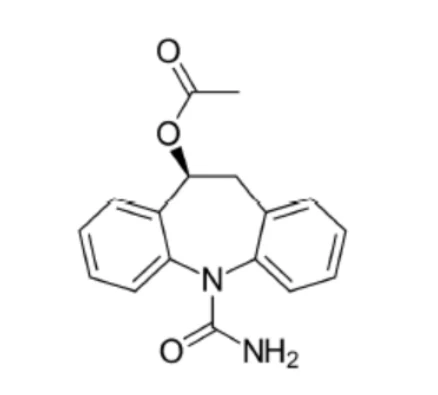
Drug Substance
Proper name: Eslicarbazepine acetate
Chemical name: (10S)-10-(Acetyloxy)-10,11-dihydro-5H-dibenz[b,f]azepine-5-carboxamide
(10S)-5-carbamoyl-10,11-dihydro-5H-dibenzo[b,f]azepin-10-yl acetate
Molecular formula and molecular mass: C17H16N2O3
M.W. = 296.32 g/mol
Structural formula:
Physicochemical properties: Eslicarbazepine acetate is a white to almost white crystalline powder.
Eslicarbazepine acetate is freely soluble in dimethyl sulfoxide and dichloromethane and soluble in acetonitrile.
CLINICAL TRIALS
Comparative Bioavailability Studies
A randomized, two-treatment, two-period, two-sequence, single oral dose (1 x 800 mg), crossover comparative bioavailability study of APO-ESLICARBAZEPINE (Apotex Inc.) and APTIOM® (Sunovion Pharmaceuticals Canada Inc.) was conducted in healthy, adult, male subjects under fasting conditions. A summary of the comparative bioavailability data from the 28 subjects that were included in the statistical analysis are presented in the following table:
SUMMARY TABLE OF THE COMPARATIVE BIOAVAILABILITY DATA
Eslicarbazepine (1 x 800 mg) Geometric Mean Arithmetic Mean (CV%) | ||||
| Parameter | Test1 | Reference2 | % Ratio of Geometric Means | 90% Confidence Interval |
AUCT (ng•h/mL) | 296840.9 301258.9 (17.1) | 301332.0 305712.0 (17.4) | 98.5 | 96.0 - 101.1 |
AUCI (ng•h/mL) | 301899.7 307060.2 (18.5) | 306673.4 311889.5 (18.7) | 98.4 | 95.8 - 101.1 |
Cmax (ng/mL) | 11419.9 11600.8 (17.1) | 13357.4 13435.4 (13.7) | 85.5 | 80.7 - 90.6 |
Tmax3 (h) | 4.17 (3.00- 12.00) | 3.33 (0.67- 12.00) | ||
T1/24 (h) | 9.79 (28.70) | 10.13 (28.85) | ||
1 APO-ESLICARBAZEPINE (eslicarbazepine acetate) tablets, 800 mg (Apotex Inc.). 2 APTIOM® (eslicarbazepine acetate) tablets, 800 mg (Sunovion Pharmaceuticals Canada Inc.). 3 Expressed as the median (range) only. 4 Expressed as the arithmetic mean (CV%) only. | ||||
Monotherapy
STUDY 311
Study Demographics and Trial Design
The efficacy of eslicarbazepine acetate tablets as monotherapy in the treatment of partial-onset seizures has been demonstrated in a double-blind, active controlled, non-inferiority study, involving 401 patients who received eslicarbazepine acetate tablets (800 to 1600 mg/day) and 412 patients who received carbamazepine controlled release (CBZ-CR; 400 to 1200 mg/day). Patients ranged in age between 18 and 85 years (mean: 38 years). All patients had newly or recently diagnosed epilepsy with at least 2 well documented, unprovoked, clinically evaluated and classified partial-onset seizures. Patients had to present with at least 1 seizure during the previous 3 months. Former or current use of any AED was prohibited, except for use of a single AED for a maximum duration of 2 weeks before Screening and with a drug-free period of at least 5 days before Randomization. A total of 27 elderly patients took at least one dose of eslicarbazepine acetate tablets. Approximately 57% of the patients in the eslicarbazepine acetate tablets treatment arm were male.
Eslicarbazepine acetate tablets was tested at once-daily doses of 800 mg, 1200 mg, and 1600 mg. The doses of the active comparator, CBZ-CR, were 200 mg, 400 mg, and 600 mg, twice-daily. After a screening period of up to 7 days, patients were randomly assigned to enter a 1-week Titration Period during which they received either eslicarbazepine acetate tablets 400 mg once daily or CBZ-CR 200 mg once daily before increasing to the first target dose (eslicarbazepine acetate tablets 800 mg once daily or CBZ-CR 200 mg twice daily). This was followed by a 1-week Stabilization Period and a 26-week Evaluation Period. All patients were randomized to the lowest dose level of each drug and only if a seizure occurred, patients were to be escalated to the next dose level. From the 815 randomized patients, 401 patients were treated with eslicarbazepine acetate tablets once-daily [271 patients (67.6%) remained at dose of 800 mg, 70 patients (17.5%) remained at dose of 1200 mg, and 60 patients (15.0%) were treated with 1600 mg]. Among patients randomized to eslicarbazepine acetate tablets, 77.1% completed the Evaluation Period of the trial. Following the Evaluation Period, patients who had remained seizure-free at a specific dose (800, 1200, or 1600 mg/day), were entered into the Maintenance Period for an additional 26 weeks.
The primary efficacy end-point was the proportion of patients in the Per Protocol population who were seizure free for the entire 26-week of the Evaluation Period at the last received dose level.
Study Results
Eslicarbazepine acetate tablets met the pre-defined primary efficacy end-point and was considered to be non-inferior to CBZ-CR.
In the primary efficacy analysis, in which drop-outs were considered as non-responders, 71.1% of the patients were classified as seizure free in the eslicarbazepine acetate tablets group and 75.6% in the CBZ-CR arm during 26 week Evaluation Period (see Table 7).
Table 7: Number and Percentage of the Patients Who Completed 26-Week Evaluation Phase and Remained Seizure Free at the Last Evaluated Dose (Per Protocol Set).
| Parameter | 26 weeks | |
|---|---|---|
| Eslicarbazepine Acetate Tablets | CBZ-CR | |
Overall, n Seizure free for 26 weeks, n (%) | 388 276 (71.1) | 397 300 (75.6) |
| Last Evaluated Dose Level | ||
Dose level A, n Seizure free for 26 weeks, n (%) | 246 210 (85.4) | 285 237 (83.2) |
Dose level B, n Seizure free for 26 weeks, n (%) | 58 43 (74.1) | 53 47 (88.7) |
Dose level C, n Seizure free for 26 weeks, n (%) | 53 23 (43.4) | 32 16 (50) |
CBZ-CR: Carbamazepine-Controlled Release; Per Protocol Set: Patients in the Full Analysis Set without major protocol violations
Note: Dose level A=eslicarbazepine acetate tablets 800 mg/day or CBZ-CR 200 mg BID; Dose level B=eslicarbazepine acetate tablets 1200 mg/day or CBZ-CR 400 mg BID; Dose level C=eslicarbazepine acetate tablets 1600 mg/day or CBZ-CR 600 mg BID.
Other efficacy endpoints such as estimates of 12-month seizure freedom rates were supportive of the primary efficacy end-point.
The 6-month seizure freedom rates observed in patients aged 65 or older, by race, and by gender were similar between both treatment groups and the overall patient population.
Adjunctive Therapy
Study Demographics and Trial Design
The efficacy of eslicarbazepine acetate tablets as adjunctive therapy in the treatment of partial-onset seizures was established in three 12-week, randomized, double-blind, placebo-controlled, fixed-dose, multicenter trials in adult patients with epilepsy. The total number of eslicarbazepine acetate tablets-treated patients was 992 (placebo: 418). Patients enrolled had partial-onset seizures with or without secondary generalization and were not adequately controlled with 1 to 3 concomitant Anti-Epileptic Drugs (AEDs). Overall, 69% of the patients used 2 concomitant AEDs and 28% used 1 concomitant AED. The most commonly used AEDs were carbamazepine (50%), lamotrigine (24%), valproic acid (21%), and levetiracetam (18%). Oxcarbazepine was not allowed as a concomitant AED.
During an 8-week baseline period, patients were required to have an average of ≥4 partial-onset seizures per 28 days with no seizure-free period exceeding 21 days. In these 3 trials, eslicarbazepine acetate tablets patients had a mean duration of epilepsy of 22 years (range 1 to 70 years) and a mean [Standard Deviation (SD)] baseline seizure frequency of 15 (22) per 28 days. Similarly, placebo patients had a mean duration of epilepsy of 22 years (range 1 to 65 years) and a mean (SD) baseline seizure frequency of 15 (18) per 28 days.
Studies 301 and 302 compared doses of eslicarbazepine acetate tablets 400, 800, and 1200 mg once daily with placebo. Study 304 compared doses of eslicarbazepine acetate tablets 800 and 1200 mg once daily with placebo. In all three trials, following an 8-week Baseline Phase to establish baseline seizure frequency prior to randomization, subjects were randomized and titrated to the randomized dose. During the Titration Phase in Study 301, dosing was initiated at 400 mg once daily and increased weekly in 400 mg increments. In Study 302, in the 400 mg and 800 mg groups, dosing was initiated at 400 mg and 800 mg once daily, respectively. For the 1200 mg group, dosing was initiated at 800 mg once daily and increased to 1200 mg once daily after 2 weeks. In Study 304, for the 800 mg group, dosing was initiated at 400 mg for 2 weeks and then increased to 800 mg, and the 1200 mg group was initiated at 800 mg for 2 weeks and then increased to 1200 mg. For all 3 studies, the Titration Phase lasted 2 weeks and was followed by a Maintenance Phase that lasted 12 weeks, during which patients were to remain on a stable dose of eslicarbazepine acetate tablets. Among patients randomized to and who received eslicarbazepine acetate tablets in the three trials, 89% in the 400 mg dose group, 82% in the 800 mg dose group, and 71% in the 1200 mg dose group completed the studies (Placebo: 87%).
Study Results
A statistically significant decrease in median seizure frequency (from Baseline compared to the Maintenance Phase) versus placebo was observed at the 800 mg dose in Studies 301 and 302 and at the 1200 mg dose in Studies 301, 302 and 304. The proportion of responders (≥50% reduction seizure frequency) was also significantly better than placebo in both 800 and 1200 mg treatment arms in Studies 301 and 302 and in the 1200 mg treatment arm in Study 304. The efficacy of eslicarbazepine acetate tablets was consistent regardless of the type of concomitant AED that was used.
Table 8. Percent Reduction in Median Seizure Frequency from Baseline to the end of the Maintenance Phase and Proportion of Patients with ≥50% Reduction in Seizure Frequency in Studies 301, 302 (mITT population), and 304 (ITT Population)
| Study | AEDs + Placebo | AEDs + Eslicarbazepine Acetate Tablets (mg/day) | ||
|---|---|---|---|---|
| 400 | 800 | 1200 | ||
| Study 301 | ||||
| N (mITT3) | 95 | 91 | 88 | 87 |
| Median % Reduction | 15.0 | 26.4 | 36.1 | 38.7 |
| p-value vs. placebo1 | - | 0.31 | 0.01 | 0.01 |
| Responder Rate (%) | 18.9 | 24.2 | 33.0 | 42.5 |
| p-value vs. placebo2 | - | 0.49 | 0.05 | 0.001 |
| Study 302 | ||||
| N (mITT3) | 99 | 94 | 87 | 81 |
| Median % Reduction | 5.6 | 20.7 | 32.6 | 28.2 |
| p-value vs. placebo1 | - | 0.17 | 0.006 | 0.05 |
| Responder Rate (%) | 18.2 | 20.2 | 35.6 | 35.8 |
| p-value vs. placebo2 | - | 0.86 | 0.01 | 0.01 |
| Study 304 | ||||
| N (ITT3) | 212 | - | 201 | 184 |
| Median % Reduction | 21.8 | - | 29.7 | 35.6 |
| p-value vs. placebo1 | - | - | 0.08 | 0.02 |
| Responder Rate (%) | 23.1 | - | 30.5 | 42.7 |
| p-value vs. placebo2 | - | - | 0.11 | <0.0001 |
1p-value for LS mean comparisons from ANCOVA model with treatment and baseline standardized seizure frequency
2p-value from pairwise test of applicable group comparisons based on Chi Square test with continuity adjustment
3all randomized subjects with at least one dose of study medication who had at least one post-baseline seizure frequency assessment
In the baseline to treatment (i.e., titration + maintenance) period, statistically significant differences in percent reduction in median seizure frequency were observed with eslicarbazepine acetate tablets 800 mg in Studies 301, 302 and 304 and eslicarbazepine acetate tablets 1200 mg in Studies 301 and 304 compared to placebo. Statistically significant differences in 50% responder rates were also observed during this period with eslicarbazepine acetate 400 mg in Study 301, eslicarbazepine acetate tablets 800 mg in Studies 301 and 302, and eslicarbazepine acetate tablets 1200 mg in Studies 301, 302 and 304 compared to placebo.
There were no significant differences in seizure control as a function of gender, age or race/ethnicity although data on race were limited (19% of patients were non-Caucasian).
Pediatric patients
The efficacy of eslicarbazepine acetate tablets as adjunctive therapy in the treatment of partial onset seizures in adolescents and children over 6 years of age was established by a Population Pharmacokinetic study [see ACTION AND CLINICAL PHARMACOLOGY, Pharmacokinetics].
DETAILED PHARMACOLOGY
The precise mechanism(s) by which eslicarbazepine exerts its anticonvulsant actions are not fully characterized. In vitro electrophysiological studies indicate that eslicarbazepine stabilizes the inactivated state of voltage-gated sodium channels, preventing their return to the activated state resulting in an inhibition of repetitive neuronal firing. The affinity for the inactive state is 60-fold greater than the affinity for the resting state. In addition, eslicarbazepine has been shown to inhibit T-type calcium channels in vitro which may contribute to its anticonvulsant effects.
In vitro assays designed to detect potential secondary targets demonstrated that eslicarbazepine did not interact with any of a wide range of receptors (neurotransmitter related, ion channels, secondary messengers, growth factors/hormones, and brain/gut peptides) at clinically relevant concentrations. Eslicarbazepine does not modulate γ-aminobutyric acid (GABA) or glycine induced currents in vitro. In vitro and in vivo studies demonstrate that eslicarbazepine does not lead to increases in either excitatory or inhibitory neurotransmitters.
In humans, following oral administration, the pharmacological activity of eslicarbazepine acetate tablets (eslicarbazepine acetate) is primarily exerted through the active metabolite eslicarbazepine.
Animal Pharmacology
Pharmacodynamics
Eslicarbazepine acetate tablets and eslicarbazepine demonstrate anticonvulsant effects in animal seizure models. Eslicarbazepine acetate tablets protects against seizures induced by biciculline, picrotoxin, and 4-aminopyridine in mice while having no effect on those induced by N-methyl-DL-aspartate (NMDLA), kainite or strychnine. Both eslicarbazepine acetate tablets and eslicarbazepine protect against electrically induced seizures and the progression of kindling in the maximum electroshock (MES) test in mice.
Pharmacokinetics
Biotransformation of eslicarbazepine acetate tablets is very rapid in all animal species. Eslicarbazepine is the major metabolite in all species investigated (including humans) with the exception of the rat where oxcarbazepine is the major metabolite and concentrations of eslicarbazepine are lower. The differing species specific metabolic profiles for eslicarbazepine acetate tablets following oral administration are shown below in Table 9.
Table 9. Metabolite Profile Following Oral Administration of Eslicarbazepine Acetate Tablets to Various Species
| % of Circulating Moieties that Correspond to Parent and Metabolite Following Oral Administration of SEP-0002093* | ||||||||||||||
|---|---|---|---|---|---|---|---|---|---|---|---|---|---|---|
| Eslicarbazepine Acetate | Oxcarbazepine | Eslicarbazepine | (R)-Licarbazepine | |||||||||||
| Human | - | 1% | 95% | 4% | ||||||||||
| Rhesus Monkey | 3% | - | 97% | - | ||||||||||
| Dog | 8% | 4% | 88% | - | ||||||||||
| % of Circulating Moieties that Correspond to Parent and Metabolite Following Oral Administration of SEP-0002093* | ||||||||||
|---|---|---|---|---|---|---|---|---|---|---|
| Eslicarbazepine Acetate | Oxcarbazepine | Eslicarbazepine | (R)-Licarbazepine | |||||||
| Rabbit | - | 7% | 93% | <1% | ||||||
| Rat | - | 86% | 13% | 1% | ||||||
| Mouse | - | 25% | 74% | <1% | ||||||
ND = not detected
Preclinical Safety Pharmacology
The cardiovascular effects of eslicarbazepine acetate and/or its metabolites were assessed in in vitro and in vivo studies. In vitro, eslicarbazepine acetate and its metabolites inhibited hERG channel repolarization in transfected mammalian cells by less than 20% at the highest concentration (100 mcg/mL) evaluated. In isolated canine Purkinje fibers, eslicarbazepine acetate and its metabolites at 10 and 100 mcg/mL resulted in concentration related shortening of the action potential duration. The latter finding was interpreted to be related to inhibition of cardiac sodium channels in this assay. Oral administration of eslicarbazepine acetate to anesthetized dogs had no effect on cardiovascular parameters. In conscious dogs, an oral dose of 210 mg/kg produced a transient increase in heart rate as well as reduced QT and QTc intervals. No treatment-related arrhythmias or other changes in the morphology of the ECG were noted. The highest plasma concentrations of eslicarbazepine determined in the in vivo dog studies were lower than clinical Cmax in anesthetized dogs and about 50% higher in conscious dogs.
Animal toxicology studies revealed no behavioral effects of eslicarbazepine acetate which would suggest abuse liability. No observations of withdrawal behaviors were noted in recovery group animals following cessation of dosing with eslicarbazepine acetate. A drug discrimination study conducted in rhesus monkeys indicated that eslicarbazepine acetate doses up to 320 mg/kg resulting in systemic exposures to eslicarbazepine comparable to those at the MRHD did not show benzodiazepine-like subjective effects.
In a study in male mice that evaluated the potential effects of abrupt termination of dosing, oral administration of eslicarbazepine acetate at dose levels of 250, 400, or 600 mg/kg/day for 21 days did not produce signs indicative of physical dependence at 250 or 400 mg/kg/day. The maximum systemic AUC-based exposure to eslicarbazepine at these doses was less than that at the maximum recommended human dose (MRHD). In the 600 mg/kg/day group, twitches/tremors and wet dog shakes were seen infrequently during the withdrawal period. Maximum exposure to eslicarbazepine at this dose was 30% higher than the MRHD.
TOXICOLOGY
The metabolism of eslicarbazepine acetate to the active moiety, eslicarbazepine, and the primary metabolites oxcarbazepine, and (R)-licarbazepine following administration in animals varies among the species tested and in comparison to the profile seen in humans. In all nonclinical species tested, the relative exposure to oxcarbazepine (when compared to eslicarbazepine) following administration of eslicarbazepine acetate was higher than in humans, but remained a minor metabolite in rabbits and dogs. However, oxcarbazepine is the major metabolite in rats, while eslicarbazepine is the major metabolite in humans, mice, dogs, and rabbits [see Table 9, DETAILED PHARMACOLOGY, Animal Pharmacology, Pharmacokinetics]. Therefore the data from rat studies is considered of limited relevance to human safety assessment. Consequently carcinogenicity testing was confined to the mouse and a full set of developmental toxicology studies conducted in mice.
Single-dose Toxicity Studies
In acute toxicity studies conducted in fasted mice and rats, clinical signs indicative of neurological toxicity were hypoactivity (subdued behavior), unsteady gait/incoordination, piloerection, cold extremities, and partial closure of the eyes at oral doses in excess of 300 mg/kg in both species. Studies performed are listed in Table 10 below.
Table 10. Results of Single-Dose Toxicity Studies
| Species/ Strains | Route | Dose Levels (mg/kg) | Max. Non-Lethal Dose (mg/kg) | Noteworthy Findings |
|---|---|---|---|---|
| Mouse/CD-1 | PO | 150, 300, 500 | 300 | 150 and 300 mg/kg: No noteworthy findings. 500 mg/kg: Abnormal gait, subdued behavior, partial eye closure and piloerection. 1F died. All clinical observations resolved and there were no other treatment related findings from Day 2 onwards. |
| Rat/S-D | PO | 150, 300, 500 | 500 | 150 and 300 mg/kg: No noteworthy findings. 500 mg/kg: Abnormal gait, subdued behavior, piloerection, and cold extremities. These findings resolved. Lower weight gain in M. No other treatment related findings from Day 2 onwards. |
PO: oral; M: male; F: female; h: hour; S-D: Sprague-Dawley
Repeat-dose Toxicity Studies
The majority of the nonclinical toxicity studies were conducted with eslicarbazepine acetate. However, as noted above, oxcarbazepine is the major metabolite in rats (in vivo), and in an effort to more fully characterize the potential toxicity of eslicarbazepine in rodents, 1-month and 3-month toxicity studies were also conducted in Wistar rats with eslicarbazepine as the test article. These data have been provided in Table 11. However, systemic exposure to eslicarbazepine at all eslicarbazepine dose levels was still below that at the MRHD and less than the exposure to oxcarbazepine.
Details of the results of repeat-dose toxicity studies in mice, rats, and dogs are provided in Table 11 below. Overall, dose limiting clinical observations were similar in all species with hypoactivity (subdued behaviour), unsteady gait/incoordination, piloerection, tremors, and prostration seen along with decreased food consumption and reduced body weight gain. Neurological effects also included convulsions that were observed in mice and rats in safety pharmacology studies, in female mice at all dose levels in the carcinogenicity study, and in the juvenile dog study described below. The liver was the primary target organ in mice, rats, and dogs with increases in liver weights seen in all species and hepatocellular hypertrophy (rodents) or hepatocyte rarefaction (dogs) along with increases in serum total protein (rats), cholesterol (rats and dogs), and triglycerides (dogs), and an increase in plasma protein due to higher albumin and/or globulin levels (rats). In addition, haematology findings of decreased red blood cells (RBC) and/or haemoglobin (Hb) occurred in rats and prolonged activated partial thromboplastin time (APTT) was seen consistently in dogs. Clinical pathology was not conducted in mice. All findings generally occurred at systemic eslicarbazepine exposures close to or below that at the MRHD.
Table 11. Summary of Findings in Repeat-Dose Toxicity Studies
| Species/Strain (Test Article) | Study Duration | Dose Range (mg/kg/day) | Noteworthy Findings (Dose levels affected) |
|---|---|---|---|
| Mouse/CD-1 (eslicarbazepine acetate) | 1 and 3 months | 150 to 650 | Behavioural Effects (≥300 mg/kg): Subdued behaviour, piloerection, unsteady gait, irregular breathing, in- coordination, hunched posture, prostration, weight loss and tremors. Liver (≥150 mg/kg): Increased liver weight and centrilobular hypertrophy. Kidney (≥300 mg/kg): Increased kidney weight in females. Spleen (≥150 mg/kg): Increased spleen weight and/or extramedullary hemopoiesis. Body weight (≥150 mg/kg): Weight gain in F. Death (≥500 mg/kg): 4F, 2M |
| Rat/S-D (eslicarbazepine acetate) | 2 weeks; 1, 3, and 6 months | 20 to 500 | Behavioural Effects (≥75 mg/kg): Subdued behaviour, piloerection, unsteady gait, partially-closed eyes, salivation, prostration, hunched posture and cold body surface. Liver (≥50 mg/kg): Increased liver weight and centrilobular hypertrophy. Effects were reversible. Kidney (≥20 mg/kg): Increased kidney weight with hyaline drop formation (males), coloured urine, increased urine volume, nephropathy. Adrenal (≥75 mg/kg): Increased adrenal weight. Thyroid (≥20 mg/kg): Follicular epithelial hypertrophy. Effects were reversible. Reproductive (≥20 mg/kg): Ovaries: prominent interstitial gland and atrophy, increased uterus weights (6-month study). Plasma Chemistry (≥20 mg/kg): Increased cholesterol total protein and globulin and decreased AST. Mildly increased ALP and ALT at ≥75 mg/kg. Effects were reversible (except cholesterol in M at 250 mg/kg). Haematology (≥20 mg/kg): Mildly decreased RBC and Hb, increased reticulocytes. Effects on RBC and Hb were reversible. Death (500 mg/kg): 4F Systemic Exposure (<500 mg/kg): Eslicarbazepine AUC0-24h < that at MRHD. |
| Species/Strain (Test Article) | Study Duration | Dose Range (mg/kg/day) | Noteworthy Findings (Dose levels affected) |
|---|---|---|---|
| Rat/Wistar (eslicarbazepine) | 1 and 3 months | 25 to 2000 | Behavioural Effects (≥100 mg/kg): Hypoactivity, piloerection, unsteady gait, partially closed eyes, and salivation. Liver (≥75 mg/kg): Increased liver weights with centrilobular hypertrophy. At >500 mg/kg, increased incidence of enlarged and darkened livers. Thyroid (≥100 mg/kg): Epithelial hypertrophy. Kidney (≥100 mg/kg): Increased kidney weights with increased hyaline droplet formation. Ovaries (≥500 mg/kg): Prominent interstitial gland and increased corpora lutea. Plasma Chemistry (≥100 mg/kg): Increased total protein, cholesterol and bilirubin levels. Death (≥1000 mg/kg): 7M, 11F Systemic Exposure (≤1000 mg/kg): Eslicarbazepine AUC0-24h < that at MRHD |
| Dog/Beagle (eslicarbazepine acetate) | 1 and 2 weeks; 1, 3, 6, and 12 months | 20 to 210 | Behavioural Effects (≥80 mg/kg ): Emesis, unsteady gait, subdued behaviour, tremors, muscular rigidity, incoordination, impaired mobility, drowsiness, lethargy and salivation Liver (≥40 mg/kg): Increased liver weights with hepatocyte rarefaction Gall Bladder (≥40 mg/kg): Increased epithelial vacuolation and macrophage infiltration. Salivary Gland (≥160 mg/kg): Decreased serous secretion in the 3 month study only. Serum Chemistry (≥40 mg/kg): Increased cholesterol, LDH Haematology (≥40 mg/kg): Increased APTT Death (≥160 mg/kg): 1M, 1F (12 month study) Systemic Exposure (≤210 mg/kg): Eslicarbazepine AUC0-24h < that at MRHD |
S-D: Sprague-Dawley; ALP: alkaline phosphatase; ALT: alanine aminotransferase; AST: aspartate aminotransferase; APTT: activated partial thromboplastin time; RBC: red blood cells; Hb: haemoglobin; LDH: lactate dehydrogenase
Genotoxicity
In in vitro genotoxicity studies, eslicarbazepine acetate and the major human metabolite, eslicarbazepine, were not mutagenic in bacterial assays (Ames test) conducted in the absence and presence of rat and human liver metabolic activation systems. Eslicarbazepine acetate was weakly mutagenic in the mouse lymphoma L5178Y cell mutation test without and with metabolic activation. Eslicarbazepine acetate was clastogenic in the Chinese hamster ovary (CHO) cell cytogenetic test, but neither eslicarbazepine acetate nor eslicarbazepine was clastogenic in the chromosomal aberration assay in human peripheral blood lymphocytes. In vivo, eslicarbazepine acetate was not clastogenic in the mouse bone marrow micronucleus test and did not induce DNA repair (as measured by unscheduled DNA synthesis) in the mouse liver.
Carcinogenicity
In a two-year carcinogenicity study in mice, eslicarbazepine acetate was administered orally at doses of 100, 250, and 600 mg/kg/day. These doses were 0.4, 1.0, and 2.3 times the maximum recommended human dose (MRHD) on a mg/m2 basis. An increase in the incidence of hepatocellular adenomas and carcinomas was seen at doses ≥250 mg/kg/day in males and at 600 mg/kg/day in females.
Reproduction and Development Toxicology
In a fertility study in mice, eslicarbazepine acetate was administered orally at doses of 150, 350, and 650 mg/kg/day. These doses were 0.6, 1.4, and 2.5 times the MRHD on a mg/m2 basis. Maternal and paternal toxicity was observed at 350 and 650 mg/kg/day, respectively. A dose-related decrease in the number of implantations and number of live embryos was observed at all dose levels and in the absence of accurate counts of corpora lutea could have been the result of embryotoxicity or impairment of female or male fertility. In a study in rats at doses of 65, 125, and 250 mg/kg/day (0.5, 1.0, and 2.1 times the MRHD on a mg/m2 basis), lengthening of estrus cycles and decreased fertility, mating performance, and pregnancy parameters (number of corpora lutea, implantations, and number of live fetuses) were seen at 250 mg/kg/day, a maternally toxic dose. Systemic exposure (AUC) to eslicarbazepine would have been less than that at the MRHD in mice at 150 and 350 mg/kg/day and in rats at all dose levels.
When eslicarbazepine acetate was administered orally at 150, 350, and 650 mg/kg/day to pregnant mice during organogenesis, maternal toxicity occurred at 350 and 650 mg/kg/day. Embryo-fetal toxicity (lower fetal weight) and increased incidences of skeletal abnormalities, including malformations, were evident at 650 mg/kg/day and potentially treatment-related increased incidences of fetal malformations were also observed at 150 and 350 mg/kg/day. Fetal growth retardation occurred at 350 and 650 mg/kg/day. Plasma eslicarbazepine exposure (Cmax and AUC) at 150 mg/kg/day was less than that at the MRHD.
Oral administration of eslicarbazepine acetate at 40, 160, and 320 mg/kg/day to pregnant rabbits during organogenesis resulted in maternal toxicity and fetal growth retardation and increased incidences of minor skeletal abnormalities and variations at ≥160 mg/kg/day. These may reflect developmental delays. The no-effect dose (40 mg/kg/day) is less than the MRHD on a mg/m2 basis and systemic exposure to eslicarbazepine, based on AUC0-24h values, was below that at the MRHD at all eslicarbazepine acetate dose levels. Cmax after 160 and 320 mg/kg/day was slightly above and about triple, respectively, the Cmax at the MRHD.
Oral administration of eslicarbazepine acetate to pregnant rats at 65, 125, and 250 mg/kg/day during organogenesis resulted in maternal toxicity at ≥ 125 mg/kg/day and embryo-lethality at all doses, increased incidences of skeletal variations at ≥ 125 mg/kg/day and fetal growth retardation at 250 mg/kg/day. The lowest dose tested (65 mg/kg/day) is less than the MRHD on a mg/m2 basis and AUC-based systemic exposure to eslicarbazepine would have been less than that at the MRHD at all dose levels.
When female mice were dosed orally with eslicarbazepine acetate (150, 350, and 650 mg/kg/day) during the period of organogenesis and throughout the lactation period, body weight gain to weaning was lower and developmental delays were observed in offspring at the maternally toxic intermediate and high doses (approximately 1.4 and 2.5 times, respectively, the MRHD on a mg/m2 basis). Systemic exposure (AUC0-24h) to eslicarbazepine in pregnant mice at eslicarbazepine acetate dose levels up to 650 mg/kg/day was less than that at the MRHD.
When female rats were dosed orally with eslicarbazepine acetate (65, 125, and 250 mg/kg/day) during the period of organogenesis and throughout the lactation period, all doses were associated with maternal toxicity. At the high dose, a lower live birth index and lower offspring survival were seen. In addition, lower body weight gains and developmental delays were seen in intermediate and high dose offspring (approximately 1.0 and 2.1 times, respectively, the MRHD on a mg/m2 basis). Systemic exposure to eslicarbazepine at all eslicarbazepine acetate dose levels would be predicted to be less than that at the MRHD.
There are no clinical studies of eslicarbazepine acetate in pregnant women. Eslicarbazepine acetate should be used during pregnancy only if the potential benefit justifies the potential risk to the fetus.
In a juvenile dog study in which eslicarbazepine acetate (40, 80, and 160 mg/kg/day) was orally administered for 10 months starting on postnatal day 21, bone marrow hypocellularity and lymphoid tissue depletion observed in dead and moribund-sacrificed animals at all dose levels were considered potential evidence of immunotoxicity. Convulsions seen at the high dose were considered treatment-related, while a relationship to treatment for convulsions observed in a low dose animal late in the study was considered equivocal, since they occurred more than a day after the last dose (vs. 0.5 to 3.5 hours post dose at 160 mg/kg/day) and convulsions were not seen at the mid dose. Adverse effects on bone growth (decreased bone mineral content and density) were seen in females at all doses at the end of the dosing period, but not at the end of a 2-month recovery period. None of these findings were reported in young adult dogs dosed with eslicarbazepine acetate for up to 12 months in duration. A no-effect dose for adverse effects on juvenile dogs was not identified and AUC0-24h-based exposure to eslicarbazepine was less than that at the MRHD at all eslicarbazepine acetate dose levels tested.
A separate juvenile animal study was conducted to assess possible adverse effects on the immune system. Eslicarbazepine acetate (10, 40, 80 mg/kg/day) was orally administered to young dogs for 17 weeks starting on postnatal day 21. No effects on the immune system were observed.
REFERENCES
- 1. Almeida L and Soares-da-Silva P. Eslicarbazepine acetate (BIA-2093). Neurotherapeutics. January 2007, 4:88-96.
- 2. Ben-Menachem E, Gabbai AA, Hufnagel A, Maia J, Almeida L, and Soares da Silva P. Eslicarbazepine Acetate as Adjunctive Therapy in Adult Patients with Partial Epilepsy [Study 2093-302]. Epilepsy Research. May 2010, 89 (2-3): 278-285.
- 3. Elger C, Bialer M, Cramer JA, Maia J, Almeida L, and Soares Da Silva P. Eslicarbazepine Acetate: A Double-Blind, Add-on, Placebo-Controlled Exploratory Trial in Adult Patients with Partial-Onset Seizures [Study 2093-201]. Epilepsia. March 2007, 48 (3): 497-504.
- 4. Elger C, Halasz P, Maia J, Almeida L, and Soares-Da-Silva P. Efficacy and Safety of Eslicarbazepine Acetate as Adjunctive Treatment in Adults with Refractory Partial-Onset Seizures: A Randomized, Double-Blind, Placebo-Controlled, Parallel-Group Phase III Study [Study 2093-301]. Epilepsia. 2009, 50 (3): 454-463.
- 5. Halasz P, Cramer JA, Hodoba D, Czlonkowska A, Guekht A, Maia J, Elger C, Almeida L, and Soares da Silva P. Long-Term Efficacy and Safety of Eslicarbazepine Acetate: Results of a 1- Year Open-Label Extension Study [Study 2093-301] in Partial-Onset Seizures in Adults with Epilepsy. Epilepsia. October 2010, 51 (10): 1963-1969.
- 6. Milovan D, Almeida L, Romach MK, Nunes T, Rocha JF, Sokowloska M, Sellers EM, and Soares da Silva P. Effect of Eslicarbazepine Acetate and Oxcarbazepine on Cognition and Psychomotor Function in Healthy Volunteers. Epilepsy & Behavior. August 2010, 18 (4): 366-373.
- 7. Trinka E, Ben-Menachem E, Kowacs PA, Elger C, Keller B, Loffler K, Rocha JF, and Soares da Silva P. Efficacy and Safety of Eslicarbazepine Acetate versus Controlled-release Carbamazepine Monotherapy in Newly Diagnosed Epilepsy: A Phase III Double-blind, Randomized, Parallel-group, Multicenter Study. Epilepsia. 2018, 00:1-13.
- 8. APTIOM® (eslicarbazepine acetate) 200 mg, 400 mg, 600 mg and 800 mg Tablets. submission control 226705, Product Monograph, Sunovion Pharmaceuticals Canada Inc. July 11, 2019.