


Product Monograph - Apo-Travoprost-Timop Pq
RECENT MAJOR LABEL CHANGES
None
TABLE OF CONTENTS
Sections or subsections that are not applicable at the time of authorization are not listed.
RECENT MAJOR LABEL CHANGES ...................................................................................... 2
TABLE OF CONTENTS ........................................................................................................... 2
PART I: HEALTH PROFESSIONAL INFORMATION ............................................................... 4
1 INDICATIONS ................................................................................................................... 4
1.1 Pediatrics ............................................................................................................. 4
1.2 Geriatrics .............................................................................................................. 4
2 CONTRAINDICATIONS ..................................................................................................... 4
4 DOSAGE AND ADMINISTRATION ................................................................................... 4
4.2 Recommended Dose and Dosage Adjustment ..................................................... 4
4.4 Administration ....................................................................................................... 5
4.5 Missed Dose ......................................................................................................... 5
5 OVERDOSAGE ................................................................................................................. 5
6 DOSAGE FORMS, STRENGTHS, COMPOSITION AND PACKAGING ............................ 6
7 WARNINGS AND PRECAUTIONS .................................................................................... 6
7.1 Special Populations .............................................................................................10
7.1.1 Pregnant Women .................................................................................................10
7.1.2 Breast-feeding .....................................................................................................10
7.1.3 Pediatrics ............................................................................................................11
7.1.4 Geriatrics .............................................................................................................11
8 ADVERSE REACTIONS ...................................................................................................11
8.1 Adverse Reaction Overview ................................................................................11
8.2 Clinical Trial Adverse Reactions ..........................................................................11
8.3 Less Common Clinical Trial Adverse Reactions ..................................................16
8.4 Abnormal Laboratory Findings: Hematologic, Clinical Chemistry and Other
Quantitative Data ................................................................................................18
8.5 Post-Market Adverse Reactions ..........................................................................18
9 DRUG INTERACTIONS ....................................................................................................20
9.2 Overview .............................................................................................................20
9.4 Drug-Drug Interactions ........................................................................................20
10 ACTION AND CLINICAL PHARMACOLOGY ..................................................................21
10.1 Mechanism of Action ...........................................................................................21
10.2 Pharmacodynamics .............................................................................................21
10.3 Pharmacokinetics ................................................................................................22
11 STORAGE, STABILITY AND DISPOSAL ........................................................................27
PART II: SCIENTIFIC INFORMATION ....................................................................................28
13 PHARMACEUTICAL INFORMATION ..............................................................................28
14 CLINICAL TRIALS ...........................................................................................................29
14.1 Trial Design and Study Demographics .................................................................29
14.2 Study Results ......................................................................................................30
16 NON-CLINICAL TOXICOLOGY ........................................................................................38
17 SUPPORTING PRODUCT MONOGRAPHS .....................................................................43
PATIENT MEDICATION INFORMATION ................................................................................44
PART I: HEALTH PROFESSIONAL INFORMATION
1 INDICATIONS
APO-TRAVOPROST-TIMOP PQ (travoprost and timolol ophthalmic solution) is indicated for the reduction of elevated IOP in adult patients with open-angle glaucoma or ocular hypertension who are insufficiently responsive to beta-blockers, prostaglandins, or other IOP lowering agents AND when the use of APO-TRAVOPROST-TIMOP PQ (the fixed combination drug) is considered appropriate.
APO-TRAVOPROST-TIMOP PQ should not be used to initiate therapy.
1.1 Pediatrics
Pediatrics (<18 years of age): No data are available to Health Canada; therefore, Health Canada has not authorized an indication for pediatric use.
1.2 Geriatrics
Geriatrics (>65 years of age): No overall differences in safety or effectiveness have been observed between elderly and other adult patients.
2 CONTRAINDICATIONS
APO-TRAVOPROST-TIMOP PQ is a combination of travoprost 0.004% and timolol 0.5% (as timolol maleate). When APO-TRAVOPROST-TIMOP PQ solution is prescribed, the relevant Product Monographs for travoprost and/or timolol maleate should be consulted.
APO-TRAVOPROST-TIMOP PQ is contraindicated in patients who:
- Are hypersensitive to this drug or to any ingredient in the formulation, including any non-medicinal ingredient, or component of the container. For a complete listing, see DOSAGE FORMS, STRENGTHS, COMPOSITION and PACKAGING.
- Have reactive airway diseases, including bronchial asthma.
- Have a history of bronchial asthma.
Have severe chronic obstructive pulmonary disease (see WARNINGS AND
PRECAUTIONS).
- Have sinus bradycardia.
- Have sick sinus syndrome or sino-atrial block.
- Have second or third degree atrioventricular block.
- Have overt cardiac failure (see WARNINGS AND PRECAUTIONS).
- Have cardiogenic shock.
APO-TRAVOPROST-TIMOP PQ may interfere with the maintenance of pregnancy and should not be used by women during pregnancy or by women attempting to become pregnant.
4 DOSAGE AND ADMINISTRATION
4.2 Recommended Dose and Dosage Adjustment
The recommended dosage is one drop in the affected eye(s) once-daily either morning or
evening. The dosage of APO-TRAVOPROST-TIMOP PQ should not exceed once-daily since it has been shown that more frequent administration of prostaglandin analogues may decrease the intraocular pressure lowering effect.
Special populations
Renal Impairment
APO-TRAVOPROST-TIMOP PQ has not been studied in patients with renal impairment; caution should be exercised in treating such patients.
Use in Pediatric patients (below 18 years)
The use of APO-TRAVOPROST-TIMOP PQ in pediatric patients <18 years of age is currently not recommended. The safety and effectiveness of travoprost and timolol ophthalmic solution (polyquaternium-1-preserved) in these patients have not been established.
Geriatrics (65 years or above)
No overall differences in safety or effectiveness have been observed between elderly and other adult patients.
4.4 Administration
Apply APO-TRAVOPROST-TIMOP PQ to the conjunctival sac of the affected eye(s). Nasolacrimal occlusion or gently closing the eyelid for 2 minutes after application is recommended.
If more than one topical ophthalmic drug is being used, the drugs should be administered at least five minutes apart.
4.5 Missed Dose
If one dose is missed, treatment should continue with the next dose as normal.
5 OVERDOSAGE
There are no human data available on overdosage with travoprost and timolol ophthalmic solution (polyquaternium-1-preserved) or other travoprost-containing products.
Symptoms of systemic timolol overdosage are bradycardia, hypotension, bronchospasm, and cardiac arrest. If such symptoms occur, treatment should be symptomatic and supportive. Specific therapeutic measures for the treatment of overdosage with timolol maleate are reproduced below for ease of reference.
Gastric Lavage: If ingested.
Symptomatic bradycardia: Use atropine sulfate intravenously in a dosage of 0.25 to 2 mg to induce vagal blockade. If bradycardia persists, intravenous isoproterenol hydrochloride should be administered cautiously. In refractory cases the use of transvenous cardiac pacemaker may be considered.
Hypotension: Use sympathomimetic pressor drug therapy, such as dopamine, dobutamine or
levarterenol. In refractory cases the use of glucagons hydrochloride has been reported to be useful.
Bronchospasm: Use isoproterenol hydrochloride. Additional therapy with aminophylline may be considered.
Acute cardiac failure: Conventional therapy with digitalis, diuretics and oxygen should be instituted immediately. In refractory cases the use of intravenous aminophylline is suggested. This may be followed if necessary by glucagon hydrochloride which has been reported to be useful.
Heart block (second or third degree): Use isoproterenol hydrochloride or a transvenous cardiac pacemaker.
For management of a suspected drug overdose, contact your regional poison control centre.
6 DOSAGE FORMS, STRENGTHS, COMPOSITION AND PACKAGING
Table 1 - Dosage Forms, Strengths, Composition and Packaging.
| Route of Administration | Dosage Form / Strength / Composition | Non-medicinal Ingredients |
| Ocular | Each mL contains: Solution 0.04 mg travoprost and 6.8 mg timolol maleate (equivalent to 5 mg timolol base). | Each mL contains: Boric acid, mannitol, polyoxyl 40 hydrogenated castor oil (1 mg), propylene glycol (5 mg), polyquaternium-1 (10 mcg) (a preservative), sodium chloride, sodium hydroxide and/or hydrochloric acid and water for injection. |
APO-TRAVOPROST-TIMOP PQ is a sterile, isotonic, buffered, preserved, aqueous solution.
APO-TRAVOPROST-TIMOP PQ package system comprises a white, opaque, polypropylene bottle with a translucent, polypropylene dropper and a white, opaque, polypropylene cap.
APO-TRAVOPROST-TIMOP PQ is supplied as 2.5 mL or 5 mL fill size.
A 2.5 mL bottle of APO-TRAVOPROST-TIMOP PQ Ophthalmic Solution contains at least 70 drops of solution.
A 5 mL bottle of APO-TRAVOPROST-TIMOP PQ Ophthalmic Solution contains at least 140 drops of solution.
7 WARNINGS AND PRECAUTIONS
General
APO-TRAVOPROST-TIMOP PQ is a combination of travoprost 0.004% and timolol 0.5% (as
timolol maleate). When APO-TRAVOPROST-TIMOP PQ is prescribed, the relevant Product Monographs for travoprost and/or timolol maleate should be consulted.
Travoprost and timolol ophthalmic solution (polyquaternium-1-preserved) may result in higher ocular and systemic exposure to travoprost, especially timolol, as compared to travoprost and timolol ophthalmic solution (benzalkonium chloride-preserved) after topical ocular administration (see ACTION AND CLINICAL PHARMACOLOGY).
FOR TOPICAL OPHTHALMIC USE ONLY.
Systemic Effects
Like other topically applied ophthalmic agents, travoprost and timolol are absorbed systematically. The same adverse reactions found with systemic administration of beta-adrenergic blocking agents may occur with topical administration of travoprost and timolol ophthalmic solution (polyquaternium-1-preserved) due to the beta-adrenergic component, timolol. For example, severe respiratory reactions and cardiac reactions, including death due to bronchospasm in patients with asthma, and rarely death in association with cardiac failure, have been reported following systemic or ophthalmic administration of timolol maleate (see CONTRAINDICATIONS).
Travoprost and timolol ophthalmic solution (polyquaternium-1-preserved) may result in higher systemic exposure to travoprost, especially timolol, as compared to travoprost and timolol ophthalmic solution (benzanlkonium chloride-preserved) after topical ocular administration (see ACTION AND CLINICAL PHARMACOLOGY).
Cardiovascular
In patients with cardiovascular diseases (e.g. coronary heart disease, Prinzmetal’s angina and cardiac failure) and hypotension, therapy with beta-blockers should be critically assessed and therapy with other active substances should be considered. Patients with cardiovascular diseases should be watched for signs of deterioration of these diseases and for adverse reactions.
Because of the timolol maleate component, cardiac failure should be adequately controlled before beginning treatment with APO-TRAVOPROST-TIMOP PQ. Patients with a history of severe cardiac disease should be watched for signs of cardiac failure and have their pulse rates checked. Caution should be exercised in treating patients with severe cardiovascular disease or with severe peripheral circulatory disturbances/disorders (i.e., severe forms of Raynaud’s disease or Raynaud’s syndrome).
Concomitant Therapy: Timolol may interact with other drugs (see DRUG INTERACTIONS). The effect on IOP or the known effects of systemic beta-blockers may be exaggerated when travoprost and timolol ophthalmic solution (polyquaternium-1-preserved) is given to patients already receiving an oral beta-blocking agent. The response of these patients should be closely observed. The use of two local beta-blockers or two local prostaglandins is not recommended.
Driving and Operating Machinery
APO-TRAVOPROST-TIMOP PQ, as with other similar medications, can potentially cause fatigue and/or drowsiness in some patients. Patients who engage in hazardous activities should be cautioned regarding the potential for a decrease in mental alertness.
Temporary blurred vision or other visual disturbances may affect the ability to drive or use machines. If blurred vision occurs after instillation, the patient must wait until the vision clears before driving or using machinery.
Endocrine and Metabolism
Diabetes Mellitus
Beta-adrenergic blocking agents should be administered with caution in patients subject to spontaneous hypoglycemia or to diabetic patients (especially those with labile diabetes) who are receiving insulin or oral hypoglycemic agents. Beta-adrenergic receptor blocking agents may mask the signs and symptoms of acute hypoglycemia.
Thyrotoxicosis
Beta-adrenergic blocking agents may mask certain clinical signs of hyperthyroidism (e.g., tachycardia). Patients suspected of developing thyrotoxicosis should be managed carefully to avoid abrupt withdrawal of beta-adrenergic blocking agents that might precipitate a thyroid storm.
Neurologic
Cerebrovascular Insufficiency
Because of potential effects of beta-adrenergic blocking agents on blood pressure and pulse, these agents should be used with caution in patients with cerebrovascular insufficiency. If signs or symptoms suggesting reduced cerebral blood flow develop following initiation of therapy with APO-TRAVOPROST-TIMOP PQ, alternative therapy should be considered.
Muscle Weakness
Beta-adrenergic blockade has been reported to increase muscle weakness consistent with certain myasthenic symptoms (e.g., diplopia, ptosis and generalized weakness). Timolol maleate has been reported rarely to increase muscle weakness in some patients with myasthenia gravis or myasthenic symptoms.
Ophthalmologic
Travoprost and other prostaglandin analogues have been reported to cause changes to pigmented tissues. The most frequently reported changes have been increased pigmentation of the iris and periorbital tissue (eyelid) and increased pigmentation and growth of eyelashes. These changes may be permanent.
APO-TRAVOPROST-TIMOP PQ may gradually change eye color, increasing the amount of brown pigmentation in the iris. The color change is due to increased melanin content in stromal melanocytes on the iris rather than to an increase in the number of melanocytes, although the exact mechanism of action is unknown at this time. Typically, the brown pigmentation around the pupil spreads concentrically towards the periphery in affected eyes, but the entire iris or parts of it may become browner. Iris pigmentation changes may be more noticeable in patients with mixed colored irides, i.e., blue-brown, grey-brown, yellow-brown, and green-brown; however, it has also been observed in patients with brown eyes. The change in iris color occurs slowly and may not be noticeable for several months to years. The long-term effects on the melanocytes and the consequences of potential injury to the melanocytes and/or deposition of pigment granules to other areas of the eye are currently unknown. Patients should be informed of the possibility of iris color change since the increased pigmentation is permanent. Patients
should be examined regularly and, depending on the clinical situation, treatment may be stopped if increased pigmentation ensues.
Eyelid skin darkening has been reported in association with the use of travoprost and timolol ophthalmic solution (polyquaternium-1-preserved). APO-TRAVOPROST-TIMOP PQ may gradually change eyelashes in the treated eye; these changes include increased length, thickness, pigmentation, and/or number of lashes. Periorbital and lid changes, including deepening of the eyelid sulcus, have also been observed with prostaglandin analogues.
Patients who are expected to receive treatment in only one eye should be informed about the potential for increased brown pigmentation of the iris, periorbital and/or eyelid tissue, and eyelashes in the treated eye and thus heterochromia between the eyes. They should also be advised of the potential for a disparity between the eyes in length, thickness, and/or number of eyelashes.
Patients prescribed IOP-lowering medication should be routinely monitored for IOP status. APO-TRAVOPROST-TIMOP PQ should be used with caution in patients with active intraocular inflammation (iritis/uveitis) as well as patients with predisposing risk factors for uveitis.
Macular edema, including cystoid macular edema, has been reported during treatment with prostaglandin F2α analogues such as travoprost. These reports have mainly occurred in aphakic patients, pseudophakic patients with a torn posterior lens capsule, or in patients with known risk factors for macular edema. APO-TRAVOPROST-TIMOP PQ should be used with caution in these patients.
Angle-closure Glaucoma
APO-TRAVOPROST-TIMOP PQ should not be used alone in the treatment of acute angle-closure glaucoma.
Contact Lenses
APO-TRAVOPROST-TIMOP PQ should not be administered while wearing contact lenses. The contact lenses should be removed before application of the drops and not be reinserted earlier than 15 minutes after use.
Choroidal Detachment
Choroidal detachment after filtration procedures has been reported with administration of aqueous suppressant therapy (e.g., timolol maleate, acetazolamide). Management of eyes with chronic or recurrent choroidal detachment should include stopping all forms of aqueous suppressant therapy and treating endogenous inflammation vigorously.
Peri-Operative Considerations
Major Surgery
The necessity or desirability of withdrawal of beta-adrenergic blocking agents prior to major surgery is controversial. If necessary during surgery, the effects of beta-adrenergic blocking agents may be reversed by sufficient doses of such agonists as isoproterenol, dopamine, dobutamine or levarterenol.
Beta-blocking ophthalmic preparations may block systemic beta-agonist effects e.g., of adrenaline. The anesthesiologist should be informed when the patient is receiving timolol.
Respiratory
Chronic Obstructive Pulmonary Disease
Patients with chronic obstructive pulmonary disease (e.g., chronic bronchitis, emphysema) of mild or moderate severity, bronchospastic disease, or a history of bronchospastic disease (other than bronchial asthma or a history of bronchial asthma, in which APO-TRAVOPROST-TIMOP PQ is contraindicated (see CONTRAINDICATIONS) should, in general, not receive beta-blockers or products containing them, including APO-TRAVOPROST-TIMOP PQ.
Sensitivity/Resistance
If signs of serious reactions or hypersensitivity occur, discontinue use of this preparation.
Anaphylaxis
While taking beta-blockers, patients with a history of atopy or a history of severe anaphylactic reactions to a variety of allergens may be more reactive to repeated accidental, diagnostic, or therapeutic challenge with such allergens. Such patients may be unresponsive to the usual doses of epinephrine used to treat anaphylactic reactions.
Skin
APO-TRAVOPROST-TIMOP PQ contains propylene glycol, which may cause skin irritation, and polyoxyl 40 hydrogenated castor oil, which may cause skin reactions.
7.1 Special Populations
7.1.1 Pregnant Women
No adequate and well controlled studies have been performed in pregnant women with travoprost and timolol ophthalmic solution (polyquaternium-1-preserved). Studies in animals with travoprost have shown reproductive toxicity (see NON-CLINICAL TOXICOLOGY, Reproductive and Developmental Toxicology). Because travoprost has harmful effects on pregnancy and/or the fetus/newborn child, APO-TRAVOPROST-TIMOP PQ is contraindicated during pregnancy and in women planning to become pregnant (see 2 CONTRAINDICATIONS).
Since prostaglandins are biologically active and may be absorbed through the skin, women who are pregnant or attempting to become pregnant should exercise appropriate precautions to avoid direct exposure to the contents of the bottle. In case of accidental contact with the contents of the bottle, thoroughly cleanse the exposed area with soap and water immediately.
7.1.2 Breast-feeding
Timolol maleate has been detected in human milk following oral and ophthalmic drug administration. Travoprost has been shown to be excreted in milk in animal studies; however, it is not known whether travoprost and/or its metabolites are excreted in human milk. Because of the potential for serious adverse reactions from timolol maleate or travoprost in nursing infants, a decision should be made whether to discontinue nursing or to discontinue the drug, taking into account the importance of the drug to the mother.
7.1.3 Pediatrics
Pediatrics (<18 years of age)
The use of APO-TRAVOPROST-TIMOP PQ in pediatric patients <18 years of age is currently not recommended. The safety and effectiveness of travoprost and timolol ophthalmic solution (polyquaternium-1-preserved) in these patients have not been established.
7.1.4 Geriatrics
Geriatrics (>65 years of age)
No overall differences in safety or effectiveness have been observed between elderly and other adult patients.
8 ADVERSE REACTIONS
The clinical development of travoprost and timolol ophthalmic solution (polyquaternium-1-preserved) was based on the body of work that had been compiled for the approval of travoprost and timolol ophthalmic solution (benzalkonium chloride-preserved). These consisted of four Phase 3 clinical trials, one posology study, and one clinical pharmacokinetic study.
The clinical development for travoprost and timolol ophthalmic solution (polyquaternium-1-preserved) included three additional studies: one 5-day Phase 1 pharmacokinetic study in healthy subjects (Study C-09-009), one 6-week two-arm pivotal Phase 3 safety/efficacy study (Study C-07-64/C-08-08) and one 12-month Phase 3 single-arm safety study (Study C-09-032) conducted in patients with open-angle glaucoma or ocular hypertension. The 6-week safety/efficacy study was designed to demonstrate the non-inferiority of travoprost and timolol ophthalmic solution (polyquaternium-1-preserved) compared to travoprost and timolol ophthalmic solution (benzalkonium chloride-preserved).
8.1 Adverse Reaction Overview
In the clinical trials involved in the development of travoprost and timolol ophthalmic solution (polyquaternium-1-preserved), 23 healthy subjects and 349 patients diagnosed with open-angle glaucoma or ocular hypertension were exposed to travoprost and timolol ophthalmic solution (polyquaternium-1-preserved). The most frequently reported adverse drug reaction was hyperemia of the eye (11.8%), which included ocular or conjunctival hyperemia. The majority of patients (91%) who experienced hyperemia of the eye did not discontinue therapy as a result of this reaction. This means that the discontinuation rate for patients experiencing hyperemia while receiving travoprost and timolol ophthalmic solution (polyquaternium-1-preserved) was 1.08%.
Seven and four patients discontinued travoprost and timolol ophthalmic solution (polyquaternium-1-preserved) due to ocular adverse reactions in the 12-month safety study, and the pivotal 6-week study, respectively. In the long-term safety study two cases of mild heart rate decrease and one case of mild hypotension were reported as related to treatment with travoprost and timolol ophthalmic solution (polyquaternium-1-preserved).
8.2 Clinical Trial Adverse Reactions
Because clinical trials are conducted under very specific conditions, the adverse reaction rates observed in the clinical trials may not reflect the rates observed in practice and should not be compared to the rates in the clinical trials of another drug. Adverse reaction information from
clinical trials is useful for identifying drug-related adverse events and for approximating rates.
The causal relationship of each adverse event to the study medication was assessed and assigned by the individual study investigator. The adverse drug reactions in following sections have been assessed to be either definitely related or possibly related to the use of travoprost and timolol ophthalmic solution (polyquaternium-1-preserved) or travoprost and timolol ophthalmic solution (benzalkonium chloride-preserved).
Adverse Drug Reactions in Clinical Trials Providing Medium (6 weeks) or Long-Term (12 Months) Exposure to Travoprost and Timolol Ophthalmic Solution (Polyquaternium-1-Preserved) in Patients with Primary Open-Angle Glaucoma or Ocular Hypertension.
In 2 clinical trials (C-07-64/C-08-08, and C-09-032), 349 patients with open-angle glaucoma or ocular hypertension had medium (6-week; C-07-64/C-08-08) or long-term (12 months; C-09-032) exposure to travoprost and timolol ophthalmic solution (polyquaternium-1-preserved). Clinical trial C-07-64/C-08-08 also included 193 patients exposed to travoprost and timolol ophthalmic solution (benzalkonium chloride-preserved). The adverse drug reactions reported in the clinical trials are presented in Table 2 and Table 3.
Table 2 - Adverse Drug Reactions Reported in Patients Exposed to Travoprost and
Timolol Ophthalmic Solution (Polyquaternium-1-Preserved) or Travoprost and Timolol Ophthalmic Solution (Benzalkonium Chloride-Preserved) – 6-Week Exposure (Study C-07-64/C-08-08)
Travoprost and Timolol
Ophthalmic Solution (Polyquaternium-1-
Preserved) N = 195
%
Travoprost and Timolol Ophthalmic Solution (Benzalkonium Chloride-
Preserved)
N = 193
%
Eye disorders
Ocular hyperemia 11.8 13.0 Eye irritation 4.6 5.7 Eye pruritus 3.1 2.6 Eye pain 2.1 3.1 Foreign body sensation in eyes 2.1 2.6 Dry eye 1.0 2.6 Photophobia 1.0 1.0 Iritis 0.5 1.0 Punctate keratitisa 1.0 0.5 Ocular discomfort 0.5 0.5 Eyelids pruritus 0.5 - Meibomianitis 0.5 - Blurred vision 0.5 - Lacrimation increased - 1.6 Anterior chamber cell - 0.5 Anterior chamber flare - 0.5 Visual acuity reduced - 0.5
Travoprost and Timolol
Ophthalmic Solution (Polyquaternium-1-
Preserved) N = 195
%
Travoprost and Timolol Ophthalmic Solution (Benzalkonium Chloride-
Preserved) N = 193
%
Cardiac disorders
Bradycardia 0.5 - Respiratory, thoracic and mediastinal disorders
Pharyngolaryngeal pain - 0.5 Adverse drug reactions coded using MedDRA version 12.0
Adverse drug reactions coding to conjunctival or ocular hyperaemia are presented together in the table as ocular hyperaemia.
aTwo adverse drug reactions and 1 adverse drug reaction for punctate keratitis were reported in the travoprost and timolol ophthalmic solution (polyquaternium-1-preserved) and travoprost and timolol ophthalmic solution (benzalkonium chloride-preserved) treatment groups, respectively. An additional single report of punctate keratitis assessed as unrelated to the use of either travoprost and timolol ophthalmic solution (polyquaternium-1-preserved) or travoprost and timolol ophthalmic solution (benzalkonium chloride-preserved) was reported in each treatment group. All reports of punctate keratitis were reported in female patients.
In clinical trial C-07-64/C-08-08, treatment emergent adverse events for mild corneal erosion were reported in 2 female patients treated with travoprost and timolol ophthalmic solution (polyquaternium-1-preserved) and a treatment emergent adverse event for mild ulcerative keratitis was reported in 1 female patient treated with travoprost and timolol ophthalmic solution (benzalkonium chloride-preserved). All reports of corneal erosion and ulcerative keratitis were assessed as unrelated to the use of either travoprost and timolol ophthalmic solution (polyquaternium-1-preserved) or travoprost and timolol ophthalmic solution (benzalkonium chloride-preserved), where a more plausible explanation may exist.
Table 3 - Adverse Drug Reactions Reported in Patients Exposed to Travoprost/Timolol
(as Timolol Maleate) Ophthalmic Solution Preserved (Polyquaternium-1-Preserved) – Long-Term (12 month) Exposure (Study C-09-032)
Travoprost and Timolol Ophthalmic
Solution (Polyquaternium-1-
Preserved)
N = 154
%
Eye disorders
Ocular hyperemia 7.1 Eye pruritus 4.5 Eye irritation 3.2 Eye pain 1.9 Dry eye 1.9 Growth of eyelashes 0.6 Abnormal sensation in eye 0.6 Conjunctivitis 0.6 Allergic conjunctivitis 0.6
Travoprost and Timolol Ophthalmic
Solution (Polyquaternium-1-
Preserved) N = 154
%
Eyelid margin crusting 0.6 Eyelids pruritus 0.6 Keratoconjunctivitis sicca 0.6 Photophobia 0.6 Blurred vision 0.6 General disorders and administration site conditions Fatigue 0.6 Immune system disorders Hypersensitivity 1.3 Investigations Heart rate decreased 1.3 Musculoskeletal and connective tissue disorders Muscle tightness 0.6 Skin and subcutaneous tissue disorders Skin discoloration 0.6 Vascular disorders Hypotension 0.6 Adverse drug reactions coded using MedDRA version 12.0
Adverse drug reactions coding to conjunctival or ocular hyperaemia are presented together in the table as ocular hyperaemia.
Adverse Events in a Clinical Trial Providing Short-Term Exposure (5 Days) to Travoprost and Timolol Ophthalmic Solution (Polyquaternium-1-Preserved) in Normal Healthy Volunteer Subjects
In one pharmacokinetic trial of crossover design (C-09-009), 23 normal healthy volunteer subjects had short-term exposure (5 days) to travoprost and timolol ophthalmic solution (polyquaternium-1-preserved) and 24 normal healthy volunteer subjects had short-term exposure (5 days) to travoprost and timolol ophthalmic solution (benzalkonium chloride-preserved). The most frequently reported adverse drug reaction was ocular hyperemia.
Table 4 - All Adverse Drug Reactions Occurring in Subjects with Exposure to
Travoprost/Timolol (as Timolol Maleate) Ophthalmic Solution Preserved with (Polyquaternium-1-Preserved) or Travoprost and Timolol Ophthalmic Solution (Benzalkonium Chloride-Preserved) - Short-Term (Five-day) Study In Healthy Subjects (Study C-09-009)
Travoprost and Timolol
Ophthalmic Solution (Polyquaternium-1-
Preserved)
Travoprost and Timolol Ophthalmic Solution (Benzalkonium Chloride-
Preserved)
N=23
%
N=24
%
Eye disorders
Ocular hyperemia 43.5 50.0 Eye pain 21.7 16.7 Eye pruritus 4.3 - Blurred vision - 4.2 Dry eye 4.3 8.3 Asthenopia 4.3 4.2 Foreign body sensation in eyes - 4.2 Keratitis - 4.2 Nervous system disorders Headache 8.7 8.3 Respiratory, thoracic and
mediastinal disorder
Nasal discomfort - 4.2 Adverse drug reactions coded using MedDRA version 12.0
This table includes all reported ocular and non-ocular adverse drug reactions.
Adverse Drug Reactions in Clinical Trials Providing Medium and Long-Term Exposure to Travoprost and Timolol Ophthalmic Solution (Benzalkonium Chloride-Preserved)
In 5 clinical trials (C-01-69, C-01-70, C-02-03, C-02-28, and C-02-41) completed during the development of travoprost and timolol ophthalmic solution (benzalkonium chloride-preserved), 706 patients diagnosed with open-angle glaucoma or ocular hypertension had medium (6 weeks) or long-term (6 months to 12 months) of exposure to travoprost and timolol ophthalmic solution (benzalkonium chloride-preserved). An additional 193 patients had medium exposure (6 weeks) to travoprost and timolol ophthalmic solution (benzalkonium chloride-preserved) during the development of travoprost and timolol ophthalmic solution (polyquaternium-1-preserved).
Adverse drug reactions that occurred at an incidence of ≥1.0% in patients with long-term exposure to travoprost and timolol ophthalmic solution (benzalkonium chloride-preserved) are described in Table 5.
Table 5 - Adverse Drug Reactions Occurring at an Incidence of ≥ 1% in Patients with
Exposure to Travoprost and Timolol Ophthalmic Solution (Benzalkonium Chloride-Preserved) - Medium and Long-Term Studies (C-01-69, C-01-70, C-02-03, C-02-28, C-02-41, C-07-64/C-08-08)
Travoprost and Timolol Ophthalmic Solution BAC | Latanoprost 0.005%/ Timolol 0.5% | Travoprost 0.004% + Timolol 0.5% | Travoprost 0.004% |
Timolol 0.5%
| N=899 | N=200 | N=313 | N=86 |
N=176
| % | % | % | % |
%
Eye Disorders Ocular
hyperaemia
| 14.0 | 2.5 | 18.8 | 11.6 |
1.7
Eye irritation
| 4.4 | 2.0 | 6.7 | 2.3 |
2.8 Eye pruritis
| 4.3 | 2.0 | 4.8 | 2.3 |
0.6 Eye pain
| 3.3 | 1.5 | 4.2 | 3.5 |
2.8 Dry eye
| 2.0 | 0.5 | 2.9 | 2.3 |
1.7 Foreign body sensation in eyes
| 2.4 | 3.5 | 2.9 | 2.3 |
1.7
Photophobia
| 1.2 | - | 1.6 | 1.2 |
- Growth of eyelashes
| 1.1 | - | 2.2 | 1.2 |
-
Adverse drug reactions coded using MedDRA version 12.0
Adverse drug reactions coding to conjunctival or ocular hyperaemia are presented together in the table as ocular hyperaemia.
No non-ocular adverse drug reactions occurred at an incidence ≥ 1%.
Travoprost and timolol ophthalmic solution (BAC) = Travoprost and timolol ophthalmic solution (benzalkonium chloride–preserved)
In a twelve month study with travoprost and timolol ophthalmic solution (benzalkonium chloride-preserved), ocular photographs were taken of the iris using a standardized procedure and evaluated by a centralized reading center masked to study treatment in order to assess effects on iris pigmentation. Following an initial latent period, the incidence of iris pigmentation changes increased in both treatment groups from Month 6 to Month 12 as shown in Table 6.
Table 6 - Patients with Iris Pigmentation Changesa (C-02-28)
Travoprost and Timolol Ophthalmic Solution (Benzalkonium Chloride - Preserved) | Latanoprost 0.005%/Timolol 0.5% | ||||
| Nc | % | Nc | % | ||
| Month 6 (N=169)b | 1 | 0.6 | Month 6 (N=161)b | 1 | 0.6 |
| Month 12 (N=166)b | 4 | 2.4 | Month 12 (N=163)b | 2 | 1.2 |
a Changes based upon review of ocular photographs by a centralized reading center b N values represent number of patients with ocular photographs
c N values represent number of patients with iris pigmentation changes
(See CLINICAL TRIALS)
8.3 Less Common Clinical Trial Adverse Reactions
Adverse drug reactions that occurred at an incidence of <1.0% in patients with long-term exposure to travoprost and timolol ophthalmic solution (benzalkonium chloride-preserved) are included in Table 7.
Table 7 - Adverse Drug Reactions Occurring at an Incidence of <1% in Patients with
Exposure to Travoprost and Timolol Ophthalmic Solution (Benzalkonium Chloride-Preserved) - Medium and Long-Term Studies (C-01-69, C-01-70, C-02-03, C-02-28, C-02-41, C-07-64/C-08-08)
| MedDRA SOCa | MedDRA PTb |
| Immune system disorders | seasonal allergy |
| Psychiatric disorders | nervousness |
| Nervous system disorders | headache, dizziness |
| Eye disorders | blurred vision, punctate keratitis, anterior chamber cell, anterior chamber flare, corneal staining, lacrimation increased, ocular discomfort, abnormal sensation in eye, erythema of eyelid, eye swelling, visual acuity reduced, asthenopia, blepharitis, iritis, anterior chamber inflammation, conjunctival hemorrhage, conjunctivitis, conjunctivitis allergic, eyelid disorder, eyelid edema, eyelid pain, eyelids pruritus, keratitis, visual impairment, xerophthalmia |
| Vascular disorders | hypertension |
| Respiratory, thoracic and mediastinal disorders | bronchospasm, cough, dyspnea, oropharyngeal pain, throat irritation |
| Skin and subcutaneous tissue disorders | skin hyperpigmentation (periorbital or eyelid pigmentation), dermatitis allergic, dermatitis contact, hypertrichosis, urticaria |
| Musculoskeletal and connective tissue disorders | pain in extremity |
| Renal and urinary disorders | chromaturia |
| Congenital, familial and genetic disorders | distichiasis |
| Investigations | alanine aminotransferase increasedc, aspartate aminotransferase increasedc, blood pressure diastolic decreased, blood pressure diastolic increased, blood pressure increased, heart rate decreased, heart rate irregular |
Adverse drug reactions are presented in order of decreasing incidence; when reactions occurred at the same incidence they are presented alphabetically.
Adverse drug reactions coded using MedDRA version 12.
a SOC = System Organ Class
b PT = Preferred term
c No clinical laboratory evaluations were performed. These adverse drug reactions were based upon patient reports.
Additional Adverse Drug Reactions Observed with the Individual Components of Travoprost and Timolol Ophthalmic Solution (Polyquaternium-1-Preserved)
The following additional adverse drug reactions (Table 8) have been seen with one of the individual components of travoprost and timolol ophthalmic solution (polyquaternium-1-preserved), have not been presented in the preceding tables or text, and may potentially occur with travoprost and timolol ophthalmic solution (polyquaternium-1-preserved). For further
detailed information, please consult the individual Product Monographs for travoprost or timolol maleate containing products.
Table 8 - Additional Adverse Drug Reactionsa Previously Observed in One of the
Individual Components and That May Potentially Occur with Travoprost and Timolol Ophthalmic Solution (Polyquaternium-1-Preserved)
| Travoprost | Timolol | |
| MedDRA SOCb | MedDRA PTc | MedDRA PT |
| Metabolism and nutrition disorders | - | hypoglycemia |
| Psychiatric disorders | - | depression |
| Nervous system disorders | - | cerebrovascular accident, cerebral ischemia, myasthenia gravis, syncope, paresthesia |
| Eye disorders | conjunctival follicles, conjunctival disorder, macular edema, uveitis | corneal disorder, diplopia, eyelid ptosis |
| Cardiac disorders | - | arrhythmia, atrioventricular block, cardiac arrest, cardiac failure, palpations |
| Respiratory, thoracic and mediastinal disorders | asthma | nasal congestion, respiratory failure |
| Gastrointestinal disorders | - | diarrhea, nausea |
| Skin and subcutaneous tissue disorders | - | alopecia, rash |
| General disorders and administration site conditions | - | asthenia, chest pain |
a Adverse drug reactions coded using MedDRA version 8.0
b SOC = System Organ Class
c PT = Preferred term
8.4 Abnormal Laboratory Findings: Hematologic, Clinical Chemistry and Other
Quantitative Data
No clinical laboratory evaluations for the analysis of safety were performed during the clinical development of travoprost and timolol ophthalmic solution (polyquaternium-1-preserved) or travoprost and timolol ophthalmic solution (benzalkonium chloride-preserved). The clinical laboratory adverse drug reactions presented in Table 8 were based upon patient reports.
8.5 Post-Market Adverse Reactions
Ophthalmic solutions containing the individual components travoprost 0.004% and timolol (as timolol maleate) 0.1%, 0.25%, and 0.5% are registered in numerous countries. Based upon a review of spontaneous post-marketing reports of adverse events to date, travoprost and timolol maleate solutions are well-tolerated and safe for use as indicated.
No case of safety concern has been identified to date based on post-marketing experience since 2006 with travoprost and timolol ophthalmic solution (benzalkonium chloride-preserved). No important information has been received which pertains to the safety of travoprost 0.04 mg/mL/timolol 5 mg/mL containing products. Adverse events possibly associated with the use of travoprost and timolol ophthalmic solution (benzalkonium chloride-preserved) that have been reported are generally non-serious local ocular effects in concordance with the known safety profile of the product and its individual components.
The most frequently reported local ocular reactions were ocular hyperaemia, eye pain and eye irritation. These local effects are expected events associated with the ophthalmic use of travoprost / timolol maleate solutions. Unexpected ocular reactions such as ciliary body disorder and exophthalmos have also been reported. These reactions could be isolated events for which concomitant medication and/or intercurrent diseases should also be considered. Other unexpected events such as iris hyperpigmentation and diplopia are expected events for travoprost and timolol respectively.
The analysis of spontaneous events to date does not reveal new or potentially important safety findings associated with the ophthalmic use of travoprost and timolol ophthalmic solution (benzalkonium chloride-preserved). Moreover, no previously unidentified toxicity or changes in the characteristics of known reactions of the product or its individual components has been identified.
No case of safety concern has been identified to date based on post-marketing experience since 2011 with travoprost and timolol ophthalmic solution (polyquaternium-1-preserved). Adverse events possibly associated with the use of travoprost and timolol ophthalmic solution (polyquaternium-1-preserved) that have been reported are generally non-serious local ocular effects in concordance with the known safety profile of the product and its individual components. The most frequently reported local ocular reactions were ocular hyperemia, eye irritation, blepharal pigmentation, and eye pruritus. These local effects are expected events associated with the ophthalmic use of travoprost / timolol maleate solutions.
In post-market, a few reports of iritis/uveitis associated with the use of travoprost have been published. These cases occurred a few days after travoprost use in patients without a history of iritis/uveitis. All of these cases resolved after stopping travoprost with or without corticosteroid treatment.
As spontaneous event reports frequently provide incomplete data, report of a spontaneous event does not necessarily constitute an admission that travoprost solution or timolol solution caused or contributed to the event.
Additional adverse drug reactions that have been reported, in either subsequent clinical trials or via spontaneous post-market reporting, following use of travoprost and timolol ophthalmic solution (benzalkonium chloride-preserved) or travoprost and timolol ophthalmic solution (polyquaternium-1-preserved), include the following:
Eye disorders: trichasis; lid sulcus deepened; iris hyperpigmentation
Gastrointestinal disorders: dysgeusia;
Psychiatric disorders: hallucination, depression;
Respiratory, thoracic and mediastinal disorders: dysphonia;
Vascular disorders: peripheral edema.
Skin and subcutaneous tissue disorders: Rash
9 DRUG INTERACTIONS
9.2 Overview
No specific interaction studies have been performed with travoprost and timolol ophthalmic solution preserved (polyquaternium-1-preserved).
Potentiated systemic beta-blockade (e.g., decreased heart rate, depression) has been reported during combined treatment with CYP2D6 inhibitors (e.g., quinidine, fluoxetine, paroxetine) and timolol.
There is a potential for additive effects resulting in hypotension and/or masked bradycardia when an ophthalmic beta-blocker solution is administered concomitantly with oral calcium channel blockers, beta-adrenergic blocking agents, antiarrhythmics (including amiodarone), digitalis glycosides or parasympathomimetics.
9.4 Drug-Drug Interactions
Beta-adrenergic blocking agents: Patients who are receiving a beta-adrenergic blocking agent orally and travoprost and timolol ophthalmic solution (polyquaternium-1-preserved) should be observed for potential additive effects of beta-blockade, both systemic and on IOP. The concomitant use of two topical beta-adrenergic blocking agents is not recommended.
Calcium antagonists: Caution should be used in the co-administration of beta-adrenergic blocking agents, such as the timolol found in travoprost and timolol ophthalmic solution (polyquaternium-1-preserved), and oral or intravenous calcium antagonists because of possible atrioventricular conduction disturbances, left ventricular failure, and hypotension. In patients with impaired cardiac function, co-administration should be avoided.
Catecholamine-depleting drugs: Close observation of the patient is recommended when a beta-blocker is administered to patients receiving catecholamine-depleting drugs such as reserpine, because of possible additive effects and the production of hypotension and/or marked bradycardia, which may result in vertigo, syncope, or postural hypotension.
Digitalis and calcium antagonists: The concomitant use of beta-adrenergic blocking agents with digitalis and calcium antagonists may have additive effects in prolonging atrioventricular conduction time.
Quinidine: Potentiated systemic beta-blockade (e.g., decreased heart rate) has been reported during combined treatment with quinidine and timolol, possibly because quinidine inhibits the metabolism of timolol via the P-450 enzyme, CYP2D6.
Clonidine: Oral beta-adrenergic blocking agents may exacerbate the rebound hypertension, which can follow the withdrawal of clonidine. There have been no reports of exacerbation of rebound hypertension with ophthalmic timolol maleate.
Injectable epinephrine: See WARNINGS AND PRECAUTIONS, Anaphylaxis.
CNS Depressants: The possibility that travoprost and timolol ophthalmic solution (polyquaternium-1-preserved) may have an additive or potentiating effect with CNS depressants (alcohol, barbiturates, opiates, sedatives, or anesthetics) should be considered.
Tricyclic Antidepressants: Tricyclic antidepressants have been reported to blunt the hypotensive effect of systemic clonidine. It is not known whether the concurrent use of these agents with travoprost and timolol ophthalmic solution (polyquaternium-1-preserved) can lead to interference in IOP lowering effect.
No data are available on the level of circulating catecholamines after travoprost and timolol ophthalmic solution (polyquaternium-1-preserved) is instilled. Caution, however, is advised in patients taking tricyclic antidepressants which can affect the metabolism and uptake of circulating amines.
Epinephrine: Mydriasis resulting from concomitant use of timolol maleate and epinephrine has been reported occasionally.
10 ACTION AND CLINICAL PHARMACOLOGY
10.1 Mechanism of Action
APO-TRAVOPROST-TIMOP PQ contains two active components, travoprost and timolol maleate, which lower intraocular pressure (IOP) by complementary mechanisms of action.
Travoprost free acid is a highly selective FP prostanoid receptor agonist that has been shown to reduce IOP by increasing uveoscleral and conventional outflow. Reduction of IOP starts within approximately two hours after administration, and the maximum effect is reached after 12 hours. Significant lowering of IOP can be maintained for periods exceeding 24 hours with a single dose. Repeated observations over a period of one year indicate that the IOP-lowering effect of travoprost is well maintained.
Timolol maleate is a beta1 and beta2 (non-selective) adrenergic receptor-blocking agent that does not have significant intrinsic sympathomimetic, direct myocardial depressant, or local anaesthetic (membrane-stabilizing) activity. The precise mechanism of the ocular hypotensive action of timolol is not definitively established. Tonography and fluorophotometry studies in man suggest that its predominant action is related to reduced aqueous humour formation. However in some studies, a slight increase in outflow facility was also observed. The onset of IOP reduction following administration of timolol can usually be detected within 30 minutes after a single dose. The maximum effect usually occurs in one to two hours, and significant lowering of IOP can be maintained for periods as long as 24 hours after a single dose. Repeated observations over a period of one year indicate that the IOP-lowering effect of timolol is well maintained.
10.2 Pharmacodynamics
Animal Pharmacology
No non-clinical ocular or systemic pharmacology studies were conducted on travoprost 0.004%
/ timolol 0.5% (as timolol maleate) ophthalmic solution since the pharmacology of each has been well established previously in the medical and scientific literature. Previous studies have shown that the concomitant application of FP agonists with timolol results in an additional reduction in IOP compared to the administration of either single agent.
Human Pharmacology
The active components of APO-TRAVOPROST-TIMOP PQ, travoprost and timolol maleate, are approved therapeutic agents for the reduction of elevated IOP in patients with open-angle glaucoma or ocular hypertension, with different mechanisms of action. Travoprost and timolol ophthalmic solution (polyquaternium-1-preserved) produces greater mean IOP reductions than those produced by either travoprost ophthalmic solution, 0.004% or timolol ophthalmic solution, 0.5% used alone.
APO-TRAVOPROST-TIMOP PQ, when applied topically to the eye, has the action of reducing elevated as well as normal IOP, whether or not accompanied by glaucoma. Elevated IOP is a major risk factor in the pathogenesis of glaucomatous visual field loss. The higher the IOP level, the greater the likelihood of glaucomatous visual field loss and optic nerve damage. The Advanced Glaucoma Intervention Study (AGIS) established elevated IOP as a positive risk factor for glaucomatous visual field loss. Eyes with IOPs below 18 mmHg at all visits were found to have little to no visual field loss during the six-year monitoring period.
10.3 Pharmacokinetics
Animal Pharmacokinetics
Polyquaternium-1: Orally administrated polyquaternium-1 is poorly absorbed in the gastrointestinal tract in rats. A study showed that only 0.9% of an oral dose of polyquaternium-1 was found in rat blood. Intravenously-administrated polyquaternium-1 appears to be eliminated in multi-phasic kinetics in rat plasma with a mean half-life of the terminal phase as 5.21 ± 2.21 hours.
Travoprost/timolol Combination: In rabbits, after a single topical ocular administration of travoprost and timolol ophthalmic solution (polyquaternium-1-preserved) or travoprost and timolol ophthalmic solution (benzalkonium chloride-preserved), the concentration of travoprost free acid in the aqueous humour and iris-ciliary body slowly increased, reached the peak value at one or two hours post-dosing and then slowly decreased. At 6 hour post-dosing, mean concentrations of travoprost free acid in these ocular tissues were still >1 ng/g. In contrast, the timolol concentration in the rabbit aqueous humour and iris-ciliary body quickly increased immediately after dosing and reached the peak value about 30 minutes in rabbits treated with either travoprost and timolol ophthalmic solution (polyquaternium-1-preserved) or travoprost and timolol ophthalmic solution (benzalkonium chloride-preserved).
Travoprost and timolol ophthalmic solution (polyquaternium-1-preserved) was shown to have higher ocular bioavailability for both timolol and AL-5848 in rabbits than travoprost and timolol ophthalmic solution (benzalkonium chloride-preserved) after topical ocular administration. For bulbar conjunctiva, the differences were not significantly different.
After a single bilateral topical administration, travoprost and timolol ophthalmic solution (polyquaternium-1-preserved) resulted in significantly higher exposure to the active ingredients, timolol and AL-5848, in all ocular tissues compared to travoprost and timolol ophthalmic solution 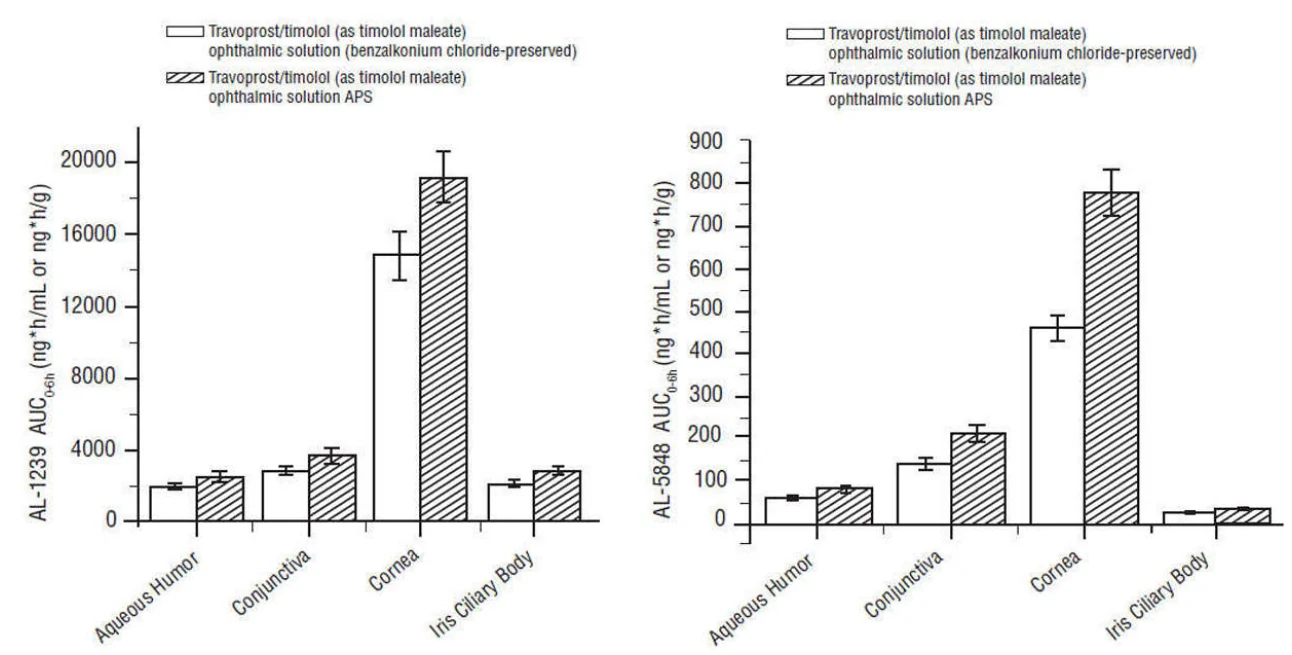
(benzalkonium chloride-preserved) in male rabbits (Figure 1). The increase as measured by mean AUC0-6h was about 1.3 fold for timolol and 1.3 to 1.7 fold for AL-5848 with statistical significance (P<0.05). Plasma timolol exposure (per Cmax and AUC) and travoprost free acid (per Cmax) was higher for travoprost and timolol ophthalmic solution (polyquaternium-1-preserved) compared to travoprost and timolol ophthalmic solution (benzalkonium chloride-preserved) (Table 9). No ocular distribution data in female rabbits are available.
Figure 1 - Comparison of mean AUC0-6h of timolol (left panel) and travoprost free acid
(right panel) in different ocular tissues in male rabbits treated with a single topical ocular dose of travoprost and timolol ophthalmic solution (polyquaternium-1-preserved) (labelled as travoprost and timolol ophthalmic solution (polyquaternium-1-preserved) APS in the figure) from the corresponding value of male rabbits treated with a single topical ocular dose of travoprost and timolol ophthalmic solution (benzalkonium chloride-preserved)
Table 9 - Systemic exposure (Cmax and AUC) of travoprost and timolol ophthalmic solution (polyquaternium-1-preserved) (travoprost-timolol APS) at Day 1 and Day 90 was consistently higher than that of travoprost and timolol ophthalmic solution (benzalkonium chloride-preserved) in male rabbits (n=4)
PK Parameter | Treatment (N=4) | Timolol | AL-5848 | ||
| Mean Cmax (ng/mL) | Day 1 | Day 90 | Day 1 | Day 90 | |
Travoprost/timolol (as timolol maleate) ophthalmic solution (polyquaternium-1-preserved) | 15.7 | 11.0 | 0.085 | 0.046 | |
Travoprost/timolol (as timolol maleate) ophthalmic solution (benzalkonium chloride-preserved) | 8.3 | 7.1 | 0.033 | 0.025 | |
% Increase in Mean Cmax Travoprost and timolol ophthalmic solution (polyquaternium-1-preserved) vs. Travoprost and timolol ophthalmic solution (benzalkonium chloride-preserved) | 90.1 | 55.1 | 153.3 | 85.4 | |
Mean AUC0-3 hr (ng*hr/mL) | Treatment (N=4) | Timolol | AL-5848 | ||
| Day 1 | Day 90 | Day 1 | Day 90 | ||
Travoprost and timolol ophthalmic solution (polyquaternium-1-preserved) | 17.2 | 13.5 | n/a | n/a | |
Travoprost and timolol ophthalmic solution (benzalkonium chloride-preserved) | 10.1 | 10.2 | n/a | n/a | |
% Increase in Mean AUC0-3 hr Travoprost and timolol ophthalmic solution (polyquaternium-1-preserved) vs. Travoprost and timolol ophthalmic solution (benzalkonium chloride-preserved) | 70.3 | 32.4 | n/a | n/a | |
n/a: not analyzed
Human Pharmacokinetics
Topical ocular administration of travoprost and timolol ophthalmic solution (benzalkonium chloride-preserved) and of travoprost and timolol ophthalmic solution (polyquaternium-1-preserved) once-daily in healthy subjects (C-09-009, N = 24) for 5 days in a randomized, two-way crossover study was undertaken to evaluate the steady state plasma pharmacokinetics of travoprost free acid and timolol.
Following topical ocular administration of travoprost and timolol ophthalmic solution (polyquaternium-1-preserved) or travoprost and timolol ophthalmic solution (benzalkonium chloride-preserved), timolol was rapidly absorbed into blood. Peak timolol plasma concentrations were observed on average within approximately 30 minutes for travoprost and timolol ophthalmic solution (benzalkonium chloride-preserved) and approximately one hour for travoprost and timolol ophthalmic solution (polyquaternium-1-preserved). Plasma timolol was then eliminated with mean half-lives of 5.16 ± 2.39 hours and 4.71 ± 2.15 hours following a single administration of travoprost and timolol ophthalmic solution (polyquaternium-1-preserved)
or travoprost and timolol ophthalmic solution (benzalkonium chloride-preserved), respectively. Plasma timolol mean half-lives at steady state were 5.38 ± 1.93 hours and 5.41 ± 1.94 hours after administration with travoprost and timolol ophthalmic solution (polyquaternium-1-preserved) or travoprost and timolol ophthalmic solution (benzalkonium chloride-preserved), respectively.
For travoprost and timolol ophthalmic solution (polyquaternium-1-preserved), not only did the plasma timolol concentration peak significantly later, but the plasma timolol exposure level (as measured with mean Cmax and mean AUC0-tlast) was also consistently higher at the steady state compared to travoprost and timolol ophthalmic solution (benzalkonium chloride-preserved). The Cmax of plasma timolol was 1.34 ± 0.584 ng/mL and 1.11 ± 0.570 ng/mL for travoprost and timolol ophthalmic solution (polyquaternium-1-preserved) and travoprost and timolol ophthalmic solution (benzalkonium chloride-preserved), respectively, while AUC0-tlast at steady state was 7.38 ± 3.53 ng•hr/mL and 6.25 ± 2.57 ng•hr/mL for travoprost and timolol ophthalmic solution (polyquaternium-1-preserved) and travoprost and timolol ophthalmic solution (benzalkonium chloride-preserved), respectively. Compared to travoprost and timolol ophthalmic solution (benzalkonium chloride-preserved), the systemic exposure to timolol, as measured by natural logarithm-transformed least squares mean plasma Cmax values, were 4 and 23% higher after a single dose and at steady-state, respectively, following administration of travoprost and timolol ophthalmic solution (polyquaternium-1-preserved). A similar trend was observed for plasma AUC0-tlast, with the natural logarithm-transformed least squares mean ratio for travoprost and timolol ophthalmic solution (polyquaternium-1-preserved) being 18 and 16% higher following a single dose and at steady-state, respectively, compared to travoprost and timolol ophthalmic solution (benzalkonium chloride-preserved). However, in this two-period, cross-over study, such difference in plasma Cmax and AUC0-tlast of timolol between travoprost and timolol ophthalmic solution (polyquaternium-1-preserved) and travoprost and timolol ophthalmic solution (benzalkonium chloride-preserved) was observed only in the second treatment period, during which the Cmax and AUC0-tlast of plasma timolol, as measured by natural logarithm-transformed least squares mean, was 25% to 55% higher or 62% to 77% higher, respectively, for travoprost and timolol ophthalmic solution (polyquaternium-1-preserved) than for travoprost and timolol ophthalmic solution (benzalkonium chloride-preserved). The true magnitude of the bioavailability difference between the two formulations cannot be determined with certainty, as the study was not sufficiently powered to determine bioequivalence. Higher ocular and systemic exposure to the active ingredients in the travoprost and timolol ophthalmic solution (polyquaternium-1-preserved) treatment than that in the travoprost and timolol ophthalmic solution (benzalkonium chloride-preserved) treatment was also consistently observed in three rabbits studies after topical ocular administration (see ACTION AND CLINICAL PHARMACOLOGY, Pharmacokinetics, Animal Pharmacokinetics).
For both travoprost and timolol ophthalmic solution (polyquaternium-1-preserved) and travoprost and timolol ophthalmic solution (benzalkonium chloride-preserved), a gender difference in systemic timolol exposure was observed, with females having higher mean Cmax and AUC0-∞ values compared to males. The extent of the gender difference for each of these formulations cannot be assessed in the study due to inadequate statistical power.
Absorption: Travoprost and timolol are absorbed through the cornea after topical ocular administration of travoprost and timolol ophthalmic solution (polyquaternium-1-preserved). Travoprost undergoes rapid ester hydrolysis in the cornea to the active travoprost free acid (AL5848), which is the form absorbed into the eye and systemic circulation.
In a two-period crossover phase 1 study in healthy subjects (Study C-09-009), plasma
pharmacokinetics of the active ingredients, timolol and AL-5848, were compared between travoprost and timolol ophthalmic solution (polyquaternium-1-preserved) and travoprost and timolol ophthalmic solution (benzalkonium chloride-preserved) after topical ocular administration. The systemic absorption and elimination of AL-5848 were generally rapid with Tmax ranging from 10 to 30 minutes for both travoprost and timolol ophthalmic solution (polyquaternium-1-preserved) and travoprost and timolol ophthalmic solution (benzalkonium chloride-preserved). T½ ranged from 0.46 to 0.82 hours and 0.60 to 2.06 hours for travoprost and timolol ophthalmic solution (polyquaternium-1-preserved) and travoprost and timolol ophthalmic solution (benzalkonium chloride-preserved), respectively.
In Study C-09-009, timolol was also rapidly absorbed into the general circulation with an approximate Tmax of 30 minutes and one hour for travoprost and timolol ophthalmic solution (benzalkonium chloride-preserved) and travoprost and timolol ophthalmic solution (polyquaternium-1-preserved), respectively. The plasma timolol exposure level for travoprost and timolol ophthalmic solution (polyquaternium-1-preserved) was significantly higher at steady state (23% and 16% higher for Cmax and AUC0-tlast, respectively) compared to travoprost and timolol ophthalmic solution (benzalkonium chloride-preserved). Plasma timolol was eliminated with mean half-lives of approximately 5 hours for both travoprost and timolol ophthalmic solution (polyquaternium-1-preserved) and travoprost and timolol ophthalmic solution (benzalkonium chloride-preserved) at steady state.
The significantly higher plasma timolol concentrations in humans in Study C-09-009 are consistent with the observations in the pharmacokinetic studies in rabbits where travoprost and timolol ophthalmic solution (polyquaternium-1-preserved) resulted in higher exposure to timolol in plasma as well as in ocular tissues compared to travoprost and timolol ophthalmic solution (benzalkonium chloride-preserved) after a single bilateral topical ocular administration (see ACTION AND CLINICAL PHARMACOLOGY, Animal Pharmacokinetics).
Distribution: Timolol can be measured in human aqueous humour up to 12 hours after topical ocular administration of timolol (Study C-02-35).
In rabbits, after a single topical ocular administration of travoprost and timolol ophthalmic solution (polyquaternium-1-preserved) or travoprost and timolol ophthalmic solution (benzalkonium chloride-preserved), the concentration of travoprost free acid in aqueous humour and iris-ciliary body reached its maximum level at 1-2 hours post-dose and were still >1 ng/g at 6 hours. In contrast, timolol concentrations in these ocular tissues increased immediately after dosing, reaching maximum levels in about 30 minutes and decreased to ≤10 ng/g for aqueous humor and between approximately 10 and 30 ng/g for iris-ciliary body at 6 hours.
Studies in rabbits showed that after a single topical ocular dose, timolol and travoprost free acid exposure levels in all ocular tissues were higher for travoprost and timolol ophthalmic solution (polyquaternium-1-preserved) than for travoprost and timolol ophthalmic solution (benzalkonium chloride-preserved). For timolol, the difference was not statistically significant for bulbar conjunctiva (see ACTION AND CLINICAL PHARMACOLOGY, Pharmacokinetics, Animal Pharmacokinetics).
Metabolism: Travoprost, an isopropyl ester prodrug, is hydrolyzed by esterases in the cornea to its pharmacologically active free acid. Systemically, travoprost free acid is metabolized to inactive metabolites via beta-oxidation of the carboxylic acid side-chain to give the 1,2-dinor and 1,2,3,4-tetranor analogs, via oxidation of the 15-hydroxyl moiety, as well as via reduction of the 13, 14 double bond in primates. There was no difference in plasma concentrations between
Days 1 and 3, indicating steady-state was reached early and there was no accumulation. In humans, timolol is primarily metabolized by two pathways involving ring-opening oxidation of the morpholine ring. One route yields an ethanolamine side chain on the thiadiazole ring and the other giving an ethanolic side chain on the morpholine nitrogen and a second similar side chain with a carbonyl group adjacent to the nitrogen.
Elimination: Travoprost free acid and its metabolites are mainly excreted by the kidneys. In humans, <2% of a topical ocular dose of travoprost was recovered in urine as free acid. Timolol and its metabolites are primarily excreted by the kidneys. Approximately 20% of a timolol dose is excreted in the urine unchanged, and the remainder is excreted in urine as metabolites.
Special Populations and Conditions
Pediatrics (<18 years of age): The use of APO-TRAVOPROST-TIMOP PQ in pediatric patients <18 years of age is currently not recommended. The safety and effectiveness of travoprost and timolol ophthalmic solution (polyquaternium-1-preserved) in these patients have not been established.
Geriatrics (>65 years of age): No overall differences in safety or effectiveness have been observed between elderly and other adult patients.
Pregnancy and Breast-feeding: No adequate and well controlled studies have been performed in pregnant women with travoprost and timolol ophthalmic solution (polyquaternium-1-preserved). Studies in animals with travoprost have shown reproductive toxicity (see NON-TOXICOLOGY, Reproductive and Developmental Toxicology). Because travoprost has harmful effects on pregnancy and/or the fetus/newborn child, travoprost and timolol ophthalmic solution (polyquaternium-1-preserved) is contraindicated during pregnancy and in women planning to become pregnant (see CONTRAINDICATIONS).
Since prostaglandins are biologically active and may be absorbed through the skin, women who are pregnant or attempting to become pregnant should exercise appropriate precautions to avoid direct exposure to the contents of the bottle. In case of accidental contact with the contents of the bottle, thoroughly cleanse the exposed area with soap and water immediately.
Timolol maleate has been detected in human milk following oral and ophthalmic drug administration. Travoprost has been shown to be excreted in milk in animal studies; however, it is not known whether travoprost and/or its metabolites are excreted in human milk. Because of the potential for serious adverse reactions from timolol maleate or travoprost in nursing infants, a decision should be made whether to discontinue nursing or to discontinue the drug, taking into account the importance of the drug to the mother.
11 STORAGE, STABILITY AND DISPOSAL
Store at 2°C – 25°C. No refrigeration is required. Discard 120 days after first opening. Keep out of the reach and sight of children.
PART II: SCIENTIFIC INFORMATION
13 PHARMACEUTICAL INFORMATION
APO-TRAVOPROST-TIMOP PQ is a combination of a topical prostaglandin analogue and a topical beta-adrenergic receptor blocking agent.
Drug Substance
Proper name: Travoprost USP
Chemical name: [1R-[1α(Z),2β(1E,3R*),3α,5α]]-7-[3,5-Dihydroxy-2-[3-hydroxy-4-[3-
(trifluoromethyl)phenoxy]-1-butenyl]cyclopentyl]-5-heptenoic acid, 1-methylethyl ester
Molecular formula and molecular mass: C26H35F3O6, 500.55 g/mol
Structural formula:
Physicochemical properties:
Description: Pale yellow to yellowish viscous oil.
Solubility: Freely soluble in Acetonitrile, Toluene, Ethyl Acetate and Methanol; practically insoluble in Water and Hexane.
Drug Substance
Proper name: Timolol Maleate USP/EP
Chemical name: ( )-1-(tert-Butylamino)-3-[(4-morpholino-1,2,5-thiadiazol-3-yl)oxy]-2-propanol maleate
Molecular formula and molecular weight: C13H24N403S·C4H404, 432.50 g/mol
O
O
OH
OH
OH
O
F
F
F CH3
CH3
Structural formula:
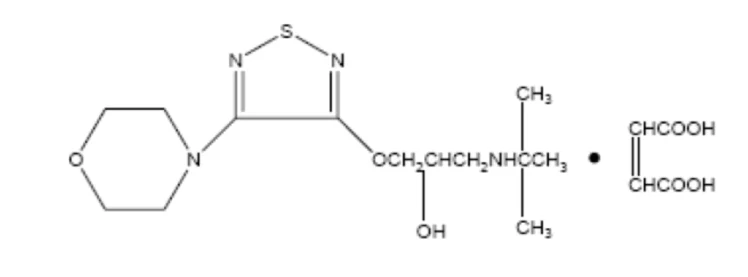
Physicochemical properties:
Description: White, or practically white, crystalline powder.
Solubility: Soluble in water, alcohol and methanol; sparingly soluble in chloroform and propylene glycol; insoluble in ether and cyclohexane.
14 CLINICAL TRIALS
14.1 Trial Design and Study Demographics
Two Phase III safety and efficacy studies, (C-07-64/C-08-08), and 1 long term safety study (C-09-032) were conducted to establish that travoprost and timolol ophthalmic solution (polyquaternium-1-preserved) exhibited equivalent efficacy to travoprost and timolol ophthalmic solution (benzalkonium chloride-preserved) with the same overall safety profile for the product, regardless of the preservative used. In addition, 5 multicentre, randomised, double-masked, parallel-group, controlled clinical trials were conducted originally to assess the clinical efficacy and safety of travoprost and timolol ophthalmic solution (benzalkonium chloride-preserved).
Travoprost and timolol ophthalmic solution (polyquaternium-1-preserved): Studies C-07-64 and C-08-08 were 2 multicentre, randomised, double-masked, parallel-group clinical trials. These studies were identical in design and were pre-planned to be combined for a single analysis.
Efficacy and safety data were collected at Week 2 and Week 6, and IOP was measured at 9 AM, 11 AM and 4 PM. The measurement of IOP at several time points at each visit is important to assess IOP throughout the day, as large diurnal fluctuations in IOP have been shown to be associated with visual field defect progression. All enrolled patients were followed for up to 6 weeks. Primary efficacy was based upon the mean IOP measurements pooled across all visits and time points.
Travoprost and timolol ophthalmic solution (benzalkonium chloride-preserved): Five multicentre, randomised, double-masked, parallel-group, controlled clinical trials were conducted to assess the clinical efficacy and safety of travoprost and timolol ophthalmic solution (benzalkonium chloride-preserved) solution.
Study C-02-03: One trial (C-02-03) compared travoprost and timolol ophthalmic solution (benzalkonium chloride-preserved) dosed once-daily, in the morning, to travoprost and timolol ophthalmic solution (benzalkonium chloride-preserved) dosed once-daily, in the evening, over a 6-week period. To qualify for the study, patients had to be diagnosed with open-angle glaucoma or ocular hypertension and had to be currently treated with one or more IOP-lowering medications. The primary efficacy endpoint was an assessment of mean IOP at the 9 AM,
11 AM and 4 PM time points at Week 2 and Week 6. The 2 dosing regimens were to be declared equivalent if the confidence interval limits were within ± 2.5 mmHg. Safety assessments included visual acuity, ocular signs (cornea, iris/anterior chamber, lens, aqueous cells and flare), ocular hyperemia, dilated fundus parameters (vitreous, retina/macula/choroid and optic nerve) and cardiovascular parameters (pulse rate, systolic and diastolic blood pressure).
Study C-01-69: A 3-month study (C-01-69) was designed to compare the safety and IOP-lowering efficacy of travoprost and timolol ophthalmic solution (benzalkonium chloride-preserved) to travoprost 0.004% alone or to timolol 0.5% alone. Patients enrolled could have been on previous IOP-lowering therapy or not on medication. The primary efficacy endpoint was an assessment of mean IOP at the 8 AM, 10 AM and 4 PM time points at Week 2, Week 6 and Month 3. A 3-month, planned, masked extension included a visit at Month 6 for additional safety follow-up.
Safety assessments included visual acuity, ocular signs (cornea, iris/anterior chamber, lens, aqueous cells and flare), ocular hyperemia, dilated fundus parameters (vitreous, retina/macula/choroid and optic nerve), iris/eyelash photography, cardiovascular parameters (pulse, systolic and diastolic blood pressures) and visual fields.
Studies C-01-70 and C-02-41: Two 3-month studies (C-01-70 and C-02-41) were designed to compare the IOP-lowering efficacy and safety of travoprost and timolol ophthalmic solution (benzalkonium chloride-preserved) to the concomitant administration of travoprost 0.004% and timolol 0.5% in patients with open-angle glaucoma or ocular hypertension. Both studies were multicenter, double-masked, parallel group studies. The 2 treatment groups were: 1) travoprost and timolol ophthalmic solution (benzalkonium chloride-preserved) dosed once-daily in the morning; and 2) timolol 0.5% dosed once-daily in the morning plus travoprost 0.004% dosed once-daily in the evening. The dosing regimens were to be declared similar if the confidence interval limits were within ± 1.5 mmHg. In Study C-02-41, a third treatment group, timolol 0.5% dosed twice daily, was also included. Patients enrolled could have been on previous IOP-lowering therapy or not on medication. The primary efficacy endpoint was an assessment of mean IOP at the 8 AM, 10 AM and 4 PM time points at Week 2, Week 6 and Month 3. A 3-month, planned, masked extension included a visit at Month 6 for additional safety follow-up.
Safety assessments included visual acuity, ocular signs (cornea, iris/anterior chamber, lens, aqueous cells and flare), ocular hyperemia, dilated fundus parameters (vitreous, retina/macula/choroid and optic nerve), iris/eyelash photography, cardiovascular parameters (pulse, systolic and diastolic blood pressures) and visual fields.
Study C-02-28: The long-term safety of travoprost and timolol ophthalmic solution (benzalkonium chloride-preserved) was evaluated in a 12-month study (C-02-28) comparing travoprost and timolol ophthalmic solution (benzalkonium chloride-preserved) and latanoprost 0.005% / timolol 0.5% ophthalmic solution in 407 patients with open-angle glaucoma or ocular hypertension. Safety assessments included visual acuity, ocular signs (cornea, iris/anterior chamber, lens, aqueous cells and flare), ocular hyperemia, dilated fundus parameters (vitreous, retina/macula/choroid and optic nerve), iris/eyelash photography, cardiovascular parameters (pulse, systolic and diastolic blood pressures) and visual fields.
14.2 Study Results
Studies C-07-64/C-08-08: Travoprost and timolol ophthalmic solution (polyquaternium-1-
preserved) and travoprost and timolol ophthalmic solution (benzalkonium chloride-preserved) produced statistically equivalent IOP-lowering efficacy.
Mean IOP reductions from baseline for travoprost and timolol ophthalmic solution (polyquaternium-1-preserved) and travoprost and timolol ophthalmic solution (benzalkonium chloride-preserved) were clinically relevant and statistically significant at all measurement times. Mean IOP reductions ranged from 7.5 to 8.3 mmHg for travoprost and timolol ophthalmic solution (polyquaternium-1-preserved) and from 8.1 to 8.5 mmHg for travoprost and timolol ophthalmic solution (benzalkonium chloride-preserved) in the protocol analysis and intent-to treat analysis when evaluated at the individual study visits and times.
The maximum mean IOP reduction in the travoprost and timolol ophthalmic solution (polyquaternium-1-preserved) group and in the travoprost and timolol ophthalmic solution (benzalkonium chloride-preserved) group were 8.3 mmHg at Week 6, 9 AM in the intent-to-treat data and 8.5 mmHg at Week 2, 4 PM in the per protocol data, respectively, corresponding to approximately 34% IOP reduction in each group.
Statistically significant differences were observed at Week 2, 4 PM Visit (p = 0.0488) and Week 6, 11 AM Visit (p = 0.0155). However, the difference in IOP lowering between travoprost and timolol ophthalmic solution (benzalkonium chloride-preserved) and travoprost and timolol ophthalmic solution (polyquaternium-1-preserved) at Week 2, 4 PM Visit was 0.6 mmHg and at Week 6, 11 AM Visit was 0.7 mmHg, neither of which is considered clinically relevant. Confidence limits for the treatment group differences in mean IOP reductions were within ± 1.5 mmHg at all 6 visits and times (Table 10).
Table 10: Comparison of Mean IOP Change from Baseline (mmHg) - C-07-64 and C-08-08 Combined (Per Protocol Data)
| Baselinea | Pooled | Combined | Week 2 | Week 6 | |||||||||
| 9AM | 11AM | 4PM | 9AM | 11AM | 4PM | 9AM | 11AM | 4PM | 9AM | 11AM | 4PM | ||
Travoprost and Timolol Ophthalmic Solution (Benzalkonium Chloride- Preserved) | |||||||||||||
| Mean | 25.9 | 25.2 | 24.5 | -8.0 | -8.2 | -7.7 | -7.9 | -8.2 | -8.0 | -7.9 | -8.2 | -7.5 | -7.9 |
| N | 188 | 188 | 188 | 188 | 188 | 188 | 188 | 187 | 188 | 188 | 179 | 180 | 179 |
Travoprost and Timolol Ophthalmic Solution (Benzalkonium Chloride- Preserved) | |||||||||||||
| Mean | 25.8 | 24.9 | 24.2 | -8.4 | -8.4 | -8.2 | -8.4 | -8.4 | -8.3 | -8.5 | -8.4 | -8.2 | -8.3 |
| N | 184 | 184 | 184 | 183 | 183 | 181 | 181 | 183 | 180 | 181 | 176 | 176 | 177 |
| Difference | 0.2 | 0.3 | 0.3 | 0.4 | 0.2 | 0.5 | 0.5 | 0.2 | 0.3 | 0.6 | 0.2 | 0.7 | 0.4 |
| P-value | 0.5756 | 0.3355 | 0.2292 | 0.0943 | 0.4005 | 0.0530 | 0.0677 | 0.4589 | 0.2973 | 0.0488 | 0.4437 | 0.0155 | 0.1906 |
| Upper 95% CI | 0.7 | 0.8 | 0.9 | 0.8 | 0.7 | 1.0 | 1.0 | 0.8 | 0.8 | 1.1 | 0.8 | 1.2 | 0.9 |
| Lower 95% CI | -0.4 | -0.3 | -0.2 | -0.1 | -0.3 | -0.0 | -0.0 | -0.3 | -0.3 | 0.0 | -0.3 | 0.1 | -0.2 |
Travoprost and timolol ophthalmic solution (polyquaternium-1-preserved) = Travoprost 40 mcg/mL + Timolol 5 mg/mL Travoprost and timolol ophthalmic solution (benzalkonium chloride-preserved) = Travoprost 40 mcg/mL + Timolol 5 mg/mL a Baseline is the average of the two Eligibility Visits if both values were not missing, otherwise the non-missing value of the two visits was used. CI = Confidence interval
Combined = Results pooled across Week 2 and Week 6
Pooled = Results pooled across all time points for Week 2 and Week 6
Estimates based on least squares means using repeated measures analysis of covariance. Baseline estimates obtained from separate model. P-values and confidence intervals were based on repeated measures analysis of covariance.
An additional measure of IOP-lowering was assessed by the percentage of patients whose on-therapy IOP decreased to less than 18 mmHg, representing a reduction from baseline of at least 30%. The percentage of patients with IOP < 18 mmHg or IOP percent reduction ≥ 30% at each study visit ranged from 60% to 73% in the travoprost and timolol ophthalmic solution (polyquaternium-1-preserved) group and from 67% to 73% in the travoprost and timolol ophthalmic solution (benzalkonium chloride-preserved) group in the per protocol analysis.
A summary of all ocular and non-ocular adverse drug reactions from all 7 multicenter clinical trials with travoprost and timolol ophthalmic solution (polyquaternium-1-preserved) (2 studies) or travoprost and timolol ophthalmic solution (benzalkonium chloride-preserved) (5 studies) are presented in ADVERSE REACTIONS.
Study C-02-03: Participants included 92 adult patients (87% with open-angle glaucoma, which could include a pigmentary or exfoliative component, and 13% with ocular hypertension) with a baseline mean IOP of 25 to 27 mmHg following washout from previous IOP-lowering therapy. The results of this study indicate that the IOP-lowering efficacy of travoprost and timolol ophthalmic solution (benzalkonium chloride-preserved) is independent of time of dosing (morning vs. evening), providing clinically relevant and equivalent IOP control throughout the day. All of the two-sided 95% confidence limits were within ± 2.5 mmHg. Mean IOP reductions ranged from approximately 8 to 10 mmHg, equating to IOP reductions of 32% to 38% relative to baseline.
The most frequent ocular adverse drug reactions to travoprost and timolol ophthalmic solution (benzalkonium chloride-preserved) in Study C-02-03 included ocular hyperemia (6 patients; 13.0%) and ocular pruritus (4 patients; 4.3%). The most frequent non-ocular adverse drug reaction was hypertension, occurring in 2 patients (2.2%). All other non-ocular adverse drug reactions occurred in 1 patient each. No clinically relevant differences were noted comparing the safety of morning and evening dosing (Table 11).
Table 11 - Mean IOP (mmHg) Comparison of Morning and Evening Dosing with
Travoprost and timolol ophthalmic solution (benzalkonium chloride-preserved) (Per Protocol Data Set – Study C-02-03)
| Week 2 | Week 6 | |||||
| 9AM | 11AM | 4PM | 9AM | 11AM | 4PM | |
Travoprost and Timolol Ophthalmic Solution (Benzalkonium Chloride- Preserved) Morning Dosing | 16.6 | 16.6 | 16.6 | 16.7 | 16.7 | 16.5 |
Travoprost and Timolol Ophthalmic Solution (Benzalkonium Chloride- Preserved) Evening Dosing | 17.2 | 16.7 | 16.1 | 17.0 | 16.9 | 16.3 |
| Week 2 | Week 6 | |||||
| 9AM | 11AM | 4PM | 9AM | 11AM | 4PM | |
| Difference | -0.6a | -0.1a | 0.5a | -0.3a | -0.2a | 0.2a |
Upper 95% Confidence Interval | 0.9 | 1.3 | 2.0 | 1.1 | 1.3 | 1.7 |
Lower 95% Confidence Interval | -2.0 | -1.6 | -1.0 | -1.8 | -1.7 | -1.2 |
a p-value > 0.05
Study C-01-69: Participants included 263 adult and elderly patients with open-angle glaucoma (which could include a pigmentary or exfoliative component) (69%) or ocular hypertension (31%) with baseline mean IOPs, following washout from previous IOP-lowering therapy, if applicable, of 27 to 30 mmHg. The results of this study indicate that travoprost and timolol ophthalmic solution (benzalkonium chloride-preserved) produces statistically significant and clinically relevant reductions in IOP ranging from approximately 9 to 12 mmHg which equates to IOP reductions of 32% to 38% relative to baseline. IOP-lowering with travoprost and timolol ophthalmic solution (benzalkonium chloride-preserved), dosed once-daily in the morning, was 2 to 3 mmHg greater than that of timolol ophthalmic solution, 0.5%, dosed twice-daily, at all visits and times, and was 1 to 2 mmHg greater than that of travoprost ophthalmic solution, 0.004% at all times of day (Table 12). This is most evident at the crucial 8 AM time point when IOP is highest and is 24 hours post-dosing of the fixed combination. Due to its complementary mechanisms of action (increased uveoscleral outflow and suppression of aqueous humour production), travoprost and timolol ophthalmic solution (benzalkonium chloride-preserved) produces large mean IOP reductions in all demographic subgroups.
In this study where baseline IOPs were 27 to 30 mmHg, 50% of patients receiving travoprost and timolol ophthalmic solution (benzalkonium chloride-preserved) achieved IOP below 18 mmHg on at least 1 time point for every visit (Table 13).
In clinical practice, the appropriate value of a target IOP (an IOP level that would be considered a clinical success) is determined by the physician for each patient. Information from the recent Advanced Glaucoma Intervention Study (AGIS) indicates that an IOP of less than 18 mmHg is correlated with reduced progression of visual field defects associated with glaucoma.
Table 12 - Mean IOP (mmHg) Comparison of Travoprost and Timolol Ophthalmic Solution
(Benzalkonium Chloride-Preserved) and Timolol 0.5% and of Travoprost and Timolol Ophthalmic Solution (Benzalkonium Chloride-Preserved) and Travoprost 0.004% (Intent-to-Treat Data Set – Study C-01-69)
| Week 2 | Week 6 | Month 3 | |||||||
| 8AM | 10AM | 4PM | 8AM | 10AM | 4PM | 8AM | 10AM | 4PM | |
Travoprost and Timolol Ophthalmic Solution (Benzalkonium Chloride- Preserved) | 18.9 | 18.1 | 17.5 | 18.9 | 17.9 | 18.2 | 18.7 | 18.4 | 18.5 |
| Timolol 0.5% | 21.3 | 20.4 | 20.2 | 20.6 | 20.0 | 19.8 | 20.8 | 19.9 | 20.1 |
| Difference | -2.4a | -2.2a | -2.7a | -1.7a | -2.1a | -1.7a | -2.1a | -1.5a | -1.5a |
| Week 2 | Week 6 | Month 3 | |||||||
| 8AM | 10AM | 4PM | 8AM | 10AM | 4PM | 8AM | 10AM | 4PM | |
| Upper 95% CI | -1.3 | -1.1 | -1.6 | -0.5 | -1.0 | -0.6 | -0.9 | -0.4 | -0.4 |
| Lower 95% CI | -3.5 | -3.3 | -3.8 | -2.8 | -3.2 | -2.8 | -3.2 | -2.6 | -2.6 |
Travoprost and Timolol Ophthalmic Solution (Benzalkonium Chloride- Preserved) | 18.9 | 18.1 | 17.5 | 18.9 | 17.9 | 18.2 | 18.7 | 18.4 | 18.5 |
| Travoprost 0.004% | 20.5 | 18.9 | 18.7 | 20.3 | 19.2 | 18.7 | 20.5 | 19.3 | 18.9 |
| Difference | -1.6b | -0.8 | -1.2b | -1.4b | -1.3b | -0.5 | -1.8b | -1.0 | -0.4 |
| Upper 95% CI | -0.5 | 0.4 | -0.0 | -0.3 | -0.1 | 0.6 | -0.6 | 0.2 | 0.8 |
| Lower 95% CI | -2.8 | -1.9 | -2.3 | -2.5 | -2.4 | -1.6 | -2.9 | -2.1 | -1.5 |
a p<0.05 travoprost and timolol ophthalmic solution (benzalkonium chloride-preserved) vs. timolol 0.5% b p<0.05 travoprost and timolol ophthalmic solution (benzalkonium chloride-preserved) vs. travoprost 0.004%
Table 13 - Percent of Patients with IOP < 18 mmHg on a Least One Time Point at Every
Visit (Intent-to-Treat Data Set – Study C-01-69)
| Percent of Patients | |
| Travoprost and Timolol Ophthalmic Solution (Benzalkonium Chloride-Preserved) | 50% |
| Travoprost 0.004% | 29% |
| Timolol 0.5% | 23% |
The most frequent ocular adverse drug reactions with travoprost and timolol ophthalmic solution (benzalkonium chloride-preserved) in Study C-01-69 included ocular hyperemia (12 patients; 14.1%), ocular discomfort (6 patients; 7.1%), photophobia (4 patients; 4.7%), and changes in eyelash characteristics (4 patients; 4.7%). The most frequent non-ocular adverse drug reaction was headache, occurring in 2 patients (2.4%). All other non-ocular adverse drug reactions occurred in 1 patient each. No clinically relevant differences in safety were noted between the 3-month and 6-month data sets.
Studies C-01-70 and C-02-41: Participants included 316 (Study C-01-70) and 403 (Study C-02-
- 41) adult and elderly patients with open-angle glaucoma, which could include a pigmentary or exfoliative component, (68% in C-01-70; 57% in C-02-41) or ocular hypertension (32% in C-01-70; 43% in C-02-41) with baseline mean IOPs, following washout from previous IOP-lowering therapy, if applicable, of 23 to 26 mmHg. The results of both studies indicate that travoprost and timolol ophthalmic solution (benzalkonium chloride-preserved) produces IOP-lowering that is similar to the concomitant administration of travoprost 0.004% and timolol 0.5% and greater than timolol 0.5% dosed twice daily. Treatment-group differences in mean IOP were similar in the 2 studies and ranged from 0.1 to 1.1 mmHg, demonstrating the similarity of IOP reduction (see Table 14, Table 15, Table 16).
Table 14 - Mean IOP (mmHg) Comparison of Travoprost and Timolol Ophthalmic Solution (Benzalkonium Chloride-Preserved) and Travoprost 0.004% + Timolol 0.5% for Test of Non-Inferiority (Per Protocol Dataset -Study C-01-70)
| Week 2 | Week 6 | Month 3 | |||||||
| 8AM | 10AM | 4PM | 8AM | 10AM | 4PM | 8AM | 10AM | 4PM | |
Travoprost and Timolol Ophthalmic Solution (Benzalkonium Chloride-Preserved) | 16.1 | 15.5 | 15.2 | 15.9 | 15.7 | 15.6 | 16.5 | 16.1 | 15.6 |
| Travoprost 0.004% + Timolol 0.5% | 16.0 | 15.2 | 14.8 | 15.8 | 14.8 | 14.7 | 16.1 | 15.1 | 14.8 |
| Difference | 0.1 | 0.3 | 0.5 | 0.1 | 1.0a | 0.9a | 0.5 | 0.9a | 0.8a |
| Upper 95% CI | 0.7 | 0.9 | 1.1 | 0.7 | 1.6 | 1.5 | 1.1 | 1.6 | 1.5 |
| Lower 95% CI | -0.5 | -0.4 | -0.2 | -0.5 | 0.3 | 0.3 | -0.2 | 0.3 | 0.2 |
a p<0.05 travoprost and timolol ophthalmic solution (benzalkonium chloride-preserved) vs. travoprost 0.004% + timolol 0.5%
Table 15 - Mean IOP (mmHg) Comparison of Travoprost and Timolol Ophthalmic Solution
(Benzalkonium Chloride-Preserved) and Travoprost 0.004% + Timolol 0.5% for Test of Non-Inferiority (Per Protocol Dataset - Study C-02-41)
| Week 2 | Week 6 | Month 3 | |||||||
| 8AM | 10AM | 4PM | 8AM | 10AM | 4PM | 8AM | 10AM | 4PM | |
Travoprost and Timolol Ophthalmic Solution (Benzalkonium Chloride-Preserved) | 17.4 | 16.8 | 16.2 | 17.0 | 16.6 | 16.2 | 17.1 | 16.5 | 16.3 |
| Travoprost 0.004% + Timolol 0.5% | 16.8 | 15.7 | 15.4 | 16.6 | 15.5 | 15.4 | 16.7 | 15.8 | 15.5 |
| Difference | 0.6 | 1.1a | 0.8a | 0.4 | 1.0a | 0.7a | 0.4 | 0.7 | 0.8a |
| Upper 95% CI | 1.3 | 1.8 | 1.5 | 1.1 | 1.7 | 1.5 | 1.2 | 1.4 | 1.6 |
| Lower 95% CI | -0.1 | 0.4 | 0.0 | -0.4 | 0.3 | 0.0 | -0.3 | -0.1 | 0.1 |
a p<0.05 travoprost and timolol ophthalmic solution (benzalkonium chloride-preserved) vs. travoprost 0.004% + timolol 0.5%
Table 16 - Mean IOP (mmHg) Comparison of Travoprost and Timolol Ophthalmic Solution
(Benzalkonium Chloride-Preserved) and Timolol 0.5% for Test of Superiority (Intent-to-Treat Dataset - Study C-02-41)
| Week 2 | Week 6 | Month 3 | |||||||
| 8AM | 10AM | 4PM | 8AM | 10AM | 4PM | 8AM | 10AM | 4PM | |
| Travoprost and Timolol Ophthalmic Solution | 17.5 | 16.8 | 16.2 | 17.0 | 16.6 | 16.2 | 17.2 | 16.5 | 16.4 |
| Week 2 | Week 6 | Month 3 | |||||||
| 8AM | 10AM | 4PM | 8AM | 10AM | 4PM | 8AM | 10AM | 4PM | |
(Benzalkonium Chloride-Preserved) | |||||||||
| Timolol 0.5% | 18.3 | 18.0 | 18.3 | 18.8 | 17.9 | 17.9 | 18.8 | 17.8 | 17.5 |
| Difference | -0.9a | -1.3a | -2.1a | -1.8a | -1.3a | -1.7a | -1.6a | -1.3a | -1.2a |
| Upper 95% CI | -0.0 | -0.4 | -1.3 | -0.9 | -0.4 | -0.8 | -0.7 | -0.5 | -0.3 |
| Lower 95% CI | -1.7 | -2.1 | -3.0 | -2.7 | -2.2 | -2.6 | -2.4 | -2.2 | -2.0 |
a p<0.05 travoprost and timolol ophthalmic solution (benzalkonium chloride-preserved) versus Timolol 0.5%
In these studies where baseline IOPs were 23 to 26 mmHg, approximately 74% of patients receiving travoprost and timolol ophthalmic solution (benzalkonium chloride-preserved) achieved IOP below 18 mmHg on at least 1 time point at every visit.
Table 17 - Percent of Patients with IOP < 18 mmHg on at Least One Time Point at Every
Visit (Intent-to-Treat Data Sets – Studies C-01-70 and C-02-41)
| Percent of Patients | |||
| C-01-70 | C-02-41 | Pooled | |
| Travoprost and Timolol Ophthalmic Solution (Benzalkonium Chloride-Preserved) | 79% | 70% | 74% |
| Travoprost 0.004% + Timolol 0.5% | 84% | 80% | 82% |
| Timolol 0.5% | --- | 52% | --- |
The most frequent ocular adverse drug reactions with travoprost and timolol ophthalmic solution (benzalkonium chloride-preserved) in Study C-01-70 included ocular hyperemia (20 patients; 12.4%), ocular discomfort (9 patients; 5.6%), ocular pruritus (6 patients; 3.7%), ocular dryness (5 patients; 3.1%), corneal staining (4 patients; 2.5%), keratitis (3 patients; 1.9%), ocular allergic reaction (3 patients; 1.9%), and ocular pain (3 patients; 1.9%). The most frequent non-ocular adverse drug reaction was headache, occurring in 2 patients (1.2%). All other non-ocular adverse drug reactions (contact dermatitis, increased cough and skin discoloration) occurred in 1 patient each (0.6%).
The most frequent ocular adverse drug reactions with travoprost and timolol ophthalmic solution (benzalkonium chloride-preserved) in Study C-02-41 included ocular hyperemia (23 patients; 14.3%), ocular discomfort (20 patients; 12.4%), foreign body sensation (11 patients; 6.8%), ocular pruritus (7 patients; 4.3%), ocular dryness (5 patients; 3.1%), cells (4 patients; 2.5%), blurred vision (3 patients; 1.9%), lid erythema (3 patients; 1.9%), ocular pain (3 patients; 1.9%), and photophobia (3 patients; 1.9%). All non-ocular adverse drug reactions (abnormal urine, dyspnea, irritation throat, SGOT increased, SGPT increased and skin discoloration) occurred in 1 patient each (0.6%).
An analysis of the 6-month safety data from both Studies C-01-70 and C-02-41 confirmed that travoprost and timolol ophthalmic solution (benzalkonium chloride-preserved) has an acceptable safety profile with no clinically relevant differences noted between the 3-month and 6-month
safety results.
In all 3-month studies, patients treated with travoprost and timolol ophthalmic solution (benzalkonium chloride-preserved) achieve sustainable IOP reduction after 2 weeks of therapy and the IOP reduction is maintained for 3 months.
No overall differences in safety or effectiveness have been observed between elderly and other adult patients.
Study C-02-28: The most frequent ocular adverse drug reactions with travoprost and timolol ophthalmic solution (benzalkonium chloride-preserved) in Study C-02-28 included ocular hyperemia (31 patients; 15.0%), ocular pruritus (14 patients; 6.8%), ocular discomfort (9 patients; 4.3%), changes in eyelash characteristics (5 patients; 2.4%), ocular dryness (4 patients; 1.9%), and ocular pain (3 patients; 1.4%). Increased iris pigmentation occurred at an incidence of 2.4% (4 patients) (see Table 4 in ADVERSE REACTIONS). The most frequent non-ocular adverse drug reaction was skin discoloration, occurring in 2 patients (1.0%). All other non-ocular adverse drug reactions (allergy, asthma, dizziness, dyspnea, hypertension and increased cough) occurred in 1 patient each (0.5%).
Summary: An analysis of the safety data obtained across all studies indicates that travoprost and timolol ophthalmic solution (benzalkonium chloride-preserved) is well tolerated with a safety profile similar to that obtained with the concomitant dosing of travoprost 0.004% and timolol 0.5%. Studies conducted with the individual components of travoprost and timolol ophthalmic solution (benzalkonium chloride-preserved) indicate that the IOP-lowering effect of travoprost and of timolol are well maintained over a period of 1 year. Adverse drug reactions with travoprost and timolol ophthalmic solution (benzalkonium chloride-preserved) were consistent with those reported previously with travoprost 0.004% and/or timolol 0.5%.
16 NON-CLINICAL TOXICOLOGY
GENERAL TOXICOLOGY
Single Dose Toxicity
Travoprost/Timolol Combination: Travoprost and timolol ophthalmic solution (polyquaternium-1-preserved) was well tolerated after topical ocular administration of a single large dose in animals. After topical ocular administration of one drop in each eye every 30 minutes for a total of 10 doses in a single day, travoprost and timolol ophthalmic solution (polyquaternium-1-preserved) caused only minimal conjunctival congestion and discomfort. This result is similar to that of travoprost and timolol ophthalmic solution (benzalkonium chloride-preserved) in the same experimental system. However, the direct comparative acute ocular toxicity was not conducted between travoprost and timolol ophthalmic solution (polyquaternium-1-preserved) and travoprost and timolol ophthalmic solution (benzalkonium chloride-preserved). Systemic single dose studies were not conducted with the combination.
The poor oral bioavailability of travoprost mitigates the hazard of accidental ingestion. Timolol is orally bioavailable, but has a low order of toxicity (mouse/rat oral LD50 ~ 1000 mg/kg).
Travoprost: Travoprost was demonstrated to have a low order of acute toxicity. An LD50 of travoprost has not been established. No mortalities occurred in rats administered travoprost intravenously at a dose of 10 mg/kg (250,000-times the proposed clinical exposure) or in mice
given up to 100 mg/kg/day (2,500,000-times the proposed clinical exposure). The most frequent clinical observations were discolored urine and red material around the nose in rats, and lethargy and diarrhea in mice.
Administration of travoprost ophthalmic solution, up to 0.01%, two drops every half-hour for five or six hours, did not result in any significant ocular or systemic effects.
Timolol: Acute oral dosing studies established an LD50 of approximately 1000 mg/kg for mice and rats. The most frequent clinical observations were decreased activity and bradypnea. Oral acute interaction studies in mice in which timolol maleate was administered with probenecid, methyldopa, hydralazine, hydrochlorothiazide, or tolbutamide, showed that these drugs had no effect on the toxicity of timolol maleate. Timolol maleate had no effect on hypoprothrombinemia induced by bishydroxycoumarin in the dog.
Polyquaternium-1: The toxicity of polyquaternium-1 in animals appears to be low after topical ocular and oral administration. A single topical ocular polyquaternium-1 dose (32,000 times higher than that used in travoprost and timolol ophthalmic solution (polyquaternium-1-preserved)] was well tolerated in rabbits. Transient occurrences of soft stool and diarrhoea were the most common observations after oral administration of a single 1000 mg/kg dose of polyquaternium-1 in rats. The NOAEL for a single oral polyquaternium-1 dose in rats is estimated to be 100 mg/kg. The LD50 for orally administrated polyquaternium-1 in rats is higher than 1000 mg/kg. The maximum tolerated dose (MTD) of polyquaternium-1 in mice is estimated to be 5000 mg/kg.
Repeated Dose Toxicity
Travoprost/Timolol Combination: Similar to travoprost and timolol ophthalmic solution (benzalkonium chloride-preserved), travoprost and timolol ophthalmic solution (polyquaternium-1-preserved) appears to be well tolerated following repeat-dose topical ocular administration in animals.
A 3-month topical ocular study in pigmented rabbits was conducted with travoprost and timolol ophthalmic solution (polyquaternium-1-preserved). Study groups were exposed to the travoprost and timolol ophthalmic solution (polyquaternium-1-preserved) vehicle, travoprost and timolol ophthalmic solution (polyquaternium-1-preserved) and travoprost and timolol ophthalmic solution (benzalkonium chloride-preserved), 3 times daily (TID). There was no difference identified in terms of ocular toxicity between travoprost and timolol ophthalmic solution (polyquaternium-1-preserved) and travoprost and timolol ophthalmic solution (benzalkonium chloride-preserved).
All test articles were well tolerated. Biomicroscopic observations of the eyes of control and test article-treated rabbits were limited to minimal conjunctival congestion (hyperemia) with the exception of 1 male rabbit in Group 3 that displayed severe congestion and a mild subconjunctival hemorrhage in both eyes on Day 91, resulting from a non-treatment-related injury. One cataract was observed in a vehicle-treated rabbit (OD) on Day 91. There were no treatment-related macroscopic observations during necropsy on Day 92, and no clinically-relevant organ weight changes were observed in this study. None of the microscopic findings noted from the histopathology evaluation were interpreted to be treatment related. In addition, there were no findings in ocular tissues from the travoprost and timolol ophthalmic solution (polyquaternium-1-preserved)-treated animals that were distinctly different from animals treated with the polyquaternium-1 vehicle or with travoprost and timolol ophthalmic solution
(benzalkonium chloride-preserved).
Based on the data acquired from this 3-month topical ocular study in pigmented rabbits, travoprost and timolol ophthalmic solution (polyquaternium-1-preserved) does not demonstrate a cumulative ocular irritation potential or systemic toxicity potential that is different from travoprost and timolol ophthalmic solution (benzalkonium chloride-preserved).
Travoprost: Topical ocular administration of travoprost ophthalmic solution, 0.01%, three times a day for six months, in rabbits, resulted in no significant ocular or systemic effects. Iris pigmentation and a species specific increase in palpebral fissure and increase in lid retraction was observed in some monkeys receiving 0.0015%, 0.004% or 0.012% travoprost ophthalmic solution for up to one year. No other significant ocular or systemic effects were seen.
The increased iridial pigmentation observed in monkeys and also in humans during chronic ocular treatment with travoprost is considered to be a class effect of prostaglandins. It is of particular interest that naturally occurring prostaglandins such as PGF2α and PGE2 also cause increased pigmentation of the iris in cynomolgus monkeys. It should also be noted that both cynomolgus monkey and human iridial melanocytes express FP receptors in their cell membrane, and since travoprost is a selective FP receptor agonist, it implies that the effect is mediated by FP receptors in the melanocytes.
Subchronic intravenous administration of travoprost in rats at all doses employed (100 to 1000 micrograms/kg/day) resulted in trace-to-moderate hyperostosis and bone fibrosis. Incidence and severity were dose related, and determined bone to be a target organ of toxicity in rats. Similar studies in mice resulted in no significant systemic effects at doses of up to 1000 mcg/kg/day.
Chronic systemic administration (subcutaneous) of travoprost to rats at doses of 30 and 100 micrograms/kg/day resulted in dose-related hyperostosis and bone fibrosis similar to that observed in the subchronic study. No effect was observed in bone at 10 micrograms/kg/day (250 times the proposed clinical exposure), which was considered the no effect level.
Timolol: No adverse ocular effects were observed in rabbits and dogs administered timolol maleate ophthalmic solution topically in studies lasting one and two years, respectively.
Timolol was administered orally to rats at dose levels 5, 10 and 25 mg/kg/day for up to 67 weeks. No physical signs, ocular signs or deaths which could be attributed to the drug were evident.
In a 54 week oral study, timolol was administered to dogs at doses of 5, 10 and 25 mg/kg/day. Body weight and food consumption were normal and no physical signs attributable to treatment were evident. Slight focal hyperplasia of the transitional epithelium was seen in the renal pelvis of one dog receiving 25 mg/kg/day.
In rats treated with 100 to 400 mg/kg timolol maleate for seven weeks, excessive salivation seen 5 to 10 minutes after dosing has a dose related incidence in the first week of the study. At necropsy, organ weight studies revealed a significant increase in the kidneys, spleen and liver of some treated animals. Except for splenic congestion, there were no morphological changes to account for the increase in organ weights. Rats treated with 1 gram per day for eight weeks exhibited ptylamism, muscle tremors and transient pale extremities.
In dogs, doses of 200 mg/kg timolol maleate or higher, were lethal to some animals. Low grade tubular nephrosis and trace amounts of hyaline casts in the collecting and convoluted tubules occurred in one of two dogs administered 100 mg/kg/day and in both dogs receiving 400 mg/kg/day. Small foci of tubular degeneration and regeneration occurred in the nephrotic areas. Similar slight multi focal degeneration of the collecting tubules in the medulla of both kidneys was evident in one of four dogs in a 15 day intravenous toxicity study.
Polyquaternium-1: Polyquaternium-1 has been extensively studied in non-clinical models to evaluate ocular safety. In preclinical safety evaluations of up to one-year, polyquaternium-1 at the concentration (0.001%) in travoprost and timolol ophthalmic solution (polyquaternium-1-preserved), appears well tolerated in rabbits after long-term daily topical ocular administration.
CARCINOGENICITY
Two-year carcinogenicity studies in mice and rats at subcutaneous doses of 10, 30, or 100 mcg/kg/day travoprost, did not show any evidence of carcinogenic potential. However, at 100 mcg/kg/day, male rats were only treated for 82 weeks, and the maximum tolerated dose (MTD) was not reached in the mouse study. The high dose (100 mcg/kg/day) corresponds to exposure levels over 400 times the human exposure at the maximum recommended human ocular dose (MRHOD), based on plasma active drug levels.
In a two-year study of timolol maleate administered orally to rats, there was a statistically significant increase in the incidence of adrenal pheochromocytomas in male rats administered 300 mg/kg/day (approximately 42,000 times the MRHOD). This was not observed in rats administered oral doses equivalent to approximately 14,000 times the MRHOD.
In a lifetime oral study of timolol maleate in mice, there were statistically significant increases in the incidence of benign and malignant pulmonary tumors, benign uterine polyps, and mammary adenocarcinomas in female mice at 500 mg/kg/day (approximately 71,000 times the MRHOD), but not at 5 or 50 mg/kg/day (approximately 700 or 7,000, respectively, times the MRHOD). In a subsequent study in female mice, in which postmortem examinations were limited to the uterus and the lungs, a statistically significant increase in the incidence of pulmonary tumors was again observed at 500 mg/kg/day.
The increased occurrence of mammary adenocarcinomas was associated with elevations in serum prolactin, which occurred in female mice administered oral timolol at 500 mg/kg/day, but not at doses of 5 or 50 mg/kg/day. An increased incidence of mammary adenocarcinomas in rodents has been associated with administration of several other therapeutic agents that elevate serum prolactin, but no correlation between serum prolactin levels and mammary tumors has been established in humans. Furthermore, in adult human female subjects who received oral dosages of up to 60 mg of timolol maleate (the maximum recommended human oral dosage), there were no clinically meaningful changes in serum prolactin.
No carcinogenicity studies were conducted with travoprost/timolol fixed combination solution.
No carcinogenicity studies were conducted with polyquaternium-1.
MUTAGENICITY
Travoprost was not mutagenic in the Ames test, mouse micronucleus test and rat chromosome aberration assay. A slight increase in the mutant frequency was observed in one of two mouse
lymphoma assays in the presence of rat S-9 activation enzymes.
Timolol maleate was devoid of mutagenic potential when tested in vivo (mouse) in the micronucleus test and cytogenetic assay (doses up to 800 mg/kg) and in vitro in a neoplastic cell transformation assay (up to 100 mcg/mL). In Ames tests, the highest concentrations of timolol employed, 5,000 or 10,000 mcg/plate, were associated with statistically significant elevations of revertants observed with tester strain TA100 (in seven replicate assays), but not in the remaining three strains. In the assays with tester strain TA100, no consistent dose response relationship was observed, and the ratio of test to control revertants did not reach 2. A ratio of 2 is usually considered the criterion for a positive Ames test.
No mutagenicity studies were conducted with travoprost/timolol fixed combination solution.
Polyquaternium-1 was not mutagenic and not genotoxic in the Ames test, chromosomal aberration test, forward mutation test, sister chromatid exchange test, BALB/3T3 cell transformation assay, and in vivo mouse micronucleus test.
REPRODUCTIVE AND DEVELOPMENTAL TOXICOLOGY
Travoprost did not affect mating or fertility indices in male or female rats at subcutaneous doses up to 10 mcg/kg/day [250 times the MRHOD of 0.04 mcg/kg/day]. At 10 mcg/kg/day, the mean number of corpora lutea was reduced, and the post-implantation losses were increased. These effects were not observed at 3 mcg/kg/day (75 times the MRHOD).
Travoprost was teratogenic in rats, at an intravenous (IV) dose of 10 mcg/kg/day (250 times the MRHOD), evidenced by an increase in the incidence of skeletal malformations as well as external and visceral malformations, such as fused sternebrae, domed head and hydrocephaly. Travoprost was not teratogenic in rats at IV doses up to 3 mcg/kg/day (75 times the MRHOD), or in mice at subcutaneous doses up to 1.0 mcg/kg/day (25 times the MRHOD). Travoprost produced an increase in post-implantation losses and a decrease in foetal viability in rats at IV doses > 3 mcg/kg/day (75 times the MRHOD) and in mice at subcutaneous doses > 0.3 mcg/kg/day (7.5 times the MRHOD).
In the offspring of female rats that received travoprost subcutaneously from Day 7 of pregnancy to lactation Day 21 at the doses of ≥ 0.12 mcg/kg/day (3 times the MRHOD), the incidence of postnatal mortality was increased, and neonatal body weight gain was decreased. Neonatal development was also affected, evidenced by delayed eye opening, pinna detachment and preputial separation, and by decreased motor activity.
Reproduction and fertility studies with timolol maleate in rats demonstrated no adverse effect on male or female fertility at doses up to 21,000 times the MRHOD.
Teratogenicity studies with timolol in mice, rats, and rabbits at oral doses up to 50 mg/kg/day (7,000 times the MRHOD) demonstrated no evidence of foetal malformations. Although delayed foetal ossification was observed at this dose in rats, there were no adverse effects on postnatal development of offspring. Doses of 1000 mg/kg/day (142,000 times the MRHOD) were maternotoxic in mice and resulted in an increased number of foetal resorptions. Increased foetal resorptions were also seen in rabbits at doses of 14,000 times the MRHOD, in this case without apparent maternotoxicity.
No reproduction or teratology studies were conducted with Travoprost/Timolol fixed dose combination solutions such as travoprost and timolol ophthalmic solution (benzalkonium chloride-preserved) or travoprost and timolol ophthalmic solution (polyquaternium-1-preserved).
17 SUPPORTING PRODUCT MONOGRAPHS
- 1)
DUOTRAV® PQ (ophthalmic solution 0.004% w/v and 0.5% w/v), submission control
242431, Product Monograph, Novartis Pharmaceuticals Canada Inc. (DEC 17, 2020)