


Product Monograph - Auro-Celecoxib
RECENT MAJOR LABEL CHANGES
| 7 WARNINGS AND PRECAUTIONS, Skin, Serious skin reactions | 02/2026 |
|---|
TABLE OF CONTENTS
Certain sections or subsections that are not applicable at the time of the preparation of the most recent authorized product monograph are not listed.
RECENT MAJOR LABEL CHANGES ........................................................................................ 2
TABLE OF CONTENTS .......................................................................................................... 2
PART 1: HEALTHCARE PROFESSIONAL INFORMATION ........................................................ 4
- 1.
INDICATIONS .................................................................................................................. 4
1.1. Pediatrics .......................................................................................................... 4
1.2. Geriatrics ............................................................................................................. 5
- 2. CONTRAINDICATIONS .................................................................................................... 5
- 3. SERIOUS WARNINGS AND PRECAUTIONS BOX ............................................................... 5
- 4.
DOSAGE AND ADMINISTRATION .................................................................................... 6
4.1. Dosing Considerations .......................................................................................... 6
4.2. Recommended Dose and Dosage Adjustment ..................................................... 7
4.4. Administration ...................................................................................................... 7
4.5. Missed Dose ......................................................................................................... 8
- 5. OVERDOSE ..................................................................................................................... 8
- 6. DOSAGE FORMS, STRENGTHS, COMPOSITION, AND PACKAGING ................................... 8
- 7.
WARNINGS AND PRECAUTIONS ..................................................................................... 9
7.1. Special Populations ............................................................................................. 17
7.1.1. Pregnant Women ............................................................................................ 17
7.1.2. Breast-feeding ................................................................................................. 18
7.1.3. Pediatrics ......................................................................................................... 18
7.1.4. Geriatrics ......................................................................................................... 18
- 8.
ADVERSE REACTIONS ................................................................................................... 19
8.1. Adverse Reaction Overview ................................................................................ 19
8.2. Clinical Trial Adverse Reactions .......................................................................... 19
8.4. Abnormal Laboratory Findings: Hematologic, Clinical Chemistry and Other Quantitative Data ...................................................................................................... 25
8.5. Post-Market Adverse Reactions .......................................................................... 25
- 9.
DRUG INTERACTIONS ................................................................................................... 26
9.2. Overview ............................................................................................................ 26
9.4 Drug-Drug Interactions ........................................................................................ 27
9.5. Drug-Food Interactions ....................................................................................... 31
9.6. Drug-Herb Interactions ....................................................................................... 31
9.7. Drug-Laboratory Test Interactions ...................................................................... 31
- 10.
CLINICAL PHARMACOLOGY ........................................................................................ 31
10.1. Mechanism of Action ........................................................................................ 31
10.2. Pharmacodynamics .......................................................................................... 32
10.3. Pharmacokinetics ............................................................................................. 32
- 11. STORAGE, STABILITY, AND DISPOSAL ......................................................................... 34
- 12. SPECIAL HANDLING INSTRUCTIONS ............................................................................ 34
PART II: SCIENTIFIC INFORMATION .................................................................................. 35
- 13. PHARMACEUTICAL INFORMATION ............................................................................. 35
- 14.
CLINICAL TRIALS ......................................................................................................... 36
14.1. Clinical Trials by Indication ............................................................................... 36
14.3. Comparative Bioavailability Studies .................................................................. 45
- 15. MICROBIOLOGY ......................................................................................................... 46
- 16. NON-CLINICAL TOXICOLOGY ...................................................................................... 46
- 17. SUPPORTING PRODUCT MONOGRAPHS ..................................................................... 48
PATIENT MEDICATION INFORMATION ............................................................................. 49
PART 1: HEALTHCARE PROFESSIONAL INFORMATION
1. INDICATIONS
Auro-Celecoxib (celecoxib capsules) is indicated for relief of symptoms associated with:
- Osteoarthritis,
- Adult Rheumatoid Arthritis, and
- Ankylosing Spondylitis
Auro-Celecoxib is also indicated for the short-term (≤ 7 days) management of moderate to severe acute pain in adults in conditions such as the following:
- Musculoskeletal and/or soft tissue trauma including sprains,
- Postoperative orthopaedic, and
- Pain following dental extraction
Celecoxib capsules, particularly at doses higher than 200 mg per day, is associated with an increased risk of serious cardiovascular related adverse events (such as myocardial infarction, stroke or thrombotic events), which can be fatal. Doses of Auro-Celecoxib > 200 mg/day should NOT be used in patients with ischemic heart disease, cerebrovascular disease, patients with congestive heart failure (NYHA II-IV) or patients with risk factors for cardiovascular disease. For patients with an increased risk of developing cardiovascular adverse events, other management strategies that do NOT include the use of NSAIDs, particularly celecoxib, diclofenac, or ibuprofen, should be considered first (see 2 CONTRAINDICATIONS and 7 WARNINGS AND PRECAUTIONS).
For patients with an increased risk of developing gastrointestinal adverse events, other management strategies that do NOT include the use of NSAIDs, including Auro-Celecoxib, should be considered first (see 2 CONTRAINDICATIONS and 7 WARNINGS AND PRECAUTIONS).
Use of Auro-Celecoxib should be limited to the lowest effective dose for the shortest possible duration of treatment in order to minimize the potential risk for cardiovascular or gastrointestinal adverse events (see 2 CONTRAINDICATIONS and 7 WARNINGS AND PRECAUTIONS).
Auro-Celecoxib, as a NSAID, does NOT treat clinical disease or prevent its progression.
Auro-Celecoxib, as a NSAID, only relieves symptoms and decreases inflammation for as long as the patient continues to take it.
1.1. Pediatrics
Pediatrics (< 18 years of age): Based on the data submitted and reviewed by Health Canada, the safety and efficacy of celecoxib capsules in pediatric patients has not been established; therefore, Health Canada has not authorized an indication for pediatric use. (see 2 CONTRAINDICATIONS).
1.2. Geriatrics
Geriatrics (> 65 years of age): Evidence from clinical studies and postmarket experience suggests that use in geriatric population is associated with differences in safety (see 7.1.4 Geriatrics).
2. CONTRAINDICATIONS
Auro-Celecoxib is contraindicated in:
- The peri-operative setting of Coronary Artery Bypass Graft Surgery (CABG). Although celecoxib capsules has NOT been studied in this patient population, a selective COX-2 inhibitor NSAID studied in such a setting has led to an increased incidence of cardiovascular/thromboembolic events, deep surgical infections and sternal wound complications (see 14 CLINICAL TRIALS, Cardiovascular Safety- Meta- analysis from Chronic Usage Studies).
- The third trimester of pregnancy, because of risk of premature closure of the ductus arteriosus and prolonged parturition.
- Women who are breastfeeding, because of the potential for serious adverse reactions in nursing infants.
- Severe uncontrolled heart failure.
- Patients who are hypersensitive to this drug or to any ingredient in the formulation, including any non-medicinal ingredient, or component of the container. For a complete listing, see 6 DOSAGE FORMS, STRENGTHS, COMPOSITION AND PACKAGING.
- Demonstrated allergic-type reactions to sulfonamides.
- History of asthma, urticaria, or allergic-type reactions after taking Acetylsalicylic Acid (ASA) or other NSAIDs (i.e. complete or partial syndrome of ASA-intolerance - rhinosinusitis, urticaria/angioedema, nasal polyps, asthma). Fatal anaphylactoid reactions have occurred in such individuals. Individuals with the above medical problems are at risk of a severe reaction even if they have taken NSAIDs in the past without any adverse reaction. The potential for cross-reactivity between different NSAIDs must be kept in mind (see 7 WARNINGS AND PRECAUTIONS, Anaphylactoid Reactions).
- Active gastric / duodenal / peptic ulcer, active gastrointestinal bleeding.
- Cerebrovascular bleedings.
- Inflammatory bowel disease.
- Severe liver impairment or active liver disease.
- Severe renal impairment (creatinine clearance < 30 mL/min or 0.5 mL/sec) or deteriorating renal disease (individuals with lesser degrees of renal impairment are at risk of deterioration of their renal function when prescribed NSAIDs and must be monitored) (see 7 WARNINGS AND PRECAUTIONS, Renal).
- Known hyperkalemia (see 7 WARNINGS AND PRECAUTIONS, Fluid and Electrolyte Balance).
- Children and adolescents less than 18 years of age.
- SERIOUS WARNINGS AND PRECAUTIONS BOX
Serious Warnings and Precautions
Risk of Cardiovascular (CV) Adverse Events: Ischemic Heart Disease, Cerebrovascular Disease, Congestive Heart Failure (NYHA II-IV):
Auro-Celecoxib is a non-steroidal anti-inflammatory drug (NSAID). Celecoxib capsules, particularly at doses higher than 200 mg per day, is associated with an increased incidence of serious cardiovascular (CV) thrombotic events (such as myocardial infarction and stroke), which can be fatal. This increased risk is comparable to that with high doses of diclofenac (≥ 150 mg per day) or ibuprofen (≥ 2400 mg per day). Doses of Auro-Celecoxib > 200 mg/day should NOT be used in patients with ischemic heart disease (including but NOT limited to acute myocardial infarction, history of myocardial infarction and/or angina), cerebrovascular disease (including but NOT limited to stroke, cerebrovascular accident, transient ischemic attacks and/or amaurosis fugax), congestive heart failure (NYHA II-IV), and/or risk factors for cardiovascular disease.
A meta-analysis of randomized clinical trials comparing several different NSAIDs, concluded that celecoxib capsules is associated with higher cardiovascular risk when compared with placebo. Large population-based observational studies also support these findings. See 14 CLINICAL TRIALS, Cardiovascular Safety)
An increased risk of CV thrombotic events may occur early in the treatment and become higher with the duration of treatment. Patients with CV disease or risk factors for CV disease may be at greater risk (see 7 WARNINGS AND PRECAUTIONS, Cardiovascular). To minimize the potential for an adverse cardiovascular event, the lowest effective dose should be used for the shortest possible duration. For patients with a high risk of developing an adverse cardiovascular event, other management strategies that do NOT include NSAIDs, particularly celecoxib, diclofenac, or ibuprofen, should be considered first.
Use of NSAIDs, such as Auro-Celecoxib, can promote sodium retention in a dose-dependent manner, through a renal mechanism, which can result in increased blood pressure and/or exacerbation of congestive heart failure. See also 7 WARNINGS AND PRECAUTIONS, Fluid and Electrolyte Balance
Risk of Gastrointestinal (GI) Adverse Events:
Use of NSAIDs, such as Auro-Celecoxib, is associated with an increased incidence of gastrointestinal adverse events (such as peptic/duodenal ulceration, perforation, obstruction and gastrointestinal bleeding). See 7 WARNINGS AND PRECAUTIONS, Gastrointestinal
Risk in Pregnancy:
Caution should be exercised in prescribing Auro-Celecoxib during the first and second trimesters of pregnancy. Use of NSAIDS at approximately 20 weeks of gestation or later may cause fetal renal dysfunction leading to oligohydramnios and neonatal renal impairment or failure (see 7.1.1 Pregnant women). Auro-Celecoxib is CONTRAINDICATED for use during the third trimester because of risk of premature closure of the ductus arteriosus and uterine inertia (prolonged parturition). See 2 CONTRAINDICATIONS
4. DOSAGE AND ADMINISTRATION
4.1. Dosing Considerations
Use of Auro-Celecoxib should be limited to the lowest effective dose for the shortest possible duration of treatment in order to minimize the potential risk for cardiovascular or gastrointestinal adverse events (see 2 CONTRAINDICATIONS and 7 WARNINGS AND PRECAUTIONS).
Cardiovascular disease or cardiovascular risk factors: Treatment with Auro-Celecoxib, particularly at doses higher than 200 mg per day, should not be used in patients with pre-existing cardiovascular disease (congestive heart failure (NYHA II-IV), ischemic heart disease), cerebrovascular disease, or patients with risk factors for cardiovascular disease (e.g. hypertension, hyperlipidemia, diabetes mellitus and smoking) (see 3 SERIOUS WARNINGS AND PRECAUTIONS BOX).
4.2. Recommended Dose and Dosage Adjustment
Osteoarthritis: The recommended daily dose of Auro-Celecoxib is 200 mg administered as a single dose or as two divided doses (100 mg twice per day). Maximum dose = 200 mg a day.
Rheumatoid Arthritis: The recommended starting dose of Auro-Celecoxib is 100 mg twice per day, which may be increased to 200 mg twice per day if necessary. Maximum dose = 200 mg twice a day.
Ankylosing Spondylitis: The recommended daily dose of Auro-Celecoxib is 200 mg administered as a single dose or as two divided doses (100 mg twice a day). Maximum dose = 200 mg a day.
Management of Acute Pain: The recommended dose of Auro-Celecoxib is 400 mg as a single dose on the first day followed by 200 mg once daily on subsequent days up to a maximum of 7 days. Patients may be instructed to take an additional dose of 200 mg on any given day, if needed. Maximum dose = 400 mg a day for up to 7 days.
Pediatrics (< 18 years of age): Health Canada has not authorized an indication for pediatric use. See 2 CONTRAINDICATIONS
Hepatic Impairment: Auro-Celecoxib capsules should be introduced at the lowest dose in patients with mild hepatic impairment (Child-Pugh 5-6). The daily recommended dose of Auro-Celecoxib capsules in patients with moderate hepatic impairment (Child-Pugh 7-9) should be reduced by 50% and should be given at the lowest dose of 100 mg once daily (see 10.3 Pharmacokinetics, Special Populations and Conditions). Auro-Celecoxib is contraindicated in patients with severe hepatic impairment (Child-Pugh > 9) (see 2 CONTRAINDICATIONS).
Renal Insufficiency: No dosage adjustment is necessary for patients with creatinine clearance > 30 mL/min (see 10.3 Pharmacokinetics, Special Populations and Conditions). Auro-Celecoxib is contra-indicated in patients with severe renal impairment (estimated creatinine clearance < 30 mL/min) (see 2 CONTRAINDICATIONS).
Elderly (> 65 years of age): In the elderly, frail and debilitated, the dosage should be reduced to the lowest level providing control of symptoms, and adjusted when necessary (see 7.1.4 Geriatrics).
CYP2C9 Poor Metabolizers: Patients who are known, or suspected to be CYP2C9 poor metabolizers based on previous history/experience with other CYP2C9 substrates should be administered celecoxib with caution. Celecoxib should be introduced at half the lowest recommended dose in CYP2C9 poor metabolizers, with a maximum recommended dose of 100 mg daily (see 9 DRUG INTERACTIONS and 7.1 Special Populations).
4.4. Administration
Auro-Celecoxib can be taken with or without food.
4.5. Missed Dose
Patients who miss one or more doses of Auro-Celecoxib should not increase the dose of Auro-Celecoxib to compensate for the missed dose or doses, but should continue therapy as soon as possible, then take the next dose at the scheduled time.
5. OVERDOSE
No overdoses of celecoxib capsules were reported during clinical trials. Doses up to 2400 mg/day for up to 10 days in 12 patients did not result in serious toxicity.
Symptoms following acute NSAID overdoses are usually limited to lethargy, drowsiness, nausea, vomiting, and epigastric pain, which are generally reversible with supportive care. Gastrointestinal bleeding can occur. Hypertension, acute renal failure, respiratory depression and coma may occur, but are rare. Anaphylactoid reactions have been reported with therapeutic ingestion of NSAIDs, and may occur following an overdose.
Patients should be managed by symptomatic and supportive care following an NSAID overdose. There are no specific antidotes. No information is available regarding the removal of celecoxib by hemodialysis, but based on its high degree of plasma protein binding (> 97%) dialysis is unlikely to be useful in overdose. Emesis and/or activated charcoal (60 to 100 g in adults, 1 to 2 g/kg in children) and/or osmotic cathartic may be indicated in patients seen within 4 hours of ingestion with symptoms or following a large overdose. Forced diuresis, alkalinization of urine, hemodialysis, or hemoperfusion may not be useful due to high protein binding.
For the most recent information in the management of a suspected drug overdose, contact your regional poison control centre or Health Canada’s toll-free number, 1-844 POISON-X (1-844-764-7669).
- 6. DOSAGE FORMS, STRENGTHS, COMPOSITION, AND PACKAGING
Table – Dosage Forms, Strengths, Composition and Packaging
| Route of Administration | Dosage Form / Strength/Composition | Non-medicinal Ingredients |
|---|---|---|
| Oral | Capsules, 100 mg and 200 mg | Butyl alcohol, crospovidone, dehydrated alcohol, FD&C Blue #2 Aluminum Lake (100 mg capsules), gelatin, hydroxypropyl cellulose, isopropyl alcohol, lactose monohydrate, povidone, propylene glycol, shellac, sodium lauryl sulfate, sodium stearyl fumarate, strong ammonia solution, titanium dioxide, and yellow iron oxide (200 mg capsules). |
100 mg: White cap/White body, Size ‘2’ hard gelatin capsule filled with white to off white granular powder imprinted with ‘CLB’ on cap and ‘100’ on body with blue ink band.
200 mg: White cap/White body, Size ‘2’ hard gelatin capsule filled with white to off white granular powder imprinted with ‘Y’ on cap and ‘200’ on body with gold ink band.
Packaging: HDPE bottles of 100 and 500 tablets.
7. WARNINGS AND PRECAUTIONS
Please see 3 SERIOUS WARNINGS AND PRECAUTIONS BOX .
General
Frail or debilitated patients may tolerate side effects less well and therefore special care should be taken in treating this population. To minimize the potential risk for an adverse event, the lowest effective dose should be used for the shortest possible duration. As with other NSAIDs, caution should be used in the treatment of elderly patients who are more likely to be suffering from impaired renal, hepatic or cardiac function. For high-risk patients, alternate therapies that do not involve NSAIDs should be considered.
Auro-Celecoxib is NOT recommended for use with other NSAIDs, with the exception of low-dose ASA for cardiovascular prophylaxis, because of the absence of any evidence demonstrating synergistic benefits and the potential for additive adverse reactions (see 9.4 Drug-Drug Interactions).
Carcinogenesis and Mutagenesis
See 16 NON-CLINICAL TOXICOLOGY, Carcinogenicity and Mutagenesis.
Cardiovascular
Auro-Celecoxib is a non-steroidal anti-inflammatory drug (NSAID). Celecoxib capsules, particularly at doses higher than 200 mg per day, is associated with an increased risk of serious cardiovascular (CV) thrombotic events (such as myocardial infarction and stroke), which can be fatal. This increased risk is comparable to that with high doses of diclofenac (≥ 150 mg per day) or ibuprofen (≥ 2400 mg per day). Some observational studies showed that the increased risk of the CV thrombotic events began as early as the first weeks of treatment. Such risk increased with duration of NSAID treatment.
The relative increase in risk of serious CV thrombotic events during NSAID treatment appears to be similar in patients with or without CV disease or CV risk factors. However, patients with CV disease or CV risk factors during the treatment had a higher absolute risk of serious CV thrombotic events due to their increased baseline rate.
Some meta-analyses of randomized clinical trials and epidemiological studies suggest that there is an increase in cardiovascular risk at doses greater than 200 mg/day in these populations. Doses of celecoxib capsules > 200 mg/day should NOT be used in patients with ischemic heart disease, cerebrovascular disease, patients with congestive heart failure (NYHA II-IV) or in patients with risk factors for cardiovascular disease (e.g. hypertension, hyperlipidemia, diabetes mellitus and smoking) (see 14 CLINICAL TRIALS, Cardiovascular Safety - Meta-analysis from Chronic Usage Studies).
A randomized double-blind, safety study entitled the Prospective Randomized Evaluation of Celecoxib Integrated Safety vs. Ibuprofen or Naproxen (PRECISION) compared celecoxib with naproxen and ibuprofen in patients with or at high risk for cardiovascular disease. Celecoxib 100 to 200 mg twice daily (average total daily dose [TDD] 209 mg) was non-inferior to naproxen 375 to 500 mg twice daily (average TDD 852 mg) and ibuprofen 600 to 800 mg three times daily (average TDD 2045 mg) with regards to the first occurrence of Antiplatelet Trialists Collaboration (APTC) composite cardiovascular (CV) endpoint (CV death [including hemorrhagic death], non-fatal myocardial infarction [MI], non-fatal stroke). The average dose of ibuprofen tested in this trial exceeded current dosage recommendations (i.e., maximum daily maintenance dose of 1200 mg administered in divided doses). (See 14 CLINICAL TRIALS, Special Studies).
Caution should be exercised in prescribing Auro-Celecoxib to patients with risk factors for cardiovascular disease, cerebrovascular disease or renal disease, such as any of the following (NOT an exhaustive list):
- Hypertension
- Dyslipidemia / Hyperlipidemia
- Diabetes Mellitus
- Congestive Heart Failure (NYHA I)
- Coronary Artery Disease (Atherosclerosis)
- Peripheral Arterial Disease
- Smoking
- Creatinine Clearance < 60 mL/min or 1 mL/sec
- Acute myocardial infarction, history of myocardial infarction and/or angina
- Stroke, cerebrovascular accident, transient ischaemic attacks, and/or amaurosis fugax
Use of NSAIDs, such as Auro-Celecoxib, can lead to new hypertension or can worsen pre-existing hypertension, either of which may increase the risk of cardiovascular events as described above. Thus blood pressure should be monitored regularly. Consideration should be given to discontinuing Auro-Celecoxib should hypertension either develop or worsen with its use.
Use of NSAIDs, such as Auro-Celecoxib, can induce fluid retention and edema, and may exacerbate congestive heart failure, through a renal-mediated mechanism (see 7 WARNINGS AND PRECAUTIONS, Fluid and Electrolyte Balance).
For patients with a high risk of developing an adverse CV event, other management strategies that do NOT include the use of NSAIDs, particularly celecoxib, diclofenac, or ibuprofen, should be considered first. To minimize the potential risk for an adverse CV event, the lowest effective dose should be used for the shortest possible duration.
One of three randomized clinical trials of about 3 years duration showed a dose-related increase in serious cardiovascular events (mainly myocardial infarction), detectable at doses of celecoxib capsules 200 mg twice daily or more, compared to placebo.
Endocrine and Metabolism
Corticosteroids: Auro-Celecoxib is not a substitute for corticosteroids. It does NOT treat corticosteroid insufficiency. Abrupt discontinuation of corticosteroids may lead to exacerbation of corticosteroid- responsive illness. Patients on prolonged corticosteroid therapy should have their therapy tapered slowly if a decision is made to discontinue corticosteroids (see 9.4 Drug-Drug Interactions).
Gastrointestinal
Serious GI toxicity (sometimes fatal), such as peptic / duodenal ulceration, inflammation, perforation, obstruction and gastrointestinal bleeding, can occur at any time, with or without warning symptoms, in patients treated with NSAIDs, such as Auro-Celecoxib. Minor upper GI problems, such as dyspepsia, commonly occur at any time. Health care providers should remain alert for ulceration and bleeding in patients treated with Auro-Celecoxib, even in the absence of previous GI tract symptoms. Most spontaneous reports of fatal GI events are in elderly or debilitated patients and therefore special care should be taken in treating this population. To minimize the potential risk for an adverse GI event, the lowest effective dose should be used for the shortest possible duration. For high-risk patients, alternate therapies that do not involve NSAIDs should be considered (see 7.1.4 Geriatrics).
Patients should be informed about the signs and/or symptoms of serious GI toxicity and instructed to discontinue using Auro-Celecoxib and seek emergency medical attention if they experience any such symptoms. The utility of periodic laboratory monitoring has NOT been demonstrated, nor has it been adequately assessed. Most patients who develop a serious upper GI adverse event on NSAID therapy have no symptoms. Upper GI ulcers, gross bleeding, or perforation caused by NSAIDs, appear to occur in approximately 1% of patients treated for 3 to 6 months, and in about 2% to 4% of patients treated for one year. These trends continue, thus increasing the likelihood of developing a serious GI event at some time during the course of therapy. Even short-term therapy has its risks.
Caution should be taken if prescribing Auro-Celecoxib to patients with a prior history of peptic / duodenal ulcer disease and/or gastrointestinal bleeding as these individuals have a greater than 10-fold higher risk for developing a GI bleed when taking NSAID than patients with neither of these risk factors. Other risk factors for GI ulceration and bleeding include the following: Helicobacter pylori infection, increased age, prolonged use of NSAID therapy, excess alcohol intake, smoking, poor general health status or concomitant therapy with any of the following:
- Anti-coagulants (e.g. warfarin)
- Anti-platelet agents (e.g. ASA, clopidogrel)
- Oral corticosteroids (e.g. prednisone)
- Selective Serotonin Reuptake Inhibitors (SSRIs) (e.g. citalopram, paroxetine, fluoxetine, sertraline)
There is no definitive evidence that the concomitant administration of histamine H2-receptor antagonists and/or antacids will either prevent the occurrence of gastrointestinal side effects or allow the continuation of Auro-Celecoxib when and if these adverse reactions appear.
Celecoxib capsules exhibited a low incidence of gastroduodenal ulceration and serious clinically significant GI events within clinical trials (see 8.2 Clinical Trial Adverse Reactions). In a prospective long-term outcome study (CLASS), there were no significant differences in the incidence of complicated ulcers between patients who received a higher-than-therapeutic dose of celecoxib capsules (400 mg BID) for OA and RA, in the presence of concomitant ASA (N = 882 patients), compared to ibuprofen 800 mg TID and diclofenac 75 mg BID. The incidence of complicated and symptomatic ulcers was lower for celecoxib capsules than for Ibuprofen in patients not taking ASA. In active-controlled studies, the endoscopic gastroduodenal ulceration rate observed with all doses of celecoxib capsules was less than what was seen with the NSAID comparator and, in placebo-controlled studies, was similar to that seen with placebo (see 14 CLINICAL TRIALS, Endoscopic Studies).
Genitourinary
Some NSAIDs are associated with persistent urinary symptoms (bladder pain, dysuria, urinary frequency), hematuria or cystitis. The onset of these symptoms may occur at any time after the initiation of therapy with a NSAID. Should urinary symptoms occur, in the absence of alternate explanation, treatment with Auro-Celecoxib should be stopped to ascertain if symptoms disappear. This should be done before urological investigations or treatments are carried out.
Hematologic
NSAIDs inhibiting prostaglandin biosynthesis interfere with platelet function to varying degrees; patients who may be adversely affected by such an action, such as those on anti-coagulants or suffering from hemophilia or platelet disorders should be carefully observed when Auro-Celecoxib is administered.
Celecoxib capsule does not generally affect platelet counts, prothrombin time (PT), or partial thromboplastin time (PTT), and does not appear to inhibit platelet aggregation at indicated dosages (see 14 CLINICAL TRIALS, Platelets).
Anti-coagulants: The concomitant use of NSAIDs and anticoagulants increases the risk of bleeding and should be done with caution. Concurrent therapy of Auro-Celecoxib with anticoagulants requires close monitoring of the international normalized ratio (INR)/anticoagulation (see 9 DRUG INTERACTIONS).
Even with therapeutic INR monitoring, increased bleeding may occur.
In post-marketing experience, serious bleeding events (some of them fatal) have been reported, predominantly in the elderly, in patients receiving celecoxib capsules concurrently with warfarin or similar agents (see 8.5 Post-Market Adverse Reactions).
Anti-platelet Effects: NSAIDs inhibit platelet aggregation and have been shown to prolong bleeding time in some patients. Unlike Acetylsalicylic Acid (ASA), their effect on platelet function is quantitatively less, or of shorter duration, and is reversible. Celecoxib capsules does not appear to inhibit platelet aggregation at indicated dosages (see 14 CLINICAL TRIALS, Platelets).
Celecoxib capsules and other NSAIDs have no proven efficacy as anti-platelet agents and should NOT be used as a substitute for ASA or other anti-platelet agents for prophylaxis of cardiovascular thromboembolic diseases. Anti-platelet therapies (e.g. ASA) should NOT be discontinued. There is some evidence that use of NSAIDs with ASA can markedly attenuate the cardioprotective effects of ASA (see 9.4 Drug-Drug Interactions).
Concomitant administration of Auro-Celecoxib with low dose ASA increases the risk of GI ulceration and associated complications.
Blood dyscrasias: Blood dyscrasias (such as neutropenia, leukopenia, thrombocytopenia, aplastic anemia and agranulocytosis) associated with the use of nonsteroidal anti-inflammatory drugs (NSAIDs) are rare, but could occur with severe consequences.
Anemia is sometimes seen in patients receiving NSAIDs, including celecoxib capsules. This may be due to fluid retention, GI blood loss, or an incompletely described effect upon erythropoiesis. Patients on long-term treatment with NSAIDs, including Auro-Celecoxib, should have their hemoglobin or hematocrit checked if they exhibit any signs or symptoms of anemia or blood loss.
In controlled clinical trials the incidence of anemia was 0.6% with celecoxib capsules and 0.4% with placebo. Serious potentially fatal bleeding events have been reported, predominantly in the elderly, in patients receiving celecoxib capsules concurrently with warfarin or similar agents (see 9.4 Drug-Drug Interactions and 8.5 Post-Market Adverse Reactions).
Hepatic/Biliary/Pancreatic
As with other NSAIDs, borderline elevations of one or more liver enzyme tests (AST, ALT, alkaline phosphatase) may occur in up to 15% of patients. These laboratory abnormalities may progress, may remain essentially unchanged, or may be transient with continuing therapy.
In controlled clinical trials of celecoxib capsules, the incidence of borderline elevations of liver tests was 6% for celecoxib capsules and 5% for placebo, and approximately 0.2% of patients taking celecoxib capsules and 0.3% of patients taking placebo had notable elevations of ALT and AST.
A patient with symptoms and/or signs suggesting liver dysfunction, or in whom an abnormal liver test has occurred, should be evaluated for evidence of the development of a more severe hepatic reaction while on therapy with Auro-Celecoxib. Severe hepatic reactions, including liver necrosis and hepatic failure (with fatal outcomes or requiring liver transplant), fulminant hepatitis (with fatal outcome), cholestatic hepatitis (with fatal outcome) and jaundice have been reported with celecoxib capsules.
Although such reactions are rare, if abnormal liver tests persist or worsen, if clinical signs and symptoms consistent with liver disease develop (e.g. jaundice), or if systemic manifestations occur (e.g., eosinophilia, associated with rash, etc.), Auro-Celecoxib should be discontinued (see 2 CONTRAINDICATIONS).
If there is a need to prescribe this drug in the presence of impaired liver function, it must be done under strict observation.
Immune
Auro-Celecoxib, in common with other NSAIDs, may mask signs and symptoms of an underlying infectious disease.
Aseptic Meningitis: Rarely, with some NSAIDs, the symptoms of aseptic meningitis (stiff neck, severe headaches, nausea and vomiting, fever or clouding of consciousness) have been observed. Patients with autoimmune disorders (systemic lupus erythematosus, mixed connective tissues diseases, etc.) seem to be pre-disposed. Therefore, in such patients, the physician must be vigilant to the development of this complication.
Monitoring and Laboratory Tests
Cardiovascular (Hypertension): Blood pressure should be monitored regularly during therapy with Auro-Celecoxib.
Hematologic: Patients on long-term treatment with NSAIDs, including Auro-Celecoxib, should have their hemoglobin, hematocrit, and blood cell count checked if they exhibit any signs or symptoms of anemia or blood loss.
Concurrent therapy of Auro-Celecoxib with anticoagulants requires close monitoring of the international normalized ratio (INR)/anticoagulation.
Hepatic: Patient with symptoms and/or signs of liver dysfunction, or in whom an abnormal liver function test has occurred, should be monitored carefully for evidence of the development of a more severe hepatic reaction while on therapy with Auro-Celecoxib. If abnormal liver tests persist or worsen, Auro-Celecoxib should be discontinued.
Pregnancy: If Auro-Celecoxib is administered in the middle (approximately 20 weeks) to the end of the second trimester, it is recommended that pregnant women on Auro-Celecoxib be closely monitored for amniotic fluid volume since Auro-Celecoxib may result in reduction of amniotic fluid volume and even oligohydramnios (see Special Populations). Auro-Celecoxib is CONTRAINDICATED for use in the third trimester of pregnancy.
Renal: Renal function (serum creatinine and serum urea etc.) should be monitored in high-risk populations, such as the elderly, patients with advanced renal disease, patients with cardiovascular disease and diabetes mellitus, as well as in the setting of concomitant use of diuretics and ACE inhibitors (see 2 CONTRAINDICATIONS). If abnormal renal tests persist or worsen, Auro-Celecoxib should be discontinued.
Patients on long-term treatment with NSAIDs, including Auro-Celecoxib, should have their electrolytes, such as serum potassium, checked regularly if they exhibit any signs or symptoms of renal disease.
Neurologic
Some patients may experience drowsiness, dizziness, blurred vision, vertigo, tinnitus, hearing loss, insomnia or depression with the use of NSAIDs, such as Auro-Celecoxib. If patients experience such adverse reaction(s), they should exercise caution in carrying out activities that require alertness.
Ophthalmologic
Blurred and/or diminished vision has been reported with the use of NSAIDs. If such symptoms develop Auro-Celecoxib should be discontinued and an ophthalmologic examination performed. Ophthalmic examination should be carried out at periodic intervals in any patient receiving Auro-Celecoxib for an extended period of time.
Peri-Operative Considerations
Coronary Artery Bypass Graft Surgery: See 2 CONTRAINDICATIONS.
Psychiatric
See 7 WARNINGS AND PRECAUTIONS, Neurologic.
Renal
Long-term administration of NSAIDs to animals has resulted in renal papillary necrosis and other abnormal renal pathology. In humans, there have been reports of acute interstitial nephritis, hematuria, low grade proteinuria and occasionally nephrotic syndrome and acute glomerulonephritis.
Renal insufficiency due to NSAID use is seen in patients with pre-renal conditions leading to reduction in renal blood flow or blood volume. Under these circumstances, renal prostaglandins help maintain renal perfusion and glomerular filtration rate (GFR). In these patients, administration of a NSAID may cause a reduction in prostaglandin synthesis leading to impaired renal function. Patients at greatest risk of this reaction are those with pre-existing renal insufficiency (GFR < 60 mL/min or 1 mL/s), dehydrated patients, patients on salt restricted diets, those with congestive heart failure, cirrhosis, liver dysfunction, taking angiotensin-converting enzyme inhibitors, angiotensin-II receptor blockers, cyclosporin, diuretics, and those who are elderly. In such patients, renal function should be monitored. Serious or life- threatening renal failure has been reported in patients with normal or impaired renal function after short term therapy with NSAIDs. Even patients at risk who demonstrate the ability to tolerate a NSAID under stable conditions may decompensate during periods of added stress (e.g. dehydration due to gastroenteritis). Discontinuation of NSAIDs is usually followed by recovery to the pre-treatment state.
Clinical trials with celecoxib capsules have shown renal effects similar to those observed with comparator NSAIDs (see 2 CONTRAINDICATIONS).
Caution should be used when initiating treatment with NSAIDS, such as Auro-Celecoxib, in patients with considerable dehydration. Such patients should be rehydrated prior to initiation of therapy. Caution is also recommended in patients with pre-existing kidney disease.
Advanced Renal Disease: No information is available from controlled clinical studies regarding the use of celecoxib capsules in patients with advanced kidney disease. In post-marketing experience, serious renal failure, including the need for dialysis, and fatalities have been reported in patients with impaired renal function. Therefore, treatment with Auro-Celecoxib, as with NSAIDs, is not recommended in these patients with advanced renal disease. Kidney function should be monitored, especially in high-risk populations, such as the elderly, patients with cardiovascular disease and diabetes mellitus, as well as in the setting of concomitant use of diuretics and ACE inhibitors (see 2 CONTRAINDICATIONS).
Fluid and Electrolyte Balance: Use of NSAIDs, such as Auro-Celecoxib, can promote sodium retention in a dose-dependent manner, which can lead to fluid retention and edema, and consequences of increased blood pressure and exacerbation of congestive heart failure. Thus, caution should be exercised in prescribing Auro-Celecoxib in patients with a history of congestive heart failure, compromised cardiac function, hypertension, increased age or other conditions predisposing to fluid retention (see 7 WARNINGS AND PRECAUTIONS, Cardiovascular).
Use of NSAIDs, such as Auro-Celecoxib, can increase the risk of hyperkalemia, especially in patients with diabetes mellitus, renal failure, increased age, or those receiving concomitant therapy with adrenergic blockers, angiotensin-converting enzyme inhibitors, angiotensin-II receptor antagonists, cyclosporin, or some diuretics.
Electrolytes should be monitored periodically (see 2 CONTRAINDICATIONS).
Fluid retention has been observed in 2.1% of patients taking celecoxib capsules in clinical trials (see 8.2 Clinical Trials Adverse Reactions). In a prospective long-term outcome study (CLASS), hypertension was observed in 2.0%, 3,1% and 2.0% of patients receiving 400 mg BID celecoxib capsules (n = 3987), 800 mg TID ibuprofen (n = 1985) and 75 mg BID diclofenac (n = 1996), respectively. The corresponding rates for edema were: 3.7%, 5.2% and 3.5%, respectively (see 8.2 Clinical Trials Adverse Reactions).
Reproductive Health: Female and Male Potential
Fertility
The use of Auro-Celecoxib, as with any drug known to inhibit cyclooxygenase/prostaglandin synthesis, may impair fertility and is not recommended in women attempting to conceive. Therefore, in women who have difficulties conceiving, or who are undergoing investigation of infertility, withdrawal of Auro-Celecoxib should be considered.
Respiratory
ASA-induced asthma is an uncommon but very important indication of ASA and NSAID sensitivity. It occurs more frequently in patients with asthma who have nasal polyps. Cases of pneumonitis, some serious, were identified in patients taking celecoxib.
Sensitivity/Resistance
Allergies to Sulfonamides: See 2 CONTRAINDICATIONS.
Anaphylactoid Reactions: As with NSAIDs in general, anaphylactoid reactions have occurred in patients without known prior exposure to celecoxib capsules.. In post-marketing experience, very rare cases of anaphylactic/anaphylactoid reactions and angioedema have been reported in patients receiving celecoxib capsules. Auro-Celecoxib should NOT be given to patients with the ASA-triad. This symptom complex typically occurs in asthmatic patients who experience rhinitis with or without nasal polyps, or who exhibit severe, potentially fatal bronchospasm after taking ASA or other NSAIDs (see 2 CONTRAINDICATIONS).
ASA-Intolerance: Auro-Celecoxib should not be given to patients with the complete or partial syndrome of ASA-intolerance (rhinosinusitis, urticaria/angioedema, nasal polyps, asthma) in whom asthma, anaphylaxis, urticaria/angioedema, rhinitis or other allergic manifestations are precipitated by ASA or other NSAIDs. Fatal anaphylactoid reactions have occurred in such individuals. As well, individuals with the above medical problems are at risk of a severe reaction even if they have taken NSAIDs in the past without any adverse reaction (see 2 CONTRAINDICATIONS).
Cross-Sensitivity: Patients sensitive to one NSAID may be sensitive to any of the other NSAID as well.
Serious Skin Reactions: see 7 WARNINGS AND PRECAUTIONS, Skin.
Skin
Serious skin reactions: Use of some NSAIDs, such as celecoxib capsules, have been associated with rare post- market cases of serious, fatal or otherwise life-threatening skin reactions, including:
- drug reaction with eosinophilia and systemic symptoms (DRESS)
- Stevens-Johnson syndrome,
- toxic epidermal necrolysis,
- exfoliative dermatitis and
- erythema multiforme
- Fixed drug eruption (FDE) which may present as a more severe variant known as generalised bullous fixed drug eruption (GBFDE) has also been reported in association with the use of celecoxib.
Patients appear to be at higher risk for these events early in the course of therapy, with the onset of cases usually occurring within the first month of treatment. These reactions may be reversible if the causative agent is discontinued and appropriate treatment instituted. Patients should be advised that if they experience a skin rash they should discontinue their NSAID and contact their physician immediately for assessment and advice, including which additional therapies to discontinue.
DRESS typically, although not exclusively, presents with fever, rash, lymphadenopathy, and/or facial swelling. Other clinical manifestations may include hepatitis, nephritis, hematological abnormalities, myocarditis, or myositis. Sometimes symptoms of DRESS may resemble an acute viral infection, and eosinophilia is often present. Because this disorder is variable in its presentation, other organ systems not noted here may be involved. It is important to note that early manifestations of hypersensitivity, such as fever or lymphadenopathy, may be present even though rash is not evident.
Auro-celecoxib should be discontinued at the first appearance of skin rash, mucosal lesions, or any other sign of hypersensitivity.
7.1. Special Populations
7.1.1. Pregnant Women
Auro-Celecoxib is CONTRAINDICATED for use during the third trimester of pregnancy because of risk of premature closure of the ductus arteriosus and the potential to prolong parturition (see 16 NON- CLINICAL TOXICOLOGY). Caution is recommended in prescribing Auro-Celecoxib during the first and second trimesters of pregnancy, particularly from the middle to end of the second trimester of pregnancy (onset at approximately 20 weeks) due to possible fetal renal dysfunction leading to oligohydramnios and, in some cases, neonatal renal impairment or failure.
Published studies and postmarketing reports describe maternal NSAID use at approximately 20 weeks gestation or later in pregnancy associated with fetal renal dysfunction leading to oligohydramnios, and in some cases, neonatal renal impairment or failure. NSAIDs were shown to cause significant reduction in fetal urine production prior to reduction of amniotic fluid volume. There have also been a limited number of case reports of maternal NSAID use and neonatal renal dysfunction and renal impairment without oligohydramnios, some of which were irreversible, even after treatment discontinuation.
These adverse outcomes are seen, on average, after days to weeks of treatment, although oligohydramnios has been infrequently reported as soon as 48 hours after NSAID initiation.
Complications of prolonged oligohydramnios may for example, include limb contractures and delayed lung maturation. In some postmarketing cases of impaired neonatal renal function, invasive procedures such as exchange transfusion or dialysis were required.
If after careful consideration of the benefit-risk, NSAID treatment is considered necessary to be administered anywhere from the middle (onset at approximately 20 weeks) to the end of the second trimester of pregnancy, the use should be limited to the lowest effective dose and shortest duration possible. It is also recommended that ultrasound monitoring of amniotic fluid be considered if Auro-Celecoxib treatment extends beyond 48 hours and that NSAIDs treatment be discontinued if oligohydramnios occurs, followed by appropriate medical follow up.
Inhibition of prostaglandin synthesis may adversely affect pregnancy and/or the embryo-fetal development. Data from epidemiological studies suggest an increased risk of miscarriage and of cardiac malformation after use of a prostaglandin synthesis inhibitor in early pregnancy.
In animals, administration of a prostaglandin synthesis inhibitor has been shown to result in increased pre- and post-implantation loss and embryo-fetal lethality. In addition, increased incidences of various malformations, including cardiovascular, have been reported in animals given a prostaglandin synthesis inhibitor during the organogenetic period.
7.1.2. Breast-feeding
Auro-Celecoxib is contraindicated in breast-feeding women. See 2 CONTRAINDICATIONS
7.1.3. Pediatrics
Pediatrics (< 18 years of age): No data are available to Health Canada; therefore, Health Canada has not authorized an indication for pediatric use (see 2 CONTRAINDICATIONS).
7.1.4. Geriatrics
Geriatrics (> 65 years of age): Patients older than 65 years (referred to in this document as older or elderly) and frail or debilitated patients are more susceptible to a variety of adverse reactions from NSAIDs. The incidence of these adverse reactions increases with dose and duration of treatment. In addition, these patients are less tolerant to ulceration and bleeding. Most reports of fatal GI events are in this population. Older patients are also at risk of lower esophageal injury including ulceration and bleeding. For such patients, consideration should be given a starting dose lower than the one usually recommended, with individual adjustment when necessary and under close supervision.
Celecoxib capsules has been studied in elderly patients. Of the total number of patients who received celecoxib capsules in clinical trials, more than 3,300 patients (25%) were 65-74 years of age, while approximately 1,300 additional patients (10%) were 75 years and over (see 8 ADVERSE REACTIONS). While the incidence of adverse experiences tended to be higher in elderly patients, no substantial differences in safety and effectiveness were observed between these subjects and younger patients (see 7 WARNINGS AND PRECAUTIONS, Gastrointestinal and 8.1 Adverse Reaction Overview).
CYP2C9 Poor Metabolizers: Patients who are known, or suspected to be CYP2C9 poor metabolizers based on previous history/experience with other CYP2C9 substrates should be administered celecoxib capsule with caution. Auro-Celecoxib should be introduced at half the lowest recommended dose in CYP2C9 poor metabolizers, with a maximum recommended dose of 100 mg daily (see 9 DRUG INTERACTIONS and 4 DOSAGE AND ADMINISTRATION).
8. ADVERSE REACTIONS
8.1. Adverse Reaction Overview
Of the celecoxib capsules treated patients in controlled trials, approximately 4,250 were patients with OA, approximately 2,100 were patients with RA, and approximately 1,050 were patients with post-surgical pain. More than 8,500 patients have received a total daily dose of celecoxib capsules of 200 mg (100 mg BID or 200 mg QD) or more, including more than 400 treated at 800 mg (400 mg BID). Approximately 3,900 patients have received celecoxib capsules at these doses for 6 months or more; approximately 2,300 of these have received it for 1 year or more and 124 of these have received it for 2 years or more.
Celecoxib capsules has been studied in elderly patients. Of the total number of patients who received celecoxib capsules in clinical trials, more than 3,300 patients were 65-74 years of age, while approximately 1,300 additional patients were 75 years and over. While the incidence of adverse experiences tended to be higher in elderly patients, no substantial differences in safety and effectiveness were observed between these subjects and younger patients. In GI endoscopy studies involving over 800 elderly patients, the rate of gastroduodenal ulceration was not different in elderly patients compared to the young. Other reported clinical experience has not identified differences in response between the elderly and younger patients, but greater sensitivity of some older individuals cannot be ruled out.
In clinical studies comparing renal function as measured by the GFR, urea and creatinine, and platelet function as measured by bleeding time and platelet aggregation, the results were not different between elderly and young volunteers.
8.2. Clinical Trial Adverse Reactions
New Drug Submission (NDS) Arthritis Trials
Because clinical trials are conducted under very specific conditions the adverse reaction rates observed in the clinical trials may not reflect the rates observed in practice and should not be compared to the rates in the clinical trials of another drug. Adverse drug reaction information from clinical trials is useful for identifying drug-related adverse events and for approximating rates.
Table 1 lists all adverse events, regardless of causality, occurring in ≥ 2% of patients receiving celecoxib capsules from 12 controlled studies conducted in patients with osteoarthritis and rheumatoid arthritis that included a placebo and/or a positive control group.
Table 1. Events Occurring in ≥ 2% of Celecoxib Capsules Patients From Original NDS Arthritis Trials
Celecoxib capsules 100-200 mg BID and 200 mg QD (n = 4146) | Placebo (n = 1864) | Naproxen 500 mg BID (n = 1366) | Ibuprofen 800 mg TID (n = 387) | Diclofenac 75 mg BID (n = 345) | |||||||
|---|---|---|---|---|---|---|---|---|---|---|---|
| Gastrointestinal | |||||||||||
| Abdominal pain | 4.1% | 2.8% | 7.7% | 9.0% | 9.0% | ||||||
| Diarrhea | 5.6% | 3.8% | 5.3% | 9.3% | 5.8% | ||||||
| Dyspepsia | 8.8% | 6.2% | 12.2% | 10.9% | 12.8% | ||||||
| Flatulence | 2.2% | 1.0% | 3.6% | 4.1% | 3.5% | ||||||
| Nausea | 3.5% | 4.2% | 6.0% | 3.4% | 6.7% | ||||||
| Body as a Whole | |||||||||||
| Back pain | 2.8% | 3.6% | 2.2% | 2.6% | 0.9% | ||||||
| Peripheral edema | 2.1% | 1.1% | 2.1% | 1.0% | 3.5% | ||||||
| Injury-accidental | 2.9% | 2.3% | 3.0% | 2.6% | 3.2% | ||||||
| Central and Peripheral Nervous System | |||||||||||
| Dizziness | 2.0% | 1.7% | 2.6% | 1.3% | 2.3% | ||||||
| Headache | 15.8% | 20.2% | 14.5% | 15.5% | 15.4% | ||||||
| Psychiatric | |||||||||||
| Insomnia | 2.3% | 2.3% | 2.9% | 1.3% | 1.4% | ||||||
| Respiratory | |||||||||||
| Pharyngitis | 2.3% | 1.1% | 1.7% | 1.6% | 2.6% | ||||||
| Rhinitis | 2.0% | 1.3% | 2.4% | 2.3% | 0.6% | ||||||
| Sinusitis | 5.0% | 4.3% | 4.0% | 5.4% | 5.8% | ||||||
Upper respiratory tract infection | 8.1% | 6.7% | 9.9% | 9.8% | 9.9% | ||||||
| Skin | |||||||||||
| Rash | 2.2% | 2.1% | 2.1% | 1.3% | 1.2% | ||||||
In placebo- or active-controlled clinical trials, the discontinuation rate due to adverse events was 7.1% for patients receiving celecoxib capsules and 6.1% for patients receiving placebo. Among the most common reasons for discontinuation due to adverse events in the celecoxib capsules treatment groups were dyspepsia and abdominal pain (cited as reasons for discontinuation in 0.8% and 0.7% of celecoxib capsules patients, respectively). Among patients receiving placebo, 0.6% discontinued due to dyspepsia and 0.6% withdrew due to abdominal pain.
The adverse event profile from the long-term outcomes trial (at 4- and 2-fold the recommended doses for OA and RA, respectively) is similar to those reported in the arthritis-controlled trials. In the arthritis- controlled trials, the celecoxib capsules endoscopic gastroduodenal ulceration rate was consistently less than what was seen with the NSAID comparators. In the long-term outcome study however, there was no statistically significant difference for the incidence of complicated ulcers (perforation, obstruction, or bleeding) among the celecoxib capsules 400 mg BID and NSAID comparators (see 14 CLINICAL TRIALS, Special Studies). The major differences in study design and patient populations preclude direct comparison between the GI endpoint results in the arthritis controlled and the long-term outcome trials.
The incidences of withdrawals due to adverse events and the incidences of selected serious adverse events (i.e., those causing hospitalization or felt to be life-threatening or otherwise medically significant) observed in this trial are shown in Table 2. No significant differences were seen across treatment groups in the incidences of serious adverse events (see Table 2).
Table 2. Summary of Withdrawal and Serious Cardiovascular Adverse Event Data From the CLASS Trial Incidence Rates (%) in all OA and RA Patients and in Patients Without ASA
| All Patients | Celecoxib 400 mg BID (n = 3987) | Diclofenac 75 mg BID (n = 1996) | Ibuprofen 800 mg TID (n = 1985) |
|---|---|---|---|
| All withdrawals | 22.4 | 26.5* | 23.0 |
| Withdrawals for GI Symptoms | 12.2 | 16.6* | 13.4 |
| Serious adverse events | 6.8 | 5.6 | 6.0 |
Myocardial infarction (fatal and non-fatal) Deep vein thrombosis Cardiac failure Unstable angina Cerebrovascular disorder | 0.5 0.2 0.2 0.2 0.1 | 0.2 0.3 0.1 0.2 0.3 | 0.5 0.0 0.5 0.0 0.3 |
| Patients Without ASA | (n = 3105) | (n = 1551) | (n = 1573) |
| All withdrawals | 21.2 | 25.4* | 22.5 |
| Withdrawals for GI Symptoms | 11.5 | 15.4* | 13.2 |
| Serious adverse events | 5.0 | 4.2 | 4.3 |
| Myocardial infarction (fatal and non-fatal) | 0.2 | 0.1 | 0.1 |
| Deep vein thrombosis | 0.2 | 0.2 | 0.0 |
| Cardiac failure | 0.1 | < 0.1 | 0.3 |
| Unstable angina | < 0.1 | 0.0 | 0.0 |
| Cerebrovascular disorder | < 0.1 | 0.3 | 0.1 |
*p < 0.05 vs. celecoxib
The following adverse events occurred in 0.1 - 1.9% of patients regardless of causality:
Celecoxib Capsules
(100 – 200 mg BID or 200 mg QD)
Gastrointestinal:
Constipation, diverticulitis, dry mouth, dysphagia, eructation, esophagitis, gastritis, gastroenteritis, gastroesophageal reflux, hemorrhoids, hiatal hernia, melena, stomatitis, tenesmus, tooth disorder, vomiting
Cardiovascular:
Aggravated hypertension, angina pectoris, coronary artery disorder, myocardial infarction
General:
Allergy aggravated, allergic reaction, asthenia, chest pain, cyst NOS, edema generalized, face edema, fatigue, fever, hot flushes, influenza- like symptoms, pain, peripheral pain
Resistance Mechanism Disorders:
Herpes simplex, herpes zoster, infection bacterial, infection fungal, infection soft tissue, infection viral, moniliasis, moniliasis genital, otitis media
Central, Peripheral Nervous System:
Leg cramps, hypertonia, hypoesthesia, migraine, neuralgia, neuropathy, paresthesia, vertigo
Female Reproductive:
Breast fibroadenosis, breast neoplasm, breast pain, dysmenorrhea, menstrual disorder, vaginal hemorrhage, vaginitis
Male Reproductive:
Prostatic disorder
Hearing and Vestibular:
Deafness, ear abnormality, earache, tinnitus
Heart Rate and Rhythm:
Palpitation, tachycardia
Liver and Biliary System:
ALT increased, AST increased, hepatic function abnormal
Metabolic and Nutritional:
Urea increased, CPK increased, diabetes mellitus, hypercholesterolemia, hyperglycemia, hypokalemia, NPN increase, creatinine increased, alkaline phosphatase increased, weight increase
Musculoskeletal:
Arthralgia, arthrosis, bone disorder, fracture accidental, myalgia, neck stiffness, synovitis, tendinitis
Platelets
(bleeding or clotting):
Ecchymosis, epistaxis, thrombocythemia
Psychiatric:
Anorexia, anxiety, appetite increased, depression, nervousness, somnolence
Hemic:
Anemia
Respiratory:
Bronchitis, bronchospasm, bronchospasm aggravated, coughing, dyspnea, laryngitis, pneumonia
Skin and Appendages:
Alopecia, dermatitis, nail disorder, photosensitivity reaction, pruritus, rash erythematous, rash maculopapular, skin disorder, skin dry, sweating increased, urticaria
Application Site Disorders:
Cellulitis, dermatitis contact, injection site reaction, skin nodule
Special Senses:
Taste perversion
Urinary System:
Albuminuria, cystitis, dysuria, hematuria, micturition frequency, renal calculus, urinary incontinence, urinary tract infection
Vision:
Blurred vision, cataract, conjunctivitis, eye pain, glaucoma
Adverse Events From Ankylosing Spondylitis Studies
A total of 896 patients were treated with celecoxib capsules in placebo- and active-controlled ankylosing spondylitis studies for a maximum duration of 12 weeks. Celecoxib capsules was also studied in one long-term open label extension study up to 2 years in 215 patients with ankylosing spondylitis. The average daily dose was 200 mg. The types of adverse events reported in the ankylosing spondylitis studies were generally similar to those reported in the arthritis studies. The percentage of patients with hypertension (6.1%) and serious GI adverse events (3.7%) in the 2-year, open-label extension study, were greater than those reported in the 12-week studies, respectively of 0.7% and 0.0%. The most common GI disorders reported in the 2-year extension study compared to those reported in the 12-week studies include Diarrhea (15.0% vs. 4.5%), Abdominal Pain upper (13.6 % vs. 3.8%), Dyspepsia (9.8% vs. 3.7%), Nausea (5.6% vs. 2.8%) and Abdominal Pain (5.6% vs. 1.5%). The percentage of patients with cardio-vascular events (1.4%) in the 2-year, open-label extension study was similar to that observed in the CLASS trials.
Adverse Events From Analgesia and Dysmenorrhea Studies
Approximately 1,700 patients were treated with celecoxib capsules in analgesia and dysmenorrhea studies. All patients in post-oral surgery pain studies received a single dose (up to 400 mg) of study medication. Doses up to 600 mg/day of celecoxib capsules were studied in primary dysmenorrhea and post-orthopaedic surgery pain studies. The types of adverse experiences in the analgesia and dysmenorrhea studies were similar to those reported in arthritis studies. The only new adverse event reported was alveolar osteitis (dry socket) in the post-oral surgery pain studies.
In approximately 700 patients treated with celecoxib capsules in the post-general and orthopaedic surgery pain studies, the most commonly reported adverse experiences were nausea, vomiting, headache, dizziness and fever.
Other serious adverse reactions which occur rarely (estimated < 0.1%) regardless of causality: the following adverse events have occurred rarely in patients taking celecoxib capsules.
Cardiovascular:
Syncope, congestive heart failure, ventricular fibrillation, pulmonary embolism, cerebrovascular accident, peripheral gangrene, thrombophlebitis
Gastrointestinal:
Intestinal obstruction, intestinal perforation, gastrointestinal bleeding, colitis with bleeding, esophageal perforation, pancreatitis, cholelithiasis, ileus
Hemic and Lymphatic:
Thrombocytopenia
Liver and Biliary System:
Cholelithiasis, hepatitis, jaundice, liver failure
Metabolic:
Hypoglycemia
Nervous System:
Ataxia
Renal:
Acute renal failure
General:
Sepsis, sudden death
Serious Cardiovascular Adverse Events: Long-term Studies Involving Patients with Sporadic Adenomatous Polyps
Two studies involving patients with sporadic adenomatous polyps were conducted with celecoxib: the APC trial (Adenoma Prevention with celecoxib) and the PreSAP trial (Prevention of Colorectal Sporadic Adenomatous Polyps). In the APC trial, there was a dose-related increase in the composite endpoint of cardiovascular death, myocardial infarction, or stroke (adjudicated) with celecoxib compared to placebo over 3 years of treatment. The PreSAP trial did not demonstrate a statistically significant increased risk for the same composite endpoint, as shown below:
Table 3. Serious Cardiovascular Adverse Events in the APC and PreSAP Trials
| Number (%) of Subjects [Hazards Ratioa (95% Confidence Interval) Compared to Placebo] | ||||||||||||||
|---|---|---|---|---|---|---|---|---|---|---|---|---|---|---|
| APC Trial | PreSAP Trial | |||||||||||||
| Placebo | Celecoxib 200 mg BID | Celecoxib 400 mg BID | Placebo | Celecoxib 400 mg QD | ||||||||||
| Adjudicated Endpointb | n = 679 | n = 685 | n = 671 | n = 628 | n = 933 | |||||||||
| CV death | 1 (0.1) | 5 (0.7) [4.9 (0.6, 42.2)] | 6 (0.9) [6.2 (0.7, 51.4)] | 4 (0.6) | 4 (0.4) [0.7 (0.2, 2.7)] | |||||||||
| CV death or MI | 4 (0.6) | 14 (2.0) | 15 (2.2) | 7 (1.1) | 13 (1.4) | |||||||||
| [3.5 (1.1, 10.6)] | [3.9 (1.3, 11.7)] | [1.3 (0.5, 3.2)] | ||||||||||||
| Number (%) of Subjects [Hazards Ratioa (95% Confidence Interval) Compared to Placebo] | ||||||||||
|---|---|---|---|---|---|---|---|---|---|---|
| APC Trial | PreSAP Trial | |||||||||
| Placebo | Celecoxib 200 mg BID | Celecoxib 400 mg BID | Placebo | Celecoxib 400 mg QD | ||||||
CV death, MI, or stroke (APTC endpoint) | 6 (0.9) | 17 (2.5) [2.8 (1.1, 7.2)] | 20 (3.0) [3.4 (1.4, 8.5)] | 12 (1.9) | 21 (2.3) [1.2 (0.6, 2.4)] | |||||
BID = Twice daily; QD = Once daily; n = Number of subjects treated; CV = Cardiovascular; MI = Myocardial infarction;
APTC = Antiplatelet Trialists’ Collaboration; HF = Heart failure.
a Hazards ratios are based on event rates per subject-year of exposure to study medication.
b Includes only serious adverse events, for all randomized subjects, adjudicated and categorized according to a pre-specified scheme by an independent Cardiovascular Safety Committee blinded to randomized treatment assignments.
Investigator Reports of Adverse Reaction from Long-term, Placebo-controlled Polyp Prevention Studies
Indications and dosages of the PreSAP and APC trials are not approved in Canada. Exposure to celecoxib capsules in the APC and PreSAP trials was 400 to 800 mg daily for up to 3 years. Among adverse reactions that occurred in higher percentages of patients than in the arthritis pre- marketing trials (treatment durations up to 12 weeks (see 8.2 Clinical Trial Adverse Reactions), hypertension was reported at an incidence of 12.5% in the celecoxib group (400-800 mg daily dose) compared to 9.8% in the placebo group.
8.4. Abnormal Laboratory Findings: Hematologic, Clinical Chemistry and Other Quantitative Data
During the controlled clinical trials, there was an increased incidence of hyperchloremia in patients receiving celecoxib compared with patients on placebo. Other laboratory abnormalities that occurred more frequently in the patients receiving celecoxib included hypophosphatemia, and elevated urea. These laboratory abnormalities were also seen in patients who received comparator NSAIDs in these studies. The clinical significance of these abnormalities has not been established.
8.5. Post-Market Adverse Reactions
Additional reports of serious adverse events temporally associated with celecoxib capsules during worldwide post-marketing experience are included below. Because these events are reported voluntarily from a population of uncertain size, it is not always possible to reliably estimate their frequency or clearly establish a causal relationship to celecoxib capsules exposure.
Blood and Lymphatic System
Disorders:
Pancytopenia, agranulocytosis, aplastic anemia, leukopenia*.
Serious bleeding events (some of them fatal) have been reported, predominantly in the elderly, in association with increases in prothrombin time in patients receiving celecoxib capsules concurrently with warfarin or similar agents (see 9 DRUG INTERACTIONS)
Immune System Disorders:
Serious allergic reactions, anaphylactic shock
Psychiatric Disorders:
Confusion*, hallucination
Nervous System Disorders:
Aggravated epilepsy, aseptic meningitis, ageusia, anosmia
Ear and Labyrinth Disorders:
Decreased hearing
Eye Disorders:
Conjunctivitis
Cardiac Disorders:
Congestive heart failure, heart failure, myocardial infarction, arrhythmia**, syncope**, arterial thrombotic events
Vascular Disorders:
Vasculitis, cerebral hemorrhage, pulmonary embolism (some with fatal outcome), flushing**
Respiratory, Thoracic and Mediastinal Disorders:
Bronchospasm, pneumonitis
Gastrointestinal Disorders:
Gastrointestinal hemorrhage, acute pancreatitis, gastric ulcer**, duodenal ulcer**, esophageal ulcer**
Hepatobiliary Disorders:
Liver failure (with fatal outcome), fulminant hepatitis (with fatal outcome), liver necrosis, cholestasis, cholestatic hepatitis (with fatal outcome), hepatitis, jaundice
Skin and Subcutaneous Tissue Disorders:
Angioedema, isolated reports of skin exfoliation including: Stevens- Johnson syndrome, epidermal necrolysis, erythema multiforme, drug rash with eosinophilia and systemic symptoms (DRESS, or hypersensitivity syndrome), acute generalized exanthematous pustulosis (AGEP), generalised bullous fixed drug eruption (GBFDE), fixed drug eruption (FDE), dermatitis bullous**
Reproductive System and Breast Disorders:
Menstrual disorder, female fertility decreased (see 7 WARNINGS AND PRECAUTIONS, Reproductive Health: Female and Male Potential), reduction of amniotic fluid volume, reduction of fetal urine production
Musculoskeletal and Connective Tissue Disorders:
Myositis
Renal and Urinary Disorders:
Acute renal failure, interstitial nephritis, nephrotic syndrome, acute glomerulonephritis, minimal change disease, hyponatremia
General Disorders and Administration Site Conditions:
Chest pain
Serious Cardiovascular Adverse Events:
Meta-analyses and pharmacoepidemiological data point towards an increased risk of arteriothrombotic events associated with the use of celecoxib capsules, particularly at doses of > 200 mg/day (see 3 SERIOUS WARNINGS AND PRECAUTIONS BOX)
* Noted in both cumulative review of clinical trial data set and post-market adverse drug reactions
** Identified in cumulative review of clinical trial data set
9. DRUG INTERACTIONS
9.2. Overview
Celecoxib metabolism is predominantly mediated via cytochrome P450 2C9 in the liver (commonly used drugs which are also substrates and/or inhibitors for cytochrome P450 2C9 include warfarin, fluoxetine, fluconazole, phenytoin, and tolbutamide). Co-administration of celecoxib with drugs that are known to inhibit 2C9 should be done with caution as it can lead to increases in plasma concentrations of celecoxib.
Therefore a dose reduction of celecoxib may be necessary when celecoxib is co-administered with CYP2C9 inhibitors. Furthermore, patients who are known or suspected to be poor CYP2C9 metabolizers based on previous history/experience with other CYP2C9 substrates should be introduced celecoxib at half the lowest recommended dose, as they may have abnormally high plasma levels due to reduced metabolic clearance. The maximum recommended dose in CYP2C9 poor metabolizers is 100 mg daily.
Concomitant administration of celecoxib with inducers of CYP2C9 such as rifampicin, carbamazepine and barbiturates can lead to decreases in plasma concentrations of celecoxib. Therefore, a dose increase of celecoxib may be necessary when celecoxib is co-administered with CYP2C9 inducers.
A clinical pharmacokinetics study and in-vitro studies indicate that celecoxib, although not a substrate, is an inhibitor of CYP2D6. Therefore, there is a potential for an in vivo drug interaction with drugs that are metabolized by CYP2D6. A dose reduction during initiation of celecoxib treatment or a dose increase upon termination of celecoxib treatment may be necessary.
In vitro studies indicate that celecoxib is not an inhibitor of cytochrome P450 2C9, 2C19 or 3A4.
9.4 Drug-Drug Interactions
The drugs listed in this table are based on either drug interaction case reports or studies, or potential interactions due to the expected magnitude and seriousness of the interaction (i.e., those identified as contraindicated).
Table 4 - Established or Potential Drug-Drug Interactions
| [Proper/Common name] | Source of Evidence | Effect | Clinical comment |
|---|---|---|---|
Acetylsalicylic Acid (ASA) or other NSAIDs (e.g. ibuprofen) | CT | Some NSAIDs (e.g. ibuprofen) may interfere with the anti- platelet effects of low dose ASA, possibly by competing with ASA for access to the active site of cyclooxygenase- 1. As with all other NSAIDs, the concomitant administration of ASA with celecoxib capsules results in an increased rate of GI ulceration or other complications, compared to use of celecoxib capsules alone (see 14 CLINICAL TRIALS, Special Studies). In the long-term outcomes study (at 4- and 2- fold the recommended doses for OA and RA, respectively), there was no statistically significant difference for the incidence of complicated ulcers between celecoxib capsules and comparator groups in patients taking ASA. Concomitant low dose ASA use increased the rate of complicated ulcers to four times that of patients not taking ASA. Resulting incidence rate for complicated ulcers in patients taking celecoxib capsules and ASA was 1.02%. | The use of Auro-Celecoxib in addition to any other NSAID, including over-the-counter ones (such as ASA and ibuprofen), for analgesic and/or anti- inflammatory effects is NOT recommended because of the absence of any evidence demonstrating synergistic benefits and the potential for additive adverse reactions. The exception is the use of low dose ASA for cardiovascular protection, when another NSAID is being used for its analgesic/anti-inflammatory effect, keeping in mind that combination NSAID therapy is associated with additive adverse reactions. |
| [Proper/Common name] | Source of Evidence | Effect | Clinical comment |
|---|---|---|---|
| Antacids | CT | Co-administration of celecoxib capsules with an aluminum- and magnesium-containing antacid resulted in a reduction in plasma celecoxib concentrations with a decrease of 37% in Cmax and 10% in AUC. Pharmacokinetic parameters at steady state such as AUC and Cmax for both celecoxib capsules and omeprazole were comparable when administered alone or together in healthy volunteers (n = 36). However increased Gastrointestinal (GI) and skin adverse events such as diarrhoea, abdominal pain, pruritis and rash were observed in combined arm of celecoxib capsules + omeprazole. | Concomitant administration is not recommended. |
| Anticoagulants | CT | The effect of celecoxib on the anticoagulant effect of warfarin was studied in a group of healthy subjects receiving daily doses of 2-5 mg of warfarin (dose sufficient to prolong prothrombin times to 1.2 to 1.7 times their baseline values). In these subjects, celecoxib did not alter the anticoagulant effect of warfarin as determined by prothrombin time. However, in post-marketing experience, serious bleeding events (some of them fatal) have been reported, predominantly in the elderly, in association with increases in prothrombin time, in patients receiving celecoxib capsules concurrently with warfarin or similar agents (see 8.5 Post-Market Adverse Reactions). | Anticoagulation / INR should be monitored in patients taking anticoagulants, particularly in the first few days after initiating or changing Auro-Celecoxib therapy, since these patients are at an increased risk of bleeding complications. See 7 WARNINGS AND PRECAUTIONS, Hematologic, Anti-coagulants |
| Anti-Hypertensives | T | NSAIDs may diminish the anti- hypertensive effects of Angiotensin Converting Enzyme (ACE) inhibitors, angiotensin receptor blockers, diuretics and beta blockers. Combinations of ACE inhibitors, angiotensin-II antagonists, or diuretics with NSAIDs might result in deterioration of renal function, including increased risk for acute renal failure and hyperkalemia, especially in patients who are elderly, volume-depleted (including those on diuretic therapy), or with compromised renal function. | Blood pressure and renal function (including electrolytes) should be monitored more closely in this situation, as occasionally there can be a substantial increase in blood pressure. |
| [Proper/Common name] | Source of Evidence | Effect | Clinical comment |
|---|---|---|---|
| Anti-platelet Agents | T | There is an increased risk of bleeding, via inhibition of platelet function, where anti- platelet agents are combined with NSAIDs. Celecoxib capsules does not generally affect platelet counts, prothrombin time (PT), or partial thromboplastin time (PTT), and does not appear to inhibit platelet aggregation at indicated dosages (see 14 CLINICAL TRIALS, Platelets and 7 WARNINGS AND PRECAUTIONS, Anti-platelet Effects). | Monitor patients for signs of bleeding. See 7 WARNINGS AND PRECAUTIONS. |
| Cyclosporin and Tacrolimus | T | Although this interaction has not been studied with celecoxib, co-administration of cyclosporin or tacrolimus and any NSAID may increase the nephrotoxic effect of cyclosporin or tacrolimus due to the NSAID's effect on renal prostaglandins. | Patients should be monitored for necessary dosage adjustment and for signs of worsening renal function. |
| Dextromethorpha n and metoprolol | CT | Concomitant administration of celecoxib 200 mg twice daily resulted in a 2.6-fold and a 1.5-fold increases in plasma concentrations of dextromethorphan and metoprolol (CYP2D6 substrates), respectively. These increases are due to celecoxib inhibition of metabolism via CYP2D6. | The dose of dextromethorphan or metoprolol may need to be reduced when treatment with celecoxib is initiated or increased when treatment with celecoxib is terminated. |
| Digoxin | T | No interaction data is available for the co- administration of celecoxib and digoxin. However an increase in serum digoxin level has been noted with some NSAIDs. | Monitor serum digoxin levels. |
| Diuretics | T | Clinical studies, as well as post-marketing observations, have shown that NSAIDs can reduce the effects of diuretics. This response has been attributed to inhibition of renal prostaglandin synthesis. Although prospective studies of celecoxib capsules with diuretics have not been conducted, no adverse reactions indicative of elevations in blood pressure were seen in clinical trials in which arthritis patients were taking celecoxib capsules concurrently with diuretics (n = 485). No adverse reactions indicative of sodium retention or renal impairment were seen in clinical trials in patients taking celecoxib capsules concurrently with diuretics. | Observe patients for signs of worsening renal function, in addition to assuring diuretic efficacy including antihypertensive effects. |
| [Proper/Common name] | Source of Evidence | Effect | Clinical comment |
|---|---|---|---|
| Fluconazole | CT | Concomitant administration of fluconazole at 200 mg QD resulted in a two-fold increase in celecoxib plasma concentration. This increase is due to the inhibition of celecoxib metabolism via P450 2C9 by fluconazole (see 10.3 Pharmacokinetics, Metabolism). | Auro-Celecoxib should be introduced at half the lowest recommended dose in patients receiving fluconazole, with a maximum recommended dose of 100 mg daily. |
| Glucocorticoids | CT | Some studies have shown that the concomitant use of NSAIDs and oral glucocorticoids increase the risk of GI side effects such as ulceration and bleeding. | Monitor patients, particularly those over 65 years of age, for signs of bleeding. See 7 WARNINGS AND PRECAUTIONS. |
| Ketoconazole | CT | Celecoxib capsules did not have a significant effect on the pharmacokinetics of ketoconazole. | |
| Lisinopril | CT | In a 28-day clinical study in patients with lisinopril- controlled Stage I and II hypertension, administration of celecoxib 200 mg BID resulted in no clinically significant increases, when compared to placebo treatment, in mean daily systolic or diastolic blood pressure as determined using 24-hour ambulatory blood pressure monitoring. Among patients co-administered with celecoxib 200 mg BID, 48% were considered unresponsive to lisinopril at the final clinic visit (defined as either cuff diastolic blood pressure > 90 mmHg or cuff diastolic blood pressure increased > 10% compared to baseline), compared to 27% of patients co-administered with placebo; this difference was statistically significant. | |
| Lithium | CT | In a study conducted in healthy subjects, mean steady-state lithium plasma levels increased approximately 17% in subjects receiving lithium 450 mg BID with celecoxib capsules 200 mg BID as compared to subjects receiving lithium alone. | Monitor patients for plasma lithium concentrations when stopping or starting Auro-Celecoxib. |
| Methotrexate | CT | Concomitant use of NSAIDs and methotrexate may increase the risk for methotrexate toxicity (e.g., neutropenia, thrombocytopenia, renal dysfunction). Celecoxib capsules did not have a significant effect on the pharmacokinetics of methotrexate. | Monitor patients for methotrexate toxicity. |
| [Proper/Comm on name] | Source of Evidence | Effect | Clinical comment |
|---|---|---|---|
| Oral contraceptives | CT | In an interaction study, celecoxib had no clinically relevant effects on the pharmacokinetics of a prototype combination oral contraceptive (1 mg norethindrone/ 0.035 mg ethinyl estradiol). | |
| Oral Hypoglycemics | CT | The effect of celecoxib on the pharmacokinetics and/or pharmacodynamics of glyburide and tolbutamide has been studied and clinically important interactions have not been found. | |
| Phenytoin | CT | Celecoxib capsules did not have a significant effect on the pharmacokinetics of phenytoin. | |
| Selective Serotonin Reuptake Inhibitors (SSRIs) | T | Concomitant administration of NSAIDs and SSRIs may increase the risk of gastrointestinal ulceration and bleeding. See 7 WARNINGS AND PRECAUTIONS, Gastrointestinal | Monitor patients for signs of bleeding. |
Legend: C = Case Study; CT = Clinical Trial; T = Theoretical
9.5. Drug-Food Interactions
When celecoxib capsules were taken with a high fat meal, peak plasma levels were delayed for about 1 to 2 hours with an increase in total absorption (AUC) of 10% to 20%. Under fasting conditions, at doses above 200 mg, there is less than a proportional increase in Cmax and AUC, which is thought to be due to the low solubility of the drug in aqueous media.
9.6. Drug-Herb Interactions
The interaction of celecoxib capsules with herbal medications or supplements has not been studied.
9.7. Drug-Laboratory Test Interactions
Interactions with laboratory tests have not been established.
10. CLINICAL PHARMACOLOGY
10.1. Mechanism of Action
Celecoxib capsules is a nonsteroidal anti-inflammatory drug that exhibits anti-inflammatory, analgesic, and anti- pyretic activities in animals. The mechanism of action of celecoxib capsules is believed to be related to inhibition of cyclooxygenase-2 (COX-2). COX-2 is expressed at high levels in inflamed tissues where it is induced by mediators of inflammation. COX-2 also plays physiological roles in a limited number of tissues, including those of the female reproductive tract, the kidney and possibly the vascular endothelium. COX-2 has the same catalytic activity as COX-1. COX-1 is expressed constitutively in most tissues including the gastrointestinal tract, kidney, lungs, brain, and platelets. The prostaglandins produced by COX-1 play key roles in the maintenance of physiological functions such as platelet aggregation and are among the factors that maintain the GI mucosal barrier. At therapeutic concentrations (see 4 DOSAGE AND ADMINISTRATION) celecoxib inhibits COX-2 and does not inhibit COX-1.
10.2. Pharmacodynamics
In clinical trials, celecoxib at single doses up to 800 mg and multiple doses of 600 mg BID for up to seven days duration (i.e., three times the highest recommended therapeutic dose), had no effect on platelet aggregation and bleeding time compared to placebo. Celecoxib capsules and other NSAIDs have no proven efficacy as anti-platelet agents and should NOT be used as a substitute for ASA or other anti-platelet agents for prophylaxis of cardiovascular thromboembolic diseases.
10.3. Pharmacokinetics
The pharmacokinetics of celecoxib have been evaluated in approximately 1500 individuals. In addition to healthy, young and elderly volunteers (male and female), pharmacokinetic measurements have been done in patients and also in special populations including individuals with hepatic or renal impairment.
Absorption: Peak plasma levels of celecoxib occur approximately 3 hours after an oral dose. Both peak plasma levels (Cmax) and area under the curve (AUC) are roughly dose proportional across the clinical dose range of 100-200 mg studied. Under fasting conditions, at higher doses, there is a less than proportional increase in Cmax and AUC which is thought to be due to the low solubility of the drug in aqueous media. Because of the low solubility, absolute bioavailability studies have not been conducted. With multiple dosing, steady state conditions are reached on or before Day 5.
The pharmacokinetic parameters of celecoxib in a group of healthy subjects are shown in Table 5.
Table 5. Summary of Single Dose (200 mg) Disposition Kinetics of Celecoxib in Healthy Subjects1
| Mean (%CV) Pharmacokinetic (PK) Parameter Values (95% Confidence Interval) | ||||||||
|---|---|---|---|---|---|---|---|---|
| Cmax, ng/mL | Tmax, hr | Effective t1/2, hr | Vss/F, L | CL/F, L/hr | ||||
705 (38) (484.2-925.0) | 2.8 (37) (1.95-3.71) | 11.2 (31) (8.3-14.0) | 429 (34) (307.2-551.5) | 27.7 (28) (21.3-34.1) | ||||
1Subjects under fasting conditions (n = 36, 19-52 yrs.)
Food Effects: When celecoxib capsules capsules were taken with a high fat meal, peak plasma levels were delayed for about 1 to 2 hours with an increase in total absorption (AUC) of 10% to 20%. Co- administration of celecoxib capsules with an aluminum- and magnesium-containing antacid resulted in a reduction in plasma celecoxib concentrations with a decrease of 37% in Cmax and 10% in AUC. Auro-Celecoxib capsules can be administered without regard to the timing of meals.
Distribution: In healthy subjects, celecoxib is highly protein bound (~97%) within the clinical dose range. In vitro studies indicate that celecoxib binds primarily to albumin and, to a lesser extent, α1-acid glycoprotein. The apparent volume of distribution at steady state (Vss/F) is approximately 400 L, suggesting extensive distribution into the tissues. Celecoxib is not preferentially bound to red blood cells.
Metabolism: Celecoxib metabolism is primarily mediated via cytochrome P450 2C9. Three metabolites, a primary alcohol, the corresponding carboxylic acid and its glucuronide conjugate, have been identified in human plasma. These metabolites are inactive as COX-1 or COX-2 inhibitors. Cytochrome P450 2C9 activity is reduced in individuals with genetic polymorphisms that lead to reduced enzyme activity, such as those homozygous for the CYP2C9*3 polymorphism. Patients who are known or suspected to be P450 2C9 poor metabolizers based on a previous history should be administered celecoxib with caution as they may have abnormally high plasma levels due to reduced metabolic clearance. The maximum recommended dose in CYP2C9 poor metabolizers is 100 mg daily (see 7.1 Special Populations, CYP2C9 Poor Metabolizers and 9 DRUG INTERACTIONS).
In a pharmacokinetic study of celecoxib 200 mg administered once daily in healthy volunteers, genotyped as either CYP2C9*1/*1, CYP2C9*1/*3, or CYP2C9*3/*3, the median Cmax and AUC 0-24 of celecoxib on Day 7 were approximately 4-fold and 7-fold, respectively, in subjects genotyped as CYP2C9*3/*3 compared to other genotypes. In three separate single dose studies, involving a total of 5 subjects genotyped as CYP2C9*3/*3, single-dose AUC 0-24 increased by approximately 3-fold compared to normal metabolizers. It is estimated that the frequency of the homozygous *3/*3 genotype is 0.3 –
1.0% among different ethnic groups.
Elimination: Celecoxib is eliminated predominantly by hepatic metabolism with little (< 3%) unchanged drug recovered in the urine and feces. Following a single oral dose of radiolabelled drug, approximately 57% of the dose was excreted in the feces and 27% was excreted into the urine. The primary metabolite in both urine and feces was the carboxylic acid metabolite (73% of dose) with low amounts of the glucuronide also appearing in the urine. It appears that the low solubility of the drug prolongs the absorption process making terminal half-life (t1/2) determinations more variable. The effective half-life is approximately 11 hours under fasted conditions. The apparent plasma clearance (CL/F) is about 500 mL/min.
Special Populations and Conditions
Geriatrics: At steady state, elderly subjects (over 65 years old) had a 40% higher Cmax and a 50% higher AUC compared to the young subjects. In elderly females, celecoxib Cmax and AUC are higher than those for elderly males, but these increases are predominantly due to lower body weight in elderly females. Dose adjustment in the elderly is not generally necessary. However, for elderly patients of less than 50 kg in body weight, initiate therapy at the lowest recommended dose, and as with all other NSAIDs, exercise caution in the use of higher doses.
Race: Meta-analysis of pharmacokinetic studies has suggested an approximately 40% higher AUC of celecoxib in black patients compared to Caucasians. The cause and clinical significance of this finding is unknown.
Hepatic Insufficiency: A pharmacokinetic study in subjects with mild (Child-Pugh 5-6) and moderate (Child-Pugh 7-9) hepatic impairment has shown that steady-state celecoxib AUC is increased about 40% and 180%, respectively, above that seen in healthy control subjects. Therefore, Auro-Celecoxib capsules should be introduced at a reduced dose in patients with moderate hepatic impairment. Patients with severe hepatic impairment have not been studied. The use of Auro-Celecoxib in patients with severe hepatic impairment is not recommended (see 2 CONTRAINDICATIONS).
Renal Insufficiency: In a cross-study comparison, celecoxib AUC was approximately 40% lower in patients with chronic renal insufficiency (GFR 35-60 mL/min) than that seen in subjects with normal renal function. No significant relationship was found between GFR and celecoxib clearance. Patients with severe renal insufficiency have not been studied (see 2 CONTRAINDICATIONS).
- 11. STORAGE, STABILITY, AND DISPOSAL
Store at room temperature (15°C to 30° C).
Keep out of the reach and sight of children.
12. SPECIAL HANDLING INSTRUCTIONS
There are no special handling instructions for this drug product.
PART II: SCIENTIFIC INFORMATION
13. PHARMACEUTICAL INFORMATION
Drug Substance
Proper name: Celecoxib
Chemical name: 4-[5-(4-methylphenyl)-3-(trifluoromethyl)-1H-pyrazol-1-yl] benzenesulfonamide.
or
4-[5-(4-Tolyl)-3-(trifluoromethyl)-pyrazol-1-yl]benzenesulfonamide
Molecular formula: C17H14F3N3O2S
Molecular Mass: 381.4 g/mol
Structural formula:
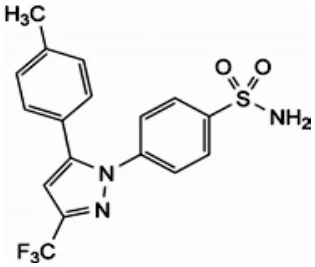
Physiochemical properties:
Description:
A white or almost white, crystalline powder.
Solubility:
Soluble to freely soluble in ethanol, soluble in methylene dichloride, practically insoluble in water.
pKa:
11.1.
Chirality:
Celecoxib does not contain any asymmetric centre.
Polymorphism:
The manufacturing process employed by Aurobindo yields Celecoxib Polymorph Form III drug substance
Partition Coefficient:
Octanol / water
10,000 at physiologic pH 7.0
14. CLINICAL TRIALS
14.1. Clinical Trials by Indication
Osteoarthritis: The clinical effectiveness of celecoxib capsules in the treatment of the signs and the symptoms of osteoarthritis (OA) of the knee and hip was demonstrated in placebo- and active- controlled clinical trials of up to 12 weeks duration, involving approximately 4,200 patients. Celecoxib capsules demonstrated significant reductions in joint pain and disease activity, and also improvement in patient functional activity and health-related quality of life compared to placebo. Clinically significant effects on joint pain were seen as early as 24 hours after the first dose of celecoxib capsules. Doses of 200 mg BID provided no additional efficacy above that seen with 100 mg BID. In the repeated dose OA studies with 100 mg BID of celecoxib capsules, pain was significantly decreased by the end of the first day of dosing, continued to be significantly less than placebo and was comparable to naproxen 500 mg BID, diclofenac 75 mg BID, and ibuprofen 800 mg TID.
A total daily dose of 200 mg has been shown to be equally effective when administered as 100 mg BID or 200 mg QD. Response to celecoxib capsules was independent of age, gender, severity, or duration of OA. Celecoxib capsules has shown continued efficacy at doses of up to 400 mg a day in a long-term (up to 12 months), open label study of 2,500 patients.
In patients with OA, treatment with celecoxib capsules 100 mg BID or 200 mg QD resulted in improvement in functional activity as demonstrated by an improvement in pain, stiffness, function and total WOMAC (Western Ontario and McMaster Universities Osteoarthritis Index) scores. Improvement in quality of life, as measured by the MOS-SF-36 (Short Form 36 Item Health Survey) has been shown by improvements in Physical Function, Role Physical, Bodily Pain, Vitality and Social Functioning domains.
Rheumatoid Arthritis: The clinical effectiveness of celecoxib capsules in the treatment of the signs and the symptoms of rheumatoid arthritis (RA) was demonstrated in placebo- and active-controlled clinical trials of up to 24 weeks in duration, involving approximately 2,100 patients. Celecoxib capsules demonstrated significant reductions in joint tenderness and pain, joint swelling, disease activity, and morning stiffness compared to placebo. Improvements were demonstrated in the ACR20 Index for RA (American College of Rheumatology 20% Responder Index), patient functional activity, and health-related quality of life compared to placebo. Celecoxib capsules doses of 100 mg BID and 200 mg BID was similar in efficacy and both were comparable to naproxen 500 mg BID. Although celecoxib capsules 100 mg BID and 200 mg BID provided similar efficacy overall, some patients derive additional benefit from the 200 mg BID dose. Doses of 400 mg BID provided no additional efficacy above that seen with 100-200 mg BID.
Additional studies demonstrated that celecoxib capsules 200 mg BID was comparable to diclofenac 75 mg BID and ibuprofen 800 mg TID. Response to celecoxib capsules was independent of age, gender, severity, or duration of RA. In an open label study of up to 12 months in approximately 1,900 RA patients, celecoxib capsules has shown continued efficacy.
In patients with RA, treatment with celecoxib capsules 200 mg BID resulted in improvement in functioning as shown by an improvement in the Health Assessment Questionnaire (HAQ) functional disability index. Improvement in quality of life as measured by the MOS-SF-36 has been shown by improvements in Physical Function, Role Physical Bodily Pain, Vitality and Social Functioning domains. Compared to celecoxib capsules 100 mg BID, celecoxib capsules 200 mg BID resulted in greater improvement in the HAQ disability index and the MOS-SF-36 domains of Physical Function and Bodily Pain.
Ankylosing Spondylitis: Celecoxib capsules has been investigated in 896 patients in placebo and active (diclofenac, naproxen or ketoprofen) controlled clinical trials of 6 weeks (one trial) and 12 weeks (three trials) duration for the symptomatic treatment of Ankylosing Spondylitis. At doses of 100 mg BID, 200 mg once daily, and 400 mg once daily, celecoxib capsules was statistically superior to placebo for all measures of efficacy including global pain intensity (Visual Analogue Scale), global disease activity (Visual Analogue Scale) and functional impairment (Bath Ankylosing Spondylitis Functional Index). Studies results for efficacy endpoints are presented in Table 6.
Table 6. Celecoxib capsules Clinical Efficacy Parameters in Ankylosing Spondylitis Trials
| Placebo | Celecoxib 200 mg TDDb | Celecoxib 400 mg¥ TDDc | Ketoprofen 100 mg BID | Naproxen 500 mg BID | Diclofenac 150 mg TDDd | ||||||||||||||||||||
|---|---|---|---|---|---|---|---|---|---|---|---|---|---|---|---|---|---|---|---|---|---|---|---|---|---|
| Study 193 | n = 156 | n = 137 | n = 161 | -- | n = 157 | -- | |||||||||||||||||||
| Global Pain Intensitya | |||||||||||||||||||||||||
| Week 12 |
|
| -30.4* | -- |
| -- | |||||||||||||||||||
| Bath Ankylosing Spondylitis Functional Index (BASFI) scores | |||||||||||||||||||||||||
Week 12 Mean Change | 1.6 |
| -12.5* | -- |
| -- | |||||||||||||||||||
| Global Disease Activity (VAS) | |||||||||||||||||||||||||
Week 12 Mean Change | -6.0 |
| -22.7* | -- |
| -- | |||||||||||||||||||
| Responder Analysis (ASAS-20 criteria) | |||||||||||||||||||||||||
Week 12 Responder, n (%) | 41(26) | 60(44)* | 86(53)* | -- | 98(62)*, Ω | -- | |||||||||||||||||||
| Study 137 | n = 76 | n = 80 | n = 90 | ||||||||||||||||||||||
| Global Pain Intensitya | |||||||||||||||||||||||||
| Week 6 |
|
| -- |
| -- | -- | |||||||||||||||||||
| Bath Ankylosing Spondylitis Functional Index (BASFI) scores | |||||||||||||||||||||||||
Week 6 Mean Change | 1.3 |
| -- |
| -- | -- | |||||||||||||||||||
Study 243 (FAS) | -- | n = 126 (n = 151) | n = 124 (n = 147) | -- | -- | n = 123 (n = 154) | |||||||||||||||||||
| Global Pain Intensitya | |||||||||||||||||||||||||
| Week 12 | -- |
| -31.7** | -- | -- |
| |||||||||||||||||||
| Bath Ankylosing Spondylitis Functional Index (BASFI) scores (FAS population) | |||||||||||||||||||||||||
Week 12 Mean Change | -- | -0.8 Δ | -0.9 Δ | -- | -- | -0.9 Δ | |||||||||||||||||||
| Responder Analysis (ASAS-20 criteria) | |||||||||||||||||||||||||
Week 12 Responder, n (%) | -- | 69 (45.4) Δ | 79(53.4) Δ | -- | -- | 90(58.4) Δ | |||||||||||||||||||
| Study 247 | -- | n = 107 | n = 108 | -- | -- | n = 115 | |||||||||||||||||||
| Global Pain Intensitya | |||||||||||||||||||||||||
| Week 12 | -- |
| -30.6** | -- | -- | -28.2 | |||||||||||||||||||
| Bath Ankylosing Spondylitis Functional Index (BASFI) scores | |||||||||||||||||||||||||
Week 12 Mean Change | -- | -14.1 Δ | -16.1 Δ | -- | -- | -17.1 Δ | |||||||||||||||||||
| Responder Analysis (ASAS-20 criteria) | |||||||||||||||||||||||||
Week 12 Responder, n (%) | -- | 55 (51.4) Δ | 65(60.2) Δ | -- | -- | 66(57.4) Δ | |||||||||||||||||||
¥ 400 mg TDD is not approved in Canada for this indication
* Statistically significant difference vs. placebo (p < 0.05), based on Analysis of Covariance model with the effects of treatment and center, and baseline values as covariate.
** Differences compared to diclofenac were not statistically significant (p > 0.50), based on Analysis of Covariance model (for Study 243, baseline value and age as covariates and treatment, gender and centers as factors; for Study 247, baseline value as a covariate and treatment and centers as factors.
Ω Statistically significant difference vs. celecoxib 200 QD (p < 0.05)
Δ No significant treatment groups difference
a As measured using 100 mm Visual Analog Scale (Patient’s assessment). All values represent least squares mean changes from baseline to the end of treatment, with last observation carried forward for patients who withdrew prior to the end of treatment.
b Celecoxib 100 mg twice daily in study 137, or 200 mg once daily in Studies 193, 243, and 247.
c Celecoxib 200 mg BID (Study 243 and 247) or 400 mg QD (study 193)
d Diclofenac Sustained Release 75 mg twice daily in Study 243, or Diclofenac 50 mg three times daily in Study 247. FAS = Full analysis set
Analgesia: In acute analgesic models of post-oral surgery pain and post-orthopaedic surgery pain, celecoxib capsules relieved pain that was rated by patients as moderate to severe. Single doses of celecoxib capsules provided pain relief within 30-60 minutes. In replicate multiple dose studies of post-orthopaedic surgery pain, celecoxib capsules was effective in reducing pain without additional analgesic medication.
Special Studies
Prospective Randomized Evaluation of Celecoxib Integrated Safety vs Ibuprofen Or Naproxen (PRECISION)
Study Design
This was a double blind study of cardiovascular (CV) safety in osteoarthritis (OA) or rheumatoid arthritis (RA) patients with or at high risk for cardiovascular disease, comparing celecoxib with naproxen and ibuprofen. The trial had two prespecified analysis populations:
- Intent-to-treat population (ITT): Comprised of all randomized subjects followed for a maximum of 30 months
- Modified Intent-to-treat population (mITT): Comprised of all randomized subjects who received at least one dose of study medication and had at least one post-baseline visit followed until the earlier of treatment discontinuation plus 30 days, or 43 months.
The primary endpoint in the trial was the first occurrence of Antiplatelet Trialists Collaboration (APTC) composite CV endpoint (CV death [including hemorrhagic death], non-fatal myocardial infarction [MI], non-fatal stroke) in the ITT and mITT populations. The study was planned with 80% power to evaluate non-inferiority. All patients were prescribed open label esomeprazole (20-40 mg) for gastro protection. Treatment randomization was stratified by baseline low-dose aspirin use.
Results
The total number of subjects randomized to this study was 24,081. The mean durations of treatment and total duration of study participation, respectively, were 20.3 ± 16.0 and 34.1 ± 13.4 months for all subjects.
Patients were randomized to a starting dose of 100 mg twice daily of celecoxib, 375 mg twice daily of naproxen or 600 mg three times daily of ibuprofen with the option of escalating the dose as needed for pain management. The starting doses of naproxen and ibuprofen in this trial were higher than the currently recommended doses for the treatment of OA and RA (i.e., initial doses of 250 mg BID for naproxen and 1200 mg/day in divided doses for ibuprofen). Based on labeled doses, OA patients randomized to celecoxib could not dose escalate. The average dose of celecoxib during this study was 104 mg BID, whereas the average doses of naproxen and ibuprofen were 426 mg BID and 682 mg TID, respectively. The average dose of ibuprofen tested in this trial exceeded current dosage recommendations (i.e., maximum daily maintenance dose of 1200 mg, administered in divided doses).
Table 7. Population and Treatment Dose
| Analysis Set | Celecoxib 100-200 mg BID | Ibuprofen 600-800 mg TID | Naproxen 375-500 mg BID | Total |
|---|---|---|---|---|
| Randomized (ITT) | 8,072 | 8,040 | 7,969 | 24,081 |
| On-Treatment (mITT) | 8,030 | 7,990 | 7,933 | 23,953 |
| Average Dose1 (mg/day) | 209 ± 37 | 2045 ± 246 | 852 ± 103 | NA |
1 Average dose dispensed
ITT – Intent to Treat; All randomized subjects
mITT – Modified Intent to Treat: All randomized subjects with at least one dose of study medication and one post baseline visit
Among subjects with OA, only 0.2% (17/7259) escalated celecoxib to the 200 mg twice daily dose, whereas 54.8% (3937/7178) escalated naproxen to the 500 mg twice daily dose, and 54.7% (3946/7208) escalated ibuprofen to 800 mg three times daily. Among subjects with RA, 55.7% (453/813) escalated celecoxib to the 200 mg twice daily dose, 54.6% (432/791) escalated naproxen to the 500 mg twice daily dose, and 56.5% (470/832) escalated ibuprofen to 800 mg three times daily; however, the RA population accounted for only 10% of the trial population.
Because relatively few celecoxib patients overall (5.8% [470/8072]) dose-escalated to 200 mg twice daily, the results of the PRECISION trial are not suitable for determining the relative CV safety of celecoxib at 200 mg twice daily compared to ibuprofen and naproxen at the doses taken.
Celecoxib, as compared with either naproxen or ibuprofen at the doses taken, met all four prespecified non-inferiority requirements (p < 0.001 for non-inferiority in both comparisons) for the primary endpoint of the first occurrence of the APTC composite CV endpoint. Non-inferiority was prespecified as a hazard ratio (HR) ≤ 1.12 in both ITT and mITT analyses, and upper 95% CI ≤ 1.33 for ITT analysis and ≤ 1.40 for mITT analysis. The primary analysis for ITT and mITT are described below in Table 8.
Table 8. Primary Analysis of the Adjudicated APTC composite endpoint in the Intent-To-Treat Analysis (ITT, through month 30)
| n | Celecoxib | Ibuprofen | Naproxen | |||||||||
|---|---|---|---|---|---|---|---|---|---|---|---|---|
| 8,072 | 8,040 | 7,969 | ||||||||||
| Subjects with Events | 188 (2.3%) | 218 (2.7%) | 201 (2.5%) | |||||||||
| Pairwise Comparison | Celecoxib vs. Naproxen | Celecoxib vs. Ibuprofen | Ibuprofen vs. Naproxen | |||||||||
| HR (95% CI) | 0.93 (0.76, 1.13) | 0.86 (0.70, 1.04) | 1.08 (0.89, 1.31) | |||||||||
The results for the mITT analysis were similar.
Table 9. Summary of the Adjudicated APTC Components in the Intent-To-Treat Analysis (ITT, through month 30)1
| n | Celecoxib | Ibuprofen | Naproxen | |||
|---|---|---|---|---|---|---|
| 8,072 | 8,040 | 7,969 | ||||
| CV Death | 68 (0.8%) | 80 (1.0%) | 86 (1.1%) | |||
| Non-Fatal MI | 76 (0.9%) | 92 (1.1%) | 66 (0.8%) | |||
| Non-Fatal Stroke | 51 (0.6%) | 53 (0.7%) | 57 (0.7%) | |||
1A patient may have experienced more than one component; therefore, the sum of the components is larger than the number of patients who experienced the composite outcome
The results for the mITT analysis were similar.
In the ITT analysis population through 30 months, all-cause mortality was 1.6% in the celecoxib group, 1.8% in the ibuprofen group, and 2.0% in the naproxen group.
Ambulatory Blood Pressure Monitoring (ABPM) Substudy
In the PRECISION ambulatory blood pressure monitoring substudy, celecoxib was administered at a mean dose of 104 mg BID. At Month 4, the least squares mean change from baseline (SE) in mean 24 h ambulatory systolic blood pressure was -0.3 (1.0) mmHg in the overall celecoxib treatment group
(n = 146), -0.3 (1.1) mmHg in the subgroup of patients who were receiving 100 mg BID (n = 137), and 3.3 (3.8) mmHg in the subgroup of patients who were upward titrated to a dose of 200 mg BID (n = 9).
Clinical Experience with Higher-than-therapeutic Dose for OA and RA (800 mg/day) in the presence of concomitant ASA: Celecoxib Long-term Arthritis Safety Study (CLASS)
Study Design: A prospective, long-term outcome study was conducted in approximately 5800 OA and 2200 RA patients. Patients received celecoxib capsules 400 mg BID (4-fold and 2-fold greater than the daily recommended 200 mg OA and 400 mg RA doses, respectively), ibuprofen 800 mg TID or diclofenac 75 mg BID (common therapeutic doses for OA and RA) for a median exposure of 9 months for celecoxib capsules and diclofenac, and 6 months for ibuprofen. The primary endpoint of this outcome study was the incidence of complicated ulcers (gastrointestinal bleeding, perforation or obstruction). Additional protocol specified endpoints included the incidence of symptomatic ulcers (gastroduodenal ulcers identified based on UGI symptoms such as abdominal pain, dyspepsia, nausea, diarrhea or vomiting) and clinically relevant decreases in hemoglobin (> 2 g/dL) and/or hematocrit (≥ 10 points). Patients were allowed to take concomitant low-dose ASA (≤ 325 mg), mostly for cardiovascular prophylaxis.
Study Results: No statistically significant differences were demonstrated for the incidence of complicated ulcers at the doses studied among the three treatment groups in all patients. Study results for the complete study duration are presented in Table 10.
Secondary analysis showed that the incidence of complicated and symptomatic ulcers was lower for celecoxib capsules than for ibuprofen in all patients and in those patients not taking ASA. Approximately 22% of patients were taking low-dose ASA.
Concomitant low-dose ASA use increased the rates of complicated and symptomatic ulcers to four times that of patients not taking ASA (see 9.4 Drug-Drug Interactions).
Celecoxib capsules at the doses studied had a significantly lower incidence of GI intolerability compared to diclofenac, but not ibuprofen (see 8 ADVERSE REACTIONS).
Table 10. Complicated and Symptomatic Ulcers in OA and RA Patients (Incidence rates at 12 months [%], events/patients)
| Higher-Than-Therapeutic Dose (4X OA; 2X RA) | Common Therapeutic Dose | |||||||||||||
|---|---|---|---|---|---|---|---|---|---|---|---|---|---|---|
Celecoxib capsules 400 mg BID | Ibuprofen 800 mg TID | Diclofenac 75 mg BID | ||||||||||||
| All Patients (Exposure) | 2320 Pt-years | 1112 Pt-years | 1081 Pt-years | |||||||||||
| Complicated ulcers | 0.43 | 0.55 | 0.50 | |||||||||||
| (17/3987) | (11/1985) | (10/1996) | ||||||||||||
| Complicated and symptomatic ulcers | 1.05* | 1.76 | 1.30 | |||||||||||
| (42/3987) | (35/1985) | (26/1996) | ||||||||||||
| Patients without ASA (Exposure) | 1803 Pt-years | 874 Pt-years | 841 Pt-years | |||||||||||
| Complicated ulcers | 0.26† | 0.64 | 0.26 | |||||||||||
| (8/3105) | (10/1573) | (4/1551) | ||||||||||||
| Complicated and symptomatic ulcers | 0.68‡ | 1.72 | 0.64 | |||||||||||
| (21/3105) | (27/1573) | (10/1551) | ||||||||||||
| Patients with ASA (Exposure) | 517 Pt-years | 248 Pt-years | 240 Pt-years | |||||||||||
| Complicated ulcers | 1.02 | 0.24 | 1.35 | |||||||||||
| (9/882) | (1/412) | (6/445) | ||||||||||||
| Complicated and symptomatic Ulcers | 2.38 | 1.94 | 3.60 | |||||||||||
| (21/882) | (8/412) | (16/445) | ||||||||||||
*p = 0.017 vs. ibuprofen
†p = 0.037 vs. ibuprofen
‡p < 0.001 vs. ibuprofen
In a prospective, long-term outcome study, celecoxib capsules (4-fold and 2-fold greater than the recommended OA and RA doses, respectively) also demonstrated a significantly lower incidence of clinically relevant decreases in hemoglobin (> 2 g/dL) or hematocrit (≥ 10 points) than ibuprofen and diclofenac (Figure 1) regardless of ASA use. The corresponding incidence rates from the controlled arthritis trials (1 to 6 months duration, most of 3 months duration) were 0.4% in placebo, 0.9% in celecoxib, and 1.7%, 3.3%, 5.2% for naproxen, diclofenac, and ibuprofen respectively. In the controlled arthritis trials celecoxib was studied at the doses up to 400 mg BID. Similar significant differences were seen in the absence of bleeding ulcers, in patients not on ASA, and in OA and RA patients.
Figure 1. Incidence of Clinically Relevant Decreases in Hemoglobin and/or Hematocrit (Incidence Rates at 12 Months [%], Events/Patients)
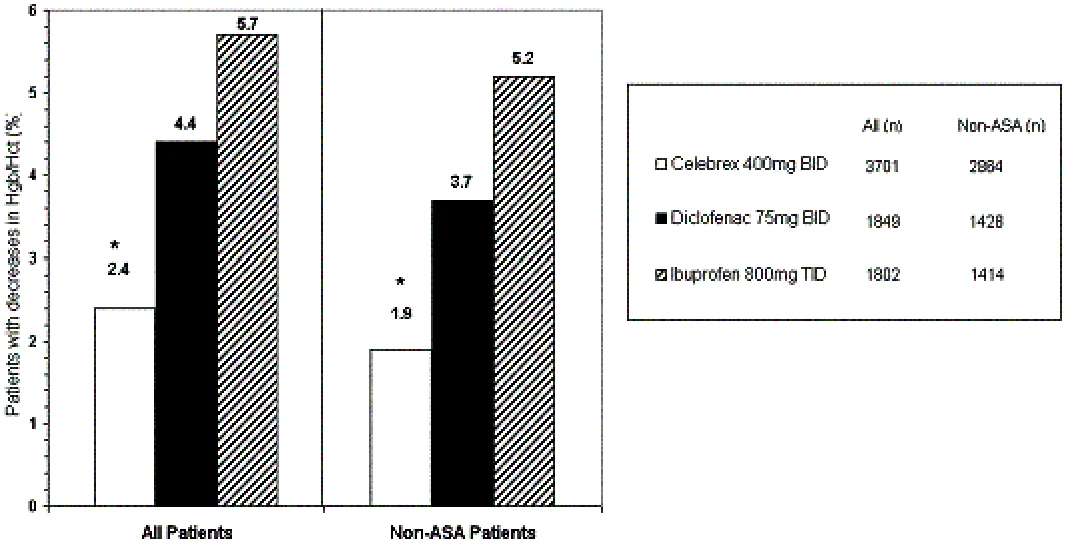
*p < 0.05 vs. ibuprofen and diclofenac
Celecoxib versus Omeprazole and Diclofenac for Osteoarthritis and Rheumatoid Arthritis patients at- risk of developing GI complications (CONDOR) trial:
In a prospective randomised 24 week safety study in patients who were aged ≥ 60 years or had a history of gastroduodenal ulcers (users of ASA excluded), the percentages of patients with decreases in hemoglobin (≥ 2 g/dL) and/or hematocrit (≥ 10%) of defined or presumed GI origin were lower in patients treated with celecoxib 200 mg twice daily (n = 2238) compared to patients treated with diclofenac SR 75 mg twice daily plus omeprazole 20 mg once daily (n = 2246) [0.2% vs. 1.1% for defined GI origin, p = 0.004; 0.4% vs. 2.4% for presumed GI origin, p = 0.0001]. The rates of clinically detected GI complications such as perforation, obstruction, or hemorrhage were very low with no differences between the treatment groups (4-5 per group).
Endoscopic Studies: Scheduled upper GI endoscopic evaluations were performed in over 4,500 arthritis patients who were enrolled in five controlled randomized 12-24 week trials using active comparators, two of which also included placebo controls. Twelve-week endoscopic ulcer data are available on approximately 1,400 patients and 24-week endoscopic ulcer data are available on 184 patients on celecoxib capsules at doses ranging from 50-400 mg BID. NSAID comparators included naproxen 500 mg BID, diclofenac 75 mg BID, and ibuprofen 800 mg TID.
In active-controlled studies, the endoscopic gastroduodenal ulceration rate observed with all doses of celecoxib capsules was less than what was seen with the NSAID comparator (see Tables 8-10) and, in placebo- controlled studies, was similar to that seen with placebo (see Table 8). Studies were designed to detect differences between celecoxib and the NSAID comparator, therefore were not powered to detect small differences relative to placebo. Moreover, celecoxib doses above the highest recommended therapeutic dose of 200 mg BID were evaluated, and demonstrated that with supratherapeutic doses (2-4 times the recommended dose), the incidence of endoscopic ulcers was similar to placebo. Duration of observation had no impact on the celecoxib gastroduodenal ulcer rate, as shown in a 24-week trial in which the celecoxib endoscopic ulcer rate was significantly lower than diclofenac SR and comparable to ulcer rates observed with placebo in other studies.
In all three studies that included naproxen 500 mg BID, and in the study that included ibuprofen 800 mg TID, celecoxib capsules was associated with a statistically significantly lower incidence of endoscopic ulcers over the study period. Two studies compared celecoxib capsules with diclofenac 75 mg BID; one study revealed a statistically significantly higher prevalence of endoscopic ulcers in the diclofenac group at the study endpoint (6 months on treatment), and one study revealed no statistically significant difference between cumulative endoscopic ulcer incidence rates in the diclofenac and celecoxib capsules groups after 1, 2, and 3 months of treatment. There was no consistent relationship between the incidence of gastroduodenal ulcers and the dose of celecoxib capsules over the range studied.
Table 11 summarizes the incidence of endoscopic ulcers in two 12-week studies that enrolled patients in whom baseline endoscopies revealed no ulcers.
Table 11. Incidence of Gastroduodenal Ulcers from Endoscopic Studies in OA and RA Patients
| 3 Month Studies | |||
|---|---|---|---|
| Study 1 (n = 1108) | Study 2 (n= 1049) | ||
| Placebo | 2.3% (5/217) | 2.0% (4/200) | |
| Celecoxib capsules 50 mg BID | 3.4% (8/233) | --- | |
| Celecoxib capsules 100 mg BID | 3.1% (7/227) | 4.0% (9/223) | |
| Celecoxib capsules 200 mg BID | 5.9% (13/221) | 2.7% (6/219) | |
| Celecoxib capsules 400 mg BID | --- | 4.1% (8/197) | |
| Naproxen 500 mg BID | 16.2% (34/210)* | 17.6% (37/210)* | |
* p ≤ 0.05 vs all other treatments
Note: Studies were designed to detect differences between celecoxib and NSAID comparator, therefore were not powered to detect small differences relative to placebo.
Table 12 summarizes data from two 12-week studies that enrolled patients in whom baseline endoscopies revealed no ulcers. Patients underwent interval endoscopies every 4 weeks to give information on ulcer risk over time.
Table 12. Incidence of Gastroduodenal Ulcers from 3-Month Serial Endoscopy Studies in OA and RA Patients
| Week 4 | Week 8 | Week 12 | Final | |
|---|---|---|---|---|
| Study 3 (n = 523) | ||||
| Celecoxib capsules 200 mg BID | 4.0% (10/252)* | 2.2% (5/227)* | 1.5% (3/196)* | 7.5% (20/266)* |
| Naproxen 500 mg BID | 19.0% (47/247) | 14.2% (26/182) | 9.9% (14/141) | 34.6% (89/257) |
| Study 4 (n = 1062) | ||||
| Celecoxib capsules 200 mg BID | 3.9% (13/337)† | 2.4% (7/296)† | 1.8% (5/274)† | 7.0% (25/356)† |
| Diclofenac 75 mg BID | 5.1% (18/350) | 3.3% (10/306) | 2.9% (8/278) | 9.7% (36/372) |
| Ibuprofen 800 mg TID | 13.0% (42/323) | 6.2% (15/241) | 9.6% (21/219) | 23.3% (78/334) |
*p ≤ 0.05 celecoxib capsules vs. naproxen based on interval and cumulative analyses
† p ≤ 0.05 celecoxib capsules vs. ibuprofen based on interval and cumulative analyses
One randomized and double-blinded, 6-month study in 430 RA patients was conducted in which an endoscopic examination was performed at 6 months. The results are shown in Table 13.
Table 13. Incidence of Gastroduodenal Ulcers From a 6-Month Endoscopy Study in RA Patients
| 6 Months | |
|---|---|
| Study 5 (n = 430) | |
| Celecoxib 200 mg BID | 4% (8/212) |
| Diclofenac 75 mg BID | 15% (33/218)* |
* Significantly different from celecoxib capsules; p < 0.001
The correlation between findings of endoscopic studies, and the relative incidence of clinically serious upper GI events that may be observed with different products, has not been fully established (see 7 WARNINGS AND PRECAUTIONS, Gastrointestinal).
Use With Acetylsalicylic Acid (ASA): Patients with cardiovascular risk factors, including those with a recent history of myocardial infarction or stroke and patients deemed to require low-dose ASA for cardiovascular prophylaxis were included in the long-term outcome study (see 8 ADVERSE REACTIONS).
As a result, approximately 22% of patients enrolled in the long-term outcome study were taking ASA (≤ 325 mg/day). As with the NSAID comparators, the incidence rate of ulcers and ulcer complications
(perforations, obstructions and bleeds) in celecoxib capsules patients was higher in ASA users as opposed to non- ASA users (see 14 CLINICAL TRIALS, Special Studies).
Approximately 11% of patients (440/4,000) enrolled in 4 of the 5 endoscopic studies were taking ASA (≤ 325 mg/day). In the celecoxib capsules groups, the endoscopic ulcer rate appeared to be higher in subjects taking both celecoxib capsules and ASA than in subjects taking only celecoxib capsules. However, the increased rate of ulcers in these ASA users was less than the endoscopic ulcer rates observed in the active comparator groups, with or without ASA.
Platelets: In four clinical trials involving 118 subjects, celecoxib did not affect platelet function. celecoxib capsules at single doses up to 800 mg and multiple doses of 600 mg BID for up to seven days duration (i.e., three times the highest recommended therapeutic dose), had no effect on platelet aggregation and bleeding time compared to placebo. In contrast, the NSAIDs naproxen 500 mg BID, ibuprofen 800 mg TID, and diclofenac 75 mg BID significantly reduced platelet aggregation and prolonged bleeding time.
Cardiovascular Safety - Meta-analysis from Chronic Usage Studies: Large scale meta-analyses of clinical trials show that high dose of celecoxib capsules (> 200 mg/day) is associated with an increased trend of risk of myocardial infarction, stroke and cardiovascular death and death from any cause when compared with placebo (see 3 SERIOUS WARNINGS AND PRECAUTIONS BOX).
A meta-analysis of safety data from 41 completed celecoxib capsules clinical studies of up to 1 year in duration has been conducted, representing 44,308 patients (24,933 (56.3%) patients exposed to celecoxib capsules, 13,990 (31.6%) patients exposed to NSAIDs, 4,057 (9.2%) patients exposed to placebo, and 1328 (3.0%) patients exposed to rofecoxib).
In this analysis, the incidence of the composite endpoint of CV death, non-fatal myocardial infarction and non-fatal stroke was similar between celecoxib capsules (n = 19,773) and non-selective NSAID (n = 13,990) treatment (RR = 0.86, 95% CI 0.59 - 1.26). This pattern of effect was maintained with or without ASA use (= 325 mg). The incidence of non-fatal myocardial infarction trended higher (RR = 1.49, 95% CI 0.82 - 2.70); however that of stroke was significantly lower (RR = 0.33, 95% CI 0.14 - 0.78), and that of cardiovascular death was comparable (RR = 0.72, 95% CI 0.37 - 1.39) for celecoxib capsules compared to combined non-selective NSAIDs.
In this analysis, the incidence of the composite endpoint of CV death, non-fatal myocardial infarction and non-fatal stroke was 0.31% for celecoxib capsules (n = 7,462) and 0.20% for placebo (n = 4,057) treatment (RR = 1.26, 95% CI 0.57 - 2.80). This pattern of effect was maintained with or without ASA use (= 325 mg). The incidence of non-fatal myocardial infarction trended higher (RR = 1.24, 95% CI 0.27 - 5.76), as did that of cardiovascular death (RR = 1.74, 95% CI 0.49 - 6.17), and that of stroke was similar RR = 0.80, 95% CI 0.19 - 3.31) for celecoxib capsules compared to placebo.
14.3. Comparative Bioavailability Studies
A blinded, randomized, two-treatment, two-period, two-sequence, single oral dose (1 x 200 mg), crossover comparative bioavailability study of AURO-CELECOXIB capsules 200 mg (Auro Pharma Inc.) and CELEBREX® capsules 200 mg (Pfizer Canada Inc.), was conducted in healthy, adult male subjects under fasting conditions. Comparative bioavailability data from 47 subjects that were included in the statistical analysis are presented in the following table:
Summary Table Of The Comparative Bioavailability Data
Celecoxib (1 x 200 mg) Geometric Mean Arithmetic Mean (CV %) | ||||
| Parameter | Test1 | Reference2 | % Ratio of Geometric Means | 90% Confidence Interval |
AUCT (ng·h/mL) | 8359.5 9692.4 (78.0) | 7671.5 9103.9 (89.1) | 109.0 | 102.2 - 116.2 |
AUCI (ng·h/mL) | 8960.9 10739.3 (103.5) | 8271.8 10163.6 (114.1) | 108.3 | 102.2 - 114.9 |
Cmax (ng/mL) | 832.1 926.1 (45.6) | 732.4 787.4 (39.6) | 113.6 | 104.2 - 123.8 |
Tmax3 (h) | 3.0 (1.0 - 6.0) | 2.5 (1.0 - 12.0) | ||
T½4 (h) | 9.2 (50.3) | 9.2 (50.0) | ||
1 Auro-Celecoxib (celecoxib) capsules, 200 mg (Auro Pharma Inc.)
2 CELEBREX® (celecoxib) capsules, 200 mg (Pfizer Canada Inc.)
3 Expressed as the median (range) only
4 Expressed as the arithmetic mean (CV %) only
15. MICROBIOLOGY
No microbiological information is required for this drug product.
16. NON-CLINICAL TOXICOLOGY
General Toxicology: All of the findings seen in animals treated with celecoxib are consistent with the known pharmacological action of the compound (i.e., inhibition of PG synthesis) and/or occurred at exposures and maximal plasma concentrations of the active moiety (i.e., celecoxib) that are greater than projected for therapeutic effect. Celecoxib is not mutagenic and is not carcinogenic in rodents. GI injury is seen with celecoxib only at exposures that are greater than needed for therapeutic use. Significant departures from the comparator NSAIDs are seen with celecoxib in animals, including: 1) greater margins of safety for GI injury in sensitive animal species, 2) absence of injury to the fundic stomach and large intestine when administered by gavage or capsule, 3) no effect on hemostasis, 4) absence of renal papillary necrosis in chronic rodent studies, and 5) absence of dystocia. Based on these findings, celecoxib is considered safe for use in humans.
No evidence of toxicity or adverse pharmacological effect was produced by celecoxib in animals at the expected exposures and maximal plasma concentrations of the clinical doses (200 and 400 mg/day).
No sign of GI injury was seen in 6-month chronic studies with rats at exposures that are 3- to 6-fold greater than the expected exposures with the clinical doses, or at maximal plasma concentrations that are also 3- to 6-fold the Cmax of the clinical doses. Similarly, no sign of GI injury was seen in dogs after 12 months of dosing at mean exposures and maximal plasma concentrations that are 2- to 5-fold greater than the respective exposures and Cmax produced by the clinical doses.
Higher exposures produced dose-limiting GI injury in rats and dogs. The morphological appearance of the GI injury produced by celecoxib is similar to that seen with NSAIDs and thus, is not a novel form of injury. Exposures in rats in the chronic toxicity study that are 6- to 12-fold greater than the exposures at the range of clinical doses produced GI injury and death. The injury was seen more frequently in females due to higher exposures associated with the dimorphism seen in rats. Exposures approximately 4- to 9- fold greater than the exposures at the clinical dose range produced GI injury and death in dogs in a 4- week subchronic study. The mucosal injury is reversible in dogs with cessation of dosing with celecoxib. GI injury is an expected consequence of COX-1 inhibition, however the requirement for high exposures of celecoxib to produce injury is consistent with the pharmacological concept of COX-2 specific inhibition within the therapeutic dosage range.
No adverse pharmacological effect of celecoxib on central nervous system or pulmonary function were seen at plasma levels of celecoxib that are 2- to 5-fold and 3- to 6-fold, respectively, greater than the maximal plasma concentrations at the clinical dose range. No effect on template bleeding time was seen in dogs at exposures sufficient to produce GI injury and death. A few cardiovascular changes were observed in anesthetized animals given celecoxib intravenously, and included small sporadic increases in left ventricular end-diastolic pressure in dogs at plasma concentrations 3- to 7-fold greater than the Cmax produced by the clinical doses, and increases in mean arterial, systolic and diastolic blood pressures in guinea pigs at plasma concentrations that are 3- to 6-fold greater than the Cmax produced by the range of clinical doses. These changes are not suggestive of a clinically significant effect and are not expected at clinically relevant exposures in patients.
Decreased urinary sodium concentration (antinatriuresis) was seen in male and female rats at plasma concentrations at least 3-fold higher than the maximal plasma concentration produced by the clinical doses. Antinatriuresis is an expected pharmacological consequence of prostaglandin inhibition in the kidney. In studies of longer duration in rats, antinatriuresis was seen after 6 weeks of dosing at exposures that are 2- to 4-fold greater than the exposures at the range of clinical doses. No evidence of antinatriuresis was seen after 13 or 26 weeks at exposures that are 6- and 9-fold greater, respectively, than the exposure at the maximum daily clinical dose (400 mg/day).
Carcinogenicity: Carcinogenicity evaluations in rats and mice revealed no evidence of carcinogenicity or increases in the incidence of background tumors after at least 104 weeks of dosing. The carcinogenicity assessment of celecoxib was made in rats in which the average exposures throughout the study were as high as 4- to 9-fold greater in males and 5- to 10-fold greater in females than the exposures produced by the range of clinical doses. Evidence that the Maximum Tolerated Dose (MTD) was exceeded was seen in both males and females as GI injury and death. The frequency of this injury was greater in females which were exposed to higher levels of celecoxib due to the dimorphism in rats. Significant reductions in survival were seen in the two highest male dose groups and all treated female groups as a result of the GI injury. A NOEL (No-Observed-Effect Level) for the GI injury was established in males at exposures that are 1- to 2-fold the exposures at the range of clinical doses. A NOEL could not be established in females because exposures in these animals were generally higher than the no-effect exposure in males throughout the study.
The carcinogenicity evaluation in mice was made at average exposures throughout the study which were approximately 1- to 2.5-fold greater in males and 1- to 2-fold greater in females than the exposures at the clinical dose range. Evidence that the MTD was exceeded was seen in all treated groups as injury in all segments of the GI tract resulting in significant decreases in survival in all but the lowest dose groups. The frequency of injury was comparable in males and females because differential dosages were used to compensate for the dimorphism seen in mice. The use of diet admixture to expose the animals to celecoxib may have produced direct topical exposure of the GI tract which explains the appearance of the injury throughout the GI tract and the lower systemic exposures associated with injury in mice.
No other form of toxicity or irreversible injury was seen in rats, mice or dogs treated with celecoxib. Renal papillary necrosis was not seen in rats or mice, and occurred in two dogs with severe GI injury and hemorrhage. The GI injury seen in these dogs produced septicemia, bacterial emboli and volume depletion (due to hemorrhage) which are factors that predispose the renal papilla to injury.
Reproductive and Developmental Toxicology: Celecoxib does not produce any effect on male or female fertility or male reproductive function in rats at exposures that are estimated to be 3.5- to 7-fold greater in males and 19- to 38-fold greater in females than the exposures associated with the range of clinical doses. No reproducible effect on ovulation was seen, but decreased embryonic viability reflected as pre- and post-implantation loss occurred in females treated with celecoxib at exposures that are 5- to 11-fold greater than the exposures at the clinical dose range. This effect was not seen after a recovery period during which treatment was ceased. Thus, this effect is the likely consequence of disruption of PG- dependent processes critical for implantation and maintenance of pregnancy and is not the result of permanent alteration of female reproductive function. A NOEL for all effects on early reproductive function in rats was established at exposures that are 4- to 8-fold greater than the exposures at the range of clinical doses.
Teratology evaluations conducted in rats and rabbits treated with celecoxib revealed no evidence of teratogenicity at exposures that are ~ 3-fold greater than exposures at the range of clinical doses.
Diaphragmatic hernias appeared at high dosages in 3 of 4 teratology studies in rats at exposures that are 6- to 12-fold greater than clinical exposures. This malformation was also seen at a lower incidence in live offspring in the perinatal evaluation. An increase in the frequency of wavy ribs was observed in one rat teratology study but was not reproduced in a second study. Wavy ribs are reversible and are not regarded as an adverse finding of significance for humans. In rabbit teratology studies, a low incidence of ventricular septal defects (VSD) and other related anomalies, including enlarged aorta and pulmonary stenosis, was observed at systemic exposures approximately 5-fold the clinical exposures. The low incidence of VSD in celecoxib studies cannot be clearly distinguished from the background historical control data thus its relationship to treatment with celecoxib is uncertain. The NOELs for teratology evaluations in rats (10 mg/kg/day) and in rabbits (60 mg/kg/day) are associated with exposures that are
~ 3-fold greater than the clinical exposures.
Slight prolongation of gestation was seen in a perinatal evaluation in rats treated with celecoxib but was not dose-dependent and was within historical control data ranges. No evidence of dystocia or increased parturition time was seen in this study. There was no effect of celecoxib on the physical appearance of the pups with the exception of the diaphragmatic hernias previously discussed. There was no evidence of adverse effect on the survival, physical development, behavior and reproductive performance of the F1 generation, or on the development and survival of the F2 generation pups resulting from treatment of the F0 females with celecoxib. The highest plasma levels measured in treated dams are approximately 1- to 2-fold the Cmax of the clinical doses, while the highest plasma levels measured in neonates are approximately 5- to 10-fold greater than maximal plasma concentration of the clinical doses.
Mutagenesis: Celecoxib is not mutagenic in bacteria (Ames assay) or mammalian cells. No evidence of clastogenicity or disruption of the mitotic apparatus was seen in vitro, or rats in vivo at exposures that are 6- to 12-fold greater in males and 16- to 33-fold greater in females than the exposures produced by the clinical doses. These results are consistent with the absence of carcinogenicity in the cancer bioassays conducted with celecoxib.
17. SUPPORTING PRODUCT MONOGRAPHS
- 1. CELEBREX® (capsules, 100 mg and 200 mg), submission control 295417, Product Monograph, BGP Pharma ULC. (July 07, 2025)