


Product Monograph - Ava-Nortriptyline
ACTIONS AND CLINICAL PHARMACOLOGY
The mechanism of mood elevation of tricyclic antidepressants is at present unknown.
Nortriptyline is not an MAO inhibitor. It inhibits the activity of such diverse agents as histamine, 5-hydroxytryptamine, and acetylcholine. It increases the pressor effect of norepinephrine but blocks the pressor response of phenethylamine. Studies suggest that nortriptyline interferes with the transport, release and storage of catecholamines.
Comparative Bioavailability
A randomized, two-treatment, two-period, crossover study was conducted in eighteen (18)
healthy, adult, male volunteers to evaluate the relative bioavailability of single oral 75 mg doses of AVA-NORTRIPTYLINE (nortriptyline hydrochloride) 25 mg capsules and Aventyl®
25 mg capsules manufactured by Eli Lilly Canada Inc. The mean pharmacokinetic data of the 16 subjects completing the study are presented in the following table:
Geometric Mean*
Arithmetic Mean (CV%)
Parameter Ava-Nortriptyline Aventyl® Ratio of Means
AUC0-72
(ng.hr/mL)
1264 (33)
1267 (33)
AUC0-T
(ng.hr/mL)
1575 (40)
1593 (41)
AUC0-∞
(ng.hr/mL)
1730 (40)
1746 (42)
Cmax
(ng/mL)
36.76
38.36 (30)
38.50 39.27 (29)
Tmax (hr)** 7.9 (1.82) 8.0 (2.13) - t1/2 (hr)** 37.8 (15.60) 36.1 (13.61) -
* Least squares estimate of the geometric means for AUC0-72, AUC0-T, AUC0-∞, and Cmax.
** Arithmetic means are presented for the Tmax and t1/2 parameters (standard deviation).
INDICATIONS AND CLINICAL USE
AVA-NORTRIPTYLINE (nortriptyline hydrochloride) is indicated for the relief of symptoms of depression. Endogenous depressions are more likely to be alleviated than are other depressive states.
CONTRAINDICATIONS
The concurrent use of nortriptyline or other tricyclic antidepressants with a MAO inhibitor is contraindicated. Hyperpyretic crises, severe convulsions, and fatalities have occurred when similar tricyclic antidepressants were used in such combinations. Discontinue the MAO inhibitor at least 2 weeks before nortriptyline treatment is started. Patients hypersensitive to nortriptyline should not be given the drug.
Cross-sensitivity between nortriptyline and other dibenzazepines is a possibility.
Nortriptyline is contraindicated during the acute recovery period after myocardial infarction.
WARNINGS
Patients with cardiovascular disease should be given nortriptyline only under close supervision because of the tendency of the drug to produce sinus tachycardia and to prolong the conduction time. Myocardial infarction, arrhythmia and strokes have occurred.
The antihypertensive action of guanethidine and similar agents may be blocked. Because of its anticholinergic activity, use nortriptyline with great caution in patients with glaucoma or a history of urinary retention. Patients with a history of seizures should be followed closely when nortriptyline is administered because this drug is known to lower the convulsive threshold. Great care is required if nortriptyline is administered to hyperthyroid patients or those receiving thyroid medication, because cardiac arrhythmias may develop.
Occupational Hazards
Nortriptyline may impair the mental and/or physical abilities required for the performance of hazardous tasks, such as operating machinery or driving a car; therefore, warn the patient accordingly.
Pregnancy and Lactation
Safe use of nortriptyline during pregnancy and lactation has not been established; therefore, when the drug is administered to pregnant patients, nursing mothers, or women of
childbearing age, the potential benefits must be weighed against the possible hazards.
Animal reproduction studies have yielded inconclusive results.
PRECAUTIONS
The use of nortriptyline in schizophrenic patients may result in an exacerbation of the psychosis or may activate latent schizophrenic symptoms. If the drug is given to overactive or agitated patients, increased anxiety and agitation may occur. In manic depressive patients, nortriptyline may cause symptoms of the manic phase to emerge.
Troublesome patient hostility may be aroused by the use of nortriptyline. Epileptiform seizures may accompany its administration, as may happen with other drugs of its class.
Close supervision and careful adjustment of the dosage are required when nortriptyline is used with other anticholinergic drugs and sympathomimetic drugs.
Inform the patient that the response to alcohol may be exaggerated. Excessive consumption of alcohol in combination with nortriptyline therapy may have a potentiating effect which may lead to the danger of increased suicidal attempts or overdosage, especially in patients with histories of emotional disturbances or suicidal ideation.
When it is essential, the drug may be administered concurrently with electroconvulsive therapy, although the hazards may be increased. Discontinue the drug for several days, if possible, prior to elective surgery.
The possibility of a suicidal attempt by depressed patients remains after the initiation of treatment; in this regard, it is important that the least possible quantity of drug be dispensed at any given time.
Both elevation and lowering of blood sugar levels have been reported. A case of significant hypoglycemia has been reported in a Type II diabetic patient maintained on chlorpropamide
(250 mg/day) after the addition of nortriptyline (125 mg/day).
Drug Interactions
Steady state serum concentrations of the tricyclic antidepressants are reported to fluctuate significantly as cimetidine is either added or deleted from the drug regimen. Serious anticholinergic symptoms (severe dry mouth, urinary retention, blurred vision) have been associated with elevations in the serum levels of the tricyclic antidepressant when cimetidine is added to the drug regimen. In addition, higher than expected steady state serum concentrations of the tricyclic antidepressant have been observed when therapy is initiated in patients already taking cimetidine.
In well-controlled patients undergoing concurrent therapy with cimetidine, a decrease in the steady state serum concentrations of the tricyclic antidepressants may occur when cimetidine therapy is discontinued. The therapeutic efficacy of the tricyclic antidepressant may be compromised in these patients as the cimetidine is discontinued. Several of the tricyclic antidepressants have been cited in these reports.
There have been greater than two-fold increases in previously stable plasma levels of other antidepressants including nortriptyline, when fluoxetine has been administered in combination with these agents. Fluoxetine and its active metabolite, norfluoxetine, have a long half-life (7 to 9 days for norfluoxetine) which might affect strategies during conversion from one drug to another.
Administration of reserpine during therapy with a tricyclic antidepressant has been shown to produce a stimulating effect in some depressed patients.
Close supervision and careful adjustment of the dosage are required when nortriptyline is used with other anticholinergic drugs or sympathomimetic drugs.
The patient should be informed that the response to alcohol may be exaggerated.
Drugs Metabolized by P450llD6
A subset (3 to 10%) of the population has reduced activity of certain drug metabolizing enzymes such as the cytochrome P450 isoenzyme P450llD6. Such individuals are referred to as "poor metabolizers" of drugs such as debrisoquin, dextromethorphan and the tricyclic antidepressants. These individuals may have higher than expected plasma concentrations of tricyclic antidepressants when given usual doses. In addition, certain drugs that are metabolized by this isoenzyme, including many antidepressants (tricyclic antidepressants, selective serotonin reuptake inhibitors, and others), may inhibit the activity of this isoenzyme, and thus may make normal metabolizers resemble poor metabolizers with regard to concomitant therapy with other drugs metabolized by this enzyme system, leading to drug interactions.
Concomitant use of tricyclic antidepressants with other drugs metabolized by cytochrome
P450llD6 may require lower doses than usually prescribed for either the tricyclic antidepressant or the other drug. Therefore, co-administration of tricyclic antidepressants with other drugs that are metabolized by this isoenzyme, including other antidepressants, phenothiazines, carbamazepine, and Type 1C antiarrhythmics (e.g., propafenone, flecainide, and encainide), or that inhibit this enzyme (e.g. quinidine), should be approached with caution.
ADVERSE REACTIONS
Note: Included in the following list are a few adverse reactions that have not been reported with this specific drug. However, the pharmacologic similarities among the tricyclic antidepressant drugs require that each of these reactions be considered when nortriptyline is administered.
Cardiovascular: hypotension, hypertension, tachycardia, palpitation, myocardial infarction, arrhythmias, heart block, stroke.
Psychiatric: confusional states (especially in the elderly) with hallucinations, disorientation, delusions; anxiety, restlessness, agitation; insomnia, panic, nightmares; hypomania;
exacerbations of psychosis.
Neurologic: numbness, tingling, paresthesias of extremities; incoordination, ataxia, tremors;
peripheral neuropathy, extrapyramidal symptoms; seizures, alteration of EEG patterns;
tinnitus.
Anticholinergic: dry mouth and, rarely, associated sublingual adenitis or gingivitis; blurred vision, disturbance of accommodation, mydriasis; constipation, paralytic ileus; urinary retention, delayed micturition, dilation of the urinary tract.
Allergic: skin rash, petechiae, urticaria, itching, photosensitization (avoid excessive exposure to sunlight); edema (general or of face and tongue), drug fever, cross-sensitivity with other tricyclic drugs.
Hematologic: bone-marrow depression, including agranulocytosis, aplastic anemia;
eosinophilia; purpura; thrombocytopenia.
Gastrointestinal: nausea and vomiting, anorexia, epigastric distress, diarrhea; peculiar taste, stomatitis, abdominal cramps, black tongue, constipation, paralytic ileus.
Endocrine: gynecomastia in the male; breast enlargement and galactorrhea in the female;
increased or decreased libido, impotence; testicular swelling; elevation or depression of blood sugar levels; syndrome of inappropriate ADH (antidiuretic hormone) secretion.
Other: jaundice (simulating obstructive); altered liver function, hepatitis, and liver necrosis;
weight gain or loss; perspiration; flushing; urinary frequency, nocturia; drowsiness, dizziness, weakness, fatigue; headache; parotid swelling; alopecia.
Withdrawal Symptoms: though these are not indicative of addiction, abrupt cessation of treatment after prolonged therapy may produce nausea, headache, and malaise.
SYMPTOMS AND TREATMENT OF OVERDOSAGE
Symptoms
Overdose of tricyclic antidepressants may be manifest with doses as small as 50 mg in a child. Of patients who are alive at initial presentation, a mortality rate of between 0% and
15% has been reported. Symptoms of overdose of tricyclic antidepressants may begin within several hours of oral ingestion. Symptoms and signs may include blurred vision, confusion, restlessness, dizziness, hypothermia, hyperthermia, agitation, vomiting, hyperactive reflexes, dilated pupils, fever, rapid heart rate, decreased bowel sounds, dry mouth, inability to void, myoclonic jerks, seizures, respiratory depression, myoglobinuric renal failure, nystagmus, ataxia, dysarthria, choreoathetosis, coma, hypotension, and cardiac arrhythmias. An effect on cardiac conduction similar to that of quinidine may be seen with slowing of conduction, prolongation of the QRS complex and QT intervals, right bundle branch and AV block, ventricular tachyarrhythmias (including Torsade de pointes and fibrillation), and death. Prolongation of the QRS duration to more than 0.1 seconds is predictive of more severe toxicity. The absence of sinus tachycardia does not ensure a benign course. Hypotension may be caused by vasodilation, central and peripheral a-adrenergic blockade, and cardiac depression. In a healthy young person, prolonged resuscitation may be effective; one patient was reported to survive 5 hours of cardiac massage.
Treatment
In managing overdose, consider the possibility of multiple drug overdose, interactions among drugs, and unusual drug kinetics in your patients. Protect the patient's airway and support ventilation and perfusion. Meticulously monitor and maintain, within acceptable
limits, the patient's vital signs, blood gases, serum electrolytes, etc. Absorption of drugs from the gastrointestinal tract may be decreased by giving activated charcoal, which, in many cases, is more effective than emesis or lavage; consider charcoal instead of or in addition to gastric emptying. Repeated doses of charcoal over time may hasten elimination of some drugs that have been absorbed. Safeguard the patient's airway when employing gastric emptying or charcoal.
Ventricular arrhythmias, especially when accompanied by lengthened QRS intervals, may respond to alkalinization by hyperventilation or administration of sodium bicarbonate. It is important to monitor and manage serum electrolyte levels. Refractory arrhythmias may respond to propranolol, bretylium, or lidocaine. Quinidine and procainamide usually should not be used because they may exacerbate arrhythmias and conduction already slowed by the overdosage.
Seizures may respond to diazepam. Phenytoin has pharmacologic properties that may be helpful in dealing with both the seizures and cardiac rhythm disturbances of tricyclic antidepressant overdose. Although the prophylactic use of phenytoin has been suggested, it is not yet of proven value.
In some patients, physostigmine may antagonize such effects of tricyclic antidepressant overdose as atrial tachycardia, gut immotility, myoclonic jerks, and somnolence. It is less effective for seizures and ventricular arrhythmias. When giving physostigmine, the patient's condition should be carefully monitored and ventilation and cardiac rhythm should be supported. Cholinergic toxicity from physostigmine may include bronchospasm, bronchorrhea, bradycardia, asystole, diaphoresis, incontinence, and seizures. If
physostigmine is used, give it slowly because rapid injection may cause seizures. The effects of physostigmine may be short-lived; repeated doses may lead to continued improvement.
Diuresis and dialysis remove little of the tricyclic antidepressant present in the body of a patient who has taken an overdose. Hemoperfusion is of unproven benefit. The patient who has taken a tricyclic overdose should be monitored closely, at least until the QRS duration is normal.
DOSAGE AND ADMINISTRATION
Nortriptyline is not recommended for children. Nortriptyline is administered orally in the form of capsules. Lower than usual dosages are recommended for elderly patients and adolescents. The use of lower dosages for outpatients is more important than for hospitalized patients who will be treated under close supervision. The physician should initiate dosages at a low level and increase it gradually, checking the clinical response carefully and noting any evidence of intolerance.
Following remission, maintenance medication may be required for a long period of time at the lowest dose that will maintain remission. If a patient develops minor side effects, the dosage should be reduced. The drug should be discontinued promptly if adverse effects of a serious nature or allergic manifestations occur.
Adults: 25 mg 3 or 4 times daily; dosage should begin at a low level and be increased as required. Doses above 100 mg/day are not recommended.
Geriatrics and Adolescent Patients: 30 to 50 mg/day, in divided doses.
Plasma Levels: Optimal responses to nortriptyline have been associated with plasma concentrations of 50 to 150 ng/mL. Higher concentrations may be associated with more adverse experiences. Plasma concentrations are difficult to measure, and physicians should consult with the laboratory professional staff. Larger plasma concentrations of the active nortriptyline metabolite 10-hydroxynortriptyline have been reported in older patients. In one case, such a condition was associated with apparent cardiotoxicity despite the fact that nortriptyline concentrations were within the therapeutic range. Clinical findings should predominate over plasma concentrations as primary determinants of dosage changes.
PHARMACEUTICAL INFORMATION
Drug Substance
Proper Name: Nortriptyline hydrochloride
Chemical Names: 1) 1-Propanamine, 3-(10, 11-dihydro-5H-dibenzo-
[a,d] cyclohepten-5-ylidene)-N-methyl-, hydrochloride;
- 2)
10,11-Dihydro-N-methyl-5H-dibenzo-[a,d]-cycloheptene-
∆5,γ-propylamine hydrochloride.
Structural Formula: 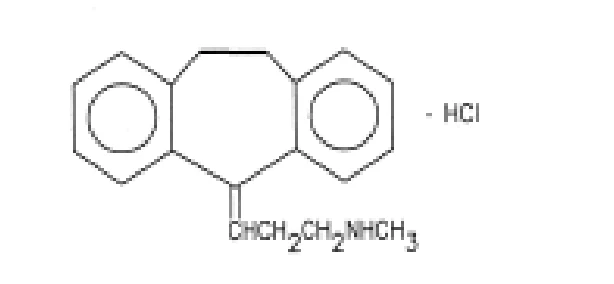
Molecular Formula: C19H21N • HCl
Molecular Weight: 299.84
Description: Nortriptyline hydrochloride is a white to off-white powder, having a slight, characteristic odor. Its solution (1 in 100) has a pH of about 5. Soluble in water and in chloroform; sparingly soluble in methanol; practically insoluble in ether, in benzene, and in most other organic solvents.
Composition
In addition to the active ingredient nortriptyline hydrochloride, each capsule contains the following non-medicinal ingredients: corn starch, gelatin, lactose, silicon dioxide, sodium lauryl sulphate, stearic acid, talc, titanium dioxide, D&C yellow #10, FD&C yellow #6.
Stability and Storage Recommendations
Keep tightly closed. Store at room temperature (15-30°C).
AVAILABILITY OF DOSAGE FORMS
AVA-NORTRIPTYLINE 10 mg Capsules: Each No.4 capsule with white opaque body and yellow opaque cap imprinted APO 10 contains nortriptyline hydrochloride equivalent to 10 mg nortriptyline base.
AVA-NORTRIPTYLINE 25 mg Capsules: Each No.2 capsule with white opaque body and yellow opaque cap imprinted APO 25 contains nortriptyline hydrochloride equivalent to 25 mg nortriptyline base.
Tartrazine-free. Available in bottles of 100 capsules.
BIBLIOGRAPHY
- 1. Bennett IF. The constellation of depression: Its treatment with nortriptyline. II: Clinical evaluation of nortriptyline. J Nerv Mental Dis 1962; 135: 59-68.
- 2.
Brachfeld J, Wirshafter A, Wolfe S. Imipramine-tranylcypromine incompatibility.
Near-fatal toxic reaction. JAMA 1963; 186(13): 106-107.
- 3. Crome P. Antidepressant overdosage. Drugs 1982; 23: 431-461.
- 4.
Georgotas A, McCue RE, Friedman E, Cooper TB. Response of depressive symptoms to nortriptyline, phenelzine and placebo. Br J Psychiat 1987; 151: 102-
106.
- 5. Georgotas A, McCue RE, Cooper TB, Nagachandran N, Friedhoff A. Factors affecting the delay of antidepressant effect in responders to nortriptyline and phenelzine. Psychiatry Res 1989; 28: 1-9.
- 6.
Goodman and Gilman eds. Tricyclic Antidepressants. IN: The Pharmacological Basis of Therapeutics, Eighth Edition; Chapter 18: Drugs and the Treatment of Psychiatric
Disorders. Permagon Press, Inc. 1990; pp. 405-414.
- 7.
Henauer SA, Hollister LE. Cimetidine interaction with imipramine and nortriptyline.
Clin Pharmacol Ther 1984; 35(2): 183-187.
- 8.
Kalant H, Roschlau WHE, Sellers EM eds. Chapter 26. Antidepressants and Lithium.
IV. Tricyclic Antidepressants. IN: Principles of Medical Pharmacology, Fourth Edition,
Oxford University Press, 1985; pp. 341-346.
- 9.
Kessell A, Pearce TAA, Holt NF. A controlled study of nortriptyline and imipramine.
Amer J Psychiat 1970; 126(7): 938-945.
- 10. Mendels J. Comparative trial of nortriptyline and amitriptyline in 100 depressed patients. Amer J Psychiat 1968; 124: 59-62.
- 11. Newton RW. Physostigmine salicylate in the treatment of tricyclic antidepressant overdosage. JAMA 1975; 231: 941-943.
- 12.
Nielsen JL. ECG changes during treatment with nortriptyline in a once-a-day dosage.
Neuropsychobiology 1980; 6: 48-51.
- 13.
Pedersen JH, S0rensen JL. Therapeutic effect and side effects in patients with endogenous depression treated with oral nortriptyline once a day.
Neuropsychobiology 1980; 6: 42-47.
- 14. Rom WN, Benner EJ. Toxicity by interaction of tricyclic antidepressant and monoamine oxidase inhibitor. Calif Med 1972; 117: 65-66.
- 15.
Rubin EH, Biggs JT, Preskorn SH. Nortriptyline pharmacokinetics and plasma levels:
Implications for clinical practice. J Clin Psychiatry 1985; 46: 418-424.
- 16.
Rumack BH. Anticholinergic poisoning: Treatment with physostigmine. Pediatrics
1973; 52(3): 449-451.
- 17. Stewart JA, Mitchell PH. A comparative trial of desipramine and nortriptyline in depression. Brit J Psychiat 1968; 114: 469-471.
- 18.
Stinnett JL, Valentine J, Abrutyn E. Nortriptyline hydrochloride overdosage. JAMA
1968; 204(1): 167-169.
- 19. Sturman G. Modification by a tricyclic series of compounds of the noradrenaline effect on the cat nictitating membrane. J Pharm Pharmacol 1971; 23: 142-143.
- 20. Vernier VG, Alleva FR, Hanson HM. Pharmacological actions of amitriptyline, noramitriptyline and imipramine. Psychopharmacology 1962; 21: 419.
- 21.
von Ammon Cavanaugh S. Drug-drug interactions of fluoxetine with tricyclics.
Psychosomatics 1990; 31 (3): 273-276.
- 22. Walker JI, Covington TR. Therapy review: Diagnosis and pharmacological management of depression in the elderly. J Clin Exper Gerontol1982; 4(1): 1-39.
- 23.
Prescribing Information - Pamelor® (nortriptyline HCI). IN: Physicians' Desk
Reference, 46th Edition. pp. 2019-2020.
- 24.
USP Drug Information Executive Committee. Antidepressants, Tricyclic Systemic. IN:
USP 01 - Volume 1. Drug Information for the Health Care Professional. Rand
McNally, Taunton, Mass USA 02780, 1994; pp. 262-268.
- 25.
U.S. Package Insert. Aventyl® (nortriptyline hydrochloride). Eli Lilly Canada Inc.,
May 5, 1993.
- 26.
CPS (Compendium of Pharmaceuticals and Specialities) Thirtieth Edition, 1995.
CPS Monograph for Aventyl® (Nortriptyline HCI, Lilly), pp. 132-133.