


Product Monograph - Belkyra
Recent Major Label Changes
Table of Contents
Recent Major Label Changes .................................................................................................. 2
Table of Contents................................................................................................................... 2
Part 1: Healthcare Professional Information........................................................................... 4
- 1.
Indications ...................................................................................................................... 4
1.1. Pediatrics ............................................................................................................ 4
1.2. Geriatrics............................................................................................................. 4
- 2. Contraindications ............................................................................................................ 4
- 4.
Dosage and Administration ............................................................................................. 4
4.1. Dosing Considerations ......................................................................................... 4
4.2. Recommended Dose and Dosage Adjustment....................................................... 5
4.4. Administration..................................................................................................... 5
4.5. Missed Dose ........................................................................................................ 7
- 5. Overdose ........................................................................................................................ 7
- 6. Dosage Forms, Strengths, Composition, and Packaging ................................................... 7
- 7.
Warnings and Precautions............................................................................................... 8
General ........................................................................................................................... 8
Cardiovascular................................................................................................................. 8
Driving and Operating Machinery..................................................................................... 9
Endocrine and Metabolism .............................................................................................. 9
Gastrointestinal ............................................................................................................... 9
Hematologic .................................................................................................................... 9
Hepatic/Biliary/Pancreatic ............................................................................................... 9
Immune .......................................................................................................................... 9
Neurologic....................................................................................................................... 9
Renal............................................................................................................................... 9
Reproductive Health ...................................................................................................... 10
Skin ............................................................................................................................... 10
7.1. Special Populations ............................................................................................ 10
7.1.1. Pregnancy .................................................................................................. 10
7.1.2. Breastfeeding............................................................................................. 10
7.1.3. Pediatrics ................................................................................................... 10
7.1.4. Geriatrics ................................................................................................... 11
- 8.
Adverse Reactions......................................................................................................... 11
8.1. Adverse Reaction Overview................................................................................ 11
8.2. Clinical Trial Adverse Reactions .......................................................................... 11
8.3. Less Common Clinical Trial Adverse Reactions .................................................... 12
8.4. Abnormal Laboratory Findings: Hematologic, Clinical Chemistry, and Other Quantitative Data .......................................................................................................... 12
8.5. Post-Market Adverse Reactions.......................................................................... 13
- 9.
Drug Interactions .......................................................................................................... 13
9.2. Drug Interactions Overview................................................................................ 13
9.3. Drug-Behaviour Interactions .............................................................................. 13
9.4. Drug-Drug Interactions ...................................................................................... 13
9.5. Drug-Food Interactions ...................................................................................... 13
9.6. Drug-Herb Interactions ...................................................................................... 13
9.7. Drug-Laboratory Test Interactions ...................................................................... 13
- 10.
Clinical Pharmacology ................................................................................................... 13
10.1. Mechanism of Action ......................................................................................... 13
10.2. Pharmacodynamics............................................................................................ 14
10.3. Pharmacokinetics .............................................................................................. 14
- 11. Storage, Stability, and Disposal ..................................................................................... 16
- 12. Special Handling Instructions ........................................................................................ 16
Part 2: Scientific Information ............................................................................................... 17
- 13. Pharmaceutical Information.......................................................................................... 17
- 14.
Clinical Trials ................................................................................................................. 17
14.1. Clinical Trials by Indication ................................................................................. 17
Improvement in appearance of submental fat ................................................................ 17
- 15. Microbiology................................................................................................................. 19
- 16. Non-Clinical Toxicology ................................................................................................. 19
Patient Medication Information........................................................................................... 21
Part 1: Healthcare Professional Information
1. Indications
BELKYRA® (deoxycholic acid injection) is indicated for:
- Improvement in the appearance of moderate to severe convexity or fullness associated with submental fat (SMF) in adults.
Important Limitations of Use:
The safe and effective use of BELKYRA for use outside the submental region has not been established and is not recommended.
The safe and effective use of BELKYRA for use in patients with mild or extreme SMF has not been established and is not recommended.
Healthcare professionals administering BELKYRA must receive specialized training before using BELKYRA and understand the relevant submental anatomy and associated neuromuscular structures in the area involved and any alterations to the anatomy due to prior surgical or aesthetic procedures.
1.1. Pediatrics
Pediatrics (<18 years of age): No data are available to Health Canada; therefore, Health Canada has not authorized an indication for pediatric use.
1.2. Geriatrics
The greater sensitivity of some older individuals cannot be ruled out; therefore, caution should be exercised with these patients. The clinical trials of BELKYRA did not include sufficient numbers of subjects over age 65 to determine whether they respond differently than younger subjects.
2. Contraindications
BELKYRA is contraindicated in
- patients who are hypersensitive to this drug or to any ingredient in the formulation, including any non-medicinal ingredient, or component of the container. For a complete listing, see 6. Dosage Forms, Strengths, Composition, and Packaging.
- the presence of infection in the treatment area.
4. Dosage and Administration
4.1. Dosing Considerations
- BELKYRA should only be used by healthcare professionals specially trained in the use of this product.
- The safe and effective use of BELKYRA depends upon the:
- selection of appropriate patients. See 7 WARNINGS AND PRECAUTIONS section of the Product Monograph,
- use of the correct number and locations of injections, and
- proper needle placement and administration techniques.
- Patients with excessive skin laxity, prominent platysmal bands or other conditions for which reduction of submental fat may result in an aesthetically undesirable outcome should not be treated with BELKYRA.
- Each vial of BELKYRA is for single patient and treatment session use only. After use, discard any remaining solution in the vial.
4.2. Recommended Dose and Dosage Adjustment
- Inject 0.2 mL in each site, 1 cm apart, up to 50 injections into the subcutaneous fat. The maximum dose should not exceed 100 mg (10 mL) in a single treatment.
- The number of treatment sessions needed to achieve a satisfactory response depends on the individual patient. Up to 6 treatments spaced at intervals of no less than 1 month apart are recommended based on the clinical trial efficacy and safety data.
- Patients should receive the minimum number of injections over a minimum number of treatment sessions to achieve a satisfactory result. More frequent dosing with BELKYRA has not been clinically evaluated for safety and effectiveness and is not recommended.
Health Canada has not authorized an indication for pediatric use.
4.4. Administration
BELKYRA is supplied in ready to use, single-use vials containing 2 mL of a 10 mg/mL solution and should be clear, colourless, and free of particulate matter. Check each vial for leakage prior to administration. Visually inspect BELKYRA for particulate matter and discolouration prior to administration. Gently invert the vial several times prior to use. Do not dilute. After use, discard any remaining solution in the vial.
Injection Technique
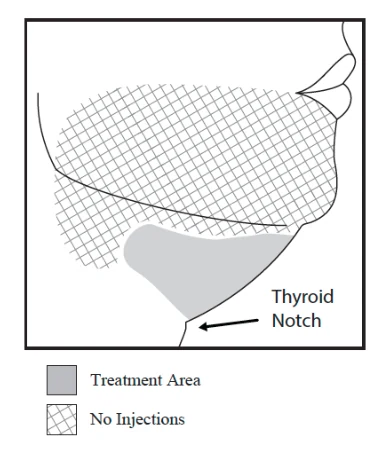
Healthcare professionals administering BELKYRA must receive training prior to use and understand the relevant submental anatomy and associated neuromuscular and vascular structures in the area involved and any alterations to the anatomy due to prior surgical or aesthetic procedures. See 7 WARNINGS AND PRECAUTIONS section of the Product Monograph. Needle placement is very important. Insert the needle perpendicular to the skin for injections with BELKYRA. To reduce the potential for motor neuropraxia of the marginal mandibular branch of the facial nerve (which may present as an asymmetrical smile):
- Do not inject above the inferior border of the mandible.
- Do not inject within a region defined by a 1-1.5 cm line below the inferior border (from the angle of the mandible to the mentum).
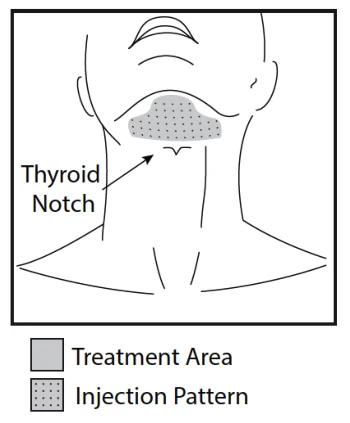
Inject BELKYRA only within the target submental fat treatment area (see Figure 1 and Figure 3).
Figure 1: Avoid the Marginal Mandibular Nerve Area
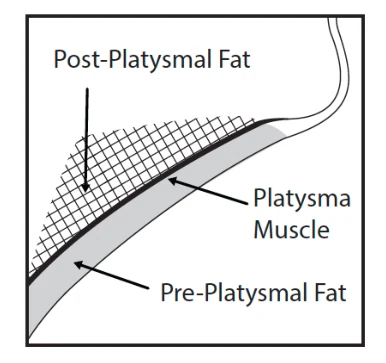
Palpate the submental area to identify subcutaneous fat between the dermis and platysma (pre-platysmal fat) at appropriate injection sites (Figure 2).
Figure 2: Sagittal View of Platysma Area
Use of ice/cold packs, topical and/or injectable local anesthesia (e.g., lidocaine) should be considered prior to administration to enhance patient comfort. The treatment area (Figure 3) should be appropriately cleansed and then outlined with a surgical pen. Apply a 1 cm2 injection grid to mark the injection sites.
Figure 3: Treatment Area and Injection Pattern
Using a large bore needle, draw 1 mL of BELKYRA from the 2 mL vial into a sterile 1 mL syringe and expel any air bubbles in the syringe barrel. Have the patient tense the platysma. Pinch the submental fat and, using a 30 gauge (or smaller) 0.5-inch needle, inject BELKYRA next to each of the marked injection sites by advancing the needle perpendicular to the skin until it is mid-point into the underlying pre-platysmal subcutaneous fat layer. Avoid injecting into the post-platysmal fat (Figure 2). Do not inject too superficially (into the dermis) or withdraw the needle while injecting as this may result in skin ulceration and necrosis. Avoid injecting into other tissues such as the muscle, salivary glands, salivary duct, thyroid gland, lymph nodes and artery or vein.
Inject a dose of 0.2 mL into each injection site, 1 cm apart, repeating the process using multiple vials and syringes, if necessary, until all sites in the planned treatment area have been injected. In treating patients with BELKYRA, the maximum dose should not exceed 100 mg (10 mL) in a single treatment.
Prior to each treatment session, assess the patient’s submental area to ensure sufficient SMF. The number of treatment sessions needed to achieve a satisfactory response depends on the individual patient. In clinical trials, up to 6 treatments were allowed.
4.5. Missed Dose
The number of treatment sessions needed to achieve a satisfactory response depends on the individual patient. Up to 6 treatments may be administered; if a treatment is missed, treatment may be resumed at any time, as long as it is administered at intervals no less than 1 month apart. See 4.2 Recommended Dose and Dosage adjustment.
5. Overdose
Injection of increased volume or decreasing the spacing between injections of BELKYRA may be expected to increase risk of local adverse effects.
| For the most recent information in the management of a suspected drug overdose, contact your regional poison control centre or Health Canada’s toll-free number, 1-844 POISON-X (1-844-764-7669). |
|---|
- 6. Dosage Forms, Strengths, Composition, and Packaging
Table 1 – Dosage Forms, Strengths, and Composition
BELKYRA is a clear, colourless, liquid essentially free of visible particulates. The product is formulated at pH 8.3 with hydrochloric acid and has a tonicity compatible with that of biological tissues and fluids.
| Route of Administration | Dosage Form/ Strength/Composition | Non-Medicinal Ingredients |
| Subcutaneous Injection | Solution 10 mg/mL Deoxycholic acid | Benzyl alcohol (preservative), dibasic sodium phosphate, hydrochloric acid, sodium chloride, sodium hydroxide, water for injection |
BELKYRA is supplied in 2 mL, single-use vials in the following dispensing pack:
- 4 single-use vials
BELKYRA has a unique hologram on the vial label. If you do not see a hologram, do not use the product and call 1-888-704-8271.
7. Warnings and Precautions
General
BELKYRA should be administered into pre-platysmal subcutaneous fat tissue and not into post-platysmal fat. BELKYRA should only be administered by a healthcare professional who has received specialized training on the proper use of BELKYRA.
The safe and effective use of BELKYRA depends on the use of the correct number and locations for injections, proper needle placement, and administration techniques. Injection site reactions may occur. See Skin in 7 WARNINGS AND PRECAUTIONS.
Healthcare professionals administering BELKYRA must understand the relevant submental anatomy and associated neuromuscular and vascular structures in the area involved and any alterations to the anatomy due to prior surgical or aesthetic procedures.
Patients should be screened for other potential causes of submental convexity/fullness (e.g., thyromegaly and cervical lymphadenopathy) prior to use of BELKYRA.
BELKYRA should be injected mid-point into the subcutaneous fat tissue in the submental area.
Do not inject:
- into the periorbital area.
- into or within 1-1.5 cm of vulnerable anatomic structures, salivary glands, salivary duct, lymph nodes and muscles in order to avoid tissue injury.
- into or in close proximity to the marginal mandibular branch of the facial nerve to avoid the potential for motor neuropraxia, which manifests as an asymmetric smile or facial muscle weakness. See Neurologic in 7 WARNINGS AND PRECAUTIONS.
- directly into an artery or a vein, as it can result in vascular injury.
- intradermally or intramuscularly.
- in patients with excessive skin laxity, prominent platysmal bands or other conditions for which reduction of submental fat may result in an aesthetically undesirable outcome.
Each vial of BELKYRA is for single patient and treatment session use only. See 4 DOSAGE AND ADMINISTRATION.
Cardiovascular
Increased Blood Pressure and Hypertension
Administration of BELKYRA may cause a temporary increase in systolic and diastolic blood pressure in healthy subjects. See 10.2 Pharmacodynamics. In patients receiving treatment for submental fat, the incidence of hypertension was 2.5% with BELKYRA and 1.4% with placebo. See 8 ADVERSE REACTIONS.
BELKYRA was not specifically studied in patients with cardiovascular disease. Use BELKYRA with caution in patients with cardiovascular disease.
BELKYRA was not specifically studied in patients with impaired circulation. BELKYRA should be used with caution in patients with impaired circulation (including diabetes mellitus).
Driving and Operating Machinery
No studies on the effects on the ability to drive and use machines have been performed.
Endocrine and Metabolism
BELKYRA was not specifically studied in patients with thyroid conditions. Thyroid disease/conditions should be ruled out prior to use as a potential contributing cause of submental convexity/fullness (i.e., thyromegaly).
Gastrointestinal
Dysphagia
Dysphagia, ranging in duration from 1-81 days (median 3 days), occurred in 2% of BELKYRA treated patients in clinical trials. BELKYRA is not recommended for patients with a history of dysphagia.
Hematologic
Injection site hematoma/bruising
In clinical trials, 72% of subjects treated with BELKYRA experienced injection site hematoma/bruising. BELKYRA should be used with caution in patients with bleeding abnormalities or who are currently being treated with antiplatelet or anticoagulant therapy as injection site hemorrhage /excessive bleeding or bruising in the treatment area may occur.
Hepatic/Biliary/Pancreatic
Patients with hepatic impairment were not specifically studied in clinical trials. BELKYRA should be used with caution in patients with hepatic impairment.
Immune
Patients taking chronic corticosteroids or patients with compromised immune systems were not specifically studied in clinical trials. BELKYRA should be used with caution in patients who are immunosuppressed (including those on chronic steroid therapy).
Neurologic
Cases of marginal mandibular nerve injury, resulting in an asymmetric smile or facial muscle weakness (paresis), were reported in 4% of BELKYRA-treated patients in clinical trials. These nerve injuries ranged in duration from 1-298 days (median 44 days). To avoid the potential for nerve injury, BELKYRA should not be injected into or in close proximity to the marginal mandibular branch of the facial nerve.
Renal
Patients with renal impairment were not specifically studied in clinical trials. BELKYRA should be used with caution in patients with renal impairment.
Reproductive Health
No human data available. For animal data see 16 NON-CLINICAL TOXICOLOGY.
Skin
Cases of injection site ulceration and necrosis have been reported with the administration of BELKYRA. Injections that are too superficial (into the dermis) may result in skin ulceration and necrosis. Do not withdraw the needle from the subcutaneous fat during injection, as this could increase the risk of intradermal exposure and potential skin ulceration and necrosis. Cases of injection site infection have been reported during post-market use of BELKYRA, some of which included cellulitis and abscess requiring additional medical treatments, some cases requiring debridement, intravenous antibiotics and incision and drainage. Patients should be advised to seek prompt medical attention if they develop signs or symptoms of cellulitis or an abscess. Do not administer BELKYRA into the affected area until complete resolution of the adverse reaction.
BELKYRA should not be administered in the presence of inflammation or induration at the proposed injection site(s). Do not administer BELKYRA into the affected area until the complete resolution of the adverse reactions. See General in 7 WARNINGS AND PRECAUTIONS.
Cases of injection site alopecia have been reported with the administration of BELKYRA. The onset and duration of this adverse reaction may vary among individuals and may persist.
Hypopigmentation and hyperpigmentation have been observed in patients (< 1%) treated with BELKYRA, especially in darker skin types. Caution should be used when BELKYRA is administered to patients who have had prior surgical or aesthetic treatment of the submental area. Changes in anatomy/landmarks or the presence of scar tissue may affect the ability to safely administer BELKYRA or to obtain the desired aesthetic result.
7.1. Special Populations
7.1.1. Pregnancy
BELKYRA is not recommended for use during pregnancy. No adequate and well-controlled studies in pregnant women have been performed. A study in rabbits has shown developmental toxicity. See 16 NON-CLINICAL TOXICOLOGY.
The extent of exposure in pregnancy during clinical trials: No experience.
7.1.2. Breastfeeding
BELKYRA is not recommended for use in nursing women.
Endogenous deoxycholic acid has been observed in human milk. Studies in nursing mothers have not been conducted.
7.1.3. Pediatrics
Pediatrics (< 18 years of age): No data are available to Health Canada; therefore, Health Canada has not authorized an indication for pediatric use.
BELKYRA contains benzyl alcohol. Benzyl alcohol has been associated with respiratory distress that can be fatal when administered to preterm newborn infants of low birth weight.
7.1.4. Geriatrics
Use with caution in elderly patients. The clinical trials of BELKYRA did not include sufficient numbers of subjects over age 65 to determine whether they respond differently than younger subjects. Dose selection for an elderly patient should be cautious, usually starting at the low end of the dosing range, reflecting the greater frequency of decreased hepatic, renal, or cardiac function, and of concomitant disease or other drug therapy. See relevant section in 7 WARNINGS AND PRECAUTIONS and 9 DRUG INTERACTIONS.
8. Adverse Reactions
8.1. Adverse Reaction Overview
The most frequent adverse reactions (> 10%) were injection site pain, localized hematoma (predominantly reported as bruising), injection site anesthesia/paresthesia, injection site edema/swelling, injection site erythema, injection site induration, injection site nodule, and injection site pruritus. Adverse reactions of nerve injury and dysphagia were also observed in BELKYRA-treated patients and lasted for several months in some cases. The proportion of patients who terminated prematurely from the pivotal trial due to adverse events was 1.6% for BELKYRA and 1.0% for placebo patients. Needle-related pain and/or anxiety can result in vasovagal responses (e.g., syncope, hypotension) or a temporary increase in blood pressure.
8.2. Clinical Trial Adverse Reactions
Clinical trials are conducted under very specific conditions. Therefore, the frequencies of adverse reactions observed in the clinical trials may not reflect frequencies observed in clinical practice and should not be compared to frequencies reported in clinical trials of another drug.
In two Phase 3, randomized, double-blind, placebo controlled trials 515 subjects were treated with BELKYRA and 504 subjects were treated with placebo. The study population was 19-65 years old, 85% were women, 87% Caucasian, 8% African American with a mean BMI of 29 kg/m2, with moderate to severe submental convexity (graded as 2 or 3 on a 0 to 4 point scale) and without excessive skin laxity. Subjects received up to 6 treatments at least 1 month apart and were followed for up to 6 months after the last treatment.
Table 2 - Adverse Drug Reactions Reported in ≥ 2% of BELKYRA Subjectsa
| System organ class/preferred term | BELKYRA (N=513) n (%) | Placebo (N=506) n (%) | ||||||
| System organ class/preferred term | BELKYRA (N=513) n (%) | Placebo (N=506) n (%) | ||||||
| Gastrointestinal Disorders | ||||||||
| nausea | 12 (2%) | 3 (1%) | ||||||
| dysphagia | 10 (2%) | 1 (<1%) | ||||||
| General Disorders and Administration Site Conditions | ||||||||
| edema/swelling | 448 (87%) | 218 (43%) | ||||||
| hematoma/bruising | 368 (72%) | 353 (70%) | ||||||
| pain | 356 (70%) | 160 (32%) | ||||||
| numbness | 341 (66%) | 29 (6%) | ||||||
| erythema | 136 (27%) | 91 (18%) | ||||||
| induration | 120 (23%) | 13 (3%) | ||||||
| paresthesia | 70 (14%) | 20 (4%) | ||||||
| nodule | 68 (13%) | 14 (3%) | ||||||
| pruritus | 64 (12%) | 30 (6%) | ||||||
| skin tightness | 24 (5%) | 6 (1%) | ||||||
| site warmth | 22 (4%) | 8 (2%) | ||||||
| nerve injuryb | 20 (4%) | 1 (<1%) | ||||||
| Nervous System Disorders | ||||||||
| headache | 41 (8%) | 20 (4%) | ||||||
| Respiratory, thoracic, and mediastinal disorders | ||||||||
| oropharyngeal pain | 15 (3%) | 7 (1%) | ||||||
| Vascular Disorders | ||||||||
| hypertension | 13 (3%) | 7 (1%) | ||||||
| a Adverse reactions that occurred in ≥ 2% BELKYRA treated subjects and at greater incidence than placebo b Marginal mandibular nerve paresis | ||||||||
8.3. Less Common Clinical Trial Adverse Reactions
General Disorders and Administration Site Conditions: Administration Site Alopecia, Injection Site Discomfort, Injection Site Haemorrhage, Injection Site Ulcer, Injection Site Urticaria
Immune System Disorders: Lymphadenopathy
Nervous System Disorders: Dysgeusia, Syncope/pre-syncope
Respiratory, Thoracic and Mediastinal Disorders: Dysphonia
Skin and Subcutaneous Tissue Disorders: Injection Site Discolouration, Injection Site Mass, Pruritus
8.4. Abnormal Laboratory Findings: Hematologic, Clinical Chemistry, and Other Quantitative Data
Not Applicable
8.5. Post-Market Adverse Reactions
The following adverse reactions have been identified during post-marketing use of BELKYRA. Because they are reported voluntarily from a population of unknown size, estimates of frequency cannot be made.
General Disorders and Administration Site Conditions: Injection site alopecia in males, Injection site aesthesia/hypoaesthesia, Injection site ulceration and injection site necrosis, Injection site scarring (secondary to skin ulceration or necrosis; and post-injection scar tissue), and Injection site infection (some of which included cellulitis and abscess).
Immune System Disorders: Hypersensitivity reactions including itching, rash, and urticaria.
Injury, Poisoning, and Procedural Complications: Vascular injury due to inadvertent intravascular injection.
Nervous System Disorders: Hypoaesthesia oral and Paraesthesia oral.
9. Drug Interactions
9.2. Drug Interactions Overview
In vitro Assessment of Interactions:
In vitro BELKYRA did not inhibit or induce cytochrome P450 (CYP) enzymes at clinically relevant plasma concentrations. BELKYRA does not inhibit the following transporters: P-gp, BCRP, MRP4, MRP2, OATP1B1, OATP2B1, OATP1B3, OCT1, OCT2, OAT1, OAT3, NTCP and ASBT.
9.3. Drug-Behaviour Interactions
No studies on the effects on the ability to drive and use machines have been performed.
9.4. Drug-Drug Interactions
No clinical drug interaction studies have been conducted with BELKYRA.
9.5. Drug-Food Interactions
Interactions with food have not been established.
9.6. Drug-Herb Interactions
Interactions with herbal products have not been established.
9.7. Drug-Laboratory Test Interactions
Interactions with laboratory tests have not been established.
10. Clinical Pharmacology
10.1. Mechanism of Action
BELKYRA is a cytolytic drug, which when injected into tissue, physically disrupts the cell membrane.
10.2. Pharmacodynamics
Electrocardiography and Haemodynamics:
A randomised, double-blind, placebo- and active-controlled, 4-arm parallel group ECG assessment study was performed to assess the effects of therapeutic (100 mg, 25 X 4 mg/cm2 SC) and supratherapeutic (200 mg, 25 X 8 mg/cm2 SC) single dose sessions of BELKYRA in healthy subjects with submental fat (N=54-55/treatment arm). BELKYRA was not observed to have any noteworthy effects on the QTc interval, the QRS duration, the PR interval, or ventricular heart rate over the 24 h period post-dosing.
Blood pressure assessments were performed at baseline and at 0.5 h, 2 h, and 24 h post-dosing. Following administration of the BELKYRA 100 mg and 200 mg doses, statistically significant temporary increases in systolic and diastolic blood pressure were observed at 0.5 h and 2 h post-dosing. At 2 h post-dosing, the placebo-adjusted mean change from baseline in systolic blood pressure was 4.7 mmHg (95% CI 1.3, 8.1) in the 100 mg group and 5.9 mmHg (95% CI 2.4, 9.3) in the 200 mg group and the placebo-adjusted mean change from baseline in diastolic blood pressure was 6.3 mmHg (95% CI 3.7, 8.8) in the 100 mg group and 6.0 mmHg (95% CI 3.5, 8.5) in the 200 mg group. No significant effect on systolic or diastolic blood pressure was observed at 24 h post-dosing. See 7 WARNINGS AND PRECAUTIONS, Increased Blood Pressure and Hypertension and 8 ADVERSE REACTIONS.
10.3. Pharmacokinetics
Bile acids, including deoxycholic acid and bile-acid conjugates, are secreted into the duodenum where they emulsify dietary lipids and cholesterol, facilitating their absorption. Bile acids are primarily reabsorbed (90% to 95%) and returned to the liver via the enterohepatic circulation. Efficient hepatic uptake (70% to 90%) keeps circulating bile acid levels low even after a meal. Small quantities (~ 0.3 to 0.6 g per day or 5% to 10%) of bile acids are excreted in feces; little urinary excretion occurs. Bile acid homeostasis is tightly regulated. The exogenous deoxycholic acid from BELKYRA and endogenous deoxycholic acid are indistinguishable. Therefore, the elimination and metabolism of exogenous deoxycholic acid is similar to endogenous deoxycholic acid and is regulated under the same homeostatic mechanisms. BELKYRA is intended for intermittent administration at a maximum dose of 100 mg per treatment session, which represents ~ 3% addition of exogenous deoxycholic acid relative to the endogenous bile acid pool.
High variability of 24-hour baseline deoxycholic acid levels was observed across the 167 subjects evaluated, with values ranging from below the limit of quantitation (BLOQ) (either 50 ng/mL or 25.6 ng/mL) to approximately 1700 ng/mL. Within an individual, the endogenous deoxycholic acid levels generally fluctuated across the 24-hour sampling period with no obvious time-associated trend. The average baseline measurements appear consistent over the 24-hour sampling period, ranging from 99 ng/mL at 5 hours to 212 ng/mL at 16 hours. No apparent differences in 24-hour baseline deoxycholic acid levels were observed between sexes.
Endogenous deoxycholic acid plasma levels are highly variable within and between individuals; most of this natural bile component is sequestered in the enterohepatic circulation loop. Pharmacokinetics of exogenous deoxycholic acid administered via treatment with BELKYRA was compared against this endogenous background.
Table 3: Summary of Deoxycholic acid Pharmacokinetic Parameters (mean ± standard deviation) Following a Single SC Administration to the Submental Area
Dose (mg) | Cmax (ng/mL) | tmax b (h) | AUC0-24 (ng·h/mL) |
|---|---|---|---|
| Baseline (Pretreatment) | 324 ± 182 | 12.0 (0, 24.0) | 4854 ± 2339 |
| 100 a (N=12) | 1024 ± 304 | 0.3 (0.1, 1.1) | 7896 ± 2269 |
a BELKYRA was administered as 50 injections of 2 mg/cm2 spaced on a 1 cm2 grid. b Presented as median (minimum, maximum). | |||
Absorption
Deoxycholic acid from BELKYRA is rapidly absorbed following subcutaneous injection. After dosing with the maximum recommended single treatment with BELKYRA (100 mg), maximum plasma concentrations (mean Cmax) were observed with a median tmax of 18 minutes after injection and mean Cmax values were 3.2-fold higher than average Cmax values observed during a 24-hour baseline endogenous period in the absence of BELKYRA. After maximum recommended single treatment dose (100 mg), average deoxycholic acid exposure (AUC0-24) was 1.6-fold higher over endogenous exposure. Plasma AUC0-24 increased in a dose proportional manner between 24 mg to 100 mg. Post-treatment deoxycholic acid plasma levels returned to the endogenous range within 24 hours and no accumulation is expected with the proposed treatment frequency.
Distribution
The volume of distribution of BELKYRA was estimated to be 193 L and is independent of the dose up to 100 mg. Deoxycholic acid is extensively bound to plasma proteins (98%)
Metabolism
Deoxycholic acid is not metabolized to any significant extent under normal conditions. In human liver microsomes, deoxycholic acid was metabolized mainly by CYP3A4 to 2 products, identified as 1β-hydroxy-deoxycholic acid and 3-dehydro-deoxycholic acid.
Elimination
Endogenous deoxycholic acid is a product of cholesterol metabolism and is excreted intact in feces (5% - 10%). Deoxycholic acid from BELKYRA joins the endogenous bile acid pool in the enterohepatic circulation and is excreted along with the endogenous deoxycholic acid.
Special populations and conditions
Pediatrics: Clinical trials of BELKYRA did not include subjects below the age of 18 years and BELKYRA is not recommended for use in children or adolescents.
BELKYRA contains benzyl alcohol. Benzyl alcohol has been associated with respiratory distress that can be fatal when administered to preterm newborn infants of low birth weight.
Geriatrics: Clinical trials of BELKYRA did not include a sufficient number of subjects aged 65 and over to determine whether they respond differently than younger subjects; therefore, caution should be exercised with these patients.
Baseline endogenous plasma deoxycholic acid was estimated at approximately 141 ng/mL and increased slightly with age ranging from 107 ng/mL at age 18 years to 177 ng/mL at age 64 years. Considering the high interindividual variability (51.6%), this difference was deemed of no clinical relevance.
- Sex: Sex had no clinically relevant effect on the pharmacokinetics of BELKYRA based on the population pharmacokinetic analysis. Baseline adjusted AUC0-24 of deoxycholic acid were 23% higher in males compared to females.
- Genetic polymorphism: Deoxycholic acid is not metabolized to any significant extent; the genetic polymorphism of major Phase 1 and Phase 2 metabolic enzymes are unlikely to influence deoxycholic acid pharmacokinetics.
- Ethnic origin: Deoxycholic acid pharmacokinetics was not influenced by race based on population pharmacokinetic analysis. The clinical trial population largely comprised Caucasian women (87%).
Hepatic Insufficiency: BELKYRA should be used with caution in patients with hepatic impairment.
BELKYRA has not been studied in subjects with hepatic impairment. Considering the intermittent dose frequency, the small dose administered that represents approximately 3% of the total bile acid pool, and the highly variable endogenous deoxycholic acid levels, the pharmacokinetics of deoxycholic acid following BELKYRA injection is less likely to be influenced by hepatic impairment.
- Renal Insufficiency: BELKYRA should be used with caution in patients with renal impairment. BELKYRA has not been studied in subjects with renal impairment. Bile acids including endogenous deoxycholic acid are excreted in the urine in negligible amounts.
- Storage, Stability, and Disposal
Store at room temperature (15 to 30°C). Keep out of reach and sight of children.
Disposal of unused BELKYRA solution should be in accordance with recommendations governing the disposal of pharmaceutical waste.
12. Special Handling Instructions
There are no special handling instructions. Each vial is for single patient and treatment session use.
Part 2: Scientific Information
13. Pharmaceutical Information
Drug Substance
Non-proprietary name of the drug substance(s): deoxycholic acid
Chemical name: 3α,12α-dihydroxy-5β-cholan-24-oic acid
Molecular formula and molecular mass: C24H40O4 and 392.57 g/mol
Structural formula:
Physicochemical properties: Deoxycholic acid is a white to off-white crystalline powder with a melting range of 172° to 175°C. Deoxycholic acid is very slightly soluble in water and it is freely soluble in basic aqueous solution.
14. Clinical Trials
14.1. Clinical Trials by Indication
Improvement in appearance of submental fat
Table 4:Summary of patient demographics in clinical trials for improvement in appearance of submental fat
| Study # | Study design | Dosage, route of administration and duration | Study subjects (n) | Mean age (Range) | Sex |
| 1 | Phase 3, multicenter, randomized, double-blind, 2-arm, placebo-controlled | BELKYRA SC injections, 2 mg/cm2 in up to 6 treatment sessions at ≥ 1 month intervals | 506, of whom 256 received BELKYRA | 49.4 | 43 (16.8%) Male; 213 (83.2%) Female |
| 2 | Phase 3, multicenter, randomized, double-blind, 2-arm, placebo-controlled | BELKYRA SC injections, 2 mg/cm2 in up to 6 treatment sessions at ≥ 1 month intervals | 516, of whom 258 received BELKYRA | 47.9 | 37 (14.3%) Male; 221 (85.7%) Female |
Two Phase 3, randomized, double-blind, placebo-controlled trials were conducted to evaluate BELKYRA in the improvement in the appearance of convexity or fullness associated with moderate to severe SMF. The trials enrolled healthy adults (ages 19 to 65 years, BMI ≤ 40 kg/m2) with moderate or severe SMF (i.e., grade 2 or 3 on 5-point validated grading scales, where 0 = none, 4 = extreme), as judged by both clinician and subject ratings. Subjects received up to six treatments with BELKYRA (N=515, combined trials) or placebo (N=504, combined trials) at no less than 1 month intervals. Use of ice/cold packs, topical and/or injectable local anesthesia was allowed during the clinical trials. Injection volume was 0.2 mL per injection site, spaced 1 cm apart into the submental fat tissue, which is expressed as dose per area as 2 mg/cm2. For each treatment session a maximum of 100 mg (10 mL) was permitted over the entire treatment area. Subjects were administered an average of 6.4 mL at the first treatment session, and subjects who received all six treatments were administered an average of 4.4 mL at the sixth treatment session.
In these trials, the mean age was 49 years and the mean BMI was 29 kg/m2. Most of the subjects were women (85%) and Caucasian (87%). At baseline, 51% of the subjects had a clinician-rated submental fat severity rating of moderate and 49% had a severe submental fat rating.
The co-primary efficacy assessments were based on at least 1-grade and at least 2-grade improvements in submental convexity or fullness on the composite clinician-reported (CR) and patient-reported (PR) ratings of SMF (concurrent improvement reported by both physician and patient) at 12 weeks after final treatment, relative to baseline. Additionally, as a secondary endpoint, changes in submental volume were evaluated in a subset of subjects (N=449, combined trials) using magnetic resonance imaging.
Study Results
Table 5: Results of studies 1 and 2 for improvement in appearance of submental fat.
| Endpoint | BELKYRA (N=514) | Placebo (N=508) | p-value |
|---|---|---|---|
| 1-Grade Composite Response | 351 (68.2%) | 104 (20.5%) | < 0.001 |
| 2-Grade Composite Response | 82 (16%) | 8 (1.5%) | < 0.001 |
Figure 4: ≥ 2-Grade and ≥ 1-Grade Composite Clinician and Patient Response in studies 1 and 2 for improvement in appearance of submental fat.
At Least 2-Grade Reduction Composite Response At Least 1-Grade Reduction Composite Response
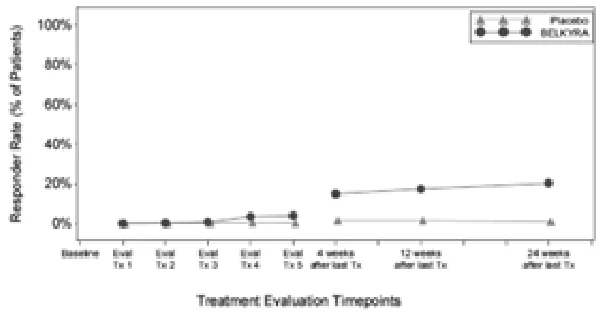
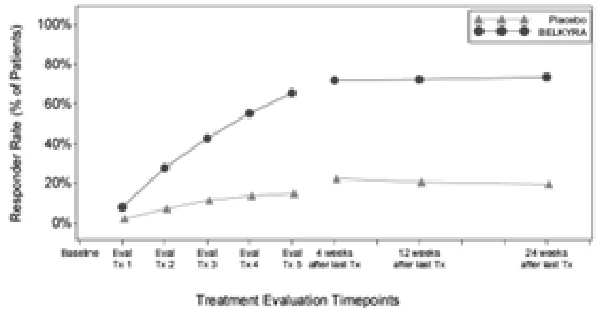
Note: Subjects were followed up 4, 12 and 24 weeks after the last treatment. Forty-one percent of subjects received fewer than 6 treatments and entered the post-treatment period earlier than Week 24.
Both 1-grade and 2-grade reductions in SMF were observed more frequently in the BELKYRA group compared to the placebo group as measured by the composite clinician and patient ratings. Approximately sixty-eight percent (68.2%) of BELKYRA-treated subjects had at least a 1-grade composite Submental Fat Rating Scale (SMFRS) response compared to 20.5% of placebo-treated subjects. Sixteen percent (16.0%) of BELKYRA-treated subjects had at least a 2-grade composite SMFRS response compared to 1.5% of placebo-treated subjects (Table 5). Subgroup analyses showed that response to treatment was reduced for non-Caucasian subjects with no difference between placebo and BELKYRA groups for 2-grade composite SMFRS in non-Caucasian subjects. The individual clinician and patient assessments of response from which the composite response is derived are provided in
Figure 4. A MRI responder was prospectively defined as a subject who exhibited at least a 10% reduction in submental volume as measured by MRI from baseline to 12 weeks after last treatment. Ninety-eight (43.3%) BELKYRA-treated subjects and 12 (5.3%) placebo-treated subjects were considered MRI responders.
15. Microbiology
No microbiological information is required for this drug product.
16. Non-Clinical Toxicology
Nonclinical Pharmacology
In vitro studies were conducted to determine the cytolytic effect of deoxycholic acid on different cell types including primary human epidermal keratinocytes, primary human skeletal muscle cells, primary human adipocytes, primary human fibroblasts, immortalized human melanoma cells (A375M), immortalized human cervical cancer cells (HeLa) and immortalized human thyroid cancer cells (DRO). Cells from distinct lineages displayed similar sensitivity to the cytolytic effect of deoxycholic acid, with LC50 (lethal concentration to 50% of cells) values ranging from 0.01% to 0.06%. Clinical concentrations of deoxycholic acid were cytotoxic to all tested cells. In vitro exposure to protein rich tissues attenuated the cytolytic effect of deoxycholic acid. Binding of deoxycholic acid to protein reduces the amount of free deoxycholic acid available for cytolysis.
In obese Zucker rats, subcutaneous injection of deoxycholic acid into the caudal lateral fat pads induced fat cell cytolysis at concentrations of ≥ 0.5%. Studies in rats also demonstrated that lipids (triolein) released from deoxycholic acid-lysed adipocytes were slowly absorbed and processed in a manner similar to that of dietary fat. Liberated lipids were mainly distributed to the body’s normal fat storage sites.
Following subcutaneous injection of 0.5% and 1% deoxycholic acid into the fat tissue of a pig, the area of cell destruction was within 1 cm of the point of injection.
General toxicology:
Acute Toxicity
Single subcutaneous doses of deoxycholic acid up to 250 mg/kg in rats and up to 100 mg/kg in dogs did not cause death; however, a notable inflammatory response at, or ventral to, the site of injection was observed in both species. Subcutaneous hemorrhage, edema, focal necrosis (involving adipose tissue, muscle, or occasionally blood vessels or nerve fibers), and thrombosis were observed in rats and dogs. Ulceration and epithelial hyperplasia were also noted in rats. The severity of the local reactions limited subcutaneous administration of deoxycholic acid to 50 mg/mL (at 1 mL/kg) in rats and 20 mg/mL (at 1 mL/kg) in dogs at one injection site. The responses at the injection site diminished with time, and chronic inflammation (dog) and fibrosis (rat and dog) were observed by Day 56 post-dose.
Repeated-Dose Toxicity
Deoxycholic acid was administered by subcutaneous injection at doses of 5 to 50 mg/kg (5 to 100 mg/mL) once weekly for 4 weeks (rat and dog) or bi-weekly for up to 6 months (rat) or 9 months (dog). Doses (0.5 or 1 mL/kg) were administered to two alternating injection sites in rats, or to two alternating sets of 4 injection sites/set in dogs. The primary findings in both species were confined to the injection site and surrounding tissue, consistent with a local inflammatory reaction at all doses tested. Transient injection site pain, minimal-to-mild erythema and edema, and localized swelling were observed which, at high doses (50 mg/kg in rats and ≥ 10 mg/kg in dogs) were associated with recoverable increases in circulating neutrophils, leukocytes and/or monocytes as a response to the local inflammation. Histologically, deoxycholic acid-related injection site lesions progressed from acute-subacute inflammation with edema, haemorrhage, and necrosis, to subacute-chronic inflammation with lesser degrees of necrosis and haemorrhage with fibroplasia and/or fibrosis, to a healing phase of mature fibrosis with minimal to no inflammatory cell infiltration by the end of the 4-week recovery period.
Across repeated-dose studies, subcutaneously administered deoxycholic acid was systemically well tolerated. No obvious signs of systemic toxicity were observed after subcutaneous injections of deoxycholic acid in rats for up to 6 months at doses of ≤ 50 mg/kg (up to 5 times the clinical dose of 100 mg, based on mg/m2 comparison) and in dogs for up to 9 months at doses of ≤ 25 mg/kg (up to 8 times the clinical dose of 100 mg, based on mg/m2 comparison). At the completion of dosing in the chronic 9-month dog study (20 total doses), a glomerular lipid embolus in the kidney was observed in a single male at the high dose of 50 mg/kg (16 times the clinical dose of 100 mg, based on mg/m2 comparison).
Genotoxicity: Deoxycholic acid was negative in a battery of in vitro (microbial reverse mutation assay and chromosomal aberration test) and in vivo (micronucleus test) genotoxicity assays.
Carcinogenicity: Long-term studies to evaluate the carcinogenic potential of BELKYRA have not been conducted.
Reproductive and developmental toxicology: : Deoxycholic acid did not affect male or female fertility or early embryonic development in rats at subcutaneous doses up to 50 mg/kg (up to 5 times the clinical dose of 100 mg, based on mg/m2 comparison) administered once weekly before cohabitation and through mating and implantation.
In embryo-fetal developmental studies, deoxycholic acid was administered subcutaneously to pregnant rats and rabbits every three days during organogenesis. No adverse effects on embryo/fetal development were observed in rats up to the highest dose tested (50 mg/kg), which corresponds to 5 times the clinical dose of 100 mg based on mg/m2 comparison. In rabbits, missing intermediate lung lobe was observed at all doses (10, 20 and 30 mg/kg) and skeletal variations (skull irregular ossification) were observed at ≥ 20 mg/kg. These developmental effects occurred in the presence of maternal toxicity (local irritation and reduced body weight gains and feed consumption). The maternal and developmental NOAELs (no-observed-adverse-effect levels) were below 10 mg/kg (< 2 times the clinical dose of 100 mg, based on mg/m2 comparison) in rabbits.
Deoxycholic acid at subcutaneous doses up to 50 mg/kg (5 times the clinical dose of 100 mg, based on