


Product Monograph - Onreltea
SUMMARY PRODUCT INFORMATION
Route of Administration | Dosage Form / Strength | Nonmedicinal Ingredients |
| Topical | brimonidine gel / 0.33% w/w (as brimonidine tartrate) | carbomer, glycerol, methylparahydroxybenzoate, phenoxyethanol, propylene glycol, purified water, titanium dioxide, sodium hydroxide |
INDICATIONS AND CLINICAL USE
ONRELTEA (brimonidine) Gel, 0.33% is indicated for:
- the topical treatment of facial erythema of rosacea in adults 18 years of age or older.
Geriatrics (> 65 years of age):
104 elderly patients (>65 years of age) were included in Phase 3 clinical trials with ONRELTEA. No overall differences in safety or effectiveness have been observed between elderly and other adult patients.
Pediatrics (< 18 years of age):
ONRELTEA is contraindicated in children less than 2 years of age.
ONRELTEA is not recommended for children between 2 and 18 years of age.
(see CONTRAINDICATIONS, WARNING and PRECAUTIONS).
Safety and effectiveness in pediatric patients have not been established.
CONTRAINDICATIONS
ONRELTEA (brimonidine) Gel, 0.33% is contraindicated in:
- Patients who are hypersensitive to brimonidine tartrate or to any ingredient in the formulation or component of the container. For a complete listing, see DOSAGE FORMS, COMPOSITION AND PACKAGING.
ONRELTEA is contraindicated in children less than 2 years of age.
WARNINGS AND PRECAUTIONS
General
Not for oral, ophthalmic, or intravaginal use. ONRELTEA should not be applied close to the eyes.
ONRELTEA (brimonidine) Gel 0.33% should not be applied on irritated skin (including following laser therapy) or open wounds, due to potential risk of hemodynamic effects. From post-marketing reports, some patients have experienced bradycardia, hypotension (including orthostatic hypotension) and dizziness, some of which required hospitalization following laser therapy (see Post-Market Adverse Drug Reactions).
In case of severe irritation or contact allergy, the treatment with ONRELTEA should be discontinued and the patient should obtain medical advice.
The medicinal product contains methylparahydroxybenzoate (E218) which may cause allergic reactions (possibly delayed), and propylene glycol which may cause skin irritation.
Erythema and Flushing
The effect of ONRELTEA topical gel begins to diminish hours after application. Some patients in the clinical trials discontinued use of ONRELTEA because of erythema and flushing. In some patients, erythema and flushing were reported to return with greater severity than was present at baseline. This potential for exacerbation of the condition was observed in 16% of patients of clinical trials. Most of the cases were observed within the first 2 weeks of starting the treatment.
The onset of flushing relative to application of ONRELTEA topical gel varied, ranging from approximately 30 minutes to several hours.
In the majority of these cases, erythema and flushing resolved after discontinuation of ONRELTEA topical gel.
In case worsening of erythema occurs, ONRELTEA topical gel should be discontinued. Symptomatic measures, such as cooling, NSAID and antihistamines, may help in alleviating symptoms.
Recurrences of aggravated erythema and flushing have been reported after re-administration of ONRELTEA topical gel. Prior to resuming treatment after temporary discontinuation due to aggravated erythema or flushing, perform a test application on a small area of the face for at least one day before full facial application is resumed.
From post-marketing reports, some patients have experienced erythema involving areas of the face that were previously not affected by erythema and in areas (e.g., neck and chest) outside of the treatment sites.
Some patients have experienced increased frequency of flushing and/or increased depth of erythema with flushing. Additionally, some patients reported new onset of flushing.
It is important to inform the patient not to exceed the recommended dose and frequency of application: once daily use in a thin layer.
Any increase in the daily amount applied and/or frequency of daily application of the medicinal product should be avoided, since the safety of higher daily doses or repeated daily application has not been assessed.
Cardiovascular
Concomitant use of systemic Alpha-2 adrenergic agonists may potentiate the undesirable effects of this class. Therefore, Alpha-2 adrenergic agonists should be used with caution in patients with depression, cerebral or coronary insufficiency, Raynaud’s phenomenon, orthostatic hypotension, thrombangiitis obliterans, scleroderma, or Sjögren’s syndrome.
Alpha-2 adrenergic agonists can lower blood pressure and should be used with caution in patients with severe or unstable or uncontrolled cardiovascular disease.
Hepatic/Biliary/Pancreatic
ONRELTEA has not been studied in patients with renal or hepatic impairment; caution should be used in treating such patients.
Special Populations
Pregnant Women: Brimonidine tartrate was not teratogenic when given at oral doses up to 2.5 mg/kg in pregnant rats and 5 mg/kg in pregnant rabbits during gestation. In reproductive and developmental toxicity studies performed in rats at oral doses up to 1 mg/kg/day, there was no evidence of impaired fertility or pre and post-natal development or harm to the fetus.
There are no adequate and well-controlled studies with the use of ONRELTEA in pregnant women. In animal studies, brimonidine crossed the placenta and entered into the fetal circulation to a limited extent. Because animal reproduction studies are not always predictive of human response, ONRELTEA should be used during pregnancy only if the potential benefit to the mother justifies the potential risk to the fetus.
Nursing Women: It is not known whether brimonidine tartrate is excreted in human milk, although in animal studies, brimonidine tartrate and some of its metabolites have been shown to
be excreted in milk of lactating rats. Because of the potential for serious adverse reactions from ONRELTEA in nursing infants, a decision should be made whether to discontinue nursing or to discontinue the drug, taking into account the importance of the drug to the mother.
Pediatrics (<18 years of age):
ONRELTEA is contraindicated in children less than 2 years of age because of serious systemic safety risks (see CONTRAINDICATIONS). Safety concerns related to the systemic absorption of brimonidine have also been identified for the age group 2 to 12 years.
ONRELTEA is not recommended in children and adolescents between 2 and 18 years of age.
Safety and effectiveness in pediatric patients (<18 years of age) have not been established. Keep ONRELTEA topical gel out of reach of children.
Serious Adverse Reactions Following Accidental Ingestion of ONRELTEA topical gel
Two young children of a subject in a clinical trial experienced serious adverse reactions following accidental ingestion of ONRELTEA topical gel. Adverse reactions experienced by one or both children included lethargy, respiratory distress with apneic episodes (requiring intubation), sinus bradycardia, confusion, psychomotor hyperactivity, and diaphoresis. Both children were hospitalized overnight and discharged the following day without sequelae.
Geriatrics (> 65 years of age):
104 elderly patients (>65 years of age) were included in Phase 3 clinical trials with ONRELTEA. No overall differences in safety or effectiveness have been observed between elderly and other adult patients.
Effects on ability to drive and use machines:
ONRELTEA has no or negligible influence on the ability to drive and use machines.
ADVERSE REACTIONS
Adverse Drug Reaction Overview
During clinical trials, 1210 subjects were exposed to ONRELTEA (brimonidine) Gel, 0.33%. A total of 833 subjects were treated for facial erythema of rosacea, 330 of those were treated once daily for 29 days in a vehicle-controlled trial.
The most commonly (i.e. ≥1%) reported adverse drug reactions are erythema, pruritus, flushing and skin burning sensation, all occurring in 1.2 to 3.3% of patients. These were usually transient, mild to moderate in severity, and usually did not require discontinuation of treatment.
Clinical Trial Adverse Drug Reactions
Because clinical trials are conducted under very specific conditions the adverse reaction rates observed in the clinical trials may not reflect the rates observed in practice and
should not be compared to the rates in the clinical trials of another drug. Adverse drug reaction information from clinical trials is useful for identifying drug-related adverse events and for approximating rates.
Adverse events that occurred in controlled clinical trials in at least 1% of subjects treated with ONRELTEA and the corresponding rates reported in subjects treated with the vehicle gel are presented in Table 1.
Table 1: Commonly Reported Adverse Drug Reactions Reported in Controlled Clinical Trials
| System Organ Class / Preferred Term | ONRELTEA (N = 330) n (%) | Vehicle Gel (N = 331) n (%) |
Patients with at least one AE, Number (%) of Patients Skin And Subcutaneous Tissue Disorders Erythema Pruritus Skin burning sensation Vascular Disorders Flushing | 39 (11.8) 32 (9.7) 11 (3.3) 8 (2.4) 4 (1.2) 4 (1.2) 4 (1.2) | 29 (8.8) 22 (6.6) 3 (0.9) 6 (1.8) 2 (0.6) 1 (0.3) 0 |
Less Common Clinical Trial Adverse Drug Reactions (<1%)
Eye disorders: eyelid oedema
Gastrointestinal: dry mouth
General disorders and administration site conditions: feeling hot, coldness of skin Metabolism and nutrition disorders: alcohol induced flushing
Nervous system disorders: headache, paraesthesia
Respiratory, thoracic and mediastinal disorders: nasal congestion, nasal stinging Skin and subcutaneous tissue disorders:, acne, dermatitis, allergic contact dermatitis, contact dermatitis, dry skin, pain of skin, rash papular, rosacea, skin discomfort, skin irritation, skin warm, face swelling, urticaria
Most local adverse reactions were rated as mild to moderate and they are not affected by age, race or gender.
Post-Market Adverse Drug Reactions
The following adverse drug reactions were reported during the post-marketing period at the following frequencies:
Common: aggravated erythema, flushing, application site pallor, skin burning sensation (see section “WARNINGS AND PRECAUTIONS - Erythema and Flushing”) Uncommon: swelling of the face, urticaria, dizziness
Rare: angioedema, bradycardia, hypotension (including orthostatic hypotension)
DRUG INTERACTIONS
Overview
No specific drug-drug interaction studies have been conducted with ONRELTEA (brimonidine) Gel, 0.33%.
CNS Depressants
The possibility of an additive or potentiating effect with CNS depressants (alcohol, barbiturates, opiates, sedatives, or anaesthetics) should be considered.
Monoamine Oxidase Inhibitors
Monoamine oxidase (MAO) inhibitors may theoretically interfere with the metabolism of brimonidine and potentially result in an increased systemic side-effect such as hypotension. Caution is advised in patients taking MAO inhibitors which can affect the metabolism and uptake of circulating amines.
Although specific drug-drug interactions studies have not been conducted with ONRELTEA, the possibility of an additive or potentiating effect with Central Nervous System depressants (alcohol, barbiturates, opiates, sedatives, or anaesthetics) should be considered.
No data on the level of circulating catecholamines after ONRELTEA administration are available. Caution, however, is advised in patients taking medications which can affect the metabolism and uptake of circulating amines e.g. chlorpromazine, methylphenidate, reserpine. Caution is advised when initiating (or changing the dose of) a concomitant systemic agent (irrespective of pharmaceutical form) which may interact with alpha adrenergic receptor agonists or interfere with their activity i.e. agonists or antagonists of the adrenergic receptor (e.g. isoprenaline, prazosin).
Caution should be taken in using concomitantly with other systemic alpha adrenergic receptor agonists.
Anti-hypertensives/Cardiac Glycosides
Alpha-2 agonists, as a class, may reduce blood pressure. Caution in using drugs such as beta-blockers, anti-hypertensives and/or cardiac glycosides is advised.
Drug-Food Interactions
ONRELTEA is for topical use only. Drug-food interactions have not been studied.
Drug-Herb Interactions
Interactions with herbal products have not been studied.
Drug-Laboratory Interactions
Interactions with laboratory tests have not been studied.
DOSAGE AND ADMINISTRATION
Dosing Considerations
ONRELTEA (brimonidine) Gel 0.33% should not be applied on irritated skin (including following laser therapy) or open wounds. In case of severe irritation or contact allergy, the treatment with ONRELTEA should be discontinued and the patient should obtain medical advice.
Not for oral, ophthalmic, or intravaginal use.
For many patients, this product should start to relieve the facial redness within 30 minutes with maximum effect at about 3 hours. The patient should be informed that if the product does not improve the symptom within 5 days, to contact the doctor.
Recommended Dose and Dosage Adjustment
Once daily application.
Treatment should be initiated with a small amount of gel (less than the maximum) for at least 1 week. The dose can then be increased gradually, based on tolerability and response to treatment.
Five small pea size amounts, estimated to be no more than 1 g in total weight, is the maximum daily recommended dose.
Administration
Once daily, cutaneous application of a small pea size amount of product to each of the five areas of the face (i.e., forehead, chin, nose, each cheek) avoiding the eyes and eyelids, lips, mouth, membrane of the inner nose. ONRELTEA should be applied smoothly and evenly across all application areas.
Hands should be washed immediately after applying ONRELTEA.
Cosmetics may be applied after the application of ONRELTEA.
OVERDOSAGE
No information is available on overdose in adults with ONRELTEA (brimonidine) Gel, 0.33%.
Oral overdoses of other alpha-2 adrenergic agonists have been reported to cause symptoms such as hypotension, asthenia, vomiting, lethargy, sedation, bradycardia, arrhythmias, myosis, apnoea, hypotonia, hypothermia, respiratory depression and seizure.
Serious adverse effects following inadvertent ingestion of ONRELTEA by the two young children of one clinical study subject were reported. The children experienced symptoms consistent with previously reported oral overdoses of alpha-2 agonist in young children. Both children were reported to have made a full recovery within 24 hours.
Treatment of an oral overdose includes supportive and symptomatic therapy; a patent airway should be maintained.
For management of a suspected drug overdose, contact your regional Poison Control Centre.
ACTION AND CLINICAL PHARMACOLOGY
Mechanism of Action
Brimonidine is a highly selective alpha-2 adrenergic receptor agonist that is 1000-fold more selective for the alpha2-adrenergic receptor than the alpha-1 adrenergic receptor.
The subcutaneous vasoconstrictive effect of alpha-2 adrenergic receptor stimulation is considered to be the basis of the clinical efficacy of brimonidine for once daily cutaneous treatment of facial erythema of rosacea in adult patients.
Pharmacodynamics
Cutaneous facial application of a highly selective alpha-2 adrenergic receptor agonist reduces erythema through direct cutaneous vasoconstriction.
Pharmacokinetics
Absorption: The absorption of brimonidine from ONRELTEA (brimonidine), 0.33% Gel was evaluated in a clinical study in 24 adult subjects with facial erythema associated with rosacea. All enrolled subjects received a single-day ocular administration of a 0.2% ophthalmic solution of brimonidine followed by a once daily topical application of ONRELTEA for 29 days (intra-individual comparison of systemic exposure). After repeated topical application of ONRELTEA on facial skin, no drug accumulation in plasma was observed throughout the treatment duration: the highest mean (± standard deviation) plasma maximum concentration (Cmax) and area under the concentration-time curve from 0 to 24 hours (AUC0-24hr) were 46 ± 62 pg/mL and 417 ± 264 pg.hr/mL respectively.
These levels are significantly lower than those observed following TID ocular administration of
a 0.2% eye drops solution of brimonidine tartrate.
Distribution: The protein binding of brimonidine has not been studied.
Metabolism: Brimonidine is extensively metabolized by the liver.
Excretion: Urinary excretion is the major route of elimination of brimonidine and its metabolites.
Special Populations and Conditions
Studies to assess the effect of ONRELTEA in special populations were not conducted. Because of the very low systemic exposures observed in clinical studies, no new safety issues would be anticipated for ONRELTEA in special patient populations.
STORAGE AND STABILITY
Store at room temperature (15°C to 30°C). Protect from freezing.
SPECIAL HANDLING INSTRUCTIONS
Hands should be washed immediately after applying ONRELTEA (brimonidine) Gel, 0.33%. Access to ONRELTEA by children or pets should be prevented during usage, disposal and storage of the product.
DOSAGE FORMS, COMPOSITION AND PACKAGING
ONRELTEA (brimonidine) Gel, 0.33% is available as a white to light yellow opaque aqueous gel. Each gram of gel contains 5 mg of brimonidine tartrate equivalent to 3.3 mg of brimonidine free base. The non-medicinal ingredients are: carbomer, glycerol, methylparahydroxybenzoate, phenoxyethanol, propylene glycol, purified water, titanium dioxide, sodium hydroxide.
ONRELTEA is commercially available in laminated plastic tubes with a high density polyethylene (HDPE) head and polypropylene (PP) child resistant closure in a pack size of 30 g.
Physician samples are available in laminated plastic tubes with a high density polyethylene (HDPE) head and polypropylene (PP) non-child resistant closure in a pack size of 2 g.
PART II: SCIENTIFIC INFORMATION
PHARMACEUTICAL INFORMATION
Drug Substance
Proper name: Brimonidine tartrate
Chemical name:
5-Bromo-N-(4,5-dihydro-1H-imidazol-2-yl)-6-quinoxalinamine L-tartrate 5-Bromo-6-(2-imidazolin-2-ylamino)quinoxaline tartrate
Molecular formula and molecular mass:
C11H10BrN5 C4H6O6, molecular mass: 442.2 g/mol
Structural formula:
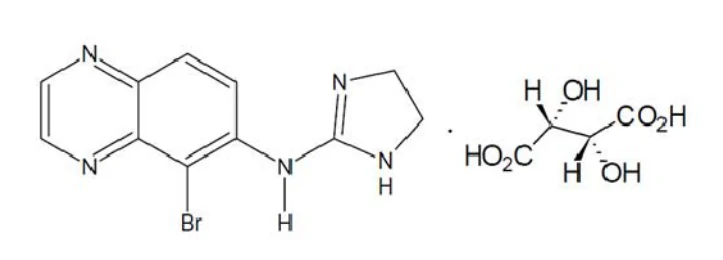
Physicochemical properties:
Brimonidine tartrate is a white to slightly yellowish crystalline substance that is freely soluble in water and insoluble in almost all organic solvents.
CLINICAL TRIALS
Study demographics and trial design
The efficacy of ONRELTEA (brimonidine) Gel, 0.33% in the treatment of moderate to severe facial erythema of rosacea has been demonstrated in two randomized, vehicle controlled clinical trials, which were identical in design. The studies were conducted in 553 subjects aged 18 years and older who were treated once daily for 4 weeks with either ONRELTEA or vehicle. Of these, 539 were included in the efficacy analysis at Day 29.
Study results
The results from both clinical studies demonstrated that ONRELTEA was significantly more effective (p<0.001) in the reduction of facial erythema of rosacea than vehicle gel when applied once daily for 29 days. With respect to the primary endpoint of both pivotal studies (2-grade composite Success defined as 2-grade improvement on both the Clinician Erythema Assessment
(CEA) and Patient Self Assessment (PSA) at hours 3, 6, 9, and 12 on Day 29) success rates were significantly higher (17.6% to 31.5%; p-val <0.001) for subjects on once-daily ONRELTEA treatment compared to those on vehicle treatment (8.6% to 10.9%; see Table 2). In addition, ONRELTEA demonstrated statistical superiority (p<0.001) over vehicle gel with respect to rapid initial onset of a clinically meaningful effect (1-Grade Composite Success for CEA and PSA) after the first application at 30 minutes on Day 1, and to achievement of a clinically meaningful effect (1-Grade Composite Success for CEA and PSA) at hours 3, 6, 9, and 12 on Day 29 (see Table 3).
Table 2: Summary of 2-grade Composite Success on Day 29
| Success | Study 1 | Study 2 | ||
ONRELTEA (N=127) n/N (%) | Vehicle Gel (N=128) n/N (%) | ONRELTEA (N=142) n/N (%) | Vehicle Gel (N=142) n/N (%) | |
| Hour 3 | 40/127 (31.5%) | 14/128 (10.9%) | 36/142 (25.4%) | 13/142 (9.2%) |
| Hour 6 | 39/127 (30.7%) | 12/128 (9.4%) | 36/142 (25.4%) | 13/142 (9.2%) |
| Hour 9 | 33/127 (26.0%) | 13/128 (10.2%) | 25/142 (17.6%) | 15/142 (10.6%) |
| Hour 12 | 29/127 (22.8%) | 11/128 (8.6%) | 30/142 (21.1%) | 14/142 (9.9%) |
| Day 29 p-value | <0.001 | - | <0.001 | - |
| Day 29 odds ratio (95% CI) | 3.75 (2.10, 6.70) | - | 2.95 (1.69, 5.15) | - |
2-grade Composite Success: 2-grade improvement on CEA and 2-grade improvement on PSA.
Table 3: Summary of 1-grade Composite Success on Day 29
| Success | Study 1 | Study 2 | ||
ONRELTEA (N=127) n/N (%) | Vehicle Gel (N=128) n/N (%) | ONRELTEA (N=142) n/N (%) | Vehicle Gel (N=142) n/N (%) | |
| Hour 3 | 90/127 (70.9%) | 42/128 (32.8%) | 101/142 (71.1%) | 57/142 (40.1%) |
| Hour 6 | 88/127 (69.3%) | 41/128 (32.0%) | 92/142 (64.8%) | 61/142 (43.0%) |
| Hour 9 | 81/128 (63.3%) | 38/128 (29.7%) | 95/142 (66.9%) | 56/141 (39.7%) |
| Hour 12 | 72/127 (56.7%) | 39/128 (30.5%) | 76/142 (53.5%) | 57/142 (40.1%) |
| Day 29 p-value | <0.001 | - | <0.001 | - |
1-grade Composite Success: 1-grade improvement on CEA and 1-grade improvement on PSA.
No clinically meaningful trends with respect to tachyphylaxis or rebound effects (worsening of baseline erythema after cessation of treatment) were observed with use of ONRELTEA for 29 days. In addition, subjects using ONRELTEA concomitantly with other medications for the treatment of rosacea did not experience an increase of treatment-emergent adverse events beyond that anticipated for each drug individually.
DETAILED PHARMACOLOGY
Pharmacodynamics
Brimonidine is a potent and highly selective alpha-2 adrenoreceptor agonist that is approximately 1000-fold more selective for the alpha-2 adrenoreceptor than for the alpha-1 adrenoreceptor. Compared with clonidine and apraclonidine, brimonidine’s alpha-2 adrenoreceptor selectivity is up to 12- and 32-fold greater, respectively (Burke and Schwartz 1996; Adkins and Balfour 1998).
Vasoconstriction and mechanism of action
Alpha2-adrenoceptors are predominantly coupled to the inhibitory heterotrimeric GTP-binding protein (G-protein) inhibiting the activity of adenylyl cyclase and the opening of voltage-gated Ca2+ channels and activating K+ channels (Guimaräes and Moura 2001; Goodman and Gillman, 2001). The alpha-2 adrenoceptors may also be coupled to other intracellular pathways involving Na+/H+ exchange and the activation of phospholipase A2, C and D (Guimaräes and Moura 2001; Goodman and Gillman 2001). In neurons, alpha-2 adrenoceptors inhibit N-, P- and Q-type voltage-gated Ca2+ channels (Guimaräes and Moura 2001; Goodman and Gillman 2001). Finally, alpha-2A and alpha-2B but not alpha-2C adrenoceptors are down-regulated following exposure to agonists apparently due to an increase in the rate of receptor disappearance (Guimaräes and Moura 2001).
Alpha-1 adrenoceptors are present on most arteries and veins whereas alpha-2 adrenoceptor localization is more limited to small arteries and veins at the prejunctional sympathetic innervation level and at the postjunctional vessel level (Guimaräes and Moura 2001). In subcutaneous tissue, vasoconstriction of small, distal resistance arteries depends mainly on postjunctional (postsynaptic) smooth muscle alpha-2 adrenergic receptor stimulation (Chotani et al 2000; Nielsen et al 1989). This is in agreement with alpha-2 adrenergic receptor playing a major role in the regulation of cutaneous vascular tone (Flavahan et al 2000) and especially for alpha-2A adrenoceptors, which also appear to be involved in the vasoconstrictor effect of alpha-2 adrenoceptor stimulants – at least in part (MacMillan et al. 1996). This supports the pharmacological effect of brimonidine tartrate in the local treatment of erythema by a local vasoconstriction effect.
The subcutaneous vasoconstrictive effect of alpha-2 adrenergic receptor stimulation is considered to be the basis of the clinical efficacy of brimonidine for once daily cutaneous treatment of facial erythema of rosacea adult patients.
Pharmacodynamic evaluation
The primary pharmacology studies reported in the literature strongly support that brimonidine is a potent alpha-2 adrenoceptor agonist, most specifically for alpha-2A subtype, with a mechanism of action similar to the other alpha-2 agonists. Brimonidine showed a markedly greater affinity
for α2 adrenoceptors than apraclonidine and clonidine, the reference alpha-2 adrenoceptor agonists.
Pharmacokinetics
No specific pharmacokinetic study after cutaneous application of brimonidine gel was performed in animal species. Only toxicokinetic profiles in repeat-dose dermal toxicity studies are available in rats and minipigs.
Toxicokinetic (TK) measurements in the 13-week, 57-week and 2-year dermal toxicity studies in rats demonstrated high exposure multiples at the NOAEL when compared to the exposure achieved in clinical maximized conditions (Study RD.06.SRE.18143). After dermal administration of brimonidine gel to rats or minipigs, lower systemic exposures were observed in minipigs, possibly related to differences in skin penetration or metabolism.
Brimonidine was extensively metabolized primarily in the liver by an alpha-C-oxidation to quinoxalinone and quinoxalin-2,3-dione derivatives, and cleavage of the imidazoline ring to the aryl guanidine. Metabolic profiles of brimonidine were similar in humans and in all species used in toxicology investigations, except in dogs for which the major metabolites were determined to be the 4’,5’-dehydrobrimonidine (IIc) and the 5-bromo-6-guanidinoquinoxaline (VI) metabolites.
A maximal use systemic relative bioavailability study (Study RD.06.SPR.18143) was conducted in subjects with rosacea to determine the extent of systemic absorption of brimonidine tartrate in comparison to brimonidine tartrate 0.2% ophthalmic solution. On Day 1, all subjects were to receive brimonidine tartrate 0.2% ophthalmic solution (TID dose regimen, with 8-hour dosing interval). After a 2-day washout period, subjects were distributed among 4 treatment groups (randomized on Day 1) to receive Brimonidine Tartrate 0.07% Gel twice daily (BID), 0.18% Gel QD or BID, or 0.5% Gel QD during Days 4 to 32. Of note Brimonidine Tartrate Gel 0.5 % (equivalent to brimonidine 0.33% w/w) was the to-be-marketed formulation. Brimonidine plasma concentrations were determined by using a validated LC-MS/MS method with a lower limit of quantification (LOQ) of 10 pg/mL.
The PK parameters for brimonidine were calculated using standard non-compartmental methods In addition , the Cmax and AUC0-24h data were analyzed statistically using log-transformed data in order to compare the route of administration (Ocular versus topical routes) and to assess the treatment groups and the treatment duration effects.
In Study RD.06.SPR.18143, ophthalmic instillation of brimonidine tartrate 0.2% ophthalmic solution resulted in quantifiable exposure (≥10 pg/mL) in all 96 subjects who received all 3 doses. The mean Cmax (±SD) was 54±28 pg/mL and the mean AUC0-24h (±SD) was 568±277 pg.hr/mL. Of note, the individual PK profiles displayed demonstrate that the dose regimen used in the current study (TID) does not impact on the Cmax values as there is no accumulation over the 24-hour ocular treatment period
Conversely, daily topical application of Brimonidine Tartrate Gel for 29 days in the study demonstrated quantifiable (≥10 pg/mL) systemic exposure in 22%, 48%, 71% and 79% of subjects receiving Brimonidine Tartrate 0.07% Gel BID, 0.18% Gel QD, 0.18% Gel BID, and 0.5% Gel QD, respectively.
For the marketed formulation, Brimonidine Tartrate 0.5% Gel (equivalent to brimonidine 0.33% w/w), the mean Cmax (±SD) at the end of the treatment period was 25±24 pg/mL and the mean AUC0-24h (±SD) was 290±242 pg.hr/mL. Of note, the highest mean exposures in the Brimonidine Tartrate 0.5% Gel group were observed after 15 days of treatment (Cmax=46 ± 62 pg/mL, AUC0-24h=417 ± 264 pg.h/mL) due to isolated fluctuations in brimonidine plasma concentrations, which were not observed at the end of the treatment period.
The systemic exposures for 1 day of topical application were comparable to systemic exposures after 29 days of topical application in all treatment groups; thus, suggesting no drug accumulation throughout the 4-week treatment duration, irrespective of the dose and the dose regimen.
Furthermore, intra-individual comparisons of systemic exposure following topical and ophthalmic application were analyzed for all tested concentration/regimen combinations. The Topical/Ocular ratios calculated over the entire 29-day topical treatment period duration were significantly lower than 1, confirming lower systemic exposures for Brimonidine Tartrate Gel relative to the ophthalmic solution.
For the marketed formulation, Brimonidine Tartrate 0.5% Gel (equivalent to brimonidine 0.33% w/w), the Cmax mean Topical/Ocular ratios were 0.3 (first topical application), 0.6 (15 days of topical application), and 0.4 (29 days of topical application). For Cmax, the Topical/Ocular ratios calculated over the entire duration of the Brimonidine Tartrate 0.5% Gel treatment period were significantly lower than 1, irrespective of the study period, with significance based on the 90% CIs and because the upper limit of the CIs was below 0.8. Of note, the highest ratio was observed in the Brimonidine Tartrate 0.5% Gel QD group (mean ratio 0.6, 90% CI [0.5-0.7]) after 15 days of application. The ratio was lower at the end of the 29-day topical treatment period (mean ratio 0.4, 90% CI: 0.3-0.4); therefore, the higher ratio of 0.6 could be attributed to high isolated plasma levels observed at Day 18. The same tendency was observed for the quantifiable AUC0-
24h data. Systemic exposure after topical application of Brimonidine Tartrate 0.5% Gel was 2- to 3-times lower (based on Cmax) or 2- to 5-times lower (based on AUC0-24h) in comparison to a single day of TID ocular instillation of brimonidine tartrate 0.2% ophthalmic solution.
The results of Study 18143 demonstrated that the systemic exposures after topical treatment for all tested concentrations and regimens were significantly lower (based on the 90% CIs) compared to the systemic exposure for the ophthalmic route. Systemic exposure with brimonidine tartrate was low after topical application and was not affected by the number of product applications.
TOXICOLOGY
Non-clinical data revealed no special hazard for humans based on conventional studies of safety pharmacology, repeated dose toxicity, genotoxicity, carcinogenic potential, toxicity to reproduction and development.
Repeat-dose toxicity
In hairless mice, the application of 200 µL/mouse of brimonidine tartrate gel increased mortality (Study RDS.03.SRE.12627). Brimonidine tartrate gel applied at 100 µL/animal appeared well tolerated in hairless mice in concentrations up to 2%.
In rats, following the application of 0.18%, 1% and 2% gel at 0.6 and 3 mL/kg, sporadic clinical signs such as decreased activity were observed. Abdominal distension was seen in the 13-week rat studies (Studies MB 07-15233.03 and RDS.03.SRE.12648) in females receiving 1% brimonidine and in male and females receiving 2% brimonidine and a higher incidence was seen in the 57-week rat study (RDS.03.SRE.12626) in males receiving 2% and in females receiving ≥0.18%. Females showed a higher incidence than males. The main effect in rats after 13 weeks of application was a body weight gain reduction in males at all dose levels (-17% at 0.18%, -33% at 1%, and 44% at 2%); a similar although not statistically significant effect was seen in females ( 12% at 1% and 8% at 2%). In females, food consumption was reduced at 1% and 2% concentrations. Body weight gains were similarly decreased in the 57-week study in male rats (-24% at 1% and 32% at 2%) and in female rats at all dose levels (-19% at 0.18%, -14% at 1%, and -15% at 2%) with associated decreased food consumption in all treated groups. In the 57-week study, decreased survival was observed in females treated with brimonidine tartrate 2% gel (-26% compared to the vehicle control group). In the 13-week study, some minimal changes in hematology and clinical chemistry were not considered adverse, as the changes were not associated with histopathological findings and furthermore were not observed in the 57-week study. No histopathology changes were observed in the rat.
In minipigs, no meaningful local or systemic effects were reported after 9 months of treatment at up to 1% brimonidine tartrate gel given at 2 mL/kg (Study RDS.03.SRE.12694).
Overall, brimonidine tartrate gel appeared well tolerated topically at concentrations of up to 2% (100 µL/animal) in mice, 1% in female rats (3 mL/kg) and minipigs (2 mL/kg), and 0.18% (0.6 mL/animal) in male rats. When given topically at these maximum tolerable dose volumes and concentrations, no target organs were identified at histopathology.
In chronic/carcinogenicity studies in rodents (Angelov et al. 1996a), brimonidine tartrate was given orally at 0.1, 0.5, and 2.5 mg/kg/day in mice and at 0.05, 0.25 and 1 mg/kg/day in rats mixed in the diet. After 52 and 21 months in mice or 24 months in rats, hypertrophy of the tunica muscularis and hyperplasia of the epithelial mucosa of the small and large intestine was seen in mice at 2.5 mg/kg/day and in rats at 0.25 and 1 mg/kg/day. Intestinal findings were considered as exaggerated pharmacological effects and generally reverted after treatment removal. Following 1 year of oral administration in monkeys at 0.1, 0.5, 2.5 mg/kg/day, sinus bradycardia, sinus
arrhythmias and hypotensive effects were noted at 2.5 mg/kg/day. They were considered as exaggerated pharmacological effects. Overall, brimonidine appeared well tolerated up to oral dose levels around 1 mg/kg/day in rodents and 2.5 mg/kg/day in monkeys.
Genotoxicity
Brimonidine was reported to be not genotoxic in the following test systems: a bacterial mutation assay (Ames test), in vitro and in vivo cytogenetic assays and a dominant lethal mutation assay (Snyder and Green 2001).
Carcinogenicity
A 1-year photo(co)carcinogenicity study was performed in hairless mice with Brimonidine Tartrate Gel (Study RDS.03.SRE.12629). Exposure to UV-radiation did not result in enhancement of photocarcinogenesis at concentration of up to 2% Brimonidine Tartrate Gel.
A 2-year dermal carcinogenic study was performed in rats with a Brimonidine Tartrate Gel formulation (Study RDS.03.SRE.12667). There was no indication of carcinogenic potential at concentrations up to 0.18% in males and up to 2%/0.72% in females (dose reduced after 343 days of treatment), corresponding to AUC0-24h on Day 457 of 215 ng.h/mL and 1070 ng.h/mL in males and females, respectively.
In a 21-month dietary carcinogenicity study in mice, no carcinogenic effects were observed up to the dose level of 2.5 mg brimonidine /kg/day. In a 24-month dietary carcinogenicity study in rats, no carcinogenic effects were observed up to the dose level of 1.0 mg/kg/day (Angelov et al. 1996a).
Reproductive and developmental toxicity
In studies conducted following oral administration of brimonidine tartrate, no treatment-related effects were observed on male and female fertility up to 1 mg/kg/day in rats, no teratogenic effect was reported up to 2.5 mg/kg/day in rats and 5 mg/kg/day in rabbits and no pre- and post-natal development toxicity was found at doses of up to 1 mg/kg/day in rats (Angelov et al. 1996b).
Local tolerance studies
A primary skin irritation and phototoxicity study in hairless female mice, an eye irritation study in rabbits, and a skin sensitization study in guinea pigs did not show significant treatment-related adverse reactions. In addition, no skin irritation was seen with topical application in rats after 57 weeks of dosing with brimonidine gel concentrations of up to 2%, after 2 years of dosing in rats with concentrations of 0.6% in males and 0.75% in females, and after 9 months of dosing in minipigs with concentrations of up to 1%.
REFERENCES
- 1.
Angelov OV, Wiese AG, Tang-Liu DD, Acheampong AA, Ismail IM, Brar BS.
Preclinical safety profile of brimonidine. Eur J Ophthalmol. 1996; 6:21-5
- 2. Angelov O, Wiese A, Ismael M, et al. Reproductive and development safety studies with brimonidine (AlphaganTM) [abstract]. Invest Ophthalmol Vis Sci. 1996; 37(3) Suppl 1:101.
- 3. Chotani MA, Flavahan S, Mitra S, Daunt D, Flavahan NA. Silent α2c-adrenergic receptors enable cold-induced vasoconstriction in cutaneous arteries. Am J Physiol Heart Circ Physiol. 2000; 278:H1075-83.
- 4.
Flavahan NA, Flavahan S, Liu Q, Wu S, Tidmore W, Wiener CM, Spence RJ, Wigley
FM. Increased α2-adrenergic constriction of isolated arterioles in diffuse scleroderma. Arthritis Rheum. 2000;43: 1886-90.
- 5.
Goodman & Gilman’s. The pharmacological basis of therapeutics. 2001. 10th Eds.
MacGraw-Hill Eds. p 135-143
- 6.
Guimaräes S, Moura D. Vascular adrenoceptors: An update. Pharmacol. Rev. 2001; 53:
319-356
- 7. MacMillan AB, Hein L, Smith MS, Piascik MT, Limbird LE. Central hypotensive effects of the α2a–Adrenergic receptor subtype. Science. 1996; 273:801-803
- 8.
Nielsen H, Thom SMcG, Hughes AD, Martin GN, Mulvany MJ, Sever PS. Postjunctional
α2-adrenoceptors mediate vasoconstriction in human subcutaneous resistance vessels. Br. J. Pharmacol. 1989. 97:829-834
- 9.
Snyder RD, Green JW. A review of the genotoxicity of marketed pharmaceuticals. 2001.
Mut. Res. 488:151-169