


Product Monograph - Bexsero
Recent Major Label Changes
| Section | Date |
|---|---|
| 7 Warnings and Precautions, Immune | 2025-12 |
Table of Contents
Certain sections or subsections that are not applicable at the time of the preparation of the most recent authorized product monograph are not listed.
Recent Major Label Changes ................................................................................................... 2
Table of Contents ................................................................................................................... 2
Part 1: Healthcare Professional Information ........................................................................... 4
- 1.
Indications .................................................................................................................. 4
1.1. Pediatrics .............................................................................................................. 4
1.2. Geriatrics .............................................................................................................. 4
- 2. Contraindications ........................................................................................................ 4
- 4.
Dosage and Administration ......................................................................................... 5
4.2. Recommended Dose and Dosage Adjustment ..................................................... 5
4.4. Administration ...................................................................................................... 5
- 5. Overdose..................................................................................................................... 6
- 6. Dosage Forms, Strengths, Composition, and Packaging ............................................... 6
- 7.
Warnings and Precautions ........................................................................................... 7
General ............................................................................................................................. 7
Driving and Operating Machinery .................................................................................... 8
Hematologic ..................................................................................................................... 8
Immune ............................................................................................................................ 8
Reproductive Health ........................................................................................................ 9
7.1. Special Populations ............................................................................................... 9
7.1.1. Pregnancy ......................................................................................................... 9
7.1.2. Breastfeeding ................................................................................................... 9
7.1.3. Pediatrics .......................................................................................................... 9
7.1.4. Geriatrics .......................................................................................................... 9
- 8.
Adverse Reactions ....................................................................................................... 9
8.1. Adverse Reaction Overview .................................................................................. 9
8.2. Clinical Trial Adverse Reactions .......................................................................... 10
8.2.1. Clinical Trial Adverse Reactions – Pediatrics ................................................... 26
8.3. Less Common Clinical Trial Adverse Reactions ................................................... 26
8.3.1. Less Common Clinical Trial Adverse Reactions – Pediatrics ............................ 27
8.5 Post-Market Adverse Reactions ......................................................................... 27
- 9.
Drug Interactions ...................................................................................................... 27
9.4. Drug-Drug Interactions ....................................................................................... 27
9.5. Drug-Food Interactions ....................................................................................... 28
9.6. Drug-Herb Interactions ....................................................................................... 28
9.7. Drug-Laboratory Test Interactions ...................................................................... 28
- 10.
Clinical Pharmacology ............................................................................................... 28
10.1. Mechanism of Action ...................................................................................... 28
10.2. Pharmacodynamics ........................................................................................ 29
- 11. Storage, Stability, and Disposal ................................................................................. 29
- 12. Special Handling Instructions .................................................................................... 30
Part 2: Scientific Information ................................................................................................ 31
- 13. Pharmaceutical Information ...................................................................................... 31
- 14.
Clinical Trials ............................................................................................................. 32
14.1. Clinical Trials by Indication ............................................................................. 32
14.3. Immunogenicity .............................................................................................. 36
- 16. Non-Clinical Toxicology ............................................................................................. 50
Patient Medication Information ........................................................................................... 51
Part 1: Healthcare Professional Information
1. Indications
BEXSERO (Multicomponent Meningococcal B Vaccine (recombinant, adsorbed)) is indicated for active immunization of individuals from 2 months through 25 years old against invasive disease caused by N. meningitidis serogroup B strains.
As the expression of antigens included in the vaccine is epidemiologically variable in circulating group B strains, meningococci that express them at sufficient levels are predicted to be susceptible to killing by vaccine-elicited antibodies (see 10. Clinical Pharmacology).
1.1. Pediatrics
Pediatrics (<2 months of age): No data are available to Health Canada.
1.2. Geriatrics
Geriatrics (> 65 years of age): No data are available to Health Canada.
2. Contraindications
BEXSERO should not be administered to individuals who are hypersensitive to this vaccine or to any ingredient in the formulation or components of the container closure.
For a complete listing, see 6. Dosage Forms, Strengths, Composition, and Packaging.
4. Dosage and Administration
4.2. Recommended Dose and Dosage Adjustment
| Age at First Dose | Primary Doses | Intervals between Primary Doses | Booster |
|---|---|---|---|
Infants, 2 months to 5 months | 3+1 schedule: | ||
Three doses, each of 0.5 mL | Not less than 1 month | 1 booster in 2nd year of life with an interval of at least 6 months between the primary doses and booster.* | |
| 2+1 schedule: | |||
Two doses, each of 0.5 mL | Not less than 2 months | 1 booster in 2nd year of life with an interval of at least 6 months between the primary doses and booster.* | |
Infants, 6 months to 11 months | Two doses, each of 0.5 mL | Not less than 2 months | 1 booster in 2nd year of life with an interval of at least 2 months between the primary doses and booster.* |
Children, 12 months to 23 months | Two doses, each of 0.5 mL | Not less than 2 months | 1 booster given at an interval of 12 to 23 months between the primary series and booster.* |
Children, Adolescents and Adults, 2 through 25 years | Two doses, each of 0.5 mL | Not less than 1 month | 1 booster considered in individuals at continued risk of exposure to meningococcal disease, based on guideline recommendations. |
*The need for, and timing of further doses has not yet been determined (see 14. Clinical Trials).
Sufficient data are not available on the safety and effectiveness of using BEXSERO and other meningococcal group B vaccines interchangeably to complete the vaccination series. Therefore, it is recommended that subjects who receive a first dose of BEXSERO complete the vaccination course with BEXSERO.
4.4. Administration
BEXSERO should be given by deep intramuscular injection, preferably in the anterolateral aspect of the thigh in infants or in the deltoid muscle region of the upper arm in older individuals.
Separate injection sites must be used if more than one vaccine is administered at the same time. The vaccine must not be injected intravenously, subcutaneously or intradermally and must not be mixed with other vaccines in the same syringe.
BEXSERO must not be mixed with other medicinal products.
Pre-filled syringe Instructions
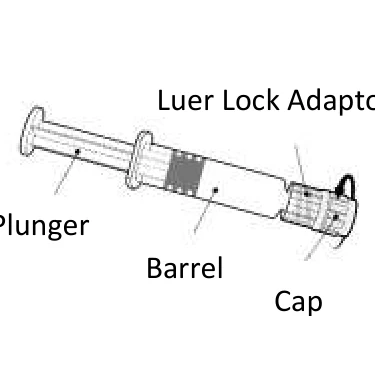
Hold the syringe by the barrel, not by the plunger.
Unscrew the syringe cap by twisting it anticlockwise.
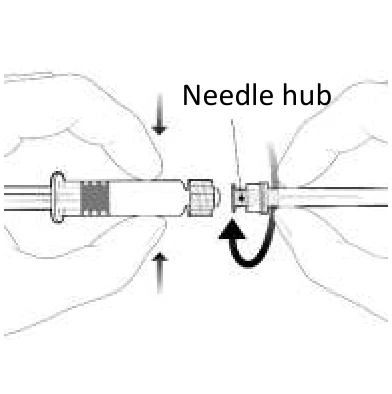
To attach the needle, connect the hub to the Luer Lock Adaptor and rotate a quarter turn clockwise until you feel it lock.
Do not pull the syringe plunger out of the barrel. If it happens, do not administer the vaccine.
5. Overdose
There is no data regarding overdose. In the event of overdose, monitoring of vital functions and possible symptomatic treatment is recommended.
For the most recent information in the management of a suspected drug overdose, contact your regional poison control centre or Health Canada’s toll-free number, 1-844 POISON-X (1-844-764-7669).
- 6. Dosage Forms, Strengths, Composition, and Packaging
Table 1 Dosage Form, Strength, and Composition
| Route of Administration | Dosage Form / Strength/Composition | Non-Medicinal Ingredients |
| Intramuscular injection | Suspension for injection. Each 0.5 mL dose contains: Recombinant Neisseria meningitidis serogroup B NHBA fusion protein, 50 mcg 1,2,3. Recombinant Neisseria meningitidis serogroup B NadA protein, 50 mcg 1,2,3. Recombinant Neisseria meningitidis serogroup B | Aluminium hydroxide, histidine, sodium chloride, sucrose, water for injection. Residue*: kanamycin. |
Plunger
Barrel
Cap
Luer Lock Adaptor
Needle hub
*From the manufacturing process.
Description
To help ensure the traceability of vaccines for patient immunization record-keeping as well as safety monitoring, health professionals should record the time and date of administration, quantity of administered dose (if applicable), anatomical site and route of administration, brand name and generic name of the vaccine, the product lot number and expiry date.
BEXSERO is supplied as a 0.5 mL suspension in a pre-filled syringe (Type I glass).
The tip cap of the syringe may contain natural rubber latex (see 7. Warnings and Precautions).
Available in packs of 1 or 10 syringes, supplied with or without needles.
7. Warnings and Precautions
General
As with any vaccine, vaccination with BEXSERO may not protect all vaccine recipients.
BEXSERO is not expected to provide protection against all circulating meningococcal serogroup B strains.
The vaccine antigens present in BEXSERO are also expressed by meningococci belonging to serogroups other than serogroup B. However, protection against invasive meningococcal disease (IMD) caused by other serogroups has not been studied. Therefore, protection against IMD caused by other serogroups should not be assumed.
Do not inject intravascularly, subcutaneously or intradermally.
As with many other vaccines, the physician should be aware that a temperature elevation may occur following vaccination of infants and children (less than 2 years of age). Prophylactic administration of
| Route of Administration | Dosage Form / Strength/Composition | Non-Medicinal Ingredients | |
fHbp fusion protein, 50 mcg 1,2,3. Outer membrane vesicles (OMV) from Neisseria meningitidis serogroup B strain NZ98/254, 25 mcg measured as amount of total protein containing the PorA P1.4 2. 1 Produced in E. coli by recombinant DNA technology. 2Adsorbed on aluminium hydroxide (0.5 mg aluminium). 3NHBA (Neisserial Heparin Binding Antigen), NadA (Neisseria adhesin A), fHbp (factor H binding protein). | |||
acetaminophen at the time of, and closely after vaccination, can reduce the incidence and intensity of post-vaccination febrile reactions in infants and children (less than 2 years of age).
Administration of BEXSERO should be postponed in individuals suffering from an acute severe febrile illness. However, the presence of a minor infection, such as a cold, should not be a reason to defer vaccination.
As with all injectable vaccines, appropriate medical treatment and supervision should always be readily available in case of an anaphylactic event following the administration of the vaccine.
Anxiety‐related reactions, including vasovagal reactions (syncope), hyperventilation or stress‐related reactions may occur in association with vaccination as a psychogenic response to the needle injection (see 8. Adverse Reactions). It is important that procedures are in place to avoid injury from fainting.
As with all injectable pediatric vaccines, the potential risk of apnoea and the need for respiratory monitoring for 48-72 hours should be considered when administering the primary immunization series to very premature infants (born ≤ 28 weeks of gestation) and particularly for those with a previous history of respiratory immaturity. As the benefit of vaccination is high in this group of infants, vaccination should not be withheld or delayed.
The tip cap of the syringe may contain natural rubber latex. Although the risk for developing allergic reactions is very small, health professional should consider the benefit-risk prior to administering this vaccine to individuals with known history of hypersensitivity to latex.
Kanamycin is used in early manufacturing process and is removed during the later stages of manufacture. If present, kanamycin levels in the final vaccine are less than 0.01 micrograms per dose. The safe use of BEXSERO in kanamycin-sensitive individuals has not been established.
There are limited data on the use of BEXSERO in patients with chronic medical conditions. Limited safety and immunogenicity data are available in individuals above 25 years of age. The safety and efficacy of BEXSERO in individuals above 50 years have not been established. See 8. Adverse Reactions and 14. Clinical Trials.
Driving and Operating Machinery
BEXSERO has no or negligible influence on the ability to drive and use machines. However, some of the effects, mentioned under 8. Adverse Reactions, may temporarily affect the ability to drive or use machines.
Hematologic
This vaccine should not be given to individuals with thrombocytopenia, hemophilia or any coagulation disorder that would contraindicate intramuscular injection, unless the potential benefit clearly outweighs the risk of administration.
Immune
Individuals with impaired immune responsiveness, whether due to the use of immuno-suppressive therapy, a genetic disorder, or other causes, may have reduced antibody response to active immunisation. Immunogenicity data are available in individuals with complement deficiencies, and in individuals with splenic dysfunction or asplenia (see 14. Clinical Trials).
Individuals with certain complement deficiencies and individuals receiving treatment that inhibits terminal complement activation (for example, eculizumab) remain at increased risk of invasive disease caused by Neisseria meningitidis group B even if they develop antibodies following vaccination with BEXSERO.
Reproductive Health
Fertility
There are no data on fertility in humans. No effects on fertility were observed in female rabbits receiving BEXSERO pre-mating and during pregnancy.
7.1. Special Populations
7.1.1. Pregnancy
Insufficient clinical data on exposed pregnancies are available. The potential risk for pregnant humans is unknown. Nevertheless, vaccination should not be withheld when there is a clear risk of exposure to meningococcal infection.
Preclinical data
The reproductive toxicology data in rabbits do not indicate direct or indirect harmful effects with respect to pregnancy, embryo/fetal development or parturition (see 16. Non-Clinical Toxicology).
7.1.2. Breastfeeding
It is unknown if BEXSERO is excreted in human milk. The benefit-risk ratio must be examined before making the decision to immunise during breastfeeding.
Preclinical data
In a rabbit study, no effects on postnatal development were observed in nursing offspring of vaccinated maternal animals through day 29 of lactation.
7.1.3. Pediatrics
Pediatrics (<2 months of age): No data are available to Health Canada.
7.1.4. Geriatrics
Geriatrics (> 65 years of age): No data are available to Health Canada.
8. Adverse Reactions
8.1. Adverse Reaction Overview
In clinical trials, the most frequent local and systemic adverse reactions after vaccination with BEXSERO were tenderness, erythema, induration, fever, irritability, unusual crying, sleepiness in infants and children (less than 2 years of age), and pain, erythema, induration, malaise, headache, myalgia in adolescents and adults. Higher rates of antipyretic use were also reported for infants vaccinated with BEXSERO and routine vaccines. When BEXSERO was given alone, the frequency of fever was similar to that associated with routine infant vaccines administered during clinical trials. Most solicited reactions were mild or moderate in severity and transient. No increase in the incidence or severity of the adverse reactions was seen with subsequent doses of the vaccination series.
8.2. Clinical Trial Adverse Reactions
Clinical trials are conducted under very specific conditions. Therefore, the frequencies of adverse reaction observed in the clinical trials may not reflect frequencies observed in clinical practice and should not be compared to frequencies reported in clinical trials of another drug.
The safety profile of BEXSERO is characterized by the safety population from 22 parent and extension studies which included a total of 10,913 subjects (from 2 months of age) who received at least one dose of BEXSERO. Of these subjects, 6,837 were infants (less than 2 years of age; V72P6, P9, P12, P12E1, P13, P13E1, P16, V72_28) and 1,503 were children (2 to 10 years of age; V72P6E1, P9E1, P12E1, P12E2, P13E2, V72_28, V72_28E1), 1,845 were adolescents (11 to 17 years of age; V72P10, V72_41) and 1,180 were adults (above 17 years of age; V72P4, V72P5, V72_29, V72_37, V72_59, V72_74, V102_03), respectively.
Data on solicited local (tenderness/pain, erythema, swelling and induration) and systemic adverse reactions (change in eating habits, sleepiness, irritability, unusual crying, vomiting, diarrhea, rash, fever ≥38°C in infants and children (less than 2 years of age); myalgia, arthralgia, nausea, malaise, headache and fever in adolescents and adults) were collected in clinical studies on the day of vaccination and for the following 6 days after vaccination (days 1-7 after vaccination). Most reactions were of a mild to moderate nature and resolved within 48 hours after vaccination with BEXSERO.
Infants and Children (less than 2 years of age)
In clinical studies in infants, when BEXSERO was given alone, the frequency of fever was comparable to that associated with concomitant use of routine infant vaccines [Pneumococcal 7-valent Conjugate Vaccine, Diphtheria CRM197 Protein (PREVNAR*) and diphtheria, tetanus, acellular pertussis, hepatitis B recombinant (adsorbed), inactivated poliomyelitis and adsorbed conjugated Haemophilus influenzae type b vaccine (INFANRIX HEXA)]. Fever occurred more frequently when BEXSERO was co-administered with routine infant vaccines. Higher rates of antipyretic use were also reported for infants vaccinated with BEXSERO and routine vaccines. When fever occurred, it generally followed a predictable pattern, with the majority resolving within 48 hours after vaccination.
The characterization of the safety profile of BEXSERO in the infant and children (less than 2 years of age) populations was based primarily on data from 3 studies: V72P12 and V72P13 in infants 2 months of age, and V72P13E1 in children 12 to 13 months of age. In studies V72P12 and V72P13, the main schedule investigated was a three-dose primary series of BEXSERO administered at 2, 4 and 6 months of age. A three-dose accelerated schedule given at 2, 3 and 4 months of age was also evaluated in V72P12. BEXSERO was routinely administered with infant vaccines, INFANRIX HEXA and PREVNAR*, except for one group of subjects in study V72P12 who received BEXSERO alone at 2, 4 and 6 months of age and the routine vaccines at 3, 5 and 7 months of age. In study V72P13E1, which was an extension of V72P13, subjects who previously received BEXSERO at the 2, 4, 6-month schedule received a fourth dose of BEXSERO at 12 months of age; control subjects who received only the routine infant vaccines in V72P13 (vaccine naive) were vaccinated with a two-dose catch-up schedule of BEXSERO at either 12 and 14 or 13 and 15 months of age.
Solicited Adverse Reactions
3+1 Infant Schedule
Data on local and systemic reactions after vaccination of infants with BEXSERO at 2, 4 and 6 months of age are shown in Table 3 and Table 4. Most of the reactions were transient and there was no clear trend of increasing frequency with subsequent doses. The reactogenicity profile was comparable for BEXSERO administered at the 2, 3, 4-month schedule.
Fever (≥ 38°C) was more frequently reported following vaccination with BEXSERO concomitantly with routine vaccines, compared with meningococcal C conjugate vaccine (MENJUGATE) with concomitant routine vaccines, or routine vaccinations only (Table 3). The onset of fever in the majority of BEXSERO recipients occurred within 6 hours of vaccination and the duration of the fever was transient, resolving within 48 hours after vaccination. This pattern was consistent for all three BEXSERO doses. There was a trend for subjects to have a higher probability of developing fever at a subsequent dose of BEXSERO if the subject experienced fever at the preceding dose(s).
More subjects used antipyretics after vaccination with BEXSERO and routine vaccines simultaneously than did those vaccinated with either BEXSERO or routine vaccines alone (Table 3). Even though fever rates were higher in subjects vaccinated with BEXSERO and concomitant vaccines, rates for fever in which a medical visit was sought were low and comparable to recipients of MENJUGATE with routine vaccines and routine vaccines only (Table 3).
Systemic reaction rates were comparable between the 2, 4, 6-month and 2, 3, 4-month schedules for recipients of BEXSERO with routine vaccines. For those subjects who received BEXSERO alone in the 2, 4, 6-month schedule without concomitant vaccines, fever rates were reduced (26% to 41% across the three doses) and comparable to the rates in subjects receiving only the routine infant vaccines.
Table 2 Percentage of Infants Experiencing Local Reactions on Days 1-7 Following Vaccination with BEXSERO and Routine Vaccines (INFANRIX HEXA, PREVNAR*) at 2, 4, and 6 Months of Age
Percentage of Subjects With Injection Site Reactions (Severe or >100mma)
Dose
BEXSERO Siteb
INFANRIX HEXA Sitec
Prevnar Sited
1
N=3,101
N=3,102
N=3,102
2
N=3,044
N=3,047
N=3,047
3
N=3,019
N=3,023
N=3,022
Tenderness
1
66(14)
56(11)
54(11)
2
66(14)
57(11)
55(11)
3
65(14)
58(12)
56(11)
Erythema
1
60(<1)
46(0)
41(0)
2
63(0)
57(0)
49(0)
3
64(<1)
58(0)
52(0)
Induration
1
51(0)
33(0)
25(0)
2
54(0)
47(0)
35(0)
3
55(0)
49(0)
36(0)
Swelling
1
26(<1)
16(0)
13(0)
2
27(<1)
21(0)
17(0)
3
31(<1)
23(0)
19(0)
a Severe tenderness - cried when injected limb was moved; erythema, induration and swelling - >100 mm;
b BEXSERO: combined data of BEXSERO (studies V72P12 and V72P13) administered concomitantly with routine vaccines (INFANRIX HEXA, PREVNAR*) in a 2, 4, 6-month schedule;
c INFANRIX HEXA vaccine administered in a 2, 4, 6-month schedule (studies V72P12 and V72P13);
d PREVNAR* vaccine administered in a 2, 4, 6-month schedule (studies V72P12 and V72P13).
Table 3 Percentage of Infants Experiencing Systemic Reactions on Days 1-7 Following Vaccination with BEXSERO and Routine Vaccines (INFANRIX HEXA, PREVNAR*) at 2, 4 and 6 Months of Age
Percentage of Subjects With Systemic (Severea)Reactions
Dose
BEXSERO+Routine Vaccines Groupb
MENJUGATE+Routine Vaccines Groupc
Routine Vaccines
Only Groupd
1
N=3,102
N=490
N=659
2
N=3,046-3,048
N=478-479
N=654
3
N=3,023-3,024
N=470-471
N=651
Change Eat. Habits
1
51(3)
31(1)
30(2)
2
44(3)
32(1)
25(<1)
3
43(3)
29(1)
25(2)
Sleepiness
1
72(3)
58(4)
56(2)
2
64(2)
45(1)
42(<1)
3
53(1)
35(1)
32(<1)
Vomiting
1
13(1)
11(<1)
7(<1)
2
13(<1)
11(1)
6(<1)
3
12(<1)
9(<1)
7(<1)
Diarrhea
1
24(1)
20(1)
17(1)
2
22(1)
15(<1)
17(<1)
3
18(1)
13(1)
12(<1)
Irritability
1
79(6)
55(3)
61(2)
2
79(7)
58(4)
62(3)
3
76(6)
49(3)
54(1)
Unusual Crying
1
69(5)
52(3)
41(2)
2
66(5)
50(4)
40(2)
3
56(4)
39(3)
30(2)
Rash
1
5(1)
4(<1)
3(1)
(Urticarial)
2
6(2)
4(<1)
5(1)
3
5(1)
3(0)
5(1)
Other Solicited Outcomes
Fever ≥38°Ce
1
75(<1)
46 (0)
44(<1)
(≥40°C)
2
79(1)
63(<1)
59(<1)
3
69(1)
42(0)
50(1)
Analgesic/
1
75
40
43
Antipyretic
2
81
52
52
Medication usef
3
71
36
45
Medically
1
1
1
1
Attended Feverg
2
1
1
<1
3
1
2
1 a Definition of severe: change in eating habits-missed >2 feeds; sleepiness-sleeps most of the time, hard to arouse; vomiting-little/no intake for more prolonged time; diarrhea - ≥ 6 liquid stools, no solid consistency; Irritability-unable to console; Unusual crying-unusual, high pitched, screaming, unlike the child’s normal crying, that persists for ≥3 hours;
b BEXSERO+Routine Vaccines Group: combined data (studies V72P12 and V72P13) from BEXSERO administered concomitantly with routine vaccines (INFANRIX HEXA, PREVNAR*) at a 2, 4, 6-month schedule;
c MENJUGATE+Routine Vaccines Group: data from MENJUGATE administered concomitantly with routine vaccines (INFANRIX HEXA, PREVNAR*) from study V72P13 at a 2, 4, 6-month schedule;
d Routine Vaccines Only Group: data from routine vaccines (INFANRIX HEXA, PREVNAR) administered at a 2, 4, 6-month schedule from study V72P13;
e Fever is based on actual temperature recorded with no adjustment for route of measurement.
Body temperature was measured mainly by the rectal route in study V72P13; in study V72P12 body temperature was measured by both the rectal and axillary routes (30-31% rectal, 58-61% axillary);
f Percentage of subjects who were treated with analgesic or antipyretic medication during the day 1-7 time period after study vaccination;
g Percentage of subjects who had fever for which a medical visit was sought during the day 1-7 time period after study vaccination.
In an additional study, V72P16, BEXSERO was administered with INFANRIX HEXA and PREVNAR* at 2, 3 and 4 months of age, with or without prophylactic acetaminophen. Data from this study showed that there is a statistically significant reduction in the percentage of subjects reporting fever both within 3 days and 7 days after vaccination when prophylactic acetaminophen treatment is adopted, without impacting the immune responses (see 14.3. Immunogenicity).
Data on local and systemic reactions in children less than 2 years of age receiving either a fourth dose (booster) or two catch-up doses of BEXSERO are shown in Table 4 and Table 5. Additional data for a fourth dose of BEXSERO at 12 months of age in study V72P16 (after three doses at 2, 3 and 4 months of age) and at 12, 18 or 24 months of age in study V72P12E1 (after three doses at either 2, 4 and 6 months of age or 2, 3 and 4 months of age) confirmed these results. Data for a two-dose catch-up schedule of BEXSERO at either 12 and 14 or 18 and 20 months of age in control subjects who received only the routine infant vaccines in V72P12 are also in line with these observations.
In general, the majority of the local and systemic reactions following either a fourth dose or two-dose catch-up series of BEXSERO were transient, and most were mild or moderate in severity. Reactions (except tenderness) did not become more frequent after the second catch-up dose of BEXSERO.
Table 4 Percentage of Children (less than 2 years of age) Experiencing Local Reactions on Days 1-7 Following Vaccination with a Fourth Dose of BEXSERO at 12 Months of Age or with Two Catch-Up Doses of BEXSERO at 13 and 15 or 12 and 14 Months of Age, With or Without Concomitant PRIORIX-TETRA (V72P16, V72P12E1, V72P12)
Percentage of Subjects With Injection Site Reactions (Severe or >50mma)
Boos4th Dose of BEXSERO
Two Catch-up Doses of BEXSERO
Schedule
BEXSERO
with PRIORIX-TETRA at
12 mos.
BEXSERO at 12mos.
Dose 1:
PRIORIX-TETRA
at 12 mos.
Dose 2:
BEXSERO at 13
mos.
Dose 3:
BEXSERO at 15 mos.
Dose 1:
BEXSERO with
PRIORIX-TETRA at 12 mos.
Dose 2:
BEXSERO at 14 mos.
N=765
N=789
N=281
N=117
Dose
Tenderness
1
71(14)
71(15)
20(1)b
57(10)
2
-
-
56(10)
67(18)
3
-
-
66(16)
-
Erythema
1
66(8)
68(7)
42(0)b
68(2)
2
-
-
62(1)
60(2)
3
-
-
58(3)
-
Induration
1
51(4)
54(3)
19(0)b
49(1)
2
-
-
40(<1)
46(<1)
3
-
-
42( <1)
-
Swelling
1
37(6)
36(5)
9(0)b
31(1)
2
-
-
29(1)
28(1)
3
-
-
30(3)
- a Severe tenderness-cried when injected limb was moved; erythema, induration and swelling - >50 mm; b Local reactions at the PRIORIX-TETRA injection site;
mos: months.
Table 5 Percentage of Children (less than 2 years of age) Experiencing Systemic Reactions on Days 1-7 Following Vaccination with a Fourth Dose of BEXSERO at 12 Months of Age or with Two Catch-Up Doses of BEXSERO at 13 and 15 or 12 and 14 Months of Age, With or Without Concomitant PRIORIX-TETRA (V72P16, V72P12E1, V72P12)
Percentage of Subjects With Systemic Reactions (Severea)
4th Dose of BEXSERO
Two Catch-up Doses of BEXSERO
Schedule
BEXSERO
with PRIORIX-TETRA at
12 mos.
BEXSERO
at 12 mos.
Dose 1:
PRIORIX-TETRA
at 12 mos.
Dose 2:
BEXSERO at 13 mos.
Dose 3:
BEXSERO at 15 mos.
Dose 1:
BEXSERO with PRIORIX-TETRA at 12 mos.
Dose 2:
BEXSERO at 14 mos.
N=764-765
N=789
N=274-284
N=116-117
Dose
Change in
1
41(2)
40(2)
25(1)
38(0)
Eating Habits
2
-
-
34(1)
37(3)
3
-
-
30(2)
-
Sleepiness
1
47(1)
45(1)
30(<1)
47(1)
2
-
-
39(1)
41(0)
3
-
-
39(1)
-
Vomiting
1
7(<1)
5(<1)
7(0)
2(0)
2
-
-
5(<1)
3(1)
3
-
-
3(0)
-
Diarrhea
1
25(1)
20(1)
16(1)
29(0)
2
-
-
15(0)
22(0)
3
-
-
15(0)
-
Irritability
1
73(4)
68(3)
43(1)
70(3)
2
-
-
60(2)
63(3)
3
-
-
56(3)
-
Unusual
1
43(2)
37(2)
19(1)
35(2)
Crying
2
-
-
28(1)
36(3)
3
-
-
27(1)
Rash
1
7(3)
7(2)
7(3)
8(1)
(Urticarial)
2
-
-
5(2)
3(2)
3
-
-
4(1)
Fever ≥38°C
1
47(1)
41(<1)
24(<1)
46(0)
(≥40°C)
2
-
-
37(0)
43(0)
3
-
-
35 (<1)
-
Antipyretic
1
57
51
23
57
Medication useb
2
-
-
42
50
3
-
-
39
-
Med. Attended Feverc
1
1
2
1
1
Percentage of Subjects With Systemic Reactions (Severea)
4th Dose of BEXSERO
Two Catch-up Doses of BEXSERO
Schedule
BEXSERO
with PRIORIX-TETRA at
12 mos.
BEXSERO
at 12 mos.
Dose 1:
PRIORIX-TETRA
at 12 mos.
Dose 2:
BEXSERO at 13 mos.
Dose 3:
BEXSERO at 15 mos.
Dose 1:
BEXSERO with PRIORIX-TETRA
at 12 mos.
Dose 2:
BEXSERO at 14 mos.
N=764-765
N=789
N=274-284
N=116-117
2
-
-
0
2
3
-
-
1
- a Definition of severe: change in eating habits-missed >2 feeds; sleepiness-sleeps most of the time, hard to arouse; vomiting-little/no intake for more prolonged time; diarrhea - ≥ 6 liquid stools, no solid consistency; Irritability-unable to console; Unusual crying-unusual, high pitched, screaming, unlike the child’s normal crying, that persists for ≥3 hours;
b Percentage of subjects who were treated with any antipyretic medication during the day 1-7 time period after study vaccination;
c Percentage of subjects who had fever for which a medical visit was sought during the day 1-7 time period after study vaccination;
mos: months
2+1 Infant Schedule
In an additional study, V72_28, the occurrence of solicited local and systemic reactions in infants vaccinated with the 3+1-dose schedule (Group I received 3 primary doses of BEXSERO at 2½, 3½ and 5 months, followed by a booster at 11 months of age) were similar to the 2+1-dose schedule (Group II received 2 primary doses of BEXSERO at 3½ and 5 months, followed by a booster at 11 months of age). There were no new significant safety signals in the 2+1 BEXSERO vaccination group (Group II), apart from that of the known safety profile from the 3+1 dose schedule.
Unsolicited Adverse Events
3+1 Infant Schedule
Between study day 1 and 7 months of age (1 month after the third dose), the percent of subjects experiencing unsolicited AEs in the BEXSERO with concomitant routine vaccines, MENJUGATE with concomitant routine vaccines, and routine vaccines only groups are shown in Table 6.
Overall, between study day 1 and 7 months of age, the most commonly reported AEs after any vaccination with BEXSERO were injection site reactions (most considered as possibly related to vaccination as these local reactions of induration, erythema, and swelling were solicited AEs continuing after the 7-day vaccination window) and upper respiratory tract infections (10%; mostly considered unrelated to vaccination).
Table 6 Overview of Unsolicited Adverse Events of BEXSERO Administered with Concomitant Routine Vaccines at 2, 4 and 6 Months of Age, Collected From Study Day 1 to 7 Months of Age, by Vaccine Group
Percentage of Subjects with Adverse Events
BEXSERO+Routine Vaccines Groupa
MENJUGATE +Routine Vaccines Groupb
Routine Vaccines Only Groupc
N=3,155
N=488
N=658
Any AEs
77
63
71
At least possibly related AEs
52
42
34
Serious AEs
4
3
3
a BEXSERO+Routine Vaccines Group: combined data (studies V72P6, V72P12 and V72P13) from BEXSERO administered concomitantly with routine vaccines (INFANRIX HEXA, PREVNAR*) at a 2, 4, 6-month schedule;
b MENJUGATE+Routine Vaccines Group: data from MENJUGATE administered concomitantly with routine vaccines (INFANRIX HEXA, PREVNAR*) at a 2, 4, 6-month schedule from study V72P13;
c Routine Vaccines Only Group: data from routine vaccines (INFANRIX HEXA, PREVNAR*) administered at a 2, 4, 6-month schedule from study V72P13;
AEs: Adverse Events.
* Trademark owned by Wyeth LLC
The percentage of subjects who experienced unsolicited AEs after a two-dose catch-up schedule of BEXSERO in vaccine naive children (in their second year of life) was 17% after the first dose and 15% after the second dose of the vaccine; 3% had AEs considered by the investigator to be at least possibly related to vaccination and <1% to 6% were considered serious. The most commonly reported AEs were local injection site reactions and systemic reactions that were originally solicited, but continued past day 7 after vaccination. All of the injection site reactions were at least possibly related to study vaccination. The percentage of subjects who experienced unsolicited AEs after the fourth dose of BEXSERO in the second year of life was 44% and 74% for subjects who received BEXSERO alone and those who received BEXSERO with concomitant PRIORIX-TETRA vaccine, respectively. The most commonly reported AE was injection site induration. Most of the other AEs were due to local injection site reactions and systemic reactions that were originally solicited, but continued past day 7 after the vaccination.
2+1 Infant Schedule
In an additional study, V72_28, the percentage of subjects with unsolicited adverse events in infants vaccinated with the 3+1 dose schedule (Group I received 3 primary doses of BEXSERO at 2½, 3½ and 5 months, followed by a booster at 11 months of age) were similar to the 2+1 dose schedule (Group II received 2 primary doses of BEXSERO at 3½ and 5 months, followed by a booster at 11 months of age).
Children (aged 2 years to 10 years)
The characterization of the safety profile of BEXSERO in this population is based on data from 4 studies in more than 290 subjects: V72P12E1 and V72P13E2 in children 24 months of age, V72P6E1 and V72P9E1 in children 40 to 62 months of age. In all these studies, the schedule investigated was a two-dose primary series of BEXSERO administered with an interval of 2 months between doses.
Solicited Adverse Reactions
Data on local and systemic reactions following vaccination with BEXSERO in children 2 to 10 years of age are shown in Table 7 and Table 8. Most of the solicited reactions were mild or moderate in severity and transient. The percentages of subjects with fever ranged from 10% to 28% in this age group. These rates were lower with increasing age. Few children (0-3% of subjects) experienced body temperature ≥ 40°C. Fever associated with BEXSERO vaccination occurred early after vaccination, and was transient, with the majority resolving within 2 days. Medically attended fever events occurred in no more than 3% of children.
Table 7 Percentage of Children (2 to 10 Years of Age) Experiencing Local Reactions on Days 1-7 Following Vaccination with BEXSERO (Studies V72P12E1, V72P13E2, V72P6E1, V72P9E1)
| Percentages of Subjects With Any (Severe) Reaction | |||||||||||||||||||
| 24 to 26 months of age | 40-44 months of age | 60-62 months of age | |||||||||||||||||
| Local Reaction | Study Dose | V72P12E1 (N=54) | V72P13E2 (N=112) | V72P6E1 (N=42) | V72P9E1 (N=41) | V72P9E1 (N=48) | |||||||||||||
| Pain | 1 | - | - | 93 (21) | 87 (8) | 92 (10) | |||||||||||||
| 2* | - | - | 85 (15) | 95 (24) | 91 (13) | ||||||||||||||
| Tenderness | 1 | 87 (26) | 88 (10) | - | - | - | |||||||||||||
| 2* | 81 (35) | 89 (18) | - | - | - | ||||||||||||||
| Erythema | 1 | 72 (2) | 77 (0) | 98 (0) | 92 (0) | 94 (0) | |||||||||||||
| 2* | 60 (0) | 73 (1) | 93 (0) | 97 (0) | 87 (0) | ||||||||||||||
| Induration | 1 | 50 (0) | 49 (0) | 33 (0) | 44 (0) | 40 (0) | |||||||||||||
| 2* | 42 (0) | 56 (0) | 49 (0) | 49 (0) | 44 (0) | ||||||||||||||
| Swelling | 1 | 35 (0) | 31 (0) | 48 (0) | 26 (0) | 46 (0) | |||||||||||||
| 2* | 37(0) | 39 (0) | 63 (0) | 41 (0) | 44 (0) | ||||||||||||||
* local reaction after second dose was evaluated in at least N=52 in study V72P12E1, N=108 in study V72P13E2, N=41 in study V72P6E1, N=37 in study V72P9E1 (40-44 months cohort) and N=45 in study V72P9E1 (60-62 months cohort).
Table 8 Percentage of Children (2 to 10 Years of Age) Experiencing Systemic Reactions Days 1-7 Following Vaccination with BEXSERO (Studies V72P12E1, V72P13E2, V72P6E1, V72P9E1)
| Percentages of Subjects With Any (Severe) Reaction | |||||||||||||||||||||
| 24 to 26 months of age | 40-44 months of age | 60-62 months of age | |||||||||||||||||||
| Systemic Reaction | Study Dose | V72P12E1 (N=54) | V72P13E2 (N=112) | V72P6E1 (N=42) | V72P9E1 (N=39) | V72P9E1 (N=48) | |||||||||||||||
| Change Eat. Habits | 1 | 46 (2) | 34 (0) | 38 (2) | 33 (3) | 21 (2) | |||||||||||||||
| 2* | 40 (4) | 36 (3) | 34 (0) | 35 (3) | 22 (2) | ||||||||||||||||
| Sleepiness | 1 | 33 (2) | 46 (0) | 48 (5) | 51 (8) | 40 (6) | |||||||||||||||
| 2* | 35 (0) | 46 (3) | 37 (2) | 46 (8) | 30 (0) | ||||||||||||||||
| Vomiting | 1 | 11 (2) | 8 (0) | 2 (0) | 3 (0) | 10 (0) | |||||||||||||||
| 2* | 8 (2) | 5 (0) | 0 | 11 (0) | 7 (0) | ||||||||||||||||
| Diarrhea | 1 | 37 (0) | 13 (0) | 14 (0) | 5 (0) | 4 (0) | |||||||||||||||
| 2* | 13 (4) | 12 (0) | 2 (0) | 5 (0) | 4 (0) | ||||||||||||||||
| Irritability | 1 | 52 (7) | 59 (2) | 76 (7) | 62 (0) | 44 (4) | |||||||||||||||
| 2* | 44 (4) | 58 (5) | 59 (5) | 62 (5) | 43 (2) | ||||||||||||||||
| Unusual Crying | 1 | 28 (2) | 33 (1) | - | - | - | |||||||||||||||
| 2* | 29 (4) | 27 (3) | - | - | - | ||||||||||||||||
| Headache | 1 | - | - | 10 (0) | 10 (0) | 13 (2) | |||||||||||||||
| 2* | - | - | 10 (2) | 11 (0) | 20 (0) | ||||||||||||||||
| Arthralgia | 1 | - | - | 31 (7) | 23 (3) | 31 (2) | |||||||||||||||
| 2* | - | - | 22 (7) | 19 (5) | 33(2) | ||||||||||||||||
| Rash | 1 | 4 (0) | 7 (3) | 2 (2) | 5 (0) | 6 (0) | |||||||||||||||
| 2* | 0 | 6 (0) | 5 (0) | 3 (0) | 9 (2) | ||||||||||||||||
| Fever [Body Temp. ≥38°C (≥40°C)] | 1 | 28 (0) | 21 (0) | 10 (0) | 15 (3) | 10 (0) | |||||||||||||||
| 2* | 25 (0) | 26 (1) | 12 (0) | 11 (0) | 11 (0) | ||||||||||||||||
| Medical Attended Fever | 1 | 2 (-) | 0 (-) | 0 (-) | 0 (-) | 0 (-) | |||||||||||||||
| 2* | 0 (-) | 2 (-) | 0 (-) | 3 (-) | 0 (-) | ||||||||||||||||
* systemic reaction after second dose was evaluated in at least N=52 in study V72P12E1, N=108 in study V72P13E2, N=41 in study V72P6E1, N=37 in study V72P9E1 (40-44 months cohort) and N=46 in study V72P9E1 (60-62 months cohort)
Unsolicited Adverse Events
Table 9 provides an overview of unsolicited adverse events collected up to month 62 in children 2 to 10 years of age.
Table 9 Overview of Unsolicited Adverse Events in Children (2 to 10 Years of Age) After the Two-Dose Schedule of BEXSERO
| Percentage of Subjects with Adverse Events | |||||||||||||||||
|---|---|---|---|---|---|---|---|---|---|---|---|---|---|---|---|---|---|
| 24 to 26 months of age | 40-44 months of age | 60-62 months of age | |||||||||||||||
| Study | V72P12E1 | V72P13E2 | V72P6E1 | V72P9E1 | V72P9E1 | ||||||||||||
| N=55 | N=112 | N=42 | N=41 | N=48 | |||||||||||||
| Any AEs | 75 | 86 | 43 | 61 | 38 | ||||||||||||
| Possibly related | 29 | 36 | 14 | 15 | 27 | ||||||||||||
| SAEs | 2 | 5 | 2 | 10 | 2 | ||||||||||||
Adolescents (aged 11 to 17 years)
The characterization of the safety profile of BEXSERO in the adolescent population aged 11 to 17 years was based on data from study V72P10. One, two or three doses of BEXSERO were administered to adolescents according to one of the following schedules: 0, 0-1, 0-2 or 0-1-2 months. The data supporting the safety and tolerability of the two-dose vaccination schedules for adolescents were generated from the first and second doses of the schedules investigated in this study.
Solicited Adverse Reactions
Data on local and systemic reactions are shown in Table 10. The frequency of reports for local and systemic reactions did not increase with the second dose of BEXSERO, and the majority of the reactions were transient. Additional safety data on BEXSERO in adolescents relative to the administration of one dose at month 6 from study V72P10 and for 2 doses 1 month apart in study V72_41 were in line with these observations.
Table 10 Percentage of Adolescents (aged 11-17 Years) Experiencing Local and Systemic Reactions on Days 1-7 Following Vaccination with BEXSERO
Percentage of Subjects With Any (Severea) Reaction
Study Schedule
V72P10 (Combined
Month 0, 0-1, 0-2) 11-17 years of age
Dose
BEXSERO
Placebob
1
N=1,503
N=128
2
N=1,039
N=124
Local Reactions
Erythema
1
54(<1)
40(0)
2
51(<1)
31(0)
Induration
1
40(<1)
27(0)
2
40(<1)
23(0)
Swelling
1
39(<1)
20(0)
2
38(1)
15(0)
Pain
1
91(17)
86(9)
2
85(15)
71(9)
Systemic Reactions
Malaise
1
56(7)
48(3)
2
50(7)
35(2)
Myalgia
1
45(7)
41(4)
2
40(6)
40(3)
Arthralgia
1
24(2)
19(0)
2
21(3)
16(1)
Headache
1
46(5)
37(2)
2
42(5)
33(3)
Nausea
1
19(1)
17(2)
2
16(2)
15(1)
Fever ≥38°C
(≥40°C)
1
3(0)
4(0)
2
4(0)
2(0)
Other Solicited Outcomes
Analgesic/antipyretic
1
35
20 usec
2
27
15
Stayed home due to reactiond
1
16
6
2
11
3 a Severe erythema, induration and swelling - >100 mm; severe pain and systemic reactions - unable to perform normal daily activity;
b Placebo administered in month 0-1 schedule;
c Percentage of subjects who were treated with analgesic or antipyretic medication during the day 1-7 time period after study vaccination;
d Collected as yes or no.
Unsolicited Adverse Events
Table 11 provides an overview of unsolicited adverse events collected up to study Month 3 in adolescents who received BEXSERO in either the 0-1 month or 0-2 month schedule (study V72P10). The most commonly reported possibly or probably related unsolicited AEs were local injection site reactions (pain, induration, swelling) that continued past the day 7 observation period.
Table 11 Overview of Unsolicited Adverse Events Collected up to Month 3 in Adolescents (11 to 17 Years of Age), after the Two-Dose Schedule of BEXSERO
Percentage of Subjects with Adverse Events
0-1 Month Schedulea
0-2 Month Scheduleb
11 to 17 yoa
11 to 17 yoa
N=748
N=380
Any AEs
43
46
Possibly or probably related AEs
17
16
Serious AEs
1
1
a 0-1 schedule: BEXSERO was administered at months 0 and 1 in the 11 to 17 years of age (study V72P10);
b 0-2 schedule: BEXSERO was administered at months 0 and 2 in the 11 to 17 years of age (study V72P10);
yoa: years of age;
AEs: Adverse Events.
Adults (aged 18 through 25 years)
The characterization of the safety profile of BEXSERO in the adult population (above 17 years of age) was based on data from 7 studies, V72_29, V72_37, V72_59, V72_74, V72P4, V72P5, and V102_03. Most of the subjects enrolled in the studies were between 18 and 24 years of age. In addition, there were 82 subjects 25 to 50 years of age and 3 subjects above 50 years of age. Two or three doses of BEXSERO were administered according to one of the following schedules: 0-1, 0-2, 0-1-2, or 0-2-6 months. The data supporting the safety and tolerability of the two-dose adult vaccination schedule were generated from data collected in the first and second doses, pooled across studies and stratified by age (18 to 24 years, and 25 years and older). Data on solicited local (pain, erythema, swelling and induration) and systemic (chills, nausea, malaise, myalgia, arthralgia, headache, fever, rash, fatigue, loss of appetite) reactions were collected in clinical studies on the day of vaccination and for the following 6 days after vaccination (days 1-7 after vaccination).
Solicited Adverse Reactions
Percentage of adults experiencing local and systemic reactions on days 1 to 7 following each vaccination with BEXSERO are presented in Table 12 and Table 13. The incidence rate of the individual solicited local and systemic adverse events in subjects 18 to 24 years was generally higher in the BEXSERO group than in the control group. After both vaccinations, the most commonly reported local adverse reactions were pain, followed by erythema. The most commonly reported systemic adverse reactions were myalgia and headache. Most of the subjects reported solicited local and systemic adverse reactions which were mild to moderate in severity. The most commonly reported severe solicited reactions were pain and myalgia. Limited data from V72P4, V72P5, V72_59 and V102_03 in subjects above 25 years of age showed the same trend in the most commonly reported solicited local and systemic adverse events and the severity of the adverse events as in subjects 18 to 24 years.
Table 12 Percentage of Adults (18 to 24 Years of Age) Experiencing Local Reactions on Days 1-7 Following Each Vaccination with BEXSERO, Pooled Across Studies, Two-Dose Schedulesa
| Percentages of Subjectsb With Any (Severec) Local Adverse Reactions | |||||
| Study | Studies with control arm V72_29d + V102_03 | Studies without control arm V72P4 + V72P5 + V72_59 | Pooled across studies V72_29d + V72_59 + V72P4 + V72P5 + V102_03 | ||
Dose 1 2 | Controle N = 402 N = 378 | BEXSERO N = 226 N = 216 | BEXSERO N = 12 N = 11 | BEXSERO N = 238 N = 227 | |
| Pain | 1st | 46 (0) | 93 (10) | 92 (17) | 93 (11) |
| 2nd | 49 (1) | 88 (10) | 91 (0) | 88 (10) | |
| Erythema | 1st | 25 (0) | 41 (<1) | 42 (0) | 41 (<1) |
| 2nd | 19 (0) | 41 (1) | 27 (0) | 40 (1) | |
| Induration | 1st | 11 (0) | 27 (1) | 42 (0) | 28 (<1) |
| 2nd | 9 (0) | 23 (0) | 36 (0) | 24 (0) | |
| Swellingb | 1st | 8 (0) | 25 (1) | 0 (0) | 25 (1) |
| 2nd | 7 (<1) | 26 (0) | 0 (0) | 26 (0) | |
Notes: Only unsolicited adverse event data were collected in studies V72_37 and V72_74. Solicited safety set: all subjects in the exposed set who provided postvaccination reactogenicity data.
a 0, 1 schedule: V72_29, V72P5. All other studies had a 0, 2 schedule. For studies V72P4 and V72P5 an additional dose was given i.e., 3 doses were given compared to 2 doses in the other studies. The third dose was not included in the post-hoc analyses.
b Swelling was solicited for V72_29 and V72_59, not solicited in V102_03, V72P4 or V72P5.
c Severe pain - unable to perform normal daily activity; severe erythema, induration and swelling - >100 mm.
d For study V72_29 solicited local and systemic AEs were collected only in the immunogenicity subset, while all unsolicited AEs and SAEs were collected for all study participants.
e For study V72_29, control group includes subjects that received IXIARO***, as well as the Placebo/ACWY group where first vaccination was MenACWY, second vaccination was placebo. For study V102_03, control group includes subjects whose first vaccination was placebo, second vaccination was MenACWY.
Table 13 Percentage of Adults (18 to 24 Years of Age) Experiencing Systemic Reactions on Days 1-7 Following Each Vaccination with BEXSERO, Pooled Across Studies, Two-Dose Schedulesa
| Percentages of Subjects With Any (Severeb) Systemic Adverse Reactions | |||||
| Study | Studies with control arm V72_29c + V102_03 | Studies without control arm V72P4 + V72P5 + V72_59 | Pooled across studies V72_29c + V72_59 + V72P4 + V72P5 + V102_03 | ||
Dose 1 2 | Controld N = 402 N = 379 | BEXSERO N = 226 N = 215 | BEXSERO N = 12 N = 11 | BEXSERO N = 238 N = 226 | |
| Malaisee | 1st | 18 (1) | 17 (1) | 27 (0) | 18 (<1) |
| 2nd | 12 (1) | 22 (2) | 20 (0) | 22 (2) | |
| Nausea | 1st | 8 (<1) | 13 (<1) | 0 (0) | 13 (<1) |
| 2nd | 5 (1) | 10 (<1) | 9 (0) | 10 (<1) | |
| Myalgia | 1st | 45 (1) | 70 (7) | 33 (8) | 68 (7) |
| 2nd | 40 (1) | 66 (7) | 45 (0) | 65 (6) | |
| Arthralgia | 1st | 8 (<1) | 12 (1) | 25 (0) | 13 (1) |
| 2nd | 8 (1) | 12 (1) | 18 (0) | 12 (1) | |
| Headache | 1st | 27 (<1) | 29 (1) | 42 (0) | 30 (1) |
| 2nd | 17 (1) | 22 (2) | 27 (0) | 22 (2) | |
| Fever | 1st | 2 (0) | 1 (0) | 8 (0) | 1 (0) |
| 2nd | 1 (0) | 2 (0) | 0 (0) | 2 (0) | |
| Analgesic /antipyretic Use | 1st | 8 (-) | 20 (-) | 17 (-) | 20 (-) |
| 2nd | 6 (-) | 23 (-) | 0 (-) | 21 (-) | |
| Stayed home due to reaction | 1st | 2 (-) | 3 (-) | 27 (-) | 4 (-) |
| 2nd | 1(-) | 6 (-) | 20 (-) | 7 (-) | |
Notes: Only unsolicited adverse event data were collected in studies V72_37 and V72_74. Solicited safety set: all subjects in the exposed set who provided postvaccination reactogenicity data.
a 0, 1 schedule: V72_29, V72P5. All other studies had a 0, 2 schedule. For studies V72P4 and V72P5 an additional dose was given i.e., 3 doses were given compared to 2 doses in the other studies. The third dose was not included in the post-hoc analyses.
b Severe: malaise = unable to perform daily activity; nausea = leading to minimal to no oral intake; myalgia, arthralgia, headache = prevented daily activity; fever ≥40°C.
c For study V72_29 solicited local and systemic AEs were collected only in the immunogenicity subset, while all unsolicited AEs and SAEs were collected for all study participants.
d For study V72_29, control group includes subjects that received IXIARO***, as well as the Placebo/ACWY group where first vaccination was MenACWY, second vaccination was placebo. For study V102_03, control group includes subjects whose first vaccination was placebo, second vaccination was MenACWY.
e Malaise was solicited for V72_29, V72P4 and V72P5 only.
*** Trademark owned by Valneva Austria GmbH.
Unsolicited Adverse Events
Data on unsolicited AEs in adults (subjects 18 to 24 years) are shown in Table 14.
Table 14 Overview of Unsolicited Adverse Events Reported Up to 3 Months in Adults, Pooled Across Studies, Two-Dose Schedulesa
| Study | Percentage of Subjects with Unsolicited Adverse Events |
| V102_03 + V72_29 + V72P4 + V72P5 + V72_59 + V72_74 | |
| BEXSERO N=1,048 | |
Any AE Possibly or probably related AEs SAEs | 25 7 2 |
Abbreviation: AE, adverse event, SAE, serious adverse event.
Notes: Unsolicited safety set: all subjects in the exposed set who provided post vaccination unsolicited AE records.
a 0, 1 schedule: V72_29, V72P5. All other studies had a 0, 2 schedule. The reporting period here is up to 1 month following the second dose in a 0,2 dose schedule.
8.2.1. Clinical Trial Adverse Reactions – Pediatrics
The pediatric safety profile of BEXSERO is described above (see 8.2. Clinical Trial Adverse Reactions).
8.3. Less Common Clinical Trial Adverse Reactions
Adverse reactions (following primary immunization or additional dose) considered as being at least possibly related to vaccination have been categorized by frequency.
Frequencies are defined as follows:
Uncommon: ≥ 1/1,000 to < 1/100
Rare: ≥ 1/10,000 to < 1/1,000
Infants and Children (less than 2 years of age)
General disorders and administration site conditions
Uncommon: fever (≥40°C)
Nervous system disorders
Uncommon: seizures (including febrile seizures)
Skin and subcutaneous tissue disorders
Uncommon: eczema, urticaria
Vascular disorders
Uncommon: pallor (rare after booster)
Rare: Kawasaki syndrome
Children (2 to 10 years of age)
Nervous system disorders
Uncommon: seizures (including febrile seizures)
Vascular disorders
Uncommon: pallor (rare after booster)
Rare: Kawasaki syndrome
8.3.1. Less Common Clinical Trial Adverse Reactions – Pediatrics
The pediatric safety profile of BEXSERO is described above (see 8.3. Less Common Clinical Trial Adverse Reactions).
8.5 Post-Market Adverse Reactions
In addition to reports in clinical trials, worldwide voluntary reports of adverse reactions received for BEXSERO since market introduction are listed below. Because these reactions are reported voluntarily from a population of uncertain size, it is not always possible to reliably estimate their frequency.
Blood and lymphatic system disorders
Lymphadenopathy
General disorders and administration site conditions
Fever (adolescents from 11 years of age and adults), injection site reactions (including extensive swelling of the vaccinated limb, blisters at or around the injection site and injection site nodule which may persist for more than one month)
Immune system disorders
Allergic reactions (including anaphylactic reactions)
Nervous system disorders
Hypotonic-hyporesponsive episode, syncope or vasovagal responses to injection
Skin and subcutaneous tissue disorders
Rash (adolescents from 11 years of age and adults)
9. Drug Interactions
9.4. Drug-Drug Interactions
Use with Other Vaccines
BEXSERO can be given concomitantly with any of the following vaccine antigens, either as monovalent or as combination vaccines: diphtheria, tetanus, acellular pertussis, Haemophilus influenzae type b, inactivated poliomyelitis, hepatitis B, heptavalent pneumococcal conjugate, measles, mumps, rubella, varicella, and meningococcal groups A, C, W, Y conjugate (see 14.3. Immunogenicity).
As higher percentages of subjects reported systemic reactions, including fever, change in eating habits, tenderness at the injection site and irritability, following BEXSERO given concomitantly with routine vaccines than after BEXSERO alone, separate vaccinations can be considered when possible. In addition, fever was mostly reported during the 1-4 days after vaccination with BEXSERO alone and during the 5-28 days after the MMRV vaccination alone.
Prophylactic use of acetaminophen reduces the incidence and severity of fever without affecting the immunogenicity of either BEXSERO or most antigens of routine vaccines. The effect of antipyretics other than acetaminophen on the immune response has not been studied.
Concomitant administration of BEXSERO with vaccines other than those mentioned above has not been studied.
When given concomitantly with other vaccines, BEXSERO should be administered at different injection site.
9.5. Drug-Food Interactions
Interactions with food have not been established.
9.6. Drug-Herb Interactions
Interactions with herbal products have not been established.
9.7. Drug-Laboratory Test Interactions
Interactions with laboratory tests have not been established.
10. Clinical Pharmacology
10.1. Mechanism of Action
BEXSERO is a vaccine containing both purified, recombinant protein antigens and OMV derived from N. meningitidis. Antigens are variably expressed on meningococci and more than one antigen may be expressed. The inclusion of four antigens, each targeting different steps of meningococcal pathogenesis, may provide multiple targets for vaccine-induced antibodies, and protection against invasive serogroup B strains, even when the expression of one component is low or antigenically different. Factor H binding protein (fHbp) is a lipoprotein that binds complement regulatory factor H, thus allowing the evasion of complement-mediated killing and bacterial survival in the blood. Neisseria adhesin A (NadA) promotes adherence to and invasion of human epithelial cells during meningococcal infection and may also be important for colonization. Neisseria heparin-binding antigen (NHBA) binds heparin, which may promote bacterial survival in the blood and mediate adhesion to epithelial cells. The fourth component are outer membrane vesicles (OMVs) of the epidemic strain from New Zealand, with PorA P1.4 (Porin A serosubtype P1.4) as the immunodominant protein.
Protection against IMD is mediated mainly by bactericidal antibodies directed against components of the bacterium. Genes for at least one BEXSERO component have been shown to be present within over 99% of invasive serogroup B strains. Immunization with BEXSERO is intended to raise the titer of bactericidal antibodies that specifically bind the vaccine antigens fHbp, NadA, NHBA and PorA P1.4. Meningococci that express either the PorA P1.4 antigen or sufficient levels of any of the other antigens (NadA, fHbp, NHBA), defined as the positive bactericidal threshold, are predicted to be susceptible to killing by vaccine-elicited immune serum.
The potential of BEXSERO to protect against diverse invasive serogroup B strains isolated in Canada was studied using the in-vitro Meningococcal Antigen Typing System (MATS) that was specifically developed to provide an estimate of strain coverage by measuring the level of antigen expression on circulating strains together with a measure of antigenic diversity compared with the BEXSERO vaccine antigens. The MATS was established to predict the effect that the vaccine will have in market use by relating antigen profiles of different strains of meningococcal group B bacteria to killing of the strains in the serum bactericidal assay with human complement (hSBA). As the antigens, including NHBA, NadA, fHbp, and PorA P1.4, are variably expressed by different strains, meningococci that express at least one antigen at sufficient levels are susceptible to killing by vaccine-elicited antibodies. However, the MATS assay may provide variable estimates depending on the strains in circulation at a given time and geography. As MATS coverage predictions are based on killing of meningococci by immune serum pools and not individual subject sera, this prediction is subject to certain limitations and its accuracy may only be verified upon vaccine use.
The representative panel of 250 meningococcal serogroup B (MenB) isolates was selected from the total of 349 MenB isolates received at the National Microbiology Lab (NML) from 2010-2014 for MATS evaluation. The overall estimate of coverage was found to be 73.6% (184/250) (95% Coverage Interval: 54%-85%) with varied predicted coverage by year, 64.3% (2010), 75% (2011), 64.3% (2012), 81.8% (2013) and 84.1% (2014). The highest coverage was predicted for the strains belonging to the two most common sequence types (STs): 95.9% for ST-269 and 100% for ST-154 from the province of Quebec.
The hyper-endemic strain ST-269 emerged in the province of Quebec in 2003 and attributed to a steadily increasing incidence of serogroup B IMD with the Saguenay-Lac-Saint-Jean (SLSJ) region having the greatest serogroup B IMD incidence rates in Quebec. A short-term mass immunization campaign was initiated in May 2014 with BEXSERO, targeting individuals between 2 months to 20 years of age residing or attending school in SLSJ. The disease incidence in SLSJ from 2014 to 2018 decreased in the targeted age group.
10.2. Pharmacodynamics
No clinical efficacy studies have been undertaken with BEXSERO. Goldschneider et al. demonstrated an inverse relationship between meningococcal disease incidence and prevalence of hSBA for serogroups B, C, and A. The efficacy of BEXSERO has been inferred by measuring bactericidal antibody responses against hSBA values, the surrogate of protection for serogroup B meningococci, to each of the vaccine antigens fHbp, NadA, NHBA and PorA P1.4, using a set of four meningococcal serogroup B reference strains (H44/76, 5/99, M10713 and NZ98/254, respectively). However, data are not available from all vaccine schedules using strain M10713. See 14.3. Immunogenicity.
Two reference strains (strains H44/76 and 5/99) were selected for hSBA with high level expression of the antigens included in the vaccine, as compared to most of the circulating strains. These two strains could generate a higher percentage of subjects with hSBA ≥1:5 and higher GMTs than the strains with a low expression (if selected as the reference strains). Although the reference strains are intended to evaluate how well vaccinees mount a functional, antigen-specific immune response against the vaccine antigens, using the strains with high level of antigen expression could potentially result in a more favourable outcome than strains with low level of expression.
- 11. Storage, Stability, and Disposal
Store in a refrigerator at 2°C to 8°C. Do not freeze. Do not use vaccine that may have been frozen. Protect the vaccine from light.
The expiry date of the vaccine is indicated on the label and packaging. Do not use the vaccine after the expiry date shown on the label.
In the absence of compatibility studies, BEXSERO must not be mixed with other medicinal products.
Keep out of reach and sight of children.
12. Special Handling Instructions
A fine off-white deposit may form when the product stands for a long period. Shake the vaccine well before use to form a homogeneous suspension. The vaccine should be visually inspected for particulate matter and discoloration prior to administration.
In the event of any foreign particulate matter and/or variation of physical aspect being observed, do not administer the vaccine.
Any unused product or waste material should be disposed in accordance with local requirements.
Part 2: Scientific Information
13. Pharmaceutical Information
Drug Substance
Proper name: Multicomponent Meningococcal B Vaccine (recombinant, adsorbed)
Physicochemical properties: BEXSERO is a white opalescent liquid suspension.
Product Characteristics:
BEXSERO is a multicomponent Meningococcal B Vaccine and appears as white opalescent liquid suspension for intramuscular injection in a prefilled syringe. BEXSERO contains three purified Neisseria meningitidis serogroup B protein antigens: NadA (Neisseria adhesin A) as a single protein, NHBA (Neisserial Heparin Binding Antigen) as a fusion protein, fHbp (factor H Binding Protein) as a fusion protein and PorA P1.4 as the main antigen of Outer Membrane Vesicles (OMV) derived from N. meningitidis serogroup B, strain NZ 98/254. These four N. meningitidis serogroup B antigens are adsorbed on aluminium hydroxide. The sequences of the recombinant protein antigens are derived from the following N. meningitidis serogroup B strains: NHBA is derived from strain NZ 98/254 and is fused with accessory protein 953 derived from strain 2996; NadA is derived from strain 2996 and fHbp is derived from strain MC58 and is fused with accessory protein 936, derived from strain 2996. The OMV antigen is a suspension that consists of small, membranous spherical vesicles, or fragments of vesicles, in which the native complex antigen composition of the subcapsular cell surface of N. meningitidis serogroup B, strain NZ98/254 (B:4:P1.7-2,4) is highly conserved and contains outer membrane protein PorA P1.4 as the main antigen. The recombinant proteins are prepared by recombinant DNA technology using extrachromosomal expression plasmid vectors in Escherichia coli cells. The OMV antigen is produced by fermentation of N. meningitidis strain NZ98/254, followed by inactivation of the bacteria with deoxycholate, which also mediates vesicle formation.
14. Clinical Trials
14.1. Clinical Trials by Indication
Active immunization against invasive disease caused by N. meningitidis serogroup B strains
Table 15 Study Demographics and Trial Designs (Dosage: 0.5 mL; Route of Administration: IM)
| Study No. | Age at Enrollment | Trial design | Dosing schedule | No. of subjects enrolled (No. receiving BEXSEROa) | Mean age of enrolled subjects (range) | Gender of enrolled subjects (% male) |
| Study No. | Age at Enrollment | Trial design | Dosing schedule | No. of subjects enrolled (No. receiving BEXSEROa) | Mean age of enrolled subjects (range) | Gender of enrolled subjects (% male) |
| Study No. | Age at Enrollment | Trial design | Dosing schedule | No. of subjects enrolled (No. receiving BEXSEROa) | Mean age of enrolled subjects (range) | Gender of enrolled subjects (% male) |
| Study No. | Age at Enrollment | Trial design | Dosing schedule | No. of subjects enrolled (No. receiving BEXSEROa) | Mean age of enrolled subjects (range) | Gender of enrolled subjects (% male) |
| Infants and Children (2 months to 10 years of age) | ||||||
V72P12 Phase 2b | 2 mos | Open-label, multicenter, randomized, controlled, safety, immunogenicity, schedule finding | 2, 4, 6 and 2, 3, 4 mos of age | 1,885 (1,570) | 68.7 (50-107) days | 51% |
| Infants and Children (2 months to 10 years of age) | ||||||
V72P12E1 Phase 2b | 12, 18, 24 mos | Open-label, multicenter, extension, safety, immunogenicity of booster in subjects who received a 3-dose series as infants in Study V72P12 | 4th dose booster at 12, 18, or 24 mos of age; 2 catch up doses at 12, 14 or 18, 20 or 24, 26 mos of age | 1,588 (1,519) (1,174: 4th dose; 345: 2-doses in naïve) | 17.1 (11-26) mos | 52% |
V72P13 Phase 3 | 2 mos | Partially blinded, multicenter, randomized controlled, safety, immunogenicity, lot consistency | 2, 4, 6 mos of age | 3,630 (2,480) | 73.5 (54-132) days | 51% |
V72P13E1 Phase 3 | 12 mos | Open-label, multicenter, randomized, safety, immunogenicity of fourth dose, 2 catch-up doses starting at 12 or 13 mos for original control group in V72P13 | 4th dose at 12 mos; 1 or 2 catch-up doses starting at 12 or 13, mos of age | 2,249 (2,247) (1,555: 4th dose; 692: 1 or 2 catch-up doses) | 12.3 (11-15) mos | 51% |
V72P13E2 Phase 3 | 24-27 mos | Open label, randomized, multi-center, extension, antibody persistence, safety, immunogenicity of 3rd dose, 2 catch-up doses starting at 24 mos | 3rd dose boost 12 mos after 2 catch up doses at 13 and 15 mos or 12 and 14 mos; 2 catch up doses in naive children (less than 2 years of age) at 24, 26 mos of age | 508 (193) (85: 3rd dose; 108: 2-doses in naïve) | 25.4 (23-30) mos | 52% |
| Infants and Children (2 months to 10 years of age) | ||||||
V72P16 Phase 2 | 2 mos | Partially observer-blind, randomized, controlled, multicenter, dose-ranging and formulation-finding Safety and immunogenicity | 2, 3, 4, 12 mos of age | 1,507 (736) | 74.6 (54-91) days | 54% |
V72P9 Phase 2 | 6-8 mos | Single-blind, single center, randomized, safety, immunogenicity of infant primary series + third dose | 6, 8, 12 mos of age | 60 (30) | 7.1 (6-8) mos | 47% |
V72P9E1 Phase 2 | 40-60 mos | Open-label, single center, extension, antibody persistence, safety, and immunogenicity of booster dose in children who received a 3-dose series as infants in Study V72P9 | 4th dose boost at 40 mos; 2 catch up doses in naive children at 40,42 or 60,62 mos | 120 (103) (14: 4th dose; 89: 2-doses in naïve) | 50.0 (39-62) mos | 48% |
V72P6E1 Phase 2 | 40-60 mos | Open-Label, single center, extension, antibody persistence, safety and immunogenicity of booster doses in children who received 1 or 4 doses as infants in study V72P6 | 5th dose boost at 40 mos; 2 doses at 40, 42 mos after one dose at 12 mos; 2 catch up doses in naive children at 40, 42 mos. | 113 (69) (19: 5th dose; 8: 2-doses after one dose at 12 mos; 42: 2-doses in naïve) | 41.5 (40-44) mos | 50% |
| Infants and Children (2 months to 10 years of age) | ||||||
V72_28 Phase 3 | 2 mos-8 yrs | Open-label, multicenter, safety, tolerability and immunogenicity | Group Ib: 2½, 3½, 5 + booster at 11 months of age Group IIb: 3½, 5 + booster at 11 months of age Group IIIb: 6, 8 mos + booster at 11 months of age Group IVc: 0, 2 mos Group Vd: 3, 5, 7, 12 mos Group VId: 3, 5, 7, 12, 13, 15 mos | Group I: 253 (252) Group II:250 (249) Group III: 251 (250) Group IV: 404 (404) Group V: 126 (126) Group VI: 125 (124) | Group I: 2 mos Group II: 3 mos Group III: 6 mos Group IV: 7 yrs Group V: 3 mos Group VI: 3 mos | Group I: 54% Group II: 50% Group III: 49% Group IV: 51% Group V: 41% Group VI: 53% |
| V72_28E1 Phase 3 | 35 mos – 12 yrs | Open label, multicenter extension study of Study V72_28, antibody persistence, safety, and immunogenicity of an additional dose in children who received a 3+1 or 2+1 dose as infants in Study V72_28 | Group I-III: Vaccinated cohort: subjects from Groups I-III of Study V72_28 receiving 1 dose 24-36 mos later. Group IVa and IVb: Vaccinated cohort: subjects from Group IV of Study V72_28 receiving 1 dose 24-36 mos later. | Group I vaccinated: 98 (97) Group 1 non-vaccinated: 47 (n.a) Group II vaccinated: 89 (89), non-vaccinated: 43 (n.a) Group III, vaccinated: 81 (80); non-vaccinated: 39 (n.a) Group IVa, vaccinated: 32 (32); non-vaccinated 36 (n.a) Group IVb, vaccinated: 91 | Groups I-III: 35-47 months of age Group IVa: approximate age range 4-7 years of age (i.e 24-36 months after Study V72_28) Group IVb: approximate age range 8-12 years of age (i.e 24-36 months after Study V72_28) | Group I vaccinated: 55% Group 1 non-vaccinated: 43% Group II vaccinated: 46%, non-vaccinated: 49% Group III, vaccinated: 57%; non-vaccinated: 41% Group IVa, vaccinated: 41%; non-vaccinated 58% |
| (91); non-vaccinated: 90 (n.a) | Group IVb, vaccinated: 52%; non-vaccinated: 49% | |||||
| Infants and Children (2 months to 10 years of age) | ||||||
V72_56 Phase 3 | 3 mos | Open-label, randomized, multicenter, non-inferiority | 3, 5, 7 and 13 mos | 750 (744) | 102 (91-113) days | n/a |
V72_62 Phase 3 | 2-17 yrs | Open-label, controlled, multicenter, safety, tolerability and immunogenicity | 0, 2 mos | 239 (n.a.) | 10.3 (2-17) yrs | 55% |
| Adolescents and Adults (11 years through 25 years of age) | ||||||
V72P10 Phase 2b/3 | 11-17 yrs | Observer-blind, multicenter, randomized, placebo controlled, safety, immunogenicity, schedule finding | 0 mos; 6 mos; 0, 1 mos; 0, 2 mos; 0, 6 mos; 0, 1, 2 mos; 0, 1, 6 mos; 0, 2, 6 mos | 1,631 (1,622) | 13.8 (10-17) yrs | 44% |
V72_41 Phase 3 | 11-17 yrs | Observer-blind, multicenter, randomized, safety and immunogenicity, lot consistency | 0, 1 mos | 344 (342) | 13.7 (11-17) yrs | 55% |
V72_75 Phase 3b | 15-24 yrs | Open label, multicenter, controlled, extension study of V72P10 and V72_41, immunogenicity, antibody persistence in adolescents and young adults from studies V72P10 and V72_41 | 0, 1 mos; 0,2 mos; 0,6 mos | 531 (530) Follow-on subjects:275 Vaccine Naïve subjects: 255 | 19.7 (15-24) yrs | 51% |
a Number of subjects in the BEXSERO safety population. Defined as those subjects who were vaccinated with BEXSERO and who provided some post-baseline safety data;
b Groups I, II and III: Subjects Receiving a 2-or 3-Dose Primary Series Followed by a Booster Dose
c Group IV: Subjects Receiving a 2-Dose Catch-Up Series, Group IVa (children 2-5 years of age); Group IVb (children 6-10 years of age)
d Groups V and VI: Infants 3 months of age receiving a 2-dose primary series followed by a booster dose of BEXSERO with concomitant MenC-CRM or MenC-CRM alone
IM: intramuscular;
mos: months; yrs: years; n.a: not applicable.
14.3. Immunogenicity
Immunogenicity of BEXSERO was evaluated in primary and extension studies. Most of the primary immunogenicity studies were conducted as randomized, multicenter clinical trials that enrolled infants, children, adolescents and adults (see Table 15). The primary immunogenicity measure was the proportion of subjects with human serum bactericidal assay (hSBA) equal to or above the threshold of 1:4 against each of the meningococcal serogroup B reference strains. This threshold, used in early-stage clinical studies (V72P6, V72P9, V72P4, V72P5 and V72P10) and in their extensions (V72P6E1, V72P9E1, V72P10E1), is an accepted correlate of protection. A threshold of 1:5 was then set after hSBA assay validation to ensure, based on the intermediate precision of the assay, 95% certainty of a true response of 1:4, and this cutoff was used to define seropositive responses in late-stage clinical studies.
Study Results
Table 16 Summary of the Main Studies
| Study | Primary Immunogenicity Objectives | Prospectively Defined Criterion | Outcome |
| Study | Primary Immunogenicity Objectives | Prospectively Defined Criterion | Outcome |
| Study | Primary Immunogenicity Objectives | Prospectively Defined Criterion | Outcome |
V72P12 Phase 2b |
|
| Objective was met.
|
V72P13 Phase 3 | Two Co-primary Objectives:
|
| Objectives were met.
|
|
|
| |
V72P13E1 Phase 3 |
|
| Objectives were met.
|
V72_41 Phase 3 |
|
| Objective was met.
|
CI: confidence interval;
GMT: geometric mean titers
hSBA: serum bactericidal assay using human complement
Immunogenicity in Infants aged 2 to 5 months
3+1 Infant Schedule
Immunogenicity results at one month after three doses of BEXSERO administered at 2, 3, 4 and 2, 4, 6 months of age are summarized in Table 17. Persistence and data after a fourth dose administered at 12 months of age (following administration at 2, 3, 4 months of age in Study V72P12E1 and at 2, 4, 6 months of age in Study V72P13E1) are summarized in Table 18.
Baseline Geometric Mean Titers (GMT) were uniformly low against all strains in the BEXSERO (ranging from 1.02 to 1.49 for fHbp, NadA and PorA P1.4 antigens and from 3.15 to 3.51 for NHBA) and the control groups (ranging from 1.01 to 1.28 for fHbp, NadA and PorA P1.4 antigens and was 3.91 for NHBA) across studies. The responses one month after the third vaccination at a 2, 4, 6-month schedule were high against all antigens in the BEXSERO groups (Table 17). In contrast, the mean hSBA GMTs remained low and similar with respect to the baseline in the control groups (ranging from 1.04 to 1.25).
Table 17 Serum Bactericidal Antibody Responses at 1 Month Following the Third Dose of BEXSERO given at 2, 3, 4 or 2, 4, 6 Months of Age (V72P12, V72P13 and V72P16)
a % seropositive = the percentage of subjects who achieved an hSBA ≥ 1:5
hSBA = Serum Bactericidal Assay using human complement
GMT = Geometric Mean Titer.
N= number of subjects with evaluable serum for analysis of that strain.
As compared with study V72P13 (2, 4, 6- month schedule), percentages of subjects with hSBA ≥1:5 against NHBA and GMTs against NHBA, NadA and PorA P1.4 were significantly lower in study V72P12 and V72P16 (2, 3, 4- month schedule) at one month after the third vaccination.
A modest response was demonstrated following vaccinations with BEXSERO at the 2, 3, 4-month schedule in studies V72P12 and V72P16 as the percentages of subjects with hSBA ≥1:5 against NHBA was 36% vs. 6%; 43% vs. 20% for the BEXSERO vs. control groups, respectively.
2+1 Infant Schedule
The immunogenicity after two doses (at 3½ and 5 months of age) or three doses (at 2½, 3½ and 5 months of age) of BEXSERO followed by a booster has been evaluated in an additional phase 3 clinical study (Study V72_28). The percentages of seropositive subjects (i.e. achieving an hSBA of at least 1:4) ranged from 44% to 100% one month after the second dose and from 55% to 100% one month after the third dose, respectively for the two-dose schedule and the three-dose schedule. At one month following a booster administered 6 months after the last primary dose, the percentages of seropositive subjects ranged from 87% to 100% for the two-dose schedule, and from 83% to 100% for the three-dose schedule.
| Antigen | Antibody response | Study V72P13 2, 4, 6 months | Study V72P12 2, 3, 4 months | Study V72P16 2, 3, 4 months |
| fHbp | % seropositivea (95% CI) | N=1,149 100% (99-100) | N=273 99% (97-100) | N=170 100% (98-100) |
hSBA GMT (95% CI) | 91 (87-95) | 82 (75-91) | 101 (90-113) | |
| NadA | % seropositivea (95% CI) | N=1,152 100% (99-100) | N=275 100% (99-100) | N=165 99% (97-100) |
hSBA GMT (95% CI) | 635 (606-665) | 325 (292-362) | 396 (348-450) | |
| PorA P1.4 | % seropositivea (95% CI) | N=1,152 84% (82-86) | N=274 81% (76-86) | N=171 78% (71-84) |
hSBA GMT (95% CI) | 14 (13-15) | 11 (9.14-12) | 10 (8.59-12) | |
| NHBA | % seropositivea (95% CI) | N=100 84% (75-91) | N=112 37% (28-46) | N=35 43% (26-61) |
hSBA GMT (95% CI) | 16 (13-21) | 3.24 (2.49-4.21) | 3.29 (1.85-5.83) |
Antibody Persistence following 2+1 or 3+1 Infant Schedule
The antibodies against PorA and fHbp rapidly declined in infants 6 and 12 months after the third dose, respectively. However, a booster response was observed following a fourth vaccine dose administered during the second year of life, consistent with adequate priming with a three-dose primary series (Table 18).
Antibody persistence was evaluated in an extension study in children 3 to 4 years of age (Study V72_28E1). At 2 to 3 years after the completion of the vaccination course in Study V72_28, the antibody levels declined against all strains in both 2+1 and 3+1 schedules; the percentages of seropositive subjects (i.e., achieving an hSBA of at least 1:4) ranged from 35% to 91% or from 36% to 84%, respectively. In the same study the response to an additional dose administered 2 to 3 years after the booster was indicative of immunological memory as shown by a robust antibody response against all BEXSERO antigens, with seropositive rates ranging from 81% to 100% and from 70% to 99%, respectively.
Impact of Vaccination on Disease Incidence
In the UK, BEXSERO was provided in the national immunization program (NIP) from September 2015 to August 2018 using a two-dose schedule in infants (at 2 and 4 months of age) followed by a booster dose (at 12 months of age), resulting in 88%-96% of 1,950,000 infants vaccinated with BEXSERO. In this context, Public Health England conducted a 3-year observational study at the national level covering the entire birth cohort to evaluate the impact of BEXSERO in reducing serogroup B IMD incidence (V72_38OB). Consistently high uptake was observed throughout the program (92.5% vaccinated by first birthday, 87.9% received all 3 doses by 2 years). After three years of the program, a reduction of 75% [Incidence Rate Ratio 0.25 (95% CI: 0.19; 0.36)] in IMD caused by Neisseria meningitidis group B was observed in vaccine-eligible infants, irrespective of the infants’ vaccination status or predicted meningococcal group B strain coverage.1
1 Ladhani SN et al. Vaccination of Infants with Meningococcal Group B Vaccine (4CMenB) in England. New England Journal of Medicine 2020 January 23; 382(4): 309-317.
Table 18 Serum Bactericidal Antibody Responses Following a Booster at 12 Months of Age After a Primary Series Administered at 2, 3 and 4 or 2, 4 and 6 Months of Age, and Persistence of Bactericidal Antibody One Year After the Booster (V72P12E1 and V72P13E1)
a pre-booster time point represents persistence of bactericidal antibody at 8 months after BEXSERO vaccination at 2, 3 and 4 months of age and 6 months after BEXSERO vaccination at 2, 4 and 6 months of age.
b % seropositive = the percentage of subjects who achieved an hSBA ≥ 1:5
hSBA = Serum Bactericidal Assay using human complement; GMT = Geometric Mean Titer
N= number of subjects with evaluable serum for analysis of that strain.
| Antigen | ||
| Antibody response | ||
| 2, 3, 4, 12 months | 2, 4, 6, 12 months | |
| fHbp | ||
pre-boostera % seropositiveb (95% CI) hSBA GMT (95% CI) | ||
N=81 58% (47-69) 5.79 (4.54-7.39) | N=426 82% (78-85) 10 (9.55-12) | |
1 month after booster % seropositiveb (95% CI) hSBA GMT (95% CI) | N=83 100% (96-100) 135 (108-170) | N=422 100% (99-100) 128 (118-139) |
12 months after booster % seropositiveb (95% CI) hSBA GMT (95% CI) | - | N=299 62% (56-67) 6.5 (5.63-7.5) |
| NadA | ||
pre-boostera % seropositiveb (95% CI) hSBA GMT (95% CI) | ||
N=79 97% (91-100) 63 (49-83) | N=423 99% (97-100) 81 (74-89) | |
1 month after booster % seropositiveb (95% CI) hSBA GMT (95% CI) | N=84 100% (96-100) 1558 (1262-1923) | N=421 100% (99-100) 1465 (1350-1590) |
12 months after booster % seropositiveb (95% CI) hSBA GMT (95% CI) | - | N=298 97% (95-99) 81 (71-94) |
| PorA P1.4 | ||
pre-boostera % seropositiveb (95% CI) hSBA GMT (95% CI) | ||
N=83 19% (11-29) 1.61 (1.32-1.96) | N=426 22% (18-26) 2.14 (1.94-2.36) | |
1 month after booster % seropositiveb (95% CI) hSBA GMT (95% CI) | N=86 97% (90-99) 47 (36-62) | N=424 95% (93-97) 35 (31-39) |
12 months after booster % seropositiveb (95% CI) hSBA GMT (95% CI) | - | N=300 17% (13-22) 1.91 (1.7-2.15) |
| NHBA | ||
pre-boostera % seropositiveb (95% CI) hSBA GMT (95% CI) | ||
N=69 25% (15-36) 2.36 (1.75-3.18) | N=100 61% (51-71) 8.4 (6.4-11) | |
1 month after booster % seropositiveb (95% CI) hSBA GMT (95% CI) | N=67 76% (64-86) 12 (8.52-17) | N=100 98% (93-100) 42 (36-50) |
12 months after booster % seropositiveb (95% CI) hSBA GMT (95% CI) | - | N=291 36% (31-42%) 3.35 (2.88-3.9) |
Concomitant use of BEXSERO with routine vaccines
Concomitant administration of BEXSERO was studied with any of the following vaccine antigens, either as monovalent or as combination vaccines: diphtheria, tetanus, acellular pertussis, Haemophilus influenzae type b, inactivated poliomyelitis, hepatitis B, heptavalent pneumococcal conjugate, measles, mumps, rubella, varicella, and meningococcal groups A, C, W, Y conjugate.
Clinical study V72P12 demonstrated that the percentage of subjects with hSBA ≥1:5 for strain NZ98/254 was lower in the group that concomitantly administered BEXSERO and the routine vaccines (combined DTaP-IPV-HBV/Hib vaccine and heptavalent pneumococcal conjugate vaccine) than the group where they were administered separately at 1 month after the third dose. When administered alone, BEXSERO also elicited higher hSBA GMTs for all strains as compared to the concomitant group.
The clinical implication of these differences remains unknown.
Inconsistent results were seen across studies for responses to inactivated poliovirus type 2 and pneumococcal conjugate serotype 6B; lower antibody titers to the pertussis pertactin antigen were also noted.
A clinical study for concomitant use of BEXSERO with monovalent MenC-CRM conjugate vaccine showed that one month following a 2 dose vaccination course and one month post-booster dose, the percentages of subjects achieving hSBA titers ≥8 against meningococcal serogroup C were comparable in both groups. Lower geometric mean titers (GMTs) were observed for meningococcal serotype-C (MenC-CRM vaccine) in the co-administration group than those seen in MenC-CRM administered alone. Given that the titers in both groups were high, it is not likely that this difference will have a clinically significant impact.
A clinical study for concomitant use of BEXSERO with combined Men A, C, W, Y conjugate vaccine showed a robust immune response one month following 3 doses vaccination course and a booster, indicating that the concomitant administration is non-inferior to that of either vaccine administered alone.
In addition, concomitant use of BEXSERO and MMRV demonstrated non-inferiority of seroconversion (≥ 1.25 gpELISA units/mL), but not of seroprotection (≥ 5 gpELISA units/mL) for varicella after the first dose, although the difference between the groups was only 2% (95% CI, -11%, 7%). The clinical implication of these differences remains unknown.
In a clinical trial, prophylactic use of acetaminophen had no impact on the immune responses of BEXSERO and for most antigens in routine vaccines after the primary series. These data do not suggest any clinically significant interference also considering that no impact was observed on the immune responses after the booster doses.
Immunogenicity in Infants aged 6 to 11 months, Children aged 12 months to 10 years
The immunogenicity after two doses in infants and children has been documented in three studies whose results are summarized in Table 19. Baseline GMTs were uniformly low against all three strains in the studies in infants 6 to 11 months of age and children 12 to 23 months of age (ranging from 1.00 to 1.70) and increased following vaccination. The increase in hSBA titers for vaccine antigens was similar in additional groups of children following BEXSERO vaccination at 12-14 and 18-20 months of age. In these additional groups a similar response was also observed in terms of percentages of seropositive subjects (100% against fHbp antigen; 98-100% against NadA antigen; 93-99% against PorA P1.4 antigen; 74-86% against NHBA antigen).
In 24 to 26 months old children, baseline GMTs were also low (ranging from 1.01 to 2.32 across all vaccine antigens). Additional data relative to the administration of two BEXSERO doses 2 months apart in children at 40-42 and 60-62 months of age (Studies V72P6E1, V72P9E1) were in line with the responses presented in Table 19.
Table 19 Serum Bactericidal Antibody Responses Following BEXSERO Vaccination at 6 and 8 Months of Age (V72P9), 13 and 15 Months of Age (V72P13E1) or 24 and 26 Months of Age (V72P13E2) and Persistence of Bactericidal Antibody One Year After the Two Doses at 13 and 15 Months of Age (V72P13E2)
| Antigen | Antibody response | Age range | |
|---|---|---|---|
6 to 11 months of age | 12 to 23 months of age | 2 to 10 years of age | |
| Age of vaccination | |||
| 6, 8 months | 13, 15 months | 24, 26 months | |
| fHbp | |||
| 1 month after 2nd dose | |||
| N=23 | N=163 | N=105 | |
| % seropositivea | 100% | 100% (98-100)b | 100% (97-100)b |
| hSBA GMT | 250 | 271 (237-310)b | 220 (186-261)b |
| 12 months after 2nd dose | N=68 | ||
| % seropositivea | - | 74% (61-83)b | - |
| hSBA GMT | 14 (9.4-20)b | ||
| NadA | |||
| 1 month after 2nd dose | |||
| N=23 | N=164 | N=103 | |
| % seropositivea | 100% | 100% (98-100)b | 99% (95-100)b |
| hSBA GMT | 534 | 599 (520-690)b | 455 (372-556)b |
| 12 months after 2nd dose | N=68 | ||
| % seropositivea | - | 97% (90-100)b | - |
| hSBA GMT | 70 (47-104)b | ||
| PorA P1.4 | |||
| 1 month after 2nd dose | |||
| N=22 | N=164 | N=108 | |
| % seropositivea | 95% | 100% (98-100)b | 98% (93-100)b |
| hSBA GMT | 27 | 43 (38-49)b | 27 (23-32)b |
| 12 months after 2nd dose | N=68 | ||
| % seropositivea | - | 18% (9-29)b | - |
| hSBA GMT | 1.65 (1.2-2.28)b | ||
| NHBA | |||
| 1 month after 2nd dose | N=46 | N=100 | |
| % seropositivea | - | 63% (48-77)b | 97% (91-99)b |
| hSBA GMT | 11 (7.07-16)b | 38 (32-45)b | |
| 12 months after 2nd dose | N=65 | ||
| % seropositivea | - | 38% (27-51)b | - |
| hSBA GMT | 3.7 (2.15-6.35)b | ||
a % seropositive = the percentage of subjects who achieved an hSBA ≥ 1:4 (in the 6 to 11 months range of age) and hSBA ≥ 1:5 (in the 12 to 23 months range).
b 95% Confidence Intervals are reported in brackets only for data generated from clinical studies V72P13E1 and V72P13E2 in the age range 12 to 23 months.
hSBA = Serum Bactericidal Assay using human complement
GMT = Geometric Mean Titer.
N= number of subjects with evaluable serum for analysis of that strain.
In Study V72_28, participants received two doses of BEXSERO administered two months apart. The seroresponse rates and hSBA GMTs are shown in Table 20.
Table 20 Serum bactericidal antibody responses at 1 month following the second dose of BEXSERO given to children 2-10 years of age following a 0, 2-month schedule (V72_28)
* % seropositive = the percentage of subjects who achieved an hSBA ≥ 1:4 (against reference strains for fHbp, NadA, PorA P1.4 antigens) and an hSBA ≥ 1:5 (against reference strain for NHBA antigen).
** GMT = geometric mean titre.
N= number of subjects with evaluable serum for analysis of that strain.
In the second study (V72_28E1), two doses of BEXSERO were administered one month apart in children 3 to 12 years of age. The percentages of seropositive children up to 10 years of age (i.e., achieving an hSBA of at least 1:4) across strains ranged from 46% to 95% at one month after the first dose and from 69% to 100% at one month after the second dose.
This study also evaluated antibody persistence and the response to a booster dose in children who received the two-dose primary series at 2-5 or 6-10 years of age. After 24 to 36 months, the percentages of seropositive subjects (i.e., achieving an hSBA of at least 1:4) declined, ranging across strains from 21% to 74% in children 4 to 7 years of age and from 47% to 86% in children 8 to 12 years of age. The response to a booster dose administered 24 to 36 months after the primary series was indicative of immunological memory as the percentages of seropositive subjects ranged across strains from 93% to 100% in children 4 to 7 years of age and from 96% to 100% in children 8 to 12 years of age.
| Antigen | Antibody response | 2 to 5 years of age | 6 to 10 years of age | |||||||||
| fHbp | % seropositive* (95% CI) | N=99 100% (96-100) | N=287 99% (96-100) | |||||||||
hSBA GMT** (95% CI) | 140 (112-175) | 112 (96-130) | ||||||||||
| NadA | % seropositive (95% CI) | N=99 99% (95-100) | N=291 100% (98-100) | |||||||||
hSBA GMT (95% CI) | 584 (466-733) | 457 (392-531) | ||||||||||
| PorA P1.4 | % seropositive (95% CI) | N=100 98% (93-100) | N=289 99% (98-100) | |||||||||
hSBA GMT (95% CI) | 42 (33-55) | 40 (34-48) | ||||||||||
| NHBA | % seropositive (95% CI) | N=95 91% (83-96) | N=275 95% (92-97) | |||||||||
hSBA GMT (95% CI) | 23 (18-30) | 35 (29-41) | ||||||||||
Immunogenicity in Adolescents aged 11 to 17 years
The immunogenicity data of two doses administered with an interval of one, two or six months in adolescents (V72P10, V72_41) are shown in Table 21. Baseline GMTs ranged from 2.61 to 4.11 in adolescents against fHbp, NadA and PorA P1.4 antigens. Baseline GMTs against NHBA antigen ranged from 30 to 32 in adolescents (V72P10).
Table 21 Serum Bactericidal Antibody Responses in Adolescents One Month After Two Doses of BEXSERO Administered According to Different Two-Dose Schedules (V72_41 and V72P10)
| Antigen | Antibody response | V72_41 0, 1 months | V72P10 0, 1 months | V72P10 0, 2 months | V72P10 0, 6 months | ||
| fHbp | % seropositivea | N=298 99% (98-100)b | N=638 100% (99-100)b | N=319 100% (99-100)b | N=86 100% (99-100)b | ||
| hSBA GMT | 117 (105-130)b | 210 (193-229)b | 234 (209-263)b | 218 (157-302)b | |||
| NadA | % seropositivea | N=299 100% (99-100)b | N=639 100% (99-100)b | N=320 99% (98-100)b | N=86 99% (94-100)b | ||
| hSBA GMT | 179 (163-197)b | 490 (455-528)b | 734 (653-825)b | 880 (675-1147)b | |||
| PorA P1.4 | % seropositivea | N=298 75% (70-80)b | N=639 100% (99-100)b | N=319 100% (99-100)b | N=86 100% (96-100)b | ||
| hSBA GMT | 10 (8.77-12)b | 92 (84-102)b | 123 (107-142)b | 140 (101-195)b | |||
| NHBA | % seropositivea | - | N=46 100% (92-100)b | N=46 100% (92-100)b | - | ||
| hSBA GMT | - | 99 (76-129)b | 107 (82-140)b | - | |||
a % seropositive = the percentage of subjects who achieved an hSBA ≥ 1:4 (in clinical study V72P10) and hSBA ≥ 1:5 (in clinical study V72_41).
b 95% Confidence Intervals are reported in brackets only for clinical studies V72P10 and V72_41.
hSBA = Serum Bactericidal Assay using human complement.
GMT = Geometric Mean Titer.
N= number of subjects with evaluable serum for analysis of that strain.
In study V72P10, subjects were stratified by pre-vaccination titer baseline hSBA <1:4 or ≥1:4. The percentage of subjects with at least a 4-fold increase in hSBA titer from baseline to one month after the last dose of BEXSERO is summarized in Table 22.
Table 22 Percentage of Adolescents With Seroresponse and at Least 4-Fold Riseb in Bactericidal Titers One Month After Two Doses of BEXSERO Administered According to Different Two-Dose Schedules - Stratified by Pre-Vaccination Titers (V72P10)
| Antigen | Antibody response | 0, 1 months | 0, 2 months | 0, 6 months | ||
|---|---|---|---|---|---|---|
| fHbp | % seropositivea (95% CI) | pre-vaccination titer <1:4 | N=369 100% (98-100) | N=179 100% (98-100) | N=55 100% (94-100) | |
| pre-vaccination titer ≥1:4 | N=269 100% (99-100) | N=140 100% (97-100) | N=31 100% (89-100) | |||
% 4-fold increase (95% CI) | pre-vaccination titer <1:4 | N=369 100% (98-100) | N=179 100% (98-100) | N=55 100% (94-100) | ||
| pre-vaccination titer ≥1:4 | N=268 90% (86-93) | N=140 86% (80-92) | N=31 90% (74-98) | |||
| NadA | % seropositivea (95% CI) | pre-vaccination titer <1:4 | N=427 100% (99-100) | N=211 99% (97-100) | N=64 98% (92-100) | |
| pre-vaccination titer ≥1:4 | N=212 100% (98-100) | N=109 100% (97-100) | N=22 100% (85-100) | |||
% 4-fold increase (95% CI) | pre-vaccination titer <1:4 | N=426 99% (98-100) | N=211 99% (97-100) | N=64 98% (92-100) | ||
| pre-vaccination titer ≥1:4 | N=212 96% (93-98) | N=109 95% (90-98) | N=22 95% (77-100) | |||
| PorA P1.4 | % seropositivea (95% CI) | pre-vaccination titer <1:4 | N=427 100% (98-100) | N=208 100% (98-100) | N=64 100% (94-100) | |
| pre-vaccination titer ≥1:4 | N=212 100% (98-100) | N=111 100% (97-100) | N=22 100% (85-100) | |||
% 4-fold increase (95% CI) | pre-vaccination titer <1:4 | N=426 99% (98-100) | N=208 100% (98-100) | N=64 100% (94-100) | ||
| pre-vaccination titer ≥1:4 | N=211 81% (75-86) | N=111 77% (68-84) | N=22 82% (60-95) | |||
| NHBA | % seropositivea (95% CI) | pre-vaccination titer <1:4 | N=2 100% (16-100) | N=9 100% (66-100) | - | |
| pre-vaccination titer ≥1:4 | N=44 100% (92-100) | N=37 100% (91-100) | - | |||
% 4-fold increase (95% CI) | pre-vaccination titer <1:4 | N=2 100% (16-100) | N=9 89% (52-100) | - | ||
| pre-vaccination titer ≥1:4 | N=44 30% (17-45) | N=37 19% (8-35) | - | |||
a % seropositive = the percentage of subjects who achieved an hSBA ≥ 1:4
b At least 4-fold rise = a post-vaccination hSBA ≥1:8 for subjects with pre-vaccination hSBA <1:2; a post-vaccination 4-fold rise for subjects with pre-vaccination hSBA ≥1:2.
N= number of subjects with evaluable serum for analysis of that strain.
Immunogenicity in children and adolescents with complement deficiencies, and in individuals with splenic dysfunction or asplenia
In a phase 3b, open label clinical study (study V72_62), children and adolescents 2 to 17 years of age with complement deficiencies (n=40), with asplenia or splenic dysfunction (n=107), and age-matched healthy subjects (n=85) received two doses of BEXSERO two months apart. At 1 month following the 2-dose vaccination course, the percentages of subjects with hSBA ≥ 1:5 in individuals with complement deficiencies and asplenia or splenic dysfunction were 87% (95% CI: 72.6-95.7) and 97% (95% CI: 91.8-99.4) for antigen fHbp, 95% (95% CI: 82.3-99.4) and 100% (95% CI: 96.6-100) for antigen NadA, 68% (95% CI: 51.3-82.5) and 86% (95% CI: 77.7-91.9) for antigen PorA P1.4, 73% (95% CI: 55.9-86.2) and 94% (95% CI: 87.8-97.8) for antigen NHBA, respectively, indicating an immune response in these immunocompromised subjects. The percentages of healthy subjects with hSBA ≥ 1:5 were 98% (95% CI: 91.8-99.71) for antigen fHbp, 99% (95% CI: 93.5-99.97) for antigen NadA, 83% (95% CI: 73.6-90.6) for antigen PorA P1.4, and 99% (95% CI: 93.5-99.97) for antigen NHBA.
Adults (aged 18 through 25 years)
Data from study V72_75 were obtained in Canada and Australia after two doses of BEXSERO administered according to a 0-1 month schedule. Immunogenicity responses as given by percentages of subjects with hSBA ≥ 1:5 (seropositive threshold) and GMTs 1 month following 2 doses (0,1 month) of BEXSERO in subjects 18 to 24 years of age are presented in Table 23. The percentages of subjects with atleast a 4-fold rise at one month after the second dose compared to baseline ranged from 24% to 100% for fHbp, NadA and NHBA.
Table 23 Serum Bactericidal Antibody Responsea at 1 month after a 2-Dose Schedule in Canadian and Australian Adults (18 to 24 years of age) (V72_75)
| Antigen | Study | V72_75b |
| Antibody response | Baseline | 1 month after a 2-Dose Schedule (0,1 month) |
| fHbp | ||
N % seropositive (95% CI) | 48 6 (1.3-17.2) | |
48 98 (88.9 – 99.95) | ||
N hSBA GMT (95% CI) | 48 1.17 (1.00-1.37) | 48 45.09 (35 - 59) |
| NadA | ||
N % seropositive (95% CI) | 44 7 (1.4-18.7) | 46 100 (92.3 - 100) |
N hSBA GMT (95% CI) | 44 1.28 (1.00-1.66) | 46 233.99 (177 - 309) |
| PorA P1.4 | ||
N % seropositive (95% CI) | 48 0 (0-7.4) | 48 77 (62.7 - 88) |
N hSBA GMT (95% CI) | 48 1.00 (1.00-1.00) | 48 12.39 (8.33 - 18) |
| NHBA | ||
N % seropositive (95% CI) | 48 54 (39.2-68.6) | 48 88 (74.8 - 95.3) |
N hSBA GMT (95% CI) | 48 8.97 (5.21-15) | 48 30.38 (19 - 49) |
Abbreviations: CI = confidence interval; hSBA = human serum bactericidal activity; GMT = geometric mean titers.
a Immunogenicity subset. % seropositive = the percentage of subjects who achieved an hSBA ≥ 1:5.
b N=145 follow on subjects and N=105 for naïve subjects
N= number of subjects with evaluable serum for analysis of that strain.
In study V72_75, antibody persistence data were obtained in Canada and Australia (V72_41), and in Chile (V72P10). At approximately 4 years, hSBA GMTs declined after the 2-dose primary series as adolescents in Canada and Australia. The percentages of subjects with hSBA ≥1:5 were 26% for fHbp, 84% for 5/99NadA, 9% for PorA P1.4, and 71% for NHBA. The response to a booster dose after 4 years was indicative of immunological memory as 98% of subjects reached an hSBA ≥ 1:5 to fHbp, 100% to NadA, 92% to PorA P1.4, and 99% to NHBA, respectively. At approximately 7.5 years, hSBA GMTs declined after the 2-dose primary series as adolescent in Chile. The percentage of subjects with hSBA ≥ 1:4 was 44% for fHbp, 84% for NadA, 29% for PorA P1.4, and 78% for NHBA. The response to a booster dose after 7.5 years was indicative of immunological memory as 100% of subjects reached an hSBA ≥1:4 to fHbp, 100% to NadA, 93% to PorA P1.4, and 98% to NHBA, respectively.
Limited immunogenicity data are available in subjects above 25 years of age in studies V72P4, V72P5 and V72P59. Ranges for the percentages of subjects with pre-existing hSBA ≥ 1:4/1:5 across studies in subjects above 25 years of age were: 0% to 39% for fHbp, 33% to 41% for NadA, 0% to 22% for PorA P1.4. All subjects (100%) in V72_59 had hSBA ≥ 1:5 for NHBA. At 1 month after a 2-dose schedule of BEXSERO, majority of subjects achieved an hSBA ≥ 1:4/1:5 for each of the strains tested (range across studies: 100% for fHbp, 100% for NadA, 73% to 96% for PorA P1.4; and 100% for NHBA (study V72_59 only)).
16. Non-Clinical Toxicology
Table 24 Nonclinical Toxicology Studies
| Study type, gender, and species | Route and regimen | Results | ||
|---|---|---|---|---|
| General toxicology | ||||
| Single and repeat dose toxicity and local tolerability, male and female rabbits | One or five 0.5 mL or 1 mL intramuscular doses of rMenB±OMVd (50 mcg or 100 mcg of each recombinant protein NHBA, NadA and fHbpa, and 25 mcg of OMV NZ or NW in 1.5 mg or 3 mg Al(OH)3) two weeks apart for eight weeks | No systemic adverse effects and well tolerated locally | ||
| Single and repeat dose toxicity and local tolerability male and female rabbits | One or five 0.5 mL intramuscular doses of MenB protein 287±OMV (50 mcg MenB recombinant 287 ± 25 mcg OMV in 1.65 mg Al(OH)3) two weeks apart | No systemic adverse effects and well tolerated locally | ||
| Reproductive and developmental toxicology | ||||
| Pilot reproductive & developmental toxicity female rabbits | Five 0.5 mL or 1 mL intramuscular doses of rMenB±OMVd approx. two weeks apart. Three doses before mating and two during gestation (1× dose in 0.5 mL: 50 mcg of each recombinant protein NHBA, NadA and fHbpa, 25 mcg of OMV NZ in 1.5 mg Al(OH)3; or 2× dose in 1 mL, administered 0.5 mL in each leg) | No systemic toxicity in maternal rabbits and no teratogenic effects | ||
| Pivotal reproductive & developmental toxicity female rabbits | Five 0.5 mL intramuscular doses of rMenB±OMVd two weeks apart. Three doses before mating and two during gestation (50 mcg of each recombinant protein NHBA, NadA and fHbpa, 25 mcg of OMV NZ in 1.5 mg Al(OH)3) | No systemic toxicity in maternal rabbits and no reproductive, embryofetal, or postnatal developmental effects | ||
| Reproductive & developmental toxicity female rabbits | Eight 0.5 mL intramuscular doses of MeNZB™. Three doses two weeks apart before mating and five doses every 3 to 4 days during gestation (25 mcg OMV in 0.5 mL with 1.65 mg Al(OH)3 before mating; 6.25 mcg, 25 mcg or 50 mcg OMV in 0.13 to 1 mL with Al(OH)3 during gestation) | No systemic toxicity in maternal rabbits and no teratogenic effects | ||
| Special toxicology | ||||
| In vitro toxicity non-GLP studies in human cells | HBMEC, HUVEC cellsb, human plasma or whole blood and platelet-rich plasma treated with vaccine components at various incubation times | No effects on cytotoxicity, binding to human cells, cytokines production, coagulationc, platelet activation, platelet-leukocyte aggregation | ||
a proteins NHBA, NadA and fHbp also named antigens 287-953, 961c, and 936-741; b human umbilical vein endothelial cells and human brain microvascular endothelial cells; c PT, PTT and activated Protein C;
PT: prothrombin time;
PTT: partial thromboplastin time;
d rMenB+OMV NZ corresponds to BEXSERO