


Product Monograph - Breyanzi
Recent Major Label Changes
| 1 INDICATIONS | 09/2024 |
|---|---|
| 1 INDICATIONS, 1.2 Geriatrics | 09/2024 |
| 3 SERIOUS WARNINGS AND PRECAUTIONS BOX | 06/2024 |
| 7 WARNINGS AND PRECATIONS | 06/2025 |
| 7 WARNINGS AND PRECATIONS | 09/2024 |
| 7 WARNINGS AND PRECATIONS, 7.1.4 Geriatrics | 09/2024 |
| 7 WARNINGS AND PRECAUTIONS | 06/2024 |
| 7 WARNINGS AND PRECAUTIONS | 10/2025 |
| 8 ADVERSE REACTIONS | 06/2024 |
Table of Contents
Certain sections (as indicated in section 2.1. of the PM Guidance) or subsections that are not applicable at the time of the preparation of the most recent authorized product monograph are not listed.
Recent Major Label Changes ................................................................................................... 2
Table of Contents ................................................................................................................... 2
Part 1: Health Professional Information .................................................................................. 5
- 1.
Indications .................................................................................................................. 5
1.1. Pediatrics .............................................................................................................. 5
1.2. Geriatrics .............................................................................................................. 5
- 2. Contraindications ........................................................................................................ 5
- 3. Serious Warnings and Precuations Box ....................................................................... 6
- 4.
Dosage and Administration ......................................................................................... 6
4.1. Dosing Considerations .......................................................................................... 6
4.2. Recommended Dose and Dosage Adjustment ..................................................... 6
4.3. Reconstitution ...................................................................................................... 7
4.4. Administration ...................................................................................................... 7
4.5. Missed Dose ....................................................................................................... 12
- 5. Overdose................................................................................................................... 12
- 6. Dosage Forms, Strengths, Composition, and Packaging ............................................. 12
- 7.
Warnings and Precautions ......................................................................................... 13
General ........................................................................................................................... 13
Carcinogenesis and Mutagenesis ................................................................................... 13
Endocrine and Metabolism ............................................................................................ 14
Immune .......................................................................................................................... 14
Neurologic ...................................................................................................................... 18
Reproductive Health ...................................................................................................... 20
7.1. Special Populations ............................................................................................. 21
7.1.1. Pregnancy .................................................................................................. 21
7.1.2. Breastfeeding ............................................................................................ 21
7.1.3. Pediatrics ................................................................................................... 21
7.1.4. Geriatrics ................................................................................................... 21
- 8.
Adverse Reactions ..................................................................................................... 22
8.1. Adverse Reaction Overview ................................................................................ 22
8.2. Clinical Trial Adverse Reactions .......................................................................... 22
8.3. Less Common Clinical Trial Adverse Reactions ................................................... 27
8.4. Abnormal Laboratory Findings: Hematologic, Clinical Chemistry and Other Quantitative Data ........................................................................................................... 29
8.5. Post-Market Adverse Reactions ......................................................................... 29
- 9.
Drug Interactions ...................................................................................................... 30
9.2. Drug Interactions Overview ................................................................................ 30
9.3. Drug-Behaviour Interactions .............................................................................. 30
9.4. Drug-Drug Interactions ....................................................................................... 30
9.5. Drug-Food Interactions ....................................................................................... 30
9.6. Drug-Herb Interactions ....................................................................................... 30
9.7. Drug-Laboratory Test Interactions ...................................................................... 31
- 10.
Clinical Pharmacology ............................................................................................... 31
10.1. Mechanism of Action ...................................................................................... 31
10.2. Pharmacodynamics ........................................................................................ 31
10.3. Pharmacokinetics ........................................................................................... 31
10.4. Immunogenicity .............................................................................................. 32
- 11. Storage, Stability, and Disposal ................................................................................. 32
- 12. Special Handling Instructions .................................................................................... 33
Part 2: Scientific Information ................................................................................................ 34
- 13. Pharmaceutical Information ...................................................................................... 34
- 14.
Clinical Trials ............................................................................................................. 35
14.1. Clinical Trials by Indication ............................................................................. 35
Patients who received one prior line of therapy for LBCL (2L) ....................................... 35
Patients who received two or more prior lines of therapy for LBCL (3L+) ...................... 38
- 15. Microbiology ............................................................................................................. 41
- 16. Non-Clinical Toxicology ............................................................................................. 41
- 17. Supporting Product Monographs .............................................................................. 42
Patient Medication Information ........................................................................................... 43
Part 1: Health Professional Information
1. Indications
BREYANZI® (lisocabtagene maraleucel) is a CD19-directed genetically modified autologous T cell immunotherapy indicated for:
- the treatment of adult patients with diffuse large B-cell lymphoma (DLBCL) not otherwise specified (NOS), primary mediastinal large B-cell lymphoma (PMBCL), high-grade B-cell lymphoma (HGBCL), and DLBCL arising from follicular lymphoma, who have refractory disease to first-line chemoimmunotherapy or relapse within 12 months of first-line chemoimmunotherapy, and who are candidates for autologous hematopoietic stem cell transplant (HSCT).
- the treatment of adult patients with relapsed or refractory large B-cell lymphoma (LBCL) after two or more lines of systemic therapy, including DLBCL NOS, PMBCL, HGBCL, and DLBCL arising from follicular lymphoma.
1.1. Pediatrics
Pediatrics (< 18 years of age): Based on the data submitted and reviewed by Health Canada, the safety and efficacy of BREYANZI in pediatric patients has not been established; therefore, Health Canada has not authorized an indication for pediatric use.
1.2. Geriatrics
Geriatrics (≥ 65 years of age): In BREYANZI clinical trials, 36 (39%) of the 92 patients who received one prior line of therapy for DLBCL were 65 years of age or older and none were 75 years of age or older; whereas 71 (40%) of the 176 patients who received two or more prior lines of therapy for DLBCL were 65 years of age or older and 15 (9%) were 75 years of age or older. No clinically important differences in the safety or effectiveness of BREYANZI were observed between these patients and younger patients.
2. Contraindications
BREYANZI is contraindicated in patients who are hypersensitive to any ingredient in the formulation, including any non-medicinal ingredient, or component of the container. For a complete listing, see 6 Dosage Forms, Strengths, Composition and Packaging.
- 3. Serious Warnings and Precuations Box
Serious Warnings and Precautions
- Cytokine Release Syndrome (CRS), including fatal or life-threatening reactions, can occur following treatment with BREYANZI. Delay the infusion of BREYANZI if the patient has unresolved serious events (including pulmonary events, cardiac events, or hypotension), including those after preceding chemotherapies, active uncontrolled infection or inflammatory disorder, or active graft-versus-host disease (GVHD). Monitor for CRS after treatment with BREYANZI. Treat severe or life-threatening CRS with tocilizumab with or without corticosteroids (see 7 Warnings and Precautions).
- Neurologic toxicities, including immune effector cell-associated neurotoxicity syndrome (ICANS), including fatal or life-threatening, occurred concurrently with CRS, after CRS resolution, or in the absence of CRS following treatment with BREYANZI. Monitor for neurologic events after treatment with BREYANZI. Provide supportive care and/or corticosteroids as needed (see 7 Warnings and Precautions).
- BREYANZI must be administered under the supervision of healthcare professionals experienced in hematological malignancies at a qualified treatment centre (see 7 Warnings and Precautions).
4. Dosage and Administration
For autologous use only. For intravenous use only.
BREYANZI must be administered in a qualified treatment centre under the supervision of healthcare professionals experienced in the treatment of hematological malignancies, and trained for administration and management of patients treated with BREYANZI (see 7 Warnings and Precautions).
4.1. Dosing Considerations
- For autologous use only as a single infusion product.
- Do NOT infuse BREYANZI if the information on the patient-specific label does not match the intended patient.
- For intravenous use only; do NOT use a leukodepleting filter.
- Do NOT irradiate BREYANZI.
- Delay the infusion of BREYANZI if the patient has unresolved serious events (including pulmonary events, cardiac events, or hypotension), including those after preceding chemotherapies, active uncontrolled infection or inflammatory disorder, or active graft-versus-host disease (GVHD).
Ensure that 2 doses of tocilizumab for use in the event of cytokine release syndrome (CRS) and emergency equipment are available per patient prior to infusion of BREYANZI.
4.2. Recommended Dose and Dosage Adjustment
Adults
- BREYANZI is provided as a single-dose, one-time treatment.
- A single dose of BREYANZI contains 60 x 106 to 120 × 106 CAR-positive viable T cells (consisting of CD4 and CD8 components at a ratio range from 0.8 to 1.2), with each component supplied separately in one to four single-dose vials.
- See the respective Certificate of Release for Infusion (RFI Certificate) for each component, for the actual cell counts and volumes to be infused.
Pediatrics (< 18 years of age)
Health Canada has not authorized an indication for pediatric use.
Geriatrics (≥ 65 years of age)
No dose adjustments are required for patients 65 years of age or older. No clinically important differences in safety or effectiveness of BREYANZI were observed between these patients and younger patients.
4.3. Reconstitution
Not Applicable.
4.4. Administration
BREYANZI is for autologous use only. The patient’s identity must match the patient identifiers on the BREYANZI cartons, vials and syringe labels. Do NOT infuse BREYANZI if the information on the patient-specific label does not match the intended patient.
Ensure that 2 doses of tocilizumab and emergency equipment are available prior to infusion and during the recovery period (see 7 Warnings and Precautions).
4.4.1 Preparing the Patient for BREYANZI infusion
Confirm the availability of BREYANZI before starting lymphodepleting chemotherapy.
Pre-treatment conditioning (lymphodepleting chemotherapy)
- Administer the lymphodepleting chemotherapy regimen before infusion of BREYANZI: fludarabine 30 mg/m2/day intravenously (IV) and cyclophosphamide 300 mg/m2/day IV for 3 days.
- See the Product Monographs for fludarabine and cyclophosphamide for information on dose adjustment in renal impairment.
- BREYANZI is to be administered 2 to 7 days after completion of lymphodepleting chemotherapy.
- Delay the infusion of BREYANZI if the patient has unresolved serious events (including pulmonary events, cardiac events, or hypotension), including those after preceding chemotherapies, active uncontrolled infection or inflammatory disorder, or active graft-versus-host disease (GVHD).
Pre-medication
- To minimize the risk of infusion reactions, pre-medicate the patient with acetaminophen (650 mg orally) and diphenhydramine (25-50 mg, IV or orally), or another H1-antihistamine, approximately 30 to 60 minutes prior to treatment with BREYANZI.
- Avoid prophylactic use of systemic corticosteroids, as they may interfere with the activity of BREYANZI.
4.4.2 Receipt of BREYANZI
- BREYANZI is shipped directly to the cell associated lab or clinical pharmacy associated with the infusion centre in the vapour phase of a liquid nitrogen shipper.
- Confirm the patient’s identity with the patient identifiers on the shipper.
If the patient is not expected to be ready for administration before the shipper expires and the
- infusion site is qualified for onsite storage, transfer BREYANZI to onsite vapour phase of liquid nitrogen storage prior to preparation.
- If the patient is not expected to be ready for administration before the shipper expires and the infusion site is not qualified for onsite storage, contact Cell Therapy 360 at 1-855-999-0170 to arrange for return shipment.
4.4.3 Preparing BREYANZI
Before thawing the vials
- Confirm the patient’s identity with the patient identifiers on the shipper, external BREYANZI carton and the RFI Certificate.
- The BREYANZI vials must not be removed from the carton if the information on the patient-specific label does not match the intended patient. Contact Cell Therapy 360 at 1-855-999-0170 immediately if there are any discrepancies between the labels and the patient identifiers.
- Read the RFI Certificate (affixed inside the shipper) for information on the number of syringes you will need to administer the CD8 and CD4 components (syringe labels are provided with the RFI Certificate). There is a separate RFI Certificate for each cell component.
- Confirm the infusion time in advance and adjust the start time of BREYANZI thaw such that it will be available for infusion when the patient is ready.
Thawing the vials
- 1.
Confirm the patient’s identity with the patient identifiers on the outer carton and on the syringe labels.
Once the vials of CAR-positive viable T cells (CD8 component and CD4 component) are removed from frozen storage, the thaw must be carried to completion and the cells administered within 2 hours.
- 2. Remove the CD8 component carton and CD4 component carton from the outer carton.
- 3. Confirm the patient’s identity with the patient identifiers on the inner carton.
- 4. Open each inner carton and visually inspect the vial(s) for damage. If the vials are damaged, contact Cell Therapy 360 at 1-855-999-0170.
- 5. Confirm the patient’s identity with the patient identifiers on the vials.
- 6. Carefully remove the vials from the cartons, place vials on a protective barrier pad, and thaw at room temperature until there is no visible ice in the vials. Thaw all of the vials at the same time. Keep the CD8 and CD4 components separate.
Dose preparation
- Prepare BREYANZI using sterile technique.
- Based on the concentration of CAR-positive viable T cells for each component, more than one vial of each of the CD8 and CD4 components may be required to complete a dose. A separate syringe should be prepared for each CD8 or CD4 component vial received.
- Note: The volume to be drawn up and infused may differ for each component as indicated on the RFI Certificate. DO NOT draw up excess volume into the syringe.
- Each vial contains 5 mL with a total extractable volume of 4.6 mL of CD8 or CD4 component T cells. The RFI Certificate for each component indicates the volume (mL) of cells to be drawn up into each syringe. Use the smallest Luer-lock tip syringe necessary (1, 3, or 5 mL) to draw up the specified volume from each vial. A 5 mL syringe should not be used for volumes less than 3 mL.
- Prepare the syringe(s) of the CD8 component first. Confirm that the patient identifiers on the CD8 component syringe label match the patient identifiers on the CD8 component vial label. Affix the CD8 syringe labels to the syringe(s) prior to pulling the required volume into the syringe(s).
Note: It is important to confirm that the volume drawn up for each component matches the volume specified in the respective RFI Certificate. Do NOT draw up excess volume into the syringe.
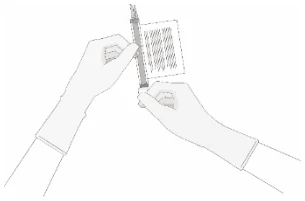
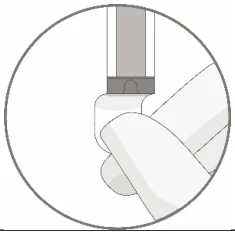
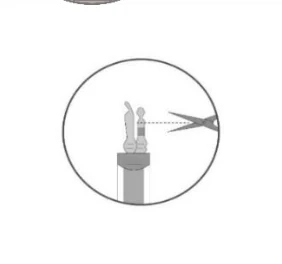
Withdrawal of the required volume of cells from each vial into a separate syringe should be carried out using the following instructions:
| 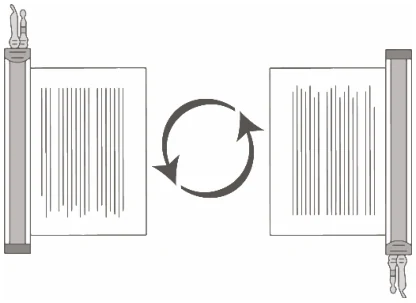 Vial upright Vial inverted | ||
|---|---|---|---|
| |||
|   | ||
|   | ||
|
| ||
| 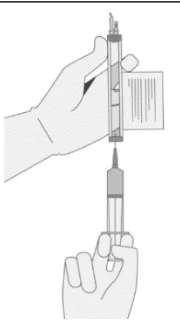 | ||
| 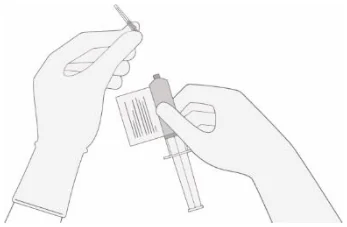 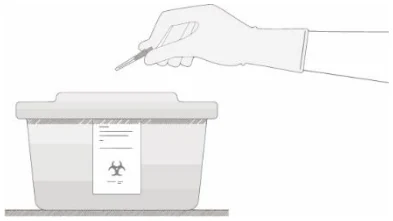 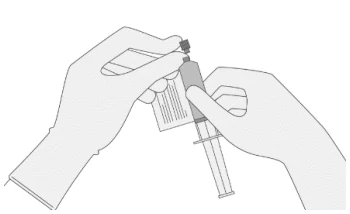 | ||
| |||
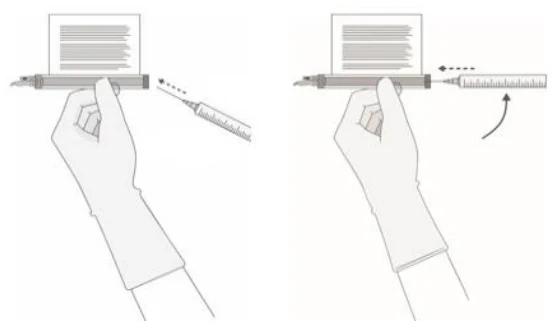
- 16. Dispose of any unused portion of BREYANZI (according to local biosafety guidelines).
- 17. Repeat the process steps 7-16 for the CD4 component.
- 18. Transport the labeled CD8 and CD4 syringes to the bedside by placing with protective barrier pad inside an insulated room temperature container.
4.4.4 BREYANZI Administration
- Do NOT use a leukodepleting filter.
- Ensure tocilizumab and emergency equipment are available prior to infusion and during the recovery period (see 7 Warnings and Precautions). Consult the Product Monograph for tocilizumab for further information about this drug.
- Confirm the patient’s identity matches the patient identifiers on the syringe label.
- Once BREYANZI has been drawn into syringes, proceed with administration as soon as possible. The total time from removal from frozen storage to patient administration should not exceed 2 hours as indicated by the time entered on the syringe label.
- Use intravenous normal saline to flush all the infusion tubing prior to and after each CD8 or CD4 component administration.
Administer the entire volume of the CD8 component intravenously at an infusion rate of approximately 0.5 mL/minute, using the closest port or Y-arm.
NOTE: The time for infusion will vary but will usually be less than 15 minutes for each component.
- If more than one syringe is required for a full cell dose of the CD8 component, administer the volume in each syringe consecutively without any time between administering the contents of the syringes (unless there is a clinical reason to hold the dose, e.g., infusion reaction).
- After the CD8 component has been administered, flush the tubing with normal saline, using enough volume to clear the tubing and the length of the IV catheter.
- Administer the CD4 component second, immediately after administration of the CD8 component is complete, using the same steps 1-4, as described for the CD8 component. Following administration of the CD4 component, flush the tubing with normal saline, using enough volume to clear the tubing and the length of the IV catheter.
BREYANZI contains human blood cells that are genetically modified with replication incompetent, self-inactivating lentiviral vector. Follow universal precautions and local biosafety guidelines applicable for the handling and disposal, to avoid potential transmission of infectious diseases (see 12 Special Handling Instructions).
4.4.5 Monitoring
- Administer BREYANZI at a qualified treatment centre.
- Monitor patients 2-3 times during the first week following infusion at the qualified treatment centre, for signs and symptoms of CRS and neurologic toxicities.
- Instruct patients to remain within proximity of the qualified treatment centre for at least 2 weeks following infusion.
Due to the potential for neurologic events, including altered mental status or seizures with Breyanzi, patients receiving Breyanzi should refrain from driving or operating heavy or potentially dangerous machines for at least 4 weeks after Breyanzi infusion, or longer at the healthcare professional’s discretion.
4.5. Missed Dose
Not applicable.
5. Overdose
No data from clinical studies are available regarding overdose of BREYANZI.
For the most recent information in the management of a suspected drug overdose, contact your regional poison control centre or Health Canada’s toll-free number, 1-844 POISON-X (1-844-764-7669).
- 6. Dosage Forms, Strengths, Composition, and Packaging
To help ensure the traceability of biologic products, health professionals should recognise the importance of recording both the brand name and the non-proprietary (active ingredient) name as well as other product-specific identifiers such as the Drug Identification Number (DIN) and the batch/lot number of the product supplied.
| Table 1: Dosage Forms, Strengths, Composition and Packaging | |||||
| Route of Administration | Dosage Form / Strength/Composition | Non-medicinal Ingredients | |||
| Intravenous Infusion | BREYANZI is a cell suspension for infusion. A single dose contains 60 x 106 to 120 × 106 CAR-positive viable T cells (consisting of CD4 and CD8 components at a ratio range from 0.8 to 1.2), with each component supplied separately in single-dose vials. CD8 component Vials containing ≥ 8.0 × 10⁶ CAR-positive viable T cells in 4.6 mL (≥ 1.6 x 10⁶ CAR-positive viable T cells/mL). CD4 component Vials containing ≥ 8.0 × 10⁶ CAR-positive viable T cells in 4.6 mL (≥ 1.6 x 10⁶ CAR-positive viable T cells/mL). More than one vial of each of the CD8 component and/or CD4 component may be needed to achieve the dose of BREYANZI. The infusion volume is calculated based on the cryopreserved drug product CAR-positive viable T cell concentration. The volume may differ for each component infused. See the Certificate of Release for Infusion (RFI Certificate) for details. | The BREYANZI formulation contains 1% (v/v) of 25% albumin (human), 75% (v/v) Cryostor® CS10 [containing 7.5% dimethylsulfoxide (DMSO) (v/v), Dextran], 24% (v/v) Multiple Electrolytes for Injection, Type 1. | |||
7. Warnings and Precautions
Please see 3 Serious Warnings and Precautions Box.
General
BREYANZI should be administered at a qualified treatment centre with healthcare professionals trained in handling and administering BREYANZI and in the management of patients treated with BREYANZI, including monitoring and managing cytokine release syndrome (CRS) and neurotoxicity. The centre should have immediate access to appropriate emergency equipment and intensive care unit, and must have on-site, immediate access to tocilizumab. Ensure that a minimum of 2 doses of tocilizumab are available for each patient for infusion within 2 hours after BREYANZI infusion, if needed for treatment of CRS. Qualified treatment centres must ensure that healthcare professionals who prescribe, dispense, or administer BREYANZI are trained on the management of CRS and neurologic toxicities.
BREYANZI is intended solely for autologous use and must under no circumstances be administered to other patients. Before infusion, the patient’s identity must match the patient identifiers on the BREYANZI cartons, vials and syringe labels. Do NOT infuse BREYANZI if the information on the patient-specific label does not match the intended patient (see 4 Dosage and Administration).
Patients treated with BREYANZI should not donate blood, organs, tissues and cells for transplantation.
There is no experience of BREYANZI use in patients with primary central nervous system (CNS) lymphoma. For secondary CNS lymphoma, see 14 Clinical Trials.
Advise the patient to read the Patient Medication Information.
Carcinogenesis and Mutagenesis
Secondary Malignancies
Patients treated with BREYANZI may develop secondary hematological malignancies. T-cell malignancies have occurred following treatment with genetically modified autologous T-cell immunotherapies and may present as soon as weeks following infusion. There have been fatal outcomes.
Monitor life-long for secondary malignancies. In the event that a secondary malignancy occurs, contact Bristol Myers Squibb Canada Medical Information by phone (1-866-463-6267) or by email at medical.canada@bms.com for reporting and to obtain instructions on collection of patient samples for testing of secondary malignancy of T-cell origin.
Driving and Operating Machinery
Due to the potential for neurologic events, including altered mental status or seizures with BREYANZI, patients receiving BREYANZI should refrain from driving or operating heavy or potentially dangerous machines for at least 4 weeks after BREYANZI administration, or longer at the healthcare professional’s discretion.
Endocrine and Metabolism
Tumour lysis syndrome
Tumour lysis syndrome (TLS) has been observed among patients treated with BREYANZI. To minimize the risk of TLS, patients with elevated uric acid or high tumour burden should receive prophylactic treatment (allopurinol, or an alternative prophylaxis) prior to BREYANZI infusion. Signs, symptoms, and laboratory abnormalities of TLS should be monitored and managed according to local practice standards.
Immune
Cytokine release syndrome (CRS)
Cytokine Release Syndrome (CRS), including fatal or life-threatening reactions, can occur following treatment with BREYANZI.
Serious events that may be associated with CRS include cardiac arrhythmias (including atrial fibrillation and ventricular tachycardia), cardiac arrest, cardiac failure, diffuse alveolar damage, renal insufficiency, capillary leak syndrome, hypotension, hypoxia, and hemophagocytic lymphohistiocytosis/macrophage activation syndrome (HLH/MAS).
Patients who received one prior line of therapy for LBCL (2L)
CRS occurred in 49% (44/89) of patients receiving BREYANZI, including ≥ Grade 3 (Lee grading systema) CRS in 1% (1/89) of patients. The median time to onset was 5 days (range: 1 to 63 days) and the median duration of CRS was 4 days (range: 1 to 16 days).
In clinical studies, 19 of 89 (21%) patients received tocilizumab and/or a corticosteroid for CRS after infusion of BREYANZI. Nine (10%) patients received tocilizumab only, 10 (11%) received tocilizumab and a corticosteroid and no patients received corticosteroids only.
The most common manifestations of CRS included pyrexia (48%), hypotension (10%), chills (5%), headache (5%), hypoxia (3%), tachycardia (2%), dizziness (2%) and musculoskeletal pain (2%), fatigue (1%) (see 8 Adverse Reactions).
Patients who received two or more prior lines of therapy for LBCL (3L+)
CRS occurred in 38% (82/213) of patients receiving BREYANZI, including ≥ Grade 3 (Lee grading systema) CRS in 3% (7/213) of patients. Among patients who died after receiving BREYANZI, 3 had ongoing CRS events at the time of death. The median time to onset was 4 days (range: 1 to 12 days) and the median duration of CRS was 6 days (range: 1 to 17 days)
Forty-four (21%) patients received tocilizumab and/or a corticosteroid for CRS after infusion of BREYANZI. Twenty-six (12%) patients received tocilizumab only, 16 (8%) received tocilizumab and a corticosteroid, and 2 (1%) received corticosteroids only.
The most common manifestations of CRS include pyrexia (36%), hypotension (20%), tachycardia (15%), chills (11%), and hypoxia (11%). (see 8 Adverse Reactions).
Management of Cytokine Release Syndrome
Ensure that 2 doses of tocilizumab are available prior to infusion of BREYANZI.
Monitor patients 2-3 times during the first week following infusion at the qualified treatment centre for signs and symptoms of CRS.
Monitor patients for signs or symptoms of CRS for at least 2 weeks after infusion. Counsel patients to seek immediate medical attention should signs or symptoms of CRS occur at any time. At the first sign of CRS, institute treatment with supportive care, tocilizumab or tocilizumab and corticosteroids as indicated in Table 2 and, in addition, consider institutional guidelines as appropriate.
Identify cytokine release syndrome (CRS) based on clinical presentation. Evaluate for and treat other causes of fever, hypoxia, and hypotension. BREYANZI continues to expand following administration of tocilizumab and corticosteroids. Patients who experience CRS should be closely monitored for cardiac and organ functioning until resolution of symptoms. Patients who experience Grade 2 or higher CRS (e.g., hypotension not responsive to fluids, or hypoxia requiring supplemental oxygenation) should be monitored with continuous cardiac telemetry and pulse oximetry. For patients experiencing severe CRS, consider performing an echocardiogram to assess cardiac function. For severe or life-threatening CRS, intensive care unit level monitoring and supportive therapy should be considered.
Patients with high tumour burden or increased inflammatory markers had a higher incidence of CRS, neurologic toxicities, or both of any grade.
If concurrent neurologic toxicity is suspected during CRS, administer:
- Corticosteroids according to the more aggressive intervention based on the CRS and neurologic toxicity grades in Table 2 and Table 3
- Tocilizumab according to the CRS grade in Table 2
- Antiseizure medication according to the neurologic toxicity grade in Table 3.
| Table 2: CRS Grading and Management Guidance1 | |||||
| Table 2: CRS Grading and Management Guidance1 | |||||
| CRS Gradea | Tocilizumab | Corticosteroidsb | |||
| CRS Gradea | Tocilizumab | Corticosteroidsb | |||
Grade 1 Fever | If 72 hours or more after infusion, treat symptomatically. If less than 72 hours after infusion, consider tocilizumab 8 mg/kg IV over 1 hour (not to exceed 800 mg). | If 72 hours or more after infusion, treat symptomatically. If less than 72 hours after infusion, consider dexamethasone 10 mg IV every 24 hours. | |||
Grade 2 Symptoms require and respond to moderate intervention. Fever, oxygen requirement less than 40% FiO2 or hypotension responsive to fluids or low-dose of one vasopressor or Grade 2 organ toxicity. | Administer tocilizumab 8 mg/kg IV over 1 hour (not to exceed 800 mg). Repeat tocilizumab every 8 hours as needed if not responsive to intravenous fluids or increasing supplemental oxygen. Limit to a maximum of 3 doses in a 24-hour period; maximum total of 4 doses. | If 72 hours or more after infusion, consider dexamethasone 10 mg IV every 12-24 hours. If less than 72 hours after infusion, administer dexamethasone 10 mg IV every 12-24 hours. | |||
If no improvement within 24 hours or rapid progression, repeat tocilizumab and escalate dose and frequency of dexamethasone (10-20 mg IV every 6 to 12 hours). If no improvement or continued rapid progression, maximize dexamethasone, switch to high-dose methylprednisolone 2 mg/kg, if needed. After 2 doses of tocilizumab, consider alternative immunosuppressants. Do not exceed 3 doses tocilizumab in 24 hours, or 4 doses in total. | |||||
Grade 3 Symptoms require and respond to aggressive intervention. Fever, oxygen requirement greater than or equal to 40% FiO2 or hypotension requiring high-dose or multiple vasopressors, or Grade 3 organ toxicity, or Grade 4 transaminitis. | Per Grade 2 | Administer dexamethasone 10 mg/kg IV every 12 hours. | |||
If no improvement within 24 hours or rapid progression of CRS, repeat tocilizumab and escalate dose and frequency of dexamethasone (10-20 mg IV every 6 to 12 hours). If no improvement or continued rapid progression, maximize dexamethasone, switch to high-dose methylprednisolone 2 mg/kg if needed. After 2 doses of tocilizumab, consider alternative immunosuppressants. Do not exceed 3 doses tocilizumab in 24 hours, or 4 doses in total. | |||||
Grade 4 Life-threatening symptoms. Requirements for ventilator support, continuous veno-venous hemodialysis (CVVHD) or Grade 4 organ toxicity (excluding transaminitis). | Per Grade 2 | Administer dexamethasone 20 mg IV every 6 hours. | |||
| If no improvement within 24 hours or rapid progression of CRS, escalate tocilizumab and corticosteroid use. If no improvement or continued rapid progression, maximize dexamethasone, switch to high-dose methylprednisolone 2 mg/kg if needed. After 2 doses of tocilizumab, consider alternative immunosuppressants. Do not exceed 3 doses tocilizumab in 24 hours, or 4 doses in total. | |||||
a Lee criteria for grading CRS (Lee DW, Blood 2014; 124(2): 188-95. Errata in Blood: 2015;126(8):1048 and 2016;128(11):1533).
b If corticosteroids are initiated, continue corticosteroids for at least 3 doses or until complete resolution of symptoms, and consider corticosteroid taper.
1 The recommendations in Table 2 are based on the CRS management recommendations in BREYANZI clinical trials.
Hypogammaglobulinemia
B-cell aplasia and hypogammaglobulinemia can occur in patients receiving treatment with BREYANZI.
Monitor immunoglobulin levels after treatment with BREYANZI and manage using infection precautions, antibiotic prophylaxis, and/or immunoglobulin replacement.
Patients who received one prior line of therapy for LBCL (2L)
Adverse events of hypogammaglobulinemia occurred in 7% (6/89) of patients.
Patients who received two or more prior lines of therapy for LBCL (3L+)
Adverse events of hypogammaglobulinemia occurred in 16% (34/213) of patients.
Live Vaccines
The safety of immunization with viral vaccines during or following BREYANZI treatment has not been studied. Vaccination with live virus vaccines is not recommended for at least 6 weeks prior to the start of lymphodepleting chemotherapy, during BREYANZI treatment, and until immune recovery following treatment with BREYANZI.
Hypersensitivity
Allergic reactions may occur with the infusion of BREYANZI (see 8 Adverse Reactions). Serious hypersensitivity reactions, including anaphylaxis, may be due to dimethyl sulfoxide (DMSO).
Prolonged Cytopenias
Patients may exhibit cytopenias for several weeks following lymphodepleting chemotherapy and BREYANZI infusion.
Monitor complete blood counts prior to and after BREYANZI administration.
Patients who received one prior line of therapy for LBCL (2L)
Grade 3 or higher cytopenias present at Day 29 (or Day 35) following BREYANZI, occurred in 44% (39/89) of patients, and included thrombocytopenia (37%), neutropenia (30%), and anemia (11%).
Patients who received two or more prior lines of therapy for LBCL (3L+)
Grade 3 or higher cytopenias present at Day 29 following BREYANZI infusion, occurred in 40% (86/213) of patients, and included thrombocytopenia (33%), neutropenia (21%), and anemia (7%).
Infections and Febrile Neutropenia
BREYANZI should not be administered to patients with clinically significant active systemic infections or inflammatory disorders. Serious infections, including life-threatening or fatal infections have occurred in patients after BREYANZI infusion.
In immunosuppressed patients, life-threatening and opportunistic infections including disseminated fungal infections, viral reactivation, and infections of the central nervous system, in some cases with late onset (e.g., viral infections such as John Cunningham (JC) virus leading to progressive multifocal leukoencephalopathy (PML)), have been reported. Appropriate diagnostic evaluations should be performed in patients with neurological adverse events.
Monitor patients for signs and symptoms of infection before and after BREYANZI administration and treat appropriately. Administer prophylactic antimicrobials according to standard institutional guidelines.
Patients who received one prior line of therapy for LBCL (2L)
Infections (all grades) occurred in 32% (28/89) of patients. Grade 3 or higher infections occurred in 14% (12/89) of patients. Grade 3 or higher infections with an unspecified pathogen occurred in 6% (5/89) of patients, bacterial infections occurred in 6% (5/89), and viral infections occurred in 2% (2/89) of patients.
Febrile neutropenia has been observed in 11% (10/89 patients) after BREYANZI administration and may be concurrent with CRS. In the event of febrile neutropenia, evaluate for infection and manage with broad spectrum antibiotics, fluids and other supportive care as medically indicated.
Patients who received two or more prior lines of therapy for LBCL (3L+)
Infections (all grades) occurred in 40% (85/213) of patients. Grade 3 or higher infections occurred in 11% (24/213) of patients. Grade 3 or higher infections with an unspecified pathogen occurred in 8% (18/213) of patients, bacterial infections occurred in 3% (7/213), fungal infections occurred in 2% (4/213), and viral infections occurred in 0.5% (1/213).
Febrile neutropenia has been observed in 8% (16/213) of patients after BREYANZI infusion and may be concurrent with CRS. In the event of febrile neutropenia, evaluate for infection and manage with broad-spectrum antibiotics, fluids, and other supportive care as medically indicated.
Viral Reactivation
Hepatitis B virus (HBV) reactivation, in some cases resulting in fulminant hepatitis, hepatic failure, and death, can occur in patients treated with drugs directed against B cells.
Screening for HBV, HCV, and HIV should be performed in accordance with clinical guidelines before collection of cells for manufacturing. In patients with a prior history of viral infection, consider antiviral suppressive therapies.
Patients who received one prior line of therapy for LBCL (2L)
All 4 patients in the TRANSFORM study with a prior history of HBV were treated with concurrent antiviral suppressive therapy to prevent HBV reactivation during and after BREYANZI therapy.
Patients who received two or more prior lines of therapy for LBCL (3L+)
Nine of the 10 patients in the TRANSCEND study with a prior history of HBV were treated with concurrent antiviral suppressive therapy to prevent HBV reactivation during and after BREYANZI therapy.
Neurologic
Neurologic toxicities
Neurologic toxicities, including immune effector cell-associated neurotoxicity syndrome (ICANS), that were fatal or life-threatening, occurred concurrently with CRS, after CRS resolution, or in the absence of CRS following treatment with BREYANZI.
Patients who received one prior line of therapy for LBCL (2L)
CAR T cell-associated neurologic toxicities, as identified by investigators, occurred in 10% (9/89) of patients receiving BREYANZI, including Grade 3 or 4 in 5% (4/89) of patients. The median time to onset of the first event was 11 days (range: 7 to 17 days); all neurologic toxicities occurred within the first 3 weeks following BREYANZI infusion. The median duration of neurologic toxicities was 6 days (range: 1 to 30 days).
The most common neurologic toxicities included encephalopathy (6%), tremor (5%), aphasia (5%), dizziness (2%), and headache (1%).
Patients who received two or more prior lines of therapy for LBCL (3L+)
CAR T cell-associated neurologic toxicities, as identified by investigators, occurred in 28% (59/213) of patients receiving BREYANZI, including Grade 3 or 4 in 9% (20/213) of patients (no Grade 5 events). The median time to onset of the first event was 9 days (range: 1 to 46 days); all of the neurologic toxicities occurred within the first 8 weeks following BREYANZI infusion. The median duration of neurologic toxicities was 9 days range: 1 to 84 days).
The most common neurologic toxicities included encephalopathy (18%), tremor (10%), aphasia (9%), delirium (7%), dizziness (4%), and headache (4%). Seizures and cerebral edema have also occurred in patients treated with BREYANZI.
Management of Neurologic toxicities
Monitor patients 2-3 times during the first week following infusion at the qualified treatment centre, for signs and symptoms of neurologic toxicities. Monitor patients for signs or symptoms of neurologic toxicities for at least 2 weeks after infusion and treat promptly. Counsel patients to seek immediate medical attention should signs or symptoms of neurologic toxicity occur at any time.
Monitor patients for signs and symptoms of neurologic toxicities (Table 3). Rule out other causes of neurologic symptoms. Provide intensive care supportive therapy for severe or life-threatening neurologic toxicities. If neurologic toxicity is suspected, manage according to the recommendations in Table 3 and, in addition, consider institutional guidelines as appropriate.
If concurrent CRS is suspected during the neurologic toxicity, administer:
- Corticosteroids according to the more aggressive intervention based on the CRS and neurologic toxicity grades in Table 2 and Table 3
- Tocilizumab according to the CRS grade in Table 2
- Antiseizure medication according to the neurologic toxicity grade in Table 3.
| Table 3: Neurologic Toxicity (NT) Grading and Management Guidance1 | |||
| Table 3: Neurologic Toxicity (NT) Grading and Management Guidance1 | |||
| NT Gradea | Corticosteroids and Antiseizure Medication | ||
| NT Gradea | Corticosteroids and Antiseizure Medication | ||
Grade 1 Examples include: Somnolence-mild drowsiness or sleepiness Confusion-mild disorientation Encephalopathy-mild limiting of activities of daily living (ADLs) Dysphasia-not impairing ability to communicate | Start non-sedating, antiseizure medicines (e.g., levetiracetam) for seizure prophylaxis. If 72 hours or more after infusion, observe. If less than 72 hours after infusion, consider dexamethasone 10 mg IV every 12 to 24 hours for 2 to 3 days. | ||
Grade 2 Examples include: Somnolence—moderate, limiting instrumental ADLs Confusion—moderate disorientation Encephalopathy—limiting instrumental ADLs Dysphasia—moderate impairing ability to communicate spontaneously Seizure(s) | Start non-sedating, antiseizure medicines (e.g., levetiracetam) for seizure prophylaxis. Dexamethasone 10 mg IV every 12 hours for 2-3 days, or longer for persistent symptoms. Consider taper for a total corticosteroid exposure of greater than 3 days. If no improvement after 24 hours or worsening of neurologic toxicity, increase the dose and/or frequency of dexamethasone up to a maximum of 20 mg IV every 6 hours. If no improvement after another 24 hours, rapidly progressing symptoms, or life-threatening complications arise, give methylprednisolone (2 mg/kg loading dose, followed by 2 mg/kg divided 4 times a day; taper within 7 days). | ||
Grade 3 Examples include: Somnolence—obtundation or stupor Confusion—severe disorientation Encephalopathy—limiting self-care ADLs Dysphasia—severe receptive or expressive characteristics, impairing ability to read, write, or communicate intelligibly | Start non-sedating, antiseizure medicines (e.g., levetiracetam) for seizure prophylaxis. Dexamethasone 10 to 20 mg IV every 8 to 12 hours. Corticosteroids are not recommended for isolated Grade 3 headaches. If no improvement after 24 hours or worsening of neurologic toxicity, escalate to methylprednisolone (dose and frequency as per Grade 2). If cerebral edema is suspected, consider hyperventilation and hyperosmolar therapy. Give high-dose methylprednisolone (1-2 g, repeat every 24 hours if needed; taper as clinically indicated) and cyclophosphamide 1.5 mg/m2. | ||
Grade 4 Life-threatening consequences Urgent intervention indicated Requirement for mechanical ventilation | Start non-sedating, antiseizure medicines (e.g., levetiracetam) for seizure prophylaxis. Dexamethasone 20 mg IV every 6 hours. If no improvement after 24 hours or worsening of neurologic toxicity, escalate to methylprednisolone (dose and frequency as per Grade 2). If cerebral edema is suspected, consider hyperventilation and hyperosmolar therapy. Give high-dose methylprednisolone (1-2 g, repeat every 24 hours if needed; taper as clinically indicated), and cyclophosphamide 1.5 mg/m2. | ||
a NCI CTCAE (Common Terminology Criteria for Adverse Events) criteria for grading neurologic toxicities.
1 The recommendations in Table 3 are based on the NT management recommendations in BREYANZI clinical trials.
Reproductive Health
- Reproduction
Pregnancy status for women of child-bearing age should be verified using a pregnancy test prior to starting treatment with BREYANZI.
Contraception for the partner who will receive BREYANZI, should be discussed as follows:
Sexually active females of reproductive potential should use effective contraception (methods that result in less than 1% pregnancy rates) after BREYANZI administration.
Sexually active males who have received BREYANZI should use a condom during intercourse with females of reproductive potential or pregnant women.
See the Product Monographs for fludarabine and cyclophosphamide for information on the need for effective contraception in patients who receive the lymphodepleting chemotherapy.
There are insufficient exposure data to provide a recommendation concerning duration of contraception following treatment with BREYANZI.
- Fertility
There are no data on the effect of BREYANZI on fertility.
- Teratogenic Risk
There are no data on the teratogenic risk of BREYANZI.
7.1. Special Populations
7.1.1. Pregnancy
There are no data from the use of BREYANZI in pregnant women. No animal reproductive and developmental toxicity studies have been conducted with BREYANZI to assess whether it can cause fetal harm when administered to a pregnant woman.
It is not known if BREYANZI has the potential to be transferred to the fetus. Based on the mechanism of action, if the transduced cells cross the placenta, they may cause fetal toxicity, including B-cell lymphocytopenia. Therefore, BREYANZI is not recommended for women who are pregnant, and pregnancy after BREYANZI infusion should be discussed with the treating healthcare professional.
Clinical Considerations
Fetal/Neonatal Adverse Reactions
Assessment of immunoglobulin levels and B cells in newborns of mothers treated with BREYANZI should be considered.
7.1.2. Breastfeeding
It is unknown whether BREYANZI cells are excreted in human milk or transferred to the breast-feeding child. The developmental and health benefits of breast-feeding should be considered along with the mother’s clinical need for BREYANZI and any potential adverse effects on the breastfed infant from BREYANZI or from the underlying maternal condition. Women who are breast-feeding should be advised of the potential risk to the breast-fed child.
7.1.3. Pediatrics
Based on the data submitted and reviewed by Health Canada, the safety and efficacy of BREYANZI in pediatric patients has not been established; therefore, Health Canada has not authorized an indication for pediatric use.
7.1.4. Geriatrics
In BREYANZI clinical trials, 36 (39%) of the 92 patients who received one prior line of therapy for DLBCL were 65 years of age or older and none were 75 years of age or older; where as 71 (40%) of the 176 patients who received two or more prior lines of therapy for DLBCL were 65 years of age or older and 15 (9%) were 75 years of age or older. No clinically important differences in safety or effectiveness of BREYANZI were observed between these patients and younger patients. No dose adjustments are required for patients 65 years of age or older.
8. Adverse Reactions
8.1. Adverse Reaction Overview
The following adverse reactions are described under 7 Warnings and Precautions:
- Cytokine Release Syndrome
- Hypogammaglobulinemia
- Hypersensitivity
- Prolonged Cytopenias
- Severe Infections
Neurologic Toxicities
8.2. Clinical Trial Adverse Reactions
Clinical trials are conducted under very specific conditions. Therefore, the frequencies of adverse reactions observed in the clinical trials may not reflect frequencies observed in clinical practice and should not be compared to frequencies reported in clinical trials of another drug.
Patients who received one prior line of therapy for LBCL (2L)
The safety data described in this section reflect exposure to BREYANZI in the TRANSFORM (BCM-003) study, in which 89 adult patients with R/R large B-cell lymphoma received BREYANZI (14 Clinical Trials). The median duration of follow-up was up to 16.4 months.
The most common adverse reactions of any grade (≥ 20%) were neutropenia (80.9%), anaemia (59.6%), thrombocytopenia (55.1%), pyrexia (55.1%), CRS (49.4%), headache (37.1%), fatigue (27.0%), nausea (24.7%), lymphopenia (21.3%), dizziness (21.3%), constipation (20.2%).
The most common serious adverse reactions were CRS (14%), neutropenia (7%), pyrexia (5%), thrombocytopenia (3%), febrile neutropenia (3%), pulmonary embolism (2%), headache (2%), aphasia (2%), COVID-19 infection (2%), and muscular weakness (1%). Fatal adverse reaction occurred in 1.1% of the patients.
Table 4 summarizes the non-laboratory adverse reactions that occurred in at least 10% of patients treated with BREYANZI., the adverse drug reactions are ranked by frequency (%), with the most frequent reactions first.
| Table 4: Adverse Reactions Observed in at Least 10% of the Patients Treated with BREYANZI in the TRANSFORM study | |||||||||||||
| Table 4: Adverse Reactions Observed in at Least 10% of the Patients Treated with BREYANZI in the TRANSFORM study | |||||||||||||
| BREYANZI -Treated | SOC | ||||||||||||
| BREYANZI -Treated | SOC | ||||||||||||
| System organ class/preferred term | All Grades n (%) N=89 | Grade 3 or Higher n (%) N=89 | All Grades n (%) N=91 | Grade 3 or Higher n (%) N=91 | |||||||||
| System organ class/preferred term | All Grades n (%) N=89 | Grade 3 or Higher n (%) N=89 | All Grades n (%) N=91 | Grade 3 or Higher n (%) N=91 | |||||||||
Blood and lymphatic system disorders Febrile neutropenia | 10 (11) | 6 (7) | 24 (26) | 21 (23) | |||||||||
Cardiovascular Disorders Tachycardiaa | 14 (16) | 0 (0) | 15 (17) | 0 (0) | |||||||||
Gastrointestinal Disorders Nausea Constipation Diarrhea Abdominal painb Vomiting | 22 (25) 18 (20) 16 (18) 10 (11) 11 (12) | 0 (0) 2 (2) 0 (0) 1 (1) 0 (0) | 54 (59) 24 (26) 38 (42) 18 (20) 27 (30) | 4 (4) 0 (0) 3 (3) 1 (1) 2 (2) | |||||||||
General Disorders and Administration Site Conditions Fatiguec Pyrexia Edemad Chills | 24 (27) 49 (55) 9 (10) 10 (11) | 0 (0) 2 (2) 0 (0) 0 (0) | 39 (43) 21 (23) 19 (21) 4 (4) | 2 (2) 0 (0) 0 (0) 0 (0) | |||||||||
Immune System Disorders Cytokine release syndrome | 44 (49) | 1 (1) | 0 (0) | 0 (0) | |||||||||
Infections and Infestationse Infections - pathogen unspecified Bacterial infectious disorders Viral infectious disorders | 12 (14) 11 (12) 9 (10) | 5 (6) 5 (6) 2 (2) | 29 (32) 9 (10) 5 (6) | 16 (18) 7 (8) 1 (1) | |||||||||
Metabolism and Nutrition Disorders Decreased appetite | 13 (15) | 0 (0) | 30 (33) | 4 (4) | |||||||||
Musculoskeletal and connective tissue disorders Arthralgia | 9 (10) | 0 (0) | 11 (12) | 0 (0) | |||||||||
Nervous System Disorders Headachef Dizzinessg Tremorh | 33 (37) 19 (21) 10 (11) | 6 (7) 1 (1) 1 (1) | 22 (24) 15 (17) 1 (1) | 1 (1) 1 (1) 0 (0) | |||||||||
Psychiatric Disorders Insomniai | 13 (15) | 0 (0) | 10 (11) | 0 (0) | |||||||||
Respiratory, Thoracic and Mediastinal Disorders Coughj | 10 (11) | 0 (0) | 10 (11) | 0 (0) | |||||||||
Skin and subcutaneous tissue disorders Rashk | 12 (14) | 1 (1) | 8 (9) | 0 (0) | |||||||||
Vascular Disorders Hypotensionl | 16 (18) | 2 (2) | 6 (7) | 0 (0) | |||||||||
The Preferred Term of CRS is summarized as well as the individual symptoms of CRS. These include: Chills, Dizziness, Fatigue, Headache, Hypotension, Nausea, Pyrexia, Tachycardia, Vomiting.
Adverse drug reactions are coded using MedDRA Version 23.0 and graded using National Cancer Institute CTCAE version 4.03 and are listed by preferred term/system organ class.
[a] Tachycardia includes sinus tachycardia, tachycardia.
[b] Abdominal pain includes abdominal pain, abdominal pain lower, abdominal pain upper, abdominal tenderness.
[c] Fatigue includes fatigue, malaise.
[d] Edema includes localised oedema, oedema peripheral, peripheral swelling.
[e] Infections and infestations are grouped per MedDRA high level grouped term
[f] Headache includes headache, migraine, migraine with aura.
[g] Dizziness includes dizziness, dizziness postural, presyncope, syncope.
[h] Tremor includes resting tremor, tremor.
[i] Insomnia includes insomnia, sleep disorder.
[j] Cough includes cough, productive cough.
[k] Rash includes dermatitis acneiform, erythema, erythema multiforme, erythema nodosum, rash, rash maculo-papular, rash pruritic.
[l] Hypotension includes hypotension, orthostatic hypotension.
Patients who received two or more prior lines of therapy for LBCL (3L+)
The safety data described in this section reflect exposure to BREYANZI based on the pooled data from two studies (TRANSCEND [017001] and TRANSCEND WORLD [JCAR017-BCM-001]) in 213 adult patients within the dose range of 60 x 106 to 120 x 106 CAR+ viable T cells with R/R large B-cell lymphoma who received a flat dose of BREYANZI (14 Clinical Trials). The median duration of follow-up was 10.4 months.
The median age of the study population was 62 years (range: 18 to 79 years); 66% were men. The Eastern Cooperative Oncology Group (ECOG) performance status at screening was 0 in 40% of patients, 1 in 58% of patients, and 2 in 2% of patients; 62% of patients received anticancer therapy for disease control.
The most common non-laboratory adverse reactions of any grade (≥ 20%) were fatigue (44%), CRS (39%), headache (31%), nausea (32%), Tachycardia (28%), diarrhea (25%), encephalopathy (25%), decreased appetite (25%), hypotension (35%), cough (23%), infections-pathogen unspecified (23%), pyrexia (50%), abdominal pain (20%), constipation (20%) and dizziness (20%).
Serious adverse reactions were reported in 44% of patients. The most common non-laboratory, serious adverse reactions (>2%) were CRS (16%), aphasia (5%), confusional state (4%), pneumonia (4%), pyrexia (4%), encephalopathy (3%), and hypotension (3%). Eighteen (8%) patients required intensive care unit admission.
The most common non-laboratory Grade 3 or higher adverse reactions (>2%) were infections-pathogen unspecified (9%), febrile neutropenia (8%), encephalopathy (7%), hypotension (9%), hypoxia (4%), abdominal pain (3%), aphasia (3%), CRS (3%), decreased appetite (3%), delirium (3%), dizziness (3%), dyspnea (3%), gastrointestinal haemorrhage (3%), bacterial infection (3%), renal insufficiency (3%), arrhythmia (2%), nausea (2%), and hypertension (2%).Grade 5 (fatal) adverse events were reported in 7 patients (cardiomyopathy, leukoencephalopathy (attributed to prior fludarabine exposure), septic shock (considered unrelated to BREYANZI), candida sepsis, pulmonary hemorrhage, multiple organ dysfunction syndrome, and respiratory failure).
Table 5 summarizes the non-laboratory adverse reactions that occurred in at least 10% of patients treated with BREYANZI. Adverse drug reactions (Table 5) are listed by MedDRA system organ class. Within each system organ class, the adverse drug reactions are ranked by frequency (%), with the most frequent reactions first.
| Table 5: Adverse Reactions Observed in at Least 10% of the Patients Treated with BREYANZI in the TRANSCEND and TRANSCEND WORLD Studies | |||||||
| Table 5: Adverse Reactions Observed in at Least 10% of the Patients Treated with BREYANZI in the TRANSCEND and TRANSCEND WORLD Studies | |||||||
| Table 5: Adverse Reactions Observed in at Least 10% of the Patients Treated with BREYANZI in the TRANSCEND and TRANSCEND WORLD Studies | |||||||
| System organ class/preferred term | All Grades n = 213 n (%) | Grade 3 or Higher n = 213 n (%) | |||||
| System organ class/preferred term | All Grades n = 213 n (%) | Grade 3 or Higher n = 213 n (%) | |||||
| System organ class/preferred term | All Grades n = 213 n (%) | Grade 3 or Higher n = 213 n (%) | |||||
Cardiovascular Disorders Tachycardiaa | 60 (28) | 1 (0.5) | |||||
Gastrointestinal Disorders Nausea Diarrhea Constipation Abdominal painb Vomiting | 67 (32) 53 (25) 43 (20) 42 (20) 33 (16) | 5 (2) 2 (1) 0 (0) 6 (3) 1 (0.5) | |||||
General Disorders and Administration Site Conditions Fatiguec Pyrexia Edemad Chills Pain | 93 (44) 107 (50) 38 (18) 38 (18) 22 (10) | 4 (2) 4 (2) 3 (1) 0 (0) 0 (0) | |||||
Immune System Disorders Cytokine release syndrome Hypogammaglobulinemiae | 82 (39) 34 (16) | 7 (3) 0 (0) | |||||
Infections and Infestationsf Infections-pathogen unspecified Bacterial infectious disorders | 48 (23) 23 (11) | 18 (9) 7 (3) | |||||
Metabolism and nutrition disorders Decreased appetite | 53 (25) | 6 (3) | |||||
Nervous System Disorders Headacheg Encephalopathyh Dizzinessi Tremorj | 66 (31) 53 (25) 43 (20) 35 (16) | 3 (1) 14 (7) 6 (3) 1 (0.5) | |||||
Psychiatric Disorders Insomnia | 25 (12) | 1 (0.5) | |||||
Renal and Urinary Disorders Renal insufficiencyk | 23 (11) | 6 (3) | |||||
Respiratory, Thoracic and Mediastinal Disorders Coughl Dyspneam Hypoxia | 49 (23) 36 (17) 27 (13) | 0 (0) 7 (3) 8 (4) | |||||
Skin and subcutaneous tissue disorders Rashn | 24 (11) | 2 (1) | |||||
Vascular Disorders Hypotensiono | 74 (35) | 19 (9) | |||||
The Preferred Term of CRS is summarized as well as the individual symptoms of CRS. These include: Chills, Decreased appetite, Dizziness, Dyspnoea, Fatigue, Headache, Hypotension, Hypoxia, Nausea, Pain, Pyrexia, Tachycardia, Tremor.
[a] Tachycardia includes heart rate increased, sinus tachycardia, tachycardia.
[b] Abdominal pain includes abdominal discomfort, abdominal pain, abdominal pain lower, abdominal pain upper, abdominal rigidity, abdominal tenderness, gastrointestinal pain.
[c] Fatigue includes fatigue, malaise.
[d] Edema includes edema, edema genital, edema peripheral, generalized edema, localized edema, scrotal edema, peripheral swelling, swelling.
[e] Hypogammaglobulinemia includes Hypogammaglobulinaemia, Immunoglobulins decreased.
[f] Infections and infestations are grouped per MedDRA high level group term.
[g] Headache includes headache, head discomfort, migraine, sinus headache.
[h] Encephalopathy includes amnesia, cognitive disorder, confusional state, depersonalization/derealization disorder, depressed level of consciousness, disturbance in attention, flat affect, hypersomnia, incoherent, lethargy, leukoencephalopathy, loss of consciousness, memory impairment, mental impairment, mental status changes, paranoia, somnolence, stupor.
[i] Dizziness includes dizziness, presyncope, syncope.
[j] Tremor includes tremor, essential tremor, resting tremor.
[k] Renal insufficiency includes acute kidney injury, blood creatinine increased, renal failure, renal impairment, renal injury.
[l] Cough includes cough, productive cough, upper-airway cough syndrome.
[m] Dyspnea includes acute respiratory failure, dyspnea, dyspnea exertional, respiratory failure.
[n] Rash includes dermatitis acneiform, erythema, rash, rash maculo-papular, rash pruritic.
[o] Hypotension includes hypotension, orthostatic hypotension.
8.3. Less Common Clinical Trial Adverse Reactions
Patients who received one prior line of therapy for LBCL (2L)
Other clinically important adverse reactions that occurred in less than 10% of patients treated with BREYANZI include the following:
- Cardiac disorders: Arrhythmiaa (2.2%),
- Gastrointestinal disorders: Gastrointestinal haemorrhage (1.1%)
- Immune system disorders: Hypogammaglobulinemia (7.9%), Haemophagocytic lymphohistiocytosis (1.1%)
- Infections and infestations: Fungal infectious disorders (4.5%)
- Injury, poisoning and procedural complications: Infusion related reaction (1.1%)
- Nervous system disorders: Encephalopathyb (9.0%), Aphasia (4.5%), Peripheral neuropathy (3.4%), Ataxia/Gait disturbance (2.2%), Paresisc (2.2%), Visual disturbance (2.2%), Cerebellar syndrome (1.1%)
- Psychiatric disorders: Anxiety (2.2%), Deliriumd (2.2%)
- Renal and urinary disorders: Renal insufficiencye (4.5%)
- Respiratory, thoracic and mediastinal disorders: Pleural effusion (3.4%)
- Vascular disorders: Hypertension (6.7%), Thrombosisf (3.4%)
[a] Arrhythmia includes atrial fibrillation, extrasystoles, supraventricular tachycardia, ventricular extrasystoles.
[b] Encephalopathy includes amnesia, confusional state, depressed level of consciousness, disturbance in attention, encephalopathy, lethargy, memory impairment, mental status changes, somnolence.
[c] Paresis includes facial paresis, vocal cord paralysis.
[d] Delirium includes agitation, hallucination, irritability, restlessness.
[e] Renal insufficiency includes acute kidney injury, blood creatinine increased, renal failure, renal impairment.
[f] Thrombosis includes deep vein thrombosis, pulmonary embolism, thrombophlebitis.
Patients who received two or more prior lines of therapy for LBCL (3L+)
Other clinically important adverse reactions that occurred in less than 10% of patients treated with BREYANZI include the following:
- Blood and lymphatic system disorders: Febrile neutropenia (7.5%), histiocytosis hematophagic (0.9%)
- Cardiac disorders: Arrhythmiaa (6.6%), cardiomyopathy (1.4%)
- Gastrointestinal disorders: Gastrointestinal hemorrhageb (4.2%)
- Infections and infestationsc: Viral infectious disorders (9.9%) Fungal infectious disorders (6.6%)
- Injury, poisoning, and procedural complications: Infusion-related reaction (1.9%)
- Metabolism and nutrition disorders: Tumour lysis syndrome (0.5%)
- Nervous system disorders: Aphasia (9.9%), peripheral neuropathy (9.9%) visual disturbanced (5.6%), ataxia/gait disturbancee (3.8%), cerebellar syndromef (3.8%), cerebrovascular eventsg (1.9%), seizureh (0.9%), paresisi (2.8%), brain edema (0.5%)
- Psychiatric disorders: Deliriumj (9.9%), Anxiety (8.5%)
- Respiratory, thoracic and mediastinal disorders: Pleural effusion (6.1%), , pulmonary edema (0.9%)
- Vascular disorders: Hypertensionk (9.9%), thrombosisl (4.7%)
[a] Arrhythmia includes arrhythmia, atrial fibrillation, atrioventricular block complete, atrioventricular block second degree, bundle branch block left, bundle branch block right, supraventricular tachycardia, ventricular extrasystoles, ventricular tachycardia.
[b] Gastrointestinal hemorrhage includes gastrointestinal hemorrhage, gastric ulcer hemorrhage, hematochezia, melena, rectal hemorrhage, upper gastrointestinal hemorrhage.
[c] Infections and infestations are grouped per MedDRA high level group term.
[d] Visual disturbance includes blindness, blindness unilateral, gaze palsy, mydriasis, nystagmus, vision blurred, visual field defect.
[e] Ataxia/gait disturbance includes ataxia, gait disturbance.
[f] Cerebellar syndrome includes balance disorder, cerebellar syndrome, dyskinesia, dysmetria, hand-eye coordination impaired.
[g] Cerebrovascular events include cerebral infarction, cerebral venous thrombosis, cerebrovascular accident, hemorrhage intracranial, transient ischemic attack.
[h] Seizure includes seizure, status epilepticus.
[i] Paresis includes diplegia, facial paralysis, hemiparesis, hemiplegia, paresis, VInerve paralysis.
[j] Delirium includes agitation, delirium, delusion, disorientation, hallucination, 'hallucination, visual', irritability, restlessness
[k] Hypertension includes hypertension, orthostatic hypertension.
[l] Thrombosis includes deep vein thrombosis, embolism, pulmonary embolism, thrombosis, venous thrombosis limb, vena cava thrombosis.
8.4. Abnormal Laboratory Findings: Hematologic, Clinical Chemistry and Other Quantitative Data
Clinical Trial Findings
Patients who received one prior line of therapy for LBCL (2L)
Table 6 describes the treatment-emergent laboratory abnormalities of Grade 3 or 4 that occurred in at least 10% of patients.
| Table 6: Grade 3 or 4 Treatment-emergent Laboratory Abnormalities Occurring in ≥ 10% of Patients Following Treatment with BREYANZI in the TRANSFORM Study, Based on NCI CTCAEa (n = 89) | |||
| Laboratory Abnormality | Grade 3 or 4 n (%) | ||
| Neutropenia | 66 (74) | ||
| Thrombocytopenia | 42 (47) | ||
| Anemia | 29 (33) | ||
| Lymphopenia | 9 (10) | ||
a NCI CTCAE = National Cancer Institute Common Terminology Criteria for Adverse Events version 4.03
Patients who received two or more prior lines of therapy for LBCL (3L+)
Table 7 describes the treatment-emergent laboratory abnormalities of Grade 3 or 4 that occurred in at least 10% of patients.
| Table 7: Grade 3 or 4 Treatment-emergent Laboratory Abnormalities Occurring in ≥ 10% of Patients Following Treatment with BREYANZI in the TRANSCEND and TRANSCEND WORLD Studies, Based on NCI CTCAEa (n = 213) | ||||
| Laboratory Abnormality | Grade 3 or 4 n (%) n = 213 | |||
| Neutropenia | 157 (74) | |||
| Leukopenia | 110 (52) | |||
| Thrombocytopenia | 82 (38) | |||
| Anemia | 48 (23) | |||
| Hypophosphatemia | 29 (14) | |||
a NCI CTCAE = National Cancer Institute Common Terminology Criteria for Adverse Events version 4.03
8.5. Post-Market Adverse Reactions
The following event(s) has been identified during post-approval use of Breyanzi. Because reports are voluntary from a population of unknown size, an estimate of frequency cannot be made.
Nervous system disorder:
immune effector cell-associated neurotoxicity syndrome (ICANS)
Deaths related to ICANS were reported during routine post-market surveillance.
9. Drug Interactions
9.2. Drug Interactions Overview
No interaction studies have been performed in humans.
9.3. Drug-Behaviour Interactions
The interaction of Breyanzi with individual behavioural risks (e.g. cigarette smoking, cannabis use, and/or alcohol consumption) has not been studied.
9.4. Drug-Drug Interactions
Interactions with other drugs have not been established.
Pharmacokinetic Interactions
No pharmacokinetic drug interaction studies have been performed with BREYANZI. T-cells are known to be susceptible to immune-suppressive agents. The benefit/risk of immuno-suppressive agents including but not limited to corticosteroids, cytotoxic chemotherapy, immunophilins, mTOR inhibitors, should be considered as these can be lymphotoxic and may reduce the effectiveness of BREYANZI (see 10 Clinical Pharmacology - 10.3 Pharmacokinetics).
Pharmacodynamic Interactions
Monoclonal antibodies directed against the epidermal growth factor receptor (anti-EGFR mAbs)
Anti-EGFR mAbs (e.g., cetuximab, panitumumab) could potentially reduce the number of BREYANZI cells as a truncated EGFR is expressed on the CAR T cells and thereby may reduce BREYANZI benefit. Prescribers should carefully assess benefit and risk before using anti-EGFR mAb therapy.
Live vaccines
The safety of immunization with live viral vaccines during or following BREYANZI treatment has not been studied. The effectiveness of vaccines may be affected by prolonged B-cell aplasia and hypogammaglobulinemia (see 7 Warnings and Precautions). Vaccination with live viral vaccines is not recommended for at least 6 weeks prior to the start of lymphodepleting chemotherapy, during BREYANZI treatment, and until immune recovery following treatment with BREYANZI.
9.5. Drug-Food Interactions
Interactions with food have not been established.
9.6. Drug-Herb Interactions
Interactions with herbal products have not been established.
9.7. Drug-Laboratory Test Interactions
HIV and the lentivirus used to make BREYANZI have limited, short spans of identical genetic material (RNA). Therefore, some commercial HIV nucleic acid tests may yield false-positive results in patients who have received BREYANZI.
10. Clinical Pharmacology
10.1. Mechanism of Action
BREYANZI is a CD19-directed genetically modified autologous cellular immunotherapy administered as a defined composition to reduce variability in CD8-positive and CD4-positive T cell dose. The CAR is comprised of an FMC63 monoclonal antibody-derived single chain variable fragment (scFv), IgG4 hinge region, CD28 transmembrane domain, 4-1BB (CD137) costimulatory domain, and CD3 zeta activation domain. CD3 zeta signaling is critical for initiating T-cell activation and antitumour activity, while 4-1BB (CD137) signaling enhances the expansion and persistence of BREYANZI. In addition, BREYANZI includes a nonfunctional truncated epidermal growth factor receptor (EGFRt) that is co-expressed on the cell surface with the CD19-specific CAR.
CAR binding to CD19 expressed on the cell surface of tumour and normal B cells induces activation and proliferation of CAR T cells, release of pro-inflammatory cytokines, and cytotoxic killing of target cells.
10.2. Pharmacodynamics
Following BREYANZI infusion, pharmacodynamic responses were evaluated over a 4-week period by measuring transient elevation of soluble biomarkers such as cytokines, chemokines, and other molecules. Peak elevation of soluble biomarkers was observed within the first 14 days after BREYANZI infusion and returned to baseline levels within 28 days.
B-cell aplasia, defined as CD19-positive B cells comprising less than 3% of peripheral blood lymphocytes, is an on-target effect of BREYANZI. B-cell aplasia was observed in the majority of patients for up to 1 year following BREYANZI infusion.
10.3. Pharmacokinetics
Following infusion, BREYANZI exhibited an initial expansion followed by a bi-exponential decline. The median time of maximal expansion in peripheral blood occurred 11 days after the first infusion. BREYANZI was present in peripheral blood for up to 2 years.
Patients who received one prior line of therapy for LBCL (2L)
The median Cmax in responders (N=77) and non-responders (N=7) were 33,222 and 95,618 copies/ µg, respectively. The median AUC0-28d in responders and non-responders were 267,429 and 733,406 day*copies / µg, respectively.
Patients who received two or more prior lines of therapy for LBCL (3L+)
Responders (N=122) had a 2.17-fold higher median Cmax than non-responders (N=35) (32,093.2 vs. 14,776.0 copies/µg). Responders had a 1.92-fold higher median AUC0-28d than non-responders (265,237.5 vs. 138,183.9 day*copies/µg) (see Table 8).
Some patients required tocilizumab and corticosteroids for the management of CRS and neurologic toxicities. Patients treated with tocilizumab (N=33) had a 3.87-fold and 3.69-fold higher median Cmax and AUC0-28d, respectively, compared to patients who did not receive tocilizumab (N=132). Similarly, patients who received corticosteroids (N=29) had a 4.32-fold and 3.73-fold higher median Cmax and AUC0-28d, respectively, compared to patients who did not receive corticosteroids (N=136).
Patients < 65 years old (N=98) had a 2.48-fold and 2.64-fold higher median Cmax and AUC0- 28d, respectively, compared to patients ≥ 65 years old (N=67). Sex, race, ethnicity, and body weight did not show clear relationships to Cmax and AUC0-28d.
| Table 8: Cellular Kinetic Parameters of BREYANZI in Adult Patients with Relapsed or Refractory Large B-cell Lymphoma | |||||||
|---|---|---|---|---|---|---|---|
| Parameter | Responding Patients n = 122 | Non-Responding Patients n = 35 | |||||
Cmax (copies/μg) Median IQR Range | 32,093.2 13,472.9 - 101,400.8 256.9 - 528,736.9 | 14,776.0 5,421.0 - 51,968.9 422.5 - 415,118.5 | |||||
Tmax (day) Median IQR Range | 11.0 10.0 - 14.0 6 - 30 | 14.0 10.0 - 15.0 6 - 41 | |||||
AUC0-28d (day*copies/μg) Median IQR Range | 265,237.5 111,935.2 - 736,225.6 2,602 - 5,144, 642 | 138,183.9 36,538.7 - 507,566.8 5,522 - 6,646,582 | |||||
n is the number of patients with evaluable PK parameter. IQR: interquartile range: Q1 – Q3
Response data are based on the Lugano 2014 criteria, as assessed by IRC.
Formal renal impairment and hepatic impairment studies have not been conducted.
10.4. Immunogenicity
BREYANZI has the potential to induce anti-product antibodies. The immunogenicity of BREYANZI has been evaluated using an electrochemiluminescence (ECL) immunoassay for the detection of binding antibodies against the extracellular CD19-binding domain of BREYANZI.
In patients who received one prior line of therapy for DLBCL, pre-existing anti-product antibodies were detected in 1% (1/89) of patients. Treatment-induced or treatment-boosted of anti-product antibodies were detected in 2% (2/89) of patients.
In patients who received two or more prior lines of therapy for DLBCL, pre-existing anti-product antibodies were detected in 9% (18/209) of patients. Treatment-induced or treatment-boosted anti-product antibodies were detected in 16% (32/202) of patients.
Due to the small number of patients who had anti-product antibodies, the relationship between anti-product antibody status and efficacy, safety, or pharmacokinetics was not conclusive.
- 11. Storage, Stability, and Disposal
Storage
BREYANZI consists of genetically modified autologous T cells, supplied in vials as separate frozen suspensions of each CD8 and CD4 component. Each CD8 or CD4 component is packed in a carton containing up to 4 vials, depending upon the cryopreserved drug product CAR-positive viable T cell concentration. The cartons for each CD8 component and CD4 component are contained in an outer carton and shipped in a liquid nitrogen shipper. An RFI Certificate for each component and patient-specific syringe labels are affixed inside the shipper.
- Confirm patient identity upon receipt.
- Store vials in the vapor phase of liquid nitrogen (less than or equal to minus 130°C) in a temperature-monitored system.
- Thaw BREYANZI prior to infusion (see 4 Dosage and Administration). Do not begin the thaw and preparation of BREYANZI until just prior to administration.
Stability
- Shelf-life of 13 months for unopened vial when stored in the vapor phase of liquid nitrogen (less than or equal to minus 130°C).
- Once BREYANZI has been drawn into syringes, proceed with administration as soon as possible. The total time from removal from frozen storage to patient administration should not exceed 2 hours at room temperature (15°C -25°C).
Disposal
BREYANZI contains genetically modified human blood cells. Local biosafety guidelines should be followed for unused medicinal products or waste material. All material that has been in contact with BREYANZI (solid and liquid waste) should be handled and disposed of as potentially infectious waste in accordance with local biosafety guidelines. Work surfaces which have or may have been in contact with BREYANZI must be decontaminated with appropriate disinfectant.
12. Special Handling Instructions
BREYANZI contains human blood cells that are genetically modified with replication incompetent, self-inactivating lentiviral vector. Follow universal precautions and local biosafety guidelines applicable for handling and disposal to avoid potential transmission of infectious diseases.
Part 2: Scientific Information
13. Pharmaceutical Information
Drug Substance
Non-proprietary name of the drug substance: lisocabtagene maraleucel
Chemical name: Not applicable.
Molecular formula and molecular mass: Not applicable.
Structure:
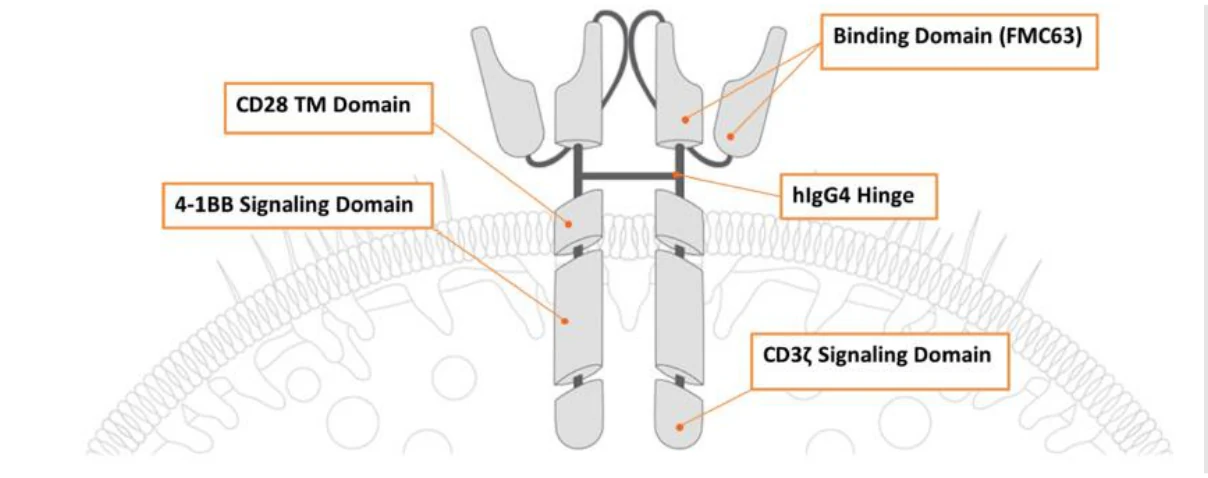
Physicochemical properties: lisocabtagene maraleucel is a slightly opaque to opaque, colourless to yellow, or brownish-yellow suspension of cells for infusion.
Pharmaceutical standard: Not applicable, as the drug substance is produced from an individual patient’s autologous cells.
Product Characteristics:
BREYANZI is a T-cell product. BREYANZI is prepared from the patient’s T cells, which are purified from the product of a standard leukapheresis procedure. The purified CD8-positive and CD4-positive T cells are separately activated and transduced with the replication incompetent lentiviral vector containing the anti-CD19 CAR transgene. The transduced T cells are expanded in cell culture, washed, formulated into a suspension, and cryopreserved as separate CD8 and CD4 component vials that together constitute a single dose of BREYANZI. The product must pass a sterility test before release for shipping as a frozen suspension in patient-specific vials. The product is thawed prior to administration (see 4 Dosage and Administration, 11 Storage, Stability and Disposal, 12 Special Handling Instructions).
The BREYANZI formulation contains 1% (v/v) of 25% albumin (human), 75% (v/v) Cryostor® CS10 [containing 7.5% dimethylsulfoxide (DMSO) (v/v), dextran], 24% (v/v) Multiple Electrolytes for Injection, Type 1.
14. Clinical Trials
14.1. Clinical Trials by Indication
Patients who received one prior line of therapy for LBCL (2L)
| Table 9: Summary of patient demographics for the clinical trial in relapsed or refractory large B-cell lymphoma in the TRANSFORM study | |||||||||
| Study | Study design | Dosage, route of administration and duration | Study subjects (n) | Mean age (Range) | Sex | ||||
TRANSFORM (BCM-003) | Phase 3, randomized, open-label, parallel group, multicenter trial | Single intravenous infusion of BREYANZI within the dose range of 97-103 x 106 CAR+ viable T cells (consisting of CD8 and CD4 components) | 92 patients were randomized to the BREYANZI arm and underwent leukapheresis, and 89 of these patients received BREYANZI | BREYANZI randomiz ed group: 60.0 years (range: 20-74) | BREYANZI - randomized group: 44 (47.8%) males 48 (52.2%) females | ||||
The efficacy of BREYANZI was compared to the standard of care (SOC) in a phase 3, randomized, open-label, parallel group, multicenter trial (TRANSFORM) in adult patients with large B-cell non-Hodgkin lymphoma primary refractory to or relapsed within 12 months from a complete response to initial chemoimmunotherapy, who were candidates for autologous hemopoietic stem cell transplant (HSCT). The standard of care (SOC) consisted of salvage immunochemotherapy followed by high-dose chemotherapy (HDCT) and autologous HSCT. The study included patients with diffuse large B-cell lymphoma (DLBCL) not otherwise specified (NOS), de novo or transformed indolent NHL, high-grade B-cell lymphoma with MYC and BCL2 and/or BCL6 rearrangements with DLBCL histology (double/triple hit lymphoma [DHL/THL]), primary mediastinal large B-cell lymphoma (PMBCL), T cell/histiocyte rich large B cell lymphoma (THRBCL) or follicular lymphoma Grade 3B (FL3B). The study included patients with ECOG performance status ≤ 1, and secondary central nervous systemic (CNS) lymphoma involvement.
Inclusion and exclusion criteria were chosen to ensure adequate organ function, and blood counts for HSCT. The study excluded patients with a creatinine clearance of less than 45 mL/min, alanine aminotransferase (ALT) > 5 times the upper limit of normal (ULN) or left ventricular ejection fraction (LVEF) < 40%, and absolute neutrophil count (ANC) < 1.0 × 10⁹ cells/L and platelets < 50 × 109 cells/L in absence of bone marrow involvement.
Patients were randomized 1:1 to receive either BREYANZI or SOC. Randomization was stratified by response to first-line therapy, and Secondary age adjusted International Prognostic Index (sAAIPI) (0 to 1 versus 2 to 3). Patients randomized to BREYANZI were to receive lymphodepleting chemotherapy consisting of fludarabine 30 mg/m2/day and cyclophosphamide 300 mg/m2/day concurrently for 3 days followed by BREYANZI infusion 2 to 7 days after completion of lymphodepleting chemotherapy. The median dose of BREYANZI was 99.9 × 10⁶ CAR-positive viable T cells (range: 97-103 × 106 CAR-positive viable T cells). In the BREYANZI arm, bridging chemotherapy was permitted between apheresis and the start of lymphodepleting chemotherapy. All patients randomized to the SOC arm were to receive 3 cycles of salvage immunochemotherapy (ie, R-DHAP (Rituximab-Dexamethasone, Cytarabine, Cisplatin), R-ICE (Rituximab-Ifosfamide, Carboplatin, Etoposide), or R-GDP (Rituximab-Gemcitabine, Dexamethasone, Cisplatin)). Patients responding (CR and PR) after 3 cycles were to proceed to HDCT and autologous HSCT. Patients receiving SOC treatment were allowed to receive BREYANZI if they failed to achieve CR or PR after 3 cycles of salvage immunochemotherapy, or had disease progression at any time, or if the patient needed to start a new treatment due to efficacy concerns.
In the overall study population, 59.2% were white, 9.8% were Asian, and 3.8% were black. Diagnoses included DLBCL NOS (56%), high-grade B-cell lymphoma (23.4%), primary mediastinal large B-cell lymphoma (9.2%), and DLBCL arising from indolent lymphoma (8.2%). Of these patients, 68.5% had primary refractory disease to last therapy, 25.5% had relapsed disease within 12 months of achieving CR to first-line therapy, and 2.2% had secondary CNS involvement. ECOG performance status was 0 in 57.1% and 1 in 42.9% of these patients.
Of 92 patients who underwent leukapheresis, 89 received BREYANZI and 1 patient received nonconforming product. Two patients did not receive BREYANZI. Of these 2 patients, 1 did not receive BREYANZI due to manufacturing failure, and 1 patient withdrew consent prior to treatment. In the SOC arm, 91 (98.9%) patients started treatment. Forty-three (47%) patients completed immunochemotherapy and HDCT treatment. 48 (53%) patients received salvage immunochemotherapy but did not proceed to receive HDCT and HSCT. BREYANZI was administered in the inpatient (79%) and outpatient (21%) setting.
The efficacy analyses were based on the intention-to-treat (ITT) population, which included all randomized patients (n=184).
The median time from leukapheresis to product availability was 26 days (range: 19 to 84 days), and the median time from leukapheresis to infusion was 36 days (range: 25 to 91 days).
The primary efficacy measure was event-free survival (EFS) as determined by an independent review committee (IRC) using 2014 Lugano criteria. Event-free survival was defined as the time from randomization to death from any cause, progressive disease, failure to achieve CR or PR by 9 weeks post-randomization (after 3 cycles of salvage chemotherapy and 5 weeks after BREYANZI infusion) or start of new antineoplastic therapy due to efficacy concerns, whichever occurs first. Secondary efficacy measures included complete response rate (CRR), progression-free survival (PFS) and overall survival (OS).
The study demonstrated statistically significant improvements in event-free survival (EFS), complete response rate (CRR), and progression-free survival (PFS) for patients randomized to BREYANZI vs SOC (Table 10, Figure 1).
Table 10: Efficacy results in patients with Relapsed or Refractory LBCL in TRANSFORM study (ITT population)
| Outcome | BREYANZI Arm N=92 | SOC Arm N=92 |
|---|---|---|
| Event-Free Survivala | ||
| Number of events n (%) | 35 (38) | 63 (68.5) |
| Median (months) [95% CI]c | 10.1 (6.1, NE) | 2.3 (2.2, 4.3) |
| Hazard ratio [95% CI]d | 0.349 [0.229, 0.530] | |
| One-sided p-valued,e | <0.0001 | |
| Complete Response Rateb | ||
| n (%) | 68 (73.9%) | 40 (43.5) |
| Two sided [95% CI] | [63.7, 82.5] | [33.2, 54.2] |
| One-sided p-valuef,g | <0.0001 | |
| Progression-Free Survivalb | ||
| Number of events n, (%) | 37 (40.2) | 52 (56.5) |
| Median (months) [95% CI]c | NR (12.6, NR) | 6.2 (4.3, 8.6) |
| Hazard ratio [95% CI]d | 0.400 [0.261, 0.615] | |
| One-sided p-value d,f | <0.0001 | |
2L=second line; NR=not reached; CI=confidence interval
a Per the Lugano criteria, as assessed by IRC, and based on primary evidence and analysis for the hypothesis testing purpose (cutoff date: 08 Mar 2021)
b Per the Lugano criteria, as assessed by IRC and based on the analysis with cutoff date of 13 May 2022
c Kaplan-Meier estimate
d Based on a stratified Cox proportional hazards model
e p-value is compared with 0.012 of the allocated alpha
f p-value is compared with 0.021 of the allocated alpha
g Cochran-Mantel-Haenszel test.
With 17.53 months median follow-up in the BREYANZI arm and 17.49 months median follow-up in the SOC arm, the median EFS was not reached (NR) in the BREYANZI arm vs. 2.4 months in the SOC arm (HR 0.356, 95%: 0.243, 0.522). Concurrently, an interim analysis of OS was performed. Median OS was NR in the BREYANZI arm vs. 29.9 months in the SOC arm (HR 0.724, 95% CI: 0.443, 1.183). Overall, 57 patients randomized to the SOC arm subsequently received BREYANZI per protocol.
Figure 1: Kaplan-Meier plot of event-free survival based on Independent Review Committee (IRC) Assessment in the TRANSFORM study (ITT population)
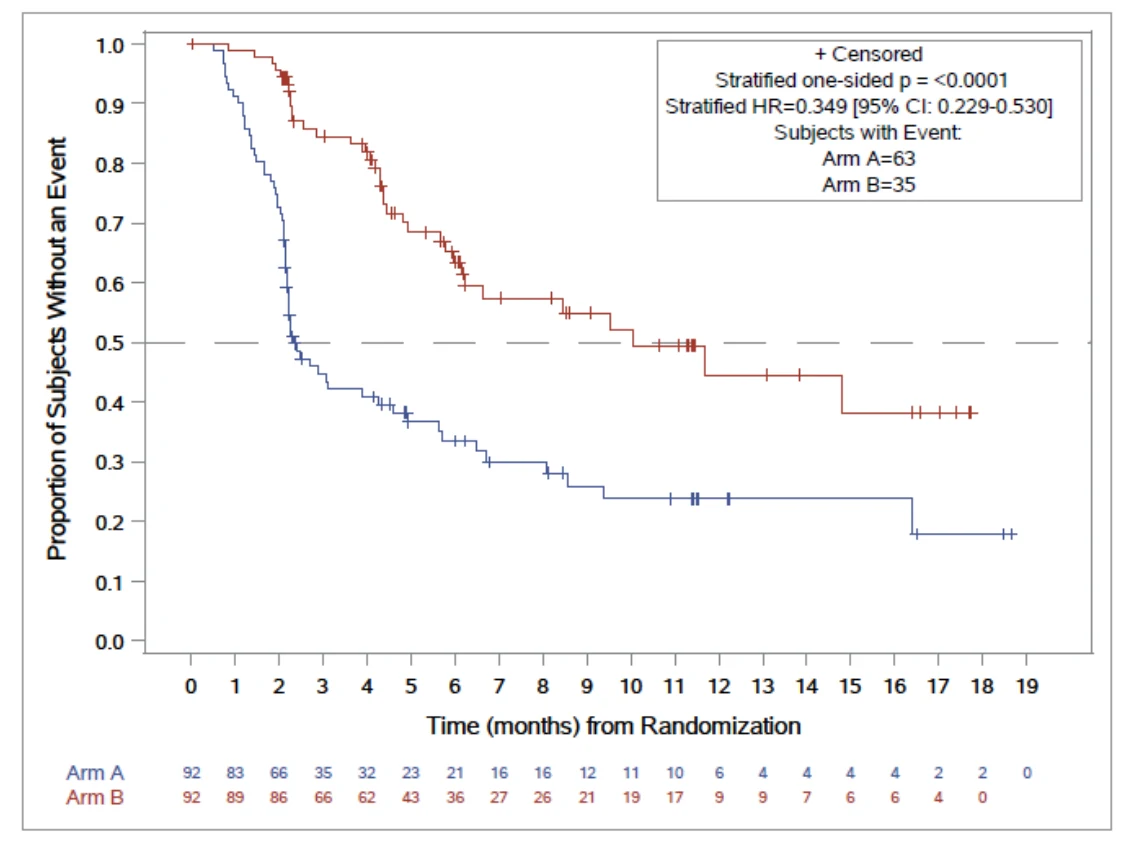
Database Cutoff Date: 08MAR2021 - Figure based on results of the primary analysis of EFS.
Arm A = Standard of Care; Arm B = BREYANZI; CI = confidence interval; HR = hazard ratio.
Patients who received two or more prior lines of therapy for LBCL (3L+)
| Table 11: Summary of patient demographics for the clinical trial in relapsed or refractory large B-cell lymphoma in TRANSCEND study | |||||||||
| Study | Study design | Dosage, route of administration and duration | Study subjects (n) | Mean age (Range) | Sex | ||||
TRANSCEND (017001) | Open-label, multicentre, single-arm trial in adult patients with relapsed or refractory large B-cell lymphoma | Single intravenous infusion of BREYANZI within the dose range of 60-120 x 106 CAR+ viable T cells (consisting of CD8 and CD4 components) | 227 patients underwent leukapheresis; 176 received BREYANZI | BREYANZI -treated group: 59.8 years (range: 18-79) | BREYANZI -treated: 117 (66.5%) males 59 (33.5%) females | ||||
The anti-tumour activity and safety of BREYANZI were evaluated in an open-label, multicentre, single-arm trial, TRANSCEND (017001), in patients with relapsed or refractory (R/R) aggressive B-cell non-Hodgkin lymphoma (NHL). Eligible patients were ≥ 18 years with R/R diffuse large B-cell lymphoma (DLBCL) not otherwise specified (NOS) (n=94); DLBCL transformed from follicular lymphoma (n=33), marginal zone lymphoma (n=4), chronic lymphocytic leukaemia/small lymphocytic leukaemia (n=2), Waldenström’s macroglobulinaemia (n=1); high-grade B-cell lymphoma (n=26); primary mediastinal large B-cell lymphoma (PMBCL) (n=14); and follicular lymphoma grade 3B (FL3B) (n=2), who had received at least 2 lines of therapy. The study included patients with ECOG performance status ≤ 2 (three patients with an ECOG PS of 2), prior autologous and/or allogeneic haematopoietic stem cell transplant (HSCT), and secondary central nervous system (CNS) lymphoma involvement. The study excluded patients with a creatinine clearance of less than 30 mL/min, alanine aminotransferase > 5 times the upper limit of normal or, left ventricular ejection fraction < 40%. There was no minimum requirement for blood counts; patients were eligible to enroll if they were assessed by the investigator to have adequate bone marrow function to receive lymphodepleting chemotherapy.
Trial patients had to be clinically stable and must have recovered from prior toxicities to receive lymphodepleting chemotherapy (LDC) and then proceed to BREYANZI infusion. Neither LDC nor BREYANZI was to be administered if there was rapid clinical deterioration, or evidence of rapid progression of disease.
Treatment consisted of lymphodepleting chemotherapy, fludarabine 30 mg/m2/day and cyclophosphamide 300 mg/m2/day for 3 days, followed by BREYANZI 2 to 7 days later. The median dose of BREYANZI was 91.3 × 10⁶ CAR-positive viable T cells (range: 63-120 × 106 CAR-positive viable T cells).
Anticancer therapy for disease control was permitted between apheresis and lymphodepletion. Of the 176 patients treated with BREYANZI, 57% received anticancer therapy, for disease control at the discretion of the investigator.
Of 227 patients who underwent leukapheresis for whom BREYANZI was manufactured in the dose range of 60 x 106 to 120 × 106 CAR-positive viable T cells:
- 176 received BREYANZI in the intended dose range
- 17 either received BREYANZI outside of the intended dose range (n=1) or received CAR-positive T cells that did not meet the product specifications for BREYANZI (n=16)
34 did not receive CAR-positive T cells either due to manufacturing failures (n=1),
death (n=24), disease complications (n=4), or other reasons (n=5)
BREYANZI was administered in the inpatient (163 patients) or outpatient (13 patients) setting.
The number of patients who were evaluable for efficacy was 168 (Efficacy set). Eight (8) patients were not evaluable for efficacy because they did not have baseline PET-positive disease, or confirmation of PET positive disease after anticancer therapy for disease control by Independent Review Committee (IRC).
The median time from leukapheresis to product availability was 24.5 days (range: 17 to 51 days), and the median time from leukapheresis to infusion was 36 days (range: 27 to 126 days).
In the BREYANZI-treated population, diagnoses included 53.4% diffuse large B-cell lymphoma (DLBCL)
NOS, 22.7% DLBCL transformed from indolent lymphoma, 14.8% high-grade B-cell lymphoma, 8.0% primary mediastinal large B-cell lymphoma, and 1.1% follicular lymphoma Grade 3B. Median number of prior therapies was 3 (1-8) including 34.7% with a prior autologous and 2.3% with a prior allogeneic HSCT. Of these patients 80.7% had refractory disease, 19.3% had relapsed disease after achieving CR to prior therapy, and 2.3% had secondary CNS lymphoma at time of BREYANZI infusion. The baseline ECOG performance status was 0-1 in 98.3% and 2 in 1.7%.
Efficacy was established on the basis of the primary endpoint, overall response rate (ORR), in addition to secondary endpoints which included complete response (CR) rate and duration of response (DOR) as determined by an independent review committee (Table 12 and Figure 2).
The median time to response (CR or partial response [PR]) was 0.95 months (range: 0.7 to 8.9 months). The median time to CR was 0.95 months (range 0.8 to 12.5 months). Response durations were longer in patients who achieved a CR, as compared to patients with a best response of PR (Table 12).
Four patients with secondary CNS lymphoma were treated and evaluable for efficacy in the TRANSCEND study. Two of these patients achieved CR; one of two patients had a durable remission of 16.8 months that remained ongoing at the time of data cut-off.
| Table 12: Results of the TRANSCEND study in relapsed or refractory large B-cell lymphoma in the TRANSCEND study | |||||
Efficacy set n = 168 | |||||
| Primary Endpoint | |||||
Overall response ratea, n [95% CI] | 124 (73.8%) [66.5%, 80.3%] | ||||
| Secondary Endpoints | |||||
Complete response, n [95% CI] | 88 (52.4%) [44.5%, 60.1%] | ||||
Partial response, n [95% CI] | 36 (21.4%) [15.5%, 28.4%] | ||||
Duration of response (DOR)a,b (months) Median [95% CI]c Range | n=124 16.8 [6.0-NR] 0.0+, 23.5+ | ||||
DOR if best response is CRa,b (months) Median [95% CI]c Range | n=88 NR [16.8-NR] 1.1, 23.5+ | ||||
Median follow-up for DOR (months) Median [95% CI]d | 14.5 [11.4-16.8] | ||||
CI=confidence interval; CR=complete response; IRC=Independent Review Committee; KM=Kaplan-Meier; NR=not reached a Per the Lugano 2014 criteria, as assessed by IRC
b Deaths after initiation of anti-cancer treatment were considered as events
c KM method was used to obtain 2-sided 95% CIs.
d Reverse KM method was used to obtain the median follow-up and its 95% CIs.
+ Ongoing.
In the Efficacy set, the ORR results within PMBCL and FL3B were 79% (11/14 patients) and 50% (1/2 patients) respectively. CR rates were 50% for both PMBCL and FL3B.
Among patients who had a best overall response of CR, the probability of continued CR at 6 months and 12 months was 74% (95% CI: 63%-82%) and 66% (95% CI:55%-75%) respectively, post-initial response (Figure 2).
Figure 2: Duration of Response by Best Overall Response, TRANSCEND, Efficacy Set
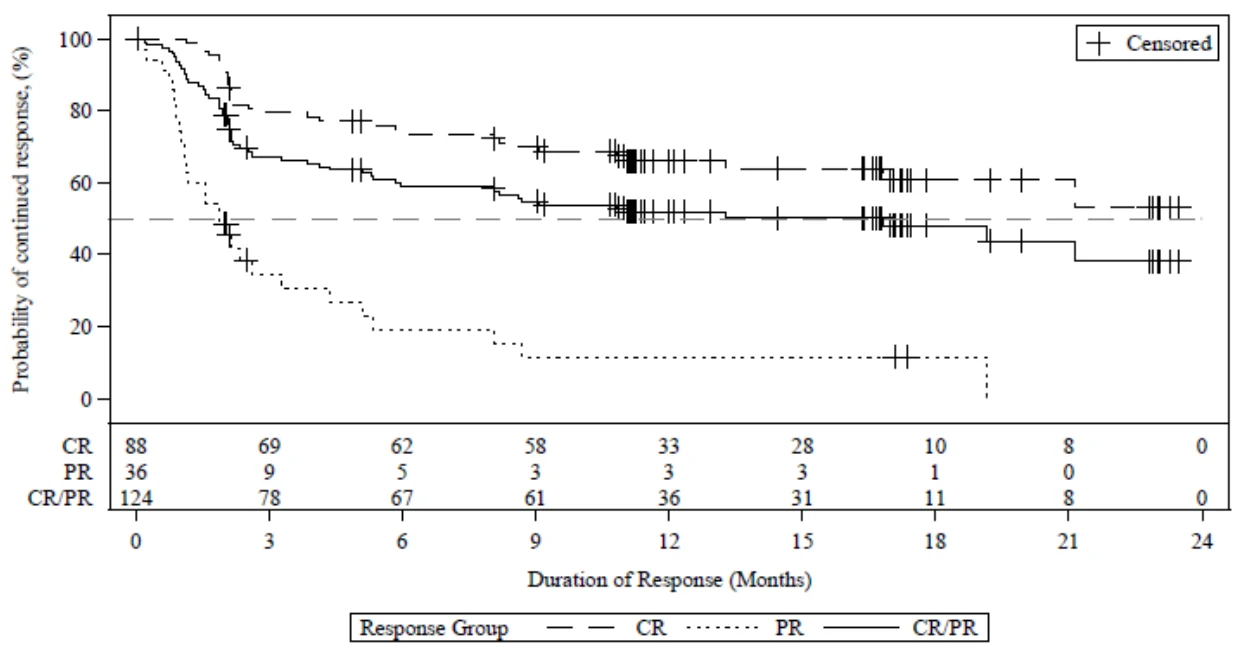
CR = complete response; PR = partial response.
Deaths after initiation of anti-cancer treatment were considered as events
15. Microbiology
No microbiological information is required for this drug product.
16. Non-Clinical Toxicology
Genotoxicity assays and carcinogenicity studies were not conducted. In vitro expansion studies from healthy donors and patients showed no evidence for transformation and/or immortalization and no preferential integration near genes of concern in BREYANZI T cells.
Given the nature of the product, non-clinical studies on fertility were not conducted.
17. Supporting Product Monographs
- 1) ACTEMRA (tocilizumab for injection, 20 mg/mL vials, 162 mg/0.9 mL pre-filled syringe), Submission Control No. 236665, Product Monograph. Hoffmann-La Roche Limited, Date of Revision: January 4, 2021.
- 2) Fludarabine Phosphate for Injection (Sterile Solution for Injection 25 mg/mL, 2 mL per vial), Submission Control No. 190383, Product Monograph. Teva Canada Limited. Date of Revision: March 1, 2016.
- 3) PROCYTOX (cyclophosphamide tablets USP: 25 mg, 50 mg; cyclophosphamide for injection: 200 mg, 500 mg, 1000 mg, 2000 mg (powder for injection) per vial), Submission Control No. 155509, Product Monograph. Baxter Corporation, Date of Revision: September 7, 2012.
- 4) SOLU-MEDROL (methylprednisolone sodium succinate for injection USP; 500 mg, 1 g vials), Submission Control No. 213593, Product Monograph. Pfizer Canada Inc., Date of Revision: February 07, 2022.
- 5) DEXAMETHASONE OMEGA UNIDOSE (dexamethasone sodium phosphate injection USP, 10 mg/mL), Control No. 154533, Prescribing Information. Omega Laboratories Limited, Date of Preparation: June 12, 2012.