


Product Monograph - Adstiladrin
Recent Major Label Changes
Not applicable.
Table of Contents
Certain sections or subsections that are not applicable at the time of the preparation of the most recent authorized product monograph are not listed.
Recent Major Label Changes ................................................................................................... 2
Table of Contents ................................................................................................................... 2
Part 1: Healthcare Professional Information ........................................................................... 4
- 1.
Indications ....................................................................................................................... 4
1.1. Pediatrics .................................................................................................................. 4
1.2. Geriatrics .................................................................................................................. 4
- 2. Contraindications ............................................................................................................ 4
- 4.
Dosage and Administration ............................................................................................. 4
4.1. Dosing Considerations .............................................................................................. 4
4.2. Recommended Dose and Dosage Adjustment ......................................................... 5
4.4. Administration .......................................................................................................... 5
4.5. Missed Dose ............................................................................................................. 7
- 5. Overdose ......................................................................................................................... 7
- 6. Dosage Forms, Strengths, Composition, and Packaging ................................................... 7
- 7.
Warnings and Precautions ............................................................................................... 8
General ................................................................................................................................. 8
Reproductive Health ........................................................................................................... 10
7.1. Special Populations ................................................................................................ 10
7.1.1. Pregnancy ...................................................................................................... 10
7.1.2. Breastfeeding ................................................................................................ 10
7.1.3. Pediatrics ....................................................................................................... 10
7.1.4. Geriatrics ....................................................................................................... 10
- 8.
Adverse Reactions ......................................................................................................... 11
8.1. Adverse Reaction Overview .................................................................................... 11
8.2. Clinical Trial Adverse Reactions .............................................................................. 11
8.3. Less Common Clinical Trial Adverse Reactions ....................................................... 13
8.4. Abnormal Laboratory Findings: Hematologic, Clinical Chemistry, and Other Quantitative Data ............................................................................................................... 13
8.5. Post-Market Adverse Reactions ............................................................................. 14
- 9.
Drug Interactions ........................................................................................................... 14
9.2. Drug Interactions Overview .................................................................................... 14
9.3. Drug-Behaviour Interactions .................................................................................. 14
9.4. Drug-Drug Interactions ........................................................................................... 14
9.5. Drug-Food Interactions........................................................................................... 14
9.6. Drug-Herb Interactions ........................................................................................... 14
9.7. Drug-Laboratory Test Interactions ......................................................................... 14
- 10.
Clinical Pharmacology ................................................................................................... 14
10.1. Mechanism of Action .............................................................................................. 14
10.2. Pharmacodynamics ................................................................................................ 14
10.3. Pharmacokinetics ................................................................................................... 15
10.4. Immunogenicity ...................................................................................................... 15
- 11. Storage, Stability, and Disposal ...................................................................................... 15
- 12. Special Handling Instructions ......................................................................................... 16
Part 2: Scientific Information ................................................................................................ 17
- 13. Pharmaceutical Information .......................................................................................... 17
- 14.
Clinical Trials .................................................................................................................. 17
14.1. Clinical Trials by Indication ..................................................................................... 17
- 15. Microbiology ................................................................................................................. 19
- 16. Non-Clinical Toxicology .................................................................................................. 20
Patient Medication Information ........................................................................................... 22
Part 1: Healthcare Professional Information
1. Indications
ADSTILADRIN (nadofaragene firadenovec) is indicated for:
- Treatment of adult patients with Bacillus Calmette-Guérin (BCG)-unresponsive, high-risk, non-muscle invasive bladder cancer (NMIBC) with carcinoma in situ (CIS) with or without papillary tumours.
1.1. Pediatrics
Pediatrics (<18 years of age): No data are available to Health Canada; therefore, Health Canada has not authorized an indication for pediatric use.
1.2. Geriatrics
Geriatrics (≥65 years of age): Clinical studies of ADSTILADRIN did not include sufficient numbers of patients younger than 65 years of age to allow for a definitive comparison of safety and efficacy with patients older than 65 years of age. Available data do not suggest age related differences.
2. Contraindications
ADSTILADRIN is contraindicated in patients who are hypersensitive to this drug or to any ingredient in the formulation, including any non-medicinal ingredient, or component of the container, or who have had prior hypersensitivity reactions to interferon alpha. For a complete listing, see 6 Dosage Forms, Strengths, Composition, and Packaging.
4. Dosage and Administration
4.1. Dosing Considerations
ADSTILADRIN is for intravesical instillation ONLY.
ADSTILADRIN is a non-replicating adenoviral vector-based gene therapy. Follow universal biosafety precautions for handling.
Individuals who are immunosuppressed, immune-deficient or pregnant, should not prepare, administer, or come into contact with ADSTILADRIN (see 7 Warnings and Precautions).
Verify the pregnancy status of females of reproductive potential prior to initiating ADSTILADRIN (see 7 Warnings and Precautions).
Advise patients and caregivers regarding the need for virucidal treatment of voided urine following treatment with ADSTILADRIN (see 7 Warnings and Precautions and 12 Special Handling Instructions).
Urinary tract infection should be excluded before each bladder instillation of ADSTILADRIN. If a urinary tract infection is diagnosed during ADSTILADRIN therapy, ADSTILADRIN should be interrupted until the patient is asymptomatic and treatment with antibiotics is completed (see 7 Warnings and Precautions).
Premedication with an anticholinergic before each instillation of ADSTILADRIN is recommended to reduce potential bladder irritation and to prevent premature voiding of the bladder.
4.2. Recommended Dose and Dosage Adjustment
The recommended dose of ADSTILADRIN is 75 mL at a concentration of 3 x 10¹¹ viral particles (vp)/mL administered by intravesical instillation once every three (3) months.
The duration of treatment should be determined based on the individual patient’s clinical response and tolerability. Eligibility for continued treatment should be reassessed regularly prior to each instillation, and ADSTILADRIN discontinued if the patient does not show adequate clinical improvement or has evidence of high-grade disease recurrence.
4.4. Administration
Thawing ADSTILADRIN
ADSTILADRIN is provided as a sterile frozen suspension.
All four vials of ADSTILADRIN must be thawed and brought to room temperature (20°C to 25°C) prior to use.
WHEN THAWING AT ROOM TEMPERATURE:
Frozen ADSTILADRIN vials will thaw in approximately 3 to 5 hours outside the cardboard nest when placed at room temperature (20°C to 25°C) (8 to 10 hours inside the nest).
WHEN THAWING IN REFRIGERATOR:
Frozen ADSTILADRIN vials will thaw in approximately 4 to 5 hours outside the cardboard nest when placed in the refrigerator (up to 8°C) (11 to 13 hours inside the nest). Subsequent time for bringing thawed ADSTILADRIN to room temperature is approximately 2 hours 30 minutes outside of the cardboard nest (6 hours inside the nest).
Do not expose the vials to higher temperatures. Protect from light. DO NOT refreeze.
The vials may be moved between refrigerator and room temperature if the total storage time at each condition is not exceeded (24 hours at room temperature and 7 days refrigerated including thawing time).
Preparation of ADSTILADRIN for Instillation
Visually inspect all four vials for visible particles and discolouration. The suspension is slightly opalescent and may contain opalescent flecks. Do not use if visible particles or discolouration are observed. Mix gently. DO NOT shake.
Items required for instillation:
- Four (4) thawed vials of ADSTILADRIN.
- Four (4) vented vial adapters (20 mm) suitable for a standard 30R vial.
- Two (2) standard 50 or 60 mL polypropylene Luer lock syringes or one (1) Luer lock syringe equal to or greater than 75 mL (max 100 mL).
Two (2) Luer lock adapters
- One (1) straight, or intermittent, urethral catheter with a proximal funnel opening that will accommodate the Luer lock adapter.
- Use only catheters made of vinyl/PVC (uncoated or coated with hydrogel), red rubber latex or silicone to instill ADSTILADRIN. Do not use catheters coated or embedded with silver or antibiotics.
- Using aseptic technique, remove the cap from an ADSTILADRIN vial and attach a vented vial adapter according to manufacturer’s instructions.
Connect the syringe to the vial adapter and withdraw the contents of the vial into the syringe. Repeat steps 1-2 for the remaining three (3) vials until 75 mL has been withdrawn into one (1) or two (2) syringes.
- The volumes in the syringes do not have to be equal.
Discard any remaining volume according to universal precautions.
- If unable to administer the suspension shortly after withdrawal, the solution may be stored in syringes for up to 6 hours at room temperature (20°C to 25°C) protected from light. The 6 hours storage in syringes are included in the total storage time of 24 hours at room temperature.
Treat any ADSTILADRIN spills or unused portion with a virucidal agent (such as sodium hypochlorite with 0.5% active chlorine or 6% hydrogen peroxide solution) for 15 minutes. Disposable materials that have come into contact with ADSTILADRIN should be placed in biohazard containers for destruction. Non-disposable equipment may be decontaminated according to the facility’s standard operating procedures.
Bladder Instillation of ADSTILADRIN
- 1. Premedication with an anticholinergic before each instillation of ADSTILADRIN is recommended.
- 2. ADSTILADRIN must be brought to room temperature before administration (see 4.4 Administration, Thawing ADSTILADRIN).
- 3. Before administering ADSTILADRIN to the patient, insert one straight, or intermittent, urinary catheter with a proximal funnel opening that will accommodate the Luer lock adapter.
- 4. Use only catheters made of vinyl/PVC (uncoated or coated with hydrogel), red rubber latex or silicone to instill ADSTILADRIN. Do not use catheters coated or embedded with silver or antibiotics.
- 5. Use the catheter to completely empty the patient’s bladder before instillation of ADSTILADRIN. Do not remove the catheter.
- 6. Attach the Luer lock end of the same catheter adapter to the syringe containing ADSTILADRIN and insert the tapered end of the catheter adapter into the funnel opening of the catheter.
- 7. Slowly instill 75 mL of ADSTILADRIN into the bladder through the catheter, ensuring that the complete volume is administered.
- 8. Remove the catheter after instillation.
- 9. After the instillation, ADSTILADRIN should be retained in the bladder for 1 hour. During the 1-hour dwell time, the patient should reposition approximately every 15 minutes from left to right, back and abdomen to maximize bladder surface exposure. If, during the dwell time, the patient exhibits bladder cramping or premature voiding, repositioning of the patient may be adjusted or discontinued.
- 10.
Evacuate ADSTILADRIN from the bladder as part of routine emptying of the bladder, or the
- patient may void and completely empty the bladder after 1 hour has elapsed.
- 11. Voided urine should be disinfected for 15 minutes with an equal volume of virucidal agent before flushing of the toilet (see 7 Warnings and Precautions and 12 Special Handling Instructions).
4.5. Missed Dose
If a planned dose of ADSTILADRIN is missed, it should be administered as soon as possible. The schedule for the clinical evaluation of the patient’s disease status should be carried out as planned. The schedule of administration should be adjusted to maintain the prescribed dosing interval.
5. Overdose
In the event of a suspected overdose, the patient should be treated symptomatically, and supportive measures instituted as required.
For the most recent information in the management of a suspected drug overdose, contact your regional poison control centre or Health Canada’s toll-free number, 1-844 POISON-X (1-844-764-7669).
- 6. Dosage Forms, Strengths, Composition, and Packaging
To help ensure the traceability of biologic products, healthcare professionals should record both the brand name and the non-proprietary (active ingredient) name as well as other product-specific identifiers such as the Drug Identification Number (DIN) and the batch/lot number of the product supplied.
Table 1 – Dosage Forms, Strengths, and Composition
Description
ADSTILADRIN is a non-replicating recombinant type 5 adenovirus vector-based gene therapy containing the human interferon-alpha-2b (IFNα2b) transgene.
ADSTILADRIN is a sterile, preservative-free, opalescent colourless suspension for intravesical instillation.
ADSTILADRIN is provided in a carton containing four (4) single-use vials. All vials have a nominal
| Route of Administration | Dosage Form/ Strength/Composition | Non-Medicinal Ingredients |
| Intravesical instillation | Suspension for instillation, 3x10¹¹ vp/mL, nadofaragene firadenovec | Citric acid monohydrate, glycerol, hydroxypropylbetadex, magnesium chloride hexahydrate, polysorbate 80, sodium dihydrogen phosphate dihydrate, sucrose, syn3NODA ([N-(3-cholamidopropyl)-N-(3-lactobionamidopropyl)]-cholamide), sodium citrate, trometamol, water for injection |
concentration of 3 × 10¹¹ viral particles (vp)/mL. Each vial of ADSTILADRIN contains an extractable volume of not less than 20 mL.
The vials are single-used transparent glass vials sealed with a rubber stopper.
7. Warnings and Precautions
General
Risk of Muscle-Invasive or Metastatic Bladder Cancer with Delayed Cystectomy
Delaying cystectomy in patients with BCG-unresponsive CIS with or without papillary tumours could lead to development of muscle-invasive or metastatic bladder cancer, which can be lethal. The risk of developing muscle-invasive or metastatic bladder cancer increases the longer cystectomy is delayed in the presence of persisting CIS.
Of the 107 patients with CIS treated with ADSTILADRIN in Study CS-003, 7.5% (n=8) progressed to muscle invasive (pT2 or greater) and/or lymph node metastatic (pN+) bladder cancer. Four patients had progression during treatment at time of first recurrence with a median time from first dose to progression of 686 days (range: 76 to 1178 days). The remaining 4 patients were upstaged at the time of cystectomy with a median time from persistence or recurrence of CIS to cystectomy of 235 days (range: 64 to 335 days).
If patients with CIS who are eligible for cystectomy do not have a complete response to treatment after 3 months or if CIS recurs, consider cystectomy.
Risk of Disseminated Adenovirus Infection
Immunocompromised persons, including those receiving immunosuppressant therapy, may be at risk for disseminated adenovirus infection because of the possible presence of low levels of replication-competent adenovirus in ADSTILADRIN. Individuals who are immunosuppressed, immune-deficient, or pregnant should not prepare, administer, or come into contact with ADSTILADRIN.
Urinary Tract Infection
Urinary tract infection should be excluded before each bladder instillation of ADSTILADRIN (bladder mucous membrane inflammation may increase the risk of haematological dissemination of ADSTILADRIN). If a urinary tract infection is diagnosed during ADSTILADRIN therapy, the therapy should be interrupted until the urinalysis is normalised and treatment with antibiotics is completed.
Vector Shedding
Temporary vector shedding of ADSTILADRIN in urine is expected (see 10.3 Pharmacokinetics). Advise patients and caregivers regarding virucidal treatment of voided urine (see 12 Special Handling Instructions) and advise patients on the use of contraception to avoid exposing sexual partner to virus (see 7 Warnings and Precautions,
Reproductive Health).
Reproductive Health
Contraception
Females
Women of childbearing potential should use an effective (double) contraception method during treatment with ADSTILADRIN and for 6 months following the last dose. This also applies to females of childbearing potential who are partners of male patients who are treated with ADSTILADRIN.
Males
Male patients should use an effective barrier contraception method during treatment with ADSTILADRIN and for 3 months following the last dose.
Fertility
No clinical or nonclinical studies were performed to evaluate the effect of ADSTILADRIN on fertility.
7.1. Special Populations
7.1.1. Pregnancy
No data are available on the use of ADSTILADRIN in pregnant women. Animal reproduction and developmental toxicity studies have not been conducted with ADSTILADRIN. Advise female patients on the potential risk to a fetus. ADSTILADRIN is not recommended during pregnancy and in women of childbearing potential not using effective contraception unless the clinical benefit outweighs the potential risks.
7.1.2. Breastfeeding
There is no information regarding the presence of ADSTILADRIN in human milk, the effects on the breastfed infant, or the effects on milk production. A decision must be made whether to discontinue breast-feeding or to discontinue/abstain from ADSTILADRIN therapy taking into account the benefit of breast-feeding for the child and the benefit of therapy for the woman.
7.1.3. Pediatrics
Pediatrics (<18 years of age): No data are available to Health Canada; therefore, Health Canada has not authorized an indication for pediatric use.
7.1.4. Geriatrics
Geriatrics (≥65 years of age): Clinical studies of ADSTILADRIN did not include sufficient numbers of patients younger than 65 years of age to allow for a definitive comparison of safety and efficacy with patients older than 65 years of age. Available data do not suggest age related differences.
8. Adverse Reactions
8.1. Adverse Reaction Overview
In a Phase 3 trial (CS-003) of ADSTILADRIN in patients with BCG-unresponsive, high-risk NMIBC (see 14 Clinical Trials), the most common adverse reactions (≥10%) were: instillation site discharge (33%), fatigue (24%), bladder spasm (20%), micturition urgency (19%), hematuria (17%), dysuria (16%), pyrexia (16%), chills (15%), headache (15%), urinary tract infection (15%), diarrhea (11%), and pollakiuria (10%). Grade ≥3 adverse reactions occurred in 22% of patients. There were no grade 4 or 5 adverse reactions.
8.2. Clinical Trial Adverse Reactions
Clinical trials are conducted under very specific conditions. Therefore, the frequencies of adverse reactions observed in the clinical trials may not reflect frequencies observed in clinical practice and should not be compared to frequencies reported in clinical trials of another drug.
BCG-unresponsive High-risk NMIBC with CIS with or without Papillary Tumours
The safety of ADSTILADRIN was evaluated in Study CS-003, a multicenter, single-arm, open-label study in 157 patients with BCG-unresponsive high-risk NMIBC, including 107 patients with CIS with or without papillary tumours. Patients received 75 mL of ADSTILADRIN at a concentration of 3 x 10¹¹ vp/mL, administered by intravesical instillation once every 3 months for up to 12 months (4 doses) or until unacceptable toxicity or recurrence of high-grade NMIBC. Patients without evidence of high-grade recurrence or progression were offered continued treatment with ADSTILADRIN every 3 months. The median number of instillations of ADSTILADRIN was 2 (range: 1 to 21).
The most common serious adverse reaction was syncope (0.6%)
Permanent discontinuation of ADSTILADRIN due to an adverse reaction occurred in 4 (2.5%) patients. Adverse reactions that resulted in permanent discontinuation of ADSTILADRIN included bladder spasm, instillation site discharge, sepsis, and benign neoplasm of the bladder.
Dosage interruptions of ADSTILADRIN due to an adverse reaction occurred in 34% of patients. The most common adverse reactions leading to dose interruption were instillation discharge (24.2%), micturition urgency (8.3%), and bladder spasm (8.3%).
Table 2 lists the adverse reactions identified in patients receiving ADSTILADRIN in CS-003.
Table 2 – Adverse Reactions ≥ 2% in Patients with NMIBC in CS-003
| Adverse Reaction* | ADSTILADRIN (n=157) | |
|---|---|---|
| All Grades (%) | Grade 3 or 4 (%) | |
| General disorders and administration site conditions | ||
| Instillation site discharge | 33.1 | 0 |
| Fatigue1 | 24.2 | 0 |
| Pyrexia | 15.9 | 0 |
| Chills | 15.3 | 0 |
| Pain | 7.0 | 0 |
| Influenza like illness | 5.1 | 0 |
| Malaise | 3.8 | 0 |
| Renal and Urinary Disorders | ||
| Bladder spasm | 19.7 | 0.6 |
| Micturition urgency | 18.5 | 1.3 |
| Haematuria2 | 17.2 | 1.3 |
| Dysuria | 15.9 | 0 |
| Lower urinary tract pain3 | 10.8 | 0 |
| Pollakiuria | 9.6 | 0 |
| Urinary incontinence4 | 6.4 | 0.6 |
| Nocturia | 4.5 | 0 |
| Urinary retention | 4.5 | 0.6 |
| Haemorrhage urinary tract | 2.5 | 0 |
| Gastrointestinal Disorders | ||
| Diarrhoea | 10.8 | 0 |
| Abdominal pain5 | 9.6 | 0.6 |
| Nausea | 7.6 | 0 |
| Vomiting | 3.8 | 0 |
| Nervous system disorders | ||
| Headache | 15.3 | 0 |
| Dizziness | 8.9 | 0 |
| Infections and Infestations | ||
| Urinary tract infection | 14.6 | 0.6 |
| Musculoskeletal and Connective Tissue Disorders | ||
| Myalgia | 7.6 | 0 |
| Arthralgia | 6.4 | 0.6 |
| Vascular disorders | ||
| Hypertension | 7.0 | 2.5 |
| Skin and subcutaneous tissue disorders | ||
| Night sweats | 2.5 | 0 |
| Metabolism and nutrition disorders | ||
| Decreased appetite | 3.2 | 0 |
*Graded per NCI CTCAE v4.03; there were no Grade 4 or 5 adverse reactions.
1 Includes Fatigue and Asthenia
2 Includes Haematuria and Blood urine present
3 Includes Bladder pain, Urethral pain, Bladder discomfort, and Bladder irritation
4 Includes Urinary incontinence and Urge incontinence
5 Includes Abdominal pain, Abdominal pain upper, Abdominal pain lower, and Abdominal discomfort
8.3. Less Common Clinical Trial Adverse Reactions
The following clinically important adverse reactions were reported in <2% of patients treated with ADSTILADRIN in study CS-003.
Blood and lymphatic system disorders: Thrombocytopenia, Neutropenia
Nervous system disorders: Syncope
8.4. Abnormal Laboratory Findings: Hematologic, Clinical Chemistry, and Other Quantitative Data
Clinical Trial Findings
Table 3 – Selected Laboratory Abnormalities (>10%) That Worsened from Baseline in Patients with NMIBC in CS-003
| Laboratory Abnormality | ADSTILADRIN1 | |
All Grades (%) | Grade 3 or 4 (%) | |
| Chemistry | ||
| Glucose increased | 38 | 6 |
| Triglycerides increased | 30 | 1.9 |
| Creatinine increased | 17 | 0 |
| Phosphate decreased | 16 | 1.4 |
| Aspartate Aminotransferase increased | 15 | 0 |
| Cholesterol increased | 15 | 0 |
| Alanine Aminotransferase increased | 14 | 0 |
| Potassium increased | 12 | 0 |
| Hematology | ||
| Leukocytes decreased | 19 | 0 |
| Platelets decreased | 17 | 0 |
| Hemoglobin decreased | 16 | 0.6 |
| Lymphocytes decreased | 14 | 0 |
| Neutrophils decreased | 12 | 1.9 |
*Graded per NCI CTCAE v4.03
1 The denominator used to calculate the rate varied from 148 to 156 based on the number of patients with a baseline value and at least one post-treatment value.
8.5. Post-Market Adverse Reactions
Not applicable.
9. Drug Interactions
9.2. Drug Interactions Overview
No formal trials have been conducted with ADSTILADRIN to evaluate the potential for drug-drug interactions. Given the nature of the product, route of administration and minimal systemic exposure, drug-drug interactions with concomitantly administered drugs are not anticipated.
9.3. Drug-Behaviour Interactions
The interaction of ADSTILADRIN with individual behavioural risks (e.g. cigarette smoking, cannabis use, and/or alcohol consumption) has not been studied.
9.4. Drug-Drug Interactions
Interactions with other drugs have not been established.
9.5. Drug-Food Interactions
Interactions with food have not been established.
9.6. Drug-Herb Interactions
Interactions with herbal products have not been established.
9.7. Drug-Laboratory Test Interactions
Interactions with laboratory tests have not been established.
10. Clinical Pharmacology
10.1. Mechanism of Action
ADSTILADRIN is a non-replicating recombinant type 5 adenovirus vector-based gene therapy containing the human IFNα2b transgene. Intravesical administration of ADSTILADRIN results in transduction of urothelial cells and transient local expression and secretion of the IFNα2b protein that is anticipated to have anti-tumor effects. The excipient Syn3NODA facilitates transduction of adenoviral vector in the urothelium and increases transgene expression in the bladder epithelium.
10.2. Pharmacodynamics
IFNα2b protein concentration was used as the pharmacodynamic marker for ADSTILADRIN.
IFNα2b protein was present in the urine from all patients in the Phase 1 (P03816) and Phase 2 (rAd-IFN-CS-002) trials. except for two patients at the lowest dose level (3x10⁹ vp/ml) in the Phase 1 trial. Urine IFNα2b protein was detected as early as Day 1 post-dose and up to Day 12 post-dose. Generally, higher urinary IFNα2b concentrations and exposure were observed with increasing doses of ADSTILADRIN.
IFNα2b protein was measurable in the blood of 23.5% and 30.8% of patients from the Phase 1 and Phase 2 trial, respectively, which declined over a period of 10-12 days.
10.3. Pharmacokinetics
Adenoviral vector-specific DNA was used as the pharmacokinetic marker for ADSTILADRIN. Vector-derived DNA was not detectable in the blood of patients in the Phase 1 and 2 trials, except for one patient in the Phase 2 trial, who had measurable level of vector-specific DNA in the blood at one timepoint after the second dose.
Vector-specific DNA was present in the urine (shedding) of most patients in the Phase 1 trial and all patients in the Phase 2 trial, which persisted for at least 14 days. Generally, higher frequency of detection of urinary vector-derived DNA and persistence of presence were correlated with increasing doses of ADSTILADRIN.
10.4. Immunogenicity
Immunogenicity of ADSTILADRIN was evaluated through the measurement of serum anti-IFNα2b antibody levels in the Phase 1 and 2 trials and anti-adenovirus type 5 antibody levels in the Phase 1, Phase 2, and Phase 3 trials. A positive anti-adenovirus type 5 immunogenic response was detected in 29.4% patients in the Phase 1 trial (post-baseline levels greater than 10-fold over baseline levels), 55.0% of patients in the Phase 2 trial (post-baseline levels greater than 2-fold over baseline levels), and 72.4% of patients in the Phase 3 trial (rAd-IFN-CS-003) (post-baseline levels greater than 2-fold over baseline levels). The presence of anti-adenoviral immunogenic response does not adversely impact the efficacy of ADSTILADRIN as a higher incidence of high-grade recurrence-free survival at Month 3 was reported in patients who were positive for anti-adenoviral antibody compared to those who were negative (77.7% vs. 33.4%) in the Phase 3 trial. There is no evidence that anti-adenovirus or anti-IFNα2b antibodies has any impact on patient safety.
- 11. Storage, Stability, and Disposal
Store below -60oC until expiry date printed on the carton.
The product can be stored at -20 ± 5 oC for a maximum period of 3 months without exceeding the original expiry printed on the vial and carton.
When stored at -20 ± 5°C the date of placement at -20 ± 5°C should be noted. In addition, the date for when the medicinal product should be discarded if not used, must be written on the carton. These dates should be three months apart but should not pass the original expiry date. This discard date supersedes the original expiry date.
Once the vial thawing procedure is initiated ADSTILADRIN can be stored refrigerated at 2-8°C for a total of seven days and at room temperature for a maximum of 24 hours, all including thawing time.
Protect the vials from light.
ADSTILADRIN is stable for up to 4 years when stored below -60°C.
Any ADSTILADRIN spills should be treated with a virucidal agent for 15 minutes. Disposable materials that have come into contact with ADSTILADRIN should be placed in biohazard containers for destruction. Non-disposable equipment may be decontaminated according to the facility’s standard operating procedures.
12. Special Handling Instructions
Store and transport frozen (below -60°C).
Upon receipt, ADSTILADRIN can be stored as indicated below:
- 1. In a freezer below -60°C until expiry date printed on the carton.
- 2. In a freezer at -20 ± 5°C up to three months, without exceeding the original expiry date printed on the vial and carton.
- 3. Refrigerated at 2-8°C for a total of seven days.
- 4. At room temperature (20-25°C) for a maximum of 24 hours.
If moved from storage below -60°C to -20 ± 5°C the date of placement at -20 ± 5°C should be noted. In addition, the date for when the medicinal product should be discarded if not used, must be written on the carton. These dates should be three months apart but should not pass the original expiry date. This discard date supersedes the original expiry date.
Once the thawing procedure is initiated (at 2-8°C and/or at room temperature), the date and time for placing and removing the product from the specified storage condition, should be noted on the carton. When removing the product, the time remaining at the specific storage condition should be noted.
Virucidal Treatment of Voided Urine
Patients should be advised regarding the need to treat voided urine following treatment with ADSTILADRIN.
- Patients should add two cups of virucidal agent to the toilet bowl prior to voiding, and then wait 15 minutes after urination before flushing the toilet. This should be done for the first 2 days after each treatment with ADSTILADRIN.
Part 2: Scientific Information
13. Pharmaceutical Information
Drug Substance
Non-proprietary name of the drug substance(s): nadofaragene firadenovec
Chemical name: rAd-IFN adenovirus vector containing the interferon alfa-2b gene
Structure (for biologics)/Structural formula:
Physicochemical properties: nadofaragene firadenovec (rAd-IFN) drug substance is an opalescent colourless solution.
Pharmaceutical standard: Antineoplastic agent, adenoviral vector-based gene therapy
Product Characteristics:
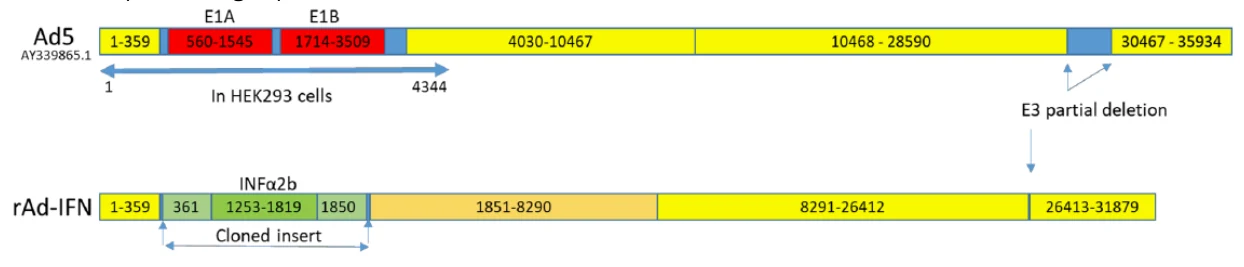
The active biological agent of ADSTILADRIN is a recombinant adenoviral vector gene therapy that carries the human IFN-α2b cDNA in an expression cassette in place of the E1a and E1b regions at the 5’ end of the Ad5 genome as depicted in the schematic representation and comparison of rAd-IFN and wild type Ad5 genome sequences.
14. Clinical Trials
14.1. Clinical Trials by Indication
Bacillus Calmette-Guérin (BCG)-unresponsive, high-risk non-muscle invasive bladder cancer (NMIBC) with CIS with or without papillary tumours.
Table 4 – Summary of patient demographics for clinical trials of ADSTILADRIN in patients with BCG-unresponsive, high-risk NMIBC.
| Study # | Study design | Dosage, route of administration and duration | Study subjects (n) | Median age (range) | Sex |
| rAd-IFN-CS-003 | Multicenter, single-arm, open-label | Intravesical instillation with ADSTILADRIN 75 mL (3×10¹¹ vp/mL) every 3 months for up to 12 months (4 doses), if no high-grade disease recurrencea Patients with no high-grade disease recurrence at Month 12 could continue to receive intravesical instillations with ADSTILADRIN 75mL (3×10¹¹ vp/mL) every 3 months up to 5 years from first instillation, if no high-grade disease recurrenceb | 103 patients with BCG-unresponsive, high-risk NMIBC with CIS with or without papillary tumours | 71 years (44 to 89) | M: 91 (88%) F: 12 (12%) |
a High-grade disease recurrence was assessed up to 2 weeks prior to dosing by cytology and cystoscopy, and biopsies if clinically indicated (biopsy at Month 12 was mandatory).
b Up to Month 24, high-grade disease recurrence was assessed every 3 months by cytology and cystoscopy, and biopsies if clinically indicated. From Month 24 onwards, assessments were performed for patients still on treatment by the investigator in accordance with usual clinical practice, confirming the suitability of the patient to continue to receive ADSTILADRIN prior to each instillation.
The efficacy of ADSTILADRIN was evaluated in CS-003, an open-label, single arm, multicenter trial in 103 adult patients with BCG-unresponsive, high-risk, non-muscle invasive bladder cancer (NMIBC) with carcinoma in situ (CIS) with or without papillary tumours. BCG-unresponsive high-risk NMIBC was defined as persistent disease following adequate BCG therapy, disease recurrence after an initial tumour-free state following adequate BCG therapy, or T1 disease following a single induction course of
BCG. Adequate BCG was defined as the administration of at least five of six doses of an initial induction course plus either of: at least two of three doses of maintenance therapy or at least two of six doses of a second induction course. Prior to treatment, all patients had undergone transurethral resection of bladder tumour (TURBT) to remove all resectable disease (Ta and T1 components). Residual CIS (Tis components) not amenable to complete resection was allowed. The trial excluded patients with extra-vesical (i.e., urethra, ureter, or renal pelvis), muscle invasive (T2-T4), or metastatic urothelial carcinoma.
Patients received ADSTILADRIN 75 mL intravesical instillation (3 x 10¹¹ vp/mL) once every three months for up to 12 months (four doses) or until unacceptable toxicity or recurrent high-grade NMIBC. Patients without evidence of high-grade recurrence at Month 12 were allowed to continue ADSTILADRIN treatment every three months.
The major efficacy outcome measures were complete response (CR) at any time (as defined by negative results for cystoscopy [with TURBT/biopsies as applicable] and urine cytology) and duration of response. Low-grade (Ta) papillary disease was not considered a recurrence for the purposes of evaluating durability of CR. CR was assessed at 3, 6, 9, and 12 months by cystoscopy and cytology. Random bladder biopsy of five sites was conducted in patients remaining in CR at Month 12. Assessment of durability of CR subsequent to these evaluations was performed per local standards of care.
Patient characteristics were as follows: median age of 71 years (range: 44-89) with 77% ≥65 years of age; 88% male; 92% White; ECOG status 0 (90%), 1 (7%), and 2 (3%). Tumour pattern at study entry was CIS (77%), CIS with high-grade Ta (18%), CIS with T1 (5%). The median number of prior BCG instillations was 12 (range: 8 to 18).
Efficacy results are summarized in
Table 5.
Table 5 – Efficacy results of study CS-003
| Efficacy outcome measure | ADSTILADRIN (n=103) |
|---|---|
| Complete responsea rate % (n) | 53.4% (55) |
| (95% CI) | (43.3, 63.3) |
| Duration of responseb | |
| Median in monthsc (range) | 9.7 (3, 61) |
| % (n) with duration ≥ 12 monthsd | 45.5% (25) |
a CR was achieved when urine cytology was negative and no lesions were visualised by cystoscopy, and/or biopsies of the bladder (if performed) were negative. All patients who achieved CR did so by Month 3.
b Based on 55 patients that achieved a complete response.
c Reflects period from the time complete response was achieved.
d Nominal value for the efficacy assessment visit from time of first ADSTILADRIN instillation.
15. Microbiology
No microbiological information is required for this drug product.
16. Non-Clinical Toxicology
Biodistribution
Biodistribution of nadofaragene firadenovec (rAd-IFN/Syn3) was evaluated in a GLP-compliant toxicokinetic study in which monkeys were administered intravesically with 1 x 10¹⁰ or 5 x 10¹¹ vp/mL rAd-IFN in 1 mg/mL Syn3 on Days 1 and 91. Viral vector (rAd-IFN-specific DNA) was detected in the bladder tissue on Days 8 and 98 (7 days after the first and second dose, respectively) and in the urine on the days of dosing at Days 1 and 91) that remained detectable for 3 to 4 days post-dose. rAd-IFN-specific DNA was also quantifiable at low levels in the blood of a limited number of monkeys during the first 24 hours after each dose. Viral vector was also detected in a limited number of monkeys in the liver, kidney and gonads on Day 8, in the liver and kidney on Day 98, and in the kidney on Day 148. The excipient Syn3 was quantifiable in the plasma up to 7 or 25 hr post-instillation, with peak plasma concentrations generally achieved by 2 hr post-dose. The transgene (human IFNα2b protein) was detected primarily in the bladder tissue and urine, and in the blood of a limited number of monkeys after intravesical administration of rAd-IFN/Syn3.
The biodistribution of Syn3 was evaluated by quantitative whole-body autoradiography following a single intravesical administration of 14C-Syn3 to females rats or male rabbits. In female rats, peak 14C-Syn3-derived radioactivity was detected at 1 hr post-dose in blood and tissues, with the highest radioactivity at the urinary bladder wall. Blood and tissue radioactivity generally declined over the experimental period to such an extent that by 24 hr post-dose, radioactivity was undetectable in blood and low in tissue. At 96 hr, radioactivity remained detectable at the bladder wall, adrenal gland, ovary, and large intestinal wall. In male rabbits, radioactivity was detected at 1 hr post-dose in blood and tissues, including sexual accessory tissues (epididymis, prostate gland and testis). The highest radioactivity was observed at the urinary bladder and urine. By 24 hr post-dose, tissue radioactivity was generally below the limit of quantification, with the exception of urinary bladder, urethra, urine, and gastrointestinal tract. Low level radioactivity detected in the gastrointestinal tract at 168 hr post-dose was associated with elimination by biliary excretion.
General Toxicology
In a GLP repeat dose toxicity study in cynomolgus monkeys, two intravesical administrations of nadofaragene firadenovec (1 x 10¹⁰ or 5 x 10¹¹ vp/mL rAd-IFN in 1 mg/mL Syn3) 90 days apart were associated with inflammation, urothelial hyperplasia, cytoplasmic vacuolation, and focal/multifocal ulceration in the urinary bladder, and irritation in the ureter and urethra at necropsy 7 days after the first and second doses. Near complete resolution of these findings was observed following the 57-day recovery period after the second administration, with minimal fibrosis in the lamina propria of the bladder in a limited number of monkeys.
Genotoxicity
No studies have been performed to evaluate the genotoxic potential of nadofaragene firadenovec (rAd-IFN). The excipient Syn3 is not genotoxic in the GLP bacterial mutagenicity study and chromosome aberration study with human peripheral blood lymphocytes. Studies evaluating the potential for nadofaragene firadenovec to integrate into the host genome have also not been conducted.
Carcinogenicity
No long-term animal studies have been performed to evaluate the carcinogenic potential of nadofaragene firadenovec.
Reproductive and Developmental Toxicology
No dedicated reproductive and developmental toxicity studies have been performed for nadofaragene firadenovec. Studies evaluating the potential for nadofaragene firadenovec to integrate into the germline have also not been conducted. It is noted that following intravesical administration of rAd-IFN or Syn3, viral vector DNA was detected in the gonads of monkeys and excipient Syn3 was detected in the ovary of female rats and testis of male rabbits.