


Product Monograph - Kymriah
Recent Major Label Changes
| 2025-11 |
|---|---|
| 2025-11 |
Table of Contents
Certain sections or subsections that are not applicable at the time of the preparation of the most recent authorized product monograph are not listed.
Recent Major Label Changes ................................................................................................. 2
Table of Contents ................................................................................................................. 2
Part 1: Healthcare Professional Information.......................................................................... 5
- 1.
Indications..................................................................................................................... 5
1.1. Pediatrics .................................................................................................................... 5
1.2. Geriatrics .................................................................................................................... 5
- 2. Contraindications .......................................................................................................... 5
- 3. Serious Warnings and Precautions Box ........................................................................... 6
- 4.
Dosage and Administration ............................................................................................ 6
4.1. Dosing Considerations ............................................................................................... 6
4.2. Recommended Dose and Dosage Adjustment .......................................................... 7
4.4. Administration ........................................................................................................... 7
4.5. Missed Dose ............................................................................................................. 10
- 5. Overdose ..................................................................................................................... 10
- 6. Dosage Forms, Strengths, Composition, and Packaging ................................................ 10
- 7.
Warnings and Precautions ........................................................................................... 10
General ................................................................................................................................. 11
Carcinogenesis and Genotoxicity ......................................................................................... 11
Driving and Operating Machinery ........................................................................................ 11
Endocrine and Metabolism .................................................................................................. 11
Immune ................................................................................................................................ 11
Neurologic ............................................................................................................................ 14
Reproductive Health ............................................................................................................. 15
7.1. Special Populations .................................................................................................. 15
7.1.1. Pregnancy ......................................................................................................... 15
7.1.2. Breastfeeding ................................................................................................... 16
7.1.3. Pediatrics .......................................................................................................... 16
7.1.4. Geriatrics .......................................................................................................... 16
- 8.
Adverse Reactions ....................................................................................................... 16
8.1. Adverse Reaction Overview ..................................................................................... 16
8.2. Clinical Trial Adverse Reactions ............................................................................... 19
8.3. Less Common Clinical Trial Adverse Reactions ........................................................ 28
8.4. Abnormal Laboratory Findings: Hematologic, Clinical Chemistry, and Other Quantitative Data ................................................................................................................. 31
8.5. Post-Market Adverse Reactions ............................................................................... 33
- 9.
Drug Interactions ......................................................................................................... 33
9.2. Drug Interactions Overview ..................................................................................... 33
9.4. Drug-Drug Interactions ............................................................................................ 33
9.5. Drug-Food Interactions ............................................................................................ 33
9.6. Drug-Herb Interactions ............................................................................................ 34
9.7. Drug-Laboratory Test Interactions........................................................................... 34
- 10.
Clinical Pharmacology .................................................................................................. 34
10.1. Mechanism of Action ............................................................................................... 34
10.2. Pharmacodynamics .................................................................................................. 34
10.3. Pharmacokinetics ..................................................................................................... 34
10.4. Immunogenicity ....................................................................................................... 37
- 11. Storage, Stability, and Disposal .................................................................................... 38
- 12. Special Handling Instructions ....................................................................................... 38
Part 2: Scientific Information .............................................................................................. 39
- 13. Pharmaceutical Information ........................................................................................ 39
- 14.
Clinical Trials ............................................................................................................... 39
14.1. Clinical Trials by Indication ...................................................................................... 39
Relapsed or Refractory (r/r) B-cell Acute Lymphoblastic Leukemia (ALL) ....................... 39
Diffuse Large B-Cell Lymphoma (DLBCL) ......................................................................... 42
Follicular Lymphoma (FL) ................................................................................................. 45
- 16. Non-Clinical Toxicology ................................................................................................ 48
Patient Medication Information ......................................................................................... 49
Part 1: Healthcare Professional Information
1. Indications
Kymriah® (tisagenlecleucel) is a CD19-directed genetically modified autologous T-cell immunocellular therapy indicated for the treatment of:
- pediatric and young adult patients up to and including 25 years of age with B-cell acute lymphoblastic leukemia (ALL) who are refractory, have relapsed after allogeneic stem cell transplant (SCT) or are otherwise ineligible for SCT, or have experienced second or later relapse.
- adult patients with relapsed or refractory large B-cell lymphoma after two or more lines of systemic therapy including diffuse large B-cell lymphoma (DLBCL) not otherwise specified, high grade B-cell lymphoma and DLBCL arising from follicular lymphoma.
- adult patients with relapsed or refractory grade 1, 2, or 3a follicular lymphoma (FL) after two or more lines of systemic therapy.
Kymriah, indicated for adult patients with relapsed or refractory grade 1, 2, or 3a follicular lymphoma (FL) after two or more lines of systemic therapy, has been issued market authorization with conditions, pending the results of trials to verify its clinical benefit. Patients should be advised of the nature of the authorization.
1.1. Pediatrics
B-cell ALL: No formal studies have been performed in relapsed or refractory B-cell ALL pediatric patients below 3 years of age.
DLBCL and FL: No formal studies in DLBCL and FL have included patients younger than 18 years of age.
1.2. Geriatrics
Geriatrics (≥65 years of age):
B-cell ALL: The safety and efficacy of Kymriah in this population has not been established (see 10 Clinical Pharmacology).
DLBCL and FL: No dose adjustment is required in patients 65 years of age or above (see 10 Clinical Pharmacology).
2. Contraindications
Kymriah is contraindicated in patients who are hypersensitive to this drug or to any ingredient in the formulation, including any non-medicinal ingredient (including dimethyl sulfoxide (DMSO) or dextran 40 (see 7 Warnings and Precautions)), or component of the container. For a complete listing, see 6 Dosage Forms, Strengths, Composition, and Packaging.
3. Serious Warnings and Precautions Box
- Cytokine release syndrome (CRS) is a common life-threatening adverse event, occurring in patients receiving Kymriah. Monitor for CRS after treatment with Kymriah. Provide supportive care as needed (see 8.1 Adverse Reaction Overview, Description of selected adverse drug reactions and section 7 Warnings and Precautions, Immune, Cytokine release syndrome).
- Neurological toxicities, including immune effector cell-associated neurotoxicity syndrome (ICANS), which may be severe or life-threatening, can occur following treatment with Kymriah, including concurrently with CRS. Monitor for neurological events after treatment with Kymriah. Provide supportive care as needed (see 7 Warnings and Precautions).
- Kymriah should be administered by experienced healthcare professionals at specialized treatment centers (see 7 Warnings and Precautions).
4. Dosage and Administration
Kymriah must be administered in a treatment centre that has been qualified by Novartis Pharmaceuticals Canada Inc. Therapy should be initiated under the direction of and supervised by a healthcare professional experienced in the treatment of haematological malignancies and trained for Kymriah administration and management of patients treated with Kymriah.
- Manufacture and release of Kymriah usually takes 3 – 4 weeks
- Leukapheresis material from patients who test positive for HIV, active HBV or active HCV infection will not be accepted for manufacturing of Kymriah. Screening for active HBV, active HCV and HIV must be performed in accordance with clinical guidelines before collection of cells for manufacturing.
4.1. Dosing Considerations
- For autologous use only – immediately prior to infusion, verify that the patient’s identity matches the information on the patient specific infusion bag(s).
- For intravenous use only. Do NOT use a leukocyte depleting filter.
- Kymriah is intended for a single treatment.
- Ensure the availability of a minimum of 2 doses of tocilizumab per patient and emergency equipment prior to infusion. Treatment centers should ensure that additional doses of tocilizumab can be accessed within 8 hours of the previous dose.
Active central nervous system (CNS) leukemia or lymphoma
There is limited experience with the use of Kymriah in patients with active CNS leukemia and active CNS lymphoma. The risk/benefit of Kymriah has not been established for these populations.
Concomitant diseases
Patients with active central nervous system (CNS) disorder or inadequate renal, hepatic, pulmonary or cardiac function were excluded from the studies. These patients are likely to be more vulnerable to the consequences of the adverse reactions described after Kymriah infusion and will require additional monitoring and management.
4.2. Recommended Dose and Dosage Adjustment
Recommended Dose
Kymriah is provided as a single-dose, one-time treatment, in a patient specific infusion bag(s).
Pediatric and Young Adult B-cell ALL:
- For patients 50 kg and below: 0.2 to 5.0 x 10⁶ chimeric antigen receptor (CAR)-positive viable T-cells/kg body weight.
- For patients above 50 kg: 0.1 to 2.5 x 10⁸ CAR-positive viable T-cells (non-weight based).
Adult Relapsed or Refractory Diffuse Large B-cell Lymphoma and Follicular Lymphoma:
- 0.6 to 6.0 x 10⁸ CAR-positive viable T-cells (non-weight based).
Pediatrics
B-cell ALL: No formal studies have been performed in relapsed or refractory B-cell ALL pediatric patients below 3 years of age.
DLBCL and FL: No formal studies in diffuse large B-cell lymphoma and FL have been performed in pediatric patients younger than 18 years of age.
Geriatrics (≥65 years of age)
B-cell ALL: The safety and efficacy of Kymriah in this population has not been established (see 10 Clinical Pharmacology).
DLBCL and FL: No dose adjustment is required in patients 65 years of age or above (see 10 Clinical Pharmacology).
4.4. Administration
Preparing the Patient for Kymriah Infusion
Pre-treatment conditioning (Lymphodepleting chemotherapy)
- Confirm availability of Kymriah prior to initiating a lymphodepleting regimen.
For B-cell ALL and DLBCL indications, Kymriah is recommended to be infused 2 to 14 days after completion of the lymphodepleting chemotherapy. For FL, Kymriah is recommended to be infused 2 to 6 days after completion of the lymphodepleting chemotherapy.
Lymphodepleting chemotherapy may be omitted if a patient is experiencing significant cytopenia, e.g., white blood cell (WBC) count less than 1,000/microlitre within one week prior to infusion.
If there is a delay of more than 4 weeks between completing lymphodepleting chemotherapy and the Kymriah infusion and the WBC count is >1,000 cells/microlitre, then the patient should be re-treated with lymphodepleting chemotherapy prior to receiving Kymriah.
Pediatric and Young Adult B-cell ALL:
The recommended lymphodepleting chemotherapy regimen is:
- Fludarabine (30 mg/m2 intravenous daily for 4 days) and cyclophosphamide (500 mg/m2 intravenous daily for 2 days starting with the first dose of fludarabine).
If the patient experienced a previous Grade 4 hemorrhagic cystitis with cyclophosphamide, or demonstrated a chemorefractory state to a cyclophosphamide-containing regimen administered shortly before lymphodepleting chemotherapy, then the following should be used:
- Cytarabine (500 mg/m2 intravenous daily for 2 days) and etoposide (150 mg/m2 intravenous daily x 3 days starting with the first dose of cytarabine).
Adult Relapsed or Refractory Diffuse Large B-cell Lymphoma and Follicular Lymphoma:
The recommended lymphodepleting chemotherapy regimen is:
- Fludarabine (25 mg/m2 intravenous daily for 3 days) and cyclophosphamide (250 mg/m2 intravenous daily for 3 days starting with the first dose of fludarabine).
If the patient experienced a previous Grade 4 hemorrhagic cystitis with cyclophosphamide, or demonstrated a chemorefractory state to a cyclophosphamide-containing regimen administered shortly before lymphodepleting chemotherapy, then the following regimen should be used in place of the fludarabine-cyclophosphamide regimen:
- Bendamustine (90 mg/m2 intravenous daily for 2 days).
Premedication:
To minimize potential acute infusion reactions, it is recommended to premedicate patients with acetaminophen/paracetamol and diphenhydramine or another H1 antihistamine within approximately 30 to 60 minutes prior to Kymriah infusion. The prophylactic use of systemic corticosteroids should be avoided as it may interfere with the activity of Kymriah (see 7 Warnings and Precautions).
Clinical assessment prior to infusion
Kymriah treatment should be delayed in certain patients with safety risk factors, including (see also: 7 Warnings and Precautions):
- Unresolved serious adverse reactions (especially pulmonary reactions, cardiac reactions or hypotension) from preceding chemotherapies.
- Active uncontrolled infection.
- Active Graft Versus Host Disease (GVHD).
- Significant clinical worsening of leukemia burden or rapid progression of lymphoma following lymphodepleting chemotherapy.
Preparing Kymriah for infusion
Patient identity confirmation: Prior to Kymriah infusion, the patient's identity must be matched with the patient identifiers on the Kymriah infusion bag(s).
Inspection and thawing of the cryobag(s): The timing of thaw of Kymriah and infusion should be coordinated. The infusion start time should be confirmed in advance, and adjusted for thaw so that Kymriah is available for infusion when the recipient is ready.
The infusion bag should be placed inside a second bag, to avoid spills in case of a leak and to protect ports from contamination during thawing. The infusion bag(s) should be examined for any breaks or cracks prior to thawing. Kymriah should be thawed at 37°C using either water bath or dry thaw method until there is no visible ice in the infusion bag. The infusion bag should be removed immediately from the thawing device and should not be stored at 37°C after thawing is completed.
Inspect the contents of the thawed infusion bag for any visible cell clumps. If visible cell clumps remain, gently mix the contents of the bag. Small clumps of cellular material should disperse with gentle manual mixing.
Once Kymriah has been thawed and is at room temperature (20°C to 25°C), it should be infused within 30 minutes to maintain maximum product viability, including any interruption during the infusion.
If more than one bag has been received for the treatment dose, the additional bag(s) should not be thawed until after the contents of the first bag have been safely infused.
If the Kymriah bag appears to have been damaged or to be leaking or if clumps have not dispersed, it should not be infused, and should be disposed of according to local biosafety procedures. Novartis should then be contacted at 1-833-395-2278.
Administration
Kymriah should not be manipulated. For example, Kymriah should not be washed (spun down and resuspended in new media) prior to infusion. All contents of the infusion bag should be infused.
Kymriah should be administered as an intravenous infusion through latex free tubing. Do not use a leukocyte depleting filter. Infuse at approximately 10 to 20 mL per minute by gravity flow. Sodium chloride 9 mg/mL (0.9%) solution for injection should be used to prime the tubing prior to infusion and to rinse it afterwards. When the full volume of Kymriah has been infused, the Kymriah infusion bag should be rinsed with 10 to 30 mL sodium chloride 9 mg/mL (0.9%) solution for injection by back priming to assure as many cells as possible are infused into the patient.
In clinical trials intravenous push was an alternate method for the administration of low volumes of Kymriah. For special precautions for disposal see 11 Storage, Stability, and Disposal.
Monitoring after infusion
Following infusion with Kymriah patients should be monitored 2 to 3 times for at least the first week for signs and symptoms of cytokine release syndrome, neurological events and other toxicities. Physicians should consider hospitalization at the first signs and symptoms of cytokine release syndrome and/or neurological events.
Patients should be instructed to remain within proximity (2 hours of travel) of a qualified clinical facility for at least 4 weeks following infusion.
4.5. Missed Dose
Not applicable.
5. Overdose
Not applicable.
- 6. Dosage Forms, Strengths, Composition, and Packaging
To help ensure the traceability of biologic products, healthcare professionals should record both the brand name and the non-proprietary (active ingredient) name as well as other product-specific identifiers such as the Drug Identification Number (DIN) and the batch/lot number of the product supplied.
Table 1 – Dosage Forms, Strengths, and Composition
Description
Kymriah is an immunocellular therapy containing tisagenlecleucel, autologous T cells genetically modified ex vivo using a lentiviral vector encoding an anti-CD19 chimeric antigen receptor.
Appearance: colourless to slightly yellow suspension of cells.
7. Warnings and Precautions
See 3 Serious Warnings and Precautions Box.
| Route of Administration | Dosage Form/ Strength/Composition | Non-Medicinal Ingredients |
| Intravenous infusion | Cell suspension for infusion in one or more bags. 1.2 x 10⁶ to 6.0 x 10⁸ CAR-positive viable T cells, suspended in one or more patient-specific infusion bag(s). The volume in the infusion bag ranges from 10 mL to 50 mL. | Dextran, dextrose, dimethylsulfoxide (DMSO), human serum albumin, plasma-Lyte A (multiple electrolytes for injection, Type 1, pH 7.4), and sodium chloride. |
General
Patients treated with Kymriah should not donate blood, organs, tissues, sperms, oocytes or other cells.
Treatment should only be administered in a treatment facility with personnel fully trained and approved for the care of patients receiving Kymriah infusion therapy. Fully trained staff will administer the Kymriah infusion using precautions for immunosuppressed patients. Emergency equipment must be available prior to infusion and during recovery period. See 4 Dosage and Administration.
Local guidelines should be followed for the supportive care of immunosuppressed and chemotherapy treated patients including infection management.
Carcinogenesis and Genotoxicity
Secondary Malignancies
Patients treated with Kymriah may develop secondary malignancies or recurrence of their cancer. T-cell malignancies, including CAR-positive tumours, have occurred following treatment of hematologic malignancies with genetically modified autologous T-cell immunotherapies, including Kymriah treatment, which may present as soon as weeks following infusion, and may include fatal outcomes. Patients should be monitored life‑long for secondary malignancies, including those of T-cell origin. In the event that a secondary malignancy occurs, the company should be contacted to obtain instructions on patient samples to collect for testing (mykymriah.cart@novartis.com or 1-833-395-2278).
Driving and Operating Machinery
Due to the potential for neurological toxicity, patients receiving Kymriah are at risk for altered or decreased consciousness/coordination and/or seizures in the 8 weeks following infusion. Patients are advised to refrain from driving and/or engaging in hazardous occupations or activities such as operating heavy or potentially dangerous machinery during this period.
Endocrine and Metabolism
Tumour lysis syndrome
Tumour lysis syndrome (TLS), which may be severe, has been observed among patients that received Kymriah. To minimize the risk of TLS, patients with elevated uric acid or high tumour burden should receive allopurinol, or an alternative prophylaxis, prior to Kymriah infusion. Signs, symptoms, and laboratory abnormalities of TLS including: hyperuricemia; hyperkalemia; hypocalcemia; hyperphosphatemia; acute renal failure; and elevated LDH; should be monitored and managed according to standard guidelines.
Immune
Cytokine release syndrome
Cytokine release syndrome (CRS), including life threatening or fatal events occurred frequently after Kymriah infusion. In almost all cases, development of CRS occurred between 1 to 10 days (median onset 3 days, range of 1-22 days) after Kymriah infusion in pediatric and young adult B-cell
ALL patients, between 1 and 9 days (median onset 3 days, range of 1-51 days) after Kymriah infusion in adult DLBCL patients and between 1 to 14 days (median onset 4 days) after Kymriah infusion in adult FL patients. The median time to resolution of CRS was 8 days (range: 1-36 days) in B-cell ALL, 7 days in DLBCL patients (range: 2-30 days) and 4 days in FL patients (range: 1-24 days).
Signs and symptoms of CRS may include: high fever; rigors; myalgia; arthralgia; nausea; vomiting; diarrhea; diaphoresis; rash; anorexia; fatigue; headache; hypotension; dyspnea; tachypnea; tachycardia; and hypoxia. Organ dysfunction, including cardiac insufficiency, renal insufficiency and liver injury with accompanying elevated aspartate aminotransferase (AST), elevated alanine aminotransferase (ALT) or elevated total bilirubin may also be observed. In addition, disseminated intravascular coagulation (DIC) with low fibrinogen levels, capillary leak syndrome (CLS), macrophage activation syndrome (MAS) and hemophagocytic lymphohistiocytosis (HLH) may occur in the setting of CRS. Patients should be closely monitored for signs, symptoms, and laboratory abnormalities associated with these events including fever as outlined above. For onset of neurologic events, see 7 Warnings and Precautions, Neurologic, below.
Management of Cytokine Release Syndrome associated with Kymriah
To reduce the risk or manage CRS complications (see above), patients treated with Kymriah may receive anti-interleukin-6 based intervention (e.g. tocilizumab) with or without a corticosteroid-based therapy. CRS management strategies may be implemented based on the most recent guidelines as appropriate (eg. institutional, provincial, international [e.g. ASCO], and academic).
A minimum of two doses of tocilizumab per patient must be available on site prior to Kymriah infusion. The treatment centers should ensure that additional doses of tocilizumab can be accessed within 8 hours of the previous dose. Tisagenlecleucel continues to expand and persist following administration of tocilizumab and corticosteroids. Patients with medically significant cardiac dysfunction should be managed by standards of critical care. Measures such as echocardiography should be considered. Tumour Necrosis Factor (TNF) antagonists are not recommended for management of Kymriah associated CRS.
Risk factors for severe CRS in pediatric and young adult B-cell ALL patients: are high tumour burden prior to Kymriah infusion; uncontrolled or accelerating tumour burden following lymphodepleting chemotherapy, active infection and early onset of fever or CRS following Kymriah infusion. High tumour burden prior to Kymriah infusion was identified as a risk factor for developing severe CRS in adult DLBCL patients.
Prior to administration of Kymriah in pediatric and young adult B-cell ALL patients, efforts should be made to lower and control the patient’s tumour burden.
In all indications, appropriate prophylactic and therapeutic treatment for infections should be provided, and complete resolution of any existing infections should be ensured. Infections may also occur during CRS and may increase the risk of a fatal event. Coagulation parameters should be more frequently monitored in this setting in accordance with local standard of care, including management with cryoprecipitate or fibrinogen concentrate. In addition, clinically significant coagulopathy is often seen with moderate to severe CRS (Grade 3 and 4) and may continue as CRS is beginning to clinically resolve.
Hypersensitivity Reactions
Serious hypersensitivity reactions, including anaphylaxis, have been reported in the post-marketing setting following infusion of Kymriah (see section 8 Adverse Reactions). All patients should be premedicated (see 4.4 Administration) and closely monitored during the infusion period and institutional guidelines need to be followed for management of serious hypersensitivity reactions.
Infections and febrile neutropenia
Patients with active, uncontrolled infection should not start Kymriah treatment until the infection is resolved. Prior to Kymriah infusion, infection prophylaxis should follow standard guidelines based on the degree of preceding immunosuppression.
Patients enrolled in tisagenlecleucel studies are known to have a higher risk of infection at enrollment and to have a higher risk of intercurrent illness due to neutropenia, immunosuppression, lymphocyte-depleting chemotherapy, and the B cell aplasia from the direct action of the tisagenlecleucel cells infused. Prolonged neutropenia (laboratory grade 3 or 4 not resolved by Day 28) is a significant contributing factor to the risk of infections post-tisagenlecleucel infusion (see 8 Adverse Reactions).
Serious infections, including life threatening or fatal infections, occurred in patients after Kymriah infusion. Patients should be monitored for signs and symptoms of infection and treated appropriately. As appropriate, prophylactic antibiotics should be administered and surveillance testing should be employed prior to and during treatment with Kymriah. Infections are known to complicate the course and management of concurrent CRS.
In immunosuppressed patients, life-threatening and fatal opportunistic infections of the central nervous system, in some cases with late onset including progressive multifocal leukoencephalopathy, have been reported (see 7 Warnings and Precautions, Viral reactivation).
Febrile neutropenia was observed in patients after Kymriah infusion and may be concurrent with CRS. In the event of febrile neutropenia, infection should be evaluated and managed appropriately with broad spectrum antibiotics, fluids and other supportive care, as medically indicated.
In patients achieving complete remission following Kymriah, resulting low immunoglobulin levels can increase the risk for infections. In patients with low immunoglobulin levels pre-emptive measures such as immunoglobulin replacement and rapid attention to signs and symptoms of infection should be implemented according to age and standard specific guidelines.
Prolonged cytopenias
Patients may continue to exhibit cytopenias for several weeks following lymphodepleting chemotherapy and Kymriah and should be managed per standard guidelines. The majority of patients who had cytopenias at day 28 following Kymriah treatment resolved to Grade 2 or below within three months after treatment for pediatric ALL and DLBCL patients, and within 6 months for FL patients. Prolonged neutropenia has been associated with increased risk of infection. Myeloid growth factors, particularly granulocyte macrophage colony stimulating factor (GM CSF), have the potential to worsen CRS symptoms and are not recommended during the first 3 weeks after Kymriah infusion and until CRS has resolved.
The degree and length of cytopenia may be additionally influenced by the history and the intensity of prior chemotherapies and radiation treatments, and prior history of chronic cytopenias and diminished bone marrow reserve.
Hypogammaglobulinemia
Hypogammaglobulinemia and agammaglobulinemia can occur in patients after Kymriah infusion. Immunoglobulin levels should be monitored after treatment with Kymriah. In patients with low immunoglobulin levels, pre-emptive measures such as infection precautions, antibiotic prophylaxis and immunoglobulin replacement should be taken according to age and standard guidelines.
Live vaccines
The safety of immunization with live vaccines during or following Kymriah treatment has not been studied. Vaccination with live vaccines is not recommended for at least 6 weeks prior to the start of lymphodepleting chemotherapy, during Kymriah treatment, and until immune recovery following treatment with Kymriah.
Prior stem cell transplantation
It is recommended that patients do not undergo allogenic stem cell transplant (SCT) within 4 months prior to receiving Kymriah because Kymriah may increase the risk of graft versus host disease (GVHD). Leukapheresis for Kymriah manufacturing should be performed at least 12 weeks after allogenic SCT.
Viral reactivation
Viral reactivation, e.g. Hepatitis B virus (HBV) reactivation can occur in patients treated with medicinal products directed against B-cells, including Kymriah, and can result in fulminant hepatitis, hepatic failure and death.
Reactivation of John Cunningham (JC)/human polyoma 2 virus, leading to progressive multifocal leukoencephalopathy (PML), has been reported in patients treated with Kymriah who have also received prior treatment with other immunosuppressive medications. Cases with fatal outcome have been reported. The possibility of PML should be considered in immunosuppressed patients with new onset or worsening neurological symptoms and appropriate diagnostic evaluations should be performed.
Prior treatment with anti-CD19 therapy
There is limited experience with Kymriah in patients exposed to prior CD19-directed therapy. Kymriah is not recommended if the patient has relapsed with CD19-negative leukemia after prior anti-CD19 therapy.
Interference with serological testing
Due to limited and short spans of identical genetic information between the lentiviral vector used to create Kymriah and HIV, some commercial HIV nucleic acid tests (NAT) may give a false positive result (see 9.7 Drug-Laboratory Test Interactions).
Neurologic
Neurological toxicities (including immune effector cell-associated neurotoxicity syndrome (ICANS)), with signs and symptoms of encephalopathy, confusional state and/or delirium can occur with Kymriah and can be severe or life-threatening. Other manifestations include depressed level of consciousness, seizures, aphasia and speech disorder. The majority of neurological toxicities occurred within 8 weeks following Kymriah infusion and were transient. The median time to onset of the first neurological events occurring at any time following Kymriah infusion was 8 days in B-cell ALL, 6 days in DLBCL and 9 days for FL. The median time to resolution was 7 days for B-cell ALL, 13 days for DLBCL and 2 days for FL.
Neurological events can be concurrent with CRS, following resolution of CRS or in the absence of CRS (see 8 Adverse Reactions, Neurological/Neurotoxic events).
Patients should be monitored for neurological events. To reduce the risk of or manage neurological toxicities (including ICANS) (see above), patients treated with Kymriah may receive supportive treatment based on the most recent guidelines as appropriate (eg. institutional, provincial, international or academic).
The possibility of opportunistic infections of the central nervous system should be considered in patients with neurological adverse events and appropriate diagnostic evaluations should be performed.
Reproductive Health
Females of reproductive potential should use effective contraception (i.e., methods that result in less than 1% pregnancy rates) after Kymriah administration.
Sexually active males who have received Kymriah should use a condom during intercourse with a female of reproductive potential or a pregnant woman.
There are insufficient exposure data to provide a recommendation concerning the duration of contraception following treatment with Kymriah.
The intention to become pregnant or father a child after Kymriah therapy should be discussed with the treating physician. The potential risks to the pregnant woman and/or fetus should be explained.
Fertility
There is no data on the effect of Kymriah on male and female fertility. Effects of Kymriah on fertility have not been evaluated in animal studies.
Fetal Risk
There is a potential for Kymriah to cause fetal toxicity. It is not known if Kymriah constitutes a risk to a pregnant woman or the fetus, however Kymriah cells have the potential to be transferred to the fetus. This may cause fetal toxicity including B-cell lymphocytopenia. Therefore, Kymriah is not recommended for women who are pregnant, and pregnancy after Kymriah therapy should be discussed with the treating physician. Pregnant women and women of child-bearing potential should be advised of the potential risk to a fetus. See the prescribing information for lymphodepleting chemotherapy for information on the need for effective contraception in patients who receive the lymphodepleting chemotherapy.
7.1. Special Populations
7.1.1. Pregnancy
Kymriah is not recommended for women who are pregnant. There are no available data with Kymriah use in pregnant women. No animal studies have been conducted with Kymriah to assess whether it can cause fetal harm when administered to a pregnant woman.
It is not known if Kymriah has the potential to be transferred to the fetus. Based on its mechanism of action, pregnant women who have received Kymriah may develop hypogammaglobulinemia and, if the transduced cells cross the placenta, they may cause fetal toxicity including B-cell lymphocytopenia. Similarly, newborns of mothers treated with Kymriah should also be assessed for hypogammaglobulinemia.
Pregnancy testing
The pregnancy status of females of reproductive potential should be verified prior to starting treatment with Kymriah.
7.1.2. Breastfeeding
It is unknown whether Kymriah cells are transferred into human milk. A risk to the breast-fed infant cannot be excluded. Women who are breast-feeding should be advised of the potential risk to the breast-fed infant.
Following administration of Kymriah, breast-feeding should be discussed with the treating physician.
7.1.3. Pediatrics
Pediatrics (<18 years of age):
B-cell ALL: No formal studies have been performed in relapsed or refractory B-cell ALL pediatric patients below 3 years of age.
DLBCL and FL: No formal studies in diffuse large B-cell lymphoma and FL have been performed in pediatric patients below 18 years of age.
7.1.4. Geriatrics
Geriatrics (≥ 65 years of age):
B-cell ALL: The safety and efficacy of Kymriah in this population has not been established (see 10 Clinical Pharmacology).
DLBCL and FL: No dose adjustment is required in patients 65 years of age or above (see 10 Clinical Pharmacology).
8. Adverse Reactions
8.1. Adverse Reaction Overview
Safety assessment was based on a total of 291 patients (with pediatric and young adult B-cell ALL, DLBCL and FL) receiving Kymriah in three multicenter pivotal clinical studies.
Pediatric and Young Adult relapsed/refractory (r/r) B-cell Acute Lymphoblastic Leukemia (ALL) (≥3 to 25 years)
The adverse reactions described in this section were characterized in 79 r/r B-cell ALL pediatric and young adult patients infused with Kymriah in the multicenter, pivotal clinical study CCTL019B2202 (B2202, ELIANA).
The most common non-haematological adverse reactions (≥40%) within 8 weeks post-infusion were cytokine release syndrome (77%), infections (72%), hypogammaglobulinemia (53%), and pyrexia (42%).
Grade 3 and Grade 4 adverse reactions were reported in 89% of patients.
Grade 3 or 4 adverse reactions were more often observed within the initial 8 weeks post-infusion (82% of patients) compared to after 8 weeks post-infusion (51% of patients).
Six deaths not related to disease progression occurred following Kymriah infusion, including 1 death occurred within 30 days of infusion due to cerebral haemorrhage and 5 deaths after 30 days of infusion due to infections (lower respiratory tract bacterial infection and systemic mycosis), encephalitis (unclear etiology), hepatobiliary disease, and death for unknown reason.
Adult r/r Diffuse Large B-cell Lymphoma (DLBCL)
The adverse reactions described in this section were characterized in 115 r/r DLBCL patients, infused with Kymriah, in one global multicenter international study, i.e. the ongoing pivotal clinical study CCTL019C2201 (C2201, JULIET).
The most common non-haematological adverse reactions (incidence >25%) were CRS (57%), infections (58%), pyrexia (35%), diarrhea (31%), nausea (29%), hypotension (25%), and fatigue (27%).
Grade 3 and Grade 4 adverse reactions were reported in 88% of patients. The most common Grade 3 and Grade 4 non-haematological adverse reactions were infections (34%) and CRS (23%).
Grade 3 or 4 adverse reactions were more often observed within the initial 8 weeks post-infusion (82% of patients) compared to after 8 weeks post-infusion (48% of patients).
Follicular Lymphoma (FL)
The adverse reactions described in this section were characterized in 97 patients infused with Kymriah in one global multicenter international study, i.e., the ongoing pivotal clinical study CCTL019E2202.
The most common non-haematological adverse reactions (>25%) were cytokine release syndrome (50%), infections (50%), and headache (26%).
Grade 3 and 4 adverse reactions were reported in 76% of patients. The most common Grade 3 and 4 non-haematological adverse reactions were infections (16%).
Grade 3 and 4 adverse reactions were more often observed within the initial 8 weeks post-infusion (69%) compared to after 8 weeks post-infusion (42%).
Description of selected adverse drug reactions
Cytokine release syndrome (CRS)
In the ongoing clinical study in pediatric and young adult B-cell ALL (N=79), CRS reactions classified based on the PENN Grading system for CRS (Porter et al 2015) were reported in 77% of patients (48% with Grade 3 or 4). Two deaths occurred within 30 days of Kymriah infusion, including one patient, who died from progressive leukemia in the setting of possible CRS and one patient, who experienced fatal intracranial haemorrhage that developed during the course of resolved CRS, abdominal compartment syndrome, coagulopathy and renal failure. Thirty-eight patients were admitted to ICU, 12 patients were intubated, and 8 patients required dialysis during CRS.
In the ongoing clinical study in DLBCL (N=115), CRS was reported in 57% of patients, (23% with Grade 3 or 4), Twenty-seven patients were admitted to ICU, 8 patients were intubated, and 5 patients required dialysis during CRS.
In the ongoing clinical study in FL (N=97), CRS was reported in 50% of patients. No Grade 3 or 4 events were reported; one reported CRS event with onset >1 year after receiving Kymriah had fatal outcome.
Cytokine release syndrome was graded with the Penn criteria in the pediatric and young adult B-cell ALL and DLBCL trials as follows: Grade 1: mild reactions, requiring supportive care; Grade 2: moderate reactions, requiring intravenous therapies; Grade 3: severe reactions, requiring low dose vasopressors or supplemental oxygen; Grade 4: life threatening reactions, requiring high dose vasopressors or intubation; Grade 5: death.
Cytokine release syndrome was graded per the Lee criteria in the FL trial as follows: Grade 1: mild general symptoms requiring symptomatic treatment; Grade 2: symptoms requiring moderate intervention such as low-flow oxygen supplementation or low-dose vasopressor; Grade 3: symptoms requiring aggressive intervention, such as high-flow oxygen supplementation and high-dose vasopressor; Grade 4: life threatening symptoms requiring intubation; Grade 5: death.
For clinical management of CRS, see 7 Warnings and Precautions.
Infections and Febrile neutropenia
Infections are common after Kymriah infusion and occurred in 34/79 (43%) infused patients with refractory or relapsed ALL. Of these patients, 48% experienced grade 3/4 infection requiring intravenous antibiotics or urgent intervention due to life-threatening consequences in the first 8 weeks following the infusion. The overall incidence was 72% (unspecified 57%, bacterial 27%, viral 38% and fungal 15%) (see 7 Warnings and Precautions). Forty-three percent of the patients experienced an infection of any type within 8 weeks after Kymriah infusion.
In DLBCL patients, severe infections (Grade 3 or 4), which can be life-threatening or fatal, occurred in 34% of patients. The overall incidence (all grades) was 58% (unspecified 48%, bacterial 15%, fungal 11% and viral 11%) (see 7 Warnings and Precautions). Thirty-seven percent of the patients experienced an infection of any type within 8 weeks.
In FL patients severe infections (Grade 3 or 4), occurred in 16% of patients. The overall incidence (all grades) was 50% (unspecified 36%, viral 17%, bacterial 6%, and fungal 2%) (see 7 Warnings and Precautions). Nineteen percent of the patients experienced an infection of any type within 8 weeks.
Severe febrile neutropenia (Grade 3 or 4) was observed in 34% of pediatric and young adult B-cell ALL patients, in 17% of DLBCL patients and 12% of FL patients. See 7 Warnings and Precautions for the management of febrile neutropenia before Kymriah and after Kymriah infusion.
Haematopoietic cytopenias not resolved by day 28
All pediatric and young B-cell ALL patients had a Grade 3 and 4 cytopenia at any time post Kymriah infusion. Grade 3 and 4 cytopenias not resolved by day 28 after Kymriah infusion were based on laboratory findings included a decreased count of leukocytes (57%), neutrophils (54%), lymphocytes (44%), thrombocytes (42%), and a decreased haemoglobin (13%).
All adult patients with DLBCL had Grade 3 and 4 cytopenias at any time post Kymriah infusion. Grade 3 and 4 cytopenias not resolved by 28 days after Kymriah infusion based on laboratory findings included a decreased count of thrombocytes (39%), lymphocytes (29%), neutrophils (25%), leukocytes (21%) and decreased haemoglobin (14%).
In adult patients with FL 99% had Grade 3 and 4 cytopenias at any time post Kymriah infusion. Grade 3 and 4 cytopenias not resolved by day 28 after Kymriah infusion based on laboratory findings included a decreased count of lymphocytes (23%), thrombocytes (17%), neutrophils (16%), white blood cells (13%) and decreased haemoglobin (3%).
Neurological/Neurotoxic events
The majority of neurotoxic events occurred within 8 weeks following infusion and were transient.
In pediatric and young adult B-cell ALL patients, manifestations of encephalopathy and/or delirium occurred in 39% of patients (13% Grade 3 or 4) within 8 weeks after Kymriah infusion. In DLBCL patients, these occurred in 20% of patients (11% were Grade 3 or 4) within 8 weeks after Kymriah infusion.
In FL patients, these occurred in 9% of patients (1% were Grade 3 or 4) within 8 weeks after Kymriah infusion.
The other most common neurological event at any time post Kymriah infusion was headache (35% in pediatric and young adult B-cell ALL patients, 21% in DLBCL patients and 26% in FL patients).
For clinical management of neurological toxicities, see 7 Warnings and Precautions.
8.2. Clinical Trial Adverse Reactions
Clinical trials are conducted under very specific conditions. Therefore, the frequencies of adverse reactions observed in the clinical trials may not reflect frequencies observed in clinical practice and should not be compared to frequencies reported in clinical trials of another drug.
Adverse drug reactions from clinical trials (Table 2 and Table 3) are listed by MedDRA system organ class. Within each system organ class, the adverse drug reactions are ranked by frequency, with the most frequent reactions first. Within each frequency grouping, adverse drug reactions are presented in order of decreasing seriousness. In addition, the corresponding frequency category for each adverse drug reaction is based on the following convention (CIOMS III): very common (≥1/10); common (≥1/100 to <1/10); uncommon (≥1/1,000 to <1/100); rare (≥1/10,000 to <1/1,000); very rare (<1/10,000).
Pediatric and Young Adult r/r B-cell Acute Lymphoblastic Leukemia (ALL) (≥3 to 25 years)
Table 2 – B-cell ALL: Percentage of patients with adverse drug reactions ≥ 10% in clinical trials1
| System organ class/preferred term or grouped terms | B2202 (N=79) | ||||||
| System organ class/preferred term or grouped terms | B2202 (N=79) | ||||||
| System organ class/preferred term or grouped terms | B2202 (N=79) | ||||||
| System organ class/preferred term or grouped terms | B2202 (N=79) | ||||||
All grades % | Grade 3 % | Grade 4 % | |||||
All grades % | Grade 3 % | Grade 4 % | |||||
All grades % | Grade 3 % | Grade 4 % | |||||
All grades % | Grade 3 % | Grade 4 % | |||||
| Blood and lymphatic system disorders | |||||||
| Febrile neutropenia | 34 | 32 | 3 | ||||
| Anemia | 32 | 11 | 0 | ||||
| Haemorrhage a) | 32 | 8 | 3 | ||||
| Neutropenia | 14 | 3 | 9 | ||||
| Thrombocytopenia | 11 | 4 | 8 | ||||
| Cardiac disorders | |||||||
| Tachycardia b) | 24 | 3 | 1 | ||||
| Gastrointestinal disorders | |||||||
| Vomiting | 32 | 1 | 0 | ||||
| Diarrhea | 29 | 1 | 0 | ||||
| Nausea | 27 | 3 | 0 | ||||
| Abdominal pain c) | 18 | 3 | 0 | ||||
| Constipation | 18 | 0 | 0 | ||||
| General disorders and administration site conditions | |||||||
| Pyrexia | 42 | 10 | 3 | ||||
| Pain d) | 25 | 3 | 0 | ||||
| Fatigue e) | 23 | 0 | 0 | ||||
| Oedema f) | 23 | 8 | 0 | ||||
| Hepatobiliary disorders | |||||||
| Hepatic enzyme increase g) | 30 | 14 | 4 | ||||
| Immune system disorders | |||||||
| Cytokine release syndrome | 77 | 22 | 27 | ||||
| Hypogammaglobulinemia h) | 53 | 13 | 0 | ||||
| Infections and infestations | |||||||
| Infections – pathogen unspecified i) | 57 | 18 | 9 | ||||
| Viral infectious disorders j) | 37 | 19 | 3 | ||||
| Bacterial infectious disorders k) | 29 | 15 | 1 | ||||
| Fungal infectious disorders l) | 15 | 5 | 4 | ||||
| Investigations | |||||||
| International normalized ratio increased | 11 | 0 | 0 | ||||
| Metabolism and nutrition disorders | |||||||
| Decreased appetite | 38 | 14 | 1 | ||||
| Hypocalcemia | 20 | 6 | 0 | ||||
| Hypoalbuminemia | 14 | 1 | 0 | ||||
| Hyperuricemia | 11 | 1 | 0 | ||||
| Hyperglycemia | 10 | 5 | 0 | ||||
| Hyperferritinemia | 10 | 3 | 0 | ||||
| Musculoskeletal and connective tissue disorders | |||||||
| Musculoskeletal pain m) | 24 | 4 | 0 | ||||
| Arthralgia | 14 | 1 | 0 | ||||
| Myalgia | 13 | 0 | 0 | ||||
| Nervous system disorders | |||||||
| Headache n) | 35 | 3 | 0 | ||||
| Encephalopathy o) | 30 | 9 | 0 | ||||
| Psychiatric disorders | |||||||
| Delirium p) | 19 | 4 | 0 | ||||
| Anxiety | 17 | 3 | 0 | ||||
| Sleep disorder q) | 11 | 0 | 0 | ||||
| Renal and urinary disorders | |||||||
| Acute kidney injury r) | 22 | 4 | 10 | ||||
| Respiratory, thoracic and mediastinal disorders | |||||||
| Cough s) | 27 | 0 | 0 | ||||
| Hypoxia | 25 | 13 | 8 | ||||
| Dyspnea t) | 19 | 4 | 10 | ||||
| Pulmonary oedema | 15 | 8 | 1 | ||||
| Nasal congestion | 11 | 0 | 0 | ||||
| Oropharyngeal pain | 10 | 0 | 0 | ||||
| Pleural effusion | 10 | 3 | 1 | ||||
| Tachypnea | 10 | 5 | 0 | ||||
| Skin and subcutaneous tissue | |||||||
| Rash u) | 18 | 1 | 0 | ||||
| Vascular disorders | |||||||
| Hypotension | 29 | 10 | 10 | ||||
| Hypertension | 19 | 5 | 0 | ||||
1)The frequency of ADRs observed is the crude incidence rate
| |||||||
Adult r/r Diffuse Large B-cell Lymphoma (DLBCL)
Table 3 – Adverse Drug Reactions (≥ 10%) reported in the pivotal adult r/r DLBCL study1
| System organ class/preferred term or grouped terms | C2201, N=115 | |||||||||
| System organ class/preferred term or grouped terms | C2201, N=115 | |||||||||
| System organ class/preferred term or grouped terms | C2201, N=115 | |||||||||
| System organ class/preferred term or grouped terms | C2201, N=115 | |||||||||
All grades % | Grade 3 % | Grade 4 % | ||||||||
All grades % | Grade 3 % | Grade 4 % | ||||||||
All grades % | Grade 3 % | Grade 4 % | ||||||||
All grades % | Grade 3 % | Grade 4 % | ||||||||
| Blood and lymphatic system disorders | ||||||||||
| Anemia | 48 | 37 | 3 | |||||||
| Haemorrhage a) | 22 | 4 | 4 | |||||||
| Neutropenia | 20 | 6 | 14 | |||||||
| Febrile neutropenia | 17 | 14 | 3 | |||||||
| Thrombocytopenia | 13 | 3 | 10 | |||||||
| Cardiac disorders | ||||||||||
| Tachycardia b) | 14 | 4 | 0 | |||||||
| Gastrointestinal disorders | ||||||||||
| Diarrhea | 31 | 1 | 0 | |||||||
| Nausea | 29 | 1 | 0 | |||||||
| Constipation | 17 | 1 | 0 | |||||||
| Abdominal pain c) | 10 | 2 | 0 | |||||||
| General disorders and administration site conditions | ||||||||||
| Pyrexia | 35 | 5 | 0 | |||||||
| Fatigue d) | 27 | 6 | 0 | |||||||
| Oedema e) | 27 | 3 | 0 | |||||||
| Pain f) | 14 | 3 | 0 | |||||||
| Chills | 12 | 0 | 0 | |||||||
| Immune system disorders | ||||||||||
| Cytokine release syndrome | 57 | 15 | 8 | |||||||
| Hypogammaglobulinemia g) | 17 | 6 | 0 | |||||||
| Infections and infestations | ||||||||||
| Infections - pathogen unspecified h) | 48 | 20 | 6 | |||||||
| Bacterial infectious disorders i) | 17 | 8 | 0 | |||||||
| Fungal infectious disorders j) | 11 | 4 | 1 | |||||||
| Viral infectious disorders k) | 11 | 2 | 0 | |||||||
| Investigations | ||||||||||
| Weight decreased | 12 | 4 | 0 | |||||||
| Metabolism and nutrition disorders | ||||||||||
| Hypokalemia | 23 | 9 | 0 | |||||||
| Hypomagnesemia | 17 | 0 | 0 | |||||||
| Hypophosphatemia | 17 | 13 | 0 | |||||||
| Decreased appetite | 14 | 4 | 0 | |||||||
| Musculoskeletal and connective tissue disorders | ||||||||||
| Arthralgia | 14 | 0 | 0 | |||||||
| Musculoskeletal pain l) | 13 | 1 | 0 | |||||||
| Nervous system disorders | ||||||||||
| Headache m) | 21 | 1 | 0 | |||||||
| Encephalopathy n) | 16 | 7 | 4 | |||||||
| Dizziness o) | 12 | 2 | 0 | |||||||
| Psychiatric disorders | ||||||||||
| Anxiety | 10 | 1 | 0 | |||||||
| Sleep disorder p) | 10 | 0 | 0 | |||||||
| Renal and urinary disorders | ||||||||||
| Acute kidney injury q) | 17 | 4 | 3 | |||||||
| Respiratory, thoracic and mediastinal disorders | ||||||||||
| Dyspnea r) | 21 | 4 | 2 | |||||||
| Cough s) | 17 | 0 | 0 | |||||||
| Skin and subcutaneous tissue disorders | ||||||||||
| Rash t) | 11 | 0 | 0 | |||||||
| Vascular disorders | ||||||||||
| Hypotension u) | 25 | 6 | 3 | |||||||
1)The frequency of ADRs observed is the crude incidence rate
j n) Encephalopathy includes cognitive disorder, confusional state, disturbance in attention, encephalopathy, lethargy, memory impairment, mental status changes, metabolic encephalopathy, somnolence, and thinking abnormal
u ) Hypotension includes hypotension and orthostatic hypotension | ||||||||||
Follicular Lymphoma (FL)
Table 4 – Adverse Drug Reactions (≥ 10%) reported in the pivotal adult FL study1
| System organ class/preferred term or grouped terms | E2202, N=97 | ||||||
| System organ class/preferred term or grouped terms | E2202, N=97 | ||||||
All grades % | Grade 3 % | Grade 4 % | |||||
All grades % | Grade 3 % | Grade 4 % | |||||
| Blood and lymphatic system disorders | |||||||
| Neutropenia | 42 | 22 | 21 | ||||
| Anaemia | 26 | 17 | 0 | ||||
| Thrombocytopenia | 20 | 4 | 7 | ||||
| Febrile neutropenia | 12 | 11 | 1 | ||||
| Gastrointestinal disorders | |||||||
| Diarrhea | 22 | 1 | 0 | ||||
| Nausea | 16 | 2 | 0 | ||||
| Constipation | 14 | 0 | 0 | ||||
| General disorders and administration site conditions | |||||||
| Pyrexia | 20 | 1 | 0 | ||||
| Fatigue a) | 18 | 3 | 0 | ||||
| Immune system disorders | |||||||
| Cytokine release syndrome | 50 | 0 | 0 | ||||
| Hypogammaglobulinemia b) | 17 | 1 | 0 | ||||
| Infections and infestations | |||||||
| Infections - pathogen unspecified c) | 36 | 10 | 0 | ||||
| Viral infectious disorders d) | 17 | 3 | 0 | ||||
| Musculoskeletal and connective tissue disorders | |||||||
| Arthralgia | 10 | 0 | 0 | ||||
| Musculoskeletal pain e) | 14 | 1 | 0 | ||||
| Nervous system disorders | |||||||
| Headache f) | 26 | 2 | 0 | ||||
| Respiratory, thoracic and mediastinal disorders | |||||||
| Cough g) | 18 | 0 | 0 | ||||
| Skin and subcutaneous tissue disorders | |||||||
| Rash h) | 10 | 0 | 0 | ||||
1)The frequency of ADRs observed is the crude incidence rate
| |||||||
8.3. Less Common Clinical Trial Adverse Reactions
Selected ADRs which occurred in the pediatric ALL study (B2202) with a frequency of ≥1% and <10% were:
Blood and lymphatic system disorders: hemophagocytic lymphohistiocytosis, coagulopathy, leukopenia, lymphopenia, pancytopenia
Cardiac disorders: cardiac arrest, cardiac failure a)
Eye disorders: Visual impairment
Gastrointestinal disorders: abdominal distension, ascites, stomatitis, dry mouth
General disorders and administration site conditions: chills, asthenia, influenza like illness, multiple organ dysfunction syndrome
Hepatobiliary disorders: hyperbilirubinemia
Immune system disorders: infusion related reaction, graft versus host disease
Investigations: blood fibrinogen decreased, prothrombin time prolonged, activated partial thromboplastin time prolonged, fibrin D-dimer increased, weight decreased
Metabolism and nutrition disorders: hypomagnesemia, hyperphosphatemia, tumour lysis syndrome, hypercalcemia, hyperkalemia, hypernatremia, hyponatremia, hypermagnesemia
Nervous System: tremor, dizziness, seizure b), peripheral neuropathy c), speech disorder d), motor dysfunction e), neuralgia
Respiratory, thoracic, and mediastinal disorders: acute respiratory distress syndrome, lung infiltration
Skin and subcutaneous tissue disorders: pruritus, erythema, hyperhydrosis, night sweats
Vascular disorders: capillary leak syndrome, thrombosis, flushing
- a) Cardiac failure includes cardiac failure congestive, left ventricular dysfunction, right ventricular dysfunction
- b) Seizure includes generalised tonic-clonic seizure
- c) Peripheral neuropathy includes hyperaesthesia, hypoesthesia, paresthesia
- d) Speech disorder includes aphasia and dysarthria
- e) Motor dysfunction includes muscle spasms
The ADRs which occurred in the DLBCL study (C2201) with a frequency of ≥1% and <10% were:
Blood and lymphatic system disorders: leukopenia, pancytopenia, hemophagocytic lymphohistiocytosis, B-cell aplasia, lymphopenia
Cardiac disorders: atrial fibrillation, cardiac arrest, cardiac failure a), ventricular extrasystoles
Eye disorders: visual impairment b)
Gastrointestinal disorders: vomiting, stomatitis, dry mouth, abdominal distension, ascites
General disorders and administration site conditions: asthenia, influenza-like illness, multiple organ dysfunction syndrome
Hepatobiliary disorders: hepatic enzyme increased c), hyperbilirubinemia
Immune system disorders: infusion related reaction
Investigations: fibrin D-dimer increased, blood fibrinogen decreased, blood bilirubin increased, activated partial thromboplastin time prolonged
Metabolism and nutrition disorders: hyponatremia, hypocalcemia, hypercalcemia, hyperglycemia, hypoalbuminemia, hyperferritinemia, hyperkalemia, hyperuricemia, tumour lysis syndrome, hypermagnesemia, hypernatremia, hyperphosphatemia
Musculoskeletal and connective tissue disorders: myalgia
Nervous System: peripheral neuropathy d), motor dysfunction e), speech disorder f), seizure g), ischemic cerebral infarction, tremor h), ataxia i), neuralgia j)
Psychiatric disorders: delirium k),
Respiratory, thoracic, and mediastinal disorders: hypoxia, oropharyngeal pain l), pleural effusion, nasal congestion, pulmonary oedema m), tachypnea
Skin and subcutaneous tissue disorders: night sweats, petechiae, hyperhidrosis, pruritus, erythema
Vascular disorders: thrombosis n), hypertension, capillary leak syndrome
- a) Cardiac failure includes cardiac failure congestive
- b) Visual impairment includes vision blurred and visual impairment
- c) Hepatic enzyme increased includes aspartate aminotransferase increased, blood alkaline phosphatase increased, hepatic enzyme increased, transaminases increased
- d) Peripheral Neuropathy includes paresthesia, hypoesthesia, hyperaesthesia, peripheral sensory neuropathy, and neuropathy peripheral
- e) Motor dysfunction includes muscle spasms, muscle twitching, myoclonus and myopathy
- f) Speech disorder includes speech disorder, aphasia, and dysarthria
- g) Seizure includes PTs seizure and status epilepticus
- h) Tremor includes dyskinesia, and tremor
- i) Ataxia includes ataxia and dysmetria
- j) Neuralgia includes neuralgia and sciatica
- k) Delirium includes delirium, agitation, and irritability
- l) Oropharyngeal pain includes oral pain and oropharyngeal pain
- m) Pulmonary oedema includes acute pulmonary oedema and pulmonary oedema
- n) Thrombosis includes deep vein thrombosis, embolism, pulmonary embolism, thrombosis, vena cava thrombosis, and venous thrombosis
The ADRs which occurred in the FL study (E2202) with a frequency of ≥1% and <10% were:
Blood and lymphatic system disorders: leukopenia, lymphopenia, haemorraghe a), pancytopenia, coagulopathy, haemophagocytic lymphohistiocytosis
Cardiac disorders: tachycardia b), atrial fibrillation
Eye disorders: visual impairment c)
Gastrointestinal disorders: vomiting, abdominal pain d), stomatitis, abdominal distension, dry mouth
General disorders and administration site conditions: oedema e), pain f), chills, asthenia
Hepatobiliary disorders: hepatic enzyme increased g), hyperbilirubinemia
Immune system disorders: infusion related reaction, graft versus host disease h)
Infections and infestations: bacterial infectious disorders i), fungal infectious disorders j)
Investigations: weight decreased, blood bilirubin increased, international normalized ratio increased
Metabolism and nutrition disorders: hypophosphataemia, hypokalaemia, hypomagnesaemia, decreased appetite, hyperglycaemia, hypoalbuminaemia k), hyperkalaemia, hypercalcaemia, tumour lysis syndrome, hyponatraemia, hypernatraemia, hyperferritinaemia l), hyperphosphataemia
Musculoskeletal and connective tissue disorders: myalgia
Nervous System: dizziness m), motor dysfunction n), peripheral neuropathy o), immune effector cell-associated neurotoxicity syndrome, encephalopathy p), tremor q)
Psychiatric disorders: sleep disorder r), anxiety, delirium s)
Renal and urinary disorders: acute kidney injury t)
Respiratory, thoracic, and mediastinal disorders: dyspnoea u), pleural effusion, oropharyngeal pain v), nasal congestion
Skin and subcutaneous tissue disorders: night sweats, hyperhidrosis, pruritus, erythema
Vascular disorders: thrombosis w), hypertension, hypotension x)
- a) Haemorrhage includes PTs of blood blister, catheter site haemorrhage, contusion, haematochezia, haematoma, mucosal haemorrhage, oral blood blister, petechiae, purpura, subdural haematoma
- b) Tachycardia includes sinus tachycardia
- c) Visual impairment includes vision blurred, visual impairment
- d) Abdominal pain includes PTs of abdominal pain, abdominal pain upper.
- e) Oedema includes fluid retention, localised oedema, oedema peripheral, peripheral swelling
- f) Pain includes pain, Pain in extremity
- g) Hepatic enzyme increased includes alanine aminotransferase increased, aspartate aminotransferase increased, hepatic enzyme increased, transaminases increased
- h) Graft versus host disease (GvHD) includes GvHD in GI tract, GvHD in skin
- i) Bacterial infectious disorders includes HLGT of bacterial infectious disorders
- i) Fungal infectious disorders includes HLGT of fungal infectious disorders
- k) Hypoalbuminaemia includes blood albumin decreased, hypoalbuminaemia
- l) Hyperferritinaemia includes hyperferritinaemia
- m) Dizziness includes dizziness, syncope
- n) Motor dysfunction includes muscle spasms, myoclonus
- o) Peripheral neuropathy includes dysaesthesia, hypoaesthesia, neuropathy peripheral, paraesthesia, peripheral sensory neuropathy
- p) Encephalopathy includes PT of encephalopathy
- q) Tremor includes dyskinesia, tremor
- r) Sleep disorder includes insomnia
- s) Delirium includes PT of delirium
- t) Acute kidney injury includes acute kidney injury, blood creatinine increased
- u) Dyspnoea includes PTs of acute respiratory failure, dyspnoea
- v) Oropharyngeal pain includes PT of oropharyngeal pain
- w) Thrombosis includes deep vein thrombosis
- x) Hypotension includes hypotension, orthostatic hypotension
8.4. Abnormal Laboratory Findings: Hematologic, Clinical Chemistry, and Other Quantitative Data
Clinical Trial Findings
Haematology laboratory abnormalities are presented in Table 5.
Table 5 – Haematology laboratory abnormalities post-Kymriah infusion1 based on CTCAE
Ped ALL (N=79) | DLBCL (N=115) | FL (N=97) | |||||||||||||
| Laboratory parameter | All Grades (%) | Grades 3 and 4 (%) | All Grades (%) | Grades 3 and 4 (%) | All Grades (%) | Grades 3 and 4 (%) | |||||||||
| Leukocytes decreased | 100 | 98 | 99 | 78 | 91 | 74 | |||||||||
| Haemoglobin decreased | 100 | 48 | 99 | 59 | 94 | 25 | |||||||||
| Neutrophil count decreased | 98 | 95 | 97 | 82 | 89 | 71 | |||||||||
| Lymphocyte count decreased | 98 | 96 | 100 | 95 | 92 | 87 | |||||||||
| Platelet count decreased | 98 | 77 | 95 | 56 | 89 | 26 | |||||||||
| 1Patients are counted only for the worst grade observed post-baseline. | |||||||||||||||
Selected biochemistry laboratory abnormalities worsening from baseline Grades 0-2 to Grades 3-4 are shown in Table 6, Table 7 and Table 8.
Table 6 – Biochemistry laboratory abnormalities worsening (> 10%) from Baseline Grade 0-2 to Grade 3-4 following treatment with Kymriah infusion in Pediatric and Young Adult r/r B-cell ALL based on CTCAE
Ped ALL (N=79) | |
| Laboratory parameter | Grades 3 and 4 (%) |
| Aspartate Aminotransferase increased | 29 |
| Hypokalemia | 27 |
| Hypophosphatemia | 19 |
| Blood Bilirubin increased | 19 |
| Alanine Aminotransferase increased | 22 |
| Glucose increased | 27 |
Table 7 – Biochemistry laboratory abnormalities worsening (> 10%) from Baseline Grade 0-2 to Grade 3-4 following treatment with Kymriah infusion in Adult r/r DLBCL Patients based on CTCAE
DLBCL (N=115) | |
| Laboratory parameter | Grades 3 and 4 (%) |
| Hypophosphatemia | 22 |
| Hypokalemia | 13 |
| Hypoalbuminemia | 10 |
Table 8 – Biochemistry laboratory abnormalities worsening (> 10%) from Baseline Grade 0-2 to Grade 3-4 following treatment with Kymriah infusion in Adult r/r FL Patients based on CTCAE
FL (N=97) | |
| Laboratory parameter | Grades 3 and 4 (%) |
| Hypophosphatemia | 11 |
8.5. Post-Market Adverse Reactions
The following adverse drug reactions have been derived from post-marketing experience with Kymriah via spontaneous case reports, literature cases, expanded access programs, and clinical studies other than the global registration trials. Because these reactions are reported voluntarily from a population of uncertain size, it is not always possible to reliably estimate their frequency or establish a causal relationship to tisagenlecleucel exposure.
Frequency not known: anaphylactic reaction/infusion related reaction, neurotoxicity, secondary malignancy of T-cell origin.
9. Drug Interactions
9.2. Drug Interactions Overview
The co-administration of agents known to inhibit T-cell function has not been formally studied. T cells are known to be susceptible to immune suppressive agents. The benefit/risk of immuno-suppressive agents including but not limited to corticosteroids, cytotoxic chemotherapy, immunophilins, mTOR inhibitors, should be considered as these agents can be lymphotoxic and may reduce the effectiveness of Kymriah. In patients who received tocilizumab and corticosteroids as per the cytokine release syndrome treatment algorithm, tisagenlecleucel transgene levels continued to expand and persist.
The co-administration of agents known to stimulate T-cell function has not been investigated and the effects are unknown.
9.4. Drug-Drug Interactions
No pharmacokinetic drug interaction studies have been performed with Kymriah.
The immunization with live vaccines during or following Kymriah treatment has not been studied. Vaccination with live vaccines is not recommended for at least 6 weeks prior to the start of lymphodepleting chemotherapy, during Kymriah treatment, and until immune recovery following treatment with Kymriah.
9.5. Drug-Food Interactions
Interactions with food have not been established.
9.6. Drug-Herb Interactions
Interactions with herbal products have not been established.
9.7. Drug-Laboratory Test Interactions
Interference with HIV nucleic acid tests (NAT)
Due to limited short spans of identical genetic information between the lentiviral vector used to create Kymriah and HIV, some commercial HIV nucleic acid tests may give a false positive result if the subject has received Kymriah.
10. Clinical Pharmacology
10.1. Mechanism of Action
Tisagenlecleucel is an autologous, immunocellular cancer therapy which involves reprogramming a patient’s own T-cells with a transgene encoding a chimeric antigen receptor (CAR) to identify and eliminate CD19-expressing malignant and normal cells. The CAR is comprised of a murine single chain antibody fragment which recognizes CD19 and is fused to intracellular signaling domains from 4-1BB (CD137) and CD3 zeta. The CD3 zeta component is critical for initiating T-cell activation and antitumour activity while 4-1BB enhances the expansion and persistence of tisagenlecleucel. Upon binding to CD19 expressing cells, the CAR transmits a signal to promote T-cell expansion, activation, target cell elimination and persistence of tisagenlecleucel.
10.2. Pharmacodynamics
Among 22 evaluable pediatric and young adult B-cell ALL patients with an ongoing remission at Month 18, 6 (27.3%) and 21 (95.5%) patients reported B cell aplasia (functional marker for CAR T-cell persistence: peripheral blood CD19+ B cells <1% among viable WBC or <3% among lymphocyte) at baseline and Month 18, respectively.
In JULIET, most patients had B cell depletion at baseline from previous treatment. Recovery of B-cell levels were observed with longer follow-up in some of the responding DLBCL patients after Kymriah infusion. Among 26 evaluable DLBCL patients who were responders at Month 18, 25 (96.2%) and 14/23 (60.9%) patients reported B-cell aplasia (peripheral blood CD19+ B-cell levels < 80 cells/µL) at baseline and Month 18, respectively.
10.3. Pharmacokinetics
Cellular kinetics
Following infusion in pediatric and young adult patients with r/r B-cell ALL, in patients with r/r DLBCL and in patients with r/r FL, tisagenlecleucel typically exhibited an initial rapid expansion followed by a slower bi-exponential decline. High-interindividual variability was associated with the in vivo exposure metrics (AUC0-28d and Cmax) across all indications. A summary of cellular kinetic parameters estimated from the time course of CAR transgene levels, measured by quantitative polymerase chain reaction (qPCR), following administration of tisagenlecleucel in B-cell ALL and DLBCL patients is provided in Table 9 below.
Pediatric and Young Adult Patients with r/r B-cell ALL (≥3 to 25 years)
The maximal expansion (Cmax) was approximately 61.2% higher in complete response/complete response with incomplete blood count (CR/CRi) patients (n=105) compared with non-responding (NR) patients (n=10) as measured by qPCR. The blood to bone marrow partitioning of tisagenlecleucel in bone marrow was 47.2% of that in peripheral blood at Day 28 while at Months 3 and 6 it distributed at 68.3% and 69%, respectively. CAR transgene was detectable in cerebrospinal fluid in pediatric and young adult B-cell ALL patients. Presence of transgene was detected up to 916 days in peripheral blood in responding patients based on the pooled data from Studies B2202 and B2205J. Delayed and lower expansion was observed in non-responding patients (n=12) compared to responding patients (n=105).
Adult Patients with r/r DLBCL
Tisagenlecleucel underwent significant expansion following infusion.
AUC0-28d and Cmax were similar between responder (CR and PR) and non-responder patients (SD, PD, and patients with unknown response status) based on clinical response at month 3. Transgene expression was detected up to 1030 days in responding patients and 685 days in non-responding patients. Transgene persistence results should be interpreted with caution, as they were affected by duration of follow-up. The blood to bone marrow partitioning in bone marrow was approximately 70% of that present in blood at Day 28 and 50% at Month 3 in responder and non-responder patients. The CNS distribution of tisagenlecleucel in DLBCL patients was not studied.
Adult Patients with r/r FL
The geometric mean AUC0-84d in responders (CR and PR) was similar to that in non responders (SD and PD) based on clinical BOR. However, the geometric mean AUC0-28d value of responders was 186% higher compared to non-responders, while the geometric mean Cmax value was 109% higher in responders compared to non-responders. However, considering the high inter-individual variability, small number of non-responders, overlapping expansion ranges observed between responders and non-responders, the exposure differences should be interpreted with caution. In FL patients (Study E2202), Kymriah has been detected for up to 18 months and 12 months in peripheral blood for responders and non-responders, respectively, and up to Month 3 in bone marrow for responders. The blood to bone marrow partitioning in bone marrow was 54% at Month 3 in responder.
Table 9 – Cellular kinetic parameters# of tisagenlecleucel in pediatric and young adult patients with r/r B-cell ALL and adult patients with r/r DLBCL patients
| Parameter | Summary Statistics | Pediatric ALL Responding Patients N=105 | Pediatric ALL Non-Responding Patients N=12 | r/r DLBCL Responding Patients (CR and PR) N=43 | r/r DLBCL Non-Responding Patients (SD/PD/Un known) N=72 | r/r FL Responding Patients (CR and PR) N=81 | r/r FL Non-Responding Patients (SD/PD) N=12 |
| Cmax (copies/μg) | Geometric mean (CV%), n | 35,300 (154.0), 103 | 21,900 (80.7), 10 | 5840 (254.3), 43 | 5460 (326.8), 65 | 6280 (331), 67 | 3000 (1190), 8 |
| Tmax (day) | Median [min;max], n | 9.83 [5.70;27.8], 103 | 20.1 [12.6;62.7], 10 | 9.00 [5.78;19.8], 43 | 8.84 [3.04;27.7], 65 | 9.92 [2.62, 28.0], 67 | 13.0 [7.73,16.0], 8 |
| AUC0-28d (copies/μg* day) | Geometric mean (CV%), n | 309,000 (178.1), 103 | 232,000 (104.5), 8 | 61200 (177.7), 40 | 67000 (275.2), 56 | 57500 (261), 66 | 20100 (18100), 7 |
| T ½ (day)§ | Geometric mean (CV%), n | 25.2 (307.8), 71 | 3.80 (182.4), 4 | 129 (199.2), 33 | 14.7 (147.1), 44 | 43.8 (287), 43 | 24.4 (180), 6 |
N is equal to the total number of patients and n is the number of patients with evaluable PK parameter. #parameters estimated from time course of transgene levels (copies of transgene/µg genomic DNA) as measured by qPCR. § T½ can be influenced by various factors e.g. patient drop out, early termination, data cut-off date and small patient numbers (in subgroups), and hence should be interpreted with caution. The cellular kinetic parameter summary for pediatric and young adult ALL patients is based on pooled results from Studies B2202 and B2205J, summary for adult DLBCL patients is based on Study C2201 and summary for adult FL patients is based on Study E2202. See 14 Clinical Trials. Study B2205J was a phase II, single-arm, multicenter trial to determine the efficacy and safety of tisagenlecleucel in pediatric patients with relapsed and refractory B-cell ALL. | |||||||
Linearity/non-linearity: There is no apparent relationship between dose and AUC0-28d or Cmax.
Special populations and conditions
Age
The impact of age on cellular kinetics was evaluated across the age range of 22 to 76 years in DLBCL patients (Study C2201). The AUC0-28d in patients with ≥65 years of age was observed to be 49.1% and 64.0% lower than patients ≥40 to <65 years and <40 years, respectively. The AUC0-28d in FL patients (Study E2202) ≥65 years of age was observed to be 39.4% lower than patients <65 years, with comparable ranges of exposures among both age categories. In pediatric and young adult patients with B-cell ALL (Studies B2201 and B2205J), children < 10 years and between 10-18 years of age had 1.2- to
1.8-fold higher Cmax and AUC0-28d than young adults (>18 years of age). The clinical implication of these observations is unclear based on the available evidence due to high inter-individual variability associated with the exposure parameters.
Sex
No clinical meaningful difference in tisagenlecleucel cellular kinetics was observed between male and female patients with r/r B-cell ALL, DLBCL or FL patients.
Ethnic origin
The impact of ethnicity on cellular kinetics could not be characterized, as the majority of patients treated with Kymriah in clinical studies were Caucasian.
Hepatic Insufficiency
No formal hepatic impairment studies were performed.
Renal Insufficiency
No formal renal impairment studies were performed.
Body weight
In both B-cell ALL, DLBCL and FL patients, across the weight ranges (14.4 to 137.0 kg, in B-cell ALL patients; 38.4 to 186.7 kg in DLBCL patients; and 44.3 to 127.7 kg in FL patients), no clinically meaningful relationship between cellular kinetics and body weight was observed.
Prior stem cell transplantation
In patients with r/r DLBCL, the geometric mean Cmax in patients who did not receive prior haematopoietic stem cell transplantation (HSCT) therapy (n=43) was approximately 57.8% higher than that in patients who received prior HSCT therapy (n=48). The clinical implication of this observation is unclear based on the available evidence. In pediatric and young adult patients with r/r B-cell ALL or in adult patients with r/r FL, no clinically meaningful difference in cellular kinetics was observed depending on the history of prior HSCT.
10.4. Immunogenicity
In clinical studies, humoral immunogenicity of tisagenlecleucel was measured by determination of anti-murine CAR19 antibodies (anti-mCAR19) in serum pre- and post-administration. The majority of patients tested positive for pre-dose anti-mCAR19 antibodies in pediatric and young adult ALL (B2202, 91.1%) and adult DLBCL (C2201, 93.9%), and adult FL (E2202; 66.0%) patients .
Treatment-induced anti-mCAR19 antibodies were found in 40.5% of pediatric and young adult ALL, 8.7% of adult DLBCL, and 28.7% of adult FL patients
There was no evidence that the presence of pre-existing and treatment-induced anti-mCAR19 antibodies significantly impacted the cellular kinetics and clinical responses.
Cellular immunogenicity was assessed in B-cell ALL, r/r DLBCL and FL patients by determination of intracellular interferon gamma production in response to mCAR19 peptide stimulation. No apparent relationship was observed between cellular immunogenicity responses and the cellular kinetics and clinical responses.
- 11.
Storage, Stability, and Disposal
Incompatibilities
In the absence of compatibility studies, this product must not be mixed with other medicinal products.
Special precautions for storage
Kymriah must be stored in a temperature monitored system at ≤ -120°C. The expiry date is indicated on the product label. Do not thaw the product until it is ready to be used.
Special precautions for disposal
Any unused product or waste material should be disposed of in accordance with local requirements.
Refer to local biosafety guidelines applicable for handling and disposal of products containing genetically-modified organisms.
Kymriah products should be transported within the facility in closed, break-proof, leak-proof containers.
12. Special Handling Instructions
Kymriah contains genetically-modified blood cells. When handling Kymriah, healthcare professionals must take appropriate universal precautions (wearing gloves and glasses) to avoid potential transmission of infectious diseases as for any human-derived materials. Local biosafety guidelines applicable for handling and disposal of such products should be followed.
Part 2: Scientific Information
13. Pharmaceutical Information
Drug Substance
Non-proprietary name of the drug substance(s): tisagenlecleucel
Chemical name: Not established
Structure of the chimeric antigen receptor:
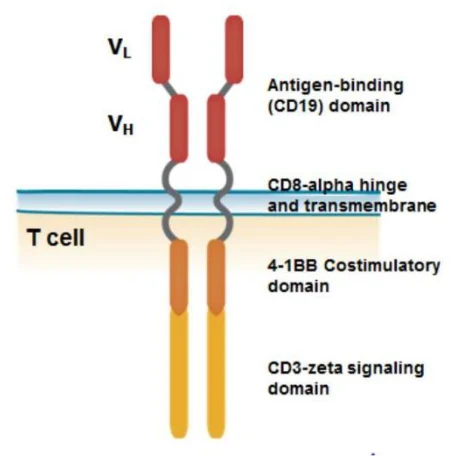
Physicochemical properties: Appearance: Colourless to slightly yellow suspension of cells
Product Characteristics:
Autologous T-cells genetically modified ex vivo using a lentiviral vector encoding an anti-CD19 chimeric antigen receptor (CAR).
14. Clinical Trials
14.1. Clinical Trials by Indication
Relapsed or Refractory (r/r) B-cell Acute Lymphoblastic Leukemia (ALL)
The efficacy of Kymriah treatment in pediatric and young adult patients with relapsed or refractory (r/r) B cell ALL was evaluated in one pivotal (B2202) open label, single-arm study of 75 infused patients, who were up to 25 years of age. All patients had leukapheresis products collected and cryopreserved prior to or during study entry.
Table 10 – Summary of Patient Demographics for the Pivotal Pediatric and Young Adult r/r B-cell ALL Study (B2202)
| Study # | Study design | Dosage, route of administration and duration | Study subjects (n) | Age (range) | Sex |
| Study B2202 (ELIANA) | Phase II, Multicenter, single-arm, open-label study/Pediatric and young adult patients with relapsed or refractory B-cell ALL | Tisagenlecleucel single infusion For patients ≤50kg: 0.2 to 5.0x10⁶ transduced viable T-cells / kg body weight For patients >50kg: 0.1 to 2.5x10⁸ transduced viable T-cells | N enrolled: 92 N infused: 75 | Mean = 12.0 (3-23) | Female: 32 (42.7) Male: 43 (57.3) |
The efficacy of Kymriah treatment in pediatric and young adult patients with relapsed and refractory (r/r) B-cell ALL, evaluated in Study CCTL019B2202.
The pivotal study (B2202) is a multicenter, single-arm, open-label phase II study in pediatric and young adult patients with r/r B-cell acute lymphoblastic leukemia. Ninety-two patients were enrolled, 75 were infused; 17 patients discontinued prior to Kymriah infusion (7 patients due to death; 7patients due to Kymriah manufacturing related issues; 3 patients due to adverse events). All patients had leukapheresis products collected and cryopreserved prior to or during study entry.
Patients infused were between the age of 3 and 23 years and 8% had primary refractory disease. Sixty-one percent of patients had a prior stem cell transplant. The majority of patients (65/75, 86.7%) received bridging therapy while waiting for Kymriah. A total of 72 out of 75 patients who received Kymriah infusion also received lymphodepleting chemotherapy after enrollment and prior to the Kymriah infusion.
Efficacy was established through the primary endpoint of overall remission rate (ORR), which includes best overall response as complete remission (CR) or complete remission with incomplete blood count (CRi) within 3 months post infusion, as determined by Independent Review Committee (IRC) assessment. Secondary endpoints included duration of remission (DOR), and the proportion of patients who achieved CR or CRi with minimal residual disease (MRD) <0.01% by flow cytometry (MRD-negative). The median time from Kymriah infusion to the data cut-off date was 13.11 months (range: 2.1 to 23.5). The ORR within 3 months was 81.3% (61/75) (95%CI: 70.7, 89.4). See Table 11 for efficacy results from this study. The minimum follow-up time was 1.2+ months and the median duration of response (DOR) was not reached with a 95% confidence interval (CI) of (8.6 months, NE).
Table 11 – B2202: Efficacy Results in Pediatric and Young Adult Patients with Relapsed/Refractory B-cell Acute Lymphoblastic Leukemia (ALL)
| Median time from Kymriah infusion to data cut-off 13.1 Months | |||||
|---|---|---|---|---|---|
| Primary Endpoint | N=75 | ||||
Overall Remission Rate (ORR) 1, n (%) 95% CI | 61 (81.3) (70.7, 89.4) p<0.00012 | ||||
| CR 3, n (%) | 45 (60.0) | ||||
| CRi 4, n (%) | 16 (21.3) | ||||
| NR5, n (%) | 6 (8.0) | ||||
| Not evaluable, n (%) | 8 (10.7) | ||||
| Key Secondary Endpoint | N=75 | ||||
CR or CRi with MRD negative bone marrow 6,7, n (%) 95% CI | 61 (81.3) (70.7, 89.4) p<0.00017 | ||||
| Duration of remission (DOR)8 | N=61 | ||||
| Duration of response lasting at least 6 months, n (%)9 | 33 (54.1) | ||||
Median (months) (95% CI) Range10 Median Follow-up (95%CI)12 | Not reached (8.6, NE11) (1.2+ to 19.3+) 10.4 (7.5, 11.1) | ||||
1 Requires remission status to be maintained for at least 28 days without clinical evidence of relapse. 2 Nominal one-sided exact p-value based on H0: ORR ≤ 20% vs. Ha: ORR >20%. 3 CR (complete remission) was defined as <5% of blasts in the bone marrow, circulating blasts in blood should be <1%, no evidence of extramedullary disease, and full recovery of peripheral blood counts (platelets >100,000/microlitre and absolute neutrophil counts [ANC] >1,000/microlitre) without blood transfusion. | |||||
4 CRi (complete remission with incomplete blood count recovery) was defined as <5% of blasts in the bone marrow, no evidence of extramedullary disease, and without full recovery of peripheral blood counts with or without blood transfusion.
5 NR = No Response
6 MRD (minimal residual disease) negative was defined as MRD by flow cytometry <0.01%.
7 Nominal one-sided exact p-value based on H0: Rate of MRD negative remission ≤ 15% vs. Ha: > 15%.
8 DOR was defined as time since onset of CR or CRi to relapse or death due to underlying indication, whichever is earlier (N= 61 for median follow-up of 9.4 months)
9 Proportion of patients who had duration of response at Month 6 among all the complete responders (CR / CRi) without considering patients might be censored earlier than Month 6.
10 The Range for median follow-up of 9.4 months includes the 49.2% of patients censored due to ongoing without an event, the 11.5% due to HSCT, the 9.8% of patients censored due to other cancer therapies, and the 1.6% of patients due to other reasons (Note: the 'other' group accounts for the individual that withdrew consent and the individual that was censored due to no more adequate assessments), and the 27.9% of patients had events as disease progression
11 NE= Not estimable
12 Kaplan-Meier estimate in months
An updated analysis with longer follow-up was conducted with median time from Kymriah infusion to the data cut-off date of 24.2 months (range: 4.5 to 35.1). As of this cut-off: 97 patients were enrolled; 79 were infused; and 18 patients discontinued prior to Kymriah infusion. Among the 79 infused patients, the ORR by independent review was 82.3% (65/79), the CR rate was 62.0% (49/79) and the CRi rate was 20.3% (16/79). CR or CRi with MRD negative bone marrow was observed among 64 patients (81.0%). The updated median duration of follow-up among responders was 17.5 months (95%CI: 11.1, 20.3) as estimated by the reverse Kaplan-Meier method. The median duration of response was not reached (95%CI: 20.0, not estimable). Among complete responders (CR+CRi) and without accounting for censoring (N=65), 25 patients (38.5%) had a duration of response lasting at least 12 months and 21 patients (32.3 %) had a duration of response lasting at least 18 months.
Diffuse Large B-Cell Lymphoma (DLBCL)
The efficacy of Kymriah treatment in adult patients with relapsed or refractory (r/r) diffuse large B-cell lymphoma (DLBCL), was evaluated in study CCTL019C2201.
Table 12 – Summary of Patient Demographics for the Pivotal Adult r/r DLBCL study (C2201)
| Study # | Study design | Dosage, route of administration and duration | Study subjects (n) | Median Age (range) | Sex | |||
Study C2201 (JULIET) | Multicenter, single-arm, phase II, open label study in adult patients with relapsed or refractory DLBCL | Tisagenlecleucel single infusion Dose Range: 1.0 x 10⁸ to 5 x 10⁸ CAR + viable T-cells | Enrolled: | |||||
| N= 160 | 59 (22.0-76.0) | F=59 (36.9%) M= 101 (63.1%) | ||||||
| Infused: | ||||||||
| N= 106 | 57 (22.0-76.0) | F=39 (36.8) M=67 (63.2) | ||||||
| Evaluable for efficacy: | ||||||||
| N=68 | 56 (22.0-74.0) | F=20 (29.4) M=48 (70.6) | ||||||
The pivotal study (C2201) is a multicenter, single-arm phase II study in adult patients with relapsed or refractory DLBCL. Of 160 patients enrolled, 106 patients received infusion with Kymriah including 92 patients who received product manufactured in the U.S., and who were followed for at least 3 months or discontinued earlier. Fifty-four (54) patients did not receive infusion due to the following reasons: Kymriah could not be manufactured (n=11); death (n=16), physician decision/primary disease progression (n=16), adverse events (n=3), subject decision (n=2) and protocol deviation (n=1). Among the 92 patients who received infusion with Kymriah, 68 patients were evaluable for efficacy. Patients were excluded if they were in complete remission after bridging chemotherapy and before infusion (8 patients) or if they did not have a disease assessment after bridging chemotherapy but before infusion (15 patients), and 1 was excluded because of initial misclassification of a neuroendocrine tumour as DLBCL.
The median age of the 68 patients included in the efficacy analysis was 56 years (range 22 to 74 years), 81% of patients had Stage III-IV disease, 53% received 3 or more prior lines of treatment for DLBCL. Forty-four percent of patients had received prior stem cell transplant. Fifty-six percent of patients were refractory to the last line of treatment. All patients had leukapheresis starting material collected and cryopreserved prior to or during study entry. The majority of patients (60/68) received bridging therapy while waiting for Kymriah and 90% received lymphodepleting chemotherapy. Kymriah was given as a single dose intravenous infusion. Seventy-eight percent had primary DLBCL not otherwise specified (NOS) and 22% had DLBCL following transformation from follicular lymphoma, of whom 17% were identified as high grade lymphoma; 15% had either double or triple hits in MYC/BCL2/BCL6 genes, 57% had Germinal center B-cell (GCB) type cell of origin and 40% had non-GCB type.
Patients with T-cell rich/histiocyte-rich large B-cell lymphoma (THRBCL), primary cutaneous large B-cell lymphoma, primary mediastinal B-cell lymphoma (PMBCL), EBV-positive DLBCL of the elderly, prior allogeneic HSCT, ECOG performance ≥2, auto-immune disease, ongoing infections such as HIV, HBV, HCV, active CNS disease or other ongoing neurological disease (e.g., Guillain-Barré) were not enrolled in the study.
The efficacy of Kymriah was evaluated through the primary endpoint of best overall response rate (ORR), which includes complete response (CR) and partial response (PR) as determined by an independent review committee (IRC) assessment based on the Lugano Classification (Cheson et al., 2014). Secondary endpoints included duration of response (DOR).
Among the 68 patients (Table 13) included in the primary analysis, the best ORR was 50.0% (34/68) with a 95% confidence interval (CI) of (37.6%, 62.4%). Twenty-two patients (32.4%) achieved CR and 12 (17.6%) achieved PR. The median duration of response (DOR) was not reached (95% CI: 5.1, NE). Response durations were longer in patients who achieved CR (median not reached, 95% CI: 10.0, NE), as compared to patients with a best response of PR (median DOR 3.4 months). No patient who received Kymriah infusion went to transplant while in response. See Table 13 for efficacy results of this study.
Table 13 – Efficacy Results in Adult Patients with r/r DLBCL (C2201)
Median time from Kymriah infusion to data cut-off 9.4 Months | |
|---|---|
| Primary Endpoint | N=68 |
Overall Response Rate (ORR) (CR+PR), n (%) (95% CI) d | 34 (50%) (37.6, 62.4) |
Complete Response (CR), n (%) (95% CI) d | 22 (32%) (21.5, 44.8) |
Partial Response (PR), n (%) (95% CI) d | 12 (18%) (9.5, 28.8) |
| Duration of response (DOR) | N=34 |
Overall DOR for responders (months) Median (months) (95% CI) a,b,d Range c Median Follow-up (95%CI) b,d Duration of response lasting at least 9 months, n (%)e | Not reached (5.1, NE) (0.03+ to 11.3+) 9.4 (7.9, 10.8) 11 (32.4) |
| DOR if BOR is CR | N = 22 |
Median (months) (95% CI) a,b,d Range c | NE (10.0, NE) (1.5+ to 11.3+) |
| DOR if BOR is PR | N=12 |
An updated analysis with longer follow-up was conducted with median time from Kymriah infusion to the data cut-off date of 22.7 months (range: 20.8-23.1). As of this cut-off, 167 patients were enrolled, 115 were infused and 52 patients discontinued prior to Kymriah infusion. Among the 115 patients who received infusion with Kymriah, 75 patients were evaluable for efficacy. Among the 75 evaluable patients, the ORR by independent review was 53.3% (40/75), the CR rate was 38.7% (29/75) and the PR rate was 14.7% (11/75). The median duration of response was not reached (95%CI: 5.8, not estimable). Among these 29 patients, 13 patients initially had an overall disease response of PR which improved to CR over time; in most of these cases (11/13) PR to CR conversion occurred within 6 months post-tisagenlecleucel infusion. The updated median duration of follow-up among responders was 22.7 months (95%CI: 20.8, 23.1) as estimated by the reverse Kaplan-Meier method. The median durations of response among patients who achieved either CR or PR were 20.8 months (95%CI: 18.7, not estimable) and 1.6 months (95%CI: 0.8, 3.4), respectively. Among all the 40 responders (CR+PR), and without accounting for censoring, 19 patients (47.5%) had a duration of response lasting at least 12 months and 17 patients (42.5%) had a duration of response lasting at least 18 months.
Follicular Lymphoma (FL)
The efficacy of Kymriah treatment in adult patients with relapsed or refractory (r/r) follicular lymphoma (FL) was evaluated in a Phase II, single arm, multicenter open label study (E2202).
Table 14 – Summary of Patient Demographics for the Pivotal Adult r/r FL study (E2202)
| Study # | Study design | Dosage, route of administration and duration | Study subjects (n) | Median Age (range) | Sex | |
| Study | A Phase II, single | Enrolled: | ||||
Median (months) (95% CI) a,b,d Range c | 3.4 (1.0, NE) (0.03+ to 11.3+) |
|---|---|
CR, Complete Response; DOR, Duration of Response: NE, not estimable, PR, partial response a Among all responders. DOR measured from date of first objective response to date of progression or death from relapse. b Kaplan-Meier estimate in months c A + sign indicates a censored value (follow-up of 9.5 months). 55.9% of patients censored due to ongoing without an event, 8.8% of patients censored due to new cancer therapy, other than HSCT, 2.9% of patients censored due to death due to reason other than DLBCL, and the 35.5% had disease progression or death due to DLBCL. d The 95% CIs were exact Clopper-Pearson Cis e Proportion of patients who had duration of response at Month 9 among all the complete responders (CR / CRi) without considering patients might be censored earlier than Month 9. | |
E2202 (ELARA) | arm, multicenter open label trial in adult patients with refractory or relapsed follicular lymphoma (r/r FL) | Tisagenlecleucel single intravenous (i.v.) infusion Dose Range : 0.6 – 6.0 x 10⁸ CAR-positive viable T-cells. | N= 98 | 56.5 (29-73) | F=33 (33.7) M= 65 (66.3) |
| Evaluable for efficacy: | |||||
| N=94 | 56.5 (29-73) | F=30 (31.9) M= 64 (68.1) | |||
The pivotal study E2202 (ELARA trial) is a multicenter, single-arm open label Phase II study in adult patients with r/r FL. The study included patients who were refractory to or relapsed within 6 months after completion of a second or later line of systemic therapy (including an anti-CD20 antibody and an alkylating agent), relapsed during or within 6 months after completion of anti-CD20 antibody maintenance therapy following at least two lines of therapy, or relapsed after autologous haematopoietic stem cell transplant (HSCT). The study excluded patients with active or serious infections, transformed lymphoma or other aggressive lymphomas, including patients with FL Grade 3b, prior allogeneic HSCT, or disease with active CNS involvement. Following lymphodepleting chemotherapy, Kymriah was administered as a single dose intravenous infusion with a target dose range of 0.6 to 6.0 × 10⁸ CAR-positive viable T-cells. The median dose administered was 2.06 × 10⁸ CAR-positive viable T-cells (range: 0.1 to 6.0 × 10⁸ CAR-positive viable T-cells).
Of 98 patients who enrolled and underwent leukapheresis, 97 patients received infusion with Kymriah. One patient achieved a complete response prior to infusion which was attributed to their prior line of therapy and the patient was subsequently discontinued from the study due to physician decision prior to infusion. Of the 97 patients infused with Kymriah, 94 patients had measurable disease at baseline per Independent Review Committee (IRC) and were included in the efficacy analysis set (EAS). Kymriah was manufactured and delivered for all enrolled patients.
Among the 94 patients in the efficacy analysis set, important baseline demographic and disease characteristics include: median age was 57 years (range 29 to 73 years); 86% of patients had Stage III-IV disease at study entry; 61% had high FLIPI score;, 65% had bulky disease at baseline; 79% were refractory to last line of treatment; 69% were double refractory; 37% received prior autologous stem cell transplant; and 65% had progression of disease within 24 months (POD24) of initiating their first anti-CD20 combination therapy. The median number of prior therapies was 4 (range: 2 to 13), with 26% having 2 prior lines, 20% having 3 prior lines, and 54% having ≥4 prior lines; 20% had received a PI3K inhibitor. Forty-four patients (47%) received bridging therapy between leukapheresis and the administration of Kymriah, and all patients received lymphodepleting chemotherapy. For all infused patients, Kymriah was administered as a single dose intravenous infusion in an inpatient (82%) or outpatient (18%) setting.
The primary endpoint was the complete response rate (CRR) determined by an independent review committee (IRC) based on Lugano classification response criteria (Cheson et al., 2014). Secondary endpoints included overall response rate (ORR) and duration of response (DOR). The first disease assessment was scheduled to be performed at Month 3 post-infusion.
Among the 94 patients with measurable disease prior to infusion who form the efficacy analysis set, with a median follow-up duration of 11 months, CR was observed in 62 patients (66%, 95% CI: 55.5, 75.4); 19 (20%) achieved PR. The ORR per IRC assessment was 86% (81 patients) (95% CI: 77.5, 92.4). All responders achieved their response (CR or PR) at the first performed post-infusion disease assessment. Of the 62 patients who achieved a CR, 12 patients initially had a PR. The majority of the patients converted to CR within 6 months post-infusion. No patient who received Kymriah infusion went to transplant while in response (CR or PR).
At the time of the primary analysis the median DOR had not been reached (NR, 95%CI: 9.5, NE [range: 0.03+, 15.6+].
In a follow-up analysis that occurred 6 months after the primary analysis (median follow-up 16.9 months, range 10.3 to 25.7), CR was observed in 65 patients (CRR: 69%, 95% CI: 58.8, 78.3) and the median DOR had not been reached (95% CI: 15.6, NE, [range: 0.03+, 21.1+]). Response durations were longer in patients who achieved CR (median not reached, 95% CI: 15.6, NE) as compared to PR (median DOR 3.3 months).
Table 15 – Efficacy results in adult patients with r/r FL (E2202)
| Median time from Kymriah infusion to data cut-off | 10.9 (range: 4.3 to 19.7) months | ||||
|---|---|---|---|---|---|
| Primary Endpoint | N=94 | ||||
| Complete response rate (CRR), n (%) 95% CI | 62 (66.0) (55.5, 75.4) | ||||
| Secondary Endpoint | N=94 | ||||
Overall response rate (ORR), n (%) 95% CI | 81 (86.2) (77.5, 92.4) | ||||
| Duration of response (DOR)** | N=81 | ||||
| DOR for patients achieving BOR of CR or PR, months | |||||
Median (95% CI) Range | Not reached (9.5, NE*) [0.03+, 15.6+] | ||||
DOCR*** inpatients achieving BOR of CR, months Median (95% CI) Range | (N=62) Not reached [0.03+, 15.6+] | ||||
*NE: Not Estimatable ** DOR (duration of response) was defined as time since onset of response (CR or PR) to relapse or death due to underlying cancer, whichever is earlier, censoring for new cancer therapy including stem cell transplantation. ***DOCR (duration of complete response) was defined as time since onset of CR to relapse or death due to underlying cancer, whichever is earlier, censoring for new cancer therapy including stem cell transplantation. + sign indicates a censored value | |||||
16. Non-Clinical Toxicology
General toxicology
In vitro and in vivo non-clinical studies assessed Kymriah’s biodistribution, persistence, and potential for uncontrolled cellular proliferation. Kymriah was predominantly detected in the spleen, lung, kidney, and bone marrow and persisted for up to 217 days post-injection in xenograft mouse models of leukemia. Neither the in vitro nor the in vivo studies suggested that Kymriah was associated with uncontrolled cellular proliferation.
Carcinogenicity and mutagenicity
Genotoxicity assays and carcinogenicity studies in rodent models were not performed for Kymriah.
In vitro expansion studies with CAR-positive T-cells (tisagenlecleucel) from healthy donors and patients showed no evidence for transformation and/or immortalization of T-cells. In vivo studies in immunocompromised mice did not show signs of abnormal cell growth or signs of clonal cell expansion for up to 7 months after receiving Kymriah. A genomic insertion site analysis of the lentiviral vector was performed on Kymriah products from 14 individual donors (12 patients and 2 healthy volunteers). There was no evidence for preferential integration near genes of concern or preferential outgrowth of cells harboring integration sites of concern.
Reproductive and developmental toxicology
No non-clinical reproductive safety studies were conducted.
Juvenile toxicity
Juvenile toxicity studies were not conducted.
Safety pharmacology and repeated dose toxicity
Safety pharmacology studies were not conducted.
No repeated dose toxicity studies were conducted.