


Product Monograph - Cablivi
RECENT MAJOR LABEL CHANGES
TABLE OF CONTENTS
Sections or subsections that are not applicable at the time of authorization are not listed.
RECENT MAJOR LABEL CHANGES ............................................................................................. 2
TABLE OF CONTENTS ............................................................................................................... 2
PART I: HEALTH PROFESSIONAL INFORMATION ....................................................................... 4
1 INDICATIONS ................................................................................................................ 4
1.1 Pediatrics ................................................................................................................. 4
1.2 Geriatrics ................................................................................................................. 4
2 CONTRAINDICATIONS .................................................................................................. 4
4 DOSAGE AND ADMINISTRATION .................................................................................. 4
4.1 Dosing Considerations ............................................................................................. 4
4.2 Recommended Dose and Dosage Adjustment ........................................................ 4
4.3 Reconstitution ......................................................................................................... 5
4.4 Administration ......................................................................................................... 5
4.5 Missed Dose ............................................................................................................ 5
5 OVERDOSAGE ............................................................................................................... 6
6 DOSAGE FORMS, STRENGTHS, COMPOSITION AND PACKAGING .................................. 7
7 WARNINGS AND PRECAUTIONS ................................................................................... 7
7.1 Special Populations.................................................................................................. 9
7.1.1 Pregnant Women .............................................................................................. 9
7.1.2 Breast-feeding ................................................................................................... 9
7.1.3 Pediatrics ........................................................................................................... 9
7.1.4 Geriatrics ........................................................................................................... 9
8 ADVERSE REACTIONS ................................................................................................... 9
8.1 Adverse Reaction Overview ..................................................................................... 9
8.2 Clinical Trial Adverse Reactions ............................................................................. 10
8.3 Less Common Clinical Trial Adverse Reactions ...................................................... 12
8.5 Post-Market Adverse Reactions ............................................................................ 12
9 DRUG INTERACTIONS ................................................................................................. 12
9.4 Drug-Drug Interactions .......................................................................................... 12
9.5 Drug-Food Interactions .......................................................................................... 12
9.6 Drug-Herb Interactions .......................................................................................... 13
9.7 Drug-Laboratory Test Interactions ......................................................................... 13
10 CLINICAL PHARMACOLOGY ........................................................................................ 13
10.1 Mechanism of Action ....................................................................................... 13
10.2 Pharmacodynamics ......................................................................................... 13
10.3 Pharmacokinetics ............................................................................................ 13
11 STORAGE, STABILITY AND DISPOSAL .......................................................................... 14
12 SPECIAL HANDLING INSTRUCTIONS ............................................................................ 14
PART II: SCIENTIFIC INFORMATION ........................................................................................ 15
13 PHARMACEUTICAL INFORMATION ............................................................................. 15
14 CLINICAL TRIALS ......................................................................................................... 15
14.1 Trial Design and Study Demographics ............................................................. 15
14.2 Study Results ................................................................................................... 17
15 MICROBIOLOGY ......................................................................................................... 18
16 NON-CLINICAL TOXICOLOGY ...................................................................................... 18
PATIENT MEDICATION INFORMATION ................................................................................... 20
INSTRUCTION FOR USE .......................................................................................................... 25
PART I: HEALTH PROFESSIONAL INFORMATION
1 INDICATIONS
Cablivi (caplacizumab) is indicated for the treatment of adults with acquired thrombotic thrombocytopenic purpura (aTTP) in combination with plasma exchange (PE) and immunosuppressive therapy.
1.1 Pediatrics
Pediatrics (< 18 years of age): No data are available to Health Canada; therefore, Health Canada has not authorized an indication for pediatric use.
1.2 Geriatrics
Geriatrics (≥ 65 years of age): Clinical studies of Cablivi did not include sufficient numbers of subjects aged 65 and over to determine whether they respond differently from younger subjects.
2 CONTRAINDICATIONS
Cablivi is contraindicated in patients who are hypersensitive to this drug or to any ingredient in the formulation, including any non-medicinal ingredient, or component of the container. For a complete listing, see 6 DOSAGE FORMS, STRENGTHS, COMPOSITION AND PACKAGING.
4 DOSAGE AND ADMINISTRATION
4.1 Dosing Considerations
Treatment with Cablivi is an adjunct to plasma exchange and immunosuppressive therapy.
4.2 Recommended Dose and Dosage Adjustment
Cablivi should be administered upon initiation of plasma exchange therapy as recommended below:
- First day of treatment: 11 mg bolus intravenous injection at least 15 minutes prior to a plasma exchange followed by an 11 mg subcutaneous injection after completion of plasma exchange on that day.
- Subsequent days of treatment during plasma exchange: daily 11 mg subcutaneous injection following plasma exchange.
- Treatment after plasma exchange period: 11 mg subcutaneous injections once daily for 30 days following the last daily plasma exchange. If after initial treatment course, sign(s) of persistent underlying disease such as suppressed ADAMTS13 activity levels remain present, treatment may be extended for a maximum of 28 days.
Discontinue Cablivi if the patient experiences more than 2 recurrences of aTTP, while on Cablivi. Cases of relapse have been reported shortly after discontinuation of Cablivi treatment especially in case of unresolved underlying auto-immune disease (see 7 WARNINGS AND PRECAUTIONS, Relapse of aTTP after stopping or interrupting use of Cablivi).
Health Canada has not authorized an indication for pediatric use (see 1 Indications, 1.1 Pediatrics)
4.3 Reconstitution
Cablivi should be prepared and reconstituted before administration. Detailed instructions on preparation and administration are provided in the INSTRUCTIONS FOR USE.
| Table 1:Reconstitution | |||||||
| Vial Size | Volume of Diluent to be Added to Vial | Approximate Available Volume | Concentration per mL | ||||
| 12.5 mg | 1 mL | 1 mL | 11 mg/mL solution | ||||
Cablivi is for single use only. Any unused medicinal product or waste material should be disposed of in accordance with local requirements
Unopened vial: see 11 STORAGE, STABILITY AND DISPOSAL. Do not use after the expiry date that is stated on the carton and label.
Reconstituted solution
- Use the CABLIVI solution immediately. If not, use CABLIVI within 4 hours after reconstitution when stored in the refrigerator at 2°C to 8°C (see 11 STORAGE, STABILITY AND DISPOSAL and INSTRUCTIONS FOR USE)
4.4 Administration
Withhold treatment for 7 days prior to elective surgery, invasive dental procedures, or other invasive interventions (7 WARNINGS AND PRECAUTIONS, Patients undergoing surgery).
The first dose should be administered by intravenous push injection by a healthcare provider. Subsequent doses should be administered by subcutaneous injections into the abdomen (INSTRUCTIONS FOR USE).
Do not inject into the area around the navel and do not use the same abdominal quadrant for consecutive injections.
Patients or caregivers may inject the medicinal product after proper training in the subcutaneous injection technique as instructed in INSTRUCTIONS FOR USE.
In the absence of compatibility studies, Cablivi must not be mixed with other medicinal products. For intravenous administration, if using an IV line, the line can be flushed with 9% Sodium Chloride Injection, or Glucose Injection 5% (w/v).
4.5 Missed Dose
Daily dosing and treatment continuity are critical. However, if a dose of Cablivi is missed during the plasma exchange period, it should be given as soon as possible. If a dose of Cablivi is missed after the plasma exchange period, it can be administered within 12 hours of the scheduled time of administration. Beyond 12 hours the missed dose should be skipped and the next daily dose administered according to the usual dosing schedule.
5 OVERDOSAGE
In case of overdose, based on the pharmacological action of caplacizumab, there is the potential for an increased risk of bleeding.
Close monitoring for signs and symptoms of bleeding is recommended. If needed, the use of von Willebrand factor (vWF) concentrate could be considered to correct hemostasis.
| For management of a suspected drug overdose, contact your regional poison control centre. |
|---|
6 DOSAGE FORMS, STRENGTHS, COMPOSITION AND PACKAGING
To help ensure the traceability of biologic products, including biosimilars, health professionals should recognise the importance of recording both the brand name and the non- proprietary (active ingredient) name as well as other product-specific identifiers such as the Drug Identification Number (DIN) and the batch/lot number of the product supplied.
Table 2 – Dosage Forms, Strengths, Composition and Packaging
Cablivi may be available in the following formats:
Single vial Pack, containing:
- 1 vial of Cablivi
- 1 pre-filled syringe containing 1 mL of sterile water for injection (diluent for Cablivi)
- 1 sterile vial adapter
- 1 sterile needle
- 2 alcohol swabs
Multi-vial Pack, containing:
- 7 vials of Cablivi
- 7 pre-filled syringes containing 1 mL of sterile water for injection (diluent for Cablivi)
- 7 sterile vial adapters
- 7 sterile needles
- 14 alcohol swabs
7 WARNINGS AND PRECAUTIONS
General
Relapse of aTTP after stopping or interrupting use of Cablivi: Cases of relapse of aTTP have been reported in the clinical trials, especially within 30 days after discontinuation of caplacizumab (see 8 ADVERSE REACTIONS,8.2 Clinical Trial Adverse Reactions). Most of the relapses occurred between 4 to 11 days after stopping Cablivi. In most of the patients who had relapse within 30 days after discontinuation of Cablivi treatment, ADAMTS13 activity levels were <10% at the end of the caplacizumab treatment, indicating that the underlying immunological disease was still active at the time caplacizumab was stopped. Therefore, patients, especially those with ADAMTS13 activity <10% at or near the time of discontinuation of Cablivi, should be closely monitored for platelet counts and signs of aTTP for early diagnosis of relapse after stopping or interrupting use of Cablivi.
Driving and Operating Machinery
There have been no studies to investigate the effect of caplacizumab on driving performance or the ability to operate machinery. Bleeding episodes may result in fatigue that could impair the ability to operate or drive machinery.
| Route of Administration | Dosage Form / Strength/Composition | Non-medicinal Ingredients |
| Intravenous (IV) or subcutaneous injection | Powder for solution (11 mg) | Sucrose, citric acid anhydrous, trisodium citrate dihydrate, polysorbate 80. |
Hematologic
Bleeding: Cablivi increases the risk of bleeding (see 8 ADVERSE REACTIONS). Cases of major bleeding, including life-threatening and fatal bleeding have been reported in patients receiving caplacizumab, mainly in those using concomitant anti-platelet agents or anticoagulants. Caplacizumab should be used with caution in patients with underlying conditions that may predispose them to a higher risk of bleeding.
Interrupt use of Cablivi if clinically significant bleeding occurs and then closely monitor platelet counts and signs of relapse of aTTP (see 7 WARNINGS AND PRECAUTIONS, Relapse of aTTP after stopping or interrupting use of Cablivi). If needed, vWF concentrate may be administered to rapidly correct hemostasis. If Cablivi is restarted, monitor closely for signs of bleeding.
Concomitant use of oral anticoagulants or high dose heparin
The risk of bleeding is increased with concomitant use of Cablivi with drugs affecting hemostasis and coagulation. Initiation or continuation of treatment with oral anticoagulants (e.g., vitamin K antagonists or direct oral anticoagulants (DOAC) such as thrombin inhibitors or factor Xa inhibitors) or high dose heparin requires a benefit/risk assessment and close clinical monitoring.
Patients with coagulopathies
Due to a potential increased risk of bleeding, use of Cablivi in patients with underlying coagulopathies (e.g. hemophilia, other coagulation factor deficiencies) must be accompanied by close clinical monitoring.
Patients undergoing surgery
If a patient is to undergo elective surgery, an invasive dental procedure or other invasive interventions, the patient must be advised to inform the physician or dentist that they are using Cablivi and it is recommended to withhold Cablivi treatment and closely monitor platelet counts and other signs of relapse of aTTP for at least 7 days before the planned intervention and continue the monitoring until Cablivi treatment is resumed (see 7 WARNINGS AND PRECAUTIONS, Relapse of aTTP after stopping or interrupting use of Cablivi). The patient must also notify the physician who supervises the treatment with Cablivi about the planned procedure. After the risk of surgical bleeding has resolved, and Cablivi is resumed, monitor closely for signs of bleeding.
If emergency surgery is needed, the use of von Willebrand Factor concentrate is recommended to correct hemostasis.
Hepatic/Biliary/Pancreatic
Severe hepatic impairment: No formal studies with caplacizumab have been conducted in patients with severe hepatic impairment and no data regarding the use of caplacizumab in these populations are available. Use of Cablivi in patients with severe hepatic impairment requires a benefit/risk assessment and close clinical monitoring due to a potential increased risk of bleeding.
Renal
Renal Impairment: Caplacizumab is mainly eliminated from the kidney (see 10 CLINICAL PHARMACOLOGY, 10.3 Pharmacokinetics). However, no data in patients with renal impairment are available as no formal studies of Cablivi in these patients have been performed.
Reproductive Health: Female and Male Potential
- Fertility
The effects of Cablivi on fertility in humans are unknown. Dedicated animal studies assessing the effects of caplacizumab on male and female fertility have not been performed. In a 13-week repeat-dose toxicity study in cynomolgus monkeys, no impact of caplacizumab on male and female fertility parameters was observed.
7.1 Special Populations
7.1.1 Pregnant Women
There are no available data on Cablivi use in pregnant women. No conclusions can be drawn regarding whether or not Cablivi is safe for use during pregnancy. Cablivi should be used during pregnancy only if the potential benefits to the mother outweigh the potential risks, including those to the fetus. All patients receiving Cablivi, including pregnant women, are at risk for bleeding. Monitor pregnant women and neonates for any evidence of excessive bleeding.
7.1.2 Breast-feeding
There are no available data on the presence of caplacizumab in human milk, effect on milk production, or the effects on the breastfed infant. No conclusions can be drawn regarding whether or not Cablivi is safe for use during breastfeeding. Cablivi should be used during breastfeeding only if the potential benefits to the mother outweigh the potential risks, including those to the breastfed child.
7.1.3 Pediatrics
The safety and efficacy of Cablivi in pediatric patients has not been established.
7.1.4 Geriatrics
Clinical studies of Cablivi did not include sufficient numbers of patients aged 65 and over to determine whether they respond differently from younger patients.
8 ADVERSE REACTIONS
8.1 Adverse Reaction Overview
The safety of Cablivi was evaluated in two placebo-controlled clinical studies (HERCULES [Phase III], in which 71 patients received Cablivi; and TITAN [Phase II], in which 35 patients received Cablivi). The data described below reflect exposure to Cablivi during the blinded periods of both studies, which include 106 patients with aTTP who received at least one dose, age 18 to 79 years, of whom 69% were female and 73% were White. The median treatment duration with Cablivi was 35 days (range 1-77 days).
The most frequently reported adverse reactions (>15%) were epistaxis, headache and gingival bleeding. Many of the reported adverse reactions were bleeding related. Serious bleeding adverse reactions were reported in ≥2% patients included epistaxis (4%) and subarachnoid hemorrhage (2%). Seven patients (7%) in the Cablivi group experienced an adverse reaction leading to study drug discontinuation. None of the adverse reactions leading to discontinuation were observed in more than 1% of patients.
8.2 Clinical Trial Adverse Reactions
Clinical trials are conducted under very specific conditions. The adverse reaction rates observed in the clinical trials; therefore, may not reflect the rates observed in practice and should not be compared to the rates in the clinical trials of another drug. Adverse reaction information from clinical trials may be useful in identifying and approximating rates of adverse drug reactions in real-world use.
Adverse reactions that occurred in ≥ 2% of patients treated with CABLIVI and more frequently than in those treated with placebo across the pooled data from the two clinical trials are summarized in Table 3.
Table 3:Adverse Reactions in ≥ 2% of patients treated with caplacizumab and more frequent than placebo during the blinded periods of the Phase II and III aTTP studies (Safety Population) :
| Adverse reaction | Cablivi (caplacizumab) (N=106) n (%) | Placebo (N=110) n (%) | |||
|---|---|---|---|---|---|
| Gastrointestinal disorders | |||||
| Gingival bleeding | 17 (16) | 3 (3) | |||
| Rectal hemorrhage | 4 (4) | 0 (0) | |||
| Abdominal wall hematoma | 3 (3) | 1 (1) | |||
| General disorders and administration site conditions | |||||
| Fatigue | 16 (15) | 10 (9) | |||
| Pyrexia | 14 (13) | 12 (11) | |||
| Injection site hemorrhage | 6 (6) | 1 (1) | |||
| Injection site pruritus | 3 (3) | 0 (0) | |||
| Musculoskeletal and connective tissue disorders | |||||
| Myalgia | 6 (6) | 2 (2) | |||
| Nervous system disorders | |||||
| Headache | 22 (21) | 15 (14) | |||
| Renal and urinary disorders | |||||
| Hematuria | 4 (4) | 3 (3) | |||
| Reproductive system and breast disorders | |||||
| Vaginal hemorrhage | 5 (5) | 2 (2) | |||
| Menorrhagia | 4 (4) | 1 (1) | |||
| Respiratory, thoracic and mediastinal disorders | |||||
| Epistaxis | 31 (29) | 6 (6) | |||
| Dyspnea | 10 (9) | 5 (5) | |||
| Skin and subcutaneous tissue disorders | |||||
| Urticaria * | 15 (14) | 7 (6) | |||
*Urticaria: was observed primarily during the plasma exchange period
Ten patients in HERCULES experienced relapse during the 1-month follow up period (see 14 CLINICAL TRIALS). However, relapse only occurred in the Cablivi group (6/72, 8.3%) and in the patients who switched from placebo to open-label Cablivi due to exacerbation (3/25, 12%) but not in patients who only received placebo (0/48) (see 14 CLINICAL TRIALS). All these relapses except one occurred from 4 to 11 days after the last dose of Cablivi. One of these patients in the Cablivi group experienced severe thrombocytopenia and cerebral ischemia 6 days after stopping Cablivi treatment and died 2 days later; the death was considered not related to caplacizumab treatment. In 8 of these 9 patients, ADAMTS13 activity levels were <10% at the end of the study drug treatment, indicating that the underlying immunological disease was still active at the time Cablivi was stopped.
In TITAN, recurrences of TTP within 30 days of the last day of initial daily PE (i.e., exacerbations)
occurred in 8% of subjects (3/36) in the Cablivi group compared with 28% subjects (11/39) in the placebo group. During the first 30 days after stopping the study drug, relapse occurred in 22% (8/36) of the patients in the Cablivi group and none occurred in the placebo group (0/39). Most of these relapses (7/8) occurred within 10 days after discontinuation of Cablivi. In this study, treatment extensions beyond 30 days after stopping PE were not allowed and in most of the patients who had relapse, ADAMTS13 activity levels were <10% at the end of Cablivi treatment.
Immunogenicity
Immunogenicity assay results are highly dependent on several factors including assay sensitivity and specificity, assay methodology, sample handling, timing of sample collection, concomitant medications and underlying disease. For these reasons, comparison of incidence of antibodies to Cablivi with the incidence of antibodies to other products may be misleading.
Treatment emergent anti-drug antibodies (TE ADA) were detected in 3.1% of Cablivi treated patients in the HERCULES study. TE ADA were characterized as having neutralizing potential. There was no apparent impact on clinical efficacy or safety in the study.
8.3 Less Common Clinical Trial Adverse Reactions
The following adverse drug reactions were observed in less than 2% of patients and at least in 1% of patients treated with Cablivi and more frequently than with placebo during the blinded periods of the Phase II and III aTTP studies:
- Hematochezia
- Hemoptysis
8.5 Post-Market Adverse Reactions
The following adverse reactions have been identified during post approval use of Cablivi. Because these reactions are reported voluntarily from a population of uncertain size, it is not always possible to reliably estimate their frequency or establish a causal relationship to caplacizumab exposure.
General disorders and administration site conditions:
Frequency Not Known: injection site reactions including injection site pain, injection site bruising and injection site erythema
Blood and lymphatic system disorders:
Frequency Not Known: major bleeding including life-threatening and fatal events
9 DRUG INTERACTIONS
9.4 Drug-Drug Interactions
No drug-drug interaction studies have been conducted with caplacizumab.
No interaction studies evaluating use of caplacizumab with oral anticoagulants (e.g. vitamin K antagonists, direct oral anticoagulants [DOAC] such as thrombin inhibitors or factor Xa inhibitors) or high dose heparin have been performed (See 7 WARNINGS AND PRECAUTIONS).
9.5 Drug-Food Interactions
Interactions with food have not been established.
9.6 Drug-Herb Interactions
Interactions with herbal products have not been established.
9.7 Drug-Laboratory Test Interactions
Interactions with laboratory tests have not been established.
10 CLINICAL PHARMACOLOGY
10.1 Mechanism of Action
Caplacizumab is a humanized bivalent Nanobody (antibody fragment). It targets the A1-domain of von Willebrand factor and inhibits the interaction between von Willebrand factor and platelets, thereby reducing both vWF-mediated platelet activation and adhesion. As such, caplacizumab prevents the formation of ultra-large von Willebrand factor-rich platelet microthrombi but increases the risk of bleeding. It also affects the disposition of von Willebrand factor, leading to reduction in the level of both von Willebrand factor and factor VIII during treatment.
10.2 Pharmacodynamics
In the clinical trials in patients with aTTP (see 14 CLINICAL TRIALS), 10 mg subcutaneous dose of caplacizumab quickly elicited full inhibition of vWF-mediated platelet aggregation, as evidenced by RICO activity levels of < 20% approximately 4 hours post-dose and throughout the treatment period. RICO activity returned to baseline values within 7 days of drug discontinuation. In addition, 30-50% decrease in plasma vWF antigen levels and about 40% decrease in FVIII levels were also observed in these patients within one day after the first dose of caplacizumab and throughout the treatment course. The level of vWF antigen and FVIII returned to baseline value within 7 days of drug discontinuation.
The observed full inhibition of plasma vWF activity accompanied by large amount of decrease in serum vWF antigen and FVIII shortly after the first dose of caplacizumab and thereafter during the treatment period suggests that binding of caplacizumab to vWF accelerates the elimination of vWF and vWF-bound FVIII from the blood circulation. The caplacizumab-induced fast elimination of vWF and vWF-bound FVIII from blood circulation was dose-dependent as shown in clinical studies in healthy subjects.
10.3 Pharmacokinetics
Pharmacokinetics of caplacizumab appear as non-dose proportional, as characterized by target-mediated (vWF-mediated) disposition (see 10 CLINICAL PHARMACOLOGY, 10.2 Pharmacodynamics). Following a single subcutaneous dose of 10 mg caplacizumab to healthy subjects the mean (CV%) peak concentration (Cmax) was 528 (20%) ng/ml and AUC0-24 was 7951(16%) hr·ng/ml. Following subcutaneous dosing of 10 mg caplacizumab daily for 14 days to healthy subjects, the mean (CV%) Cmax was 348 (30%) ng/ml and AUC0-τ was 6808 (26%) hr·ng/ml.
Absorption:
After subcutaneous administration, caplacizumab is rapidly and almost completely absorbed (estimated F > 0.901) in the systemic circulation. In healthy volunteers receiving 10 mg caplacizumab subcutaneously once daily, the maximum concentration was observed at 6 - 7 hours post-dose and steady-state was reached following the first administration, with minimal accumulation in blood circulation.
Distribution:
After absorption, caplacizumab binds to vWF to form caplacizumab-vWF complexes. Excess free caplacizumab and caplacizumab-vWF complexes distribute to well perfused organs. In patients with aTTP the central volume of distribution was estimated at 6.33 L.
Metabolism/Elimination:
Due to small molecular weight (28 kD), free caplacizumab is assumed mainly cleared in the kidney. Caplacizumab-vWF complexes are heterogeneous (see 10 CLINICAL PHARMACOLOGY, 10.2 Pharmacodynamics). They are assumed to be proteolytically degraded especially by the reticuloendothelial system, including liver. The rate of the degradation may depend on the type of caplacizumab-vWF complexes and the tissue location. Higher levels of vWF, such as in patients with aTTP, increase the fraction of vWF-bound caplacizumab retained in the circulation. The t1/2 of caplacizumab is, therefore, concentration and target (vWF) level-dependent.
Antidrug Antibodies:
No clinically significant differences in the pharmacokinetics of caplacizumab were observed in patients with pre-existing or treatment-emergent anti-drug antibodies.
11 STORAGE, STABILITY AND DISPOSAL
Store Cablivi in a refrigerator (2°C to 8°C).
Do not freeze.
Store in the original package in order to protect from light.
Do not use beyond the expiration date.
Cablivi may be stored at a temperature up to 30°C for a single period of up to 2 months, but not beyond the expiry date. Do not return Cablivi to refrigerated storage after storage at room temperature.
After the injection, throw away (dispose of) the used vial (with any remaining Cablivi liquid in it) with the adapter attached and the syringe with the needle attached in a sharps disposal container. See “Step 13: Throw away (dispose of) the used syringe and vial” at the end of the Instructions for Use for more disposal information.
12 SPECIAL HANDLING INSTRUCTIONS
Use the mixed Cablivi solution immediately. The mixed Cablivi solution can be stored for up to 4 hours in the refrigerator at 2°C to 8°C.
Please refer to the INSTRUCTIONS FOR USE.
PART II: SCIENTIFIC INFORMATION
13 PHARMACEUTICAL INFORMATION
Drug Substance
Proper name: Caplacizumab
Chemical name: Caplacizumab
Molecular mass: 27876 Da
Structural formula: 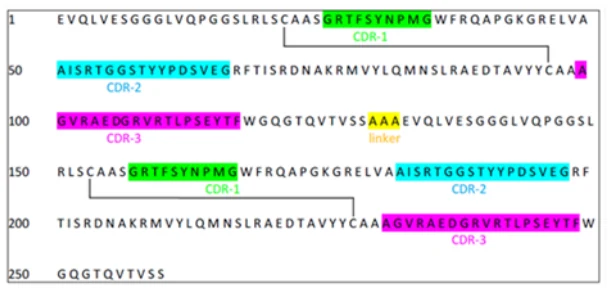
Physicochemical Purified Nanobody formulated in a citrate buffer (pH 6.5) containing sucrose properties: polysorbate 80
Product Characteristics
Caplacizumab is a von Willebrand factor (vWF)-directed antibody fragment that consists of two identical humanized building blocks, linked by a three-alanine linker. Caplacizumab is produced in Escherichia coli by recombinant DNA technology and has an approximate molecular weight of 28 kDa.
14 CLINICAL TRIALS
14.1 Trial Design and Study Demographics
The efficacy and safety of caplacizumab in addition to daily plasma exchange (PE) and immunosuppression in adults experiencing an episode of aTTP were established in a pivotal phase III trial study, “HERCULES” (Table 4).
Table 4: Summary of patient demographics for clinical trials in acquired thrombotic thrombocytopenic purpura (aTTP)
| Study # | Trial design | Dosage, route of administration and duration | Study subjects (n) | Mean age (Range) | Sex |
ALX0681-C301 HERCULES | Phase III Multi-centre; randomized; double-blind placebo-controlled | Caplacizumab or placebo: first day 11 mg iv bolus with PE followed by sc 11 mg injection. The 11 mg daily during daily PE period + 30 days. If needed treatment extension of daily 11 mg sc injections for 4x7 days. | 145 patients | 45 (18 – 79) years | 100 females, 45 males |
PE= plasma exchange i.v. = intravenous s.c. = subcutaneous |
The efficacy of Cablivi (caplacizumab) in combination with plasma exchange and immunosuppressive therapy was established by HERCULES, a Phase III randomized double-blind placebo-controlled study in adult patients with an episode of aTTP (Table 4). A total of 145 patients were enrolled in the study; the median age was 45 (range: 18 to 79) years, 69% were female, 73% were White. After confirmation of eligibility to study participation and after the start of plasma exchange (PE) treatment, subjects were randomized in a ratio of 1:1 to receive study drug, i.e., Cablivi (n=72) or placebo (n=73) in addition to daily PE and immunosuppression. The maximum time allowed between the start of first PE (i.e., PE administered prior to randomization) and the start of the first PE after randomization (i.e., the first on-study PE) was 24 hours. Randomization was stratified according to the severity of neurological involvement (Glasgow Coma Scale score ≤12 or 13 to 15) . Patients with sepsis, infection with E. coli 0157, atypical hemolytic uremic syndrome, disseminated intravascular coagulation or congenital thrombotic thrombocytopenic purpura were not eligible for enrollment.
The clinical trial protocol specified the Cablivi dose as 10 mg to be delivered by withdrawing all of the reconstituted solution from the vial and administering the full amount. A dose recovery study showed that the mean dose that can be withdrawn from a vial is 11 mg. Therefore, based on the dose recovery study, the mean dose delivered in the trial was 11 mg.
The Overall Study period in the study was composed of Study Drug Treatment period and a follow-up period. Recurrence of aTTP was defined as thrombocytopenia after initial recovery of platelet count (platelet count ≥150 x 109/L with subsequent stop of daily plasma exchange within 5 days), requiring re-initiation of daily PE. Recurrence of aTTP occurring during the first 30-days post-daily PE period, and recurrence of aTTP occurring after the 30-days post-daily PE period were termed as exacerbation and relapse, respectively.
In the Study Drug Treatment period, patients received a single intravenous bolus injection of 11 mg Cablivi or placebo from 6 hours to 15 minutes prior to the first PE on study. This was followed by daily subcutaneous injections of 11 mg Cablivi or placebo after completion of each plasma exchange for the duration of the daily PE period and for 30 days thereafter. Once the platelet count became ≥ 150 x 109/L, daily PE should continue for at least 2 days. If at the end of this treatment period there was evidence of persistent underlying immunological disease activity such as suppressed ADAMTS13 activity levels (indicative of an imminent risk for recurrence), treatment could be extended weekly for a maximum of 4 weeks together with optimization of immunosuppression.
Patients who experienced a recurrence while on study drug treatment were switched to open-label Cablivi. They were again treated for the duration of daily PE and for 30 days thereafter. If at the end of this treatment period there was evidence of ongoing underlying immunological disease, open-label treatment with Cablivi could be extended weekly for a maximum of 4 weeks together with optimization of immunosuppression.
In the follow-up (FU) period, patients were followed for 28 days after discontinuation of treatment. In case of recurrence during the follow-up period (i.e. after all study drug treatment had been stopped), there was no re-initiation of Cablivi and the recurrence was to be treated according to the standard of care.
The median treatment duration with Cablivi was 35 days (range: 1 day to 77 days).
The primary endpoint was time to platelet count response, defined as initial platelet count ≥ 150×109/L with subsequent stop of daily PE within 5 days. It refers to the first time both conditions, platelet count above 150×109/L and the stop of daily PE within 5 days, were met.
A key secondary endpoint was the proportion of subjects with aTTP-related death, a recurrence of aTTP, or at least one treatment-emergent major thromboembolic event (e.g., myocardial infarction, cerebrovascular accident, pulmonary embolism or deep venous thrombosis [DVT]) during the Study Drug Treatment period.
Another key secondary endpoint was the proportion of subjects with a recurrence of aTTP in the Overall Study period.
14.2 Study Results
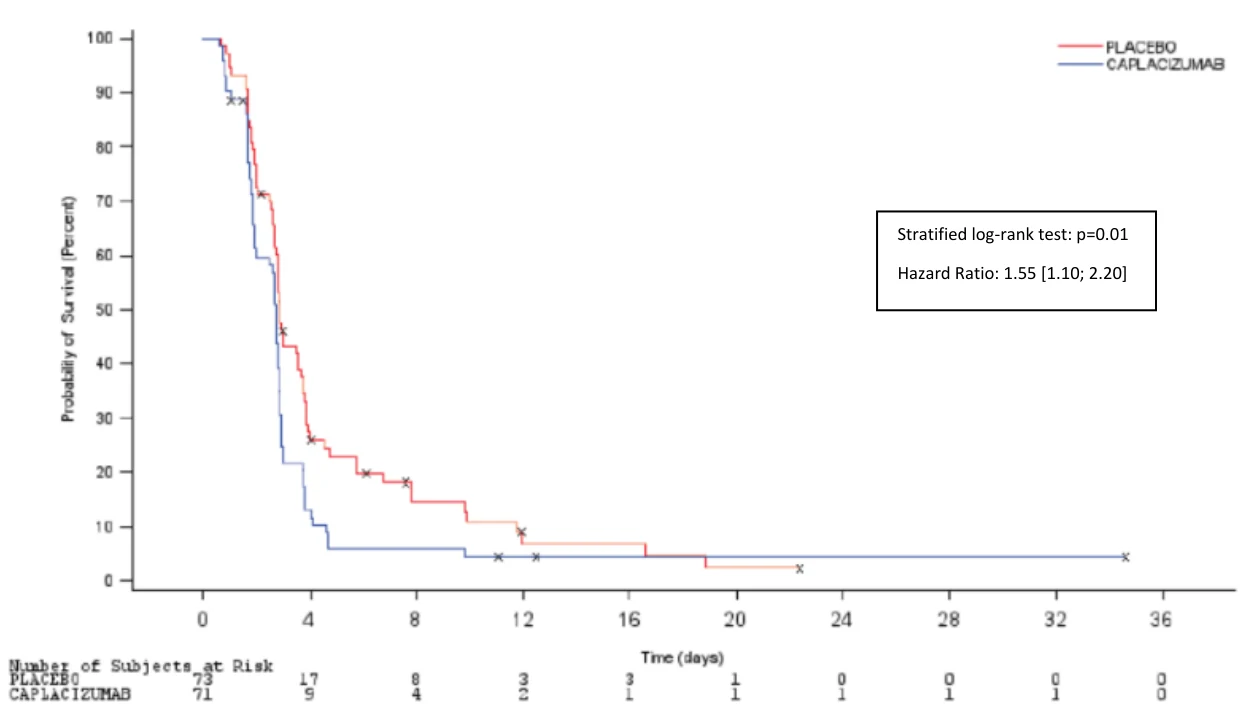
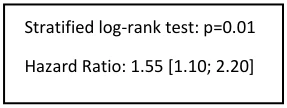
The Kaplan-Meier curves for time to platelet count response (the primary endpoint) are shown in Figure 1.
Figure 1 - Platelet response over time
Treatment with Cablivi resulted in a lower proportion of patients with aTTP-related death, recurrence of aTTP, or at least one treatment-emergent major thromboembolic event (a composite endpoint) during Study Drug Treatment Period (see Table 5).
Table 5: Patients in HERCULES study with aTTP-related death, a recurrence of aTTP, or at least one treatment-emergent major thromboembolic event during Study Drug Treatment Period (ITT Population)
Cablivi (caplacizumab) N=72 | Placebo N=73 | ||||||
| Number of patients with | n (%)* | n (%) | |||||
| TTP-related death | 0 | 3 (4.1) | |||||
| Recurrence of TTP (exacerbation)** | 3 (4.2) | 28 (38.4) | |||||
| At least one treatment-emergent major thromboembolic event | 6 (8.5) | 6 (8.2) | |||||
| Total | 9 (12.7) | 36 (49.3) | |||||
| p-value (CMH test adjusting for GCS at randomization) | <0.0001 | ||||||
ITT = intent to treat population which includes all randomized patients N = number of patients in the ITT population n = number of patients with events * % based on 71 patients who received at least one dose of study drug TTP = thrombotic thrombocytopenic purpura ** recurrences during treatment period were considered exacerbations | |||||||
The proportion of patients with a recurrence (an exacerbation or a relapse) of aTTP in the Overall Study period was 12.7% (9/71) in the Cablivi group compared to 38.4% (28/73) in the placebo group (p<0.001). In all 6 patients in the Cablivi group who experienced a recurrence of TTP during follow-up period (i.e. a relapse), ADAMTS13 activity levels were <10% at the end of the study drug treatment.
15 MICROBIOLOGY
No microbiological information is required for this drug product.
16 NON-CLINICAL TOXICOLOGY
Repeat Dose Toxicology:
Toxicology studies have been conducted in guinea pigs and cynomolgus monkeys with doses yielding respective exposures of up to 50 and 24 times the expected exposure (AUC), respectively, from the daily human dose, and safety pharmacology was conducted as part of the repeat-dose studies.
Consistent with its mode of action, toxicology studies of caplacizumab have shown an increased bleeding tendency in guinea pigs (hemorrhagic subcutaneous tissue at the injection sites) and cynomolgus monkeys (hemorrhagic subcutaneous tissue at the injection sites, nose bleed, exaggerated menstrual bleeding, hematoma at sites of animal handling or experimental procedures, prolonged bleeding at injection sites). Furthermore, pharmacology-related decreases of von Willebrand factor antigen, and consequently factor VIII:C, were noted in cynomolgus monkeys and, to a lesser extent for factor VIII:C, in guinea pigs.
In some monkeys anti FVIII antibodies (AFAs) against FVIII were observed following treatment with caplacizumab. In a 26-week repeated dose toxicity study, for two animals (one in the low and one in the mid dose groups), a transient anti-FVIII antibody response was noted on selected time points, which was absent during the recovery period. However, one male animal in the high dose group had marked decreases of the FVIII:Ag and FVIII:C during treatment that corresponded with a positive anti-FVIII antibody response resulting in bleeding leading to a scheduled sacrifice on day 85 of the study.
Carcinogenicity and Mutagenicity:
No studies have been performed to evaluate the mutagenic potential of caplacizumab, as such tests are not relevant for biologicals. Based on a carcinogenicity risk assessment, dedicated studies were not deemed necessary.
Reproductive and Developmental Toxicology:
Embryo-fetal development studies:
Two studies were conducted in pregnant guinea pigs with no reported signs of toxicity in dams or fetuses.
In an embryo-fetal development study, pregnant guinea pigs received caplacizumab via intramuscular administration in doses up to 20 mg/kg/day from the 6th to 41st day of pregnancy. No signs of systemic maternal toxicity were noted and no treatment-related influence was noted on body weight, body weight gain, net weight change from Day 6 onwards, or food and water consumption. No treatment-related influence was noted on the number of corpora lutea, implantation sites, resorptions, sex distribution, fetal and placental weights, number of live fetuses at birth, or the values calculated for the pre-and post-implantation loss when compared to the control.
A toxicokinetic study in pregnant guinea pigs assessed exposure of caplacizumab in the dams and fetuses. Caplacizumab was administered once daily to female guinea pigs at doses up to 40 mg/kg/day (corresponding to a drug exposure of 29 fold that observed in humans following a 11 mg/day dose) by intramuscular injection from the 6th to 41st day or 61st day of gestation. The results indicated exposure to caplacizumab in dams and, to a much lesser extent, fetuses, with no reported effects on fetal development. Fetal exposure to caplacizumab in primates and humans remains uncertain, as proteins lacking an Fc portion are not thought to freely pass the placental barrier.
Fertility:
Dedicated animal studies assessing the effects of caplacizumab on male and female fertility have not been performed. In repeat-dose toxicity studies in cynomolgus monkeys, no impact of caplacizumab on fertility parameters in male (testicular size, sperm function, histopathological analysis of testis and epididymis) and female (histopathological analysis of reproductive organs, periodic vaginal cytology) animals was observed.