


Patient Medication Information: uses, side effects, how to take - Cablivi
What is Cablivi used for?
Cablivi contains the active substance caplacizumab. It is used to treat an episode of acquired thrombotic thrombocytopenic purpura (aTTP) in adults.
How does Cablivi work?
aTTP is a rare blood clotting disorder in which clots form in small blood vessels. These clots can block blood vessels and damage the brain, heart, kidneys, or other organs. Cablivi prevents the formation of these blood clots by stopping platelets in the blood from clumping together.
What are the ingredients in Cablivi?
Medicinal ingredients: caplacizumab
Non-medicinal ingredients: citric acid anhydrous, polysorbate 80, sucrose, trisodium citrate dihydrate
Cablivi comes in the following dosage forms:
Cablivi comes in a powder vial containing 11 mg of caplacizumab; boxes with 1 or 7 vials
Do not use Cablivi if:
You are allergic to caplacizumab or any of the other ingredients in this medication
To help avoid side effects and ensure proper use, talk to your healthcare professional before you take Cablivi. Talk about any health conditions or problems you may have, including if you:
- bleed excessively or experience unusual symptoms such as headache, shortness of breath, tiredness, drop in blood pressure or fainting during treatment. Your doctor may ask you to stop the treatment. The doctor will let you know when you can start your treatment again
- are using anticoagulants (blood thinners) such as vitamin K antagonists, rivaroxaban, apixaban (which treat blood clots). Your doctor will decide how you should be treated
- are using anti-platelet medicines such as aspirin, or low molecular weight heparin (which prevent blood clots). Your doctor will decide how you should be treated
- have a bleeding disorder such as hemophilia. Your doctor will decide how you should be treated
- have severely reduced liver function. Your doctor will decide how you should be treated
- are going to have an operation, dental treatment or other procedures that required incisions. Your doctor will decide if it can be postponed or if you should stop Cablivi before your surgery or dental treatment
- are going to fully or temporarily stop taking Cablivi. There may be a risk of relapse of aTTP especially within 14 days after discontinuation of Cablivi treatment. Therefore, you should inform your doctor before you stop taking Cablivi and follow your doctor’s instructions.
Other warnings you should know about:
Pregnancy and/or breastfeeding
Use of Cablivi is not recommended during pregnancy. If you are pregnant or planning to become pregnant, talk to your doctor about using Cablivi. Use of Cablivi is not recommended during breastfeeding. If you are breastfeeding or planning to breastfeed, talk to your doctor about using Cablivi.
Children and adolescents
Cablivi is not recommended for children under 18 years.
Cautions on driving and using machinery
Cablivi is not expected to influence the ability to drive or use machines. However, Cablivi-induced bleeding episodes may result in fatigue that could impair the ability to operate or drive machinery
Tell your healthcare professional about all the medicines you take, including any drugs, vitamins, minerals, natural supplements or alternative medicines.
The following may interact with Cablivi:
Also tell your doctor if you are using an anticoagulant (blood thinner) medicine such as vitamin K antagonists, rivaroxaban, or apixaban which treat blood clots or anti-platelet agents, such as aspirin, or low molecular weight heparin which prevent blood clots.
How to take Cablivi:
Always use this medicine exactly as your doctor or pharmacist has told you. Check with your doctor or pharmacist if you are not sure.
First Dose:
- 1 vial injected into a vein by a healthcare professional
- the medicine will be given before starting plasma exchange
Subsequent Doses (see INSTRUCTIONS FOR USE):
- 1 vial once daily as a subcutaneous injection (under the skin of the belly)
- the subcutaneous injection will be given after each daily plasma exchange
after the daily plasma exchange finishes, your treatment with Cablivi will continue for at least
- your doctor may ask you to continue daily treatment for up to additional 28 days
- follow your doctor’s instruction after stopping Cablivi.
The first injection of Cablivi into your vein must be given by a healthcare professional.
Your doctor may decide that you or your caregiver may inject Cablivi. In this case, your doctor or healthcare provider will train you or your caregiver on how to use Cablivi. Do not try to inject Cablivi until you have been taught how to do so by a healthcare professional. Never use the kit for another injection. Follow the details INSTRUCTIONS FOR USE that are included in each package.
Overdose:
| If you think you, or a person you are caring for, have taken too much Cablivi, contact a healthcare professional, hospital emergency department, or regional poison control centre immediately, even if there are no symptoms. |
|---|
Missed Dose:
It is important that you take Cablivi every day as directed by your doctor. If you miss a dose of Cablivi during the plasma exchange period, it should be giving as soon as possible
If a dose of Cablivi is missed after the plasma exchange period, it can be taken within 12 hours of the scheduled dose time. Beyond 12 hours, the missed dose should be skipped, and the next daily dose taken according to the usual dosing schedule.
What are possible side effects from using Cablivi?
These are not all the possible side effects you may have when taking Cablivi. If you experience any side effects not listed here, tell your healthcare professional.
Very common (may affect more than 1 in 10 people)
- bleeding gums
- fever
- tiredness
- headache
- nosebleeds
- hives
Common (may affect up to 1 in 10 people)
- bruises on the abdomen
- rectal bleeding
- injection site reactions (for example, itching and bleeding)
- muscle pain
- blood in urine
- excessive bleeding during periods
- vaginal bleeding
- shortness of breath
Not known (frequency cannot be estimated from the available data)
- pain, bruising and redness in the area where injection is given
- bleeding that may be serious or life-threatening
Serious side effects and what to do about them
| Symptom / effect | Talk to your healthcare professional | Stop taking drug and get immediate medical help | |
|---|---|---|---|
| Only if severe | In all cases | ||
| VERY COMMON | |||
| Nosebleeds | √ | ||
| COMMON | |||
| Excessive bleeding during periods | √ | ||
If you have a troublesome symptom or side effect that is not listed here or becomes bad enough to interfere with your daily activities, tell your healthcare professional.
Reporting Side Effects
You can report any suspected side effects associated with the use of health products to Health Canada by:
NOTE: Contact your health professional if you need information about how to manage your side effects. The Canada Vigilance Program does not provide medical advice. |
Storage:
Cablivi should not be used after the expiry date which is stated on the label and carton.
Cablivi should be stored in a refrigerator (2°C to 8°C) in its original package to protect from light.
Cablivi may be stored at a temperature up to 30°C for a single period of up to 2 months, but not beyond the expiry date. Do not return Cablivi to refrigerated storage after storage at room temperature.
Use the mixed Cablivi solution immediately. The mixed Cablivi solution can be stored for up to 4 hours in the refrigerator at 2°C to 8°C.
Keep out of reach and sight of children.
If you want more information about Cablivi:
- Talk to your healthcare professional
- Find the full product monograph that is prepared for healthcare professionals and includes this Patient Medication Information by visiting the Health Canada website: (https://www.canada.ca/en/health-canada/services/drugs-health-products/drug-products/drug-product-database.html; the manufacturer’s website the sanofi-aventis Canada website www.sanofi.com, or by calling 1-800-265-7927.
Last Revised:
INSTRUCTIONS FOR USE
Pr CABLIVI ® Caplacizumab for injection, powder for solution
Read the Instructions for Use before using Cablivi.
Keep these instructions for future use. If you have any further questions, you should ask your health care professional or call 1-800-265-7927.
Important Information:
- Make sure the name Cablivi appears on the carton and vial label.
- For each injection, one Cablivi vial is needed. Only use the vial one time.
- Only use the supplies that are provided in the carton to prepare your prescribed dose.
- Do not use Cablivi after the expiration date on the carton.
Do not reuse any of the supplies. After your injection, throw away (dispose of) the used vial with any remaining Cablivi liquid in it. Throw away (dispose of) the used vial with the adapter attached and the syringe with the needle attached in a sharps disposal container. See “Step 13: Throw away (dispose of) the used syringe and vial” at the end of this INSTRUCTIONS FOR USE for more disposal information.
How do I Store Cablivi?
- Store Cablivi in the refrigerator between 2°C to 8°C.
- Used the mixed Cablivi solution immediately. The mixed Cablivi solution can be stored for up to 4 hours in the refrigerator at 2°C to 8°C.
- Cablivi may be stored at a temperature up to 30°C for a single period of up to 2 months, but not beyond the expiry date. Do not return Cablivi to the refrigerator after it has been stored at room temperature.
- Do not freeze.
- Store in original package to protect from light.
- Keep out of reach and sight of children.
| INSTRUCTIONS | RELATED IMAGE |
|---|---|
| Each Cablivi carton contains either of the following: | 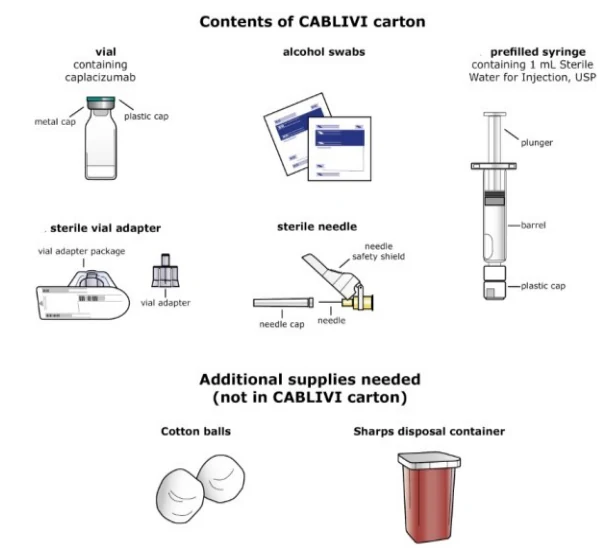 |
Single vial Pack
| Multi-vial Pack
|
| |
Before preparing a dose of Cablivi
| 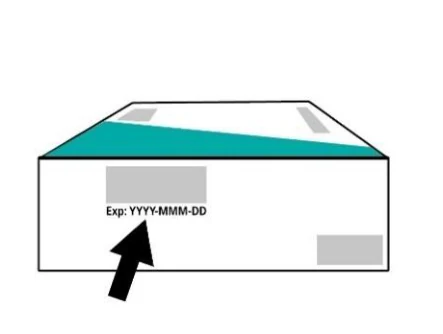 Figure A |
| INSTRUCTIONS | RELATED IMAGE |
|---|---|
Step 1: Bring the vial and syringe to room temperature
| 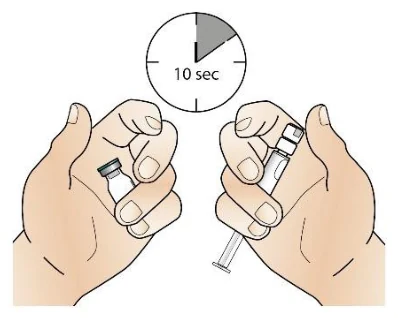 Figure B |
Step 2: Clean the rubber stopper
| 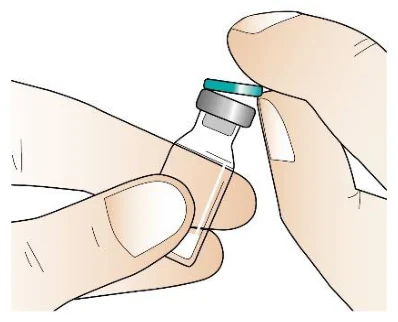 Figure C |
| 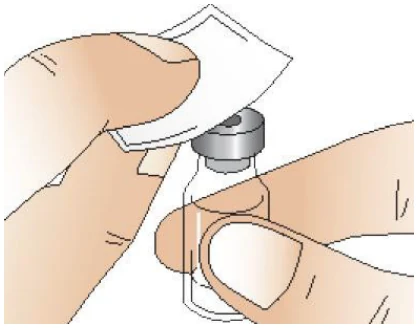 Figure D |
| INSTRUCTIONS | RELATED IMAGE |
|---|---|
Step 3: Attach the vial adapter
| 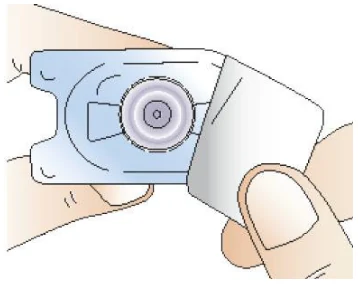 Figure E |
| 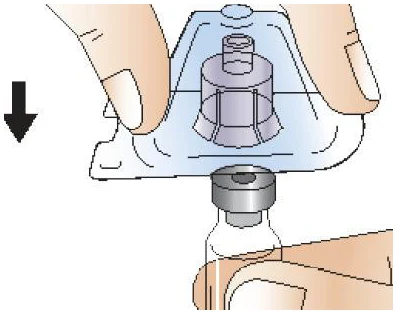 Figure F |
Step 4: Prepare the syringe
| 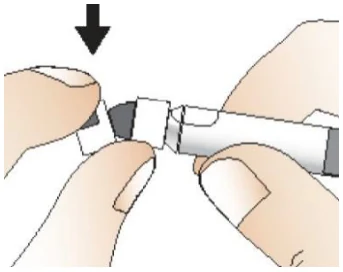 Figure G |
| INSTRUCTIONS | RELATED IMAGE |
|---|---|
Step 5: Connect the syringe to adapter and vial
| 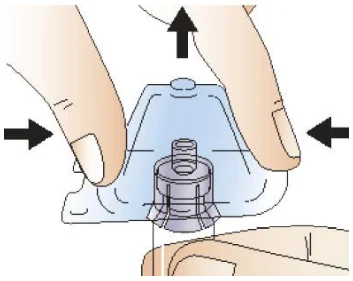 Figure H |
| 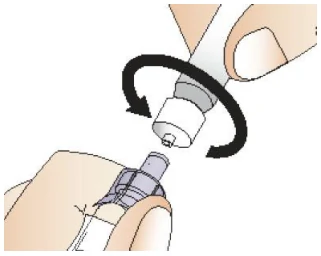 Figure I |
Step 6: Prepare the solution
| 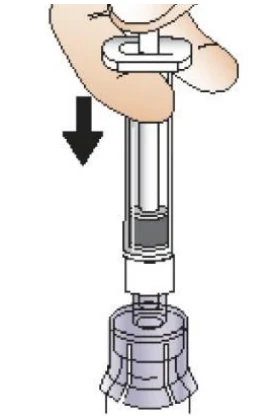 Figure J |
| INSTRUCTIONS | RELATED IMAGE |
|---|---|
| 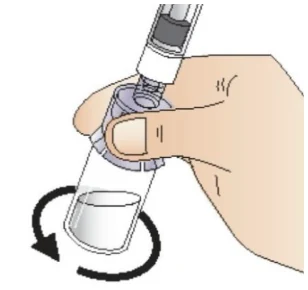 Figure K |
| 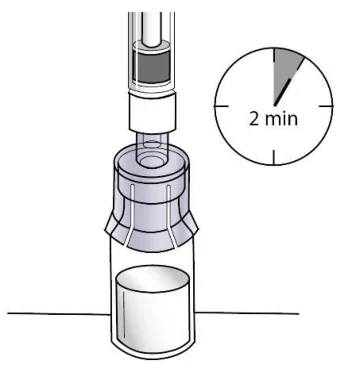 Figure L |
Step 7: Draw up solution
| 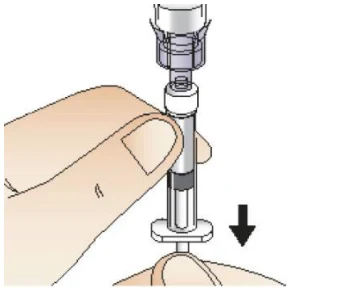 Figure M |
| INSTRUCTIONS | RELATED IMAGE |
|---|---|
Step 8: Detach the syringe
| 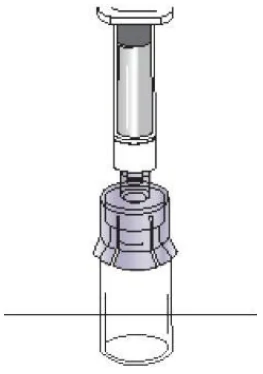 Figure N |
| 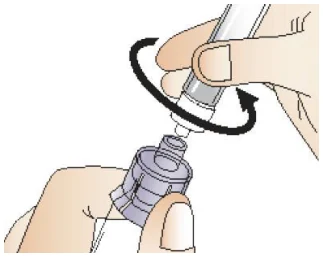 Figure O |
Step 9: Attach the needle
| 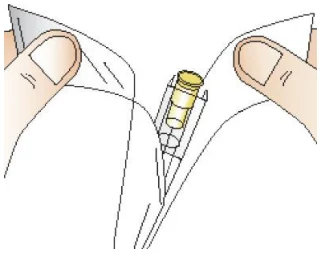 Figure P |
| INSTRUCTIONS | RELATED IMAGE |
|---|---|
| 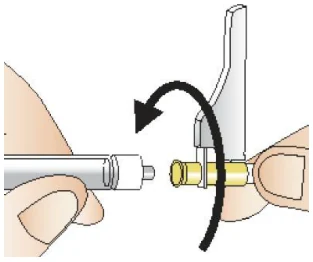 Figure Q |
| 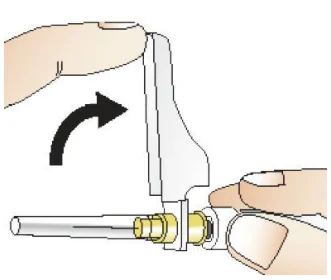 Figure R |
Step 10: Prepare your injection site
| 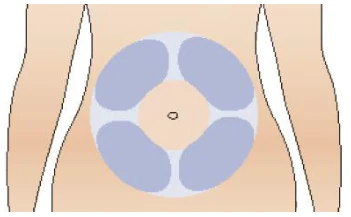 Figure S |
| INSTRUCTIONS | RELATED IMAGE |
|---|---|
| 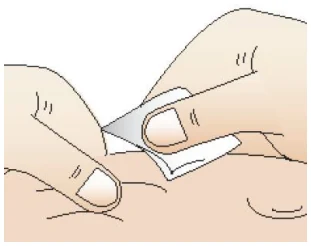 Figure T |
Step 11: Giving your injection
| 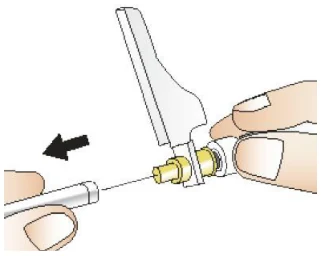 Figure U |
| 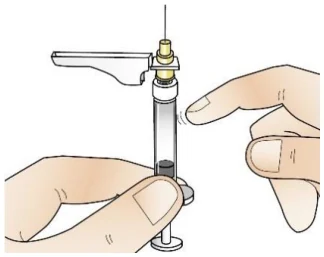 Figure V |
| INSTRUCTIONS | RELATED IMAGE |
|---|---|
| 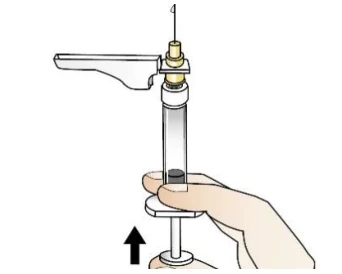 Figure W |
| 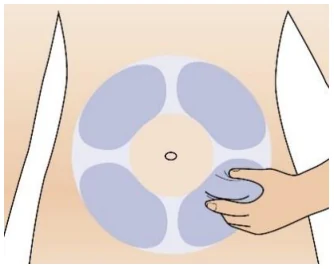 Figure X |
| 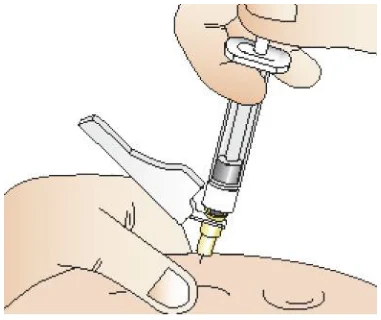 Figure Y |
| INSTRUCTIONS | RELATED IMAGE |
|---|---|
Step 12: After your injection
| 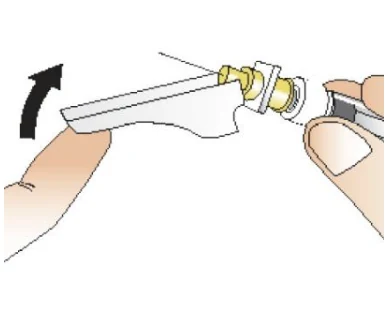 Figure Z |
Step 13: Throw away (dispose of) the used syringe and vial.
|