


Product Monograph - Camzyos
Recent Major Label Changes
| 2 Contraindications | 06/2025 |
|---|---|
| 06/2025 |
| 4 Dosage and administrations | 06/2025 |
Table of Contents
Recent Major Label Changes ................................................................................................. 2
Table of Contents ................................................................................................................. 2
Part 1: Healthcare Professional Information.......................................................................... 4
- 1.
Indications..................................................................................................................... 4
1.1. Pediatrics .................................................................................................................... 4
1.2. Geriatrics .................................................................................................................... 4
- 2. Contraindications .......................................................................................................... 4
- 3. Serious Warnings and Precautions Box ........................................................................... 4
- 4.
Dosage and Administration ............................................................................................ 5
4.1. Dosing Considerations ............................................................................................... 5
4.2. Recommended Dose and Dosage Adjustment .......................................................... 6
4.4. Administration ........................................................................................................... 9
4.5. Missed Dose ............................................................................................................... 9
- 5. Overdose ....................................................................................................................... 9
- 6. Dosage Forms, Strengths, Composition, and Packaging ................................................ 10
- 7.
Warnings and Precautions ........................................................................................... 11
Cardiovascular ...................................................................................................................... 11
Driving and Operating Machinery ........................................................................................ 11
Reproductive health ............................................................................................................. 12
7.1. Special Populations .................................................................................................. 12
7.1.1. Pregnant Women ............................................................................................. 12
7.1.2. Breastfeeding ................................................................................................... 12
7.1.3. Pediatrics .......................................................................................................... 12
7.1.4. Geriatrics .......................................................................................................... 13
- 8.
Adverse Reactions ....................................................................................................... 13
8.1. Adverse Reaction Overview ..................................................................................... 13
8.2. Clinical Trial Adverse Reactions ............................................................................... 14
- 9.
Drug Interactions ......................................................................................................... 16
9.1. Serious Drug Interactions ........................................................................................ 16
9.2. Drug Interactions Overview ..................................................................................... 16
9.3. Drug-Behaviour Interactions .................................................................................... 16
9.4. Drug-Drug Interactions ............................................................................................ 17
9.5. Drug-Food Interactions ............................................................................................ 23
9.6. Drug-Herb Interactions ............................................................................................ 23
9.7. Drug-Laboratory Test Interactions........................................................................... 23
- 10.
Clinical Pharmacology .................................................................................................. 23
10.1. Mechanism of Action ............................................................................................... 23
10.2. Pharmacodynamics .................................................................................................. 23
10.3. Pharmacokinetics ..................................................................................................... 24
- 11. Storage, Stability, and Disposal .................................................................................... 26
- 12. Special Handling Instructions ....................................................................................... 26
Part 2: Scientific Information .............................................................................................. 27
- 13. Pharmaceutical Information ........................................................................................ 27
- 14.
Clinical Trials ............................................................................................................... 27
14.1. Clinical Trials by Indication ...................................................................................... 27
- 15. Microbiology ............................................................................................................... 38
- 16. Non-Clinical Toxicology ................................................................................................ 38
Patient Medication Information ......................................................................................... 40
Part 1: Healthcare Professional Information
1. Indications
CAMZYOS (mavacamten capsules) is indicated for the treatment of symptomatic obstructive hypertrophic cardiomyopathy (oHCM) of New York Heart Association (NYHA) Class II-III in adult patients.
1.1. Pediatrics
Pediatrics (< 18 years of age): The safety and efficacy have not been established; therefore, Health Canada has not authorized an indication for pediatric use.
1.2. Geriatrics
Geriatrics: Evidence from clinical studies suggests that safety, effectiveness, and pharmacokinetics were consistent between elderly patients (≥ 65 years) and younger patients (18 to < 65 years).
2. Contraindications
CAMZYOS is contraindicated:
- with concomitant use of strong cytochrome P450 (CYP) enzyme CYP 2C19 inhibitors (see 7. Warnings and Precautions, Risk of heart failure or loss of response to mavacamten due to drug-drug interactions, and 9. Drug Interactions), due to risk of developing left ventricular dysfunction.
- with concomitant use of moderate or strong inducers to both CYP 2C19 and CYP 3A4 (7.Warnings and Precautions, Risk of heart failure or loss of response to mavacamten due to drug-drug interactions, and 9. Drug Interactions), due to risk of loss of therapeutic effect.
- during pregnancy (see 7. Warnings and Precautions, Reproductive health.
- in patients who are hypersensitive to this drug or to any ingredient in the formulation, including any non-medicinal ingredient, or component of the container. For a complete listing, see 6. Dosage Forms, Strengths, Composition, and Packaging.
- Serious Warnings and Precautions Box
Serious Warnings and Precautions
A Healthcare Professional Guide can be obtained by contacting BMS Canada medical information at 1 866 463-6267. Risk of Heart Failure
|
|---|
|
4. Dosage and Administration
4.1. Dosing Considerations
CAMZYOS should be administered under the supervision of a physician experienced in the treatment of HCM.
Dosage must be individualized based on clinical status and echocardiographic assessment of patient response. Confirmation of a negative pregnancy test in women of reproductive potential should be obtained prior to initiation of treatment (see 2. Contraindications and 7. Warnings and Precautions, Reproductive health).
CAMZYOS has generally been used together with a beta-blocker or a non-dihydropyridine calcium channel blocker (CCB). Patients should be closely monitored for systolic dysfunction with concomitant use of mavacamten with combined negative inotropic agents. Due to limited clinical experience and possible additive negative inotropic effects of CAMZYOS and other drugs that reduce cardiac contractility,concomitant use of CAMZYOS with certain combinations of negative inotropes is not recommended (see 7. Warnings and Precautions, Concomitant Use with Drugs That Reduce Cardiac Contractility).
Testing prior to initiation
Prior to initiating treatment with CAMZYOS, assess LVEF by echocardiography (see 7. Warnings and Precautions, Cardiovascular) then consider the Valsalva LVOT gradient and patient clinical status to guide appropriate CAMZYOS dosing. Initiation of treatment with CAMZYOS in patients with LVEF <55% is not recommended.
Treatment monitoring
Patients may develop heart failure while taking CAMZYOS. It is important to regularly monitor the patient’s symptoms of oHCM, LVOT gradient with Valsalva maneuver and LVEF using echocardiogram assessments. For patients who initiated mavacamten treatment with a normal or near normal Valsalva LVOT gradient, but remain symptomatic during maintenance phase, post-exercise LVOT gradient may be additionally considered to guide titration (Figure 2).
Patients should be assessed at least every 12 weeks until an individual maintenance dose has been achieved (see 4.2 Recommended Dose and Dosage Adjustment, Treatment Initiation). Subsequently, assessment of LVEF and Valsalva LVOT should be done at least every 6 months. (See 4.2. Recommended Dose and Dosage Adjustment, Treatment Maintenance).
If at any visit LVEF is <50%, treatment with CAMZYOS should be interrupted for at least four (4) weeks (see 4.2. Recommended Dose and Dosage Adjustment).
Assessment of LVEF is also recommended if clinical status changes or in patients with an intercurrent illness such as serious infections or with clinically relevant arrhythmias, including atrial fibrillation and other tachyarrhythmias. In these circumstances, the dose of CAMZYOS may need to be reduced or temporarily discontinued (see 7. Warnings and Precautions, Cardiovascular). Dose increases are not recommended if a patient is experiencing an intercurrent illness which may impair systolic function.
4.2. Recommended Dose and Dosage Adjustment
Treatment initiation, over the first 12 weeks
The recommended starting dose of CAMZYOS is 5 mg taken orally once daily.
Patients should be assessed for early clinical response four (4) weeks after initiation of treatment with CAMZYOS. If LVOT gradient with Valsalva maneuver is < 20 mmHg, the dose of CAMZYOS should be decreased to 2.5 mg once daily. Otherwise maintain at 5 mg once daily. Thereafter, follow-up visits should occur at eight (8) weeks and twelve (12) weeks after treatment initiation, with dose adjustments, as appropriate, see Figure 1, below.
Figure 1: Treatment Initiation Phase
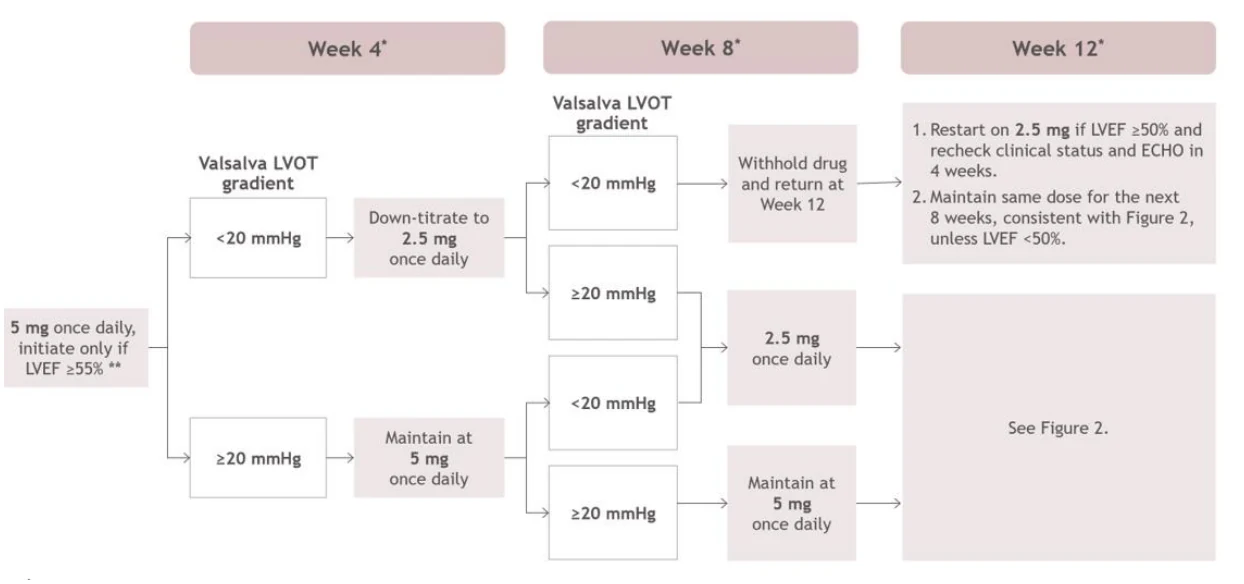
*Interrupt treatment if LVEF <50% at any clinic visit; restart treatment after 4 weeks if LVEF ≥50%. See Figure 3.
**Patients inititating CAMZYOS on stable therapy with a moderate CYP2C19 inhibitor or a strong CYP3A4 inhibitor see Section on Concomitant therapy below for dosing instructions.
Treatment Maintenance, from 12 weeks and subsequent visits
The patient’s individualized dose of CAMZYOS will be either 2.5, 5, 10 or 15 mg once daily. Follow the algorithm for Maintenance (Figure 2) below for appropriate dosing and monitoring schedules.
Figure 2: Treatment Maintenance Phase
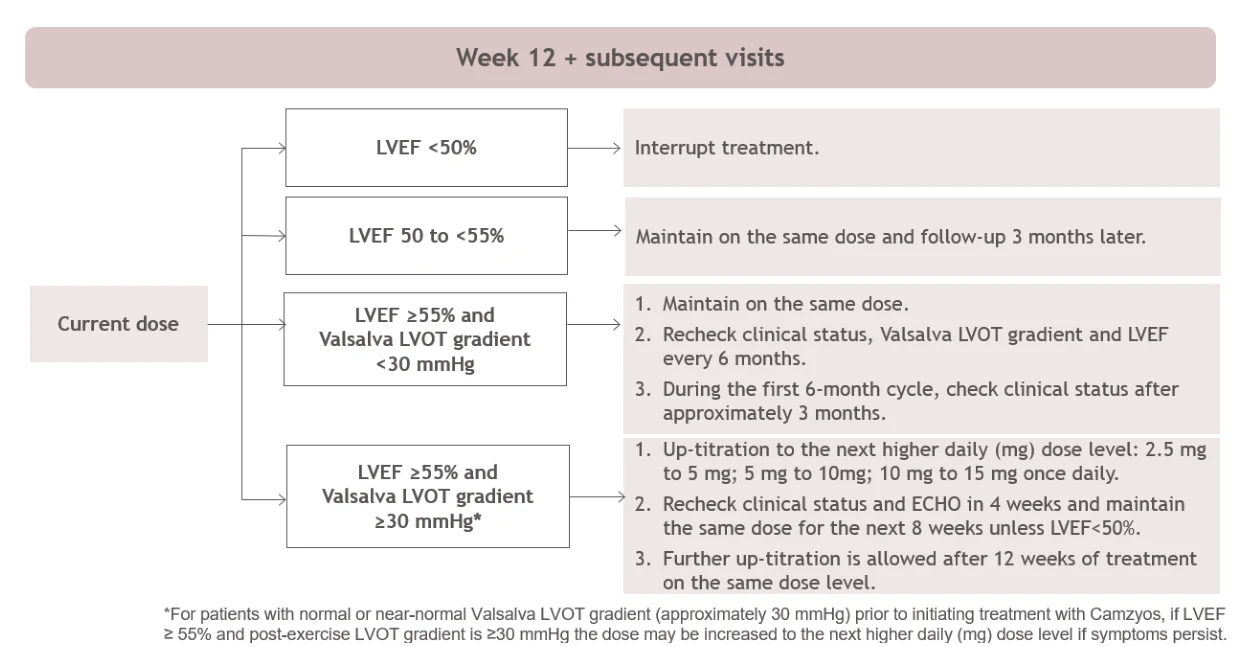
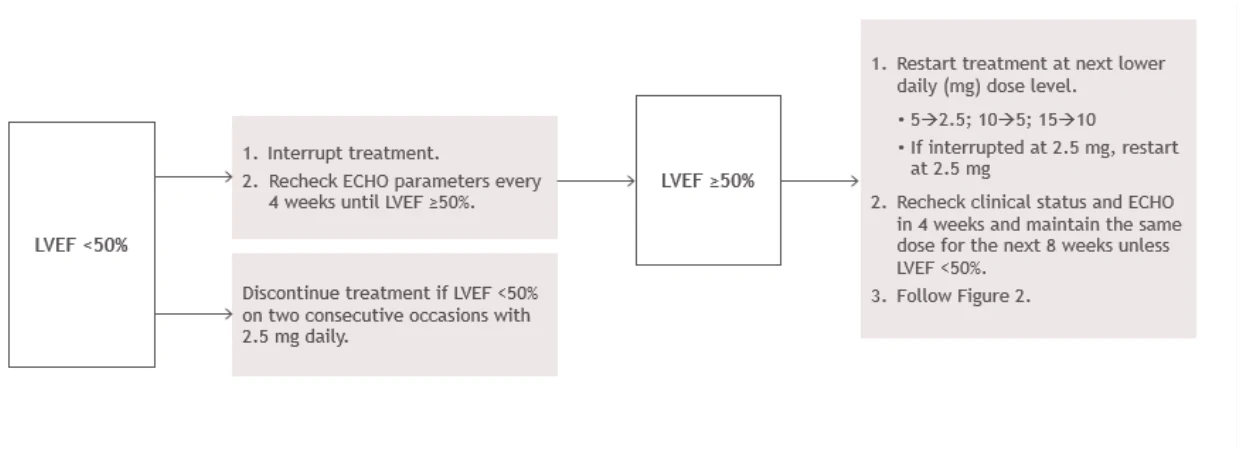
Following treatment interruption of CAMZYOS due to LVEF < 50%, patients should be monitored carefully to determine if treatment can be resumed, see Figure 3, below.
Figure 3: Following Treatment Interruption due to LVEF < 50%
Concomitant therapy
CAMZYOS is contraindicated with concomitant use of strong CYP2C19 inhibitors (see 2. Contraindications). Concomitant use of CAMZYOS with certain cytochrome P450 inhibitors may increase CAMZYOS exposure, which may increase the risk of heart failure due to systolic dysfunction (see 9.1. Serious Drug Interactions). In patients who are on stable therapy with a weak CYP 2C19 inhibitor or a moderate CYP 3A4 inhibitor, initiate CAMZYOS at the recommended starting dosage of 5 mg orally once daily (see 9.4. Drug-Drug Interactions) .
Initiate CAMZYOS at 2.5 mg orally once daily in patients who are on stable therapy with a moderate CYP2C19 inhibitor or a strong CYP3A4 inhibitor. Pause CAMZYOS treatment if Valsalva LVOT gradient is ˂20 mm Hg at Week 4 or Week 8. Treatment may be resumed after 4 weeks at 2.5 mg once daily if LVEF is ≥ 50%. If treatment is resumed at Week 12, recheck clinical status, Valsalva LVOT gradient and LVEF in 4 weeks, and maintain the current dose for the next 8 weeks unless LVEF is ˂50%.
In patients treated with CAMZYOS, who then intend to initiate a dose of a weak to moderate CYP 2C19 inhibitor or a moderate to strong CYP 3A4 inhibitor, reduce dosage of CAMZYOS by one level, i.e., 15 → 10 mg; 10 → 5 mg; or 5 → 2.5 mg. Avoid initiation of a weak to moderate CYP 2C19 inhibitor or a moderate to strong CYP 3A4 inhibitor in patients who are on stable treatment with 2.5 mg of CAMZYOS because a lower once-daily dose of CAMZYOS is not available.
An increase in dose of CAMZYOS may be needed if the moderate inhibitor of CYP2C19 or strong inhibitor of CYP3A4 is discontinued after long-term concomitant use. Monitor for new or worsening symptoms.
For initiation of short-term use of a weak to moderate inhibitor of CYP2C19 or a moderate to strong inhibitor of CYP3A4, when mavacamten dose modification is not feasible, interrupt mavacamten for the duration of treatment with the CYP inhibitor. CAMZYOS may be reinitiated at the previous dose immediately on discontinuation of the CYP inhibitor.
Special populations
Geriatric patients (65 years and above)
No specific dose adjustments are recommended for patients aged 65 years and older (see 1.2. Geriatrics ).
Pediatric patients (below 18 years)
Health Canada has not authorized an indication for pediatric use (see 1.1. Pediatrics).
Renal Impairment
No dosage adjustment is required in patients with mild (eGFR 60 - <90 mL/min/1.73m2) and moderate (eGFR 30 - <60 mL/min/1.73m2) renal impairment. CAMZYOS should be used with caution in patients with severe (eGFR < 30 mL/min/1.73m2) renal impairment, as CAMZYOS has not been studied in this population (see 10.3. Pharmacokinetics).
Hepatic impairment
No dosage adjustment is required in patients with mild (Child-Pugh Class A) and moderate (Child-Pugh Class B) hepatic impairment. CAMZYOS is not recommended for patients with severe (Child-Pugh Class
C) hepatic impairment, as CAMZYOS has not been studied in this population (see 10.3 Pharmacokinetics).
4.4. Administration
The capsule should be swallowed whole with water and can be taken with or without food.
4.5. Missed Dose
If a dose is missed, it should be taken as soon as possible, and the next scheduled dose should be taken at the usual time the following day. Two separate doses should not be taken in a single day.
5. Overdose
Human experience of overdose with CAMZYOS is limited. Systolic dysfunction is the most likely adverse effect of overdosage of CAMZYOS.
CAMZYOS has been given as a single dose of up to 144 mg in patients with HCM. There was one reported serious adverse reaction consisting of vasovagal reaction, hypotension, and asystole lasting 38 seconds at that dose. In healthy subjects, doses of up to 25 mg have been administered for up to 25 days. Three out of 8 participants treated at the 25 mg dose level experienced 20% or greater reductions in LVEF. A death of an infant was reported after accidental ingestion of three 15 mg capsules of CAMZYOS. Systolic dysfunction is the most likely result of overdosage of CAMZYOS.
Management of overdose
Treatment of overdose with CAMZYOS consists of discontinuation of CAMZYOS treatment, and instituting supportive measures to maintain hemodynamic status, e.g., initiation of inotropic support with adrenergic agents, if appropriate, along with close monitoring of vital signs and LVEF.
There is no known specific antidote to CAMZYOS.
In healthy subjects fasted overnight, administration of 50 g of activated charcoal with sorbitol 2 hours (approximately Tmax) after ingestion of a 15 mg dose of mavacamten reduced AUC(0-72h) and AUC(0-inf) by 14% and 34%, respectively. Maximum concentration (Cmax) was minimally affected. The benefit of activated charcoal with sorbitol is negligible if administered 6 hours after the mavacamten dose. Thus, early administration (prior to or as soon after Tmax as possible) of activated charcoal with sorbitol may be considered in the management of mavacamten overdose or accidental ingestion. Theoretically, under fed conditions, activated charcoal with sorbitol may still be effective beyond 2-hour post mavacamten dose because of the delayed Tmax by food (see 10.3 Pharmacokinetics).
| For the most recent information in the management of a suspected drug overdose, contact your regional poison control centre or Health Canada’s toll-free number, 1-844 POISON-X (1-844-764-7669). |
|---|
- 6. Dosage Forms, Strengths, Composition, and Packaging
Table 1 – Dosage Forms, Strengths, Composition and Packaging
Description
2.5 mg: Light purple opaque cap, hard capsule, size 2, imprinted with “2.5 mg” in black, and white opaque body imprinted with “Mava” in black, both in radial direction. The capsule contains white to off-white powder.
5 mg: Yellow opaque cap, hard capsule, size 2, imprinted with “5 mg” in black, and white opaque body imprinted with “Mava” in black, both in radial direction. The capsule contains white to off-white powder.
10 mg: Pink opaque cap, hard capsule, size 2, imprinted with “10 mg” in black, and white opaque body imprinted with “Mava” in black, both in radial direction. The capsule contains white to off-white powder.
15 mg: Gray opaque cap, hard capsule, size 2, imprinted with “15 mg” in black, and white opaque body imprinted with “Mava” in black, both in radial direction. The capsule contains white to off-white powder.
Supplied in bottles of 30 capsules.
| Route of Administration | Dosage Form/ Strength/Composition | Non-Medicinal Ingredients |
| Oral | Capsules 2.5 mg, 5 mg, 10 mg and 15 mg | Croscarmellose sodium, hypromellose, magnesium stearate (non-bovine), mannitol, silicon dioxide. Shell 2.5mg: gelatin (bovine and/ or porcine), black iron oxide, red iron oxide, titanium dioxide. Shell 5 mg: gelatin (bovine and/ or porcine), titanium dioxide, yellow iron oxide. Shell 10 mg: gelatin (bovine and/ or porcine), titanium dioxide, red iron oxide. Shell 10 mg: gelatin (bovine and/ or porcine), titanium dioxide, red iron oxide. Shell 15 mg: gelatin (bovine and/ or porcine), titanium dioxide, black iron oxide. Imprinting ink: black iron oxide, potassium hydroxide, propylene glycol, shellac, strong ammonia solution |
7. Warnings and Precautions
See 3. Serious Warnings and Precautions Box.
Cardiovascular
Heart Failure due to Systolic Dysfunction
CAMZYOS reduces LVEF and can cause heart failure due to systolic dysfunction. Patients with intercurrent illness, such as serious infections, or clinically relevant arrhythmias, including atrial fibrillation and other tachyarrhythmias or those undergoing major cardiac surgery may be at greater risk of systolic dysfunction and progressing to heart failure. The development of signs or symptoms of heart failure in an individual patient or elevation in N-terminal (NT)-pro b-type natriuretic peptide (NT-proBNP) at any time should prompt an evaluation of cardiac function. LVEF should be measured prior to initiating treatment and closely monitored thereafter. Treatment interruption may be necessary to ensure that LVEF remains ≥ 50% (see 3. Serious Warnings and Precautions Box, and 4.1. Dosing Considerations).
Risk of heart failure or loss of response to mavacamten due to drug-drug interactions
CAMZYOS is primarily metabolized by CYP 2C19, and to a lesser extent by CYP 3A4 (see 10.3. Pharmacokinetics, Metabolism). Concomitant use of CAMZYOS with drugs that substantially inhibit these enzymes may lead to life-threatening adverse events, such as heart failure (see 2. Contraindications, and 9. Drug Interactions). Conversely, concomitant use with drugs that substantially induce these enzymes may lead to loss of therapeutic effectiveness of mavacamten (see 2. Contraindications, and 9. Drug Interactions).
Advise patients of the potential for drug interactions and with over-the-counter medications, such as omeprazole and esomeprazole
Concomitant Use with Drugs That Reduce Cardiac Contractility
Expect additive negative inotropic effects of CAMZYOS with other drugs that reduce cardiac contractility. Due to limited clinical experience, the safety of concomitant use of CAMZYOS with disopyramide or ranolazine, or use of CAMZYOS in patients taking beta blockers in combination with a calcium channel blocker has not been fully established. Concomitant use of CAMZYOS in patients on dual or triple background combinations of negative inotropic agents (calcium channel blocker or disopyramide with a beta blocker, or disopyramide with a calcium channel blocker with a beta blocker) is not recommended. These medications in combination could increase the risk of left ventricular systolic dysfunction and heart failure symptoms. If concomitant therapy with any negative inotrope is initiated with CAMZYOS, or if the dose of a negative inotrope is increased, monitor LVEF closely until stable doses and stable clinical response have been achieved (see 9. Drug Interactions, Drugs That Reduce Cardiac Contractility).
Driving and Operating Machinery
Dizziness may occur following administration of CAMZYOS. Patients should be advised not to drive or use machines if they experience dizziness. Exercise caution when driving or operating a vehicle or potentially dangerous machinery.
Reproductive health
Teratogenic Risk
Based on animal studies, mavacamten may decrease embryonic viability, impair fetal and post-natal growth, and cause embryo-fetal malformations when administered during pregnancy (see 16 NON-CLINICAL TOXICOLOGY, Reproductive and Developmental Toxicology). Therefore, use of CAMZYOS during pregnancy is contraindicated (see2. Contraindications).
Fertility
Mavacamten was shown to cross the placenta in rabbits. Advise females of reproductive potential to avoid becoming pregnant and to use highly effective contraception during treatment with CAMZYOS and for at least 4 months after discontinuing treatment.
- Confirm a negative pregnancy test in women of reproductive potential prior to initiation of treatment (see 16. Non-Clinical Toxicology, Reproductive and Developmental Toxicology).
7.1. Special Populations
7.1.1. Pregnant Women
There are no data on the developmental risk associated with the use of CAMZYOS in pregnant women. CAMZYOS was well-tolerated by pregnant animals. However, based on animal data, CAMZYOS may cause fetal malformations when administered during pregnancy (see 16. Non-Clinical Toxicology, Reproductive and Developmental Toxicology).
CAMZYOS treatment is contraindicated during pregnancy (see 2. Contraindications). Females of reproductive potential who undergo treatment with CAMZYOS should be informed of the potential hazard to the fetus and should be advised to avoid becoming pregnant prior to or during treatment and for at least 4 months after discontinuation.
If the patient becomes pregnant while receiving the drug, CAMZYOS treatment must be immediately discontinued.
7.1.2. Breastfeeding
Caution should be exercised because many drugs can be excreted in human milk. Since it is unknown whether mavacamten or its metabolites are excreted in human milk, a decision must be made whether to discontinue breast-feeding during treatment and for 4 months after the last dose, or to discontinue treatment, taking into account benefit-risk of treatment with mavacamten (see 16. Non-Clinical Toxicology, Reproductive and Developmental Toxicology).
7.1.3. Pediatrics
Pediatrics (< 18 years of age): The safety and efficacy have not been established; therefore, Health Canada has not authorized an indication for pediatric use.
7.1.4. Geriatrics
[Geriatrics: Clinical trials included 319 patients dosed with CAMZYOS, 119/319 (37.3%) patients were aged 65 years or older, and 25/319 (7.8%) were aged 75 years or older. Safety, effectiveness, and pharmacokinetics appeared to be consistent between older patients (≥ 65 years) and younger patients (18 to < 65 years).
8. Adverse Reactions
8.1. Adverse Reaction Overview
CAMZYOS reduces LVEF and can cause heart failure due to systolic dysfunction (see 3. Serious Warnings and Precautions Box, and 7. Warnings and Precautions, Cardiovascular).
Effects on systolic function
In the Phase 3 clinical studies, 9 (5%) of patients in the CAMZYOS group and 2 (1.1%) of patients in the placebo group experienced reversible reductions in LVEF < 50% (for CAMZYOS median 45%: range 35 to 49% and for placebo median 46%: range 43 to 50%) while on treatment. None of the patients receiving mavacamten had systolic dysfunction leading to heart failure during the placebo-controlled period. In 5 of the 9 (56%) patients on CAMZYOS, these reductions were observed without other clinical manifestations. In all patients treated with CAMZYOS, LVEF recovered following temporary interruption of CAMZYOS and they completed the study.
The safety of CAMZYOS was evaluated in two Phase 3 placebo-controlled studies EXPLORER-HCM and VALOR-HCM (see 14. Clinical Trials). In EXPLORER-HCM, the most commonly reported on-treatment adverse events in mavacamten-treated patients were dizziness (17.1%) and headache (11.4%). In VALOR-HCM, the most commonly reported on-treatment adverse events in mavacamen-treated patients were fatigue (8.9%), atrial fibrillation (7.1%), nausea (7.1 %), dizziness (7.1%) and dyspnea (7.1%) and rash (7.1%)
In EXPLORER-HCM, serious adverse events were observed in 8.1% of mavacamten-treated patients and 8.6% of placebo-treated patients to Week 30. Two cases of stress cardiomyopathy were observed in mavacamten patients. Syncope was reported in two mavacamten-treated patients, compared to one treated with placebo. There were no deaths in the mavacamten group.
In VALOR-HCM, during the placebo-controlled period, serious adverse events were observed in 4% of mavacamten-treated patients and 1% of placebo-treated patients to Week 16. Two subjects experienced cardiac disorders attributed to atrial fibrillation in the mavacamten-treated group. No subjects experienced serious adverse events of congestive cardiac failure, syncope, or sudden cardiac death.
In EXPLORER-HCM, study drug was permanently discontinued in 1.6% of mavacamten-treated patients due to adverse events, consisting of one patient with syncope and one with atrial fibrillation. There was no permanent discontinuation due to adverse events in VALOR-HCM.
Clinical trials are conducted under very specific conditions. The adverse reaction rates observed in the clinical trials; therefore, may not reflect the rates observed in practice and should not be compared to the rates in the clinical trials of another drug. Adverse reaction information from clinical trials may be useful in identifying and approximating rates of adverse drug reactions in real-world use.
The safety of CAMZYOS was evaluated in EXPLORER-HCM, a Phase 3, double-blind, randomized, placebo-controlled trial. Of the 251 oHCM adult patients in this trial, 123 patients were treated with a daily dose of 2.5 mg, 5 mg, 10 mg or 15 mg of CAMZYOS, while 128 were treated with placebo. CAMZYOS-treated patients received a median duration of exposure to mavacamten of 30.4 weeks.
Median age was 59 years (range: 26 to 82), with 36.1% of patients ≥65 years, and 6.5% of patients ≥75 years. 94% were White, and 54% male.
Adverse events that occurred ≥ 5% of mavacamten-treated patients and that were more common than in placebo-treated patients at Week 30 are summarised in Table 2, below.
8.2. Clinical Trial Adverse Reactions
Clinical trials are conducted under very specific conditions. The adverse reaction rates observed in the clinical trials; therefore, may not reflect the rates observed in practice and should not be compared to the rates in the clinical trials of another drug. Adverse reaction information from clinical trials may be useful in identifying and approximating rates of adverse drug reactions in real-world use.
The safety of CAMZYOS was evaluated in EXPLORER-HCM, a Phase 3, double-blind, randomized, placebo-controlled trial. Of the 251 oHCM adult patients in this trial, 123 patients were treated with a daily dose of 2.5 mg, 5 mg, 10 mg or 15 mg of CAMZYOS, while 128 were treated with placebo. CAMZYOS-treated patients received a median duration of exposure to mavacamten of 30.4 weeks.
Median age was 59 years (range: 26 to 82), with 36.1% of patients ≥65 years, and 6.5% of patients ≥75 years. 94% were White, and 54% male.
Adverse events that occurred ≥ 5% of mavacamten-treated patients and that were more common than in placebo-treated patients at Week 30 are summarised in Table 2, below.
Table 2: Adverse Events in ≥ 5% of Mavacamten-treated Patients in EXPLORER-HCM (at Week 30)
CAMZYOS N=123 n (%) | placebo N=128 n (%) | |
Cardiac disorders Atrial fibrillation Palpitations | 8 (6.5%) 7 (5.7%) | 9 (7.0%) 9 (7.0%) |
Infections Nasopharyngitis | 10 (8.1) | 6 (4.7) |
Musculoskeletal Back pain | 9 (7.3) | 7 (5.5) |
Nervous system Dizziness Headache | 21 (17.1%) 14 (11.4%) | 15 (11.7%) 10 (7.8%) |
Respiratory Cough Dyspnea | 8 (6.5%) 8 (6.5%) | 4 (3.1%) 10 (7.8%) |
A long-term open-label extension trial of 224 oHCM patients who completed the EXPLORER-HCM trial was conducted. After a mean duration of 32 weeks in this trial, the most common reported adverse events included, fatigue (6.7%), atrial fibrillation (4.9%), headache (4.9%), dyspnea (4.5%), and dizziness (4.0%). SAE were reported in 8.5% of patients, in which, 3 cases of cardiac failure and 2 of atrial fibrillation were noted. All three cases of cardiac failure resolved.
The safety of CAMZYOS in patients was further evaluated in VALOR-HCM, a Phase 3, double-blind, randomized trial with an initial placebo-controlled period of 16 weeks. Of the 112 adults with symptomatic oHCM, 56 patients were treated with CAMZYOS 2.5 - 15 mg daily and 55 were treated with placebo. CAMZYOS-treated patients had a median duration of exposure of 17 weeks (range: 3-19 weeks).
Safety data from VALOR-HCM are consistent with that from EXPLORER-HCM. Adverse events that occurred ≥ 5% of mavacamten-treated patients and that were more common than in placebo-treated patients at Week 16 are summarised in Table 3, below.
Table 3: Adverse Events in ≥ 5% of Mavacamten-treated Patients in VALOR-HCM (at Week 16)
CAMZYOS N=56 n (%) | placebo N=55 n (%) | |
Cardiac disorders Atrial fibrillation | 4 (7.1) | 0 |
Gastrointestinal disorders Nausea | 4 (7.1%) | 1 (1.8) |
General disorders Fatigue | 5 (8.9%) | 2 (3.6) |
Infections and infestations Urinary tract infection | 3 (5.4) | 1 (1.8) |
Nervous system Dizziness | 4 (7.1) | 3 (5.5) |
Respiratory Dyspnea | 4 (7.1) | 3 (5.5) |
Skin Rash | 4 (7.1) | 0 |
Vascular disorders Hypertension | 3 (5.4) | 2 (3.6) |
VALOR-HCM included a long-term extension period of 108 oHCM patients who completed the 16-week placebo-controlled period in the VALOR-HCM trial where all patients received mavacamten. After a mean duration of 32 weeks in this trial, approximately half of patients have had 32 weeks of mavacamten exposure at the time of data analysis, the most common reported adverse events included, dizziness (9.3%), fatigue (8.3%) and atrial fibrillation (7.4%). No patients that previously received 16-weeks of mavacamten had cardiac failure.
Two patients in the previous placebo group who received mavacamten in the long-term extension had LVEF below 30%. At Week 32 (after 16 weeks of mavacamten treatment), one of these patients had heart failure due to uncontrolled atrial fibrillation with rapid ventricular response (RVR), requiring hospitalization. At Week 56 (after 40 weeks of mavacamten treatment), one patient experienced sudden cardiac death, a known complication of HCM, 5 days after mavacamten discontinuation.
9. Drug Interactions
9.1. Serious Drug Interactions
Serious Drug Interactions CAMZYOS is contraindicated in patients who are receiving:
|
|---|
9.2. Drug Interactions Overview
Mavacamten is primarily metabolized by CYP 2C19 and to a lesser extent by CYP 3A4. Moderate and strong CYP 3A4 inhibitors/inducers or CYP 2C19 inhibitors/inducers may significantly affect the exposure of mavacamten (see 7. Warnings and Precautions, Cardiovascular, and 9.4 Drug-Drug Interactions).
9.3. Drug-Behaviour Interactions
Mavacamten is primarily metabolized by CYP 2C19 and to a lesser extent by CYP 3A4. Moderate and strong CYP 3A4 inhibitors/inducers or CYP 2C19 inhibitors/inducers may significantly affect the exposure of mavacamten (see 7. Warnings and Precautions, Cardiovascular, and 9.4 Drug-Drug Interactions).
Drugs That Reduce Cardiac Contractility
Additive negative inotropic effects are expected when mavacamten used concomitantly with other drugs that reduce cardiac contractility.
In the pivotal clinical trial, EXPLORER-HCM, 119 of 123 patients who were treated with CAMZYOS received concomitant therapy with one of either beta blockers (n=94), verapamil (n=19), or diltiazem (n=6) (see 14. Clinical Trials). There is limited information available on the potential for a pharmacodynamic interaction between CAMZYOS and other drugs that also reduce cardiac contractility. If treatment with a new negative inotrope is initiated, or if the dose of a negative inotrope is increased, in a patient receiving CAMZYOS, close medical supervision with echocardiographic monitoring of LVEF should be provided until stable doses and clinical response have been achieved (see 7. Warning and Precautions, Cardiovascular).
In the VALOR-HCM study, 53 of the 56 patients who received CAMZYOS during the randomized-controlled period received concomitant therapy with the following medications (alone or in combination with other treatment): beta blocker (n=45), verapamil or diltiazem (n=16), and/or disopyramide (n=14). Twenty patients (35.7%) received CAMZYOS on top of combination standard of care therapy. Due to very limited clinical experience, the safety of concomitant use of CAMZYOS with disopyramide or ranolazine, or use of CAMZYOS in patients taking beta blockers in combination with a calcium channel blocker has not been fully established. In the long-term extension, including patients who were treated with CAMZYOS after the double-blind period, 36 of 112 patients (32%) received CAMZYOS with combination background HCM therapy; 22 of 112 patients (20%) received disopyramide as monotherapy or in combination with other treatments and no evidence of systolic dysfunction was observed (see 7. Warnings and Precautions, Cardiovascular).
Effect on Transporters
In vitro data indicate that mavacamten is not an inhibitor of major efflux transporters (P-gp, BCRP, BSEP, MATE1, or MATE2-K) at therapeutic concentrations, nor is it an inhibitor of major uptake transporters (organic anion transporting polypeptides [OATPs], organic cation transporters [OCTs], or organic anion transporters [OATs]) at therapeutic concentrations.
Effect on CYP Enzyme Substrates
Concomitant use of mavacamten may reduce plasma concentrations of drugs which are CYP 2B6, CYP 2C8, CYP 2C9, or CYP 2C19 substrates.
9.4. Drug-Drug Interactions
The drugs listed in this table are based on either drug interaction case reports or studies, or potential interactions due to the expected magnitude and seriousness of the interaction (i.e., those identified as contraindicated).
Table 4: Established or Potential Drug-Drug Interactions
| [Proper/Common name] | Source of Evidence | Effect | Clinical comment |
| Omeprazole | CT | Co-administration of mavacamten (15 mg) with the weak CYP 2C19 inhibitor omeprazole (20 mg QD) resulted in a 48% increase in mavacamten AUCinf with no effect on Cmax in combined healthy normal metabolizers and rapid metabolizers for CYP 2C19. | Initiate CAMZYOS at the recommended starting dosage of 5 mg orally once daily in patients who are on stable therapy with a weak CYP2C19 inhibitor. Reduce dosage of CAMZYOS by one level, i.e., 15 → 10 mg; 10 → 5 mg; or 5 → 2.5 mg in patients who initiate a weak CYP2C19 inhibitor. Intermittent co-administration of weak CYP 2C19 inhibitors (such as omeprazole or esomeprazole) with CAMZYOS is not recommended. Avoid initiation of concomitant weak CYP 2C19 inhibitors in patients who are on stable treatment with 2.5 mg of CAMZYOS because a lower dose is not available. |
| Ticlopidine | PBPK modeling | Co-administration of mavacamten (15 mg QD) with the strong CYP 2C19 inhibitor ticlopidine (219.57 mg BID) resulted in a 98% and 59% increase in mavacamten AUCTAU and Cmax, respectively, in virtual healthy CYP 2C19 normal metabolizers. | No clinical drug interaction study was conducted with moderate or strong CYP 2C19 inhibitors. Concomitant use of CAMZYOS with a strong CYP 2C19 inhibitor is contraindicated due to risk of heart failure. |
| Verapamil | CT | Co-administration of mavacamten (25 mg) with the moderate CYP 3A4 inhibitor verapamil sustained release (240 mg) resulted in a 16% and 52% increase in mavacamten AUCinf and Cmax, respectively, in combined healthy intermediate metabolizers and normal metabolizers for CYP 2C19. | Initiate CAMZYOS at the recommended starting dosage of 5 mg orally once daily in patients who are on stable therapy with a moderate CYP3A4 inhibitor. Reduce dosage of CAMZYOS by one level, i.e., 15 → 10 mg; 10 → 5 mg; or 5 → 2.5 mg in patients who initiate a moderate CYP3A4 inhibitor. An increase in dose of CAMZYOS may be needed if the moderate inhibitor of CYP3A4 is discontinued after long-term concomitant use. Monitor for new or worsening symptoms. Avoid initiation of concomitant moderate CYP3A4 inhibitors in patients who are on stable treatment with 2.5mg of CAMZYOS because a lower dose is not available. CAMZYOS is not recommended with dual or triple combinations of negative inotropic agents (verapamil with a beta blocker or verapamil with a beta blocker and disopyramide). These medications in combinations increase the risk of left ventricular systolic dysfunction and heart failure symptoms. |
| Diltiazem | PBPK modeling | Co-administration of mavacamten (15 mg QD) with the moderate CYP 3A4 inhibitor diltiazem (60 mg TID) was predicted to result in a 19% and 12% increase in mavacamten AUCTAU and Cmax, respectively, in healthy intermediate or normal metabolizers of CYP 2C19. In healthy CYP 2C19 poor metabolizers, a 55% and 42% increase in mavacamten AUCTAU and Cmax, respectively, was predicted. | Initiate CAMZYOS at the recommended starting dosage of 5 mg orally once daily in patients who are on stable therapy with a moderate CYP3A4 inhibitor. Reduce dosage of CAMZYOS by one level, i.e., 15 → 10 mg; 10 → 5 mg; or 5 → 2.5 mg in patients who intiate a moderate CYP3A4 inhibitor. An increase in dose of CAMZYOS may be needed if the moderate inhibitor of CYP3A4 is discontinued after long-term concomitant use. Monitor for new or worsening symptoms.Avoid initiation of concomitant moderate CYP 3A4 inhibitors in patients who are on stable treatment with 2.5 mg of CAMZYOS because a lower dose is not available. |
| Itraconazole | PBPK modeling | Co-administration of mavacamten (15 mg QD) with the strong CYP 3A4 inhibitor itraconazole (200 mg QD) was predicted to result in an increase of up to 76% and 54% in AUCTAU and Cmax, respectively in healthy CYP 2C19 poor metabolizers. In CYP 2C19 normal metabolizers an increase of 29% and 17% in AUCTAU and Cmax, respectively was predicted. | Initiate CAMZYOS at 2.5 mg orally once daily in patients who are on stable therapy with a strong CYP3A4 inhibitor. Reduce dosage of CAMZYOS by one level, i.e., 15 → 10 mg; 10 → 5 mg; or 5 → 2.5 mg in patients who initiate a strong CYP3A4 inhibitior. An increase in dose of CAMZYOS may be needed if the strong inhibitor of CYP3A4 is discontinued after long-term concomitant use. Monitor for new or worsening symptoms. Avoid initiation of concomitant strong CYP 3A4 inhibitors in patients who are on stable treatment with 2.5 mg of CAMZYOS because a lower dose is not available. |
| Rifampin | PBPK modeling | Co-administration of mavacamten (a single 15-mg dose) with a strong CYP 3A4 and CYP 2C19 inducer (rifampin 600 mg daily dose) following a 7-day lead-in induction period, was predicted to result in a decrease in mavacamten of up to 69% and 7% in AUC0-T and Cmax, respectively in CYP 2C19 normal metabolizers and poor metabolizers. | Mavacamten is contraindicated with concomitant use of moderate or strong inducers to both CYP 2C19 and CYP 3A4. Concomitant use with a moderate to strong inducer of CYP 2C19 and/or CYP 3A4 may reduce the efficacy of mavacamten. |
| Carbamazepine | PBPK modeling | Co-administration of mavacamten (a single 15-mg dose) with the strong CYP 3A4 inducer carbamazepine (400 mg BID) following a 14-day lead-in induction period, was predicted to result in a decrease in mavacamten of 13% (range 9% to 28%) and 1% (range 0% to 2%) in AUC0-T and Cmax, respectively in CYP 2C19 normal metabolizers. In CYP 2C19 poor metabolizers a decrease of 30% (range 30% to 44%) and 1% (range 0% to 2%) in AUC0-T and Cmax was predicted. | Mavacamten is contraindicated with concomitant use of moderate or strong inducers to both CYP 2C19 and CYP 3A4. Concomitant use with a moderate to strong inducer of CYP 2C19 and/or CYP 3A4 may reduce the efficacy of mavacamten. |
| Midazolam | CT | Co-administration of a 16-day course of mavacamten (25 mg on days 1 and 2, followed by 15 mg daily for 14 days) resulted in a 13% and 7% in AUCinf and Cmax of midazolam (substrate of CYP 3A4), respectively, in healthy CYP 2C19 normal metabolizers. | Dosage adjustment may be required in the targeted patient population. |
| Ethinyl estradiol and norethindrone | CT | In healthy women, co-administration of a 17-day course of mavacamten (25 mg on days 1 and 2, followed by 15 mg daily for 15 days) did not decrease the exposure of a single dose of ethinyl estradiol (35 mcg) and norethindrone (1 mg), which are the components of typical oral contraceptives and substrates for CYP 3A4. | No dosage adjustment is required. |
Legend: CT = Clinical Trial; PBPK = Physiologically Based Pharmacokinetic.
The PBPK model was developed based on in vitro and in vivo data from single and multiple dose studies and drug-drug interaction studies with omeprazole and verapamil. No clinical drug-drug interaction studies with strong CYP 2C19 or CYP 3A4 inhibitors or inducers were available.
9.5. Drug-Food Interactions
Refer to Section 10.3 Pharmacokinetics for details on the effect of food on the absorption of mavacamten.
9.6. Drug-Herb Interactions
Interactions with herbal products have not been established. Use of St John’s Wort was prohibited in CAMZYOS trials due to the known inducing effects of this herb on the cytochrome P450 subfamily including CYP 3A4, 2C9 and 2C19. Mavacamten is contraindicated with concomitant use of moderate or strong inducers to both CYP 2C19 and CYP 3A4. Concomitant use with a moderate to strong inducer of CYP 2C19 and/or CYP 3A4 may reduce the efficacy of mavacamten.
9.7. Drug-Laboratory Test Interactions
Interactions with laboratory tests have not been established.
10. Clinical Pharmacology
10.1. Mechanism of Action
Mavacamten is a selective, allosteric, and reversible cardiac myosin inhibitor. Mavacamten modulates the number of myosin heads that can enter power generating states, reducing force-producing systolic and residual diastolic cross-bridge formation. Mavacamten also shifts the overall myosin population towards an energy-sparing, but recruitable, super-relaxed state. Excess cross-bridge formation and dysregulation of the super-relaxed state of myosin are mechanistic hallmarks of HCM, which can result in hypercontractility, impaired relaxation, excess energy consumption, and myocardial wall stress. In HCM patients, myosin inhibition with mavacamten may attenuate myocardial hypercontractility, and can improve myocardial relaxation, reduce dynamic LVOT obstruction, and improve cardiac filling pressures and cardiac structure, the cardiac biomarkers, including NT-proBNP, and exercise capacity, as measured by peak oxygen uptake (pVO2).
10.2. Pharmacodynamics
LVEF
A reduction in left ejection fraction may be expected with mavacamten treatment. In the EXPLORER-HCM trial, mean resting LVEF was 74% at baseline in both treatment groups. Consistent with the mechanism of action of CAMZYOS, the mean absolute change from baseline in LVEF was -4% in the CAMZYOS group and 0% in the placebo group over the 30-week treatment period. At Week 38, following an 8-week interruption of trial drug, mean LVEF was similar to baseline for both treatment groups.
LVOT obstruction
In the EXPLORER-HCM trial, patients achieved reductions in mean post-exercise and Valsalva-provoked LVOT (vLVOT) gradient, which were sustained throughout the 30-week trial. At Week 30, mean change from baseline in post-exercise LVOT and Valsalva LVOT gradients were -47 mmHg and -49 mmHg, respectively, for the CAMZYOS group, and -10 mmHg and -12 mmHg, respectively, for the placebo group. Significant vLVOT gradient differences were observed by Week 4 and then maintained throughout the study treatment period. At Week 38, following 8 weeks of trial drug washout, mean LVOT gradients were similar to baseline for both treatment groups.
Cardiac Structure
In EXPLORER-HCM study, echocardiographic measurements of cardiac structure showed a mean reduction from baseline at Week 30 in left ventricular mass index (LVMI) in the mavacamten group of -7.4 g/m2, versus an increase in LVMI in the placebo group of +9.0 g/m2. There was also a mean reduction from baseline in left atrial volume index (LAVI) in the mavacamten group of -7.5 mL/m2, versus no change in the placebo group at -0.1 mL/m2. In VALOR-HCM, there was a mean reduction from baseline at Week 16 in LVMI in the mavacamten group of -7.9 g/m2, versus a smaller decrease in the placebo group of -1.9 g/m2. A mean larger reduction from baseline in LAVI was observed in the mavacamten group of -5.2 mL/m2 versus the placebo group at -0.5 mL/m2.
Cardiac Biomarkers
In the EXPLORER-HCM trial, profound reductions in N-terminal pro-B-type natriuretic peptide (NT-proBNP), a biomarker of cardiac wall stress, were observed by Week 4, from 783 ng/L at baseline to 242 ng/L, and sustained through to the end of study treatment. At Week 30, mavacamten treatment was associated with a median decrease of NT-proBNP from baseline of 556 ng/L, compared to a median decrease of only 5 ng/L for placebo.
Cardiac Electrophysiology
In a Phase 1 multiple ascending dose study in healthy subjects, sustained exposure to mavacamten at supratherapeutic levels (18.5 mg and 25 mg once daily for up to 28 days) leading to marked depression of systolic function was associated with QTc prolongation.
In HCM patients, the QT interval may be intrinsically prolonged due to the underlying disease, in association with ventricular pacing, or in association with drugs with potential for QT prolongation commonly used in HCM population. An exposure-response analysis across clinical studies in HCM patients treated with mavacamten did not demonstrate a concentration dependent QTc prolongation in the therapeutic exposure range. It is unknow whether there is no further lengthening of QTcF when CAMZYOS was added to disopyramide, as in the VALOR-HCM study, there was limited data on the use of this combination. The effects of co-administration of CAMZYOS with other QT prolonging drugs or in patients with potassium channel variants in a long QT interval have not been characterized.
10.3. Pharmacokinetics
Mavacamten has a variable terminal t1/2 that depends on CYP 2C19 metabolic status (6-9 days in normal metabolizers (NMs) and 23 days in poor metabolizers (PMs)). Exposure to mavacamten increased approximately dose proportionally between 2 mg and 48 mg. The geometric mean accumulation was approximately 7-fold for AUC0-24h and 2 to 2.6-fold for Cmax after multiple once-daily dosing of mavacamten.
Table 5: Summary of mavacamten Pharmacokinetic Parameters in Healthy Volunteers after Multiple Doses at Steady State
| PK Parameter on Day 28 | Cmax (ng/mL) | Tmax (h) | t½ (h) | AUC0-24 (ng.hr/mL) | CL/F (mL/hr) | Vd/F (L) |
| 12.5 mg dose | 412 | 2.7 | 45.4 | 6185 | 2021 | 129 |
Legend: Cmax= Maximum observed measured plasma concentration over time span specified; Tmax= Time of the maximum observed plasma concentration; t1/2= Apparent first-order terminal elimination half-life; AUC0-24= Area under the plasma concentration-time curve over the last 24-h dosing interval CL/F= Apparent clearance, calculated as Dose/AUC0-α; Vd/F= Apparent volume of distribution
Absorption
Mavacamten is rapidly absorbed (Tmax of 1 to 2 hours) after oral administration with an estimated oral bioavailability of approximately 85% within the clinical dose range. The increase in mavacamten exposure is generally dose proportional after once daily doses of mavacamten (2 mg to 48 mg).
Distribution
Specific studies to assess distribution of mavacamten have not been conducted in humans. Plasma protein binding of mavacamten is 97% to 98% as observed in a clinical study.
Metabolism
Mavacamten is extensively metabolized, primarily through CYP 2C19 (74%), CYP 3A4 (18%), and CYP 2C9 (8%). Three metabolites have been detected in human plasma. The exposure of the most abundant metabolite MYK 1078 in human plasma was less than 4% of the exposure of mavacamten, and the other two metabolites had exposures less than 3% of the exposure of mavacamten indicating the metabolites would have minimal to no impact on the overall activity of mavacamten.
Elimination
Mavacamten is cleared from plasma primarily by metabolism through cytochrome P450 enzymes. Terminal half-life is 6-9 days in CYP 2C19 NMs or 23 days in PMs, depending on CYP 2C19 metabolic status. Drug accumulation occurs with an accumulation ratio about 2-fold for Cmax and about 7-fold for AUC in CYP 2C19 NMs. The accumulation depends on the metabolism status for CYP 2C19 with the largest accumulation observed in CYP 2C19 PMs. At steady-state, the peak-to-trough plasma concentration ratio with once daily dosing is approximately 1.5. Intersubject PK variability is moderate, with a coefficient of variation for exposure in of approximately 30 to 50% for Cmax and AUC.
Following a single 25 mg dose of 14C labeled mavacamten, 7% and 85% of the total radioactivity was recovered in the feces and urine, respectively. Unchanged drug accounted for approximately 1% and 3% of the administered dose in the feces and urine, respectively.
Special populations and conditions
- Pediatrics: The safety and efficacy of CAMZYOS in pediatric patients (< 18 years of age) have not been established, therefore, Health Canada has not authorized an indication for pediatric use (see 1. Indications).
Geriatrics: Safety, effectiveness, and pharmacokinetics were appeared to be consistent between elderly patients (≥ 65 years) and younger patients (18 to < 65 years) (see 7. Warnings and Precautions).
Genetic polymorphism:
CYP 2C19 Poor Metabolizers (PMs): After a single dose of 15 mg mavacamten, Cmax and AUCinf increased by 47% and 241%, respectively, in CYP 2C19 PMs compared to normal metabolizers (NMs). Mean half-life is prolonged in CYP 2C19 PMs compared to NMs (23 days vs 6-9 days, respectively). The prevalence of CYP 2C19 PMs is approximately 2% in Caucasians, and 18% in the Asian population.
- Hepatic Insufficiency: A single dose PK study was conducted in patients with mild (Child-Pugh Class A) or moderate (Child-Pugh Class B) hepatic impairment, as well as a control group with normal hepatic function. Mavacamten exposures (AUC) increased 3.24-fold and 1.87-fold in patients with mild and moderate hepatic impairment, respectively, compared to patients with normal hepatic function. There was no effect of hepatic function on Cmax, consistent with no change in the rate of absorption and/or volume of distribution. A dedicated PK study has not been conducted in patients with severe (Child-Pugh Class C) hepatic impairment (see 4.2. Recommended Dose and Dosage Adjustment, Special Populations).
- Renal Insufficiency: Approximately 3% of a mavacamten dose is excreted in the urine as parent drug. A dedicated PK study has not been conducted in patients with renal impairment. A population PK analysis estimated a 1.17-fold increase in the median steady-state exposure in subjects with eGFR of 45 mL/min/1.73 m2, relative to the reference subject who had a median eGFR of 95 mL/min/1.73 m2 (see 4.2. Recommended Dose and Dosage Adjustment, Special Populations).
- Storage, Stability, and Disposal
Store at room temperature (15 to 30°C).
Keep out of reach and sight of children.
12. Special Handling Instructions
No special handling instructions required for this product.
Part 2: Scientific Information
13. Pharmaceutical Information
Drug Substance
Non-proprietary name of the drug substance(s): mavacamten
Chemical name: 3-(1-methylethyl)-6-[[(1S)-1-phenylethyl]amino]-2,4(1H,3H)-pyrimidinedione.
Molecular formula and molecular mass: C15H19N3O2 and 273.33 g/mol
Structural formula:
Physicochemical properties: Physicochemical properties: mavacamten is a white to off-white powder that is practically insoluble in water and aqueous buffers, sparingly soluble in methanol and ethanol, and freely soluble in DMSO and NMP.
14. Clinical Trials
14.1. Clinical Trials by Indication
Obstructive Hypertrophic Cardiomyopathy
CAMZYOS was investigated in two randomized, double-blind, placebo-controlled, Phase 3 studies, EXPLORER-HCM and VALOR-HCM. In these studies, the effect of CAMZYOS or placebo was evaluated in adults with symptomatic obstructive hypertrophic cardiomyopathy.
Table 6 - Summary of patient demographics for clinical trials in oHCM
| Study Name | Study design | Dosage, route of administration and duration | Study subjects (n) | Mean age (Range) | Sex | ||||
| EXPLORER-HCM | Phase 3, double-blind, randomized, placebo-controlled, multicenter, international, parallel-group trial to evaluate | Oral starting dose of 5 mg once daily of CAMZYOS or matching placebo. The dose could then be either down-titrated to 2.5 | 123 patients received CAMZYOS | CAMZY OS: 59 years (26, 82) | CAMZYOS: 66 (54%) males 57 (46%) females | ||||
| the safety and efficacy in patients with oHCM over 30 weeks. | mg or up-titrated to a maximum dose of 15 mg once daily based on PD responses, specifically LVEF and Valsalva LVOT gradient, as well as mavacamten plasma concentration. | 128 patients received placebo | Placebo : 59 years (18, 81) | Placebo: 83 (65%) males 45 (35%) females | |||||
| VALOR-HCM | Phase 3, double-blind, randomized, placebo-controlled, parallel-group trial to evaluate the safety and efficacy in SRT eligible patients with oHCM over 16 weeks | Oral starting dose of 5 mg once daily of CAMZYOS or matching placebo. The dose could then be either down-titrated to 2.5 mg or up-titrated to a maximum dose of 15 mg once daily based on PD responses, specifically LVEF and Valsalva LVOT gradient. | 56 patients received CAMZYOS | CAMZY OS: 60 years (22,84) | CAMZYOS: 29 (52%) males 27 (48%) females | ||||
EXPLORER-HCM
The efficacy of CAMZYOS was evaluated in EXPLORER-HCM, a Phase 3, double-blind, randomized, placebo-controlled, multicenter, international, parallel-group trial in 251 adult patients with symptomatic NYHA Class II and III obstructive hypertrophic cardiomyopathy (oHCM), with left ventricular ejection fraction (LVEF) ≥ 55%, and LVOT peak gradient ≥ 50 mmHg at rest or with provocation. The majority of patients received conventional background HCM treatment, for 96% of patients in the mavacamten arm (beta-blockers 76%, calcium channel blockers 20%), and 87% in the placebo arm (beta-blockers 74%, calcium channel blockers 13%).
Patients were randomized in a 1:1 ratio to receive either a starting dose of 5 mg of CAMZYOS (n=123) or placebo (n=128) once daily for 30 weeks, with a starting dose of 5 mg and the dose periodically adjusted to optimize the patient’s therapeutic response, as measured by a decrease in LVOT gradient with Valsalva manoeuvre, and to maintain LVEF ≥ 50%, while being further informed by plasma concentrations of CAMZYOS.
Treatment assignment was stratified by severity of disease at baseline, i.e., NYHA Class (II or III), current treatment with beta-blockers (yes or no), type of ergometer (treadmill or exercise bicycle) used for assessment of peak oxygen consumption (pVO2), and consent for the cardiac magnetic resonance substudy (yes or no). Patients on background dual treatment with beta-blockers and calcium channel blockers or taking disopyramide or ranolazine were excluded. Patients with known infiltrative or storage disorders causing cardiac hypertrophy that may mimic oHCM, such as Fabry disease, amyloidosis, or Noonan syndrome with LV hypertrophy, were also excluded.
Patient demographics and baseline characteristics are presented in Table 7 and Table 8, below.
Table 7- Patient Demographics in EXPLORER-HCM
| Characteristics | CAMZYOS N=123 | Placebo N=128 | ||||||
|---|---|---|---|---|---|---|---|---|
| Age (years) | ||||||||
| Mean (minimum, maximum) | 59 (26, 82) | 59 (18, 81) | ||||||
| Sex, n (%) | ||||||||
| Male | 66 (54) | 83 (65) | ||||||
| Female | 57 (46) | 45 (35) | ||||||
| Mean body mass index, kg/m2 (SD) | 30 (5) | 29 (6) | ||||||
| Mean heart rate, beats/min (SD) | 63 (10) | 62 (11) | ||||||
| Mean blood pressure, mm Hg (SD) | ||||||||
| Systolic | 128 (16) | 128 (15) | ||||||
| Diastolic | 75 (11) | 76 (10) | ||||||
| Race, n (%) | ||||||||
| Alaska Native | 0 | 1 (1) | ||||||
| Asian | 4 (3) | 2 (1) | ||||||
| Black or African American | 1 (1) | 5 (4) | ||||||
| Unknown | 3 (2) | 6 (5) | ||||||
| White | 115 (94) | 114 (89) | ||||||
| Ethnicity | ||||||||
| Hispanic or Latino | 8 (7) | 4 (3) | ||||||
| Not Hispanic or Latino | 114 (93) | 119 (93) | ||||||
| Family history of HCM | 33(27) | 36(28) | ||||||
| Medical history, n (%) | ||||||||
| Hypertension | 57 (46) | 53 (41) | ||||||
| Hyperlipidema | 27 (22) | 39 (30) | ||||||
| Coronary artery disease | 12 (10) | 6 (5) | ||||||
| Obesity | 15 (12) | 14 (11) | ||||||
| Type 2 diabetes | 6 (5) | 7 (6) | ||||||
| Asthma | 17 (14) | 11 (9) | ||||||
| Chronic obstructive pulmonary disease | 2 (2) | 3 (2) | ||||||
Table 8 - Baseline Disease Characteristics in EXPLORER-HCM
| Characteristics | CAMZYOS N=123 | Placebo N=128 | ||||
|---|---|---|---|---|---|---|
| NYHA functional class, n (%) | ||||||
| NYHA Class II | 88 (72) | 95 (74) | ||||
| NYHA Class III | 35 (28) | 33 (26) | ||||
| pVO2, mL/kg per min | 18.9 (4.9) | 19.9 (4.9) | ||||
| Background HCM treatment, n (%) | ||||||
| Βeta-blockers | 94 (76) | 95 (74) | ||||
| Non-hydropyridine calcium channel blockers | 25 (20) | 17 (13) | ||||
| Echocardiography parameters | ||||||
| Mean interventricular septum thickness, mm (SD) | 17 (3) | 17 (3) | ||||
| Systolic anterior motion of mitral valve, n (%) | 97 (82) | 102 (81) | ||||
| Mean LAVI (SD), mL/m2 | 40 (12) | 41 (14) | ||||
| Mean LVEF (%) | 74 (6) | 74 (6) | ||||
| Mean LVOT gradient with Valsalva maneuver, mmHg (SD) | 72 (32) | 74 (32) | ||||
| Mean LVOT gradient post-exercise mmHg (SD) | 86 (34) | 84 (36) | ||||
| Critical cardiac history | ||||||
| Atrial fibrillation, n (%) | 12 (10) | 23 (18) | ||||
| Implantable cardioverter defibrillator (ICD), n (%) | 27 (22) | 29 (23) | ||||
| Prior invasive septal reduction therapies, n (%) | 11 (9) | 8 (6) | ||||
SD = Standard deviation
In the EXPLORER-HCM trial, 81% (100/123) of patients were receiving either the 5 mg or 10 mg dose at the end of the treatment period, with 49% (60/123) receiving the 5 mg dose.
Primary endpoint
The primary endpoint was comprised of a composite of change at Week 30 from baseline in exercise capacity measured by pVO2 and symptoms measured by NYHA functional classification, defined as an improvement of pVO2 by ≥ 1.5 mL/kg/min AND an improvement in NYHA class by at least 1 OR an improvement of pVO2 by ≥ 3.0 mL/kg/min AND no worsening in NYHA class.
At Week 30, patients receiving CAMZYOS had significantly greater improvement compared to placebo group across the primary composite endpoint, see Table 9, below.
Table 9 - Results of EXPLORER-HCM in oHCM
| Primary Endpoints | CAMZYOS N = 123 n (%) | Placebo N = 128 n (%) | Treatment difference (95% CI) | p-value | ||
|---|---|---|---|---|---|---|
| Patients Achieving Primary Endpoint at Week 30 | 45 (37%) | 22 (17%) | 19 (8.67, 30.13) | 0.0005 | ||
Condition 1: Patients with Change from Baseline in pVO2 ≥ 1.5 mL/kg/min AND Improvement in NYHA Class ≥ 1 at Week 30, n (%) | 41 (33%) | 18 (14%) | 19 (8.99 –29.55) | |||
Condition 2: Patients with Change from Baseline in pVO2 ≥ 3.0 mL/kg/min AND No Worsening in NYHA Class at Week 30, n (%) | 29 (24%) | 14 (11%) | 13 (3.39 – 21.89) | |||
| Subgroup of Condition 2: | 25 (20%) | 10 (8%) | 12.5 | |||
| Patients with Change from Baseline in pVO2 ≥ 3.0 mL/kg/min AND Improvement in NYHA Class ≥ 1 at Week 30, n (%) | (4.0 - 21.0) | |||||
Although the benefit of mavacamten was smaller in patients on background beta blocker therapy compared to those who were not (attenuated improvement in pVO2), analyses of other secondary endpoints (symptoms, LVOT gradient) suggest that patients might benefit from mavacamten treatment regardless of beta blocker use.
Secondary endpoints
The treatment effects of CAMZYOS on LVOT obstruction, functional capacity, and health status were also assessed by change from baseline through Week 30 in post-exercise LVOT peak gradient, change in pVO2, proportion of patients with improvement in NYHA class, Kansas City Cardiomyopathy Questionnaire 23 (KCCQ 23) Clinical Summary Score (CSS), and Hypertrophic Cardiomyopathy Symptom Questionnaire (HCMSQ) Shortness of Breath (SoB) domain score. At Week 30, patients receiving CAMZYOS had significantly greater improvement compared to placebo group across all secondary endpoints, see Table 10 and Table 11, below.
Table 10 - Results of Secondary Endpoints in EXPLORER-HCM in oHCM
| Secondary Endpoints | Mavacam ten N=123 | Placebo N=128 | Treatment Difference (95% CI) | p-value |
|---|---|---|---|---|
| Change from baseline post-exercise LVOT peak gradient at Week 30, mmHg, Mean (SD) | -47 (40) | -10 (30) | -35 (-43, -28) | <0.0001 |
| Change from baseline to Week 30 in pVO2, mL/kg/min, Mean (SD) | 1.4 (3) | -0.05 (3) | 1.4 (0.6, 2) | <0.0006 |
Patients with improvement of NYHA class ≥ 1 at Week 30 , N, (%) | 80 (65%) | 40(31%) | 34 (22, 45) | <0.0001 |
Table 11: Results of Patients Reported Outcomes Secondary Endpoints in EXPLORER-HCM in oHCM
Secondary Endpoints | Baseline, Mean (SD) | Week 30, Mean (SD) | Change from Baseline to Week 30, Mean (SD) | Difference, (95% CI) and p-value | |||
|---|---|---|---|---|---|---|---|
| Mavacamten | Placebo | Mavacamten | placebo | Mavacamten | Placebo | ||
| KCCQ-23 CSS† | N=99 71 (16) | N=97 71 (19) | N=108 82 (16) | N= 113 73 (20) | N=92 14 (14) | N=88 4 (14) | 9 (5, 13) p<0.0001 |
| HCMSQ SoB‡ | N=108 4.9 (2.5) | N=109 4.5 (3.2) | N=92 2.0 (2.6) | N=97 3.7 (3.0) | N=85 -2.8 (2.7) | N=88 -0.9 (2.4) | -1.8 (-2.4, -1.2) p< 0.0001 |
† The KCCQ-23 CSS is a validated patient reported outcome in oHCM and is composed of the physical limitations and the total symptom burden scores of the KCCQ-23.
The Clinical Summary Score (CSS) ranges from 0 to 100, with higher scores representing better health status.
‡ The HCMSQ SoB domain score is a validated patient reported outcome in oHCM and measures frequency and severity of shortness of breath. The HCMSQ Shortness of Breath (SoB) domain score ranges from 0 to 18, with lower scores representing less shortness of breath.
At Week 30, 50% (61 of 123) of patients treated with CAMZYOS attained NYHA Class I status, compared to a 21% (27 of 128) of patients in the placebo group. NYHA Class changes from baseline to Week 30 are shown in Table 12, below.
Table 12: NYHA Class Status at Baseline, and achieved at Week 30
| NYHA* Class | Mavacamten (N = 123) | Placebo (N = 128) | ||||||||||||||
| Class II n (%) | Class III n (%) | Total n (%) | Class II n (%) | Class III n (%) | Total n (%) | |||||||||||
| Baseline | 88 (71.5) | 35 (28.5) | 123 (100.0) | 95 (74.2) | 33 (25.8) | 128 (100.0) | ||||||||||
| Week 30, n (%) | ||||||||||||||||
| Class I | 52 (42.3) | 9 (7.3) | 61 (49.6) | 24 (18.8) | 3 (2.3) | 27 (21.1) | ||||||||||
| Class II | 33 (26.8) | 19 (15.4) | 52 (42.3) | 61 (47.7) | 13 (10.2) | 74 (57.8) | ||||||||||
| Class III | 1 (0.8) | 7 (5.7) | 8 (6.5) | 9 (7.0) | 16 (12.5) | 25 (19.5) | ||||||||||
| Missing | 2 (1.6) | 0 | 2 (1.6) | 1 (0.8) | 1 (0.8) | 2 (1.6) | ||||||||||
*NYHA = New York Heart Association
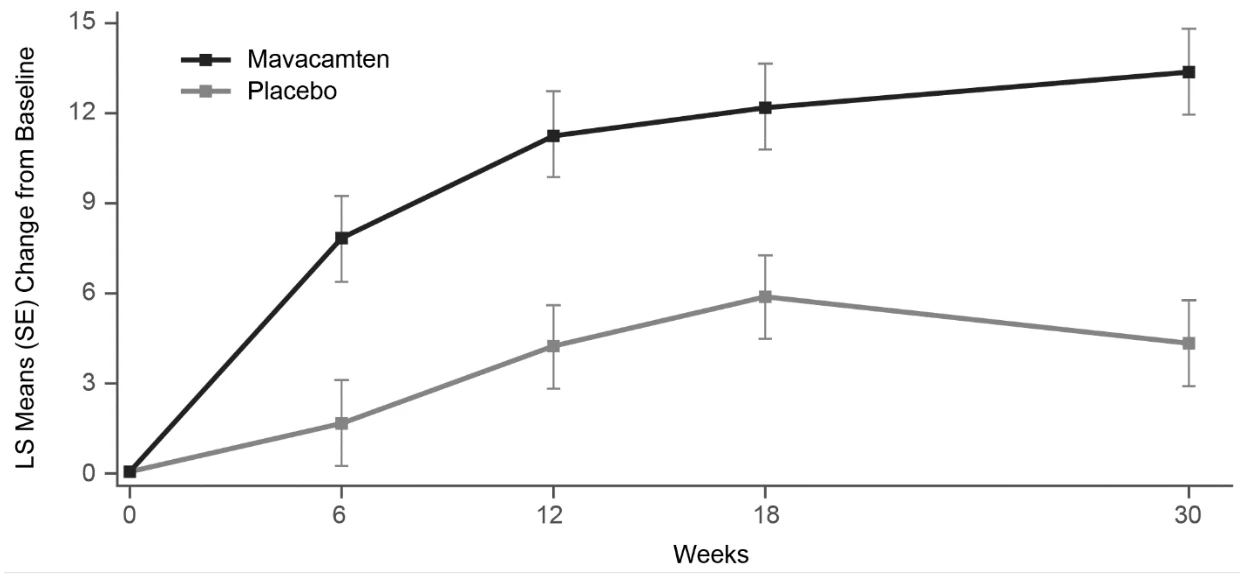
The KCCQ-23 CSS favored CAMZYOS compared to placebo at Week 30. The mean improvement from baseline on the KCCQ-23 CSS was significantly greater in the CAMZYOS group compared to placebo at Week 30 (p<0.0001), with effects observed as early as 6 weeks and sustained over the full treatment period to Week 30, see Figure 4, below.
Figure 4: KCCQ-23 CSS: Mean Change from Baseline Over Time
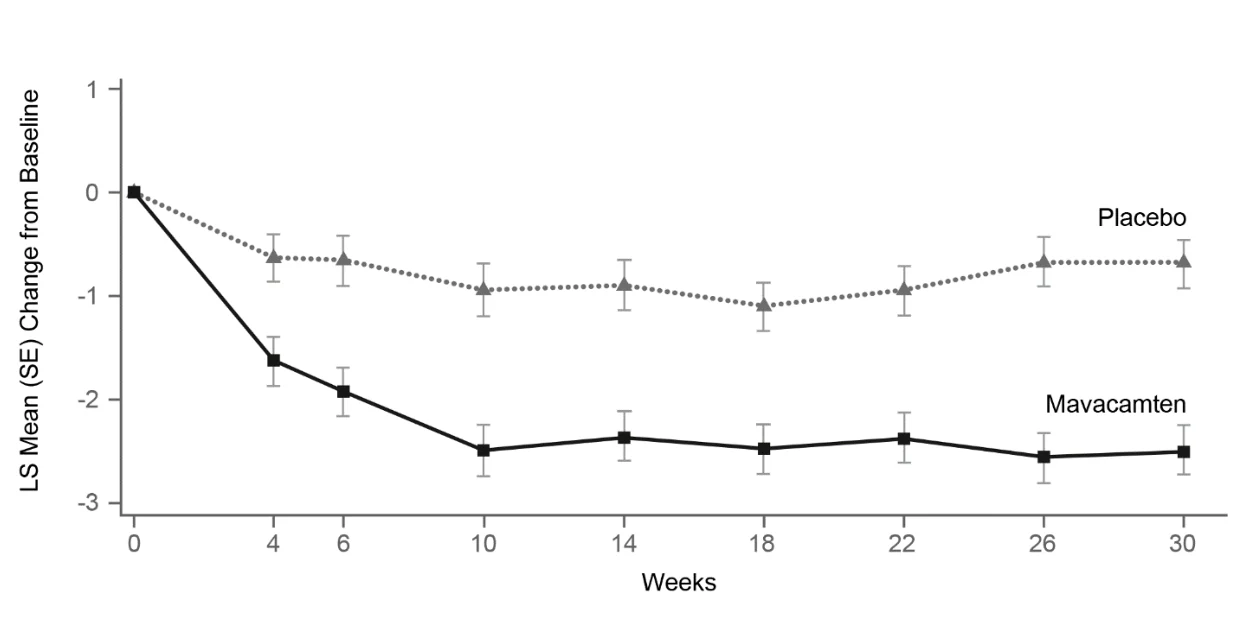
The HCMSQ SoB domain favored CAMZYOS compared to placebo at Week 30. The mean improvement from baseline on the HCMSQ SoB domain was significantly greater in the CAMZYOS group compared to placebo at Week 30 (p<0.0001), with effects observed as early as 4 weeks and sustained over the full treatment period to Week 30, see Figure 5, below.
Figure 5: HCMSQ Shortness of Breath Domain: Mean Change from Baseline Over Time
VALOR-HCM
The efficacy of CAMZYOS was evaluated in VALOR-HCM, a Phase 3, double-blind, randomized, placebo-controlled, multicenter, single country, parallel-group trial in 112 adult patients with symptomatic NYHA Class II, III or IV obstructive hypertrophic cardiomyopathy (oHCM), with LVEF ≥60% and LVOT peak gradient ≥ 50 mmHg at rest or with provocation. Patients must have been referred or under active consideration within the past 12 months for septal reduction therapy (SRT) and actively considering scheduling the procedure. Patients had severely symptomatic drug-refractory obstructive HCM (including 33% on any combination of beta-blocker, calcium channel blocker and/or disopyramide; 20% were on disopyramide alone or in combination with other treatment), and NYHA class III/IV or class II with exertional syncope or near syncope, were included in the study.
Patients were randomized in a 1:1 ratio to receive either CAMZYOS (n=56) or placebo (n=56) once daily for 16 weeks, with a starting dose of 5 mg. The dose could be periodically adjusted to optimize the patient’s therapeutic response, as measured by a decrease in LVOT gradient with Valsalva manoeuvre, and maintain a LVEF ≥ 50%.
Patient demographics and baseline characteristics are presented in Table 13 and Table 14, below.
Table 13: Patient Demographics in VALOR-HCM
| Characteristics | CAMZYOS N=56 | Placebo N=56 | |||||||
|---|---|---|---|---|---|---|---|---|---|
| Age (years) | |||||||||
| Mean (minimum, maximum) | 60 (22, 84) | 61 (36,82) | |||||||
| Sex, n (%) | |||||||||
| Male | 29 (52) | 28 (50) | |||||||
| Female | 27 (48) | 28 (50) | |||||||
| Mean body mass index, kg/m2 (SD) | 29 (5) | 32 (6) | |||||||
| Mean heart rate, beats/min (SD) | 64 (10) | 63 (10) | |||||||
| Mean blood pressure, mm Hg (SD) | |||||||||
| Systolic | 130 (16) | 131 (17) | |||||||
| Diastolic | 74 (10) | 74 (9) | |||||||
| Race, n (%) | |||||||||
| Alaska Native | 0 | 1 (2) | |||||||
| Asian | 2 (4) | 0 | |||||||
| Black or African American | 3 (5) | 0 | |||||||
| Unknown | 3 (5) | 3 (5) | |||||||
| White | 48 (86) | 52 (93) | |||||||
| Ethnicity | |||||||||
| Hispanic or Latino | 0 | 1(2) | |||||||
| Not Hispanic or Latino | 56 (100) | 54(96) | |||||||
| Family history of HCM | 17 (30) | 15 (27) | |||||||
| Medical history, n (%) | |||||||||
| Hypertension | 36 (64) | 34 (61) | |||||||
| Palpitations | 36 (64) | 33 (60) | |||||||
| Angina pectoris | 29 (52) | 26 (47) | |||||||
| Ventricular tachycardia | 15 (27) | 14 (25) | |||||||
| Atrial fibrillation | 11 (20) | 8 (14) | |||||||
Table 14: Baseline disease characteristics
| Characteristics | CAMZYOS N=56 | Placebo N=56 | |||||||
|---|---|---|---|---|---|---|---|---|---|
| NYHA functional class, n (%) | |||||||||
| NYHA Class II | 4 (7) | 4 (7) | |||||||
| NYHA Class III | 51 (91) | 52 (93) | |||||||
| NYHA Class IV | 1 (2) | 0 | |||||||
| Background HCM treatment, n (%) | |||||||||
| Βeta-blockers Monotherapy | 26 (46) | 25 (45) | |||||||
| Calcium Channel Blocker Monotherapy | 7 (12) | 10 (18) | |||||||
| Disopyramide Monotherapy | 0 | 1 (2) | |||||||
| Beta-Blocker + Calcium Channel Blocker | 6 (11) | 10 (18) | |||||||
| Beta-Blocker + Disopyramide | 11 (20) | 4 (7) | |||||||
| Calcium Channel Blocker + Disopyramide | 1 (2) | 2 (4) | |||||||
| Beta-Blocker + Calcium Channel Blocker + Disopyramide | 2 (4) | 1 (2) | |||||||
| No SOC HCM Medication | 3 (5) | 3 (5) | |||||||
| Echocardiography parameters | |||||||||
| Mean LV Max Wall Thickness, cm (SD) | 2 (0.3) | 2 (0.3) | |||||||
| Mean LAVI mL/m2 (SD) | 41 (16) | 41 (15) | |||||||
| Mean LVEF % (SD) | 68 (4) | 68 (3) | |||||||
| Mean LVOT gradient with Valsalva maneuver, mmHg (SD) | 75 (31) | 76 (30) | |||||||
| Mean LVOT gradient post-exercise mmHg (SD) | 82 (35) | 85 (37) | |||||||
| Critical cardiac history | |||||||||
| Atrial fibrillation, n (%) | 11 (20) | 8 (14) | |||||||
| Implantable cardioverter defibrillator (ICD) and/or pacemaker, n (%) | 9 (16) | 10 (18) | |||||||
Primary endpoint
CAMZYOS was shown to be superior to placebo in reducing the proportion of patients who met the primary endpoint (the composite of patient decision to proceed with SRT prior to or at Week 16 or met SRT eligibility (LVOT gradient of ≥ 50 mmHg and NYHA class III-IV, or class II with exertional syncope or near syncope) at Week 16 (18% vs. 77%, respectively, p<0.0001; see Table 15). The composite endpoint was primarily met because 14% in the CAMZYOS group were SRT eligible vs 70% in the placebo group at Week 16.
Table 15 - Results in VALOR-HCM
| Primary Endpoints | CAMZYOS N = 56 n (%) | Placebo N = 56 n (%) | Treatment difference (95% CI) | p-value |
|---|---|---|---|---|
| Primary efficacy composite endpoint | 10 (17.9) | 43 (76.8) | 58.9 (44.0, 73.9) | <0.0001 |
| SRT-eligible based on guideline | 8 (14.3) | 39 (69.6) | ||
| Patient decision to proceed with SRT | 2 (3.6) | 2 (3.6) | ||
| SRT status not evaluable (imputed as meeting guideline criteria) | 0 | 2 (3.6) |
Secondary endpoints
The treatment effects of CAMZYOS on LVOT obstruction, functional capacity, health status, and cardiac biomarkers were assessed by change from baseline through Week 16 in post-exercise LVOT gradient, proportion of patients with improvement in NYHA class, KCCQ-23 CSS, NT-proBNP, and cardiac troponin I. In the VALOR-HCM study, hierarchical testing of secondary efficacy endpoints showed statistically significant improvement in the CAMZYOS group compared to the placebo group (Table 16).
Table 16 - Results of Secondary Endpoints in VALOR-HCM in oHCM
| Secondary Endpoints | [CAMZYOS] N = 56 | Placebo N = 56 | Difference (95% CI) | p-value |
|---|---|---|---|---|
| Post-Exercise LVOT gradient (mmHg), mean (SD) | -39 (37) | -2 (29) | -38 (-49, -28) | <0.0001 |
| Number (%) with NYHA Class improved ≥1 | 35 (63%) | 12 (21%) | 41 (25%, 58%) | <0.0001 |
| KCCQ-23 CSS†, mean (SD) | 10 (16) | 2 (12) | 9 (5, 14) | <0.0001 |
| KCCQ-23 TSS, mean (SD) | 10 (16) | 2 (14) | 10 (5, 15) | |
| KCCQ-23 PL, mean (SD) | 10 (19) | 2 (17) | 10 (5, 16) | |
| NT-proBNP (ng/L), geometric mean ratio to baseline | 0.35 | 1.13 (n=53) | 0.33 (0.27, 0.42) | <0.0001 |
| Cardiac Troponin I (ng/L), geometric mean ratio to baseline | 0.50 | 1.03 (n=53) | 0.53 (0.40, 0.70) | <0.0001 |
†The KCCQ‑23 CSS is derived from the Total Symptom Score (TSS) and the Physical Limitations (PL) score of the KCCQ‑23. The CSS ranges from 0 to 100 with higher scores representing less severe symptoms and/or physical limitations. The KCCQ-23 TSS and the KCCQ-23 PL are exploratory endpoints in the VALOR-HCM study.
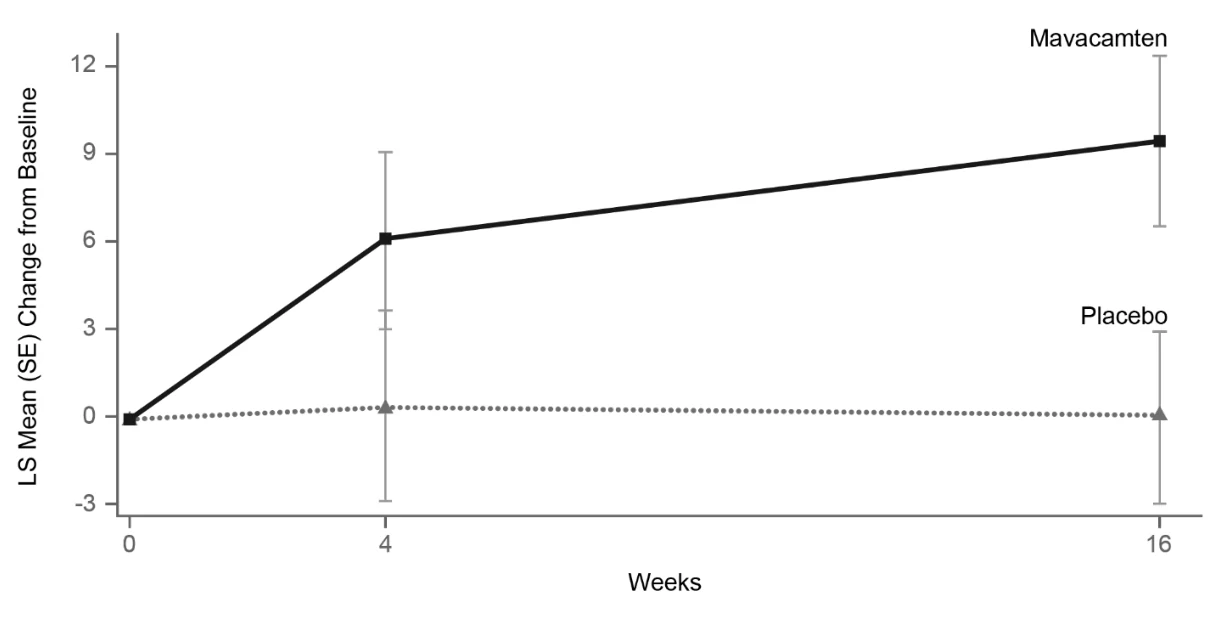
The KCCQ-23 CSS favored CAMZYOS compared to placebo at Week 16. The mean improvement from baseline on the KCCQ-23 CSS was greater in the CAMZYOS group compared to the placebo at Week 30 (p<0.0001), with effects observed as early as 4 weeks (
Figure 6).
Figure 6: KCCQ-23 CSS: Mean Change from Baseline Over Time
The proportion of patients with improved KCCQ-23 CSS from baseline to Week 16 was higher at various levels of improvement for the CAMZYOS-treated group compared to the placebo group.
15. Microbiology
Not Applicable
16. Non-Clinical Toxicology
General toxicology: The safety of mavacamten has been evaluated in rats and dogs dosed for up to 6 and 9 months respectively. Noted toxicities, including echocardiographic findings of reduced systolic performance and cardiac dilation, death, due to heart failure, and, in rats, increased heart weights likely secondary to cardiac hypertrophy in response to decreased contractility, were consistent with the mavacamten mechanism of action and primary pharmacological activity. Other findings included cardiac osseous metaplasia in rats and QTc prolongation in dogs. The NOAELs in the 6-month rat and 9-month dog studies were 0.3 and 0.18 mg/kg/day, respectively. Plasma exposures (AUC) at the NOAELs in rats and dogs were respectively 0.1× and 0.3× of the average exposures in humans at the MRHD.
Genotoxicity: Neither mavacamten nor its isomer were found to be genotoxic in a reverse mutation bacterial test (Ames test), a human in vitro lymphocyte clastogenicity assay, or a rat in vivo micronucleus assay (mavacamten only).
Carcinogenicity: There was no evidence of carcinogenicity at the highest oral mavacamten doses tested in a 6-month rasH2 transgenic mouse study (3 mg/kg/day) or a 2-year rat study (0.6 mg/kg/day). Exposures (AUC) in mice were up to 3-fold higher than the MRHD, while exposures (AUC) in rats were only 0.2-fold compared to the MRHD.
Reproductive and developmental toxicology
Fertility
There was no evidence of effects of mavacamten on mating and fertility in male or female rats at oral doses up to 1.2 mg/kg/day. Parental plasma exposures (AUC) of mavacamten at the highest doses tested were only 0.8× the exposures in humans at the MRHD.
Embryo-fetal Development
Mavacamten administered orally to pregnant rats during the period of organogenesis decreased mean fetal body weight and increased post-implantation loss and fetal malformations (heart malformations, total situs inversus, fused sternebrae and other skeletal malformations) in the high dose group (1.5 mg/kg/day). No post-natal adverse effects were noted in surviving pups nor in dams. Maternal plasma exposures (AUC) at the no effect dose for embryo-fetal development in rats (0.75 mg/kg/day) were only 0.3× the average exposures in humans at the MRHD.
Mavacamten administered orally to pregnant rabbits during the period of organogenesis caused fetal malformations (dilatation of pulmonary trunk and/or aortic arch, higher incidence of fused sternebrae) at doses of 1.2 mg/kg/day and higher. A higher incidence of pre- and post-implantation loss was noted at the highest dose (2.0 mg/kg/day). Mavacamten was also associated with cardiac deaths (mild bilateral ventricular dilatation noted in both cases, without microscopic evidence of heart failure) in 9% of pregnant rabbits receiving the highest dose after 10 and 12 days of treatment. Plasma exposure (AUC) at the no effect dose for embryo-fetal development in rabbits (0.6 mg/kg/day) was only 0.4× relative to average exposures in humans at the MRHD.
Together, these results suggest that mavacamten has the potential for significant toxicity to human embryos and fetuses, albeit with remaining uncertainties related to timing and duration of exposure. Mavacamten was shown to cross the placenta and was measured in embryonic and extra-embryonic tissues. Rabbit fetuses were estimated to be exposed to 0.15-fold of the maternal exposure. It is unknown if continuous exposure before conception and throughout gestation would lead to accumulation of mavacamten in embryonic tissues. It is unknown if mavacamten transfers to maternal milk.